Art
Indian Art History Congress 2026: 5 Powerful Insights from Dr. Renu Shahi’s Groundbreaking Satire Art Research in Bengaluru
Indian Art History Congress 2026 witnessed a powerful research presentation by Dr. Renu Shahi in Bengaluru, highlighting satire art, caricature and cartoons as reflections of India’s social values.
Indian Art History Congress 2026 became a landmark academic event as leading scholars, historians, and art critics gathered in Bengaluru to explore the evolving dimensions of Indian art and its deep-rooted social values. Among nearly 175 distinguished participants from across the country, Dr. Renu Shahi from Jaipur, Rajasthan, emerged as a notable voice with her compelling research on satire art, caricature, and political cartoons in the Indian art landscape.
Her presentation, delivered during the 33rd Annual Session of the Indian Art History Congress, sparked curiosity, discussion, and admiration among scholars and attendees alike.
Introduction to Indian Art History Congress 2026
The Indian Art History Congress 2026 marked the 33rd annual session of one of the country’s most respected academic platforms dedicated to the study and preservation of Indian art history. Held from February 6 to February 10, 2026, the conference brought together scholars from universities, research institutions, and independent academic bodies.
The central theme of this year’s session was “Social Values in Indian Art.” The theme encouraged participants to analyze how art reflects, challenges, and reconstructs societal norms, ethics, and political consciousness across time.
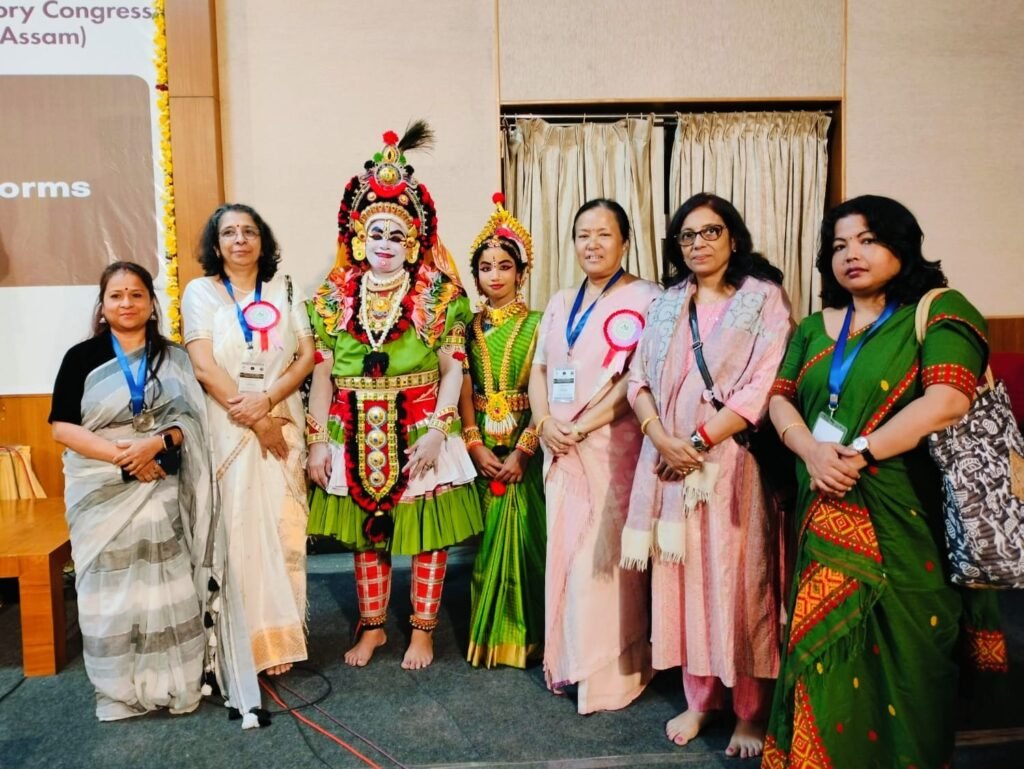

More details about the organising body can be explored through the official Indian Art History Congress network and academic listings on platforms such as the Indian Council of Historical Research (https://ichr.ac.in/).
Venue and Organising Institutions
The Indian Art History Congress 2026 was hosted at the historic Mythic Society in Bengaluru, Karnataka — an institution known for its long-standing contribution to historical and cultural research in South India.
The session was organised under the aegis of the Indian Council of Historical Research (ICHR) and the Indian Art History Congress, in association with the Dr. Pooja Bharti Memorial Trust.
The selection of Bengaluru, a city known for blending heritage with modern intellectual discourse, added symbolic significance to the event.
Lifetime Achievement Honour at the Congress
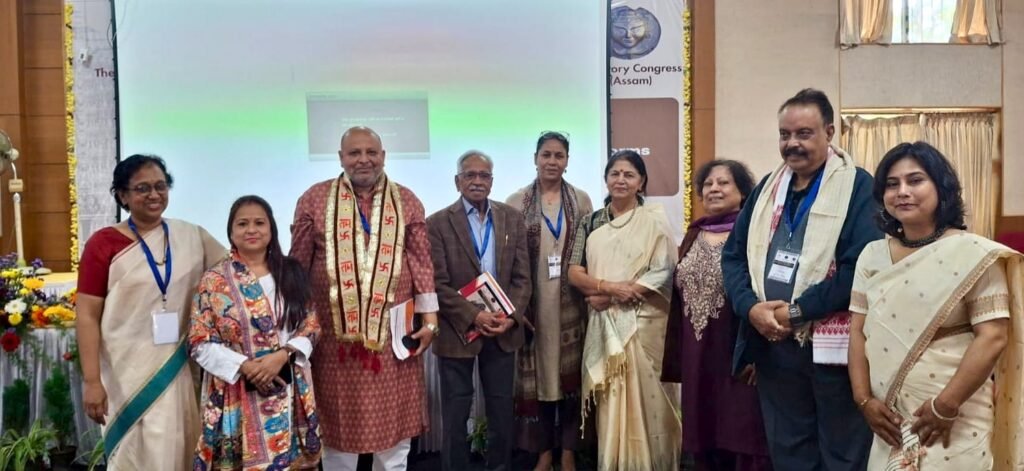
A major highlight of the Indian Art History Congress 2026 was the conferment of the prestigious “Bharati Samman” (Lifetime Achievement Award).
The honour was presented to eminent art historian Dr. Arvind Prabhakar Jamkhedkar, former Chairman of the Indian Council of Historical Research and former Vice-Chancellor of Deccan College, Pune.
Dr. Jamkhedkar’s lifelong contribution to Indian art history, archaeology, and heritage studies has shaped academic discourse in the country for decades. The award ceremony added a celebratory tone to the scholarly proceedings.
Dr. Renu Shahi’s Academic Contribution
Among the 175 scholars who presented papers at the Indian Art History Congress 2026, Dr. Renu Shahi from Jaipur stood out for her original and thought-provoking research.
Her paper focused on satire art in the Indian artistic tradition, particularly examining caricature and cartoons as tools of political, social, and cultural commentary.
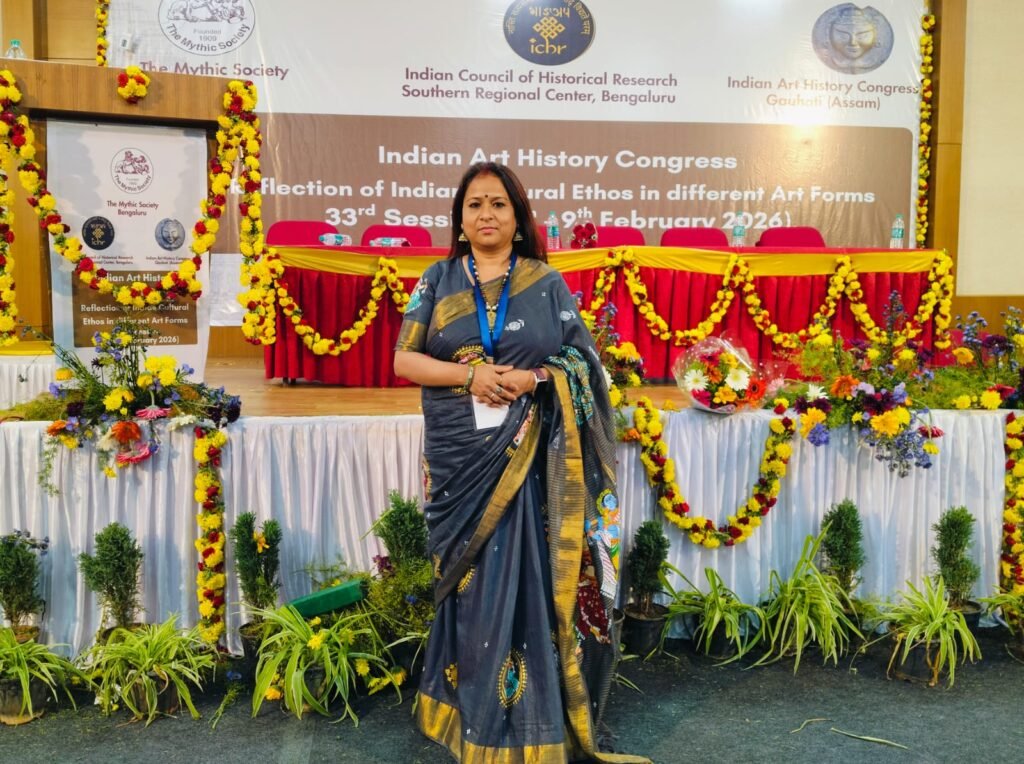

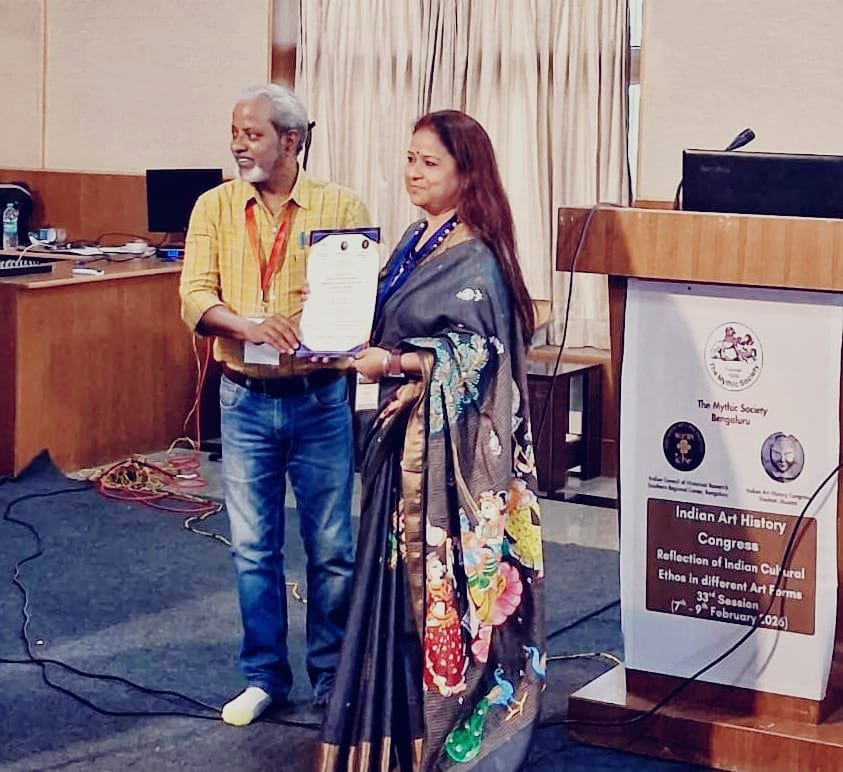
Dr. Shahi was granted the opportunity to present her research due to the excellence and academic merit of her paper — a recognition that itself became a subject of interest among attendees.
Her study did not merely treat satire as entertainment. Instead, she framed it as a powerful artistic language that reflects ideological positions and societal tensions.
Indian Art History Congress 2026 and the Theme of Social Values
The theme “Social Values in Indian Art” found a powerful embodiment in Dr. Shahi’s presentation.
At the Indian Art History Congress 2026, discussions ranged from temple architecture to modern installations. However, satire art introduced a contemporary dimension to the dialogue.

Satirical expression often critiques political authority, exposes social hypocrisy, and mirrors public sentiment. By placing satire within the broader framework of Indian art history, Dr. Shahi expanded the academic boundaries of what is traditionally considered “high art.”
Her work highlighted that satire is not marginal. It is central to democratic discourse.
Satire Art in Indian Cultural Discourse
Satire in India has a long and layered history.
From colonial-era caricatures to post-independence political cartoons, satire has shaped public opinion. Dr. Shahi’s research at the Indian Art History Congress 2026 traced how satire art engages with:
- Political authority
- Social hierarchies
- Cultural transformation
- Public morality
Satirical art, she argued, becomes a visual archive of dissent.
By studying satire, scholars can decode historical anxieties and ideological shifts in society.
Caricature and Cartoon: Beyond Entertainment
At the Indian Art History Congress 2026, Dr. Shahi emphasized that caricatures and cartoons are often misunderstood as mere humor.
In reality, caricature exaggerates features to highlight deeper truths. Cartoons compress complex political commentary into accessible imagery.
Her research examined how caricature functions as a semiotic device — using distortion as critique.
In a democracy like India, cartoonists have historically played a crucial role in shaping civic awareness.
Historical Figures in Indian Satirical Art
Dr. Shahi’s paper referenced several legendary cartoonists and satirists whose work shaped Indian visual culture.

Among them:
- Gaganendranath Tagore – Known for his early 20th-century satirical illustrations critiquing colonial society.
- R. K. Laxman – Creator of the iconic “Common Man” and one of India’s most influential political cartoonists.
- K. Shankar Pillai – Founder of Shankar’s Weekly, a platform that shaped political satire in India.
- Bal Thackeray – Began his career as a cartoonist before entering politics.
By situating these figures within academic discourse at the Indian Art History Congress 2026, Dr. Shahi underscored how satire bridges journalism and fine art.
Scholarly Reception and Appreciation
The response to Dr. Shahi’s presentation at the Indian Art History Congress 2026 was overwhelmingly positive.
Scholars appreciated:
- The interdisciplinary approach
- The analytical depth
- The integration of visual examples
- The contextual grounding in political history
Several attendees noted that satire art deserves more systematic documentation within Indian art historiography.
Her work sparked discussions about incorporating satire studies into university curricula.
Why Indian Art History Congress 2026 Matters Today
The Indian Art History Congress 2026 was not just an academic gathering.
It functioned as:
- A platform for intellectual exchange
- A forum for redefining art history
- A space for emerging scholars to gain visibility
- A bridge between tradition and contemporary discourse
In a rapidly changing socio-political climate, art history cannot remain static.
The inclusion of satire art at the Congress signals a broader methodological shift — one that embraces popular visual culture as a serious subject of study.
The Growing Relevance of Satire in Contemporary India
In the digital era, satire spreads faster than ever.
Memes, digital cartoons, and online caricatures continue the tradition discussed at the Indian Art History Congress 2026.
Dr. Shahi’s research becomes especially relevant in this context. Her work invites scholars to analyze:
- Visual political commentary on social media
- The legal boundaries of satire
- The relationship between art and freedom of expression
Satire, she argued, is both aesthetic expression and civic intervention.
Academic Implications and Future Research
The discussions at the Indian Art History Congress 2026 suggest that future research may expand into:
- Digital satire archives
- Comparative studies between colonial and contemporary caricature
- Regional variations in satirical art
- Gender perspectives in cartooning
Dr. Shahi’s contribution has opened new pathways for research scholars.
Her work demonstrates that art history must evolve alongside society.
The Indian Art History Congress 2026 will be remembered as a dynamic and intellectually rich gathering that expanded the boundaries of Indian art scholarship.
Dr. Renu Shahi’s research on satire art, caricature, and cartoons added a contemporary and critical dimension to the conference theme of social values in Indian art.
Her presentation reaffirmed that satire is not peripheral — it is central to understanding India’s political and cultural consciousness.
As academic institutions increasingly recognize the importance of interdisciplinary study, the conversations initiated at the Indian Art History Congress 2026 are likely to influence future scholarship in meaningful ways.
In Bengaluru, amidst scholars and historians, satire found its rightful place in the narrative of Indian art history — and that may be one of the most significant outcomes of this year’s Congress.