Breaking News
UGC Act 2026: 5 Powerful Demands Raised in Rajasthan to End Campus Discrimination
UGC Act 2026 demand grows stronger as social justice groups in Rajasthan submit a memorandum to the President seeking strict laws to stop caste discrimination in universities and ensure equal educational rights.
6 March, Chirawa | UGC Act 2026 has emerged as a powerful demand among social justice organizations and student rights groups across India. The proposed legislation is being seen as a crucial step toward addressing discrimination in higher education institutions and ensuring equal access to opportunities for historically marginalized communities.
In a significant development, members of the Dr. Ambedkar Anusuchit Jati Adhikari Karmachari Association (AJAK) & Samajik Nyay Adhikar Manch along with representatives of several social organizations in Chirawa subdivision of Jhunjhunu district, Rajasthan, submitted a memorandum addressed to the President of India through the Sub-Divisional Magistrate (SDM).
The delegation included Balveer Singh Kala, Advocate Vijay Gurava, President of the Bar Association, Advocate Suresh Dandia, Advocate Arvind Bhagat, Advocate Vedprakash, Babulal Councilor, Rohitash Mehrania, Anil Mehrania, Mahesh Mehrania, Jai Mal Siroha, Budhram Mehrania, Sitaram Panwar, Satyanarayan Dholpuria, Raghuveer Singh, Hanuman Singh Danodia, Sant Kumar, Hariram Maharia, Sajjan Maharia, Shiv Prasad Maharia, Vinod Mehrania, Anil Narnolia, Prahalad Singh and representatives of various social organizations.
The memorandum calls for the immediate enactment of the UGC Equity Regulations for 2026 and strict implementation of new University Grants Commission regulations to promote equality in higher education.
The demand reflects a growing national conversation about discrimination in educational institutions and the need for systemic reforms to protect the constitutional rights of students belonging to Scheduled Castes (SC), Scheduled Tribes (ST), and Other Backward Classes (OBC).
The demand for the Rohith Vemula Act 2026 stems from long-standing concerns regarding discrimination in universities and higher education institutions across India.
Many social justice organizations argue that despite constitutional guarantees of equality, students from historically marginalized communities continue to face barriers such as:
- Social exclusion
- Institutional discrimination
- Lack of grievance redressal mechanisms
- Underrepresentation in faculty positions
According to activists, a strong legal framework is necessary to ensure that educational institutions remain inclusive and equitable for all students.
Memorandum Submitted in Chirawa, Jhunjhunu
In Rajasthan’s Jhunjhunu district, the Dr. Ambedkar Anusuchit Jati Adhikari Karmachari Association (AJAK) & Samajik Nyay Adhikar Manch along with various community organizations submitted a memorandum urging the central government to enact the Rohith Vemula Act 2026 (UGC Equity Regulations for 2026).
The memorandum was submitted to the Sub-Divisional Magistrate (SDM) of Chirawa, who will forward it to the President of India.
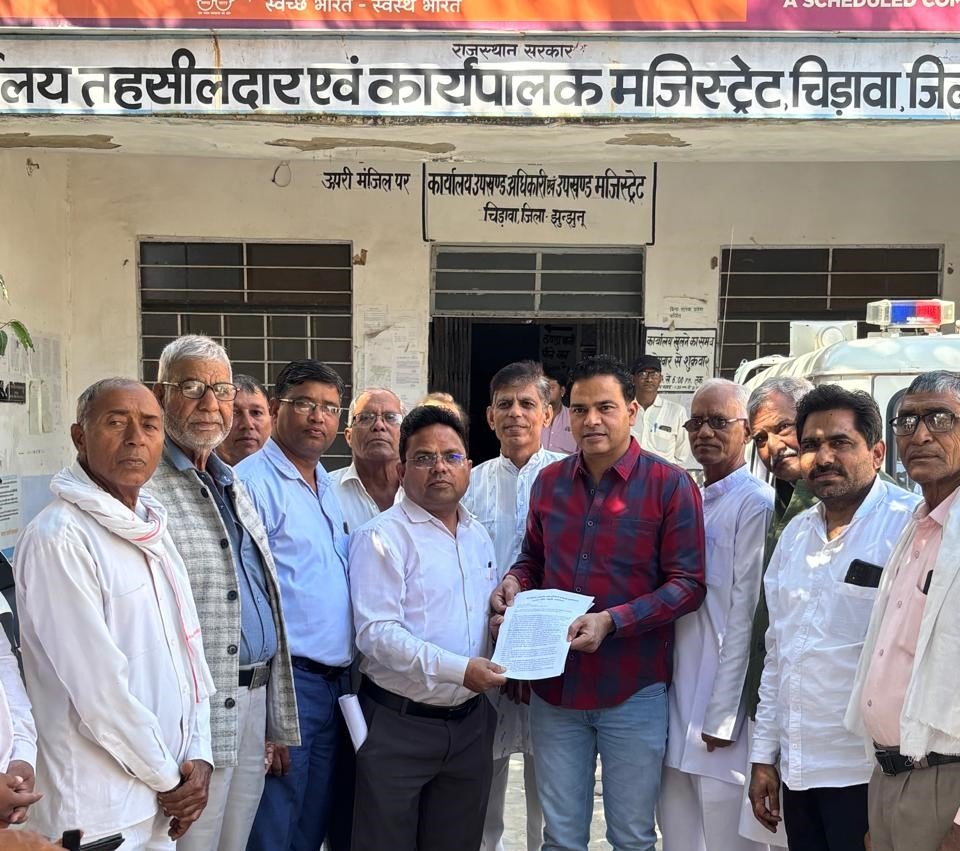

Representatives of several social organizations were present in the delegation, including community leaders, lawyers, and public representatives.
The delegation emphasized that historically marginalized communities have remained socially and educationally backward for centuries, and therefore require strong institutional protection to ensure equal participation in education.
Constitutional Provisions Supporting Educational Equality
The memorandum strongly referred to several provisions of the Constitution of India that guarantee equality and social justice.
Article 14 – Right to Equality
Article 14 ensures equality before the law and equal protection of laws to all citizens.
More details about constitutional equality provisions can be accessed through the official portal of the Government of India:
https://www.india.gov.in
Article 15 – Prohibition of Discrimination
Article 15 prohibits discrimination on the basis of religion, race, caste, sex, or place of birth.
It also allows the state to make special provisions for socially and educationally backward classes.
Article 16 – Reservation in Public Employment
Article 16(4) provides reservation in government jobs for SC, ST, and OBC communities to ensure fair representation.
Article 17 – Abolition of Untouchability
Article 17 declares untouchability as a punishable offense, reinforcing the principle of social equality.
Article 335 – Claims of SC/ST in Services
Article 335 mandates that the claims of SC/ST communities must be considered in public employment while maintaining administrative efficiency.
These constitutional provisions form the legal foundation behind the demand for the Rohith Vemula Act 2026.
Rohith Vemula Case and the National Debate on Campus Discrimination
The demand for the Rohith Vemula Act 2026 is closely linked to the death of Rohith Vemula, a PhD scholar at the University of Hyderabad whose suicide in January 2016 sparked nationwide protests and debates on caste discrimination in higher education.
His death triggered a broader discussion about institutional bias and the treatment of marginalized students within universities.
Civil society groups, student unions, and political leaders have repeatedly demanded stronger laws to prevent such incidents and ensure accountability within academic institutions.
Advocates for the legislation argue that such a law could act as a deterrent against discrimination and harassment.
Some political leaders and activists have also called for legal reforms to address cases similar to those of Rohith Vemula, Payal Tadvi, and other students who allegedly faced discrimination in educational institutions.
Key Demands Raised in the Memorandum
The memorandum submitted in Chirawa highlights several major demands related to the Rohith Vemula Act 2026 and educational reforms.
1. Enactment of Rohith Vemula Act 2026
The organizations demanded the enactment of a comprehensive law to prevent discrimination against SC, ST, and OBC students in universities.
2. Strict Implementation of UGC Regulations
The University Grants Commission should implement the Promotion of Equity in Higher Education Institutions Regulations 2026 strictly.
3. Equal Opportunity Helplines
Every higher education institution should establish a 24-hour equality helpline to address cases of discrimination.
4. National Monitoring Committee
The memorandum calls for a national monitoring committee to track discrimination complaints and ensure accountability.
5. Transparent Recruitment Processes
Universities should ensure that reserved positions are filled fairly and without prejudice.
UGC Equity Regulations 2026 and Institutional Responsibility
The University Grants Commission has introduced regulations aimed at preventing discrimination and promoting equity in higher education institutions.
These regulations were developed after directions from the Supreme Court and concerns raised in public interest litigations regarding caste discrimination in universities.
The regulations emphasize:
- Institutional grievance redressal systems
- Equal opportunity cells
- Monitoring mechanisms
- Protection of marginalized students
However, activists argue that stronger enforcement mechanisms are still required.
Vacant Reserved Posts in Universities: A Growing Concern
One of the major issues raised in the memorandum is the large number of vacant reserved posts in universities.
According to the representatives, many faculty positions reserved for SC, ST, and OBC candidates remain vacant due to various administrative practices.
These include:
- Selection boards declaring candidates “Not Found Suitable (NFS)”
- Low interview scores despite eligibility
- Delays in recruitment processes
Activists claim that such practices undermine the goal of fair representation in higher education institutions.
They have demanded that the government launch a special recruitment drive to fill reserved posts in universities across India.
National Protests and Student Movements
The debate around the Rohith Vemula Act 2026 has also led to protests and demonstrations in several universities.
Student groups and civil society organizations argue that discrimination in educational institutions can have severe psychological and social consequences for students from marginalized backgrounds.
Protests and discussions across campuses have highlighted the importance of building inclusive and safe academic environments.
Many activists believe that stronger legal safeguards are necessary to prevent discrimination and ensure equal opportunities for all students.
Why the Rohith Vemula Act 2026 Is Seen as a Landmark Reform
Supporters of the proposed Rohith Vemula Act 2026 believe that it could become a transformative step in India’s higher education system.
The law is expected to:
- Strengthen anti-discrimination mechanisms
- Protect the rights of marginalized students
- Improve representation in academic institutions
- Promote inclusive campus environments
Experts argue that the legislation could help create a more equitable education system that reflects the constitutional values of justice and equality.
The Road Ahead for Inclusive Higher Education in India
The demand raised in Chirawa reflects a broader national movement seeking structural reforms in higher education.
As discussions around the Rohith Vemula Act 2026 continue, policymakers, educational institutions, and civil society groups will need to work together to ensure that universities remain spaces of learning, equality, and dignity.
The debate also highlights a fundamental question for India’s education system:
How can universities ensure that every student — regardless of caste, background, or social status — has an equal opportunity to succeed?
The answer may lie in stronger laws, transparent institutional policies, and a renewed commitment to the constitutional ideals of equality and social justice.