Education
Karnal Students Recognized by NASA for Asteroid Discovery




Jaipur | 5 Nov 2026
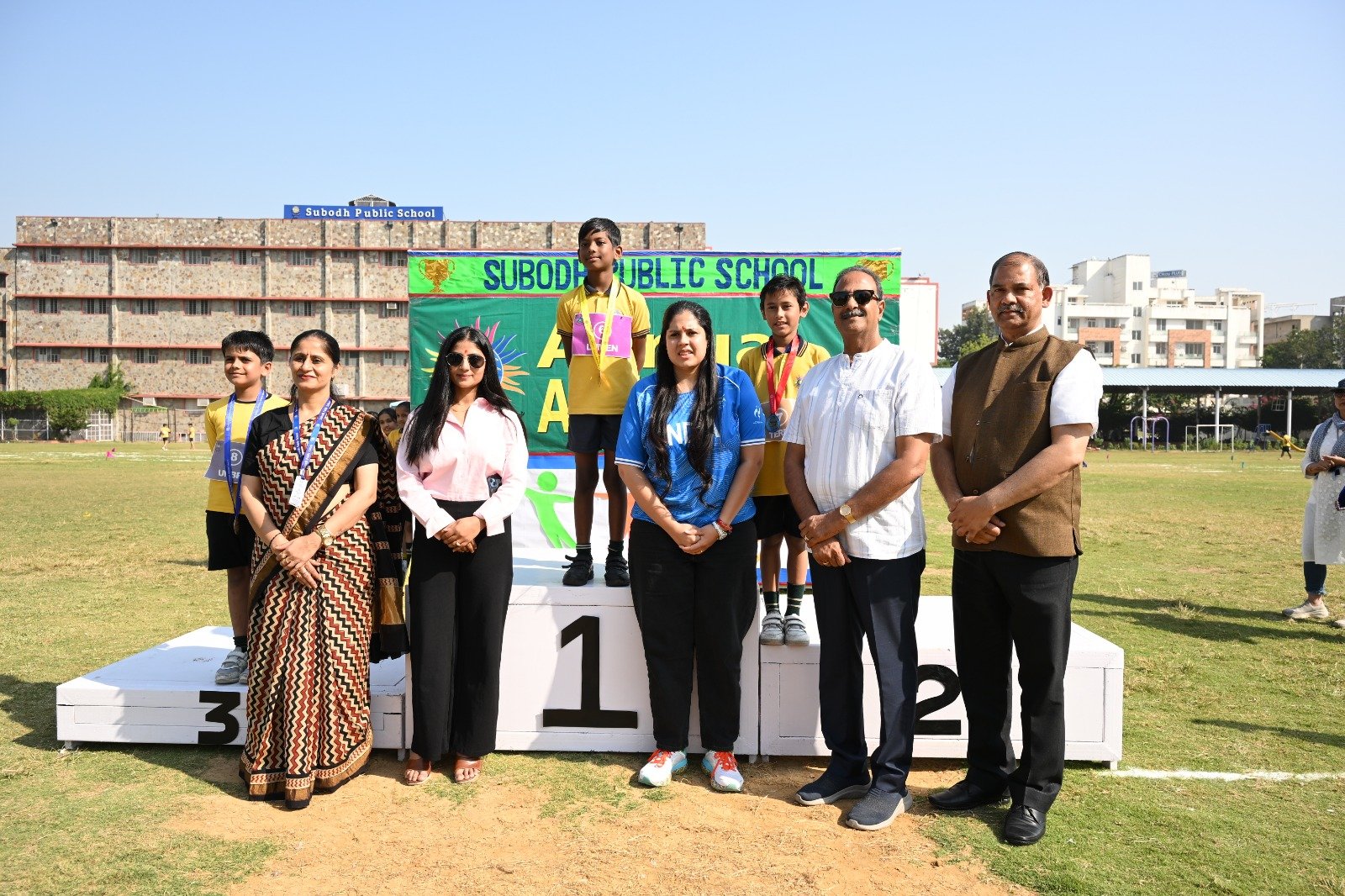
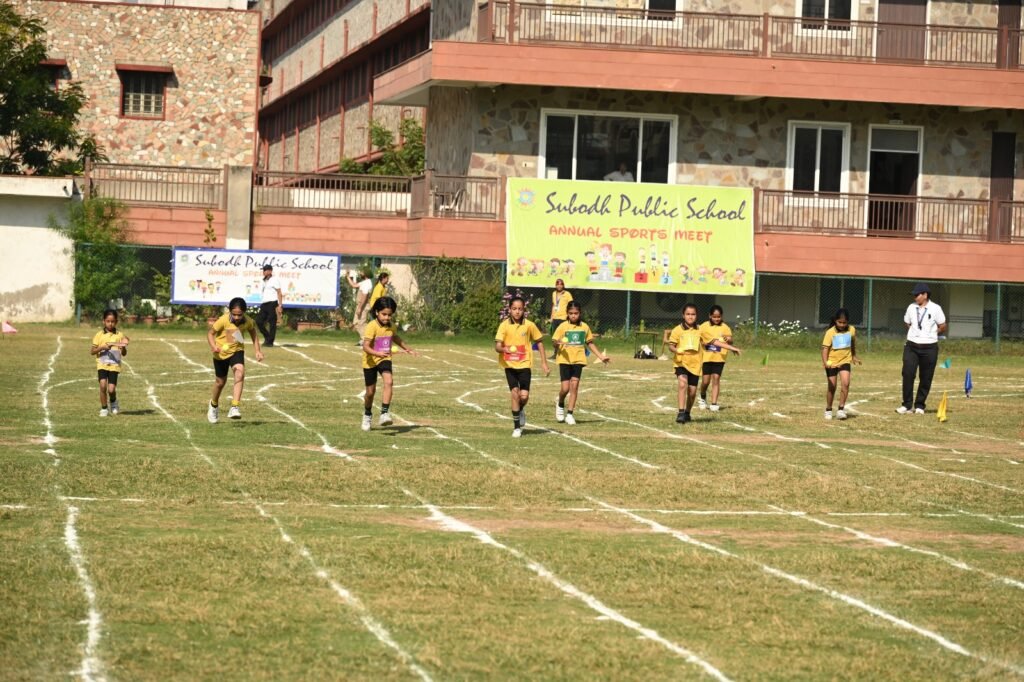
Subodh Public School in Jaipur’s Rambagh area held its annual sports competition for the 2026–27 session on Thursday, featuring athletics, yoga demonstrations and a tug-of-war between parents and teachers.
Sports meet opens with squash and judo athletes as guests
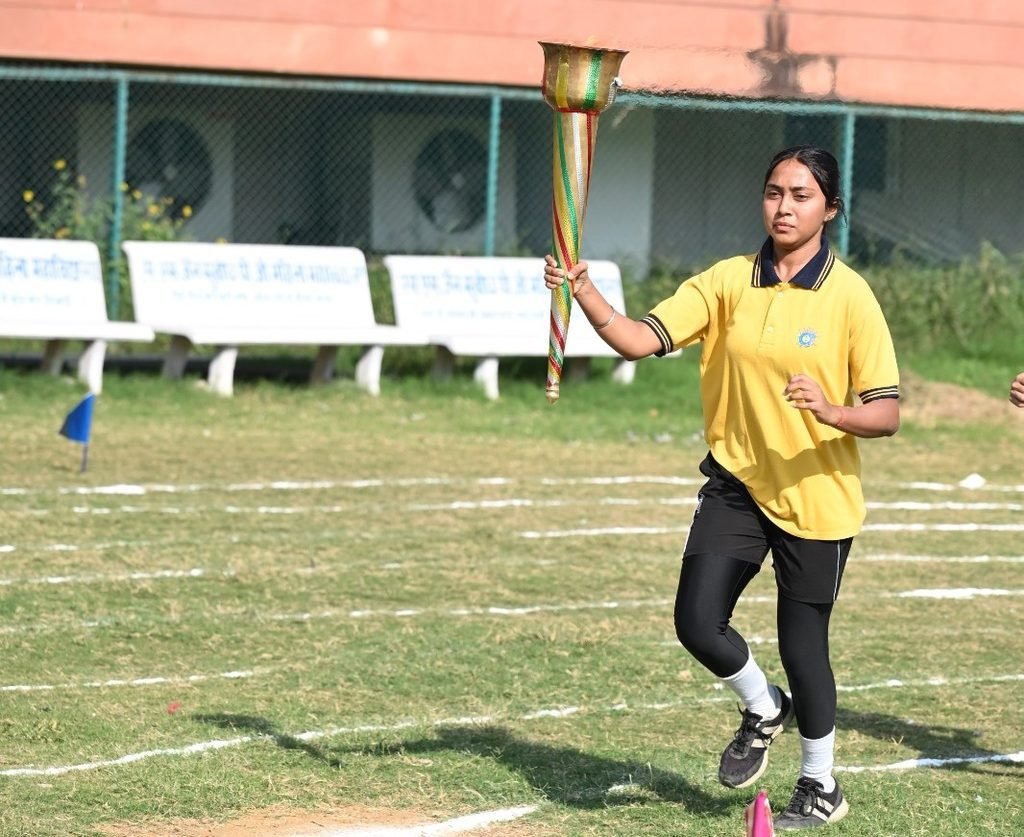
The programme began with a torch-lighting ceremony attended by international squash player Surbhi Misra, national judo player Jiya Sharma, school coordinator Alok Kumar Bamb, principal Sanjay Parashar and vice-principal Ekta Bhatia, according to the event information provided by the school. Participants took an oath to uphold sportsmanship, discipline and fair play.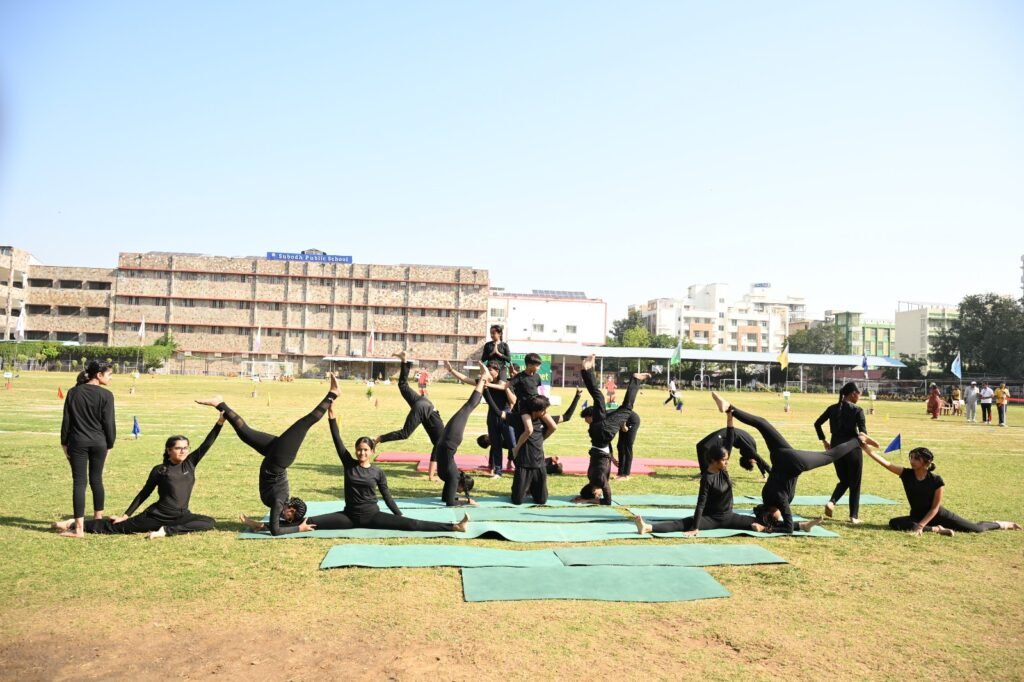
Misra encouraged students to take part with enthusiasm and a positive outlook, and to give their best regardless of victory or defeat. She has represented India in squash at the Commonwealth Games, according to the supplied event account.
Students take part in athletics and yoga demonstrations
Students presented yoga demonstrations focused on physical and mental wellbeing before competing in races, relay races and other athletic events. Top-performing participants received awards from the guests and school dignitaries.
A tug-of-war between parents and teachers drew attention during the programme. The event aimed to encourage students’ interest in sport and develop teamwork, leadership, self-confidence and healthy competition.
Subodh Public School Jaipur annual sports meet 2026, Subodh Public School Rambagh sports day, Jaipur school sports competition, Surbhi Misra squash player, Jiya Sharma judo player, annual sports day Jaipur, student athletics and relay races, school yoga demonstrations
#SubodhPublicSchool #Jaipur #AnnualSportsMeet #SchoolSports #StudentAthletics
Jaipur | 02 Nov 2026
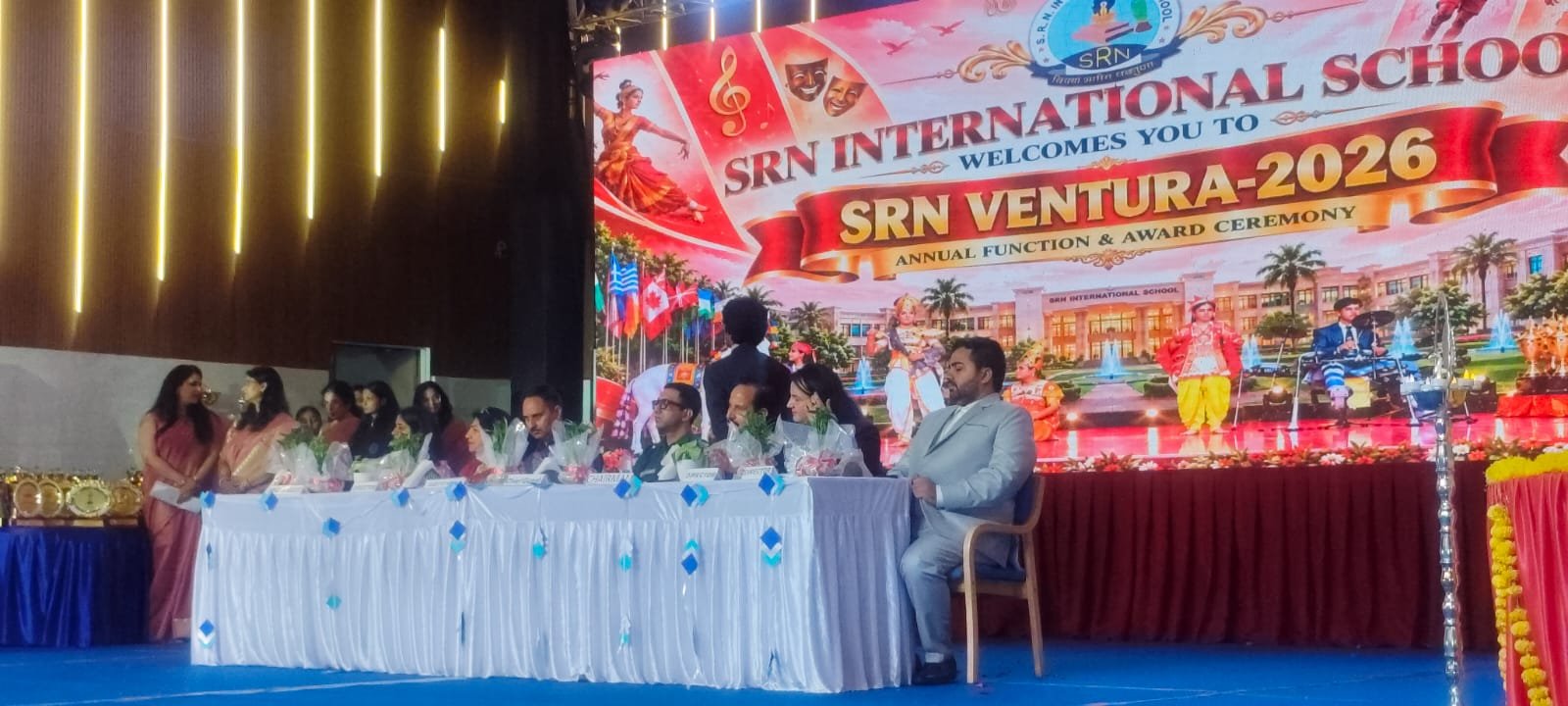
SRN International School in Jagatpura, Jaipur, celebrated its silver jubilee with ‘Ventura 2K26’, an annual function and prize-giving ceremony featuring student performances on India’s cultural heritage, freedom movement and scientific traditions, according to a statement issued by the school.
The celebration marked 25 years of the institution. Built around the theme of divinity in India’s diversity, the programme combined music, dance and drama with recognition for students’ academic and co-curricular achievements.
SRN International School Silver Jubilee Celebrates Indian Heritage
The ceremony opened with Vedic chanting and the lighting of a ceremonial lamp. Younger pupils presented a performance centred on family relationships and values, while other productions explored spiritual traditions, women’s strength and the idea of service to society.
Dance dramas drew on Samudra Manthan and episodes associated with Lord Shiva. Separate presentations depicted the lives and legacies of Guru Arjan Dev and Lord Mahavira, alongside mathematician and astronomer Aryabhata.
Class XI students staged ‘The Roaring Lions of Bharat: Lal-Bal-Pal’, portraying freedom movement leaders Lala Lajpat Rai, Bal Gangadhar Tilak and Bipin Chandra Pal. The production explored their association with the Swadeshi movement, the demand for self-rule and resistance to British rule.
An English-language play addressed challenges facing younger generations and contemporary social issues. The Cambridge wing’s ‘Global Fiesta’ focused on international harmony and unity in diversity. The school rock band also performed, while another production commemorated the institution’s 25-year journey.
Students Receive Awards as Guests Emphasise Discipline and Responsibility
Students were honoured for achievements across academic and co-curricular fields. The programme also featured a retrospective of the school’s development and activities over 25 years.
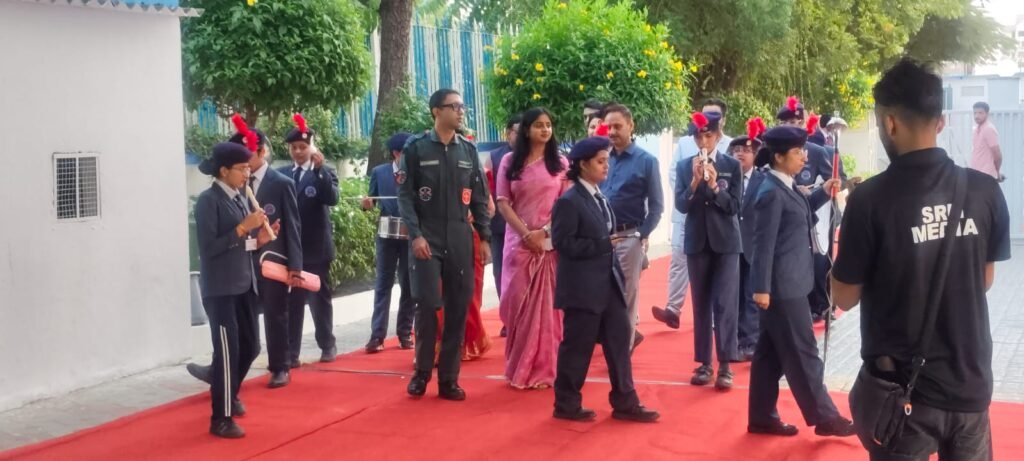
The school identified Squadron Leader Dr Manmohan Singh Rathore as the chief guest. According to its statement, he encouraged students to pursue their ambitions through discipline, sustained effort and self-confidence, while remaining conscious of their responsibilities towards the country.
Other guests included CBSE official Viveka Nand Bahukhandi and alumna Avi Mishra, whom the school identified as a Rajasthan Administrative Service officer. Chairman Ravi Shankar Sharma and director Usha Sharma also attended.
In his address, Sharma acknowledged the contributions of teachers, pupils, parents and staff to the institution’s growth. Usha Sharma said the school’s educational priorities included helping students become sensitive, responsible and self-reliant citizens alongside pursuing academic achievement.
SRN International School Jaipur, Ventura 2K26, SRN International School silver jubilee, Jaipur school annual function 2026, Jagatpura school celebrations, student cultural performances Jaipur, school prize distribution ceremony, Lal Bal Pal student drama
#SRNInternationalSchool #Ventura2K26 #Jaipur #SilverJubilee #SchoolEducation
Jaipur | 31 Oct 2026
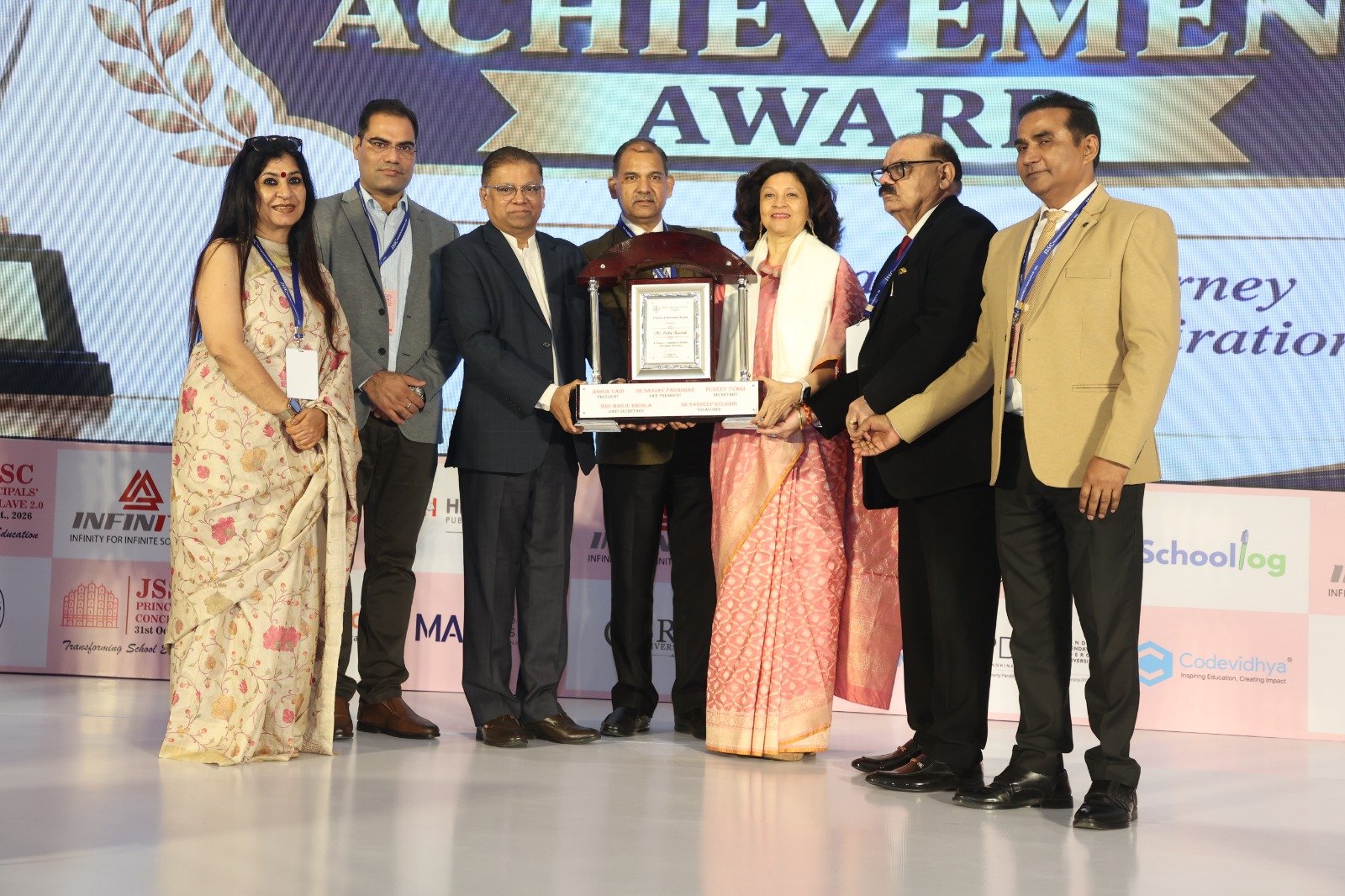
Teacher development, artificial intelligence and preparing students for future careers were among the subjects discussed at the JSSC Principals’ Conclave 2.0, held at Hotel Clarks Amer in Jaipur on 31 October, according to the organisers.
Organised by the Jaipur Sahodaya Schools Complex under the theme ‘Leading Learning, Shaping Legacies’, the one-day gathering brought together school principals, educationists and speakers to discuss school leadership and changing educational needs.
JSSC Principals’ Conclave 2.0 Highlights Teacher Development
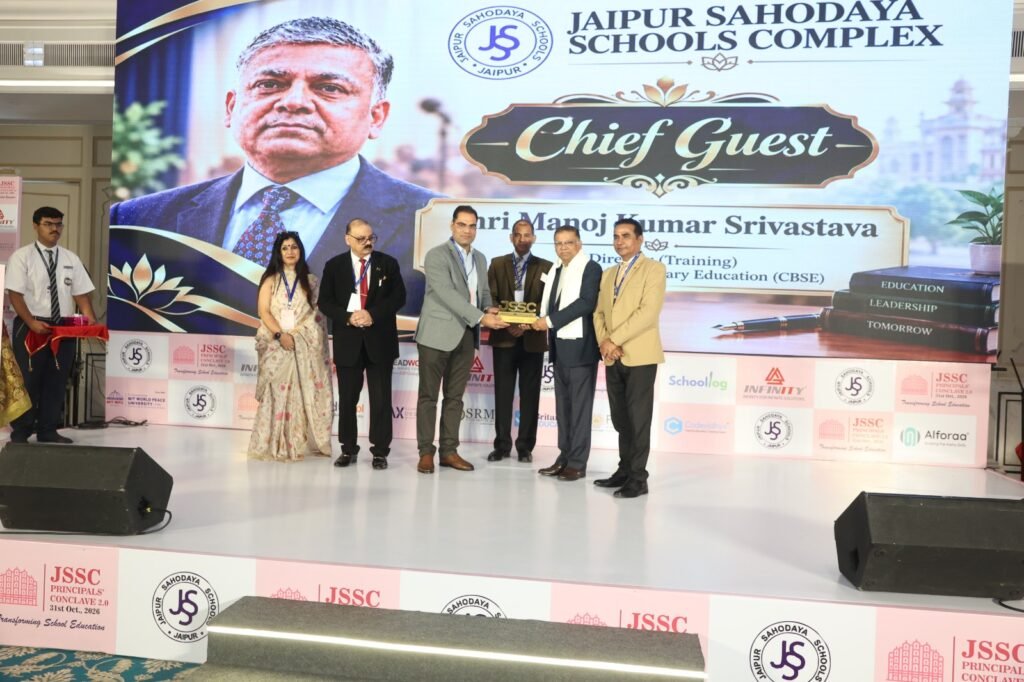
Manoj Kumar Srivastava, Director (Training) at the Central Board of Secondary Education, attended as chief guest and keynote speaker. According to the organisers’ statement, he emphasised teacher capacity building, continuing professional development and educational reforms.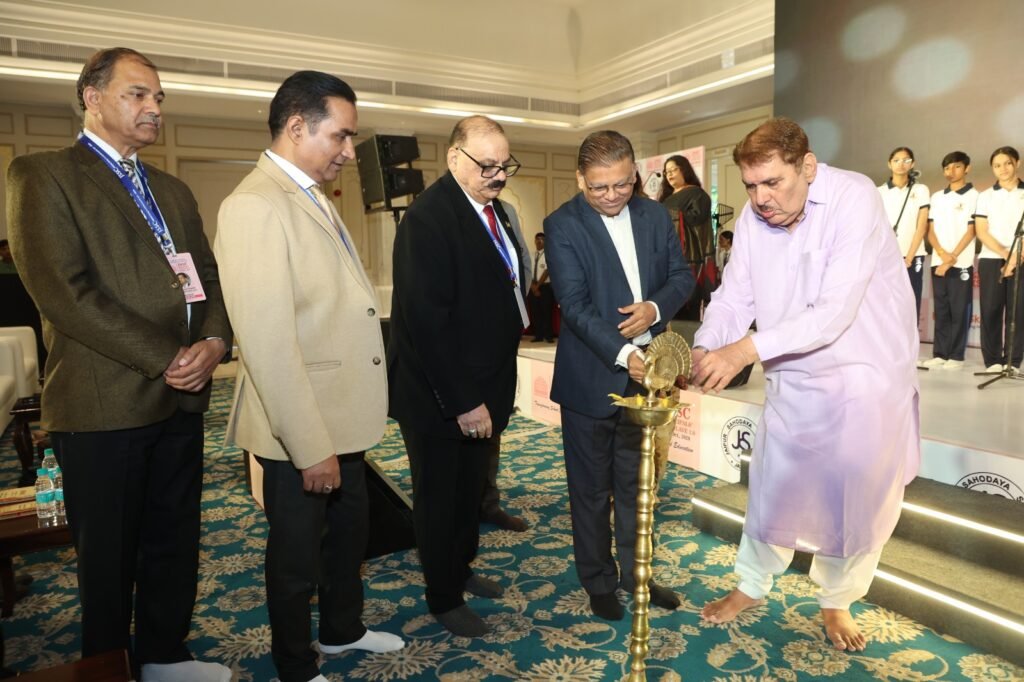
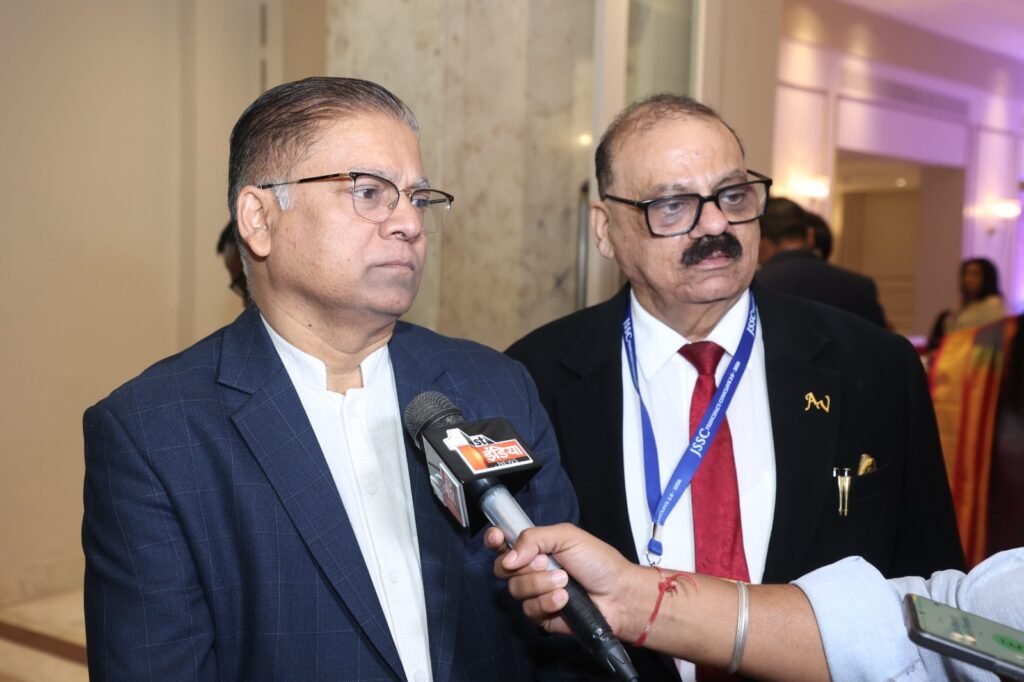
Discussions also covered curriculum restructuring, skill development, international opportunities and relationships between parents and schools. Sessions addressed the use of AI-based technology in education alongside the demands of emerging careers.
Leadership Sessions Feature Nitin Saraswat and Raza Murad
Nitin Saraswat delivered a session titled ‘Contagious Energy, Contagious Leadership’. Actor Raza Murad also addressed the participating principals, while poet Shambhu Shikhar presented observations on contemporary life through humour and satire, the organisers said.
The organising team included JSSC president Ashok Vaid, vice-president Sanjay Parashar, secretary Puneet Kumar Tyagi, organising secretary Manju Khosla and treasurer Sandeep Kulhari.
JSSC Principals’ Conclave 2.0, Jaipur Sahodaya Schools Complex, Jaipur principals conclave 2026, Manoj Kumar Srivastava CBSE, teacher professional development, AI in school education, school leadership Jaipur, Raza Murad Jaipur conclave
#JSSC #Jaipur #SchoolLeadership #TeacherDevelopment #Education
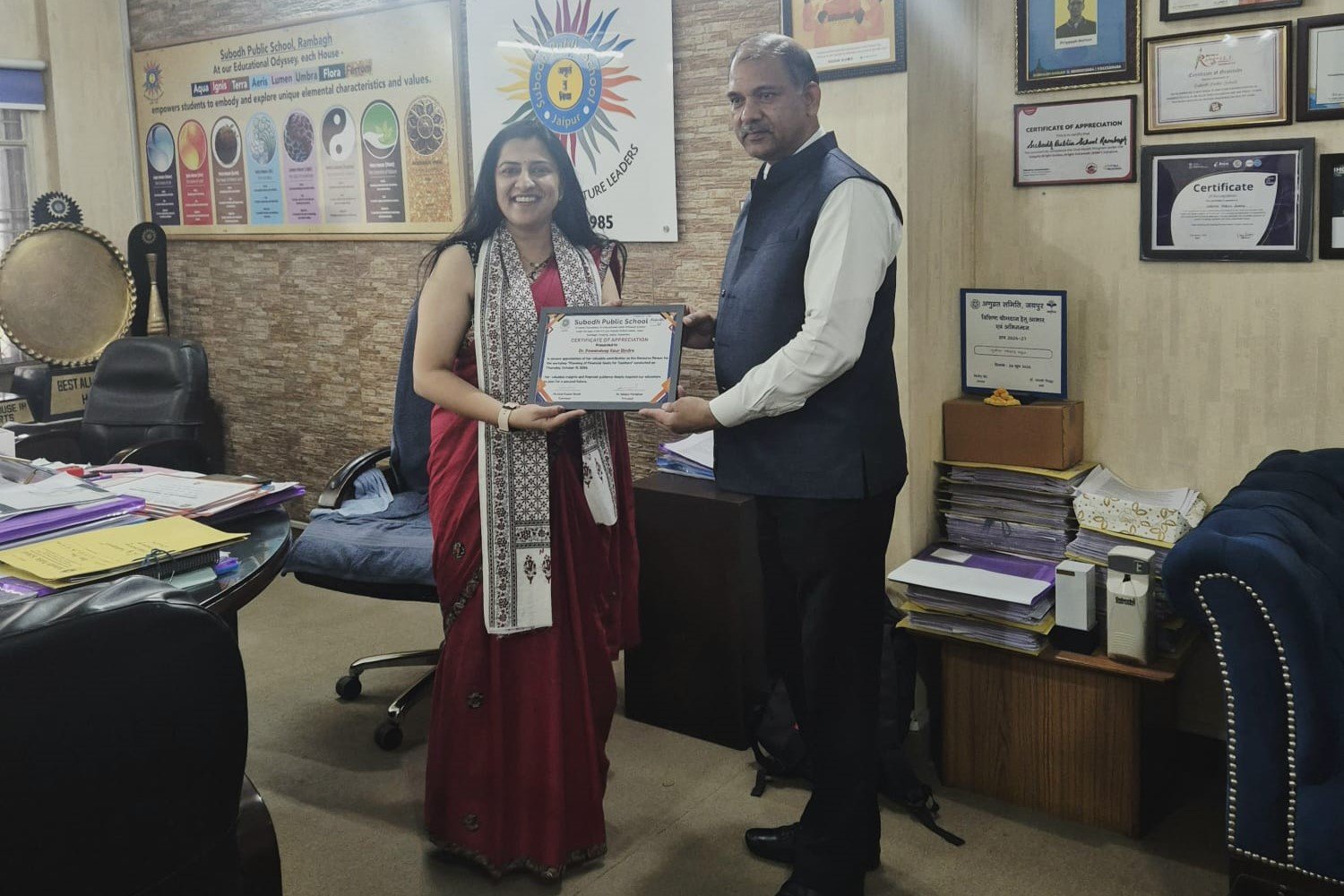
Jaipur | 15 Oct 2026
Subodh Public School, Rambagh, held a financial literacy session for teachers on 15 October, with a focus on saving, managing expenses and planning for future needs. The session was led by Pawandeep Kaur Bindra, whom the school identified as a CBSE resource person and financial literacy expert.
Session highlights savings and financial planning
Bindra discussed how regular saving can help meet future expenses and provide support in unforeseen circumstances, according to information issued by the school. She also spoke about balancing income and expenditure, limiting unnecessary spending and managing funds with future plans in mind.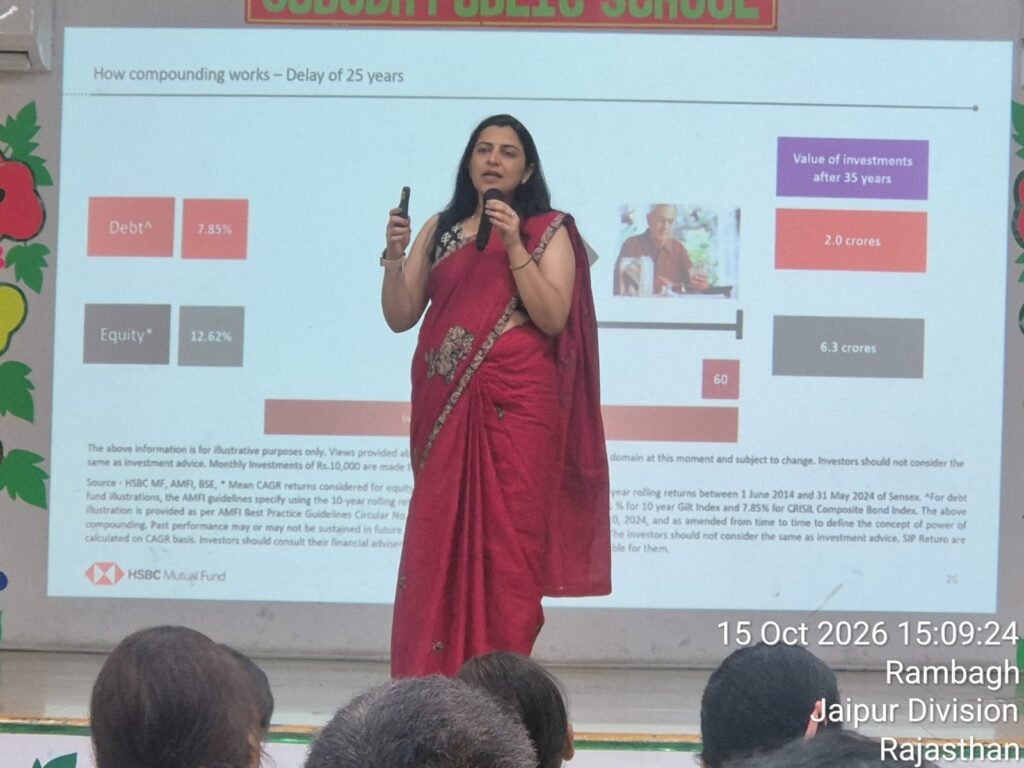
Teachers were encouraged to consider financial decisions carefully and make saving part of their routine. The session aimed to build awareness of personal money management and encourage better financial planning.
Teachers take part in financial awareness session at Subodh Public School Rambagh
The school described the session as an opportunity for teachers to learn about personal financial management and the role of savings in preparing for the future.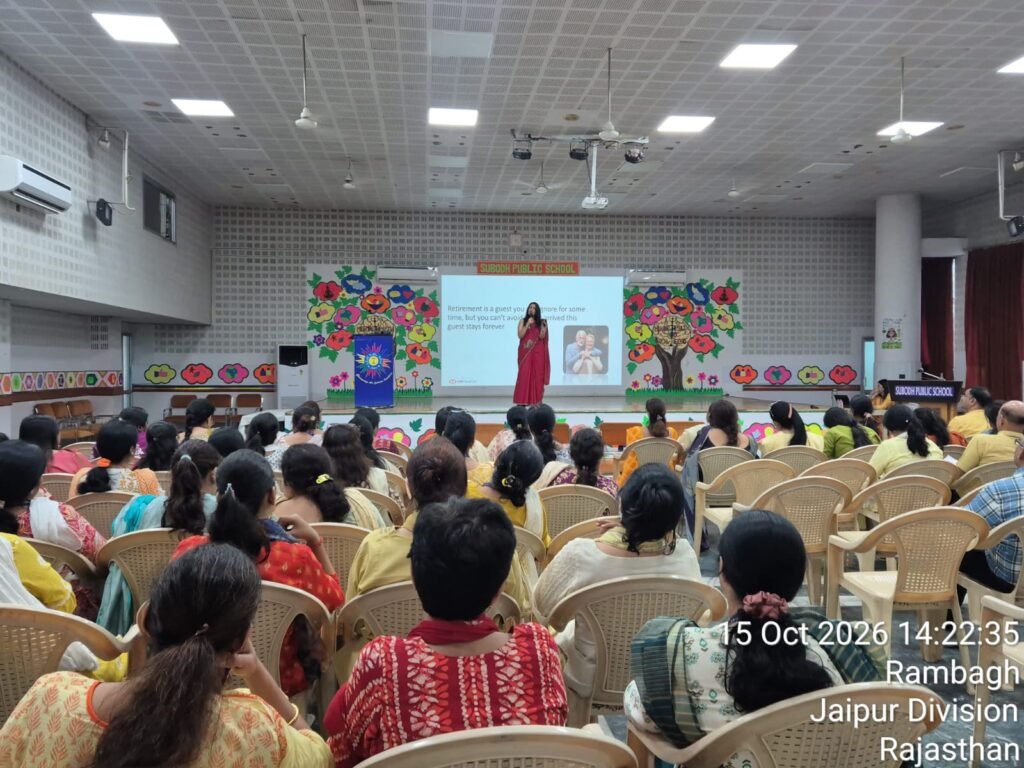
Subodh Public School financial literacy session, financial literacy for teachers in Jaipur, Pawandeep Kaur Bindra financial literacy, importance of savings, personal financial management, financial planning for teachers, managing income and expenses, savings and financial security
#FinancialLiteracy #Savings #Jaipur #SubodhPublicSchool #TeacherTraining
SRN International School Hosts Maths Café to Teach Students Business Skills
Jaipur | 12 Oct 2026
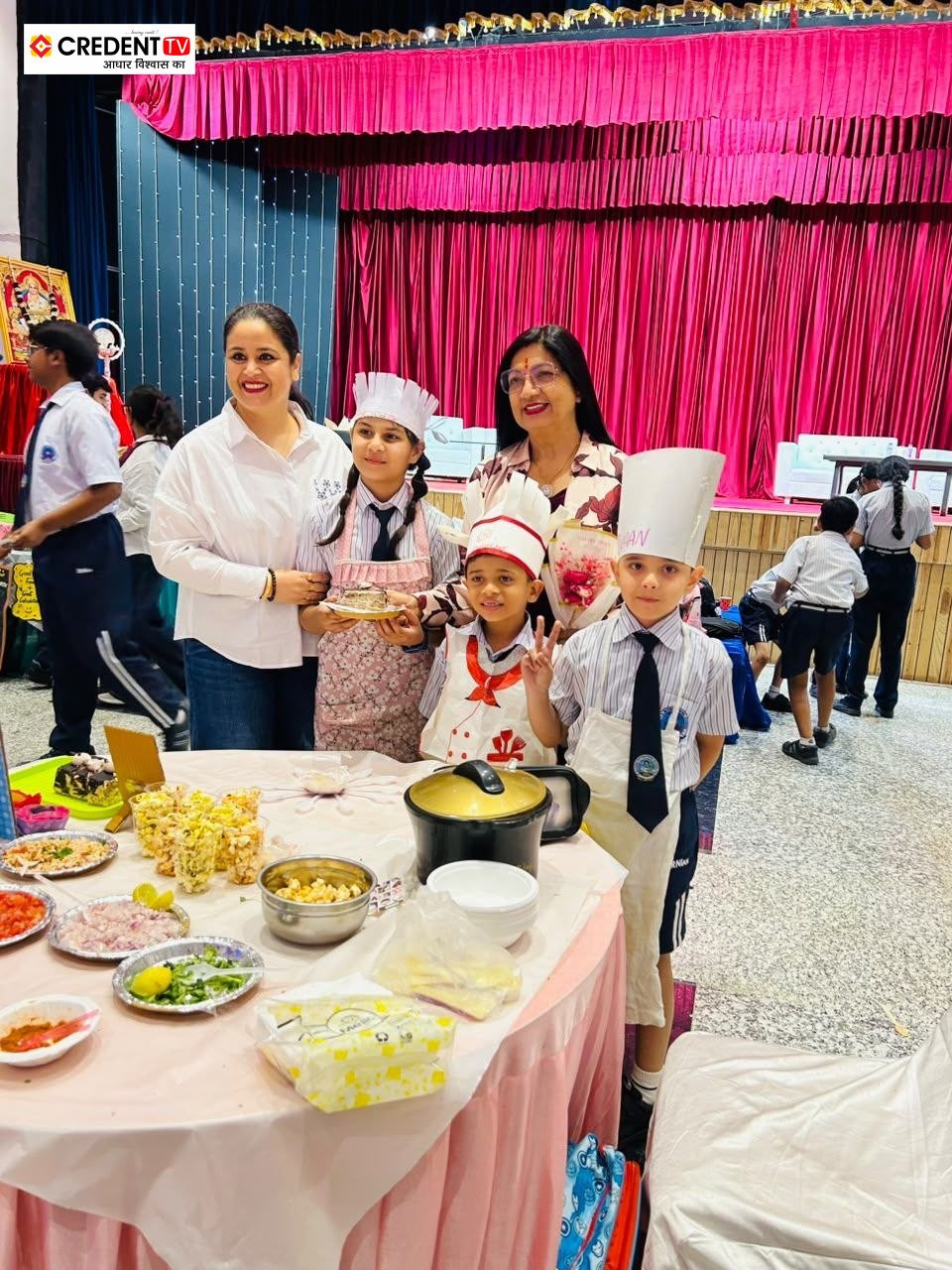
SRN International School, Jagatpura, organised a “Maths Café” for students up to Grade 8 from its CBSE and Cambridge wings, using food stalls and simulated commercial transactions to teach mathematics, entrepreneurship and the practical functioning of a market.
Maths Café Turns School Lessons Into Real-World Learning
The experiential activity was designed to connect classroom mathematics with situations children encounter in everyday life. Students established stalls offering food, beverages and other refreshments, and assumed responsibility for presenting, pricing and selling their products.
While operating the stalls, participants calculated costs, set prices, managed budgets and recorded transactions. They also learnt how revenue, expenditure, profit and loss influence basic commercial decisions.
Students Practise Profit, Loss and Budget Management
The buying-and-selling exercise allowed students to apply addition, subtraction, multiplication and division outside the conventional classroom. Handling money also helped them understand currency, change calculation and financial accuracy.
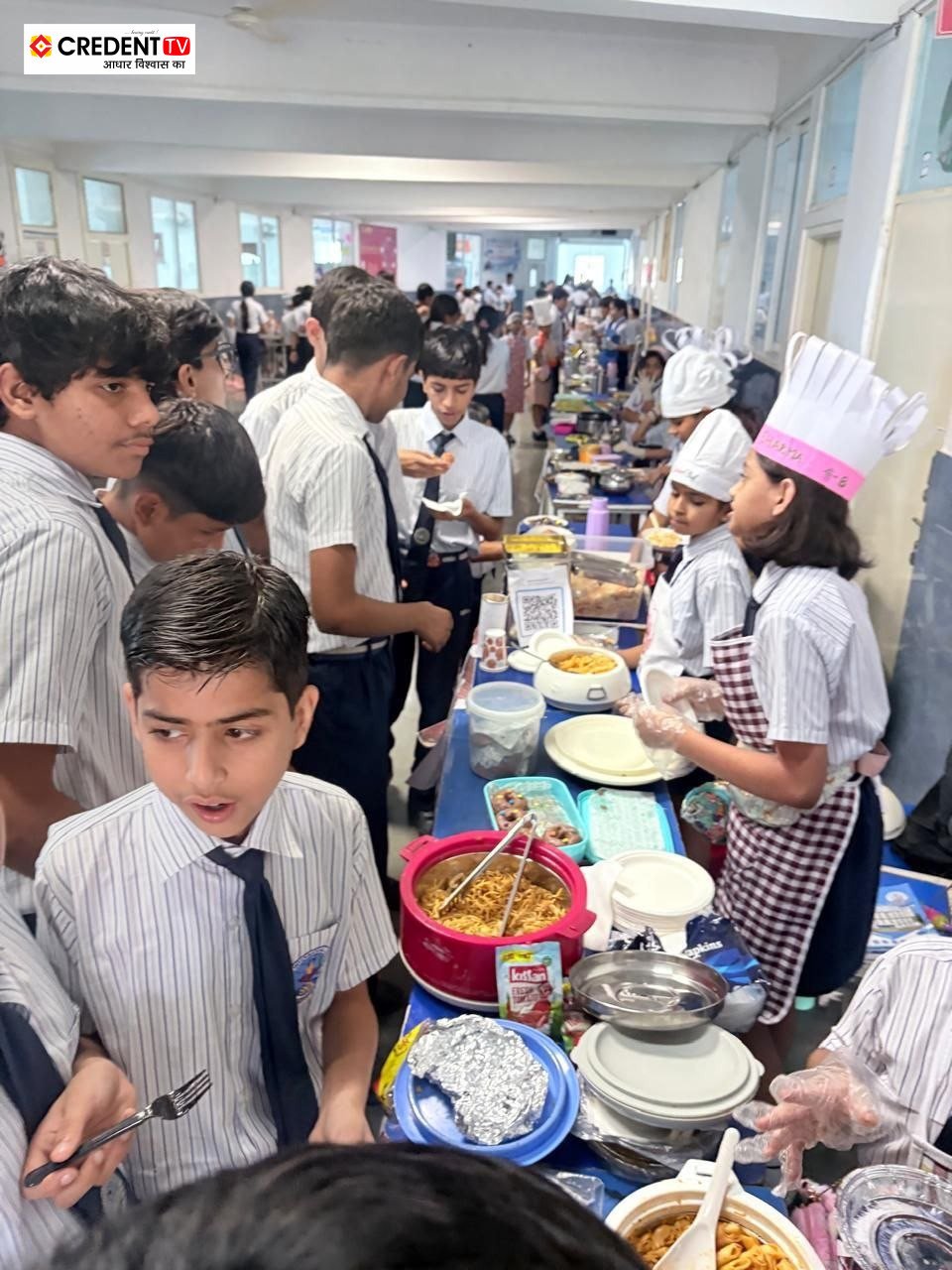
Students were required to consider whether the selling price of an item covered its cost and generated a reasonable return. This transformed abstract concepts such as profit margins and budgeting into decisions they could observe and evaluate directly.
The activity also introduced participants to customer preferences, product demand, market competition and the importance of presenting an item effectively.
Activity Builds Entrepreneurship and Communication Skills
Beyond mathematics, the event placed students in situations requiring communication, teamwork, leadership and problem-solving. They explained products to visitors, distributed responsibilities among team members and responded to customer queries.
Running a stall encouraged the children to make decisions independently while remaining accountable for stock, money and customer service. The exercise also demonstrated how successful businesses depend on cooperation, planning and clear communication.
Director Usha Sharma Highlights Experiential Education
School director Usha Sharma, an Advanced Educational Professional certified in Georgia, USA, and a CBSE National Award recipient, praised the students for their enthusiasm and initiative.
Sharma said education should extend beyond textbook knowledge and prepare children to respond confidently to practical situations. Activities such as the Maths Café, she said, allow students to learn through direct participation and understand concepts that may otherwise remain theoretical.
She observed that independently managing a stall helps children develop entrepreneurial thinking, confidence, leadership and decision-making ability. It also introduces them naturally to cost, pricing, profit, customer behaviour and competition.
Mathematics as the Foundation of Daily Economic Decisions
The Maths Café illustrated that mathematics is not confined to books, examinations or classrooms. It plays a central role in shopping, budgeting, business management and everyday financial decisions.
Through the activity, students experienced how mathematical knowledge supports planning and responsible decision-making. They were also encouraged to develop original ideas and apply their learning creatively in future projects.
The school described the event as a meaningful step towards experiential education, aimed at making learning more engaging, effective and relevant to life beyond the classroom.
Jaipur | 2 Oct 2026
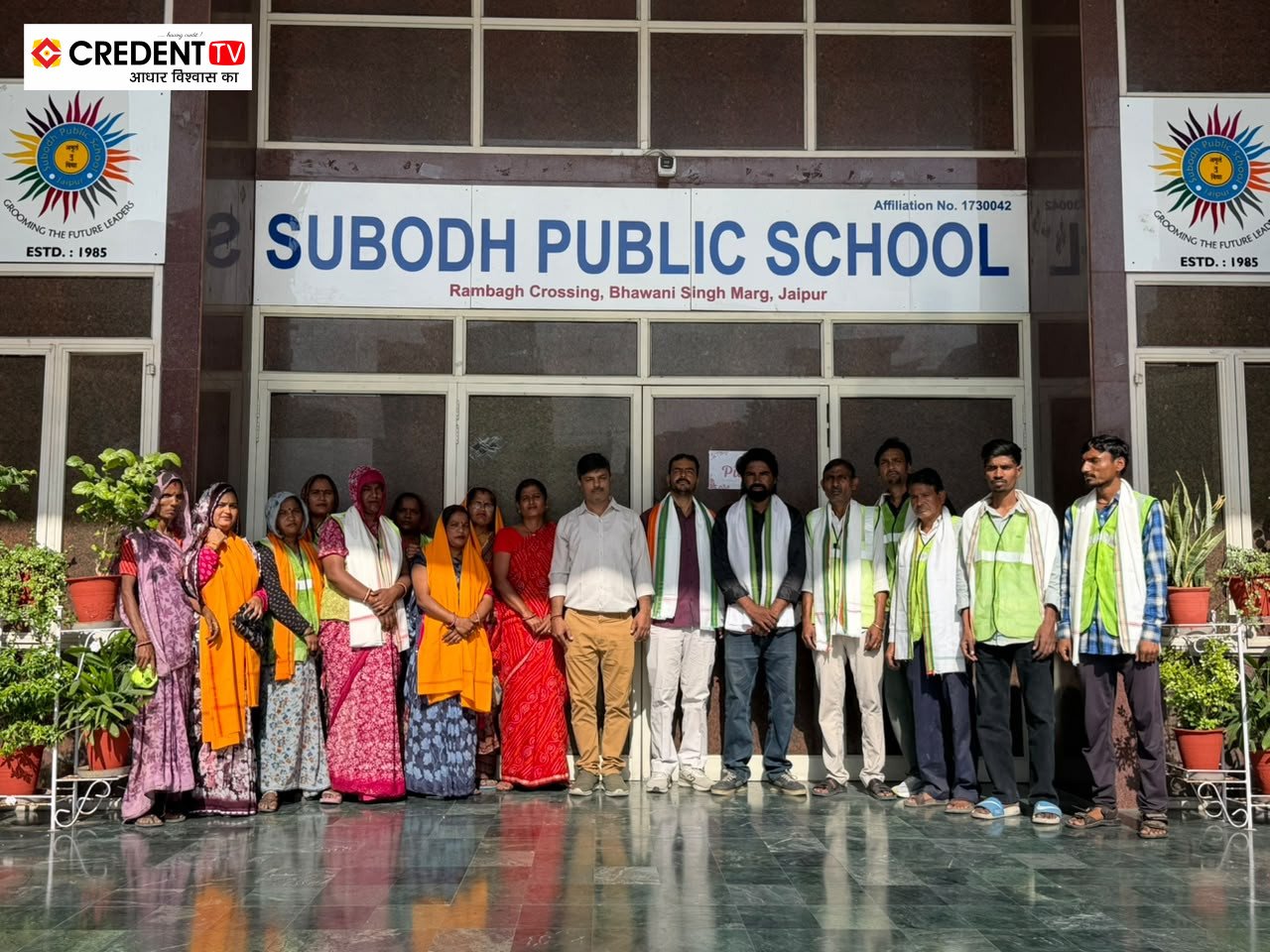
Subodh Public School, Rambagh, organised a special felicitation ceremony to recognise its sanitation and support staff for their contribution to maintaining a clean, healthy and welcoming campus.
Sanitation Workers Felicitated at Subodh Public School
The ceremony acknowledged the staff members whose daily work helps keep classrooms, corridors and other areas of the school clean, organised and hygienic.
Much of their work takes place away from public attention, but it remains essential to the health, safety and functioning of the school. The event highlighted their discipline, consistency and sense of responsibility rather than treating sanitation merely as a routine service.
Veer Bahadur Chouhan Recognises Staff Contribution
Senior clerk and chief patron Veer Bahadur Chouhan felicitated the sanitation workers and praised their role in maintaining high standards of cleanliness across the school premises.
The school leadership expressed gratitude for their patience, diligence and commitment, emphasising that every individual whose work strengthens an institution deserves dignity and recognition.
Ceremony Reinforces the Dignity of Labour
The programme was conceived as more than a formal presentation. It reflected the school’s acknowledgement of workers whose sustained efforts produce a visible and positive difference in the everyday lives of students, teachers and visitors.
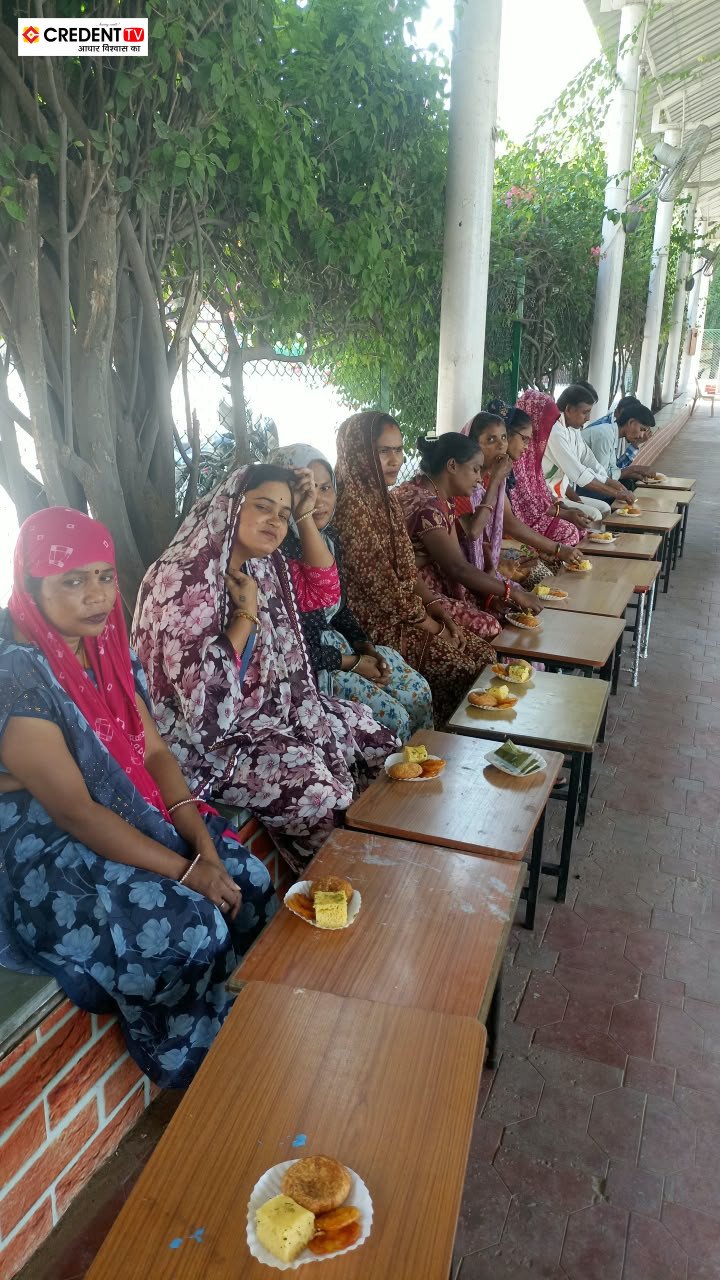
By celebrating its sanitation staff, the school reinforced the values of dignity of labour, mutual respect and service. The occasion also underlined the message that institutional excellence is built through collective effort, including the contributions that often remain unseen.
‘Collective Effort, Visible Impact’
The ceremony carried the theme “Collective Effort, Visible Impact”, recognising that a clean and disciplined learning environment is not created by infrastructure alone. It depends on people whose commitment turns shared spaces into safe and welcoming places.
The felicitation served as a reminder that respect for service must extend beyond ceremonial occasions and become part of an institution’s everyday culture.
Subodh Public School Rambagh, Subodh School Jaipur, sanitation workers felicitation, school sanitation staff, dignity of labour, clean school campus, Jaipur school news, Veer Bahadur Chouhan
#SubodhPublicSchool #SanitationWorkers #DignityOfLabour #JaipurNews #CredentTV

Jaipur | 06 Sep 2026
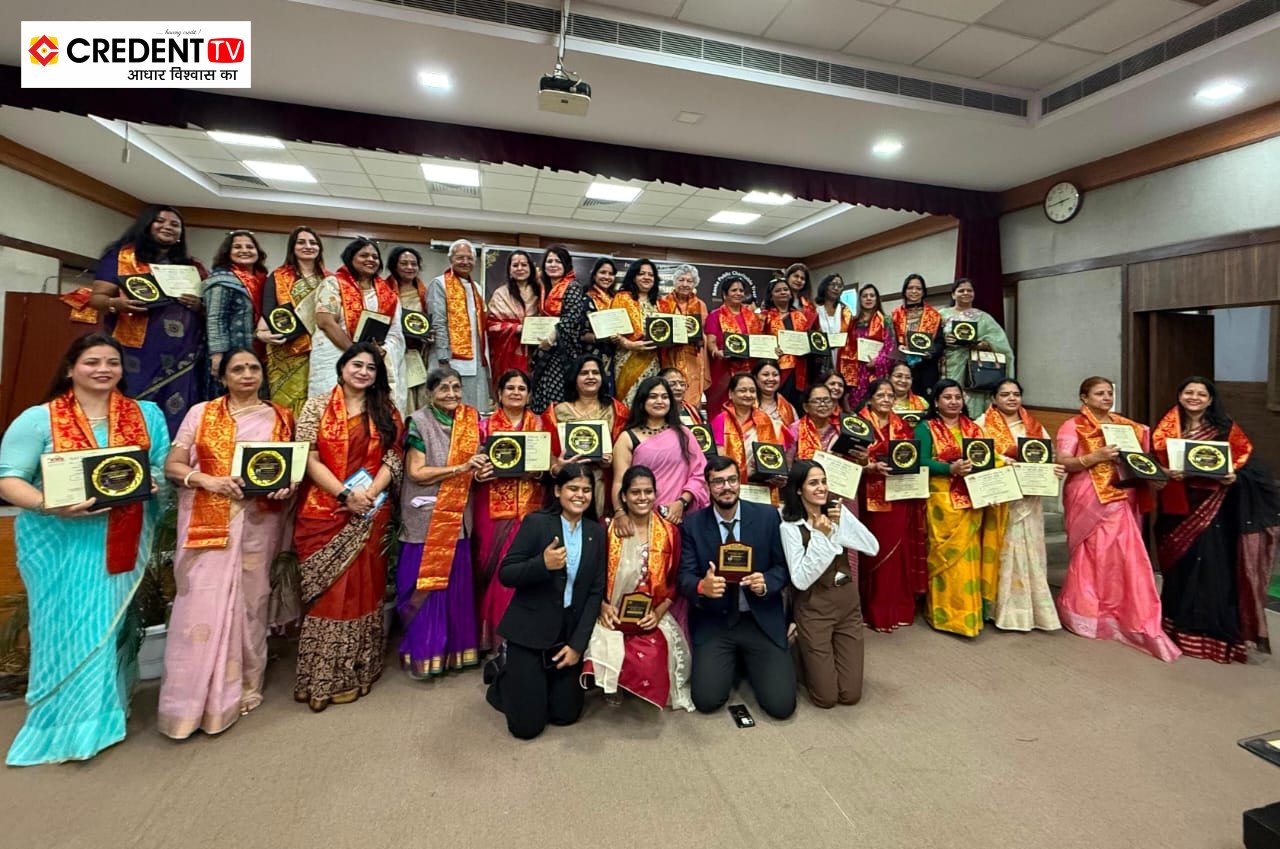
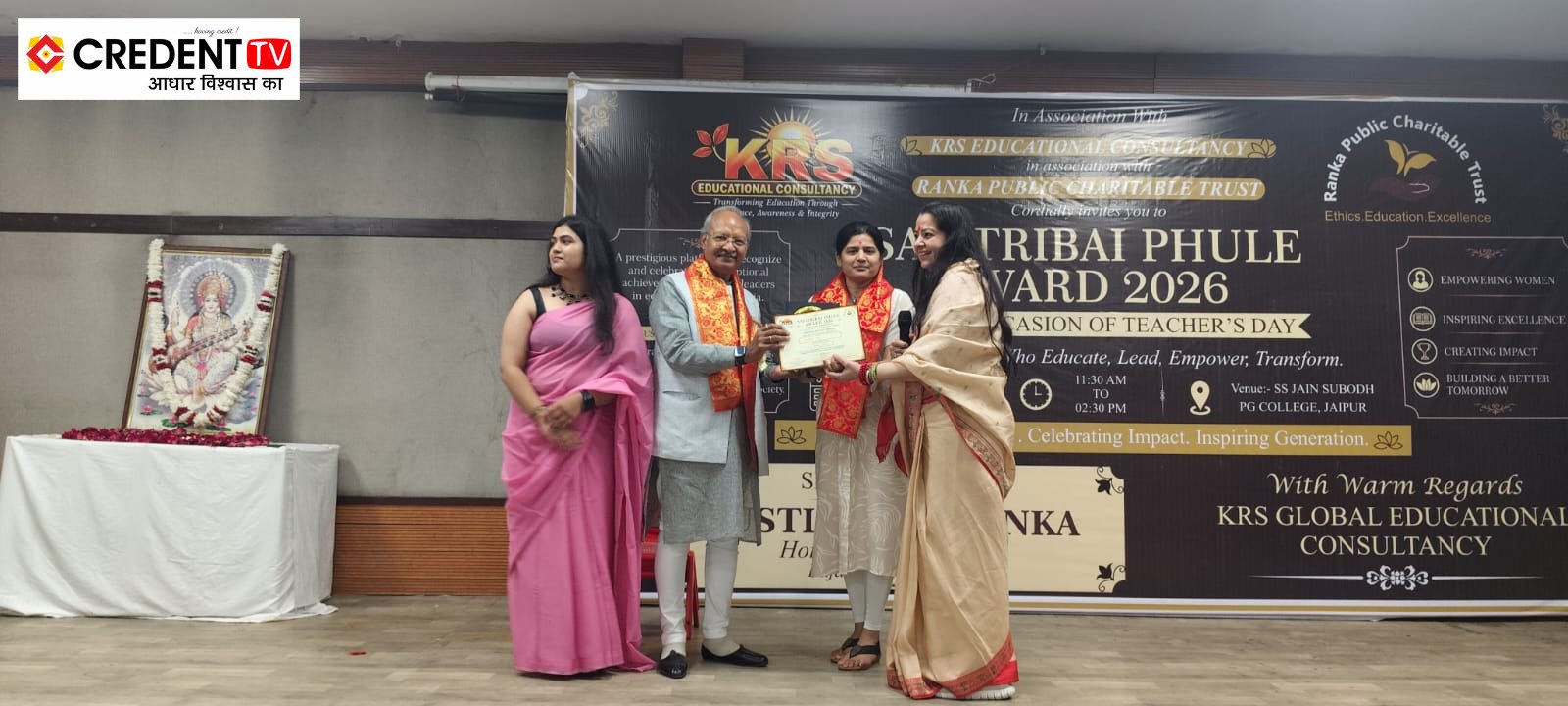
Fifty-four women from education, law, social service, leadership and other professional fields were honoured with the Savitribai Phule Award 2026 at a ceremony in Jaipur as part of Teachers’ Day celebrations. The event was organised by KRS Global Educational Consultancy with the support of Ranka Public Charitable Trust at S.S. Jain Subodh P.G. College, Rambagh Circle.
Savitribai Phule Award 2026 Recognises Women Achievers
Former Rajasthan High Court judge Justice J.K. Ranka attended the ceremony as chief guest, while Prof. Dr Shubha Sharma, Chairperson of KRS Global Educational Consultancy, presided over the programme. Advocate Roopali Chauhan, the organisation’s General Secretary, played a key role in coordinating the event.
Organisers said the awards were intended to recognise women who have made notable contributions in education, academics, social service, law, leadership and other fields, while encouraging wider participation by women in institution-building and social development.
Among the awardees was Dr Sanjula Thanvi, who was appointed Dean (Incharge), Faculty of Law, University of Rajasthan, in August 2026. Other honourees named by the organisers included Prof. Dr Shakuntala Nathpal, Prof. Dr Radha Rani Saxena, Dr Archana Srivastava, Dr Santosh Mittal, advocate Sumiti Dave Bishnoi, Captain Swati Sharma, Dr Venu Rajpurohit and Dr Lavina.
Dr Namita Jain, Dean and Head of the School of Law at JECRC University, was also among the women recognised at the ceremony.
Educators From Several States and Cities Join Jaipur Event
The programme brought together teachers, academics and professionals from Rajasthan and other parts of the country. According to the organisers, participants travelled from cities including Meerut, Varanasi, Tonk, Noida and Delhi.
Serving and former deans, heads of departments, principals, senior teachers and education professionals from universities and colleges were among those present.
The venue, S.S. Jain Subodh P.G. College at Rambagh Circle, is an autonomous Jaipur institution affiliated with the University of Rajasthan.
KRS Global Educational Consultancy and Website Launched
The ceremony also marked the formal launch of KRS Global Educational Consultancy, Jaipur, along with the unveiling of its website.
The organisation said it aims to guide students seeking higher-education opportunities and help them identify suitable academic options in India and abroad.
The launch placed student counselling and access to higher-education opportunities alongside the event’s broader focus on recognising women working in education and related fields.
Event Highlights Savitribai Phule’s Legacy in Women’s Education
The award is named after Savitribai Phule, widely recognised as a pioneering figure in women’s education and social reform in India. Her work with Jyotirao Phule in expanding access to education for girls and marginalised communities remains an important part of India’s social reform history.
Organisers said the Jaipur ceremony was intended to carry forward that legacy by recognising contemporary women whose work has contributed to education, professional leadership and social development.
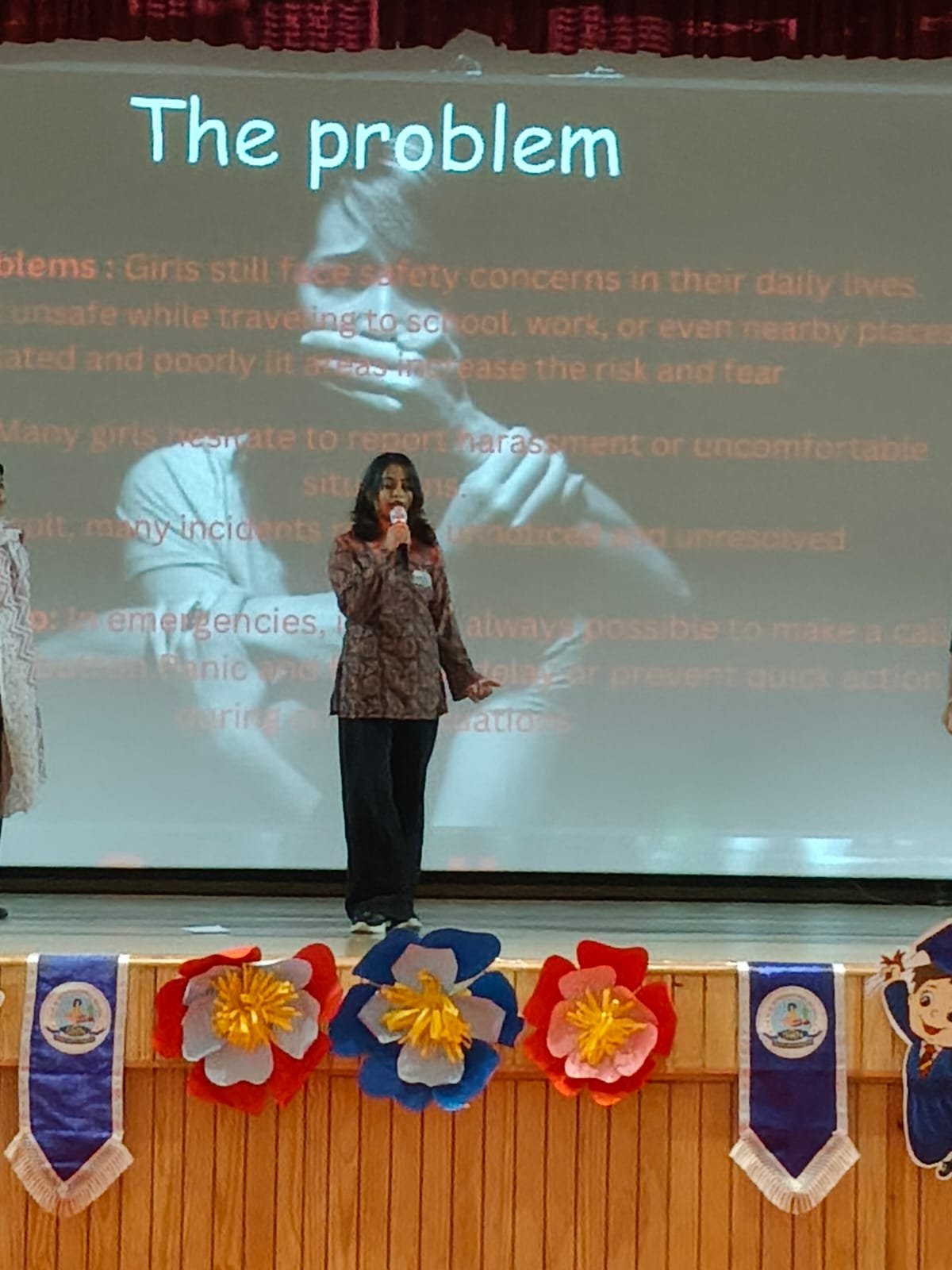
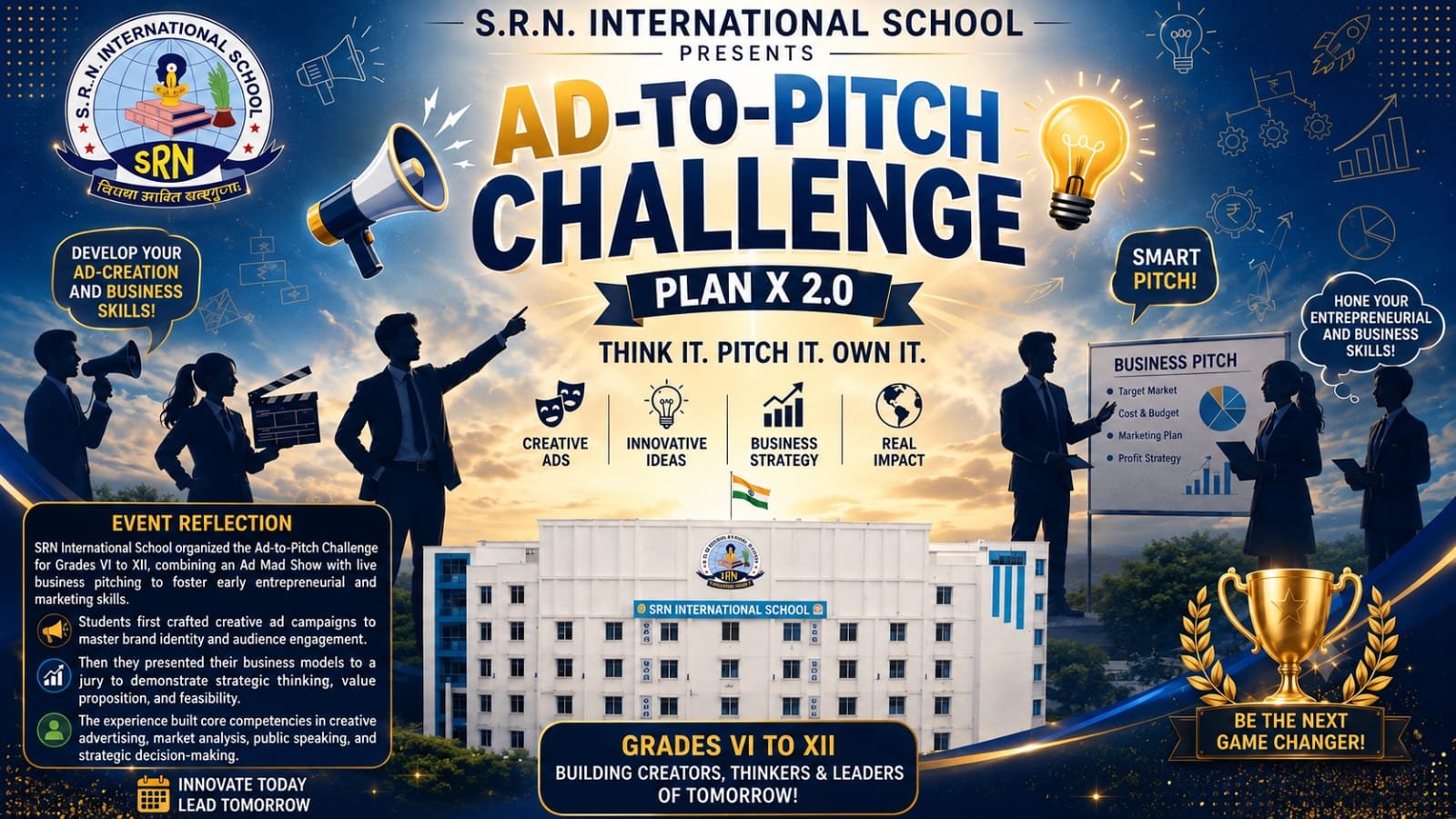
JAIPUR — The SRN Ad-to-Pitch Challenge brought students from Grades VI to XII into a simulated marketplace where they had to do more than present an idea: they first built an advertising concept and then defended a business model before a live jury. According to event information provided by SRN International School, the programme was designed to combine creative communication, market understanding, financial thinking and public speaking in one competitive format.
The event moved in two stages. Participants began with “Ad Mad” campaigns focused on branding and audience engagement, before progressing to business pitches in which they explained their proposed product or service, value proposition, market logic and financial feasibility. The jury questioned participants during the live presentations, requiring students to respond in real time rather than rely only on rehearsed speeches.
That structure placed the SRN Ad-to-Pitch Challenge closer to an applied business exercise than a conventional school presentation. Students were expected to think about how an idea would be communicated, whom it would serve, why a customer might choose it and whether the underlying business proposition could make practical sense.
SRN Ad-to-Pitch Challenge Moves from Advertising to Business Pitch
The first phase of the SRN Ad-to-Pitch Challenge focused on advertising. Students developed creative campaigns intended to communicate their ideas quickly and persuasively. The exercise required them to think about brand identity, messaging and the expectations of a target audience — basic questions that sit at the centre of real marketing decisions.
The transition from advertisement to pitch was significant. A strong campaign can attract attention, but a business pitch must explain what is being offered, who needs it, how it differs from alternatives and how the idea could operate sustainably. By combining the two, the competition asked students to connect creativity with commercial reasoning.
Participants then presented their complete business models to an expert panel, according to the school’s event account. Their presentations were assessed not simply as performances but as demonstrations of strategic thinking, value creation and financial feasibility. Live jury questions added an element of unpredictability, testing whether participants understood their own proposals deeply enough to explain or defend them under pressure.
The SRN Ad-to-Pitch Challenge therefore required students to move repeatedly between two modes of thinking: imaginative communication and analytical decision-making. That combination is particularly relevant to entrepreneurship, where an appealing idea is only one part of the challenge and execution, pricing, customer understanding and resource choices can determine whether the concept works.
What Students Were Tested On
The competition tested a broad set of skills. Market analysis was one of the most important because students had to identify the audience for their ideas and consider how a product or service would fit a real or assumed need. Even at school level, that pushes participants beyond the question, “What do I want to create?” towards the more demanding question, “Why would someone want this?”
Public speaking formed another major component. Business pitching requires clarity, structure and brevity. Students had to explain an idea to people who had not developed it themselves, which meant making assumptions visible and communicating the core proposition in accessible language.
The live questioning component raised the difficulty further. A prepared presentation can be memorised; a jury question cannot. Students had to listen, process the question, decide what information mattered and formulate an answer within seconds. That makes the SRN Ad-to-Pitch Challenge an exercise in decision-making as well as presentation.
Financial feasibility was also part of the pitching process, according to the event information. For young participants, the value of this requirement lies less in producing sophisticated financial forecasts and more in recognising that business ideas have costs, prices, resources and trade-offs. A proposal that sounds attractive must still confront practical questions about how it would be delivered and sustained.
SRN Ad-to-Pitch Challenge Tests More Than Presentation Skills
The strongest feature of the format is that the different tasks are interconnected. Branding without customer understanding is weak. A confident pitch without a workable proposition can fail under questioning. A financially sensible idea can struggle if the presenter cannot communicate its value. By putting these elements into the same competition, the school created a setting in which students had to see entrepreneurship as a system rather than a single skill.
That approach also gives younger students exposure to vocabulary and decision frameworks they may encounter later in commerce, economics, management, design, technology or start-up environments. It does not assume that every participant will become an entrepreneur. Instead, it treats entrepreneurial thinking as a practical way to develop initiative, problem-solving and communication.
Awards Recognise Innovation and Communication
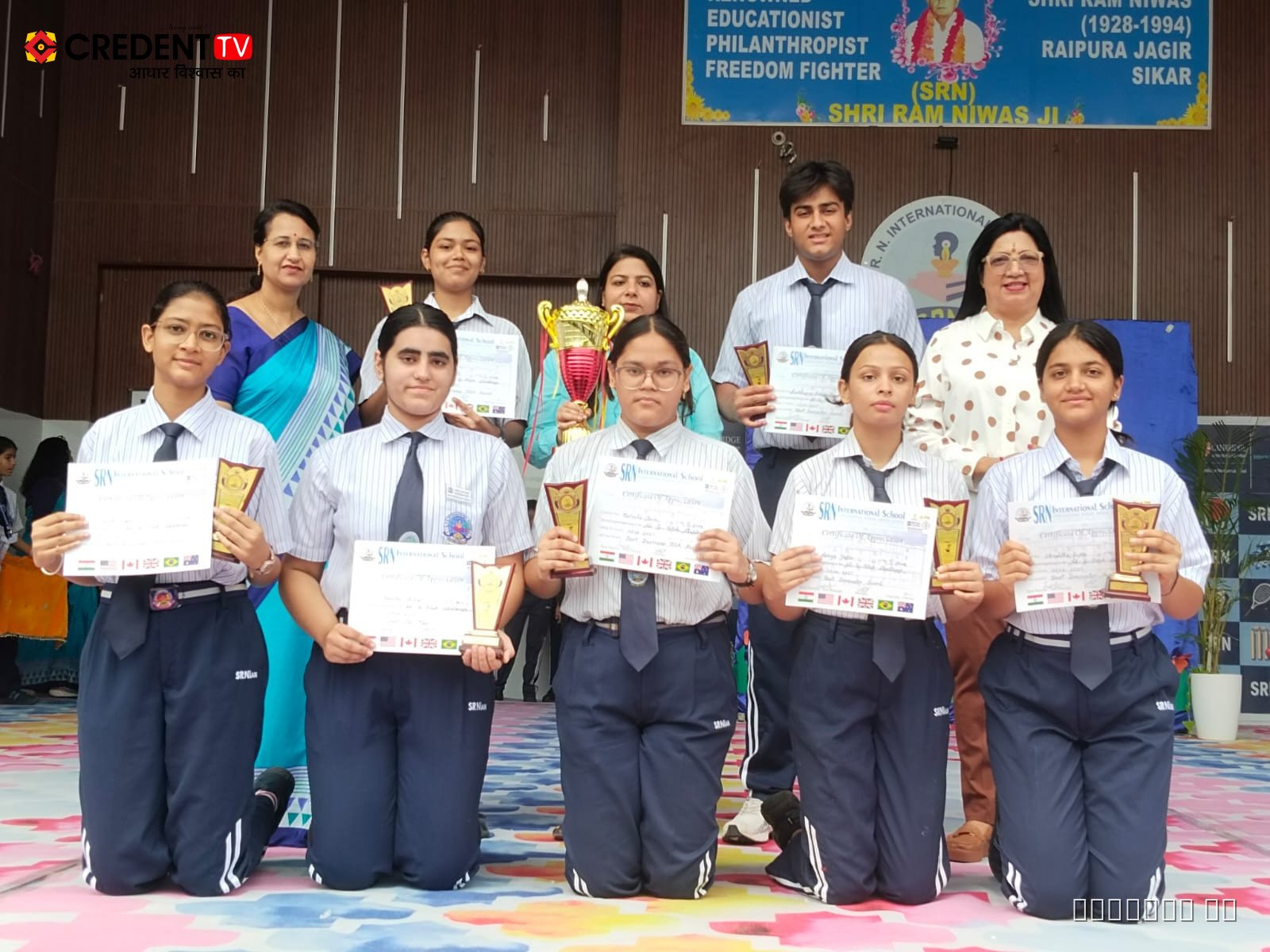
Exceptional performances were recognised in multiple categories. The school said the honours included the Best Innovator Award, the Best Business Pitch Award and the Best AdMad Presentation.
The categories reflected the different dimensions of the competition. The Best Innovator Award placed attention on originality and the strength of the underlying idea. The Best Business Pitch Award recognised the ability to turn a concept into a coherent and persuasive business case. The Best AdMad Presentation highlighted the communication and branding side of the challenge.
Individual winners’ names were not included in the material available for publication, and Credent TV is therefore not naming recipients without confirmation. The distinction is important because competition coverage should separate verified award categories from unverified claims about individual results.
Taken together, the award structure reinforced the central design of the SRN Ad-to-Pitch Challenge: creativity, strategy and presentation were treated as related but distinct abilities. That is closer to real business evaluation, where a compelling idea may still require stronger execution, and an effective presentation cannot substitute for a weak commercial proposition.
Background and Context
SRN International School is located at Ramnagariya in Jaipur’s Jagatpura area. Its [official website](https://www.srninternational.org/) describes it as a co-educational day-cum-residential institution affiliated with CBSE and offering a Cambridge pathway. The school’s 2026–27 documents list CBSE affiliation number 1730251, while its academic information shows Entrepreneurship among the subjects offered at the senior-secondary level.
The SRN Ad-to-Pitch Challenge is also consistent with a broader pattern of entrepreneurship-oriented activity at the campus. Earlier in 2026, Yi Jaipur said its Kidpreneur programme at SRN International School concluded with a Mini Marketplace on April 20. According to Yi Jaipur, more than 220 students were engaged across programme sessions, 160-plus young entrepreneurs participated through more than 50 stalls, and students worked on branding, pricing, sales, customer engagement, digital payments and revenue tracking.
That earlier programme and the SRN Ad-to-Pitch Challenge are separate activities, but both use participation and decision-making rather than lecture-only instruction. The recurring emphasis shows students being given opportunities to test business concepts through practical tasks, public interaction and competitive evaluation.
The SRN Ad-to-Pitch Challenge should not be described as a substitute for formal entrepreneurship education, but its design overlaps with several of those learning goals. Students had to consider markets, communicate value, address feasibility and respond to questions — activities that translate abstract business concepts into decisions and explanations.
Why It Matters
School entrepreneurship events are most useful when they move beyond slogans about innovation and give students a structured problem to solve. The SRN Ad-to-Pitch Challenge did that by requiring participants to develop both an outward-facing advertisement and an inward-facing business rationale.
For students in Grades VI to XII, the age range also creates an important progression. Younger participants can begin with creative communication and basic customer thinking, while older students can engage more deeply with market positioning, feasibility and business logic. The same format can therefore test different levels of complexity without losing its core purpose.
The public-speaking component has relevance beyond commerce. Students who can explain an idea clearly, answer difficult questions and adjust their reasoning in response to scrutiny are developing skills useful in academic presentations, interviews, leadership roles and collaborative work.
The financial element matters for another reason. Young people are frequently encouraged to innovate, but innovation without attention to cost, resources or implementation can remain abstract. Asking students to consider feasibility introduces discipline into creativity. It teaches that ideas must operate within constraints and that choices have consequences.
The advertising phase also introduces a form of media literacy. To build a campaign, students have to think about audience, message, attention and persuasion. Those are marketing skills, but they can also help students understand how commercial communication works around them. When taught responsibly, creating advertising can make learners more analytical consumers of advertising as well.
Most importantly, the live jury format creates accountability. Participants cannot control every question, and that uncertainty forces them to understand their proposals rather than simply perform them. The SRN Ad-to-Pitch Challenge therefore gives students a low-risk environment in which to experience a core feature of professional life: decisions and claims are often tested by other people.
The format also changes the role of failure. In a conventional test, a wrong answer may simply cost marks. In a business-pitch simulation, a weak assumption or difficult jury question can become immediate feedback. Students can see where an idea lacks clarity, where a cost has been overlooked or where an audience has not been adequately defined.
That feedback loop is central to entrepreneurial thinking. Ideas are rarely complete at the first attempt. They are tested, challenged and revised. By allowing students to encounter that process before entering university or the workplace, schools can make concepts such as market research, value proposition and financial planning more concrete.
What Happens Next
The school has described the competition as a successful experiential-learning initiative and has recognised outstanding participants across the announced award categories. No further round, external final, commercial incubation programme or follow-up funding process was confirmed in the information available for publication.
Any subsequent mentoring, inter-school expansion or continuation of the SRN Ad-to-Pitch Challenge would therefore require a separate announcement from the school. Until then, the confirmed outcome is the completion of the school-level competition and recognition of student performance in innovation, business pitching and advertising presentation.
For SRN International School, the event adds another practical entrepreneurship activity to a campus that has already hosted market-based learning programmes in 2026. For the students, its value lies in the sequence they experienced: create an idea, communicate it, justify it and answer for it.
That sequence is simple, but it mirrors the pressure points of real enterprise. The SRN Ad-to-Pitch Challenge turned those pressure points into a school competition, giving students an opportunity to practise not only how to make a pitch, but also how to think before making one.
SRN Ad-to-Pitch Challeng, SRN International School Jaipur, young entrepreneurs Jaipur, student entrepreneurship, business pitch competition, Ad Mad competition, entrepreneurship education, student business ideas, experiential learning, school marketing challenge, young innovators, business skills for students, Jaipur school news,
SRN International School, Jaipur, Entrepreneurship, Student Innovation, Business Pitch, Ad Mad, Young Entrepreneurs, Experiential Learning, School Education, Marketing Skills, Business Education, Rajasthan Education
#SRNAdToPitch #YoungEntrepreneurs #StudentInnovation #JaipurEducation #CredentTV

Subodh Public School Jaipur Hosts Annual Sports Meet for 2026–27

SRN International School Marks Silver Jubilee with Ventura 2K26 in Jaipur

JSSC Principals’ Conclave 2.0 Focuses on Teacher Development and AI in Education

Subodh Public School Rambagh Holds Financial Literacy Session for Jaipur Teachers

SRN International School Maths Café, SRN International School Jagatpura

Dr Ambedkar Memorial Welfare Society Rajasthan Forms Permanent Council

Priyansh Arya: The Six-Hitting Sensation of IPL 2025

Top 10 Most Searched Topics on YouTube: What’s Trending Now?

Preity Zinta Spotted with New Punjab Kings Hero Priyansh Arya in Viral Clip

Nag Panchami 2025: 7 Key Rituals and Puja Time to Eliminate Kaal Sarpa Dosha

Balen Shah, Kathmandu’s independent mayor, from rapper to political leader. Explore his rise amidst Nepal’s youth-led revolution-

Radhika Merchant: A New Chapter as Radhika Ambani

best career opportunities | Jaipur Career Fair | Credent TV | Dainik Navjyoti D2S03

what is reiki healing | Mental Health | Shiksha Sarokar, शिक्षा सरोकार, Sunil Narnaulia

DAV Centenary Public School, Vaishali Nagar, Jaipur hosts Successful ‘Mind Wars Quiz: A Battle of Wits and Knowledge’

 Education1 month ago
Subodh Public School Rambagh Honours Sanitation Staff for Dedicated Service
- Politics2 months ago
Rahul Gandhi Demands CEC Gyanesh Kumar’s Resignation Amid Electoral Roll Row
- Music2 months ago
Mere Raanjhana- Brings AI and Human Creativity Together in Jaipur
- Subodh Public School2 months ago
Subodh Public School Hosts Free Cancer Screening and Awareness Camp in Jaipur
- India1 month ago
October 2026 Rules: LPG Subsidy, SBI ATM and UPI Changes Explained
- Pakistan1 month ago
Trump-Linked Powerus Plans Drone Production Partnership With Pakistan Army
- Health2 months ago
Bengaluru Writer Anagha Sonde Launches Healing Book ‘Welcome Back to Yourself’
- Entertainment1 month ago
Eurovision Asia 2026: बैंकॉक में पहला संस्करण, यूरोप में विवाद जारी