Breaking News
Why Rajasthan’s Panchayat Elections Delay Is a Dangerous Threat to Democracy; 5 Powerful Reasons
Jaipur, 24 April | Rajasthan’s panchayat elections delay has ignited a fierce political and legal storm across the state, pushing grassroots democracy to a critical crossroads. As courts issue contempt notices and thousands of villages run without elected representatives, the Indian National Congress’s Rajiv Gandhi Panchayati Raj Sangathan (RGPRS) is sounding the bugle — launching a sweeping statewide mass campaign on April 24, 2026, Panchayati Raj Foundation Day, demanding immediate elections and an end to what they call a deliberate “assault on democracy.”
What Is the ‘Chunav Karao – Loktantra Bachao’ Campaign?
The Rajiv Gandhi Panchayati Raj Sangathan (RGPRS), Rajasthan — a dedicated wing of the Indian National Congress — officially launches its state-wide mass movement on April 24, 2026, a date that carries deep symbolic weight as India’s Panchayati Raj Foundation Day.
The campaign, titled “Chunav Karao – Loktantra Bachao” (Conduct Elections – Save Democracy), is not just a political protest. It is a structured, grassroots public movement aimed at pressing the Rajasthan government, the State Election Commission (SEC), and the judiciary into immediate action on long-overdue local body elections.
Dr. C.B. Yadav, State President of RGPRS, described the movement in clear terms: “This is not merely an organisational programme. It is a broad people’s struggle to defend democracy and constitutional values — one that will grow from the village chaupal to social media.”
Key Campaign Activities Planned:
- District-level demonstrations and seminars on April 24 across all districts simultaneously
- Signature drives targeting 20,000 signatures per district, with a statewide goal of 10 lakh (1 million) signatures in three months
- 100 village-level seminars per district
- Door-to-door outreach, padyatras (foot marches), and public choupals
- A major gathering at the Rajasthan Congress Committee office in Jaipur, where senior party leaders and departmental officials will participate

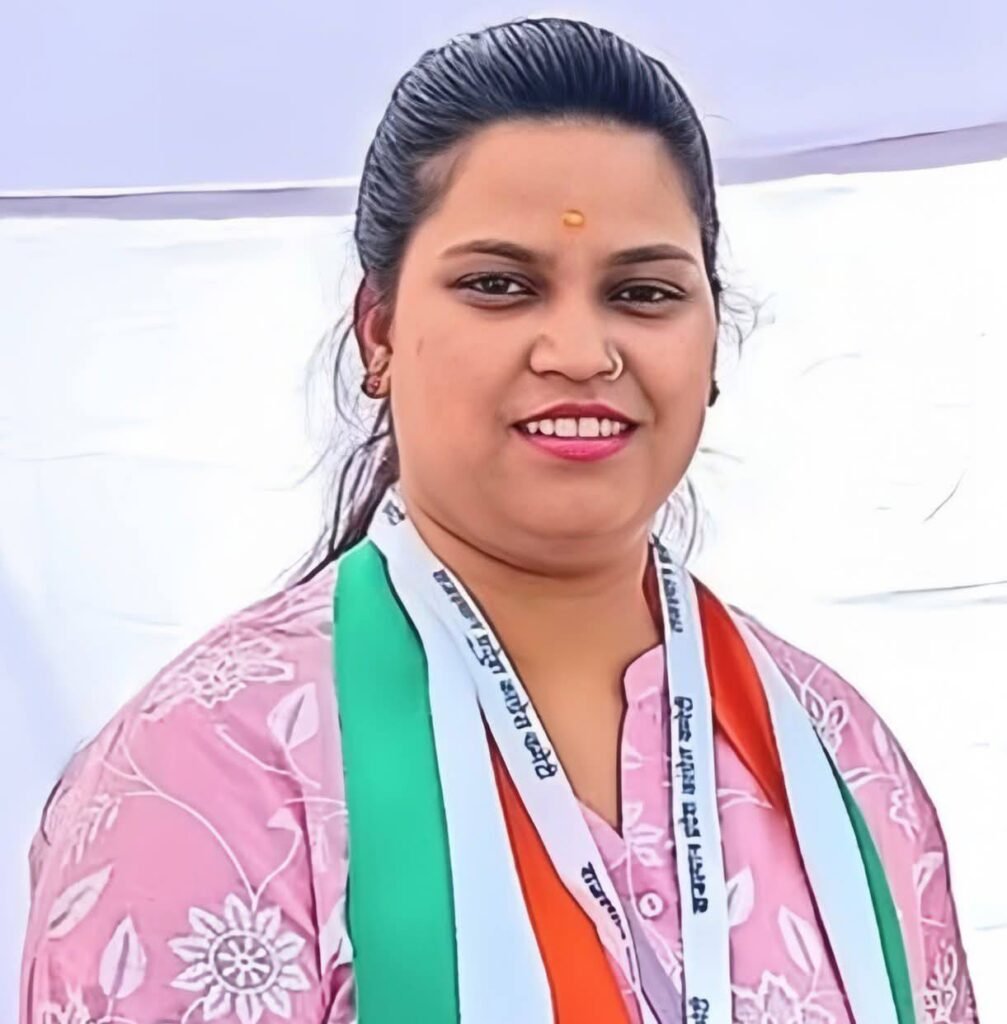
State Coordinator Priti Mourya confirmed that the Jaipur launch event will see senior Congress organisational leaders and departmental heads attend, boosting workers’ morale and formally inaugurating the campaign.
The Scale of the Rajasthan Panchayat Elections Delay
The Rajasthan panchayat elections delay is not a minor administrative hiccup — it is a constitutional crisis of enormous scale.
The case involves elections to 14,403 panchayats, 457 panchayat samitis, 41 zila parishads, 10 municipal corporations, 45 municipal councils, and 254 municipalities across the state.
In a historic first in six decades, the Rajasthan government postponed elections due in January 2025 for 6,759 panchayats, appointing the sitting sarpanchs as panchayat administrators — another unprecedented move.
The tenure of 49 municipal bodies ended in November 2024, and that of 11,310 Gram Panchayats has already expired, with administrators appointed across all these bodies.
Under Articles 243E and 243U of the Indian Constitution, elections to panchayats and urban local bodies must be held mandatorily every five years. Dr. Yadav argues that any delay beyond this is not just a bureaucratic failure — it is a direct violation of constitutional provisions that form the backbone of Indian democracy.
Courts Step In: High Court Issues Contempt Notices
The judiciary’s patience with the Rajasthan panchayat elections delay appears to be running thin.
On November 14, 2025, the Rajasthan High Court, while deciding a batch of 439 petitions, directed the state government to conduct panchayat and local body elections by April 15, 2026, and mandated completion of the delimitation process by December 31, 2025.
The Supreme Court subsequently upheld the timeline and cleared the way for conducting the polls.
Despite these clear judicial mandates, the SEC failed to comply. The Rajasthan High Court then issued contempt notices to the State Election Commission and State Election Commissioner Rajeshwar Singh, questioning how the SEC had issued a schedule for voter list revision that extended beyond the court-mandated deadline.
Counsel for petitioner Puneet Singhvi argued that the SEC’s revised timeline — pushing the publication of final electoral rolls to April 22 — ruled out any possibility of completing elections by the court-mandated deadline.
The SEC, in its defence, maintained that the Panchayati Raj department had failed to finalise reservation lists for seats earmarked for women, OBCs, Scheduled Castes and Scheduled Tribes, making it impossible to proceed.
The RGPRS campaign demands that this judicial pressure be backed by mass public pressure — making the people’s voice impossible to ignore alongside the court’s orders.
₹1,900 Crore Frozen: The Hidden Cost of the Delay
One of the most alarming consequences of the Rajasthan panchayat elections delay is the financial paralysis it has caused at the grassroots level.
Dr. Yadav stated that approximately ₹1,900 crore in Central Finance Commission funds remain blocked and unspent because, without elected panchayat bodies, the disbursement mechanisms are effectively stalled. These funds are critical for rural infrastructure, drinking water, roads, sanitation, and livelihood programmes.
Without elected sarpanchs and panchayat members to authorise and oversee development works, villages across Rajasthan have been stuck in a limbo — projects cannot be sanctioned, tenders cannot proceed, and welfare schemes cannot be implemented on the ground.
As someone from a village, development work suffers visibly when Gram Panchayats have no elected representatives. This sentiment echoes across rural Rajasthan, where the absence of legitimate governance has created a leadership vacuum at the most fundamental administrative unit of Indian democracy.
BJP’s ‘One State, One Election’ Argument Under Fire
The BJP-led Bhajan Lal Sharma government has consistently justified the Rajasthan panchayat elections delay by invoking its ambition for a ‘One State, One Election’ policy.
In its 2024 budget, the Rajasthan government announced plans to implement a ‘One State, One Election’ policy to reduce election-related costs, with a plan to conduct all civic body polls in mid-2025 spanning 45 days in three or four phases.
The OBC Political Representation Commission, constituted to determine reservation quotas — a mandatory step following a 2022 Supreme Court ruling — has not submitted its findings, and the state government extended the commission’s tenure to September 30, citing incomplete data.
However, Congress has called this a manufactured excuse. Congress State Chief Govind Singh Dotasra alleged that the government is using the ‘One State, One Election’ slogan as a cover to deliberately stall the democratic process, predicting that no election process could start before February 2026 since voter lists would remain frozen.
Former Chief Minister Ashok Gehlot described the delay as indicative of a “constitutional breakdown.”
Congress Strategy: From Villages to Social Media
What makes the RGPRS campaign particularly notable is its multi-layered, ground-up strategy designed to build sustained pressure rather than deliver a single-day protest.
The three-month roadmap is ambitious:
Phase Activity Target Month 1 District demonstrations + seminars All 33 districts Month 1-2 Signature drives 20,000 per district Month 1-3 Village-level choupals 100 per district Month 3 Statewide total 10 lakh signatures
Dr. Yadav envisions the movement transcending party boundaries: “This will be developed as a jan lahar (people’s wave) from social media to the village chaupal.” The campaign is designed so that the pressure builds progressively — starting with awareness, escalating to organised demonstrations, and culminating in a mass petition that cannot be dismissed.
The strategy draws a direct line from local grievances — blocked funds, stalled roads, absent welfare schemes — to the larger constitutional argument about democratic rights.
Why This Matters for Every Rajasthan Citizen
The Rajasthan panchayat elections delay is not merely a political tussle between the BJP and the Congress. Its consequences touch every citizen who relies on their Gram Panchayat for services, development, and representation.
Here is why every voter should care:
Democratic Representation: Without elected panchayats, millions of citizens have no legitimate local representative. Administrators — however competent — are not accountable to voters.
Development Paralysis: Projects funded by the Central Finance Commission, state schemes, and MGNREGA all require functional elected panchayat structures to operate efficiently.
Constitutional Rights: Articles 243E and 243U are not optional guidelines. They are constitutional mandates. Delay violates the fundamental right of citizens to participate in self-governance.
Judicial Accountability: The fact that the High Court had to issue contempt notices — even after the Supreme Court upheld election timelines — reveals a troubling pattern of institutional defiance.
OBC and Marginalised Representation: The delay in finalising OBC reservations has directly impacted thousands of candidates from backward communities who are waiting to contest and represent their communities in local bodies.
What Happens Next?
The launch of the Chunav Karao – Loktantra Bachao campaign on April 24 is just the beginning. RGPRS has made it clear that the movement will escalate if elections are not announced promptly. The three-month signature drive, culminating in a 10-lakh-signature petition, is intended as a powerful democratic tool — a people’s referendum of sorts, demanding their constitutional right to vote.
The Rajasthan High Court’s contempt proceedings remain ongoing, with the SEC expected to respond within four weeks. Legal observers note that the court’s continued scrutiny could force the government’s hand, regardless of political calculations.
For those wishing to understand the constitutional framework of Panchayati Raj institutions in India, the Ministry of Panchayati Raj’s official portal provides comprehensive resources on the structure, powers, and electoral obligations of local bodies across all states.
Additionally, the Rajasthan State Election Commission is the official body responsible for scheduling and conducting these elections, and its notifications are closely watched by political parties, candidates, and the courts alike.
The Rajasthan panchayat elections delay has become one of the most significant democratic flashpoints in the state’s recent history. With courts issuing contempt notices, nearly ₹1,900 crore in development funds frozen, over 11,000 gram panchayats running without elected leaders, and now a Congress-led mass movement launching statewide, the pressure on the Bhajan Lal Sharma government is reaching a boiling point.
The RGPRS’s campaign, beginning on the symbolically charged date of Panchayati Raj Foundation Day, April 24, is a calculated attempt to shift the conversation from courtrooms to the streets — where democracy is ultimately decided.
Whether it succeeds in forcing immediate elections or not, the campaign shines a necessary and urgent spotlight on a constitutional obligation that, according to both courts and citizens, can no longer be ignored.