Himachal Pradesh
“Rain, Rocks, and Ruin: Himachal’s Seraj Fights Back from Cloudburst Tragedy”

Contents
“In Himachal’s Seraj Assembly constituency, the natural disaster that struck Thunag and surrounding areas has turned into one of the most devastating tragedies in recent memory.”
Devastation Unleashed: Nature’s Fury Wreaks Havoc in Himachal’s Seraj Valley
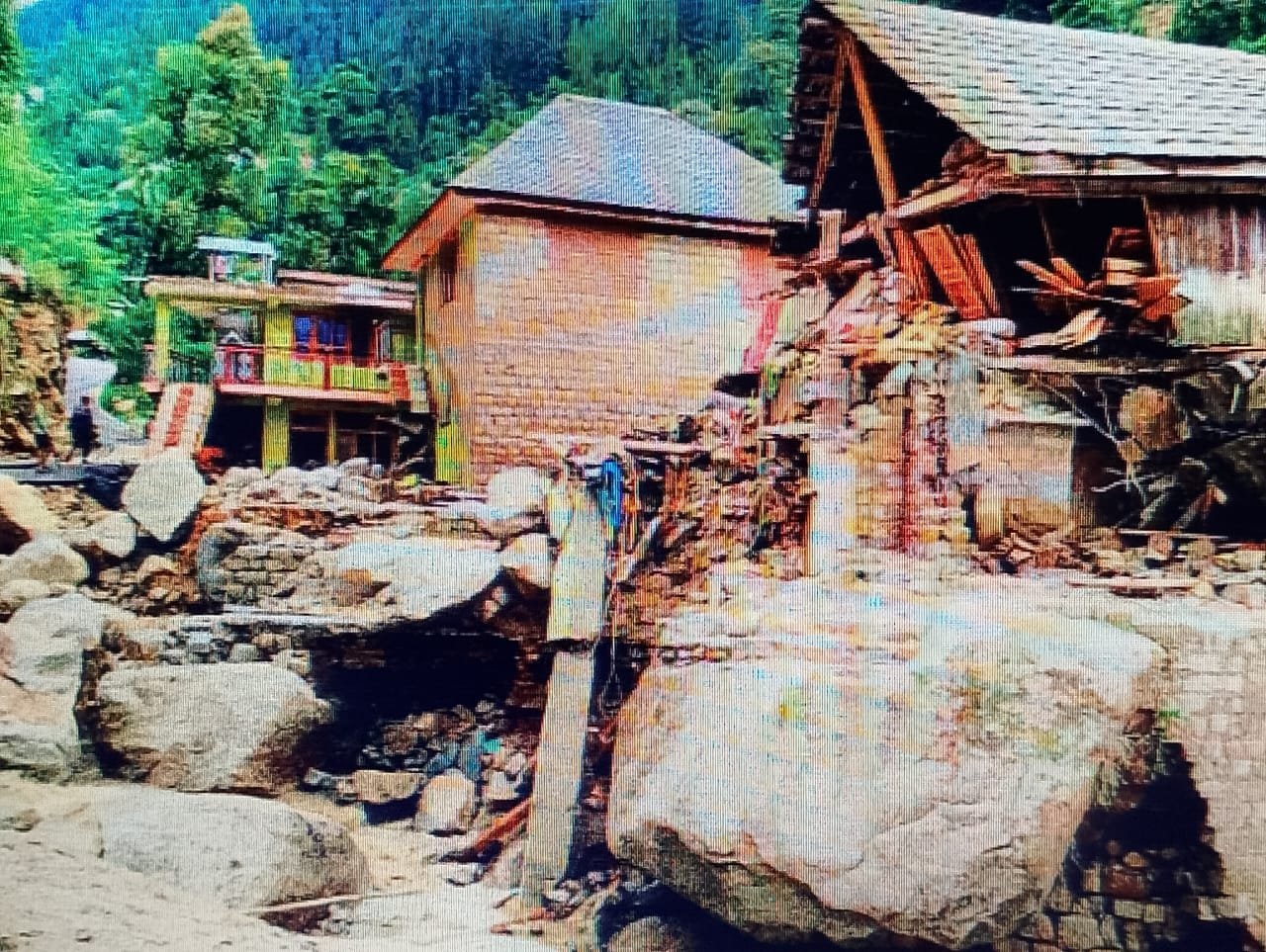
In one of the worst natural disasters to hit Himachal Pradesh in recent memory, the Seraj Assembly constituency of Mandi district—particularly Thunag and its surrounding areas—has witnessed unprecedented destruction. Relentless rainfall, cloudbursts, and landslides have left the region in utter chaos.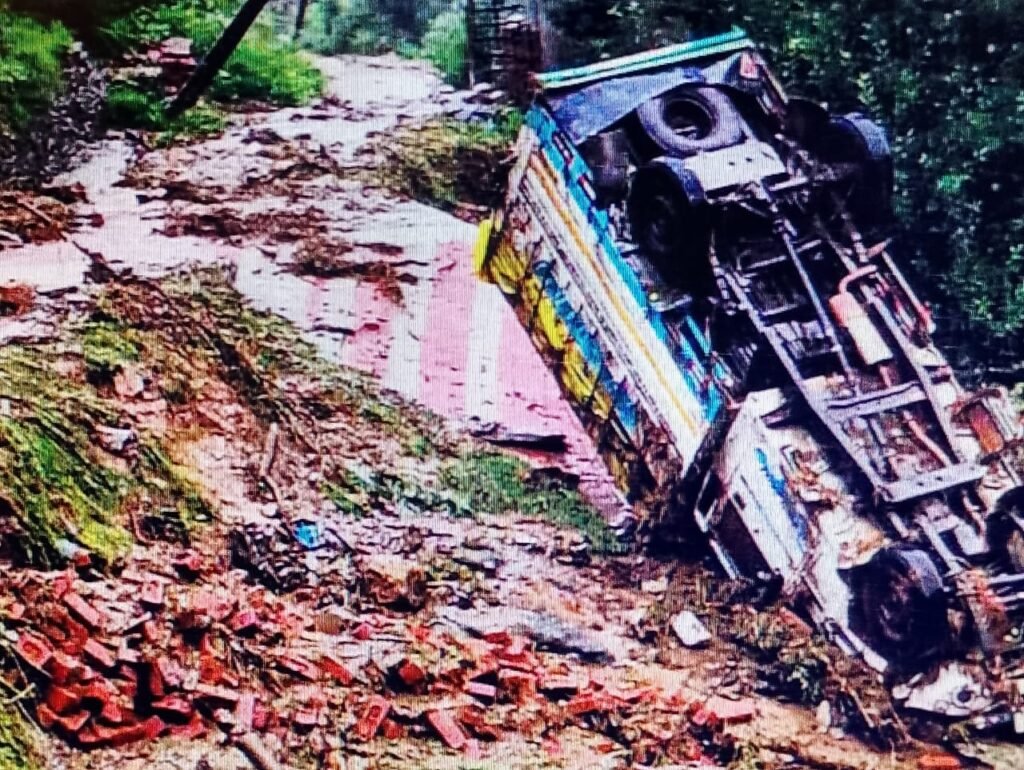
Thunag market has been reduced to rubble, with nearly 150 houses and shops completely flattened. Nearby Jarol market has also been wiped out, while Janjehli has been devastated by flash floods, altering the landscape beyond recognition.
The entire Seraj Valley stands cut off from the outside world. Roads have vanished, bridges have collapsed, and all means of communication are down. The catastrophe has dealt a crippling blow to the region’s infrastructure.
Power lines are down and drinking water schemes have failed, plunging locals into a severe crisis of food, water, and basic necessities. As of now, thousands remain stranded without access to relief.
This is not just a disaster—it is a humanitarian emergency. Immediate attention, relief operations, and long-term rehabilitation efforts are the need of the hour.
Let me know if you’d like this adapted into a press release, government appeal, or on-ground report format.
Forced Under the Open Sky: Communication Blackout Hampers Relief in Himachal’s Disaster Zone
In the wake of the devastating natural disaster in Himachal Pradesh’s Seraj region, thousands are now forced to live under the open sky, with no roof over their heads. The absence of mobile networks has further crippled communication, making it extremely difficult to gather information or coordinate rescue and relief operations.
Critical infrastructure like hospitals, schools, and government buildings has also been badly damaged, and restoration may take a long time.
Amid this crisis, teams from the local administration, police, SDRF, and villagers have joined hands for rescue and relief work. In a show of sheer dedication, disaster management teams trekked 16 kilometers on foot from Bagsyad to reach Thunag, initiating urgent rescue efforts.
Local villagers have displayed remarkable courage and unity, speeding up the relief efforts with their on-ground support.
Residents and local authorities have made a fervent appeal to the government for immediate aerial surveys and the deployment of NDRF and Army personnel to accelerate aid. With communication lines down, people are turning to social media, sharing heartbreaking visuals of the devastation and pleading for urgent help.
Food Crisis Deepens: 38 Panchayats in Himachal’s Seraj Cut Off, Thousands Struggle for Survival
Four days after the devastating cloudburst and heavy rainfall that struck Seraj region on the night of June 30–July 1, the situation remains grim. Over 80,000 people are now facing an acute food shortage, with entire villages cut off from essential supplies due to blocked and damaged roads.
Worst-hit are the 38 panchayats in Thunag sub-division, including Thunag, Pakhrar, Jarol, Pandavshila, and Chhiyuni, where people are reportedly going hungry. Relief efforts have been severely hampered as access routes have been destroyed. Even an attempt by Chief Minister Sukhvinder Singh Sukhu to deliver ration kits on Wednesday to Rangaloo and Janjehli failed — damaged roads made it impossible for his team to even reach the helipads.
Social media is flooded with harrowing visuals of the devastation. Viral photos and videos hint at a cloudburst in Pakhrar, which triggered large-scale destruction. In other parts of Seraj, continuous rainfall has caused landslides and flash floods, wiping out roads, bridges, and infrastructure.
The crisis doesn’t stop at food — a severe drinking water shortage is also gripping the region. The Chhadi Khad–Shetadhar water supply scheme, which catered to 25 panchayats, has collapsed. With natural springs damaged, villagers have no option but to collect rainwater for their daily needs.
With every passing hour, the situation is worsening. As connectivity remains broken and essential services are down, locals are left to fend for themselves, relying on community efforts and prayers for help to reach them soon.
Dozens of Towers Down, Communication Paralyzed
Relief operations have come to a standstill as communication networks remain down. Mobile connectivity has not yet been restored, with dozens of telecom towers out of service. Attempts to extend the signal range from the Kandha tower have failed. Control rooms in Thunag and Janjehli are inactive due to the communication blackout.
Power supply has been cut off for the past four days, as the Gohar-Thunag 33kV transmission line lies damaged. Around 10% of the Chail-Janjehli road has been completely washed away, while routes like Lambathach-Kalhani-Pandoh and Lambathach-Chiuni-Shetadhar have been destroyed. Rural link roads have practically vanished.
A clear lack of coordination in disaster management is visible. Locals are searching for missing loved ones in ravines and streams. Education and healthcare services are crippled—dozens of schools are filled with debris. People are living in a state of uncertainty and crisis, and the sluggish pace of relief efforts is only adding to their suffering.
Only Patwari Reached the Spot, No Senior Official Present
Devendra Rana alias Pammi, the deputy head (up-pradhan) of Saroa Panchayat, shared the grim situation. He said that during the heavy rainfall, a small stream suddenly turned into a raging river, sweeping away everything in its path. The temple guest house, homes of nine families, the Vakhli and Kuklah bridges, village roads, bikes, scooters, cars, and even household items were all washed away. Some vehicles are still stuck in thick silt. Signs of destruction are scattered across every corner of the stream.
So far, only the local Patwari has visited the site — not a single senior administrative officer has shown up. No relief material, tents, or emergency aid have reached the affected families.
He demanded that immediate arrangements be made to shift the displaced families to a safe and secure location.
Meanwhile, five relief camps have been set up in different parts of the district, sheltering 357 people. These include two camps in Mandi, two in Thunag, and one in Dharampur.
“Biggest Tragedy Ever Witnessed in Seraj: Jairam”
Former Chief Minister and Leader of Opposition, Jai Ram Thakur, has described the recent disaster in Himachal Pradesh’s Seraj region as the worst tragedy the area has ever faced. He has urged the state government to accelerate relief operations and ensure a serious and focused search for the more than two dozen missing persons.
Speaking after visiting the flood-affected areas of Kuklah and Bagsyad—his home constituency—on Wednesday, Thakur said,
“The extent of devastation caused by this calamity is unprecedented. Seraj has never seen such widespread destruction before.”
He expressed concern that for the past three days, the region has been completely cut off—with no electricity and no communication services functioning. This breakdown in basic infrastructure has severely hampered rescue and relief efforts, making it even more difficult for the authorities to reach those in need.
Thakur’s visit aimed not just to survey the damage, but also to highlight the urgency of action. He stressed that the government must prioritize restoring essential services, and that time is of the essence when lives are at stake.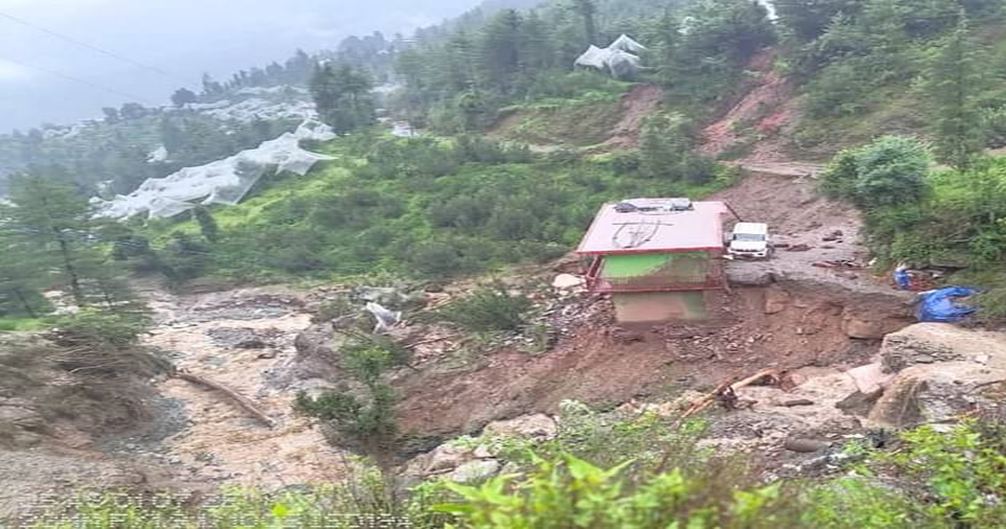










Breaking News
Rohru teacher suspension highlights a brutal case of corporal punishment in Himachal’s Rohru schools-

Breaking News
PM Modi Rs 1500 Crore Himachal Relief brings urgent, impactful recovery to flood-hit Himachal announces-

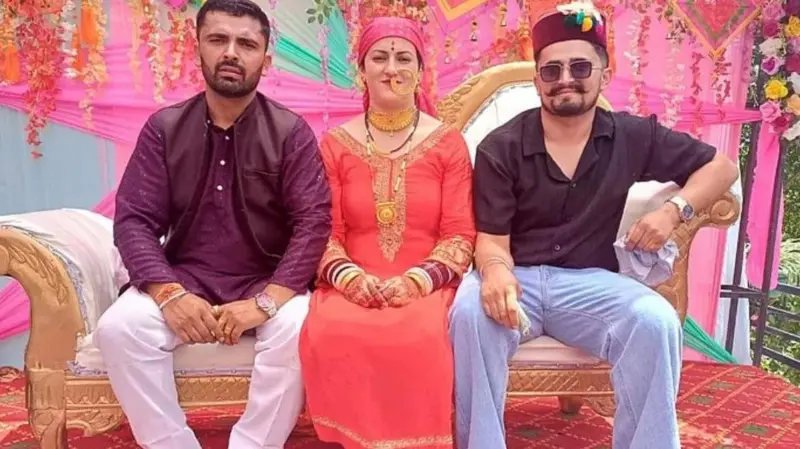
HP, July28,2025: The Jodidara marriage tradition traces back to tribal mythology and stories from……
Jodidara marriage tradition Explained
Jodidara marriage tradition is a rare, centuries‑old tribal custom in Himachal Pradesh where one woman marries two brothers, emphasising unity, land protection, and cultural pride. This powerful tale has ignited fresh national attention recently.
Historic Roots of Jodidara
The Jodidara marriage tradition traces back to tribal mythology and stories from the Mahabharata, most notably Draupadi’s marriage to the Pandavas, leading locals to call it “Draupadi pratha” or Ujala Paksha
. It evolved among the Hatti community of the Trans‑Giri region as a practical solution to preserve family land and joint inheritance.
The Recent Ceremony in Shillai Village
Consent and Cultural Pride
From 12–14 July 2025, Sunita Chauhan of Kunhat village willingly entered a Jodidara marriage tradition, marrying brothers Pradeep and Kapil Negi in a public, three‑day ceremony in Shillai, Sirmaur district. All three participants confirmed the union was mutually agreed upon and rooted in cultural pride.
Rituals, Music & Community Support
The wedding featured traditional rituals including “Seenj” ceremonies, folk music, dance, and community feasting. The event drew hundreds of villagers and relatives who celebrated openly, highlighting collective identity and shared joy.
Purpose Behind the Tradition
Preventing Land Fragmentation
In steep, resource‑scarce regions, Jodidara ensures family land remains undivided across generations. Kundan Singh Shastri, general secretary of Kendriya Hatti Samiti, explained the tradition prevents agricultural parcels from fragmenting over time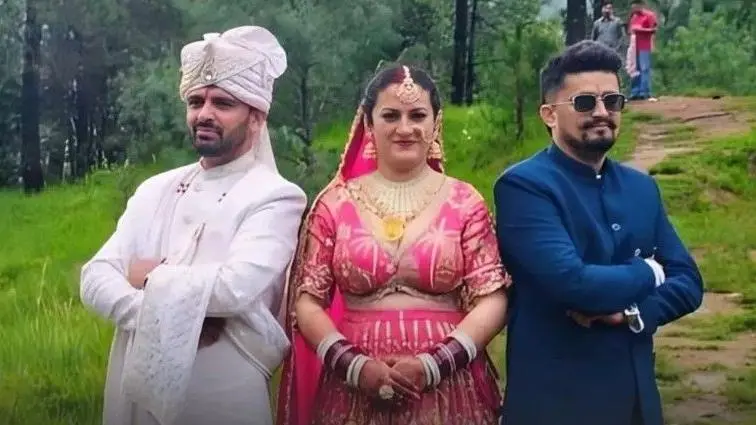
Ensuring Family Unity and Stability
Beyond economics, the tradition fosters stronger bond among siblings. The shared responsibilities create stability, and a larger united family is seen as more secure in tribal societies.
Legal & Social Recognition Today
Though polyandry is typically illegal in India, Himachal Pradesh allows it under customary law—referred to locally as Jodidar law—especially for tribal groups like the Hattis, who earned Scheduled Tribe status around 2022–2023. The state revenue records officially acknowledge Jodidara marriage tradition, granting it legal legitimacy in specific communities.
Contemporary Debates and Diverse Reactions
Despite consent and pride, the practice has sparked national debate. Supporters regard it as personal choice and cultural preservation; critics, including women’s rights advocates, argue it raises questions about exploitation and gender equity. Some believe transformations in socio‑legal norms may challenge its future relevance.
What the Future Holds for Jodidara
As education rises and lifestyles change, Jodidara marriage tradition has become rare. Only a handful of such marriages occur annually within the Hatti community. Yet this recent public and consensual ceremony might inspire a new wave of cultural pride and documentation, even as many hope such customs gradually fade or transform with evolving values..

अनंत नाग दादा साहब फाल्के अवॉर्ड 2024 के लिए चुने गए, 22 सितंबर को होंगे सम्मानित

Naval Collision: India Summons Pakistan Envoy After Arabian Sea Incident

OPT Fee Proposal Clears White House Review; $100,000 Figure Remains Unconfirmed

Houthi Drone Near Mecca: Saudi Arabia Intercepts UAV After Emergency Alert

India Retail Inflation August 2026 Rises to 4.82% as Food Prices Climb

India vs Afghanistan 2nd T20I Today: Varun Out, Ravi Bishnoi in Line for Chance

Priyansh Arya: The Six-Hitting Sensation of IPL 2025

Top 10 Most Searched Topics on YouTube: What’s Trending Now?

Preity Zinta Spotted with New Punjab Kings Hero Priyansh Arya in Viral Clip

Nag Panchami 2025: 7 Key Rituals and Puja Time to Eliminate Kaal Sarpa Dosha

Radhika Merchant: A New Chapter as Radhika Ambani

Balen Shah, Kathmandu’s independent mayor, from rapper to political leader. Explore his rise amidst Nepal’s youth-led revolution-

best career opportunities | Jaipur Career Fair | Credent TV | Dainik Navjyoti D2S03

what is reiki healing | Mental Health | Shiksha Sarokar, शिक्षा सरोकार, Sunil Narnaulia

DAV Centenary Public School, Vaishali Nagar, Jaipur hosts Successful ‘Mind Wars Quiz: A Battle of Wits and Knowledge’

 Election3 days ago
Rajasthan Municipal Election Results 2026 Live Updates
- Breaking News3 weeks ago
Vaibhav Sooryavanshi’s Two-Wicket Duleep Trophy Spell Powers East Zone into Semi-finals
- Breaking News3 weeks ago
SRN Ad-to-Pitch Challenge Tests Young Entrepreneurs in Jaipur
- Breaking News3 weeks ago
Kharge and Rahul Gandhi Urge Modi to Scrap Caste Census Questionnaire
- Breaking News3 weeks ago
Reports Claim Pakistan Deployed Bayraktar TB2 Drones Near LoC
- Breaking News2 weeks ago
Savitribai Phule Award 2026 Honours 54 Women in Jaipur
- Breaking News3 weeks ago
Nitin Gadkari Clarifies Younger Generation Remark Was About Trust, Not Politics
- Bihar3 weeks ago
Patna BPSC Protest: Water Cannons Deployed, Aspirants Detained