Election
Election Results 2024 Unveiled – Maharashtra and Jharkhand Take Center Stage
Published
1 year agoon

- Eknath Shinde (Shiv Sena) is leading from the Kopri Panchpakhadi constituency.
- Devendra Fadnavis (BJP) is showing strong performance in his respective seat.
- Notable figures like Ajit Pawar (NCP) and Aaditya Thackeray (Shiv Sena UBT) are also in contention.

Ajit Pawar’s Bold Stance on EVMs: A Game-Changer for Maharashtra Politics

Stock Market Holiday Today: A Day of Pause for Investors Amid Maharashtra Elections

Technical Snag Grounds PM Modi’s Aircraft in Jharkhand: Comprehensive Analysis

PM Modi’s Historic 3 km Roadshow in Ranchi: A Game Changer for Jharkhand Assembly Elections
Contents
A Pivotal Moment in Indian Politics
Election Results : As the dust settles on the 2024 assembly elections, all eyes are on the results emerging from Maharashtra and Jharkhand. Today, November 23, marks a crucial day in Indian politics as the counting of votes begins for these high-stakes elections. With significant implications for the ruling parties and opposition alliances, the outcome will shape the political landscape in these states for years to come.
Maharashtra Election Results: Mahayuti vs. MVA
Early Trends Favor Mahayuti
The Maharashtra assembly elections have garnered immense attention, with the BJP-led Mahayuti coalition aiming to secure another term against the opposition Maha Vikas Aghadi (MVA). As counting commenced at 8 AM, initial trends indicated that Mahayuti was poised to cross the majority mark in early leads. Reports suggest that Mahayuti is leading in approximately 152 seats, while MVA trails behind with about 32 seats.This election is particularly significant as it marks the first major electoral contest following the splits within key parties, including Shiv Sena and NCP. The stakes are high for leaders like Chief Minister Eknath Shinde and Deputy Chief Minister Devendra Fadnavis, who are both vying for a strong mandate amidst a backdrop of political realignments.
Key Candidates and Constituencies
Several prominent candidates are making headlines as results unfold:
The election witnessed a voter turnout of around 67.74%, reflecting active participation from constituents eager to influence their state’s governance.
Jharkhand Election Results: A Close Contest
NDA’s Edge Over JMM
In Jharkhand, the political battle is equally fierce, with exit polls predicting a potential win for the BJP-led National Democratic Alliance (NDA). The counting of votes began simultaneously with Maharashtra, and preliminary results indicate that NDA may secure between 42 to 47 seats, while the ruling Jharkhand Mukti Morcha (JMM) coalition is projected to win around 25 to 30 seats.This election cycle has been critical for Chief Minister Hemant Soren, who faces scrutiny following recent controversies. The JMM-led alliance includes Congress and RJD, while NDA comprises BJP and its allies such as AJSU and JD(U).
Voter Engagement and Turnout
Jharkhand’s voter turnout was notably higher than previous elections, with over 68% participation recorded during the two-phase polling process held on November 13 and November 20. This increase suggests a growing engagement among voters regarding local governance issues.
Implications of the Results
The outcomes in both Maharashtra and Jharkhand will not only determine local governance but also set the tone for national politics as India approaches future elections. A decisive victory for Mahayuti in Maharashtra could solidify BJP’s dominance in Western India, while a successful campaign by NDA in Jharkhand may bolster its position against opposition alliances.
Also read : Maharashtra Election 2024: The Battle for Power Heats Up
Awaiting Final Results
As counting progresses throughout the day, political analysts and party supporters are eagerly awaiting final results. The implications of these elections extend beyond state lines, influencing party strategies and voter sentiments across India.
Keep Reading for latest updates
Geetika Sherstha is a passionate media enthusiast with a degree in Media Communication from Banasthali Vidyapith, Jaipur. She loves exploring the world of digital marketing, PR, and content creation, having gained hands-on experience at local startups like Vibrant Buzz and City Connect PR. Through her blog, Geetika shares insights on social media trends, media strategies, and creative storytelling, making complex topics simple and accessible for all. When she's not blogging, you’ll find her brainstorming new ideas or capturing everyday moments with her camera.

You may like
Breaking News
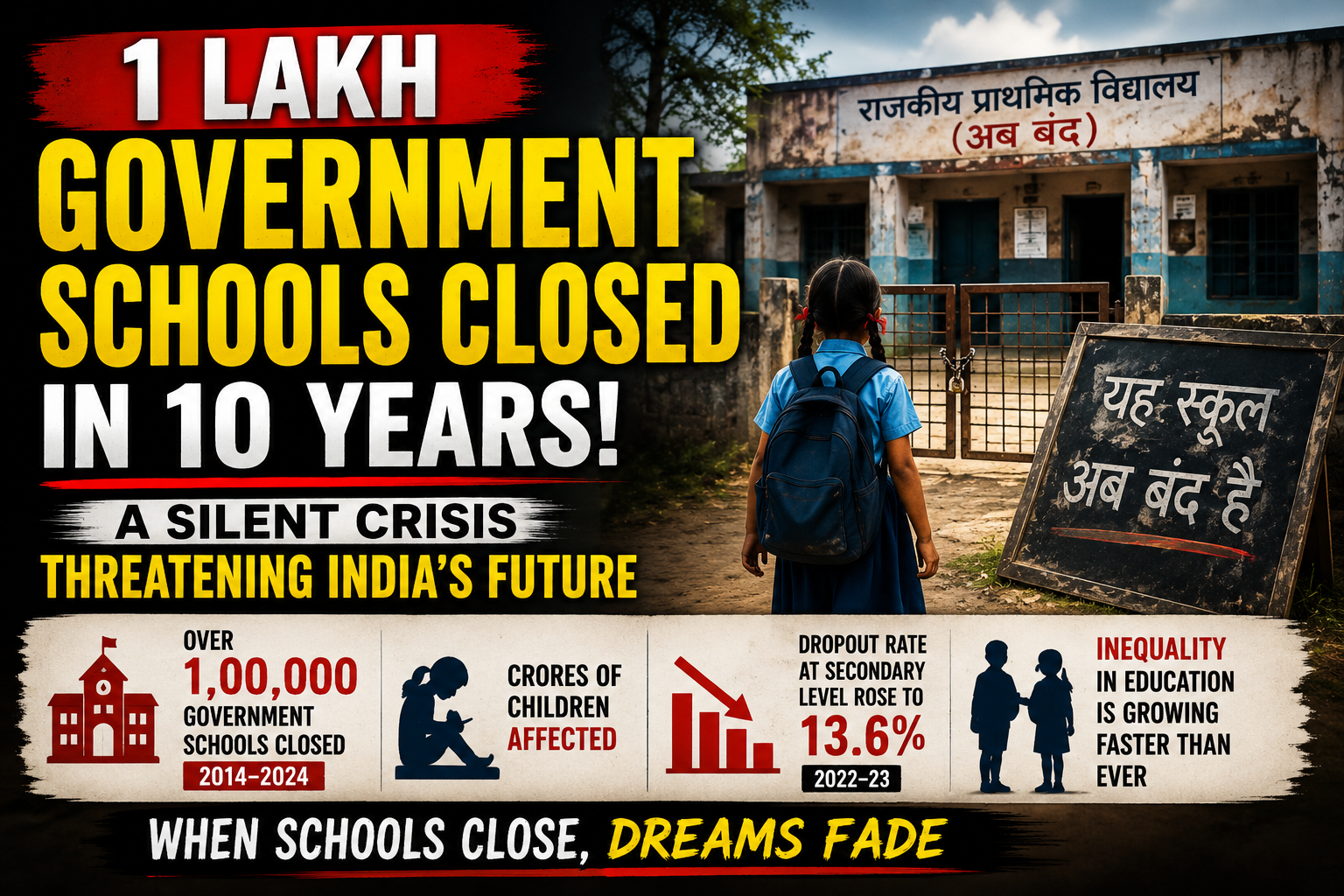
Government School Closures in India: 1 Lakh Schools Shut, A Deepening Crisis for the Nation’s Future
Government School Closures in India have raised serious concerns over rising dropout rates, shrinking access to education, and the future of poor children. Discover why nearly 1 lakh government schools closed in the last decade and what it means for India.
Published
3 days agoon
May 20, 2026
Contents
20 May | Credent TV, When schools shut down, only buildings do not disappear. A society’s future also begins to shrink.
The debate around Government School Closures in India is no longer just about administrative reforms or education budgets. It has now become a national conversation about equality, opportunity, democracy, and the future of millions of children.
Over the last decade, India has witnessed the closure and merger of nearly one lakh government schools. Official data from various education reports, including policy discussions linked to the National Institution for Transforming India (NITI Aayog), indicate a significant decline in enrollment in government schools between 2014 and 2024. At the same time, private schools have rapidly expanded across both urban and rural India.
At first glance, policymakers describe this transformation as “school consolidation,” a strategy aimed at improving efficiency, infrastructure, and resource utilization. However, beyond official terminology lies a deeply human story — a story of children walking farther to school, girls dropping out because of safety concerns, and poor families slowly losing access to affordable education.
The issue of Government School Closures in India is therefore not just about numbers. It is about what happens to the children left behind.
Understanding Government School Closures in India
Government School Closures in India have become one of the most debated education issues in recent years.
According to multiple education surveys and policy analyses, thousands of government schools across states have either been shut down, merged with nearby schools, or converted into larger institutional clusters.
States often justify these closures by pointing to low student enrollment, teacher shortages, and infrastructure duplication.
The argument presented by policymakers is simple:
- Small schools are difficult to maintain.
- Combining schools can improve teaching quality.
- Bigger schools can offer better facilities.
- Administrative costs can be reduced.
On paper, these points appear logical. But education is not merely about infrastructure management. It is about accessibility, trust, social inclusion, and continuity. That is where the real crisis begins.
Why Are Government Schools Being Closed?
The primary reasons behind Government School Closures in India include declining enrollment and the migration of students toward private institutions. Several reports suggest that many parents increasingly prefer private schools because of perceptions surrounding English-medium education, discipline, and better academic outcomes. At the same time, urbanization and migration patterns have altered rural demographics. As populations shift, smaller village schools often end up with very few students. Governments then introduce school consolidation policies. Under these policies:
- Two or more schools are merged.
- Students are shifted to larger campuses.
- Teaching resources are centralized.
- Infrastructure spending is concentrated.
However, while consolidation may improve facilities in certain regions, it also creates serious logistical and social challenges. For many rural children, the nearest school suddenly becomes several kilometers away. This distance becomes a barrier — especially for girls, disabled students, and economically weaker families.
The Rural Reality Behind the Numbers
The biggest impact of Government School Closures in India is visible in rural and semi-rural communities. In many villages, the government school is not just a place of learning. It is a social institution. It is where:
- children from poor families study,
- first-generation learners gain confidence,
- girls receive their first exposure to independence,
- and marginalized communities participate in mainstream society.
When a local primary school closes, the consequences are immediate. Children who once walked five minutes to school may now need to travel several kilometers. For middle-class families, this may seem manageable. For daily wage laborers, agricultural workers, and economically vulnerable households, it can become impossible. Many parents cannot afford transportation. Some cannot accompany younger children. Others fear for the safety of adolescent girls. As a result, attendance drops. Eventually, many children quietly disappear from the education system. This silent educational exclusion rarely makes headlines. Yet it is one of the most serious consequences of Government School Closures in India.
Impact on Girls and Marginalized Communities
One of the most concerning aspects of Government School Closures in India is their disproportionate impact on girls. In rural India, distance remains one of the biggest barriers to female education. When schools move farther away:
- parents become hesitant,
- dropout risks increase,
- early marriage rates may rise,
- and educational continuity suffers.
For Dalit, tribal, and economically weaker communities, government schools have historically served as gateways to upward mobility. These schools represented equality. Inside a classroom, children from different castes and economic backgrounds shared the same space. That democratic spirit is difficult to quantify in policy reports. But it remains one of the most powerful foundations of Indian society. When Government School Closures in India reduce educational accessibility for marginalized communities, social inequality deepens. This is not just an education issue. It is a social justice issue.
Rising Dropout Rates in Secondary Education
Another alarming trend linked to Government School Closures in India is the increase in dropout rates at the secondary level. Experts argue that while enrollment at primary levels may remain relatively stable in some states, retention becomes a major challenge after Class 8. The transition to secondary education often involves:
- longer travel distances,
- higher educational expenses,
- social pressures,
- and lack of infrastructure.
When students leave school during Classes 9 and 10, the consequences are long-term. These years are critical. Dropping out at this stage often leads to:
- child labor,
- informal employment,
- early marriage,
- reduced earning potential,
- and generational poverty.
Government School Closures in India therefore cannot be viewed in isolation. They are interconnected with employment, gender equality, health, and social development.
Growth of Private Schools and Educational Inequality
As government schools decline, private schools continue expanding rapidly. This shift reveals a deeper transformation in Indian society. Families with financial resources increasingly purchase education through private institutions. Meanwhile, economically weaker communities remain dependent on public education. This creates a dangerous divide. On one side:
- students access English-medium education,
- digital classrooms,
- advanced infrastructure,
- and private coaching ecosystems.
On the other side:
- rural children struggle with basic accessibility,
- government infrastructure shortages,
- teacher vacancies,
- and shrinking institutional support.
Government School Closures in India risk turning education from a constitutional right into a market-driven privilege. This possibility worries educators, activists, and policy experts alike.
Is School Consolidation Really Working?
Supporters of school consolidation argue that larger schools can provide:
- better laboratories,
- trained teachers,
- stronger management,
- improved student performance,
- and better infrastructure.
In some urban or semi-urban areas, this model has shown positive results. However, critics argue that India’s vast social and geographical diversity makes a one-size-fits-all approach risky. A consolidation policy that works in one district may fail completely in remote rural regions. Education researchers stress that accessibility matters as much as quality. A world-class school located too far away may still remain inaccessible to poor families. This is the central contradiction in Government School Closures in India. Efficiency may improve on paper. But educational participation may decline in reality.
Expert Concerns Over India’s Education Future
Education experts warn that reducing the number of public schools could weaken India’s social foundation over time. Public education has historically played a major role in:
- nation-building,
- literacy expansion,
- women empowerment,
- caste mobility,
- and democratic participation.
If public education weakens significantly, the consequences may extend far beyond classrooms.
Experts fear:
- widening inequality,
- shrinking social mobility,
- deeper rural-urban divides,
- and increasing educational commercialization.
The debate surrounding Government School Closures in India therefore reflects a larger philosophical question:
Should education remain a universal public right, or gradually become a service shaped by market economics?
This question will define India’s future.
What Education Activists and Researchers Say
Several education activists believe that closures are often implemented without fully understanding local realities. They argue that instead of shutting schools, governments should focus on:
- improving teacher recruitment,
- strengthening infrastructure,
- modernizing curriculum,
- increasing digital access,
- and building community participation.
Researchers also point out that many parents leave government schools not because public education is inherently weak, but because systemic neglect reduces confidence over time. When buildings deteriorate, teacher vacancies remain unfilled, and classrooms lack resources, parents naturally seek alternatives. Therefore, critics say Government School Closures in India may sometimes address symptoms rather than causes.
Possible Solutions to the Crisis
The crisis surrounding Government School Closures in India is complex. But experts suggest several possible solutions:
1. Strengthen Rural School Infrastructure
Instead of closures, governments can modernize existing schools.
2. Improve Teacher Availability
Teacher shortages remain a major issue in rural education.
3. Expand Digital Learning Access
Technology can help bridge educational gaps if implemented fairly.
4. Focus on Girls’ Safety
Transportation and safety support are essential for female students.
5. Community Participation
Local communities should be involved in education planning.
6. Better Public Investment
Public education requires sustained financial commitment.
Why Public Education Still Matters
Government School Closures in India force the country to confront a fundamental truth. A nation’s future is shaped more in classrooms than in political speeches. Government schools have historically given millions of Indians their first opportunity to dream beyond poverty. For countless families:
- the government school teacher was the first mentor,
- the classroom was the first equal space,
- and education was the first ladder toward dignity.
Public education is not simply a welfare program. It is the backbone of democracy. If access to quality education becomes dependent only on purchasing power, social inequality will deepen further. That is why the conversation around Government School Closures in India matters so deeply.
The closure of nearly one lakh government schools over the past decade is not merely an administrative development. It is a warning sign. It reflects changing priorities, growing inequality, and a widening gap between policy design and ground realities. Government School Closures in India are not just about disappearing buildings. They are about disappearing opportunities. Every school that shuts down may represent:
- a child’s unfinished dream,
- a family’s fading hope,
- and a society moving further away from equality.
India’s future cannot be built only through economic growth statistics. It must also be built through classrooms that remain open, accessible, inclusive, and alive with possibility. Because when schools disappear, nations lose more than institutions.They risk losing generations.

Written By
Vinod Verma Ralawata
Lecturer, English Literature
Breaking News
Why Rajasthan’s Panchayat Elections Delay Is a Dangerous Threat to Democracy; 5 Powerful Reasons
Published
4 weeks agoon
April 24, 2026
Contents
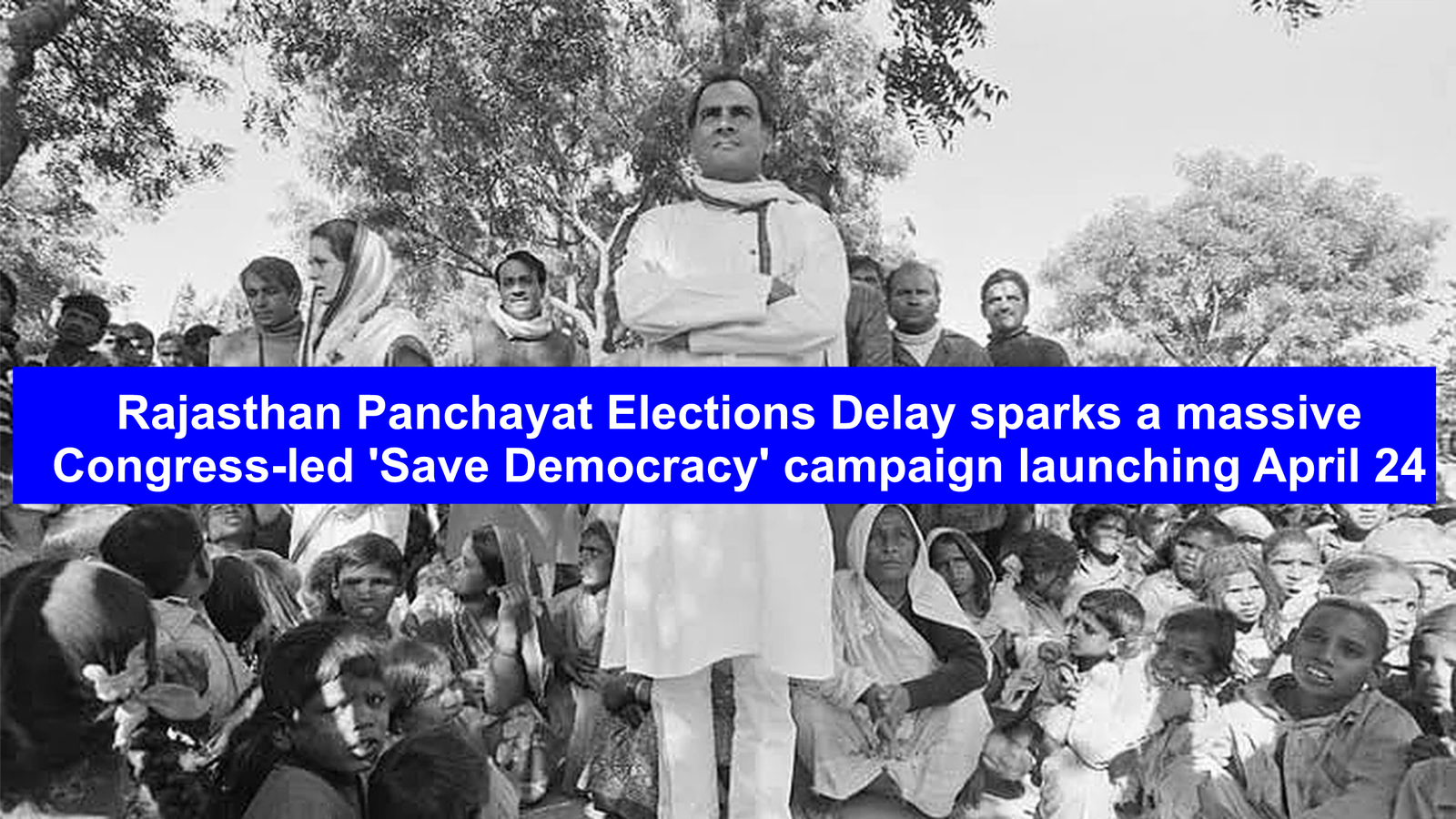
Jaipur, 24 April | Rajasthan’s panchayat elections delay has ignited a fierce political and legal storm across the state, pushing grassroots democracy to a critical crossroads. As courts issue contempt notices and thousands of villages run without elected representatives, the Indian National Congress’s Rajiv Gandhi Panchayati Raj Sangathan (RGPRS) is sounding the bugle — launching a sweeping statewide mass campaign on April 24, 2026, Panchayati Raj Foundation Day, demanding immediate elections and an end to what they call a deliberate “assault on democracy.”
What Is the ‘Chunav Karao – Loktantra Bachao’ Campaign?
The Rajiv Gandhi Panchayati Raj Sangathan (RGPRS), Rajasthan — a dedicated wing of the Indian National Congress — officially launches its state-wide mass movement on April 24, 2026, a date that carries deep symbolic weight as India’s Panchayati Raj Foundation Day.
The campaign, titled “Chunav Karao – Loktantra Bachao” (Conduct Elections – Save Democracy), is not just a political protest. It is a structured, grassroots public movement aimed at pressing the Rajasthan government, the State Election Commission (SEC), and the judiciary into immediate action on long-overdue local body elections.
Dr. C.B. Yadav, State President of RGPRS, described the movement in clear terms: “This is not merely an organisational programme. It is a broad people’s struggle to defend democracy and constitutional values — one that will grow from the village chaupal to social media.”
Key Campaign Activities Planned:
- District-level demonstrations and seminars on April 24 across all districts simultaneously
- Signature drives targeting 20,000 signatures per district, with a statewide goal of 10 lakh (1 million) signatures in three months
- 100 village-level seminars per district
- Door-to-door outreach, padyatras (foot marches), and public choupals
- A major gathering at the Rajasthan Congress Committee office in Jaipur, where senior party leaders and departmental officials will participate

State Coordinator Priti Mourya confirmed that the Jaipur launch event will see senior Congress organisational leaders and departmental heads attend, boosting workers’ morale and formally inaugurating the campaign.
The Scale of the Rajasthan Panchayat Elections Delay
The Rajasthan panchayat elections delay is not a minor administrative hiccup — it is a constitutional crisis of enormous scale.
The case involves elections to 14,403 panchayats, 457 panchayat samitis, 41 zila parishads, 10 municipal corporations, 45 municipal councils, and 254 municipalities across the state.
In a historic first in six decades, the Rajasthan government postponed elections due in January 2025 for 6,759 panchayats, appointing the sitting sarpanchs as panchayat administrators — another unprecedented move.
The tenure of 49 municipal bodies ended in November 2024, and that of 11,310 Gram Panchayats has already expired, with administrators appointed across all these bodies.
Under Articles 243E and 243U of the Indian Constitution, elections to panchayats and urban local bodies must be held mandatorily every five years. Dr. Yadav argues that any delay beyond this is not just a bureaucratic failure — it is a direct violation of constitutional provisions that form the backbone of Indian democracy.
Courts Step In: High Court Issues Contempt Notices
The judiciary’s patience with the Rajasthan panchayat elections delay appears to be running thin.
On November 14, 2025, the Rajasthan High Court, while deciding a batch of 439 petitions, directed the state government to conduct panchayat and local body elections by April 15, 2026, and mandated completion of the delimitation process by December 31, 2025.
The Supreme Court subsequently upheld the timeline and cleared the way for conducting the polls.
Despite these clear judicial mandates, the SEC failed to comply. The Rajasthan High Court then issued contempt notices to the State Election Commission and State Election Commissioner Rajeshwar Singh, questioning how the SEC had issued a schedule for voter list revision that extended beyond the court-mandated deadline.
Counsel for petitioner Puneet Singhvi argued that the SEC’s revised timeline — pushing the publication of final electoral rolls to April 22 — ruled out any possibility of completing elections by the court-mandated deadline.
The SEC, in its defence, maintained that the Panchayati Raj department had failed to finalise reservation lists for seats earmarked for women, OBCs, Scheduled Castes and Scheduled Tribes, making it impossible to proceed.
The RGPRS campaign demands that this judicial pressure be backed by mass public pressure — making the people’s voice impossible to ignore alongside the court’s orders.
₹1,900 Crore Frozen: The Hidden Cost of the Delay
One of the most alarming consequences of the Rajasthan panchayat elections delay is the financial paralysis it has caused at the grassroots level.
Dr. Yadav stated that approximately ₹1,900 crore in Central Finance Commission funds remain blocked and unspent because, without elected panchayat bodies, the disbursement mechanisms are effectively stalled. These funds are critical for rural infrastructure, drinking water, roads, sanitation, and livelihood programmes.
Without elected sarpanchs and panchayat members to authorise and oversee development works, villages across Rajasthan have been stuck in a limbo — projects cannot be sanctioned, tenders cannot proceed, and welfare schemes cannot be implemented on the ground.
As someone from a village, development work suffers visibly when Gram Panchayats have no elected representatives. This sentiment echoes across rural Rajasthan, where the absence of legitimate governance has created a leadership vacuum at the most fundamental administrative unit of Indian democracy.
BJP’s ‘One State, One Election’ Argument Under Fire
The BJP-led Bhajan Lal Sharma government has consistently justified the Rajasthan panchayat elections delay by invoking its ambition for a ‘One State, One Election’ policy.
In its 2024 budget, the Rajasthan government announced plans to implement a ‘One State, One Election’ policy to reduce election-related costs, with a plan to conduct all civic body polls in mid-2025 spanning 45 days in three or four phases.
The OBC Political Representation Commission, constituted to determine reservation quotas — a mandatory step following a 2022 Supreme Court ruling — has not submitted its findings, and the state government extended the commission’s tenure to September 30, citing incomplete data.
However, Congress has called this a manufactured excuse. Congress State Chief Govind Singh Dotasra alleged that the government is using the ‘One State, One Election’ slogan as a cover to deliberately stall the democratic process, predicting that no election process could start before February 2026 since voter lists would remain frozen.
Former Chief Minister Ashok Gehlot described the delay as indicative of a “constitutional breakdown.”
Congress Strategy: From Villages to Social Media
What makes the RGPRS campaign particularly notable is its multi-layered, ground-up strategy designed to build sustained pressure rather than deliver a single-day protest.
The three-month roadmap is ambitious:Phase Activity Target Month 1 District demonstrations + seminars All 33 districts Month 1-2 Signature drives 20,000 per district Month 1-3 Village-level choupals 100 per district Month 3 Statewide total 10 lakh signatures
Dr. Yadav envisions the movement transcending party boundaries: “This will be developed as a jan lahar (people’s wave) from social media to the village chaupal.” The campaign is designed so that the pressure builds progressively — starting with awareness, escalating to organised demonstrations, and culminating in a mass petition that cannot be dismissed.
The strategy draws a direct line from local grievances — blocked funds, stalled roads, absent welfare schemes — to the larger constitutional argument about democratic rights.
Why This Matters for Every Rajasthan Citizen
The Rajasthan panchayat elections delay is not merely a political tussle between the BJP and the Congress. Its consequences touch every citizen who relies on their Gram Panchayat for services, development, and representation.
Here is why every voter should care:
Democratic Representation: Without elected panchayats, millions of citizens have no legitimate local representative. Administrators — however competent — are not accountable to voters.
Development Paralysis: Projects funded by the Central Finance Commission, state schemes, and MGNREGA all require functional elected panchayat structures to operate efficiently.
Constitutional Rights: Articles 243E and 243U are not optional guidelines. They are constitutional mandates. Delay violates the fundamental right of citizens to participate in self-governance.
Judicial Accountability: The fact that the High Court had to issue contempt notices — even after the Supreme Court upheld election timelines — reveals a troubling pattern of institutional defiance.
OBC and Marginalised Representation: The delay in finalising OBC reservations has directly impacted thousands of candidates from backward communities who are waiting to contest and represent their communities in local bodies.
What Happens Next?
The launch of the Chunav Karao – Loktantra Bachao campaign on April 24 is just the beginning. RGPRS has made it clear that the movement will escalate if elections are not announced promptly. The three-month signature drive, culminating in a 10-lakh-signature petition, is intended as a powerful democratic tool — a people’s referendum of sorts, demanding their constitutional right to vote.
The Rajasthan High Court’s contempt proceedings remain ongoing, with the SEC expected to respond within four weeks. Legal observers note that the court’s continued scrutiny could force the government’s hand, regardless of political calculations.
For those wishing to understand the constitutional framework of Panchayati Raj institutions in India, the Ministry of Panchayati Raj’s official portal provides comprehensive resources on the structure, powers, and electoral obligations of local bodies across all states.
Additionally, the Rajasthan State Election Commission is the official body responsible for scheduling and conducting these elections, and its notifications are closely watched by political parties, candidates, and the courts alike.
The Rajasthan panchayat elections delay has become one of the most significant democratic flashpoints in the state’s recent history. With courts issuing contempt notices, nearly ₹1,900 crore in development funds frozen, over 11,000 gram panchayats running without elected leaders, and now a Congress-led mass movement launching statewide, the pressure on the Bhajan Lal Sharma government is reaching a boiling point.
The RGPRS’s campaign, beginning on the symbolically charged date of Panchayati Raj Foundation Day, April 24, is a calculated attempt to shift the conversation from courtrooms to the streets — where democracy is ultimately decided.
Whether it succeeds in forcing immediate elections or not, the campaign shines a necessary and urgent spotlight on a constitutional obligation that, according to both courts and citizens, can no longer be ignored.
Breaking News
Bihar election money misuse sparks alarm as Ashok Gehlot levels serious charges of cash distribution and Election Commission inaction after Bihar polls-
Published
6 months agoon
November 14, 2025
Contents
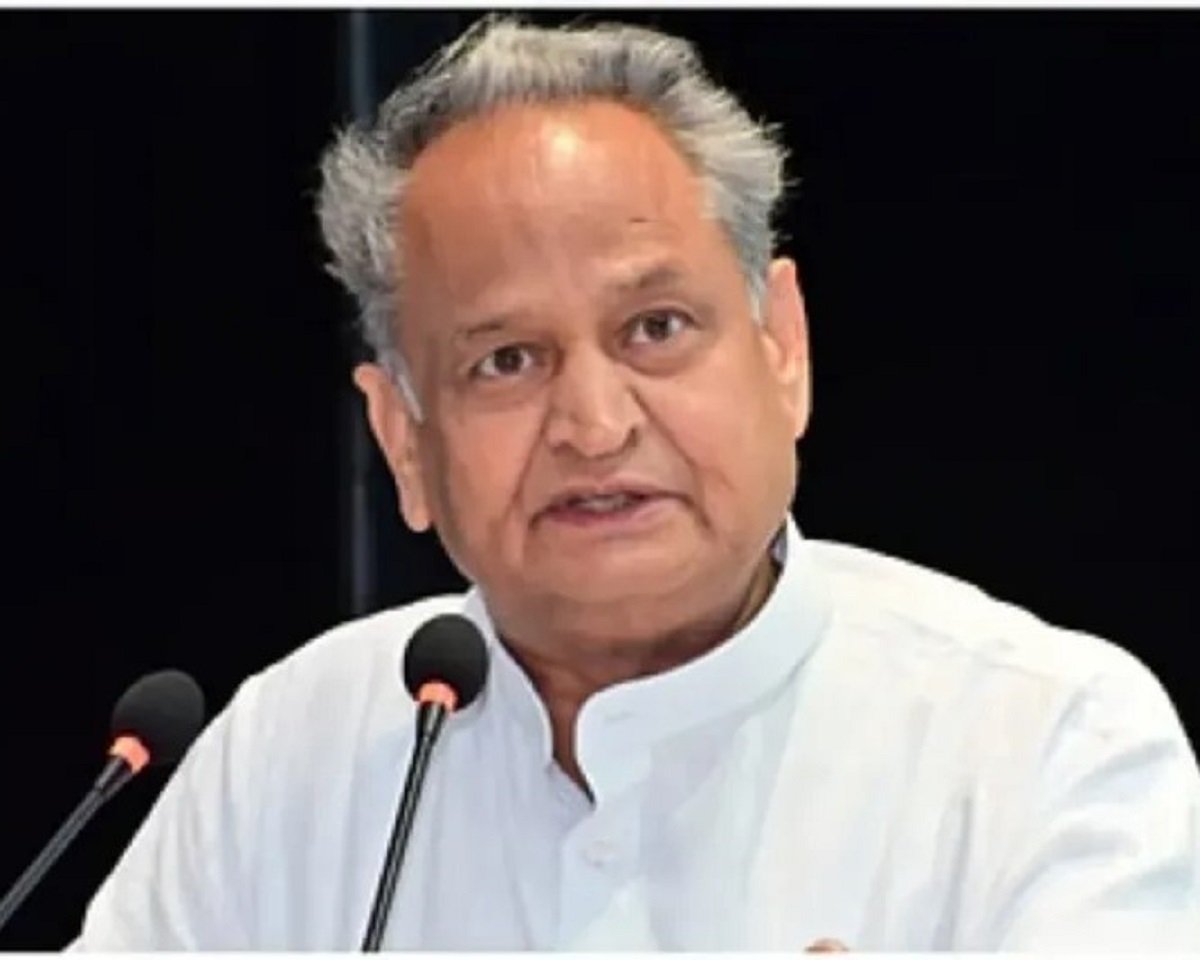
Jaipur, Nov.14,2025:Bihar election money misuse is now at the centre of a major controversy following forceful allegations by senior Ashok Gehlot. The former Chief Minister of Rajasthan and a key leader of the Indian National Congress (INC) has accused political forces in Bihar of distributing cash to influence voter behaviour — a claim that, if substantiated, strikes at the very bedrock of democratic elections in India.
Such allegations are not just about money; they question the impartiality of electoral institutions, the fairness of the contest and the validity of governance based on mandate. In other words: when allegations of Bihar election money misuse arise, the credibility of the electoral process is at stake.
Who is making the allegations
Ashok Gehlot is one of the most prominent Congress leaders, having served multiple terms as Chief Minister of Rajasthan. In his role as the Congress observer for the Bihar elections, he has publicly stated his disappointment with the outcome and levelled serious charges.
His stature adds weight to the claims of Bihar election money misuse — he is not speaking as a fringe voice, but from within his party’s core leadership. His allegations reflect broader concerns voiced by his party about the election process.
What exactly are the claims of Bihar election money misuse
Cash transfers to women voters
Gehlot alleged that during the campaign for the 2025 Bihar elections, women voters were given Rs 10,000 each as part of organised cash distributions — a dramatic claim of money being used to sway votes.
Such transfers, if confirmed, would clearly fall under the banner of Bihar election money misuse, casting doubt on whether the electoral competition was fair and equal.
Timing of the transfers and campaign period
Further, it was claimed that these cash distributions were happening even while the election campaign was underway, and even a day before polling. Gehlot said: “Even as the campaign was on, money was being distributed… this has never happened before.”
This gives rise to a major question: if mass cash distribution occurs so close to polling, can the outcome legitimately reflect free choice? The suggestion is that such late-stage distributions amount to Bihar election money misuse.
The role of the Election Commission
Gehlot didn’t stop with the cash claims; he directly questioned the role of the Election Commission of India (EC) in allowing this to happen. He alleged that the EC “remained a mute spectator” while these transactions occurred.
In essence, he argued that Bihar election money misuse wasn’t just about the actors distributing funds — but also about regulatory failure to stop it.
Comparison with practices in Rajasthan
Gehlot compared the situation in Bihar with what he claims happened (or didn’t) in Rajasthan. He said that in Rajasthan, when the Model Code of Conduct or election laws came into effect, his government stopped distribution of mobile phones, pensions and other benefits. By contrast, he says Bihar saw “open distribution of pension and money” even during the election.
His point: if Bihar election money misuse was happening so openly, the competitive playing field was skewed.
The 2025 Bihar Legislative Assembly election and implications
The backdrop to these allegations is the 2025 Bihar Legislative Assembly election — an event of high political significance.
Early trends show the ruling alliance (the National Democratic Alliance, NDA) with a commanding lead, while the Congress and its allies floundered.
In this context, Gehlot’s claims of Bihar election money misuse serve multiple purposes:
- They provide an explanation (from his perspective) for Congress’s poor performance
- They challenge the legitimacy of the process and the outcome
- They heighten the stakes for electoral reforms and institution-building
For the public and for India’s democracy, this becomes more than just one state election — it becomes a litmus test for whether electoral integrity can be ensured.
Legal and ethical dimensions of Bihar election money misuse
The core concern with Bihar election money misuse is that it undermines the principle of free and fair elections — a principle enshrined in the Indian Constitution and electoral laws. When money enters the picture as a determining factor in voters’ choices, the integrity of the mandate is compromised.
From a legal standpoint-
- Electoral laws like the Representation of the People Act prohibit corrupt practices, including bribery of voters.
- If money was given with the intention of influencing voting behaviour, it may constitute a corrupt practice under law.
- The role of the EC and state election machinery is to monitor, investigate and act upon violations. Gehlot’s claim that the EC “did not stop this” puts those institutions under scrutiny.
Ethically, even the perception of large-scale money distribution erodes public trust. Voters may feel that elections are no longer about issues or leadership, but simply about which side can spend more — this is the very meaning of Bihar election money misuse in popular understanding.
Reactions and responses- From Congress, EC and others
The Congress response: Senior leaders including Gehlot and others have publicly voiced grievances. For example, the Congress has accused the EC of colluding with the ruling party.
The EC’s position: While not detailed in all reports, the EC typically defends its processes and insists on impartiality. The fact that the allegations are so forcefully made puts pressure on the EC to respond.
Political opponents: The ruling alliance and its supporters are likely to reject the allegations of Bihar election money misuse or portray them as excuses for defeat. The broader battle becomes both political and legal.
Investigations, public trust and electoral integrity
Given the seriousness of the claims of Bihar election money misuse, several key developments should be watched
- Investigations: Will the EC or law-enforcement agencies initiate formal probes into the alleged cash distributions?
- Transparency: Will records of voter lists, transfers, receipts or any documentation of cash flows become publicly available?
- Institutional reform: These allegations may renew calls for stricter monitoring, digital traceability of transfers, tighter enforcement of Model Code of Conduct.
- Public trust: Ultimately, if voters believe money rather than merit determined the outcome, voter apathy or cynicism may increase — a serious democratic loss.
- Future elections: How states and the EC respond to these claims will set precedents for upcoming elections in other regions.
Why Bihar election money misuse allegations cut to the heart of Indian democracy
The allegations of Bihar election money misuse made by Ashok Gehlot carry weight far beyond one state, one election or one party. They raise fundamental questions: When money, rather than debate, becomes central to elections; when regulatory oversight fails; when competitive equality is compromised — democracy itself is challenged.
Breaking News
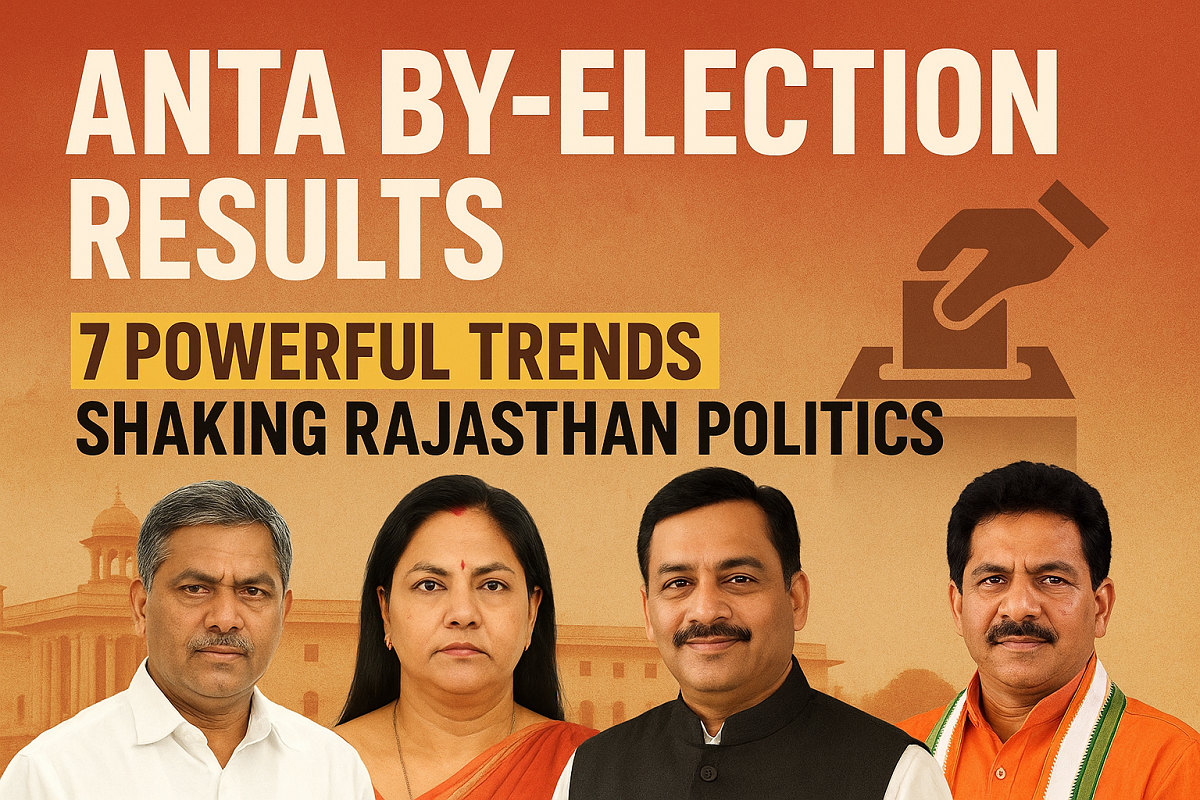
Anta By-Election Results reveal startling voting trends and dynamics in Rajasthan’s Anta assembly seat —
Published
6 months agoon
November 13, 2025
Contents
Jaipur,Nov.13,2025:The Anta seat in Rajasthan, carved out after delimitation in 2008, has become a political bell-wether: whichever party formed the state government also won this seat in past elections.
Originally won by Pramod Jain Bhaya of the Indian National Congress in 2008 (with ~50.29 % vote share).
In 2013, the Bharatiya Janata Party (BJP) candidate Prabhulal Saini won (~48.84 %).
In 2018, Congress returned to win (~58 %), again aligning with the party forming government in Rajasthan.
In 2023 the seat went to BJP’s Kanwarlal Meena (49.64 %) as that party formed government.
This recurring alignment underscores the seat’s strategic value. But the 2025 by-poll is unique: it is the first by-election for Anta and therefore serves as a live barometer of shifting public mood.
Why the by-poll is happening
The vacancy arises after Kanwarlal Meena’s disqualification due to a criminal judgment. The election is scheduled for 11 November 2025 with vote-counting on 14 November.
Key Players & Contestants
In the Anta by-election, three names dominate the narrative-
- Congress has fielded Pramod Jain Bhaya (a former minister)
- BJP’s candidate: Morpal Suman
- Independent entrant: Naresh Meena
What makes this trio especially compelling is the independent factor — Naresh Meena’s presence introduces a wildcard element into a seat that had been used to a two-party duopoly.
The Triangular Contest
The withdrawal of a BJP rebel candidate a few weeks earlier made the contest a clearer triangular battle. For BJP it meant avoiding a split in its vote-bank; for Congress it raised the stakes; for the independent, earnest local support adds weight.
What each contender brings
- Pramod Jain Bhaya (Congress) Known for past wins from this seat, strong ministerial experience, now back to reclaim the constituency.
- Morpal Suman (BJP): Given strategic importance by the BJP leadership; tasked with consolidating the party’s hold and exhibition of organizational strength.
- Naresh Meena (Independent) His entry taps into caste/community equations (Meena community), local grievances (e.g., infrastructure neglect), and disillusionment with mainstream options. For instance, in village Sankli people staged a boycott of voting in protest of local neglect.
Voter Turnout and Participation Trends
One of the most telling metrics ahead of result day is voter participation — and the data from Anta is remarkable.
Record Turnout
The latest figures show that the Anta by-poll saw around 80.25 % turnout across the constituency.
In some polling stations, voter turnout exceeded 90 %.
By gender breakdown: male voters ~82.32 %, female ~78.00 %, others ~75.00 %.
This high participation signals intense voter mobilisation, possibly driven by both local issues and the high-stakes environment.
Voting Patterns & Booth-Level Indicators
- Out of 268 polling stations, 15 booths recorded 90 %+ turnout.
- Interestingly, one village, Sānklī, with 763 registered voters, saw just one voter cast a ballot — a boycott protest over infrastructure neglect.
These micro-trends matter: they reflect pockets of both intense engagement and utter disenchantment.
Why this matters for the “Anta By-Election Results”
High turnout typically benefits challengers or reflects an anti-incumbency wave. Whether that applies here will become clearer with the result, but for now the high participation suggests voters are making a statement, not just fulfilling a duty.
Historic Win-Patterns and the 50 % Threshold
When we study the “Anta By-Election Results” in context, a striking pattern emerges: the seat tends to be won by candidates securing around or above the 50 % vote share.
Past data summary
- 2008: Bhaya (Congress) won ~50.29 %.
- 2013: Saini (BJP) won ~48.84 % (just under 50 %).
- 2018: Bhaya (Congress) won >58 %.
- 2023: Meena (BJP) won ~49.64 %.
So the general trend: a vote-share close to 50 % has been a winning marker. In other words: reaching near 50 % thresholds is important in the Anta seat.
Implications for the 2025 by-poll
Because turnout is higher than in some previous polls, winning may require even higher vote-share or a more disciplined vote-bank than earlier. With three serious contenders now, the classic 50 % threshold becomes more challenging — vote-splitting could mean a winner with even less than 50 % if one front fractures.
Thus watching for the final “Anta By-Election Results” will include not just who wins but what vote share they secure.
The Caste/Community and Local Issue Dimensions
The Anta constituency lies in Baran district, part of the Hadauti region — its political dynamics are shaped by caste/community equations, local development grievances, and the performance of the sitting government.
Local grievances & protest signals
One telling anecdote: the polling booth in Sānklī village recorded just one voter in protest — villagers said roads and infrastructure were neglected repeatedly.
This is symptomatic of a deeper under-current: voters no longer vote purely on party loyalty; local accountability matters.
Caste & demographic factors
- The Meena community has a substantial presence in Anta. The independent candidate Naresh Meena is tapping into this identity base.
- Both major parties are aware that winning here now means balancing community loyalties with development narratives.
- Observers believe the BJP views this by-poll as not just a contest for the seat but proof of organisational strength in Berplund districts, while Congress sees it as momentum-building ahead of future elections.
Development & governance narrative
The state government of Rajasthan, led by the BJP since 2023, is already planning administrative shake-ups and a cabinet expansion ahead of the result, suggesting they believe Anta’s result is a litmus test of public mood.
If the Anta By-Election Results go in favour of the ruling party — it will reaffirm that narrative; if not, it could be used by opposition to claim momentum.
Strategic Moves by Major Parties
BJP’s campaign machinery
- The BJP deployed heavyweights: Vasundhara Raje’s son and MP Dushyant Singh was given charge of the campaign committee for Anta by-poll.
- The party emphasised discipline and avoided internal rebellion by getting a rebel candidate to withdraw earlier.
- Messaging: “organization unity wins; we are the ruling party and will deliver development.”
Congress’s strategy
- Congress brought back Pramod Jain Bhaya, a known face with ministerial experience.
- Campaign focused on welfare, continuity of social programs, and tapping into anti-incumbency.
- The presence of independent Meena may split BJP vote or dilute it; Congress hopes to consolidate anti-BJP sentiment.
Independent & Local Factor
- Naresh Meena runs as an independent, capitalising on local resentment and community identity.
- Analysts suggest his votes could decide the result more than a simple two-way contest.
What this means for Anta By-Election Results
With tri-angular contest, high turnout and strong local issues, the usual formula may not apply. The winner may not cross the classic ~50 % vote-share threshold; instead they may win with a plurality if votes are divided. That makes sorting through vote-splits and booth-level patterns crucial.
What the Anta By-Election Results Could Signal for Rajasthan
The Anta By-Election Results are not just about one seat—they could herald wider shifts.
Institutional & organisational test for ruling party
If BJP wins decisively, it will demonstrate that its organisational machinery in rural/tribal belts is still strong and is capable of delivering under pressure. This in turn may shape future by-polls, local body elections and possibly the scenario ahead of the next state assembly election. Observers believe the government is already planning a cabinet expansion based on this result.
Momentum builder (or breaker) for Congress
A strong showing by Congress (especially if they win) can reinvigorate the party in Rajasthan, showing that opposition has traction in traditional BJP strongholds, boosting morale among cadres.
Rise of Independents & Caste/Local-Issue Politics
If Naresh Meena or any strong independent eats into the vote share of either party, it may reflect a growing trend where voters are increasingly issue-driven, community-aware, and less bound by party loyalty. This could push major parties to rethink their strategies, candidate selection and governance messaging.
Shift in Voter Behaviour & Turnout
The ~80 %+ turnout signals a highly energized electorate. If the Anta By-Election Results reflect this enthusiasm with a surprise outcome (e.g., independent win or very narrow margin), it could indicate that voters are less willing to accept business-as-usual and more demanding of performance.
What to Watch Immediately After Result Day
- Vote share of winning candidate (whether near 50 % or lower)
- Margin of victory (large margin → strong mandate; narrow margin → fractured electorate)
- Booth-level performance: whether high turnout booths favoured one side, whether low turnout booths corresponded to protest-
- Which party’s organisational strength held up better under high-turnout conditions?
- Whether Independent candidate’s performance impacted the major party vote-banks.
The Anta By-Election Results are poised to deliver much more than the identity of the winning candidate. They will reveal whether the traditional pattern (party in power wins Anta) still holds, how local issues and independent players are impacting outcomes, and how voter behaviour is evolving in rural Rajasthan.
Bihar
Bihar Chunav 2025 captured dramatic scenes at Patna Airport, viral video and sharp political barbs —
Published
7 months agoon
November 8, 2025
Contents
Bihar, Nov.08,2025:Bihar Chunav 2025 has steered into a striking turn this weekend — a scene at Patna Airport became more than a mere photo-op, evolving into a symbolic flashpoint of the campaign. In the fever of the assembly elections, where alliances, slogans and social media momentum shape outcomes, this incident forced attention, media replay and commentary. At its heart lies a question: for Bihar Chunav 2025, is celebrity meets politics merely spectacle, or does it signal a deeper realignment?
In this article we break down the airport moment, its players, the viral spread and what it augurs for Bihar’s political terrain.
The airport encounter that broke the mold
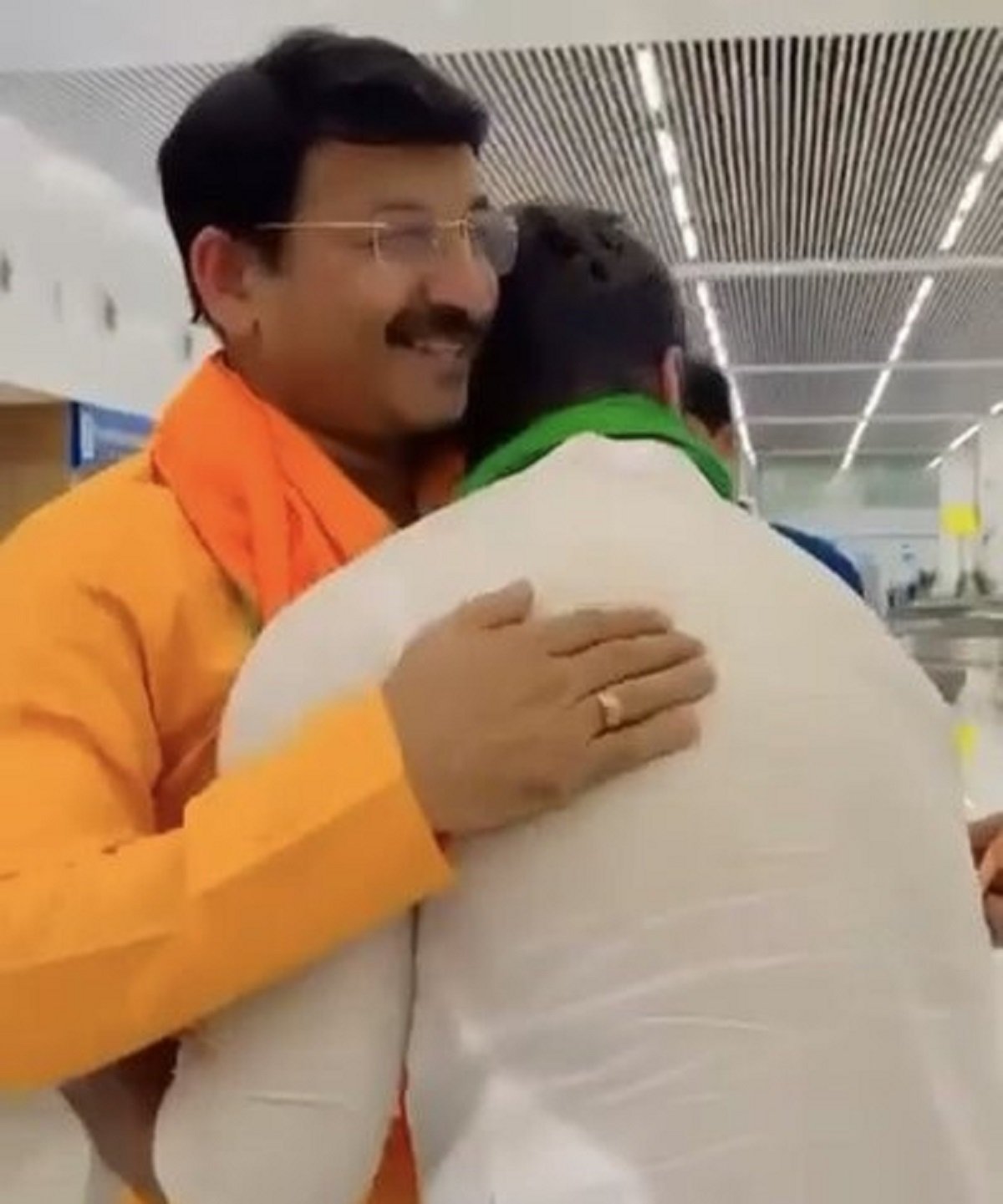
In a most unexpected staging of the Bihar Chunav 2025 drama, two high-profile figures crossed paths at Patna Airport. On one side, Khesari Lal Yadav — a Bhojpuri cinema star and newly-folded politician in the Rashtriya Janata Dal (RJD) camp. On the other, Manoj Tiwari — actor-turned MP for the Bharatiya Janata Party (BJP) and a vocal campaigner in the same election.
When Khesari approached Manoj at the airport, bowed and touched his feet, the moment was captured on camera and quickly went viral. Media outlets reported:
“मनोज तिवारी और खेसारी लाल एयरपोर्ट पर आमने-सामने … खेसारी लाल ने पैर छुए”
The visual of a leader from one side paying a traditional gesture of respect to a leader from the rival side is rarely seen in active election battles. In Bihar Chunav 2025, this moment triggered speculation, commentary and a sharp shift in media tone.
Power play and viral footage at Patna Airport
The Bihar Chunav 2025 viral moment and its stakeholders
The footage from Patna Airport shows Khesari Lal Yadav approaching Manoj Tiwari, touching his feet, and being embraced. The suddenness of this encounter raises multiple questions: Was it symbolic humility, an unscripted moment of respect, or a strategic gesture? According to an article:
“दोनों कलाकारों ने हंसते हुए एक-दूसरे को गले लगाया … वीडियो सोशल मीडिया पर तेजी से वायरल”
This moment spread quickly across platforms. Even in the election-heat of Bihar Chunav 2025, such an incident stands out because it interrupts the usual pattern of aggressive rallies, speech lines and cast-based appeals.
Why this matters in the campaign context
For campaign strategists and political watchers, this incident ticks several boxes-
- Visual symbolism: The act of touching feet is loaded with cultural meaning in India.
- Celebrity-politics crossover- Both figures are from the Bhojpuri film world, bringing their star-power into the electoral fray.
- Rival alliance moment: With RJD and BJP on opposite sides, any interpersonal gesture between their candidates reverberates.
- Viral potential: In modern campaigns like Bihar Chunav 2025, social-media spread can shape narratives faster than speeches.
Media-spin and perceptions
While the gesture could be read as respect, some political commentators suggest it may mask underlying power dynamics or even alliance overtures. The timing within the Bihar Chunav 2025 timeline is especially relevant: such crossings happen as campaigns intensify, candidate lists firm up, and local organisation gains critical mass.
Political tensions escalate in Bihar Chunav 2025
Khesari Lal Yadav’s declaration and challenge
Before the airport moment, Khesari Lal Yadav had made bold statements to energise his base in Bihar Chunav 2025. He claimed-
“पहले चरण में हमें 100 में से 100 मिलेंगे… कोई और नहीं है, खेसारी के आने के बाद सरकार बदल जाएगी। मैं तेजस्वी का छोटा भाई हूँ।”
He also vowed-
“मैं उन सभी (एनडीए नेताओं) को चार दिनों के अंदर पागल कर दूँगा … अगर मैं बेहतर बिहार के लिए बोलता हूँ… मुझे ‘याद-मुल्ला’ कहा जाता है।”
These remarks feed into the broader narrative of Bihar Chunav 2025 of change, of generational challenge and of caste/celebrity assertions.
Manoj Tiwari’s response and BJP’s framing
On the other hand, Manoj Tiwari has positioned himself in Bihar Chunav 2025 as both cinema-star and campaigner. He has spoken of job creation promises and youth aspiration in the election context.
In the wake of the airport incident, BJP strategists may interpret the moment as either a symbolic concession or a softening of opposition tactics. Thus Bihar Chunav 2025 becomes not only about policies but gestures that can shape voter psychology.
Underlying issues driving Bihar Chunav 2025
Unemployment and migration
Beyond the theatrics lies the weight of home-issues. For Bihar Chunav 2025, unemployment and outward migration remain pivotal. According to Manoj Tiwari-
“Reverse migration has begun, Biharis are returning to work in their own state.”
The airport encounter thus sits against a backdrop where the electorate is looking for stronger jobs, better infrastructure and credible change. Celebrities participating lend visibility, but the real test lies in voter perception of delivery.
The role of identity and celebrity in the campaign
In Bihar Chunav 2025 the presence of regional film stars like Khesari Lal Yadav and Manoj Tiwari underscores a broader trend: politics increasingly blends with cinema and culture. Voters recognise names, familiar faces, popular songs and a direct connect through platforms. This adds an extra dimension to traditional caste- and ideology-based appeals. The airport moment amplifies that blend: it’s a celebrity gesture, a campaign headline and a viral piece of content.
What this airport moment means for Bihar Chunav 2025’s narrative
Symbolic realignment or isolated moment
The question now for analysts of Bihar Chunav 2025 is whether the Patna Airport encounter will become a cornerstone of the campaign story or remain a footnote.
- On one hand, it could signal shifting alliances, softened rhetoric, or last-minute repositioning.
- On the other, it might simply be a viral clip that distracts from policy debates.
Voter psychology and momentum
In an election like Bihar Chunav 2025 where turnout, enthusiasm and narrative momentum matter, moments like this can matter disproportionately. They generate buzz, prompt social-media debate and may influence undecided voters by shaping impressions of leadership maturity, humility or strategy.
Risks and reactions
For the RJD side, the moment could be spun as showing respect across party divides. For BJP, it could be portrayed as validation or a sign of moral high-ground. But risks exist: critics may call it opportunistic, staged or distraction-driven, which could erode trust.
As Bihar Chunav 2025 moves toward its polling days, the airport moment at Patna offers a potent symbol of how elections today are not just fought in rallies and manifestos, but in gestures, visuals and social-media clips. The meeting between Khesari Lal Yadav and Manoj Tiwari at Patna Airport will likely be revisited — by campaign teams, by voters scrolling feeds, and by commentators searching for trends.
Bihar
Bihar election turnout 2025 hits a historic mark as over 60% voters participate —
Published
7 months agoon
November 6, 2025
Contents
Bihar, Nov.06,2025:Bihar election turnout 2025 has emerged as a highly significant phenomenon in the State’s political landscape. On the first phase of voting for the 2025 Bihar Legislative Assembly election, the voter participation crossed the remarkable mark of 60%, signalling strong engagement from the electorate.
This surge in turnout is not just a headline—it reflects deeper shifts: cleaned-up electoral rolls, active participation by women voters, changing political mood, and high stakes between the major alliances: the National Democratic Alliance (NDA) and the Mahagathbandhan.
In a state where voter fatigue or apathy often hinders enthusiasm, this turnout upswing merits close attention. It sets the tone for how the rest of the election may unfold and how power dynamics could shift.
Bihar election turnout 2025 –
Special Intensive Revision (SIR) of electoral rolls
One of the key structural factors behind the surge in Bihar election turnout 2025 is the thorough clean-up of electoral rolls under the SIR process. Over 60 lakh (6 million) names were removed from voter lists ahead of the polls.
This refresh likely had two major effects:
- Strengthening the credibility of the roll and reducing ghost or duplicate entries;
- Boosting voter confidence that their vote counts in a meaningful register, which can raise participation.
The electoral body’s efforts—including targeting migrant-heavy districts and updating data—played a role in enabling the high turnout.
Thus in the context of Bihar election turnout 2025, structural fairness and transparency matter more than ever.
Voter enthusiasm, women participation & local issues
Beyond the mechanics, a strong push of campaign energy, high awareness, and local issues galvanised the electorate. Reports show active participation of women voters in this phase.
Moreover, polling booths in some remote and previously low-voting areas saw improved turnout, indicating an expanding base of engaged voters. On top of that, the narrative of change—“badlaav” as some leaders put it—combined with local development issues has helped to fuel the turnout surge.
Hence, the high numbers in Bihar election turnout 2025 are attributable to both supply-side reforms (roll-cleanup, logistics) and demand-side dynamics (voter interest, local mobilisation).
the numbers that matter
Here are some of the key figures relevant to the Bihar election turnout 2025 story-
- By 5 pm in the first phase, turnout stood at 60.13% according to Election Commission of India data.
- In the same period, some districts like Begusarai recorded as high as ~67.32% voter turnout.
- The clean-up exercise reported earlier: nearly 60.5 lakh names facing deletion in the revision process.
- Special effort in districts with large migrant populations such as Patna: over 68 lakh names removed or corrected ahead of polling.
These numbers illustrate both the scale of the reform and the scale of voter engagement in Bihar election turnout 2025.
They also highlight the regional variation: some constituencies are much more active than others.
NDA vs Mahagathbandhan
Which alliance stands to gain from higher turnout
In the debate over Bihar election turnout 2025, much focus falls on how this higher turnout will impact the contest between the NDA and the Mahagathbandhan. Conventional wisdom often suggests that higher voter turnout favours opposition parties (as new or disengaged voters come in), but the reality is more nuanced.
- For the NDA (led by the Bharatiya Janata Party (BJP) and allies), the turnout boost can amplify any development-oriented, governance-based messaging that resonates with first-time or renewed voters.
- For the Mahagathbandhan (comprising the Rashtriya Janata Dal (RJD), the Indian National Congress and others), the increased participation offers opportunity to mobilise larger social coalitions, particularly in historically under-represented pockets.
Given that the SIR process cleaned up the voter rolls — thereby potentially reducing fraudulent advantage — both sides face a more level playing field. The alliance that effectively converts the increased turnout into votes will emerge stronger in the Bihar election turnout 2025 narrative.
Regional dynamics & constituency-level effects
At the micro level, several constituencies will play outsized roles in how the outcome of Bihar election turnout 2025 unfolds. For example-
- Areas with high turnout, such as Begusarai, may shift traditional patterns of dominance if new voters break differently.
- Migrant-heavy districts (where the roll-clean-up was more aggressive) could swing depending on how well parties address issues of migration, remittances and local development.
- Women-voter mobilisation might tilt certain seats where gender gap had been historically large.
In short, Bihar election turnout 2025 is not just about the aggregate percentage—it’s about where those votes came from, and how the alliances capitalised (or failed to) on that surge.
challenges and caveats
While the high turnout suggests positive momentum, there are several caveats and challenges to watch in the Bihar election turnout 2025 story:
- Early hours drop: In the first few hours, turnout was relatively low (around 13.13% by 2 hours into polling).
- Uneven turnout across districts: Some districts such as Patna recorded lower participation compared to rural ones.
- Voter roll deletion backlash: The deletion of approximately 65 lakh names raised opposition concerns about disenfranchisement.
- Logistical and access issues: Remote or vulnerable voters (elderly, PWDs) still face barriers, though increased efforts were made.
Thus, while Bihar election turnout 2025 signals strong participation, it doesn’t automatically translate into complete fairness or uniform benefits. Analysts will monitor how these caveats influence final results and post-poll narratives.
what’s next for Bihar’s political future
The high turnout in the first phase of Bihar election turnout 2025 sets the stage for several future developments-
- Increased expectations for governance: With more people engaged, post-poll governance will face higher scrutiny. The winning alliance will need to deliver on voter aspirations.
- Shift in campaign strategies: Parties will increasingly focus on mobilisation of newly active voter segments (women, rural youth, migrants) in the remaining phases.
- Impact on future elections: A successful turnout surge might become the benchmark not only for the remainder of this election but for future state and national contests in Bihar.
- Policy responses: The next government will likely face pressure to implement reforms in voter engagement, public service delivery, and transparency as the electorate has asserted its voice strongly through turnout.
Therefore, Bihar election turnout 2025 is not just a snapshot—it could be the turning point for how democracy is practised in the state.
why Bihar election turnout 2025 matters beyond the numbers
Bihar election turnout 2025 stands out because it combines structural reform (clean-up of electoral rolls), electoral enthusiasm (surge past 60 %), and high-stakes politics (NDA vs Mahagathbandhan). The result is a powerful indicator of democratic engagement in the state.
While the final outcome will of course depend on results in each constituency, the fact that the players and the public are stepping up signals a more vibrant democratic contest. For both governance and accountability, the higher turnout raises the bar.
Breaking News
Zohran Mamdani victory marks a historic shift in New York – the first Muslim mayor-
Published
7 months agoon
November 6, 2025
Contents
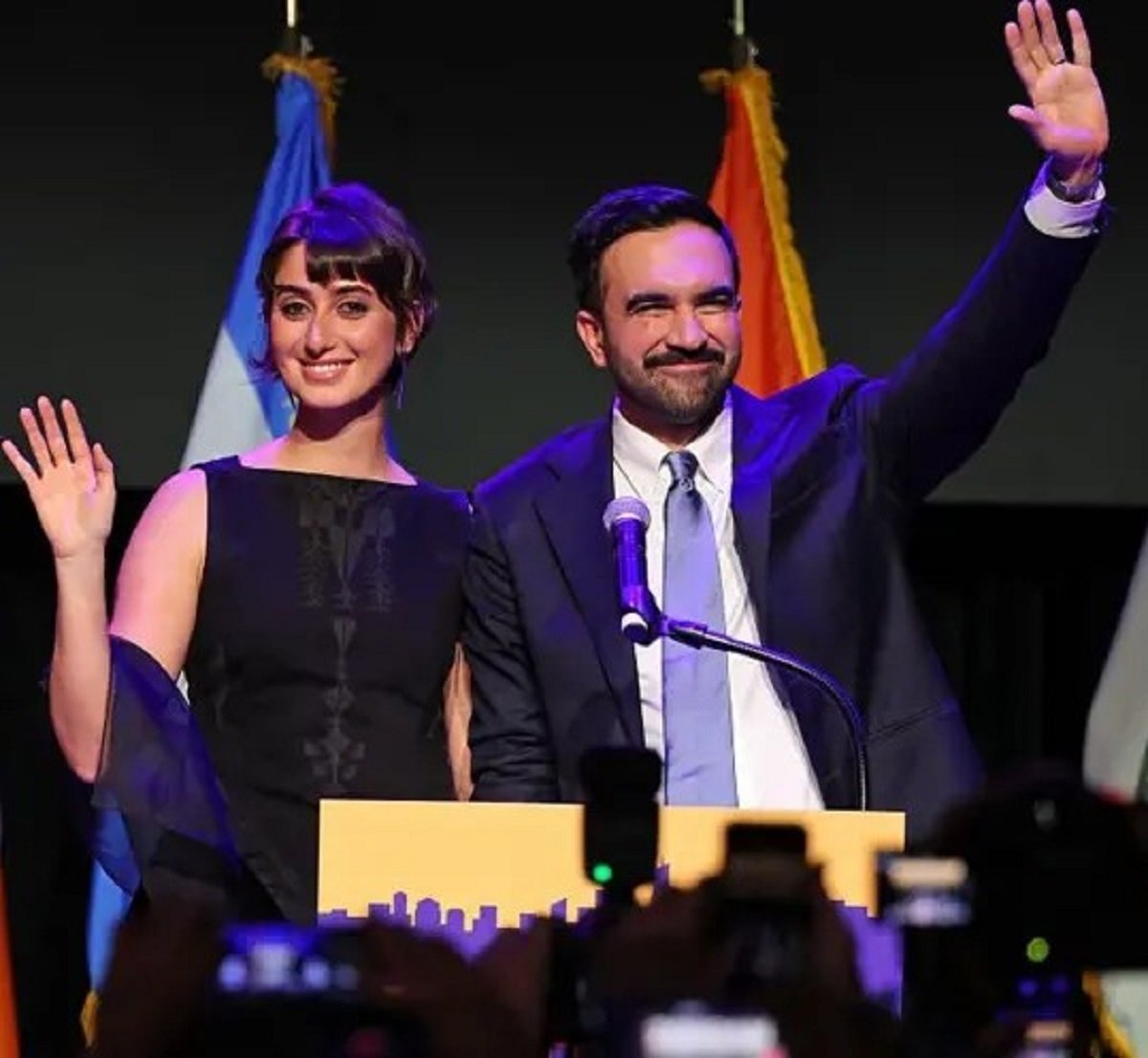
US, Nov.06,2025:The Zohran Mamdani victory in the New York City mayoral election on 4 November 2025 has instantly become a landmark event in both local and global politics. The 34-year-old democratic socialist, state assembly member from Queens, won the race to become the city’s 111th mayor — and its first Muslim and first South-Asian mayor, while also being one of its youngest in more than a century.
His platform emphasised bold reform: a rent freeze, $30 minimum wage by 2030, free bus transit, universal child care, city-run grocery stores and higher taxes on the wealthy.
Turnout crossed 2 million voters – the highest for a NYC mayoral election since 1969.
In his victory speech he cast his win as a mandate for change: “This city belongs to you.”
Thus, the Zohran Mamdani victory isn’t just another municipal election — it is being perceived as a major cultural and political inflection point-
Arab Media’s Response to the Zohran Mamdani Victory
Praise and ‘Historic’ framing
In the Arab world, coverage of the Zohran Mamdani victory has been overwhelmingly positive and emphatic. For example, the pan-Arab broadcaster Al‑Arabiya hailed the win as “historic and unprecedented” and highlighted Mamdani as NYC’s first Muslim mayor.
Likewise, the London-based website Al Quds Al‑Arabi described it as “the start of a new era of progressive policy in the city”.
Arab TV-channels focused on supporters’ celebrations and referred to the large youth turnout as a key factor: Al-Arabiya reported nearly 60 % turnout in New York (for the mayoral race) and credited Mamdani with mobilising young voters.
This framing emphasises identity (“first Muslim mayor”) and symbolic value for Arab-Muslim audiences, while aligning Mamdani’s victory with broader hopes of reform and representation.
Focus on Muslim identity and youthful electorate
Arab media outlets repeatedly underscored Mamdani’s Muslim identity, his South-Asian heritage and his youth. Many channels emphasised that for the first time the largest U.S. city is being led by someone from a community that is often under-represented in American politics.
They drew attention to the fact that he energised young and immigrant voters — hence presenting his win as both symbolic and substantive.
In short, the Zohran Mamdani victory in Arab media is being portrayed as a double win: representation + progressive policy.
References to Israel, Trump and Palestinian solidarity
Beyond identity and representation, Arab media also placed strong emphasis on Mamdani’s stance towards Israel and the issue of Palestine. Many outlets cited his criticism of Israeli policies and his pledge to challenge pro-Israel lobbies. For example-
- Reports mention that Mamdani “challenged” Benjamin Netanyahu and his supporters, and described his election as “a defeat for the Israeli lobby”.
- Some Arab commentators see his victory as part of a broader wave of Israel-critical sentiment and solidarity with Palestine.
Therefore, for Arab media the Zohran Mamdani victory is much more than a local U.S. story; it connects to Middle East geopolitics, diaspora identity and generational political shifts.
Israeli Media’s Take on the Zohran Mamdani Victory
Emphasis on identity and opposition stance
In contrast, Israeli media coverage of the Zohran Mamdani victory has been more cautious and somewhat critical. Many outlets emphasised his Muslim identity, his opposition to Israeli government policies, and his prior statements about Israeli-Palestinian issues.
For example:
- A prominent paper, Israel Hayom, described Mamdani as “one of the leading anti-Zionist voices in the United States”.
- Channel 14 News led with headlines noting that Mamdani opened his victory speech in Arabic and quoted that between 16-30 % of Jewish voters in NYC backed him — a fact that elicited surprise in Israeli studio discussions.
This coverage highlights identity politics and frames Mamdani’s election as a challenge to pro-Israel interests.
Security-and-lobby framing
Some Israeli outlets highlighted Mamdani’s previous remarks, such as his use of terms like “globalize the intifada”, which had generated controversy.
They framed the victory as potentially ominous: one article noted that hundreds of Mamdani supporters gathered outside his campaign HQ chanting “Free Palestine”.
There is an undercurrent in some Israeli coverage that Mamdani’s win signals “a warning” to Israel and that his administration in NYC may influence U.S. policy or city-level support toward Israel.
Thus the Zohran Mamdani victory is not simply seen in Israel as an urban U.S. election, but rather as a paradigm shift with security and geopolitical implications.
Zohran Mamdani Victory Means for U.S. Politics
Progressive surge and Democratic wave
On the U.S. domestic front, the Zohran Mamdani victory is being interpreted as a clear indicator of the strength of progressive politics — especially in an era of widespread economic discontent. His win joins other Democratic successes in 2025 in New Jersey and Virginia, indicating a broader trend.
His campaign — grounded in grassroots small-donations, youth mobilisation, social media savvy — is seen as a model for a new kind of American urban politics.
Moreover, Mamdani’s victory over heavyweight names such as Andrew Cuomo (both in primary and general) demonstrates a shifting power dynamic inside the Democratic Party.
Implications for mid-terms and Republicans
Analysts view the Zohran Mamdani victory as a major setback for the Donald Trump-aligned Republican faction. The defeat in a major city, along with other Democratic wins, sends an early warning for the 2026 mid-term elections.
Trump himself reacted by calling Mamdani’s victory speech “very angry” and warned that if Mamdani is not “nice” with him, federal funding may be withheld.
Hence, the Zohran Mamdani victory is resonating far beyond New York and is shaping narratives around the national political landscape, signalling the challenges Republicans may face.
The Challenges Ahead for Zohran Mamdani’s Administration
While the Zohran Mamdani victory is historic, it also comes with steep expectations and significant obstacles.
First, implementing his ambitious platform – free public buses, city-run grocery stores, universal childcare, rent freeze and a $30 minimum wage by 2030 – will require massive funding and complex execution.
Second, his relative lack of executive experience has been pointed out by critics. Managing New York City — one of the world’s largest and most complex municipalities — presents formidable administrative, financial and political challenges.
Third, given media narratives in both Israel and the Arab world, Mamdani will face intense spotlight and possibly pushback both domestically and internationally. His positions vis-à-vis Israel and pro-Palestine activism have already drawn scrutiny.
Lastly, with a large portion of voters (in one poll ~26.5 %) reportedly considering leaving the city if Mamdani wins, according to a survey cited by New York Post, the pressure is high to deliver tangible results.
Thus the Zohran Mamdani victory sets the stage for an ambitious tenure — but also a controversial and scrutinised one.
Zohran Mamdani Victory Resonates Globally
Why has this local mayoral election drawn so much global media attention? There are several reasons-
- Representation and identity: A young Muslim, Indian-origin, democratic-socialist mayor of America’s largest city is a potent symbol for many communities worldwide.
- Policy model: His agenda resonates with issues faced globally in urban centres — affordability, housing crisis, youth disenchantment, transit access.
- Geopolitical signalling: His stance on Israel/Palestine and his Muslim identity have made his election a matter of interest in Arab media, Middle East discourse and diaspora communities.
- Platform for global progressive politics: His success may inspire similar campaigns in other major cities around the world, indicating that grassroots progressive politics can win at scale.
In every way, the Zohran Mamdani victory is being seen as more than a local event — it’s a moment of global relevance.
A Turning Point in Urban & Global Politics
The Zohran Mamdani victory marks a milestone in several dimensions: local governance, progressive awakening, identity politics and global signalling.
For New Yorkers, it represents a clear choice for change. For American politics, it signals a shift away from centrist establishment politics toward grassroots progressive energy. For the world, it offers a narrative of representation and reform in one of the globe’s most influential cities.
Bihar
Bihar NDA manifesto 26-second launch sparks outrage as senior leaders accuse the alliance of short-changing voters-
Published
7 months agoon
November 3, 2025
Contents
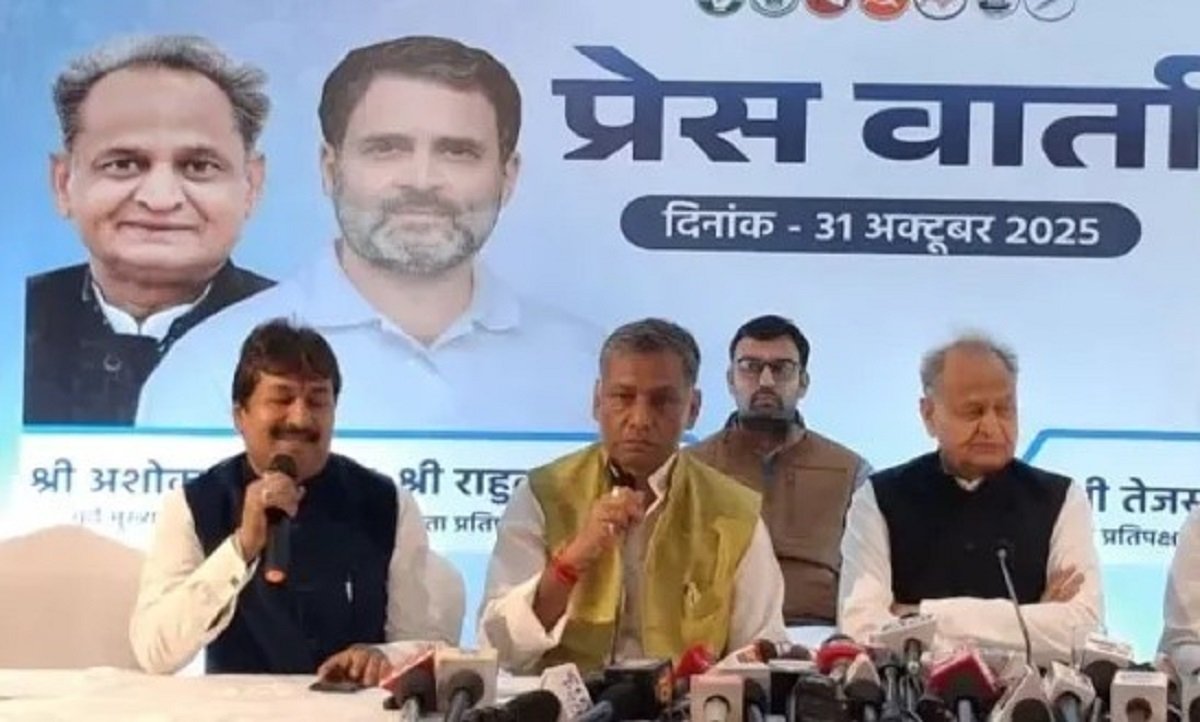
Bihar, Nov.03,2025:Bihar NDA manifesto 26-second has become the rallying cry of opposition leaders after the release of the National Democratic Alliance (NDA) manifesto for the upcoming Bihar Assembly elections. The press conference announcing it lasted only 26 seconds, prompting senior Indian National Congress leader Ashok Gehlot to label the exercise a “bundle of lies” and an insult to democracy-
This extraordinary brevity has triggered outrage and debate, and suggests that the NDA is either extremely confident or deeply cautious. The phrase “Bihar NDA manifesto 26-second” now encapsulates a potent mix of electoral theatrics, governance questions and strategic positioning.
What happened at the press conference
The NDA held a joint press conference in Patna to unveil its “Sankalp Patra” (pledge document) for the Bihar elections. But according to multiple accounts-
- The programme lasted just 26 seconds from the time it commenced to its conclusion.
- The state’s Chief Minister Nitish Kumar reportedly did not address the media; only Deputy CM Samrat Choudhary answered a few questions.
- Opposition leaders claim the NDA rushed the event because of underlying anxiety about facing journalists or accountability.
In short, the Bihar NDA manifesto 26-second moment has become symbolic of a campaign anchored more in optics than detailed dialogue.
Key figures and their reactions
Ashok Gehlot
The former Rajasthan Chief Minister and senior Congress leader slammed the event-
“They came, showed their faces and left… clearly afraid of the media.”
He also challenged PM Narendra Modi on past package promises (like a ₹1.25 lakh crore special package for Bihar) which he claimed remain unfulfilled.
Akhilesh Prasad Singh
Congress MP and former Pradesh president criticized the NDA for the “seven second photo-shoot” nature of the launch, asserting that Chief Minister Nitish Kumar was reduced to a figurehead.
Tejashwi Yadav
Tejashwi Yadav of the RJD called the document a “report card of lies, deceit and hollow promises.” He contrasted it with the opposition’s own “Sorry Patra” motif, mocking the NDA’s strategy.
The substance of the Bihar NDA manifesto
Despite the brevity of its release, the NDA’s manifesto contained sweeping promises-
- 1 crore government jobs for youth in Bihar.
- Free education KG to PG, and monthly aid for SC/ST students.
- Metro train services in four cities, seven international airports, 10 industrial parks, seven expressways.
- Financial assistance for EBCs (Extremely Backward Classes) and women (e.g., “Lakhpati Didi” scheme).
However, critics argue that while the content is ambitious, the Bihar NDA manifesto 26-second release offers little time for scrutiny or questions—and thus raises doubts about depth and deliverability.
Why the “26-second” tagline matters
Symbolism of haste
A press conference that lasts barely half a minute sends a potent message: the NDA may be trying to avoid scrutiny. The opposition has seized on this, asserting the alliance fears questions about its 20-year governance record.
Media perception & trust
Journalists present at the event reportedly called it “the shortest press conference” of their careers. That perception undermines trust in transparency and engagement.
Electoral optics
As campaign narratives go, the Bihar NDA manifesto 26-second shorthand becomes a rhetorical device: a way for opponents to paint the ruling alliance as dismissive of dialogue, accountability and public scrutiny.
Implications for the election campaign
For the NDA
- Risk of appearing aloof: By limiting engagement, the NDA may alienate the very voters it needs to reassure.
- Defining the narrative: Instead of the manifesto content, the manner of release may become the dominating talking point in the campaign.
- Strategic gamble: They’ve declared large promises but wrapped them in minimalistic form—if delivery falters, the style may hurt credibility.
For the opposition
- A launching pad: The Bihar NDA manifesto 26-second criticism gives the opposition a consistent message slot—“lack of transparency, lack of substance”.
- Focus shift: Rather than just opposing policies, they can question process and tone.
For voters
- Mixed signals: Voters are confronted with grand promises, but the release format raises questions about accountability.
- Early skepticism: With launch optics already under fire, the NDA may have to work harder in the field to regain confidence.
Criticisms of law-and-order and governance
Beyond process, the opposition leveraged the moment to question governance under the NDA in Bihar-
- Ashok Gehlot flagged broken promises of past packages and unfulfilled commitments.
- Akhilesh Singh pointed to alleged police and law-and-order lapses.
- There is a broader narrative: if the manifesto came out so quickly, perhaps because the governing alliance doesn’t want to revisit its 20-year record under questioning.
what this says about the NDA
Bold promises, minimal engagement
The NDA’s document features sweeping ambitions. But the press event’s brevity might reflect-
- A desire to minimise risk — avoid journalist questions or unscripted moments.
- A confidence in brand/promise over detailed scrutiny.
- A calculation that the opposition’s critique will not sway base support.
Opening space for governors
While the NDA tries to shape the narrative of development and promise, the “26-second” episode hands the opposition a durable tagline. Opponents now have an easy repeatable line: “When you can’t answer questions, you get a 26-second press conference.”
Opposition responses in depth
Ashok Gehlot’s critique
He called the event a “mockery of democracy” and demanded a report-card of work done, rather than new promises wrapped in light fanfare.
Tejashwi Yadav’s framing
He turned the manifesto into a referendum on trust: calling it shallow, urging voters to demand “Sorry Patra” instead.
Media & public columns
Editorials and journalists noted that the Bihar NDA manifesto 26-second tag will likely linger beyond just the campaign, influencing how governance and communication are perceived.
Bihar politics and legacy
Bihar is a state shaped by decades of coalition politics, caste dynamics, development deficits, and ambitious manpower potential. The upcoming elections are critical: not just for the NDA or the opposition, but for how voters view promises vs delivery.
The fact that the NDA feels confident in launching a high-ambition manifesto in 26 seconds may reflect-
- A belief in established brand presence.
- A pivot toward image over interrogation.
- A shift in campaign tactics from substance to spectacle.
Setting the scene for November
As the campaign moves forward, the Bihar NDA manifesto 26-second moment will remain a reference point. For the NDA, the challenge will be to convert ambition into action and rebuild engagement with voters who may interpret brevity as reticence. For the opposition, the hurdle will be to move beyond the optics and offer compelling alternatives.
Bihar
NDA CM face Bihar – Amit Shah’s decisive message that “no seat is vacant” reinforces Nitish Kumar as the-
Published
7 months agoon
October 29, 2025
Contents
Bihar, Oct.29,2025:NDA CM face Bihar is now firmly in the public eye after Amit Shah, India’s Union Home Minister, delivered a crisp and forceful message at a rally in Darbhanga: the position of Chief Minister in Bihar is not up for grabs within the alliance, signalling that Nitish Kumar will remain the face of the National Democratic Alliance (NDA) heading into the 2025 state elections-
By staking this ground, Amit Shah attempts to quell internal speculation and opposition jabs about Bihar’s top post. This article unpacks how the NDA CM face Bihar narrative unfolded, why it matters, what it reveals about political strategy, and what we can expect ahead.
What did Amit Shah say
In his address in Ali Nagar (Darbhanga), Amit Shah made clear the following key points-
- He told the rally that for the NDA in Bihar, the Chief Minister’s post is not vacant—“there is no vacancy” in the top job.
- He took aim at the opposition alliance (Mahagathbandhan), saying that while some parties want to install their familial successors (for example, accusing Lalu Prasad Yadav of grooming his son Tejashwi Yadav for the top post), the NDA stands for a merit-based, youth-driven model.
- Amit Shah also appealed for support for ND A candidates and reinforced the alliance’s unity behind Nitish Kumar as the CM face.
- The message on the NDA CM face Bihar was deliberate: by stating “seat not empty”, he closed room for speculation.
Political analysts note that although earlier Shah remarked that the decision would lie with MLAs, this rally speech marks a sharper stance.
Opposition, alliance and strategy
Symbolism and strategy
The question of who will be the CM face for the NDA in Bihar is more than a formality — it shapes campaign messaging, alliance coherence, voter perception and opposition attacks. By asserting the NDA CM face Bihar as settled, Amit Shah signals strength, discipline and unity inside the alliance.
Impact on opposition narratives
The Mahagathbandhan has repeatedly pressured the NDA to declare its CM face, arguing that clarity helps voter trust. With the NDA proclaiming no vacancy, the opposition’s tactic of portraying internal confusion gets undercut.
Internal alliance dynamics
Within the NDA in Bihar, various parties jostle for seats, influence and roles. Declaring the NDA CM face Bihar as Nitish Kumar stabilises the leadership question and helps streamline candidate selection and campaign coordination.
Voter perception and media optics
When voters see a unified front with a declared CM face, it adds to the perception of credibility. For undecided voters, the NDA CM face Bihar becomes a tangible anchor rather than an ambiguity. For media, the clarity of message helps projected narrative control.
The broader political context of the 2025 Bihar election
The 2025 polls and key actors
The state assembly elections in Bihar in 2025 are being fought on numerous fronts: leadership, anti-incumbency, caste arithmetic, development issues, national versus regional messaging.
The Mahagathbandhan has declared Tejashwi Yadav as its CM face. Meanwhile, LJP leader Chirag Paswan has made his seat-sharing demands and hinted at leadership ambitions, complicating alliance games.
Why leadership clarity is important in Bihar
In a state with complex regional, caste and alliance politics, any uncertainty about the top post can be exploited by opponents as a sign of weakness. The NDA CM face Bihar message therefore is a proactive attempt to close that avenue of attack.
Historical precedents
Earlier, even in 2020 and before, declarations around CM faces influenced voter mindset. For example, the NDA’s slogan “2025 Phir Se Nitish” (if valid) would hinge on establishing Nitish Kumar’s leadership.
Media and public discourse
Media coverage of Bihar’s election has been intensifying, focusing on the leadership question among other issues. A recent report noted that the NDA insistence that “there is no vacancy” for CM is a sharp counter to opposition claims.
What the NDA CM face Bihar message means
Alliance reaffirmation
With the NDA CM face Bihar message, allies within the coalition can rally behind a confirmed leader rather than engage in internal jockeying. For example, Chirag Paswan publicly backed Nitish Kumar as NDA’s CM face after Shah’s statement.
Opposition strategy neutralised
By proactively declaring the CM face, the NDA reduces the effectiveness of opposition narratives that portray the coalition as ambiguous or weak. The Mahagathbandhan’s attacks about internal confusion lose traction.
Leadership credibility for Nitish Kumar
For Nitish Kumar, the NDA CM face Bihar confirmation reinforces his status and legitimacy ahead of the election. It puts him in a strong campaign position and helps clarify the narrative for voters.
Impact on voter psychology
Voters who prefer stability, clear leadership and mature alliances may view the message positively. The reassurance that the CM face is settled could sway undecided or moderate voters who otherwise fear internal strife.
Campaign logistics & messaging
With the CM face message out, campaign materials, constituency-level messaging, candidate speeches can all be aligned around the same narrative — reducing confusion and improving coherence on the ground.
What’s next in Bihar’s electoral battle for the NDA CM face Bihar role
Election campaign intensification
With the leadership question addressed, the NDA now can focus more overtly on issues: development, governance, alternative to opposition, seat-sharing calculations and narrative battles.
Opposition counter-moves
The Mahagathbandhan may now shift gear: either challenge the NDA’s leadership clarity with substance (e.g., policy critiques) or reframe the leadership question in new ways (e.g., performance, track record).
Candidate selection and ground game
Having a confirmed CM face streamlines the candidate selection process for the NDA. Local alliances, regional partners, and campaign teams will align around Nitish Kumar’s leadership.
Public messaging and media narrative
Expect more campaign events where Shah, Kumar and other senior leaders highlight the theme of “India’s youth, merit-based politics, end of dynasty rule” as hinted in the rally. The theme of the NDA CM face Bihar will be integrated into this messaging.
Potential risks and fault-lines
Even with a declared CM face, internal alliance tensions (seat-sharing, regional aspirations) remain possible. Additionally, if the NDA’s campaign falters on performance or public issues, the CM face clarity alone may not suffice. The opposition may shift to attack governance, delivery and credibility.
The significance of NDA CM face Bihar in today’s politics
The NDA CM face Bihar issue is not mere semantics—it is a strategic signal. With Amit Shah’s declaration that there is “no vacancy” for the Chief Minister post, the NDA has locked in Nitish Kumar’s position as its face in the upcoming Bihar election. By doing so, the alliance seeks to present unity, leadership clarity and campaign coherence to the electorate.

Contents
Bihar,Oct.18,2025:The Mahagathbandhan Bihar seat-sharing 2025 mechanism is central to the opposition’s strategy: it must ensure that its constituent parties are aligned, avoid internal competition, maximise its vote share and present a coherent alternative to the ruling alliance. Without clarity on which party contests which seat, the alliance risks dilution of its vote, confusion among supporters and giving undue advantage to its rivals-
Where things stand
- Nominations for Phase 1 of the Bihar Assembly elections closed on Friday for the 121 seats.
- The Mahagathbandhan Bihar seat-sharing 2025 deal has not been finalised despite this deadline.
- Multiple candidates from different alliance parties have filed nominations for the same constituencies — signalling ‘friendly fights’ within the alliance.
- One of the smaller allies, the Vikassheel Insaan Party (VIP) led by Mukesh Sahani, has reportedly settled on 15 seats.
- A tentative formula reportedly gives the Rashtriya Janata Dal (RJD) 135 seats, and the Indian National Congress (INC) 61 seats — though this arrangement remains unofficial and contested.
Key friction points in seat sharing
Overlapping nominations
Because the Mahagathbandhan Bihar seat-sharing 2025 pact isn’t sealed, candidates from different alliance partners are contesting the same seats — for example Lalganj, Bachhwara, Kahalgaon.
Disparity in seat allocation demands
The Congress reportedly wants more “winnable” seats; the RJD and others are firm on key constituencies, causing a tug-of-war.
New allies complicating arithmetic
With VIP and possibly the Jharkhand Mukti Morcha (JMM) seeking inclusion, the Mahagathbandhan Bihar seat-sharing 2025 equation has grown more complex.
Time pressure and optics
With nomination deadlines and phase-1 polling looming (6 November), the delay in finalising the seat-sharing looks bad for the alliance.
Why the deadlock – underlying reasons
Several structural and strategic factors lie behind the stalemate in the Mahagathbandhan Bihar seat-sharing 2025-
- Seat + symbol prestige: Parties are reluctant to give up strong seats or their identity symbols.
- Winnability calculus: Each party is pushing for seats where their caste/base strength is higher — Congress focusing on some seats, RJD on others.
- New entrants/alliances: Incorporating VIP and maybe JMM raises negotiation complexity.
- Time crunch: With nomination deadlines passed for phase-1, last-minute deals become tougher.
- Signalling to voters: The delay gives an impression of disunity vs the rival alliance, the National Democratic Alliance (NDA), which has already finalised its seat-sharing.
Implications of the stalemate for the alliance
Electoral disadvantage
By contesting the same seats internally, the Mahagathbandhan Bihar seat-sharing 2025 risks splitting its vote, thereby handing advantage to the ruling alliance.
Perception of disunity
Voters often interpret delays and internal competition as weakness. The perceived chaos may hurt the alliance’s credibility.
Loss of strategic momentum
While rivals campaign full-throttle, the Mahagathbandhan risks being reactive rather than proactive.
Weakened negotiation power
As deadlines pass, parties may be forced into less favourable seat-shares, reducing their bargaining strength.
Can the Mahagathbandhan still plug the gap
Yes — but it will require rapid, deliberate action-
- Finalise the deal immediately, even if some ‘friendly fight’ (internal contest) remains.
- Ensure a withdrawal window is used strategically so overlapping candidates step down and the alliance presents one face per seat.
- Leverage the common narrative of anti-incumbency and substitute the optics of delay with clarity of purpose.
- Use dynamic seat-sharing revisions (for phase-2) to ensure flexibility.
- Engage key allies (VIP, JMM) with clarity, so the Mahagathbandhan Bihar seat-sharing 2025 formula is not held hostage to one party’s stance.
What voters and analysts are saying
- Analysts suggest the delay in the Mahagathbandhan Bihar seat-sharing 2025 deal may not cost the opposition if they handle withdrawals properly.
- Some local cadres feel that the alliance is repeating mistakes of past elections where deals came late but results held.
- For voters in key constituencies like Lalganj and Bachhwara, seeing two alliance candidates may cause confusion.
- Conversely, alliance leaders say that the delay signifies expansion not disintegration: more partners, more seats being negotiated carefully.
What needs to happen next
- By 22 October – the candidate withdrawal window for phase-1; this is the last opportunity to resolve overlaps.
- Before phase-2 nominations (20 October) – finalise the seat-sharing for the remaining 122 seats to present a united front.
- Clear communication – public announcement of the seat-share formula to avoid further optics of discord.
- Coordinate campaign messaging – ensure all alliance partners align on key themes (jobs, youth, governance) so the messaging is unified.
- Monitor friendly-fights – where overlaps exist, ensure one candidate withdraws intelligently and the vote doesn’t split.
The Mahagathbandhan Bihar seat-sharing 2025 deadlock is a serious cause for concern. With deadlines passed and rival candidates already in the fray, the opposition alliance must act fast. The window to salvage unity and present a strong front is closing — and failure to move decisively could turn into a strategic misstep against a well-prepared NDA. The coming days will reveal whether the alliance can translate its coordination talk into electoral strategy — or whether the delay proves costly in this high-stakes Bihar election.

Government School Closures in India: 1 Lakh Schools Shut, A Deepening Crisis for the Nation’s Future

Dr. Preetha Katyal – A Transformational Force in Holistic Healing, Spiritual Empowerment & Human Consciousness

Buddha Purnima Celebration in Jaipur: 7 Powerful Messages of Peace, Equality and Humanity

5th Arrupe Cup 2025: Jaipur’s Most Exciting Inter-School Sports Tournament Unites 109+ Schools in Thrilling Multi-Sport Showdown

Powerful Milestone: Dr Ambedkar Memorial Welfare Society Launches 100-Room Girls Hostel in Jaipur

“Maha Parinda Abhiyan” Launched by Deputy CM Dr. Prem Chand Bairwa Under the Leadership of Dr. Bankolia

Priyansh Arya: The Six-Hitting Sensation of IPL 2025

Top 10 Most Searched Topics on YouTube: What’s Trending Now?

Preity Zinta Spotted with New Punjab Kings Hero Priyansh Arya in Viral Clip

Nag Panchami 2025: 7 Key Rituals and Puja Time to Eliminate Kaal Sarpa Dosha

Radhika Merchant: A New Chapter as Radhika Ambani

Balen Shah, Kathmandu’s independent mayor, from rapper to political leader. Explore his rise amidst Nepal’s youth-led revolution-

best career opportunities | Jaipur Career Fair | Credent TV | Dainik Navjyoti D2S03

what is reiki healing | Mental Health | Shiksha Sarokar, शिक्षा सरोकार, Sunil Narnaulia

DAV Centenary Public School, Vaishali Nagar, Jaipur hosts Successful ‘Mind Wars Quiz: A Battle of Wits and Knowledge’
Trending Post
Breaking News4 weeks agoPowerful Milestone: Dr Ambedkar Memorial Welfare Society Launches 100-Room Girls Hostel in Jaipur
Breaking News3 weeks ago5th Arrupe Cup 2025: Jaipur’s Most Exciting Inter-School Sports Tournament Unites 109+ Schools in Thrilling Multi-Sport Showdown
Breaking News4 weeks agoWhy Rajasthan’s Panchayat Elections Delay Is a Dangerous Threat to Democracy; 5 Powerful Reasons
Education4 weeks ago“Maha Parinda Abhiyan” Launched by Deputy CM Dr. Prem Chand Bairwa Under the Leadership of Dr. Bankolia
Breaking News3 weeks agoBuddha Purnima Celebration in Jaipur: 7 Powerful Messages of Peace, Equality and Humanity
Biography4 days agoDr. Preetha Katyal – A Transformational Force in Holistic Healing, Spiritual Empowerment & Human Consciousness
Breaking News3 days agoGovernment School Closures in India: 1 Lakh Schools Shut, A Deepening Crisis for the Nation’s Future