Art
Indian Art History Congress 2026: 5 Powerful Insights from Dr. Renu Shahi’s Groundbreaking Satire Art Research in Bengaluru
Indian Art History Congress 2026 witnessed a powerful research presentation by Dr. Renu Shahi in Bengaluru, highlighting satire art, caricature and cartoons as reflections of India’s social values.

- Political authority
- Social hierarchies
- Cultural transformation
- Public morality
- Gaganendranath Tagore – Known for his early 20th-century satirical illustrations critiquing colonial society.
- R. K. Laxman – Creator of the iconic “Common Man” and one of India’s most influential political cartoonists.
- K. Shankar Pillai – Founder of Shankar’s Weekly, a platform that shaped political satire in India.
- Bal Thackeray – Began his career as a cartoonist before entering politics.
- The interdisciplinary approach
- The analytical depth
- The integration of visual examples
- The contextual grounding in political history
- A platform for intellectual exchange
- A forum for redefining art history
- A space for emerging scholars to gain visibility
- A bridge between tradition and contemporary discourse
- Visual political commentary on social media
- The legal boundaries of satire
- The relationship between art and freedom of expression
- Digital satire archives
- Comparative studies between colonial and contemporary caricature
- Regional variations in satirical art
- Gender perspectives in cartooning
Contents
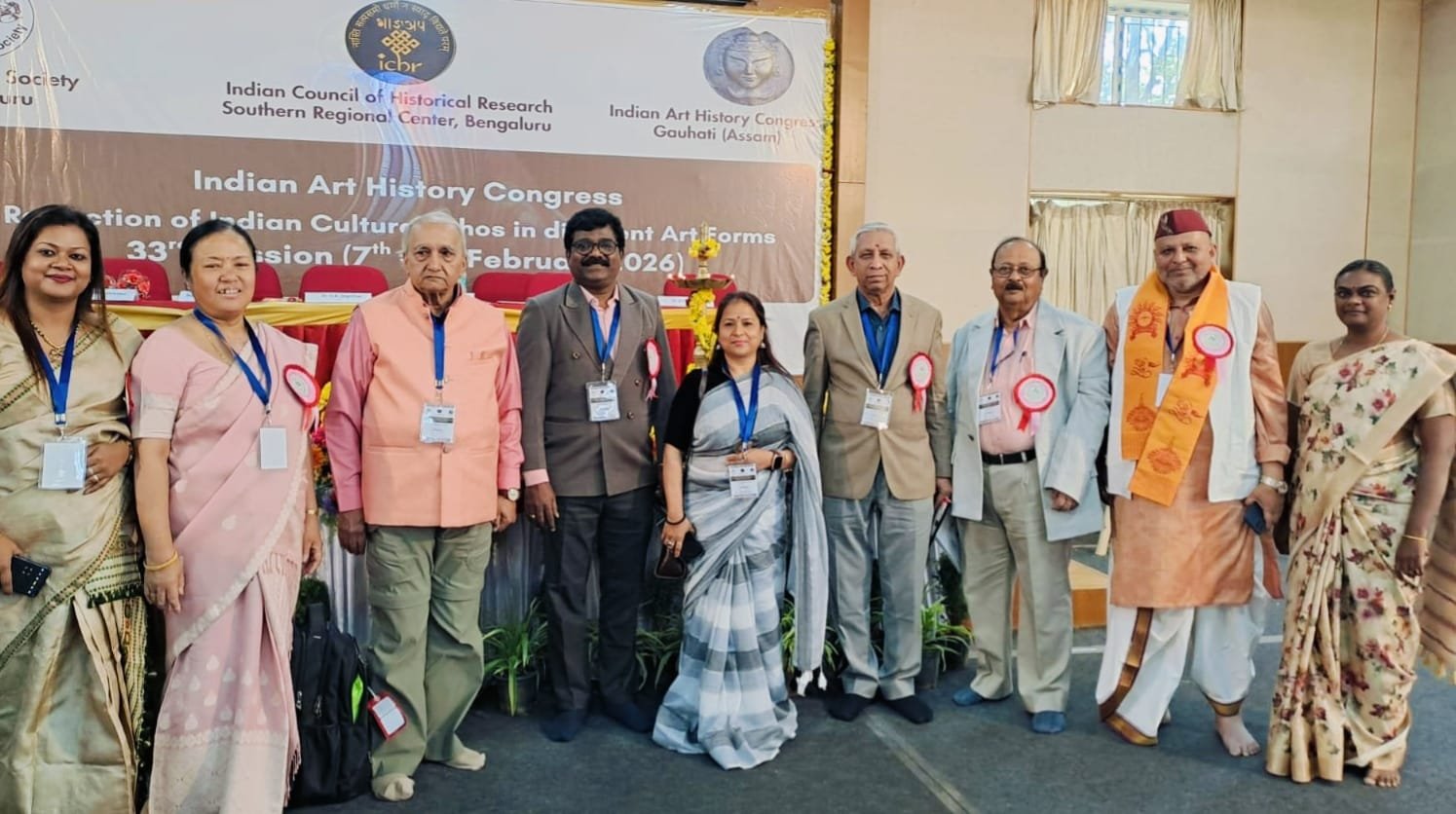
Indian Art History Congress 2026 became a landmark academic event as leading scholars, historians, and art critics gathered in Bengaluru to explore the evolving dimensions of Indian art and its deep-rooted social values. Among nearly 175 distinguished participants from across the country, Dr. Renu Shahi from Jaipur, Rajasthan, emerged as a notable voice with her compelling research on satire art, caricature, and political cartoons in the Indian art landscape.
Her presentation, delivered during the 33rd Annual Session of the Indian Art History Congress, sparked curiosity, discussion, and admiration among scholars and attendees alike.
Introduction to Indian Art History Congress 2026
The Indian Art History Congress 2026 marked the 33rd annual session of one of the country’s most respected academic platforms dedicated to the study and preservation of Indian art history. Held from February 6 to February 10, 2026, the conference brought together scholars from universities, research institutions, and independent academic bodies.
The central theme of this year’s session was “Social Values in Indian Art.” The theme encouraged participants to analyze how art reflects, challenges, and reconstructs societal norms, ethics, and political consciousness across time.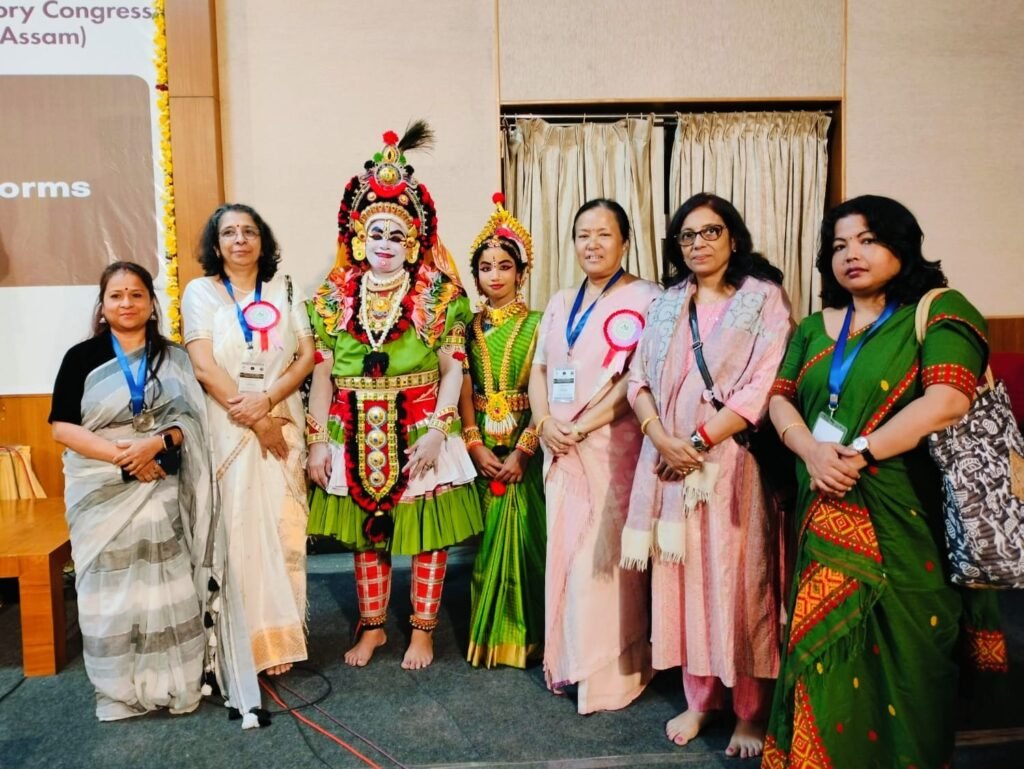
More details about the organising body can be explored through the official Indian Art History Congress network and academic listings on platforms such as the Indian Council of Historical Research (https://ichr.ac.in/).
Venue and Organising Institutions
The Indian Art History Congress 2026 was hosted at the historic Mythic Society in Bengaluru, Karnataka — an institution known for its long-standing contribution to historical and cultural research in South India.
The session was organised under the aegis of the Indian Council of Historical Research (ICHR) and the Indian Art History Congress, in association with the Dr. Pooja Bharti Memorial Trust.
The selection of Bengaluru, a city known for blending heritage with modern intellectual discourse, added symbolic significance to the event.
Lifetime Achievement Honour at the Congress
A major highlight of the Indian Art History Congress 2026 was the conferment of the prestigious “Bharati Samman” (Lifetime Achievement Award).
The honour was presented to eminent art historian Dr. Arvind Prabhakar Jamkhedkar, former Chairman of the Indian Council of Historical Research and former Vice-Chancellor of Deccan College, Pune.
Dr. Jamkhedkar’s lifelong contribution to Indian art history, archaeology, and heritage studies has shaped academic discourse in the country for decades. The award ceremony added a celebratory tone to the scholarly proceedings.
Dr. Renu Shahi’s Academic Contribution
Among the 175 scholars who presented papers at the Indian Art History Congress 2026, Dr. Renu Shahi from Jaipur stood out for her original and thought-provoking research.
Her paper focused on satire art in the Indian artistic tradition, particularly examining caricature and cartoons as tools of political, social, and cultural commentary.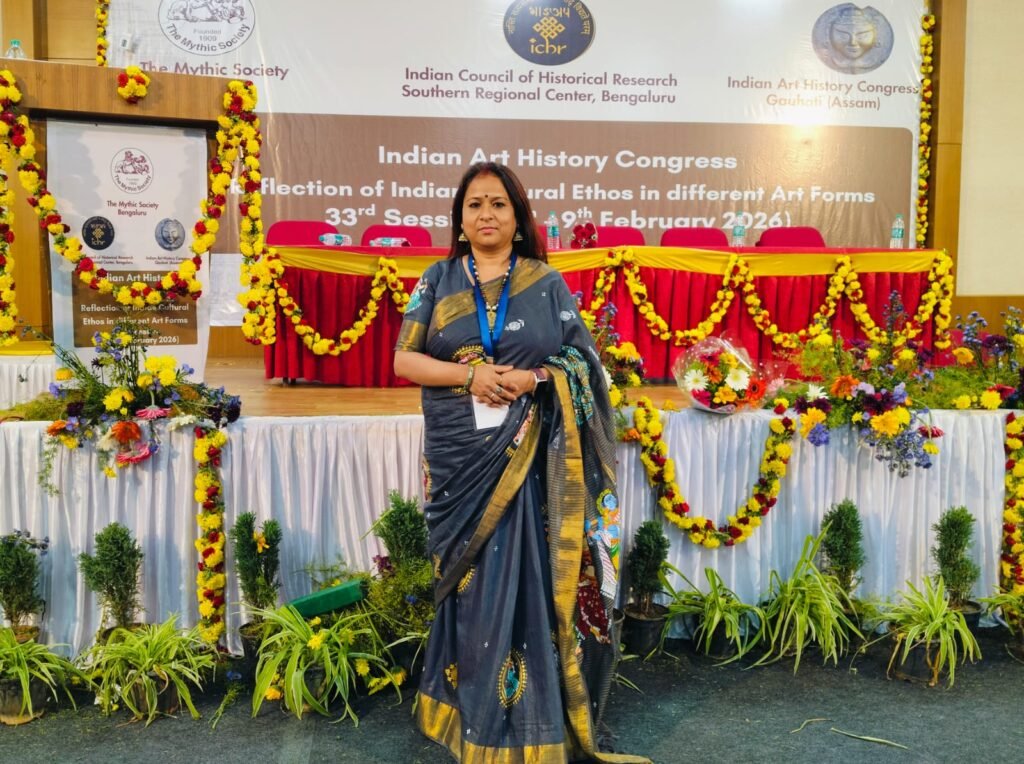
Dr. Shahi was granted the opportunity to present her research due to the excellence and academic merit of her paper — a recognition that itself became a subject of interest among attendees.
Her study did not merely treat satire as entertainment. Instead, she framed it as a powerful artistic language that reflects ideological positions and societal tensions.
Indian Art History Congress 2026 and the Theme of Social Values
The theme “Social Values in Indian Art” found a powerful embodiment in Dr. Shahi’s presentation.
At the Indian Art History Congress 2026, discussions ranged from temple architecture to modern installations. However, satire art introduced a contemporary dimension to the dialogue.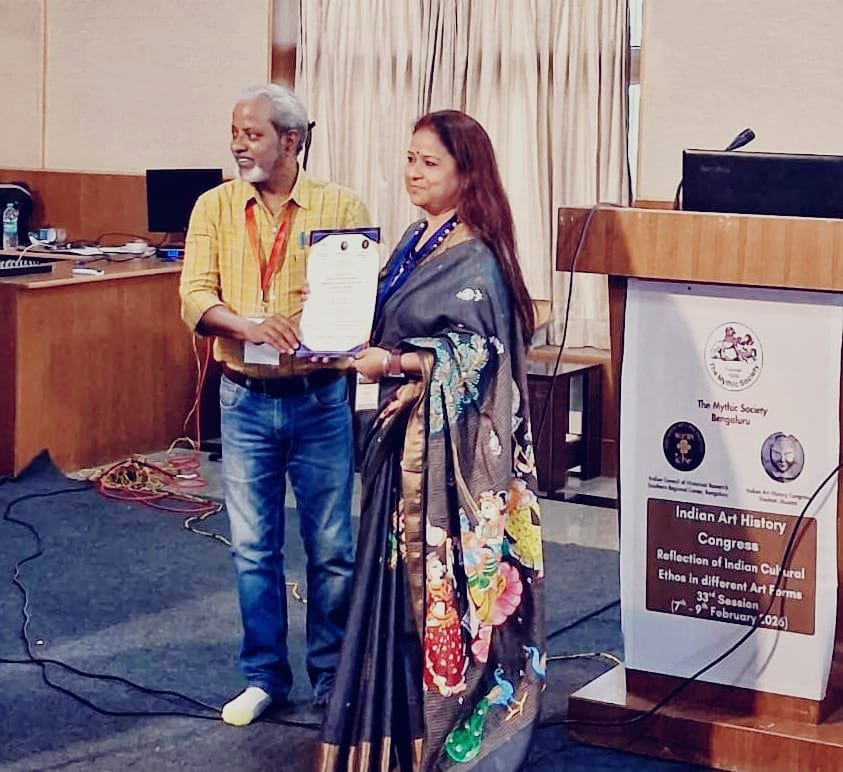
Satirical expression often critiques political authority, exposes social hypocrisy, and mirrors public sentiment. By placing satire within the broader framework of Indian art history, Dr. Shahi expanded the academic boundaries of what is traditionally considered “high art.”
Her work highlighted that satire is not marginal. It is central to democratic discourse.
Satire Art in Indian Cultural Discourse
Satire in India has a long and layered history.
From colonial-era caricatures to post-independence political cartoons, satire has shaped public opinion. Dr. Shahi’s research at the Indian Art History Congress 2026 traced how satire art engages with:
Satirical art, she argued, becomes a visual archive of dissent.
By studying satire, scholars can decode historical anxieties and ideological shifts in society.
Caricature and Cartoon: Beyond Entertainment
At the Indian Art History Congress 2026, Dr. Shahi emphasized that caricatures and cartoons are often misunderstood as mere humor.
In reality, caricature exaggerates features to highlight deeper truths. Cartoons compress complex political commentary into accessible imagery.
Her research examined how caricature functions as a semiotic device — using distortion as critique.
In a democracy like India, cartoonists have historically played a crucial role in shaping civic awareness.
Historical Figures in Indian Satirical Art
Dr. Shahi’s paper referenced several legendary cartoonists and satirists whose work shaped Indian visual culture.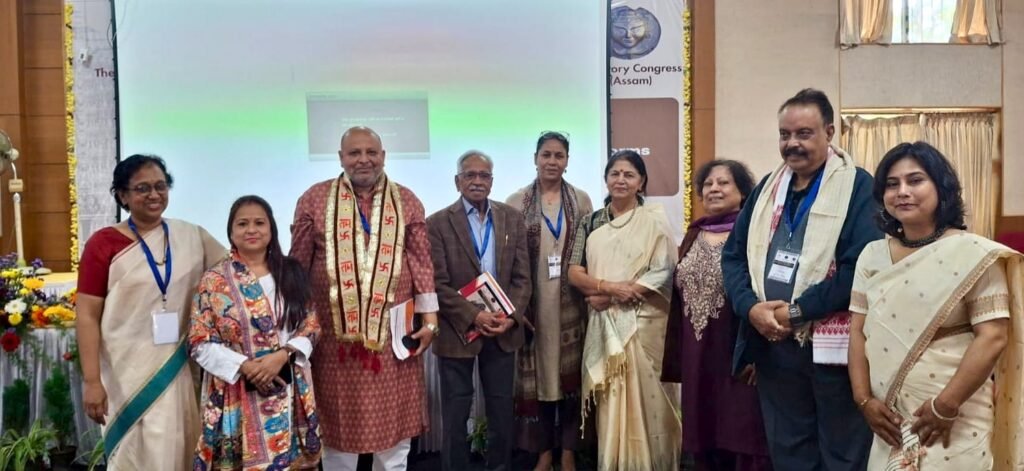
Among them:
By situating these figures within academic discourse at the Indian Art History Congress 2026, Dr. Shahi underscored how satire bridges journalism and fine art.
Scholarly Reception and Appreciation
The response to Dr. Shahi’s presentation at the Indian Art History Congress 2026 was overwhelmingly positive.
Scholars appreciated:
Several attendees noted that satire art deserves more systematic documentation within Indian art historiography.
Her work sparked discussions about incorporating satire studies into university curricula.
Why Indian Art History Congress 2026 Matters Today
The Indian Art History Congress 2026 was not just an academic gathering.
It functioned as:
In a rapidly changing socio-political climate, art history cannot remain static.
The inclusion of satire art at the Congress signals a broader methodological shift — one that embraces popular visual culture as a serious subject of study.
The Growing Relevance of Satire in Contemporary India
In the digital era, satire spreads faster than ever.
Memes, digital cartoons, and online caricatures continue the tradition discussed at the Indian Art History Congress 2026.
Dr. Shahi’s research becomes especially relevant in this context. Her work invites scholars to analyze:
Satire, she argued, is both aesthetic expression and civic intervention.
Academic Implications and Future Research
The discussions at the Indian Art History Congress 2026 suggest that future research may expand into:
Dr. Shahi’s contribution has opened new pathways for research scholars.
Her work demonstrates that art history must evolve alongside society.
The Indian Art History Congress 2026 will be remembered as a dynamic and intellectually rich gathering that expanded the boundaries of Indian art scholarship.
Dr. Renu Shahi’s research on satire art, caricature, and cartoons added a contemporary and critical dimension to the conference theme of social values in Indian art.
Her presentation reaffirmed that satire is not peripheral — it is central to understanding India’s political and cultural consciousness.
As academic institutions increasingly recognize the importance of interdisciplinary study, the conversations initiated at the Indian Art History Congress 2026 are likely to influence future scholarship in meaningful ways.
In Bengaluru, amidst scholars and historians, satire found its rightful place in the narrative of Indian art history — and that may be one of the most significant outcomes of this year’s Congress.












Art
Social Media Dialogue or Controversy? The Growing Crisis of Communication in the Digital Age
Social Media Dialogue or Controversy is becoming one of the most debated issues of the digital age. Explore how social media is transforming communication, fueling outrage, weakening meaningful conversations, and reshaping public discourse.
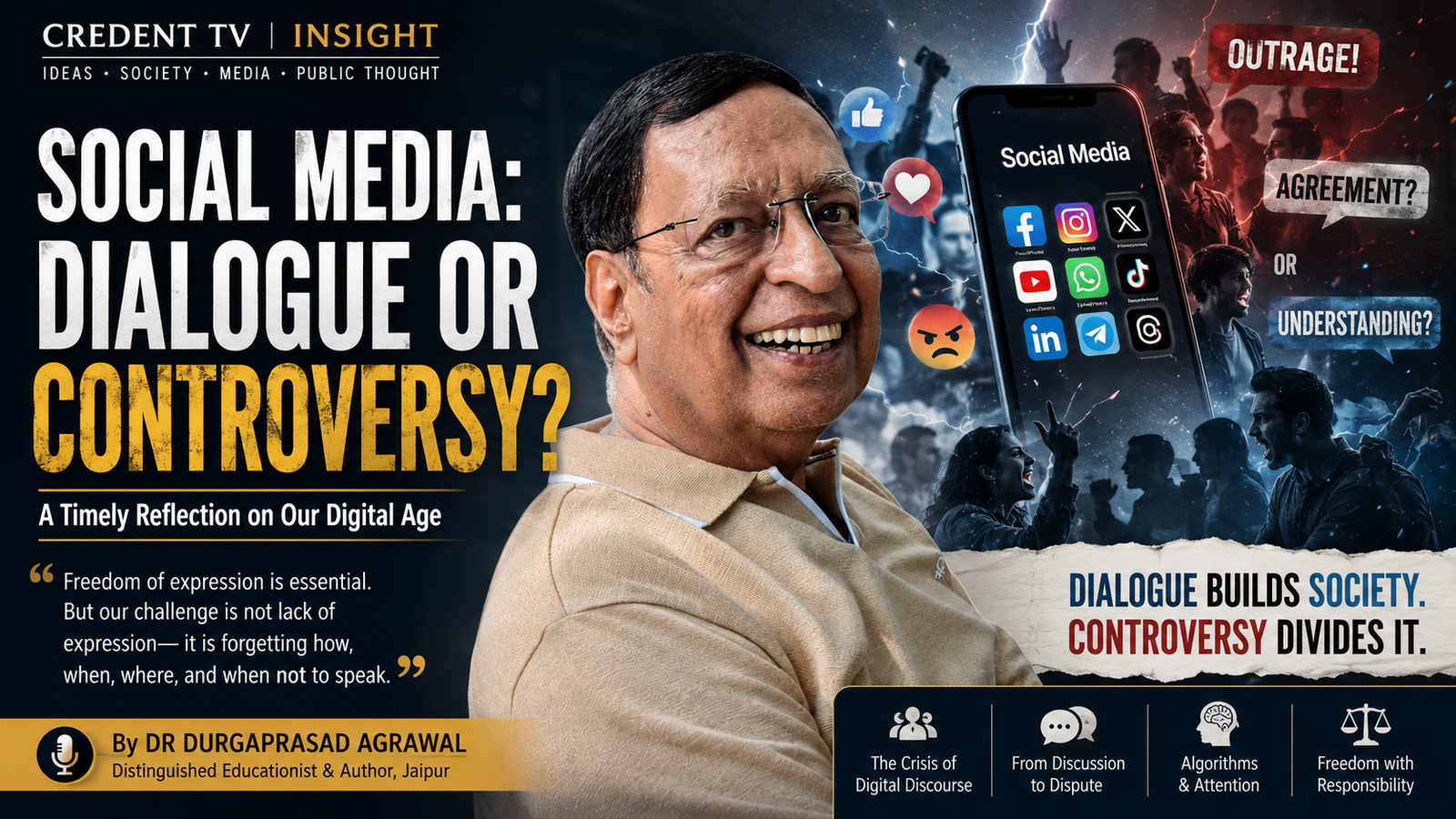
4 June, Credent TV | Social Media Dialogue or Controversy has emerged as one of the defining questions of the digital era. What was once celebrated as a revolutionary platform for free expression and democratic participation is increasingly being criticized for fostering conflict, outrage, polarization, and endless digital battles.
Human civilization has always evolved through communication. From spoken words around ancient fires to printed newspapers and television broadcasts, every technological advancement promised to bring people closer together. Social media appeared to be the ultimate realization of that dream. It placed a publishing platform in every pocket and transformed ordinary citizens into content creators, commentators, and influencers.
Yet, while communication has become easier than ever, meaningful dialogue appears to be disappearing.
Today, millions of people begin their day not by asking what happened in the world, but by checking how the world reacted to what they posted. Likes, shares, reposts, comments, and reach have become new forms of social validation. In many ways, digital engagement has become as important to some people as traditional measures of success.
This raises an important question: Has social media strengthened dialogue, or has it simply amplified controversy?
Social Media: The Promise of Digital Democracy
When social media platforms first gained popularity, they were often described as tools of digital democracy. Anyone with internet access could express opinions, share experiences, challenge institutions, and participate in public discussions.
Platforms such as Facebook, X (formerly Twitter), Instagram, LinkedIn, and YouTube gave voice to individuals who previously lacked access to traditional media channels.
According to research published by the Pew Research Center and other digital communication studies, social media has expanded public participation in political discussions, social movements, and civic engagement.
Social Media Dialogue or Controversy – How Conversations Changed
The central concern behind Social Media Dialogue or Controversy lies in the transformation of public discussions.
Modern social platforms contain more words than ever before. Millions of posts are created every minute. Yet despite this abundance of communication, genuine dialogue often feels absent.
Many users no longer enter online discussions to learn or understand. Instead, they arrive prepared to defend positions, attack opposing views, or demonstrate loyalty to ideological groups.
A photograph of a cup of tea can trigger political arguments. A book recommendation can become an ideological battle. A poem can provoke accusations and outrage. In many cases, reactions depend less on what is being said and more on who is saying it. The speaker often matters more than the message.
The Rise of the Permanently Offended Citizen
One of the most fascinating developments of modern digital culture is the emergence of what sociologists increasingly describe as a culture of perpetual offense. A growing number of online users seem permanently prepared to be offended.
They may find reasons for outrage in advertisements, jokes, language choices, historical discussions, entertainment content, or even punctuation marks. This phenomenon creates an environment where emotional reaction frequently replaces thoughtful engagement.
Indian author and public intellectual Purushottam Agrawal explored similar themes in his thought-provoking novel Nakohus, which satirically examines the politics of hurt sentiments and public outrage.
The culture of constant offense has become a major contributor to the Social Media Dialogue or Controversy debate because it shifts focus away from understanding and toward emotional confrontation.
Why Social Media Rewards Conflict
To understand the current environment, one must examine the role of platform algorithms. Most social media companies depend on user engagement. Engagement means attention. Attention generates advertising revenue. Unfortunately, outrage often generates more attention than calm discussion.
Research from institutions including MIT and Oxford Internet Institute has shown that emotionally charged content tends to spread faster than balanced information. As a result:
- Anger travels quickly.
- Nuance travels slowly.
- Conflict attracts clicks.
- Moderation receives less visibility.
This creates an incentive structure where users are unconsciously rewarded for producing stronger reactions. The digital marketplace often values excitement over accuracy and confrontation over reflection.
The Economics of Outrage
The business model of attention-driven platforms contributes significantly to controversy. Posts that provoke strong emotions frequently receive:
- More comments
- More shares
- More visibility
- Greater reach
This creates a cycle where increasingly provocative content dominates public attention. In such an environment, thoughtful dialogue struggles to compete.
The Decline of Listening in the Digital Age
A healthy conversation requires two essential components:
- Speaking
- Listening
Modern digital culture has dramatically expanded opportunities for speaking. Listening, however, has become increasingly rare. Many users read content only long enough to formulate a response. Instead of engaging with ideas, they search for evidence that confirms existing beliefs.
This trend weakens the foundations of democratic discourse. Throughout history, intellectual traditions across cultures emphasized debate, reflection, and respectful disagreement.
Ancient philosophical schools, scholarly traditions, and public forums encouraged participants to challenge ideas while maintaining mutual respect. Today, online discussions often prioritize winning rather than understanding.
Social Media Dialogue or Controversy and Public Discourse
The impact extends beyond individual interactions. When public discourse becomes dominated by conflict, entire societies can suffer. Misinformation spreads more easily. Polarization intensifies. Trust declines. Communities become fragmented. Citizens begin viewing opponents not as people with different perspectives but as enemies.
This is where the question of Social Media Dialogue or Controversy becomes particularly important. The issue is no longer limited to online behavior. It affects democratic institutions, journalism, education, and social cohesion.
Freedom of Expression vs. Responsible Expression
Freedom of expression remains one of the most valuable achievements of modern society. People should have the right to express opinions, criticize authority, and participate in public debate. However, freedom and responsibility must coexist. The challenge facing contemporary society is not a lack of expression. The challenge is learning:
- How to speak.
- When to speak.
- Where to speak.
- And sometimes when not to speak.
Civilization depends not only on speech but also on restraint. Responsible communication strengthens public trust. Reckless communication weakens it.
Digital Etiquette Matters
Many critics dismiss digital etiquette as old-fashioned. Yet etiquette serves an important purpose. It creates conditions for peaceful coexistence. Online etiquette includes:
- Respectful disagreement
- Fact verification
- Avoiding personal attacks
- Listening before responding
- Distinguishing criticism from hostility
Without these principles, freedom can easily devolve into chaos.
What Algorithms Teach Society
Technology does not merely reflect human behavior. It also shapes it. When users repeatedly encounter content rewarded for outrage, they gradually adapt to those incentives. The result is a culture where:
- Patience seems weak.
- Nuance appears boring.
- Anger appears powerful.
- Reflection appears unnecessary.
This transformation may be one of the most significant social consequences of the digital age. Social media has accelerated communication. It has not necessarily improved understanding.
Can Meaningful Dialogue Return?
Despite growing concerns, there are reasons for optimism. Many educators, journalists, researchers, and civic organizations are actively promoting healthier digital habits. Media literacy programs are helping people evaluate information critically. Educational institutions increasingly emphasize critical thinking and responsible communication. Public awareness regarding misinformation is also improving. Meaningful dialogue can return if users consciously choose engagement over confrontation.
Simple practices can make a difference:
- Read before reacting.
- Verify before sharing.
- Understand before criticizing.
- Listen before responding.
The Way Forward
The future of social media depends largely on collective choices. Technology itself is not inherently harmful. The challenge lies in how it is used. Platforms can encourage healthier interactions. Governments can support digital literacy. Schools can teach critical thinking. Media organizations can prioritize accuracy over sensationalism. Most importantly, individuals can practice restraint and respect. The solution to digital conflict is not silence. The solution is better conversation.
Social Media Dialogue or Controversy represents one of the defining debates of our time. Social media has democratized communication and provided unprecedented opportunities for participation, creativity, and expression. Yet it has also amplified outrage, rewarded impulsive reactions, and weakened the art of listening.
The challenge facing society is not technological advancement itself but the cultivation of wisdom alongside innovation.
As communication technologies continue to evolve, the future of public discourse will depend on whether people choose noise or understanding, reaction or reflection, controversy or dialogue.
History may ultimately judge our era not by the sophistication of the machines we built, but by whether those machines helped us communicate more meaningfully with one another.
By DR DURGAPRASAD AGRAWAL
Distinguished Educationist & Author,
Jaipur, Rajasthan
Art
Tilak Gitai: 7 Extraordinary Achievements That Made the Padma Shri Maestro a Global Icon of Indian Miniature Painting
Tilak Gitai, Padma Shri awardee and master miniature painter from Bikaner, continues to preserve India’s artistic heritage through Ragamala paintings, traditional craftsmanship, global exhibitions, and prestigious awards including the Naagridas Samman 2025.
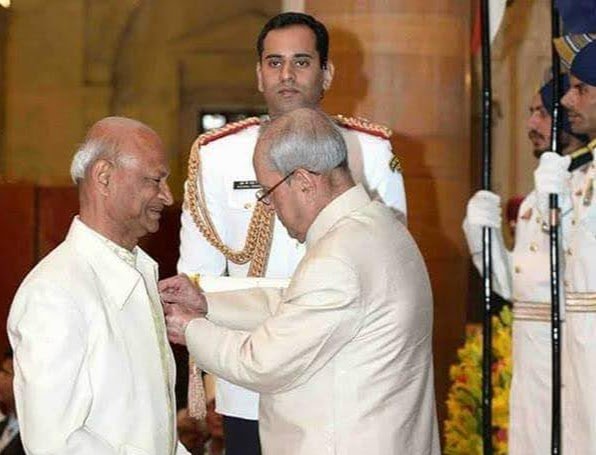
2 June, Credent TV | India has produced many extraordinary artists who have dedicated their lives to preserving the country’s cultural and artistic traditions. Among them, Tilak Gitai stands out as one of the most respected and celebrated masters of Indian miniature painting. From receiving the prestigious Padma Shri to earning international recognition for his remarkable work on Ragamala paintings, Tilak Gitai has spent decades safeguarding a priceless artistic legacy.
His journey is not merely the story of an accomplished painter but also of a cultural ambassador who has carried India’s artistic traditions to audiences across Europe, Asia, the Middle East, and South America.
Who is Tilak Gitai?
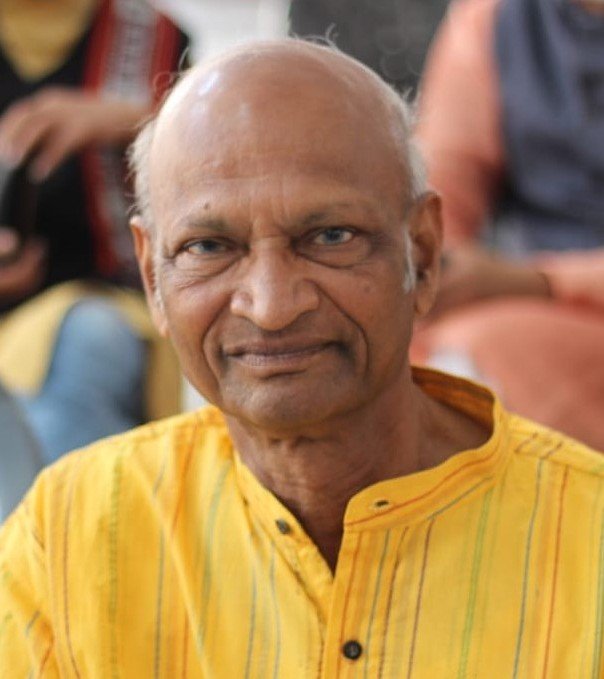
Tilak Gitai is an internationally acclaimed Indian miniature painter, master craftsman, and cultural conservationist. Born in 1949, he belongs to the second generation of royal court painters patronized by the rulers of Bikaner, Rajasthan.
After completing his Bachelor of Fine Arts (B.F.A.) from the University of Delhi, Gitai devoted himself to mastering traditional Indian painting styles, including:
- Mughal Miniature Painting
- Rajasthani Miniature Painting
- Phadi Painting
- Traditional Heritage Art Restoration
Over the decades, he emerged as one of India’s foremost custodians of miniature art.
Early Life and Artistic Roots
Growing up in a family deeply connected with royal court painting traditions gave Tilak Gitai a strong artistic foundation. The heritage of Bikaner has long been associated with intricate miniature paintings that flourished under royal patronage.
Unlike many contemporary artists who moved toward modern styles, Gitai chose the challenging path of preserving ancient artistic techniques.
His formal education in fine arts strengthened his technical skills while allowing him to innovate within traditional frameworks.
This combination of tradition and scholarship became the hallmark of his career.
Tilak Gitai and the Mastery of Indian Miniature Painting
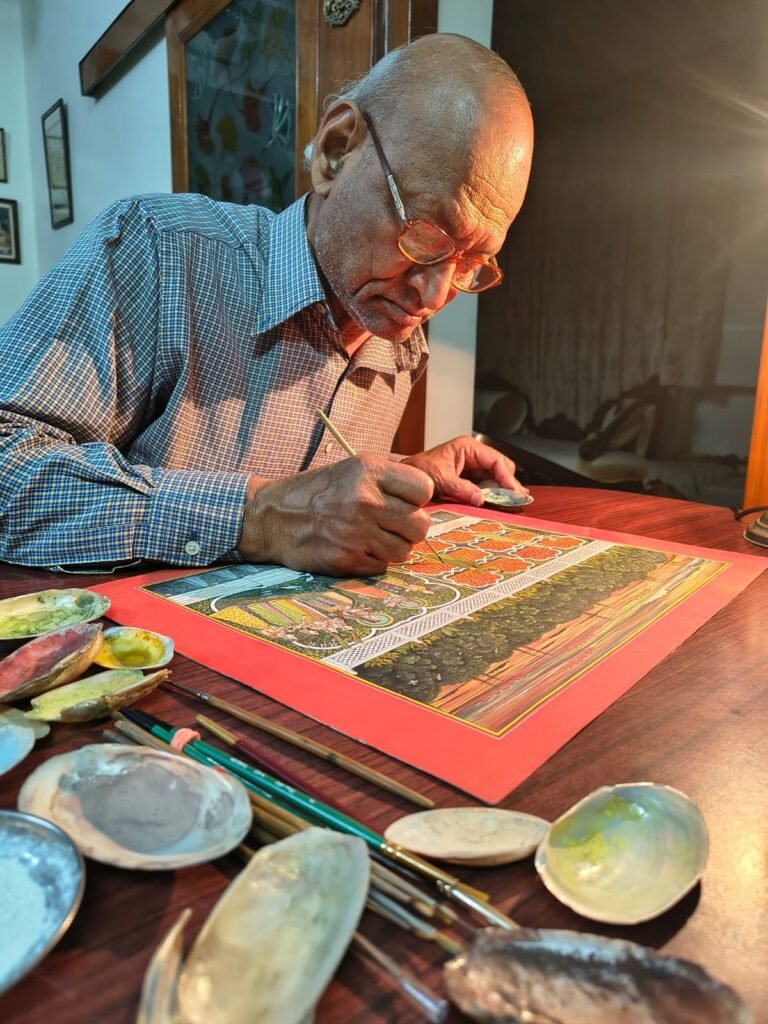
What separates Tilak Gitai from many other artists is his commitment to authenticity. He creates paintings using traditional methods that were practiced centuries ago. His work involves:
- Handmade paper preparation
- Natural pigments
- Precious and semi-precious stones
- Mineral-based colors
- Herbal pigments
- Gold leaf application
- Silver leaf application
- Handmade brushes
These traditional methods ensure that each artwork reflects the spirit and craftsmanship of classical Indian miniature painting. Gitai also specializes in restoring damaged miniature paintings, helping preserve invaluable cultural artifacts for future generations.
Tilak Gitai’s Revolutionary Work on Ragamala Paintings
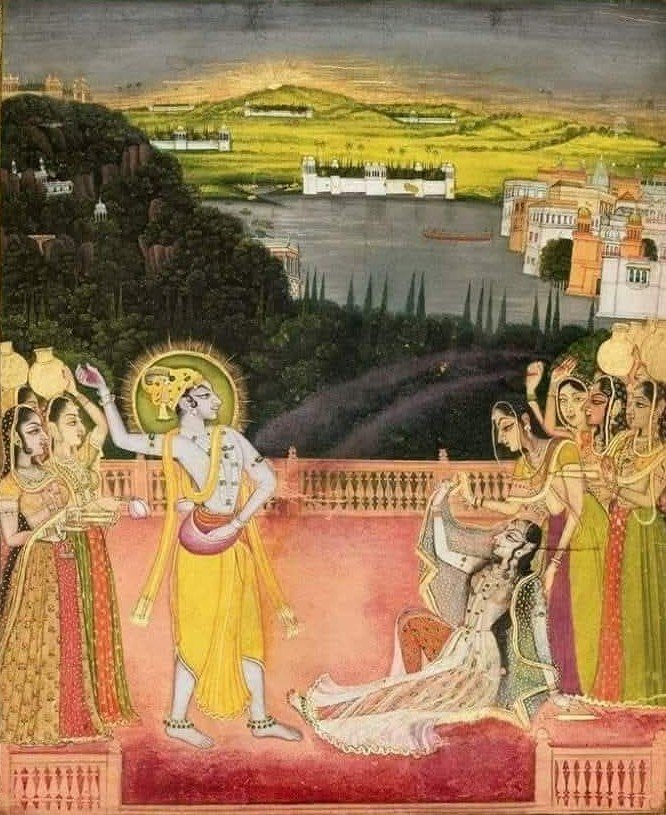
Perhaps the most remarkable chapter in the career of Tilak Gitai is his extensive research on ancient Ragamala paintings. Ragamala paintings visually interpret Indian classical musical ragas through imagery and symbolism. Over many years of study, Gitai discovered missing narrative and visual links within several traditional Ragamala series. Using historical research, artistic interpretation, and deep understanding of classical traditions, he recreated the missing components that had been lost over time. His project became widely known as:
“Ragamala – The Missing Link”
Art historians and collectors praised the work for restoring completeness to an important artistic tradition. This groundbreaking contribution significantly enhanced his reputation in the global art community.
International Acclaim for Ragamala – The Missing Link
The acclaimed exhibition was showcased internationally at:
Manoir de la Ville de Martigny, Switzerland (1997)
The exhibition attracted art enthusiasts interested in Indian cultural traditions and heritage preservation.
Musée d’Ethnographie de Genève, Switzerland (1998)
The Geneva exhibition further established Gitai’s reputation among European scholars and museum professionals.
Nehru Centre, London (2009)
The exhibition was accompanied by the launch of his book, Ragamala – The Missing Link.
Tagore Centre, Indian Embassy, Berlin (2009)
The Berlin exhibition introduced European audiences to the historical significance of Ragamala paintings.
Tilak Gitai’s Global Artistic Journey
The artistic reach of Tilak Gitai extends far beyond India. His paintings have been demonstrated and exhibited at prestigious international cultural events.
Major International Appearances
Festival of India, Augsburg, Germany (1985)
One of the earliest international platforms where Gitai showcased Indian miniature art.
Geneva, Zurich and Basel, Switzerland (1987)
These exhibitions introduced European audiences to traditional Indian painting techniques.
Earls Court, London (2001)
Gitai represented India’s artistic heritage before an international audience.
Seoul, South Korea (2004)
His work attracted significant appreciation from East Asian art lovers.
Muscat Festival, Oman (2007)
The exhibition highlighted the enduring appeal of Indian craftsmanship.
Sao Paulo, Brazil (2012)
His participation helped strengthen cultural exchange between India and South America.
Museums Preserving the Work of Tilak Gitai
A true measure of an artist’s significance is the inclusion of their work in prestigious museum collections. The paintings of Tilak Gitai are housed in renowned institutions worldwide.
Musée d’Ethnographie, Geneva
A complete Ragamala painting collection on ivory is displayed here.
Victoria and Albert Museum, London
One of the world’s most respected museums for decorative arts and design.
National Museum of Ethnology, Osaka, Japan
His work contributes to the global understanding of Indian artistic traditions.
National Crafts Museum, New Delhi
This institution preserves and showcases India’s finest craft traditions.
Recognition from World Leaders
The artistic brilliance of Tilak Gitai has received appreciation from distinguished personalities. A memorable moment occurred during the visit of former U.S. President Bill Clinton and his daughter Chelsea Clinton to Jaipur in March 2000. They reportedly appreciated Gitai’s work on Ragamala paintings, highlighting the international appeal of his artistry.
Prestigious Awards and Honors Earned by Tilak Gitai
The long list of awards received by Tilak Gitai reflects his immense contribution to Indian art and culture.
National Award (1982)
Presented by the President of India.
Rajasthan Shiromani Award (1991)
Recognizing excellence in artistic achievement.
Kalamani Award, Surajkund (1991)
Honoring traditional craftsmanship.
Maharana Sajjan Singh Award (1993)
Awarded by Mewar Foundation, Udaipur.
India’s Independence Golden Jubilee Award (1997)
Celebrating contribution to national heritage.
Shilp Guru Award (2007)
Presented by the President of India.
Federation of Rajasthan Handicrafts Exporters Award (2007)
Recognizing outstanding contribution to handicrafts.
Indira Gandhi Priyadarshini Award (2008)
For excellence and service.
Rajasthan Gaurav Award (2009)
Honoring pride of Rajasthan.
Maharaja Sawai Jagat Singh Award (2013)
Presented by City Palace Jaipur.
Padma Shri (2017)
One of India’s highest civilian honors awarded by the President of India.
International Crafts Award (2019)
Recognizing global contributions to traditional art.
Rajasthan Hastshilp Ratan Award (2018)
Awarded by the Government of Rajasthan.
Naagridas Samman (2025)
Conferred by Naagridas Kalal Sansthan, Kishangarh.
Naagridas Samman 2025 Celebrates a Lifetime of Excellence
The latest recognition in the distinguished journey of Tilak Gitai came with the Naagridas Samman 2025. Presented by Naagridas Kalal Sansthan, Kishangarh, the honor acknowledges his unparalleled dedication to preserving and promoting Indian miniature painting traditions.The award further strengthens his position among India’s most respected cultural icons.
How Tilak Gitai Preserves Ancient Techniques
In an era dominated by digital art and modern production methods, Tilak Gitai continues to uphold centuries-old artistic practices.
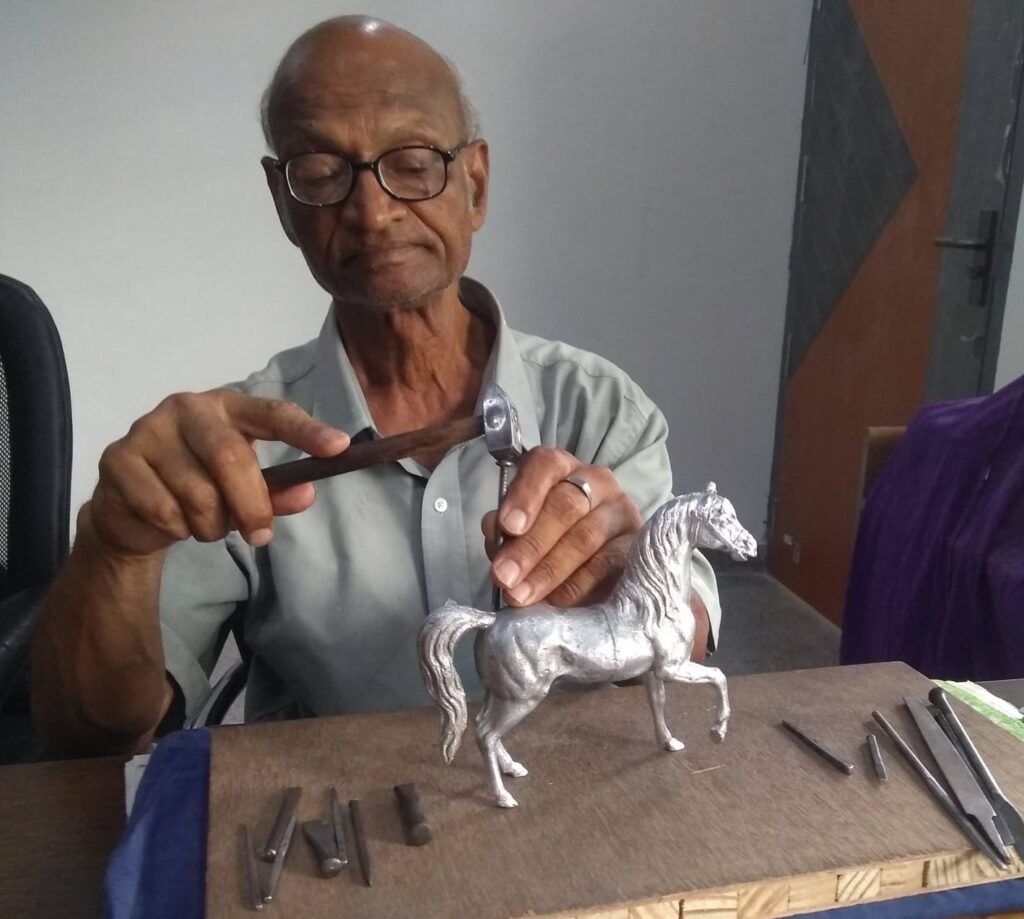
His process includes:
- Hand-ground mineral pigments
- Natural stone colors
- Herbal dye preparation
- Gold and silver leaf detailing
- Handmade painting tools
- Traditional restoration methods
He also trains students from India and abroad, ensuring these rare skills are passed to future generations.
The Enduring Legacy of Tilak Gitai
The contribution of Tilak Gitai extends beyond painting. He has become:
- A researcher
- A preservationist
- A teacher
- A cultural ambassador
- A master craftsman
His work demonstrates how traditional Indian art can remain relevant in the modern world while maintaining its authenticity. For young artists, his career serves as a powerful reminder that preserving heritage can be as meaningful as creating something new.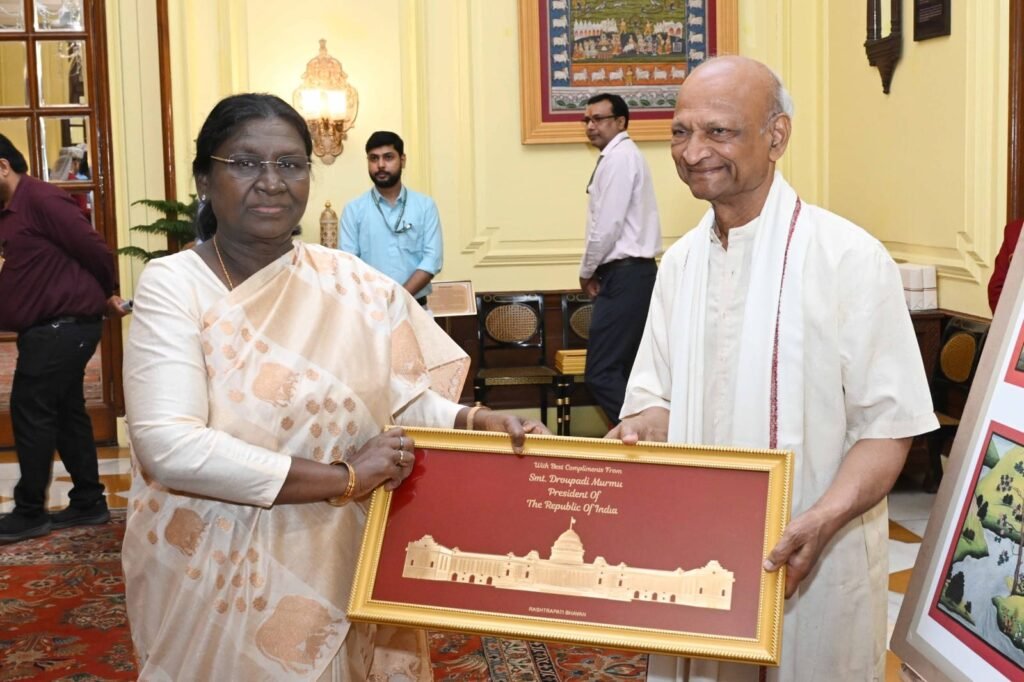
Tilak Gitai represents the finest traditions of Indian artistic excellence. From royal court heritage in Bikaner to international museums and global exhibitions, his journey reflects dedication, innovation, and cultural stewardship. His pioneering work on Ragamala paintings, commitment to traditional techniques, and decades of mentorship have made him one of India’s most influential cultural figures. With honors ranging from the National Award and Shilp Guru Award to the Padma Shri and Naagridas Samman 2025, Tilak Gitai continues to inspire artists and art lovers worldwide while ensuring that India’s miniature painting heritage remains vibrant for generations to come.
Frequently Asked Questions
Who is Tilak Gitai?
Tilak Gitai is a Padma Shri award-winning Indian miniature painter and master craftsman from Bikaner, Rajasthan.
Why is Tilak Gitai famous?
He is renowned for his expertise in miniature painting and his research project “Ragamala – The Missing Link.”
Which major award did Tilak Gitai receive?
He received the Padma Shri in 2017 and the Shilp Guru Award in 2007.
Where are Tilak Gitai’s paintings displayed?
His works are housed in museums in Geneva, London, Osaka, and New Delhi.
What is the Naagridas Samman 2025?
It is a prestigious recognition awarded by Naagridas Kalal Sansthan, Kishangarh, honoring his contribution to Indian art.
Art
Yuvaam 2026: A Grand Celebration of Excellence, Culture, and Inspiration in Jaipur
Yuvaam 2026 at St. Xavier’s School Jaipur showcased excellence, culture, and inspiration with awards, performances, and dignitaries. Explore full highlights, achievements, and key moments.
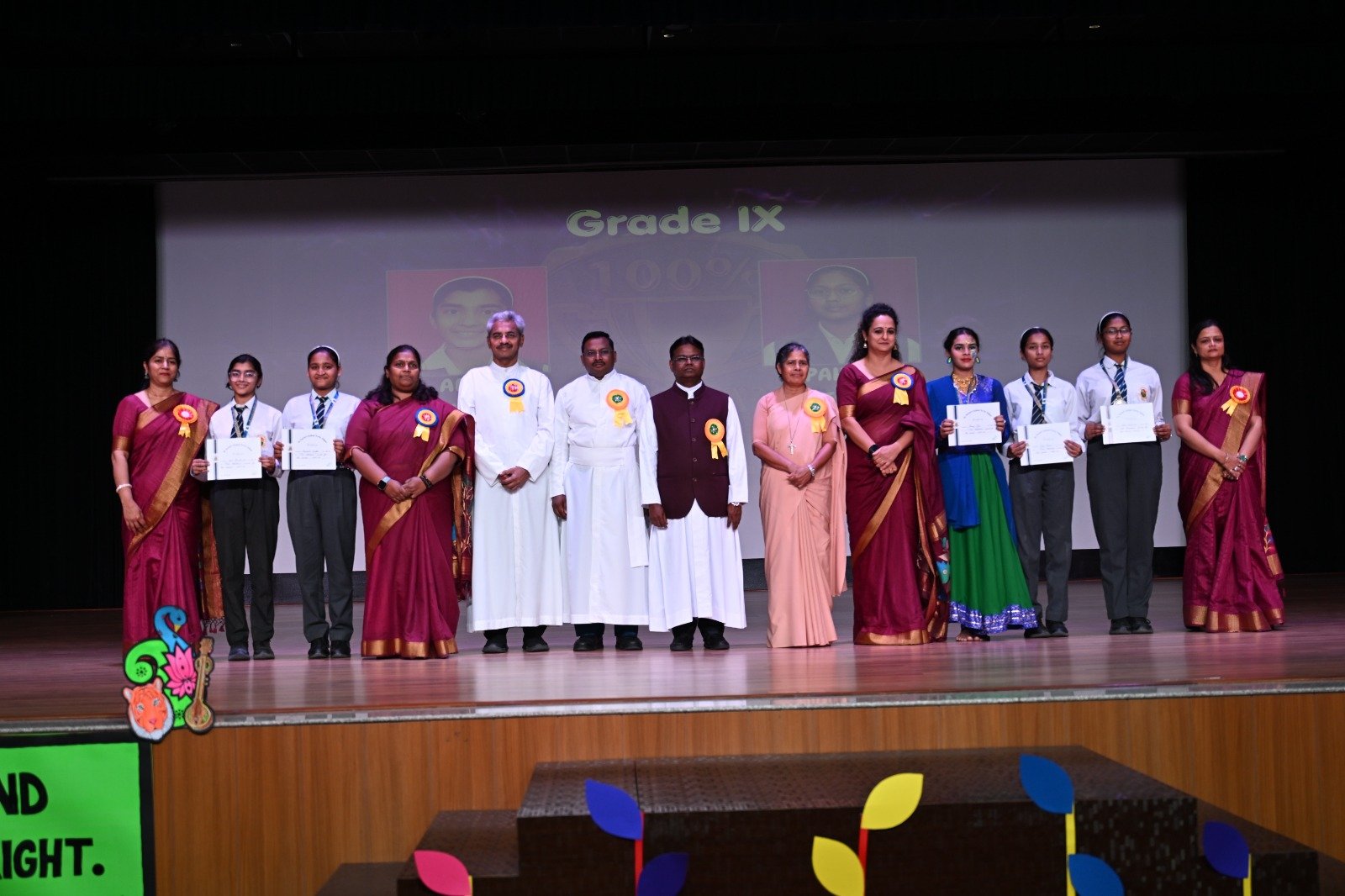
March 30, Jaipur. Yuvaam 2026 emerged as one of the most inspiring and prestigious school events in Jaipur, held with remarkable grandeur at St. Xavier’s School, Nevta, on March 30, 2026. The 8th Annual Prize Distribution Ceremony was not just a celebration of academic excellence but also a powerful showcase of talent, discipline, and values.
In today’s fast-paced educational environment, events like Yuvaam 2026 play a crucial role in recognizing student achievements while fostering motivation, confidence, and holistic development.
Grand Welcome and Dignitaries at Yuvaam 2026
The ceremony of Yuvaam 2026 began with a spectacular welcome for the Chief Guest, Most Rev. Bishop Joseph Kallarackal, along with the Guests of Honour, Ms. Maya David and Mr. Ajay Kochar.
A beautifully coordinated band procession escorted the dignitaries to Arrupe Hall, setting a majestic tone for the entire event. The presence of esteemed figures including Rev. Fr. Dr. Arokya Swami SJ, Rev. Fr. Sangeeth Raj SJ, Rev. Fr. Joseph Kumar Kurapati SJ, Sr. Leeda D’Souza SCCG, and Br. Ajay Matthews added grace and significance to Yuvaam 2026.
Ceremonial Beginning and Spiritual Essence of Yuvaam 2026
The formal proceedings of Yuvaam 2026 began with the traditional lighting of the ceremonial lamp, symbolizing knowledge and enlightenment.
This was followed by a soulful prayer song and an orchestral presentation titled “Soul of Symphony,” which captivated the audience and created a serene atmosphere.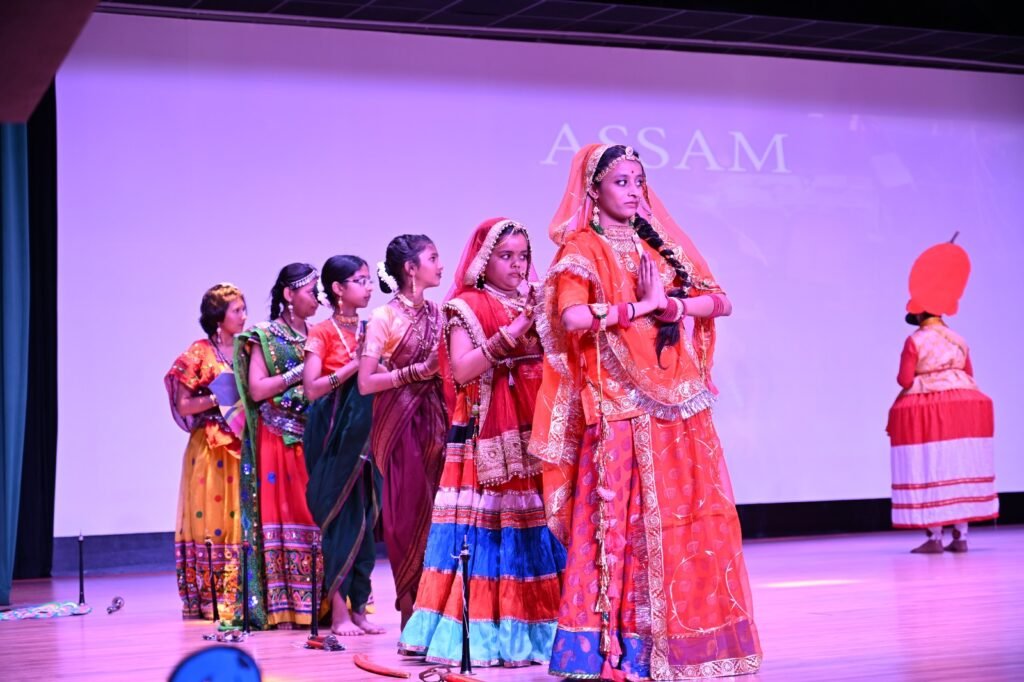
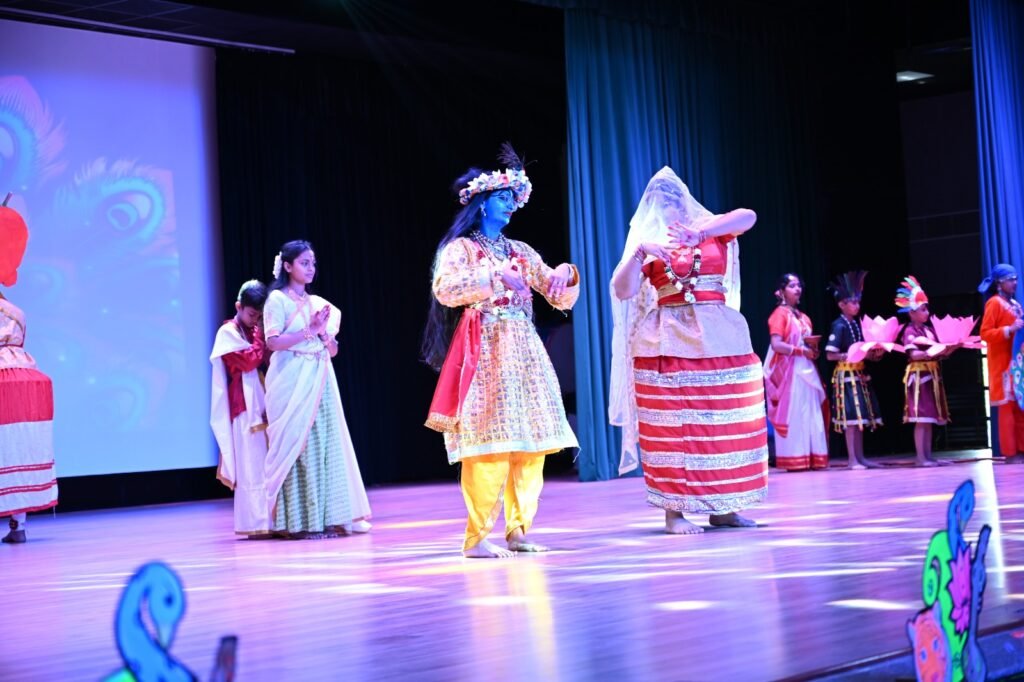
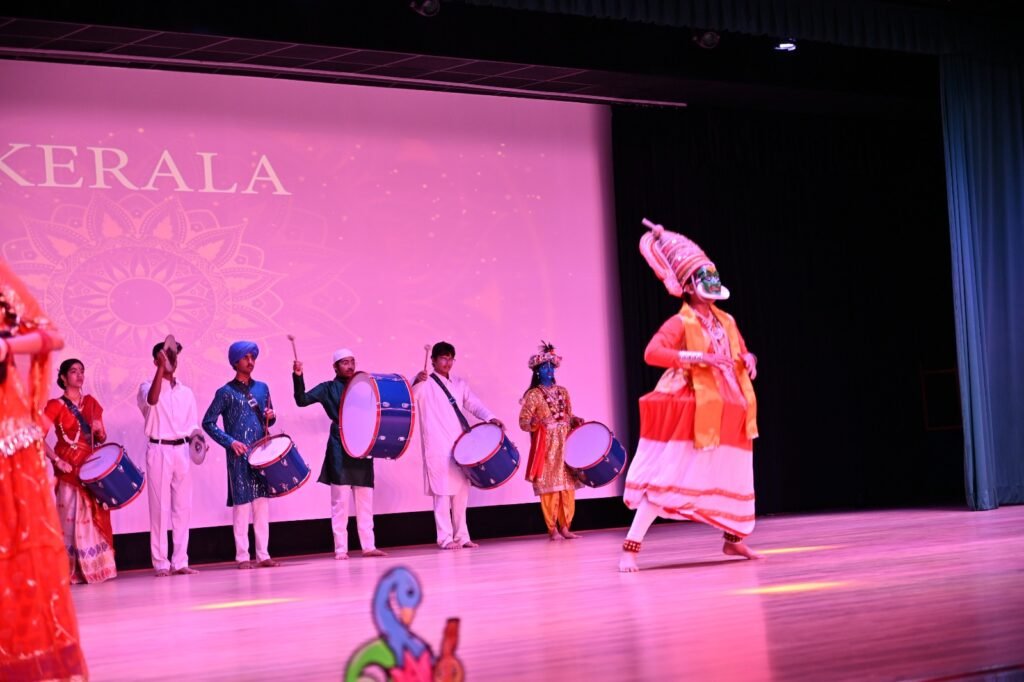
Saplings were presented to the dignitaries, reflecting a meaningful gesture towards environmental awareness and respect—values that Yuvaam 2026 strongly emphasized.
Yuvaam 2026 Academic Excellence Awards
A key highlight of Yuvaam 2026 was the recognition of academic brilliance. Students who secured 90% and above marks were honored with Academic Excellence Awards.
Additionally, students with 100% attendance were also felicitated, reinforcing the importance of consistency and discipline in achieving success.
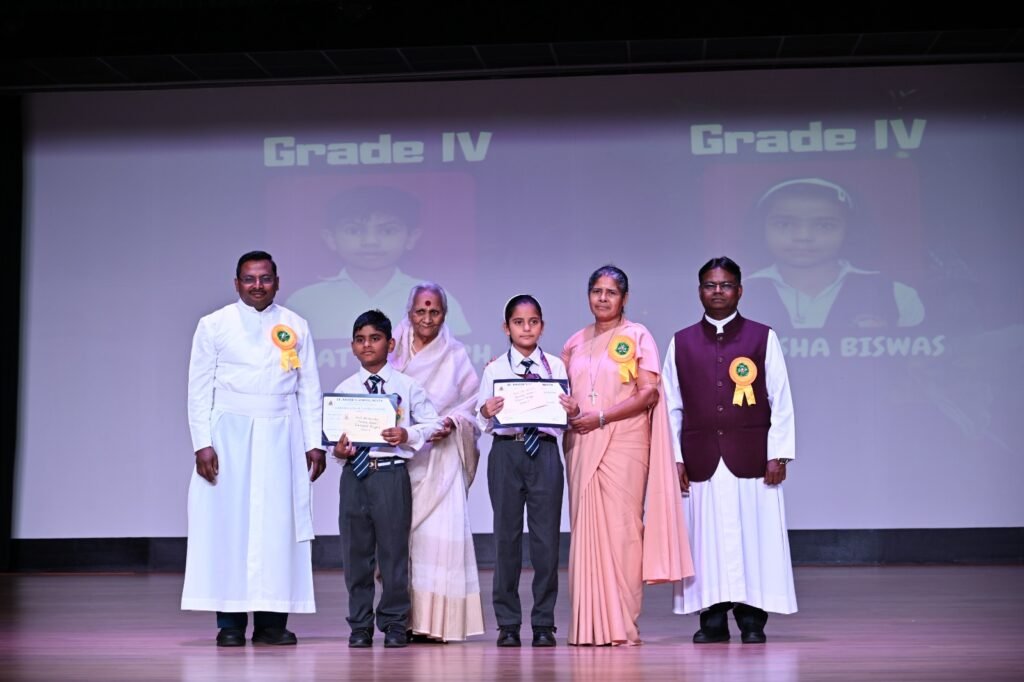
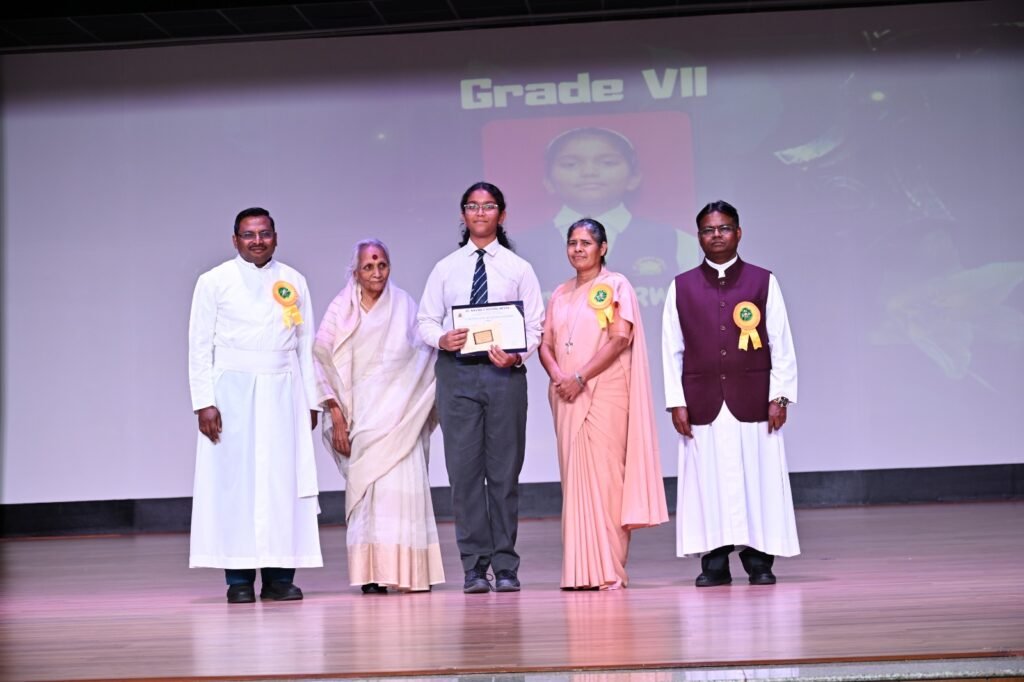
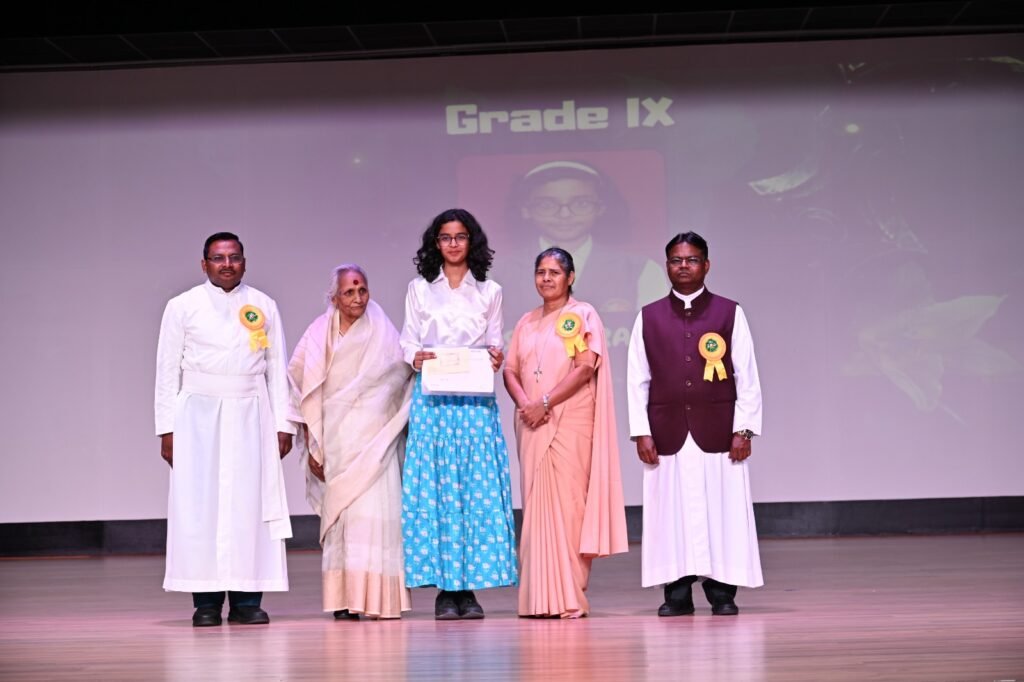
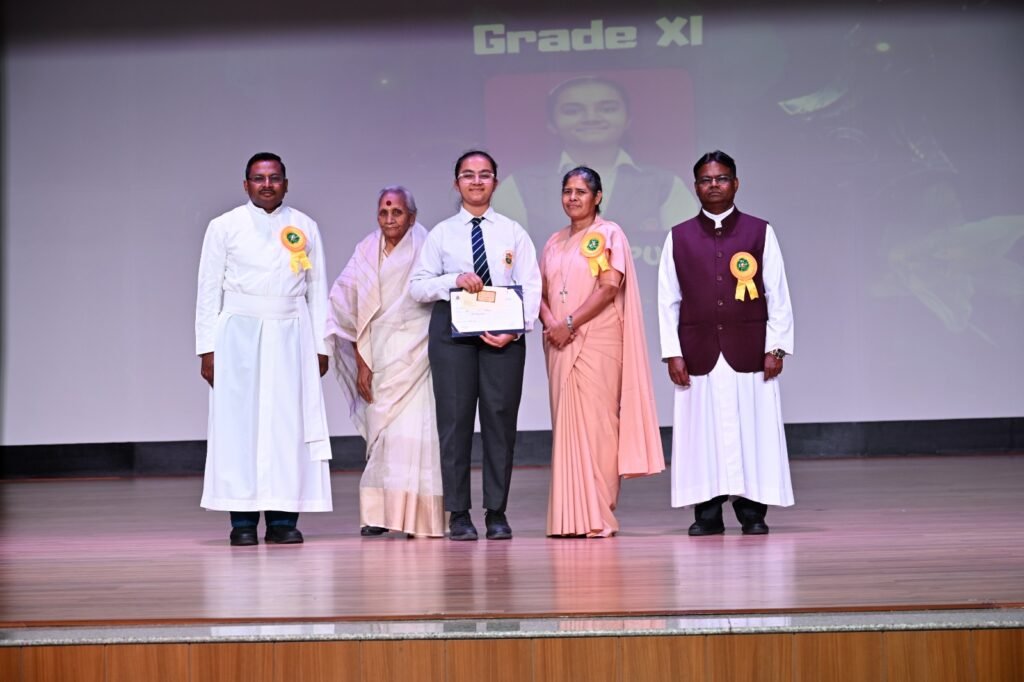
The Principal, in the welcome address, highlighted that success is never an individual effort but a result of collaboration between students, teachers, and parents—an idea deeply embedded in the philosophy of Yuvaam 2026.
Special Felicitations and Achievements at Yuvaam 2026
Yuvaam 2026 also celebrated exceptional achievements beyond academics.
- Ms. Veera Kalyann, recognized as Ms. Elite Rajasthan, was specially felicitated.
- Masters Aaron and Aarav Rathesh were honored for their remarkable achievements in skating.
Such recognitions showcased the institution’s commitment to encouraging diverse talents, making Yuvaam 2026 a holistic celebration of excellence.
Cultural Performances and Highlights of Yuvaam 2026
The cultural segment of Yuvaam 2026 added vibrant energy to the event. Students delivered mesmerizing performances that reflected creativity, discipline, and teamwork.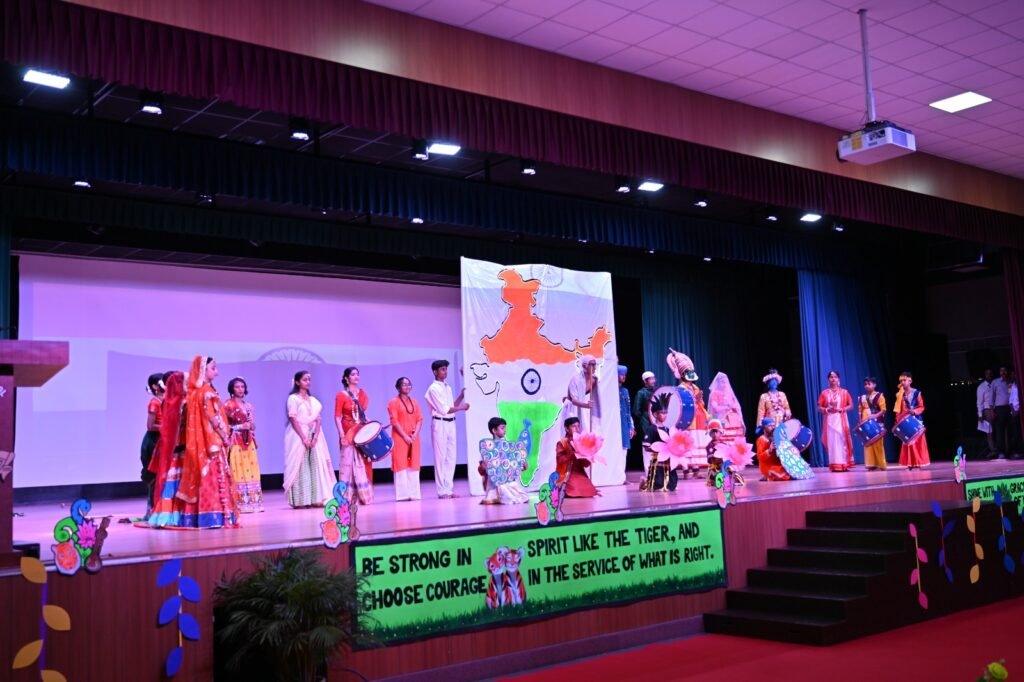
A special band presentation symbolized unity and harmony, leaving a lasting impression on the audience. These performances demonstrated that Yuvaam 2026 was not just about awards but also about celebrating artistic expression and cultural richness.
Launch of School Magazine “Excelsior” at Yuvaam 2026
One of the most anticipated moments of Yuvaam 2026 was the release of the school magazine, “Excelsior.”
The magazine showcased the achievements, creativity, and intellectual contributions of students and staff. Alongside this, the Annual Report was presented, highlighting the institution’s milestones and progress over the year.
For more on school publications and their importance, you can refer to UNESCO resources on educational development.
Inspiring Speeches from Guests at Yuvaam 2026
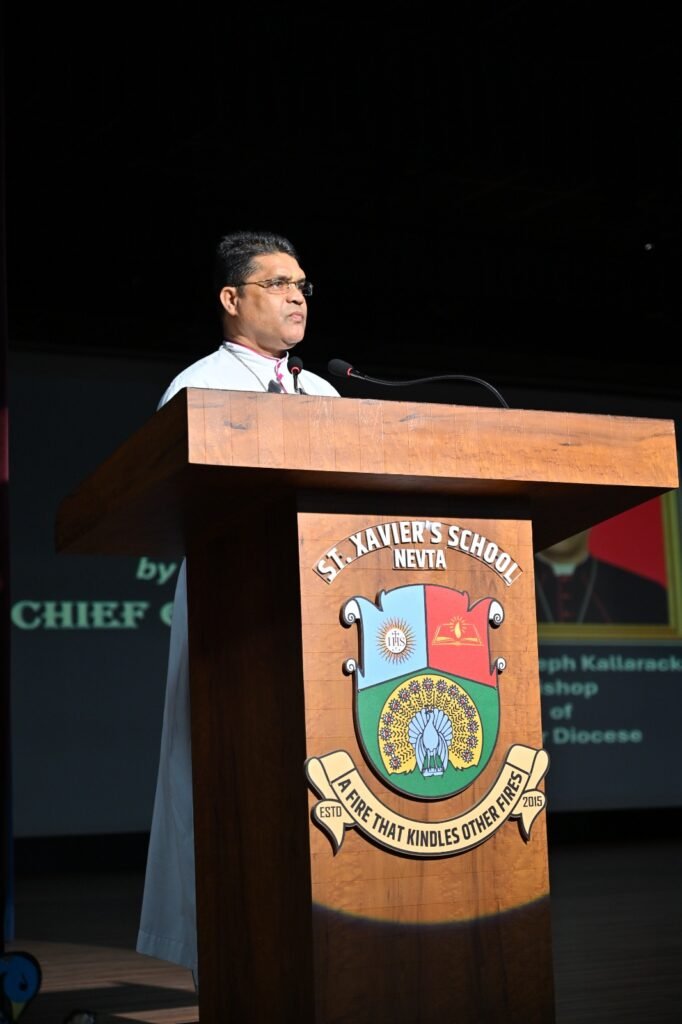
The Guests of Honour at Yuvaam 2026 delivered powerful and inspiring messages:
- Mr. Ajay Kochar encouraged students to stay optimistic and resilient in the face of challenges.
- Ms. Maya David emphasized the importance of positive thinking and empowering girl children.
The Chief Guest, Most Rev. Bishop Joseph Kallarackal, congratulated the students and urged them to uphold strong moral values in their lives.
These speeches added depth and purpose to Yuvaam 2026, transforming it into a platform for learning beyond academics.
Prestigious Awards and Recognitions at Yuvaam 2026
Among the most prestigious recognitions at Yuvaam 2026 were the sponsored awards, including the renowned Ignatian Awards.
The title of Xavierite of the Year was conferred upon:
- Vihan Bajaj (Head Boy)
- Aadya Thakkar (Head Girl)
These awards symbolized leadership, dedication, and all-round excellence—core values celebrated at Yuvaam 2026.
The grand event Yuvaam 2026 concluded with a heartfelt Vote of Thanks delivered by Ms. Neeru Gaur, followed by the National Anthem.
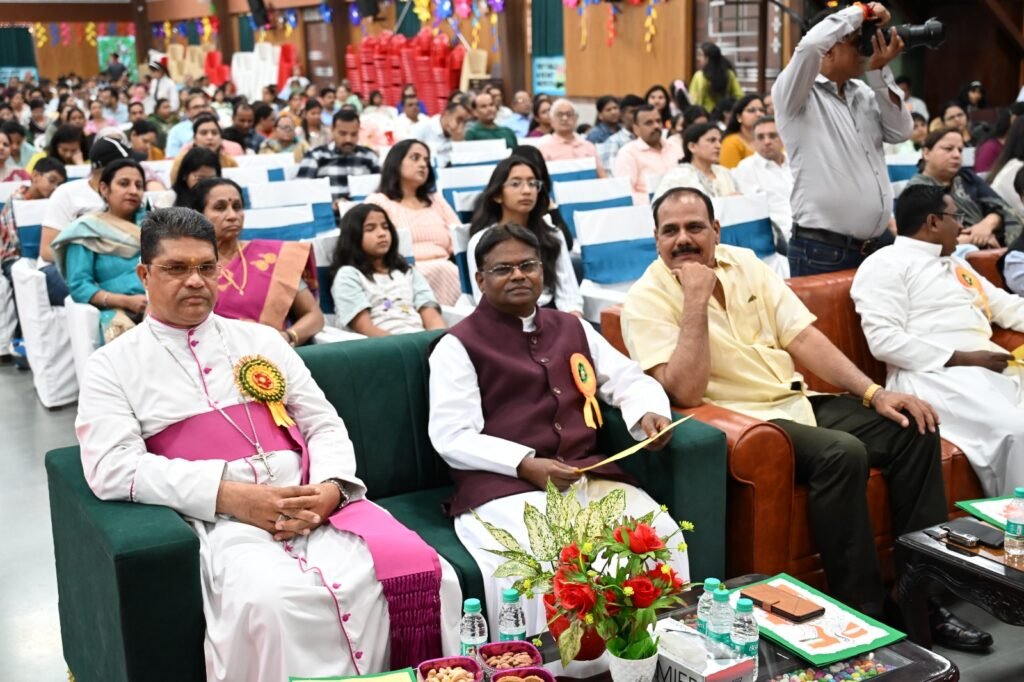
The ceremony left behind a powerful message—success is not just about achievements but about values, perseverance, and collective effort.
In essence, Yuvaam 2026 was more than an annual function; it was a celebration of dreams, discipline, and determination. It highlighted how educational institutions can shape not just successful students but responsible and value-driven individuals.
Art
Rajasthan Folk Culture Revival is thriving—discover the powerful traditions, vibrant arts, and heritage projects restoring this majestic and enduring cultural treasure in India-
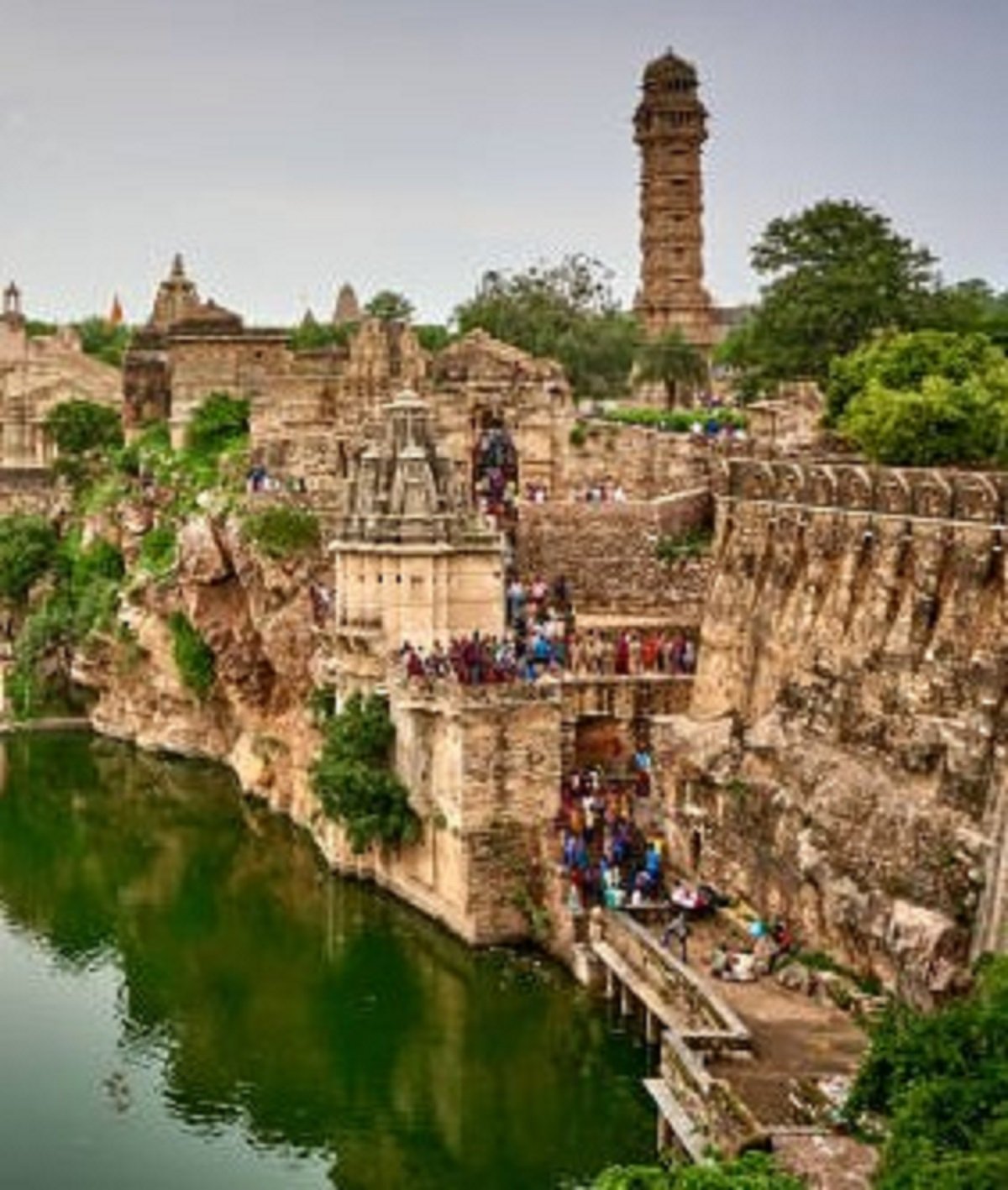
Jaipur, Sep.11,2025: is an ancient hand block-printing technique from Akola village in Chittorgarh, Rajasthan. The word Dabu comes from the Hindi verb dabana (to press), reflecting the process of pressing clay-based mixtures onto fabric-
Rajasthan Folk Culture Revival in Spotlight
Rajasthan Folk Culture Revival begins this article as we explore how the culture of this vibrant state is not merely surviving—but being revitalised. From recent archaeological finds to government initiatives, the momentum to preserve, promote, and project Rajasthan’s living traditions is increasing. This revival links the past to the present, offering both locals and the world a deeper connection to heritage.
Archaeological Discoveries and Heritage Preservation
One driver of Rajasthan Folk Culture Revival is new archaeological evidence reaffirming the deep historical roots of the land.
- In Deeg district, ASI has unearthed a 3,500-year-old settlement including a palaeochannel possibly linked with the legendary Saraswati river.
- This discovery of ancient riverbeds and evidence of settlements from Kushan, Magadha, and Sunga periods helps anchor modern Rajasthan’s cultural identity in an unbroken past.
- The government is focusing on preserving temples and religious sites as centres of culture. Chief Minister Bhajan Lal Sharma has emphasized that these are not mere structures of faith but are the social and cultural heart of many communities. These efforts are not just about the stones; they are about stories, practices, artists, and living traditions that connect people to their roots—crucial for Rajasthan Folk Culture Revival.
Folk Arts, Dance & Music Leading the Revival
In the revival of Rajasthan’s folk culture, living arts—dance, music, oral tradition—play central roles.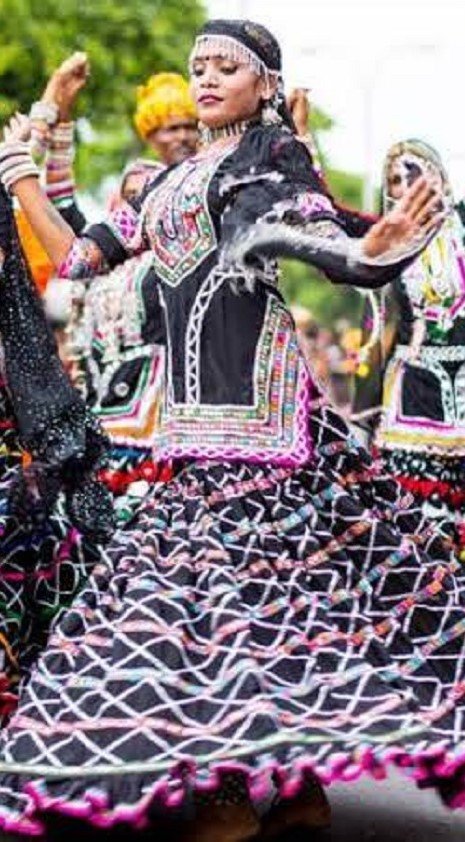
Ghoomar, Gair, Chari & Other Dances
- Ghoomar: Flowing skirts, graceful twirls, vibrant colors; traditionally performed by women during festivals, weddings, auspicious occasions. It’s deeply embedded in Marwari, Dhundhar, and other regions.
- Gair Dance: A more vigorous folk dance performed by both men and women in the Marwar and Mewar regions. Emphasis on rhythmic footwork, sticks, swords, and community participation.
- Chari Dance: Women balance pots (Chari) on their head, sometimes with lamps or fire, while performing graceful steps. It symbolizes daily life (carrying water) merged with ritual, aesthetics, devotion.
Music & Oral Traditions
- Traditions like those of Manganiyars and Langas—musicians who have for generations narrated stories of valor, love, and myth through songs and ragas—are integral to Rajasthan Folk Culture Revival.
- Folk singers often perform at fairs and deserts, keeping alive heritage language, dialects, and mythic epics.
These dance and music forms are not static relics; they are evolving with revival initiatives, festivals, tourism, and local engagement.
Crafts, Jewelry & Traditional Skills Making a Strong Comeback
Rajasthan’s crafts are among its most arresting expressions of cultural identity—and they are now part of the Rajasthan Folk Culture Revival.
- Thewa Art: Originating in Pratapgarh, this technique of fusing 23-carat gold sheet over molten glass, with intricate designs, is once endangered but has seen resurgence.
- Block Printing, Bandhej, Bagru, Sanganeri Prints: These textile arts continue to grow in demand. Natural dyes, traditional motifs, and artisan workshop tours are making them more visible.
Akola Dabu Print- A Living Heritage of Rajasthan
Akola Dabu Print is an ancient hand block-printing technique from Akola village in Chittorgarh, Rajasthan. The word Dabu comes from the Hindi verb dabana (to press), reflecting the process of pressing clay-based mixtures onto fabric. This craft uses a unique mud-resist technique where natural materials—clay, lime, wheat flour, and gum—are combined to create a paste that resists dye. The result is fabric decorated with earthy, timeless patterns, making it both sustainable and deeply rooted in Indian tradition.
The Process of Akola Dabu Print
- Preparing the Mixture
A special paste called dabu is made by mixing wheat flour, lime, gum (from the babul tree), and black clay. - Designing the Blocks
Skilled artisans carve intricate motifs onto wooden blocks, which are then used to print the designs. - Applying the Mud Paste
The wooden blocks are dipped into the prepared clay paste and carefully pressed onto the fabric to create patterned impressions. - Dyeing the Fabric
Once the mud dries and sets firmly, the fabric is dyed, most often in indigo (neel), giving it a striking contrast. - Washing Off the Mud
After dyeing, the cloth is dried and washed, removing the clay resist. The areas covered with mud remain color-free, revealing unique natural patterns. - The Final Product
The finished fabric displays stunning motifs—neutral spaces against deep shades—creating an authentic symbol of India’s artistic heritage.
Thanks to Mr. Vipin Kumar Chhipa, Owner Shreenath Hand Print Akola for Provide information.
History and Significance
- Origins
The roots of this craft lie in Rajasthan’s Akola village, where it has been practiced for centuries, passed down through generations of artisan families. - Revival
With the rise of machine printing, this traditional art form almost disappeared. However, in the 21st century, the growing global interest in handmade and sustainable crafts sparked its revival. Brands like Avartan and artisan cooperatives have played a key role in bringing Akola Dabu back into the spotlight. - Sustainability
The process is entirely eco-friendly, relying on natural dyes and organic materials. This makes Akola Dabu not only a cultural treasure but also a sustainable textile practice for the modern world.
- Jewelry & Gem Work: Royal Rajput styles, Thewa pieces, gemstones, and locally made ornaments are being revived both as wearable art and as artifacts.
- Pottery, Leather Work, Appliqué: In the western desert districts and rural areas especially, these crafts are being supported through tourism and governmental programs. Western Rajasthan is emerging as a hub for folk art & tourism. These crafts are feeding into heritage tourism, local livelihood, and pride. The Rajasthan Folk Culture Revival gives artisans new markets, recognition, and motivation to keep these skills alive.
Festivals, Religious Sites & Cultural Tourism
Festivals and religious heritage play a dual role: they preserve ritual and belief, and they act as anchors for cultural tourism.
- Rajasthan’s government has committed to preserving historical and religious sites. Under various schemes, circuits of devotional tourism and infrastructure development are in planning or execution.
- Fairs and festivals—Pushkar, Desert Festival, Sharad Purnima events like the Rajasthan International Folk Festival (RIFF) in Mehrangarh Fort—bring together local and international artists. These create platforms for Rajasthan Folk Culture Revival to reach wider audiences.
- Temples not only draw pilgrims but also become venues for music, dance, oral recitations, and communal gathering. Chief Minister Sharma has emphasized temples’ roles as centers for social, cultural, spiritual consciousness.
Tourism policies tied with heritage conservation amplify revival: local communities benefit, artisans get patronage, architecture is restored, and tradition stays relevant.
Gender, Rural Life & Identity
The Rajasthan Folk Culture Revival is not merely about Dances or Monuments—it’s about people, their identities, gender roles, rural livelihoods, and intergenerational transmission.
- Rural life continues to be the primary vessel for traditional knowledge—be it folk stories, dialects, performing art or craft skills.
- Women especially carry many forms of expression—dance (Ghoomar, Chari), craft (textile work, ornamentation), food traditions and rituals. Their involvement is essential.
- Language and dialect preservation: Marwari, Mewari, Dhundhary, Harauti etc. Each carries folk tales, proverbs, songs unique to region.
- Identity and pride: As younger generations connect with their roots via festivals, tourism, social media, they are more willing to learn and continue traditions.
Challenges and the Road Ahead for Rajasthan Folk Culture Revival
While there is great momentum, there are also challenges that need addressing.Challenge Description Commercialisation vs authenticity Risk that folk forms get altered to just entertain tourists, losing depth and original meaning. Resource constraints for artisans Many crafts need raw materials, training, fair prices. Without investment, some may fade. Environmental threats Droughts, desertification, climate change affect rural livelihoods and thus folk culture. Infrastructure & policy gaps Preservation of temples, historical sites require maintenance; festivals need logistical support. Youth migration Young people moving to cities may disconnect from rural traditions unless opportunities to engage are present.
What’s needed
- Policies that balance tourism with conservation.
- Support for artisan cooperatives, craft schools, local museums.
- Integration of folk arts in education (schools, cultural centres).
- Using digital media and technology (recordings, VR, social media) to archive and share.
- Sustainable environmental management to ensure rural ecologies that support traditional livelihoods.
Why Rajasthan Folk Culture Revival Matters
Rajasthan Folk Culture Revival is more than a trend—it’s a lifeline connecting past, present and future. When a dance is performed, a craft is made, or a temple is restored, the stories, values, and identity of entire communities are preserved.
This revival also has very tangible benefits: economic opportunity, tourism, community cohesion, cultural pride, and a sense of rootedness in a rapidly changing world.
Whether in the golden sands of Jaisalmer, the ornate palaces of Jaipur, or in village courtyards, we see the colors of Rajasthan—its festivals, its music, its artisans—being re-brought into focus. And that makes the Rajasthan Folk Culture Revival not just important, but indispensable.
Art
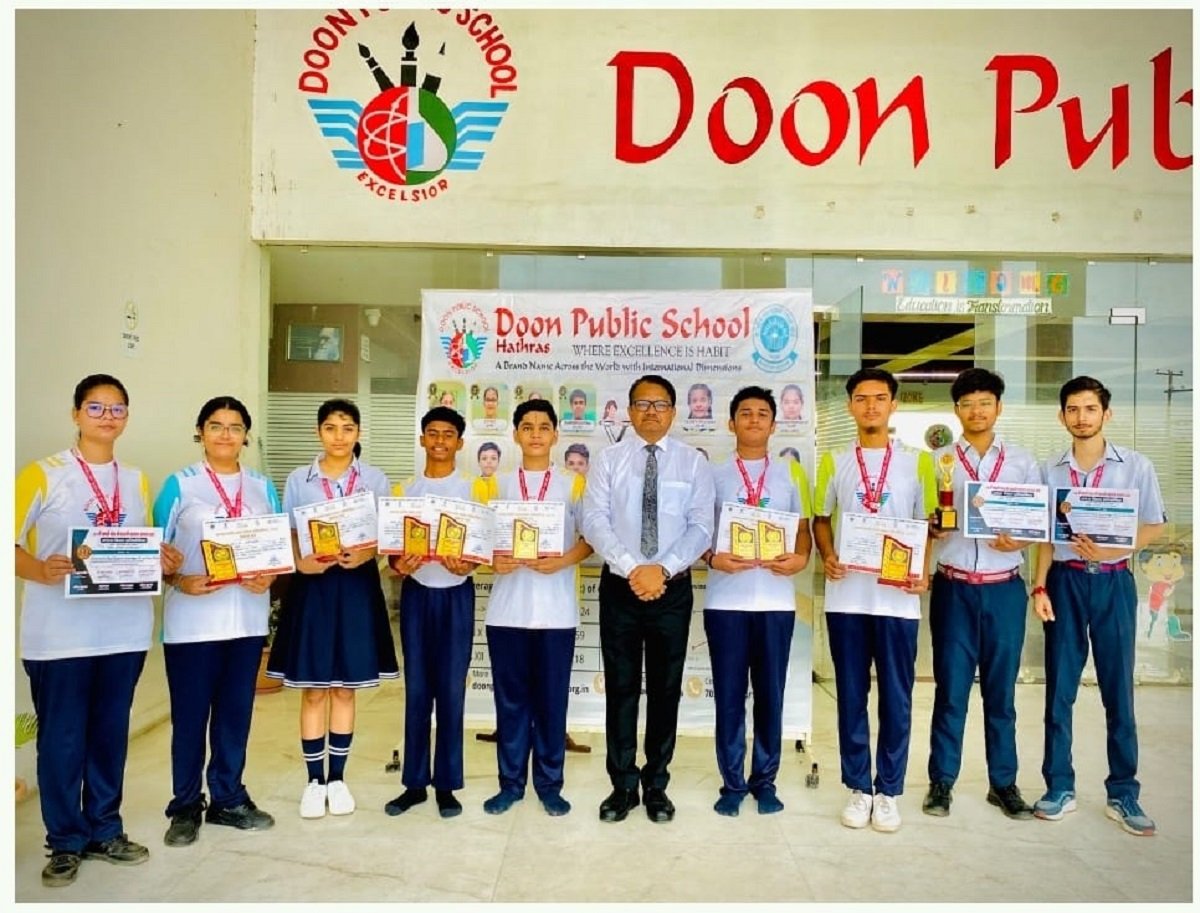
Hathras District Art Triumph as Doon Public School students achieve stellar victories in the 2025 music and science competitions under dynamic leadership
Art
Discover the Mewar Gavari Dance Festival’s mesmerizing 40-day performances, rich folklore, and tribal devotion—an awe-inspiring cultural phenomenon of Mewar
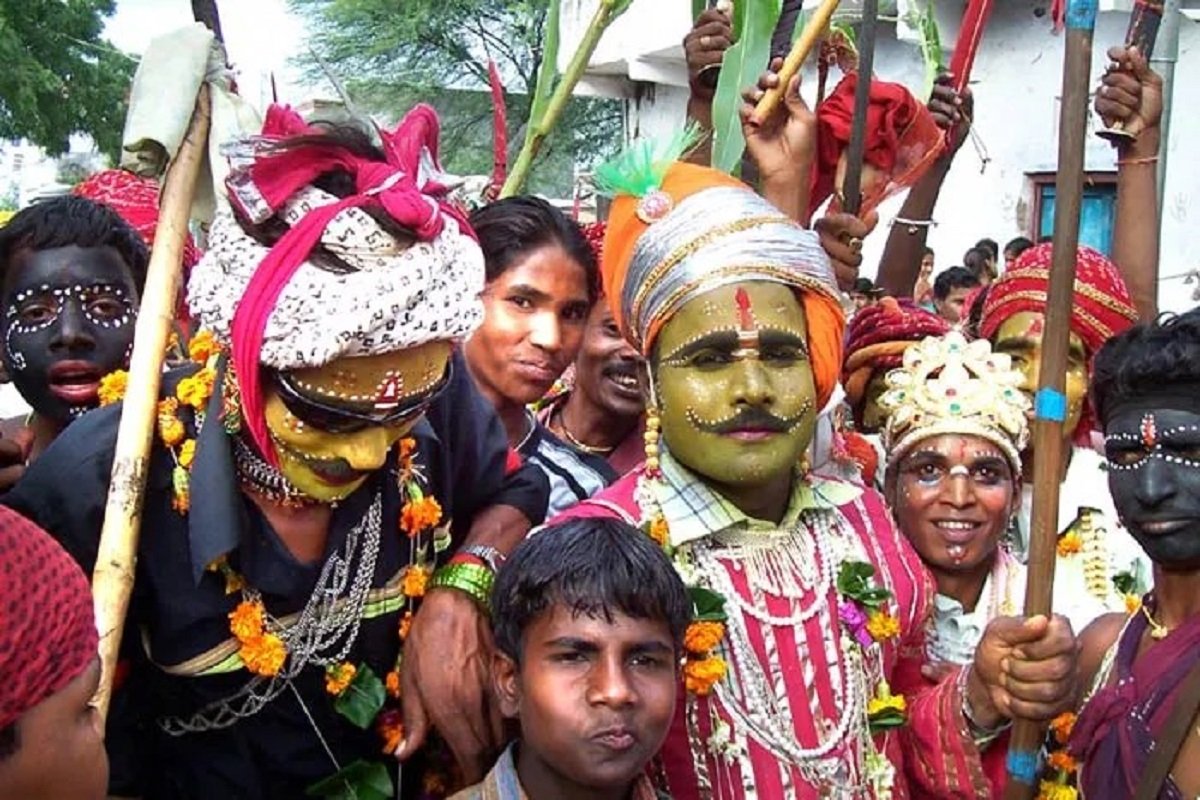
Udaipur, Aug.30,2025:The Mewar Gavari Dance Festival—also known as Gavri or Gavari—is a deeply spiritual, tribal dance-drama tradition celebrated for 40 days each year in the Mewar region of Rajasthan
Mewar Gavari Dance Festival Begins
Mewar Gavari Dance Festival bursts into life each year in the heart of Rajasthan’s Mewar region, as Bhil communities embark on a breathtaking 40-day ritual of dance, drama, and devotion. This year, as always, the festival unfolds in full fervor—blending mythology, performance, and spiritual depth into an electrifying cultural spectacle.
What Exactly Is the Mewar Gavari Dance Festival?
The Mewar Gavari Dance Festival—also known as Gavri or Gavari—is a deeply spiritual, tribal dance-drama tradition celebrated for 40 days each year in the Mewar region of Rajasthan, particularly across Udaipur, Rajsamand, Chittorgarh, Dungarpur, and Banswara.
Performed by the Bhil community, this festival is a profound blend of myth, ritual, and theatre—a living folk opera evoking divine feminine energy through trance, austerity, and dramatic storytelling.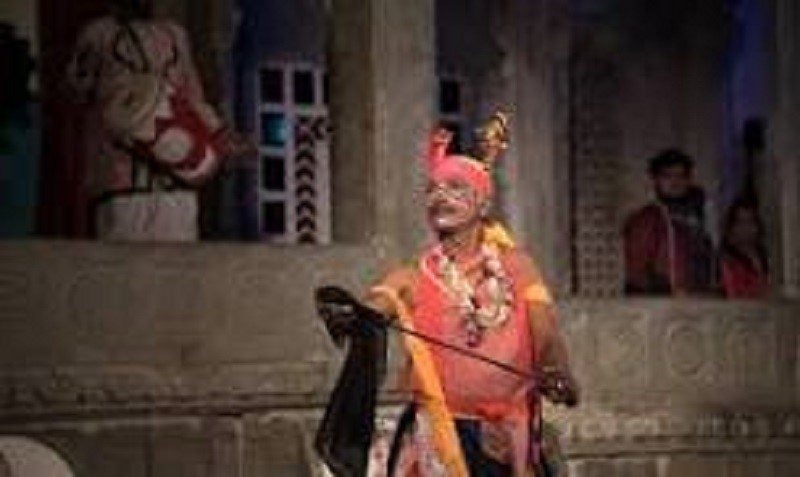
40 Days of Ritual, Drama, and Devotion
During the Mewar Gavari Dance Festival, participating troupes—typically composed of 20 to 80 performers—travel from village to village, sometimes covering over 600 performances across a season.
Strict spiritual disciplines are observed: fasting, abstaining from sex, alcohol, meat, bathing, even shoes and beds are forsaken—and intriguingly, villagers avoid eating greens to spare insects.
Each day’s performance begins only after a shaman (bhopa) is possessed by the Goddess and allows the ritual to proceed—a sacred touchpoint between the divine and the communal.
Who Performs and Why It Matters
Only male members of the Bhil community perform in the Mewar Gavari Dance Festival, even when portraying female characters. This striking cross-gender role-playing bridges spiritual devotion and theatrical tradition.
Performers are more than actors—they are storytellers, ritualists, and cultural custodians. Their repertoire includes mythological tales, folk legends, resistance narratives, and social commentary—all delivered in a trance-like, improvisational style.
Social Inversion- When Castes Collapse
The Mewar Gavari Dance Festival temporarily overturns entrenched social hierarchies. Village audiences—cross-caste and intergenerational—revere the performers as embodiments of the divine. Brahmins and upper castes prostrate before Bhils, who are otherwise marginalized in everyday life.
This sacred inversion transforms the festival into a powerful moment of community unity and affirmation of tribal identity.
Myth, Satire, and Identity on Stage
The theatrical plays—or khels—woven into the Mewar Gavari Dance Festival are rich with layered meaning. They depict epic battles, divine vengeance, nature worship, and comedic satire. Stories like “Badliya Hindwa,” celebrating ecological harmony, and “Bhilurana,” a saga of resistance against invaders, are staples.
Satirical scenes lampoon corrupt officials, exploitative merchants, and even gods—offering moral and social lessons alongside riveting entertainment.
Preservation Efforts & Global Recognition
Despite its vitality, the Mewar Gavari Dance Festival faces modern challenges: youth migration, school absenteeism, and declining troupe sizes threaten continuity.
Yet there’s hope—local organizations, cultural centers, and government initiatives are promoting Gavari through urban showcases, exhibitions, and educational introductions UNESCO and the Sangeet Natak Akademi are also being lobbied to recognize Gavari as an intangible world heritage.
Moreover, exhibitions like the one at India International Centre or photo displays capture Gavari’s visual grandeur, bringing tribal art to a broader audience.
A Living Cultural Marvel
The Mewar Gavari Dance Festival is not just a performance—it is an immersive journey into divine femininity, tribal resistance, communal cohesion, and cultural resilience. Across 40 days, it weaves history, spirituality, and improvisational art into a tapestry that transcends generations.
As the rhythms fade and austerities lift, the festival closes—bringing laughter, blessings, and a renewed sense of identity to Bhil villages. In its echoes lie the enduring heartbeats of Mewar’s folk legacy.
Art
Theatre of Heroes & Dance of Traditions ignites creativity and patriotism at St. Xavier’s School Nevta
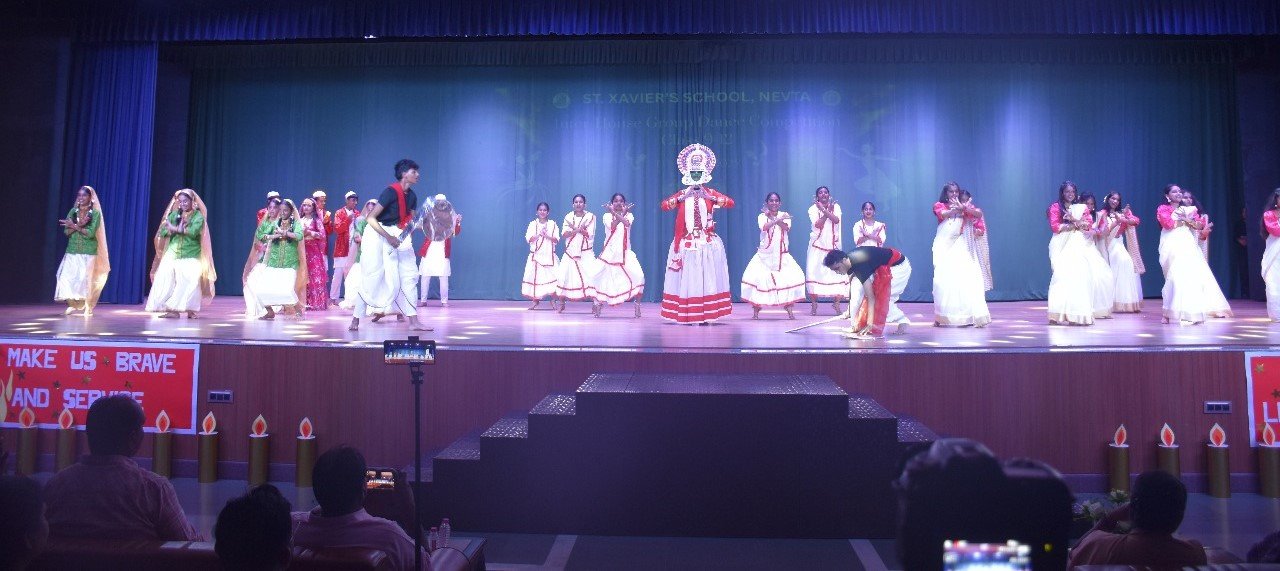
Jaipur, Aug.13,2025: Under the banner of Theatre of Heroes & Dance of Traditions, the inter-house Hindi Drama Competition showcased moving performances by Classes 6 to
Opening Moments
Theatre of Heroes & Dance of Traditions began with palpable energy. As the curtains rose, eager students from Classes 6–8 and Classes 9–12 prepared to transform the stage into a tribute to India’s illustrious heritage. The theme “Veer Ras” resonated, setting a tone of bravery, sacrifice, and artistic grandeur.
Hindi Drama Highlights
Under the banner of Theatre of Heroes & Dance of Traditions, the inter-house Hindi Drama Competition showcased moving performances by Classes 6 to 8. Each act paid homage to India’s heroes—through stories of courage and sacrifice, infused with melodious interludes that wove harmony into powerful narratives.
The judges—Ms. Anita Joshi (St. Anselm’s, Mansarovar), Ms. Sangeeta Sharma (St. Anselm’s, Madrampura), and Mr. Ritesh Dhakad (St. Xavier’s, Nevta)—commended the students’ emotive portrayals and narrative depth. They reminded the young thespians that life itself is a grand stage and to carry that patriotic spirit beyond their performances.
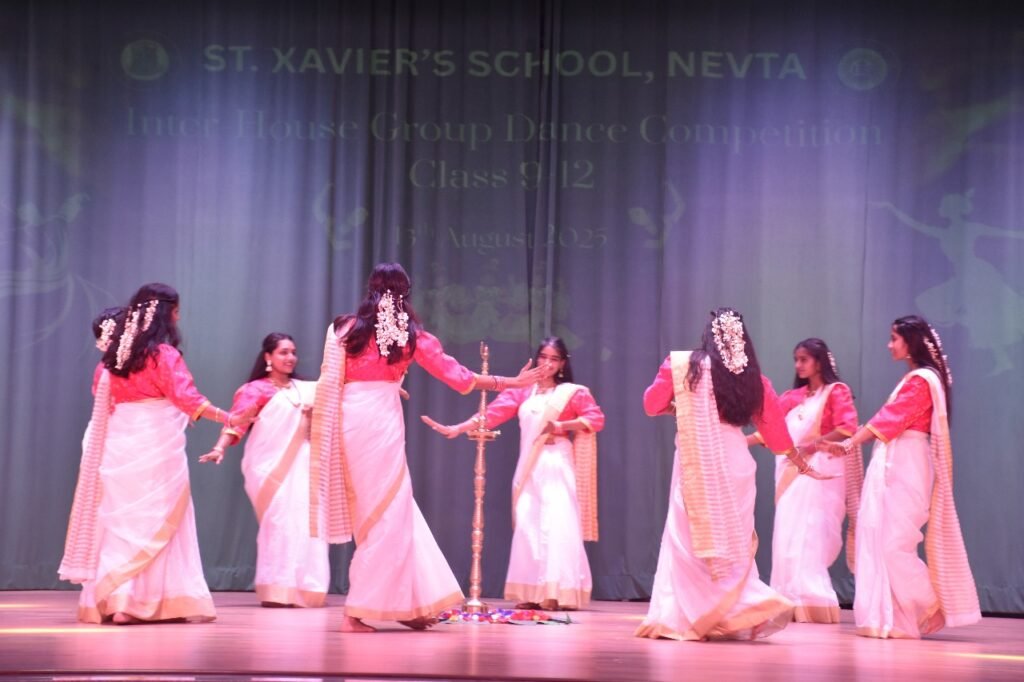
Vibrant Folk Performance
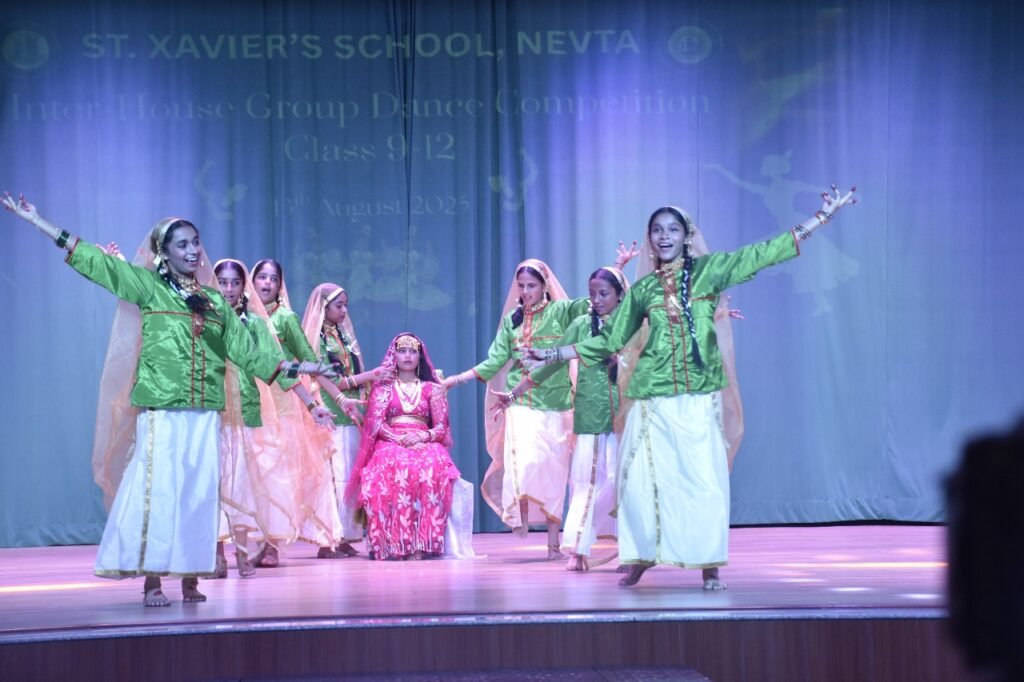
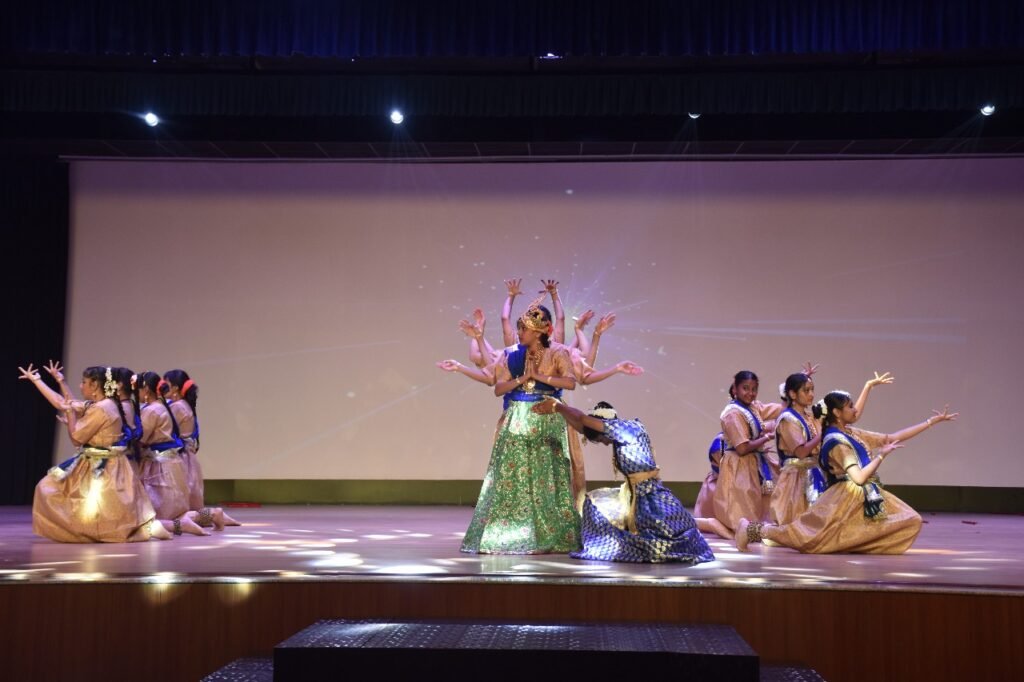
Following the theatrical tribute, Theatre of Heroes & Dance of Traditions moved into a burst of rhythm with the Group Dance Competition. Classes 9 to 12 embraced South Indian folk traditions, enchanting the audience with synchronized moves, vivid costumes, and infectious energy.
The judges—Ms. Chitra Jangid (St. Anselm’s, Mansarovar), Ms. Arpita Bhargava, and Ms. Anju A. Mary (both from St. Xavier’s, Nevta)—praised the participants for their vibrant performances and encouraged them to value joy in performing, reminding them that the true victory lies in giving their best, regardless of the outcome.
Judges’ Reflections and Inspiring Messages
Throughout Theatre of Heroes & Dance of Traditions, judges offered inspiring reflections:
- Ms. Sangeeta Sharma encouraged students to view themselves as lifelong artists, extending their patriotic pride into everyday life.
- Ms. Chitra Jangid highlighted the significance of performance joy, urging performers to embrace the journey rather than fear defeat.
These messages elevated the event from a competition to a lesson in self-expression and cultural pride.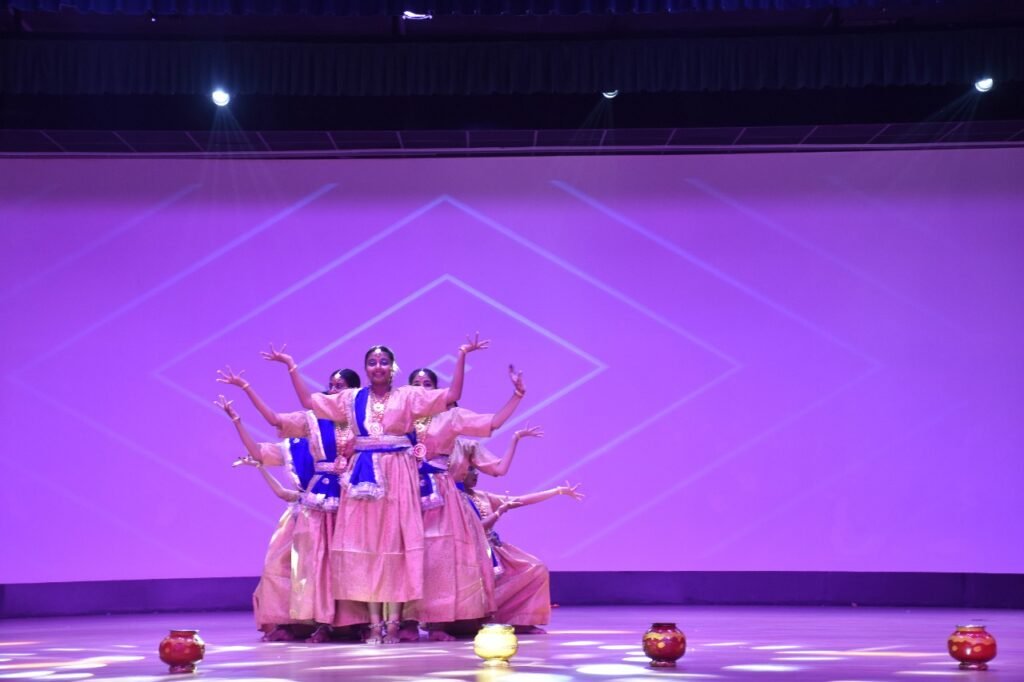
Victors and Standing Ovations
With anticipation mounting, Rev. Fr. Sangeeth Raj SJ, the Principal, announced the winners:
Drama – Theatre of Heroes & Dance of Traditions
- Yellow House – Top Honour
- Green House – Runners-up
- Blue House – Third Place
Dance – Theatre of Heroes & Dance of Traditions
- Blue House – Awarded the crown
- Red House – Second Place
- Green House – Third Place
The applause echoed through the auditorium as participants celebrated not just victory, but shared creativity and camaraderie.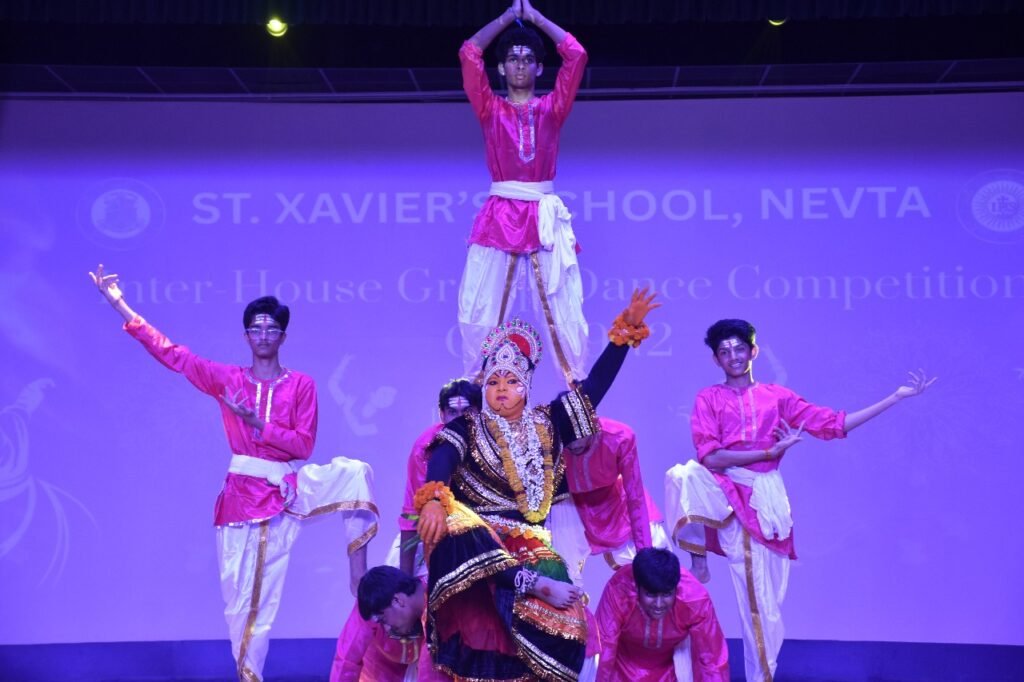
Arts & Patriotism in Schools
Theatre of Heroes & Dance of Traditions embodies the vibrant spirit of Indian schools where arts and patriotism converge. Events like these nurture teamwork, cultural understanding, and national pride—essential skills in today’s diverse world.
St. Xavier’s School, Nevta, established in 2015, stands as a prominent CBSE Jesuit institution. It promotes a range of events—from sports and science exhibitions to music, drama, and annual celebrations—creating an environment where creativity thrives alongside academic excellence.
By transforming abstract themes like Veer Ras into living performances, the school reinforces how arts can reflect societal ideals and fortify young minds.
Legacy of a Spectacular Day
Theatre of Heroes & Dance of Traditions left an indelible mark on everyone at St. Xavier’s, Nevta. It was more than a competition—it was a bold statement of youthful creativity, unity, and cultural pride.
Through drama and dance, students discovered their power to move audiences, embody values, and celebrate their heritage. The day affirmed that when arts and patriotism align, they yield a performance that resonates far beyond the stage.
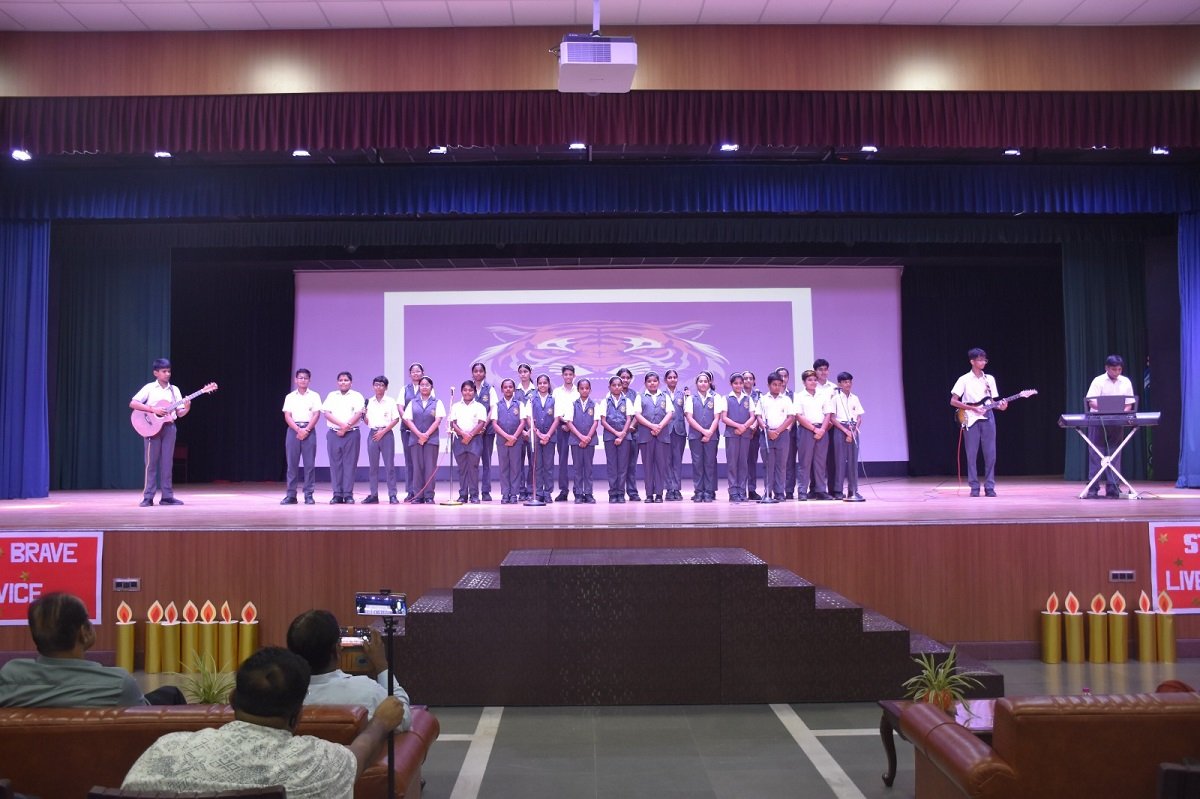
Jaipur, Aug.13,2025: The event’s theme—Universal Apostolic Preferences—guided student performances, inviting them to embody Jesuit values like solidarity, social justice, and spiritual reflection
Theatre & Art Unite: Setting the Stage
Theatre & Art Unite framed the heart of a day where students from St. Xavier’s School—Nevta, Jaipur—took center stage, blending dramatic expression with musical harmony. On August 12, 2025, the campus reverberated with creativity as students from Classes 6 through 12 performed with passion and purpose.
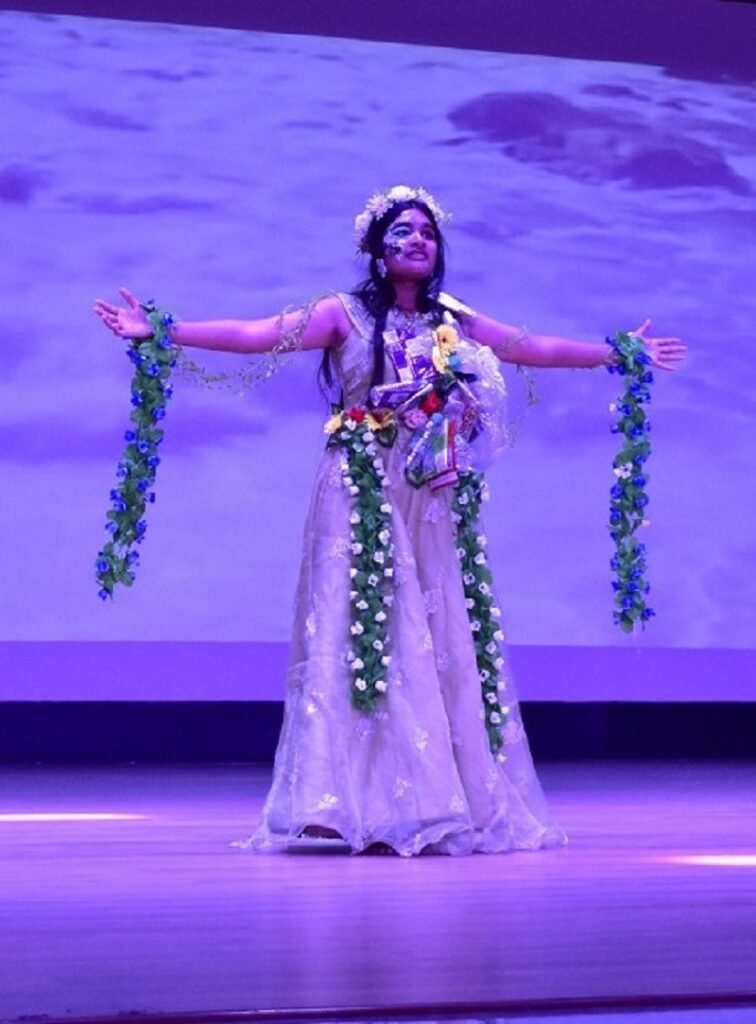
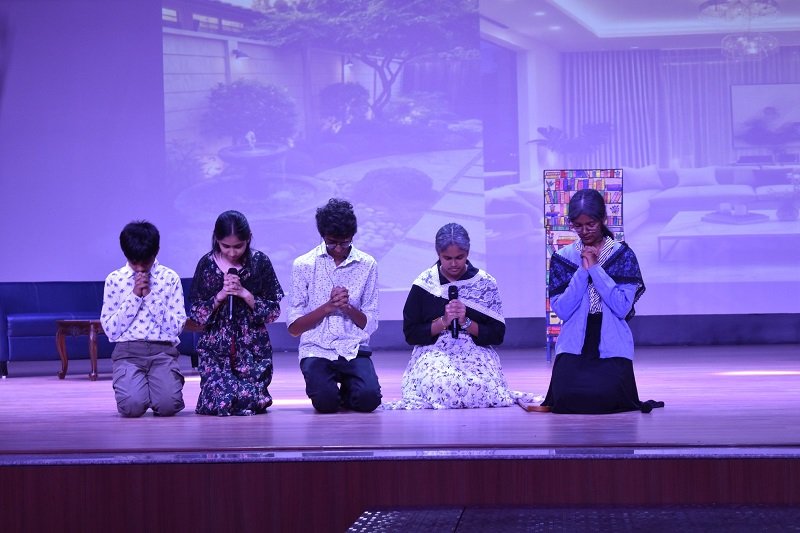
Purpose & Powerful Theme: Universal Apostolic Preferences
The event’s theme—Universal Apostolic Preferences—guided student performances, inviting them to embody Jesuit values like solidarity, social justice, and spiritual reflection. Through both drama and song, participants explored and expressed what these values mean in today’s world, illustrating how Theatre & Art Unite not only hearts but values.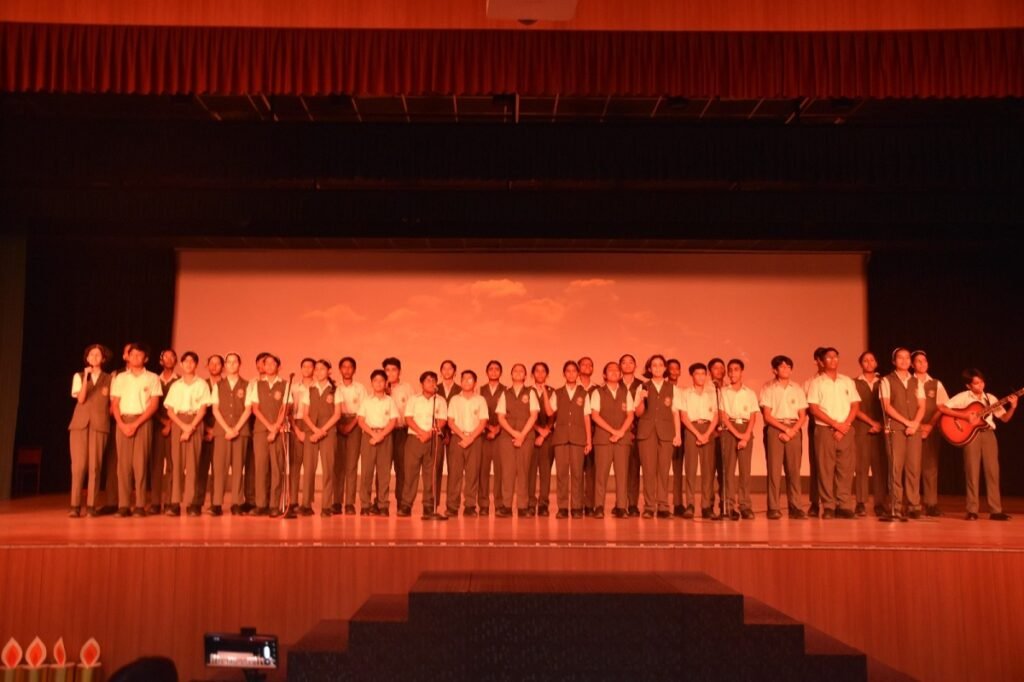
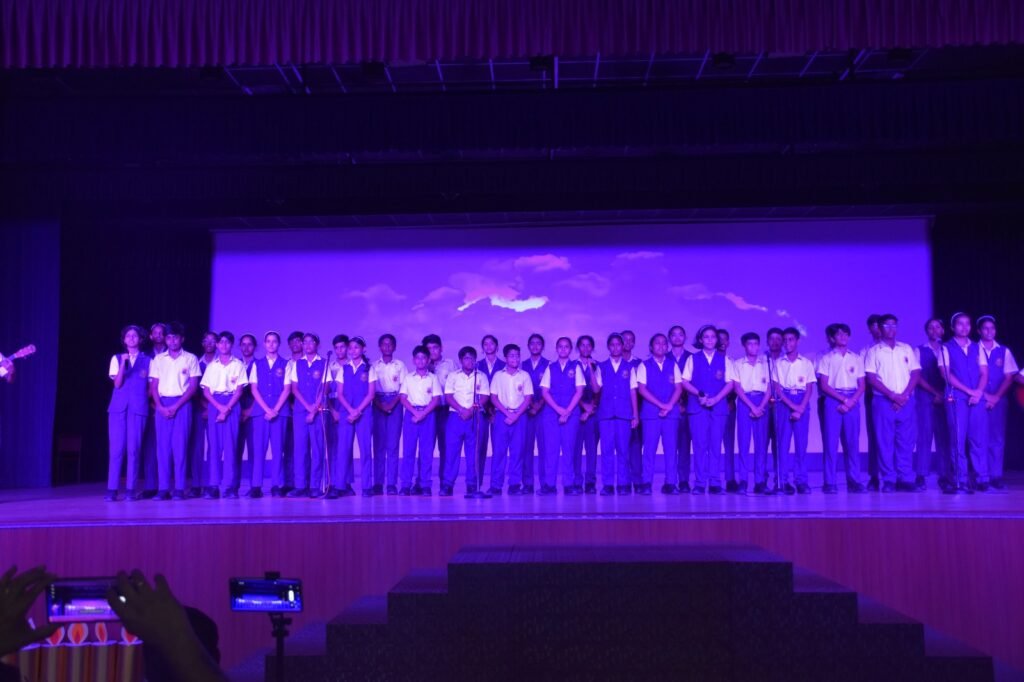
Drama & Music: Houses in Action
English Play: A Theatrical Masterclass
In the English Play segment, Classes 9–12 brought stories to life under the discerning eyes of judges: Fr. Edward Oliviera (renowned principal and educationist), Mr. Biju M.P., and Ms. Teeja Jose. Their verdicts praised the students’ compelling stage presence, imaginative direction, and thematic resonance. Fr. Edward’s live feedback, rich with theatrical guidance, elevated confidence and performance quality.
Singing Competition: Soulful Melodies
Meanwhile, Classes 6–8 lit up the stage in the Singing Competition, judged by Fr. Edward Oliviera, Mr. Ashish Joseph (Indian Idol fame), and the school’s music mentor, Mr. Colin Jobard. The voices rang clear, embodying the event’s spiritual and social message. Judges applauded the emotional depth and musical articulation, proving again why Theatre & Art Unite as powerful educational tools.
Winners & Highlights
- Drama Competition:
- Blue House: 1st place
- Red House: 2nd place
- Green House: 3rd place
- Singing Competition:
- Blue House: 1st place
- Yellow House: 2nd place
- Green House: 3rd place
Principal Rev. Fr. Sangeeth Raj, SJ, announced the winners with warmth, acknowledging every participant, and reemphasizing how Theatre & Art Unite to nurture holistic education.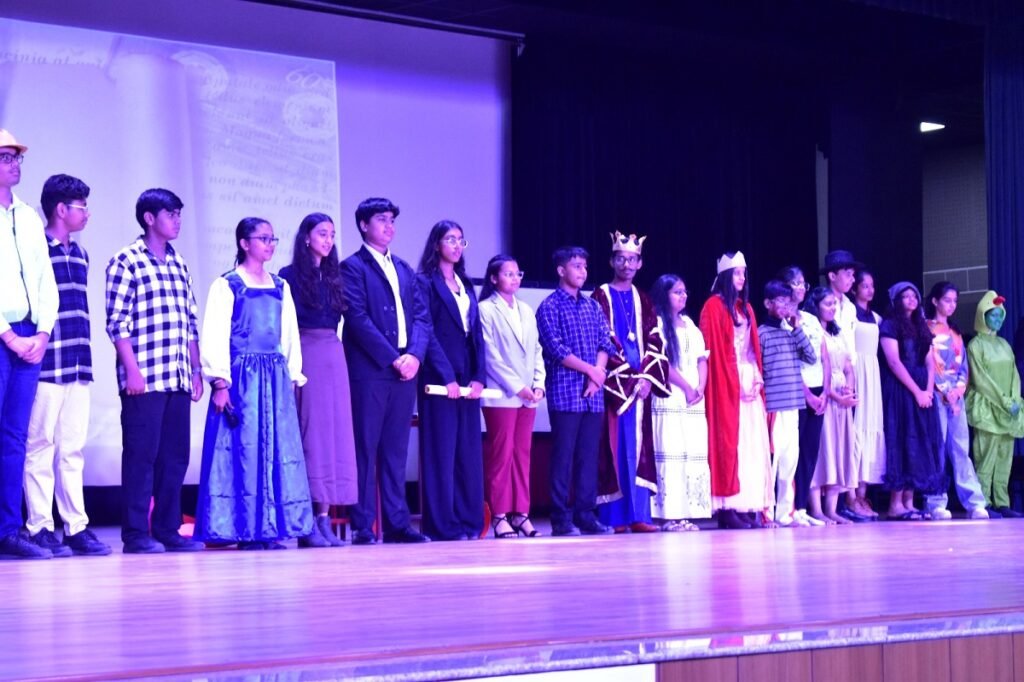
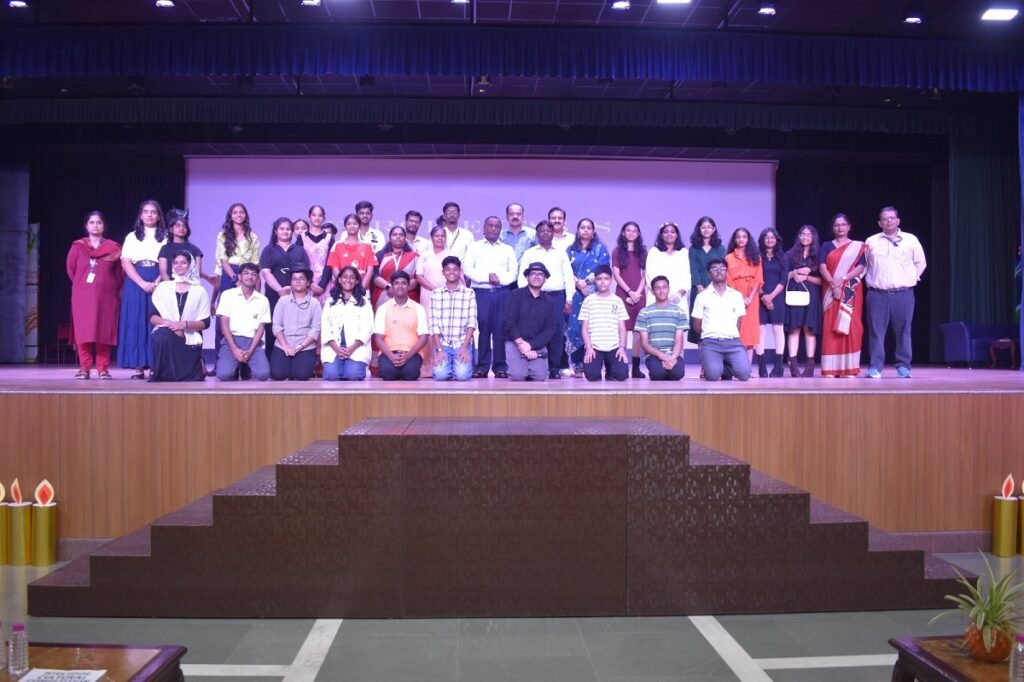
Inspirational Takeaways & Jesuit Values
- Creative Confidence: Students showcased remarkable self-assurance—theatre and art unite minds and courage.
- Value-Driven Expression: The Universal Apostolic Preferences theme turned performances into acts of conscience and commitment.
- Educational Enrichment: Through art, students gained insight into empathy, teamwork, and expressive nuance.
- Mentorship Matters: Insights from Fr. Edward and Mr. Joseph sparked artistic growth and confidence.
Why Theatre & Art Matter in Education
Theatre & Art Unite not merely students, but ideals and experiences—making education emotionally resonant. This event underscores how incorporating performing arts into schooling fosters creativity, ethical awareness, and emotional literacy.
As St. Xavier’s School looks to future competitions and cultural expressions, the success of this Inter-House English Play and Singing Competition proves that Theatre & Art Unite in elevating education beyond textbooks.

Art
Sattva, Rajas, Tamas” Come Alive on Canvas – Dr. Renu Shahi’s Indian Philosophical Art Shines in Sri Lanka
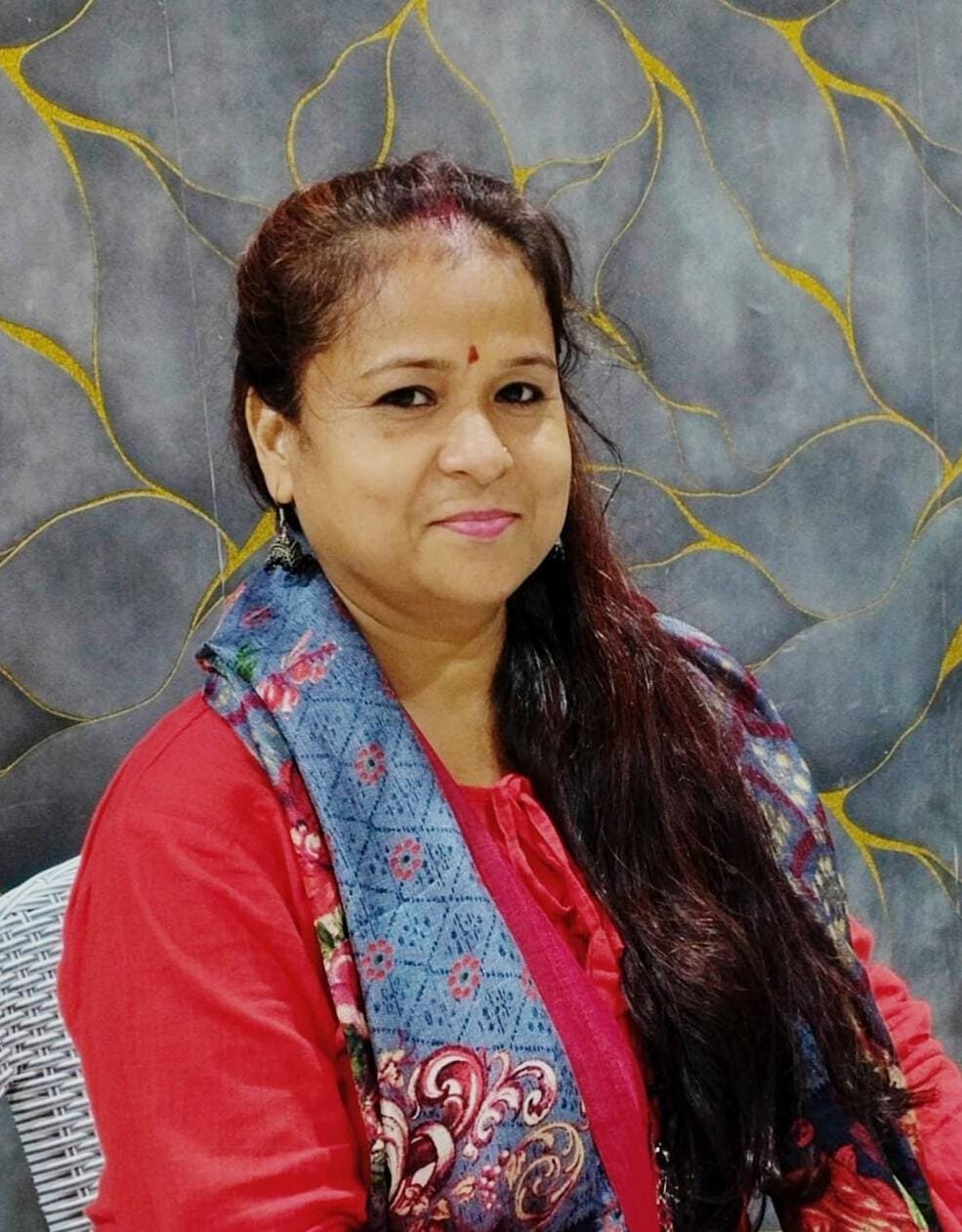
Colombo/Jaipur, July 14,2025
In a vibrant celebration of artistic expression and cultural wisdom, Indian artist Dr. Renu Shahi has drawn deep admiration for her spiritually inspired paintings at an international art exhibition titled “Uncharted”, held at the Curado Art Space in Colombo, Sri Lanka.
Organized by the Rainbow Art Group, New Delhi, this cross-border exhibition featured 49 contemporary artists from six countries, each offering their unique visual interpretations. Amid this diversity, Dr. Shahi’s works stood out — not only for their aesthetic depth but also for their philosophical grounding.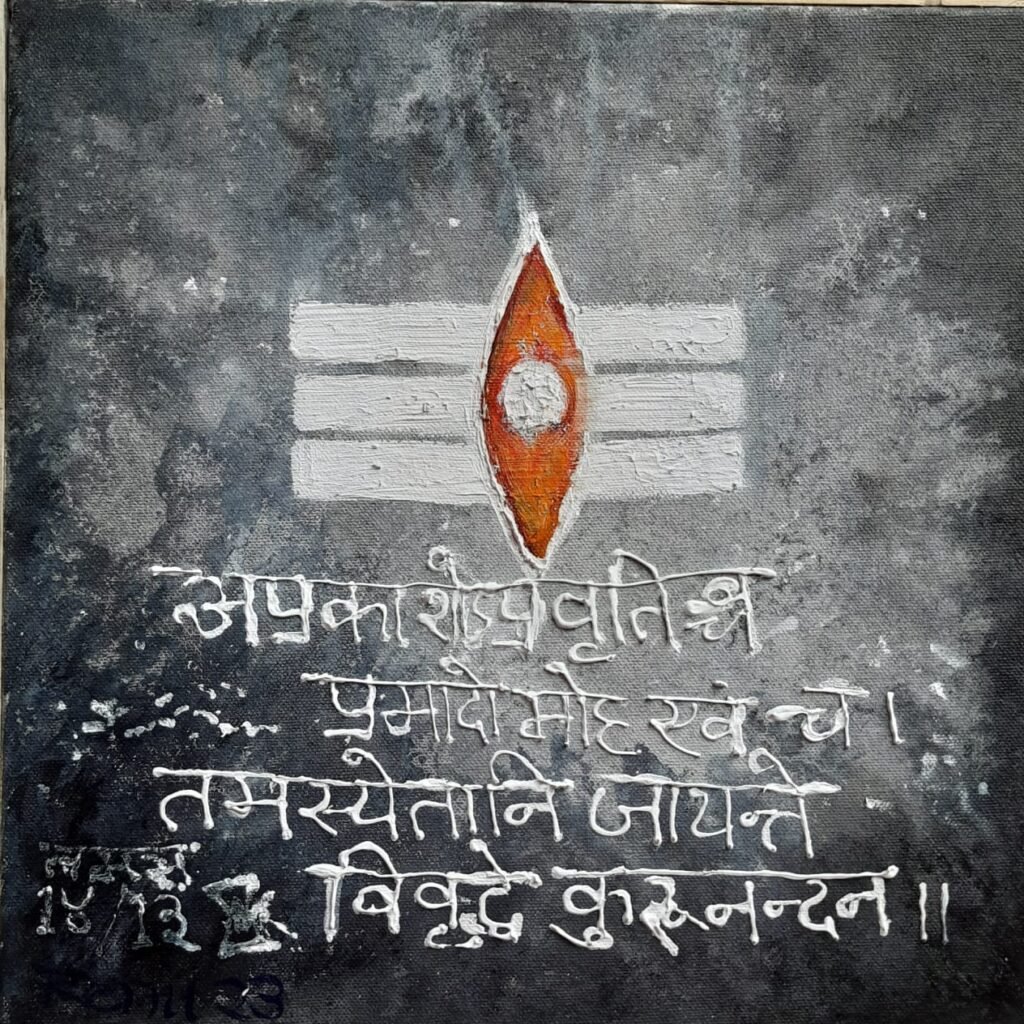
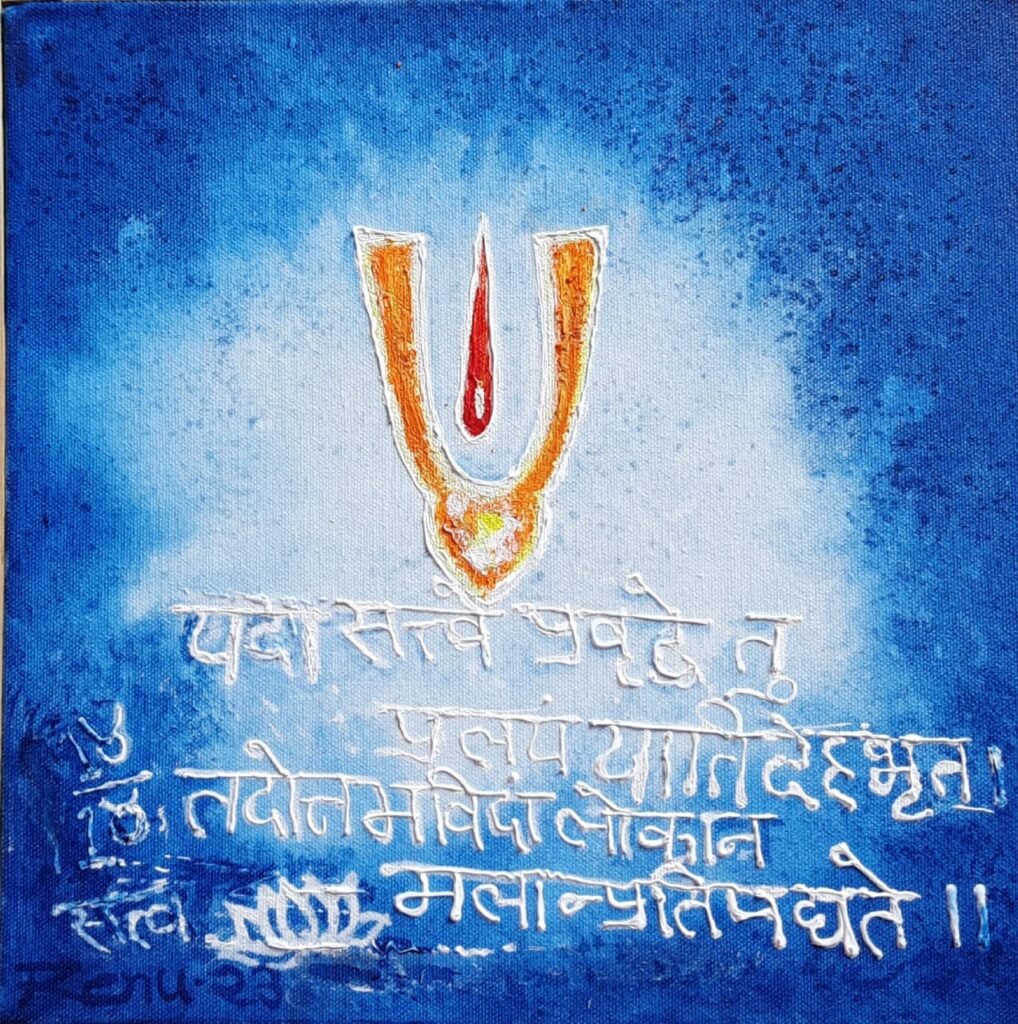
Her three paintings, inspired by verses from the Bhagavad Gita, revolved around the three fundamental qualities of human nature: Sattva (purity), Rajas (passion), and Tamas (inertia). Through rich symbolic imagery and subtle layering, she represented these gunas not merely as abstract ideas, but as divine forces shaping the human experience. Each artwork intertwined color, mythology, and introspection into a single visual meditation.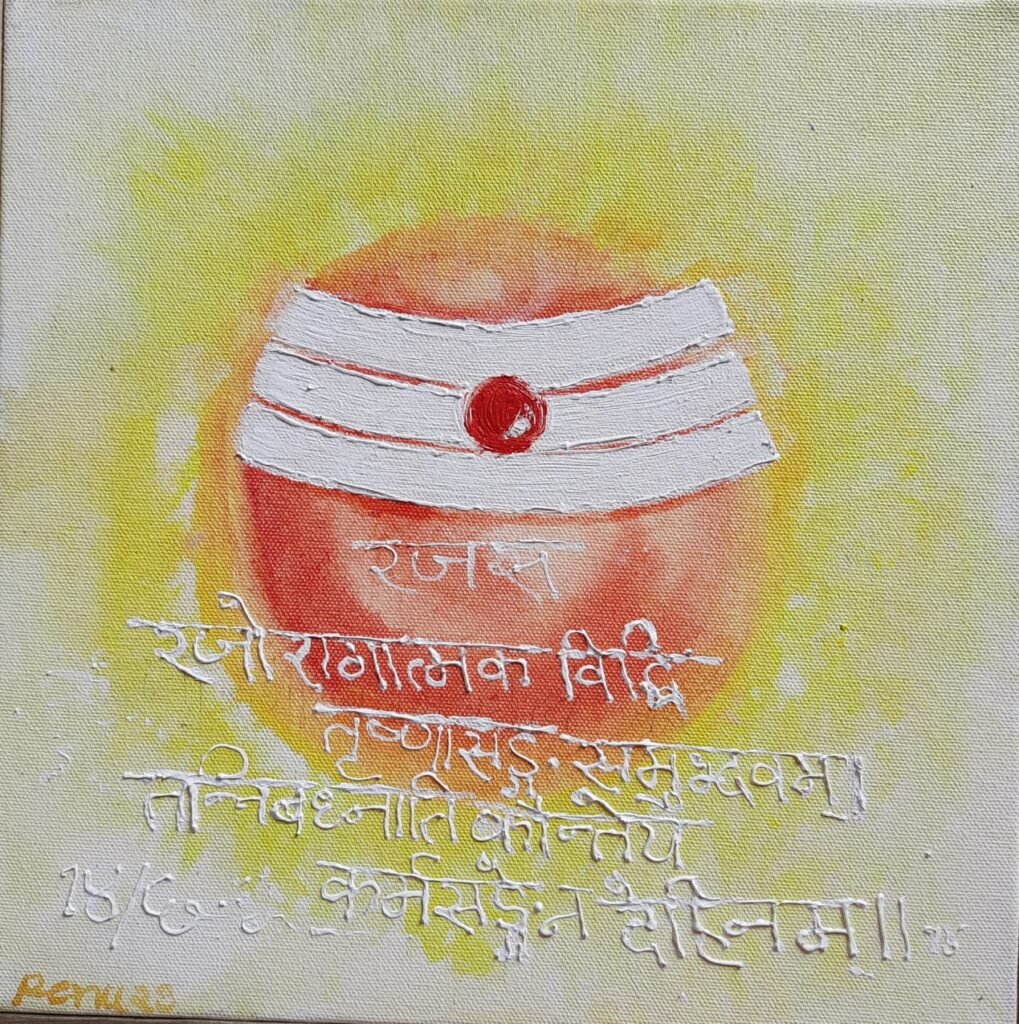
The exhibition, which ran from July 4th to 10th, was inaugurated by Shanila Alles, Director of Curado Art Space, and curated by Virendra Kumar, the visionary founder of Rainbow Art Group. The group’s mission is to highlight artists who explore Indian culture, spirituality, and heritage through their canvas, offering them a global stage to be seen and heard.
“For us, art is a language that speaks beyond words,” said Kumar. “It transcends geography and unites minds — whether you’re from Jaipur or Jakarta.”
Alongside Dr. Shahi, notable artists such as Banita Rani Singh, Bhaskar Ghosh, Dr. Chetna Agarwal, Manju Saad, Manoj Chakravarty, and Nayana Mevada, among others, showcased their works. Artists hailed not just from India but also from Nepal, Sri Lanka, Qatar, Indonesia, and Belarus. Each piece was a window into the artist’s soul — and some of those windows were so captivating that a few artworks were sold, a testament to the audience’s deep connection with the themes.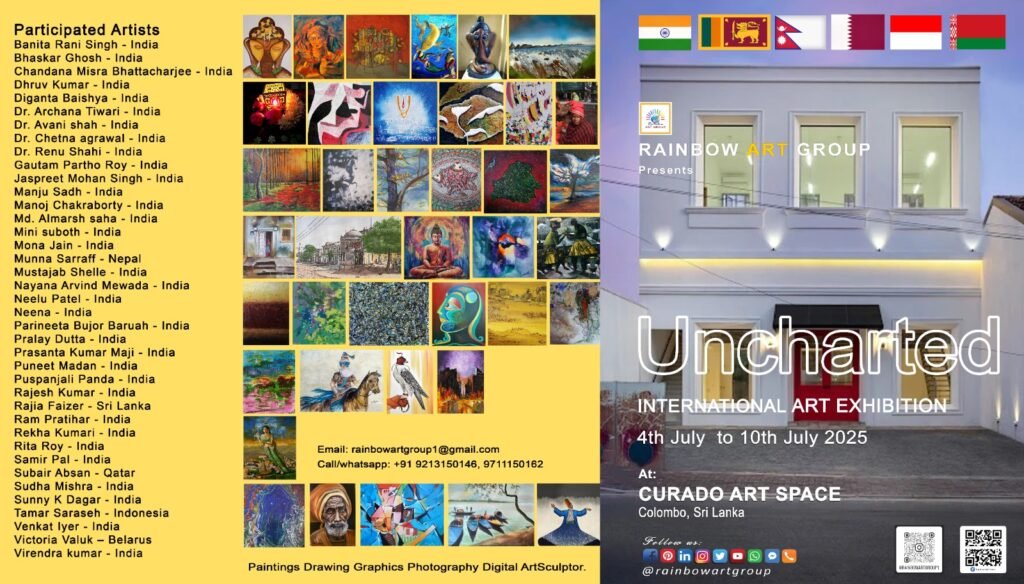
Rainbow Art Group has, over the years, emerged as a powerful platform nurturing both emerging and established talent. Its exhibitions reflect a belief that “art needs no passport — it is the purest dialogue between cultures.”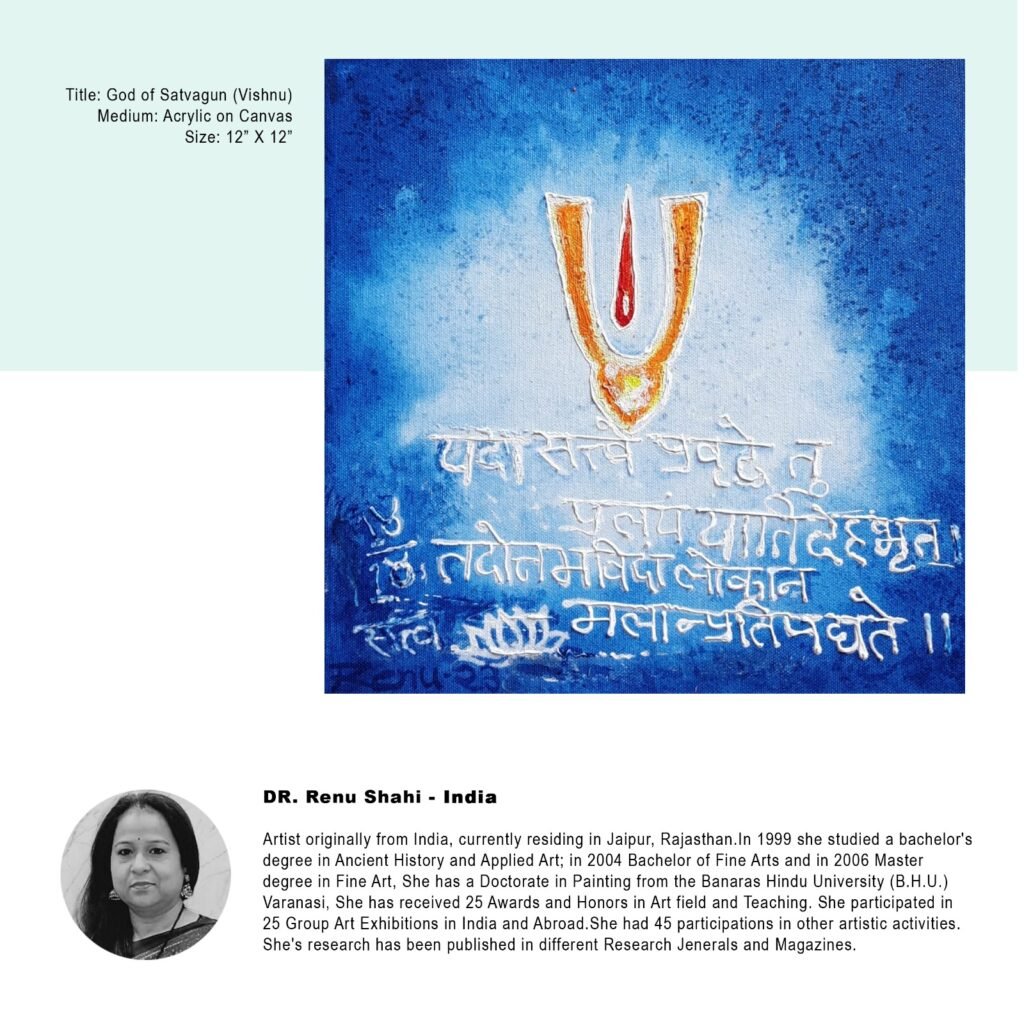
Dr. Renu Shahi’s series served not just as paintings, but as philosophical experiences — introducing Sri Lankan viewers to the timeless teachings of Indian scriptures, not through sermons, but through strokes of color, layers of thought, and a visual silence that speaks louder than words.

Dr Ambedkar Memorial Welfare Society Rajasthan, Ambedkar Society Permanent Council, <a href="https://credenttv.com/?s=Satyaveer+Sing

Dr Ambedkar Memorial Welfare Society Rajasthan, Ambedkar Society Permanent Council, <a href="https://credenttv.com/?s=Satyaveer+Sing

Subodh Public School Rambagh Honours Sanitation Staff for Dedicated Service

Trump-Linked Powerus Plans Drone Production Partnership With Pakistan Army

October 2026 Rules: LPG Subsidy, SBI ATM and UPI Changes Explained

Yemen conflict escalation: हिंसा बढ़ने से हैजा-खसरे के फैलाव का खतरा

Priyansh Arya: The Six-Hitting Sensation of IPL 2025

Top 10 Most Searched Topics on YouTube: What’s Trending Now?

Preity Zinta Spotted with New Punjab Kings Hero Priyansh Arya in Viral Clip

Nag Panchami 2025: 7 Key Rituals and Puja Time to Eliminate Kaal Sarpa Dosha

Radhika Merchant: A New Chapter as Radhika Ambani

Balen Shah, Kathmandu’s independent mayor, from rapper to political leader. Explore his rise amidst Nepal’s youth-led revolution-

best career opportunities | Jaipur Career Fair | Credent TV | Dainik Navjyoti D2S03

what is reiki healing | Mental Health | Shiksha Sarokar, शिक्षा सरोकार, Sunil Narnaulia

DAV Centenary Public School, Vaishali Nagar, Jaipur hosts Successful ‘Mind Wars Quiz: A Battle of Wits and Knowledge’

 Election3 weeks ago
Rajasthan Municipal Election Results 2026 Live Updates
- Breaking News1 month ago
Vaibhav Sooryavanshi’s Two-Wicket Duleep Trophy Spell Powers East Zone into Semi-finals
- Education3 weeks ago
OPT Fee Proposal Clears White House Review; $100,000 Figure Remains Unconfirmed
- Breaking News1 month ago
Savitribai Phule Award 2026 Honours 54 Women in Jaipur
- Breaking News1 month ago
SRN Ad-to-Pitch Challenge Tests Young Entrepreneurs in Jaipur
- Breaking News1 month ago
Reports Claim Pakistan Deployed Bayraktar TB2 Drones Near LoC
- Festival3 weeks ago
India Retail Inflation August 2026 Rises to 4.82% as Food Prices Climb
- International3 weeks ago
Houthi Drone Near Mecca: Saudi Arabia Intercepts UAV After Emergency Alert