Events
Sumitra Guha SPIC MACAY Jaipur Concerts inspired students at DAV Centenary School and Gyan Vihar University

- Raag Bairagi Bhairav – “Sur sur se saadh le rasik gao” set in Teentaal
- Raag Gurjari Todi – “Baje baje baje damru” crafted in Drut Ektal
- Meera Bhajan – “Main to saware rang rachi,” an original creation by the artist herself
- Two original compositions in Raag ShreeRanjini:
- “He Dinanath He Jagannath” (Adda Teentaal)
- “Savre Salone Sundar Shyam” (Drut Ektal)
- Raag Charukeshi – a lively original in Drut Ektal
- A stirring Meera Bhajan: “Kahan kahan jaun tere saath Kanhaiya”
- Rajendra Prasad Banerjee – Harmonium
- Pradeep Kumar Sarkar – Tabla
- Renu Ji – Tanpura
- Empowering Youth: Students experienced firsthand the depth of Indian classical music and its spiritual richness.
- Original Compositions: Vidushi Guha Ji introduced freshly composed renditions in ShreeRanjini, Charukeshi, and Meera Bhajans, reflecting creativity rooted in tradition.
- Active Student Participation: Jaipur SPIC MACAY volunteers were celebrated, showcasing youth-led cultural stewardship.
- Institutional Collaboration: Successful coordination between SPIC MACAY, DAV Centenary School, and Gyan Vihar University demonstrated a shared commitment to cultural education.
Contents
Jaipur, Aug.05,2025: Principal A.K. Sharma officially welcomed and felicitated Vidushi Guha Ji, SPIC MACAY Jaipur Coordinator Himani Khinchi, and alumnus Bhavya, inspiring students to embrace India’s
Sumitra Guha SPIC MACAY Jaipur Concerts – A Soulful Beginning
Sumitra Guha SPIC MACAY Jaipur Concerts opened with a deep spiritual resonance on 4 August 2025, as Padma Shri awardee and celebrated classical vocalist Vidushi Sumitra Guha Ji presented two heartfelt performances in Jaipur’s educational hubs: DAV Centenary School and Gyan Vihar University.
Concert Highlights at DAV Centenary School
At 10:30 AM in the school auditorium, Sumitra Guha SPIC MACAY Jaipur Concerts graced students with three mesmerizing selections:
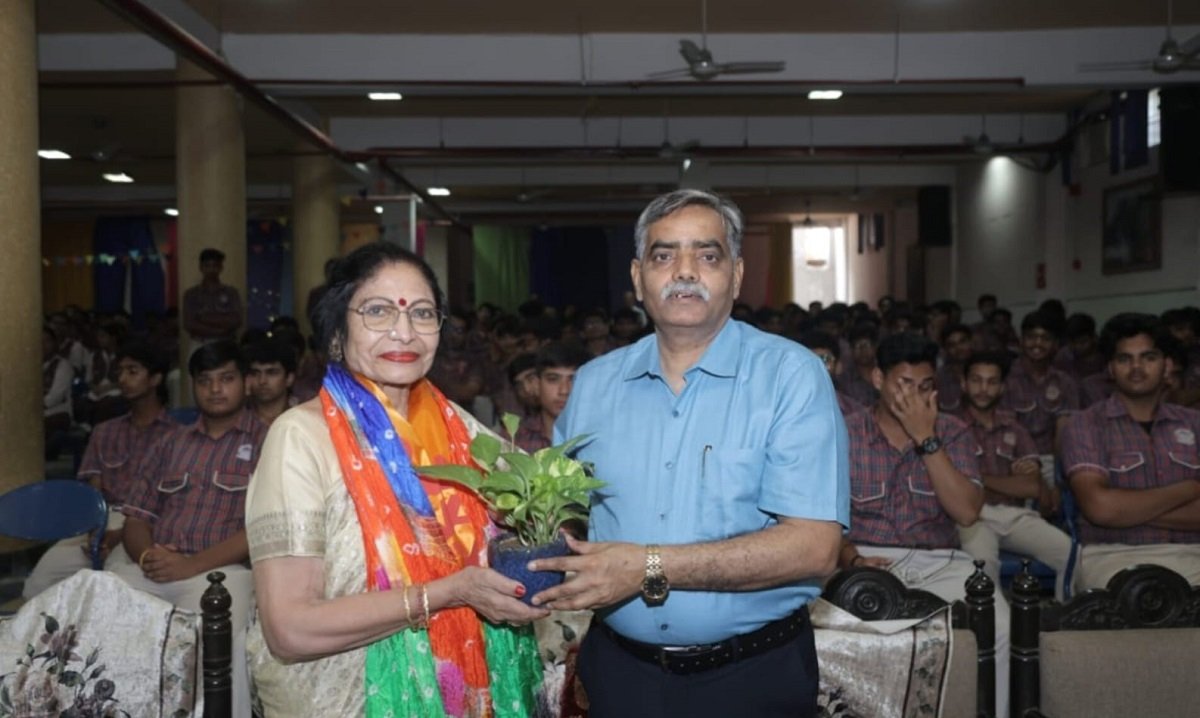
Principal A.K. Sharma officially welcomed and felicitated Vidushi Guha Ji, SPIC MACAY Jaipur Coordinator Himani Khinchi, and alumnus Bhavya, inspiring students to embrace India’s cultural heritage through such divine musical expressions.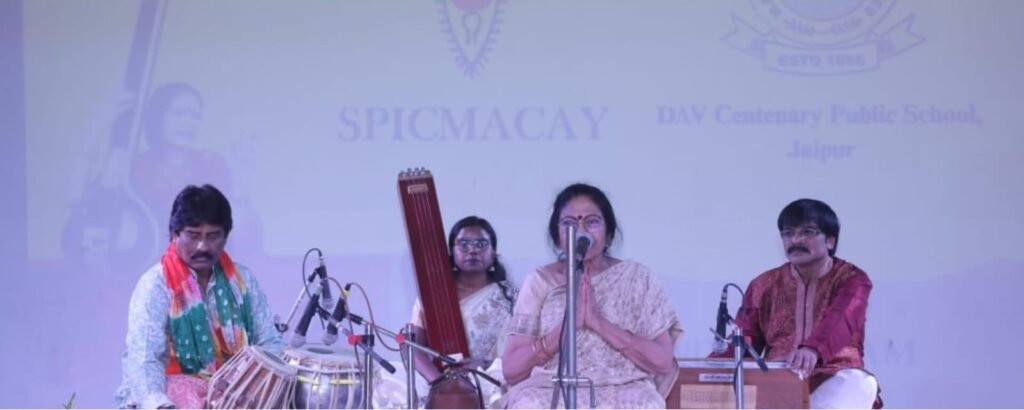
Memorable Moments at Gyan Vihar University
At 2:00 PM, the Sumitra Guha SPIC MACAY Jaipur Concerts continued at Gyan Vihar University, featuring:
Dr. Navin Sharma commended youth volunteers Mauli and Devraj from the Jaipur SPIC MACAY chapter onstage, highlighting the crucial role of student involvement in cultural initiatives.
The Artistic Ensemble & Organisers
Vidushi Guha Ji was accompanied by a seasoned musical ensemble:
Their synergy elevated each raag and bhajan into an immersive auditory experience, underscoring SPIC MACAY’s commitment to excellence.
Student Interaction & Learning Insights
Post‑concert, Sumitra Guha SPIC MACAY Jaipur Concerts included an interactive session where Vidushi Guha Ji spoke warmly with students about the spiritual discipline of riyaaz (dedicated practice), the emotional complexity of ragas, and the transformative power of Indian classical music as a medium for inner reflection and cultural connection.
SPIC MACAY’s Vision Realised in Jaipur
This event epitomised the mission of the Society for the Promotion of Indian Classical Music And Culture Amongst Youth (SPIC MACAY) — bringing India’s intangible heritage alive for younger generations.
Through these performances, SPIC MACAY successfully bridged tradition and youth in the vibrant cultural city of Jaipur.
Why This Cultural Event Mattered











Breaking News
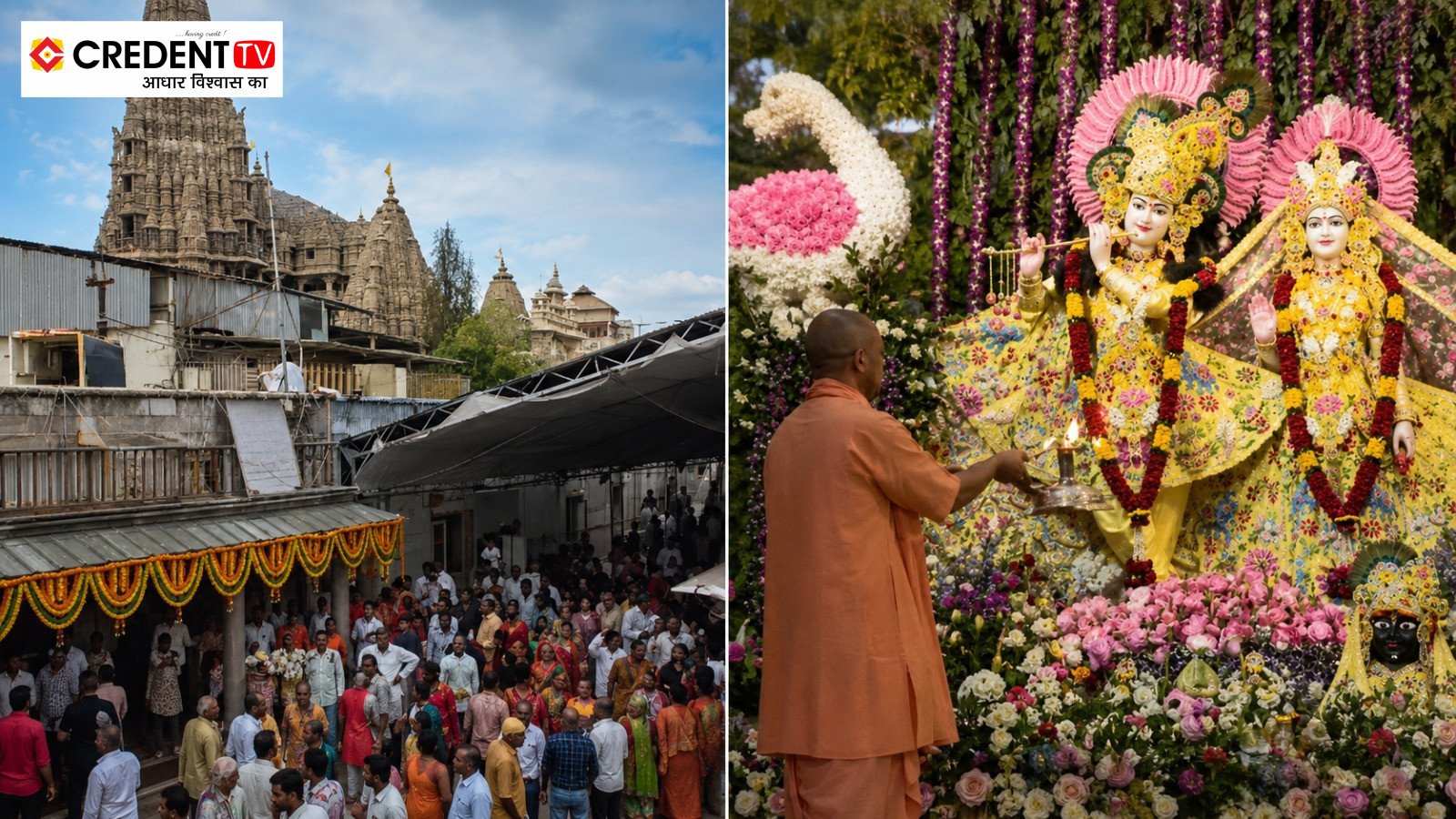
Krishna Janmashtami 2026: Mathura-Vrindavan Packed, Jaipur Celebrates as Mumbai Readies Dahi Handi
Breaking News
Buddha Purnima Celebration in Jaipur: 7 Powerful Messages of Peace, Equality and Humanity
Buddha Purnima Celebration in Jaipur was observed with great devotion at Ramabai Hall, where leaders from multiple religions shared powerful messages on peace, compassion, equality, and humanity inspired by Lord Buddha and Dr. B.R. Ambedkar.
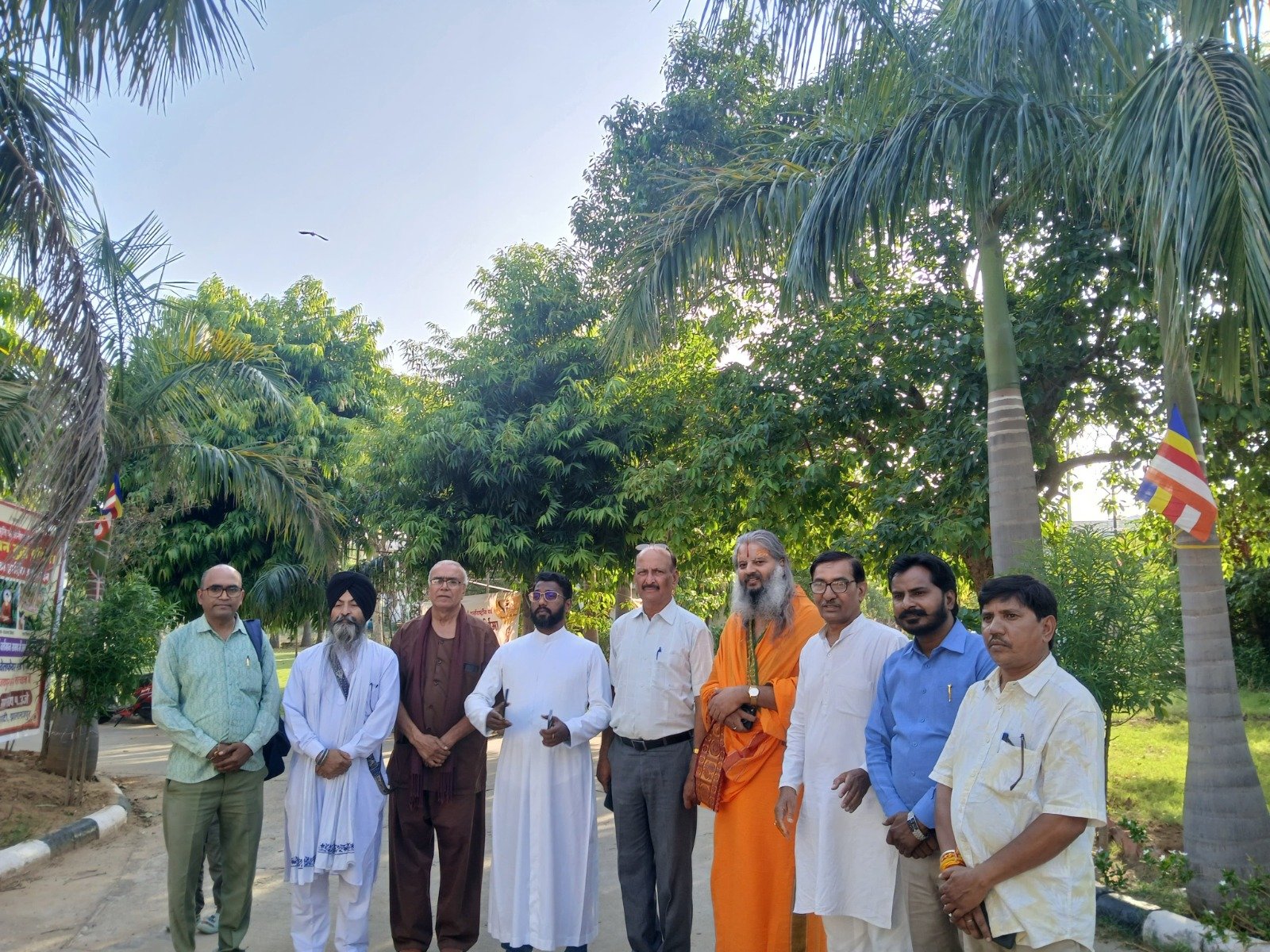
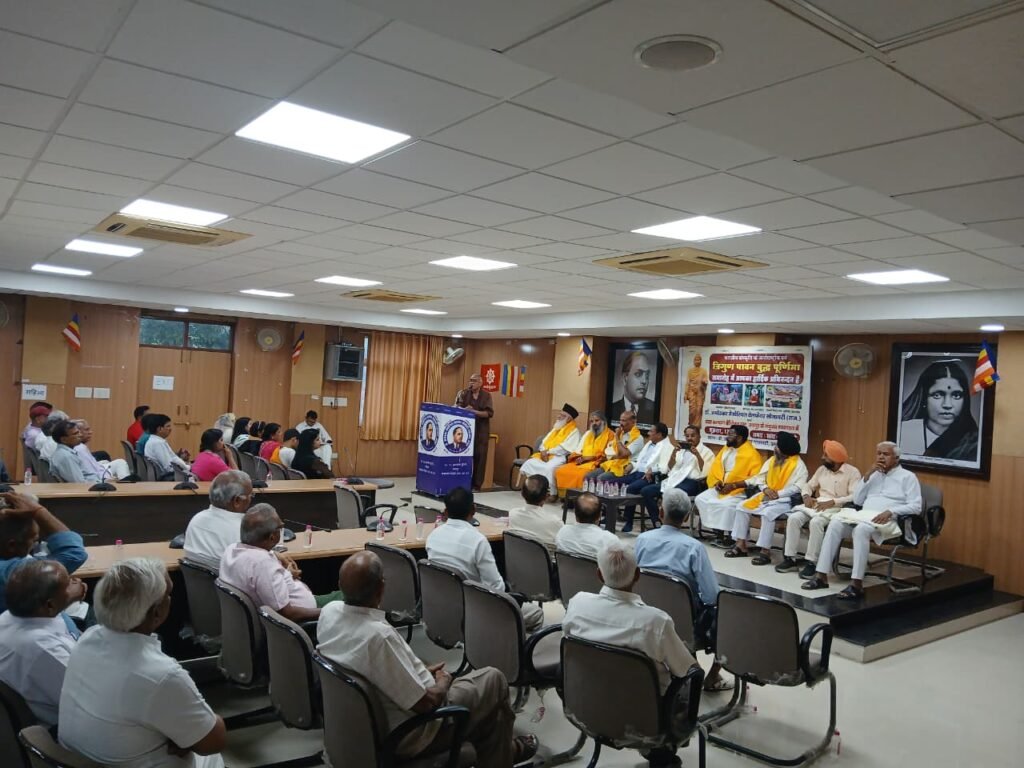
Jaipur | Buddha Purnima Celebration in Jaipur turned into a remarkable gathering of spiritual harmony, social awareness, and human values as people from different religions came together under one roof to honor the teachings of Lord Buddha. The event was organized at Ramabai Hall, located at Dr. Ambedkar Memorial Welfare Society Rajasthan in Jhalana Doongri, Jaipur, under the joint aegis of Pragya Kalyan Charitable Trust and Dr. Ambedkar Memorial Welfare Society Rajasthan.
The grand celebration was conducted under the leadership of Dr. Prakash Jain and witnessed the dignified presence of representatives from the Sarv Dharma Maitri Sangh, social thinkers, Buddhist scholars, and respected guests from different religious communities.
The event reflected a strong and timely message — humanity can only progress when compassion, equality, brotherhood, and peace become part of everyday life.
Grand Buddha Purnima Celebration at Ramabai Hall
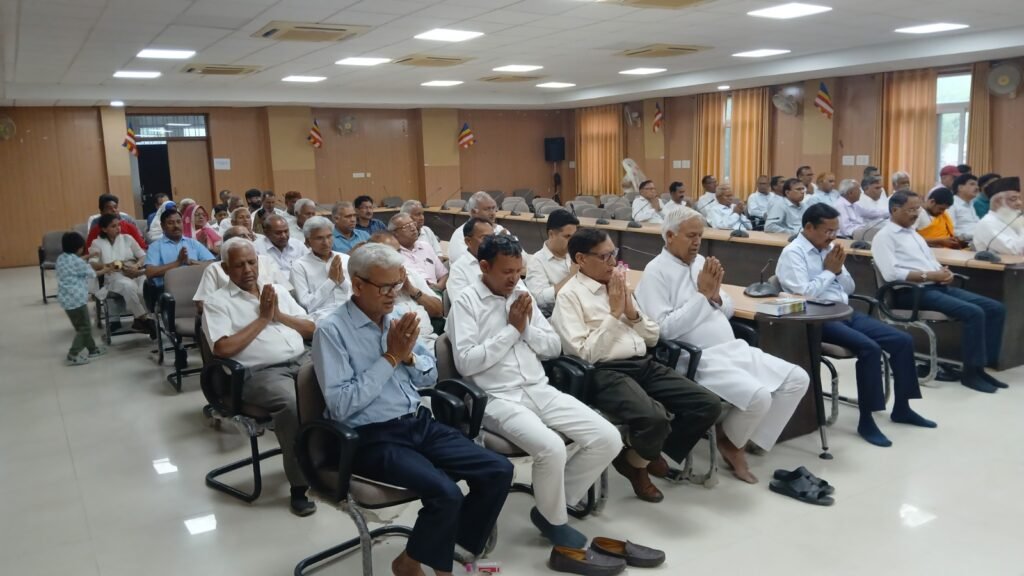
The atmosphere at Ramabai Hall was filled with devotion and positivity as guests gathered to celebrate the sacred occasion of Buddha Purnima. Representatives from multiple faiths offered floral tributes before the statue of Lord Buddha and jointly lit ceremonial lamps, symbolizing unity and enlightenment.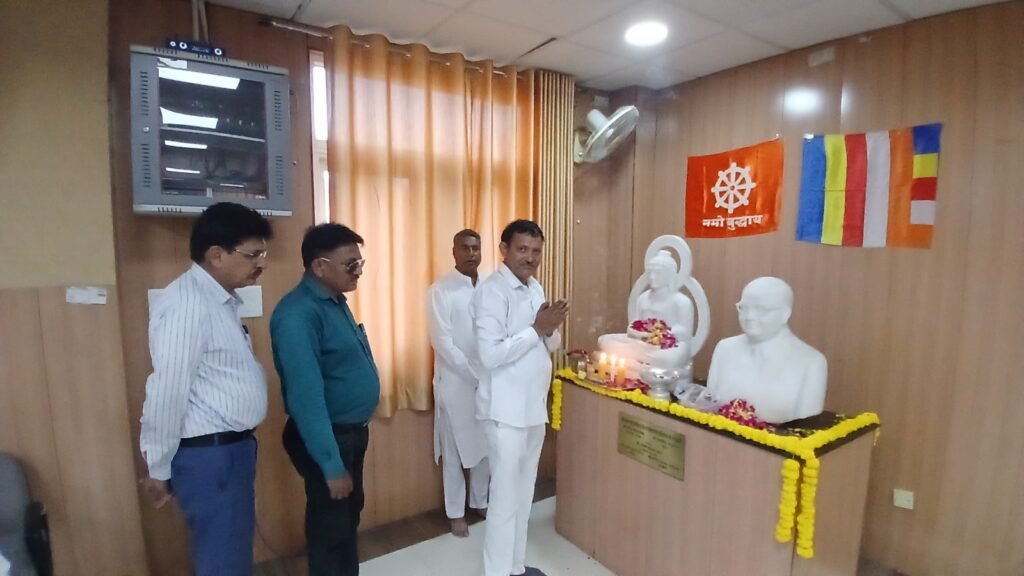
The ceremony began with the chanting of Trisharan and Panchsheel by Upasika Savitri Bauddh and Trishna Bauddh. Their recitation created a deeply spiritual environment that resonated with the audience.
Guests and religious representatives were welcomed with traditional shawls and khatas, reflecting the spirit of respect and cultural harmony.
According to organizers, the objective of the event was not only to celebrate Buddha Purnima but also to spread Lord Buddha’s timeless teachings of non-violence, compassion, and equality in modern society.
For more on Buddha Purnima and Buddhist traditions, readers can visit the official website of the Government of India’s Ministry of Culture:
Multi-Faith Leaders Unite for Harmony
One of the most inspiring aspects of the Buddha Purnima Celebration in Jaipur was the active participation of leaders from Hinduism, Islam, Christianity, Sikhism, and Buddhism.
Message from Hindu Religious Leader
Mahant Guru Raghavendra of Galta Peeth emphasized that Lord Buddha’s teachings can transform human life if practiced sincerely. He highlighted that conflicts among people at the grassroots level weaken society and stressed the importance of mutual respect among all communities.
He noted that real social transformation is possible only when people rise above divisions and embrace humanity first.
Islamic Perspective on Buddha’s Teachings
Representing the Islamic community, Syed Anbar Shah spoke about the relevance of Buddha’s Middle Path and Eightfold Path in achieving a balanced and peaceful life.
He stated that Buddha’s principles encourage moderation, wisdom, and compassion, values that are universally respected across religions.
Christian Community’s Message of Love
George Britty, representing the Christian community, shared that the teachings of love, compassion, and kindness promoted by Lord Buddha align closely with universal spiritual values.
He emphasized that spreading messages of harmony and goodwill should become a collective responsibility for society.
Sikh Community Calls for Brotherhood
Sardar Jaswinder Singh read out a message sent by former Rajasthan Minority Commission Chairman Jasveer Singh. The message encouraged people to promote compassion, friendship, and unity in society.
The Sikh representative stated that humanity grows stronger when people work together beyond religious identities.
Historic Interfaith Presence Praised by Ambedkar Welfare Society
During the Buddha Purnima Celebration in Jaipur, Dr. Ambedkar Memorial Welfare Society Rajasthan President Satyaveer Singh warmly welcomed all guests and described the dignified presence of representatives from the Sarv Dharma Maitri Sangh as a historic and inspiring moment for the organization.
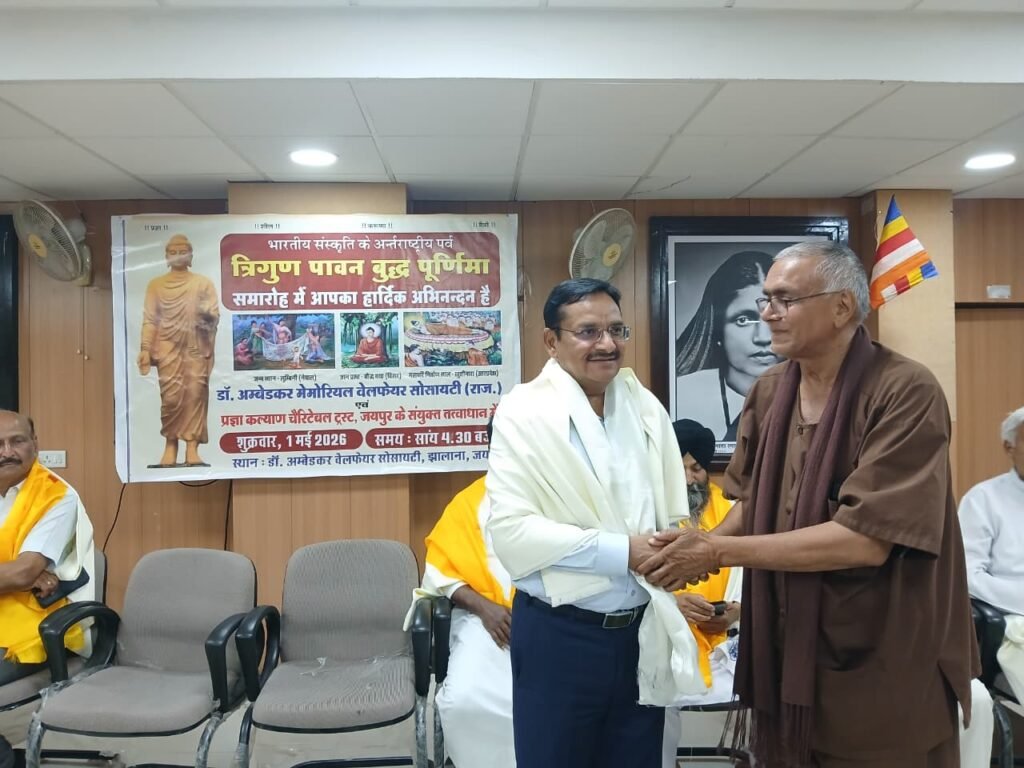
He stated that such a grand interfaith gathering on the sacred occasion of Buddha Purnima was unprecedented in the institution’s history and should serve as a model for future social and spiritual events. He emphasized that programs promoting unity, brotherhood, and mutual respect among religions are the need of the hour and should continue in the future to strengthen harmony in society.
Why Buddha’s Teachings Matter More Than Ever
In today’s world marked by stress, conflict, inequality, and social polarization, many speakers highlighted that Lord Buddha’s philosophy remains highly relevant.
The teachings of Buddha focus on:
- Non-violence
- Compassion
- Equality
- Self-awareness
- Emotional balance
- Peaceful coexistence
These values are increasingly being seen as solutions to rising global tensions and mental unrest.
According to UNESCO, Buddha’s teachings continue to influence millions globally through their focus on peace and ethical living.
Key Messages Shared During the Event
“Today We Need Buddha, Not War”
One of the strongest statements came from retired IAS officer B.L. Naval, who said that the world today urgently needs Buddha’s wisdom rather than war and conflict.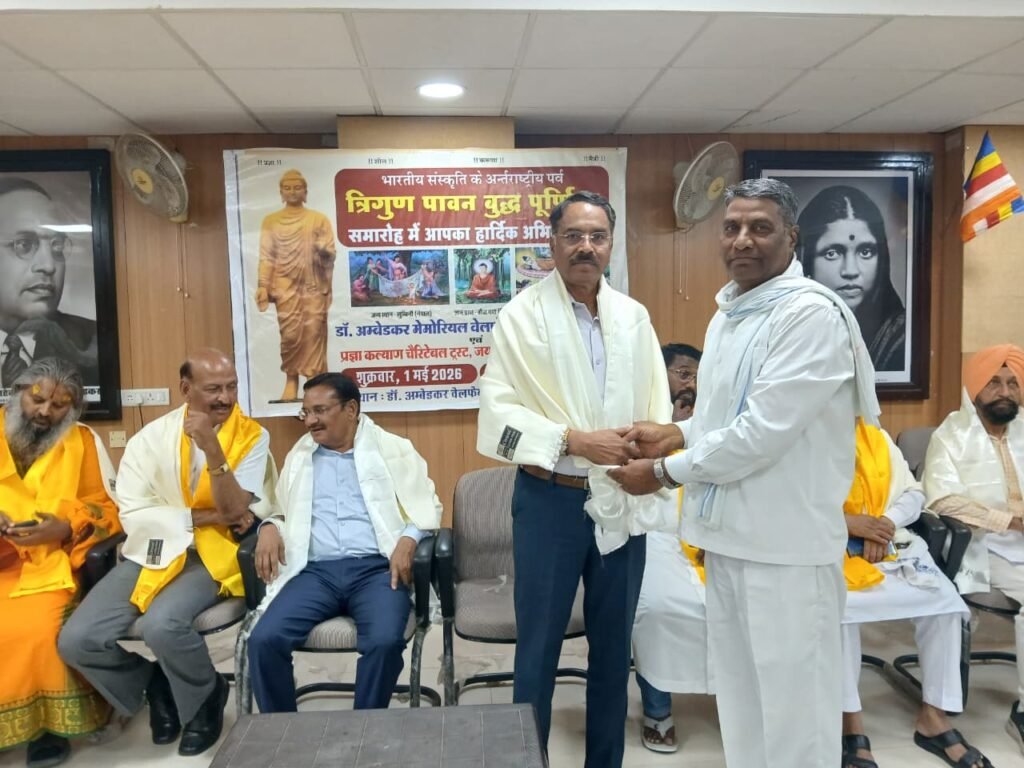
He explained that global tensions, violence, and social unrest can only be resolved through compassion, understanding, and human dignity.
His statement received strong appreciation from attendees.
Small Actions Can Bring Big Change
Dr. Pravesh Jain, President of Sarv Dharma Maitri Sangh, highlighted that even small efforts inspired by Buddha’s teachings can create meaningful change in society.
He encouraged people to practice kindness, empathy, and mutual respect in daily life rather than limiting spiritual values to speeches or ceremonies.
Role of Dr. B.R. Ambedkar in Spreading Buddhist Values
The Buddha Purnima Celebration in Jaipur also paid tribute to Bharat Ratna Dr. B.R. Ambedkar and his role in promoting equality and social justice through Buddhist philosophy.
Former judge and Trust President Tek Chand Rahul spoke about how Dr. Ambedkar embraced Buddhist principles to establish a more equal and democratic society.
He stated that constitutional values such as:
- Equality
- Liberty
- Fraternity
- Justice
are deeply connected with Buddha’s vision for humanity.
Speakers emphasized that there is still a strong need to work toward social equality and human dignity in contemporary India.
Buddha Purnima Celebration in Jaipur Promotes Social Equality
Another major theme of the event was social inequality and discrimination.
Social thinker Dr. Mahendra Anand raised concerns regarding continuing social disparities and urged society to reflect seriously on these issues.
He stated that festivals like Buddha Purnima should not remain symbolic but should inspire practical social reform.
The gathering repeatedly emphasized that true tribute to Lord Buddha lies in adopting his teachings in real life.
Voices from Other Speakers
Several dignitaries and social workers also shared their thoughts during the program.
Among them were:
- Madan Lal Dudwal, President of Nalanda Foundation Marudhara Jaipur
- Roshan Lal Mundotiya
- Ramdev Bauddh
- Sachin Sanwariya
- Ramcharan Mahawar
All speakers highlighted the need for social unity, moral responsibility, and peaceful coexistence.
The program concluded with a formal vote of thanks by lifetime member Ghanshyam Gautam, followed by blessings for universal well-being.
The Growing Importance of Interfaith Dialogue in India
The Buddha Purnima Celebration in Jaipur demonstrated how interfaith gatherings can strengthen social harmony in India.
At a time when divisions often dominate headlines, events like these create spaces for constructive dialogue and mutual understanding.
Experts believe that interfaith collaborations help reduce prejudice and encourage communities to work together for collective progress.
The event stood as a strong example of how spiritual and social organizations can unite people through shared human values.
Buddha’s Philosophy and Modern Mental Wellness
Many attendees also connected Buddha’s teachings with mental peace and emotional well-being.
Modern lifestyles have increased stress, anxiety, and emotional exhaustion. In this context, Buddha’s teachings on mindfulness, balance, and self-awareness are gaining renewed significance worldwide.
Practices inspired by Buddhist philosophy, such as meditation and mindfulness, are now widely recognized for improving mental health and emotional stability.
According to the World Health Organization, mental well-being is becoming a critical global priority. Buddha’s teachings continue to inspire wellness approaches across the world.
The Buddha Purnima Celebration in Jaipur was far more than a religious event. It became a powerful platform for promoting peace, compassion, equality, and unity among communities.
The gathering sent a clear message that humanity can move forward only when people adopt the teachings of Lord Buddha in their personal and social lives.
From spiritual leaders to social thinkers, every speaker echoed the same belief — the world today needs more compassion, more understanding, and more humanity.
As tensions and divisions continue to rise globally, the timeless wisdom of Lord Buddha remains a guiding light for building a peaceful and just society.
The celebration at Jaipur’s Ramabai Hall proved that when people from different religions and backgrounds come together with mutual respect, true social harmony becomes possible.
Breaking News
5th Arrupe Cup 2025: Jaipur’s Most Exciting Inter-School Sports Tournament Unites 109+ Schools in Thrilling Multi-Sport Showdown
The 5th Arrupe Cup Jaipur 2025 concluded on May 2 with breathtaking results across Football, Basketball & Volleyball. Over 109 schools competed at St. Xavier’s School, Newta. Discover all winners, highlights & key moments.
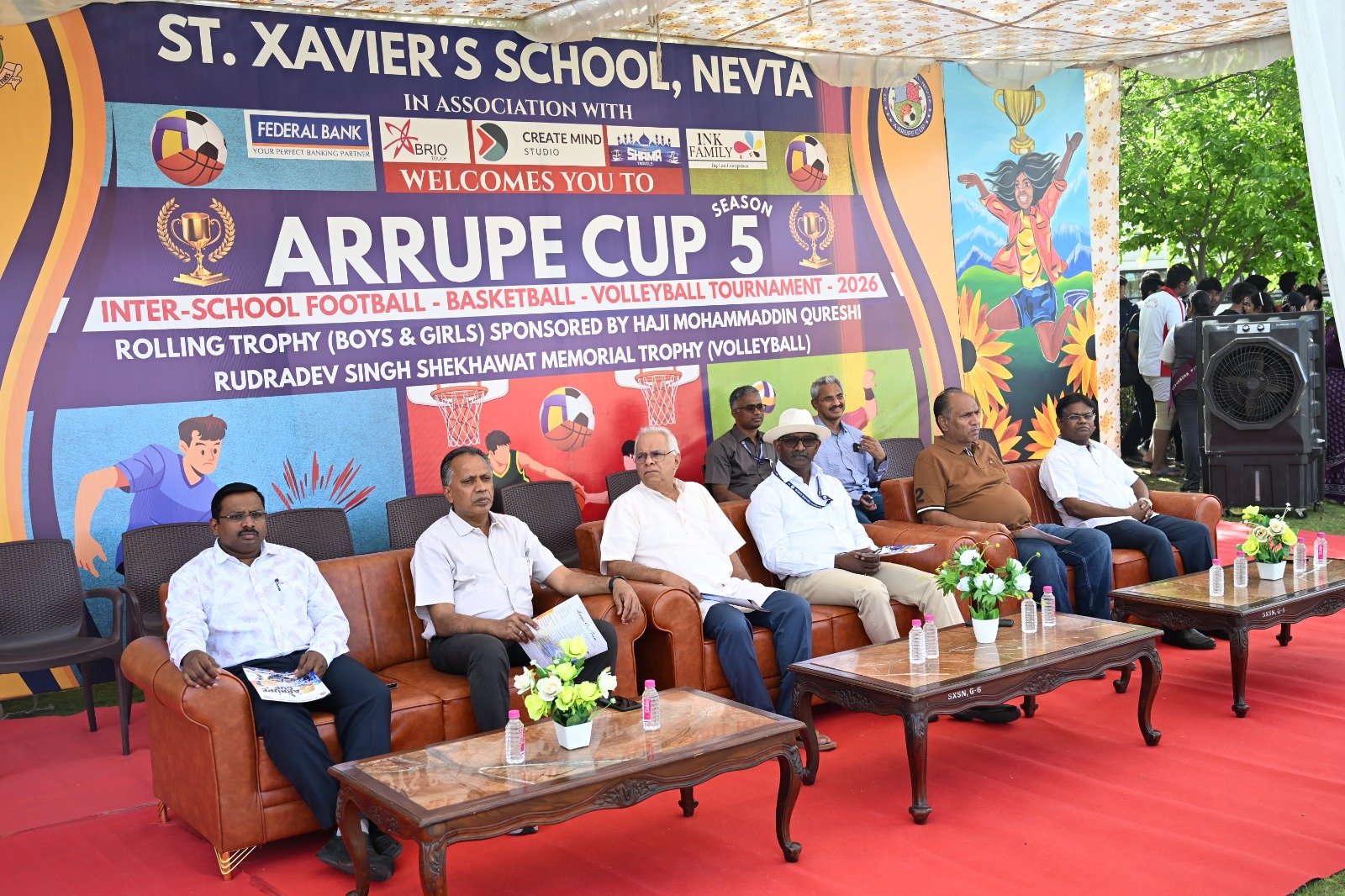
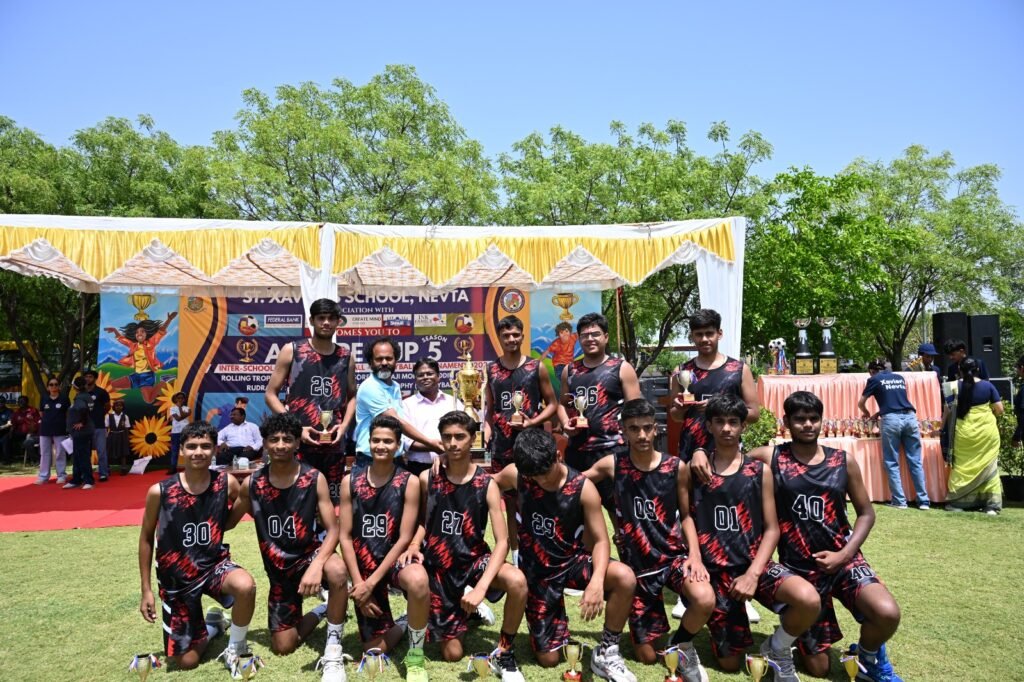
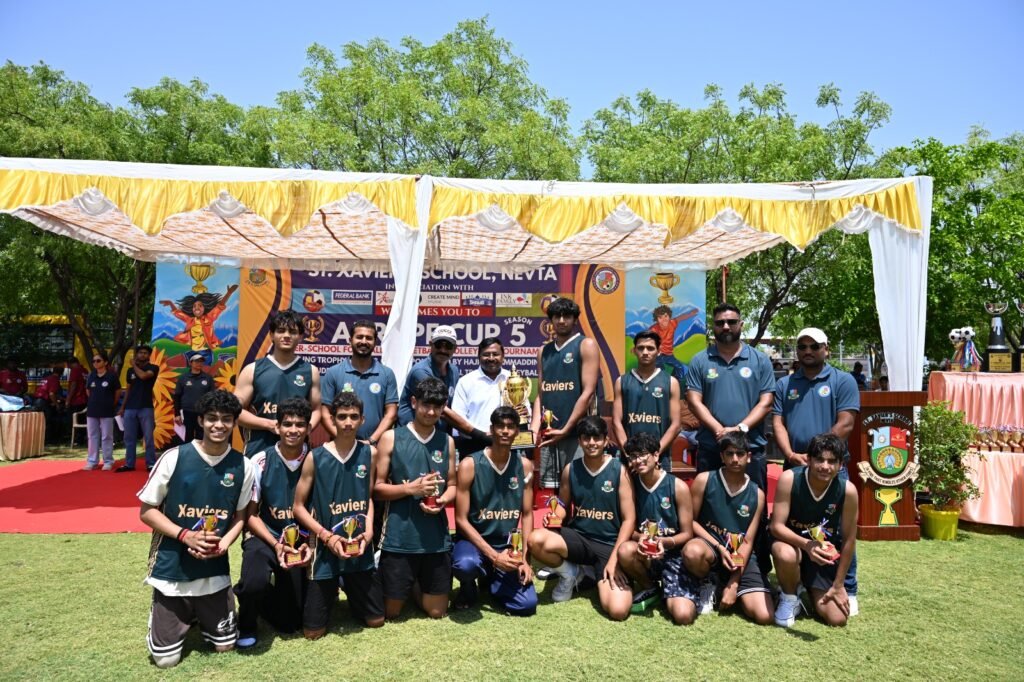
Jaipur | The 5th Arrupe Cup Jaipur 2025 has proven, once again, that sport is one of the most powerful forces for unity, discipline, and celebration among young minds. Organised by St. Xavier’s School, Newta, Jaipur, this prestigious inter-school multi-sport tournament concluded on May 2, 2025, drawing to a close what can only be described as three extraordinary days of sporting brilliance.
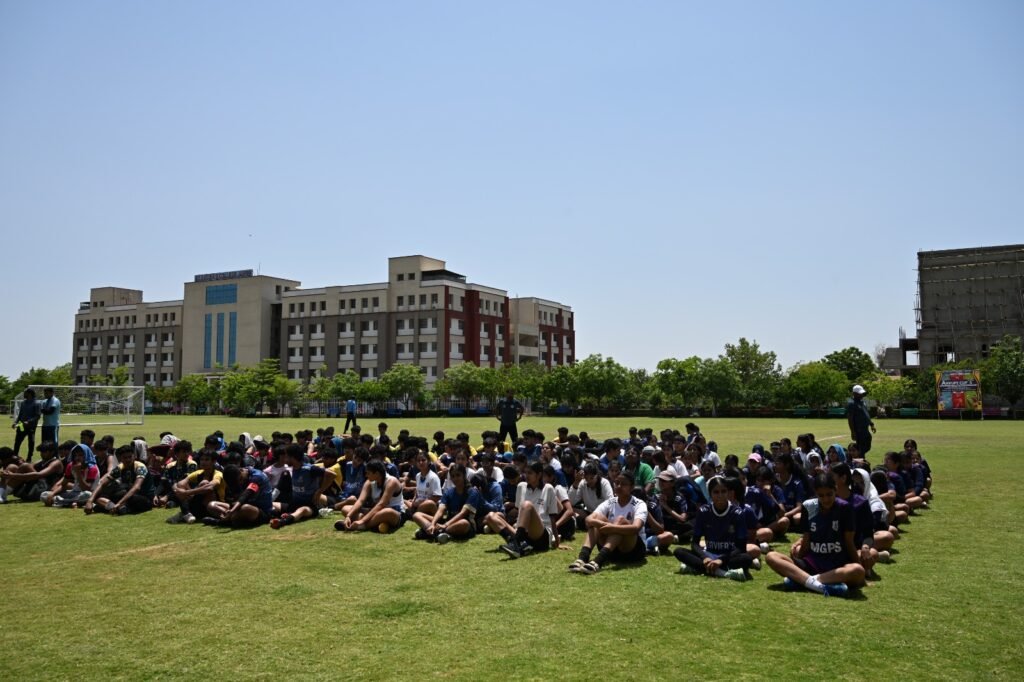
Running from April 30 to May 2, 2025, the 5th Arrupe Cup Jaipur 2025 brought together teams in Football, Basketball, and Volleyball — both boys and girls categories — making it one of the most comprehensive school-level sports events held in Rajasthan in recent years. More than 109 school teams from across Jaipur city participated, making this edition the grandest in the tournament’s short but celebrated history.
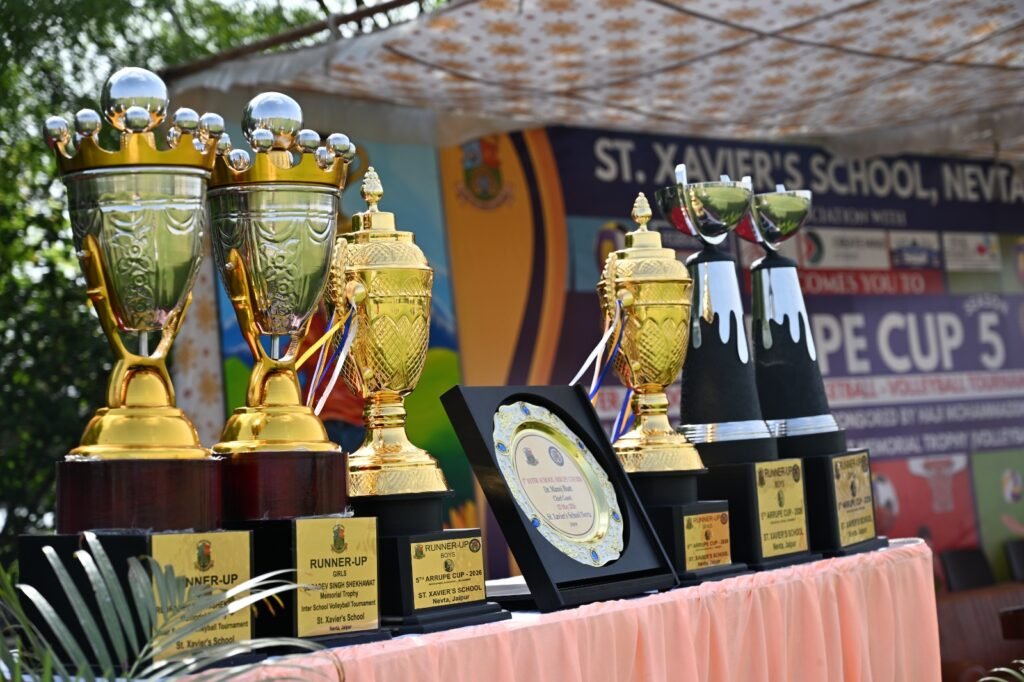
With intense matches, emotional victories, and an atmosphere charged with competitive spirit and camaraderie, the 5th Arrupe Cup set a new benchmark for how schools in Jaipur come together through the language of sport.
What Is the Arrupe Cup? The Legacy Behind the Name
The Arrupe Cup draws its name and inspiration from Father Pedro Arrupe, S.J. (1907–1991), one of the most celebrated figures in the history of the Society of Jesus (Jesuits). Born in Bilbao, Spain, on 14 November 1907, Pedro Arrupe became the 28th Superior General of the Society of Jesus and one of the most notable Jesuits of the 20th century.
Father Arrupe’s legacy is deeply tied to education, service, and the development of the whole person — mind, body, and spirit. In the tradition that Arrupe championed, athletic departments at Jesuit institutions strive to complement the mission by fostering athletic, intellectual, and personal growth through sports.
Naming an inter-school tournament after Father Arrupe is, therefore, both deliberate and deeply meaningful. The tournament is not merely about winning trophies — it is about building character, fostering team spirit, and nurturing leadership qualities in young students, values that lie at the very heart of Jesuit education.
St. Xavier’s School, Newta, Jaipur — managed by the Jesuits — carries this legacy forward by organising the Arrupe Cup as an annual celebration of holistic student development through competitive sport.
Tournament Overview: Scale, Dates & Format
Key Details at a Glance
| Detail | Information |
|---|---|
| Tournament Name | 5th Arrupe Cup |
| Organiser | St. Xavier’s School, Newta, Jaipur |
| Dates | April 30 – May 2, 2025 |
| Sports | Football, Basketball, Volleyball |
| Categories | Boys & Girls (separate) |
| Participating Schools | 109+ schools from Jaipur |
| Chief Guest (Closing) | Retd. DGP Shri Manoj Bhatt |
Three Sports, Six Titles
The 5th Arrupe Cup Jaipur 2025 was exceptional in its scope. Rather than focusing on a single sport, the tournament was structured across three major team sports — Football, Basketball, and Volleyball — each held in separate boys and girls categories. This meant six championship titles were at stake, attracting a diverse range of school teams and athletes across Jaipur.
The decision to host a multi-sport tournament under a single roof speaks volumes about St. Xavier’s School, Newta’s commitment to inclusivity and athletic excellence. Whether a student excelled on the football pitch, the basketball court, or the volleyball arena, the 5th Arrupe Cup provided the platform to shine.
Closing Ceremony: A Grand Celebration of Sport
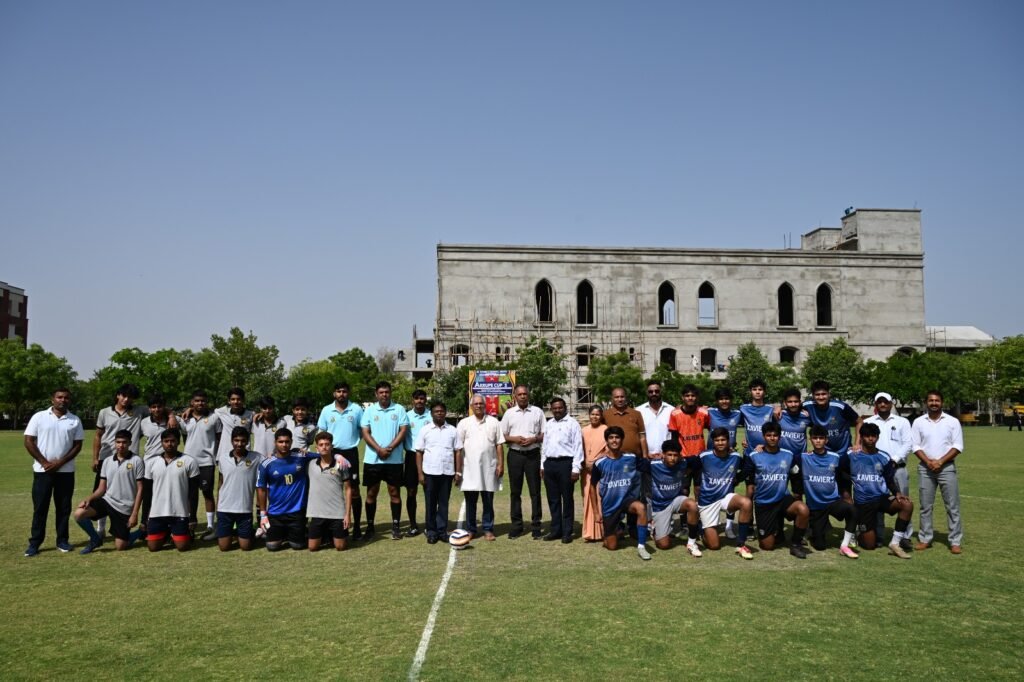
The closing ceremony of the 5th Arrupe Cup Jaipur 2025 on May 2 was a fitting tribute to the athletes, coaches, and institutions who had invested so much energy and passion over three days.
The chief guest of the closing ceremony was Retired DGP Shri Manoj Bhatt, a distinguished figure whose career in law enforcement gave weight to his words about discipline, leadership, and the importance of sport in shaping character.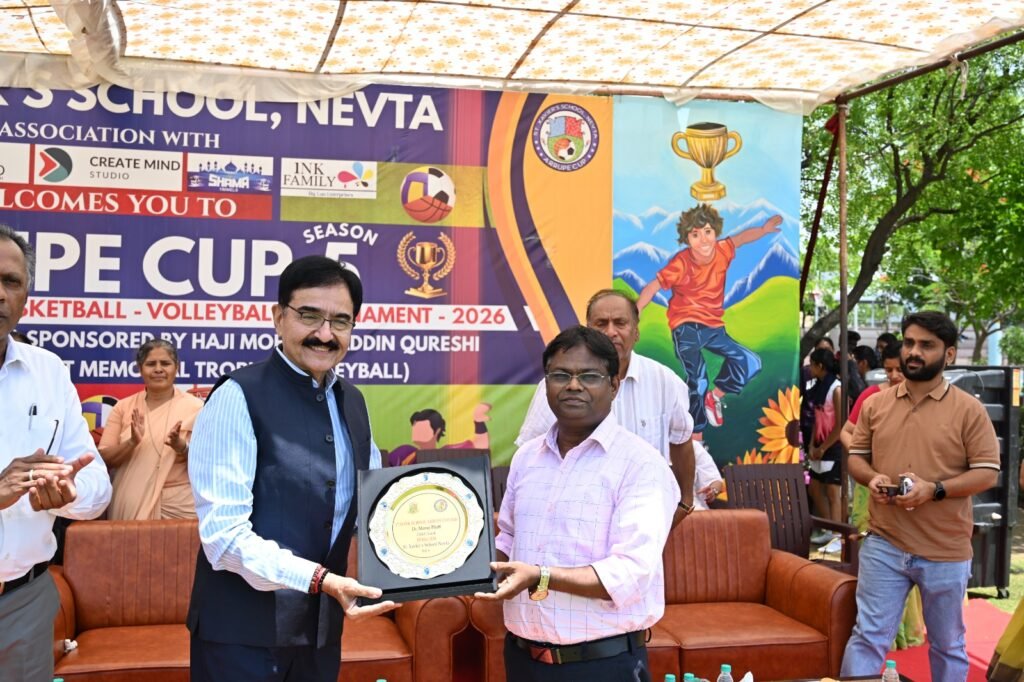
Addressing the assembled students, coaches, and school representatives, Shri Bhatt emphasised that sport is far more than physical competition. He underscored how participation in team sports builds three essential life skills: discipline, team spirit, and leadership capacity — qualities that prepare young individuals not just for athletic competition, but for the challenges of life itself.
The ceremony saw an energetic and enthusiastic atmosphere as winning and runner-up teams were called forward to receive their trophies and awards. The pride on the faces of young athletes — many participating in a competitive inter-school tournament for the first time — was unmistakable.
Final Results: All Category Winners Announced
The 5th Arrupe Cup Jaipur 2025 produced six deserving champions across its categories. Here is the complete list of winners:
Football
| Category | Winner |
|---|---|
| Football – Girls | St. Xavier’s School, Nevta (Host School) |
| Football – Boys | Neerja Modi School |
The Girls’ Football title was a moment of particular pride for the host institution, St. Xavier’s School, Newta, whose home team claimed the championship in front of their own supporters — a memorable achievement that will long be remembered.
Neerja Modi School’s boys team, meanwhile, demonstrated superior skill and tactical maturity to claim the Boys’ Football crown, outcompeting strong opposition from across the city.
Basketball
| Category | Winner |
|---|---|
| Basketball – Girls | MGPS School |
| Basketball – Boys | Vidyasthali School |
MGPS School emerged as a dominant force on the basketball court, with their girls’ team claiming the championship with impressive performances throughout the tournament. Vidyasthali School’s boys’ team equally impressed, combining athleticism with sharp court sense to take the Boys’ Basketball title.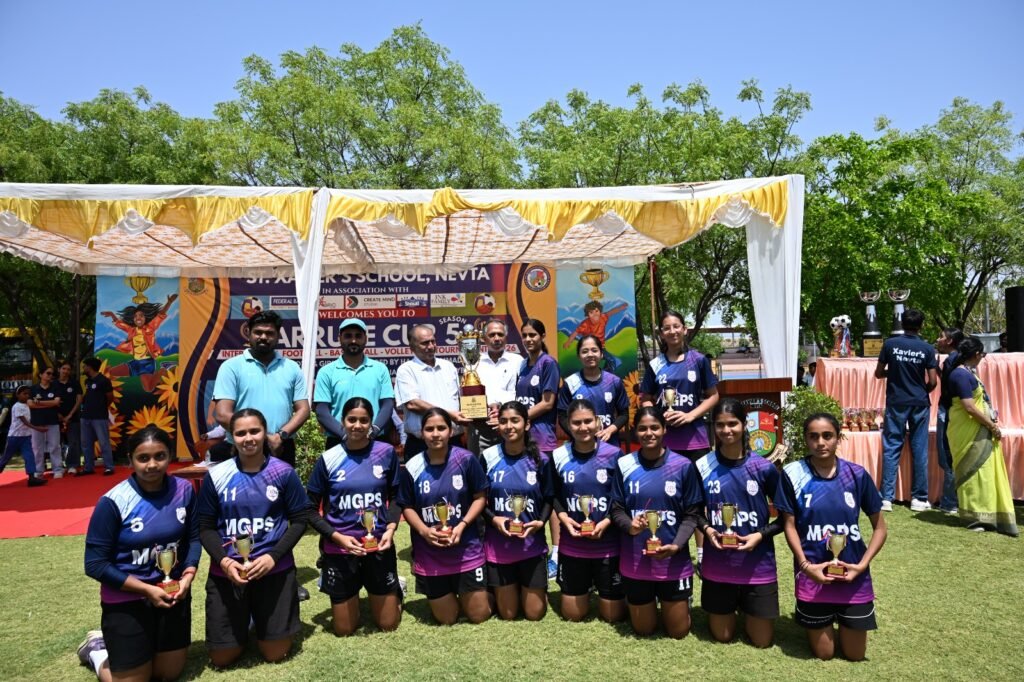
Volleyball
| Category | Winner |
|---|---|
| Volleyball – Girls | MGPS School |
| Volleyball – Boys | Tagore International School |
A remarkable achievement for MGPS School — their girls’ teams claimed titles in both Basketball and Volleyball, making them arguably the standout institution of the 5th Arrupe Cup Jaipur 2025. Tagore International School rounded off the championship results by clinching the Boys’ Volleyball title.
Words from the Leaders: Inspiration at the Podium
Father Sangith Raj S.J. — Principal, St. Xavier’s School, Nevta
Father Sangith Raj S.J., the school’s Principal, shared his immense pride in the scale and success of the tournament. He noted that over 109 school teams from Jaipur city had participated to make this edition of the Arrupe Cup an outstanding success. The principal’s acknowledgement of every participating school — not just the winners — reflects the broader Jesuit spirit of recognising effort, participation, and the journey, not merely the destination.
Father John Ravi — School Manager
Father John Ravi, the School Manager, delivered an inspiring address that resonated deeply with the young athletes in attendance. He encouraged the current generation of student-athletes to draw inspiration from some of India’s brightest sporting lights, specifically mentioning:
- Vaibhav Suryavanshi — the teenage cricket prodigy who has taken Indian cricket by storm
- Sanju Samson — the Kerala wicketkeeper-batsman known for his elegant yet explosive batting style
- Jemimah Rodrigues — the Mumbai-born Women’s cricket star and one of India’s most consistent performers in international cricket
By invoking these names, Father John Ravi connected the students’ own sporting ambitions to the real-world successes of young Indian athletes who dared to dream big. He also extended warm congratulations to the school’s sports department for the outstanding organisation of the event.
Retired DGP Shri Manoj Bhatt — Chief Guest
The chief guest’s address was both motivational and grounding. Shri Bhatt’s message was clear: the habits built on a football field or basketball court — showing up, working as a unit, bouncing back from defeat, leading under pressure — are habits that will define a student’s professional and personal future.
Why the 5th Arrupe Cup Matters for Jaipur’s Youth
The 5th Arrupe Cup Jaipur 2025 is significant not just as a sporting event, but as a civic institution for Jaipur’s student community.
Unmatched Reach
With more than 109 schools participating, the tournament reaches a staggering cross-section of Jaipur’s student population. Students from different socioeconomic backgrounds, school philosophies, and neighbourhoods come together on a level playing field — the sports court.
Three Critical Developmental Pillars
Sports science and educational research consistently affirm that team sports build three key attributes in young people:
Discipline — Training schedules, match-day preparation, and tournament rules teach students the value of structure and commitment. Studies by organisations like UNESCO’s Education Sector have long recognised sport as a vehicle for values education.
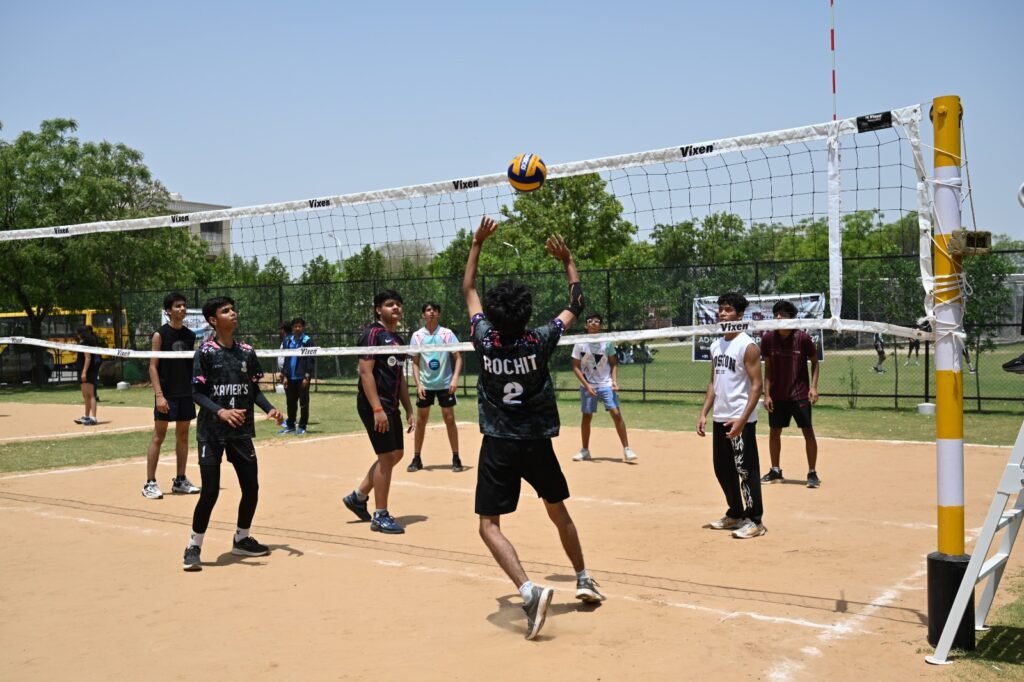
Teamwork — No football goal, basketball play, or volleyball spike happens alone. The collaborative experience of inter-school sports teaches students how to communicate, delegate, and trust their peers — skills directly transferable to the classroom and career.
Leadership — Tournaments create captains, motivators, and decision-makers. The pressure of competitive sport identifies and nurtures natural leaders in ways few classroom exercises can replicate.
A Platform for Emerging Talent
Events like the 5th Arrupe Cup serve as a crucial first step for many talented young athletes. Scouts, coaches, and sports academies often identify exceptional players at district and city-level tournaments. For many students, the Arrupe Cup stage may well be the beginning of a journey toward state-level, national-level, or even professional sport.
The Arrupe Philosophy: Sports as a Path to Character
The Jesuit educational tradition has always maintained that excellence is not limited to academics. As Father Arrupe once addressed an assembly of Jesuit school administrators, the “new humanism” should place emphasis on social virtues: sensitivity to human need, concern for others not merely as objects of charity but as equals, and helping people take their rightful share in human development.
This philosophy translates perfectly to the world of sport. When a football team from a smaller school competes against a well-resourced institution on the Arrupe Cup ground, they are participants in something far larger than a match — they are experiencing equity, resilience, and the dignity of fair competition.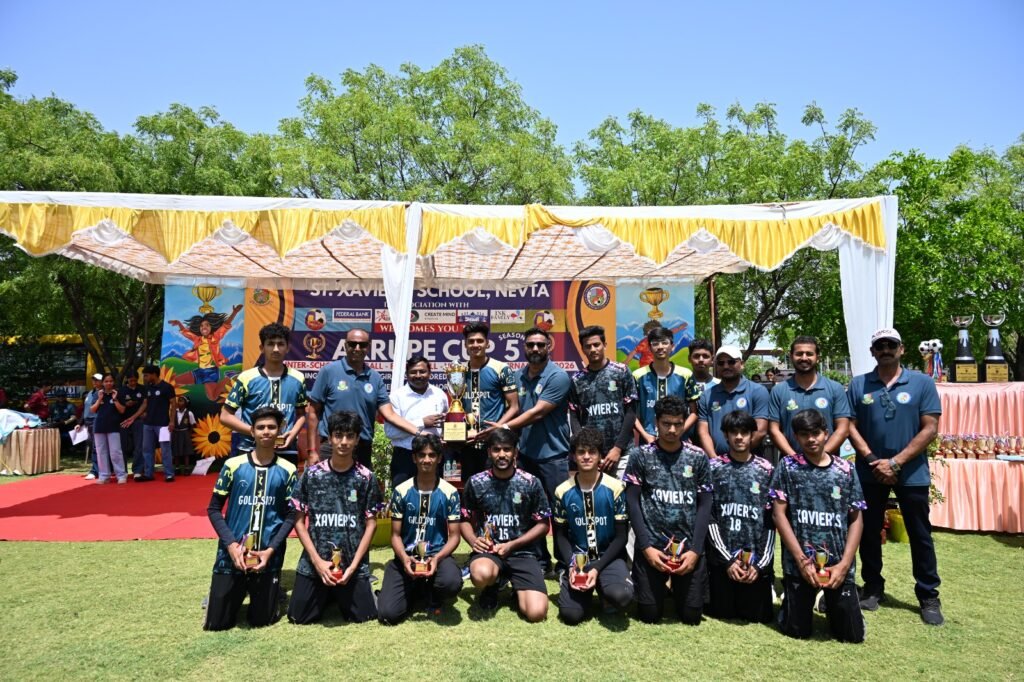
The Arrupe Cup’s structure — multiple sports, boys and girls categories, open to over a hundred schools — embodies this inclusive vision. Every child, regardless of background or ability level, deserves the opportunity to compete, to grow, and to be celebrated.
As the Jesuits’ global organisation notes, Arrupe’s beatification process is underway, recognising his extraordinary contributions to humanity. The school tournament bearing his name honours that legacy by ensuring his ideals live on in the lives of thousands of young students in Jaipur.
Looking Ahead: What’s Next for Jaipur’s Inter-School Sports?
The extraordinary success of the 5th Arrupe Cup Jaipur 2025 raises the exciting prospect of an even larger 6th edition in 2026. Several questions will shape the future of this tournament:
Will more schools join? With 109+ schools already participating, can the Arrupe Cup grow toward 150 or even 200 school teams in coming editions?
Will new sports be added? Future editions might consider expanding into athletics, badminton, or table tennis, bringing even more students into the fold.
Could the Arrupe Cup attract state-level attention? Jaipur’s inter-school sports scene is growing rapidly. Major school sports platforms already offer exposure to dozens of sports at world-class venues in Jaipur, empowering athletes, coaches, parents, and schools with match assessments and data, and the Arrupe Cup’s success positions it well within this thriving ecosystem.
Meanwhile, the winners of the 5th Arrupe Cup carry their titles forward not just as trophies on a shelf, but as proof of their potential. The Football Girls champions of St. Xavier’s, Newta; the Football Boys champions of Neerja Modi School; the double-gold achievers MGPS School; Vidyasthali’s basketball boys; and Tagore International’s volleyball team — all will be ones to watch in the future.
The 5th Arrupe Cup Jaipur 2025 has once again affirmed that St. Xavier’s School, Newta, is not just an academic institution — it is a beacon of holistic education and sporting excellence in Rajasthan. By hosting a tournament that welcomed over 109 schools, celebrated six categories of champions, and brought together retired administrators, Jesuit priests, and thousands of young athletes, the school demonstrated precisely what Father Pedro Arrupe stood for: education that transforms lives, communities, and futures.
As the trophies were handed out and the cheers faded into the warm Jaipur evening on May 2, what lingered was something more lasting than any scoreline — the memory, for each participating student, of standing on a competitive stage, giving their best, and being part of something remarkable.
The 5th Arrupe Cup Jaipur 2025 was not just a sports tournament. It was a celebration of what young India is capable of.
Quick Reference: 5th Arrupe Cup 2025 — Complete Winners List
| Sport | Category | Champion School |
|---|---|---|
| Football | Girls | St. Xavier’s School, Newta |
| Football | Boys | Neerja Modi School |
| Basketball | Girls | MGPS School |
| Basketball | Boys | Vidyasthali School |
| Volleyball | Girls | MGPS School |
| Volleyball | Boys | Tagore International School |
Breaking News
Powerful Milestone: Dr Ambedkar Memorial Welfare Society Launches 100-Room Girls Hostel in Jaipur
A Historic Foundation Is Laid in Jaipur
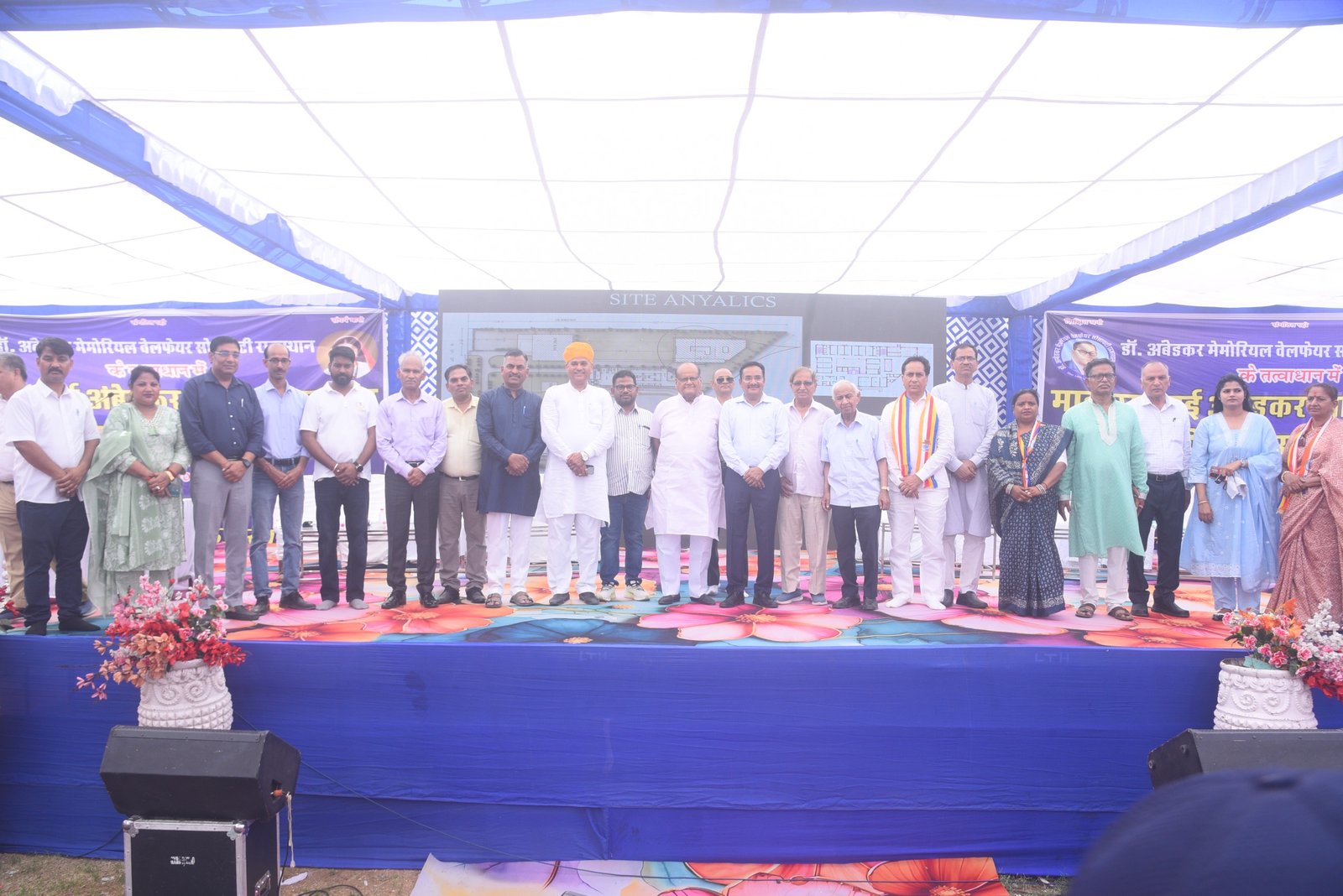
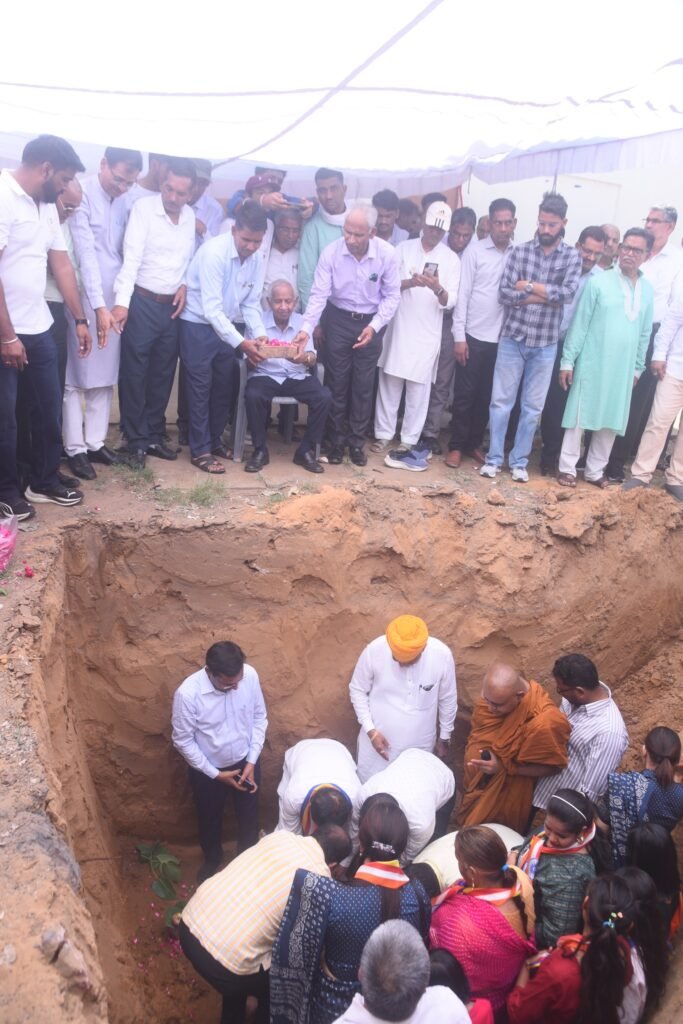
26 April 2026, Jaipur | The Dr Ambedkar Memorial Welfare Society Girls Hostel in Jaipur has taken a giant and inspiring step forward. On a landmark Sunday at Jhalana Doongri, the renowned Dr. Ambedkar Memorial Welfare Society Rajasthan formally laid the foundation stone for the Mata Ramabai Ambedkar Balika Chhatrawas — a transformative residential facility that promises to reshape the destiny of thousands of young women from marginalised communities across Rajasthan.
The occasion was celebrated with a traditional bhumi pujan and the ceremonial unveiling of the foundation plaque, attended by dignitaries, legislators, social leaders, and thousands of community members who came together to witness what many are already calling a defining moment for girls’ education and social empowerment in the region.
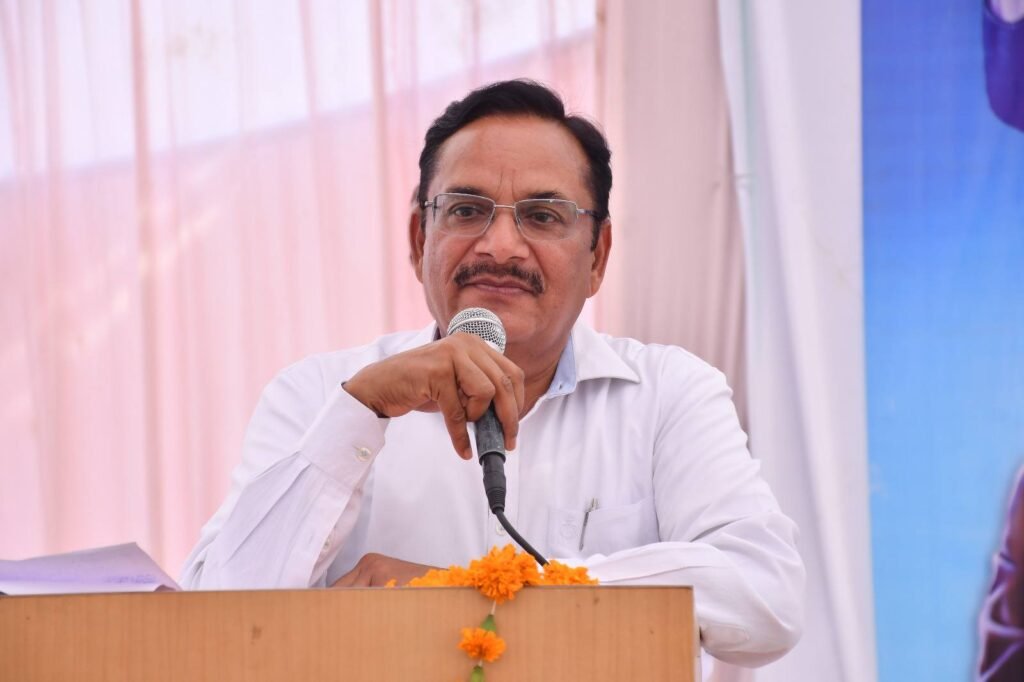
“The progress of any society is rooted in the education of its daughters. This hostel will not merely offer shelter — it will become a launchpad for thousands of dreams.”
— Rtd. IPS Satyaveer Singh, President, Dr. Ambedkar Memorial Welfare Society Rajasthan
Key Facts at a Glance
- 100 Total Rooms to be Built
- 4 Storeys / Floors
- 75+ Community Donors (Bhamashahs)
- Rs. 10 L MLA Fund Pledged by Kalicharan Sarraf
About the 100-Room Dr Ambedkar Memorial Girls Hostel Project
The proposed Mata Ramabai Ambedkar Balika Chhatrawas will be a four-storey structure housing 100 individual rooms. Named after Mata Ramabai Ambedkar — the devoted wife of Dr. B.R. Ambedkar, who is venerated as a pillar of sacrifice and strength — the hostel carries deep symbolic significance.
It is being constructed within the existing campus of the Dr. Ambedkar Memorial Welfare Society at Jhalana Doongri, Jaipur. The society is located at Jhalana Institutional Area, Jhalana Doongri, Jaipur, Rajasthan 302004. This location places the hostel at the heart of one of Jaipur’s key institutional zones, offering excellent access to colleges, universities, and employment opportunities.
The hostel is envisioned as a completely self-contained, safe, and modern residential complex that will serve female students, particularly those from Scheduled Caste communities and economically weaker sections, who travel from smaller towns and villages across Rajasthan to pursue higher education in the state capital.
Why 100 Rooms?
With Jaipur growing as a major educational hub and the demand for affordable, safe, and quality student housing far outpacing supply, a 100-room facility is a bold but necessary ambition. Each room will accommodate students with all essential amenities, enabling them to focus entirely on their studies without worrying about substandard housing conditions that often derail promising academic careers.
World-Class Facilities Planned for Dr Ambedkar Girls Hostel Students
Organisers have confirmed that the Dr Ambedkar Memorial Welfare Society Girls Hostel will be far more than just a place to sleep. It will be a high-tech, secure, and nurturing residential environment equipped with:
| Facility | Details |
|---|---|
| Furnished Rooms | 100 individual rooms with essential furniture |
| Dining Hall | Large dining area for community meals |
| Kitchen | Fully equipped kitchen for hygienic meal preparation |
| Waiting / Common Areas | Comfortable spaces for relaxation and social interaction |
| Security | Round-the-clock security arrangements |
| Modern Amenities | RO water, power backup and other high-tech essentials |
| Study Spaces | Dedicated areas for focused academic work |
The hostel model followed by the society provides students with essential furniture including beds, tables, chairs, and cupboards, along with mess facilities for breakfast, lunch, and dinner — with regular quality and hygiene inspections carried out by a dedicated mess committee. The new 100-room hostel will expand and upgrade this proven model significantly.
Foundation Ceremony: Leaders, Legislators & Community at Jhalana Doongri
Distinguished Guests Who Graced the Event
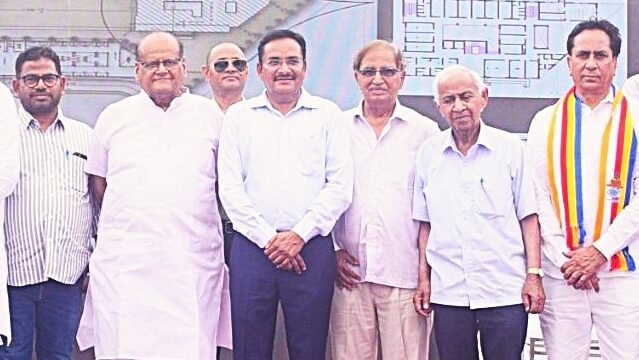
The foundation-laying ceremony was attended by an impressive cross-section of Rajasthan's social and political leadership. Retired IAS officer Hanuman Prasad served as chief guest, lending institutional gravitas to the occasion. Legislators Kalicharan Sarraf and Ram Chordia were also present to extend their support.
MLA Kalicharan Sarraf Pledge
MLA Kalicharan Sarraf made a significant announcement during the event, pledging Rs. 10 lakh from his MLA Local Area Development Fund towards the construction of the hostel. In his address, he noted that today’s young women are leading in every field and that society bears the responsibility of creating better opportunities for them.
A New Website for the Society
In a sign of the times, the event also featured the launch of the Dr. Ambedkar Memorial Welfare Society’s brand-new official website — a digital step forward that will help the organisation communicate its mission, projects, and scholarship opportunities to a wider audience across Rajasthan and beyond.
Senior leaders present at the ceremony included PC Hadia, Senior Vice President Rameshwar Prasad Bairwa, General Secretary Dr. Chetram Raipuriya, Treasurer Dayanand Sakkarwal, and Construction Committee Chairman Surendra Kumar Beri, Credent TV Chief Editor Sunil Narnauliya, among many others. The programme was conducted by AJAK State Spokesperson Vinod Verma Ralawata, and saw enthusiastic participation from youth leaders including Ravi Meghwal, Pooja Verma, and Ajay Dagar.
70 Generous Donors: The Community Behind the Dr Ambedkar Girls Hostel Dream
Perhaps the most heartening aspect of this entire project is that it is being built not by government funds alone, but through the collective generosity of the community. Over 70 Bhamashahs (community philanthropists) have come forward to donate towards the construction of the Mata Ramabai Ambedkar Balika Chhatrawas.
Each donor was honoured on stage during the ceremony, a gesture that underscored the community’s shared ownership of this dream. This model of community-driven construction has powerful precedents in India’s social reform movements — echoing the legacy of Dr. B.R. Ambedkar himself, who always believed in collective upliftment.
“This project is becoming a reality through the collective cooperation of society. It is a testament to what a united community can achieve.”
— Satyaveer Singh, President, DAMWS Rajasthan
Dr Ambedkar Memorial Welfare Society Rajasthan: A Legacy of Change
The driving force behind this initiative, the Dr. Ambedkar Memorial Welfare Society Rajasthan was established on 9 September 1980 as a registered non-governmental organisation in Rajasthan. For over four decades, it has been the apex body of the Scheduled Caste community in the state.
The society was formed to perpetuate the memories of Bharat Ratna Baba Sahib Dr. Bhim Rao Ambedkar, who gifted the Indian Constitution to this nation, keeping in mind the miserable condition of the down-trodden society and women in the country.
Over the decades, the organisation has been at the forefront of providing education, hostel facilities, legal aid, and social advocacy for Scheduled Caste communities across all 33 districts of Rajasthan. The new girls’ hostel represents their most ambitious infrastructure project to date.
Connect With the Society
Readers who wish to support, donate, or seek admission can contact the Dr. Ambedkar Memorial Welfare Society directly at their campus in Jhalana Institutional Area, Jaipur — or visit their official website at https://www.damws.org/.
Girls’ Education in Rajasthan: Why the Dr Ambedkar Memorial Girls Hostel Matters More Than Ever
The Bigger Picture
Rajasthan has made significant strides in improving girls’ education outcomes over the past decade, yet persistent challenges remain — particularly for students from marginalised communities who lack access to affordable, safe accommodation in urban areas. A shortage of quality hostels often forces talented girls to abandon their higher education ambitions and return home.
The Rajasthan government has been running several schemes to support this cause. The Government of Rajasthan launched the Economic Help to Tribal Girls for Higher Education scheme to encourage girls to pursue college education and promote female empowerment through financial support, offering ₹5,000 per annum disbursed over 10 months directly to student bank accounts.
Similarly, at the national level, the Beti Bachao Beti Padhao initiative continues to serve as a rallying cry for communities, governments, and civil society alike.
The Role of Civil Society
Collaborative initiatives like Project Pragati aim to provide opportunities for women’s participation and progress, with programmes implemented across districts of Rajasthan to empower out-of-school adolescent girls and young women. The Dr. Ambedkar Memorial Welfare Society’s new hostel perfectly complements such initiatives by addressing the crucial issue of safe, affordable accommodation — the often-overlooked barrier that prevents girls from completing their education.
Why Safe Hostels = Better Educational Outcomes
Research consistently shows that when girls from rural or semi-urban backgrounds have access to safe residential facilities in cities, their retention rates in higher education improve dramatically. A secure living environment removes parental anxieties, reduces commute burdens, and allows students to participate in evening classes, library sessions, and extracurricular activities that enrich their overall development.
Expected Impact & Future Vision of the Girls Hostel
Projected Beneficiaries
With 100 rooms and double-occupancy potential, the hostel could accommodate up to 200 girl students per academic year, meaning that within the first decade of operation alone, it could directly benefit over 2,000 young women.
Social Empowerment Beyond Education
The hostel’s impact is expected to extend well beyond providing a roof over students’ heads. By creating a safe, supportive community of young women from similar backgrounds, it will foster peer learning, mentorship, and mutual support networks that last long after graduation.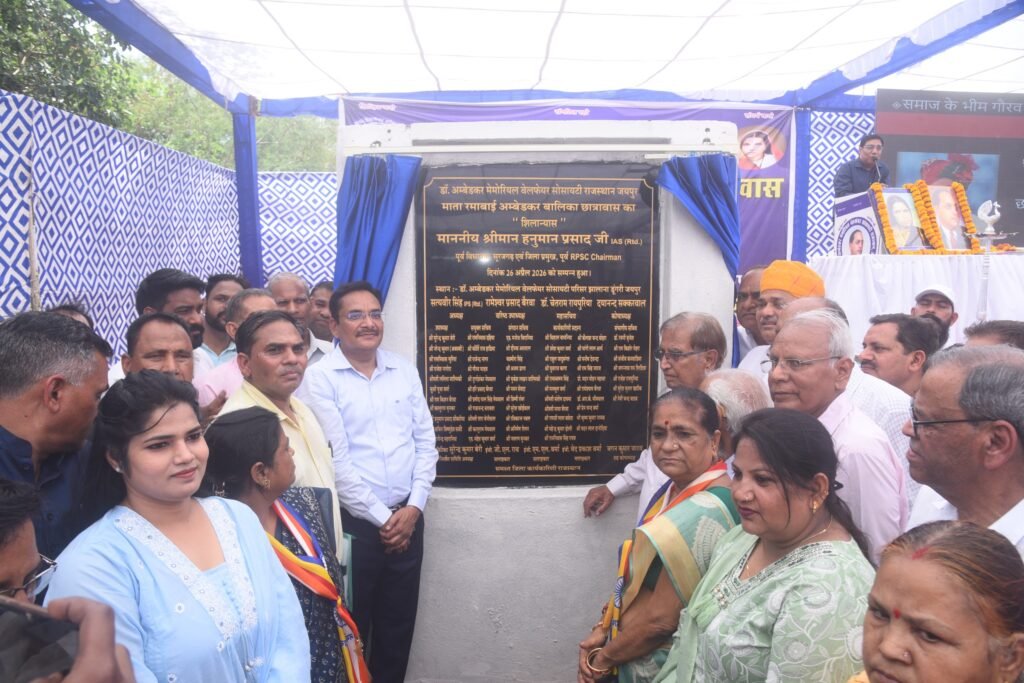
Students living here will be better positioned to pursue competitive examinations, professional degrees, internships, and career opportunities — breaking cycles of poverty and marginalisation that have limited the potential of Scheduled Caste communities for generations.
A Model Worth Replicating
The Dr. Ambedkar Memorial Welfare Society’s community-funded approach — where 70 donors collectively make a large infrastructure project possible — is a model that deserves replication across Rajasthan and India. It demonstrates that when communities take ownership of their own empowerment, extraordinary things become possible without waiting for government intervention alone.
A Milestone Worth Celebrating
The foundation-laying of the Mata Ramabai Ambedkar Balika Chhatrawas by the Dr Ambedkar Memorial Welfare Society Rajasthan is not merely the beginning of a construction project. It is the crystallisation of decades of advocacy, social work, and community solidarity into a tangible structure that will stand as a beacon of hope for thousands of young women.
In a state where girls’ educational attainment remains a work in progress, this 100-room, four-storey hostel — born from the generosity of 70 donors and inspired by the legacy of Dr. B.R. Ambedkar — is proof that meaningful change is possible when vision meets collective will.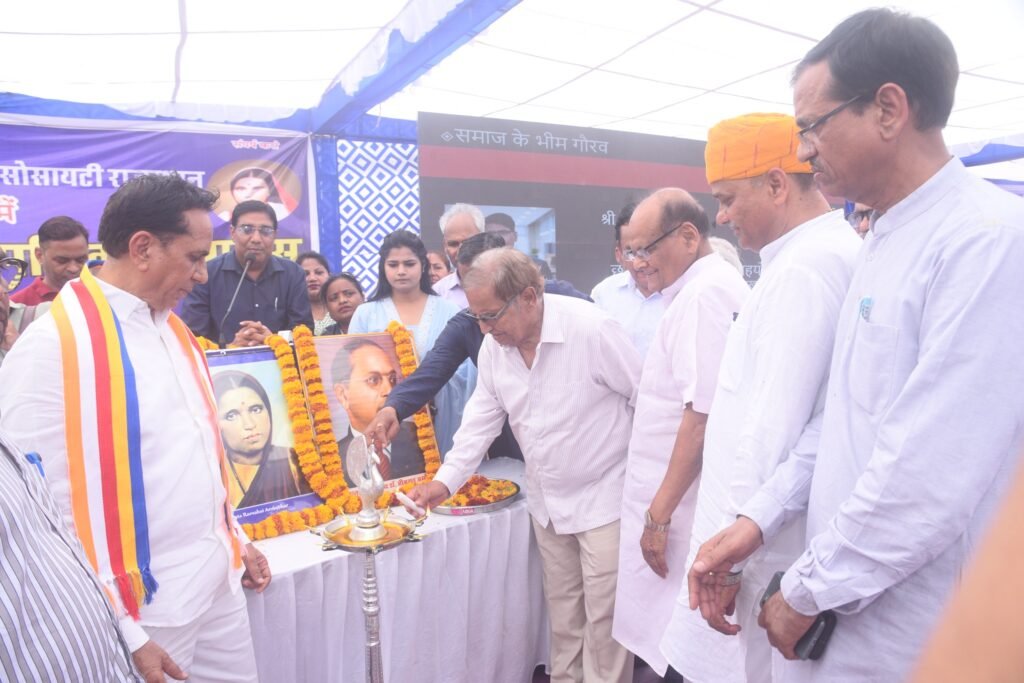
The Dr Ambedkar Memorial Welfare Society Girls Hostel in Jaipur will, without doubt, go on to become a milestone in the story of girls’ education and social empowerment in Rajasthan — and a worthy tribute to the Constitution’s promise of equality, dignity, and opportunity for all.
Named after Dr. B.R. Ambedkar, who enshrined equality into India’s Constitution, this hostel lives up to that very promise — one room, one dream, one girl at a time.
Art
Yuvaam 2026: A Grand Celebration of Excellence, Culture, and Inspiration in Jaipur
Yuvaam 2026 at St. Xavier’s School Jaipur showcased excellence, culture, and inspiration with awards, performances, and dignitaries. Explore full highlights, achievements, and key moments.
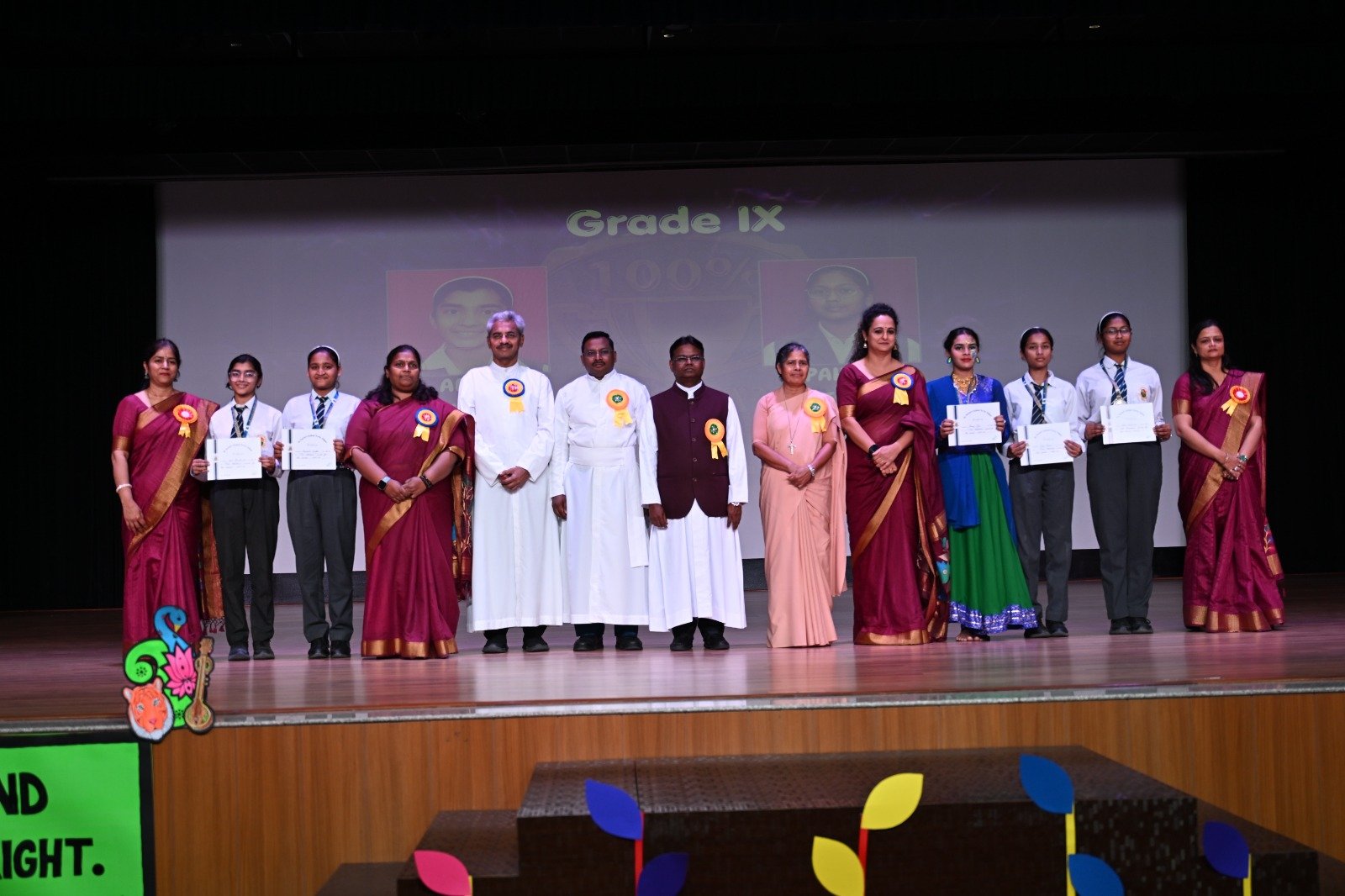
March 30, Jaipur. Yuvaam 2026 emerged as one of the most inspiring and prestigious school events in Jaipur, held with remarkable grandeur at St. Xavier’s School, Nevta, on March 30, 2026. The 8th Annual Prize Distribution Ceremony was not just a celebration of academic excellence but also a powerful showcase of talent, discipline, and values.
In today’s fast-paced educational environment, events like Yuvaam 2026 play a crucial role in recognizing student achievements while fostering motivation, confidence, and holistic development.
Grand Welcome and Dignitaries at Yuvaam 2026
The ceremony of Yuvaam 2026 began with a spectacular welcome for the Chief Guest, Most Rev. Bishop Joseph Kallarackal, along with the Guests of Honour, Ms. Maya David and Mr. Ajay Kochar.
A beautifully coordinated band procession escorted the dignitaries to Arrupe Hall, setting a majestic tone for the entire event. The presence of esteemed figures including Rev. Fr. Dr. Arokya Swami SJ, Rev. Fr. Sangeeth Raj SJ, Rev. Fr. Joseph Kumar Kurapati SJ, Sr. Leeda D’Souza SCCG, and Br. Ajay Matthews added grace and significance to Yuvaam 2026.
Ceremonial Beginning and Spiritual Essence of Yuvaam 2026
The formal proceedings of Yuvaam 2026 began with the traditional lighting of the ceremonial lamp, symbolizing knowledge and enlightenment.
This was followed by a soulful prayer song and an orchestral presentation titled “Soul of Symphony,” which captivated the audience and created a serene atmosphere.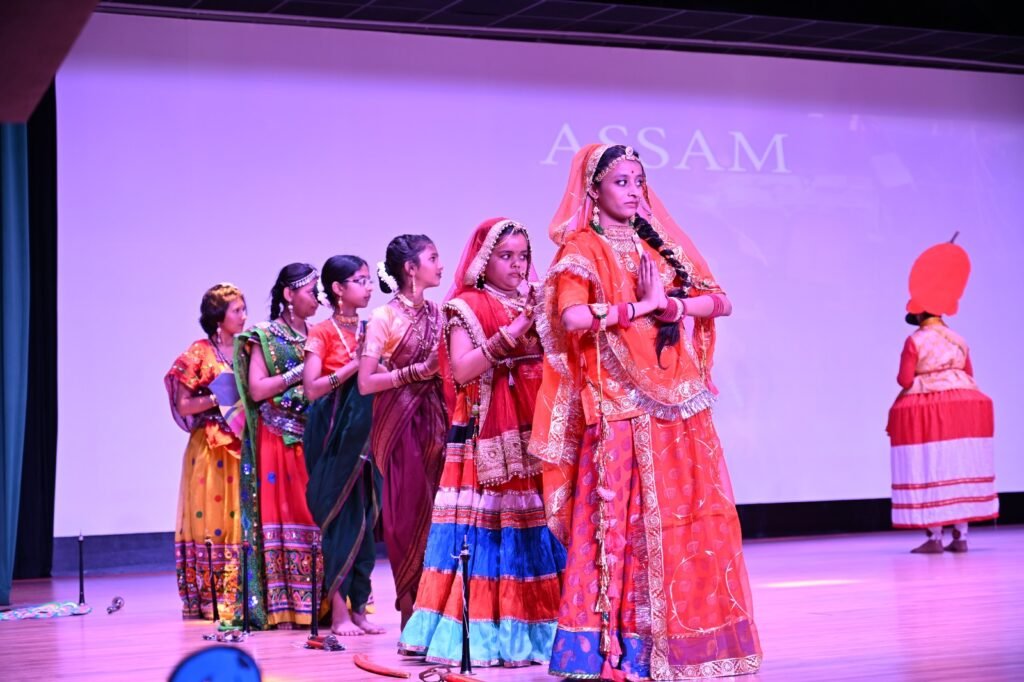
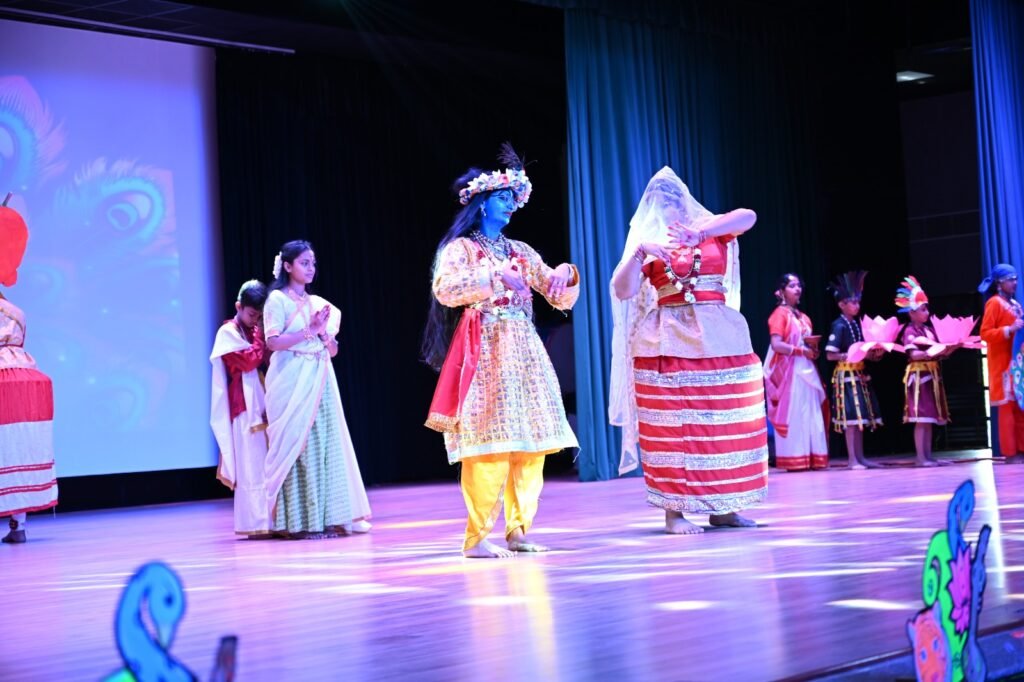
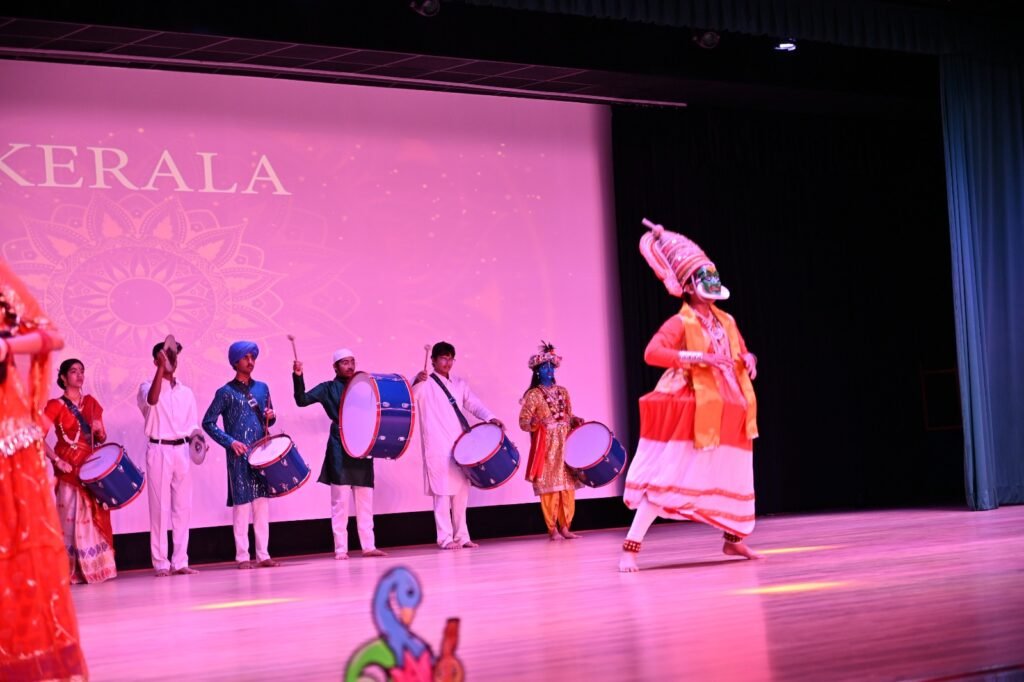
Saplings were presented to the dignitaries, reflecting a meaningful gesture towards environmental awareness and respect—values that Yuvaam 2026 strongly emphasized.
Yuvaam 2026 Academic Excellence Awards
A key highlight of Yuvaam 2026 was the recognition of academic brilliance. Students who secured 90% and above marks were honored with Academic Excellence Awards.
Additionally, students with 100% attendance were also felicitated, reinforcing the importance of consistency and discipline in achieving success.
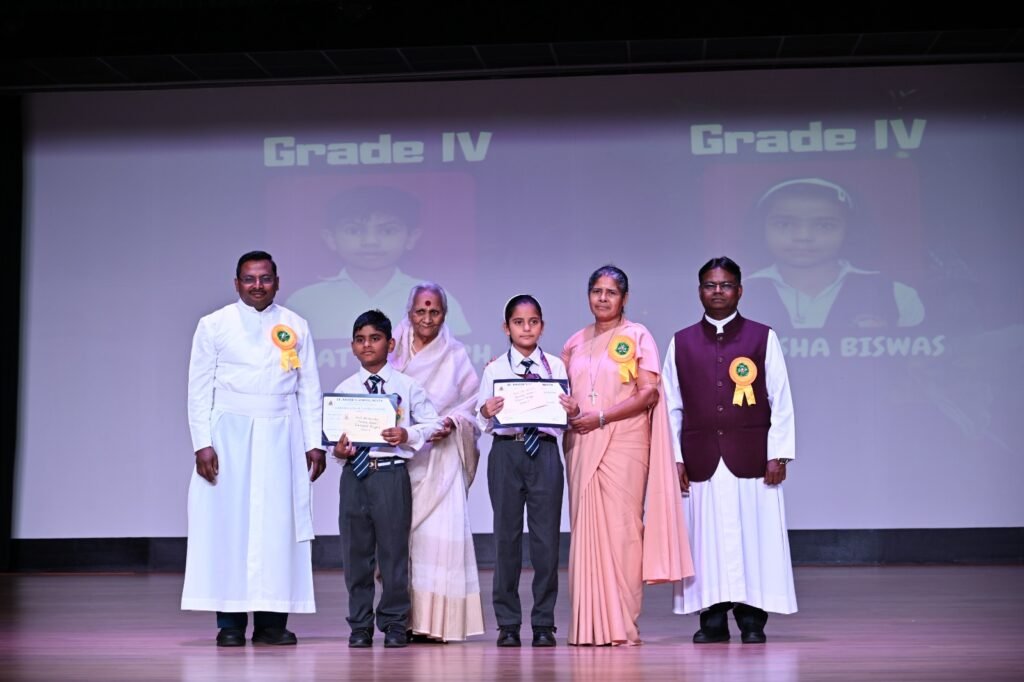
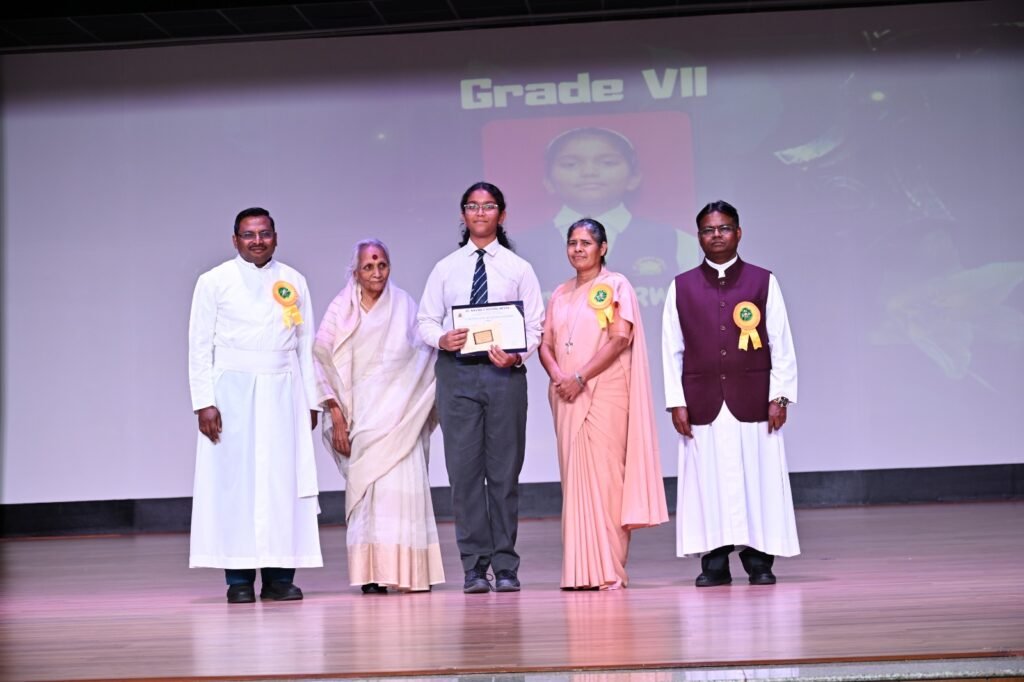
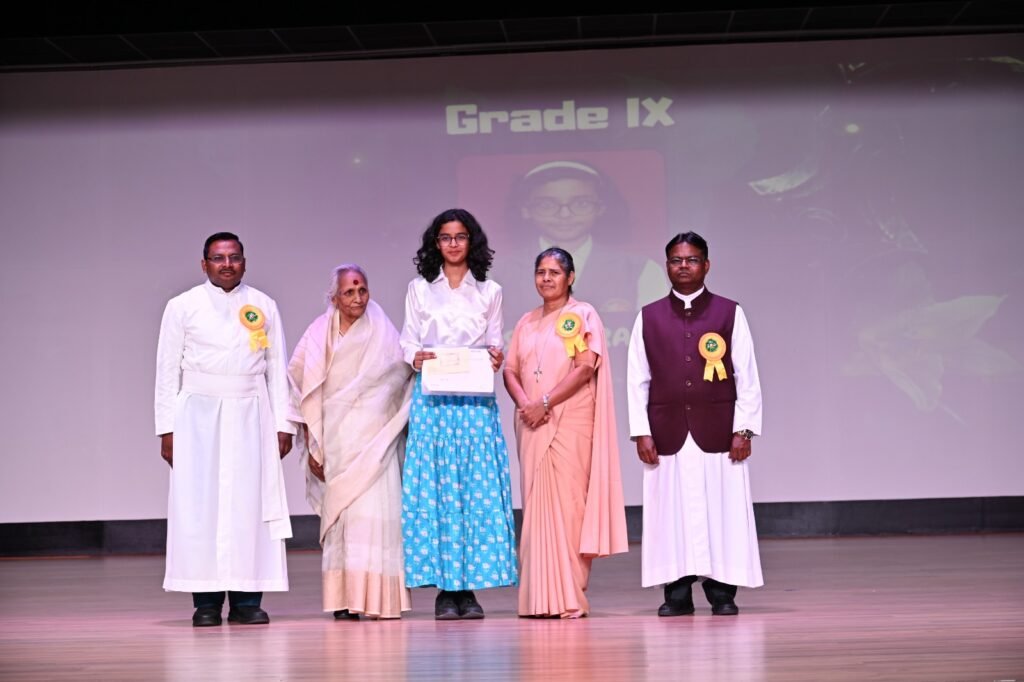
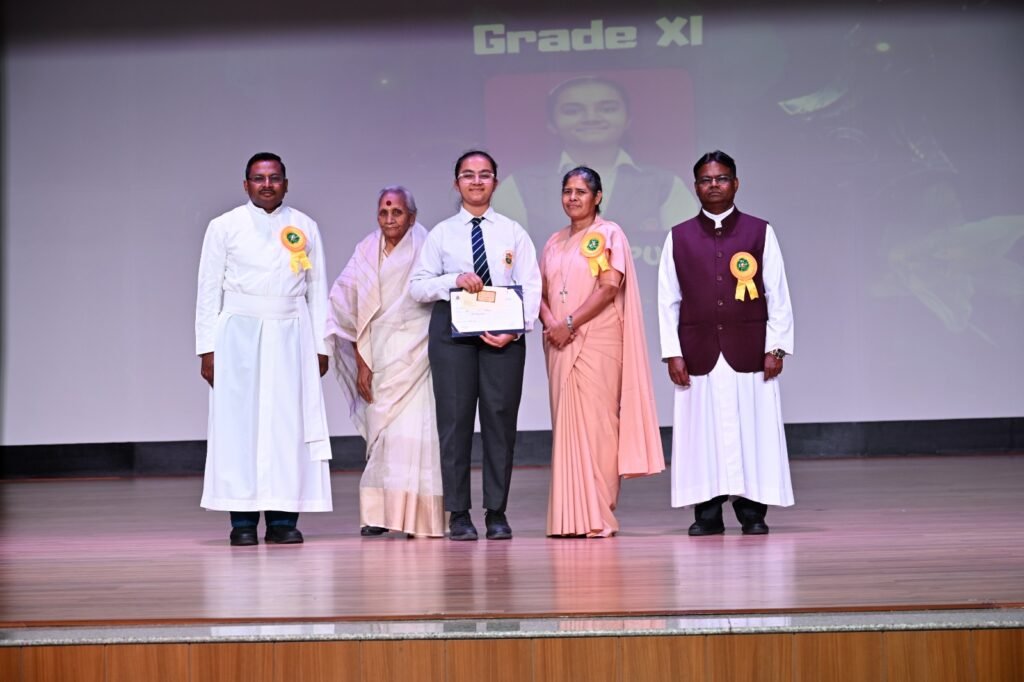
The Principal, in the welcome address, highlighted that success is never an individual effort but a result of collaboration between students, teachers, and parents—an idea deeply embedded in the philosophy of Yuvaam 2026.
Special Felicitations and Achievements at Yuvaam 2026
Yuvaam 2026 also celebrated exceptional achievements beyond academics.
- Ms. Veera Kalyann, recognized as Ms. Elite Rajasthan, was specially felicitated.
- Masters Aaron and Aarav Rathesh were honored for their remarkable achievements in skating.
Such recognitions showcased the institution’s commitment to encouraging diverse talents, making Yuvaam 2026 a holistic celebration of excellence.
Cultural Performances and Highlights of Yuvaam 2026
The cultural segment of Yuvaam 2026 added vibrant energy to the event. Students delivered mesmerizing performances that reflected creativity, discipline, and teamwork.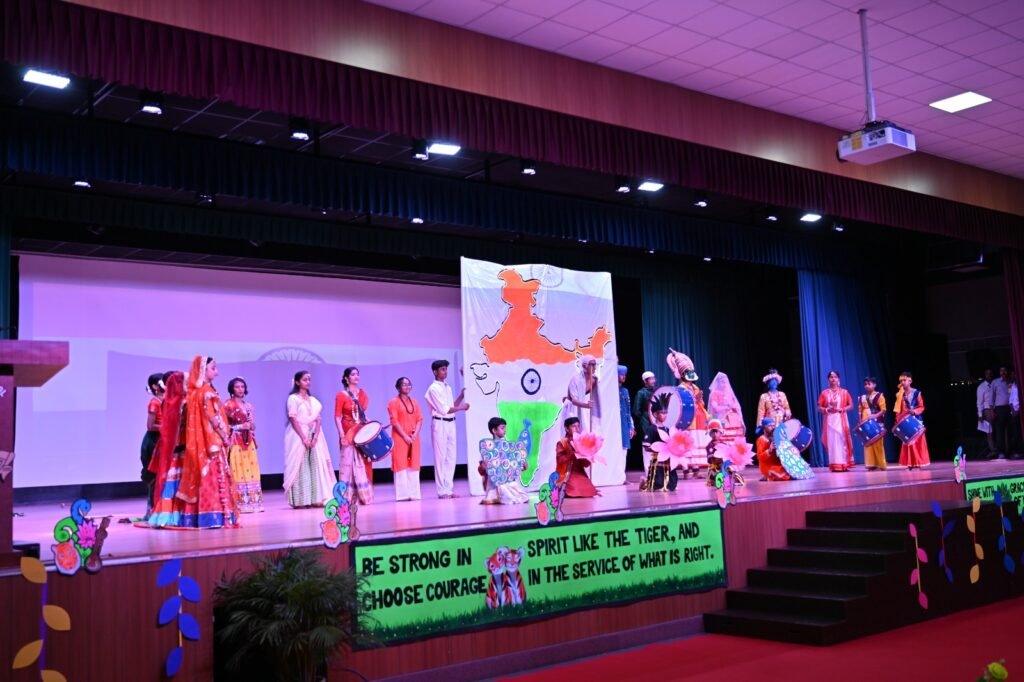
A special band presentation symbolized unity and harmony, leaving a lasting impression on the audience. These performances demonstrated that Yuvaam 2026 was not just about awards but also about celebrating artistic expression and cultural richness.
Launch of School Magazine “Excelsior” at Yuvaam 2026
One of the most anticipated moments of Yuvaam 2026 was the release of the school magazine, “Excelsior.”
The magazine showcased the achievements, creativity, and intellectual contributions of students and staff. Alongside this, the Annual Report was presented, highlighting the institution’s milestones and progress over the year.
For more on school publications and their importance, you can refer to UNESCO resources on educational development.
Inspiring Speeches from Guests at Yuvaam 2026
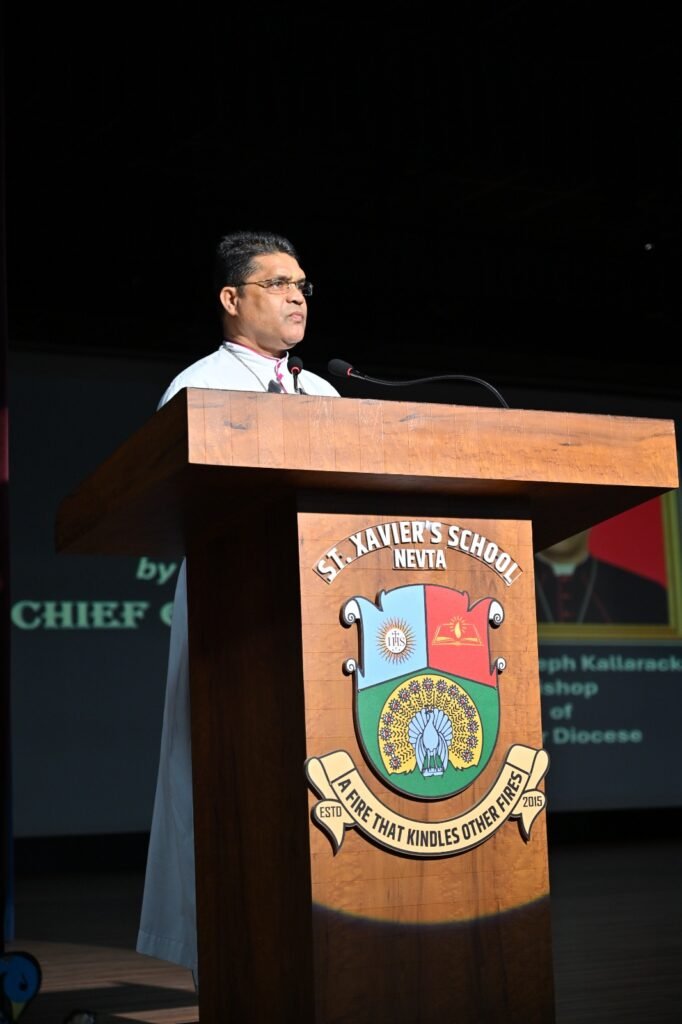
The Guests of Honour at Yuvaam 2026 delivered powerful and inspiring messages:
- Mr. Ajay Kochar encouraged students to stay optimistic and resilient in the face of challenges.
- Ms. Maya David emphasized the importance of positive thinking and empowering girl children.
The Chief Guest, Most Rev. Bishop Joseph Kallarackal, congratulated the students and urged them to uphold strong moral values in their lives.
These speeches added depth and purpose to Yuvaam 2026, transforming it into a platform for learning beyond academics.
Prestigious Awards and Recognitions at Yuvaam 2026
Among the most prestigious recognitions at Yuvaam 2026 were the sponsored awards, including the renowned Ignatian Awards.
The title of Xavierite of the Year was conferred upon:
- Vihan Bajaj (Head Boy)
- Aadya Thakkar (Head Girl)
These awards symbolized leadership, dedication, and all-round excellence—core values celebrated at Yuvaam 2026.
The grand event Yuvaam 2026 concluded with a heartfelt Vote of Thanks delivered by Ms. Neeru Gaur, followed by the National Anthem.
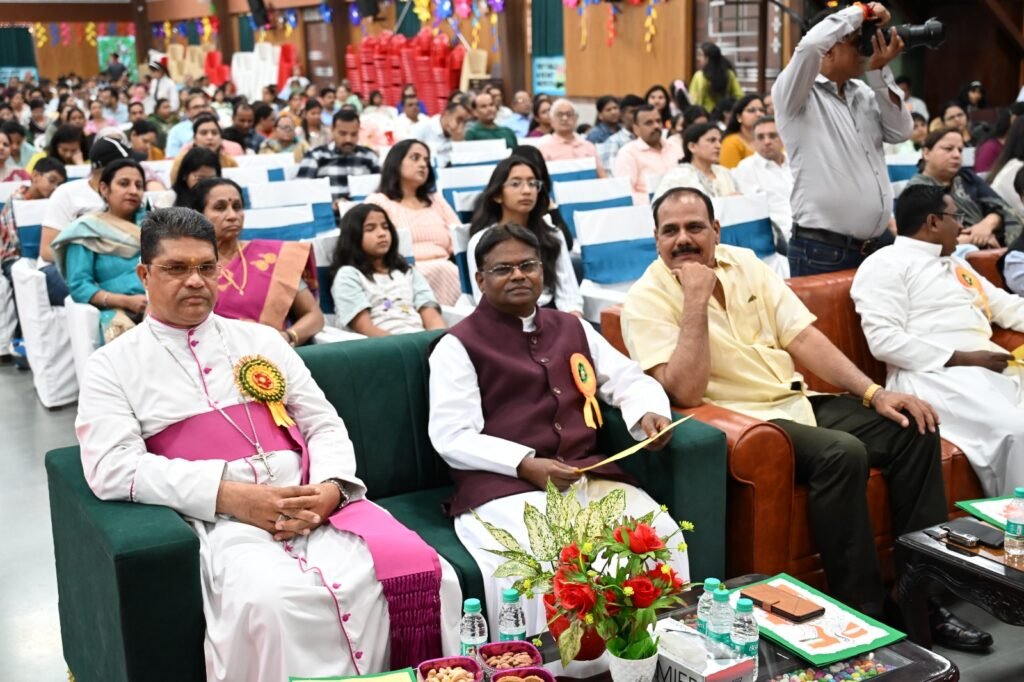
The ceremony left behind a powerful message—success is not just about achievements but about values, perseverance, and collective effort.
In essence, Yuvaam 2026 was more than an annual function; it was a celebration of dreams, discipline, and determination. It highlighted how educational institutions can shape not just successful students but responsible and value-driven individuals.
Breaking News
International Women’s Day 2026: 7 Powerful Highlights from the Inspiring Jaipur Celebration by Dr. Ambedkar Memorial Welfare Society
International Women’s Day 2026 Jaipur Celebration at Dr. Ambedkar Memorial Welfare Society brought together leading social activists, educators and women leaders to promote education, equality and women empowerment through speeches, awareness campaigns and sports activities.

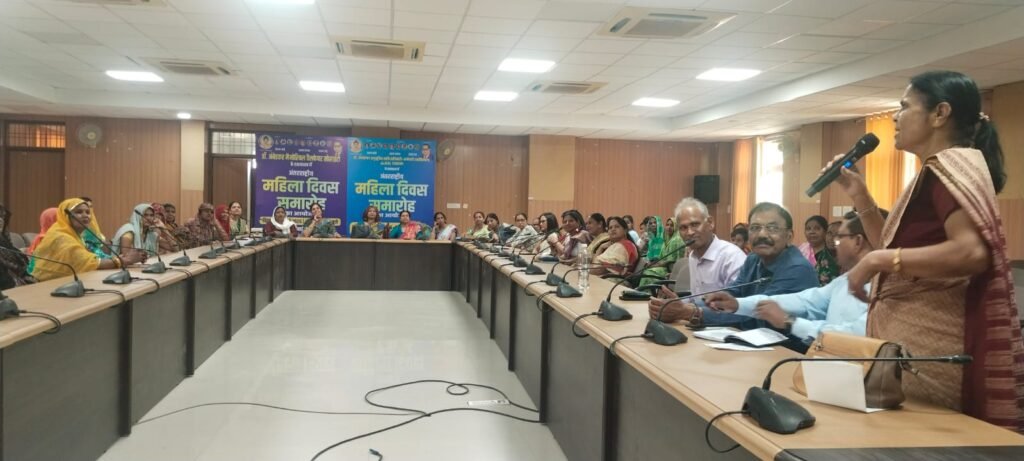
8 March, Jaipur | International Women’s Day 2026 Jaipur Celebration became a remarkable moment of inspiration and social awareness when the Dr. Ambedkar Memorial Welfare Society, Jhalana Doongri, Jaipur, organized a vibrant event on 8 March 2026. The program brought together social leaders, activists, educators, and community members to celebrate women’s achievements and promote awareness about education, equality, and rights.
The celebration reflected the broader spirit of International Women’s Day, which is observed globally on March 8 every year to honour the social, economic, cultural, and political contributions of women. According to the United Nations, the theme for International Women’s Day 2026 emphasizes “Rights, Justice and Action for All Women and Girls,” calling for stronger efforts toward equality and empowerment.
The Jaipur event stood out as a community-driven initiative highlighting the importance of women’s education, leadership, and social participation.
Global Significance of International Women’s Day 2026
International Women’s Day 2026 Jaipur Celebration aligns with global efforts to promote gender equality and women empowerment. Across the world, organizations and institutions organize conferences, rallies, workshops, and cultural programs to recognize women’s achievements and discuss challenges faced by women in society.
International Women’s Day has its roots in early 20th-century labour movements advocating women’s rights, and it gained official recognition by the United Nations in 1975.
Even today, gender inequality remains a major global challenge. Reports indicate that women worldwide possess only about 64% of the legal rights available to men, highlighting the need for sustained action.
The International Women’s Day 2026 Jaipur Celebration echoed these global concerns while emphasizing education and awareness as key solutions.
Grand Celebration at Dr. Ambedkar Memorial Welfare Society Jaipur
The International Women’s Day 2026 Jaipur Celebration was organized by Dr. Ambedkar Memorial Welfare Society at Jhalana Doongri, Jaipur. The event was conducted in a ceremonial and festive atmosphere, attracting hundreds of participants from various parts of the city.
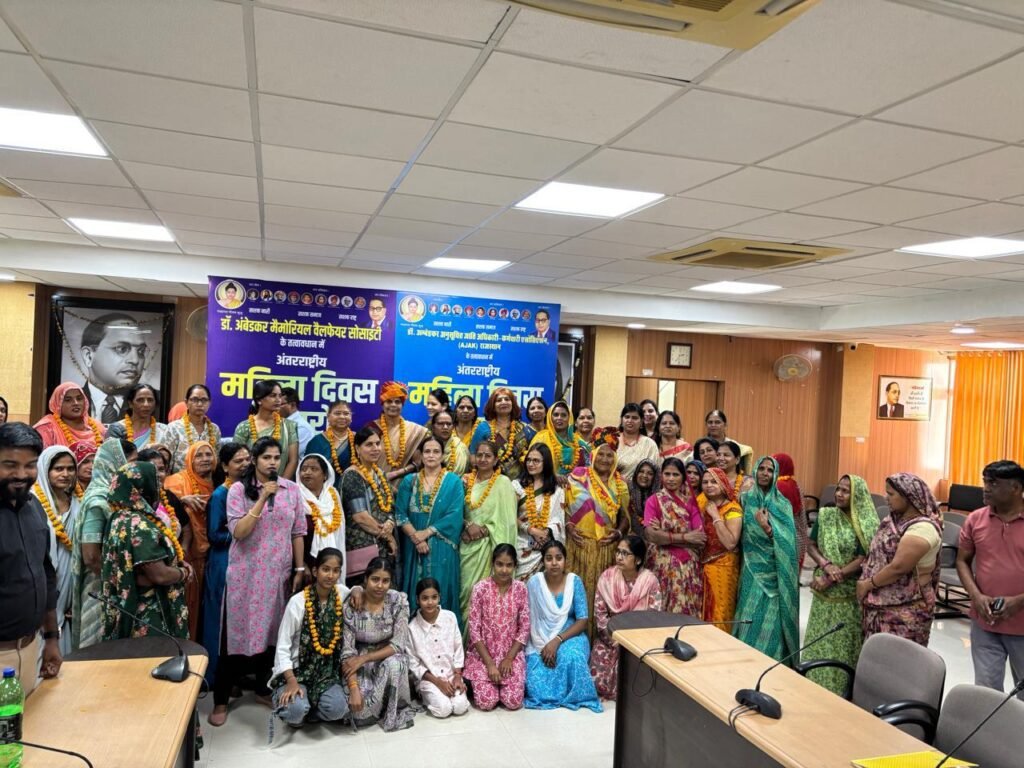
The program aimed to:
- Promote women empowerment
- Raise awareness about women’s rights
- Encourage girls’ education
- Inspire women to participate in leadership and social activities
The gathering demonstrated how community organizations can play a vital role in strengthening social equality and gender justice.
Key Guests and Social Leaders Who Attended the Event
The International Women’s Day 2026 Jaipur Celebration was attended by several prominent guests and social workers who actively work for social justice and empowerment.
The chief guest of the program was Mrs. Kanta Singh, who addressed the gathering and highlighted the importance of women’s education and awareness about constitutional rights.
Other distinguished participants included:
- Lalita Valmiki, Vice President
- Manasi Narnauliya, Chairperson of Manasvita Group
- Pooja Verma, Vice President and former President of Rajasthan University
- Kashmira Singh, Organization Secretary
- Preeti Maurya, Social Worker
Along with them, several community leaders and social activists also attended the program, including:
- Ajay Dagar – Organization Secretary
- Ramniwas Dahiya – Joint Secretary
- Dr. Tarun Bakolia – Advocate
- Mahesh Kumar Verma
- Radhey Shyam Bairwa (Jagatpura)
- Ramniwas Raghav (AJAK)
- Gajendra Kharia (Jagatpura)
- Naresh Berwa – Advocate
- Advocate Omprakash Chokdayat
Many women leaders were also present, such as:
- Sangita Rathi – AICC Human Rights
- Rekha Verma (Sodala)
- Sharmila Dahiya (Jagatpura)
- Ranjana Chauradia (Mansarovar)
- Ayodhya Devi (Civil Lines)
- Rachna Kalosia (Malviya Nagar)
Their presence strengthened the message that social transformation requires collective participation.
Powerful Speeches on Women’s Rights and Education
A major highlight of the International Women’s Day 2026 Jaipur Celebration was the inspiring speeches delivered by various speakers.
Chief guest Mrs. Kanta Singh emphasized that women must remain aware of their constitutional rights and actively work toward their personal and social development. She stressed that education is the strongest foundation for empowerment.
According to her,
“Education is the fundamental key to progress. When women become educated, families, communities, and entire societies move forward.”
She also urged women to follow the ideals of Dr. B. R. Ambedkar, who strongly advocated equality, education, and social justice.
Voices Against Women Oppression and Social Awareness
During the International Women’s Day 2026 Jaipur Celebration, Kashmira Singh, Organization Secretary, raised a strong voice against women oppression and discrimination.
She encouraged women and young girls to become aware of their rights and actively participate in all sectors of society, including education, administration, politics, and entrepreneurship.
Her speech focused on three key messages:
- Awareness about women’s legal rights
- Encouraging girls to pursue education
- Building self-confidence among women
Former IG Jai Narayan Sher also addressed the gathering and emphasized that education plays a crucial role in enabling women to claim their rights and achieve independence.
Sports Activities and Cultural Participation
Apart from speeches and discussions, the International Women’s Day 2026 Jaipur Celebration also included sports competitions and recreational activities for women.
These activities were organized to promote:
- physical fitness
- teamwork
- confidence among women participants
The sports events were coordinated by Suman Mehra, PET Jaipur, who played a key role in managing the competitions.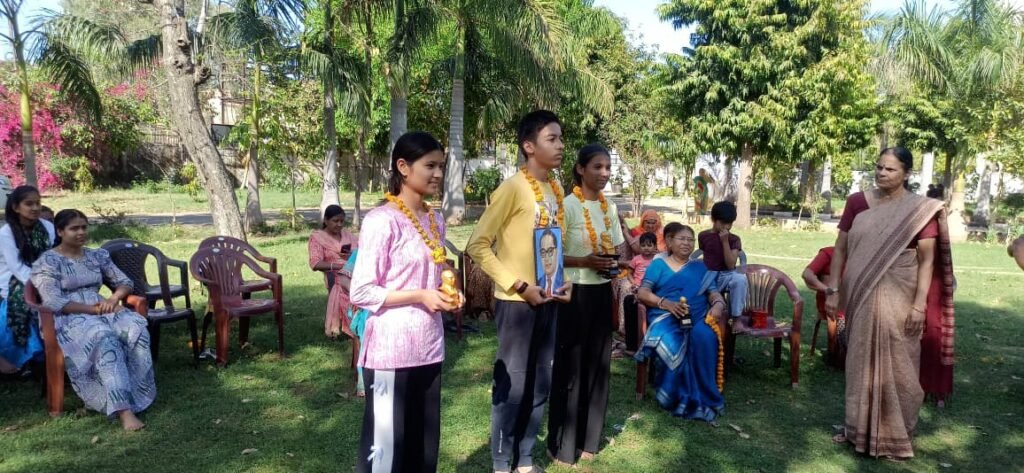
Winners of the sports activities were honoured with:
- mementos
- appreciation certificates
Such activities created a vibrant and engaging environment, encouraging women to actively participate in community programs.
Community Participation and Social Impact
One of the most encouraging aspects of the International Women’s Day 2026 Jaipur Celebration was the strong participation of the local community.
Hundreds of women and men attended the event, reflecting growing awareness about gender equality and social justice.
Community events like this help to:
- build awareness about women’s rights
- encourage social dialogue
- inspire young girls
- strengthen community networks
Globally, similar events are being organized to celebrate women’s achievements and address social issues affecting women.
Dr. B. R. Ambedkar’s Vision for Women Empowerment
The International Women’s Day 2026 Jaipur Celebration strongly reflected the ideology of Dr. B. R. Ambedkar, who believed that the progress of a society depends on the progress of its women.
Dr. Ambedkar played a crucial role in advocating women’s rights through constitutional provisions and social reforms.
His vision included:
- equal legal rights for women
- access to education
- economic independence
- social dignity and equality
His famous principle, “Educate, Organize, Agitate,” continues to inspire social movements across India.
Why Local Events Like This Matter for Gender Equality
While global movements play an important role, community-level initiatives like the International Women’s Day 2026 Jaipur Celebration are equally significant.
They create direct impact by:
- encouraging grassroots awareness
- empowering local women leaders
- building support networks
- promoting social change from the community level
Such initiatives also help bridge the gap between policy and practice by bringing awareness directly to the people.
A Step Towards Empowered Women in India
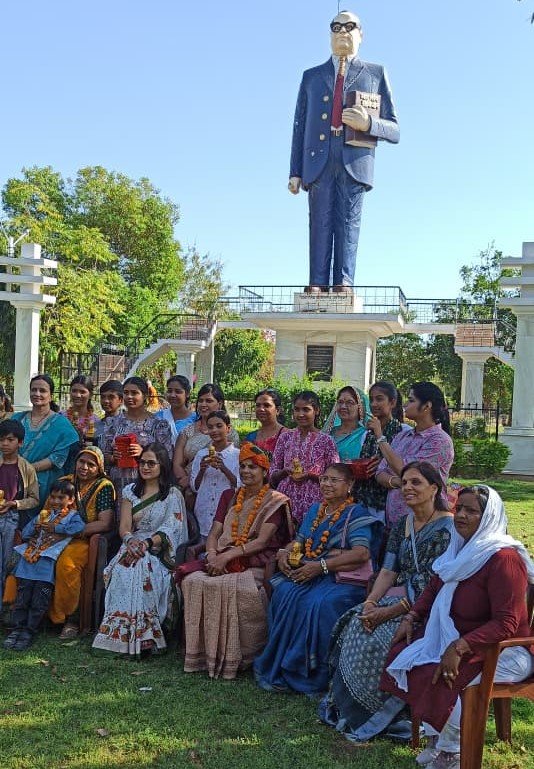
The International Women’s Day 2026 Jaipur Celebration organized by Dr. Ambedkar Memorial Welfare Society was more than just a ceremonial event. It was a powerful reminder that awareness, education, and collective action are essential for achieving gender equality.
Through inspiring speeches, community participation, and engaging activities, the program successfully highlighted the importance of women’s rights and empowerment.
As India continues to move toward inclusive development, initiatives like this serve as a strong foundation for building a society where women have equal opportunities, dignity, and leadership roles.
The message of the event was clear:
Educated and empowered women are the driving force behind a progressive society.
Credent TV
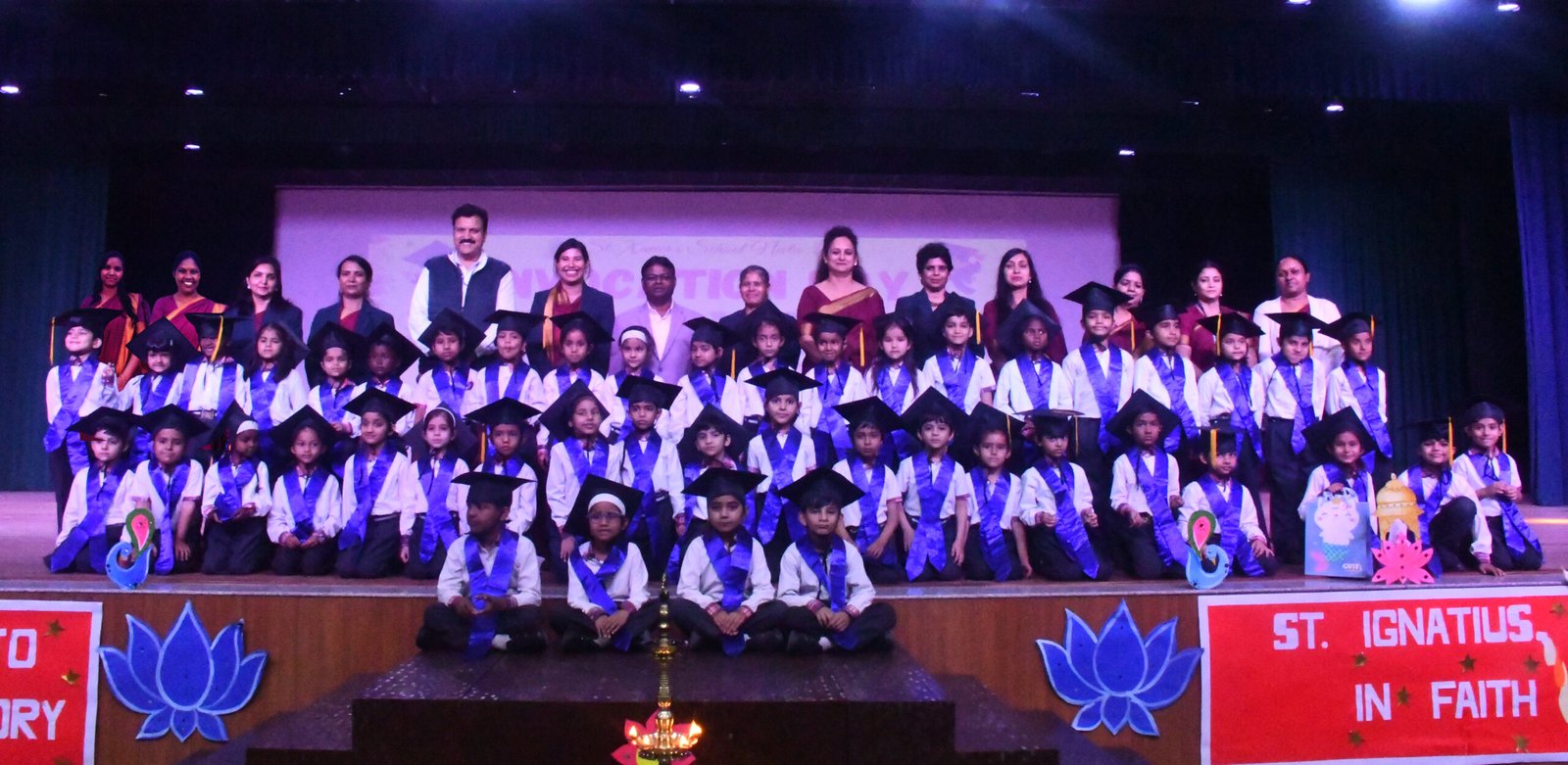
UKG Graduation Ceremony at St. Xavier’s School Nevta: 7 Heartwarming & Inspiring Moments from a Grand Spiritual Celebration
UKG Graduation Ceremony at St. Xavier’s School Nevta marked a powerful and inspiring milestone as young learners stepped into primary education with blessings, awards, and spiritual guidance in a grand invocation celebration.
Art
Indian Art History Congress 2026: 5 Powerful Insights from Dr. Renu Shahi’s Groundbreaking Satire Art Research in Bengaluru
Indian Art History Congress 2026 witnessed a powerful research presentation by Dr. Renu Shahi in Bengaluru, highlighting satire art, caricature and cartoons as reflections of India’s social values.
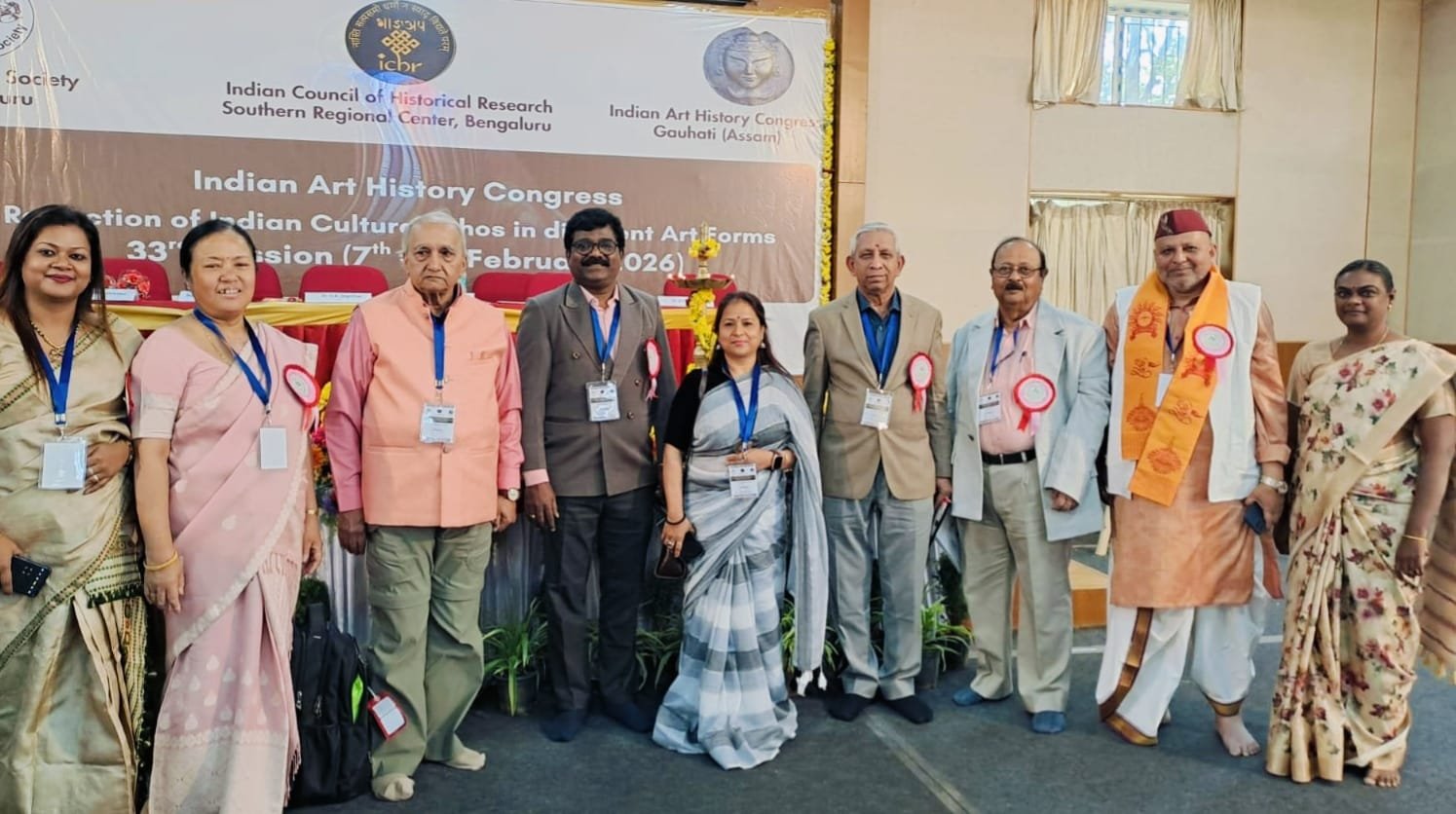
Indian Art History Congress 2026 became a landmark academic event as leading scholars, historians, and art critics gathered in Bengaluru to explore the evolving dimensions of Indian art and its deep-rooted social values. Among nearly 175 distinguished participants from across the country, Dr. Renu Shahi from Jaipur, Rajasthan, emerged as a notable voice with her compelling research on satire art, caricature, and political cartoons in the Indian art landscape.
Her presentation, delivered during the 33rd Annual Session of the Indian Art History Congress, sparked curiosity, discussion, and admiration among scholars and attendees alike.
Introduction to Indian Art History Congress 2026
The Indian Art History Congress 2026 marked the 33rd annual session of one of the country’s most respected academic platforms dedicated to the study and preservation of Indian art history. Held from February 6 to February 10, 2026, the conference brought together scholars from universities, research institutions, and independent academic bodies.
The central theme of this year’s session was “Social Values in Indian Art.” The theme encouraged participants to analyze how art reflects, challenges, and reconstructs societal norms, ethics, and political consciousness across time.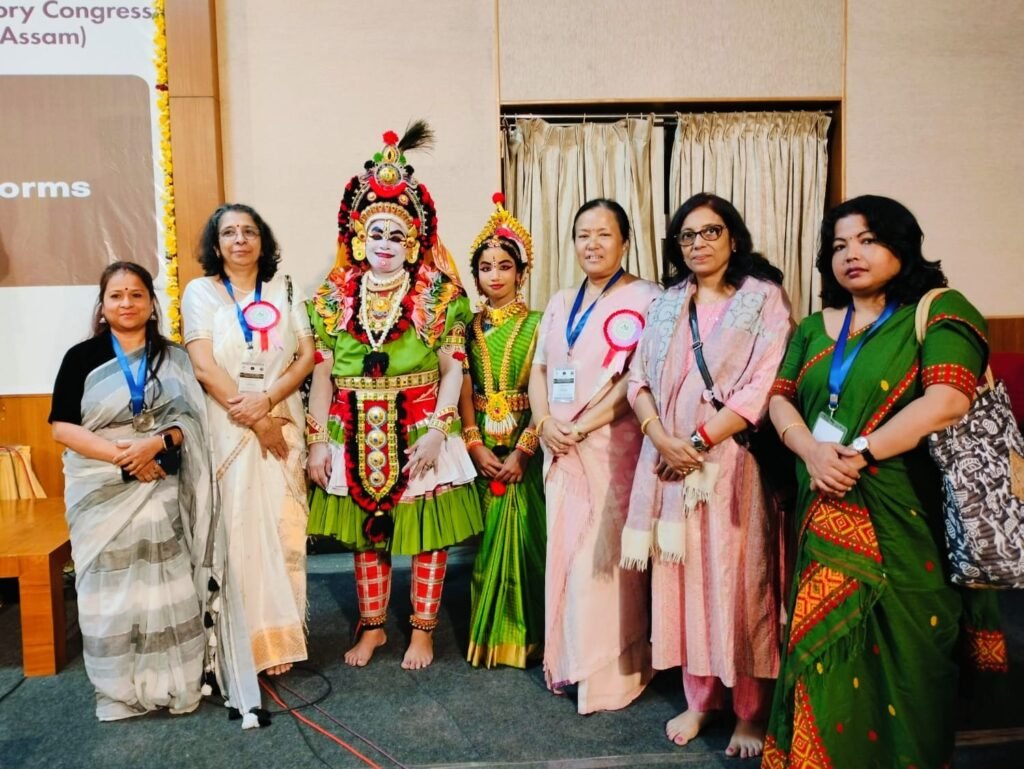
More details about the organising body can be explored through the official Indian Art History Congress network and academic listings on platforms such as the Indian Council of Historical Research (https://ichr.ac.in/).
Venue and Organising Institutions
The Indian Art History Congress 2026 was hosted at the historic Mythic Society in Bengaluru, Karnataka — an institution known for its long-standing contribution to historical and cultural research in South India.
The session was organised under the aegis of the Indian Council of Historical Research (ICHR) and the Indian Art History Congress, in association with the Dr. Pooja Bharti Memorial Trust.
The selection of Bengaluru, a city known for blending heritage with modern intellectual discourse, added symbolic significance to the event.
Lifetime Achievement Honour at the Congress
A major highlight of the Indian Art History Congress 2026 was the conferment of the prestigious “Bharati Samman” (Lifetime Achievement Award).
The honour was presented to eminent art historian Dr. Arvind Prabhakar Jamkhedkar, former Chairman of the Indian Council of Historical Research and former Vice-Chancellor of Deccan College, Pune.
Dr. Jamkhedkar’s lifelong contribution to Indian art history, archaeology, and heritage studies has shaped academic discourse in the country for decades. The award ceremony added a celebratory tone to the scholarly proceedings.
Dr. Renu Shahi’s Academic Contribution
Among the 175 scholars who presented papers at the Indian Art History Congress 2026, Dr. Renu Shahi from Jaipur stood out for her original and thought-provoking research.
Her paper focused on satire art in the Indian artistic tradition, particularly examining caricature and cartoons as tools of political, social, and cultural commentary.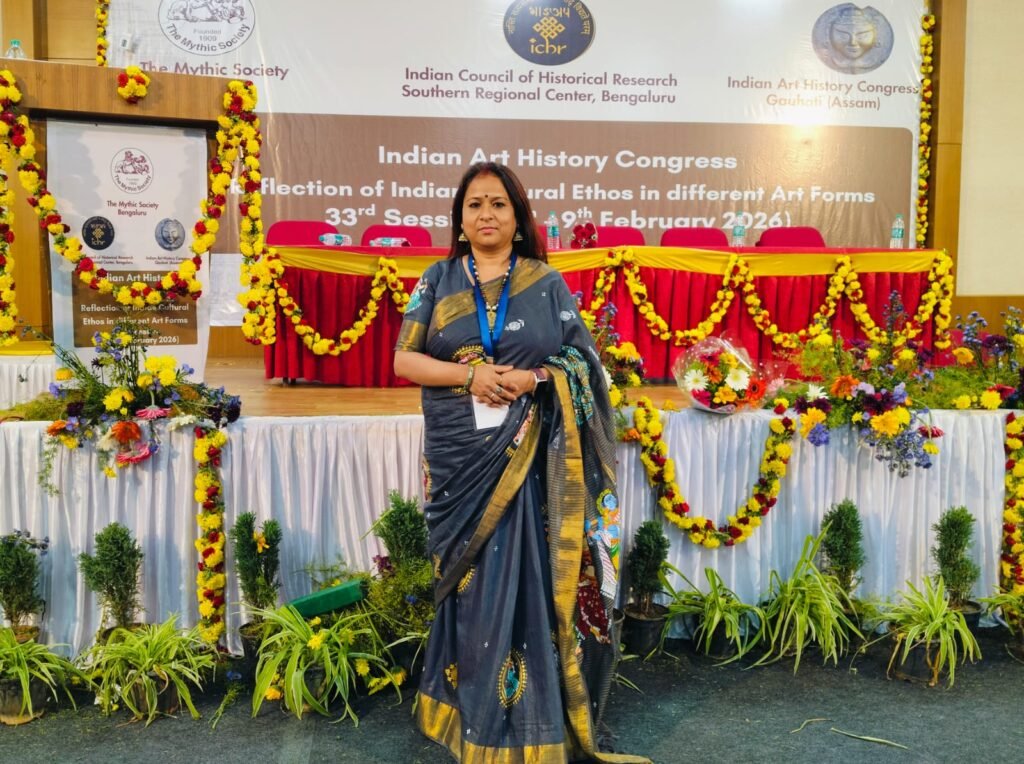
Dr. Shahi was granted the opportunity to present her research due to the excellence and academic merit of her paper — a recognition that itself became a subject of interest among attendees.
Her study did not merely treat satire as entertainment. Instead, she framed it as a powerful artistic language that reflects ideological positions and societal tensions.
Indian Art History Congress 2026 and the Theme of Social Values
The theme “Social Values in Indian Art” found a powerful embodiment in Dr. Shahi’s presentation.
At the Indian Art History Congress 2026, discussions ranged from temple architecture to modern installations. However, satire art introduced a contemporary dimension to the dialogue.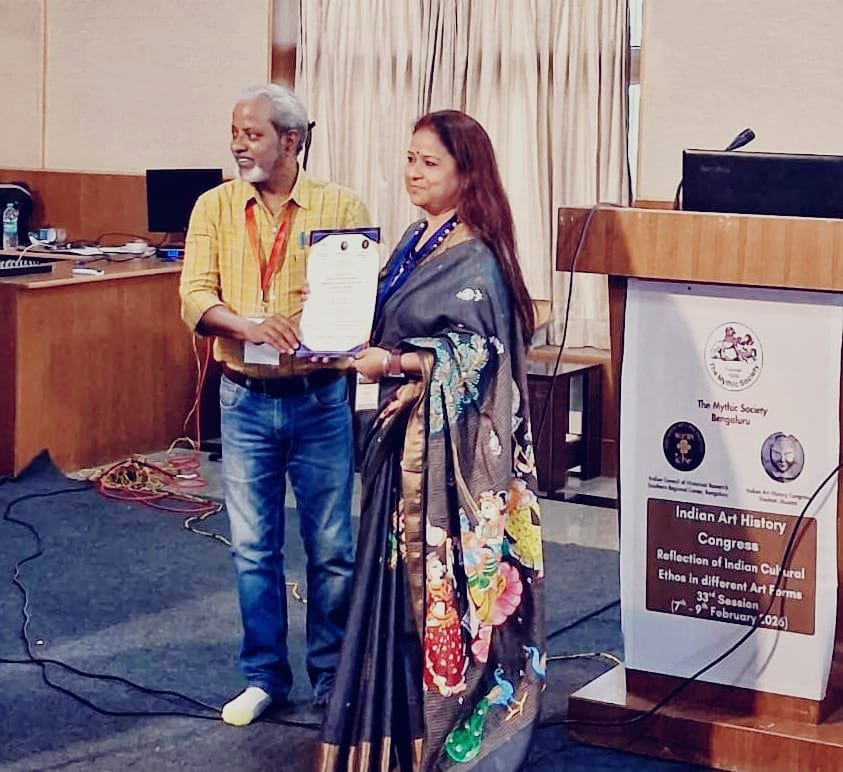
Satirical expression often critiques political authority, exposes social hypocrisy, and mirrors public sentiment. By placing satire within the broader framework of Indian art history, Dr. Shahi expanded the academic boundaries of what is traditionally considered “high art.”
Her work highlighted that satire is not marginal. It is central to democratic discourse.
Satire Art in Indian Cultural Discourse
Satire in India has a long and layered history.
From colonial-era caricatures to post-independence political cartoons, satire has shaped public opinion. Dr. Shahi’s research at the Indian Art History Congress 2026 traced how satire art engages with:
- Political authority
- Social hierarchies
- Cultural transformation
- Public morality
Satirical art, she argued, becomes a visual archive of dissent.
By studying satire, scholars can decode historical anxieties and ideological shifts in society.
Caricature and Cartoon: Beyond Entertainment
At the Indian Art History Congress 2026, Dr. Shahi emphasized that caricatures and cartoons are often misunderstood as mere humor.
In reality, caricature exaggerates features to highlight deeper truths. Cartoons compress complex political commentary into accessible imagery.
Her research examined how caricature functions as a semiotic device — using distortion as critique.
In a democracy like India, cartoonists have historically played a crucial role in shaping civic awareness.
Historical Figures in Indian Satirical Art
Dr. Shahi’s paper referenced several legendary cartoonists and satirists whose work shaped Indian visual culture.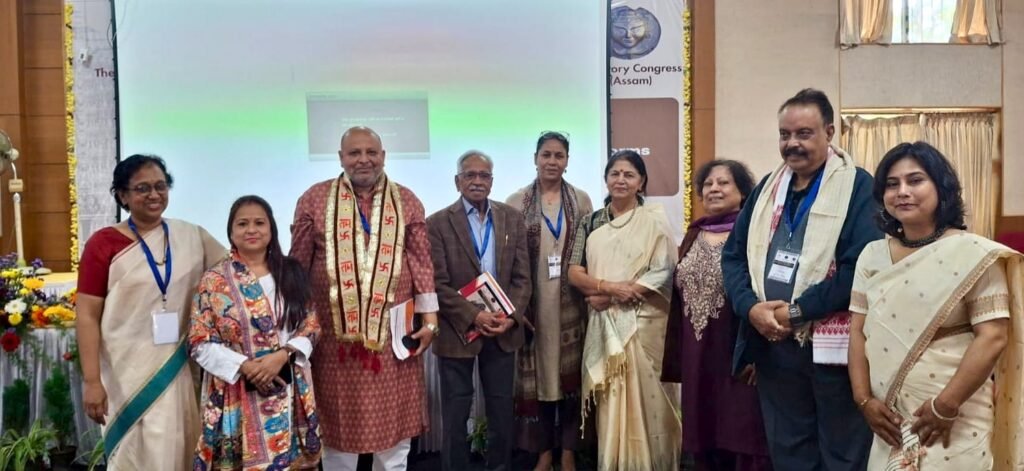
Among them:
- Gaganendranath Tagore – Known for his early 20th-century satirical illustrations critiquing colonial society.
- R. K. Laxman – Creator of the iconic “Common Man” and one of India’s most influential political cartoonists.
- K. Shankar Pillai – Founder of Shankar’s Weekly, a platform that shaped political satire in India.
- Bal Thackeray – Began his career as a cartoonist before entering politics.
By situating these figures within academic discourse at the Indian Art History Congress 2026, Dr. Shahi underscored how satire bridges journalism and fine art.
Scholarly Reception and Appreciation
The response to Dr. Shahi’s presentation at the Indian Art History Congress 2026 was overwhelmingly positive.
Scholars appreciated:
- The interdisciplinary approach
- The analytical depth
- The integration of visual examples
- The contextual grounding in political history
Several attendees noted that satire art deserves more systematic documentation within Indian art historiography.
Her work sparked discussions about incorporating satire studies into university curricula.
Why Indian Art History Congress 2026 Matters Today
The Indian Art History Congress 2026 was not just an academic gathering.
It functioned as:
- A platform for intellectual exchange
- A forum for redefining art history
- A space for emerging scholars to gain visibility
- A bridge between tradition and contemporary discourse
In a rapidly changing socio-political climate, art history cannot remain static.
The inclusion of satire art at the Congress signals a broader methodological shift — one that embraces popular visual culture as a serious subject of study.
The Growing Relevance of Satire in Contemporary India
In the digital era, satire spreads faster than ever.
Memes, digital cartoons, and online caricatures continue the tradition discussed at the Indian Art History Congress 2026.
Dr. Shahi’s research becomes especially relevant in this context. Her work invites scholars to analyze:
- Visual political commentary on social media
- The legal boundaries of satire
- The relationship between art and freedom of expression
Satire, she argued, is both aesthetic expression and civic intervention.
Academic Implications and Future Research
The discussions at the Indian Art History Congress 2026 suggest that future research may expand into:
- Digital satire archives
- Comparative studies between colonial and contemporary caricature
- Regional variations in satirical art
- Gender perspectives in cartooning
Dr. Shahi’s contribution has opened new pathways for research scholars.
Her work demonstrates that art history must evolve alongside society.
The Indian Art History Congress 2026 will be remembered as a dynamic and intellectually rich gathering that expanded the boundaries of Indian art scholarship.
Dr. Renu Shahi’s research on satire art, caricature, and cartoons added a contemporary and critical dimension to the conference theme of social values in Indian art.
Her presentation reaffirmed that satire is not peripheral — it is central to understanding India’s political and cultural consciousness.
As academic institutions increasingly recognize the importance of interdisciplinary study, the conversations initiated at the Indian Art History Congress 2026 are likely to influence future scholarship in meaningful ways.
In Bengaluru, amidst scholars and historians, satire found its rightful place in the narrative of Indian art history — and that may be one of the most significant outcomes of this year’s Congress.

Breaking News
Funs park Fiesta Jaipur 2025 lights up Subodh Public School Rambagh with joy, games, culture, lucky draws-

Fun spark Fiesta Jaipur 2025 began on a bright December morning, transforming the playground of Subodh Public School, Rambagh, into a colourful world of joy, laughter, and togetherness. The event stood as a powerful reminder that education is not only about academics but also about nurturing creativity, culture, and community bonding.
Organized under the guidance of the Subodh Shiksha Samiti, this vibrant fair was a collaborative effort involving four prestigious institutions:
- Subodh Public School, Rambagh
- S.S. Jain Subodh Senior Secondary School, Bapu Bazar
- S.S. Jain Subodh Mahila Senior Secondary School, Johri Bazar
- Subodh Play School, Dev Nagar
From students and parents to teachers and guests, Fun spark Fiesta Jaipur 2025 brought everyone together under one joyful umbrella.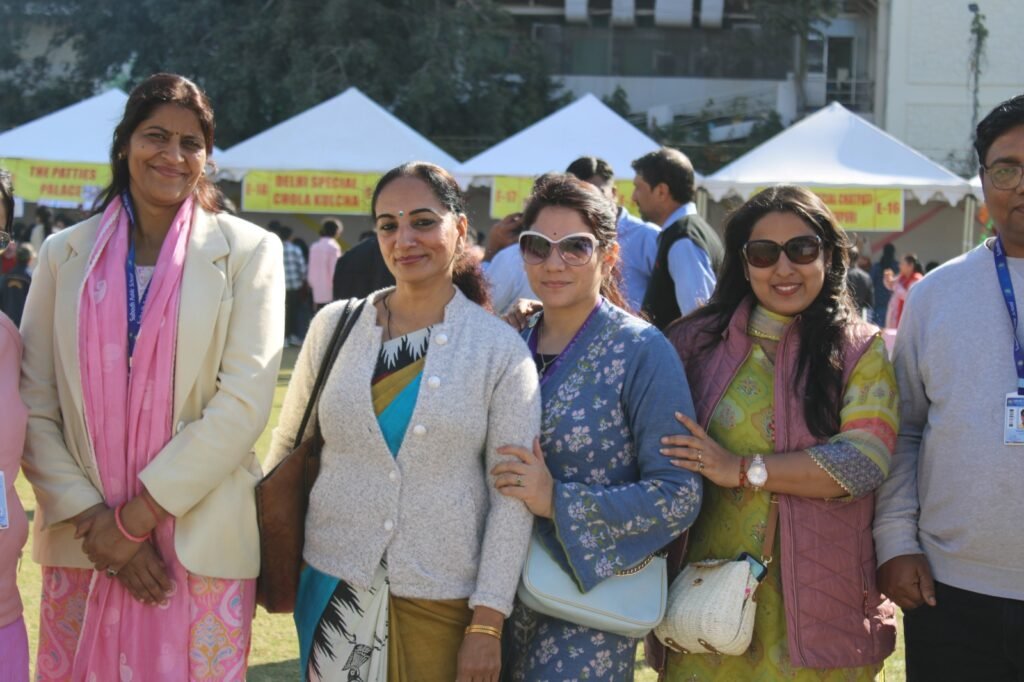
A Grand Beginning Rooted in Tradition
The opening ceremony of Funspark Fiesta Jaipur 2025 beautifully blended tradition with celebration. The event commenced with a sacred Ganesh Vandana, symbolizing wisdom, prosperity, and auspicious beginnings.
The prayer was performed by
- Mr. Alok Kumar Bomb (School Convener)
- Dr. Sanjay Parashar (Principal)
- Dr. Deepa Sachdeva
- Ms. Priyanka Jain
- Dedicated members of the teaching faculty
This spiritual start set a positive tone for the entire day, reinforcing Indian cultural values within a modern educational environment.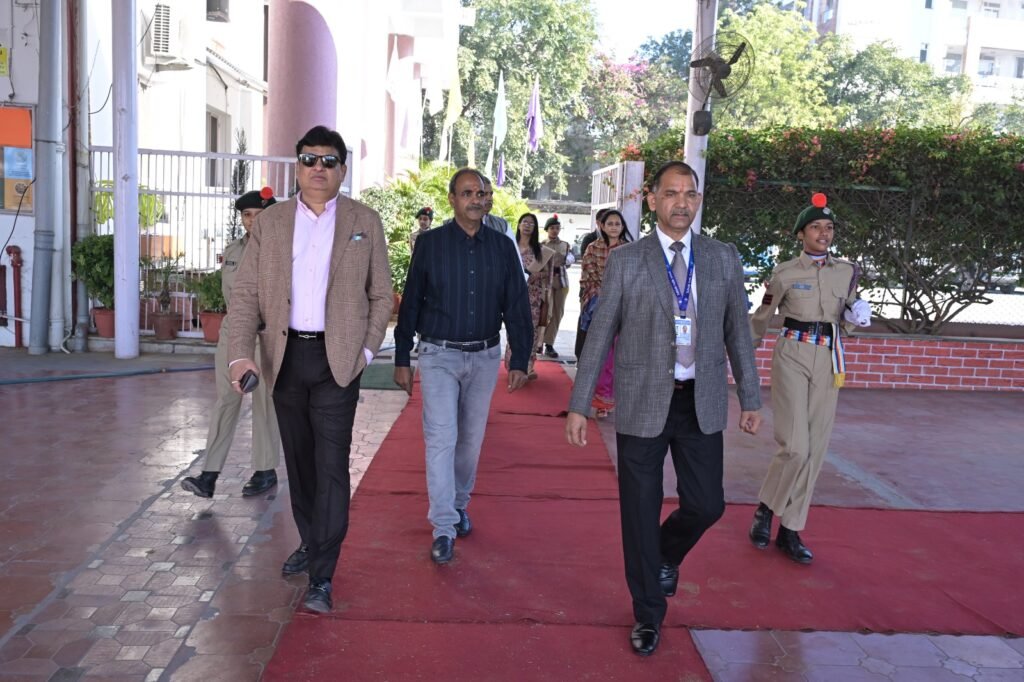
Distinguished Guests Add Prestige to Funspark Fiesta Jaipur 2025
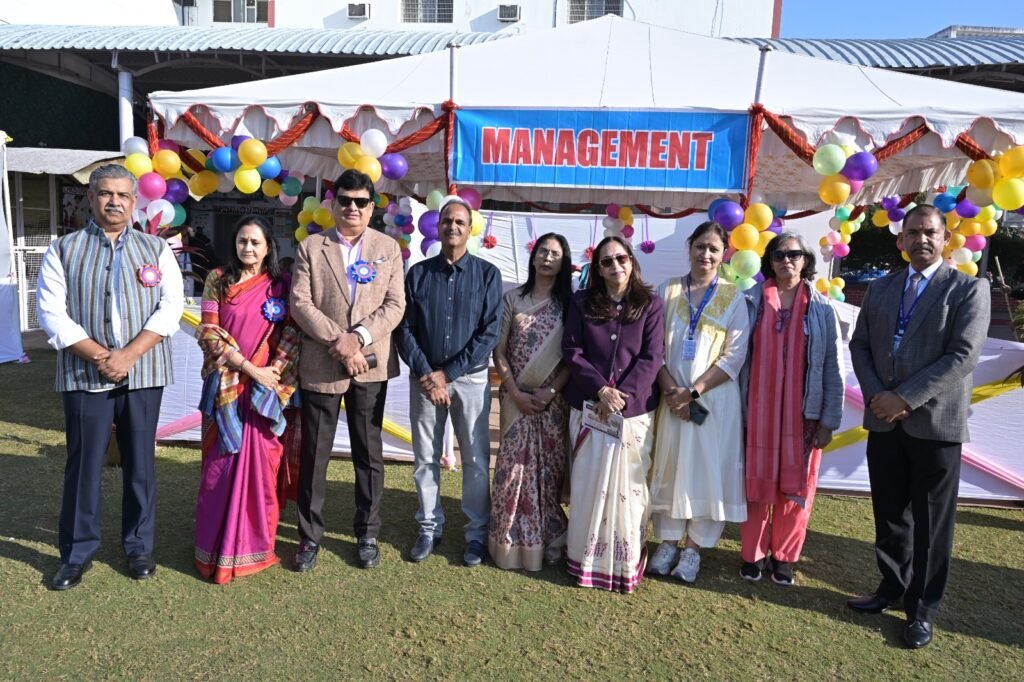
The inauguration of Funspark Fiesta Jaipur 2025 was marked by the ceremonial ribbon-cutting conducted by Chief Guest Mr. Suresh Dhadha, alongside Convener Mr. Alok Kumar Bomb.
The event was further honoured by the presence of esteemed members of the Subodh Shiksha Samiti, including
- Mr. Sumer Singh Bothra (Secretary)
- Mr. Vinod Lodha (Joint Secretary & Treasurer)
- Mr. Rajendra Kumar Jain ‘Raja’
- Mr. Pramod Darda
- Mr. Upendra Bothra
- Ms. Rekha Sankhla (Management Committee Members)
Their presence underscored the Samiti’s unwavering commitment to holistic education.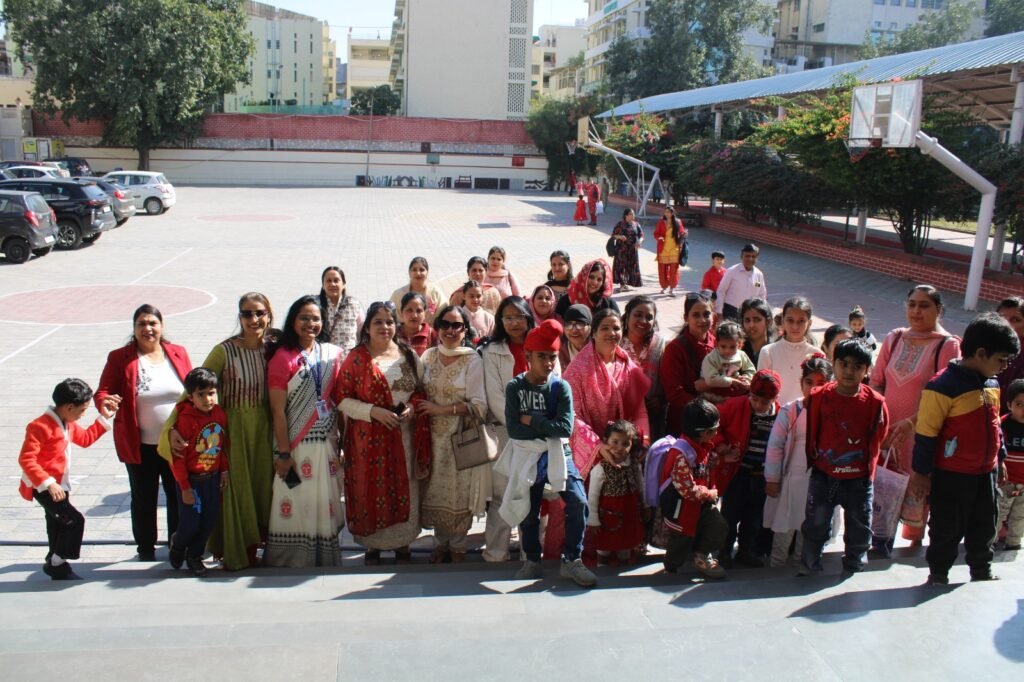
A Carnival of Games and Flavours
One of the biggest highlights of Funspark Fiesta Jaipur 2025 was its lively collection of food and game stalls. The school playground buzzed with excitement as families explored an array of activities designed for all age groups.
Popular Attractions Included
- Fun-based skill games
- Interactive stalls managed by students
- Delicious food counters offering a variety of cuisines
- Child-friendly play zones
Parents and children alike were seen enjoying moments of laughter, bonding, and friendly competition. The stalls not only entertained visitors but also encouraged student participation, teamwork, and responsibility.
Student Creativity Takes Centre Stage
Funspark Fiesta Jaipur 2025 was not merely a fun fair—it was a platform for students to express creativity, confidence, and cultural awareness.
Students actively participated in
- Designing and managing stalls
- Engaging with visitors confidently
- Demonstrating leadership and communication skills
This hands-on experience helped students apply classroom learning to real-life situations, reinforcing values such as cooperation, discipline, and innovation.
RJ Shweta’s Energy Lights Up Funspark Fiesta Jaipur 2025
A major crowd-puller of Funspark Fiesta Jaipur 2025 was the lively presence of RJ Shweta, who kept the atmosphere energetic throughout the day.
With her engaging voice, interactive sessions, and spontaneous humor, she ensured that excitement never dipped. Her dynamic hosting added a professional touch and kept students, parents, and guests thoroughly entertained.
Lucky Draws and Family-Centric Celebrations
Adding an extra layer of excitement, the school administration organized periodic lucky draws during Funspark Fiesta Jaipur 2025.
Attractive prizes were distributed to parents, creating moments of surprise and joy. These activities strengthened the bond between the school and families, emphasizing the institution’s inclusive and community-driven approach.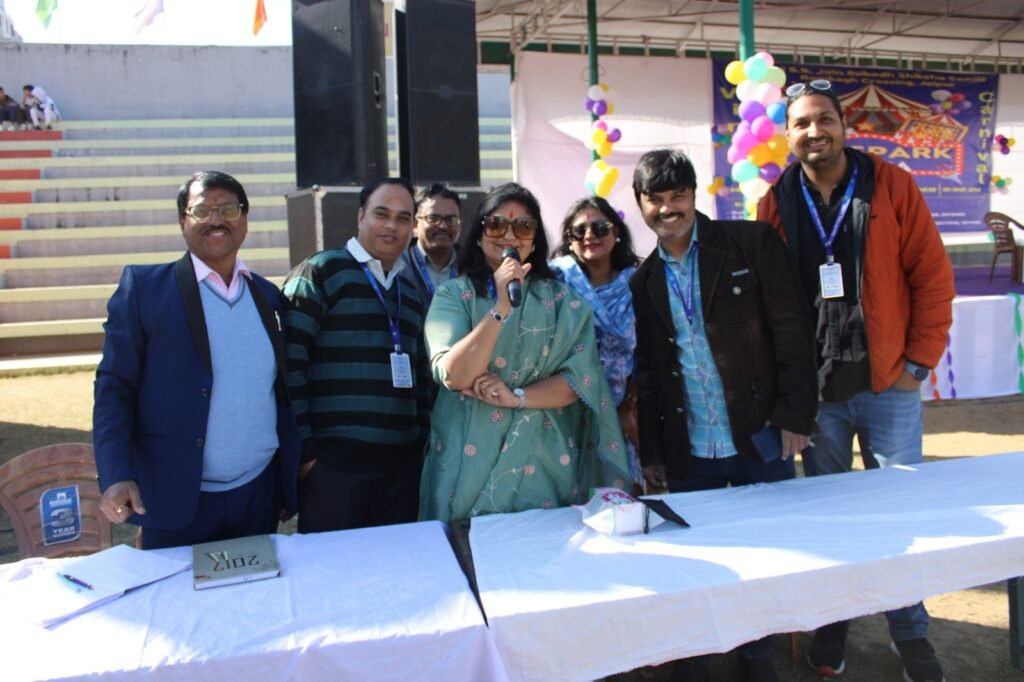
The Vision of Subodh Shiksha Samiti
The success of Funspark Fiesta Jaipur 2025 reflects the broader educational philosophy of the Subodh Shiksha Samiti, which believes in nurturing well-rounded individuals.
By promoting cultural events alongside academics, the Samiti ensures that students grow into:
- Confident communicators
- Socially responsible citizens
- Culturally aware individuals
Why Funspark Fiesta Jaipur 2025 Is More Than Just a School Event
Unlike routine school functions, Funspark Fiesta Jaipur 2025 stood out as a community celebration. It fostered
- Parent-school collaboration
- Student leadership development
- Cultural appreciation
- Emotional and social growth
In an age dominated by screens and academic pressure, events like this remind us of the importance of joy, creativity, and human connection in education.
Gratitude, Reflection, and a Promising Future
At the conclusion of Funspark Fiesta Jaipur 2025, the school administration expressed heartfelt gratitude to
- Students
- Parents
- Teaching and non-teaching staff
- Management members
- Esteemed guests
Dr. Sanjay Parashar, Principal of Subodh Public School, Rambagh, acknowledged the collective effort that turned the fiesta into a memorable success.
“Such events shape confident, joyful learners and strengthen the bond between school and society,” he noted.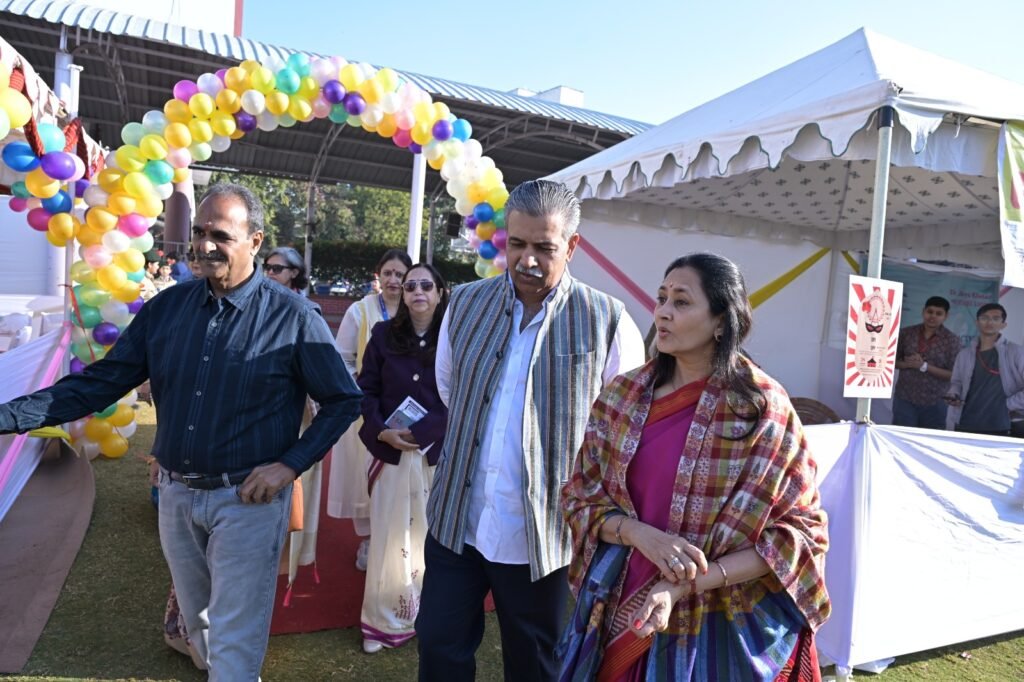
Event Details
Subodh Public School
Rambagh Crossing, Jaipur
December 24, 2025
Funspark Fiesta Jaipur 2025 was not just a festival—it was a celebration of education, culture, and community spirit. With vibrant participation, inspiring leadership, and joyful moments, the event left behind smiles, memories, and a promise of even grander celebrations in the future.

SRN International School Maths Café, SRN International School Jagatpura

Dr Ambedkar Memorial Welfare Society Rajasthan Forms Permanent Council

Subodh Public School Rambagh Honours Sanitation Staff for Dedicated Service

Trump-Linked Powerus Plans Drone Production Partnership With Pakistan Army

October 2026 Rules: LPG Subsidy, SBI ATM and UPI Changes Explained

Yemen conflict escalation: हिंसा बढ़ने से हैजा-खसरे के फैलाव का खतरा

Priyansh Arya: The Six-Hitting Sensation of IPL 2025

Top 10 Most Searched Topics on YouTube: What’s Trending Now?

Preity Zinta Spotted with New Punjab Kings Hero Priyansh Arya in Viral Clip

Nag Panchami 2025: 7 Key Rituals and Puja Time to Eliminate Kaal Sarpa Dosha

Balen Shah, Kathmandu’s independent mayor, from rapper to political leader. Explore his rise amidst Nepal’s youth-led revolution-

Radhika Merchant: A New Chapter as Radhika Ambani

best career opportunities | Jaipur Career Fair | Credent TV | Dainik Navjyoti D2S03

what is reiki healing | Mental Health | Shiksha Sarokar, शिक्षा सरोकार, Sunil Narnaulia

DAV Centenary Public School, Vaishali Nagar, Jaipur hosts Successful ‘Mind Wars Quiz: A Battle of Wits and Knowledge’

 Election1 month ago
Rajasthan Municipal Election Results 2026 Live Updates
- Education1 month ago
OPT Fee Proposal Clears White House Review; $100,000 Figure Remains Unconfirmed
- Breaking News1 month ago
Savitribai Phule Award 2026 Honours 54 Women in Jaipur
- Breaking News2 months ago
Rajasthan Police Arrest ₹25,000-Reward Accused Over Alleged Pakistan-Linked SIM Network
- Festival1 month ago
India Retail Inflation August 2026 Rises to 4.82% as Food Prices Climb
- International1 month ago
Houthi Drone Near Mecca: Saudi Arabia Intercepts UAV After Emergency Alert
- Accident1 month ago
Delhi High Court Orders MCD PG Audit After Satya Niketan Collapse
- Breaking News1 month ago
India Bank Strike Today Over Five-Day Week, Branch Services Face Three-Day Disruption