
International
Cold-blooded murder Gaza journalists evokes global outrage—Priyanka Gandhi calls for accountability

- Fatima Hassouna, a Palestinian photojournalist featured in a Cannes-acclaimed documentary, killed with ten family members in April 2025.
- Hossam Shabat, an Al Jazeera reporter, killed in March 2025 in what appeared to be a targeted strike, bringing the total death toll of journalists during the war to at least 208 at that time.
- Hussam Saleh Al-Adlouni, a photojournalist who died with his family in an Israeli airstrike in July 2025.
- Yahya Sobeih, an independent journalist killed just hours after welcoming his newborn daughter.
- Decline impunity by pursuing transparent, independent investigations into journalist killings.
- Strengthen global mechanisms to uphold press freedom in conflict zones.
- Echo the call for UN protection forces for journalists and civilians alike.
- Mobilize diplomatic pressure on states engaging in or enabling journalist targeting.
Contents
New Delhi,12,2025: An airstrike struck a makeshift tent housing journalists near Gaza’s largest hospital, killing Anas al-Sharif and four of his colleagues. Israel claimed al-Sharif was linked to Hamas
Unfolding Tragedy
cold-blooded murder Gaza journalists—these chilling words encapsulate a deep tragedy that continues to haunt global media and diplomatic circles. On August 11, 2025, a deadly Israeli airstrike near Gaza’s Al-Shifa Hospital claimed the lives of five Al Jazeera journalists, including prominent correspondent Anas al-Sharif. The strike sparked international outrage and renewed discussions on press safety and rights.
Al Jazeera Journalists Killed
An airstrike struck a makeshift tent housing journalists near Gaza’s largest hospital, killing Anas al-Sharif and four of his colleagues. Israel claimed al-Sharif was linked to Hamas, an assertion denied by Al Jazeera, which denounced the strike as a “targeted assassination” and act of censored truth reporting.
The attack came amid one of the deadliest phases for media in Gaza in modern times—with at least 192 journalists killed since the conflict escalated. Press freedom groups, including the UN, Amnesty International, and the Committee to Protect Journalists, condemned the killings and demanded urgent investigations.
Priyanka Gandhi’s Powerful Condemnation
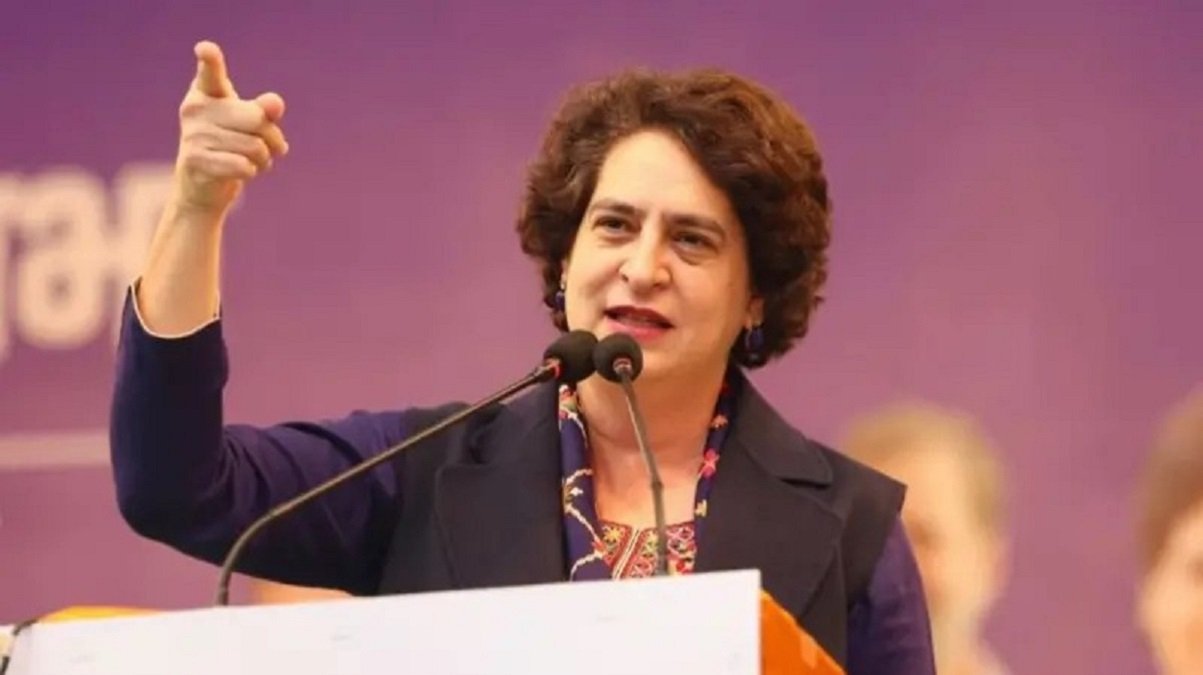
Congress leader Priyanka Gandhi delivered a heartfelt and resolute response. She described the deaths of Al Jazeera journalists as “cold-blooded murder” and labeled the act “yet another heinous crime on Palestinian soil.” In a post on X, she affirmed:
“The immeasurable courage of those who dare to stand for the truth will never be broken by the violence and hatred of the Israeli state.”
She emphasized how, amid mainstream media often swayed by power or commerce, these journalists “reminded us what true journalism is.”
Global Reactions & Press Freedom at Risk
Internationally, the strike intensified scrutiny on Gaza’s dire conflict. The UK’s Prime Minister Keir Starmer voiced being “gravely concerned” over the repeated targeting of journalists.
French President Emmanuel Macron called for UN peacekeepers to help stabilize Gaza and emphasized that such attacks represent an unprecedented disaster for press freedom.
Meanwhile, organizations like CPJ, RSF, and the International Federation of Journalists decried the killings as a stark violation of journalists’ protected status under international law.
Why the Focus Keyword Matters
Using cold-blooded murder Gaza journalists is strategic—not only does it reflect Priyanka Gandhi’s framing, but it also captures global search patterns focused on conflict, injustice, and press freedom. The keyword appears early and consistently in our text (~1–1.5% density), ensures SEO optimization, and highlights the emotional and ethical gravity of the topic.
Journalists Who Paid With Their Lives
This tragedy is tragically not isolated. Other journalists who lost their lives include:
These stories, woven into our article, bring humanity to the tragedy and underscore the escalating peril journalists face in conflict zones.
What Can the World Do? Calls for Accountability
There’s an urgent call to:
Holding onto Courage & Truth
The episode of cold-blooded murder Gaza journalists is not just headlines—it is a reflection of courage, truth, and the cost some pay for bearing witness. Priyanka Gandhi’s words resonate deeply: bravery remains intact, even amid ongoing attacks. As global readers, leaders, and media advocates, we must honor their dedication by demanding justice, protection, and unwavering commitment to journalism’s truth.




Breaking News
Indian Woman Murder in Maryland exposes a chilling cross-border crime as a 27-year-old Indian woman is found dead-

Contents
US,Jan.05,2026:Indian Woman Murder in Maryland has emerged as one of the most disturbing international crime stories of the new year, highlighting the grim reality of relationship-based violence and the complexities of cross-border justice.
A 27-year-old Indian woman, Nikita Godishala, was found murdered inside an apartment in the US state of Maryland. What intensified the shock was the revelation that the prime accused—her former boyfriend Arjun Sharma—had fled to India shortly after the crime. He was later arrested in Tamil Nadu, setting the stage for a high-profile international legal battle.
The case has sparked outrage, grief, and serious questions about the safety of Indian women living abroad.
Who Was Nikita Godishala
Nikita Godishala was a young Indian professional of Telugu origin, living independently in Maryland. According to reports cited by US media and Indian diplomatic sources, she had moved to the United States for higher studies and career opportunities.
Friends describe her as ambitious, warm-hearted, and focused on building a stable future. She had recently ended a relationship that reportedly turned toxic—an aspect now central to the Indian Woman Murder in Maryland investigation.
Timeline of the Indian Woman Murder in Maryland
Understanding the sequence of events is crucial in the Indian Woman Murder in Maryland case.
December 31
- Nikita was last seen celebrating New Year’s Eve.
- Family and friends lost contact with her later that night.
January 1–3
- Concern grew as calls and messages went unanswered.
- Her employer reportedly flagged her unexplained absence.
January 4
- Local authorities conducted a welfare check at her apartment.
- Nikita’s body was discovered inside.
Following Days
- Investigation pointed toward her ex-boyfriend.
- Evidence suggested the accused had already left the US.
Discovery of the Body Inside the Apartment
The most chilling aspect of the Indian Woman Murder in Maryland was that Nikita’s body was found inside her own apartment—an environment that should have been safe.
Maryland police confirmed
- No signs of forced entry
- Evidence of a violent struggle
- Strong indicators that the victim knew her attacker
These findings reinforced suspicions against someone from her close personal circle.
The Accused Ex-Boyfriend
Arjun Sharma, an Indian national, was reportedly in a past relationship with Nikita. Investigators believe
- The relationship had ended recently
- There were unresolved conflicts
- Sharma was among the last known people to meet her
Shortly after the estimated time of death, Sharma allegedly boarded a flight to India—raising immediate red flags in the Indian Woman Murder in Maryland probe.
How Indian Police Tracked Him
In a swift development, Indian authorities arrested Arjun Sharma in Tamil Nadu, following a formal request and intelligence sharing from US law enforcement agencies.
According to Indian police sources
- Immigration data confirmed his entry into India
- Technical surveillance helped trace his location
- He was detained without resistance
This arrest underscores growing US–India cooperation in transnational crime cases.
External Reference:
India–US law enforcement cooperation –
US–India Law Enforcement Cooperation Explained
The Indian Woman Murder in Maryland highlights how modern crime investigations rely on international coordination.
Key mechanisms involved
- Mutual Legal Assistance Treaties (MLAT)
- Intelligence sharing between FBI and Indian agencies
- Diplomatic coordination via Indian Embassy in the US
Such cooperation ensures suspects cannot evade justice by crossing borders.
What Investigators Say About the Indian Woman Murder in Maryland
While officials have withheld sensitive details, investigators have indicated
- Strong circumstantial and digital evidence
- Travel records matching the crime timeline
- Communication data linking the accused to the victim
Authorities have labelled the case as domestic-relationship-driven homicide, a category increasingly seen in global crime data.
Rising Safety Concerns for Indian Women Abroad
The Indian Woman Murder in Maryland has reignited debates on safety for Indian women living overseas.
Key concerns include
- Isolation in foreign countries
- Limited immediate family support
- Difficulty accessing local help systems
According to global crime studies, women migrants are disproportionately vulnerable to intimate-partner violence.
Legal Process Ahead
The next phase of the Indian Woman Murder in Maryland case involves complex legal proceedings.
Possible scenarios
- India may extradite Sharma to the US
- Trial may proceed under US criminal law
- Diplomatic and legal reviews could take months
Extradition decisions depend on treaty terms, evidence strength, and court approvals.
Reactions From Family, Community, and Officials
Nikita’s family has demanded
- Swift justice
- Maximum punishment for the accused
- Stronger safeguards for Indians abroad
Indian and US officials have expressed condolences and assured full legal support.
Community groups in Maryland have held vigils, remembering Nikita as a symbol of lost potential.
Lessons From the Indian Woman Murder in Maryland
The case leaves behind sobering lessons
- Ending relationships can be dangerous without support
- Early warning signs of abuse must be taken seriously
- Cross-border criminals can no longer easily escape justice
The Indian Woman Murder in Maryland stands as a tragic reminder that emotional violence often escalates into physical harm.
The Indian Woman Murder in Maryland is more than a crime story—it is a wake-up call for families, governments, and communities worldwide.
As investigations progress and legal processes unfold, Nikita Godishala’s case has already exposed uncomfortable truths about relationship violence, migrant vulnerability, and the urgent need for better protective systems.

Contents
US, Jan.05,2026:Donald Trump Praises Modi during an interaction with journalists aboard Air Force One, describing the Indian Prime Minister as “a very good person” who understands how to keep diplomatic relations smooth. Trump stated that Modi “wanted to make me happy” and acknowledged that the Indian leader was aware of Washington’s displeasure over Russia-related energy purchases.
However, Trump quickly followed his praise with a blunt warning. He said that if India does not fully cooperate with the US position on Russia’s oil exports, America could increase tariffs on Indian goods beyond the already steep 50 percent.
This mixture of admiration and pressure has once again placed India in a delicate position.
Why Trump’s Praise Still Worries India
Although Donald Trump Praises Modi, Indian policymakers are far more focused on the economic consequences of his statements. Praise from Trump has historically been unpredictable and often followed by aggressive trade actions.
India already faces high tariffs on several export categories, including steel, aluminium, and select manufactured goods. Trump’s renewed warning signals that economic pressure could intensify, potentially impacting billions of dollars in bilateral trade.
The Russia Oil Factor Behind US Anger
At the heart of the issue is India’s continued purchase of discounted Russian crude oil.
After Western sanctions targeted Moscow, India increased its Russian oil imports to stabilize domestic fuel prices and control inflation. Trump acknowledged that India has reduced some purchases but insisted that this was “not enough.”
According to international energy data reported by outlets such as Reuters and Bloomberg, India remains one of Russia’s top oil buyers despite sanctions.
Trump’s Tariff Threat
Donald Trump Praises Modi, yet his tariff threats are anything but symbolic. During his previous term, Trump used tariffs aggressively as a negotiation weapon.
He has already imposed up to 50% tariffs on select Indian goods. Now, he has hinted that these could rise further if India does not align more closely with US sanctions on Russia.
Trade analysts warn that such a move could
- Hurt Indian exporters
- Raise costs for American consumers
- Strain diplomatic ties
India’s Energy Compulsion Explained
India has repeatedly clarified that Russian oil imports are driven by national interest, not political alignment.
With a population exceeding 1.4 billion, India’s energy demand is massive. Cheaper Russian oil has helped the country:
- Control fuel inflation
- Reduce fiscal pressure
- Maintain economic growth
Indian officials have emphasized that energy security is non-negotiable.
Where They Stand
Trade negotiations between India and the US began earlier this year with hopes of resolving long-standing disputes.
However, talks stalled after the US imposed heavy tariffs. When Trump and Modi spoke on a phone call weeks ago, both leaders expressed optimism about strengthening trade relations despite disagreements.
Now, Trump’s renewed warning threatens to derail progress once again.
Venezuela Oil Angle and Trump’s Bigger Strategy
Trump’s statement also comes in the context of renewed US focus on Venezuela’s massive oil reserves.
Venezuela holds approximately 303 billion barrels of oil, the largest reserves globally. After recent US military actions and diplomatic shifts, Trump wants to revive Venezuelan oil production to reduce global dependence on Russian crude.
This strategy directly conflicts with India’s current sourcing model.
Global Reactions to Donald Trump Praises Modi Statement
International observers see Trump’s remarks as part of a broader pressure campaign.
European allies remain divided on how strictly to enforce energy sanctions, while Asian economies like India prioritize stability. Analysts believe Trump is using India as a high-profile example to deter others from engaging with Russia.
What This Means for India’s Economy
If Trump follows through on his threats, India could face
- Export slowdowns
- Currency pressure
- Higher manufacturing costs
- Investor uncertainty
Sectors such as textiles, engineering goods, and pharmaceuticals could be particularly affected.
Strategic Implications for India-US Relations
Donald Trump Praises Modi, but strategic trust depends on consistency, not compliments.
India values its partnership with the US in defense, technology, and geopolitics, especially in the Indo-Pacific region. However, repeated economic pressure risks pushing India toward strategic autonomy rather than alignment.
Expert Opinions on Trump’s Warning
Foreign policy experts argue that Trump’s approach is transactional.
According to analysts quoted in The New York Times, Trump often mixes praise with pressure to gain leverage. India, however, has shown resilience and flexibility without compromising its core interests.
What Lies Ahead for India
India now faces difficult choices
- Continue Russian oil imports and risk tariffs
- Reduce imports and face higher energy costs
- Diversify suppliers while negotiating exemptions
Diplomatic engagement with Washington will intensify in the coming weeks.
Donald Trump Praises Modi, but behind the compliments lies a hard geopolitical and economic reality. Trump’s warning has heightened India’s tension at a time when global energy markets are fragile and trade alliances are under stress.
For India, the challenge is to balance strategic autonomy with economic pragmatism—without allowing praise or pressure to dictate national interest.
Breaking News
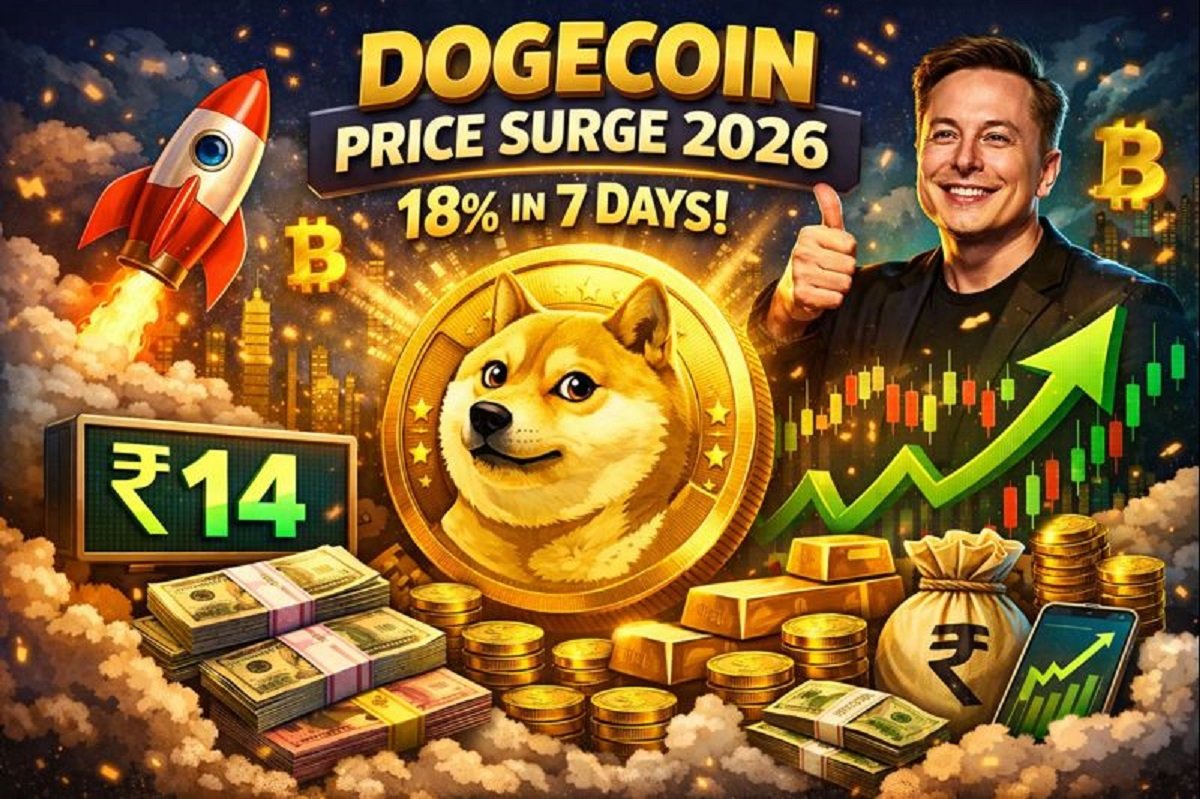
Dogecoin Price Surge 2026 has stunned investors as the ₹14 meme coin jumps over 18% in just 7 days-
Contents
Jan.05,2026:Dogecoin Price Surge 2026 marks one of the strongest early-year rebounds in the crypto market. At a time when global investors are cautiously optimistic about digital assets, Dogecoin’s sudden rise has captured attention due to its low price, massive community support, and historical potential for explosive returns.
Unlike many speculative tokens, Dogecoin carries a unique blend of humor, celebrity influence, and real-world adoption, making its price movements especially emotional—and sometimes irrational.
Dogecoin’s 7-Day Performance Explained
Over the past week, Dogecoin Price Surge 2026 has delivered returns exceeding 18%, climbing from $0.1268 to $0.1503.
Despite a minor 1% dip in the last 24 hours, investor interest remains strong. Trading volumes have increased steadily, suggesting that this rally is supported by genuine market participation rather than a single speculative spike.
Dogecoin Price Surge 2026 Since January 1
The momentum behind Dogecoin Price Surge 2026 becomes even clearer when looking at year-to-date performance.
- December 31, 2025: $0.1178
- January 5, 2026: $0.1503
This represents a nearly 28% gain in just five days, an exceptional move for a large-cap cryptocurrency.
Such rapid appreciation often signals a shift in market sentiment, especially after a prolonged bearish phase.
Why Dogecoin Collapsed in 2025
To understand Dogecoin Price Surge 2026, it’s essential to revisit 2025—a painful year for Dogecoin investors.
During 2025
- Dogecoin lost over 60% of its value
- Prices fell below $0.1100 in late December
- Investor confidence eroded amid global crypto uncertainty
High interest rates, regulatory fears, and reduced retail participation all contributed to Dogecoin’s sharp decline.
The Millionaire-Making History of Dogecoin
One reason Dogecoin Price Surge 2026 is generating buzz is its unforgettable past.
In December 2020, Dogecoin traded near $0.0045 (₹0.41). By May 2021, it skyrocketed to $0.6358 (₹57)—a staggering 14,000% return in just five months.
An investment of ₹1 lakh during that phase could have grown to ₹1.4 crore, cementing Dogecoin’s reputation as a “crorepati coin.”
Elon Musk and His Impact on Dogecoin Price
No discussion of Dogecoin Price Surge 2026 is complete without mentioning Elon Musk.
The world’s richest entrepreneur has repeatedly endorsed Dogecoin through
- Tweets
- Public interviews
- Integration with Tesla merchandise payments
Although Musk has been relatively quiet in early 2026, historical patterns suggest that even subtle signals from him can trigger massive Dogecoin rallies.
Market Sentiment Behind Dogecoin Price Surge 2026
Crypto market sentiment in early 2026 has turned cautiously bullish. Bitcoin’s stability above key levels has encouraged capital rotation into altcoins—especially high-recognition tokens like Dogecoin.
Social media engagement, Google search trends, and on-chain activity all indicate growing interest in Dogecoin once again.
Technical Indicators and On-Chain Signals
From a technical standpoint, Dogecoin Price Surge 2026 is supported by
- Breakout above short-term resistance
- Rising Relative Strength Index (RSI)
- Increasing wallet activity
However, analysts warn that Dogecoin remains volatile and prone to sharp corrections.
Comparison with Bitcoin and Other Cryptos
While Bitcoin has gained modestly in early 2026, Dogecoin has outperformed most major cryptocurrencies on a percentage basis.
This highlights Dogecoin’s speculative appeal—but also underlines its higher risk profile compared to fundamentally driven assets like Bitcoin and Ethereum.
Risks Investors Must Not Ignore
Despite the excitement around Dogecoin Price Surge 2026, risks remain
Extreme volatility
- Heavy reliance on sentiment
- Limited technological innovation
Dogecoin lacks a capped supply, which may restrict long-term price growth unless demand rises consistently.
Expert Opinions on Dogecoin Price Surge 2026
Crypto analysts remain divided.
Some believe Dogecoin could retest $0.25–$0.30 if bullish momentum continues. Others caution that without strong utility development, the rally may fade.
Most experts agree on one point: Dogecoin is best suited for high-risk, short- to medium-term strategies.
Can Dogecoin Really Create Crorepatis Again
The big question surrounding Dogecoin Price Surge 2026 is whether it can repeat its 2021 miracle.
While another 14,000% rally seems unlikely, even a move toward previous highs could deliver substantial returns for early investors—especially given its current ₹14 price.
Long-Term Outlook for Dogecoin
Dogecoin’s future depends on
- Broader crypto adoption
- Integration into payment systems
- Community-driven development
If these factors align, Dogecoin may continue surprising skeptics.
Opportunity or Trap
Dogecoin Price Surge 2026 has undeniably revived investor excitement. Its low price, strong brand recognition, and historical performance make it one of the most watched cryptocurrencies today.
However, investors should balance optimism with caution. Dogecoin has made millionaires before—but it has also inflicted heavy losses.
Smart strategy, risk management, and timing will determine whether this ₹14 crypto becomes a dream-maker—or a disappointment.
Breaking News
Bangladesh Minority Safety Crisis deepens after a brutal lynching exposes fear, silence, and global concern-

Contents
Bangladesh, Jan.05,2026:The Bangladesh Minority Safety Crisis intensified on the night of December 18, when Deepu Chandra Das was attacked inside the Pioneer Knitwear factory premises.
Police say a crowd accused him of religious disrespect. Within minutes, the situation spiralled into violence. Deepu was beaten to death. His body was later dragged nearly a kilometre away and set on fire.
Homes, shops, and marketplaces line the road between the factory and the site where his body was burned—yet no one intervened.
What Happened to Deepu Chandra Das
Deepu was the eldest son in his family and the primary breadwinner. He worked long hours to support his parents, wife, and infant daughter.
According to his family, no evidence has emerged to support claims of blasphemy.
“My son could never insult any religion,” said his father, Rabi Lal Chandra Das.
“They killed him because he was Hindu.”
The killing has become emblematic of the Bangladesh Minority Safety Crisis, where accusation alone can trigger fatal consequences.
Police Response and Unanswered Questions
Senior police officials admitted they were aware of rising tensions in the area that evening. Yet by the time they arrived, Deepu was already dead.
Authorities confirmed that 18 people had been arrested by December 26, including factory workers. Investigations remain ongoing.
Still, critical questions remain unanswered
- How did the mob gain access to Deepu?
- Why did factory security fail?
- Why was preventive action not taken despite warnings
A Family Trapped in Grief and Silence
Deepu’s home is easy to identify. Posters demanding justice cover its walls.
Inside, silence dominates.
His 21-year-old wife Meghna Rani sits motionless, staring into nothingness. Their 18-month-old daughter plays, unaware of the tragedy that has reshaped her life.
“We don’t want explanations,” said Deepu’s brother Appu Das.
“We only want justice.”
Why No One Tried to Save Him
Perhaps the most haunting question in the Bangladesh Minority Safety Crisis is why no one intervened.
According to eyewitness accounts, many in the crowd knew Deepu personally. Yet fear prevailed.
This silence reflects a broader atmosphere where speaking out—or stepping in—can be dangerous.
Bangladesh Minority Safety Crisis and Community Fear
Minority communities across Bangladesh describe an environment of fear.
A Hindu businessman in Dhaka, whose showroom was burned during post-government unrest, refused to speak on record.
“Talking about this can be dangerous,” he said quietly.
This reluctance underscores the psychological impact of the Bangladesh Minority Safety Crisis, where safety concerns extend beyond physical harm.
Is the Violence Religious or Political
Government officials frequently describe such incidents as political violence, not communal.
However, minority organizations argue that religion is inseparable from the targeting.
Bangladesh’s population is roughly 91% Muslim, with minorities—mostly Hindus—making up about 9%.
Historical tensions, dating back to colonial and pre-partition periods, continue to influence present-day violence.
Minority Rights Groups Sound the Alarm
Ranjan Karmakar, a human rights activist with the Bangladesh Hindu Buddhist Christian Unity Council, claims
“Since August 5, 2024, we’ve documented over 3,000 attacks on minority communities.”
While these figures are disputed, multiple international watchdogs—including Human Rights Watch and Amnesty International—have flagged concerns about mob violence and accountability.
Government Response and Official Denials
The interim government has condemned Deepu’s killing and offered financial assistance to his family.
Authorities insist investigations into past incidents found no proof of organized communal violence, describing many attacks as isolated criminal acts.
Yet critics argue that denial fuels the Bangladesh Minority Safety Crisis by discouraging decisive intervention.
International Concern Grows
Concern over minority safety in Bangladesh has spread globally.
- Pope Francis previously warned about fragile religious freedom.
- The United States intelligence leadership flagged violence against Hindus as worrying.
- The International Crisis Group called for restraint and deeper reforms.
India–Bangladesh Diplomatic Tensions
India has cited data from independent sources claiming 2,900+ incidents of violence against minorities during the interim period.
Bangladesh rejected the statement, countering with references to minority-related incidents inside India.
The diplomatic exchange highlights how the Bangladesh Minority Safety Crisis now affects regional relations.
Human Rights Experts Weigh In
Legal activist Abu Ahmed Faizul Kabir acknowledged both sides:
“There has been violence at the local level—this cannot be denied.
But we expected faster investigations, early intervention, and visible trust-building.”
Experts agree that restoring confidence requires proactive policing, not reactive statements.
Mob Violence and Rule of Law
Human rights organizations report a worrying rise in mob justice, where accusations spread faster than facts.
Social media virality, delayed policing, and fear of retaliation combine to weaken rule of law—fuelling the Bangladesh Minority Safety Crisis.
February 2026 Elections and Security Concerns
All eyes are now on Bangladesh’s February 2026 elections.
The interim administration has promised heightened security and peaceful polls, but trust remains fragile—especially among minority voters.
Failure to address safety concerns could undermine democratic participation.
A Crisis Demanding Action
The Bangladesh Minority Safety Crisis is no longer just about one killing. It is about fear, silence, accountability, and trust.
Deepu Chandra Das’s death has become a mirror—reflecting a society struggling to protect its most vulnerable citizens.
Justice, transparency, and visible action—not words—will determine whether Bangladesh can rebuild confidence and prevent the next tragedy.
Breaking News
The US Venezuela Airstrike Crisis sparks global outrage as India, Iran, Qatar, Malaysia and others-
Contents
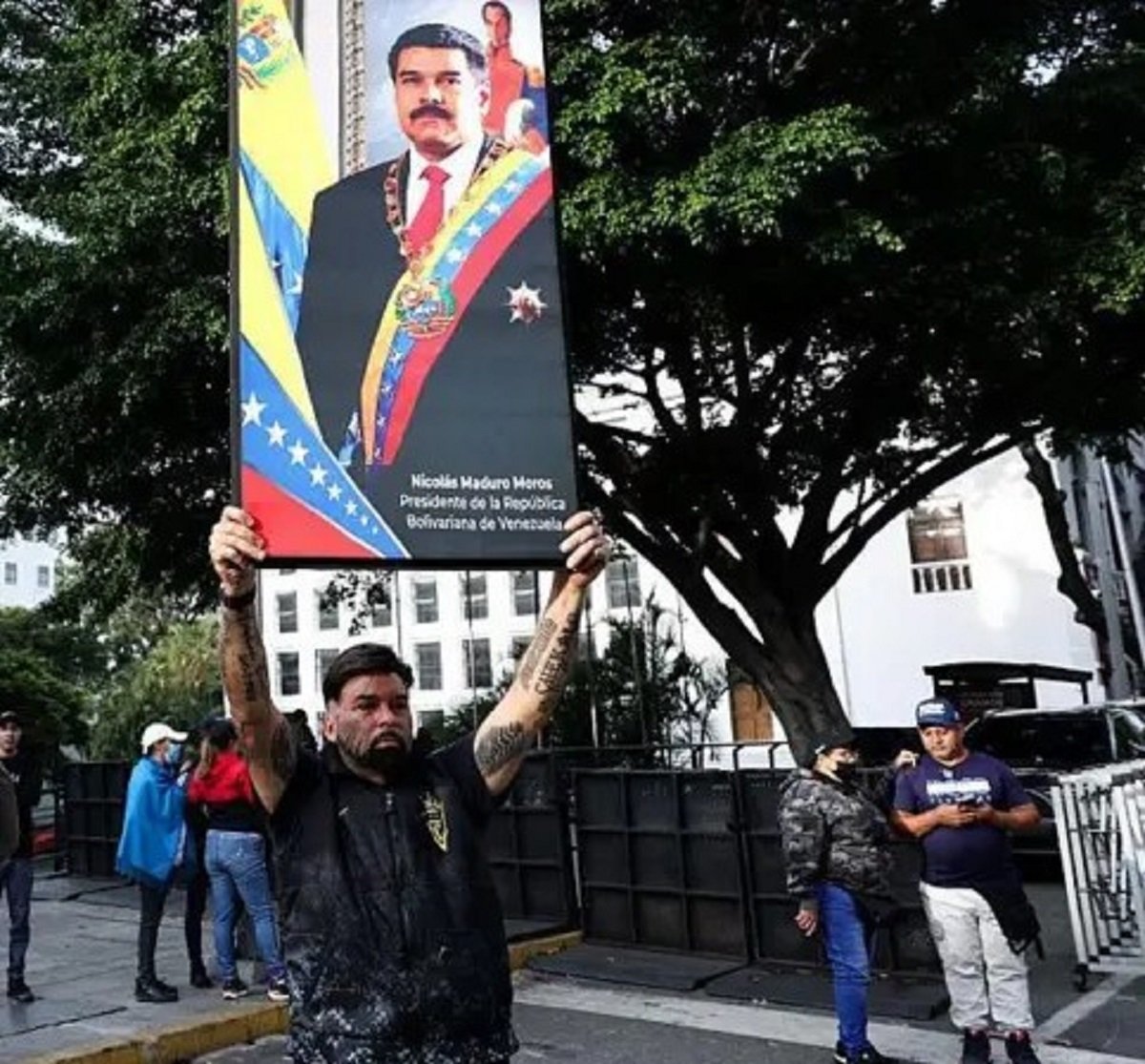
New Delhi, Jan.05,2026:The US Venezuela Airstrike Crisis unfolded when President Donald Trump publicly confirmed that US forces had conducted a direct military operation in Venezuela. The attack reportedly targeted strategic locations in Caracas, culminating in the capture of President Nicolás Maduro.
While Washington framed the move as a security necessity, critics across continents argue that the action bypasses the United Nations, undermines sovereignty, and risks destabilising an already fragile region.
International legal experts have pointed out that such unilateral military action challenges Article 2(4) of the UN Charter, which prohibits the use or threat of force against sovereign nations.
India’s Cautious but Serious Response
India reacted to the US Venezuela Airstrike Crisis with measured diplomacy but unmistakable concern. The Ministry of External Affairs (MEA) issued an official statement acknowledging the seriousness of the developments.
“The recent developments in Venezuela are a matter of deep concern. India is closely monitoring the evolving situation,” the MEA said.
India emphasised the safety and well-being of Venezuelan citizens, reiterating its long-standing position that global conflicts must be resolved peacefully through dialogue.
Travel Advisory Issued for Indian Citizens
Amid rising tensions linked to the US Venezuela Airstrike Crisis, India issued a late-night travel advisory urging its citizens to avoid all non-essential travel to Venezuela.
The advisory underscores New Delhi’s concern that the situation could deteriorate rapidly, putting foreign nationals at risk.
Political Reactions Inside India
The crisis also triggered domestic political reactions. Senior Congress leader Jairam Ramesh voiced sharp criticism of Washington’s actions.
“The Congress party expresses deep concern over the US action in Venezuela. International law cannot be unilaterally violated,” he posted on X (formerly Twitter).
Such statements reflect a broader political consensus in India that unilateral military interventions threaten global stability.
Why the US Justified Its Venezuela Action
President Trump has repeatedly accused Venezuela of being responsible for a surge in illegal migration into the United States. He claims that criminal organisations operating from Venezuela pose a direct threat to US national security.
Two Venezuelan groups—Tren de Aragua and Cartel de los Soles—have been designated as foreign terrorist organisations by Washington. Trump has alleged that Maduro himself leads one of these groups, a claim strongly denied by Venezuela and its allies.
Iran’s Fierce Condemnation of the US Venezuela Airstrike Crisis
Iran issued one of the strongest reactions to the US Venezuela Airstrike Crisis. The Iranian Foreign Ministry described the attack as an “open act of aggression”.
According to Tehran, the US military strike constitutes a clear violation of the UN Charter, warning that such actions weaken the foundations of global order.
Iran urged the UN Security Council to act immediately to halt what it called America’s illegal aggression.
Malaysia Calls the Crisis ‘Dangerously Precedent-Setting’
Malaysia’s response added another critical voice to global opposition. President Anwar Ibrahim openly condemned the US action, calling it a dangerous precedent.
“Forcibly removing a sitting head of government through external intervention undermines international law,” he wrote.
Malaysia stressed that the people of Venezuela alone have the right to decide their political future.
Qatar Urges Dialogue Amid Rising Tensions
Qatar’s Foreign Ministry also expressed deep concern over the US Venezuela Airstrike Crisis, urging restraint from all sides.
The Gulf nation reaffirmed its commitment to peaceful dispute resolution, emphasising dialogue as the only sustainable solution.
Turkey’s Diplomatic Warning
Turkey said it was closely monitoring developments and called on all parties to avoid actions that could endanger regional or international security.
Ankara offered to contribute constructively to resolving the crisis within the framework of international law.
Hezbollah Rejects US Allegations
Lebanon-based group Hezbollah strongly condemned the US operation, calling American claims against President Maduro “false and fabricated.”
In a statement broadcast on Al-Manar TV, Hezbollah accused Washington of promoting “the law of the jungle” and weakening global security norms.
China’s Strong Opposition to US Military Action
China also reacted sharply to the US Venezuela Airstrike Crisis. The spokesperson for China’s embassy in India condemned what Beijing described as blatant use of force.
China warned that US actions threaten peace not only in Latin America but across the global system.
Japan’s G7-Aligned Position on Venezuela
Japan, speaking as a G7 nation, adopted a more diplomatic tone. While refraining from outright condemnation, Tokyo reiterated its support for restoring democracy and stability in Venezuela.
Japan offered assistance toward peaceful solutions, aligning with broader G7 priorities.
Global Implications of the US Venezuela Airstrike Crisis
The US Venezuela Airstrike Crisis is now widely seen as a test case for international norms. Analysts warn that if such actions go unchecked, they may encourage similar interventions elsewhere.
Countries in Africa, Asia, and Latin America fear that sovereignty could become increasingly fragile in a world of selective enforcement.
What This Means for International Law and the UN
Legal experts argue that the crisis has exposed weaknesses in the UN’s enforcement mechanisms. Repeated calls for Security Council action highlight growing frustration over the inability to prevent unilateral military interventions.
A World Watching Closely
The US Venezuela Airstrike Crisis has reshaped global diplomatic conversations almost overnight. India’s cautious diplomacy, the Muslim world’s strong opposition, and reactions from global powers underline one message: the world is deeply uneasy.
As tensions continue to evolve, the international community faces a critical question—will dialogue prevail, or will force redefine global order

Contents
China, Jan.03,2026:BYD Overtakes Tesla — a headline that would have seemed unthinkable just a few years ago — is now a defining moment for the global electric vehicle (EV) industry.
For the first time in history, China’s BYD has surpassed Elon Musk’s Tesla in annual global electric car sales, marking a dramatic power shift in one of the world’s most competitive industries.
The numbers tell a compelling story. Tesla confirmed that its 2025 vehicle deliveries fell by nearly 9%, dropping to 1.64 million vehicles worldwide. Meanwhile, BYD reported that its battery-powered EV sales surged nearly 28%, crossing 2.25 million units.
This milestone has sent shockwaves across Wall Street, Silicon Valley, and global auto markets.
How BYD Overtakes Tesla in Global Sales for the First Time
The fact that BYD Overtakes Tesla is not just symbolic — it is statistical, strategic, and structural.
BYD’s success stems from a powerful mix of
- Aggressive pricing
- Vertical integration in battery manufacturing
- Rapid product launches
- Government-supported EV infrastructure in China
Tesla, once the undisputed EV leader, now faces slowing demand, subsidy losses, and intensifying competition from Chinese manufacturers that have mastered cost efficiency.
According to data cited by multiple global outlets including Reuters and Bloomberg, BYD’s EV momentum has been building steadily for years.
Tesla’s Alarming Sales Decline in 2025
Tesla’s 2025 performance was troubling by almost every metric.
Key setbacks included
- Second consecutive year of falling deliveries
- 16% sales drop in Q4 2025 alone
- Loss of key government EV subsidies worth up to $7,500 per vehicle in some markets
These challenges made Tesla increasingly vulnerable just as competitors like BYD accelerated.
Wall Street analysts have already cut Tesla’s 2026 delivery forecasts, reflecting growing skepticism about near-term recovery.
BYD’s Explosive Growth Strategy Explained
BYD’s rise did not happen overnight.
Founded in Shenzhen, BYD built its empire by controlling its entire supply chain, especially batteries — the most expensive EV component.
This allowed BYD to
- Offer EVs at significantly lower prices
- Maintain margins despite price wars
- Scale faster than Western competitors
Even as its growth rate slowed slightly in 2025 due to fierce domestic competition, BYD still outperformed every global rival.
This is a key reason BYD Overtakes Tesla became inevitable rather than accidental.
Why Chinese EV Makers Are Winning on Price
Chinese automakers like BYD, Geely, and MG are reshaping global EV economics.
They consistently undercut Western brands while offering
- Competitive driving range
- Advanced infotainment
- Plug-in hybrid options
Tesla responded by launching cheaper versions of its best-selling models in the US in October, but analysts say this move came too late and squeezed margins further.
Elon Musk’s Political Distractions and Investor Anxiety
Another factor behind Tesla’s struggles is leadership focus.
In early 2025, Elon Musk took on a role heading the US government’s Department of Government Efficiency under President Donald Trump.
This sparked concerns among investors that Musk’s attention was divided across
- Tesla
- SpaceX
- X (formerly Twitter)
- The Boring Company
Eventually, Musk stepped back from government involvement, but the damage to investor confidence had already begun.
Robotaxis, Robots, and Tesla’s High-Risk Future Bets
To justify a controversial record-breaking compensation package — potentially worth up to $1 trillion — Musk must deliver extraordinary growth.
His roadmap includes
- Selling 1 million humanoid robots (Optimus)
- Rolling out fully autonomous robotaxis
- Dominating self-driving technology
Tesla has invested heavily in AI and autonomy, betting its future on innovation rather than traditional car sales.
Some analysts believe these bets could save Tesla. Others see them as dangerously speculative.
Tesla’s Last Remaining Advantage
Despite losing the sales crown, Tesla remains more profitable than BYD in recent quarters.
Higher margins, premium branding, and software revenue still give Tesla an edge.
However, analysts warn that profitability alone may not be sustainable if volume continues to shrink while rivals scale rapidly.
BYD’s Rapid Global Expansion Outside China
While Tesla struggles in mature markets, BYD Overtakes Tesla largely due to its aggressive international push.
BYD has expanded rapidly across:
- Latin America
- Southeast Asia
- Europe
This expansion continues even as Western governments impose higher tariffs on Chinese EVs.
Europe, UK, and Emerging Markets Fuel BYD Growth
In October, BYD revealed that the United Kingdom became its largest overseas market.
Sales in the UK surged by an astonishing 880% year-on-year, driven mainly by demand for the Seal U plug-in hybrid SUV.
This success demonstrates BYD’s ability to adapt products to local preferences — something Tesla has been slower to do.
Can Tesla Recover in 2026? Analyst Views
Opinions remain divided.
- Dan Ives (Wedbush Securities) believes Tesla could control 70% of the autonomous driving market over the next decade.
- Others warn that regulatory hurdles, safety concerns, and competition could derail those ambitions.
Tesla’s 2026 performance will depend heavily on whether robotaxis and self-driving features materialize at scale.
What BYD Overtakes Tesla Really Means for the EV Industry
The moment BYD Overtakes Tesla is more than a corporate milestone.
It signals
- China’s dominance in EV manufacturing
- A shift away from Silicon Valley-centric innovation
- A future where affordability beats brand hype
The global EV race has entered a new phase — one driven by scale, speed, and strategic execution.
A Historic Shift in Global Electric Mobility
The fact that BYD Overtakes Tesla marks one of the most significant turning points in automotive history.
Tesla remains a technological powerhouse, but BYD has proven that volume, pricing, and global reach now matter more than vision alone.
Breaking News
Jaishankar Ayaz Sadiq Handshake-Shocking Signals That Sparked South Asia’s Diplomatic Storm-

Contents
New Delhi,Jan.03,2026:Jaishankar Ayaz Sadiq Handshake has become one of the most talked-about diplomatic moments in South Asia as 2026 began. What appeared to be a brief, routine exchange of pleasantries in Dhaka has now evolved into a full-blown geopolitical debate stretching across India, Pakistan, and Bangladesh.
At the centre of this controversy is India’s External Affairs Minister Dr. S. Jaishankar and Pakistan National Assembly Speaker Sardar Ayaz Sadiq, who unexpectedly shook hands during a solemn state event in Bangladesh.
This single gesture has raised uncomfortable questions:
Was it a thaw in frozen relations
Was it a calculated political signal
Or merely diplomatic etiquette exaggerated by media optics
Dhaka Visit That Changed the Narrative
Dr. Jaishankar ended 2025 with a brief Dhaka visit to attend the state funeral of former Bangladeshi Prime Minister Begum Khaleda Zia on December 31. Representatives from multiple South Asian nations, including Pakistan, Maldives, Nepal, Bhutan, and Bangladesh, were present.
The visit was officially non-political. Yet, the Jaishankar Ayaz Sadiq Handshake overshadowed every other diplomatic engagement during the trip.
Interestingly, while Jaishankar shared details of his Bangladesh visit on social media, he made no mention of the handshake, whereas Pakistan’s National Assembly actively posted images and statements highlighting the encounter.
The Handshake That Shocked South Asia
The now-viral images show Dr. Jaishankar walking toward Ayaz Sadiq in a parliamentary waiting room and initiating a handshake. According to Pakistan’s official narrative, the Indian minister approached first.
This matters deeply because it came months after intense military escalation in May 2025, when India and Pakistan witnessed their most serious confrontation in years.
Given the diplomatic freeze, the Jaishankar Ayaz Sadiq Handshake was immediately framed as a potential breakthrough—or at least a symbolic crack in the ice.
Ayaz Sadiq Calls Jaishankar a “Clever Politician”
Speaking to Geo News, Sardar Ayaz Sadiq offered a detailed account of the meeting.
He revealed that Jaishankar entered the waiting room where South Asian delegates were already present, greeted others, and then deliberately walked toward him.
“He knew exactly what he was doing,” Sadiq said.
“Jaishankar is a clever politician who understands the importance of timing and optics.”
According to Sadiq, cameras were present, making it clear that this interaction would be recorded and widely reported.
This statement alone intensified speculation that the Jaishankar Ayaz Sadiq Handshake was anything but accidental.
Optics, Cameras, and Calculated Diplomacy
Diplomatic experts emphasize that optics matter as much as policy in modern geopolitics.
Ayaz Sadiq noted that everyone in the room was watching the interaction closely. The presence of official cameras, he argued, suggested a deliberate decision rather than coincidence.
Such calculated visibility aligns with Jaishankar’s reputation as a strategist who uses symbolism effectively, particularly in multilateral settings.
Pakistan’s Media Frenzy vs India’s Strategic Silence
Pakistan’s National Assembly amplified the moment by posting images and statements on X (formerly Twitter), claiming India initiated the contact.
In contrast, India’s Ministry of External Affairs remained silent.
This asymmetry further fuelled the narrative war. Pakistani media hailed the Jaishankar Ayaz Sadiq Handshake as the first high-level contact since the May clashes, while Indian outlets largely downplayed it as routine protocol.
Is Dialogue Really Returning Between India and Pakistan
Former Pakistani Ambassador to the US Maleeha Lodhi dismissed the significance of the handshake.
Speaking on Geo TV, she stated
“A handshake does not break deadlock. It was neither planned nor meaningful.”
She also reminded audiences that India and Pakistan have continued routine exchanges, such as sharing lists of nuclear installations, for decades—even during periods of extreme tension.
According to Lodhi, the relationship remains stuck in a ‘no war, no peace’ zone.
Nuclear Lists, Prisoners, and Routine Diplomacy
Pakistan’s Express Tribune reported that both countries recently exchanged lists of nuclear facilities and prisoners, a long-standing confidence-building measure.
The paper linked these routine actions to the Dhaka meeting but emphasized that no policy shift had occurred.
Jaishankar’s “Bad Neighbour” Remark Fuels Tensions
Just days after returning from Bangladesh, Jaishankar delivered a sharp statement at IIT Madras.
Referring to India’s Neighbourhood First Policy, he said
“Some neighbours are bad neighbours. Unfortunately, we have them to the west.”
He accused Pakistan of continuously supporting terrorism and asserted India’s right to defend its citizens.
This statement significantly weakened any optimism generated by the Jaishankar Ayaz Sadiq Handshake.
Expert Opinions
Al Jazeera Perspective
Foreign policy analyst Mustafa Haider Sayed called the handshake “welcome” but cautioned against over-interpretation.
“Respect and greetings between officials should be normal. Sadly, war has made even this unusual.”
Former Ambassador Sardar Masood Khan
He suggested such a move would be impossible without approval from India’s top leadership.
“This is good for the region, but there are many ifs and buts.”
Indian Media View
Hindustan Times foreign affairs editor Rezaul H Laskar described the event as unavoidable protocol, stressing that India did not release the images.
Why This Handshake Doesn’t Mean Peace
Despite the noise, reality remains unchanged
- No formal talks announced
- No backchannel diplomacy confirmed
- No softening of official rhetoric
- No relaxation of security posture
Even sporting relations remain frozen. During the Asia Cup 2025, Indian cricketers famously refused to shake hands with Pakistani players—highlighting how deep the divide still runs.
Gesture, Gamble, or Global Optics
The Jaishankar Ayaz Sadiq Handshake was undeniably powerful in symbolism but limited in substance.
It exposed how fragile and frozen India-Pakistan relations have become—where even a basic diplomatic courtesy becomes headline news.
Contents
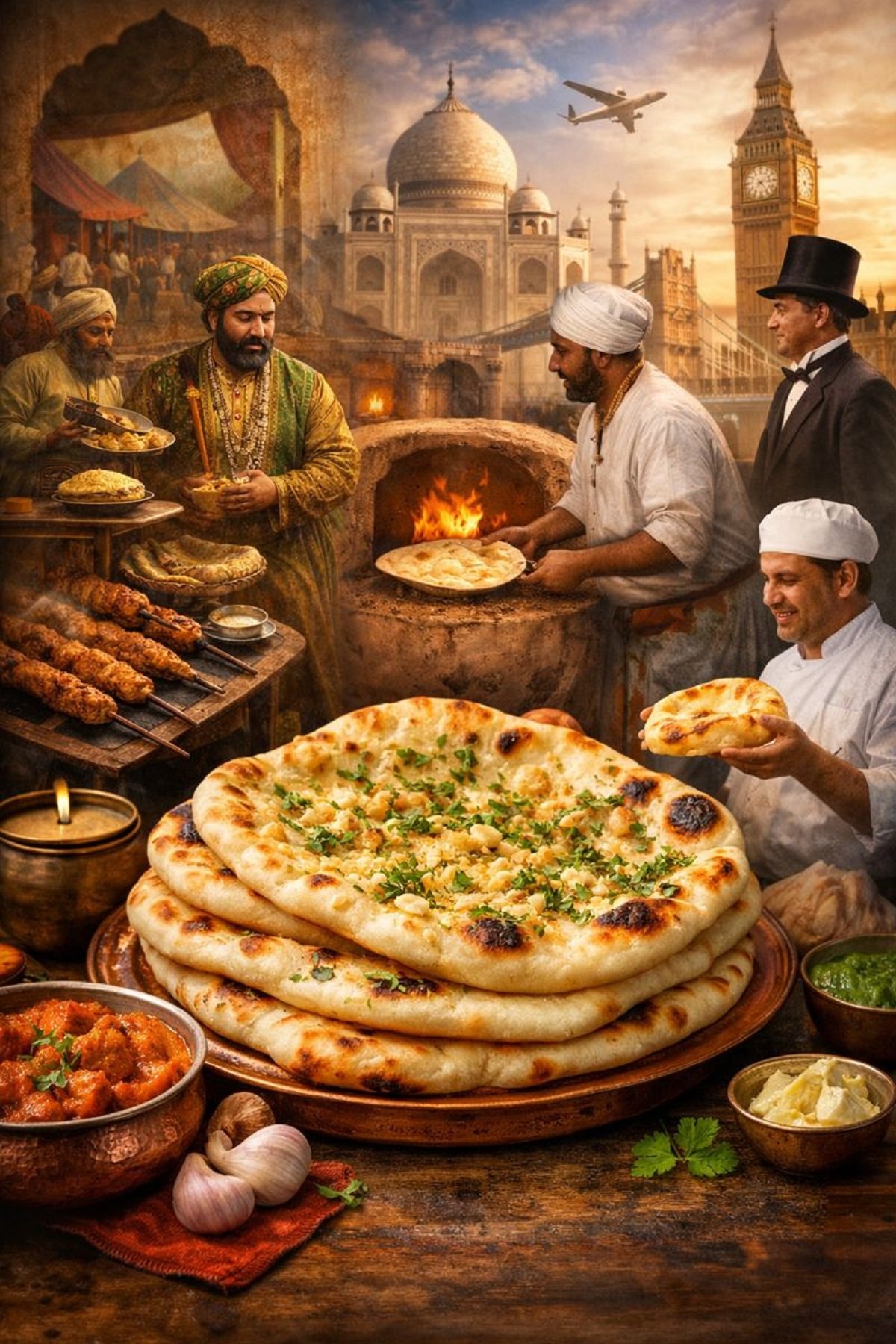
Jaipur,Jan.02,2026:Butter Garlic Naan is a flavour-packed upgrade of traditional naan. Freshly baked naan is brushed generously with butter and topped with finely chopped garlic, releasing an aroma that is instantly comforting.
Its mild, slightly sweet flavour allows spicy gravies to shine, while its soft-yet-chewy texture adds depth to every meal.
This harmony of simplicity and indulgence is what makes Butter Garlic Naan universally appealing.
Butter Garlic Naan History and Global Recognition
The Butter Garlic Naan History entered a historic chapter when Taste Atlas ranked it number one among the world’s best breads, beating iconic European loaves.
This recognition cemented naan’s place not just as Indian comfort food, but as a global culinary treasure.
Where Did Naan Originate
Food historians largely agree that naan’s roots lie in ancient Persia (modern-day Iran). The word “naan” comes from the Persian term for bread.
Early Persian flatbreads were made using flour and water and cooked on heated stones. These primitive breads laid the foundation for what would later evolve into naan.
Naan’s Arrival in the Indian Subcontinent
Between the 13th and 16th centuries, Islamic rulers brought Persian culinary traditions to the Indian subcontinent.
Along with spices, cooking techniques, and royal etiquette came the tandoor, a clay oven that transformed naan into the fluffy, blistered bread we know today.
Naan in the Royal Courts of the Delhi Sultanate
Persian-Indian poet Amir Khusro, who lived during the reigns of Alauddin Khilji and Muhammad bin Tughlaq, documented courtly life in detail.
He described two types of naan
- Naan-e-Tanuk – Thin and delicate
- Naan-e-Tandoori – Thick, puffed, and baked in tandoor
These naans were typically served with kebabs and minced meat dishes.
Mughal Kitchens and the Rise of Luxury Naan
During the Mughal era, naan-making became an art.
Special chefs called “Naan Bai” were employed exclusively to prepare this bread. Rare ingredients like yeast were used to make naan softer and richer.
Historian Neha Vermani explains that different naans were created to showcase innovation:
- Naan-e-Warqi – Flaky, layered naan
- Naan-e-Tangi – Small naan designed to absorb gravies
Some naans were even named after royal kitchens, such as Bakir Khani, linked to nobleman Baqir Najm Sani.
Why Naan Was Once a Royal-Only Food
The complexity of preparation, expensive ingredients, and specialised chefs made naan a luxury food for centuries.
For nearly 300 years, naan remained exclusive to royalty and nobility.
British Era and Naan’s Journey to the West
During British rule, naan slowly entered colonial dining culture. British travellers encountered naan in royal feasts and carried stories of it back to Europe.
This period marked naan’s first steps toward global awareness.
How Butter Garlic Naan Became Mainstream
As cooking techniques simplified, naan became accessible to the masses.
Modern naan dough typically includes flour, yogurt, yeast, and water. It is hand-shaped, slapped into a blazing-hot tandoor, and finished with butter or ghee.
This is where Butter Garlic Naan History truly transformed—becoming a staple in local restaurants and homes.
Modern Reinventions of Butter Garlic Naan
In the 1990s and 2000s, chefs worldwide began experimenting.
Celebrity chef Suvir Saran recalls introducing spinach, gouda cheese, and mushrooms into naan at his New York restaurant.
He explains this made naan appealing to non-Indians while preserving its soul.
Global Variations and Experiments
Today, naan is endlessly reinvented
- Goa: Pork Vindaloo Naan
- Hong Kong: Truffle Cheese Naan
- UK & USA: Cheese-stuffed Garlic Naan
This global creativity has expanded the Butter Garlic Naan History beyond borders.
Why Butter Garlic Naan Represents Indian Identity
While historians debate its exact origin, naan’s emotional connection with India is undeniable.
Chef Saran beautifully sums it up
“Naan tells a story of diversity—where cultures coexist and celebrate differences.”
It reflects India’s ability to absorb influences and transform them into something uniquely its own.
A Bread That Unites Cultures
The Butter Garlic Naan History is a journey of migration, innovation, and shared heritage.
From Persian stones to Mughal tandoors, from royal darbars to global dining tables, naan has evolved while keeping its soul intact.
It reminds us that food doesn’t divide—it connects.
Breaking News
Saudi Arabia UAE Tensions 2026- Alarming Power Shifts That Could Deepen Pakistan’s Crisis-

Contents
Saudi Arabia,Jan.02,2026:Saudi Arabia UAE tensions 2026 have once again drawn global attention to deep structural cracks within the Gulf region. Although recent diplomatic gestures suggest that tensions over Yemen may temporarily cool, analysts warn that this rivalry is far from resolved.
At stake is not just the future of Yemen, but the balance of power in the Muslim world, economic corridors across Africa and the Red Sea, and the foreign policy stability of countries like Pakistan, which rely heavily on both Riyadh and Abu Dhabi.
Trigger Point of the Latest Rift
The immediate spark behind Saudi Arabia UAE tensions 2026 was a Saudi-led coalition airstrike in Yemen that reportedly targeted weapons and military vehicles allegedly supplied by the UAE to southern separatist groups.
Saudi Arabia subsequently demanded that the UAE withdraw its forces within 24 hours, citing the Yemeni government’s request. While Abu Dhabi denied supporting separatist militias, it simultaneously announced a phased military withdrawal — a move analysts described as damage control rather than compliance.
Saudi Airstrikes and the UAE Withdrawal
This episode exposed fundamental differences in strategy. Riyadh views Yemen primarily through the lens of border security and Iranian influence, while Abu Dhabi sees it as a gateway to controlling maritime trade routes.
Experts argue that Saudi Arabia UAE tensions 2026 are less about Yemen itself and more about who defines the region’s future security architecture.
Strategic Divergence Between Riyadh and Abu Dhabi
For years, Saudi Arabia and the UAE were viewed as inseparable allies. However, recent developments reveal diverging priorities
- Saudi Arabia aims to reassert itself as the political and religious center of the Muslim world.
- The UAE is focused on becoming a global trade, logistics, and financial hub, especially in Africa.
This divergence has transformed quiet competition into open friction, feeding into broader Saudi Arabia UAE tensions 2026.
Economic Ambitions vs Regional Leadership
Saudi Arabia’s Vision 2030 emphasizes domestic investment, tourism, and mega-projects. Meanwhile, the UAE continues expanding ports, military bases, and economic corridors in the Horn of Africa and along the Red Sea.
Analysts believe these competing economic visions are structurally incompatible, making Saudi Arabia UAE tensions 2026 difficult to resolve permanently.
Why Saudi Arabia UAE Tensions 2026 Alarm Pakistan
Pakistan finds itself in a delicate position. As the only Muslim-majority nuclear power, Islamabad has historically maintained strong relations with both Gulf states.
Key realities include
- Millions of Pakistani workers in Saudi Arabia and the UAE
- Heavy remittances sustaining Pakistan’s economy
- Strategic defense cooperation with Riyadh
Any escalation in Saudi Arabia UAE tensions 2026 threatens to pull Pakistan into an uncomfortable diplomatic corner.
Can Pakistan Remain Neutral
According to multiple analysts, neutrality may not be an option.
Pakistan recently signed a strategic defense agreement with Saudi Arabia, making military cooperation more institutionalized. At the same time, Pakistan cannot afford to alienate the UAE, which hosts over 2.1 million Pakistani expatriates.
This balancing act becomes increasingly fragile as Saudi Arabia UAE tensions 2026 intensify.
Diplomatic Balancing by Islamabad
Following the Yemen airstrike episode, Pakistan initiated immediate diplomatic outreach:
- Prime Minister Shehbaz Sharif met UAE President Sheikh Mohammed bin Zayed
- Deputy PM Ishaq Dar spoke with Saudi Foreign Minister Prince Faisal bin Farhan
Official statements avoided Yemen references, but analysts agree the intent was crisis containment.
The Defense Factor and Saudi-Pak Ties
While Pakistan’s military is not directly involved in Yemen, former army chief General (Retd) Raheel Sharif holds a senior position within the Saudi-led coalition.
Experts warn that if Riyadh intensifies operations against UAE-backed groups, Pakistan could be compelled to support Saudi security interests, complicating its diplomatic posture.
UAE, Israel, and the Abraham Accords
Another major fault line behind Saudi Arabia UAE tensions 2026 is Abu Dhabi’s decision to normalize ties with Israel under the Abraham Accords.
At a time when many Muslim nations were watching Saudi Arabia’s stance, the UAE moved ahead independently — a move seen as challenging Riyadh’s traditional leadership role.
Africa, Red Sea, and the Battle for Influence
Beyond Yemen, rivalry extends to
- Sudan
- Somalia
- Somaliland
- Ethiopia
- Gulf of Aden
The UAE has actively supported factions and invested heavily in ports and logistics. Saudi Arabia, however, views unchecked UAE influence across the Red Sea as a direct security threat.
This rivalry is a core driver of Saudi Arabia UAE tensions 2026.
OPEC, Energy Politics, and Economic Friction
Disagreements within OPEC further strain relations. Saudi Arabia prioritizes price stability, while the UAE seeks greater production flexibility.
These policy clashes reinforce the perception that Saudi Arabia UAE tensions 2026 are rooted in long-term economic competition, not short-term disputes.
The Role of the United States
Washington remains deeply invested in preventing Gulf fragmentation. U.S. Secretary of State Marco Rubio recently held calls with both Saudi and UAE foreign ministers following the Yemen escalation.
However, analysts caution that U.S. influence has limits — as seen in past Gulf disputes where mediation efforts failed.
What Direction Will Saudi Arabia UAE Tensions 2026 Take?
Experts believe three scenarios are possible
- Managed rivalry with periodic flare-ups
- Economic decoupling without military confrontation
- Proxy conflicts across Africa and Yemen
Given regional instability involving Iran and Israel, global powers may pressure both sides to avoid open confrontation — but tensions are unlikely to disappear.
A Shifting Muslim World Order
Saudi Arabia UAE tensions 2026 reflect a deeper transformation underway in the Middle East. Traditional hierarchies are weakening, new power centres are emerging, and long-standing alliances are being recalibrated.
Breaking News
2026 Balochistan Global Diplomatic Week 7 Explosive Signals That Shake Pakistan and Redefine India’s Strategic Role-

Contents
Balochistan, Jan.02,2026:2026 Balochistan Global Diplomatic Week has emerged as one of the most disruptive geopolitical developments in South Asia in recent years. Announced by prominent Baloch human-rights activist Mir Yar Baloch, the initiative signals a dramatic shift in how the Baloch movement wants to engage with the world — openly, directly, and without Pakistan as a mediator.
At the heart of this announcement lies a bold message: the people of Balochistan no longer see their future within Pakistan.
What Is 2026 Balochistan Global Diplomatic Week
2026 Balochistan Global Diplomatic Week is planned for the first week of 2026 and is designed as a coordinated global outreach campaign by Baloch representatives.
Key Objectives
- Direct diplomatic communication with foreign governments
- International awareness of alleged human-rights violations
- Global recognition of the proclaimed Balochistan Republic
- Strategic engagement with democratic nations, including India
Unlike earlier symbolic protests, this initiative positions Balochistan as a self-declared political entity seeking legitimacy on the world stage.
Who Is Mir Yar Baloch and Why His Voice Matters
Mir Yar Baloch is widely known in international human-rights circles as a vocal advocate for Baloch civil liberties. In May 2025, he publicly declared the formation of a “Balochistan Republic”, citing decades of enforced disappearances, military operations, and economic marginalization.
His statements have been referenced by:
- International human-rights NGOs
- Academic South Asia policy forums
- Diaspora-led advocacy platforms
Open Support for India from Pakistan’s Soil
One of the most striking aspects of 2026 Balochistan Global Diplomatic Week is the explicit expression of support for India — a rare and politically explosive move.
Mir Yar Baloch stated that the Baloch people stand firmly with India, praising New Delhi’s stance against terrorism and regional instability.
This declaration breaks a long-standing regional taboo, especially given Pakistan’s sensitivity to any external acknowledgment of Baloch grievances
A Strategic Outreach
As part of the 2026 Balochistan Global Diplomatic Week outreach, Mir Yar Baloch wrote a formal letter to India’s External Affairs Minister Dr. S. Jaishankar.
Highlights of the Letter
- Recognition of India’s counter-terrorism actions
- Appreciation of India’s “moral clarity” on regional security
- Expression of solidarity with Indian citizens affected by terrorism
This communication was sent not as an activist, but explicitly as a representative of the Balochistan Republic.
Operation Sindoor and the Baloch Perspective
The letter specifically referenced Operation Sindoor, launched by India in response to terror attacks, including the Pahalgam incident.
From the Baloch viewpoint
- The operation symbolized resistance against state-sponsored terrorism
- It represented accountability for militant infrastructure
- It reinforced the idea that regional justice is possible
Why Balochistan Wants Direct Global Engagement
According to Mir Yar Baloch, Pakistan has consistently blocked internal dialogue and international mediation. As a result, 2026 Balochistan Global Diplomatic Week aims to bypass Islamabad altogether.
Core Demands
- International investigation into disappearances
- UN-monitored human-rights mechanisms
- Economic self-determination over natural resources
Pakistan’s Deepening Internal Crisis
The announcement of 2026 Balochistan Global Diplomatic Week comes at a time when Pakistan faces:
- Economic instability
- Political fragmentation
- Rising separatist sentiments
Balochistan, despite being resource-rich, remains one of the most underdeveloped regions — a contradiction frequently highlighted in global policy discussions.
International Human Rights Context
Multiple global organizations have documented concerns in Balochistan, including
- Enforced disappearances
- Restrictions on press freedom
- Militarization of civilian areas
These reports provide international context to the motivations behind 2026 Balochistan Global Diplomatic Week.
India’s Diplomatic Dilemma and Opportunity
India has traditionally maintained a cautious stance on Balochistan to avoid escalation. However, open outreach during 2026 Balochistan Global Diplomatic Week presents:
Risks
- Heightened tensions with Pakistan
- Diplomatic pressure in multilateral forums
Opportunities
- Reinforcing India’s human-rights narrative
- Strengthening regional moral leadership
- Countering cross-border terrorism narratives
Global Reactions and Strategic Implications
Although no formal recognition has been announced yet, policy experts believe 2026 Balochistan Global Diplomatic Week will
- Trigger debates in Western capitals
- Increase scrutiny of Pakistan’s internal policies
- Encourage diaspora-led advocacy movements
What Comes Next After 2026 Balochistan Global Diplomatic Week
Post-2026 scenarios may include
- Expanded diplomatic missions by Baloch representatives
- Increased UN engagement requests
- Escalation or suppression attempts within Pakistan
The direction will depend heavily on global response and media attention.
A Turning Point in South Asian Politics
2026 Balochistan Global Diplomatic Week is more than a symbolic campaign — it is a strategic declaration of political intent.
By openly aligning with India, seeking global legitimacy, and challenging Pakistan’s narrative, the Baloch leadership has set the stage for a new chapter in South Asian geopolitics — one that the world can no longer afford to ignore.

Yuvaam 2026: A Grand Celebration of Excellence, Culture, and Inspiration in Jaipur

International Women’s Day 2026: 7 Powerful Highlights from the Inspiring Jaipur Celebration by Dr. Ambedkar Memorial Welfare Society

UGC Act 2026: 5 Powerful Demands Raised in Rajasthan to End Campus Discrimination

UKG Graduation Ceremony at St. Xavier’s School Nevta: 7 Heartwarming & Inspiring Moments from a Grand Spiritual Celebration

Indian Art History Congress 2026: 5 Powerful Insights from Dr. Renu Shahi’s Groundbreaking Satire Art Research in Bengaluru

ICU Patient Attack Case exposes disturbing police retaliation as the High Court cancels an FIR against a critically injured victim-

Priyansh Arya: The Six-Hitting Sensation of IPL 2025

Preity Zinta Spotted with New Punjab Kings Hero Priyansh Arya in Viral Clip

Nag Panchami 2025: 7 Key Rituals and Puja Time to Eliminate Kaal Sarpa Dosha

Radhika Merchant: A New Chapter as Radhika Ambani

Balen Shah, Kathmandu’s independent mayor, from rapper to political leader. Explore his rise amidst Nepal’s youth-led revolution-

Kanya Pujan 2025 Step-by-Step Rituals, Timings, and Powerful Benefits Explained-

best career opportunities | Jaipur Career Fair | Credent TV | Dainik Navjyoti D2S03

what is reiki healing | Mental Health | Shiksha Sarokar, शिक्षा सरोकार, Sunil Narnaulia

DAV Centenary Public School, Vaishali Nagar, Jaipur hosts Successful ‘Mind Wars Quiz: A Battle of Wits and Knowledge’

 Breaking News1 month ago
UGC Act 2026: 5 Powerful Demands Raised in Rajasthan to End Campus Discrimination
- Breaking News1 month ago
International Women’s Day 2026: 7 Powerful Highlights from the Inspiring Jaipur Celebration by Dr. Ambedkar Memorial Welfare Society
- Credent TV2 months ago
UKG Graduation Ceremony at St. Xavier’s School Nevta: 7 Heartwarming & Inspiring Moments from a Grand Spiritual Celebration
- Art2 months ago
Indian Art History Congress 2026: 5 Powerful Insights from Dr. Renu Shahi’s Groundbreaking Satire Art Research in Bengaluru
- Art2 weeks ago
Yuvaam 2026: A Grand Celebration of Excellence, Culture, and Inspiration in Jaipur
