Connect with us

Breaking News

Delhi-airport-terminal-2-modern-upgrade-features-

Published

on

Delhi Airport Terminal 2 has entered a new era

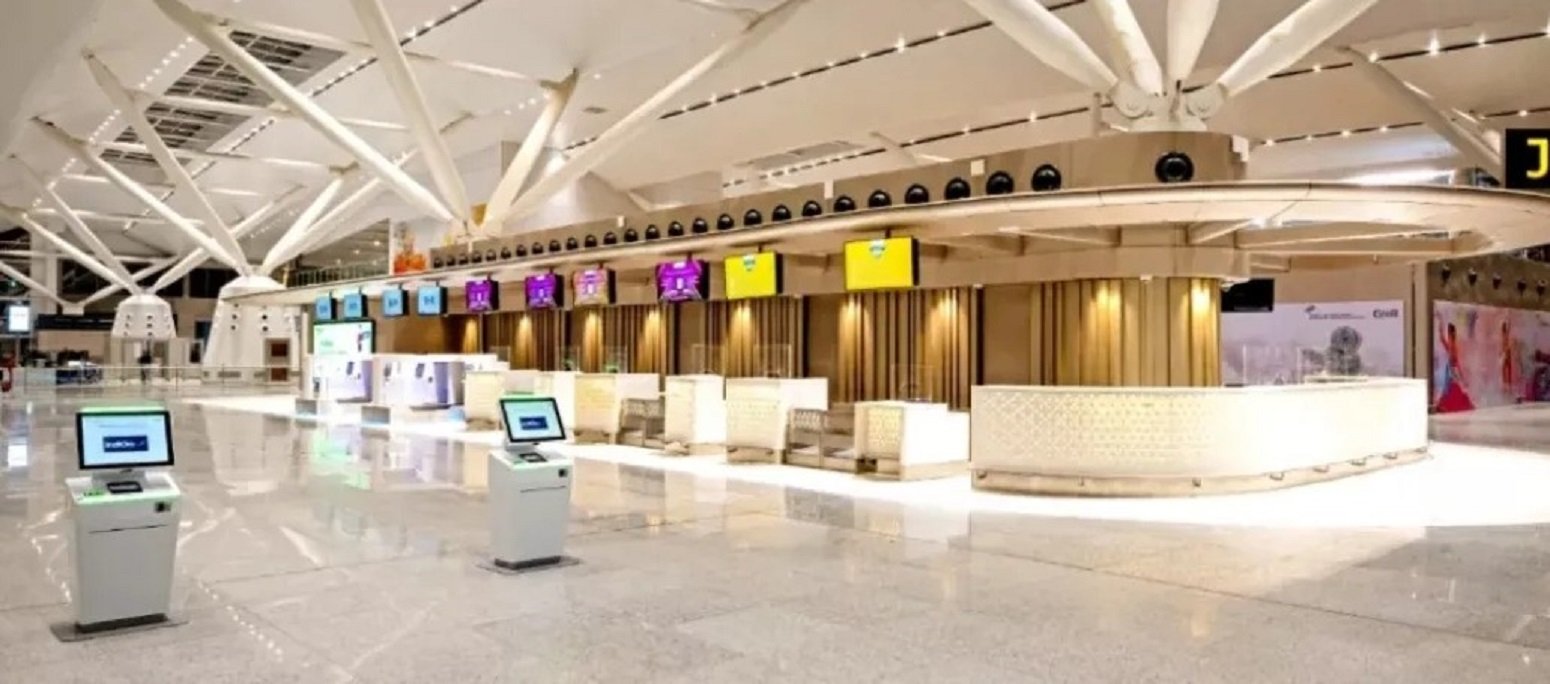
New Delhi, Oct.25,2025:Delhi Airport Terminal 2 has entered a new era. On 25 October 2025, the revamped terminal at Indira Gandhi International Airport (IGI) was inaugurated by K. Rammohan Naidu, India’s Civil Aviation Minister, marking the culmination of a months-long transformation of a forty-year-old terminal-
From the intervening night of October 25-26 the terminal is set to resume operations, equipped with a host of modern facilities and handling around 120 domestic flights daily. In this article, we explore how the Delhi Airport Terminal 2 upgrade matters — for travellers, airlines, and India’s ambition to build world-class aviation infrastructure — and detail the key features, operational shifts, strategic impact and the road ahead.

Why the Delhi Airport Terminal 2 Upgrade Matters

The renovation of Delhi Airport Terminal 2 is not just a facelift. It is a strategic step in India’s larger aviation push-

Advertisement
  • The terminal, originally built by Airports Authority of India (AAI) roughly 40 years ago, was closed in April for major upgrade.
  • IGI Airport handles roughly 50 % of Northern India’s passenger traffic and about 50,000 transfers per day.
  • With the upgraded Terminal 2, the airport seeks to decongest operations, improve passenger experience, and strengthen its position as a preferred transit hub for both domestic and international markets.
  • As Minister Naidu noted, this reflects India’s push to become a global civil aviation ecosystem under the leadership of Narendra Modi.
    Therefore, the Delhi Airport Terminal 2 upgrade is a milestone in the Aviation sector’s transformation — and its importance goes far beyond the capital city.

Key Features of Delhi Airport Terminal 2

Self-Baggage Drop (SBD)

One of the headline features at Delhi Airport Terminal 2 is the introduction of a self-baggage drop facility. Passengers can now check in their own luggage via kiosks that print bag tags, scan them, and deposit bags on the conveyor belt — reducing queue times and streamlining check-in.
This is especially relevant in peak times, festival seasons or large transfer flows where reducing check-in waiting makes a real difference.
In practice: travellers will walk up, scan a boarding pass, tag their bag, and drop it — all without relying on staff assistance for the first step.

Six New Passenger Boarding Bridges

The renovation also includes six brand-new passenger boarding bridges (PBBs) with autonomous docking technology — the first time such infrastructure is being used at this scale in India.
These bridges are equipped with side-covering cushions, flush doors and adjustable platforms to ensure fast and safe boarding and disembarkation. The improved aircraft handling means quicker turnarounds and smoother flows.
From an airline operations standpoint, this improves aircraft utilisation and reduces delays linking to boarding bridge constraints.

Advertisement

Virtual Information Desk & Smart Signage

The terminal has incorporated a “virtual information desk” where travellers can access live flight information, gate navigation, airport facility maps, chat with virtual assistants, and generate WiFi coupons.
Additionally, high-resolution flight information display systems (FIDS) and dynamic way-finding signage improve passenger orientation and reduce confusion.
By combining technology and design, the terminal elevates the passenger experience beyond the basics.

DigiYatra and Biometric Entry

Advertisement

Another key modernisation: the implementation of the DigiYatra facial recognition system across all entry gates and security zones in Terminal 2.
This enables a seamless, paperless journey for passengers who register, allowing them to pass through checkpoints via facial scan rather than physical documents.
For frequent flyers and business travellers, this can significantly reduce time lost in traditional verification queues.

Modern Design, Skylights and Inclusive Accessibility

Beyond tech, the overhaul includes architectural and comfort enhancements: modern skylight ceilings that flood the space with natural light, improved flooring, contemporary interior design and enhanced accessibility features for passengers with reduced mobility (PRM).
The refurbished air-side and apron areas, upgraded HVAC and electrical systems, and focus on inclusive design reflect a holistic upgrade.
In short, Delhi Airport Terminal 2 isn’t just smarter — it’s brighter, friendlier and more inclusive.

Airline Operations Restructuring at Delhi Airport Terminal 2

Advertisement

The upgrade of Terminal 2 comes with a reshuffling of airline operations to optimise flows across the airport’s multiple terminals. Key changes include-

  • IndiGo (6E) will shift all its flights numbered 2000-2999 to Terminal 2.
  • Air India will transfer about 60 of its domestic flights from Terminal 3 (T3) to Terminal 2, and its domestic flights with 1XXX numbering will operate from T2.
  • Air India Express will continue all domestic flights from Terminal 1.
  • SpiceJet and Akasa Air will continue to operate from Terminal 1. As a result, starting 26 October 2025, Terminal 2 will handle around 120 domestic flights daily.
    From a passenger’s perspective this means: check your flight number and terminal assignation carefully, as the shifts may affect check-in, boarding and transit logistics.

For Passengers, Airlines and India’s Aviation Ecosystem

Impact for Passengers

  • Reduced queue times through self-service SBD, biometric gates and dynamic way-finding.
  • Enhanced comfort and accessibility for all-age travellers, including those with mobility challenges.
  • More organised flows and less confusion thanks to clearer terminal zoning for airlines.
  • Better overall ambience — natural light, modern interiors — contributes to less travel fatigue.

Impact for Airlines & Airport Operations

  • Better aircraft turnaround times due to advanced boarding bridges and streamlined ground infrastructure.
  • Improved terminal allocation reduces congestion in other terminals, distributing load more evenly.
  • The move strengthens IGI’s capacity to handle more flights and more passengers, which is critical as domestic air traffic in India continues to grow.
  • Enables the airport to evolve from a national hub to a more efficient international transfer hub, furthering network connectivity.

Impact for India’s Aviation Infrastructure Ambitions

  • Terminal 2’s upgrade marks a tangible milestone in India’s drive to build world class airports under the leadership of the Ministry of Civil Aviation.
  • With IGI Airport’s annual capacity crossing 100 million passengers, the upgraded T2 helps unlock growth in a cost-effective way instead of building from scratch.
  • The facility becomes a showcase of India-led airport modernization efforts: combining smart technology, sustainability, passenger-centric design and operational efficiency.

Challenges & Considerations Going Forward

Even as the upgrade delivers powerful benefits, several considerations remain-

  • Passenger Awareness & Transition: With terminal allocations changing, passengers need to stay informed about their specific flight’s terminal. Airlines must communicate clearly to avoid confusion.
  • Technology Adoption & Reliability: The success of features like DigiYatra, self-bag drop and virtual info desks depends on smooth operation and customer trust. Early teething issues could impact perception.
  • High Traffic Periods: While the terminal is designed to handle ~120 domestic flights daily initially, peak holiday travel or surge demand may test infrastructure and service quality.
  • Integration with Other Terminals: Terminal 2’s success also depends on how well it integrates with Terminals 1 and 3 — connectivity, transfer flows, signage, baggage transfer.
  • Sustainability & Future Expansion: As traffic grows further, will further capacity or upgrades be needed? How will environmental and sustainability goals be balanced?

Delhi Airport Terminal 2 has taken a major leap forward — not merely in appearance, but in capability. With self-service baggage drop, biometric digital entry, new boarding bridges, modern design and an intelligent layout, the terminal positions IGI Airport not just for today’s domestic traffic but for tomorrow’s international ambitions.
For travellers, the promise is clear: smoother, smarter journeys. For airlines and airport operators, improved efficiency and throughput. For India’s aviation story, a tangible marker of progress.

Advertisement

Credent TV Editorial Team is the newsroom desk of Credent TV, a digital news platform owned and operated by Manasvita Global Media Pvt. Ltd. Editorial oversight is led by Sunil S. L. Narnauliya, Editor-in-Chief. The desk covers national affairs, Rajasthan, education, courts, politics, culture and social issues. Its work follows Credent TV’s Ethics Policy, Fact-Check Policy and Correction Policy. For corrections, feedback or source clarifications, contact the newsroom at https://credenttv.com/contact-us/

Breaking News

Modi-Putin Meeting Focuses on Trade, Energy and Major Defence Proposals

Published

on

Modi-Putin Meeting Focuses on Trade, Energy and Major Defence Proposals

New Delhi | 11 Sep 2026

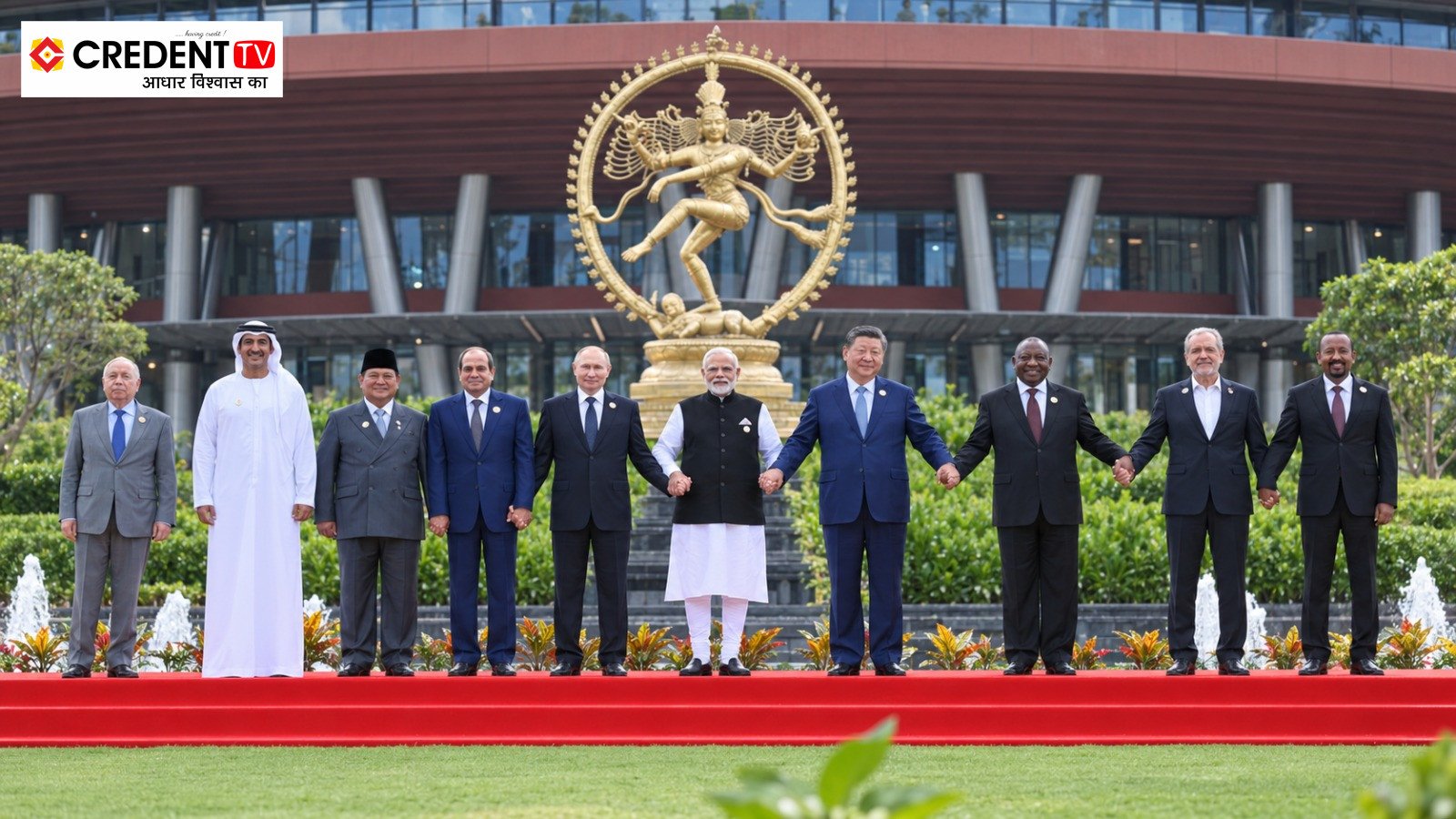
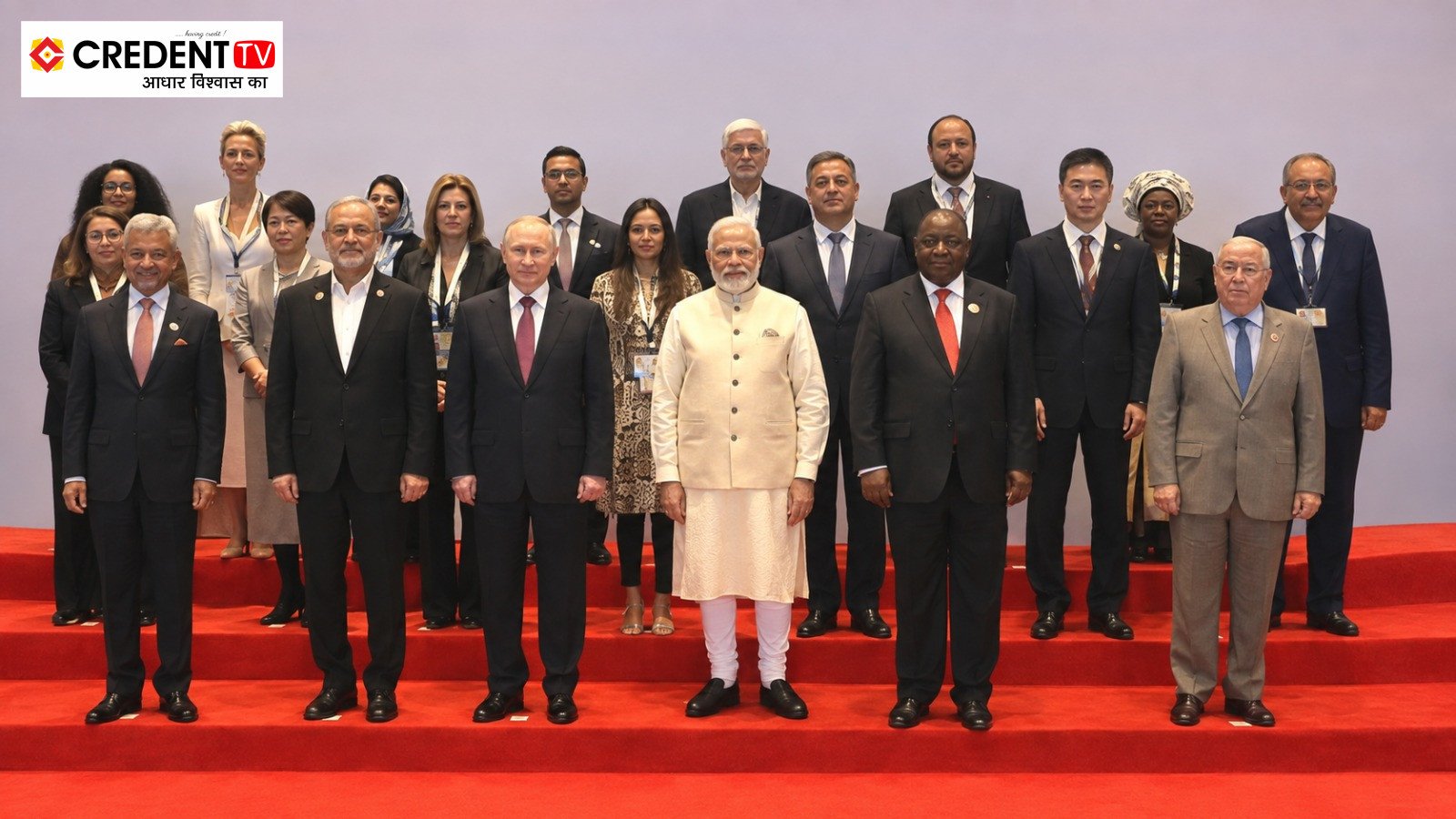
Prime Minister Narendra Modi and Russian President Vladimir Putin held bilateral talks in New Delhi on Friday, reviewing cooperation in trade, energy, defence and technology ahead of the 18th BRICS Summit.

Advertisement

The meeting covered the broader India-Russia strategic partnership, including civil nuclear energy, fertilisers, critical minerals, manufacturing, railways and steel. Defence proposals involving the Su-57 fighter aircraft, S-400 air-defence system and BrahMos missile programme were also expected to feature in the discussions.

Modi-Putin meeting puts defence cooperation in focus

Russia has proposed supplying its Su-57 fifth-generation fighter aircraft to India and has expressed readiness to discuss technology sharing and domestic production. India had not announced any purchase or production agreement at the time of reporting.

The two sides were also expected to review the remaining S-400 deliveries and long-term maintenance arrangements. A proposed upgrade of India’s Su-30MKI fleet and future cooperation on advanced air-defence systems have formed part of wider defence discussions.

Advertisement

India and Russia are separately examining improvements to the jointly developed BrahMos supersonic cruise missile. The proposed BrahMos-NG would be lighter than the existing system and designed for integration with a wider range of aircraft, including the Tejas fighter.

Trade, energy and Ukraine discussed

Modi and Putin discussed expanding bilateral trade and developing reliable payment and transport mechanisms. India and Russia have explored greater use of national currencies while seeking solutions to the imbalance created by India’s substantially higher imports from Russia.

Energy remains central to the relationship. India has defended its purchases of Russian oil by citing the need for secure, affordable and dependable supplies for its population and economy.

Advertisement

Modi reiterated India’s position that the conflict in Ukraine should be resolved through dialogue and diplomacy. New Delhi has said it supports credible efforts aimed at achieving peace while continuing its economic engagement with Moscow.

Civil nuclear cooperation, including existing Russian involvement at the Kudankulam Nuclear Power Plant and the possibility of additional projects, was also expected to receive attention.

BRICS Business Forum draws more than 2,000 delegates

Commerce and Industry Minister Piyush Goyal said more than 2,000 business leaders and delegates from BRICS member and partner countries attended the BRICS Business Forum. Discussions covered non-tariff barriers, global value chains, agriculture, services, women-led enterprises and the digital economy.

Advertisement

International delegations arrive in New Delhi

Nigerian Vice-President Kashim Shettima arrived in India to participate in the BRICS Summit, joining leaders and senior representatives from member, partner and invited countries.

United Nations Secretary-General António Guterres also arrived in New Delhi and was received at the airport by Union Minister Sukanta Majumdar.

Foreign ministers hold bilateral consultations

External Affairs Minister S. Jaishankar met Brazilian Foreign Minister Mauro Vieira at Hyderabad House. Their discussions covered bilateral relations and international issues ahead of the summit.

Advertisement

Modi also presented Putin with a Russian translation of the Thirukkural, the classical Tamil work attributed to poet-philosopher Thiruvalluvar, during their engagement in New Delhi.

Indian cuisine and millets feature in summit hospitality

Hotels accommodating BRICS delegates prepared Indian menus featuring millet-based dishes. Amit Biswas, executive sous chef at The Lalit New Delhi, said the menu was designed to promote millets while serving the requirements of international guests.

The BRICS leaders’ summit is scheduled for 12 and 13 September at Bharat Mandapam. Leaders are expected to discuss economic cooperation, global governance, trade, financial coordination, sustainable development and current international conflicts.
Advertisement

Continue Reading

Breaking News

Bangladesh PM Tarique Rahman to Skip BRICS Summit in New Delhi

Published

on

Bangladesh PM Tarique Rahman to Skip BRICS Summit in New Delhi


Dhaka | 10 Sep 2026

Bangladesh Prime Minister Tarique Rahman will not attend the BRICS Summit in New Delhi after Dhaka said the invitation was issued to the current BIMSTEC chair rather than to Rahman in his capacity as Bangladesh’s head of government.

Bangladesh’s State Minister for Foreign Affairs Humayun Kabir confirmed the decision while speaking to reporters on Thursday. Bangladesh will consequently have no government representative at the summit, according to the latest reports.

Advertisement


Dhaka clarifies BIMSTEC invitation

Bangladesh is not a BRICS member. India had invited the BIMSTEC chair to participate in an outreach session organised alongside the summit. Bangladesh currently holds the chairmanship of the Bay of Bengal Initiative for Multi-Sectoral Technical and Economic Cooperation.

Dhaka’s position is that the invitation was addressed to the head of the regional grouping and did not constitute a formal invitation to the Bangladeshi prime minister. Indian authorities had not publicly announced a change to the invitation arrangement at the time of reporting.

BIMSTEC comprises Bangladesh, Bhutan, India, Myanmar, Nepal, Sri Lanka and Thailand. The grouping promotes cooperation in areas including trade, connectivity, security, energy and economic development.

Advertisement


What is the BRICS outreach session?

The host country may invite non-member states and representatives of regional organisations to BRICS outreach meetings. These sessions allow participants outside the bloc to discuss development, trade, energy, food security and other international issues with BRICS leaders.

India previously brought BRICS and BIMSTEC leaders together during the 2016 summit in Goa. The 2026 BRICS Summit is scheduled for 12 and 13 September at Bharat Mandapam in New Delhi.

Separate India visit remains under consideration

Kabir indicated that Dhaka was considering a separate bilateral visit by Rahman, but no date had been finalised. A proposed visit in August did not take place, with Bangladesh saying at the time that no final decision had been made.

Advertisement


India and Bangladesh have been seeking to stabilise relations amid differences over former prime minister Sheikh Hasina, who has remained in India since leaving Bangladesh in 2024. Dhaka has requested her extradition, while India has said the request is under examination.

Bangladesh has also signalled that future bilateral talks should address trade, water sharing and other unresolved issues. Any visit by Rahman would be his first to India since assuming office in February 2026.

Advertisement


Continue Reading

Breaking News

India Monsoon Floods Close Kedarnath Route, Affect Millions Across UP and Bihar

Published

on

India Monsoon Floods Close Kedarnath Route, Affect Millions Across UP and Bihar


New Delhi | 11 Sep 2026

A reported cloudburst and landslide closed the Kedarnath pedestrian route in Uttarakhand on Friday as renewed monsoon activity intensified flooding across Uttar Pradesh, Madhya Pradesh and Bihar.

Large boulders reportedly fell on the Kedarnath route after heavy rain, blocking the pilgrimage track. No confirmed casualty figure was immediately available.

Advertisement


Kedarnath route closed after landslide

Uttarakhand remained under a yellow alert for thunderstorms and rain across all districts. Heavy rainfall was forecast at isolated places in Dehradun, Tehri, Rudraprayag, Chamoli, Nainital, Bageshwar and Pithoragarh.

Officials were assessing the affected section of the Kedarnath route. Travellers and pilgrims were advised to follow local administration instructions and avoid landslide-prone areas.

Floods affect 26 districts in Uttar Pradesh

More than 10 rivers, including the Ganga and Yamuna, were reported to be in spate across Uttar Pradesh. Flooding affected 26 districts and more than 400,000 people, according to figures cited in state-level reports.

Advertisement


A bridge was submerged in Mirzapur, while floodwater covered part of a highway in Farrukhabad. Residents of several villages in Unnao were using improvised boats after the swollen Ganga disrupted local transport.

The weather department forecast heavy rain in 48 districts on Friday. Lucknow, Varanasi, Prayagraj and Kaushambi were among 32 districts that received rain on Thursday.

Bihar flood crisis affects about 4.4 million people

Eight rivers were flowing above their danger levels in Bihar, where flooding had affected approximately 4.4 million people across 2,360 villages in 14 districts, according to disaster-management figures reported by Indian media.

Advertisement


Nearly 27,954 people were staying in relief camps. Floodwater had also entered parts of Tilka Manjhi Bhagalpur University, while villages in Munger and other riverine districts remained inundated.

Authorities continued relief operations as rising water levels in the Ganga, Kosi and other rivers threatened low-lying settlements.

Heavy-rain alert issued for 12 Madhya Pradesh districts

The monsoon system became active again in Madhya Pradesh after a three-day break. Heavy rain was forecast in 12 districts on Friday, with further rainfall expected in the Indore, Narmadapuram and Ujjain divisions from 12 September.

Advertisement


Flood-like conditions were reported in Damoh, where several residential areas were waterlogged. Bhopal, Narmadapuram and Vidisha also received rain on Thursday night.

Rain alerts extend across Rajasthan and Jharkhand

Rajasthan issued a yellow alert for heavy rain in nine districts as a low-pressure system over the Bay of Bengal revived monsoon activity. The wet spell was expected to continue until 15 September.

Jharkhand forecast heavy rain in eight districts, accompanied by thunderstorms, lightning and winds of 30–40 kilometres per hour. Residents in vulnerable areas were advised to avoid flooded roads, swollen rivers and unstable slopes.

Advertisement


Continue Reading

Breaking News

Modi-Putin Meeting Puts Su-57, S-400 and BrahMos Cooperation in Focus

Published

on

Modi-Putin Meeting Puts Su-57, S-400 and BrahMos Cooperation in Focus


New Delhi | 11 Sep 2026

Prime Minister Narendra Modi and Russian President Vladimir Putin are scheduled to hold bilateral talks in New Delhi on Friday, with defence, trade, energy and technology cooperation expected to dominate the agenda ahead of the 18th BRICS Summit.

Putin arrived in the Indian capital late on Thursday for a three-day visit. The proposed sale and possible production of Russia’s Su-57 fifth-generation fighter aircraft in India may figure in the talks, but New Delhi has not announced any agreement.

Advertisement


Modi-Putin meeting to cover major defence programmes

Discussions are expected to include pending S-400 air-defence system deliveries, maintenance support and the proposed upgrade of India’s Su-30MKI fighter fleet.

Russia has also proposed expanding cooperation on the BrahMos supersonic cruise missile programme. The two countries are examining improvements to the existing missile and the development of the lighter BrahMos-NG variant, which is intended for deployment on a wider range of aircraft.

Kremlin spokesperson Dmitry Peskov said earlier that the possible sale of the Su-57 to India was on the agenda. Any purchase, technology-transfer arrangement or domestic production plan would require formal negotiations and approval from the Indian government.

Advertisement


Trade, nuclear energy and connectivity also in focus

The two leaders are expected to review bilateral trade, investment, civilian nuclear energy and payment arrangements. India and Russia have been exploring wider use of national currencies while addressing practical difficulties created by their trade imbalance.

Connectivity projects, including the International North-South Transport Corridor and the proposed Chennai-Vladivostok maritime route, may also be discussed as both countries seek faster and more reliable supply chains.

BRICS leaders and delegates arrive in Delhi

United Nations Secretary-General António Guterres arrived in New Delhi for the summit and was received at the airport by Union Minister Sukanta Majumdar.

Advertisement


External Affairs Minister S. Jaishankar also met Brazilian Foreign Minister Mauro Vieira at Hyderabad House for discussions on bilateral relations and international issues.

Delegates attending the summit are being offered an Indian menu featuring millet-based dishes, according to Amit Biswas, executive sous chef at The Lalit New Delhi.

Iranian President arrives for BRICS Summit

Iranian President Masoud Pezeshkian also arrived in New Delhi on Friday. He is scheduled to meet Modi separately as India engages key BRICS partners amid continuing geopolitical and economic tensions.

Advertisement


The BRICS leaders’ summit is scheduled to be held at Bharat Mandapam in New Delhi on 12 and 13 September.

Advertisement


Continue Reading

Breaking News

India Bank Strike Today Over Five-Day Week, Branch Services Face Three-Day Disruption

Published

on

India Bank Strike Today Over Five-Day Week, Branch Services Face Three-Day Disruption


New Delhi | 11 Sep 2026

Banking services across India are expected to face disruption on Friday, 11 September, after the United Forum of Bank Unions went ahead with a nationwide strike demanding implementation of a five-day banking week. With banks also closed on the second Saturday, 12 September, and Sunday, 13 September, customers dependent on branch services could face a three-day gap in regular banking operations.

Bank strike in India goes ahead over five-day working demand

The United Forum of Bank Unions, an umbrella body of major bank employee and officer unions, decided to proceed with the strike after talks with the Indian Banks’ Association and government representatives failed to produce a definite timeline for implementing five-day banking.

Advertisement


In an official circular issued ahead of the strike, the All India Bank Employees’ Association said the Department of Financial Services had informed union representatives that the five-day banking proposal remained under government consideration. The unions, however, declined requests to defer the industrial action in the absence of a firm decision or timeline.

The five-day banking proposal was agreed between the unions and the Indian Banks’ Association as part of the March 2024 settlement and subsequently sent to the government for approval, according to the union.

Cash, cheque and other branch services may be affected

Customers could face delays in branch-dependent services such as cash deposits and withdrawals at counters, cheque-related work, passbook updates, loan processing and other in-person transactions, depending on employee participation in the strike.

Advertisement


The strike does not mean that every bank branch across India is automatically closed. September 11 is not a nationwide bank holiday under the Reserve Bank of India’s holiday calendar, and individual banks have made arrangements to maintain essential operations where possible.

State Bank of India and Punjab National Bank have cautioned customers that branch operations may be affected. The banks have advised customers to use digital and alternative banking channels for essential transactions.

UPI, ATMs and online banking expected to remain available

Digital banking services including UPI, mobile banking, internet banking and ATMs are expected to remain available during the strike. SBI has also advised customers to use its digital platforms, ATMs, automated deposit-cum-withdrawal machines and customer service points where required.

Advertisement


However, customers requiring physical branch assistance may experience delays, particularly because the strike immediately precedes the second Saturday and Sunday.

Why bank employees are on strike

The principal demand is the introduction of a five-day working week for banks. Unions have also raised concerns over the Performance Linked Incentive scheme and several pending service-related issues.

The Department of Financial Services has informed the unions that the Performance Linked Incentive scheme for Scale IV to VIII officers for 2025-26 has been kept in abeyance and would be discussed bilaterally. Despite that development, the UFBU said the absence of progress on five-day banking remained sufficient reason to continue with the September 11 strike.

Advertisement


Other issues raised by the unions include recruitment, pensions, gratuity, medical insurance for retirees and other service conditions.

More bank strikes planned if dispute remains unresolved

The September 11 stoppage is part of a wider programme of industrial action announced by the UFBU. The unions have also called for a three-day nationwide strike on 28, 29 and 30 September if their demands remain unresolved.

They have further warned of an indefinite strike from 26 October. Whether those actions proceed will depend on developments in negotiations with the government and the Indian Banks’ Association.

Advertisement


Continue Reading

Breaking News

Apple Launches iPhone Duo and iPhone 18 Pro, Foldable Starts at ₹299,900

Published

on

Apple Launches iPhone Duo and iPhone 18 Pro, Foldable Starts at ₹299,900


Cupertino | 9 Sep 2026

Apple has launched its first foldable iPhone, the iPhone Duo, alongside the iPhone 18 Pro and iPhone 18 Pro Max at its September product event in Cupertino. The iPhone Duo will start at ₹299,900 in India, while the iPhone 18 Pro range starts at ₹164,900, marking a major expansion of Apple’s premium smartphone line-up.

iPhone Duo starts at ₹299,900 in India

The iPhone Duo opens to reveal a 7.6-inch Super Retina XDR folding OLED display and carries a 5.4-inch outer display for use when the device is closed. Apple says the inner screen is its largest iPhone display to date.

Advertisement


The foldable model is powered by Apple’s A20 Pro chip and uses a vapour-chamber cooling system. It features a dual-battery architecture and Apple’s C2 modem, while iOS 27 has been adapted for the folding design and supports multitasking across the larger display.

Apple is offering the iPhone Duo in 256GB, 512GB, 1TB and 2TB storage configurations. Indian prices start at ₹299,900 for 256GB, rising to ₹449,900 for the 2TB version. The phone will be available in Night Sky and Star White finishes.

Pre-orders in India are scheduled to begin at 5:30 pm IST on 16 October, with sales starting on 23 October.

Advertisement


“iPhone Duo is the most transformational change to iPhone since the original.”— John Ternus, Apple CEO

Foldable design brings new display and camera features

The iPhone Duo uses a Grade 5 titanium frame and hinge cover and carries an IP68 rating for water and dust resistance. Apple says the device measures 5.2mm thick when open and weighs 254 grams.

Both displays support ProMotion with adaptive refresh rates of up to 120Hz, Always-On functionality and peak outdoor brightness of up to 3,000 nits. The inner display also uses a nano-texture finish designed to reduce reflections and make the fold less visually prominent.

The rear camera system includes a 48MP Fusion Main camera and a 48MP Fusion Ultra Wide camera. Apple has also added a 12MP Center Stage front camera and an under-display FaceTime camera for the inner screen.

Advertisement


Unlike Apple’s recent flagship iPhones, the Duo uses Touch ID integrated into the side button rather than Face ID. Apple says support for the USB-C Apple Pencil will arrive later in 2026. The iPhone Duo is eSIM-only worldwide.

iPhone 18 Pro adds variable-aperture camera and longer battery life

Apple also unveiled the iPhone 18 Pro and iPhone 18 Pro Max, powered by the same A20 Pro processor. The Pro models introduce a 48MP Fusion Main camera with variable aperture, allowing the camera to adjust for lighting conditions and depth of field.

The iPhone 18 Pro has a 6.3-inch Super Retina XDR display, while the Pro Max uses a 6.9-inch screen. Both models are available in Burgundy, Glacier, Silver and Black.

Advertisement


Apple says the iPhone 18 Pro Max can deliver up to 43 hours of video playback, the longest claimed battery life on an iPhone. The Pro range also introduces a redesigned Dynamic Island and a next-generation vapour chamber for sustained performance.

The iPhone 18 Pro starts at ₹164,900 in India. Pre-orders will open at 5:30 pm IST on 12 September, with availability beginning on 18 September.

Apple event also brings new Watches and AirPods

Alongside the new iPhones, Apple announced the Apple Watch Series 12, Apple Watch Ultra 4 and AirPods 5. The event was the company’s first major product launch under chief executive John Ternus.

Advertisement


Apple did not introduce a standard iPhone 18 during the September event, focusing its smartphone announcements on the premium iPhone 18 Pro models and the new foldable iPhone Duo.

The iPhone Duo puts Apple directly into the foldable smartphone segment already contested by companies including Samsung and Huawei, while its ₹299,900 starting price positions it well above Apple’s conventional flagship models in India.

Advertisement


Continue Reading

Bollywood

Drishyam: The Conclusion Trailer Released, Ajay Devgn Returns on 2 October

Published

on

Drishyam: The Conclusion Trailer Released, Ajay Devgn Returns on 2 October


India | 09 Sep 2026

The official trailer for Drishyam: The Conclusion was released on Wednesday, bringing Ajay Devgn back as Vijay Salgaonkar for the final chapter of the Hindi crime-thriller franchise. The film will open in cinemas on 2 October 2026.

Drishyam: The Conclusion trailer revives the Salgaonkar case

The trailer shows Vijay and his family facing renewed scrutiny as investigators continue trying to establish the truth behind the unresolved disappearance that drove the first two films.

Advertisement


Tabu returns as Meera Deshmukh, who remains determined to hold Vijay accountable. Shriya Saran reprises her role as Vijay’s wife, Nandini, while Ishita Dutta returns as their elder daughter, Anju.

The footage presents the concluding film as a confrontation between Vijay’s carefully maintained account and a renewed investigation supported by additional legal and police figures.

Jaideep Ahlawat and Prakash Raj join the investigation

Jaideep Ahlawat joins the franchise as a Crime Branch superintendent of police, while Prakash Raj appears as a lawyer. Their characters strengthen the investigation against Vijay and his family as the decade-long storyline moves towards its conclusion.

Advertisement


Akshaye Khanna, who played investigating officer Tarun Ahlawat in Drishyam 2, does not appear in the newly released trailer. The production has not announced his return for the concluding film.

Drishyam: The Conclusion releases on 2 October

Abhishek Pathak, who directed Drishyam 2, has directed the new instalment. He co-wrote the screenplay with Aamil Keeyan Khan and Parveez Shaikh.

The film is presented by Star Studio18 and produced by Panorama Studios. Alok Jain, Ajit Andhare, Kumar Mangat Pathak and Abhishek Pathak are credited as producers.

Advertisement


The 2 October release date carries narrative significance for the franchise because Vijay used events associated with that date to construct his family’s alibi in the first film. The makers have promoted the new instalment as the conclusion to Vijay Salgaonkar’s story in the Hindi series.

Advertisement


Continue Reading

Breaking News

Apple Event 2026: Foldable iPhone and iPhone 18 Pro Expected Tonight

Published

on

Apple Event 2026: Foldable iPhone and iPhone 18 Pro Expected Tonight


Cupertino | 09 Sep 2026

Apple will hold its “Surprise and shine” product event on Wednesday, with the iPhone 18 Pro series and the company’s first foldable iPhone widely expected to headline the presentation. The event begins at 10 am Pacific Time, or 10:30 pm in India.

Apple Event 2026: When and where to watch

Apple has confirmed that the event will be streamed on its official website and through the Apple TV app. The keynote is also expected to be available through Apple’s official YouTube channel.

Advertisement


The presentation will be Apple’s first major product event under chief executive John Ternus, who succeeded Tim Cook on 1 September. Cook now serves as executive chairman of Apple’s board.

Apple’s first foldable iPhone expected

Apple has not officially disclosed the event’s product line-up. However, reports indicate that the company could introduce its long-awaited foldable smartphone alongside the iPhone 18 Pro and iPhone 18 Pro Max.

The foldable device is expected to use a book-style design with an external display and a larger internal screen. Its official name, specifications, price and release date remained unconfirmed before the keynote. Reports have referred to possible names including “iPhone Ultra” and “iPhone Duo”, but Apple has announced neither.

Advertisement


Base iPhone 18 may not appear at September event

Unlike Apple’s traditional September launch cycle, the standard iPhone 18 is not expected to be unveiled alongside the Pro models. Industry reports suggest that Apple may introduce the base iPhone 18 later, potentially with an updated iPhone Air and iPhone 18e.

The reported change would allow Apple to separate its premium autumn releases from lower-priced models. Apple has not confirmed the delay or announced a launch schedule for the standard iPhone 18.

New Apple Watch and AirPods models also anticipated

Apple is also expected to present updated wearables and audio products, potentially including Apple Watch Series 12, Apple Watch Ultra 4 and new AirPods. Details remain based on pre-event reporting and should be treated as unconfirmed until Apple’s presentation.

Advertisement


Official specifications, Indian prices, pre-order dates and retail availability will become clear only after the keynote. Consumers should therefore avoid relying on leaked prices or purported product listings circulating before the event.

Advertisement


Continue Reading

Breaking News

US-Iran Conflict Pushes Oil Above $100, Raises India Fuel-Cost Risks

Published

on

US-Iran Conflict Pushes Oil Above $100, Raises India Fuel-Cost Risks


New Delhi | 09 Sep 2026

Brent crude climbed above $100 a barrel on Wednesday as escalating US-Iran attacks threatened shipping and energy supplies near the Strait of Hormuz, increasing pressure on India’s oil-import bill and raising the risk of higher petrol, diesel and LPG costs.

US-Iran conflict drives Brent crude above $100

Brent crude rose about 3% to trade above $100 a barrel for the first time in nearly six weeks, while US West Texas Intermediate crude advanced beyond $95. Prices increased after attacks involving tankers and other vessels intensified concerns about further disruption to Gulf energy shipments.

Advertisement


The Strait of Hormuz remains central to the market’s concerns. The International Energy Agency estimates that about 25% of global seaborne oil trade passed through the waterway in 2025, while alternative export routes have limited capacity.

Indian crude basket rises above $106

India’s Petroleum Planning and Analysis Cell placed the Indian crude basket at $106.26 a barrel on 7 September. Its September average up to that date was $100.75, compared with $90.19 in August and $82.04 in July.

The increase raises costs for Indian refiners and places additional pressure on the country’s import bill. A weaker rupee compounds that burden because crude purchases are largely settled in US dollars. The rupee closed at 95.1050 against the dollar on Wednesday amid rising oil prices and wider market uncertainty.

Advertisement


Will petrol and diesel prices rise in India?

The crude oil surge does not automatically result in an immediate or proportionate increase in retail petrol and diesel prices. Pump prices also depend on international refined-product rates, the rupee-dollar exchange rate, freight, dealer margins, central excise duty and state taxes.

Oil marketing companies and the government may absorb part of a temporary increase through marketing margins or tax adjustments. However, if crude prices remain elevated for an extended period, pressure could build either for higher pump prices, lower taxes or financial support for fuel retailers.

No nationwide increase in Indian petrol or diesel prices had been officially announced in response to Wednesday’s market movement at the time of reporting.

Advertisement


LPG and inflation risks for India

India depends substantially on imported LPG, making domestic cooking-gas costs vulnerable to sustained increases in international prices and disruptions to Gulf shipping. The final retail effect would depend on import costs, government subsidy decisions and the pricing policies of oil companies.

Prolonged high crude prices could also increase transport, aviation, manufacturing and logistics costs, feeding into broader inflation. The scale of the impact will depend on how long the conflict continues, whether tanker traffic faces further restrictions and whether additional global supplies can offset losses from the region.

Advertisement


Continue Reading

Breaking News

Supreme Court Questions ₹5 Lakh Bond Notice to Noida Student

Published

on

Supreme Court Questions ₹5 Lakh Bond Notice to Noida Student


New Delhi | 09 Sep 2026

The Supreme Court on Wednesday questioned a Greater Noida executive magistrate’s decision to issue a ₹5 lakh peace-bond notice to Gautam Buddha University law student Akshat Tripathi, despite an earlier order protecting students from action over Cockroach Janta Party protests.

Supreme Court questions notice to Akshat Tripathi

Chief Justice of India Surya Kant raised the matter after a lawyer informed the court that Tripathi, a second-year student, had received the notice following allegations that he encouraged other students to participate in a proposed CJP demonstration.

Advertisement


“We are surprised; how did the magistrate dare to issue a notice when we have already annulled, and we have directed that on already registered FIRs, no action will be taken.”— Justice Surya Kant, Chief Justice of India

The bench, also comprising Justices Joymalya Bagchi and V Mohana, was told that the notice had subsequently been withdrawn. The Chief Justice directed the lawyer to place the relevant facts on record and said an explanation would be sought from the district administration.

Notice sought ₹5 lakh personal bond and two sureties

The notice, dated 4 September, called upon Tripathi to explain why he should not be required to execute a personal bond of ₹5 lakh, along with two sureties of the same amount, to maintain peace for six months.

Proceedings were initiated under Sections 126 and 135 of the Bharatiya Nagarik Suraksha Sanhita. A police report alleged that Tripathi was spreading misleading and anti-government statements and provoking students in a manner that could disturb public peace. These claims remain allegations and were denied by Tripathi.

Advertisement


Tripathi said he had not visited the university for three months and was working at the Allahabad High Court during July. He questioned how he could have instigated students on campus when classes had shifted online because of maintenance work.

Notice withdrawn after police review

Police said the order was revoked a day after it was issued following an examination of the allegations. Tripathi has nevertheless challenged the notice before the Supreme Court, arguing that its issuance violated the court’s 1 September ruling.

The Gautam Buddh Nagar administration separately said neither the district magistrate nor the district administration had issued such an order. Court proceedings and the student’s petition, however, attributed the notice to Executive Magistrate-III in the Greater Noida Police Commissionerate.

Advertisement


Earlier order protected CJP student protesters

On 1 September, the Supreme Court quashed FIRs registered against students who participated in CJP demonstrations held from 20 to 25 July, subject to an exception concerning people with criminal antecedents. The court had also directed that no penal action be taken against protected student protesters.

The Supreme Court has not yet recorded a finding of contempt against any official. Further action will depend on the documents placed before the bench and the explanation sought from the authorities.

Advertisement


Continue Reading

Trending Post