
Breaking News
Delhi Blast Investigation uncovers key arrests, terror links, network probes and doctor-accused suspects after the Red Fort car explosion-


- In Faridabad, Haryana, authorities arrested three doctors, identified as Dr Umar Nabi (from Pulwama, J&K), Dr Muzammil Shakeel and Dr Adil Rather.
- These arrests come as part of a 15-day joint operation by the Jammu-Kashmir Police and Faridabad Police, as stated by Faridabad Police Commissioner Satendra Kumar Gupta.
- While the police have not yet confirmed an official link between these doctors and the Red Fort explosion, intelligence sources say they are investigating suspected terror-module connections.
- For example, Dr Umar Nabi is alleged to be the driver of the Hyundai i20 used in the blast. His family maintains his innocence, stating he had been busy with his professional duties for months.
- Dr Muzammil Shakeel is alleged to have had a car registered in the name of Dr Shaheen Saeed; police claim to have found a pistol, a rifle and large quantities of flammable materials in their rented accommodation.
- In Saharanpur and Lucknow, searches are underway in relation to Dr Shaheen Saeed’s residence and contacts, as part of the Delhi Blast Investigation.
This cluster of professional persons suspected of extremist links has added a striking twist to the investigation. - Authorities claim to have seized 360 kg of combustible materials (though not labeled RDX) and weapons including a Kirnikov rifle and a pistol from a unit linked to the suspects.
- The vehicle used in the blast (Hyundai i20) was reportedly parked for days at the campus of Al‑Falah University, where one of the doctors taught, before being moved into Delhi.
- Police cite the Faridabad finds as part of a “module” that may have been preparing for a larger strike, thereby elevating the Delhi Blast Investigation beyond a simple car bomb to potentially a coordinated terror cell.
- This large‐scale seizure raises questions about how such materials accumulated undetected and into what planned event they might have been destined.
- Forensic analysis of explosive residue and vehicle components
- CCTV and parking records of the Hyundai i20
- Telecommunication logs of the suspects
- Interrogation of the arrested doctors and their known associates
Contents
New Delhi, Nov.12,2025:The Delhi Blast Investigation began in earnest after a devastating car explosion occurred on 10 November 2025 near the Red Fort Metro Station (Gate 1) in Delhi’s Old City area.
A white Hyundai i20 vehicle came to a stop at a red-light signal near the metro entrance and shortly after detonated, killing at least 8 people and injuring many more.
Eyewitnesses described horror-stricken scenes: body parts scattered, surrounding vehicles engulfed in fire and the blast heard over multiple kilometres away.
In the immediate aftermath, Delhi saw heightened security alerts – the national capital and neighbouring states such as Uttar Pradesh and Maharashtra were placed on high guard.
Arrests of Three Doctors and Their Links
One of the most startling developments in the Delhi Blast Investigation is the arrest of three doctors from the adjoining region who are now believed to be linked to the operation leading up to the explosion.
The Operation in Faridabad, Haryana
The Delhi Blast Investigation is also closely tied to events in Faridabad, Haryana
Suspect Reconnaissance, Network Probes & Terror Law Application
Reconnaissance and planning
Key intelligence indicates that suspects had reconnoitred the Red Fort and adjacent crowded spaces as early as January, perhaps targeting high-visibility dates such as 26 January (Republic Day) or Diwali.
Phone-metadata recovered from suspects revealed multiple visits to the area and repeated movements between Jammu & Kashmir and Delhi.
Terror-law invocation
In response to the gravity of the explosion and the preliminary evidence of organised extremist involvement, the investigation has invoked the Unlawful Activities (Prevention) Act (UAPA).
This marks the case as more than an individual act of violence; it is now being treated as a potential terror strike with nationwide implications.
Network probes & doctor-extremist nexus
Investigators are working to map out material and ideological links between the doctors, extremist organisations such as Jaish‑e‑Mohammad and Ansar Ghazwat‑ul‑Hind, and reclaiming how the module operated across state lines (J&K → Delhi → Faridabad → Lucknow/Saharanpur).
This cross‐state network mobility is central to the Delhi Blast Investigation’s challenge: tracing contacts, funding, arms caches, mobile communications, travel histories and recruitment patterns.
Security, Legal, Intelligence Challenges
Heightened security across the capital region
In wake of the explosion, Delhi’s security apparatus has gone on full alert: Metro stations, major transport hubs, crowded public spaces and tourism hotspots (including the Red Fort) are all under extra scrutiny.
Legal & forensic hurdles
The Delhi Blast Investigation now rests heavily on-
Intelligence and inter-state coordination
Because the suspected network crosses state lines and involves persons with medical credentials, intelligence sharing between J&K, Haryana, UP and Delhi is crucial. Delay or silos will hamper the progress of the investigation and possible prosecution.
Public trust and institutional accountability
Given the high‐profile nature of the Red Fort blast, public confidence in security systems has been shaken. The Delhi Blast Investigation must also address how large explosive quantities (hundreds of kg) remained undetected and how suspects with professional qualifications were able to allegedly mobilise assets.
The Delhi Blast Investigation stands at a pivotal moment. What started as a horrifying car explosion near a symbolic monument has branched into a sprawling probe involving doctors, explosives, suspected terror modules, professional networks and multi-state coordination.
Crucially, answers are needed on how this plot evolved, who funded and organised it, whether any further attacks were planned, and how the security infrastructure can adapt to pre-empt such threats.




Breaking News
International Women’s Day 2026: 7 Powerful Highlights from the Inspiring Jaipur Celebration by Dr. Ambedkar Memorial Welfare Society
International Women’s Day 2026 Jaipur Celebration at Dr. Ambedkar Memorial Welfare Society brought together leading social activists, educators and women leaders to promote education, equality and women empowerment through speeches, awareness campaigns and sports activities.

Contents
8 March, Jaipur | International Women’s Day 2026 Jaipur Celebration became a remarkable moment of inspiration and social awareness when the Dr. Ambedkar Memorial Welfare Society, Jhalana Doongri, Jaipur, organized a vibrant event on 8 March 2026. The program brought together social leaders, activists, educators, and community members to celebrate women’s achievements and promote awareness about education, equality, and rights.
The celebration reflected the broader spirit of International Women’s Day, which is observed globally on March 8 every year to honour the social, economic, cultural, and political contributions of women. According to the United Nations, the theme for International Women’s Day 2026 emphasizes “Rights, Justice and Action for All Women and Girls,” calling for stronger efforts toward equality and empowerment.
The Jaipur event stood out as a community-driven initiative highlighting the importance of women’s education, leadership, and social participation.
Global Significance of International Women’s Day 2026
International Women’s Day 2026 Jaipur Celebration aligns with global efforts to promote gender equality and women empowerment. Across the world, organizations and institutions organize conferences, rallies, workshops, and cultural programs to recognize women’s achievements and discuss challenges faced by women in society.
International Women’s Day has its roots in early 20th-century labour movements advocating women’s rights, and it gained official recognition by the United Nations in 1975.
Even today, gender inequality remains a major global challenge. Reports indicate that women worldwide possess only about 64% of the legal rights available to men, highlighting the need for sustained action.
The International Women’s Day 2026 Jaipur Celebration echoed these global concerns while emphasizing education and awareness as key solutions.
Grand Celebration at Dr. Ambedkar Memorial Welfare Society Jaipur
The International Women’s Day 2026 Jaipur Celebration was organized by Dr. Ambedkar Memorial Welfare Society at Jhalana Doongri, Jaipur. The event was conducted in a ceremonial and festive atmosphere, attracting hundreds of participants from various parts of the city.

The program aimed to:
- Promote women empowerment
- Raise awareness about women’s rights
- Encourage girls’ education
- Inspire women to participate in leadership and social activities
The gathering demonstrated how community organizations can play a vital role in strengthening social equality and gender justice.
Key Guests and Social Leaders Who Attended the Event
The International Women’s Day 2026 Jaipur Celebration was attended by several prominent guests and social workers who actively work for social justice and empowerment.
The chief guest of the program was Mrs. Kanta Singh, who addressed the gathering and highlighted the importance of women’s education and awareness about constitutional rights.
Other distinguished participants included:
- Lalita Valmiki, Vice President
- Manasi Narnauliya, Chairperson of Manasvita Group
- Pooja Verma, Vice President and former President of Rajasthan University
- Kashmira Singh, Organization Secretary
- Preeti Maurya, Social Worker
Along with them, several community leaders and social activists also attended the program, including:
- Ajay Dagar – Organization Secretary
- Ramniwas Dahiya – Joint Secretary
- Dr. Tarun Bakolia – Advocate
- Mahesh Kumar Verma
- Radhey Shyam Bairwa (Jagatpura)
- Ramniwas Raghav (AJAK)
- Gajendra Kharia (Jagatpura)
- Naresh Berwa – Advocate
- Advocate Omprakash Chokdayat

Many women leaders were also present, such as:
- Sangita Rathi – AICC Human Rights
- Rekha Verma (Sodala)
- Sharmila Dahiya (Jagatpura)
- Ranjana Chauradia (Mansarovar)
- Ayodhya Devi (Civil Lines)
- Rachna Kalosia (Malviya Nagar)
Their presence strengthened the message that social transformation requires collective participation.
Powerful Speeches on Women’s Rights and Education
A major highlight of the International Women’s Day 2026 Jaipur Celebration was the inspiring speeches delivered by various speakers.
Chief guest Mrs. Kanta Singh emphasized that women must remain aware of their constitutional rights and actively work toward their personal and social development. She stressed that education is the strongest foundation for empowerment.
According to her,
“Education is the fundamental key to progress. When women become educated, families, communities, and entire societies move forward.”
She also urged women to follow the ideals of Dr. B. R. Ambedkar, who strongly advocated equality, education, and social justice.
Voices Against Women Oppression and Social Awareness
During the International Women’s Day 2026 Jaipur Celebration, Kashmira Singh, Organization Secretary, raised a strong voice against women oppression and discrimination.
She encouraged women and young girls to become aware of their rights and actively participate in all sectors of society, including education, administration, politics, and entrepreneurship.
Her speech focused on three key messages:
- Awareness about women’s legal rights
- Encouraging girls to pursue education
- Building self-confidence among women
Former IG Jai Narayan Sher also addressed the gathering and emphasized that education plays a crucial role in enabling women to claim their rights and achieve independence.
Sports Activities and Cultural Participation
Apart from speeches and discussions, the International Women’s Day 2026 Jaipur Celebration also included sports competitions and recreational activities for women.
These activities were organized to promote:
- physical fitness
- teamwork
- confidence among women participants
The sports events were coordinated by Suman Mehra, PET Jaipur, who played a key role in managing the competitions.
Winners of the sports activities were honoured with:
- mementos
- appreciation certificates
Such activities created a vibrant and engaging environment, encouraging women to actively participate in community programs.
Community Participation and Social Impact
One of the most encouraging aspects of the International Women’s Day 2026 Jaipur Celebration was the strong participation of the local community.
Hundreds of women and men attended the event, reflecting growing awareness about gender equality and social justice.
Community events like this help to:
- build awareness about women’s rights
- encourage social dialogue
- inspire young girls
- strengthen community networks
Globally, similar events are being organized to celebrate women’s achievements and address social issues affecting women.
Dr. B. R. Ambedkar’s Vision for Women Empowerment
The International Women’s Day 2026 Jaipur Celebration strongly reflected the ideology of Dr. B. R. Ambedkar, who believed that the progress of a society depends on the progress of its women.
Dr. Ambedkar played a crucial role in advocating women’s rights through constitutional provisions and social reforms.
His vision included:
- equal legal rights for women
- access to education
- economic independence
- social dignity and equality
His famous principle, “Educate, Organize, Agitate,” continues to inspire social movements across India.
Why Local Events Like This Matter for Gender Equality
While global movements play an important role, community-level initiatives like the International Women’s Day 2026 Jaipur Celebration are equally significant.
They create direct impact by:
- encouraging grassroots awareness
- empowering local women leaders
- building support networks
- promoting social change from the community level
Such initiatives also help bridge the gap between policy and practice by bringing awareness directly to the people.
A Step Towards Empowered Women in India

The International Women’s Day 2026 Jaipur Celebration organized by Dr. Ambedkar Memorial Welfare Society was more than just a ceremonial event. It was a powerful reminder that awareness, education, and collective action are essential for achieving gender equality.
Through inspiring speeches, community participation, and engaging activities, the program successfully highlighted the importance of women’s rights and empowerment.
As India continues to move toward inclusive development, initiatives like this serve as a strong foundation for building a society where women have equal opportunities, dignity, and leadership roles.
The message of the event was clear:
Educated and empowered women are the driving force behind a progressive society.
Breaking News
UGC Act 2026: 5 Powerful Demands Raised in Rajasthan to End Campus Discrimination
UGC Act 2026 demand grows stronger as social justice groups in Rajasthan submit a memorandum to the President seeking strict laws to stop caste discrimination in universities and ensure equal educational rights.
Contents
6 March, Chirawa | UGC Act 2026 has emerged as a powerful demand among social justice organizations and student rights groups across India. The proposed legislation is being seen as a crucial step toward addressing discrimination in higher education institutions and ensuring equal access to opportunities for historically marginalized communities.
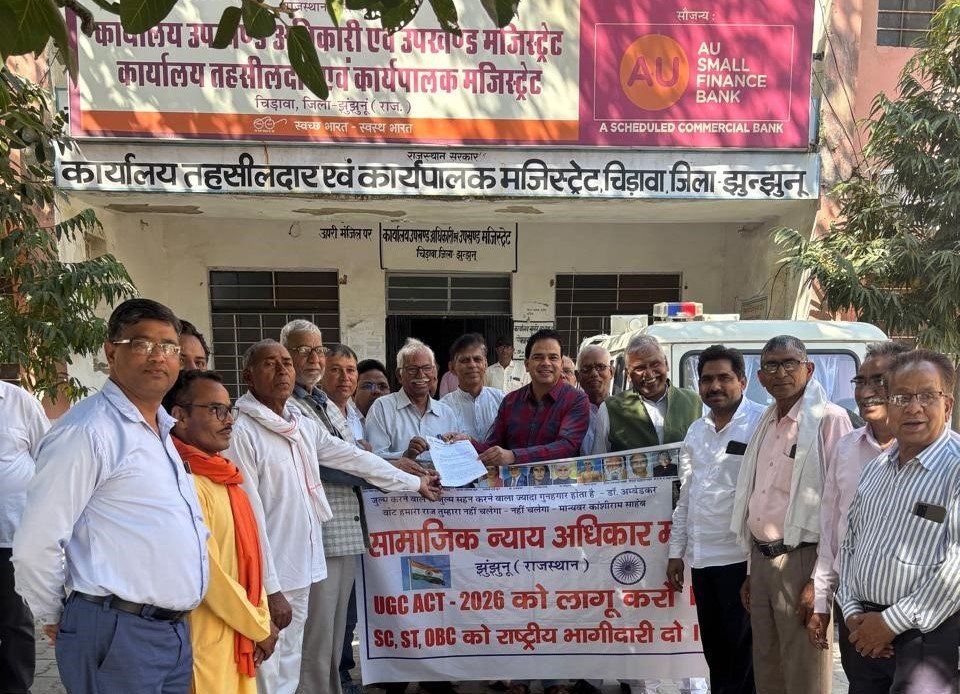
In a significant development, members of the Dr. Ambedkar Anusuchit Jati Adhikari Karmachari Association (AJAK) & Samajik Nyay Adhikar Manch along with representatives of several social organizations in Chirawa subdivision of Jhunjhunu district, Rajasthan, submitted a memorandum addressed to the President of India through the Sub-Divisional Magistrate (SDM).
The delegation included Balveer Singh Kala, Advocate Vijay Gurava, President of the Bar Association, Advocate Suresh Dandia, Advocate Arvind Bhagat, Advocate Vedprakash, Babulal Councilor, Rohitash Mehrania, Anil Mehrania, Mahesh Mehrania, Jai Mal Siroha, Budhram Mehrania, Sitaram Panwar, Satyanarayan Dholpuria, Raghuveer Singh, Hanuman Singh Danodia, Sant Kumar, Hariram Maharia, Sajjan Maharia, Shiv Prasad Maharia, Vinod Mehrania, Anil Narnolia, Prahalad Singh and representatives of various social organizations.
The memorandum calls for the immediate enactment of the UGC Equity Regulations for 2026 and strict implementation of new University Grants Commission regulations to promote equality in higher education.
The demand reflects a growing national conversation about discrimination in educational institutions and the need for systemic reforms to protect the constitutional rights of students belonging to Scheduled Castes (SC), Scheduled Tribes (ST), and Other Backward Classes (OBC).
The demand for the Rohith Vemula Act 2026 stems from long-standing concerns regarding discrimination in universities and higher education institutions across India.
Many social justice organizations argue that despite constitutional guarantees of equality, students from historically marginalized communities continue to face barriers such as:
- Social exclusion
- Institutional discrimination
- Lack of grievance redressal mechanisms
- Underrepresentation in faculty positions
According to activists, a strong legal framework is necessary to ensure that educational institutions remain inclusive and equitable for all students.
Memorandum Submitted in Chirawa, Jhunjhunu
In Rajasthan’s Jhunjhunu district, the Dr. Ambedkar Anusuchit Jati Adhikari Karmachari Association (AJAK) & Samajik Nyay Adhikar Manch along with various community organizations submitted a memorandum urging the central government to enact the Rohith Vemula Act 2026 (UGC Equity Regulations for 2026).
The memorandum was submitted to the Sub-Divisional Magistrate (SDM) of Chirawa, who will forward it to the President of India.
Representatives of several social organizations were present in the delegation, including community leaders, lawyers, and public representatives.
The delegation emphasized that historically marginalized communities have remained socially and educationally backward for centuries, and therefore require strong institutional protection to ensure equal participation in education.
Constitutional Provisions Supporting Educational Equality
The memorandum strongly referred to several provisions of the Constitution of India that guarantee equality and social justice.
Article 14 – Right to Equality
Article 14 ensures equality before the law and equal protection of laws to all citizens.
More details about constitutional equality provisions can be accessed through the official portal of the Government of India:
https://www.india.gov.in
Article 15 – Prohibition of Discrimination
Article 15 prohibits discrimination on the basis of religion, race, caste, sex, or place of birth.
It also allows the state to make special provisions for socially and educationally backward classes.
Article 16 – Reservation in Public Employment
Article 16(4) provides reservation in government jobs for SC, ST, and OBC communities to ensure fair representation.
Article 17 – Abolition of Untouchability
Article 17 declares untouchability as a punishable offense, reinforcing the principle of social equality.
Article 335 – Claims of SC/ST in Services
Article 335 mandates that the claims of SC/ST communities must be considered in public employment while maintaining administrative efficiency.
These constitutional provisions form the legal foundation behind the demand for the Rohith Vemula Act 2026.
Rohith Vemula Case and the National Debate on Campus Discrimination
The demand for the Rohith Vemula Act 2026 is closely linked to the death of Rohith Vemula, a PhD scholar at the University of Hyderabad whose suicide in January 2016 sparked nationwide protests and debates on caste discrimination in higher education.
His death triggered a broader discussion about institutional bias and the treatment of marginalized students within universities.
Civil society groups, student unions, and political leaders have repeatedly demanded stronger laws to prevent such incidents and ensure accountability within academic institutions.
Advocates for the legislation argue that such a law could act as a deterrent against discrimination and harassment.
Some political leaders and activists have also called for legal reforms to address cases similar to those of Rohith Vemula, Payal Tadvi, and other students who allegedly faced discrimination in educational institutions.
Key Demands Raised in the Memorandum
The memorandum submitted in Chirawa highlights several major demands related to the Rohith Vemula Act 2026 and educational reforms.
1. Enactment of Rohith Vemula Act 2026
The organizations demanded the enactment of a comprehensive law to prevent discrimination against SC, ST, and OBC students in universities.
2. Strict Implementation of UGC Regulations
The University Grants Commission should implement the Promotion of Equity in Higher Education Institutions Regulations 2026 strictly.
3. Equal Opportunity Helplines
Every higher education institution should establish a 24-hour equality helpline to address cases of discrimination.
4. National Monitoring Committee
The memorandum calls for a national monitoring committee to track discrimination complaints and ensure accountability.
5. Transparent Recruitment Processes
Universities should ensure that reserved positions are filled fairly and without prejudice.
UGC Equity Regulations 2026 and Institutional Responsibility
The University Grants Commission has introduced regulations aimed at preventing discrimination and promoting equity in higher education institutions.
These regulations were developed after directions from the Supreme Court and concerns raised in public interest litigations regarding caste discrimination in universities.
The regulations emphasize:
- Institutional grievance redressal systems
- Equal opportunity cells
- Monitoring mechanisms
- Protection of marginalized students
However, activists argue that stronger enforcement mechanisms are still required.
Vacant Reserved Posts in Universities: A Growing Concern
One of the major issues raised in the memorandum is the large number of vacant reserved posts in universities.
According to the representatives, many faculty positions reserved for SC, ST, and OBC candidates remain vacant due to various administrative practices.
These include:
- Selection boards declaring candidates “Not Found Suitable (NFS)”
- Low interview scores despite eligibility
- Delays in recruitment processes
Activists claim that such practices undermine the goal of fair representation in higher education institutions.
They have demanded that the government launch a special recruitment drive to fill reserved posts in universities across India.
National Protests and Student Movements
The debate around the Rohith Vemula Act 2026 has also led to protests and demonstrations in several universities.
Student groups and civil society organizations argue that discrimination in educational institutions can have severe psychological and social consequences for students from marginalized backgrounds.
Protests and discussions across campuses have highlighted the importance of building inclusive and safe academic environments.
Many activists believe that stronger legal safeguards are necessary to prevent discrimination and ensure equal opportunities for all students.
Why the Rohith Vemula Act 2026 Is Seen as a Landmark Reform
Supporters of the proposed Rohith Vemula Act 2026 believe that it could become a transformative step in India’s higher education system.
The law is expected to:
- Strengthen anti-discrimination mechanisms
- Protect the rights of marginalized students
- Improve representation in academic institutions
- Promote inclusive campus environments
Experts argue that the legislation could help create a more equitable education system that reflects the constitutional values of justice and equality.
The Road Ahead for Inclusive Higher Education in India
The demand raised in Chirawa reflects a broader national movement seeking structural reforms in higher education.
As discussions around the Rohith Vemula Act 2026 continue, policymakers, educational institutions, and civil society groups will need to work together to ensure that universities remain spaces of learning, equality, and dignity.
The debate also highlights a fundamental question for India’s education system:
How can universities ensure that every student — regardless of caste, background, or social status — has an equal opportunity to succeed?
The answer may lie in stronger laws, transparent institutional policies, and a renewed commitment to the constitutional ideals of equality and social justice.
Art
Indian Art History Congress 2026: 5 Powerful Insights from Dr. Renu Shahi’s Groundbreaking Satire Art Research in Bengaluru
Indian Art History Congress 2026 witnessed a powerful research presentation by Dr. Renu Shahi in Bengaluru, highlighting satire art, caricature and cartoons as reflections of India’s social values.
Contents
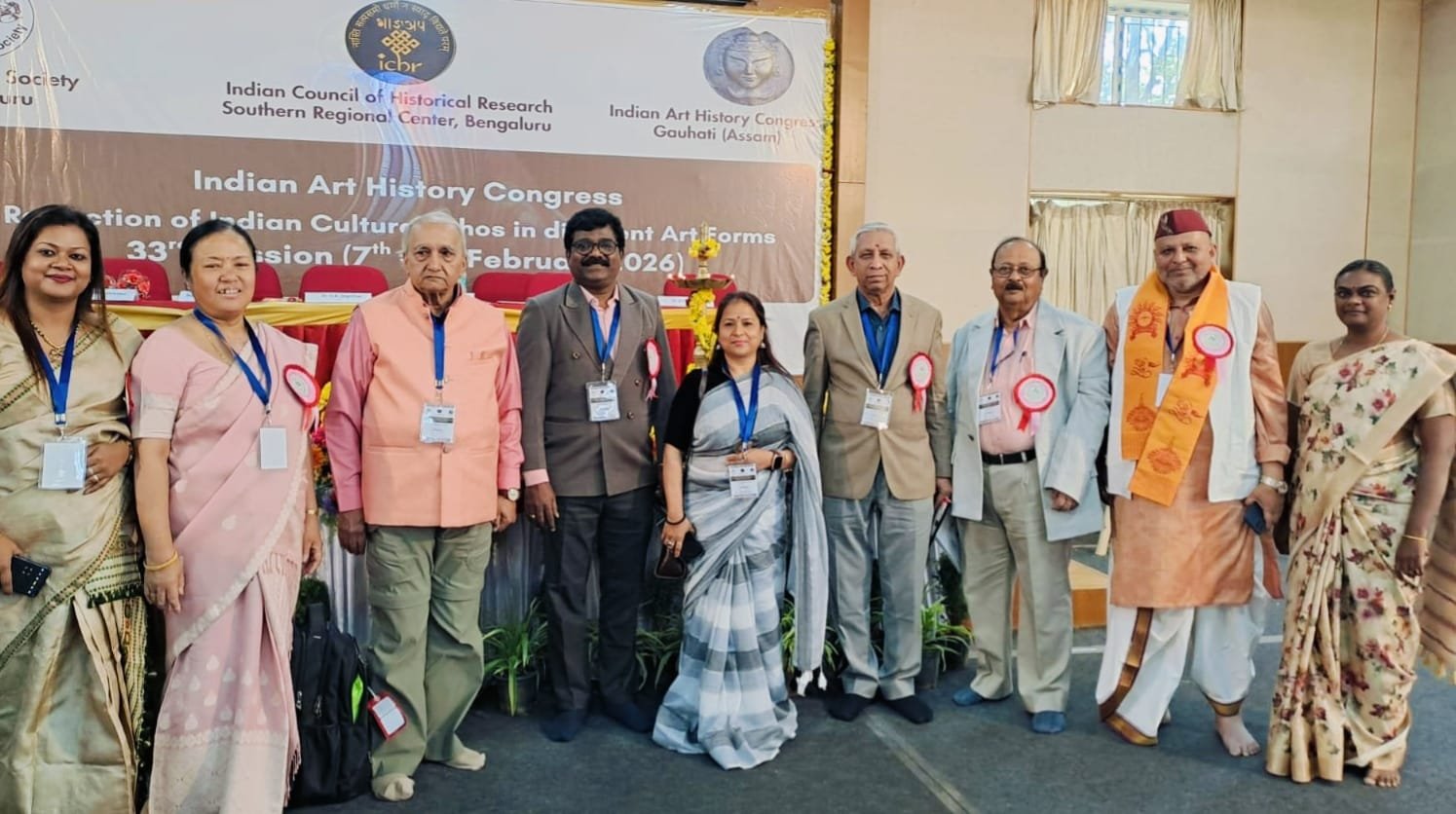
Indian Art History Congress 2026 became a landmark academic event as leading scholars, historians, and art critics gathered in Bengaluru to explore the evolving dimensions of Indian art and its deep-rooted social values. Among nearly 175 distinguished participants from across the country, Dr. Renu Shahi from Jaipur, Rajasthan, emerged as a notable voice with her compelling research on satire art, caricature, and political cartoons in the Indian art landscape.
Her presentation, delivered during the 33rd Annual Session of the Indian Art History Congress, sparked curiosity, discussion, and admiration among scholars and attendees alike.
Introduction to Indian Art History Congress 2026
The Indian Art History Congress 2026 marked the 33rd annual session of one of the country’s most respected academic platforms dedicated to the study and preservation of Indian art history. Held from February 6 to February 10, 2026, the conference brought together scholars from universities, research institutions, and independent academic bodies.
The central theme of this year’s session was “Social Values in Indian Art.” The theme encouraged participants to analyze how art reflects, challenges, and reconstructs societal norms, ethics, and political consciousness across time.
More details about the organising body can be explored through the official Indian Art History Congress network and academic listings on platforms such as the Indian Council of Historical Research (https://ichr.ac.in/).
Venue and Organising Institutions
The Indian Art History Congress 2026 was hosted at the historic Mythic Society in Bengaluru, Karnataka — an institution known for its long-standing contribution to historical and cultural research in South India.
The session was organised under the aegis of the Indian Council of Historical Research (ICHR) and the Indian Art History Congress, in association with the Dr. Pooja Bharti Memorial Trust.
The selection of Bengaluru, a city known for blending heritage with modern intellectual discourse, added symbolic significance to the event.
Lifetime Achievement Honour at the Congress
A major highlight of the Indian Art History Congress 2026 was the conferment of the prestigious “Bharati Samman” (Lifetime Achievement Award).
The honour was presented to eminent art historian Dr. Arvind Prabhakar Jamkhedkar, former Chairman of the Indian Council of Historical Research and former Vice-Chancellor of Deccan College, Pune.
Dr. Jamkhedkar’s lifelong contribution to Indian art history, archaeology, and heritage studies has shaped academic discourse in the country for decades. The award ceremony added a celebratory tone to the scholarly proceedings.
Dr. Renu Shahi’s Academic Contribution
Among the 175 scholars who presented papers at the Indian Art History Congress 2026, Dr. Renu Shahi from Jaipur stood out for her original and thought-provoking research.
Her paper focused on satire art in the Indian artistic tradition, particularly examining caricature and cartoons as tools of political, social, and cultural commentary.
Dr. Shahi was granted the opportunity to present her research due to the excellence and academic merit of her paper — a recognition that itself became a subject of interest among attendees.
Her study did not merely treat satire as entertainment. Instead, she framed it as a powerful artistic language that reflects ideological positions and societal tensions.
Indian Art History Congress 2026 and the Theme of Social Values
The theme “Social Values in Indian Art” found a powerful embodiment in Dr. Shahi’s presentation.
At the Indian Art History Congress 2026, discussions ranged from temple architecture to modern installations. However, satire art introduced a contemporary dimension to the dialogue.
Satirical expression often critiques political authority, exposes social hypocrisy, and mirrors public sentiment. By placing satire within the broader framework of Indian art history, Dr. Shahi expanded the academic boundaries of what is traditionally considered “high art.”
Her work highlighted that satire is not marginal. It is central to democratic discourse.
Satire Art in Indian Cultural Discourse
Satire in India has a long and layered history.
From colonial-era caricatures to post-independence political cartoons, satire has shaped public opinion. Dr. Shahi’s research at the Indian Art History Congress 2026 traced how satire art engages with:
- Political authority
- Social hierarchies
- Cultural transformation
- Public morality
Satirical art, she argued, becomes a visual archive of dissent.
By studying satire, scholars can decode historical anxieties and ideological shifts in society.
Caricature and Cartoon: Beyond Entertainment
At the Indian Art History Congress 2026, Dr. Shahi emphasized that caricatures and cartoons are often misunderstood as mere humor.
In reality, caricature exaggerates features to highlight deeper truths. Cartoons compress complex political commentary into accessible imagery.
Her research examined how caricature functions as a semiotic device — using distortion as critique.
In a democracy like India, cartoonists have historically played a crucial role in shaping civic awareness.
Historical Figures in Indian Satirical Art
Dr. Shahi’s paper referenced several legendary cartoonists and satirists whose work shaped Indian visual culture.
Among them:
- Gaganendranath Tagore – Known for his early 20th-century satirical illustrations critiquing colonial society.
- R. K. Laxman – Creator of the iconic “Common Man” and one of India’s most influential political cartoonists.
- K. Shankar Pillai – Founder of Shankar’s Weekly, a platform that shaped political satire in India.
- Bal Thackeray – Began his career as a cartoonist before entering politics.
By situating these figures within academic discourse at the Indian Art History Congress 2026, Dr. Shahi underscored how satire bridges journalism and fine art.
Scholarly Reception and Appreciation
The response to Dr. Shahi’s presentation at the Indian Art History Congress 2026 was overwhelmingly positive.
Scholars appreciated:
- The interdisciplinary approach
- The analytical depth
- The integration of visual examples
- The contextual grounding in political history
Several attendees noted that satire art deserves more systematic documentation within Indian art historiography.
Her work sparked discussions about incorporating satire studies into university curricula.
Why Indian Art History Congress 2026 Matters Today
The Indian Art History Congress 2026 was not just an academic gathering.
It functioned as:
- A platform for intellectual exchange
- A forum for redefining art history
- A space for emerging scholars to gain visibility
- A bridge between tradition and contemporary discourse
In a rapidly changing socio-political climate, art history cannot remain static.
The inclusion of satire art at the Congress signals a broader methodological shift — one that embraces popular visual culture as a serious subject of study.
The Growing Relevance of Satire in Contemporary India
In the digital era, satire spreads faster than ever.
Memes, digital cartoons, and online caricatures continue the tradition discussed at the Indian Art History Congress 2026.
Dr. Shahi’s research becomes especially relevant in this context. Her work invites scholars to analyze:
- Visual political commentary on social media
- The legal boundaries of satire
- The relationship between art and freedom of expression
Satire, she argued, is both aesthetic expression and civic intervention.
Academic Implications and Future Research
The discussions at the Indian Art History Congress 2026 suggest that future research may expand into:
- Digital satire archives
- Comparative studies between colonial and contemporary caricature
- Regional variations in satirical art
- Gender perspectives in cartooning
Dr. Shahi’s contribution has opened new pathways for research scholars.
Her work demonstrates that art history must evolve alongside society.
The Indian Art History Congress 2026 will be remembered as a dynamic and intellectually rich gathering that expanded the boundaries of Indian art scholarship.
Dr. Renu Shahi’s research on satire art, caricature, and cartoons added a contemporary and critical dimension to the conference theme of social values in Indian art.
Her presentation reaffirmed that satire is not peripheral — it is central to understanding India’s political and cultural consciousness.
As academic institutions increasingly recognize the importance of interdisciplinary study, the conversations initiated at the Indian Art History Congress 2026 are likely to influence future scholarship in meaningful ways.
In Bengaluru, amidst scholars and historians, satire found its rightful place in the narrative of Indian art history — and that may be one of the most significant outcomes of this year’s Congress.
Breaking News
ICU Patient Attack Case exposes disturbing police retaliation as the High Court cancels an FIR against a critically injured victim-
Contents
MP,Jan.05,2026:ICU Patient Attack Case has emerged as a landmark moment in India’s criminal justice discourse after the High Court delivered a stinging rebuke to police authorities for what it described as retaliatory and malicious action.
In a deeply troubling sequence of events, a man who was brutally assaulted and left unconscious in the Intensive Care Unit (ICU) was later booked by police as an accused—despite being critically injured and medically unfit to speak or defend himself.
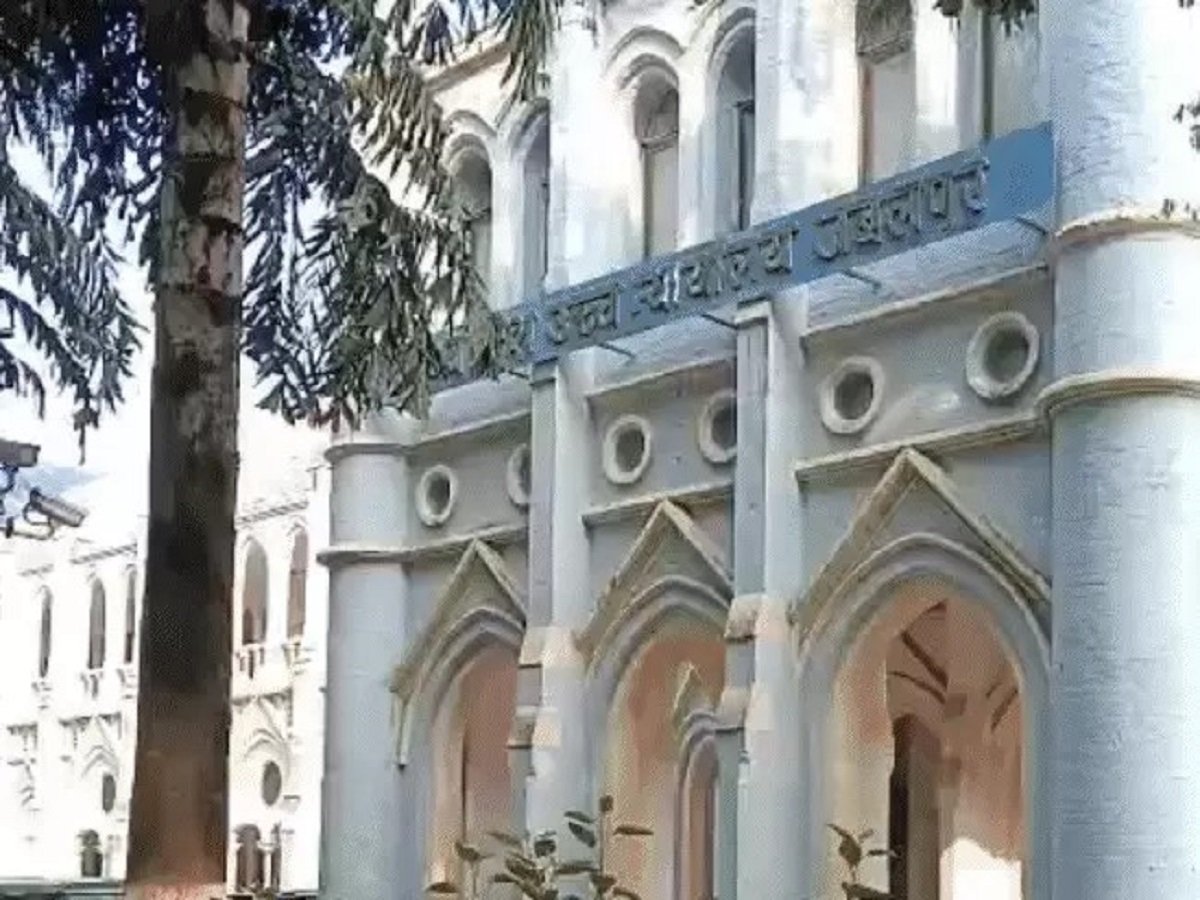
The High Court, taking serious note of this extraordinary misuse of authority, quashed the FIR and raised fundamental questions about fairness, ethics, and accountability in police investigations.
Background of the ICU Patient Attack Case
The ICU Patient Attack Case originates from Madhya Pradesh, where a violent altercation left one individual with life-threatening injuries. According to court records, the victim suffered severe trauma and was rushed to hospital, where doctors admitted him directly to the ICU.
Instead of focusing solely on identifying and prosecuting the attackers, the police later registered a counter-case—shockingly naming the injured victim as an accused.
This decision became the central issue examined by the High Court.
How the Victim Ended Up in ICU
As detailed in medical and police reports reviewed by the court, the victim
- Was subjected to a near-fatal assault
- Suffered serious head and bodily injuries
- Remained unconscious for a prolonged period
- Required intensive medical supervision
Doctors clearly stated that the victim was not in a position to give a statement. Yet, during this time, the ICU Patient Attack Case took a dramatic turn.
FIR Against an Unconscious Patient
In a move that stunned legal observers, an FIR was lodged against the same person who was lying unconscious in the ICU. The complaint alleged that the injured man had also committed an offense during the incident.
The High Court noted
- The timing of the FIR was suspicious
- No credible preliminary inquiry was conducted
- Medical condition of the accused-victim was ignored
This unusual step raised immediate concerns about police motivation and impartiality.
High Court’s Strong Observations on Police Conduct
While hearing the ICU Patient Attack Case, the High Court made unusually strong remarks against the police.
The court observed that
- The FIR appeared to be filed with vindictive intent
- Police action reflected abuse of statutory power
- Such conduct erodes public faith in law enforcement
The bench categorically stated that registering a criminal case against a critically injured person without evidence amounts to institutional injustice.
Vindictive Policing and Abuse of Power
The ICU Patient Attack Case has become a textbook example of what courts describe as retaliatory policing.
Vindictive action occurs when
- Police attempt to “balance” cases artificially
- Pressure is exerted to protect influential accused
- Victims are turned into accused to weaken their case
Legal experts say such practices violate Articles 14 and 21 of the Indian Constitution.
External Reference:
Supreme Court guidelines on fair investigation – https://main.sci.gov.in
Legal Analysis of the ICU Patient Attack Case
From a legal standpoint, the ICU Patient Attack Case rests on several critical principles
1. Presumption of Innocence
An unconscious ICU patient cannot reasonably be presumed guilty without evidence.
2. Duty of Fair Investigation
Police are constitutionally bound to conduct impartial investigations.
3. Abuse of Process of Law
The High Court held that the FIR amounted to misuse of criminal procedure.
The FIR was quashed under the court’s inherent powers to prevent injustice.
What the Judgment Means for Police Accountability
The ruling in the ICU Patient Attack Case sends a powerful message
- Police are not above judicial scrutiny
- Retaliatory FIRs will not be tolerated
- Medical evidence must be respected
The judgment strengthens the legal position of victims who fear harassment after reporting crimes.
Reactions From Legal Experts and Civil Society
Senior advocates and rights activists have welcomed the verdict.
According to criminal law experts:
“The ICU Patient Attack Case highlights systemic issues in policing and reinforces the judiciary’s role as a guardian of civil liberties.”
Human rights groups have urged state governments to introduce disciplinary action against officers involved in malicious investigations.
Similar Cases Highlighting Retaliatory FIRs
The ICU Patient Attack Case is not an isolated incident. Courts across India have repeatedly intervened in cases where
- Victims were booked as accused
- Counter-FIRs were misused
- Police attempted to dilute serious charges
Such judgments reflect growing judicial intolerance toward investigative misconduct.
Rights of Crime Victims Under Indian Law
The ICU Patient Attack Case reiterates key victim rights
- Right to fair investigation
- Right to medical dignity
- Right against malicious prosecution
Under Indian law, police must act as neutral fact-finders—not as tools of pressure or revenge.
Takeaways From the ICU Patient Attack Case
The case offers important lessons
- Medical condition of parties must guide investigation
- FIRs cannot be tools of intimidation
- Courts will intervene to prevent injustice
- Accountability is essential for public trust
The ICU Patient Attack Case stands as a warning against weaponizing criminal law.
The ICU Patient Attack Case is a sobering reminder that justice does not automatically flow from procedure—it requires conscience, accountability, and courage.
By quashing the FIR and exposing vindictive police conduct, the High Court reaffirmed a fundamental truth: the law exists to protect victims, not punish them further.
As debates around police reform intensify, this judgment will remain a critical reference point for ensuring that power is exercised with responsibility—and humanity.
Breaking News
Indian Woman Murder in Maryland exposes a chilling cross-border crime as a 27-year-old Indian woman is found dead-

Contents
US,Jan.05,2026:Indian Woman Murder in Maryland has emerged as one of the most disturbing international crime stories of the new year, highlighting the grim reality of relationship-based violence and the complexities of cross-border justice.
A 27-year-old Indian woman, Nikita Godishala, was found murdered inside an apartment in the US state of Maryland. What intensified the shock was the revelation that the prime accused—her former boyfriend Arjun Sharma—had fled to India shortly after the crime. He was later arrested in Tamil Nadu, setting the stage for a high-profile international legal battle.
The case has sparked outrage, grief, and serious questions about the safety of Indian women living abroad.
Who Was Nikita Godishala
Nikita Godishala was a young Indian professional of Telugu origin, living independently in Maryland. According to reports cited by US media and Indian diplomatic sources, she had moved to the United States for higher studies and career opportunities.
Friends describe her as ambitious, warm-hearted, and focused on building a stable future. She had recently ended a relationship that reportedly turned toxic—an aspect now central to the Indian Woman Murder in Maryland investigation.
Timeline of the Indian Woman Murder in Maryland
Understanding the sequence of events is crucial in the Indian Woman Murder in Maryland case.
December 31
- Nikita was last seen celebrating New Year’s Eve.
- Family and friends lost contact with her later that night.
January 1–3
- Concern grew as calls and messages went unanswered.
- Her employer reportedly flagged her unexplained absence.
January 4
- Local authorities conducted a welfare check at her apartment.
- Nikita’s body was discovered inside.
Following Days
- Investigation pointed toward her ex-boyfriend.
- Evidence suggested the accused had already left the US.
Discovery of the Body Inside the Apartment
The most chilling aspect of the Indian Woman Murder in Maryland was that Nikita’s body was found inside her own apartment—an environment that should have been safe.
Maryland police confirmed
- No signs of forced entry
- Evidence of a violent struggle
- Strong indicators that the victim knew her attacker
These findings reinforced suspicions against someone from her close personal circle.
The Accused Ex-Boyfriend
Arjun Sharma, an Indian national, was reportedly in a past relationship with Nikita. Investigators believe
- The relationship had ended recently
- There were unresolved conflicts
- Sharma was among the last known people to meet her
Shortly after the estimated time of death, Sharma allegedly boarded a flight to India—raising immediate red flags in the Indian Woman Murder in Maryland probe.
How Indian Police Tracked Him
In a swift development, Indian authorities arrested Arjun Sharma in Tamil Nadu, following a formal request and intelligence sharing from US law enforcement agencies.
According to Indian police sources
- Immigration data confirmed his entry into India
- Technical surveillance helped trace his location
- He was detained without resistance
This arrest underscores growing US–India cooperation in transnational crime cases.
External Reference:
India–US law enforcement cooperation –
US–India Law Enforcement Cooperation Explained
The Indian Woman Murder in Maryland highlights how modern crime investigations rely on international coordination.
Key mechanisms involved
- Mutual Legal Assistance Treaties (MLAT)
- Intelligence sharing between FBI and Indian agencies
- Diplomatic coordination via Indian Embassy in the US
Such cooperation ensures suspects cannot evade justice by crossing borders.
What Investigators Say About the Indian Woman Murder in Maryland
While officials have withheld sensitive details, investigators have indicated
- Strong circumstantial and digital evidence
- Travel records matching the crime timeline
- Communication data linking the accused to the victim
Authorities have labelled the case as domestic-relationship-driven homicide, a category increasingly seen in global crime data.
Rising Safety Concerns for Indian Women Abroad
The Indian Woman Murder in Maryland has reignited debates on safety for Indian women living overseas.
Key concerns include
- Isolation in foreign countries
- Limited immediate family support
- Difficulty accessing local help systems
According to global crime studies, women migrants are disproportionately vulnerable to intimate-partner violence.
Legal Process Ahead
The next phase of the Indian Woman Murder in Maryland case involves complex legal proceedings.
Possible scenarios
- India may extradite Sharma to the US
- Trial may proceed under US criminal law
- Diplomatic and legal reviews could take months
Extradition decisions depend on treaty terms, evidence strength, and court approvals.
Reactions From Family, Community, and Officials
Nikita’s family has demanded
- Swift justice
- Maximum punishment for the accused
- Stronger safeguards for Indians abroad
Indian and US officials have expressed condolences and assured full legal support.
Community groups in Maryland have held vigils, remembering Nikita as a symbol of lost potential.
Lessons From the Indian Woman Murder in Maryland
The case leaves behind sobering lessons
- Ending relationships can be dangerous without support
- Early warning signs of abuse must be taken seriously
- Cross-border criminals can no longer easily escape justice
The Indian Woman Murder in Maryland stands as a tragic reminder that emotional violence often escalates into physical harm.
The Indian Woman Murder in Maryland is more than a crime story—it is a wake-up call for families, governments, and communities worldwide.
As investigations progress and legal processes unfold, Nikita Godishala’s case has already exposed uncomfortable truths about relationship violence, migrant vulnerability, and the urgent need for better protective systems.

Contents
US, Jan.05,2026:Donald Trump Praises Modi during an interaction with journalists aboard Air Force One, describing the Indian Prime Minister as “a very good person” who understands how to keep diplomatic relations smooth. Trump stated that Modi “wanted to make me happy” and acknowledged that the Indian leader was aware of Washington’s displeasure over Russia-related energy purchases.
However, Trump quickly followed his praise with a blunt warning. He said that if India does not fully cooperate with the US position on Russia’s oil exports, America could increase tariffs on Indian goods beyond the already steep 50 percent.
This mixture of admiration and pressure has once again placed India in a delicate position.
Why Trump’s Praise Still Worries India
Although Donald Trump Praises Modi, Indian policymakers are far more focused on the economic consequences of his statements. Praise from Trump has historically been unpredictable and often followed by aggressive trade actions.
India already faces high tariffs on several export categories, including steel, aluminium, and select manufactured goods. Trump’s renewed warning signals that economic pressure could intensify, potentially impacting billions of dollars in bilateral trade.
The Russia Oil Factor Behind US Anger
At the heart of the issue is India’s continued purchase of discounted Russian crude oil.
After Western sanctions targeted Moscow, India increased its Russian oil imports to stabilize domestic fuel prices and control inflation. Trump acknowledged that India has reduced some purchases but insisted that this was “not enough.”
According to international energy data reported by outlets such as Reuters and Bloomberg, India remains one of Russia’s top oil buyers despite sanctions.
Trump’s Tariff Threat
Donald Trump Praises Modi, yet his tariff threats are anything but symbolic. During his previous term, Trump used tariffs aggressively as a negotiation weapon.
He has already imposed up to 50% tariffs on select Indian goods. Now, he has hinted that these could rise further if India does not align more closely with US sanctions on Russia.
Trade analysts warn that such a move could
- Hurt Indian exporters
- Raise costs for American consumers
- Strain diplomatic ties
India’s Energy Compulsion Explained
India has repeatedly clarified that Russian oil imports are driven by national interest, not political alignment.
With a population exceeding 1.4 billion, India’s energy demand is massive. Cheaper Russian oil has helped the country:
- Control fuel inflation
- Reduce fiscal pressure
- Maintain economic growth
Indian officials have emphasized that energy security is non-negotiable.
Where They Stand
Trade negotiations between India and the US began earlier this year with hopes of resolving long-standing disputes.
However, talks stalled after the US imposed heavy tariffs. When Trump and Modi spoke on a phone call weeks ago, both leaders expressed optimism about strengthening trade relations despite disagreements.
Now, Trump’s renewed warning threatens to derail progress once again.
Venezuela Oil Angle and Trump’s Bigger Strategy
Trump’s statement also comes in the context of renewed US focus on Venezuela’s massive oil reserves.
Venezuela holds approximately 303 billion barrels of oil, the largest reserves globally. After recent US military actions and diplomatic shifts, Trump wants to revive Venezuelan oil production to reduce global dependence on Russian crude.
This strategy directly conflicts with India’s current sourcing model.
Global Reactions to Donald Trump Praises Modi Statement
International observers see Trump’s remarks as part of a broader pressure campaign.
European allies remain divided on how strictly to enforce energy sanctions, while Asian economies like India prioritize stability. Analysts believe Trump is using India as a high-profile example to deter others from engaging with Russia.
What This Means for India’s Economy
If Trump follows through on his threats, India could face
- Export slowdowns
- Currency pressure
- Higher manufacturing costs
- Investor uncertainty
Sectors such as textiles, engineering goods, and pharmaceuticals could be particularly affected.
Strategic Implications for India-US Relations
Donald Trump Praises Modi, but strategic trust depends on consistency, not compliments.
India values its partnership with the US in defense, technology, and geopolitics, especially in the Indo-Pacific region. However, repeated economic pressure risks pushing India toward strategic autonomy rather than alignment.
Expert Opinions on Trump’s Warning
Foreign policy experts argue that Trump’s approach is transactional.
According to analysts quoted in The New York Times, Trump often mixes praise with pressure to gain leverage. India, however, has shown resilience and flexibility without compromising its core interests.
What Lies Ahead for India
India now faces difficult choices
- Continue Russian oil imports and risk tariffs
- Reduce imports and face higher energy costs
- Diversify suppliers while negotiating exemptions
Diplomatic engagement with Washington will intensify in the coming weeks.
Donald Trump Praises Modi, but behind the compliments lies a hard geopolitical and economic reality. Trump’s warning has heightened India’s tension at a time when global energy markets are fragile and trade alliances are under stress.
For India, the challenge is to balance strategic autonomy with economic pragmatism—without allowing praise or pressure to dictate national interest.
Contents
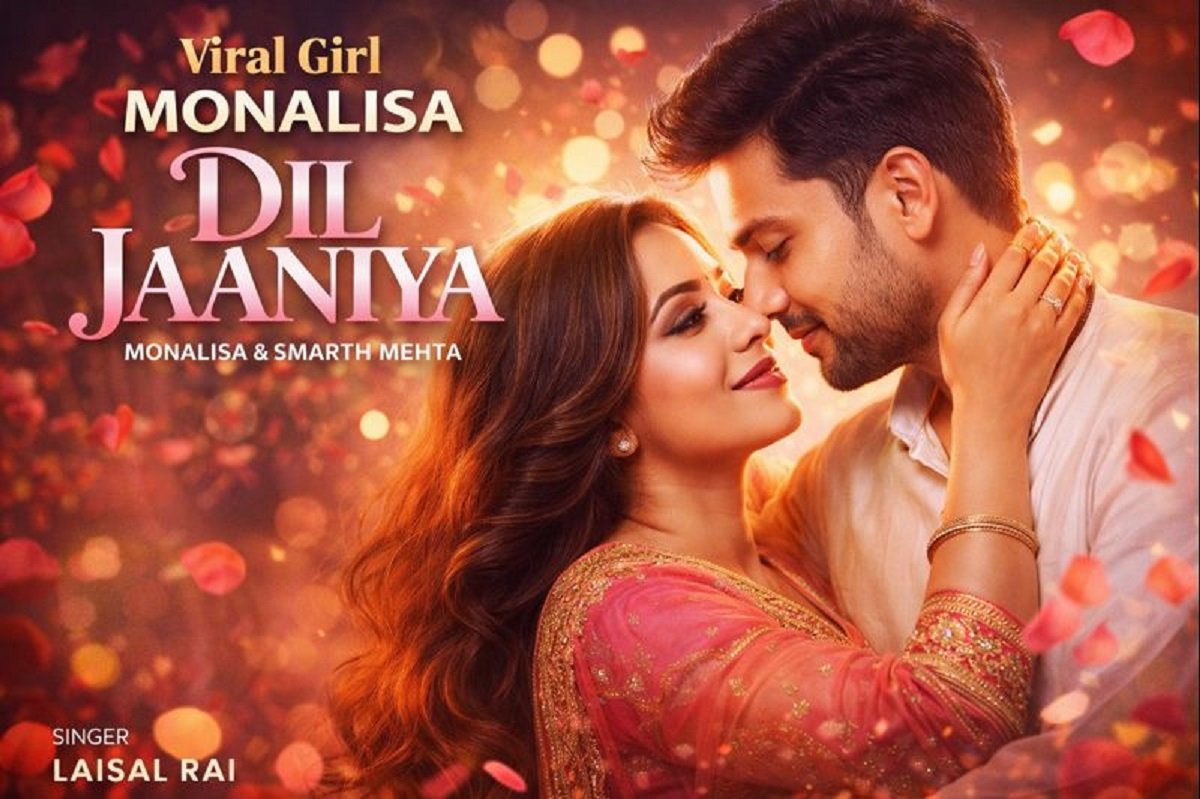
Mumbai, Jan.05,2026:Viral Girl Monalisa Song Dil Jaaniya marks a fresh chapter in the journey of a young woman whose life changed unexpectedly at the Mahakumbh 2025. From being admired for her innocent smile to now leading a romantic music video, Monalisa’s transformation reflects the power of social media in shaping modern stardom.
The teaser of Dil Jaaniya doesn’t just introduce a song—it presents a narrative filled with love, emotions, and simplicity, which resonates deeply with audiences across age groups.
Who Is Viral Girl Monalisa
Before Viral Girl Monalisa Song Dil Jaaniya, Monalisa was known nationwide as the “Mahakumbh Viral Girl.” Her expressive brown eyes, natural beauty, and calm demeanor made her stand out in a sea of viral faces.
Unlike many overnight sensations, Monalisa managed to sustain public interest by staying grounded, selective, and authentic—qualities that now reflect in her artistic choices.
How Mahakumbh 2025 Changed Monalisa’s Life
Mahakumbh 2025 proved to be a turning point. A few candid clips and photographs spread rapidly online, transforming Monalisa into a viral icon overnight.
Major media houses and entertainment portals began covering her journey, similar to how viral personalities are often spotlighted on platforms like:
This exposure laid the foundation for Viral Girl Monalisa Song Dil Jaaniya and her entry into professional entertainment.
Song Dil Jaaniya Teaser Goes Viral
The teaser of Viral Girl Monalisa Song Dil Jaaniya created instant excitement. Released across social media platforms, it quickly amassed thousands of views, shares, and comments.
What stands out is the emotional depth conveyed in just a few seconds—soft visuals, romantic undertones, and Monalisa’s expressive performance leave a lasting impression.
On-Screen Chemistry with Smarth Mehta
One of the biggest highlights of Viral Girl Monalisa Song Dil Jaaniya is her pairing with Smarth Mehta. Their chemistry feels effortless and natural, drawing viewers into the story.
Fans have praised how their interactions don’t feel forced, a quality often missing in debut performances. Smarth Mehta’s charm complements Monalisa’s innocence beautifully.
Emotional Storytelling in Song Dil Jaaniya
Viral Girl Monalisa Song Dil Jaaniya focuses heavily on emotions—love, longing, innocence, and connection. The teaser hints at a tender love story that unfolds gradually, making viewers eager for the full release.
The storytelling approach aligns with modern romantic music trends while maintaining a classic emotional core.
Fan Reactions Flood Social Media
Soon after the teaser launch, social media platforms were flooded with reactions. Fans repeatedly watched the teaser, commenting on Monalisa’s expressions and the song’s soothing vibe.
Hashtags related to Viral Girl Monalisa Song Dil Jaaniya began trending, proving her sustained popularity beyond a one-time viral moment.
Singer Laisal Rai’s Soulful Contribution
The song features vocals by singer Laisal Rai, whose soulful voice adds emotional depth to Viral Girl Monalisa Song Dil Jaaniya.
His singing blends seamlessly with the visuals, enhancing the romantic mood and making the teaser memorable. Music critics believe his voice could be a major reason behind the song’s emotional appeal.
Visual Aesthetics and Music Composition
From soft lighting to romantic frames, the visuals of Viral Girl Monalisa Song Dil Jaaniya are carefully crafted. The background score, melody, and cinematography together create a visually pleasing and emotionally engaging experience.
Such attention to detail reflects a growing professionalism in Monalisa’s projects.
Why Dil Jaaniya Feels Different
Unlike many debut songs, Viral Girl Monalisa Song Dil Jaaniya doesn’t rely solely on glamour. Instead, it highlights simplicity, raw emotions, and relatable storytelling—qualities that originally made Monalisa famous.
This consistency strengthens her personal brand.
Monalisa’s Journey into the Music Industry
Before Viral Girl Monalisa Song Dil Jaaniya, Monalisa had already appeared in another music video. Each project shows visible growth in her confidence and screen presence.
Industry insiders believe she is being groomed carefully rather than rushed into multiple projects.
Upcoming Film with Sanoj Mishra
Adding to the excitement, Monalisa is also set to appear in an upcoming film by director Sanoj Mishra. This move signals her transition from music videos to mainstream cinema.
If successful, Viral Girl Monalisa Song Dil Jaaniya could serve as a strong bridge between her viral fame and a stable acting career.
Can Dil Jaaniya Be a Career Milestone
Many fans and critics believe Viral Girl Monalisa Song Dil Jaaniya could become a milestone in her career. It showcases her ability to carry emotions, maintain screen presence, and connect with audiences.
If the full song matches the teaser’s promise, it may establish Monalisa as a serious contender in the entertainment industry.
Viral Girl Monalisa Song Dil Jaaniya proves that Monalisa is more than just a fleeting internet sensation. With the right balance of innocence, emotion, and performance, she continues to win hearts.
Breaking News
Dogecoin Price Surge 2026 has stunned investors as the ₹14 meme coin jumps over 18% in just 7 days-

Contents
Jan.05,2026:Dogecoin Price Surge 2026 marks one of the strongest early-year rebounds in the crypto market. At a time when global investors are cautiously optimistic about digital assets, Dogecoin’s sudden rise has captured attention due to its low price, massive community support, and historical potential for explosive returns.
Unlike many speculative tokens, Dogecoin carries a unique blend of humor, celebrity influence, and real-world adoption, making its price movements especially emotional—and sometimes irrational.
Dogecoin’s 7-Day Performance Explained
Over the past week, Dogecoin Price Surge 2026 has delivered returns exceeding 18%, climbing from $0.1268 to $0.1503.
Despite a minor 1% dip in the last 24 hours, investor interest remains strong. Trading volumes have increased steadily, suggesting that this rally is supported by genuine market participation rather than a single speculative spike.
Dogecoin Price Surge 2026 Since January 1
The momentum behind Dogecoin Price Surge 2026 becomes even clearer when looking at year-to-date performance.
- December 31, 2025: $0.1178
- January 5, 2026: $0.1503
This represents a nearly 28% gain in just five days, an exceptional move for a large-cap cryptocurrency.
Such rapid appreciation often signals a shift in market sentiment, especially after a prolonged bearish phase.
Why Dogecoin Collapsed in 2025
To understand Dogecoin Price Surge 2026, it’s essential to revisit 2025—a painful year for Dogecoin investors.
During 2025
- Dogecoin lost over 60% of its value
- Prices fell below $0.1100 in late December
- Investor confidence eroded amid global crypto uncertainty
High interest rates, regulatory fears, and reduced retail participation all contributed to Dogecoin’s sharp decline.
The Millionaire-Making History of Dogecoin
One reason Dogecoin Price Surge 2026 is generating buzz is its unforgettable past.
In December 2020, Dogecoin traded near $0.0045 (₹0.41). By May 2021, it skyrocketed to $0.6358 (₹57)—a staggering 14,000% return in just five months.
An investment of ₹1 lakh during that phase could have grown to ₹1.4 crore, cementing Dogecoin’s reputation as a “crorepati coin.”
Elon Musk and His Impact on Dogecoin Price
No discussion of Dogecoin Price Surge 2026 is complete without mentioning Elon Musk.
The world’s richest entrepreneur has repeatedly endorsed Dogecoin through
- Tweets
- Public interviews
- Integration with Tesla merchandise payments
Although Musk has been relatively quiet in early 2026, historical patterns suggest that even subtle signals from him can trigger massive Dogecoin rallies.
Market Sentiment Behind Dogecoin Price Surge 2026
Crypto market sentiment in early 2026 has turned cautiously bullish. Bitcoin’s stability above key levels has encouraged capital rotation into altcoins—especially high-recognition tokens like Dogecoin.
Social media engagement, Google search trends, and on-chain activity all indicate growing interest in Dogecoin once again.
Technical Indicators and On-Chain Signals
From a technical standpoint, Dogecoin Price Surge 2026 is supported by
- Breakout above short-term resistance
- Rising Relative Strength Index (RSI)
- Increasing wallet activity
However, analysts warn that Dogecoin remains volatile and prone to sharp corrections.
Comparison with Bitcoin and Other Cryptos
While Bitcoin has gained modestly in early 2026, Dogecoin has outperformed most major cryptocurrencies on a percentage basis.
This highlights Dogecoin’s speculative appeal—but also underlines its higher risk profile compared to fundamentally driven assets like Bitcoin and Ethereum.
Risks Investors Must Not Ignore
Despite the excitement around Dogecoin Price Surge 2026, risks remain
Extreme volatility
- Heavy reliance on sentiment
- Limited technological innovation
Dogecoin lacks a capped supply, which may restrict long-term price growth unless demand rises consistently.
Expert Opinions on Dogecoin Price Surge 2026
Crypto analysts remain divided.
Some believe Dogecoin could retest $0.25–$0.30 if bullish momentum continues. Others caution that without strong utility development, the rally may fade.
Most experts agree on one point: Dogecoin is best suited for high-risk, short- to medium-term strategies.
Can Dogecoin Really Create Crorepatis Again
The big question surrounding Dogecoin Price Surge 2026 is whether it can repeat its 2021 miracle.
While another 14,000% rally seems unlikely, even a move toward previous highs could deliver substantial returns for early investors—especially given its current ₹14 price.
Long-Term Outlook for Dogecoin
Dogecoin’s future depends on
- Broader crypto adoption
- Integration into payment systems
- Community-driven development
If these factors align, Dogecoin may continue surprising skeptics.
Opportunity or Trap
Dogecoin Price Surge 2026 has undeniably revived investor excitement. Its low price, strong brand recognition, and historical performance make it one of the most watched cryptocurrencies today.
However, investors should balance optimism with caution. Dogecoin has made millionaires before—but it has also inflicted heavy losses.
Smart strategy, risk management, and timing will determine whether this ₹14 crypto becomes a dream-maker—or a disappointment.

Contents
Jaipur, Jan.05,2026:Lemon Tree Plantation Guide is emerging as one of the most searched home-gardening topics across India as urban households increasingly turn toward terrace gardening and organic fruit production. Lemon, known for its year-round utility, medicinal value, and high vitamin-C content, is among the easiest fruit trees to grow at home.
This Lemon Tree Plantation Guide explains when, where, and how to plant a lemon tree in pots or soil using scientifically proven methods followed by horticulture experts.
Why Lemon Tree Plantation Is Trending in 2026
According to gardening experts and agricultural advisories, lemon trees are
- Fast-growing
- Suitable for pots
- Productive within 12–18 months
- Ideal for Indian climate
With rising food adulteration concerns, the Lemon Tree Plantation Guide has become a must-read for health-conscious families.
Best Time to Plant
Choosing the correct planting season is critical.
Best Months
- February–March
- July–September
These periods provide optimal temperature and humidity, ensuring faster root establishment and healthy growth.
Ideal Soil & Pot Selection
Soil Requirements
- Well-drained sandy loam soil
- Rich in organic matter
- Slightly acidic to neutral pH
Soil Mix
- 40% cow dung manure or vermicompost
- 10% river sand
- 50% garden soil
Good drainage is a non-negotiable rule in every professional Lemon Tree Plantation Guide.
Choosing the Right Plant
Always buy
- Grafted (कलम किया हुआ) or
- Air-layered lemon plant
Why
- Faster fruiting
- Strong disease resistance
- Uniform fruit quality
Experts from horticulture departments recommend grafted citrus plants for home gardens.
Step-by-Step Plantation Method
Step 1: Pot Preparation
- Use a 14–18 inch pot or grow bag
- Ensure multiple drainage holes
Step 2: Planting the Lemon Tree
- Remove plant gently from nursery bag
- Plant at the same depth as earlier
- Keep the grafting joint above soil level
- Press soil lightly around the roots
Step 3: Initial Watering
- Water immediately after planting
- Keep soil moist, not waterlogged
This phase is crucial in the Lemon Tree Plantation Guide.
Watering Schedule
- Summer: Every 2–3 days
- Winter: Once a week
- Rainy season: Only if soil is dry
Excess water can cause root rot — the most common lemon plant killer.
Sunlight Requirement
Lemon trees need
- 6–8 hours of direct sunlight daily
Balcony, terrace, or open garden locations work best.
Fertilizer & Nutrition Management
Apply organic fertilizers every 1–2 months
- Vermicompost
- Mustard cake solution
- Banana peel compost
- Neem cake
Healthy nutrition ensures continuous flowering and fruiting as explained in this Lemon Tree Plantation Guide.
Pruning & Growth Control Techniques
- Remove dead or diseased branches
- Light pruning promotes new shoots
- Best time: After harvesting
Pruning keeps the lemon tree compact and productive.
Common Problems and Their Solutions
Flower Drop
Causes
- Lack of moisture
- Nutrient deficiency
Solution
- Maintain soil moisture
- Apply organic fertilizer
Yellow Leaves
Cause
- Overwatering or poor drainage
Solution
- Improve soil aeration
Benefits of Growing Lemon Tree at Home
- Fresh chemical-free lemons
- Saves money
- Improves air quality
- Enhances home aesthetics
- Year-round harvesting
Expert Tips for Faster Fruiting
- Mulch soil to retain moisture
- Use Epsom salt occasionally
- Avoid chemical fertilizers
- Rotate pot for uniform sunlight
This Lemon Tree Plantation Guide proves that growing lemons at home is not complicated if the right techniques are followed. With proper timing, soil preparation, sunlight, and organic care, your lemon plant can produce healthy fruits for years.
Contents
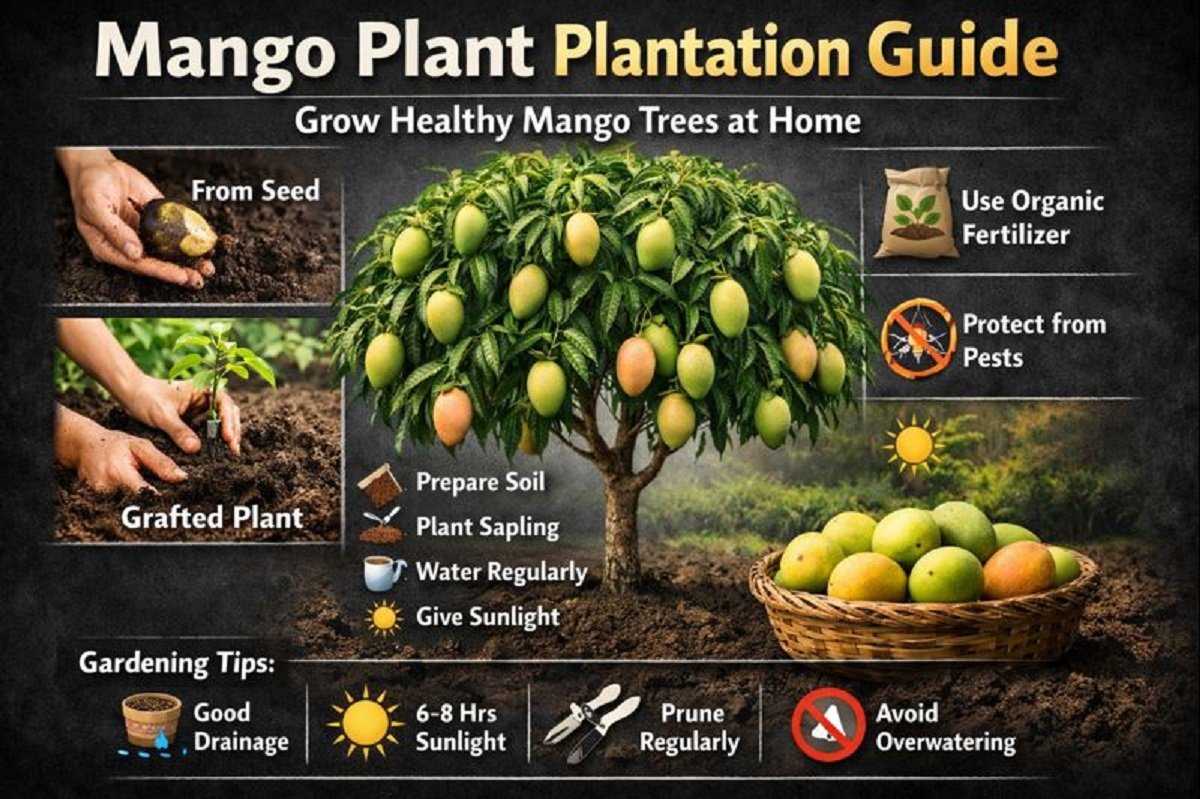
Jaipur,Jan.05,2026:Mango Plant Plantation Guide is becoming one of the most searched gardening topics in India as more people turn towards home gardening, organic fruits, and sustainable living. Mango, known as the King of Fruits, holds deep cultural, nutritional, and economic value.
Whether you live in a house with a backyard or an apartment with a terrace, this Mango Plant Plantation Guide will help you grow a healthy mango tree using either a seed (गुठली) or a nursery-grown grafted plant.
Why Mango Plantation Is Gaining Popularity
The rising demand for chemical-free fruits and the joy of growing food at home have made mango plantation a trending topic. According to horticulture experts and agricultural advisories, mango trees are hardy, long-living, and highly rewarding when planted correctly.
This Mango Plant Plantation Guide explains simple yet powerful methods that even beginners can follow.
Best Climate & Soil
- Climate: Tropical to subtropical
- Temperature: 24°C – 35°C
- Soil Type: Well-drained loamy or sandy loam
- Soil pH: 5.5 – 7.5
Good drainage is critical. Waterlogged soil can damage mango roots permanently.
Mango Plant Plantation Guide Using Seed (गुठली से पौधा लगाना)
Growing mango from seed is economical and educational, though it takes more time to bear fruit.
Step 1: Seed Preparation
- Wash the mango stone thoroughly
- Dry it for 1–2 days
- Carefully break the outer shell
- Extract the inner seed
- Wrap it in a moist cloth for germination
This step is crucial in the Mango Plant Plantation Guide.
Step 2: Pot & Soil Preparation
- Use a 12–18 inch pot with drainage holes
- Mix:
- Garden soil
- Compost
- Well-decomposed cow dung manure
Healthy soil is the foundation of successful mango growth.
Step 3: Planting the Seed
- Plant the germinated seed 2 inches deep
- Cover lightly with soil
- Water gently
Step 4: Early Care
- Keep the pot in partial shade
- Maintain moisture, not excess water
- Once the plant grows stronger, shift it to a 45 cm deep pot or garden soil
This stage defines success in the Mango Plant Plantation Guide.
Mango Plant Plantation Guide Using Nursery (Grafted) Plant
For faster fruiting, experts recommend grafted plants.
Step 1: Selecting the Right Plant
- Choose a healthy, disease-free grafted mango plant
- Preferred varieties: Alphonso, Dasheri, Langra, Kesar
Step 2: Pit Preparation
- Dig a pit of 1x1x1 feet
- Best done during summer
- Mix excavated soil with:
- Compost
- Cow dung manure
- Trichoderma (bio-fungicide)
Step 3: Plantation
- Place plant gently without damaging roots
- Fill pit with prepared soil
- Press soil lightly around base
Step 4: Watering & Shade
- Water immediately
- Provide shade for initial days
- Gradually expose to sunlight
This method is widely recommended in professional Mango Plant Plantation Guide manuals.
Watering Schedule
- Initial stage: Water every 2–3 days
- Established plants: Once a week
- Avoid waterlogging
Overwatering is one of the biggest mistakes in mango cultivation.
Sunlight & Location
- Young plants need protection from harsh sunlight
- Mature mango trees need 6–8 hours of direct sunlight daily
Sun exposure directly affects flowering and fruit quality.
Fertilizer & Nutrition Management
Apply organic manure during
- July–August
- September
Recommended nutrients:
- Compost
- Vermicompost
- Neem cake
Balanced nutrition is a core principle of any Mango Plant Plantation Guide.
Protection From Pests & Animals
- Use fencing or bamboo support
- Protect young plants from goats and cattle
- Apply neem oil spray for pest control
Common Mistakes to Avoid
- Excess watering
- Poor drainage
- Ignoring sunlight needs
- Planting in very small containers
Avoiding these mistakes ensures success with this Mango Plant Plantation Guide.
Benefits of Growing Mango at Home
- Chemical-free fruits
- Long-term investment
- Environmental benefits
- Shade and greenery
- Emotional satisfaction
Expert Gardening Tips
- Mulch soil to retain moisture
- Prune lightly after 2–3 years
- Use organic pesticides only
This Mango Plant Plantation Guide is designed to help beginners and gardening enthusiasts grow mango trees successfully at home. With patience, proper care, and organic practices, your mango tree will thrive for decades and reward you with delicious fruits.

Yuvaam 2026: A Grand Celebration of Excellence, Culture, and Inspiration in Jaipur

International Women’s Day 2026: 7 Powerful Highlights from the Inspiring Jaipur Celebration by Dr. Ambedkar Memorial Welfare Society

UGC Act 2026: 5 Powerful Demands Raised in Rajasthan to End Campus Discrimination

UKG Graduation Ceremony at St. Xavier’s School Nevta: 7 Heartwarming & Inspiring Moments from a Grand Spiritual Celebration

Indian Art History Congress 2026: 5 Powerful Insights from Dr. Renu Shahi’s Groundbreaking Satire Art Research in Bengaluru

ICU Patient Attack Case exposes disturbing police retaliation as the High Court cancels an FIR against a critically injured victim-

Priyansh Arya: The Six-Hitting Sensation of IPL 2025

Preity Zinta Spotted with New Punjab Kings Hero Priyansh Arya in Viral Clip

Nag Panchami 2025: 7 Key Rituals and Puja Time to Eliminate Kaal Sarpa Dosha

Radhika Merchant: A New Chapter as Radhika Ambani

Balen Shah, Kathmandu’s independent mayor, from rapper to political leader. Explore his rise amidst Nepal’s youth-led revolution-

Kanya Pujan 2025 Step-by-Step Rituals, Timings, and Powerful Benefits Explained-

best career opportunities | Jaipur Career Fair | Credent TV | Dainik Navjyoti D2S03

what is reiki healing | Mental Health | Shiksha Sarokar, शिक्षा सरोकार, Sunil Narnaulia

DAV Centenary Public School, Vaishali Nagar, Jaipur hosts Successful ‘Mind Wars Quiz: A Battle of Wits and Knowledge’

 Breaking News1 month ago
UGC Act 2026: 5 Powerful Demands Raised in Rajasthan to End Campus Discrimination
- Breaking News1 month ago
International Women’s Day 2026: 7 Powerful Highlights from the Inspiring Jaipur Celebration by Dr. Ambedkar Memorial Welfare Society
- Credent TV2 months ago
UKG Graduation Ceremony at St. Xavier’s School Nevta: 7 Heartwarming & Inspiring Moments from a Grand Spiritual Celebration
- Art2 months ago
Indian Art History Congress 2026: 5 Powerful Insights from Dr. Renu Shahi’s Groundbreaking Satire Art Research in Bengaluru
- Art2 weeks ago
Yuvaam 2026: A Grand Celebration of Excellence, Culture, and Inspiration in Jaipur
