Connect with us

Finance

Unlock the Future: How to Get Your Free PAN 2.0 Card Delivered to Your Email

Published

on

PAN 2.0

Introduction to PAN 2.0

The Indian government has introduced PAN 2.0, a transformative initiative aimed at modernizing the Permanent Account Number (PAN) system. This upgrade is designed to enhance taxpayer services, streamline processes, and promote a more efficient digital economy. With the introduction of QR codes on PAN cards, the new system promises to facilitate easier verification and access to taxpayer information, making it a significant step towards a paperless future.

What is PAN 2.0?

Understanding the Upgrade

PAN 2.0 is part of a broader e-governance initiative approved by the Cabinet Committee on Economic Affairs (CCEA). This project, with a budget of ₹1,435 crores, aims to consolidate various PAN and Tax Deduction and Collection Account Number (TAN) services into a single unified portal. The goal is to simplify the issuance and management of PAN cards while ensuring enhanced security and user experience.

Advertisement

Key Features of PAN 2.0

  • Unified Portal: All services related to PAN and TAN will be available on one platform, reducing confusion and improving accessibility.
  • QR Code Integration: Each PAN card will now feature a QR code for quick verification, enhancing security and efficiency.
  • Free Issuance: The new e-PAN cards will be issued free of charge, making it accessible for all taxpayers.
  • Real-time Processing: The upgraded system allows for faster processing times compared to the previous methods.
  • Enhanced Data Security: Advanced cybersecurity measures will protect sensitive information from fraud and misuse.

How to Apply for Your Free PAN 2.0 Card

Step-by-Step Process

Getting your new PAN 2.0 card delivered directly to your email is straightforward. Follow these steps:

  1. Visit the Unified Portal:
    • Navigate to the official Income Tax Department’s website dedicated to PAN services.
  2. Enter Personal Details:
    • Fill out the application form with accurate personal information including your name, date of birth, and contact details.
  3. Upload Required Documents:
    • Prepare scanned copies of necessary documents:
      • Proof of Identity (Aadhaar card, Passport, Voter ID)
      • Proof of Address (Utility bills, Bank statements)
      • Proof of Date of Birth (Birth certificate, School leaving certificate)
  4. Review and Submit:
    • Double-check all entered information for accuracy before submitting your application.
  5. Receive Your e-PAN:
    • Once processed, your e-PAN will be sent directly to your registered email address at no cost.
    • Here are the steps to obtain your PAN card from the NSDL website:
    • Step 1: Visit the Link
    • Go to the following URL: NSDL e-PAN Request.
    • Step 2: Enter Required Information
    • On the webpage, fill in the following details:
    • PAN (Permanent Account Number)
    • Aadhaar number (only for individuals)
    • Date of birth
    • Step 3: Submit Your Information
    • After entering the required information, check the applicable box and click on the Submit button.
    • Step 4: Verify Your Details
    • A new webpage will open where you need to verify your current details updated with the Income Tax Department. You will be prompted to choose how you want to receive a One-Time Password (OTP).
    • Step 5: Enter and Verify OTP
    • Input the OTP you receive and verify it. Remember, the OTP is valid for 10 minutes.
    • Step 6: Choose Payment Method
    • Select your preferred payment method. Check the box to agree to the terms and conditions.
    • Step 7: Confirm Payment Amount
    • Review the payment amount and click on Confirm Payment.
    • Step 8: Continue After Payment
    • Once the payment is successful, click on Continue.
    • Step 9: Receive Your e-PAN
    • After successful payment, your PAN will be delivered to the email ID registered in the Income Tax database. It may take up to 30 minutes for you to receive your e-PAN in your registered email.If you do not receive your e-PAN within this time frame, you can email your payment details to ti*****@*********ch.in. Alternatively, you can call customer service at 020 – 27218080 or 020 – 27218081 for assistance.

Eligibility Criteria

  • All existing PAN cardholders are eligible for an upgrade to PAN 2.0 without needing to reapply.
  • New applicants must provide valid identity and address proof as part of their application.

Benefits of PAN 2.0

Why You Should Upgrade

  • Cost-effective: The transition to PAN 2.0 is free for all users.
  • Environmentally Friendly: The shift towards digital processes minimizes paper usage.
  • Improved Compliance: Enhanced features like QR codes simplify tax compliance and verification processes.
  • Faster Services: Reduced processing times mean quicker access to your PAN details.

Do Existing PAN Holders Need to Reapply?

No, current PAN cardholders do not need to apply for a new number unless they wish to update their details. Existing cards remain valid under the new system.

What If I Encounter Issues During Application?

A dedicated help desk will be available through the unified portal to assist users with any queries or issues related to their applications.

Also read : Unlocking the Future of Education: The Revolutionary APAAR ID Card for Students

Advertisement

Advertisement
Continue Reading
Advertisement
Click to comment

Leave a Reply

Your email address will not be published. Required fields are marked *

Festival

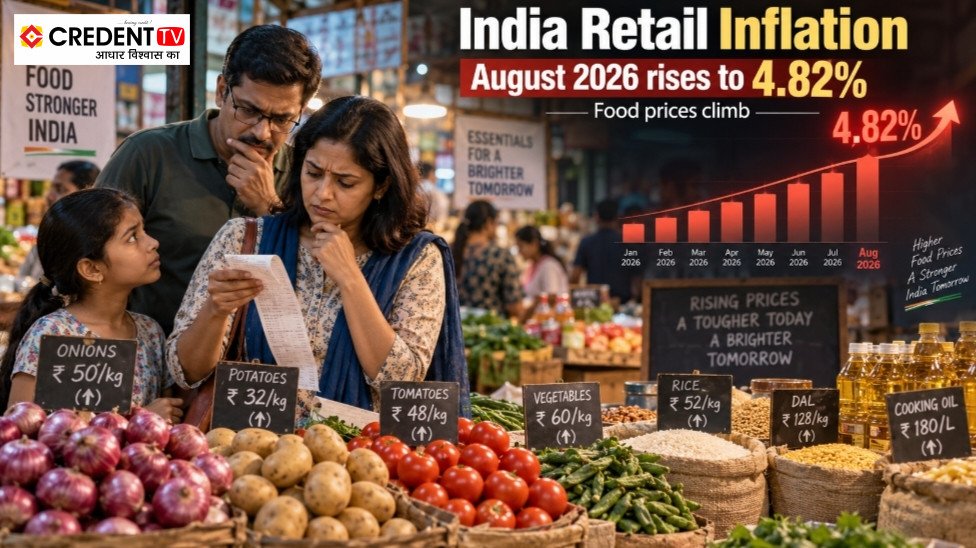
India Retail Inflation August 2026 Rises to 4.82% as Food Prices Climb

Published

on

India Retail Inflation August 2026 Rises to 4.82% as Food Prices Climb


New Delhi | 14 Sep 2026

India retail inflation August 2026 rose to 4.82%, accelerating from 4.45% in July as food and other household costs increased, according to official Consumer Price Index data. Food inflation climbed to 5.95%, keeping price pressures above the Reserve Bank of India’s 4% medium-term target and increasing attention on the RBI’s next monetary policy decision.

What is India’s retail inflation rate in August 2026?

India’s Consumer Price Index-based retail inflation increased to 4.82% year-on-year in August 2026 from 4.45% in July. The August reading was also marginally above the 4.80% median forecast in a Reuters poll of economists.

Advertisement


The latest figure is the highest inflation reading under the revised CPI series introduced in January 2026. The Ministry of Statistics and Programme Implementation has shifted the CPI base year from 2012 to 2024 to reflect changes in household consumption patterns.

Although inflation remains within the RBI’s tolerance band of 2% to 6%, it is now above the central bank’s 4% medium-term target.

Why did food inflation rise in August 2026?

Food inflation increased to 5.95% in August from 5.52% in July, with higher prices for several kitchen staples contributing to the acceleration.

Advertisement


Weak and uneven monsoon conditions affected supplies of some agricultural products, while prices of onion, ginger and garlic recorded particularly sharp year-on-year increases.

Which food items became more expensive in August?

Onion inflation rose sharply to 48.27% in August from 22.54% in July. Ginger recorded annual inflation of 73.82%, while garlic prices were 43.60% higher than a year earlier.

Food inflation matters disproportionately for Indian households because food represents a substantial share of household expenditure, particularly in rural and lower-income families.

Advertisement


Which items became cheaper in August 2026?

Not every essential became more expensive. Tomato prices were 31.09% lower than a year earlier, while potato prices recorded annual deflation of 13.14%.

Negative annual inflation means prices were lower than in the corresponding month a year ago; it does not necessarily mean they fell compared with July.

What are rural and urban inflation rates in India?

Rural inflation rose to 5.23% in August from 4.84% in July, while urban inflation increased to 4.31% from 3.96%.

Advertisement


The figures indicate that inflationary pressure remained stronger in rural India, where food accounts for a comparatively larger share of household spending.

What is CPI inflation and why does it matter?

The Consumer Price Index measures changes in the prices households pay for a basket of goods and services, including food, clothing, housing-related expenses, transport, healthcare and other everyday consumption.

CPI inflation is one of the most closely watched economic indicators because the RBI uses it as the principal measure when assessing price stability and deciding monetary policy.

Advertisement


Will RBI increase the repo rate after August inflation data?

The August inflation reading does not automatically mean the RBI will increase the repo rate, but the continued rise in consumer prices has strengthened expectations that the Monetary Policy Committee could consider tighter policy if inflation becomes more broad-based.

The RBI kept its benchmark repo rate unchanged at 5.25% at its previous policy meeting. Minutes of that meeting showed policymakers were watching whether inflationary pressures were spreading beyond volatile food and energy categories.

Could RBI hike the repo rate in October 2026?

Some economists now see a greater possibility of action at the RBI’s October meeting, particularly if crude oil prices remain elevated and inflation continues to accelerate. Others expect the central bank to wait until December before considering a rate increase.

Advertisement


No repo rate hike has yet been announced. The Monetary Policy Committee will take its decision after assessing inflation, growth, crude oil prices, the rupee and broader financial conditions.

How are crude oil prices affecting inflation in India?

High international crude oil prices remain an important risk for India because the country imports most of its petroleum requirements. Brent crude has recently traded near $108 a barrel amid disruptions linked to geopolitical tensions in the Middle East.

Transport inflation increased to 4.60% in August from 4.43% in July. Sustained high energy prices can also raise logistics, manufacturing and other operating costs, potentially feeding into retail prices.

Advertisement


Will inflation in India rise further in 2026?

The outlook will depend on food supplies, monsoon conditions, global crude oil prices and whether price increases spread across a broader range of goods and services.

Core inflation, which excludes volatile food and fuel components, was estimated at about 4.2% in August, up from 3.86% in July. Economists are therefore closely watching the coming months for evidence that inflation is becoming more persistent.

India retail inflation August 2026, India inflation rate today, CPI inflation India, food inflation India, RBI repo rate, RBI MPC October 2026, retail inflation India, India CPI August 2026, food prices India, repo rate hike India

Advertisement


#IndiaInflation #CPIInflation #RBIRepoRate #FoodInflation #IndianEconomy

Advertisement


Continue Reading

Breaking News

RBI Repo Rate Hike: SBI Research Recommends 50 bps Increase, EMIs May Rise

Published

on

RBI Repo Rate Hike


New Delhi | 14 Sep 2026

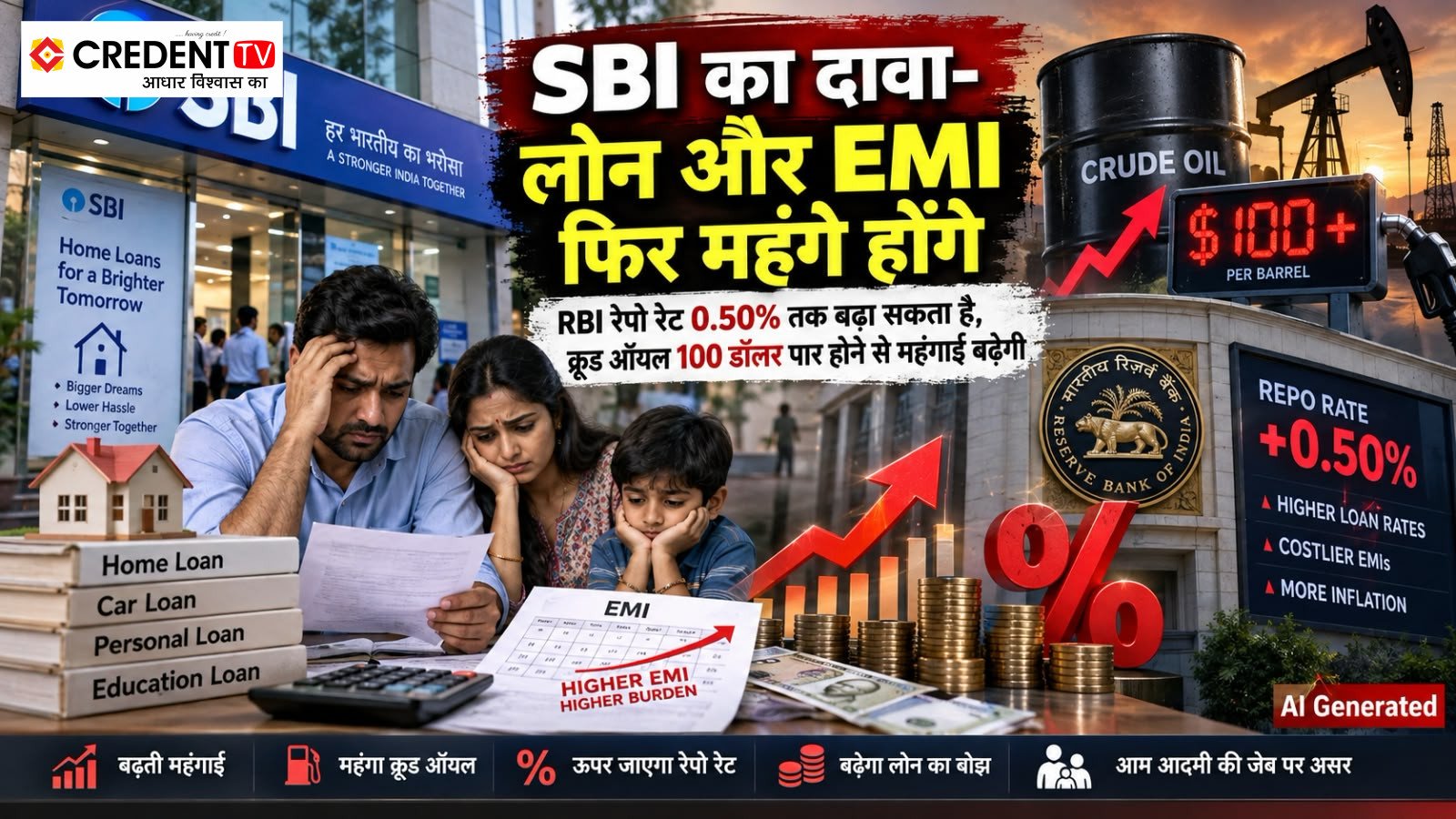
Home loan and other floating-rate borrowers could face higher borrowing costs if the Reserve Bank of India raises the repo rate in the coming months, as advocated by SBI Research. Its latest Ecowrap report has called for a 25-basis-point increase in October followed by another 25-bps rise in December, citing crude oil prices above $100 a barrel, external shocks and growing inflation risks.

SBI Research advocates RBI repo rate hike in October and December

SBI Research has recommended that the RBI raise the policy repo rate by 25 basis points at the next Monetary Policy Committee meeting and consider another 25-bps increase in December. If both increases are implemented, the cumulative rise would be 50 basis points, or 0.50 percentage point.

Advertisement


The recommendation is not an RBI decision. The central bank has kept the repo rate unchanged at 5.25% for four consecutive policy reviews, including its August 2026 meeting. The next MPC meeting is scheduled for 5-7 October.

“We strongly advocate a 25-bps rate hike in the upcoming October policy.”— SBI Research, Ecowrap report

SBI Research said the economic environment had changed significantly over the past month, with elevated energy prices and wider inflationary pressures increasing the case for monetary tightening.

What an RBI rate hike could mean for home loan EMIs

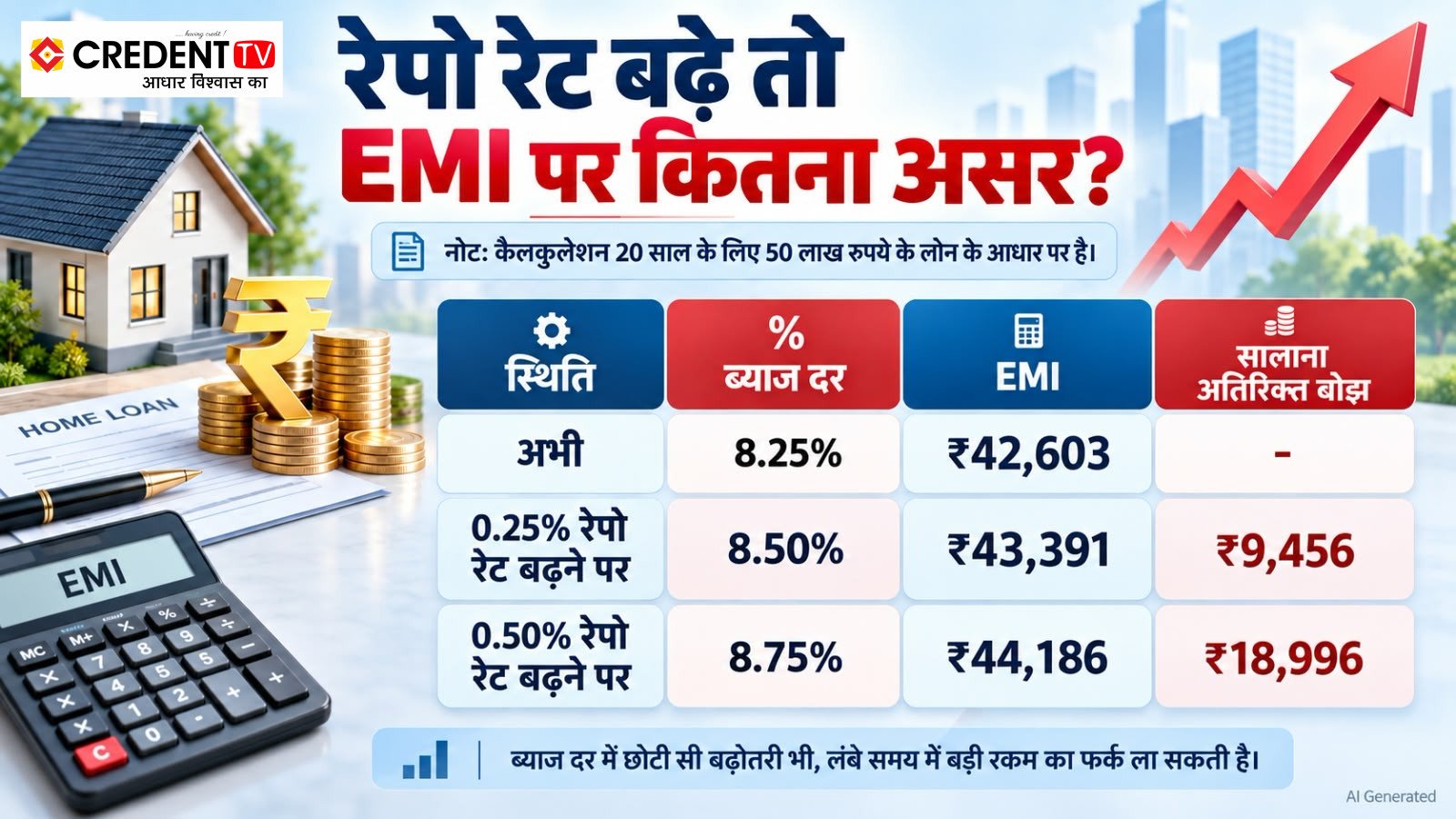
A higher repo rate can eventually make loans more expensive, particularly for borrowers whose floating-rate loans are linked to an external benchmark such as the RBI repo rate.

Advertisement


If banks transmit a higher policy rate to customers, borrowers could see their lending rates revised at the applicable reset date. Depending on the loan agreement and lender policy, this may result in a higher monthly EMI, a longer repayment tenure or a combination of the two.

The impact would not necessarily be immediate or identical for every borrower. Fixed-rate loans and loans linked to other benchmarks may respond differently.

Crude oil above $100 raises inflation concerns

The SBI Research assessment comes as international crude oil prices have moved above $100 a barrel amid heightened geopolitical uncertainty. India, which imports most of its crude oil requirements, is particularly sensitive to prolonged increases in global energy prices.

Advertisement


Higher crude prices can affect transportation, fuel, manufacturing and logistics costs, potentially feeding into consumer inflation. They can also put pressure on the rupee and India’s current account position.

SBI Research said one of its models indicated crude prices could reach $123 a barrel over a 15-day period under a higher-risk scenario, while another model projected an average closer to $105 a barrel. These are estimates rather than confirmed future prices.

Inflation outlook puts October RBI MPC meeting in focus

SBI Research said inflationary pressure was showing signs of becoming more broad-based, including in areas such as crude petroleum and natural gas, beverages, pharmaceuticals and electronics.

Advertisement


The report estimated that if crude oil prices remain elevated, inflation in October and November could move towards 6.5% or higher. The trajectory of food prices, energy costs, the rupee and global financial conditions will therefore remain important ahead of the October RBI policy decision.

RBI Governor Sanjay Malhotra has meanwhile maintained that the prevailing monetary policy remains appropriate, while the central bank continues to monitor inflation, liquidity and external risks.

RBI has not announced a 0.50% repo rate increase

Borrowers should note that the proposed increases are recommendations from SBI Research and not a confirmed RBI decision. The Monetary Policy Committee will independently decide the repo rate after evaluating inflation, economic growth and financial conditions.

Advertisement


If the RBI ultimately follows the two-step path suggested by SBI Research, the repo rate would rise from the current 5.25% to 5.50% after a 25-bps increase and to 5.75% after a further 25-bps rise. Such a move could raise borrowing costs for eligible floating-rate home, vehicle and personal loans, subject to individual banks’ transmission and reset mechanisms.

RBI repo rate hike, RBI repo rate 2026, SBI Research repo rate, home loan EMI increase, loan EMI hike, RBI MPC October 2026, crude oil price India, India inflation 2026, home loan interest rate

#RBIRepoRate #HomeLoanEMI #RBI #SBIResearch #Inflation
Advertisement


Continue Reading

Breaking News

CBI Books Subhash Chandra in ₹1,322 Crore LIC Housing Finance Fraud Case

Published

on

CBI Books Subhash Chandra in ₹1,322 Crore LIC Housing Finance Fraud Case


New Delhi | 5 Sep 2026

The Central Bureau of Investigation has registered an FIR against Essel Group chairman Subhash Chandra, three company executives and several Essel-linked entities over an alleged ₹1,322 crore fraud involving two loan facilities granted by LIC Housing Finance Limited.

The case concerns loans totalling ₹980 crore sanctioned in 2018, allegedly on the basis of disputed net-worth certificates and continuing personal guarantees executed by Chandra. Both loan accounts subsequently defaulted, according to the lender’s complaint.

Advertisement


The allegations remain under investigation. Registration of an FIR does not establish guilt, and no court has adjudicated the claims against Chandra or the other accused.

CBI FIR names Subhash Chandra and Essel-linked entities

The CBI registered the FIR on 31 August following a complaint from LIC Housing Finance. Chandra has reportedly been listed as the first accused.

Other individuals named in the case include Pankaj Suroliya, Amish Pandya and Rajeev Dholakia. The FIR also names Vasant Sagar Properties Private Limited, Pan India Infraprojects Private Limited, Digital Subscriber Management and Consultancy Services Private Limited, and Spirit Infrapower and Multiventures Private Limited, along with unidentified persons.

Advertisement


The case invokes Section 120B of the Indian Penal Code, relating to criminal conspiracy, read with Sections 409 and 420, covering criminal breach of trust and cheating. Provisions of the Prevention of Corruption Act have also reportedly been applied.

Two LIC Housing Finance loans totalled ₹980 crore

The first facility involved a ₹500 crore loan sanctioned to Vasant Sagar Properties, with Pan India Infraprojects as co-borrower. It was described as a home-entity loan for takeover, top-up and business expansion.

Chandra executed a continuing personal guarantee for this facility on 28 March 2018.

Advertisement


The second facility was a ₹480 crore loan to Digital Subscriber Management and Consultancy Services, with Spirit Infrapower and Multiventures as co-borrower. It was sanctioned under a rental-discounting arrangement and backed by a continuing guarantee executed by Chandra on 10 August 2018.

LIC Housing Finance alleged that the accused acted in concert to induce the lender to approve and disburse the facilities. The complaint further alleged that loan funds were misappropriated and assets were dealt with in a manner that obstructed recovery.

Net-worth certificates under investigation

A central element of the complaint is the difference between financial figures submitted when the loans were sanctioned and statements recorded during Chandra’s subsequent personal insolvency proceedings.

Advertisement


According to the FIR, a certificate issued by DIM & Co on 28 March 2018 valued Chandra’s net worth at approximately ₹59,113.21 crore as of 31 March 2017. LIC Housing Finance alleged that this certificate was among the considerations used to approve the Vasant Sagar facility.

A second certificate, issued by chartered accountants MPJ & Co on 6 July 2018, placed Chandra’s net worth at ₹40,562 crore. The lender said this document was considered while sanctioning the Digital loan facility.

During personal insolvency proceedings in 2024, Chandra reportedly declared his net worth as ₹31.79 crore and disputed having the net worth stated in the earlier certificates. He also maintained that his net worth during 2017–18 had not exceeded ₹40,000 crore.

Advertisement


LIC Housing Finance alleged that the earlier certificates contained inflated figures and were used to secure approval and disbursal of the loans. The CBI will now examine the documents, financial transactions, use of funds and the respective roles of the named individuals and companies.

No immediate response to fresh CBI case

There was no immediate public response from Chandra or the other accused specifically addressing the newly registered FIR.

In earlier statements concerning his personal insolvency proceedings, Chandra maintained that he had not personally borrowed ₹22,000 crore. His office said the amount reported in those proceedings largely represented guarantees provided for loans raised by corporate entities.

Advertisement


Chandra’s office previously placed the personal-guarantee claims raised by creditors opposing his repayment plan at approximately ₹3,992 crore. That position concerned the insolvency proceedings and was not a response to the criminal allegations now being investigated by the CBI.

NCLT stays ₹6.25 crore repayment plan

The CBI case emerged days after a five-member special bench of the National Company Law Tribunal stayed an earlier order approving Chandra’s personal insolvency repayment plan.

The plan proposed distributing ₹6.25 crore from Chandra’s personal estate among creditors whose admitted claims totalled approximately ₹22,006.57 crore. Another ₹25 lakh was earmarked for insolvency-process costs.

Advertisement


LIC Housing Finance had an admitted claim of approximately ₹1,322.39 crore in the personal insolvency proceedings. Under the proposed plan, it was allocated about ₹38.09 lakh.

On 1 September, the special NCLT bench stayed the approval after finding that no clear majority had emerged from the earlier judicial opinions. It also restrained Chandra from directly or indirectly selling or transferring his assets while the matter is reconsidered.

LIC Housing Finance retains recovery rights

LIC Housing Finance has clarified that Chandra’s personal insolvency proceedings do not discharge or reduce the liabilities of the principal corporate borrowers.

Advertisement


The lender said it continues to hold security interests over the assets mortgaged for the two facilities and retains its enforcement and recovery rights under applicable law.

The criminal investigation and the personal insolvency proceedings are separate legal processes. The CBI will investigate whether criminal offences occurred, while the insolvency forum will determine the treatment of creditors’ claims and Chandra’s liability as a personal guarantor.

Advertisement


Continue Reading

Breaking News

Ambedkar DBT Voucher Jaipur 7 Powerful Benefits + ₹2,000/Month Support for 10 Months-

Published

on

The Ambedkar DBT Voucher Jaipur

Jaipur, Nov.20,2025:Ambedkar DBT Voucher Jaipur is making headlines again — and for good reason. This government-backed financial assistance program is providing ₹2,000 per month for up to 10 months to eligible minority male students studying in government colleges in Jaipur. The last date to apply is 31st December 2025. With this scheme, students can ease the burden of rent, food, electricity, and water, focusing more on their education and less on financial stress.

The Ambedkar DBT Voucher Jaipur scheme is a reassuring lifeline for many students — especially those who are away from home and paying for their basic living expenses.

Advertisement

What Is the Ambedkar DBT Voucher Scheme

Ambedkar DBT Voucher Scheme is an initiative by the Rajasthan Social Justice & Empowerment (SJE) Department, aimed at supporting students from underprivileged and minority communities. Under this scheme

  • Students receive a monthly reimbursement (via Direct Benefit Transfer, DBT) for accommodation-related living costs — such as rent, food, electricity, and water.
  • The scheme specifically targets students studying in government colleges in their district headquarters.
  • Only academic courses (Arts, Science, Commerce) in undergraduate and postgraduate programs are covered.
  • The help is available for a maximum of 10 months per year.
  • It’s not limited to one-year students: students can benefit for up to five years (depending on course duration).

This initiative aligns with Dr. B. R. Ambedkar’s vision of educational empowerment — helping students who would otherwise struggle to afford the high cost of living while studying away from home.

Who Is Eligible in Jaipur for This Scheme name

In Jaipur, Ambedkar DBT Voucher Jaipur eligibility is quite specific. Key eligibility criteria include

  • The student must belong to a minority community: Muslim, Sikh, Jain, Christian, Buddhist, or Parsi.
  • Only male students (“केवल बालक”) can apply under this scheme.
  • The student must be enrolled in a public/government college (district headquarters) for Arts, Science, or Commerce courses.
  • The applicant should be living away from home, i.e., paying rent (or staying in a paying guest) in Jaipur, outside the Jaipur municipal corporation/district headquarter residence.
  • There should be proof of rent: such as a rent agreement or rent receipts.
  • Additional documentation: Aadhar, caste certificate, previous academic marksheet, and proof of permanent residence.

How Much Financial Aid Do Students Receive

One of the major attractions of the Ambedkar DBT Voucher Jaipur scheme is its generous monthly support. Here’s what a beneficiary can expect

  • ₹2,000 per month, deposited via DBT into the student’s bank account.
  • This support is available for up to 10 months in an academic year.
  • Over the period of 10 months, that’s ₹20,000 per year — a significant buffer for students facing living costs away from home.
  • The scheme is structured so that the payment is based on student’s admission month, meaning the amount is proportional to when the student joined college.

Why This Scheme Is a Major Relief for Students

The Ambedkar DBT Voucher Jaipur scheme is more than just financial aid — it’s a strategic support system empowering students from marginalized minorities to pursue their education with dignity.

 Reduces Financial Strain

Advertisement

Many students come from rural or low-income backgrounds and moving to Jaipur (or any district headquarters) to study can be financially draining. Rent, food, electricity, and water bills stack up quickly. The scheme’s monthly ₹2,000 reimbursement directly targets these recurring costs.

 Encourages Higher Education

By alleviating financial stress, students can invest more time and energy in their studies rather than part-time work. This might lead to improved academic performance and higher graduation rates.

Advertisement

 Promotes Inclusivity

The scheme specifically supports minority male students who are often underrepresented in higher education due to economic barriers. This aligns with broader social justice goals and helps promote inclusivity in education.

 Timely Support

Advertisement

Given the 31 December application deadline, students have a clear window. This urgency helps raise awareness and ensures eligible students don’t miss out.

 Efficient Fund Transfer

Since the support is given via DBT (Direct Benefit Transfer), there’s transparency, speed, and reduced leakage. Funds go directly into the student’s bank account, reducing delays or mismanagement.

Advertisement

Key Dates & Application Process Application Start Date: 17 November 2025.

  • Application End Date: 31 December 2025.
  • Where to Apply: Online through the SSO portal (sso.rajasthan.gov.in) or via SIMS portal (sims.rajasthan.gov.in).
  • Contact for Help: Jaipur District Minority Welfare Office — Call 0141-2785723 for queries.

 Required Documents & Eligibility Checklist

Before applying, students should prepare the following

  1. Jan Aadhar number (linked to income and address).
  2. Residence certificate (showing the student lives outside Jaipur municipal limits, if applicable).
  3. Caste certificate (for minority community proof).
  4. Proof of Enrolment College admission certificate or course enrolment proof.
  5. Rent Agreement / Rent Receipts: To verify that the student is paying rent or living in a paying guest setup.
  6. Academic Mark-sheet: Previous year’s marks or passing certificate.
  7. Bank Account Details: For DBT transfer.

 How to Apply Online

Here’s a detailed, easy-to-follow process for applying to the Ambedkar DBT Voucher Jaipur scheme

  1. Visit the SSO Portal
  2. Navigate to SJMS
    • After login, find the “G2C” (Government-to-Citizen) menu.
    • Click on the SJMS SMS icon (Scholarship / Voucher section).
  3. Select Ambedkar DBT Voucher Scheme
    • From the list of schemes, choose the Ambedkar DBT Voucher.
    • Fill out the “Application Form” section: personal details, academic course, college name, monthly rent, etc.
  4. Upload Documents
    • Upload scanned copies of the required documents: Aadhar / Jan Aadhar, rent agreement, caste certificate, mark sheet, enrolment proof, and bank passbook.
  5. Review & Submit
    • Double-check all details. Inaccurate or mismatched data (name, address, etc.) can lead to rejection.
    • Submit the form before 31 December 2025.
  6. Track Application
    • Note your application number. Use it to track status on the SSO/SJMS portal.
  7. DBT Disbursement
    • Once your application is approved, payments (₹2,000/month) will be directly credited to the bank account you furnished.

Common Challenges & Tips to Avoid Rejection

Applying for a voucher scheme is one thing — getting approved is another. Here are some common pitfalls and how to avoid them

  • Incomplete Documentation: Students sometimes upload unclear scans or miss a document (e.g., rent agreement). Always keep high-quality, legible PDF or image scans.
  • Mismatch in Address Proof: If your residence proof doesn’t clearly show you’re living outside Jaipur’s municipal boundary (or the defined district HQ area), your application may be rejected.
  • Wrong Bank Details: A small mistake in the account number can delay or block DBT payment. Verify your bank account before submission.
  • Missing Jan Aadhar Link: Make sure your Jan Aadhar is correctly linked to your income and address; this is crucial for eligibility verification.
  • Last-Minute Rush: With the deadline on 31 December, portals may get congested. Apply early to avoid technical glitches.
  • Verification Delays: After submission, approval involves verification by college and district offices. Keep communication lines open and respond promptly if additional information is requested.

Where to Get Help & More Information

If you need assistance during the application process, here are some reliable resources

  • District Minority Welfare Office, Jaipur
    • Phone: 0141-2785723
  • SJE Department, Rajasthan
    • Their official website has detailed scheme guidelines including eligibility, FAQs, and application manual.
  • SSO Helpdesk / e-Mitra Centres
    • If you face technical issues while applying, e-Mitra centres can assist you with login, form-filling, or document upload.
  • College Authorities
    • Your college’s administrative office may help verify admission proof, submit required documents, or provide guidance on rent proof.

What This Means for Students in Jaipur

The Ambedkar DBT Voucher Jaipur scheme is a substantial and timely boost for minority students studying in government colleges away from home. With ₹2,000 support every month for up to 10 months, students can significantly ease their financial burden — potentially increasing their academic focus and success.

Advertisement
Continue Reading

Breaking News

Retail Inflation in India rose to 2.07% in August, driven by rising vegetable and fuel prices-

Published

on

Retail Inflation in India

New Delhi, Sep.12,2025:Retail Inflation in India has once again made headlines, with the government releasing fresh data for August 2025. The figures reveal that consumer prices have risen slightly, sparking debates on whether Indian households will continue to feel the pinch in the coming months.

According to official data, the Consumer Price Index (CPI)-based retail inflation rose to 2.07% in August, compared to 1.55% in July. While this increase remains within the Reserve Bank of India’s (RBI) comfort zone of 2–6%, it highlights worrying trends in food and fuel prices.

Advertisement

What Is Retail Inflation in India

Retail inflation in India is measured by the Consumer Price Index (CPI). It tracks the change in prices of essential goods and services such as food, fuel, clothing, and housing.

  • A moderate inflation rate indicates a stable economy.
  • Higher inflation, however, reduces purchasing power and impacts household savings.

For a deeper understanding of CPI, you can check the RBI’s official CPI definition.

Official Data for August 2025

The government’s data shows:

  • CPI Inflation in August 2025: 2.07%
  • CPI Inflation in July 2025: 1.55%
  • Food Inflation: from -1.76% in July to -0.69% in August

The data confirms that the rise in vegetable and pulse prices played a major role in pushing up retail inflation in India.

Why Did Retail Inflation in India Rise

Food Price Surge

Advertisement

Vegetables and pulses saw a sharp price rise due to:

  • Excess rainfall damaging crops
  • Lower-than-expected agricultural output
  • Higher demand during the festive season

Fuel and Oil Prices

Global crude oil prices have risen significantly, raising transportation and energy costs. This has had a cascading effect on essential commodities.

Impact of Monsoon and Supply Chains

Heavy rains disrupted supply chains, especially in states like Maharashtra, Karnataka, and Uttar Pradesh. This created shortages in local markets, pushing retail prices upward.

The Numbers Explained

Advertisement

The Consumer Price Index (CPI) basket is made up of several components:

CategoryWeight in CPIJuly InflationAugust Inflation
Food & Beverages45.9%-1.76%-0.69%
Fuel & Light6.8%3.12%3.98%
Clothing & Footwear6.5%2.7%2.9%
Housing10.1%4.1%4.2%

(Source: Ministry of Statistics and Programme Implementation – MOSPI)

Impact on Households and Daily Expenses

The slight rise in retail inflation in India has already been felt by middle-class families:

Advertisement
  • Household budgets stretched due to higher vegetable and cooking oil prices.
  • Transportation and LPG cylinder costs increased.
  • Dining out and packaged food prices saw small hikes.

For many households, even a 0.5% increase in food inflation significantly affects monthly expenses.

RBI’s Reaction and Monetary Policy Outlook

The Reserve Bank of India (RBI) has kept its inflation target between 2% and 6%.

  • With inflation at 2.07%, RBI is unlikely to change interest rates in the short term.
  • However, policymakers are keeping a close watch on global oil prices and domestic food supply trends.

For more updates, visit the RBI monetary policy page.

Expert Opinions on Inflation Trends

Economists believe-

  • Short-term inflation will remain moderate but volatile.
  • If rainfall continues to disrupt supply, food inflation may rise further.
  • Global oil prices are the biggest risk factor for India’s inflation stability.

Global Factors Influencing Retail Inflation in India

Several global trends are shaping India’s inflation outlook:

  1. Oil Prices: Brent crude recently crossed $90 per barrel.
  2. Geopolitical tensions: Conflicts and trade restrictions affect global supply chains.
  3. Currency fluctuations: A weaker rupee makes imports more expensive.

Will Inflation Ease or Rise Further

The road ahead for retail inflation in India depends on:

  • The impact of the ongoing monsoon season.
  • Global energy markets.
  • Domestic demand during the festival season.

If food supply stabilizes and oil prices ease, inflation may remain under control. But any shock to global oil or agriculture could push inflation back above 3–4%.

The latest data confirms that retail inflation in India rose slightly to 2.07% in August 2025. While still within the RBI’s comfort zone, the rise in food and fuel prices is a reminder of how vulnerable the Indian economy remains to external shocks and climate-related disruptions.

Advertisement

For Indian households, this means carefully planning budgets and preparing for possible price hikes in essentials. Policymakers, on the other hand, must stay alert to ensure inflation remains under control without stalling economic growth.

Advertisement
Continue Reading

Delhi/NCR

ITR-filing mistakes-2025 avoid errors

Published

on

The deadline for ITR filing is

New Delhi, Sep.01,2025:Taxpayers must disclose foreign assets—even if penalties are reduced for assets valued under ₹20 lakh—reporting remains compulsory

Don’t Choose the Wrong ITR Form

Filing under an ineligible form like ITR-1 when you have capital gains, foreign assets, or multiple employers can render your return defective. For instance, you must use ITR-2 if long-term capital gains exceed ₹1.25 lakh or you hold overseas accounts.

Advertisement

Always Verify AIS, Form 26AS & TIS

Verify your income and TDS against AIS, Form 26AS, and Taxpayer Information Summary (TIS). Mismatches are a leading cause of notices, delays, or penalties.

Declare Every Income Source—Even Exempt Ones

Include interest income from savings/fixed deposits, rental income, dividends, and exempt income like PPF interest. Even if exempt, failing to declare these can invalidate your return.

Avoid Incorrect HRA or Capital Gains Claims

Incorrect HRA claims—such as missing landlord PAN or wrong rent details—can trigger scrutiny. Also, capital gains tax slabs changed post-July 23, 2024; filing errors here are common among investors.

Advertisement

Be Wary of Fraudulent or Unsupported Deductions

Claiming deductions under Sections 80C, 80D, 80U without proper documentation is risky. AI-driven systems now flag false or exaggerated claims more easily, resulting in notices or refunds blocked.

Disclose Foreign Assets & Profession-Specific Income Codes

Taxpayers must disclose foreign assets—even if penalties are reduced for assets valued under ₹20 lakh—reporting remains compulsory. Influencers, F&O traders, and gig workers now need to use specified profession codes in ITR-3/ITR-4 (e.g., code 16021 for influencers).

E-Verify Your Return on Time

Filing alone isn’t enough. You must verify (via Aadhaar OTP, net banking, EVC, or ITR-V via post) within 30 days—without it, the return is considered unfiled.

Advertisement

For Excel-Based Filers- Use Pre-filled JSON

ITR-2/3 Excel utilities often glitch. Download the pre-filled JSON from the e-filing portal, activate macros, and validate each schedule. Keep backups to avoid data loss.

Fix Stock & Mutual Fund AIS Mismatches Early

Taxpayers with stock or mutual fund investments face AIS mismatches—like zero purchase cost for old holdings, duplicated entries, or inflated gains. Cross-check with demat or broker records and use the portal’s feedback tool to correct errors.

Actionable Fixes at a Glance

Advertisement
MistakeFix
Wrong ITR formUse ITR-2/ITR-3 if applicable
Mismatched AIS/26AS/TISReconcile before submission
Omitted incomeDisclose all, even exempt
HRA/CG errorsFile correctly based on data
Unsupported deductionsKeep documents, stay honest
Undisclosed foreign/gig incomeUse correct codes; declare all
No e-verificationVerify within 30 days
Excel glitchesUse JSON, macros, backups
AIS stock errorsCross-check, raise feedback

The deadline for ITR filing is 15 September 2025, giving you a runway—but not a reason to delay. Avoid the ITR filing mistakes 2025 detailed above, ensure your filing is precise, and ride through this season confidently.

Advertisement
Continue Reading

Delhi/NCR

India’s economy accelerates with a 7.8% GDP growth in Q1 FY26, surpassing expectations and highlighting robust sectoral performances despite global trade tensions

Published

on

India's economy

New Delhi, Aug.29,2025:The agriculture sector experienced a significant turnaround, with a 3.7% growth in real terms, up from 1.5% in the same quarter of the previous fiscal year

India’s economy has demonstrated remarkable resilience, achieving a 7.8% GDP growth in the first quarter (April-June) of the 2025–26 fiscal year. This performance not only surpasses the Reserve Bank of India’s projection of 6.5% but also defies expectations amid global economic uncertainties.

Advertisement

Sectoral Performance Highlights

Agriculture Sector

The agriculture sector experienced a significant turnaround, with a 3.7% growth in real terms, up from 1.5% in the same quarter of the previous fiscal year. This improvement reflects favorable monsoon conditions and effective government policies supporting the sector.

Manufacturing and Construction

The secondary sector, encompassing manufacturing and construction, recorded a 7.7% and 7.6% growth, respectively. These figures indicate a robust industrial activity, driven by increased domestic demand and infrastructure development projects.

Advertisement

Services Sector

The services sector led the growth trajectory with a 9.3% increase, up from 6.8% in the previous year’s first quarter. Key drivers include trade, hotels, transport, communications, and financial services, reflecting a rebound in consumer spending and business activities.

Government Spending and Consumption Patterns

Government Final Consumption Expenditure (GFCE) witnessed a substantial rise of 9.7%, compared to 4.0% in Q1 FY25. This surge indicates increased public spending on infrastructure and welfare programs. Private Final Consumption Expenditure (PFCE) grew by 7.0%, signaling sustained consumer confidence and spending.

Impact of U.S. Tariffs on Indian Exports

Despite the robust growth, India’s export sector faces challenges due to the United States’ imposition of additional tariffs on Indian goods. The tariffs, which have increased up to 50%, are expected to impact key export industries such as textiles, chemicals, and food products. The government is exploring measures to mitigate these effects and support affected sectors.

Advertisement

Comparative Analysis: India vs. China

In contrast, China’s economy grew by 5.2% in the same quarter, indicating a slowdown from previous periods. Factors contributing to this deceleration include weak domestic demand and challenges in the real estate sector. India’s higher growth rate underscores its economic resilience and potential for sustained development.

Economic Outlook and Future Projections

While the current growth is commendable, economists caution that the upcoming quarters may witness moderation due to external trade pressures and global economic conditions. Projections suggest a full-year GDP growth ranging between 6.0% and 6.5%, contingent on effective policy interventions and global trade dynamics.

India’s 7.8% GDP growth in Q1 FY26 is a testament to its economic resilience and the effectiveness of domestic policies. While challenges persist, the country’s diversified economic base and proactive measures position it well for sustained growth in the coming quarters.

Advertisement

Continue Reading

Business

New Rules August 2025: 7 Big Financial Changes Impacting You Now

Published

on

New Rules August 2025 kicks off a wave of regulatory changes across finance

New Delhi, Aug.01,2025:From 1 August, commercial LPG cylinder (19 kg) rates are slashed by Rs.33.50 nationwide—

New Rules August 2025: What’s Changing

New Rules August 2025 kicks off a wave of regulatory changes across finance, payments, fuel, banking, and tolls. From August 1, Monday, a slew of updates go live that impact everyday costs—from fuel bills to digital payments to travel convenience.

Advertisement

LPG Price Cut on August 1

From 1 August, commercial LPG cylinder (19 kg) rates are slashed by Rs.33.50 nationwide—Delhi Rs.1,631.50; Mumbai Rs.1,582.50; Kolkata Rs.1,734.50; Chennai Rs.1,789. No changes to domestic LPG prices this.

UPI Limits & API Rules Begin August 1

New Rules August 2025 enforce significant UPI system changes from NPCI:

  • Maximum 50 balance‑check requests per day per app per user
  • Bank‑account listing limited to 25 per app per day
  • Autopay and mandate executions only during non‑peak hours (before 10 AM, 1–5 PM, after 9:30 PM)
  • Only 3 status‑check attempts allowed
  • Receiver name must display before payment; no GST on UPI transactions.

These changes aim to reduce server overload, improve speed, and enhance security.

SBI Credit Cards Lose Free Air‑Accident Insurance

Starting 11 August, SBI is withdrawing free air‑accident insurance cover from select co‑branded credit cards (ELITE & PRIME) issued with UCO Bank, Central Bank, PNB, Karur Vysya, Allahabad Bank. Coverage up to Rs.50 lakh–Rs.1 crore is discontinued.

Advertisement

FASTag Annual Pass Introduced from August 15

From 15 August, Road Transport Ministry launches a new FASTag annual pass for private vehicles: Rs.3,000 covers up to 200 toll‑free trips or one year, whichever earlier. Designed for frequent highway users, it’s optional but likely cost‑effective.

PNB KYC Update Deadline: August 8

Punjab National Bank has mandated that all customers update their KYC by 8 August 2025 to keep accounts active, in compliance with RBI guidelines.

ATF Price Revision and Impact on Airfares

Also on 1 August, Aviation Turbine Fuel (ATF) prices are revised:

Advertisement
  • Delhi ~ Rs.92,022 per kL
  • Kolkata ~ Rs.95,165
  • Mumbai ~ Rs.86,077
  • Chennai ~ Rs.95,512

These rates apply for domestic airlines; higher ATF costs may push up airfares—or a drop could bring relief.

Bank Holidays Schedule in August

In August 2025, 15 days of bank holidays are observed across India, including all Sundays, second and fourth Saturdays, and state‑specific festival holidays. Plan ahead to avoid delays in banking transactions.

What This Means for Consumers

New Rules August 2025 bring both relief and impact:

  • Hotel/restaurants benefit from lower commercial LPG rates; households unaffected.
  • UPI users face limits on balance checks and autopay timings—though better stability and fewer failures are expected. Delays possible during peak hours.
  • SBI cardholders must consider alternative insurance options if they relied on airport safety cover.
  • Frequent toll‑road users might save with FASTag annual pass.
  • PNB customers must act fast to avoid account deactivation.
  • Air travellers should watch for fare shifts due to ATF price updates.
  • Bank users must navigate 15 holiday‑days wisely, especially in offline transactions.

New Rules August 2025 mark a significant regulatory shift across consumer finance and payments systems. While some changes ease costs—like LPG cuts and FASTag options—others introduce constraints, like UPI limits and loss of SBI card benefits. Stay informed and adjust monthly budgets accordingly.

Advertisement
Continue Reading

Delhi/NCR

ED raids Anil Ambani: Unmatched Investigation Shakes India

Published

on

ED raids Anil Ambani kicked off on July 24, 2025

Mumbai, July24,2025: As of August 26, 2016, SBI’s fund-based exposure exceeded ₹2,227.64 cr; bank guarantees added ₹786.52 cr.

ED raids Anil Ambani – The Shocking Start

ED raids Anil Ambani kicked off on July 24, 2025, when the Enforcement Directorate stormed over 40 locations tied to Anil Ambani, including in Mumbai and Delhi.

Advertisement

The operation stems from alleged financial irregularities, money laundering, and loan fraud linked to Yes Bank and SBI accounts. This sweeping enforcement marks a critical juncture in the saga of Reliance Communication’s financial collapse.

What Triggered the ED Raids?

SBI’s “Fraud” Tag

A key catalyst was SBI labelling Anil Ambani and Reliance Communications as a fraudulent borrower. On June 13, 2025, SBI formally classified the loans as ‘fraud’, escalating to an RBI report on June 24, 2025, followed by CBI complaint preparations.

Advertisement

SBI’s outstanding exposure: ₹2,227.64 cr in principal and ₹786.52 cr in bank guarantees.

Link to Yes Bank Money Laundering

ED’s probe also overlaps with alleged Yes Bank loan fraud, part of broader money laundering accusations. Authorities traced suspicious transactions and offshore fund movements via Ambani-linked entities.

Scope of the ED Raids

Advertisement

Locations: Mumbai & Delhi

Synchronized raids covered 40–50 premises across Mumbai and Delhi.

These included residential, corporate, and workshop spaces tied to Ambani and associated firms.

Agencies Involved

Advertisement

The Enforcement Directorate led the raid, supported by the investigation teams from both Mumbai and Delhi, aligning with the anti-money laundering framework.

What SBI’s Fraud Declaration Means

Legal Framework

Under RBI’s Master Directions and SBI’s fraud policies, such classification triggers reports to RBI and CBI. Borrowers lose access to bank loans for at least 5 years under banking law.

Advertisement

Financial Exposure

As of August 26, 2016, SBI’s fund-based exposure exceeded ₹2,227.64 cr; bank guarantees added ₹786.52 cr.

nsolvency & NCLT Proceedings

Advertisement

RCom is in Corporate Insolvency Resolution under IBC; personal insolvency proceedings are active against Anil Ambani before NCLT Mumbai.

Implications for Anil Ambani & Group Firms

  • Legal jeopardy: CBD complaint could lead to CBI investigation and judicial action.
  • Funding freeze: With the fraud tag, access to credit is blocked for 5+ years.
  • Asset scrutiny: ED may attach or seize assets; seizure may extend to offshore holdings.
  • Reputational fallout: These developments shake investor confidence, further weakening market value.

Reactions & Defense

Anil Ambani’s Legal Response

Legal counsel Agarwal Law Associates has challenged SBI’s classification, demanding a prompt hearing and due process.

Official Reactions

Advertisement
  • Ministry of State for Finance, Pankaj Chaudhary, confirmed the fraud tag in Parliament and affirmed impending CBI complaint.
  • ED and SBI have largely declined further comments, citing ongoing investigations.

Possible Scenarios Ahead

ScenarioOutlook
ED builds caseContinues raids, collects evidence, questions directors
CBI steps inFormal legal actions under Prevention of Money Laundering Act (PMLA)
Asset managementInsolvency resolution and possible asset auctions by NCLT
Court scrutinyAnil Ambani may challenge findings; timeline could stretch years
Investor sentimentHeightened due diligence across India’s B‑sector firms

External Perspective & Expert Analysis

  • Financial analysts stress that SBI’s ₹3,000+ crore exposure signals systemic risk.
  • Legal experts underscore the Supreme Court’s 2023 ruling, demanding prior notice to borrowers—a protocol SBI followed in re-tagging the loans after reversal in 2023.
  • Market watchers note that once accounts are tagged fraud, the broader banking ecosystem becomes cautious, potentially freezing overdue payments.

A Storm Unfolding

ED raids Anil Ambani is more than a headline—it marks a tipping point in India’s regulatory and legal landscape. It underlines stringent actions by Indian banks and agencies against financial impropriety. As the case unfolds, it will test the resilience of judicial systems, corporate governance, and the fate of Ambani-linked businesses.

Advertisement
Continue Reading

Education

Kota ICICI Bank Staffer Swindles ₹4.5 Crore, Gambles It All on Stock Market

Published

on

ICICC BANK

ICICI Bank real estate 1736340195499 1749292497912

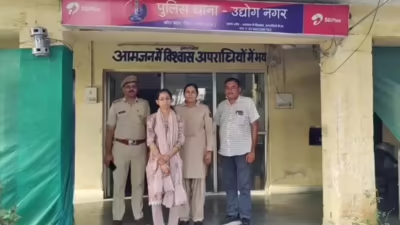
Sakshi Gupta, a relationship manager at ICICI Bank’s Kota branch from 2020 to 2023, was arrested for cheating customers of ₹4.5 crore. She changed their contact details to stop alerts and transferred money to a pool account, which she used for stock market trading. The fraud came to light after the branch manager filed a complaint.

In a shocking case of financial fraud, Sakshi Gupta, a relationship manager at ICICI Bank’s Kota branch, has been accused of embezzling ₹4.5 crore from customer accounts. Gupta allegedly manipulated customer contact details to prevent them from receiving transaction alerts, allowing her to siphon off funds undetected. The stolen money was reportedly funneled into a pool account and subsequently used for high-risk stock market trading. The fraudulent activity went unnoticed for months, raising serious concerns about internal security and oversight mechanisms within the bank.

The accused named Sakshi Gupta was posted as a relationship manager at ICICI Banks’s DCM branch, according to a PTI news agency.

Sakshi Gupta, a relationship manager at ICICI Bank’s Kota branch from 2020 to 2023, was arrested for a massive fraud involving ₹4.58 crore. According to police, she stole money from over 110 accounts belonging to 41 customers over a span of two years. Gupta allegedly changed customer contact details to block transaction alerts and transferred the funds into a pool account. She then invested the stolen amount in the stock market, where she lost most of it. The fraud came to light after branch manager Tarun Dadich filed a complaint at Udhyog Nagar Police Station on February 18.

Advertisement

Sakshi Gupta, a relationship manager at ICICI Bank’s Kota branch from 2020 to 2023, was arrested for cheating customers out of ₹4.58 crore. Police said she stole money from over 110 accounts belonging to 41 customers over two years. To avoid detection, she changed the registered mobile numbers of account holders to numbers belonging to her relatives. This prevented customers from getting transaction alerts or OTPs.

Gupta then quietly transferred funds to multiple accounts. In one case, she used the account of an elderly woman—who was completely unaware—as a “pool account” to collect money. By February 15, 2023, she had moved over ₹3 crore into this single account. Most of the stolen money was then invested in the stock market, where she lost a large part of it. The fraud was exposed when branch manager Tarun Dadich filed a complaint at Udhyog Nagar Police Station on February 18.

Sub-Inspector Ibrahim confirmed the details of the case.

Advertisement

Sakshi Gupta, a relationship manager at ICICI Bank’s Kota branch from 2020 to 2023, has been arrested for embezzling ₹4.58 crore from customers’ accounts. According to police, she stole money from over 110 accounts of 41 customers over two years. To avoid detection, she changed the mobile numbers linked to the accounts with those of her relatives, stopping transaction alerts and OTPs from reaching the actual account holders.

Sub-Inspector Ibrahim revealed that Gupta misused debit cards, PINs, and OTPs, and even activated overdraft facilities on 40 accounts without the customers’ knowledge. She also closed 31 customers’ fixed deposits, illegally transferring over ₹1.34 crore, and took a personal loan of ₹3.40 lakh using fraudulent means.

Many of these transactions were carried out using Insta Kiosks, ATMs, and digital banking platforms. She used debit cards from at least 4 customers and routed money into demat accounts to hide her activities. One elderly woman’s account, unknown to her, was used as a pool account to collect over ₹3 crore.

Advertisement

The fraud came to light after branch manager Tarun Dadich filed a complaint at Udhyog Nagar Police Station on February 18, 2023.

Meanwhile, ICICI Bank released a statement saying, “The interest of our customers is most important. We filed an FIR immediately after discovering the issue and have a zero-tolerance policy for any fraudulent activity.” The bank added that Gupta has been suspended and genuine customer claims have already been settled.

Sakshi Gupta, an ICICI Bank relationship manager in Kota, has been arrested for allegedly siphoning off Rs 4.58 crore from customer accounts between 2020 and 2023. She fraudulently withdrew funds from over 100 accounts, investing in the stock market and suffering losses. The bank has filed an FIR, suspended the employee, and settled genuine claims from impacted customers.

KOTA: In a major bank fraud case, Sakshi Gupta, a relationship manager at ICICI Bank’s Shriram Nagar branch in Kota, has been accused of siphoning off ₹4.58 crore from customer accounts between 2020 and 2023. She was arrested by Udhyog Nagar police on May 31 after an investigation into the fraud, which first came to light on February 18 when branch manager Tarun Dadhich filed a complaint.

Advertisement

According to the police, Sakshi fraudulently withdrew money from over 100 accounts belonging to 41 customers over two and a half years. To hide her activities, she changed the mobile numbers linked to many accounts to those of her relatives, preventing customers from receiving transaction alerts and OTPs.

Sub-Inspector Ibrahim stated that Sakshi systematically transferred large sums into various accounts, including over ₹3 crore into an elderly woman’s account that she used as a “pool account” without the woman’s knowledge. She also misused debit cards, PINs, and OTPs, and even activated overdraft facilities on 40 customer accounts without consent. Additionally, she closed fixed deposits and took a personal loan using fraudulent methods.

Most of the siphoned money was invested in the stock market, where she incurred heavy losses. The fraud was carried out using digital banking platforms, ATMs, Insta Kiosks, and demat accounts.
Advertisement

Continue Reading

Trending Post