Crime
Jhansi bank hostage EMI case shocks UP — private bank staff allegedly held wife hostage over overdue loan instalment

Published
1 year agoon
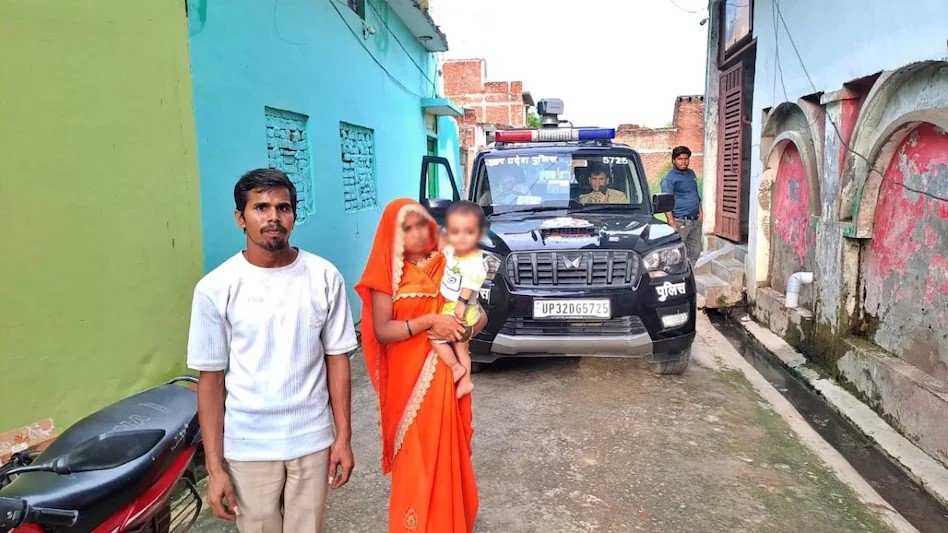
- Monday, July 28, 2025: Ravindra and his wife visit the branch in Azad Nagar, Bamhrauli.
- They are detained inside forcibly for around four to five hours.
- At his breaking point, Ravindra calls 112 (emergency), and PRV police officers arrive promptly.
- Puja is safely rescued and taken to Moth police station.
- Police initiate a formal investigation. CCTV from the branch is being reviewed, and other evidence is being collected.
- Loan Amount: Rs.40,000
- EMI per month: Rs.2,120
- Instalments paid by Ravindra: 11
- Instalments recorded by bank: 8
- Alleged agent misappropriation: Rs.2,120 × 3 = Rs.6,360
- Can private financial institutions hold women as collateral?
- What internal safeguards exist for borrower protection?
- Are oversight mechanisms strong enough in microfinance and private loan setups?
- Detaining someone without legal authority may violate penal laws regarding unlawful confinement, coercion, and human rights.
- The agent’s alleged embezzlement of EMI constitutes criminal breach of trust.
- Police actions based on CCTV and testimonies may lead to FIRs and criminal proceedings.
- Highlights the power imbalance between vulnerable borrowers and loan agents.
- Sparks debate on women’s safety in financial disputes.
- Draws attention to rural borrowers who may not understand or track loan records.
- For reference on similar incidents: Inshorts coverage of a Tamil Nadu case where a woman was held over missing EMI of ₹770 – showing this is not.


Dr Ambedkar Memorial Welfare Society Rajasthan Forms Permanent Council
-
OPT Fee Proposal Clears White House Review; $100,000 Figure Remains Unconfirmed
-
Houthi Drone Near Mecca: Saudi Arabia Intercepts UAV After Emergency Alert
-
India vs Afghanistan 2nd T20I Today: Varun Out, Ravi Bishnoi in Line for Chance
-
Operation Sindoor: India Says S-400 Downed Pakistani Aircraft 314 km Away
-
Rajasthan Municipal Election Results 2026 Live Updates
Contents
UP, July30,2025: Ravindra alleges he had taken a Rs.40,000 personal loan with a monthly EMI of Rs.2,120. He states he has repaid 11 instalments, but the bank
Overview of the Incident
Jhansi bank hostage EMI case emerged on July 30, 2025, when Ravindra Verma, a resident of Poonch police station area, lodged a written complaint with the Moth police station reporting that private bank employees in Jhansi forcibly detained his wife over unpaid loan instalments.
Victim counts that his wife, Puja Verma, was made to sit inside that private bank for nearly five hours and was not released until he arranged payment—which was stated as the condition for her release.
What Victim Claims
Ravindra alleges he had taken a Rs.40,000 personal loan with a monthly EMI of Rs.2,120. He states he has repaid 11 instalments, but the bank records show only eight paid—suggesting the agent may have misappropriated Rs.6,360.
He further claims that when he and his wife visited the branch, bank staff locked them inside and said:
“You must pay the overdue EMI before you take your wife home” — effectively holding her as leverage.
Despite his repeated pleas citing financial hardship, bank employees allegedly refused any negotiation or compassion.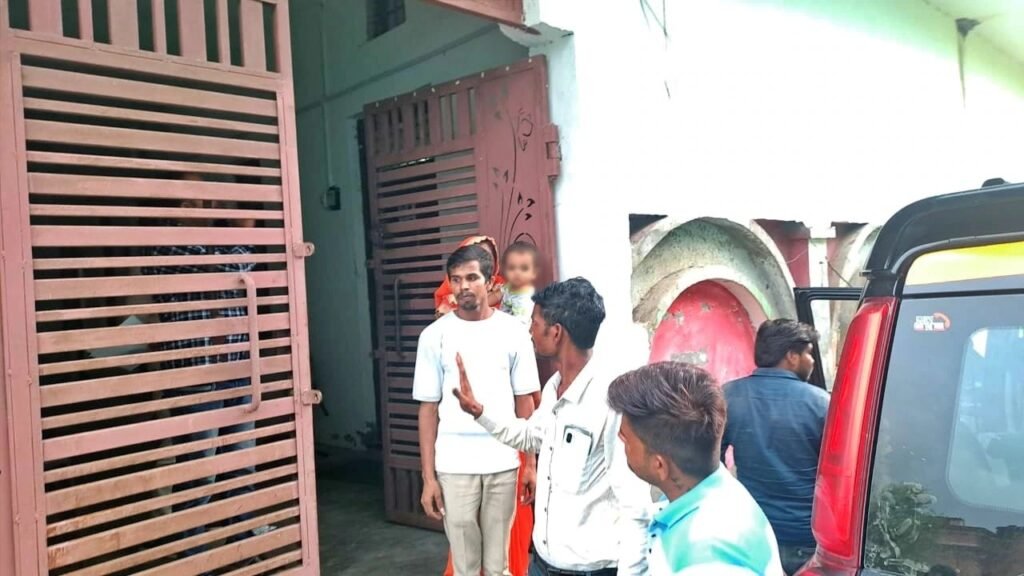
Timeline & Role of Police
Loan Details & EMI Discrepancy
This EMI mismatch is central to the case and indicates possible internal fraud or misconduct by bank agents.
Bank’s Response & Public Concerns
The private bank denied the allegations, stating no unlawful or coercive methods were used. They claimed their staff followed proper loan recovery procedures. However, the public outcry questions the integrity of loan-collection systems, especially when women are involved indirectly.
This event raises serious concerns:
Legal and Social Implications
Legal Issues:
Social Impact:
The Jhansi bank hostage EMI scandal is deeply troubling. A borrower’s wife was held hostage as repayment leverage—raising urgent questions about ethics, legality, and borrower protections. The police are investigating, and if charges are proved, the bank and responsible agents could face serious legal consequences.
This incident is a wake‑up call to revisit lending practices, regulatory oversight, and mechanisms to safeguard borrowers—especially in rural India.

Credent TV Editorial Team is the newsroom desk of Credent TV, a digital news platform owned and operated by Manasvita Global Media Pvt. Ltd. Editorial oversight is led by Sunil S. L. Narnauliya, Editor-in-Chief. The desk covers national affairs, Rajasthan, education, courts, politics, culture and social issues. Its work follows Credent TV’s Ethics Policy, Fact-Check Policy and Correction Policy. For corrections, feedback or source clarifications, contact the newsroom at https://credenttv.com/contact-us/

You may like









Breaking News
Delhi Police Detain Swatantra Bhardwaj; SC/ST Act Added in Assault Case
Published
1 month agoon
September 5, 2026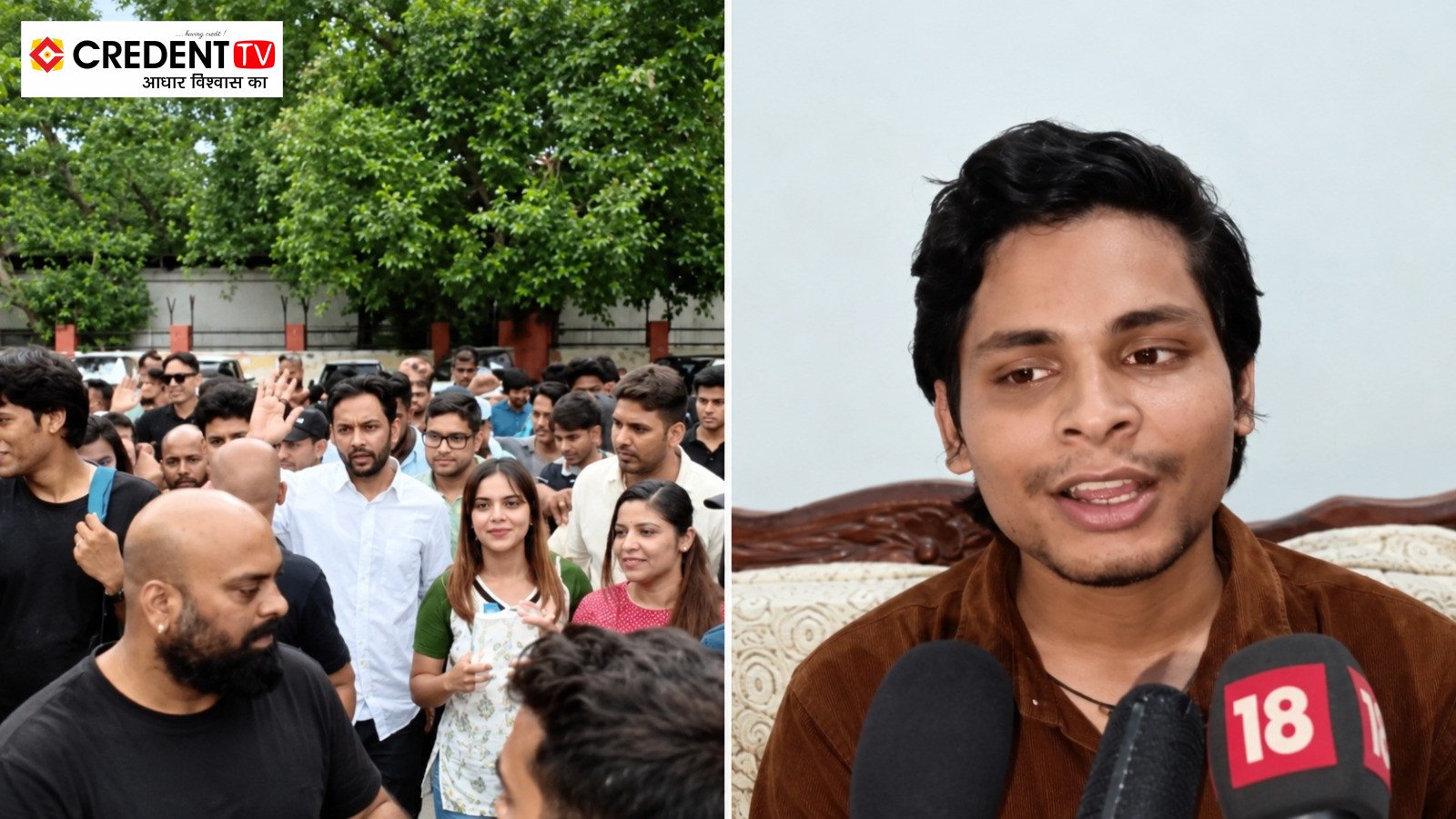
New Delhi | 5 Sep 2026
Delhi Police detained social media influencer Swatantra Bhardwaj in Uttar Pradesh’s Bulandshahr on 4 September over the alleged assault of a teenage protester’s father during a Cockroach Janta Party demonstration at Delhi’s Jantar Mantar.
The action came hours after CJP members and political leaders protested outside Parliament Street police station, demanding Bhardwaj’s arrest and the addition of stronger legal provisions to the case. Police subsequently invoked relevant sections of the Scheduled Castes and Scheduled Tribes (Prevention of Atrocities) Act in the existing FIR.
Swatantra Bhardwaj detained in Bulandshahr
Police officers said Bhardwaj was located in Bulandshahr and taken into custody before being brought to Delhi for further proceedings. Reports describing the action as a formal arrest had not been officially confirmed by the time of publication.
The case relates to an altercation during a CJP protest at Jantar Mantar on 23 June 2026. According to Delhi Police, the 38-year-old complainant, a resident of Ghaziabad, suffered a head injury during a scuffle.
An FIR was registered at Parliament Street police station under Sections 115(2), 126(2) and 3(5) of the Bharatiya Nyaya Sanhita. Swatantra Bhardwaj and Suraj Kumar were named during the investigation, questioned and served notices under the applicable legal procedure.
Viral podcast remarks trigger fresh controversy
The case returned to public attention after a podcast clip circulated online in which Bhardwaj purportedly claimed that he had severely injured the protester’s father and avoided jail because of political connections.
Bhardwaj later disputed the interpretation of the clip and maintained that he had acted in self-defence after allegedly being surrounded by several people.
“If I had not acted in self-defence, I could have been lynched by the mob or killed.”— Swatantra Bhardwaj, social media influencer
He also claimed that references to political connections had been made sarcastically. The allegations concerning political intervention have not been independently established.
Delhi Police rejected claims that Bhardwaj had been protected by political figures and said the investigation had been conducted in accordance with the law.
“Any allegation of undue influence or interference in the matter is factually incorrect and baseless.”— Sachin Sharma, Deputy Commissioner of Police, New Delhi
Police dispute skull-fracture claim
Police said the complainant was examined at Ram Manohar Lohia Hospital and that doctors classified his injuries as simple. They also rejected claims that his skull had been fractured.
“The misinformation regarding a crack in the skull is not supported by facts or the MLC and is completely baseless.”— Sachin Sharma, Deputy Commissioner of Police, New Delhi
Investigators said the head injury was caused by a metal bracelet worn by one of the alleged participants in the scuffle and not by a separate weapon. CJP representatives, however, have demanded that investigators examine whether the evidence supports adding an attempt-to-murder provision.
CJP protest leads to additional legal action
CJP spokesperson Saurav Das and co-convenor Ashutosh Ranka led the protest outside Parliament Street police station. Nagina MP Chandrashekhar Azad, Purnia MP Rajesh Ranjan, popularly known as Pappu Yadav, and Delhi Youth Congress president Akshay Lakra also joined the demonstration.
After several hours of discussions, police added provisions of the SC/ST Act to the assault FIR. Officers said they would examine the medical evidence and other material before deciding whether any further charges were warranted.
A separate FIR was also registered under provisions of the Protection of Children from Sexual Offences Act and for criminal intimidation following a complaint by the teenage protester about alleged online rape threats and harassment. Police said the identities of those responsible for the threats would be investigated.
The minor’s identity has been withheld in accordance with legal protections governing cases registered under the POCSO Act.
Investigation and next steps
Investigators are expected to question Bhardwaj further, examine digital evidence connected to the viral recordings and determine the legal status of his detention. Police have also said that a chargesheet in the original assault case will be submitted before the competent court.
No court has ruled on the allegations, and the accused is entitled to the presumption of innocence unless convicted through due legal process.
Breaking News
Swatantra Bhardwaj Detained After CJP March to Parliament Street Police Station
Published
1 month agoon
September 4, 2026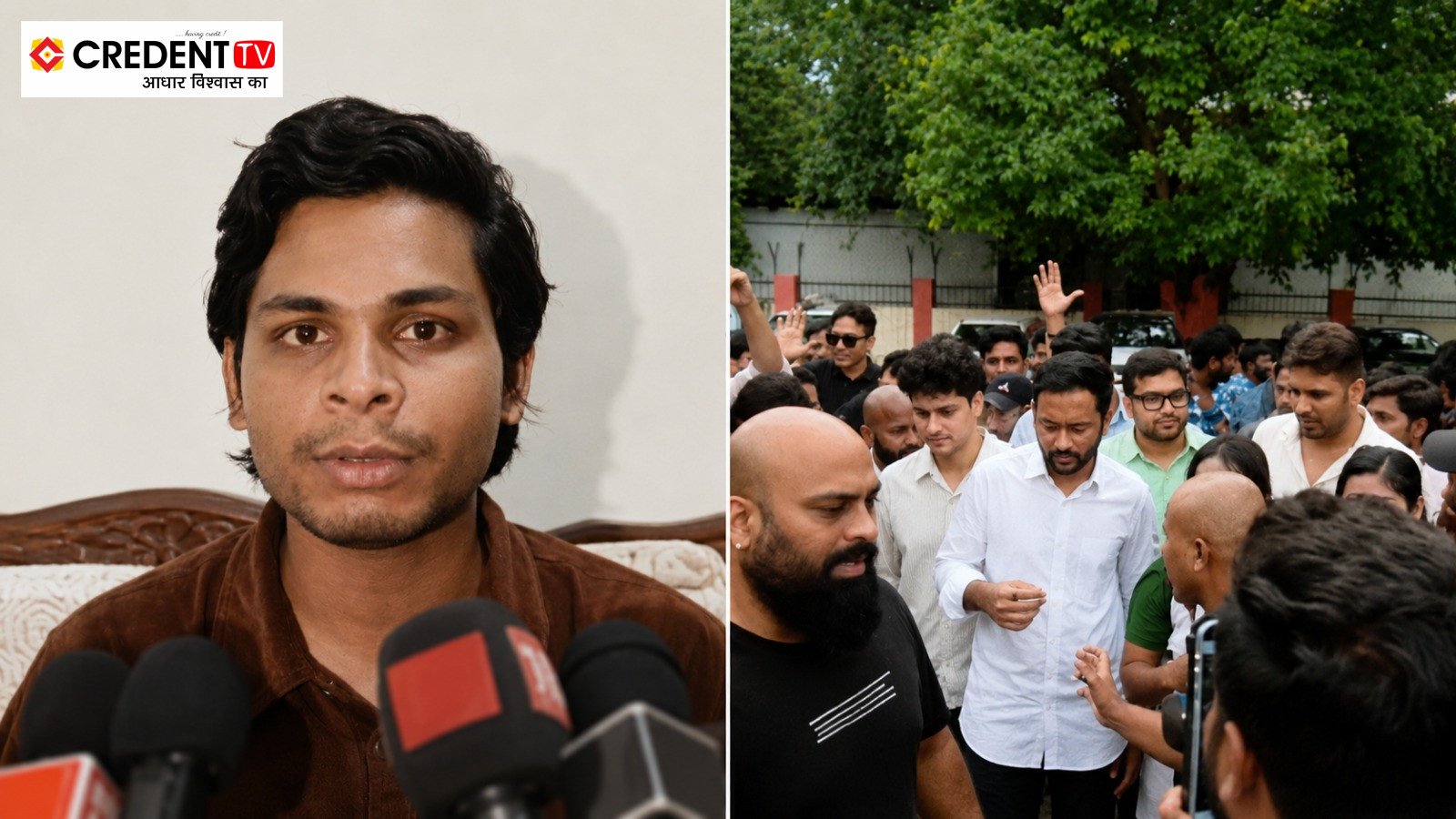
New Delhi | 04 Sep 2026
Delhi Police detained Swatantra Bhardwaj in Uttar Pradesh’s Bulandshahar on Friday, hours after CJP leaders and supporters marched to Parliament Street Police Station demanding action over the alleged assault on activist Nishu Azad’s father, Sanjay Kumar. Bhardwaj is an accused in the 23 June incident at a CJP protest at Jantar Mantar and has denied deliberately attacking Kumar, saying he acted in self-defense.
CJP leaders march to Parliament Street Police Station
CJP leaders Saurav Das and Ashutosh Ranka reached Parliament Street Police Station on Friday morning with supporters seeking what they described as stronger police action in the case. The demonstration followed renewed attention to the June incident after a video clip from a podcast featuring Bhardwaj circulated widely on social media.
ANI shared visuals of Das and Ranka arriving at the police station as the protest began.
Das questioned why the accused had remained free and called on Delhi Police to explain the action taken in the case.
Before the march, Das had announced on X that CJP members would gather at Parliament Street Police Station at 10 am to demand justice for Sanjay Kumar and his daughter.
Chandrashekhar Azad joins delegation
Azad Samaj Party MP Chandrashekhar Azad also reached Parliament Street Police Station and joined those supporting Nishu and her father. The delegation sought tougher legal provisions in the case and action against Bhardwaj.
CJP’s official X account also posted an update from the police station during the demonstration.
Nishu Azad appeals for action over father’s assault
The dispute stems from a confrontation during a CJP protest at Jantar Mantar on 23 June. According to Delhi Police, Sanjay Kumar, 38, suffered head injuries during a scuffle. Police said Suraj Kumar and Swatantra Bhardwaj were detained at the site, served notices and questioned during the investigation.
Nishu Azad later posted a video on X appealing for justice and said she hoped Leader of Opposition Rahul Gandhi would support her fight.
Rahul Gandhi backs Nishu Azad and questions police action
Rahul Gandhi responded publicly to Nishu on X, saying he stood with her and that the campaign for justice would continue. He also accused Union Home Minister Amit Shah and Delhi Police of protecting the accused. Those allegations were subsequently rejected by Delhi Police, which said the investigation had been conducted in accordance with law.
Delhi Police rejects claims of political interference
In an official statement, the Deputy Commissioner of Police, New Delhi, said Sanjay Kumar sustained a head injury from a kada worn by one of the alleged assailants during the scuffle. Police said doctors at Ram Manohar Lohia Hospital classified the injuries as simple and rejected social-media claims that Kumar had suffered a skull crack.
Police also said a case had been registered under relevant provisions of the Bharatiya Nyaya Sanhita and maintained that allegations of political influence or interference were unfounded. The force said legal action had been taken and a chargesheet would be filed before the competent court.
Following Friday’s meeting with the CJP delegation, reports said relevant provisions of the Scheduled Castes and Scheduled Tribes (Prevention of Atrocities) Act were invoked, while a demand for an attempt-to-murder charge was to be assessed on the basis of expert medical opinion.
Bhardwaj says June incident was self-defence
Bhardwaj has disputed allegations that he deliberately assaulted Sanjay Kumar. Speaking to ANI before his detention, he said he had acted in self-defence after being surrounded during the confrontation and claimed there had been no intention to attack anyone. He also disputed the interpretation of remarks from the podcast clip that triggered renewed criticism.
Swatantra Bhardwaj detained in Bulandshahr
The case took a significant turn later on Friday when Delhi Police detained Bhardwaj near Dhamra Nara village in Bulandshahr, Uttar Pradesh. The development came hours after the Parliament Street demonstration and amid mounting demands for police action.
His detention does not amount to a finding of guilt. The allegations against him remain subject to investigation and any subsequent judicial proceedings.
Breaking News
Indian Woman Murder in Maryland exposes a chilling cross-border crime as a 27-year-old Indian woman is found dead-
Published
9 months agoon
January 5, 2026
US,Jan.05,2026:Indian Woman Murder in Maryland has emerged as one of the most disturbing international crime stories of the new year, highlighting the grim reality of relationship-based violence and the complexities of cross-border justice.
A 27-year-old Indian woman, Nikita Godishala, was found murdered inside an apartment in the US state of Maryland. What intensified the shock was the revelation that the prime accused—her former boyfriend Arjun Sharma—had fled to India shortly after the crime. He was later arrested in Tamil Nadu, setting the stage for a high-profile international legal battle.
The case has sparked outrage, grief, and serious questions about the safety of Indian women living abroad.
Who Was Nikita Godishala
Nikita Godishala was a young Indian professional of Telugu origin, living independently in Maryland. According to reports cited by US media and Indian diplomatic sources, she had moved to the United States for higher studies and career opportunities.
Friends describe her as ambitious, warm-hearted, and focused on building a stable future. She had recently ended a relationship that reportedly turned toxic—an aspect now central to the Indian Woman Murder in Maryland investigation.
Timeline of the Indian Woman Murder in Maryland
Understanding the sequence of events is crucial in the Indian Woman Murder in Maryland case.
December 31
- Nikita was last seen celebrating New Year’s Eve.
- Family and friends lost contact with her later that night.
January 1–3
- Concern grew as calls and messages went unanswered.
- Her employer reportedly flagged her unexplained absence.
January 4
- Local authorities conducted a welfare check at her apartment.
- Nikita’s body was discovered inside.
Following Days
- Investigation pointed toward her ex-boyfriend.
- Evidence suggested the accused had already left the US.
Discovery of the Body Inside the Apartment
The most chilling aspect of the Indian Woman Murder in Maryland was that Nikita’s body was found inside her own apartment—an environment that should have been safe.
Maryland police confirmed
- No signs of forced entry
- Evidence of a violent struggle
- Strong indicators that the victim knew her attacker
These findings reinforced suspicions against someone from her close personal circle.
The Accused Ex-Boyfriend
Arjun Sharma, an Indian national, was reportedly in a past relationship with Nikita. Investigators believe
- The relationship had ended recently
- There were unresolved conflicts
- Sharma was among the last known people to meet her
Shortly after the estimated time of death, Sharma allegedly boarded a flight to India—raising immediate red flags in the Indian Woman Murder in Maryland probe.
How Indian Police Tracked Him
In a swift development, Indian authorities arrested Arjun Sharma in Tamil Nadu, following a formal request and intelligence sharing from US law enforcement agencies.
According to Indian police sources
- Immigration data confirmed his entry into India
- Technical surveillance helped trace his location
- He was detained without resistance
This arrest underscores growing US–India cooperation in transnational crime cases.
External Reference:
India–US law enforcement cooperation –
US–India Law Enforcement Cooperation Explained
The Indian Woman Murder in Maryland highlights how modern crime investigations rely on international coordination.
Key mechanisms involved
- Mutual Legal Assistance Treaties (MLAT)
- Intelligence sharing between FBI and Indian agencies
- Diplomatic coordination via Indian Embassy in the US
Such cooperation ensures suspects cannot evade justice by crossing borders.
What Investigators Say About the Indian Woman Murder in Maryland
While officials have withheld sensitive details, investigators have indicated
- Strong circumstantial and digital evidence
- Travel records matching the crime timeline
- Communication data linking the accused to the victim
Authorities have labelled the case as domestic-relationship-driven homicide, a category increasingly seen in global crime data.
Rising Safety Concerns for Indian Women Abroad
The Indian Woman Murder in Maryland has reignited debates on safety for Indian women living overseas.
Key concerns include
- Isolation in foreign countries
- Limited immediate family support
- Difficulty accessing local help systems
According to global crime studies, women migrants are disproportionately vulnerable to intimate-partner violence.
Legal Process Ahead
The next phase of the Indian Woman Murder in Maryland case involves complex legal proceedings.
Possible scenarios
- India may extradite Sharma to the US
- Trial may proceed under US criminal law
- Diplomatic and legal reviews could take months
Extradition decisions depend on treaty terms, evidence strength, and court approvals.
Reactions From Family, Community, and Officials
Nikita’s family has demanded
- Swift justice
- Maximum punishment for the accused
- Stronger safeguards for Indians abroad
Indian and US officials have expressed condolences and assured full legal support.
Community groups in Maryland have held vigils, remembering Nikita as a symbol of lost potential.
Lessons From the Indian Woman Murder in Maryland
The case leaves behind sobering lessons
- Ending relationships can be dangerous without support
- Early warning signs of abuse must be taken seriously
- Cross-border criminals can no longer easily escape justice
The Indian Woman Murder in Maryland stands as a tragic reminder that emotional violence often escalates into physical harm.
The Indian Woman Murder in Maryland is more than a crime story—it is a wake-up call for families, governments, and communities worldwide.
As investigations progress and legal processes unfold, Nikita Godishala’s case has already exposed uncomfortable truths about relationship violence, migrant vulnerability, and the urgent need for better protective systems.
Breaking News
Tirupati Govindarajaswamy Temple Security Breach-
Published
10 months agoon
January 3, 2026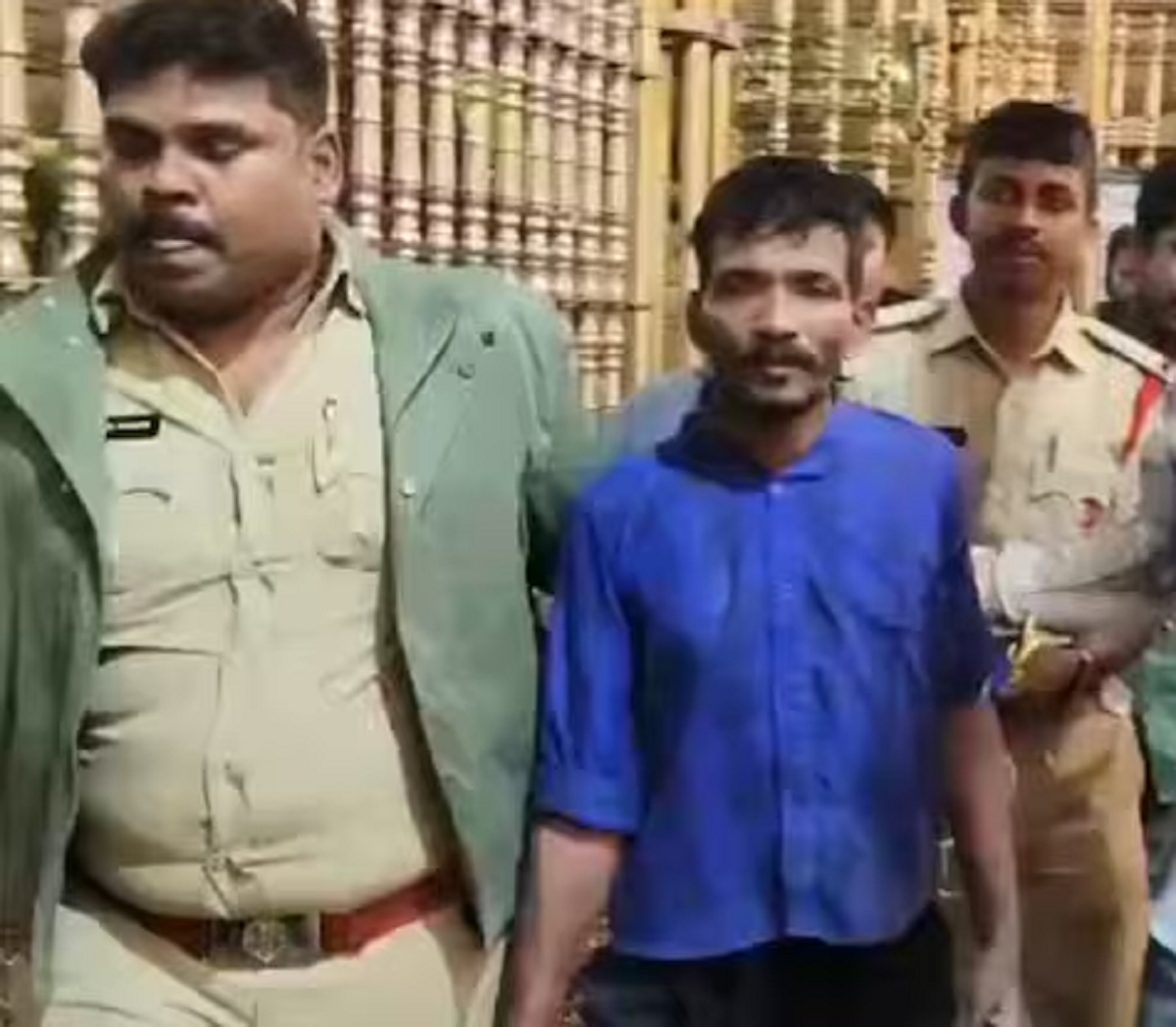
Tirupati, Jan.03,2026:The Tirupati Govindarajaswamy Temple Security Breach occurred late Tuesday night at the historic Sri Govindarajaswamy Temple, located in Tirupati city, Andhra Pradesh. The temple is under the administrative control of Tirumala Tirupati Devasthanams (TTD) and witnesses thousands of devotees every day.
According to officials, a man in an intoxicated state entered the temple premises by jumping the compound wall and climbed the gopuram near the Mahadwaram, damaging two sacred kalashas installed at the top.
What Happened Inside the Temple Complex
The incident reportedly took place around 10 PM, shortly after Ekanta Seva, a time when the temple premises are relatively quiet and closed to devotees.
Security personnel were stunned when they noticed unusual movement near the gopuram. Before guards could intervene, the man had already climbed the structure, creating panic among temple staff.
The Tirupati Govindarajaswamy Temple Security Breach immediately triggered alerts to local police and the fire department.
Timeline of the Shocking Night Incident
- 9:45 PM – Ekanta Seva concludes
- Around 10 PM – Accused jumps compound wall
- 10:15 PM – Man climbs gopuram near Mahadwaram
- 10:30 PM – Temple administration alerts police
- 11 PM – 1:30 AM – Rescue operation continues
- After 1:30 AM – Accused safely brought down
The prolonged standoff intensified anxiety among officials and nearby residents.
Damage to Sacred Kalashas Explained
Once atop the gopuram, the accused allegedly attempted to tamper with the sacred kalashas, which hold immense religious significance in Hindu temple architecture.
Officials confirmed that two kalashas were partially damaged, though no permanent structural harm occurred.
Temple priests later performed purification rituals, as per tradition, to restore sanctity.
Who Is the Accused
Police identified the accused as Kuttadi Tirupati, a resident of Kurma Wada, Pedda Malla Reddy Colony, in Nizamabad district, Telangana.
According to preliminary investigation
- He was heavily intoxicated
- He refused to climb down
- He demanded alcohol during negotiations
The Tirupati Govindarajaswamy Temple Security Breach took an even stranger turn when the accused allegedly shouted that he would not come down unless given liquor.
Three-Hour Joint Rescue Operation
Given the risk of injury or death, Tirupati East Police and the Fire Department launched a joint rescue operation.
Key Rescue Measures
- Iron ladders installed
- Ropes used to secure the accused
- Negotiation tactics employed
After nearly three hours, the man was safely brought down without casualties, preventing what could have been a tragic accident.
Police Statements and Legal Action
Tirupati East DSP Bhaktavatsalam confirmed that a detailed investigation is underway.
The accused has been booked under:
- Trespassing
- Causing damage to religious property
- Public nuisance
Impact on Devotees and Religious Sentiments
The Tirupati Govindarajaswamy Temple Security Breach deeply hurt the sentiments of devotees across Andhra Pradesh and Telangana.
Many worshippers expressed shock that:
- A drunk individual could access a sacred structure
- Surveillance failed during night hours
- Response time allowed prolonged disruption
Social media also witnessed strong reactions demanding accountability.
Temple Security Under Scanner
The incident has exposed gaps in
- Perimeter fencing
- CCTV monitoring
- Night patrol staffing
TTD officials acknowledged the lapse and assured corrective steps.
Past Incidents at Religious Sites
Across India, similar security breaches at temples and shrines have raised alarms:
- Unauthorized climbing of temple structures
- Acts of vandalism under intoxication
- Delayed emergency response
Experts say rising urban footfall and insufficient manpower increase risks.
What Authorities Plan Next
After the Tirupati Govindarajaswamy Temple Security Breach, officials are considering:
- Strengthening compound walls
- Upgrading CCTV systems
- Increasing night security personnel
- Installing motion sensors
DSP Bhaktavatsalam confirmed that preventive strategies are being reviewed to avoid repetition.
Faith, Safety, and Accountability
The Tirupati Govindarajaswamy Temple Security Breach serves as a serious reminder that religious sanctity must be protected not only through rituals but also through robust security planning.
While no lives were lost, the incident underscores the urgent need for vigilance at sacred spaces that hold deep emotional and spiritual value for millions.
As investigations continue, devotees hope this shocking episode leads to lasting reforms — ensuring that faith remains safe from negligence.

Tamilnadu,Jan.03,2026:The Tamil Nadu Hut Fire Murder Case occurred in Pakkiripalayam, a small village near Chengam in Tiruvannamalai district. A makeshift hut located in agricultural fields was found completely gutted by fire early Friday morning.
Inside the charred remains lay the burned bodies of P. Shaktivell (53), a farmer, and S. Amirtham (40), his live-in partner. Initial findings suggest the hut was deliberately set on fire after being locked from outside, leaving the couple trapped with no escape.
What Happened in Pakkiripalayam Village
According to villagers, the calm of early morning was shattered by the strong smell of burnt material. When locals rushed toward the fields, they discovered the hut reduced to ashes.
The Chengam Police were alerted immediately. Upon inspection, officers found clear signs of foul play, including evidence that the hut door had been bolted externally before the fire was started.
Lives Marked by Struggle
P. Shaktivell
- Age: 53
- Occupation: Farmer
- Separated from his wife three years ago
- Father of two sons and one daughter (living in Bengaluru)
S. Amirtham
- Age: 40
- Lived separately from her husband
- Mother of three children
The two had been living together for over three years in a hut near farmland, away from the village centre.
The Night of the Crime
- Thursday evening: Shaktivell’s daughter visits him, shares dinner, leaves around 9 PM
- Late night: Unknown person(s) allegedly lock the hut from outside
- After midnight: Fire is set, engulfing the hut
- Early morning: Villagers notice smoke and burning smell
- Police arrival: Bodies discovered beyond recognition
The couple likely died in their sleep, unable to scream or escape.
Police Investigation and Forensic Findings
The Tamil Nadu Hut Fire Murder Case is now registered under murder and arson sections of the IPC.
Investigation Highlights
- Forensic team conducted on-site postmortem
- Sniffer dogs deployed to trace suspects
- Burn patterns indicate use of accelerants
- Door locking mechanism confirms external closure
Police are also examining personal disputes, family tensions, and social hostility linked to the couple’s relationship.
Live-in Relationships and Rural India
While live-in relationships are legally recognized by Indian courts, social acceptance remains limited, especially in rural areas.
In cases like the Tamil Nadu Hut Fire Murder Case, experts believe social resentment may play an indirect or direct role.
Social Backlash and Community Silence
Villagers described the couple as quiet and reclusive. However, their decision to live together outside traditional marriage norms reportedly invited disapproval.
No eyewitnesses have yet come forward, raising concerns about:
- Fear of retaliation
- Community pressure
- Normalisation of silence
Legal Angles and Murder Charges
Police have registered:
- Section 302 IPC – Murder
- Section 436 IPC – Mischief by fire
Legal experts note that locking victims inside before setting fire qualifies as premeditated murder, punishable by life imprisonment or death penalty.
Similar Cases Across India
The Tamil Nadu Hut Fire Murder Case is not isolated.
Recent years have seen
- Live-in couples attacked in UP and MP
- Honour-based crimes disguised as accidents
- Arson used to destroy evidence
These patterns highlight systemic risks for non-traditional couples.
Questions That Remain Unanswered
- Who locked the hut from outside
- Was there prior threat or warning
- Did social pressure escalate into violence
- Why has no suspect been detained yet
The investigation remains ongoing.
A Crime Beyond Statistics
The Tamil Nadu Hut Fire Murder Case is not just about two deaths — it is about fear, intolerance, and the cost of choosing personal freedom in rigid social settings.
As ashes settle over Pakkiripalayam, the nation watches, waiting for justice — and asking whether society will ever allow love to exist without punishment.
Breaking News
Lucknow cyber crime, online task fraud India, investment scam Telegram, cyber fraud Uttar Pradesh-
Published
10 months agoon
January 2, 2026
UP,Jan.02,2026:The Lucknow Online Task Investment Scam surfaced after two separate complaints were registered at the Cyber Crime Police Station in Lucknow. In both cases, scammers promised easy income, high returns, and risk-free investments, eventually cheating the victims of nearly Rs.60 lakh.
The fraudsters contacted victims via WhatsApp and Telegram, used fake company names, and showcased manipulated profit dashboards to maintain credibility.
How Online Task Scams Lure Victims
Online task scams typically begin with
- A message offering part-time work
- Promises of daily earnings
- No requirement for experience
- Small initial payouts to build trust
Once the victim is convinced, scammers push them to invest larger sums under the guise of unlocking higher commissions or profits.
This pattern was clearly visible in the Lucknow Online Task Investment Scam cases.
Rs.41 Lakh Lost via Fake Trading App
Victim Profile
Anil Kumar, originally from Auraiya’s Achhalda Sakrawa village, currently residing in Lucknow Cantonment area.
Timeline of Events
- 14 August 2025: Victim received a WhatsApp call offering online work
- Introduced to “Rent Redfin Trading App”
- Asked to complete simple online tasks
- First payment of 761 credited instantly
This small payout created a false sense of legitimacy.
The Big Trap
Between 17 August and 28 August 2025, Anil Kumar transferred money in multiple instalments
- 1 lakh
- 3 lakh
- 10 lakh
- 12 lakh
Payments were made to multiple UPI IDs and bank accounts, a common laundering tactic in the Lucknow Online Task Investment Scam.
Total Amount Lost ₹41+ lakh
After demanding withdrawal, the app stopped responding.
Telegram Investment Fraud of 15.82 Lakh
Victim Profile
Shashank Shukla, resident of Swapnil Saubhagya Society, Bijnor Road, working with a private medical company.
How the Scam Started
- Contacted via Telegram
- Introduced to “Darwinex Global” (fake representation)
- Asked to invest via app links
Fake Profits Displayed
- Investment: 9.05 lakh
- Shown profit: 18,885
- Total balance displayed: 26,987.05
When the victim attempted withdrawal, scammers demanded
- 30% tax payment of 4.81 lakh
- Threatened ID block and legal action
Eventually, 15.82 lakh was extracted, with zero returns.
How Cyber Criminals Manipulate Victims
The Lucknow Online Task Investment Scam showcases classic psychological manipulation
- Trust Building through small payments
- Urgency Creation via deadlines
- Fear Tactics using legal threats
- Greed Triggering with fake dashboards
Such techniques are well-documented by cyber experts across India.
Role of Telegram and Fake Investment Platforms
Telegram has become a preferred tool for cyber scammers due to
- End-to-end encryption
- Easy deletion of channels
- Limited traceability
Fraudsters often misuse international brand names like Darwinex to appear authentic.
Police Investigation and Cyber Crime Response
According to Inspector Brijesh Kumar Yadav, Cyber Crime Police Station, Lucknow
- Mobile numbers are being traced
- Bank account trails under analysis
- Requests sent to concerned banks and platforms
Authorities have urged citizens to report immediately to improve recovery chances.
Rising Trend of Online Task Investment Scams in India
The Lucknow Online Task Investment Scam is part of a larger national trend.
As per NCRB and MHA advisories
- Online investment frauds rose sharply post-COVID
- Telegram-based scams increased by over 70%
- Tier-2 cities are primary targets
How to Identify Red Flags in Online Investment Offers
Watch out for
- Guaranteed returns
- Requests to pay “tax” before withdrawal
- Unknown apps not on Play Store
- Pressure to act fast
If it sounds too good to be true, it usually is.
What To Do If You Fall Victim to a Cyber Scam
- Immediately report on 1930 helpline
- File complaint at https://www.cybercrime.gov.in
- Inform your bank
- Preserve screenshots and transaction IDs
Quick action can save money.
Government Advisories and Official Resources
- Ministry of Home Affairs Cyber Alerts
- RBI Digital Payment Safety Guidelines
- State Cyber Police Units
A Wake-Up Call for Digital India
The Lucknow Online Task Investment Scam serves as a harsh reminder that digital convenience comes with digital risks. As scammers grow smarter, citizens must become more vigilant.
Awareness, verification, and timely reporting remain the strongest weapons against cyber fraud.
Breaking News
Switzerland Ski Resort Explosion leaves global tourists in shock as a deadly blast hits a crowded bar in Crans-Montana-
Published
10 months agoon
January 1, 2026
Switzerland,Jan.01,2026:Switzerland Ski Resort Explosion has sent shockwaves across Europe after a powerful blast ripped through a crowded bar in the luxury ski town of Crans-Montana, leaving several feared dead and many injured. According to Swiss police, more than 100 people were inside the bar at the time of the explosion, making it one of the most alarming incidents in a popular tourist destination in recent years.
The explosion occurred late at night and triggered an immediate large-scale emergency response, with rescue teams, police units, and medical staff rushing to the scene amid chaos and panic.
What Happened at Crans-Montana Ski Resort
The Switzerland Ski Resort Explosion took place at the Constellation Bar in Crans-Montana at approximately 1:30 AM local time, Swiss police confirmed while speaking to international media outlets including the BBC.
Witnesses described hearing a loud, thunder-like blast, followed by screams, shattered glass, and thick smoke filling the venue. The bar was reportedly packed with locals and tourists enjoying late-night festivities.
Switzerland Ski Resort Explosion
Key Moments
- 01:30 AM – Explosion rocks Constellation Bar
- 01:35 AM – Emergency calls flood police control rooms
- 01:45 AM – First responders arrive
- 02:10 AM – Area sealed, evacuation begins
- 03:00 AM – Crans-Montana declared a no-fly zone
Swiss authorities moved quickly to prevent further risk, sealing off the entire area within minutes.
Over 100 People Inside the Bar During the Blast
Police told Swiss daily Blick that more than 100 people were present inside the bar when the explosion occurred. This revelation has intensified fears about the potential scale of casualties.
Rescue workers were seen carrying injured victims on stretchers while ambulances lined the snow-covered streets of the resort town.
Police Statement and Emergency Response
Swiss police confirmed that multiple emergency teams remain deployed at the site. Firefighters, paramedics, disaster-response units, and forensic experts are working simultaneously.
According to police
No-Fly Zone and Area Fully Sealed
In a rare move, authorities declared Crans-Montana a no-fly zone, highlighting the seriousness of the situation. Roads leading into the town were blocked, and tourists were advised to stay indoors.
The decision was taken to
- Ensure airspace safety
- Allow emergency helicopters unhindered access
- Prevent panic and misinformation
Death Toll Still Unconfirmed
Earlier police statements mentioned “several fatalities”, but officials have not yet released an official death count. Hospitals in nearby regions were placed on high alert.
Authorities say identification of victims is ongoing, and families are being informed gradually to avoid misinformation.
A Luxury Ski Destination
Crans-Montana is nestled in the Swiss Alps and is internationally known for
- Luxury ski resorts
- High-end nightlife
- British and European tourists
The town regularly hosts international events and attracts thousands during peak winter season.
Impact on Tourism and Local Economy
The Switzerland Ski Resort Explosion could have lasting consequences for tourism. Travel advisories may be updated, and cancellations are already being reported by local hotels.
Tour operators fear
- Loss of tourist confidence
- Increased insurance scrutiny
- Heightened security costs
International Reactions and Media Coverage
Major global media outlets, including Reuters, AP News, and BBC, have extensively covered the incident. Several European leaders expressed condolences and offered assistance.
What Authorities Are Saying
Swiss investigators have not confirmed whether the Switzerland Ski Resort Explosion was
- An accident
- A gas-related incident
- Or an intentional act
Forensic teams are examining debris, CCTV footage, and witness statements.
Officials urged the public:
“Do not speculate until the investigation is complete.”
Safety Concerns at European Tourist Spots
This incident has reignited debates over safety standards at crowded tourist venues across Europe, especially nightlife locations in ski resorts.
Experts suggest
- Stricter safety audits
- Improved crowd management
- Emergency evacuation drills
In the coming days
- Official casualty figures are expected
- Cause of explosion will be revealed
- Security measures may be revised
The Switzerland Ski Resort Explosion remains under close international scrutiny.
The Switzerland Ski Resort Explosion at Crans-Montana is a tragic reminder of how quickly celebration can turn into catastrophe. As rescue efforts continue and investigators search for answers, the world watches closely.
Authorities urge patience, responsibility, and solidarity as Switzerland confronts one of the most shocking incidents to hit its tourism heartland in recent memory.
Breaking News
Bangladesh Hindu Lynching Shocks World- Brutal Truths Behind the Horrifying Mob Killing-
Published
10 months agoon
December 19, 2025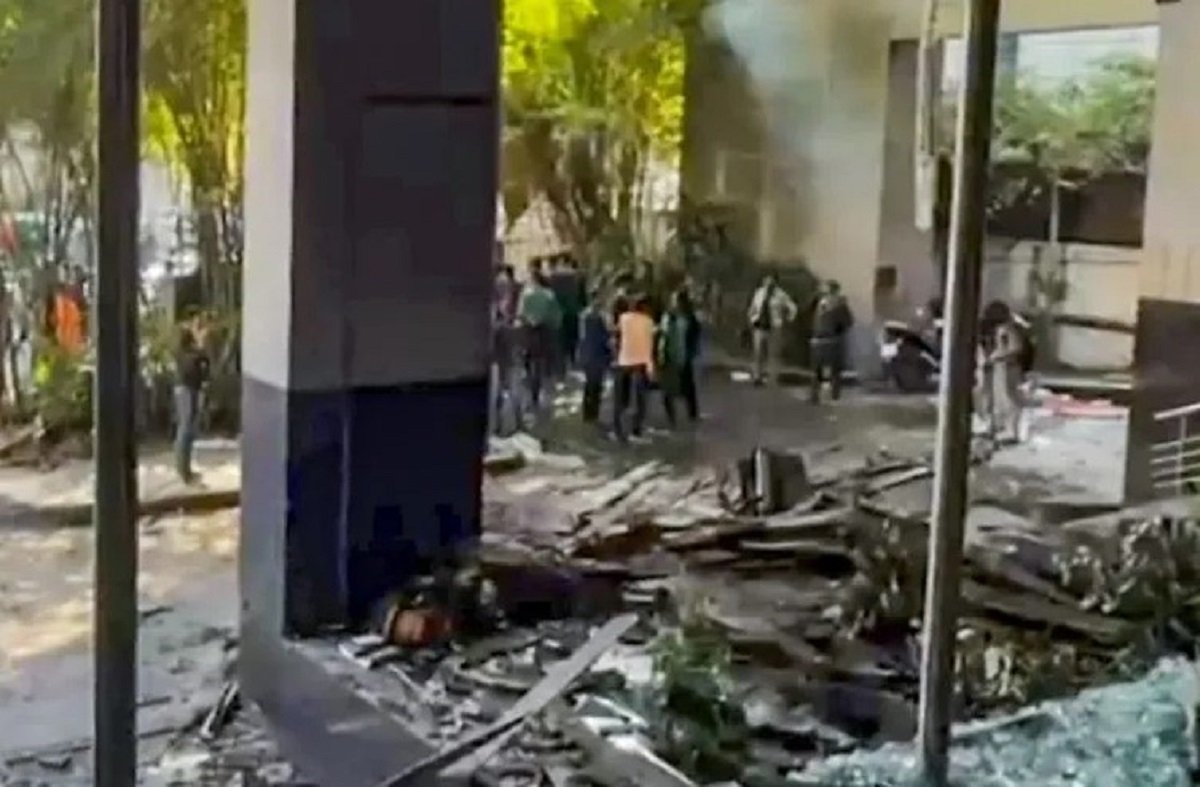
Bangladesh, Dec,19,2025:Bangladesh Hindu lynching has once again exposed the dark underbelly of mob violence and religious extremism gripping parts of the country. In a horrifying incident from Mymensingh district, a Hindu युवक was brutally beaten to death by a mob and his body later tied to a tree and set on fire.
The gruesome killing has shaken Bangladesh, intensified communal tensions, and drawn sharp reactions from political leaders, civil society, and minority rights groups.
This Bangladesh Hindu lynching incident occurred amid violent protests following the death of a prominent protest leader, turning an already volatile situation into a symbol of unchecked radicalism.
What Happened in Mymensingh
The Bangladesh Hindu lynching took place in Bhaluka upazila of Mymensingh district. According to Bangladeshi media reports, the victim was accused of making derogatory remarks about Islam and Prophet Muhammad during a factory event organized on World Arabic Language Day.
As the allegation spread rapidly, an angry mob gathered, chanting religious slogans. What followed was a disturbing display of mob justice that ended in death.
Who Was Dipu Chandra Das
The victim of the Bangladesh Hindu lynching has been identified as 30-year-old Dipu Chandra Das, a worker at a local factory.
Colleagues described him as a quiet individual with no prior history of communal conflict. However, a sudden accusation—still under investigation—was enough to seal his fate.
Human rights activists argue that the killing reflects how vulnerable minorities remain during times of political and social unrest.
Bangladesh Hindu Lynching and Mob Radicalization
The Bangladesh Hindu lynching highlights a dangerous trend: mobs acting as judge, jury, and executioner.
Eyewitness accounts suggest that protesters shouted extremist slogans while assaulting Dipu. After he succumbed to injuries, the violence escalated further when his body was tied to a tree and burned.
This level of brutality has raised alarms about the normalization of extremist behaviour during protests.
Timeline of Events Leading to the Killing
Bangladesh Hindu lynching – key moments
- Allegation of religious insult surfaces
- Crowd gathers near factory premises
- Physical assault begins
- Victim dies due to injuries
- Body tied to a tree
- Mob sets the body on fire
Each step shows a complete breakdown of law and order.
The Chilling Details of the Lynching
What makes the Bangladesh Hindu lynching particularly horrifying is the post-death violence. Videos and photos circulating online show the mob continuing its assault even after Dipu was lifeless.
Local residents reported panic and fear, with many locking themselves indoors as the mob roamed freely.
Such incidents deepen insecurity among minority communities already living under constant fear.
Bangladesh Protests and Rising Extremism
The Bangladesh Hindu lynching occurred during violent protests following the death of July uprising leader Sharif Usman Hadi.
What began as political unrest soon took a communal turn, with extremist elements exploiting emotions to target minorities.
Analysts warn that mixing political anger with religious radicalism creates a lethal combination.
Interim Government’s Response to Bangladesh Hindu Lynching
The interim government led by Muhammad Yunus strongly condemned the Bangladesh Hindu lynching.
In an official statement, the government said:
“There is no place for such violence in the new Bangladesh. Those responsible for this heinous crime will not be spared.”
The administration also urged citizens to reject hatred and violence during this sensitive period.
Police Investigation and Current Status
Local authorities confirmed the death and stated that Dipu Chandra Das’s body is in police custody.
According to Bhaluka Upazila Executive Officer Mohammad Firoz Hossain, investigations are ongoing. However, no arrests have been made yet, raising concerns over accountability.
The delay has fuelled anger among minority groups and rights organizations.
Political Reactions Inside Bangladesh
Awami League leader Mohammad Ali Arafat condemned the Bangladesh Hindu lynching, warning that the country is sliding toward extremism.
Opposition leaders and civil society members echoed similar concerns, urging immediate action to restore law and order.
Impact on Hindu Minority in Bangladesh
The Bangladesh Hindu lynching has deepened fear among the Hindu community, which already faces sporadic violence.
Many families are reportedly reconsidering public participation in cultural or religious events due to safety concerns.
This incident underscores the fragile position of minorities during national unrest.
International Reactions and Human Rights Concerns
Global human rights organizations have taken note of the Bangladesh Hindu lynching, calling for a transparent investigation.
International watchdogs stress that mob violence over alleged blasphemy violates fundamental human rights.
Why Bangladesh Hindu Lynching Matters Beyond Borders
The Bangladesh Hindu lynching is not just a domestic issue. It reflects a broader global concern where misinformation, extremism, and mob justice are replacing rule of law.
For South Asia, such incidents risk destabilizing regional harmony and diplomatic relations.
The Role of Social Media and Rumors
Unverified claims spread rapidly on social media played a key role in the Bangladesh Hindu lynching.
Experts stress the need for digital responsibility, fact-checking, and swift government response to online hate.
A Test for Bangladesh’s Future
The Bangladesh Hindu lynching is a grim reminder of how quickly society can descend into chaos when extremism overrides humanity.
For Bangladesh, this moment is a test—of governance, justice, and its commitment to protecting minorities.
Breaking News
The Bengaluru Digital Fraud Police Scam exposes a terrifying cybercrime where fake police threatened a woman about her son, forcing her to sell property and lose ₹2 crore-
Published
10 months agoon
December 16, 2025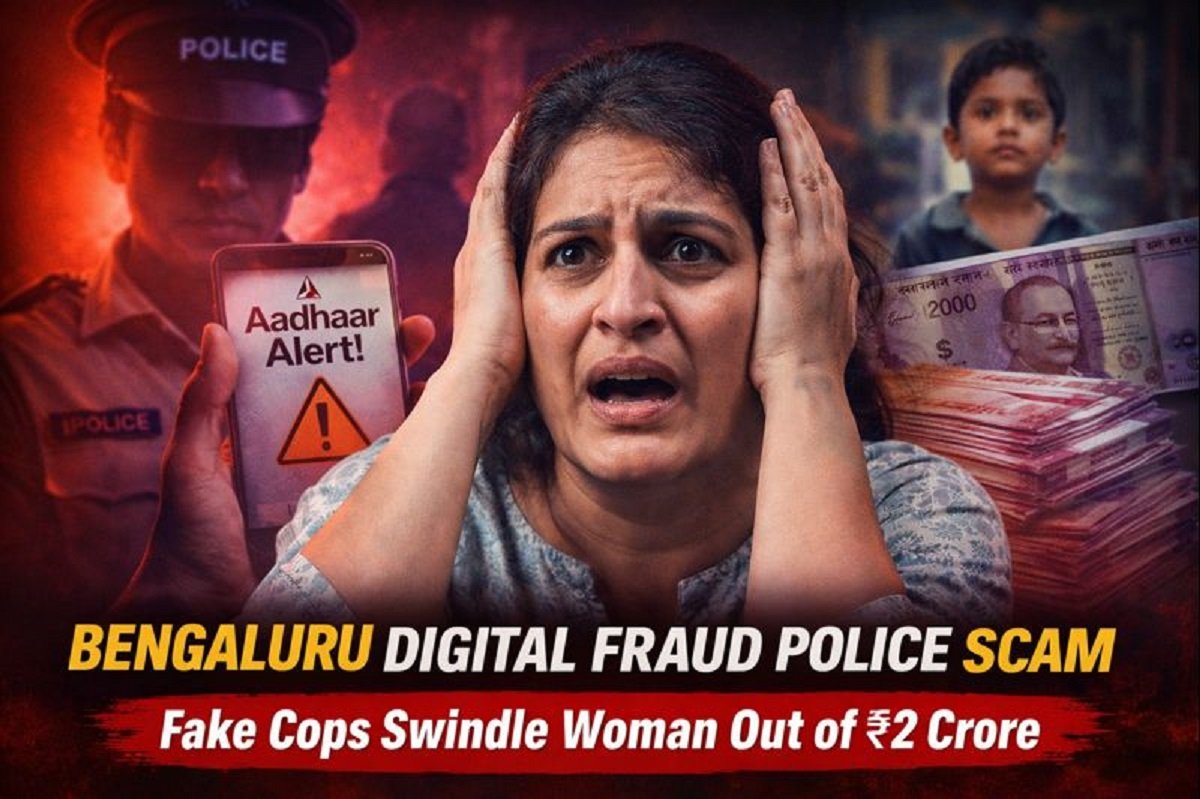
Bengaluru, Dec.16,2025:The Bengaluru Digital Fraud Police Scam is a chilling reminder that cybercrime today is no longer limited to phishing emails or fake lottery messages. It now involves emotional manipulation, impersonation of authorities, and digital surveillance-style intimidation.
In this case, criminals posed as law enforcement officers and created a fabricated criminal narrative linked to the victim’s Aadhaar card, leaving her terrified for her son’s safety.
Who Is the Victim
According to police sources, the victim has been identified as Babita Das, a software technician working in Bengaluru.
Key details
- Resident of Vignan Nagar
- Living in the same apartment for over 10 years
- Financially independent and digitally active
- Mother of a young son
Despite her professional background, she fell prey to the Bengaluru Digital Fraud Police Scam, proving that cybercrime spares no demographic.
How the Scam Began
The scam started with what seemed like a routine phone call from a man claiming to be a courier official.
He informed the victim that
- A suspicious parcel had been seized
- The parcel was linked to her Aadhaar card
- Police were investigating the matter
Fake Police Narrative and Aadhaar Threat
Soon after, another call followed—this time from someone posing as a senior police officer.
The fraudster alleged that
- Illegal materials were linked to her identity
- A criminal case could be registered
- Her family could face consequences
The Bengaluru Digital Fraud Police Scam relied heavily on exploiting trust in law enforcement and fear of legal trouble.
Psychological Blackmail Using Child Safety
The most disturbing aspect of the Bengaluru Digital Fraud Police Scam was the emotional blackmail involving the victim’s son.
The fake officer warned
“If you don’t cooperate, your son could be in danger.”
This single threat shattered the woman’s emotional stability, pushing her into complete compliance.
A Critical Red Flag
The scammers instructed the woman to
- Download a specific mobile application
- Stay connected continuously
- Avoid contacting anyone else
Such apps often allow
- Screen monitoring
- Call surveillance
- Psychological isolation
This step is a known pattern in many digital arrest scams reported nationwide.
Selling Property Under Fear
As the pressure intensified, the victim was told to urgently arrange money to “close the case”.
With no liquid funds available, she
- Sold her Malur plot at a low price
- Sold her Vignan Nagar flat
- Acted under extreme mental stress
The Bengaluru Digital Fraud Police Scam thus resulted in permanent asset loss—not just cash theft.
How ₹2 Crore Was Transferred
After selling her properties, the victim
- Transferred ₹2 crore
- Sent money to accounts provided by fraudsters
- Was assured the amount would be refunded
Such fraudulent bank transfers are often routed through mule accounts, making recovery difficult
Final Trap at the Police Station
In the final stage of the Bengaluru Digital Fraud Police Scam, the fraudsters instructed her to visit a nearby police station to “complete formalities”.
The moment she reached
- The phone call was disconnected
- All numbers were switched off
- The truth became painfully clear
Realisation of the Fraud
Standing inside an actual police station, the woman realised she had been deceived.
Officials confirmed
- No such case existed
- No parcel was seized
- No police officer had contacted her
The emotional collapse that followed was devastating.
Police Complaint and Investigation
The victim filed an official complaint at:
Whitefield Cyber Crime Police Station, Bengaluru
Police have
- Registered an FIR
- Initiated digital trail analysis
- Contacted banks for transaction tracking
However, officials admit recovery remains challenging due to cross-state cyber networks.
Rise of Digital Arrest Scams in India
The Bengaluru Digital Fraud Police Scam is part of a growing trend known as “digital arrest scams”.
Key features
- Fake police or CBI officers
- Aadhaar or SIM misuse claims
- Threats of arrest or family harm
The Ministry of Home Affairs has issued multiple advisories
Why Educated Professionals Are Also Vulnerable
Contrary to popular belief, cybercrime experts say
- Education does not equal immunity
- Fear overrides logic
- Authority impersonation is highly effective
The Bengaluru Digital Fraud Police Scam proves emotional vulnerability can affect anyone.
Expert Warnings and Cyber Safety Tips
Cybersecurity specialists advise citizens to
- Never trust calls claiming legal action
- Avoid downloading unknown apps
- Verify through official police numbers
- Report immediately to cybercrime portals
What the Law Says About Such Frauds
Under Indian law, such crimes fall under
- IPC Sections for cheating and impersonation
- IT Act provisions on digital fraud
- Organised cybercrime statutes
Convictions can lead to severe punishment if culprits are caught.
A Wake-Up Call for Digital India
The Bengaluru Digital Fraud Police Scam is not just a crime story—it is a warning.
A system built on digital trust must be protected by digital awareness. Until citizens learn to pause, verify, and question authority-based threats, cybercriminals will continue to exploit fear.
Breaking News
Jaipur murder wife lover — A deeply disturbing crime in Jaipur where a man was brutally killed by his own wife and her lover-
Published
11 months agoon
November 27, 2025
Jaipur, Nov.27,2025:Jaipur murder wife lover — these four words now send shivers down spines in the capital of Rajasthan. In a ghastly incident that has shaken the city, a 40-year-old night guard, Bhup Singh, was found dead under suspicious circumstances in the quiet locality of Narayan Vihar, Jaipur-
On the night of November 22, locals and eventually the police believed that Bhup Singh’s death might have been a suicide or an accident. However, what unfolded was far darker — a premeditated murder involving his own wife and her secret lover. The horrifying truth emerged after forensic evidence and police investigation exposed the brutality and betrayal behind the crime.
The Hidden Affair and Growing Suspicion
Bhup Singh, who worked as a guard in a factory in Jaipur, had a rural background — his wife, Asha, lived in a village, while he resided in the city due to his job.
As per police findings, Asha had developed an illicit relationship with a man, Yogesh Sharma. Over time, their affair deepened — calls and secret meetings became frequent. Police suspect that during this period, conversations between Asha and Yogesh grew more intense, and they began to see Bhup Singh merely as an obstacle between them.
Witnesses reported suspicious behavior around that time, but nothing was concrete until Bhup Singh’s untimely death triggered a full-scale investigation. The police say the affair was the motive, and it laid the groundwork for a calculated plan.
The Brutal Murder Plan and Crime Scene
According to the investigators, the crime was not impulsive but coldly premeditated. On that fateful night, under the cover of darkness, the duo executed their plan.
- First, “regulator strike”: Yogesh allegedly struck Bhup Singh on the head with a gas-pipe regulator — a heavy blow meant to incapacitate him.
- Then came the final, horrifying act — strangulation. Using a gas-cylinder pipeline (or an attached pipe), they strangled Bhup Singh to death.
- To mislead the investigators, they initially tried to stage the scene as a suicide (or at least a natural death). But the forensic analysis and subsequent scrutiny shattered their façade.
The crime scene reportedly bore signs of a struggle — which contradicted the suicide narrative. The arrival of forensic team (FSL) was pivotal in gathering evidence and reconstructing the murder sequence.
Arrests, Police Investigation and Evidence
Once suspicions arose, the local police moved swiftly. They arrested Asha and Yogesh on charges of murder, and the case turned from mysterious death to confirmed homicide.
During interrogation, inconsistencies in Yogesh’s initial statements came to light. Call detail records, forensic findings, and other investigative leads all pointed to the couple’s involvement.
The police have stated that more evidence — including digital records and forensics — is being examined to build a watertight case. As of now, both accused are in custody, and interrogation continues.
Social Shock, Implications and Public Outcry
The revelation of this crime has sent shockwaves across Jaipur and beyond. A man — trusted husband and provider — betrayed by the very person he lived with, meeting a brutal end at the hands of his wife and her lover. The horrifying details have reignited debates about extramarital affairs, domestic trust, and moral decay in relationships.
Local communities, neighbours of Narayan Vihar, are in utter disbelief. Many express sorrow, anger and a demand for swift justice. The case is not just being seen as one more crime, but as a grim example of how personal relationships — when tainted by betrayal — can lead to catastrophic consequences.
Social media discussions are rife with condemnation. People are questioning how such relationships go unnoticed, what signs were ignored, and what systemic failures (social, moral or judicial) allow such tragedies to unfold.
A Broader Perspective
While the immediate focus is on the gruesome crime and the arrested suspects, this incident underscores deeper societal issues
- The vulnerability of individuals working away from home — often trusting distant relationships, facing emotional isolation.
- The dangers of secret extramarital affairs, which, when exposed, can turn deadly.
- Importance of early detection — behavioural changes, emotional distance, suspicion — by relatives or community; maybe intervention could prevent such tragedies.
- The critical role of swift and meticulous police investigation and forensic science — which transformed what looked like a potential “suicide” into a solved murder case.
Moreover, this case acts as a grim warning: when trust is broken and deceit enters marital relationships, the consequences can be fatal, not just emotionally but physically.
Jaipur murder wife lover — the phrase now etched in headlines reflects more than a crime. It reflects betrayal, desperation, and the darkest side of human relationships. The tragic death of Bhup Singh serves as a brutal reminder that love tainted with deceit and lust can lead to irreversible consequences.
As the legal proceedings unfold, one hopes that justice will be served swiftly and firmly. And perhaps, society — friends, families, communities — will wake up to signs of hidden betrayal, giving timely intervention rather than standing by until it’s too late.

SRN International School Maths Café, SRN International School Jagatpura

Dr Ambedkar Memorial Welfare Society Rajasthan Forms Permanent Council

Subodh Public School Rambagh Honours Sanitation Staff for Dedicated Service

Trump-Linked Powerus Plans Drone Production Partnership With Pakistan Army

October 2026 Rules: LPG Subsidy, SBI ATM and UPI Changes Explained

Yemen conflict escalation: हिंसा बढ़ने से हैजा-खसरे के फैलाव का खतरा

Priyansh Arya: The Six-Hitting Sensation of IPL 2025

Top 10 Most Searched Topics on YouTube: What’s Trending Now?

Preity Zinta Spotted with New Punjab Kings Hero Priyansh Arya in Viral Clip

Nag Panchami 2025: 7 Key Rituals and Puja Time to Eliminate Kaal Sarpa Dosha

Balen Shah, Kathmandu’s independent mayor, from rapper to political leader. Explore his rise amidst Nepal’s youth-led revolution-

Radhika Merchant: A New Chapter as Radhika Ambani

best career opportunities | Jaipur Career Fair | Credent TV | Dainik Navjyoti D2S03

what is reiki healing | Mental Health | Shiksha Sarokar, शिक्षा सरोकार, Sunil Narnaulia

DAV Centenary Public School, Vaishali Nagar, Jaipur hosts Successful ‘Mind Wars Quiz: A Battle of Wits and Knowledge’
Trending Post
- Election1 month ago
Rajasthan Municipal Election Results 2026 Live Updates
- Education1 month ago
OPT Fee Proposal Clears White House Review; $100,000 Figure Remains Unconfirmed
- Breaking News1 month ago
Savitribai Phule Award 2026 Honours 54 Women in Jaipur
- Breaking News2 months ago
Rajasthan Police Arrest ₹25,000-Reward Accused Over Alleged Pakistan-Linked SIM Network
- Festival1 month ago
India Retail Inflation August 2026 Rises to 4.82% as Food Prices Climb
- International1 month ago
Houthi Drone Near Mecca: Saudi Arabia Intercepts UAV After Emergency Alert
- Accident1 month ago
Delhi High Court Orders MCD PG Audit After Satya Niketan Collapse
- Breaking News1 month ago
India Bank Strike Today Over Five-Day Week, Branch Services Face Three-Day Disruption