Breaking News
Modi-Putin Meeting Focuses on Ukraine Peace and BRICS Summit Invitation
Published
2 hours agoon


Nepal Flood Death Toll Tops 800 as Mass Burials Begin, China Data Questions Emerge

CJI Surya Kant Says Judiciary Acting on Digital Arrest Scams Without Waiting for Parliament

Sunil Gavaskar Calls for No-Ball Fines After Jadeja’s Repeated Test Errors

Mohan Bhagwat New York Speech: Hinduism Cannot Exclude Muslims, Diversity Is Strength

Rajasthan Police Arrest ₹25,000-Reward Accused Over Alleged Pakistan-Linked SIM Network

FSSAI Proposes Red Warning Labels for High-Sugar, Salt and Fat Foods
Contents
Bishkek, Kyrgyzstan | 31 Aug 2026
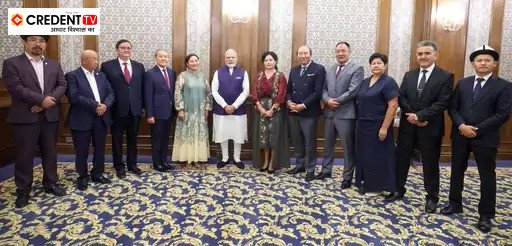
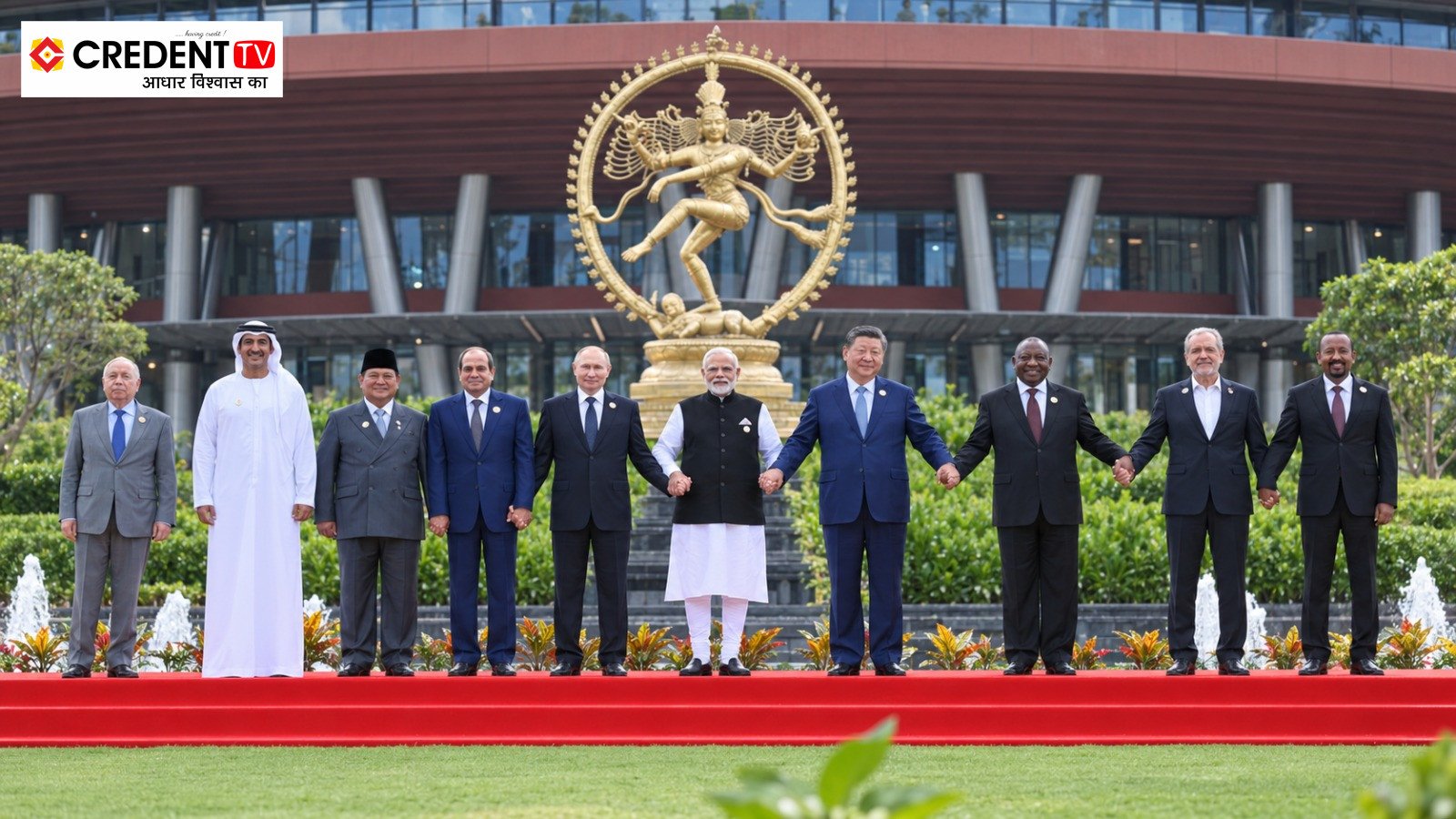
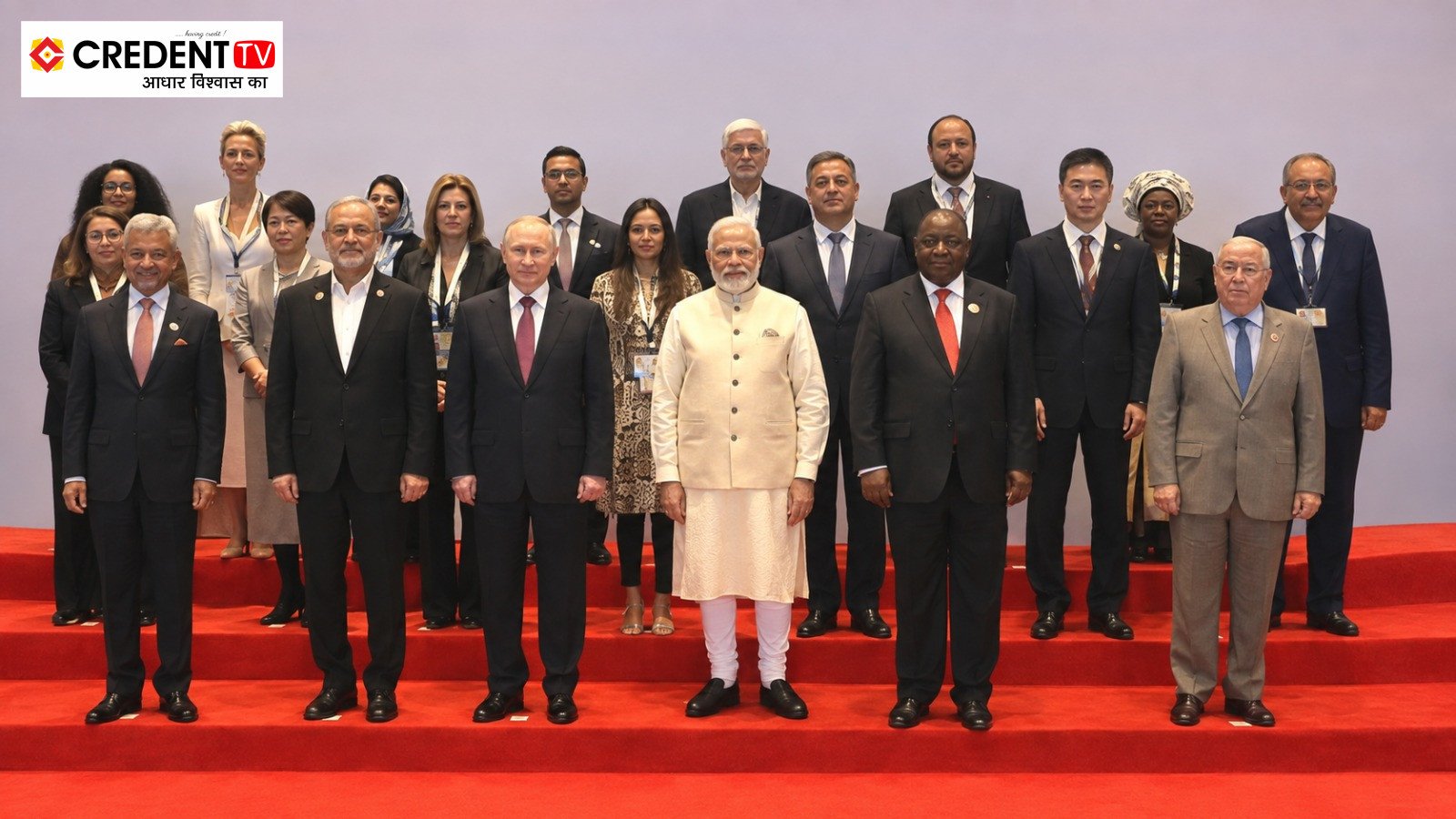
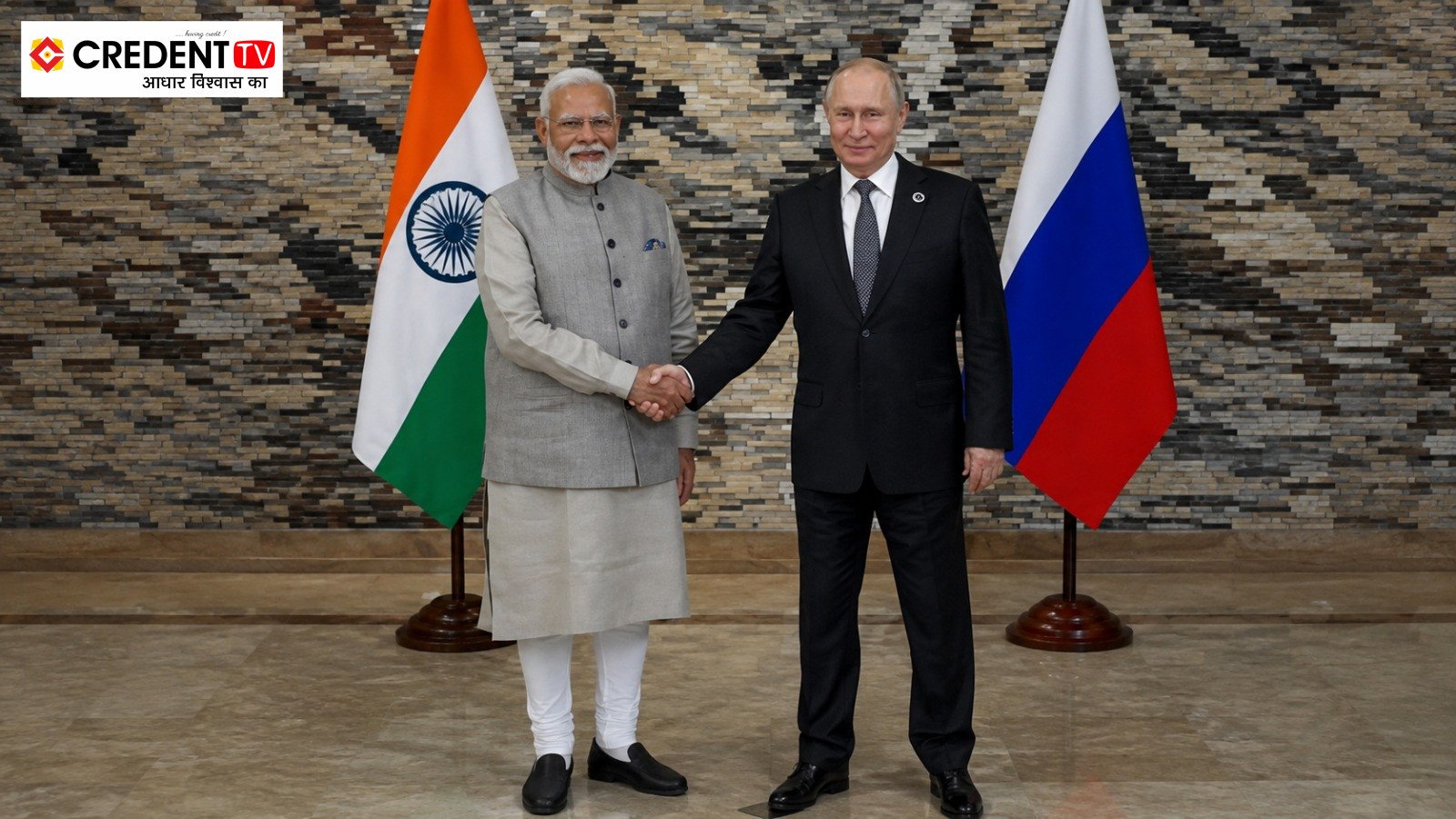
Prime Minister Narendra Modi called for an end to prolonged conflicts during talks with Russian President Vladimir Putin in Bishkek on Monday, reaffirming India’s support for a peaceful resolution of the Russia-Ukraine war and inviting Putin to the BRICS Summit in New Delhi.
Modi-Putin meeting focuses on ending Russia-Ukraine war
Modi and Putin held bilateral talks on the sidelines of the 26th Shanghai Cooperation Organisation Summit after exchanging a warm greeting. During their publicly televised remarks, Modi said every day of war pushed humanity backwards and that the international community must move from managing prolonged wars towards ending them.
The prime minister reiterated that India supported efforts to resolve disputes through peaceful means. The remarks were consistent with New Delhi’s stated position that dialogue and diplomacy should be used to secure a lasting settlement of the Russia-Ukraine war.
Putin said India-Russia relations continued to strengthen under their Special and Privileged Strategic Partnership. No new bilateral agreement was immediately announced following the meeting.
The talks followed the 23rd India-Russia Annual Summit held during Putin’s state visit to New Delhi in December 2025. India and Russia maintain extensive cooperation in energy, defence, trade, fertilisers, education and multilateral forums, including the SCO, BRICS and the G20.
Putin invited to September BRICS Summit in New Delhi
Modi invited Putin and the Russian delegation to attend the BRICS Summit scheduled to be held in New Delhi on 12 and 13 September 2026. The two leaders are expected to continue discussions on bilateral and international issues during the gathering.
The Kremlin had confirmed before the Bishkek meeting that the leaders would review the broader India-Russia relationship. Modi’s invitation came as India holds the BRICS presidency for 2026.
Modi holds talks with leaders of Iran, Kyrgyzstan and Armenia
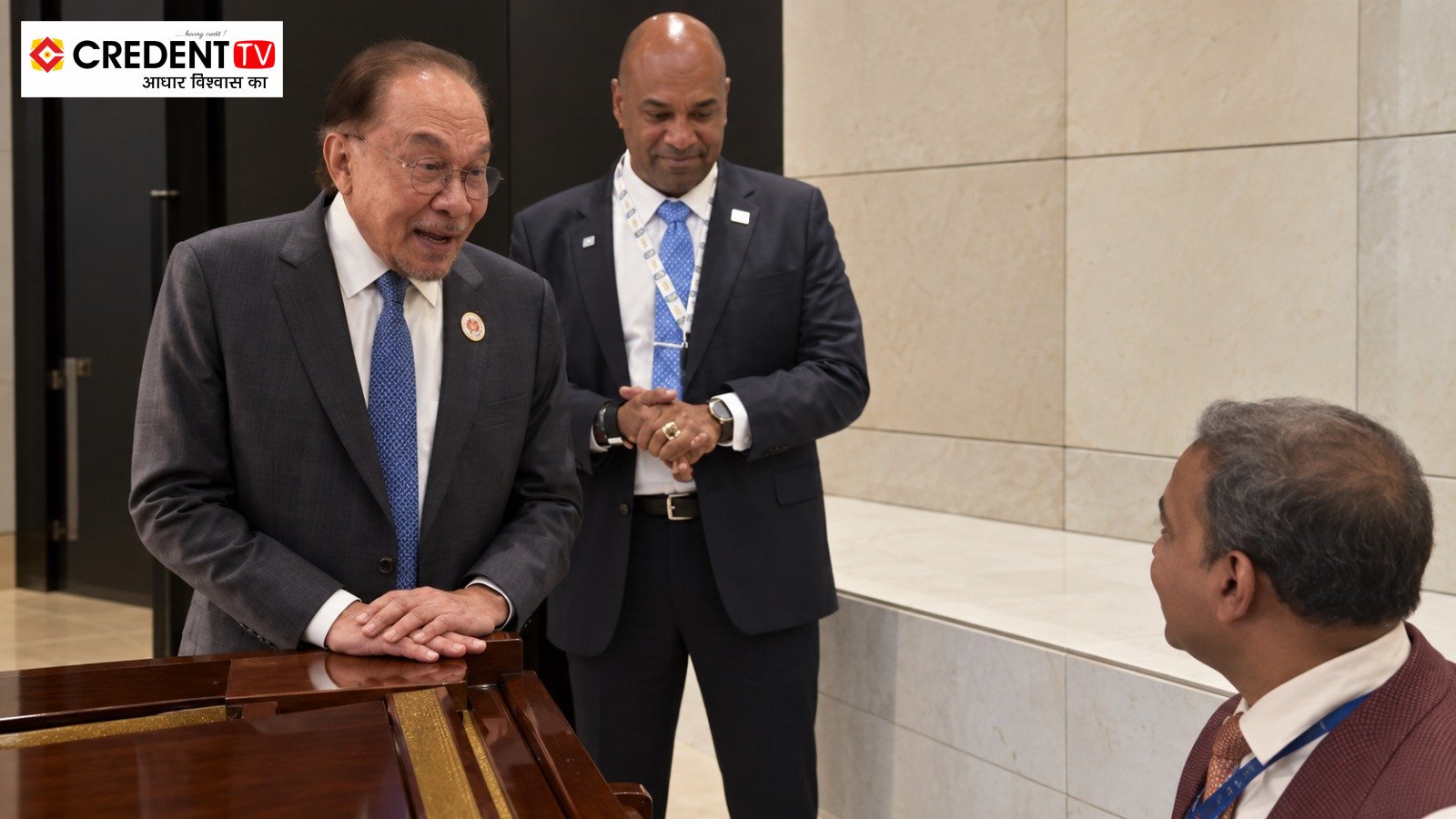
Modi also met Iranian President Masoud Pezeshkian on the sidelines of the SCO Summit. According to the Indian Prime Minister’s Office, they reviewed bilateral ties and discussed the conflict in West Asia.
Modi expressed concern over regional tensions and reiterated India’s position that disputes should be settled through dialogue and diplomacy. He also called for protecting freedom of navigation and commerce and said civilians, commercial vessels, seafarers and civilian infrastructure must not be harmed.
During separate talks with Kyrgyz President Sadyr Zhaparov, the two leaders reviewed their countries’ strategic partnership and agreed to strengthen economic, commercial and people-to-people cooperation, including student exchanges and cultural collaboration.
Modi also met Armenian Prime Minister Nikol Pashinyan. Their discussions covered defence, pharmaceuticals, mining, education, culture and economic cooperation. Pashinyan briefed Modi on the implementation of the Armenia-Azerbaijan peace agreement, according to the PMO.
Modi pays tribute at Mahatma Gandhi Memorial in Bishkek
Before his diplomatic meetings, Modi laid a floral tribute at the Mahatma Gandhi Memorial in Bishkek and interacted with members of the Indian community. The ANI video of the visit can be viewed below.
<a href="https://
“>View ANI’s video from the Mahatma Gandhi Memorial in Bishkek
Advertisement
SCO Summit brings leaders of 10 member countries together
The Bishkek summit marks the 25th anniversary of the Shanghai Cooperation Organisation. The group comprises India, China, Russia, Pakistan, Iran, Belarus, Kazakhstan, Kyrgyzstan, Tajikistan and Uzbekistan.
Founded in 2001 as a regional security forum, the SCO has expanded its agenda to include counterterrorism, economic cooperation, connectivity, energy and cultural engagement. India became a full member in 2017.
Modi is expected to present India’s priorities of security, connectivity and opportunity during the summit. He is also scheduled to attend the opening ceremony of the sixth World Nomad Games in Kyrgyzstan.

Credent TV is a dynamic and trusted media platform dedicated to delivering accurate, timely, and engaging news. With a focus on insightful journalism, Credent TV covers a wide range of topics, including current affairs, education, culture, and social issues, aiming to keep audiences informed and inspired. Led by a team of experienced professionals, Credent TV is committed to journalistic integrity, providing in-depth analysis and unbiased reporting that resonates with viewers across India. Its mission is to foster awareness, promote knowledge, and serve as a reliable source for news that matters.

You may like
Breaking News
Nepal Flood Death Toll Tops 800 as Mass Burials Begin, China Data Questions Emerge
Published
14 hours agoon
August 31, 2026
Chitwan | 30 Aug 2026
The Nepal flood disaster has killed more than 800 people across Nepal and Tibet, while more than 3,000 remain missing as authorities begin temporary mass burials of unidentified victims. The catastrophe has also renewed scrutiny of cross-border early-warning systems after Nepali officials said they had sought broader glacier and river data from China months before the August 26 disaster, while Beijing maintains that it shared available warnings in a timely manner.
Nepal Flood Mass Burials Begin After Morgues Are Overwhelmed
Authorities have dug hundreds of graves in the Devghat forest in Chitwan district, nearly 200 kilometres downstream from the worst-hit valleys of Rasuwa, after floodwaters carried bodies far from the original disaster zone.
Officials began temporarily burying unidentified victims after taking DNA samples, photographs and other forensic records that could allow bodies to be identified and exhumed later if relatives establish a match.
Ninety-six unidentified bodies were buried on Saturday, with authorities preparing to bury more than 100 additional victims as recovery teams continued finding bodies in rivers and debris.
Many remains are severely decomposed after spending several days in floodwaters. Bharatpur Hospital and temporary facilities in Chitwan have struggled with numbers far beyond their normal mortuary capacity.
Nepal Police records also show numerous unidentified bodies recovered in connection with the Rasuwa disaster being held in facilities around Bharatpur for identification.
More Than 800 Dead Across Nepal and Tibet
The disaster struck on August 26 after a massive collapse of ice and rock near the Nepal-Tibet border sent a torrent of water, mud, boulders and debris through Himalayan valleys and downstream river systems.
By late Sunday, Nepal Police had reported close to 800 bodies recovered on the Nepalese side alone, while Chinese authorities reported 16 deaths in Tibet. Taken together, the confirmed toll had risen above 800 and remained subject to further revision as recovery operations continued.
Nepal’s National Disaster Risk Reduction and Management Authority said about 2,500 people remained missing in Nepal. Chinese authorities separately reported more than 500 people missing in Tibet, taking the number unaccounted for across the affected border region above 3,000.
Hundreds of foreign nationals are among those still missing. Rescue teams from Nepal have been joined by specialists from India, China and other countries as authorities search devastated settlements and hydropower facilities.
Hundreds of Hydropower Workers Still Unaccounted For
Hydropower projects along the flood corridor remain a major focus of rescue operations. Nepalese authorities have reported hundreds of project workers missing, with rescuers attempting to reach people feared trapped inside tunnels blocked by mud and debris.
Heavy equipment, cameras, oxygen supplies and specialist tunnel-rescue personnel have been deployed. Poor weather, unstable slopes, debris and renewed flood risks have repeatedly complicated operations.
Nepal Had Sought More Glacier and River Data From China
The disaster has brought new attention to an earlier Nepal-China meeting on disaster monitoring. Officials and experts from both countries met in Kathmandu on May 27, about three months before the catastrophe, to discuss floods, weather hazards, glaciers and cross-border disaster preparedness.
According to Nepali officials involved in the discussions, Nepal sought more detailed and frequent information about glacier movements, river levels, avalanches and other hazards originating in Tibet. They said the information-sharing arrangements that followed did not provide all the data Nepal wanted.
Chinese representatives at the May meeting did not have authority to sign the proposed formal arrangement and indicated that further discussions would be required.
However, there is no verified evidence that inadequate Chinese data-sharing caused the August 26 disaster, and experts have cautioned against drawing that conclusion. Preliminary assessments indicate that the catastrophe was triggered by a large ice-and-rock collapse in an extremely difficult-to-monitor Himalayan area.
China Says Warnings and Information Were Shared
China has rejected suggestions that it failed to provide warnings. The Chinese Embassy in Nepal said the two countries had remained in close contact and made substantial progress on cross-border disaster information sharing.
Chinese authorities had also warned Nepal about a period of enhanced rainfall before the catastrophe. An email sent to Nepali officials about 12 days before the disaster warned that heavy rainfall could produce secondary hazards including landslides and flash floods.
Nepali hydrologists have said China was already sharing heavy-rain forecasts, but Nepal wanted more detailed information on water levels, avalanches, landslides and glacier movement.
Nepal Seeks Faster Cross-Border Early-Warning System
Nepal now plans to pursue a more formal data-sharing arrangement with China that could provide much more frequent information on precipitation and river conditions.
Officials have indicated that Nepal wants data at intervals as short as 10 minutes, similar to mechanisms used in other cross-border river-monitoring arrangements, to increase the time available to warn downstream communities.
The need for faster alerts was underlined by the speed of the August 26 disaster. Nepalese officials said monitoring stations were damaged or stopped transmitting as the flood moved downstream, limiting the flow of real-time information during the emergency.
The torrent destroyed bridges, roads, homes and hydropower infrastructure, while fresh rainfall and newly formed lakes and landslide dams have continued to pose additional risks.
Fresh Flood Threat Keeps Rescue Teams on Alert
Nepal’s disaster authorities warned again on Sunday after water levels rose in the Bhotekoshi River. Residents and rescue personnel in vulnerable areas were advised to remain cautious.
China has also provided Nepal with hydrological and meteorological information following the disaster, including information about newly formed water bodies and conditions upstream. Beijing has supplied emergency financial assistance and deployed specialist rescue support.
Nepal’s government says locating missing people and rescuing those who may still be trapped remain its immediate priorities. Casualty and missing-person figures are expected to continue changing as teams reach previously inaccessible locations and forensic identification progresses.
Breaking News
CJI Surya Kant Says Judiciary Acting on Digital Arrest Scams Without Waiting for Parliament
Published
1 day agoon
August 30, 2026
London | 29 Aug 2026
Chief Justice of India Surya Kant has said the Indian judiciary is responding proactively to emerging frauds such as digital arrest scams rather than waiting for Parliament to legislate. Speaking in London, he said the Supreme Court had taken suo motu cognisance of the threat and sought a coordinated response from the Union and state governments.
CJI Surya Kant Highlights Supreme Court Action on Digital Arrest Scams
Delivering the closing address at the 43rd International Symposium on Economic Crime on Saturday, CJI Surya Kant referred to digital arrest fraud as an example of how courts are confronting new forms of economic and cyber-enabled crime.
Digital arrest scams typically involve fraudsters impersonating police officers, judges, investigating agencies or other government authorities through phone or video calls. Victims are falsely told that they face criminal proceedings and are pressured into transferring money.
The Chief Justice said the Supreme Court had directed the Union and states to assess the scale of the problem and had called for digital arrest fraud to be addressed as a distinct offence with punishment proportionate to the harm caused.
“This exemplifies a broader pattern: an Indian judiciary that proactively responds to emerging fraudulent schemes, rather than waiting for Parliament to address them.”
— Justice Surya Kant, Chief Justice of India
Supreme Court Continues Monitoring Cyber Fraud Response
The Supreme Court has been examining digital arrest scams through suo motu proceedings and has repeatedly sought coordinated action from the Centre, states, banks, telecom companies, investigating agencies and online intermediaries.
A status report submitted by the Indian Cyber Crime Coordination Centre under the Union Home Ministry showed a decline in complaints recorded on the National Cybercrime Reporting Portal. The figures placed before the court showed 123,672 digital arrest-related complaints in 2024, 58,239 in 2025 and 16,377 up to June 30, 2026.
While describing the fall as encouraging, the Supreme Court said continued monitoring remained necessary.
In its August 4 proceedings, a three-judge bench headed by CJI Surya Kant issued further interim directions aimed at preventing fraud, strengthening investigations and improving the recovery of victims’ money.
Court Focuses on Mule Accounts and SIM Card Misuse
The court has sought stronger mechanisms to identify and freeze suspected mule bank accounts used to move fraud proceeds. It has also examined proposals for quicker intervention when victims report fraudulent transfers.
The Department of Telecommunications was asked to report on action against telecom service providers and point-of-sale agents allegedly associated with SIM-related misuse. Authorities have also considered a unified system to detect duplicate SIM cards, improper KYC practices and suspicious issuance of additional connections.
The proceedings have also examined technological measures that could interrupt suspected fraudulent calls or transactions before victims lose their money. The matter is scheduled for further consideration by the Supreme Court on September 16, 2026.
CJI Calls India’s Economic Crime System a ‘Layered Architecture’
Justice Kant said India’s response to economic crime should not be seen through any single statute. He described it as a “layered architecture” developed over decades through legislation, institutions and judicial principles.
He cited laws including the Prevention of Money Laundering Act, 2002, and the Fugitive Economic Offenders Act, 2018, while also acknowledging concerns raised over the operation of anti-money-laundering mechanisms.
The CJI said individuals had alleged misuse of the PMLA process, including arrests without adequately communicated grounds and prolonged custody that appeared disproportionate to the available material. He said courts had intervened where legal safeguards were violated.
Justice Kant also referred to Supreme Court jurisprudence requiring the grounds of arrest to be supplied to an accused in writing rather than merely communicated orally.
Due Process Must Remain Central, CJI Says
Referring to the Supreme Court’s decision in the Arvind Kejriwal versus Central Bureau of Investigation case, Justice Kant said the court had upheld the legality of the arrest but granted bail on the principle that extended pre-trial detention should not effectively become punishment.
He stressed that technological advances and tougher financial-crime enforcement could not displace fundamental principles including due process, proportionality and the presumption of innocence.
The CJI also called for stronger international cooperation against economic crime, noting that illicit money frequently moves across borders. He highlighted Mutual Legal Assistance Treaties as an important mechanism for tracing and recovering assets held overseas.
His remarks place digital arrest fraud within the wider challenge of modern transnational economic crime, as Indian authorities continue efforts to block fraudulent communications, identify financial networks and improve the recovery of money lost by victims.
Breaking News
Sunil Gavaskar Calls for No-Ball Fines After Jadeja’s Repeated Test Errors
Published
1 day agoon
August 30, 2026
Mumbai | 30 Aug 2026
Former India captain Sunil Gavaskar has proposed financial penalties for bowlers who repeatedly overstep in Test cricket, with fines increasing for each subsequent no-ball. His suggestion follows India’s persistent no-ball problem during their 1-0 Test series victory in Sri Lanka, in which Ravindra Jadeja was among the principal offenders.
Sunil Gavaskar Proposes Escalating No-Ball Fines
Writing in his Mid-Day column published on August 30, Gavaskar argued that front-foot no-balls were largely within a bowler’s control and should therefore carry consequences when repeated.
“There should be no excuses for overstepping the bowling crease.”
— Sunil Gavaskar, former India captain
Gavaskar suggested an internal fine for the first offence, with the amount doubling for every subsequent transgression. He also proposed that the bowling coach should be fined an amount equivalent to half the player’s penalty.
He suggested that money collected through such fines could be used for the team’s final dinner on an overseas tour, turning the disciplinary measure into a team activity rather than an official cricketing sanction.
Ravindra Jadeja’s No-Balls Put Issue Under Spotlight
The debate intensified during India’s two-Test tour of Sri Lanka. Jadeja bowled eight no-balls in the series, while debutant off-spinner Saransh Jain delivered six and Manav Suthar one, taking the Indian spin attack’s series total to 15.
India conceded 20 no-balls across the two Tests. In the second Test in Colombo alone, Indian bowlers delivered 13 no-balls, including 12 from the spinners.
Jadeja’s overstepping had already proved costly in the opening Test at Galle. A delivery that induced an edge from Dhananjaya de Silva was ruled a no-ball, cancelling what would otherwise have been a wicket.
The experienced left-arm spinner’s front-foot discipline has become a recurring issue. Cricket statistics cited during the Sri Lanka series showed that Jadeja has bowled substantially more no-balls since television umpires began routinely monitoring the front foot in Tests.
Gavaskar Rejects Free-Hit Proposal for Test Cricket
India spin bowling coach Sairaj Bahutule had earlier floated the idea of introducing a free hit after a no-ball in Test cricket while discussing the team’s overstepping problem. He acknowledged that India were working to correct the errors and said the repeated no-balls were a concern.
Gavaskar opposed introducing the white-ball free-hit rule into Tests, arguing that the longest format should not make run-scoring easier for batters. Instead, he favoured financial accountability within the team.
“How about a fine which gets doubled for every further transgression?”
— Sunil Gavaskar, former India captain
His proposal is not an announced International Cricket Council or Board of Control for Cricket in India rule change. It is Gavaskar’s suggested team-level mechanism for improving bowling discipline.
India Win Series but Colombo Draw Hurts WTC Push
India won the two-match Test series against Sri Lanka 1-0 after taking the opening Test in Galle by 165 runs. Sri Lanka then produced a determined resistance in Colombo to draw the second Test.
Sonal Dinusha played the decisive role in denying India a clean sweep, scoring an unbeaten 133 in Sri Lanka’s second innings as the hosts finished on 429 for nine after being asked to follow on.
The draw prevented India from securing the additional World Test Championship points available for a victory and left them facing a demanding route towards the WTC final. India’s remaining Tests in the cycle include an away series in New Zealand and a five-match home series against Australia.
Breaking News
Mohan Bhagwat New York Speech: Hinduism Cannot Exclude Muslims, Diversity Is Strength
Published
2 days agoon
August 30, 2026
New York | 29 Aug 2026
Rashtriya Swayamsevak Sangh chief Mohan Bhagwat said in New York on Saturday that Hindu identity cannot be based on excluding Muslims and argued that India’s defining civilisational principle is “unity in diversity”. His remarks came during engagements with faith leaders and later at the Universal Oneness Celebration at Madison Square Garden, against the backdrop of protests and debate over the RSS and its ideology.
Mohan Bhagwat New York Speech Stresses Unity in Diversity
Addressing the Universal Oneness Celebration at Madison Square Garden, Bhagwat contrasted the American idea of pluralism with what he described as Bharat’s tradition of unity in diversity. He said diversity did not weaken an underlying sense of oneness and should instead be celebrated and respected.
“Diversity has to be celebrated, has to be respected, has to be accepted.”
— Mohan Bhagwat, RSS chief
Bhagwat said every nation had a purpose and argued that Bharat’s role was to understand this underlying unity and periodically remind the world that differences could coexist with a shared human bond. He also urged members of the Indian diaspora to remain loyal and responsible citizens of the United States, which he described as their “karma bhumi”, while retaining a connection with their “janmabhumi”.
The gathering was organised by the American Hindus for Engagement and Dialogue, or AHEAD Forum. The organiser said more than 5,000 people were expected and that over 250 partner organisations were supporting the event, which was held around the theme of universal oneness and the principle of “Vasudhaiva Kutumbakam” — the world is one family.
Bhagwat Says Hindu Identity Cannot Be Based on Excluding Muslims
In a separate faith leaders’ conference in New York ahead of the Madison Square Garden programme, Bhagwat addressed questions surrounding Hindu Rashtra and the place of Muslims in India. Recalling a discussion from his 2018 lecture series, he said removing Muslims from the country was not consistent with his understanding of Hindutva.
“If any Hindu thinks there should be no Muslims in India, he will not remain Hindu.”
— Mohan Bhagwat, RSS chief
Advertisement
He said a person calling themselves Hindu must recognise the dignity of every human being and accept that different spiritual paths can lead towards the same ultimate goal. Bhagwat also said diversity must be protected alongside one’s own identity, describing diversity as a feature of nature and unity as the underlying truth.
Bhagwat Calls for Dialogue and Society-Led Change
Bhagwat argued that lasting social change should begin within society rather than through political institutions. He said politics had become a “game of self-interest” and maintained that dialogue and service were necessary to build trust between communities.
He referred to discussions initiated with Muslim and Christian representatives after his earlier public lectures and said such engagement needed to continue even when immediate results were not visible. Bhagwat argued that public opinion ultimately influences politics in a democracy and that stronger social understanding could therefore shape policy over time.
New York Event Proceeds Despite Protests and Criticism
Bhagwat’s visit drew opposition from a coalition of interfaith, civil-rights and secular organisations in the United States. New York City Mayor Zohran Mamdani also criticised the RSS, describing its ideology as exclusionary, while saying he was unsure whether the city had authority to cancel a privately organised event.
The RSS rejected that characterisation of the gathering. Senior RSS functionary Sunil Ambekar described the Universal Oneness Celebration as an interfaith event intended for dialogue with a diverse, multicultural and multi-faith audience. AHEAD Forum similarly presented the programme as an initiative centred on unity, mutual respect and civic responsibility.
The Madison Square Garden programme went ahead as scheduled on August 29. Bhagwat’s United States visit forms part of a wider overseas outreach during the RSS centenary period, with engagements also planned in Canada and the United Kingdom.
Breaking News
Rajasthan Police Arrest ₹25,000-Reward Accused Over Alleged Pakistan-Linked SIM Network
Published
2 days agoon
August 29, 2026
Sri Ganganagar | 29 Aug 2026
Rajasthan Police, working with CID Intelligence, have arrested a 45-year-old man carrying a ₹25,000 reward over an alleged Pakistan-linked SIM network in the border region of Sri Ganganagar. Police allege that Balwinder Singh alias Bindra supplied Indian SIM cards to Pakistan-based handlers and helped activate WhatsApp accounts in Pakistan using Indian mobile numbers.
Police Probe Alleged Pakistan-Linked SIM Network
Police identified the accused as Balwinder Singh alias Bindra, son of Pritam Singh and a resident of village 27-A in the Anupgarh area. Sri Ganganagar Superintendent of Police Hari Shankar Yadav said the arrest followed intelligence gathering in the border region over suspected activities involving Pakistan-based handlers.
According to police, Balwinder allegedly procured SIM cards registered to Indian citizens and facilitated their transfer to handlers across the border. Investigators allege that OTP verification was then used to activate WhatsApp accounts in Pakistan while retaining Indian mobile numbers.
Police said eight Indian SIM cards were allegedly supplied to Pakistan-based handlers. Investigators suspect the numbers were subsequently used to communicate with people in India and seek sensitive or strategic information.
The allegations remain under investigation and have not been proven in court.
Police Register BNS Case, Examine Mobile Phone
Anupgarh Police registered Case No. 452/2026 against Balwinder under Sections 318(4), 152 and 61(2) of the Bharatiya Nyaya Sanhita, according to police. He has been arrested and is being questioned about his alleged contacts and the wider network.
Investigators are also conducting a forensic examination of his mobile phone. Police allege that preliminary findings indicate he remained in contact with Pakistan-based handlers through WhatsApp.
The investigation is now focused on establishing how the SIM cards allegedly reached Pakistan, identifying the people who obtained or registered them and determining whether other individuals were involved.
Accused Was Wanted in Separate Heroin Smuggling Case
Police said Balwinder was already wanted in Jaitsar Police Station Case No. 102/2026, registered under provisions of the Narcotic Drugs and Psychotropic Substances Act and the Bharatiya Nyaya Sanhita. A ₹25,000 reward had been announced for information leading to his arrest in that case.
The narcotics investigation concerns the alleged cross-border smuggling of about 10.5 kg of heroin, estimated by police to be worth around ₹55 crore, after the consignment was allegedly dropped inside India using a drone from Pakistan.
Investigators are examining whether there is any connection between the alleged SIM-card operation, Pakistan-based contacts and the narcotics trafficking case. Police have not yet announced any conclusion establishing such a link.
Police Search for Other Suspected Network Members
The operation involved Anupgarh Police and CID Intelligence personnel. Police said questioning of the arrested accused and examination of digital evidence are continuing to identify other people who may have participated in the alleged network.
No conviction has been recorded against Balwinder in the Pakistan-linked SIM case, and the accusations against him remain subject to investigation and judicial proceedings.
Breaking News
FSSAI Proposes Red Warning Labels for High-Sugar, Salt and Fat Foods
Published
2 days agoon
August 29, 2026
New Delhi | 29 Aug 2026 The Food Safety and Standards Authority of India has proposed prominent red warning labels on the front of packaged foods containing excessive added saturated fat, added sugar or salt, according to a compliance affidavit submitted to the Supreme Court. The proposal is not yet a binding labelling rule. Under the proposed system, qualifying products would carry a red hexagonal symbol with declarations such as “HIGH FAT”, “HIGH SUGAR” or “HIGH SALT”. Specified sweetened drinks could display a separate “HIGHLY SWEETENED BEVERAGE” warning. The nutritional thresholds would be based on the Dietary Guidelines for Indians, 2024, issued by the Indian Council of Medical Research-National Institute of Nutrition. “The warning shall be displayed in a font size one point larger than that used in the nutrition information table.” — FSSAI compliance affidavit FSSAI said the front-of-pack format was intended to provide information that consumers could understand easily and to support informed choices, particularly among children and other vulnerable groups. During the first phase, the red warning would apply to products exceeding the prescribed limits for any two or more of the three specified nutrients. The first phase would also cover designated highly sweetened beverages. In the second phase, the requirement would be extended to products exceeding the threshold for any one of the nutrients. No confirmed timetable for either phase has been announced. Single-ingredient products and foods inherently rich in fat, sugar or salt—including ghee, edible oil, salt, sugar, jaggery and honey—are proposed to be exempt, while remaining subject to other food-safety and labelling regulations. The affidavit was filed in response to the Supreme Court’s 13 August direction asking the Union government to place its final decision on front-of-pack warning labels on record. A bench comprising Justices J B Pardiwala and K Vinod Chandran had criticised the prolonged delay and emphasised the potential health impact on children. The proceedings arose from a petition filed by the public charitable trust 3S and Our Health Society, which sought mandatory front-of-package warnings for packaged foods high in sugar, sodium and saturated fat. Packaged-food manufacturers are not required to introduce the proposed red labels immediately. FSSAI told the court that the system would have to be notified through amendments to the relevant regulations after completing the prescribed regulatory process. Until new rules take effect, companies must continue following the Food Safety and Standards (Labelling and Display) Regulations, 2020, which require nutritional and ingredient information but do not impose the proposed red front-of-pack warning system.FSSAI red warning labels would use a hexagonal symbol
Warning labels planned in two phases
Supreme Court sought a final government decision
Red warning labels are not yet mandatory
Breaking News
Trump Announces US-Venezuela Oil Deal Covering 65 Billion Barrels
Published
2 days agoon
August 29, 2026
Washington | 28 Aug 2026
US President Donald Trump announced a US-Venezuela oil deal on Friday that he said would give the United States majority control over more than 65 billion barrels of Venezuela’s proven reserves. However, the agreement’s legal structure, participating companies and implementation timetable have not been publicly disclosed.
US-Venezuela oil deal covers 17 fields
Trump said Secretary of State Marco Rubio and Defence Secretary Pete Hegseth negotiated the agreement with Venezuela’s interim President Delcy Rodríguez and private businesses. He claimed the arrangement would impose no cost on American taxpayers.
“The United States of America has just entered into an Agreement with the Country of Venezuela on, THE BIGGEST OIL DEAL IN WORLD HISTORY!”
— Donald Trump, US President
Rodríguez’s government said the agreement covered the development of 17 strategic oilfields with proven potential of 65 billion barrels. An unnamed US official told the Associated Press that the plan envisaged a new company involving the United States and a private operator, with the US receiving 55 per cent of its effective output through ownership and rights to purchase crude at cost.
The official said the company would receive 100-year development rights. Neither government had published the full agreement or identified the private operator by Saturday.
Venezuela projects $100 billion in private investment
The Venezuelan government said the agreement could attract nearly $100 billion in private investment and generate more than $209 billion in tax revenue. Rodríguez said it would help modernise the country’s oil industry, increase production and support economic growth.
Rubio said the arrangement would provide the United States with stable, lower-cost oil while creating jobs and investment in Venezuela. Oil purchased through the proposed company could also be used for the US Strategic Petroleum Reserve and military requirements, according to the US official cited by the Associated Press.
Legal and infrastructure questions remain unresolved
Venezuela holds an estimated 303 billion barrels of crude reserves, among the largest proven holdings globally, but produces about 1.25 million barrels per day after years of underinvestment, sanctions and deteriorating infrastructure.
Energy analysts cautioned that Venezuela’s constitutional and petroleum laws could complicate any arrangement giving a foreign government operational control over oilfields. Trump did not explain how majority control would be exercised or whether the agreement required further legislative or regulatory approval.
A rapid reduction in US fuel prices is also uncertain. Venezuela’s heavy crude requires specialised production, transport and refining infrastructure, and a substantial increase in output could take years and require significant capital.
The announcement expands an energy arrangement introduced in January, when Washington began facilitating sales of Venezuelan crude and selectively easing sanctions covering trade and transportation. Existing sanctions on crude production were not fully removed under that earlier authorisation.
Breaking News
Bad Weather Halts Aerial Rescue in Nepal Floods; Infosys Executive Unreachable
Published
2 days agoon
August 29, 2026
Kathmandu | 29 Aug 2026
Poor weather halted helicopter operations and disrupted wider rescue efforts in flood-hit Nepal on Saturday, as authorities searched for thousands of missing people and Infosys confirmed that senior executive Lax Gopisetty remained unreachable.
Nepal flood rescue operations face severe weather
The disaster struck the Nepal–Tibet border region on 26 August after a glacier collapse sent a torrent of water, rocks, ice, mud and debris through mountain river systems, destroying homes, bridges, roads and power facilities.
Nepal’s disaster agency said the death toll in the country had reached 626, with 2,426 people reported missing. Seven deaths and hundreds of missing people were reported in Tibet. More than 3,700 people had been rescued in Nepal, according to the latest official figures cited by the Associated Press.
Rain, fog and difficult terrain prevented helicopters from operating in affected areas on Saturday. Ground teams continued working at several locations, including the Upper Trishuli-1 Hydropower Project in Rasuwa district, where authorities believe more than 100 people could be trapped inside a mud-filled tunnel.
Infosys Public Services chief Lax Gopisetty remains unreachable
Infosys said Lax Gopisetty, who heads its subsidiary Infosys Public Services, had travelled to the affected region in a personal capacity and could not be contacted. The company said it was coordinating with relevant agencies and supporting his family.
“We can confirm that our colleague Lax Gopisetty, who was visiting the region in a personal capacity, is currently not reachable.”
— Infosys statement
Infosys Public Services primarily works with public-sector organisations in the United States and Canada. No confirmed information about Gopisetty’s location or condition had been released by Saturday.
India sends relief and offers technical support
India has dispatched three flights carrying about 60 tonnes of relief supplies, including medicines, blankets, food and water-purification tablets. New Delhi also plans to send tunnel-rescue specialists and a medical team.
Nepal has requested specialised international assistance for tunnel rescues, restoring damaged transport and communication links, identifying bodies through DNA testing and improving temporary storage facilities. Authorities are also monitoring two upstream lakes because the danger of further flooding has not completely passed.
Breaking News
Nandan Nilekani Task Force Seeks Public Input on Exam Reforms by September
Published
3 days agoon
August 29, 2026
New Delhi | 28 Aug 2026
The Nandan Nilekani-led High-Powered Task Force on examination reforms has invited students, parents, teachers, institutions, examination bodies, experts and other stakeholders to submit suggestions by 13 September 2026 on making India’s public examinations more secure, transparent, equitable and accountable. The exercise covers examinations conducted by the National Testing Agency (NTA) and comes amid heightened scrutiny of examination security and malpractice. :contentReference[oaicite:0]{index=0}
Nandan Nilekani task force opens nationwide consultation
The Union Ministry of Personnel, Public Grievances and Pensions said the task force is examining comprehensive reforms relating to the conduct, security, design and governance of public examinations. Its mandate also includes strengthening institutional systems, improving examination infrastructure, deploying appropriate technology and protecting student well-being. :contentReference[oaicite:1]{index=1}
The consultation is open to students and candidates, parents, teachers and academic institutions, examination-conducting bodies, subject experts, technology professionals, industry organisations, civil society groups and other interested stakeholders. Submissions can be made in English, Hindi and regional languages. :contentReference[oaicite:2]{index=2}
Exam security, technology and accountability among key focus areas
The task force has identified 10 broad areas for public feedback. These include examination security, assessment methodology, governance and accountability, prevention and detection of malpractices, grievance redressal and the use of technology, including secure computer-based testing. :contentReference[oaicite:3]{index=3}
It is also seeking proposals for expanding examination infrastructure and improving access for candidates across different social, economic, regional and linguistic groups. Transparency between examination authorities and candidates, effective communication and measures to reduce stress during the examination process are also part of the review. :contentReference[oaicite:4]{index=4}
Paper leak concerns intensify focus on examination reform
The consultation comes against the backdrop of student protests and concerns over alleged paper leaks and other irregularities in competitive examinations. The government announced the creation of the high-powered task force under Nilekani’s leadership on 26 July 2026, saying it would focus on examination reforms. :contentReference[oaicite:5]{index=5}
Reports on the panel’s work indicate that it is also examining measures that could affect the 2027 examination cycle, including greater use of computer-based testing and stronger government-backed testing infrastructure. Such proposals remain under consideration and would require government acceptance before implementation. :contentReference[oaicite:6]{index=6}
How to submit suggestions on public examination reforms
Stakeholders can submit their recommendations through the official examination reforms portal at examreforms-taskforce.dopt.gov.in. The government has also provided the toll-free number 1800-180-4747, WhatsApp number +91 78270 42830 by sending “hptf”, and the email address Ex******************@******ov.in. :contentReference[oaicite:7]{index=7}
The deadline is 13 September 2026. The government said feedback received through the consultation will be used by the task force while preparing its recommendations on the future structure, security and governance of India’s public examination system. :contentReference[oaicite:8]{index=8}
Nandan Nilekani task force, exam reforms India 2026, NTA examination reforms, paper leak prevention India, public examination security, computer based testing reforms, exam reform suggestions September 13, NTA exam security
#NandanNilekani #ExamReforms #NTA #PublicExaminations #EducationNews
Breaking News
Mamata Banerjee Slams Kolkata Police at Raksha Bandhan Rally After 13 Arrests
Published
3 days agoon
August 28, 2026
Kolkata | 28 Aug 2026
Trinamool Congress chief and former West Bengal Chief Minister Mamata Banerjee sharply criticised Kolkata Police on Friday during the Trinamool Chhatra Parishad foundation day programme in Kolkata, held on Raksha Bandhan, a day after a confrontation at Abhishek Banerjee’s Camac Street office led to three FIRs and the arrest of 13 people.
Mamata Banerjee targets Kolkata Police over TMC office action
Addressing supporters at Cathedral Road, Banerjee accused the police of acting unfairly against her party and questioned the police action at Abhishek Banerjee’s office on Thursday. She alleged that officers had entered the premises forcibly and that TMC workers were subsequently arrested.
Banerjee contrasted the present police administration with the force she had worked with during her 15 years as chief minister, alleging that its conduct had changed after the change of government. Her remarks were political allegations against the present administration and police; Kolkata Police has separately defended its action through the cases registered over Thursday’s confrontation.
Banerjee also announced that she would begin touring districts to stand with party workers and people she described as deprived. She said that even if police permission was not granted for her political programmes, she would continue her outreach, including travelling on foot where necessary.
Three FIRs filed, 13 arrested after Abhishek Banerjee office clash
Kolkata Police said three cases were registered following Thursday’s confrontation involving police personnel, Kolkata Municipal Corporation officials and TMC members at Abhishek Banerjee’s office on Camac Street. Thirteen people were arrested.
TMC national general secretary Abhishek Banerjee, Rajya Sabha MP Derek O’Brien and other party figures were named in cases arising from allegations that officials were obstructed while attempting to enter a common area of the building and remove an allegedly unauthorised billboard.
According to the authorities, the Kolkata Municipal Corporation had received a complaint concerning the billboard and its officials went to the site accompanied by police. The police alleged that party supporters and private security personnel obstructed officials and that a confrontation followed.
The TMC has disputed that account. Abhishek Banerjee alleged that civic and police personnel entered the office without proper authority and pushed or heckled party leaders and workers. His faction has indicated that it will pursue legal remedies over the action.
TMCP foundation day coincides with Raksha Bandhan
The confrontation with police became a major theme at Friday’s TMCP foundation day gathering, which coincided with Raksha Bandhan. Banerjee had earlier called for the occasion to carry a message of harmony because the student organisation’s annual foundation day fell on the festival this year.
The gathering itself was held under restrictions imposed by the Calcutta High Court after rival TMC factions sought permission to organise separate TMCP programmes at the traditional Mayo Road venue.
The court did not allow either faction to use Mayo Road. Mamata Banerjee’s faction was permitted to hold its programme on Cathedral Road, while the rival group led by Ritabrata Banerjee was allotted Rani Rashmoni Road.
High Court capped attendance and ordered traffic lane to remain open
The Calcutta High Court fixed the timing of both programmes between noon and 3 pm and imposed an attendance ceiling of 1,500 people for each gathering. Each faction was also directed to provide Kolkata Police with the contact details of 15 volunteers to help coordinate security arrangements.
The court further ordered that the programmes be restricted to one lane at their respective venues while the other lane remained available for traffic.
There was significant crowding around the Cathedral Road event after Banerjee arrived. Local reports said several vehicles became caught near the gathering and an ambulance was also temporarily affected. Banerjee was seen directing party workers to allow vehicles to pass and asking supporters to cooperate with police before the political speeches continued.
Mamata says political and legal fight will continue
At the programme, Banerjee also renewed her challenge to the BJP-led West Bengal government over the 2026 Assembly election. She alleged that the BJP had secured its victory through unfair means and said her party would continue its legal fight. The allegation has not been established as fact and remains part of the political dispute between the two sides.
The BJP came to power in West Bengal in the May 2026 Assembly election, ending 15 years of Mamata Banerjee-led government. Since that defeat, the TMC has also been hit by an internal split, with competing factions claiming organisational legitimacy.
Friday’s simultaneous student-wing programmes, the dispute with Kolkata Police and the Camac Street cases have therefore added another layer to an already intensifying political and legal confrontation in West Bengal.

Modi-Putin Meeting Focuses on Ukraine Peace and BRICS Summit Invitation
Nepal Flood Death Toll Tops 800 as Mass Burials Begin, China Data Questions Emerge

CJI Surya Kant Says Judiciary Acting on Digital Arrest Scams Without Waiting for Parliament

Sunil Gavaskar Calls for No-Ball Fines After Jadeja’s Repeated Test Errors

Mohan Bhagwat New York Speech: Hinduism Cannot Exclude Muslims, Diversity Is Strength

Rajasthan Police Arrest ₹25,000-Reward Accused Over Alleged Pakistan-Linked SIM Network

Priyansh Arya: The Six-Hitting Sensation of IPL 2025

Top 10 Most Searched Topics on YouTube: What’s Trending Now?

Preity Zinta Spotted with New Punjab Kings Hero Priyansh Arya in Viral Clip

Nag Panchami 2025: 7 Key Rituals and Puja Time to Eliminate Kaal Sarpa Dosha

Radhika Merchant: A New Chapter as Radhika Ambani

Balen Shah, Kathmandu’s independent mayor, from rapper to political leader. Explore his rise amidst Nepal’s youth-led revolution-

best career opportunities | Jaipur Career Fair | Credent TV | Dainik Navjyoti D2S03

what is reiki healing | Mental Health | Shiksha Sarokar, शिक्षा सरोकार, Sunil Narnaulia

DAV Centenary Public School, Vaishali Nagar, Jaipur hosts Successful ‘Mind Wars Quiz: A Battle of Wits and Knowledge’
Trending Post
Credent TV1 month agoPanja Dangal Season 1: Lakshya Narwani Wins Jaipur Arm-Wrestling Championship
Breaking News6 days agoVaibhav Sooryavanshi’s Two-Wicket Duleep Trophy Spell Powers East Zone into Semi-finals
Breaking News6 days agoSRN Ad-to-Pitch Challenge Tests Young Entrepreneurs in Jaipur
Breaking News6 days agoKharge and Rahul Gandhi Urge Modi to Scrap Caste Census Questionnaire
Bihar6 days agoPatna BPSC Protest: Water Cannons Deployed, Aspirants Detained
Breaking News5 days agoReports Claim Pakistan Deployed Bayraktar TB2 Drones Near LoC
Breaking News6 days agoNitin Gadkari Clarifies Younger Generation Remark Was About Trust, Not Politics
Breaking News6 days agoUS Air Force C-17 Lands in Moscow; Flight’s Purpose Remains Unclear