Education
Top 5 Highlights from DAV School’s Heritage Quiz: Young Minds Embrace India’s Rich Culture














Jaipur | 2 Oct 2026
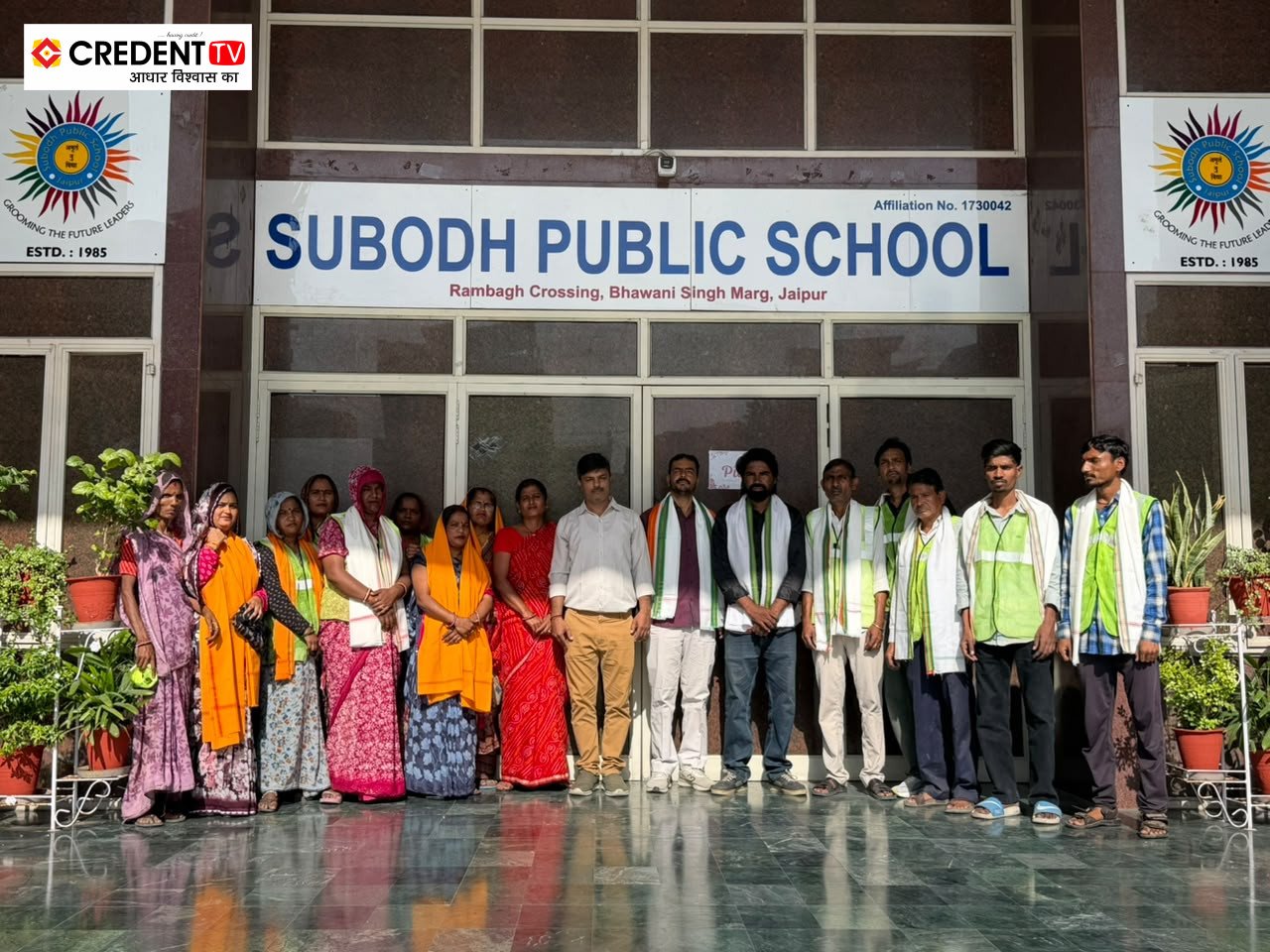
Subodh Public School, Rambagh, organised a special felicitation ceremony to recognise its sanitation and support staff for their contribution to maintaining a clean, healthy and welcoming campus.
Sanitation Workers Felicitated at Subodh Public School
The ceremony acknowledged the staff members whose daily work helps keep classrooms, corridors and other areas of the school clean, organised and hygienic.
Much of their work takes place away from public attention, but it remains essential to the health, safety and functioning of the school. The event highlighted their discipline, consistency and sense of responsibility rather than treating sanitation merely as a routine service.
Veer Bahadur Chouhan Recognises Staff Contribution
Senior clerk and chief patron Veer Bahadur Chouhan felicitated the sanitation workers and praised their role in maintaining high standards of cleanliness across the school premises.
The school leadership expressed gratitude for their patience, diligence and commitment, emphasising that every individual whose work strengthens an institution deserves dignity and recognition.
Ceremony Reinforces the Dignity of Labour
The programme was conceived as more than a formal presentation. It reflected the school’s acknowledgement of workers whose sustained efforts produce a visible and positive difference in the everyday lives of students, teachers and visitors.
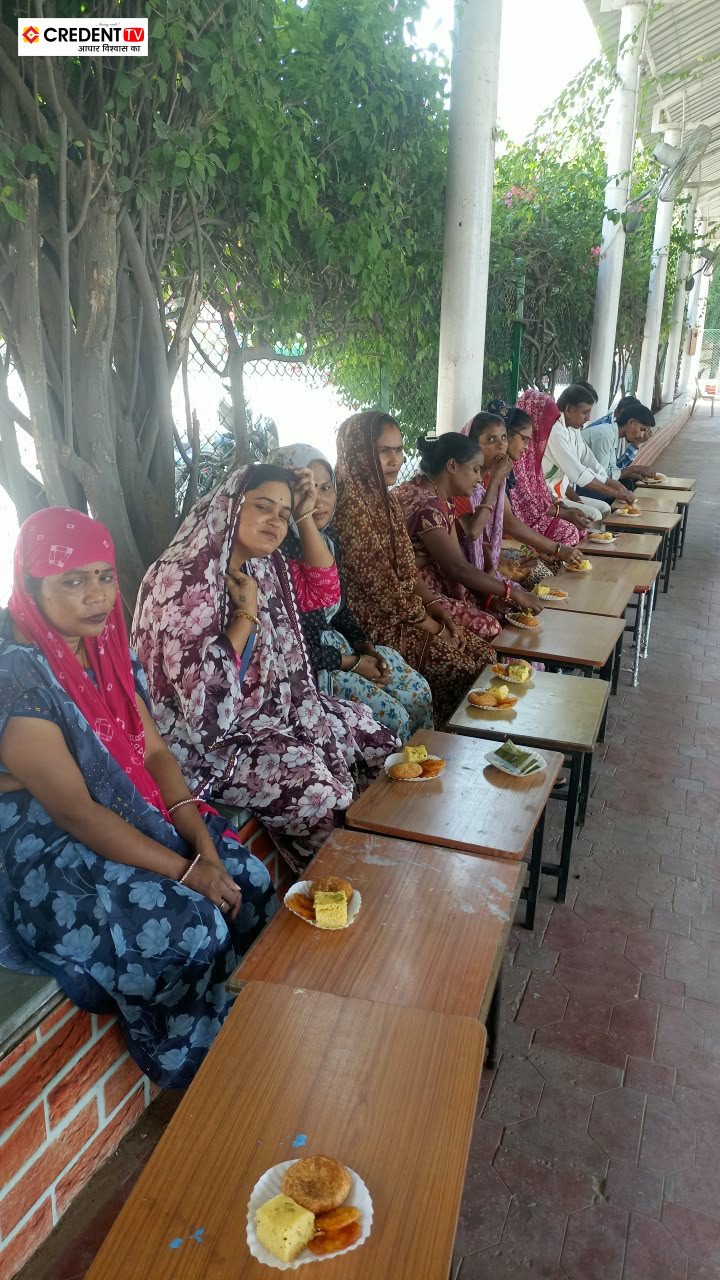
By celebrating its sanitation staff, the school reinforced the values of dignity of labour, mutual respect and service. The occasion also underlined the message that institutional excellence is built through collective effort, including the contributions that often remain unseen.
‘Collective Effort, Visible Impact’
The ceremony carried the theme “Collective Effort, Visible Impact”, recognising that a clean and disciplined learning environment is not created by infrastructure alone. It depends on people whose commitment turns shared spaces into safe and welcoming places.
The felicitation served as a reminder that respect for service must extend beyond ceremonial occasions and become part of an institution’s everyday culture.
Subodh Public School Rambagh, Subodh School Jaipur, sanitation workers felicitation, school sanitation staff, dignity of labour, clean school campus, Jaipur school news, Veer Bahadur Chouhan
#SubodhPublicSchool #SanitationWorkers #DignityOfLabour #JaipurNews #CredentTV

Jaipur | 06 Sep 2026
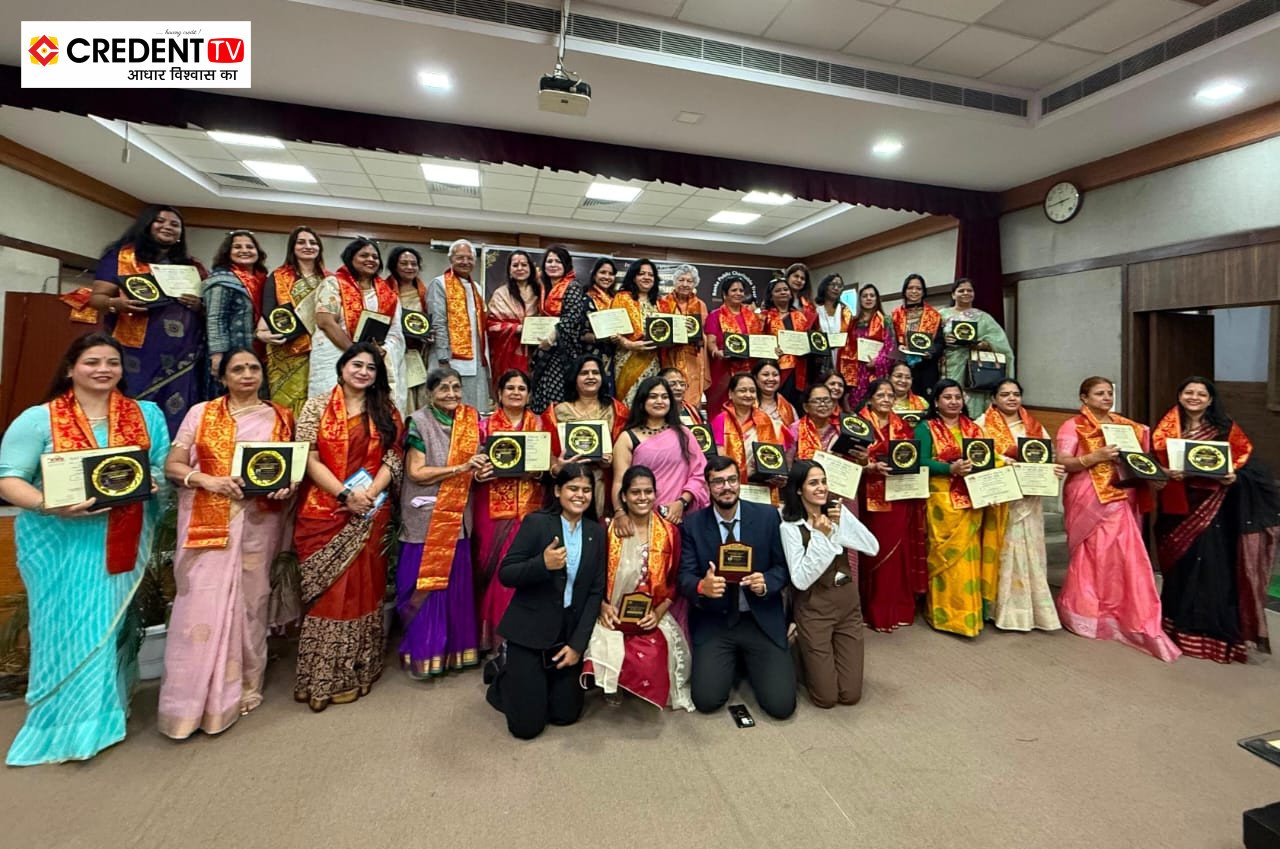
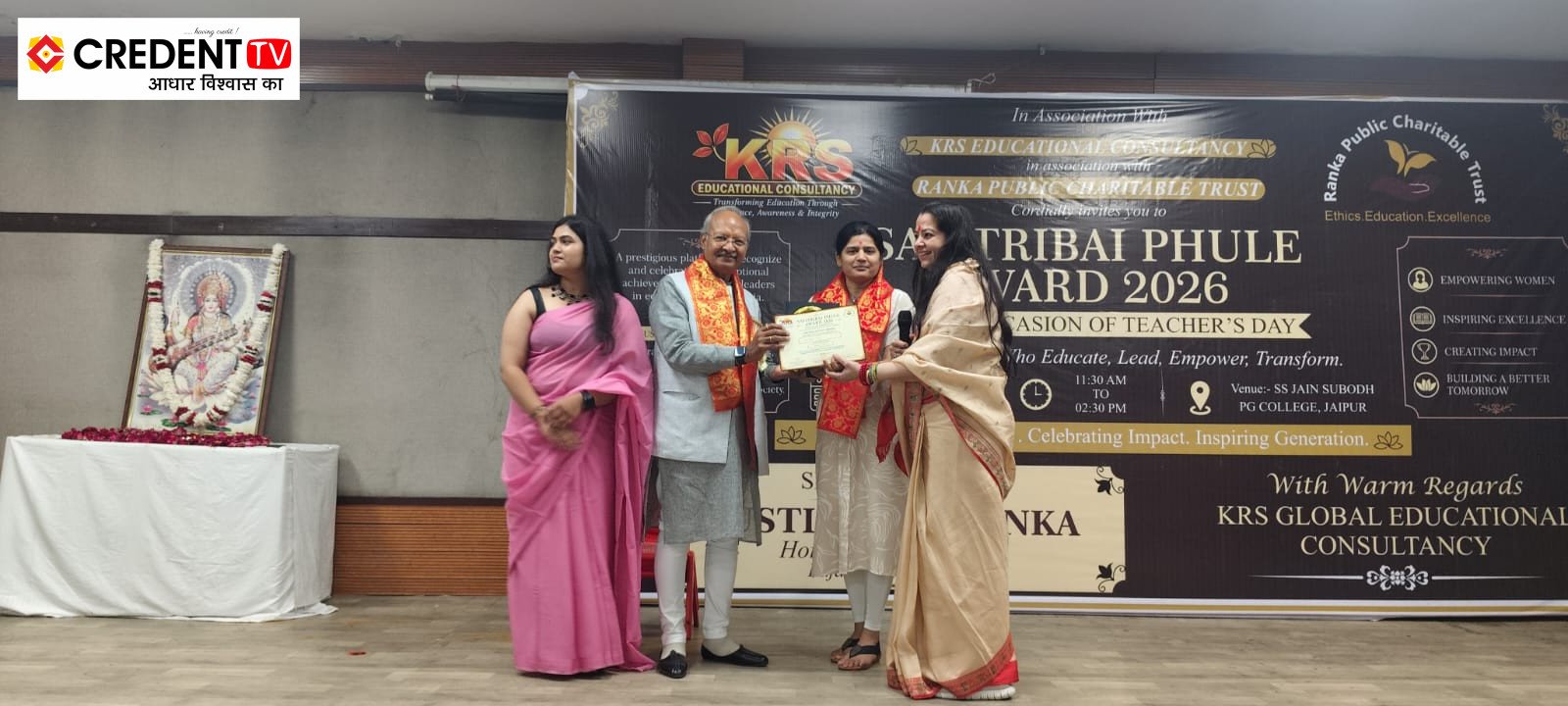
Fifty-four women from education, law, social service, leadership and other professional fields were honoured with the Savitribai Phule Award 2026 at a ceremony in Jaipur as part of Teachers’ Day celebrations. The event was organised by KRS Global Educational Consultancy with the support of Ranka Public Charitable Trust at S.S. Jain Subodh P.G. College, Rambagh Circle.
Savitribai Phule Award 2026 Recognises Women Achievers
Former Rajasthan High Court judge Justice J.K. Ranka attended the ceremony as chief guest, while Prof. Dr Shubha Sharma, Chairperson of KRS Global Educational Consultancy, presided over the programme. Advocate Roopali Chauhan, the organisation’s General Secretary, played a key role in coordinating the event.
Organisers said the awards were intended to recognise women who have made notable contributions in education, academics, social service, law, leadership and other fields, while encouraging wider participation by women in institution-building and social development.
Among the awardees was Dr Sanjula Thanvi, who was appointed Dean (Incharge), Faculty of Law, University of Rajasthan, in August 2026. Other honourees named by the organisers included Prof. Dr Shakuntala Nathpal, Prof. Dr Radha Rani Saxena, Dr Archana Srivastava, Dr Santosh Mittal, advocate Sumiti Dave Bishnoi, Captain Swati Sharma, Dr Venu Rajpurohit and Dr Lavina.
Dr Namita Jain, Dean and Head of the School of Law at JECRC University, was also among the women recognised at the ceremony.
Educators From Several States and Cities Join Jaipur Event
The programme brought together teachers, academics and professionals from Rajasthan and other parts of the country. According to the organisers, participants travelled from cities including Meerut, Varanasi, Tonk, Noida and Delhi.
Serving and former deans, heads of departments, principals, senior teachers and education professionals from universities and colleges were among those present.
The venue, S.S. Jain Subodh P.G. College at Rambagh Circle, is an autonomous Jaipur institution affiliated with the University of Rajasthan.
KRS Global Educational Consultancy and Website Launched
The ceremony also marked the formal launch of KRS Global Educational Consultancy, Jaipur, along with the unveiling of its website.
The organisation said it aims to guide students seeking higher-education opportunities and help them identify suitable academic options in India and abroad.
The launch placed student counselling and access to higher-education opportunities alongside the event’s broader focus on recognising women working in education and related fields.
Event Highlights Savitribai Phule’s Legacy in Women’s Education
The award is named after Savitribai Phule, widely recognised as a pioneering figure in women’s education and social reform in India. Her work with Jyotirao Phule in expanding access to education for girls and marginalised communities remains an important part of India’s social reform history.
Organisers said the Jaipur ceremony was intended to carry forward that legacy by recognising contemporary women whose work has contributed to education, professional leadership and social development.
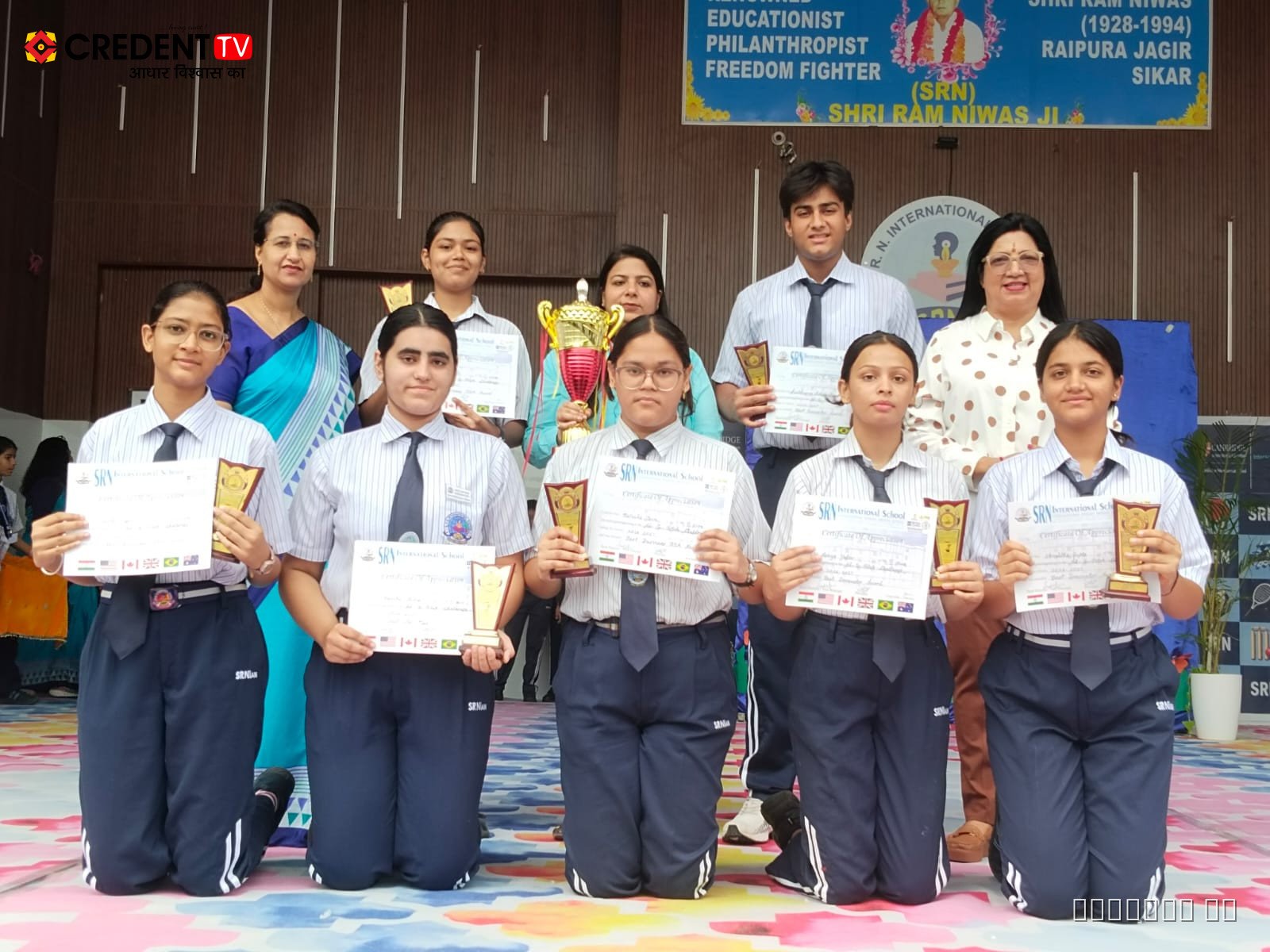
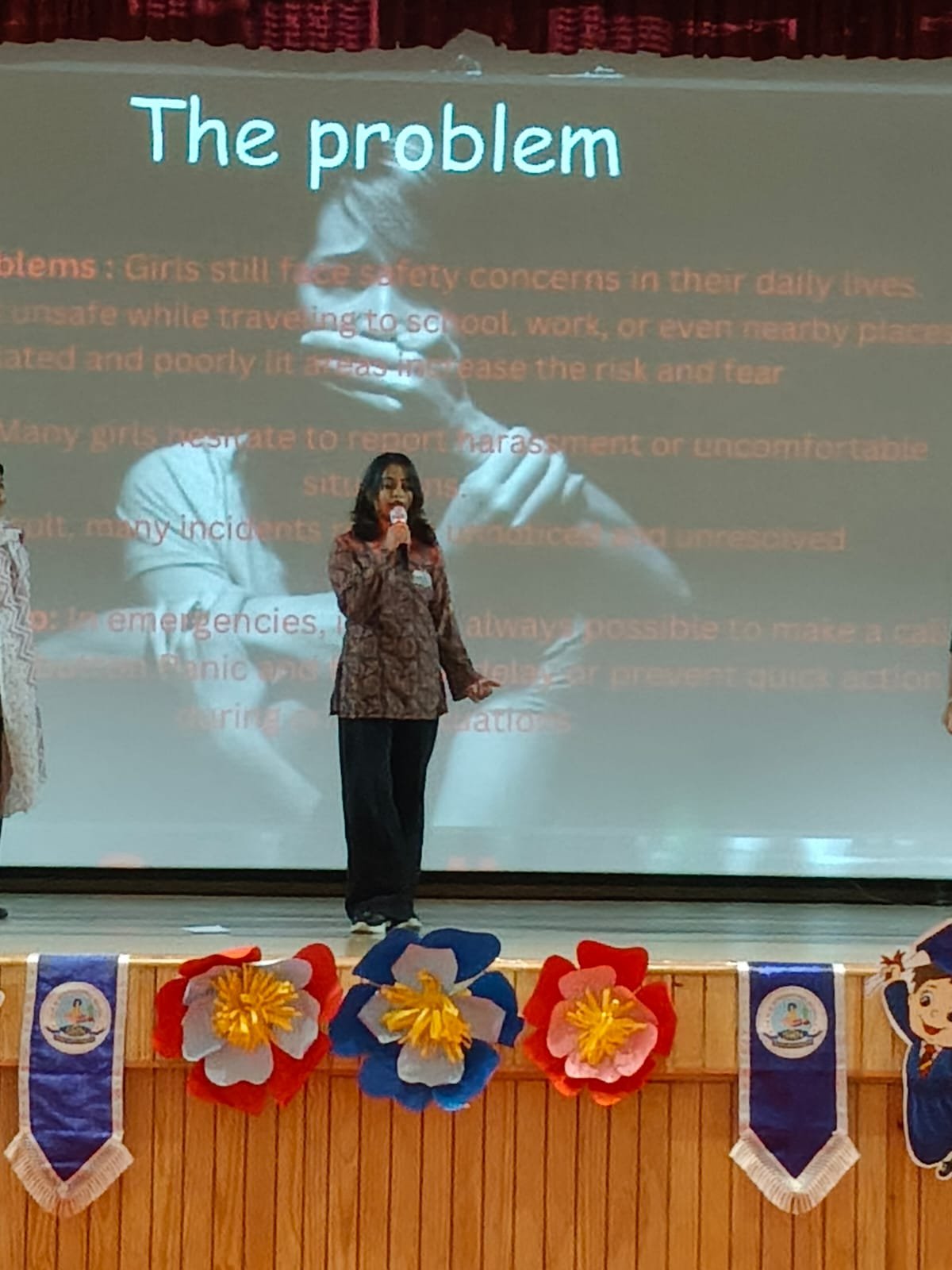
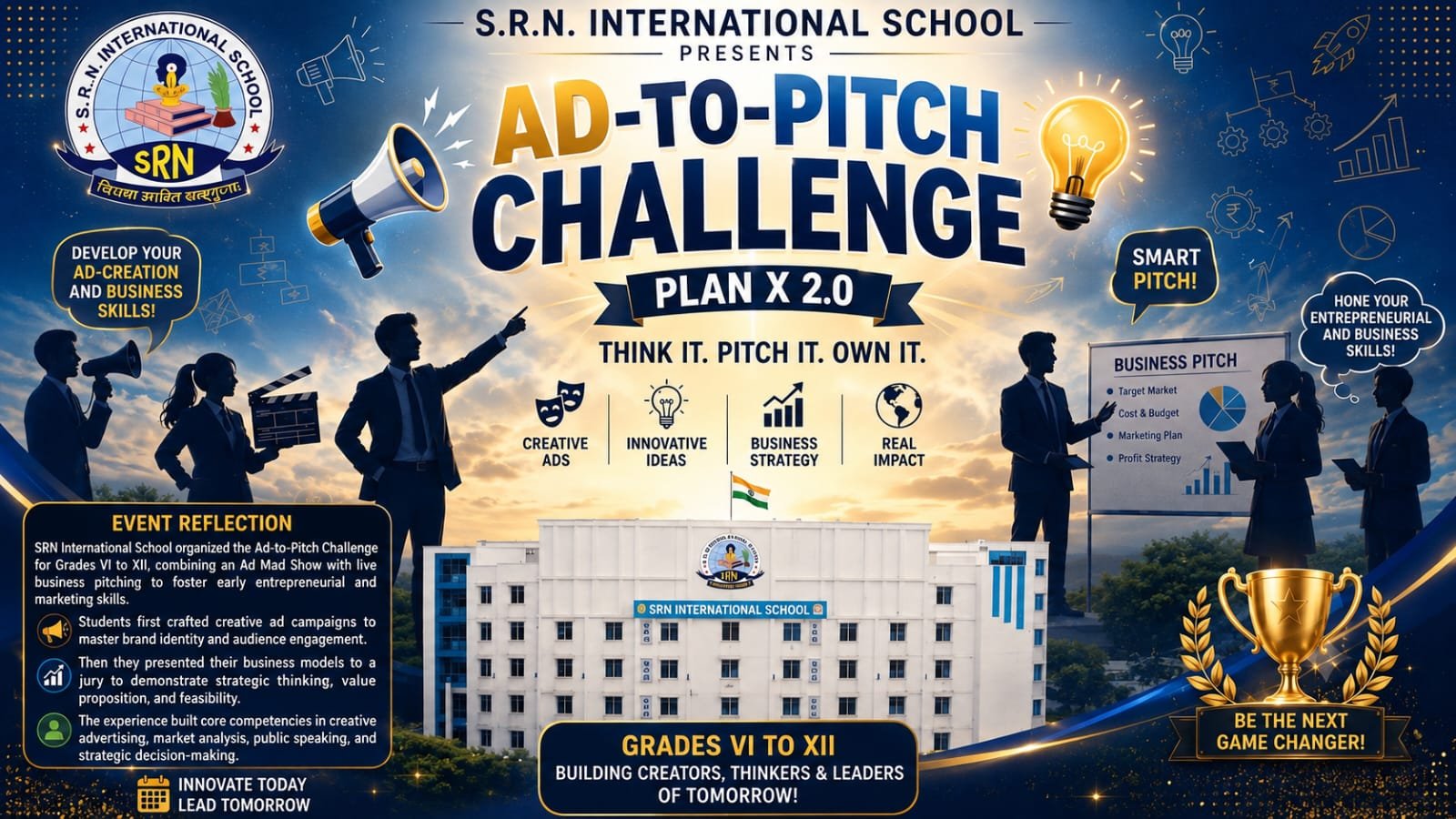
JAIPUR — The SRN Ad-to-Pitch Challenge brought students from Grades VI to XII into a simulated marketplace where they had to do more than present an idea: they first built an advertising concept and then defended a business model before a live jury. According to event information provided by SRN International School, the programme was designed to combine creative communication, market understanding, financial thinking and public speaking in one competitive format.
The event moved in two stages. Participants began with “Ad Mad” campaigns focused on branding and audience engagement, before progressing to business pitches in which they explained their proposed product or service, value proposition, market logic and financial feasibility. The jury questioned participants during the live presentations, requiring students to respond in real time rather than rely only on rehearsed speeches.
That structure placed the SRN Ad-to-Pitch Challenge closer to an applied business exercise than a conventional school presentation. Students were expected to think about how an idea would be communicated, whom it would serve, why a customer might choose it and whether the underlying business proposition could make practical sense.
SRN Ad-to-Pitch Challenge Moves from Advertising to Business Pitch
The first phase of the SRN Ad-to-Pitch Challenge focused on advertising. Students developed creative campaigns intended to communicate their ideas quickly and persuasively. The exercise required them to think about brand identity, messaging and the expectations of a target audience — basic questions that sit at the centre of real marketing decisions.
The transition from advertisement to pitch was significant. A strong campaign can attract attention, but a business pitch must explain what is being offered, who needs it, how it differs from alternatives and how the idea could operate sustainably. By combining the two, the competition asked students to connect creativity with commercial reasoning.
Participants then presented their complete business models to an expert panel, according to the school’s event account. Their presentations were assessed not simply as performances but as demonstrations of strategic thinking, value creation and financial feasibility. Live jury questions added an element of unpredictability, testing whether participants understood their own proposals deeply enough to explain or defend them under pressure.
The SRN Ad-to-Pitch Challenge therefore required students to move repeatedly between two modes of thinking: imaginative communication and analytical decision-making. That combination is particularly relevant to entrepreneurship, where an appealing idea is only one part of the challenge and execution, pricing, customer understanding and resource choices can determine whether the concept works.
What Students Were Tested On
The competition tested a broad set of skills. Market analysis was one of the most important because students had to identify the audience for their ideas and consider how a product or service would fit a real or assumed need. Even at school level, that pushes participants beyond the question, “What do I want to create?” towards the more demanding question, “Why would someone want this?”
Public speaking formed another major component. Business pitching requires clarity, structure and brevity. Students had to explain an idea to people who had not developed it themselves, which meant making assumptions visible and communicating the core proposition in accessible language.
The live questioning component raised the difficulty further. A prepared presentation can be memorised; a jury question cannot. Students had to listen, process the question, decide what information mattered and formulate an answer within seconds. That makes the SRN Ad-to-Pitch Challenge an exercise in decision-making as well as presentation.
Financial feasibility was also part of the pitching process, according to the event information. For young participants, the value of this requirement lies less in producing sophisticated financial forecasts and more in recognising that business ideas have costs, prices, resources and trade-offs. A proposal that sounds attractive must still confront practical questions about how it would be delivered and sustained.
SRN Ad-to-Pitch Challenge Tests More Than Presentation Skills
The strongest feature of the format is that the different tasks are interconnected. Branding without customer understanding is weak. A confident pitch without a workable proposition can fail under questioning. A financially sensible idea can struggle if the presenter cannot communicate its value. By putting these elements into the same competition, the school created a setting in which students had to see entrepreneurship as a system rather than a single skill.
That approach also gives younger students exposure to vocabulary and decision frameworks they may encounter later in commerce, economics, management, design, technology or start-up environments. It does not assume that every participant will become an entrepreneur. Instead, it treats entrepreneurial thinking as a practical way to develop initiative, problem-solving and communication.
Awards Recognise Innovation and Communication
Exceptional performances were recognised in multiple categories. The school said the honours included the Best Innovator Award, the Best Business Pitch Award and the Best AdMad Presentation.
The categories reflected the different dimensions of the competition. The Best Innovator Award placed attention on originality and the strength of the underlying idea. The Best Business Pitch Award recognised the ability to turn a concept into a coherent and persuasive business case. The Best AdMad Presentation highlighted the communication and branding side of the challenge.
Individual winners’ names were not included in the material available for publication, and Credent TV is therefore not naming recipients without confirmation. The distinction is important because competition coverage should separate verified award categories from unverified claims about individual results.
Taken together, the award structure reinforced the central design of the SRN Ad-to-Pitch Challenge: creativity, strategy and presentation were treated as related but distinct abilities. That is closer to real business evaluation, where a compelling idea may still require stronger execution, and an effective presentation cannot substitute for a weak commercial proposition.
Background and Context
SRN International School is located at Ramnagariya in Jaipur’s Jagatpura area. Its [official website](https://www.srninternational.org/) describes it as a co-educational day-cum-residential institution affiliated with CBSE and offering a Cambridge pathway. The school’s 2026–27 documents list CBSE affiliation number 1730251, while its academic information shows Entrepreneurship among the subjects offered at the senior-secondary level.
The SRN Ad-to-Pitch Challenge is also consistent with a broader pattern of entrepreneurship-oriented activity at the campus. Earlier in 2026, Yi Jaipur said its Kidpreneur programme at SRN International School concluded with a Mini Marketplace on April 20. According to Yi Jaipur, more than 220 students were engaged across programme sessions, 160-plus young entrepreneurs participated through more than 50 stalls, and students worked on branding, pricing, sales, customer engagement, digital payments and revenue tracking.
That earlier programme and the SRN Ad-to-Pitch Challenge are separate activities, but both use participation and decision-making rather than lecture-only instruction. The recurring emphasis shows students being given opportunities to test business concepts through practical tasks, public interaction and competitive evaluation.
The SRN Ad-to-Pitch Challenge should not be described as a substitute for formal entrepreneurship education, but its design overlaps with several of those learning goals. Students had to consider markets, communicate value, address feasibility and respond to questions — activities that translate abstract business concepts into decisions and explanations.
Why It Matters
School entrepreneurship events are most useful when they move beyond slogans about innovation and give students a structured problem to solve. The SRN Ad-to-Pitch Challenge did that by requiring participants to develop both an outward-facing advertisement and an inward-facing business rationale.
For students in Grades VI to XII, the age range also creates an important progression. Younger participants can begin with creative communication and basic customer thinking, while older students can engage more deeply with market positioning, feasibility and business logic. The same format can therefore test different levels of complexity without losing its core purpose.
The public-speaking component has relevance beyond commerce. Students who can explain an idea clearly, answer difficult questions and adjust their reasoning in response to scrutiny are developing skills useful in academic presentations, interviews, leadership roles and collaborative work.
The financial element matters for another reason. Young people are frequently encouraged to innovate, but innovation without attention to cost, resources or implementation can remain abstract. Asking students to consider feasibility introduces discipline into creativity. It teaches that ideas must operate within constraints and that choices have consequences.
The advertising phase also introduces a form of media literacy. To build a campaign, students have to think about audience, message, attention and persuasion. Those are marketing skills, but they can also help students understand how commercial communication works around them. When taught responsibly, creating advertising can make learners more analytical consumers of advertising as well.
Most importantly, the live jury format creates accountability. Participants cannot control every question, and that uncertainty forces them to understand their proposals rather than simply perform them. The SRN Ad-to-Pitch Challenge therefore gives students a low-risk environment in which to experience a core feature of professional life: decisions and claims are often tested by other people.
The format also changes the role of failure. In a conventional test, a wrong answer may simply cost marks. In a business-pitch simulation, a weak assumption or difficult jury question can become immediate feedback. Students can see where an idea lacks clarity, where a cost has been overlooked or where an audience has not been adequately defined.
That feedback loop is central to entrepreneurial thinking. Ideas are rarely complete at the first attempt. They are tested, challenged and revised. By allowing students to encounter that process before entering university or the workplace, schools can make concepts such as market research, value proposition and financial planning more concrete.
What Happens Next
The school has described the competition as a successful experiential-learning initiative and has recognised outstanding participants across the announced award categories. No further round, external final, commercial incubation programme or follow-up funding process was confirmed in the information available for publication.
Any subsequent mentoring, inter-school expansion or continuation of the SRN Ad-to-Pitch Challenge would therefore require a separate announcement from the school. Until then, the confirmed outcome is the completion of the school-level competition and recognition of student performance in innovation, business pitching and advertising presentation.
For SRN International School, the event adds another practical entrepreneurship activity to a campus that has already hosted market-based learning programmes in 2026. For the students, its value lies in the sequence they experienced: create an idea, communicate it, justify it and answer for it.
That sequence is simple, but it mirrors the pressure points of real enterprise. The SRN Ad-to-Pitch Challenge turned those pressure points into a school competition, giving students an opportunity to practise not only how to make a pitch, but also how to think before making one.
SRN Ad-to-Pitch Challeng, SRN International School Jaipur, young entrepreneurs Jaipur, student entrepreneurship, business pitch competition, Ad Mad competition, entrepreneurship education, student business ideas, experiential learning, school marketing challenge, young innovators, business skills for students, Jaipur school news,
SRN International School, Jaipur, Entrepreneurship, Student Innovation, Business Pitch, Ad Mad, Young Entrepreneurs, Experiential Learning, School Education, Marketing Skills, Business Education, Rajasthan Education
#SRNAdToPitch #YoungEntrepreneurs #StudentInnovation #JaipurEducation #CredentTV
Breaking News
Government School Closures in India: 1 Lakh Schools Shut, A Deepening Crisis for the Nation’s Future
Government School Closures in India have raised serious concerns over rising dropout rates, shrinking access to education, and the future of poor children. Discover why nearly 1 lakh government schools closed in the last decade and what it means for India.
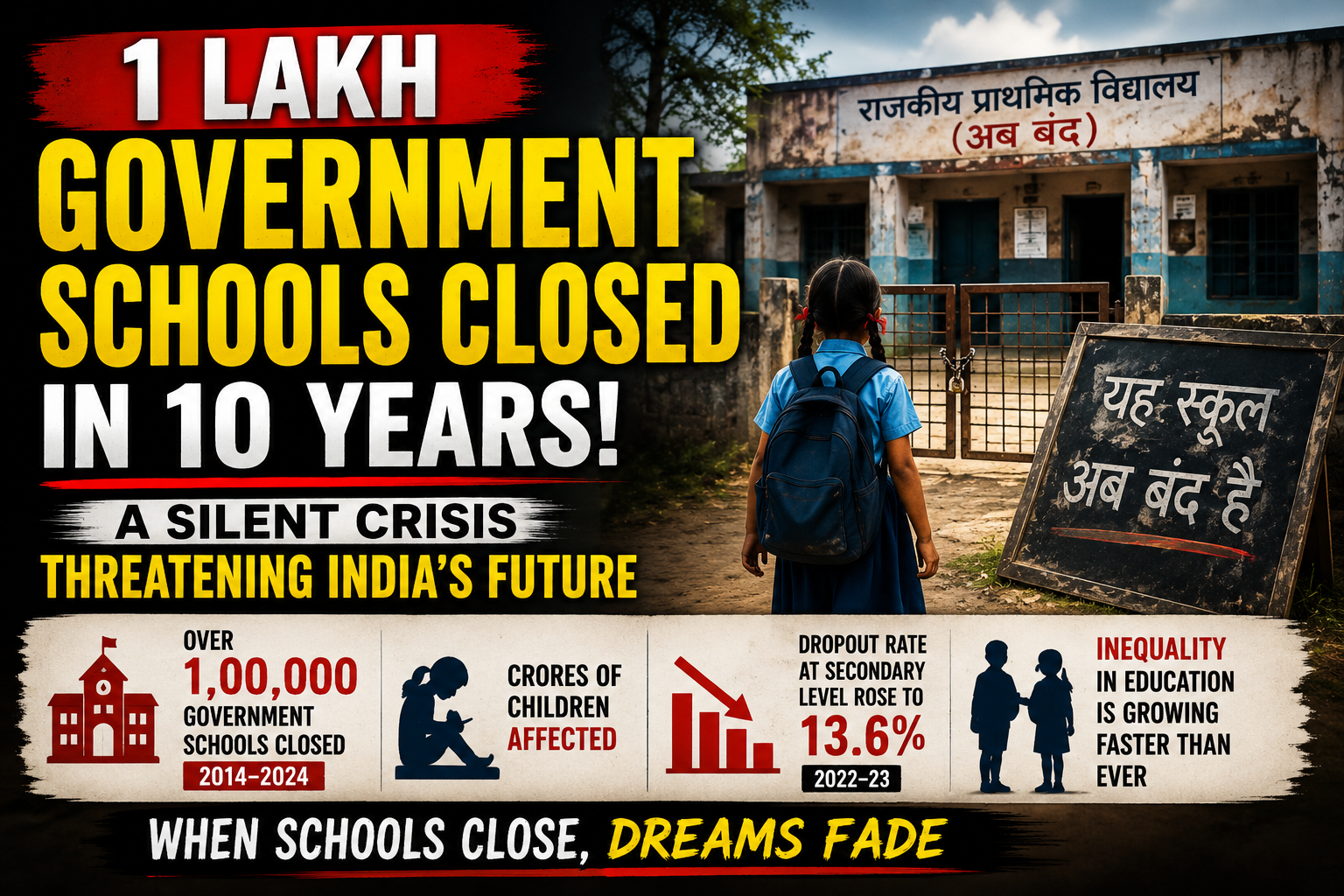
20 May | Credent TV, When schools shut down, only buildings do not disappear. A society’s future also begins to shrink.
The debate around Government School Closures in India is no longer just about administrative reforms or education budgets. It has now become a national conversation about equality, opportunity, democracy, and the future of millions of children.
Over the last decade, India has witnessed the closure and merger of nearly one lakh government schools. Official data from various education reports, including policy discussions linked to the National Institution for Transforming India (NITI Aayog), indicate a significant decline in enrollment in government schools between 2014 and 2024. At the same time, private schools have rapidly expanded across both urban and rural India.
At first glance, policymakers describe this transformation as “school consolidation,” a strategy aimed at improving efficiency, infrastructure, and resource utilization. However, beyond official terminology lies a deeply human story — a story of children walking farther to school, girls dropping out because of safety concerns, and poor families slowly losing access to affordable education.
The issue of Government School Closures in India is therefore not just about numbers. It is about what happens to the children left behind.
Understanding Government School Closures in India
Government School Closures in India have become one of the most debated education issues in recent years.
According to multiple education surveys and policy analyses, thousands of government schools across states have either been shut down, merged with nearby schools, or converted into larger institutional clusters.
States often justify these closures by pointing to low student enrollment, teacher shortages, and infrastructure duplication.
The argument presented by policymakers is simple:
- Small schools are difficult to maintain.
- Combining schools can improve teaching quality.
- Bigger schools can offer better facilities.
- Administrative costs can be reduced.
On paper, these points appear logical. But education is not merely about infrastructure management. It is about accessibility, trust, social inclusion, and continuity. That is where the real crisis begins.
Why Are Government Schools Being Closed?
The primary reasons behind Government School Closures in India include declining enrollment and the migration of students toward private institutions. Several reports suggest that many parents increasingly prefer private schools because of perceptions surrounding English-medium education, discipline, and better academic outcomes. At the same time, urbanization and migration patterns have altered rural demographics. As populations shift, smaller village schools often end up with very few students. Governments then introduce school consolidation policies. Under these policies:
- Two or more schools are merged.
- Students are shifted to larger campuses.
- Teaching resources are centralized.
- Infrastructure spending is concentrated.
However, while consolidation may improve facilities in certain regions, it also creates serious logistical and social challenges. For many rural children, the nearest school suddenly becomes several kilometers away. This distance becomes a barrier — especially for girls, disabled students, and economically weaker families.
The Rural Reality Behind the Numbers
The biggest impact of Government School Closures in India is visible in rural and semi-rural communities. In many villages, the government school is not just a place of learning. It is a social institution. It is where:
- children from poor families study,
- first-generation learners gain confidence,
- girls receive their first exposure to independence,
- and marginalized communities participate in mainstream society.
When a local primary school closes, the consequences are immediate. Children who once walked five minutes to school may now need to travel several kilometers. For middle-class families, this may seem manageable. For daily wage laborers, agricultural workers, and economically vulnerable households, it can become impossible. Many parents cannot afford transportation. Some cannot accompany younger children. Others fear for the safety of adolescent girls. As a result, attendance drops. Eventually, many children quietly disappear from the education system. This silent educational exclusion rarely makes headlines. Yet it is one of the most serious consequences of Government School Closures in India.
Impact on Girls and Marginalized Communities
One of the most concerning aspects of Government School Closures in India is their disproportionate impact on girls. In rural India, distance remains one of the biggest barriers to female education. When schools move farther away:
- parents become hesitant,
- dropout risks increase,
- early marriage rates may rise,
- and educational continuity suffers.
For Dalit, tribal, and economically weaker communities, government schools have historically served as gateways to upward mobility. These schools represented equality. Inside a classroom, children from different castes and economic backgrounds shared the same space. That democratic spirit is difficult to quantify in policy reports. But it remains one of the most powerful foundations of Indian society. When Government School Closures in India reduce educational accessibility for marginalized communities, social inequality deepens. This is not just an education issue. It is a social justice issue.
Rising Dropout Rates in Secondary Education
Another alarming trend linked to Government School Closures in India is the increase in dropout rates at the secondary level. Experts argue that while enrollment at primary levels may remain relatively stable in some states, retention becomes a major challenge after Class 8. The transition to secondary education often involves:
- longer travel distances,
- higher educational expenses,
- social pressures,
- and lack of infrastructure.
When students leave school during Classes 9 and 10, the consequences are long-term. These years are critical. Dropping out at this stage often leads to:
- child labor,
- informal employment,
- early marriage,
- reduced earning potential,
- and generational poverty.
Government School Closures in India therefore cannot be viewed in isolation. They are interconnected with employment, gender equality, health, and social development.
Growth of Private Schools and Educational Inequality
As government schools decline, private schools continue expanding rapidly. This shift reveals a deeper transformation in Indian society. Families with financial resources increasingly purchase education through private institutions. Meanwhile, economically weaker communities remain dependent on public education. This creates a dangerous divide. On one side:
- students access English-medium education,
- digital classrooms,
- advanced infrastructure,
- and private coaching ecosystems.
On the other side:
- rural children struggle with basic accessibility,
- government infrastructure shortages,
- teacher vacancies,
- and shrinking institutional support.
Government School Closures in India risk turning education from a constitutional right into a market-driven privilege. This possibility worries educators, activists, and policy experts alike.
Is School Consolidation Really Working?
Supporters of school consolidation argue that larger schools can provide:
- better laboratories,
- trained teachers,
- stronger management,
- improved student performance,
- and better infrastructure.
In some urban or semi-urban areas, this model has shown positive results. However, critics argue that India’s vast social and geographical diversity makes a one-size-fits-all approach risky. A consolidation policy that works in one district may fail completely in remote rural regions. Education researchers stress that accessibility matters as much as quality. A world-class school located too far away may still remain inaccessible to poor families. This is the central contradiction in Government School Closures in India. Efficiency may improve on paper. But educational participation may decline in reality.
Expert Concerns Over India’s Education Future
Education experts warn that reducing the number of public schools could weaken India’s social foundation over time. Public education has historically played a major role in:
- nation-building,
- literacy expansion,
- women empowerment,
- caste mobility,
- and democratic participation.
If public education weakens significantly, the consequences may extend far beyond classrooms.
Experts fear:
- widening inequality,
- shrinking social mobility,
- deeper rural-urban divides,
- and increasing educational commercialization.
The debate surrounding Government School Closures in India therefore reflects a larger philosophical question:
Should education remain a universal public right, or gradually become a service shaped by market economics?
This question will define India’s future.
What Education Activists and Researchers Say
Several education activists believe that closures are often implemented without fully understanding local realities. They argue that instead of shutting schools, governments should focus on:
- improving teacher recruitment,
- strengthening infrastructure,
- modernizing curriculum,
- increasing digital access,
- and building community participation.
Researchers also point out that many parents leave government schools not because public education is inherently weak, but because systemic neglect reduces confidence over time. When buildings deteriorate, teacher vacancies remain unfilled, and classrooms lack resources, parents naturally seek alternatives. Therefore, critics say Government School Closures in India may sometimes address symptoms rather than causes.
Possible Solutions to the Crisis
The crisis surrounding Government School Closures in India is complex. But experts suggest several possible solutions:
1. Strengthen Rural School Infrastructure
Instead of closures, governments can modernize existing schools.
2. Improve Teacher Availability
Teacher shortages remain a major issue in rural education.
3. Expand Digital Learning Access
Technology can help bridge educational gaps if implemented fairly.
4. Focus on Girls’ Safety
Transportation and safety support are essential for female students.
5. Community Participation
Local communities should be involved in education planning.
6. Better Public Investment
Public education requires sustained financial commitment.
Why Public Education Still Matters
Government School Closures in India force the country to confront a fundamental truth. A nation’s future is shaped more in classrooms than in political speeches. Government schools have historically given millions of Indians their first opportunity to dream beyond poverty. For countless families:
- the government school teacher was the first mentor,
- the classroom was the first equal space,
- and education was the first ladder toward dignity.
Public education is not simply a welfare program. It is the backbone of democracy. If access to quality education becomes dependent only on purchasing power, social inequality will deepen further. That is why the conversation around Government School Closures in India matters so deeply.
The closure of nearly one lakh government schools over the past decade is not merely an administrative development. It is a warning sign. It reflects changing priorities, growing inequality, and a widening gap between policy design and ground realities. Government School Closures in India are not just about disappearing buildings. They are about disappearing opportunities. Every school that shuts down may represent:
- a child’s unfinished dream,
- a family’s fading hope,
- and a society moving further away from equality.
India’s future cannot be built only through economic growth statistics. It must also be built through classrooms that remain open, accessible, inclusive, and alive with possibility. Because when schools disappear, nations lose more than institutions.They risk losing generations.
Written By
Vinod Verma Ralawata
Lecturer, English Literature
Breaking News
Buddha Purnima Celebration in Jaipur: 7 Powerful Messages of Peace, Equality and Humanity
Buddha Purnima Celebration in Jaipur was observed with great devotion at Ramabai Hall, where leaders from multiple religions shared powerful messages on peace, compassion, equality, and humanity inspired by Lord Buddha and Dr. B.R. Ambedkar.
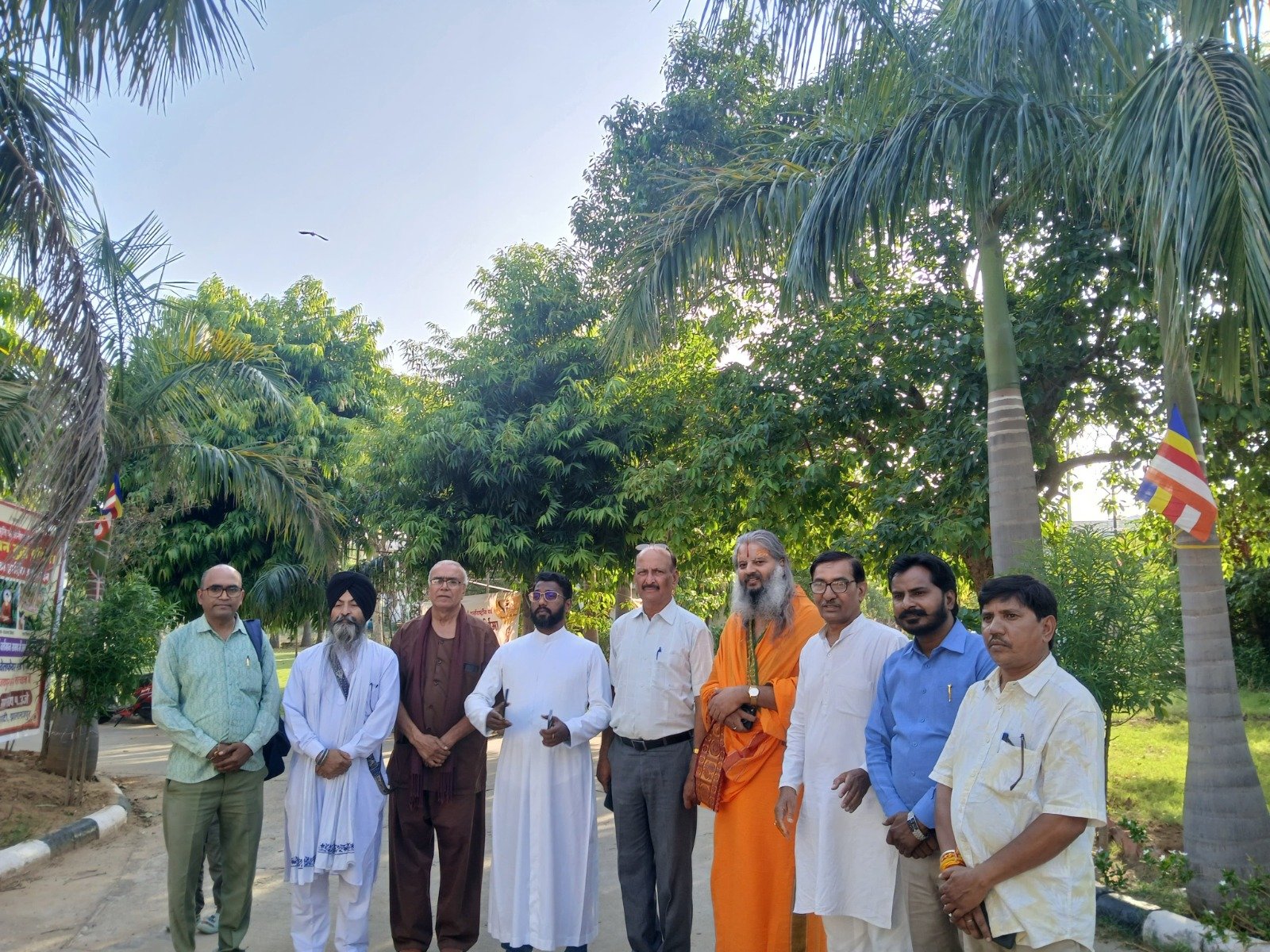
Jaipur | Buddha Purnima Celebration in Jaipur turned into a remarkable gathering of spiritual harmony, social awareness, and human values as people from different religions came together under one roof to honor the teachings of Lord Buddha. The event was organized at Ramabai Hall, located at Dr. Ambedkar Memorial Welfare Society Rajasthan in Jhalana Doongri, Jaipur, under the joint aegis of Pragya Kalyan Charitable Trust and Dr. Ambedkar Memorial Welfare Society Rajasthan.
The grand celebration was conducted under the leadership of Dr. Prakash Jain and witnessed the dignified presence of representatives from the Sarv Dharma Maitri Sangh, social thinkers, Buddhist scholars, and respected guests from different religious communities.
The event reflected a strong and timely message — humanity can only progress when compassion, equality, brotherhood, and peace become part of everyday life.
Grand Buddha Purnima Celebration at Ramabai Hall
The atmosphere at Ramabai Hall was filled with devotion and positivity as guests gathered to celebrate the sacred occasion of Buddha Purnima. Representatives from multiple faiths offered floral tributes before the statue of Lord Buddha and jointly lit ceremonial lamps, symbolizing unity and enlightenment.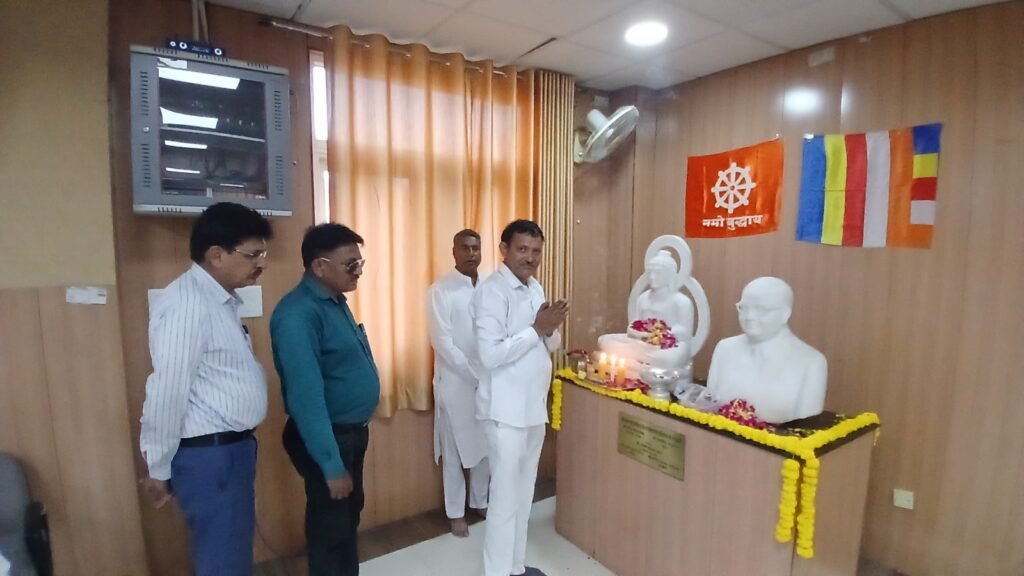
The ceremony began with the chanting of Trisharan and Panchsheel by Upasika Savitri Bauddh and Trishna Bauddh. Their recitation created a deeply spiritual environment that resonated with the audience.
Guests and religious representatives were welcomed with traditional shawls and khatas, reflecting the spirit of respect and cultural harmony.
According to organizers, the objective of the event was not only to celebrate Buddha Purnima but also to spread Lord Buddha’s timeless teachings of non-violence, compassion, and equality in modern society.
For more on Buddha Purnima and Buddhist traditions, readers can visit the official website of the Government of India’s Ministry of Culture:
Multi-Faith Leaders Unite for Harmony
One of the most inspiring aspects of the Buddha Purnima Celebration in Jaipur was the active participation of leaders from Hinduism, Islam, Christianity, Sikhism, and Buddhism.
Message from Hindu Religious Leader
Mahant Guru Raghavendra of Galta Peeth emphasized that Lord Buddha’s teachings can transform human life if practiced sincerely. He highlighted that conflicts among people at the grassroots level weaken society and stressed the importance of mutual respect among all communities.
He noted that real social transformation is possible only when people rise above divisions and embrace humanity first.
Islamic Perspective on Buddha’s Teachings
Representing the Islamic community, Syed Anbar Shah spoke about the relevance of Buddha’s Middle Path and Eightfold Path in achieving a balanced and peaceful life.
He stated that Buddha’s principles encourage moderation, wisdom, and compassion, values that are universally respected across religions.
Christian Community’s Message of Love
George Britty, representing the Christian community, shared that the teachings of love, compassion, and kindness promoted by Lord Buddha align closely with universal spiritual values.
He emphasized that spreading messages of harmony and goodwill should become a collective responsibility for society.
Sikh Community Calls for Brotherhood
Sardar Jaswinder Singh read out a message sent by former Rajasthan Minority Commission Chairman Jasveer Singh. The message encouraged people to promote compassion, friendship, and unity in society.
The Sikh representative stated that humanity grows stronger when people work together beyond religious identities.
Historic Interfaith Presence Praised by Ambedkar Welfare Society
During the Buddha Purnima Celebration in Jaipur, Dr. Ambedkar Memorial Welfare Society Rajasthan President Satyaveer Singh warmly welcomed all guests and described the dignified presence of representatives from the Sarv Dharma Maitri Sangh as a historic and inspiring moment for the organization.
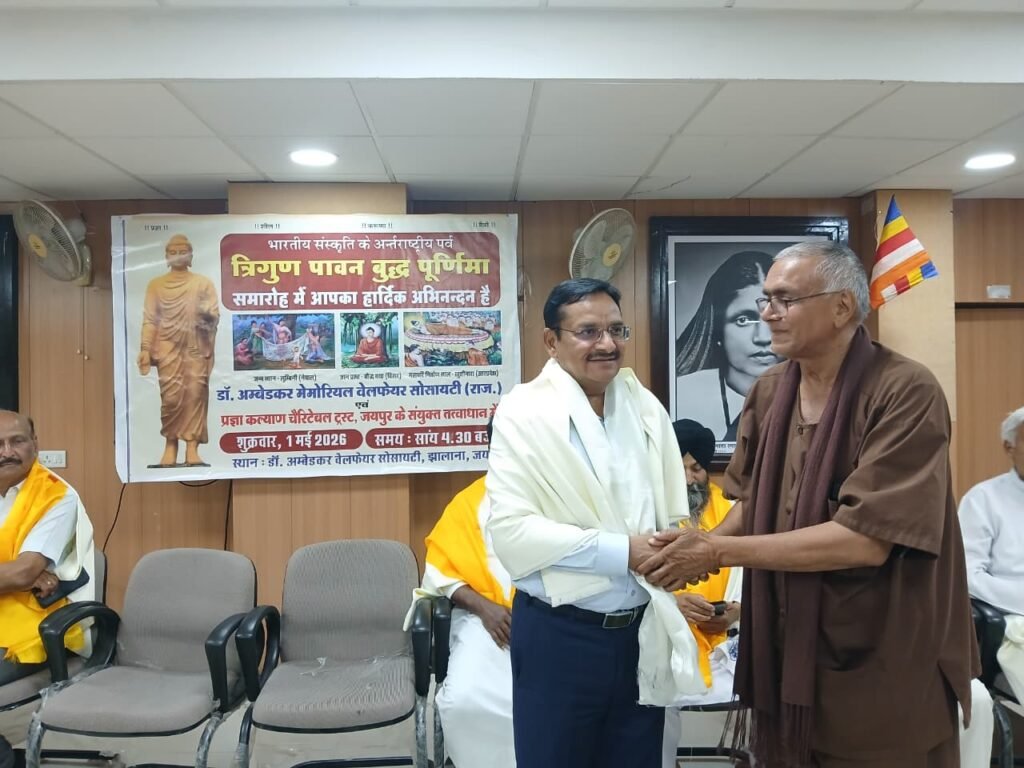
He stated that such a grand interfaith gathering on the sacred occasion of Buddha Purnima was unprecedented in the institution’s history and should serve as a model for future social and spiritual events. He emphasized that programs promoting unity, brotherhood, and mutual respect among religions are the need of the hour and should continue in the future to strengthen harmony in society.
Why Buddha’s Teachings Matter More Than Ever
In today’s world marked by stress, conflict, inequality, and social polarization, many speakers highlighted that Lord Buddha’s philosophy remains highly relevant.
The teachings of Buddha focus on:
- Non-violence
- Compassion
- Equality
- Self-awareness
- Emotional balance
- Peaceful coexistence
These values are increasingly being seen as solutions to rising global tensions and mental unrest.
According to UNESCO, Buddha’s teachings continue to influence millions globally through their focus on peace and ethical living.
Key Messages Shared During the Event
“Today We Need Buddha, Not War”
One of the strongest statements came from retired IAS officer B.L. Naval, who said that the world today urgently needs Buddha’s wisdom rather than war and conflict.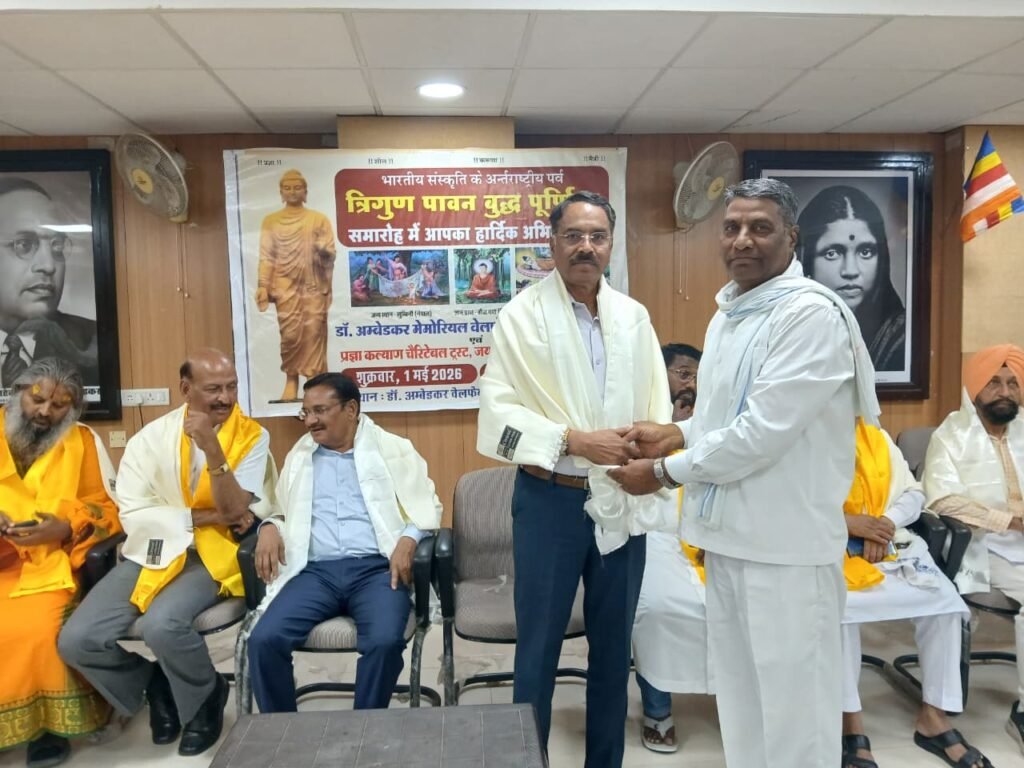
He explained that global tensions, violence, and social unrest can only be resolved through compassion, understanding, and human dignity.
His statement received strong appreciation from attendees.
Small Actions Can Bring Big Change
Dr. Pravesh Jain, President of Sarv Dharma Maitri Sangh, highlighted that even small efforts inspired by Buddha’s teachings can create meaningful change in society.
He encouraged people to practice kindness, empathy, and mutual respect in daily life rather than limiting spiritual values to speeches or ceremonies.
Role of Dr. B.R. Ambedkar in Spreading Buddhist Values
The Buddha Purnima Celebration in Jaipur also paid tribute to Bharat Ratna Dr. B.R. Ambedkar and his role in promoting equality and social justice through Buddhist philosophy.
Former judge and Trust President Tek Chand Rahul spoke about how Dr. Ambedkar embraced Buddhist principles to establish a more equal and democratic society.
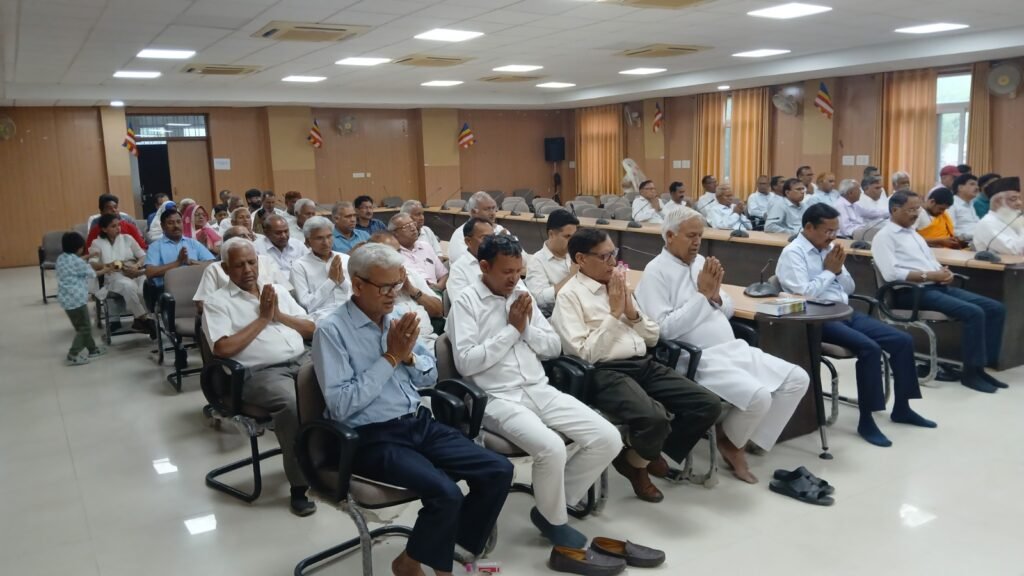
He stated that constitutional values such as:
- Equality
- Liberty
- Fraternity
- Justice
are deeply connected with Buddha’s vision for humanity.
Speakers emphasized that there is still a strong need to work toward social equality and human dignity in contemporary India.
Buddha Purnima Celebration in Jaipur Promotes Social Equality
Another major theme of the event was social inequality and discrimination.
Social thinker Dr. Mahendra Anand raised concerns regarding continuing social disparities and urged society to reflect seriously on these issues.
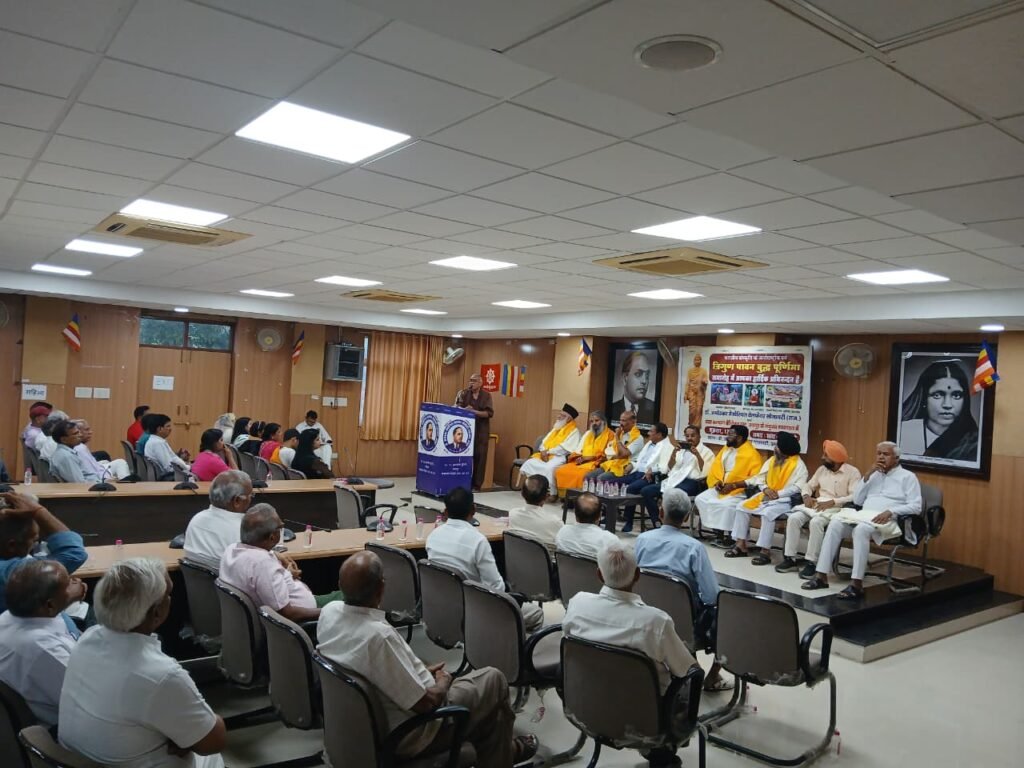
He stated that festivals like Buddha Purnima should not remain symbolic but should inspire practical social reform.
The gathering repeatedly emphasized that true tribute to Lord Buddha lies in adopting his teachings in real life.
Voices from Other Speakers
Several dignitaries and social workers also shared their thoughts during the program.
Among them were:
- Madan Lal Dudwal, President of Nalanda Foundation Marudhara Jaipur
- Roshan Lal Mundotiya
- Ramdev Bauddh
- Sachin Sanwariya
- Ramcharan Mahawar
All speakers highlighted the need for social unity, moral responsibility, and peaceful coexistence.
The program concluded with a formal vote of thanks by lifetime member Ghanshyam Gautam, followed by blessings for universal well-being.
The Growing Importance of Interfaith Dialogue in India
The Buddha Purnima Celebration in Jaipur demonstrated how interfaith gatherings can strengthen social harmony in India.
At a time when divisions often dominate headlines, events like these create spaces for constructive dialogue and mutual understanding.
Experts believe that interfaith collaborations help reduce prejudice and encourage communities to work together for collective progress.
The event stood as a strong example of how spiritual and social organizations can unite people through shared human values.
Buddha’s Philosophy and Modern Mental Wellness
Many attendees also connected Buddha’s teachings with mental peace and emotional well-being.
Modern lifestyles have increased stress, anxiety, and emotional exhaustion. In this context, Buddha’s teachings on mindfulness, balance, and self-awareness are gaining renewed significance worldwide.
Practices inspired by Buddhist philosophy, such as meditation and mindfulness, are now widely recognized for improving mental health and emotional stability.
According to the World Health Organization, mental well-being is becoming a critical global priority. Buddha’s teachings continue to inspire wellness approaches across the world.
The Buddha Purnima Celebration in Jaipur was far more than a religious event. It became a powerful platform for promoting peace, compassion, equality, and unity among communities.
The gathering sent a clear message that humanity can move forward only when people adopt the teachings of Lord Buddha in their personal and social lives.
From spiritual leaders to social thinkers, every speaker echoed the same belief — the world today needs more compassion, more understanding, and more humanity.
As tensions and divisions continue to rise globally, the timeless wisdom of Lord Buddha remains a guiding light for building a peaceful and just society.
The celebration at Jaipur’s Ramabai Hall proved that when people from different religions and backgrounds come together with mutual respect, true social harmony becomes possible.
Breaking News
5th Arrupe Cup 2025: Jaipur’s Most Exciting Inter-School Sports Tournament Unites 109+ Schools in Thrilling Multi-Sport Showdown
The 5th Arrupe Cup Jaipur 2025 concluded on May 2 with breathtaking results across Football, Basketball & Volleyball. Over 109 schools competed at St. Xavier’s School, Newta. Discover all winners, highlights & key moments.
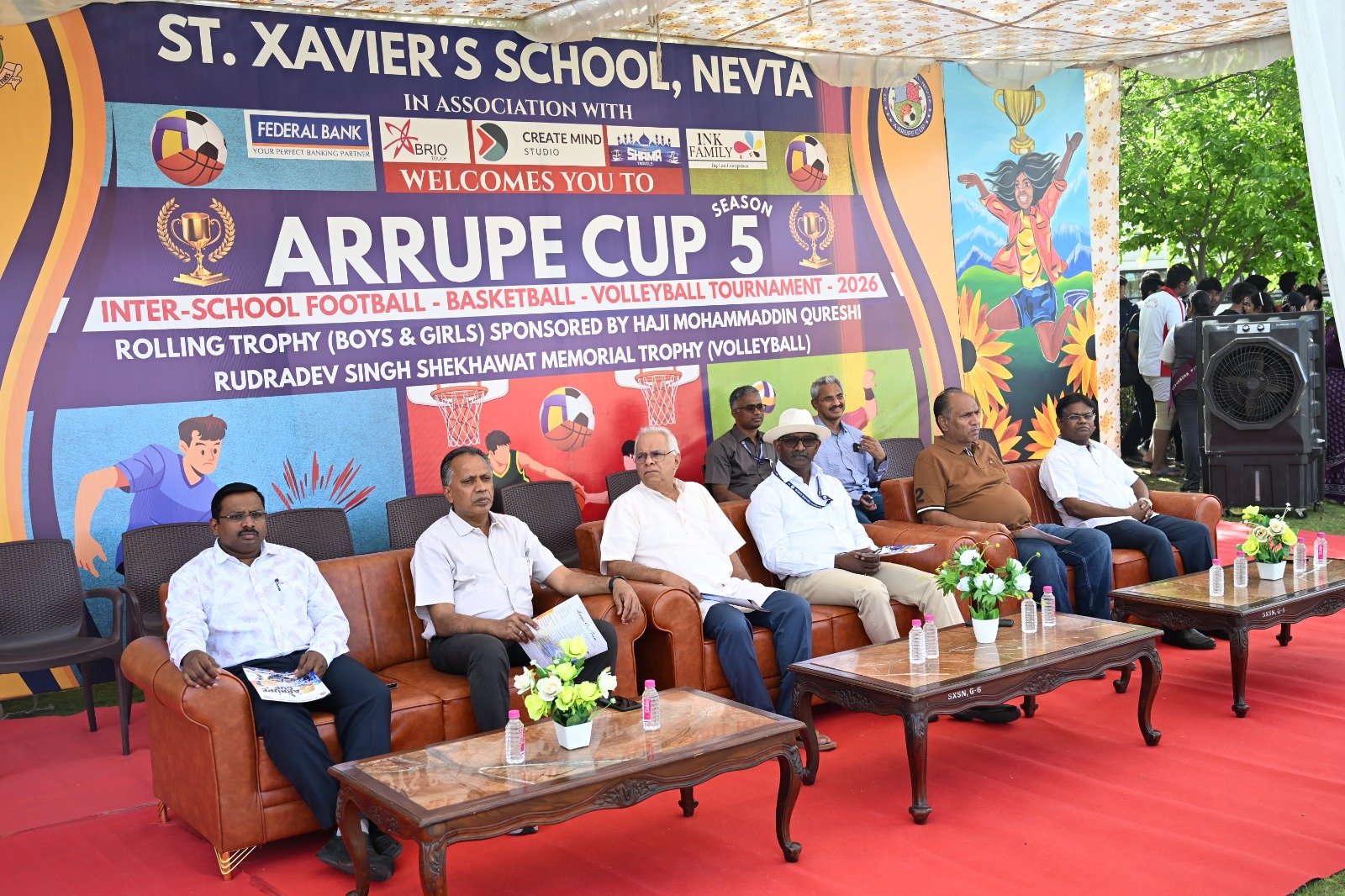
Jaipur | The 5th Arrupe Cup Jaipur 2025 has proven, once again, that sport is one of the most powerful forces for unity, discipline, and celebration among young minds. Organised by St. Xavier’s School, Newta, Jaipur, this prestigious inter-school multi-sport tournament concluded on May 2, 2025, drawing to a close what can only be described as three extraordinary days of sporting brilliance.
Running from April 30 to May 2, 2025, the 5th Arrupe Cup Jaipur 2025 brought together teams in Football, Basketball, and Volleyball — both boys and girls categories — making it one of the most comprehensive school-level sports events held in Rajasthan in recent years. More than 109 school teams from across Jaipur city participated, making this edition the grandest in the tournament’s short but celebrated history.
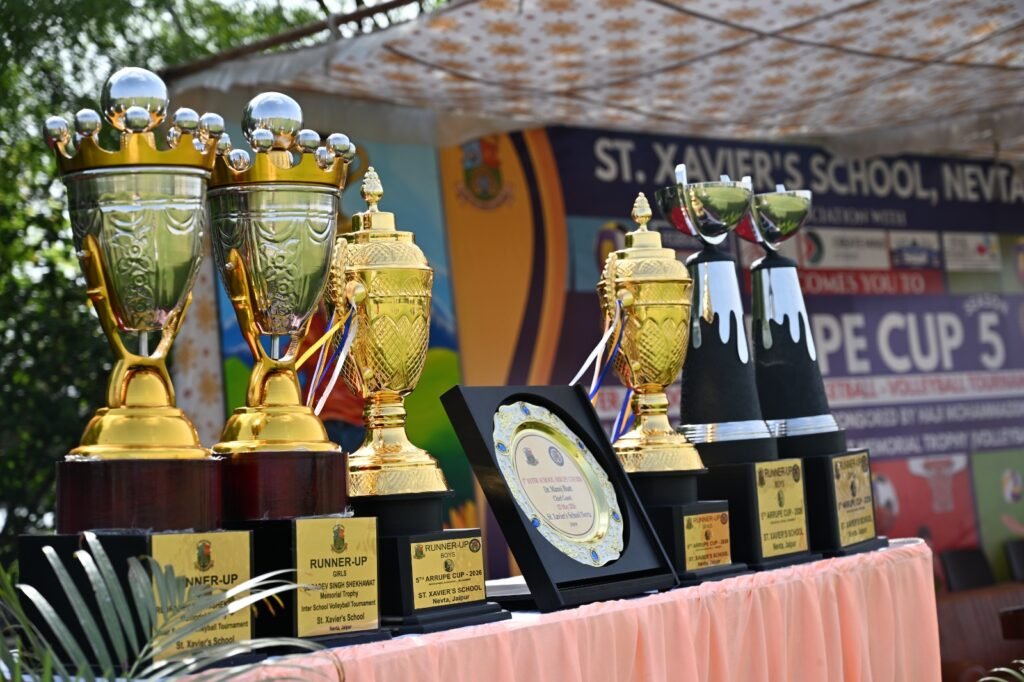
With intense matches, emotional victories, and an atmosphere charged with competitive spirit and camaraderie, the 5th Arrupe Cup set a new benchmark for how schools in Jaipur come together through the language of sport.
What Is the Arrupe Cup? The Legacy Behind the Name
The Arrupe Cup draws its name and inspiration from Father Pedro Arrupe, S.J. (1907–1991), one of the most celebrated figures in the history of the Society of Jesus (Jesuits). Born in Bilbao, Spain, on 14 November 1907, Pedro Arrupe became the 28th Superior General of the Society of Jesus and one of the most notable Jesuits of the 20th century.
Father Arrupe’s legacy is deeply tied to education, service, and the development of the whole person — mind, body, and spirit. In the tradition that Arrupe championed, athletic departments at Jesuit institutions strive to complement the mission by fostering athletic, intellectual, and personal growth through sports.
Naming an inter-school tournament after Father Arrupe is, therefore, both deliberate and deeply meaningful. The tournament is not merely about winning trophies — it is about building character, fostering team spirit, and nurturing leadership qualities in young students, values that lie at the very heart of Jesuit education.
St. Xavier’s School, Newta, Jaipur — managed by the Jesuits — carries this legacy forward by organising the Arrupe Cup as an annual celebration of holistic student development through competitive sport.
Tournament Overview: Scale, Dates & Format
Key Details at a Glance
| Detail | Information |
|---|---|
| Tournament Name | 5th Arrupe Cup |
| Organiser | St. Xavier’s School, Newta, Jaipur |
| Dates | April 30 – May 2, 2025 |
| Sports | Football, Basketball, Volleyball |
| Categories | Boys & Girls (separate) |
| Participating Schools | 109+ schools from Jaipur |
| Chief Guest (Closing) | Retd. DGP Shri Manoj Bhatt |
Three Sports, Six Titles
The 5th Arrupe Cup Jaipur 2025 was exceptional in its scope. Rather than focusing on a single sport, the tournament was structured across three major team sports — Football, Basketball, and Volleyball — each held in separate boys and girls categories. This meant six championship titles were at stake, attracting a diverse range of school teams and athletes across Jaipur.
The decision to host a multi-sport tournament under a single roof speaks volumes about St. Xavier’s School, Newta’s commitment to inclusivity and athletic excellence. Whether a student excelled on the football pitch, the basketball court, or the volleyball arena, the 5th Arrupe Cup provided the platform to shine.
Closing Ceremony: A Grand Celebration of Sport
The closing ceremony of the 5th Arrupe Cup Jaipur 2025 on May 2 was a fitting tribute to the athletes, coaches, and institutions who had invested so much energy and passion over three days.
The chief guest of the closing ceremony was Retired DGP Shri Manoj Bhatt, a distinguished figure whose career in law enforcement gave weight to his words about discipline, leadership, and the importance of sport in shaping character.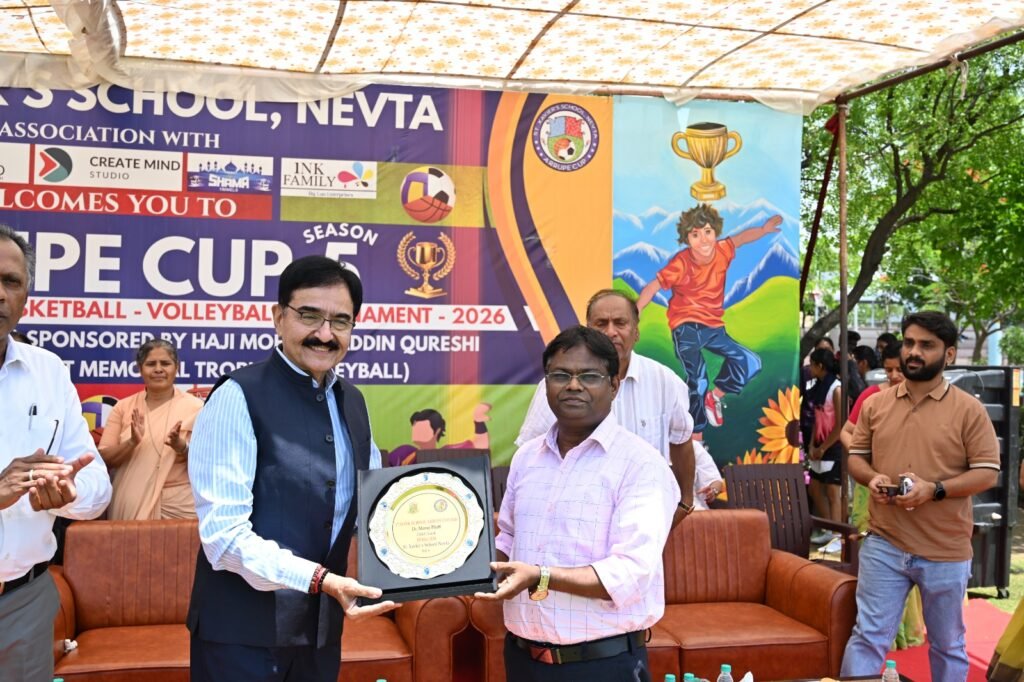
Addressing the assembled students, coaches, and school representatives, Shri Bhatt emphasised that sport is far more than physical competition. He underscored how participation in team sports builds three essential life skills: discipline, team spirit, and leadership capacity — qualities that prepare young individuals not just for athletic competition, but for the challenges of life itself.
The ceremony saw an energetic and enthusiastic atmosphere as winning and runner-up teams were called forward to receive their trophies and awards. The pride on the faces of young athletes — many participating in a competitive inter-school tournament for the first time — was unmistakable.
Final Results: All Category Winners Announced
The 5th Arrupe Cup Jaipur 2025 produced six deserving champions across its categories. Here is the complete list of winners:
Football
| Category | Winner |
|---|---|
| Football – Girls | St. Xavier’s School, Nevta (Host School) |
| Football – Boys | Neerja Modi School |
The Girls’ Football title was a moment of particular pride for the host institution, St. Xavier’s School, Newta, whose home team claimed the championship in front of their own supporters — a memorable achievement that will long be remembered.
Neerja Modi School’s boys team, meanwhile, demonstrated superior skill and tactical maturity to claim the Boys’ Football crown, outcompeting strong opposition from across the city.
Basketball
| Category | Winner |
|---|---|
| Basketball – Girls | MGPS School |
| Basketball – Boys | Vidyasthali School |
MGPS School emerged as a dominant force on the basketball court, with their girls’ team claiming the championship with impressive performances throughout the tournament. Vidyasthali School’s boys’ team equally impressed, combining athleticism with sharp court sense to take the Boys’ Basketball title.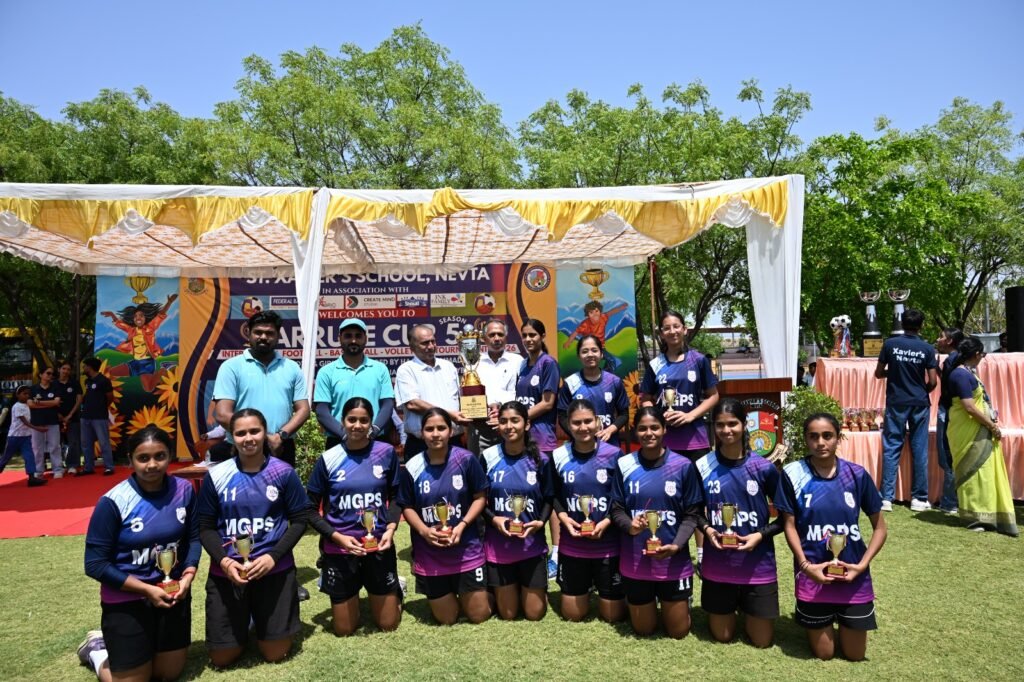
Volleyball
| Category | Winner |
|---|---|
| Volleyball – Girls | MGPS School |
| Volleyball – Boys | Tagore International School |
A remarkable achievement for MGPS School — their girls’ teams claimed titles in both Basketball and Volleyball, making them arguably the standout institution of the 5th Arrupe Cup Jaipur 2025. Tagore International School rounded off the championship results by clinching the Boys’ Volleyball title.
Words from the Leaders: Inspiration at the Podium
Father Sangith Raj S.J. — Principal, St. Xavier’s School, Nevta
Father Sangith Raj S.J., the school’s Principal, shared his immense pride in the scale and success of the tournament. He noted that over 109 school teams from Jaipur city had participated to make this edition of the Arrupe Cup an outstanding success. The principal’s acknowledgement of every participating school — not just the winners — reflects the broader Jesuit spirit of recognising effort, participation, and the journey, not merely the destination.
Father John Ravi — School Manager
Father John Ravi, the School Manager, delivered an inspiring address that resonated deeply with the young athletes in attendance. He encouraged the current generation of student-athletes to draw inspiration from some of India’s brightest sporting lights, specifically mentioning:
- Vaibhav Suryavanshi — the teenage cricket prodigy who has taken Indian cricket by storm
- Sanju Samson — the Kerala wicketkeeper-batsman known for his elegant yet explosive batting style
- Jemimah Rodrigues — the Mumbai-born Women’s cricket star and one of India’s most consistent performers in international cricket
By invoking these names, Father John Ravi connected the students’ own sporting ambitions to the real-world successes of young Indian athletes who dared to dream big. He also extended warm congratulations to the school’s sports department for the outstanding organisation of the event.
Retired DGP Shri Manoj Bhatt — Chief Guest
The chief guest’s address was both motivational and grounding. Shri Bhatt’s message was clear: the habits built on a football field or basketball court — showing up, working as a unit, bouncing back from defeat, leading under pressure — are habits that will define a student’s professional and personal future.
Why the 5th Arrupe Cup Matters for Jaipur’s Youth
The 5th Arrupe Cup Jaipur 2025 is significant not just as a sporting event, but as a civic institution for Jaipur’s student community.
Unmatched Reach
With more than 109 schools participating, the tournament reaches a staggering cross-section of Jaipur’s student population. Students from different socioeconomic backgrounds, school philosophies, and neighbourhoods come together on a level playing field — the sports court.
Three Critical Developmental Pillars
Sports science and educational research consistently affirm that team sports build three key attributes in young people:
Discipline — Training schedules, match-day preparation, and tournament rules teach students the value of structure and commitment. Studies by organisations like UNESCO’s Education Sector have long recognised sport as a vehicle for values education.
Teamwork — No football goal, basketball play, or volleyball spike happens alone. The collaborative experience of inter-school sports teaches students how to communicate, delegate, and trust their peers — skills directly transferable to the classroom and career.
Leadership — Tournaments create captains, motivators, and decision-makers. The pressure of competitive sport identifies and nurtures natural leaders in ways few classroom exercises can replicate.
A Platform for Emerging Talent
Events like the 5th Arrupe Cup serve as a crucial first step for many talented young athletes. Scouts, coaches, and sports academies often identify exceptional players at district and city-level tournaments. For many students, the Arrupe Cup stage may well be the beginning of a journey toward state-level, national-level, or even professional sport.
The Arrupe Philosophy: Sports as a Path to Character
The Jesuit educational tradition has always maintained that excellence is not limited to academics. As Father Arrupe once addressed an assembly of Jesuit school administrators, the “new humanism” should place emphasis on social virtues: sensitivity to human need, concern for others not merely as objects of charity but as equals, and helping people take their rightful share in human development.
This philosophy translates perfectly to the world of sport. When a football team from a smaller school competes against a well-resourced institution on the Arrupe Cup ground, they are participants in something far larger than a match — they are experiencing equity, resilience, and the dignity of fair competition.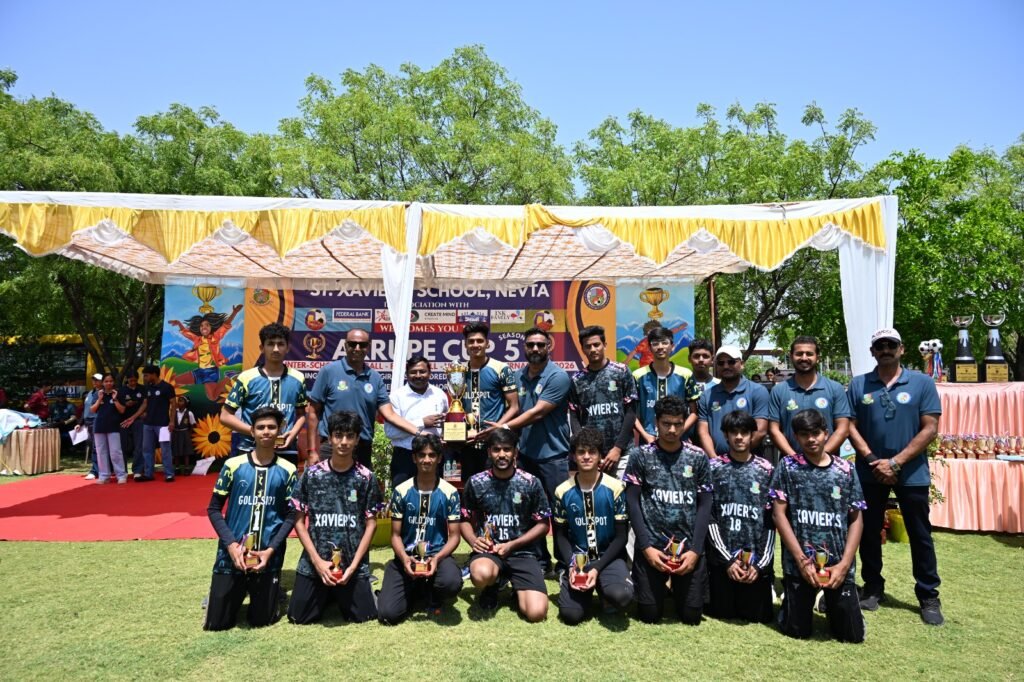
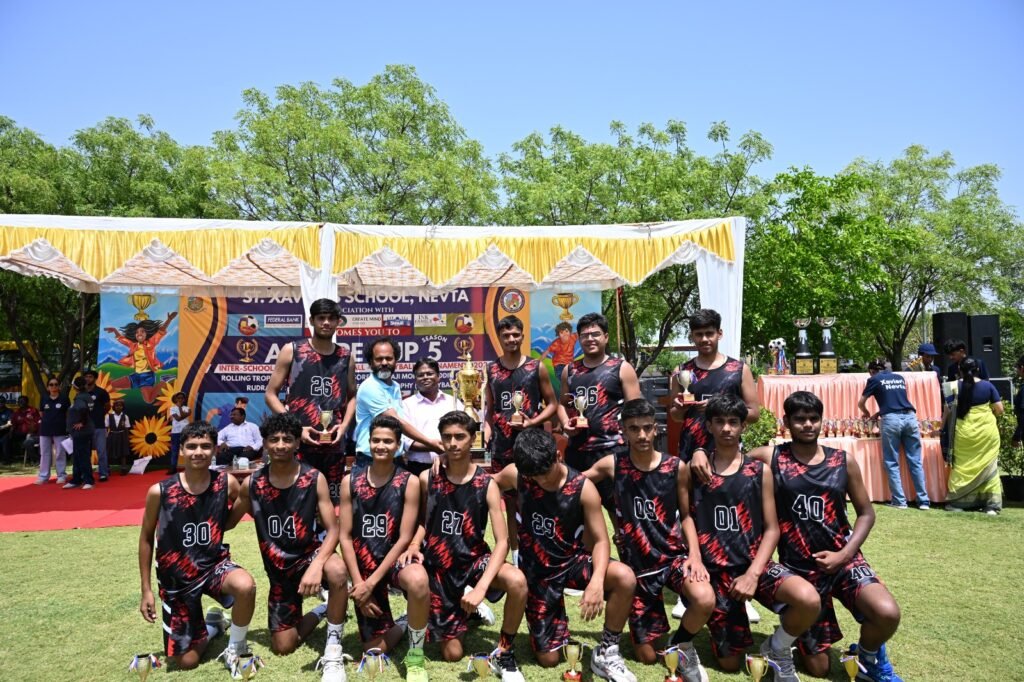
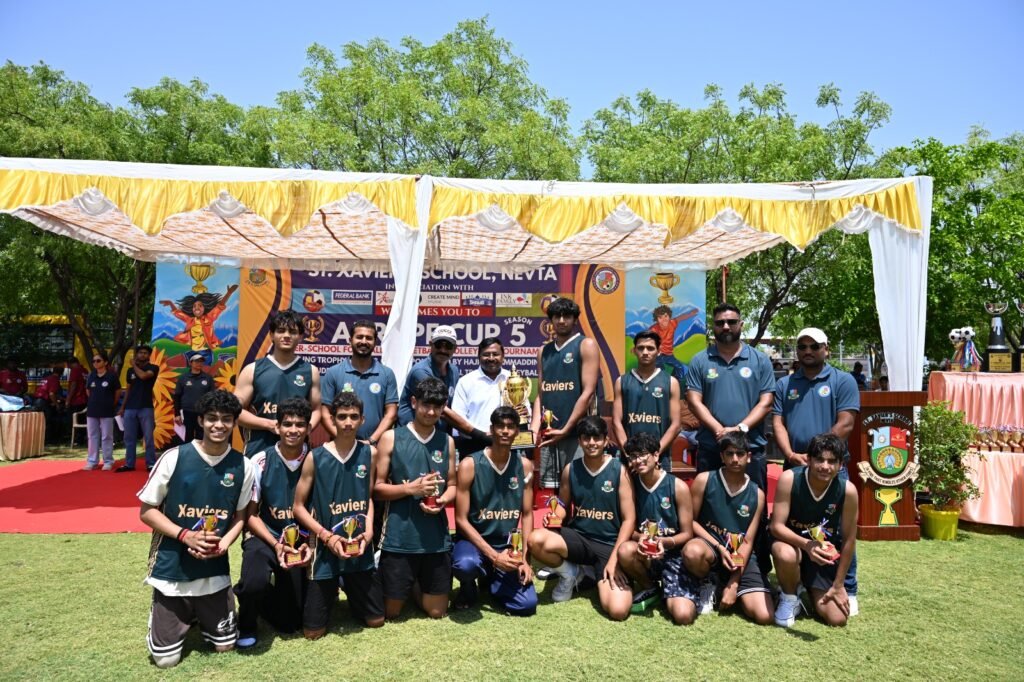
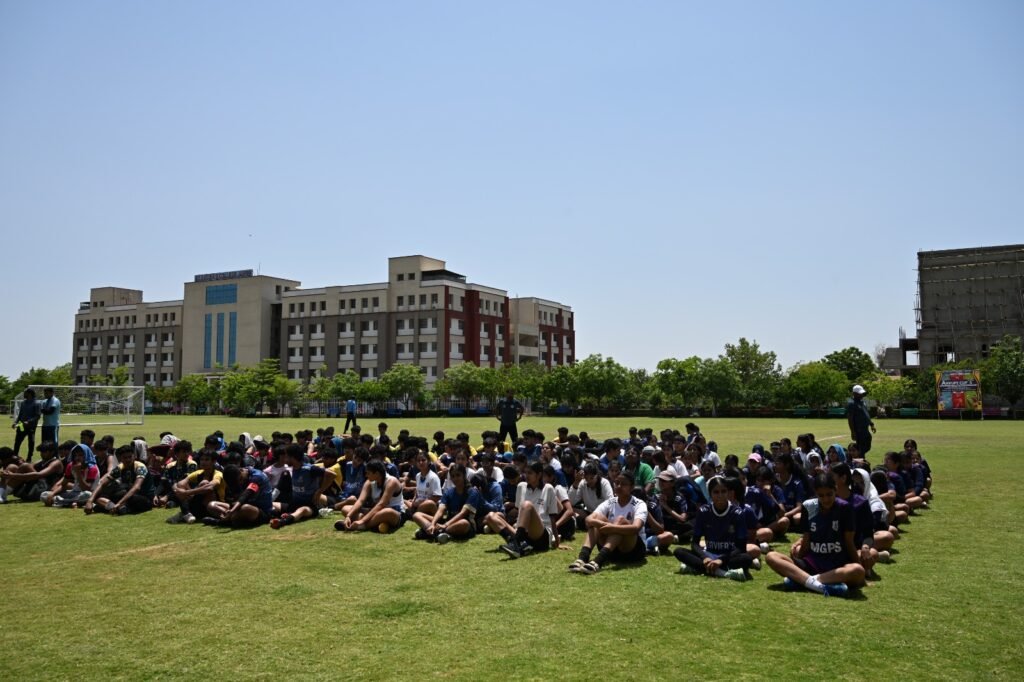
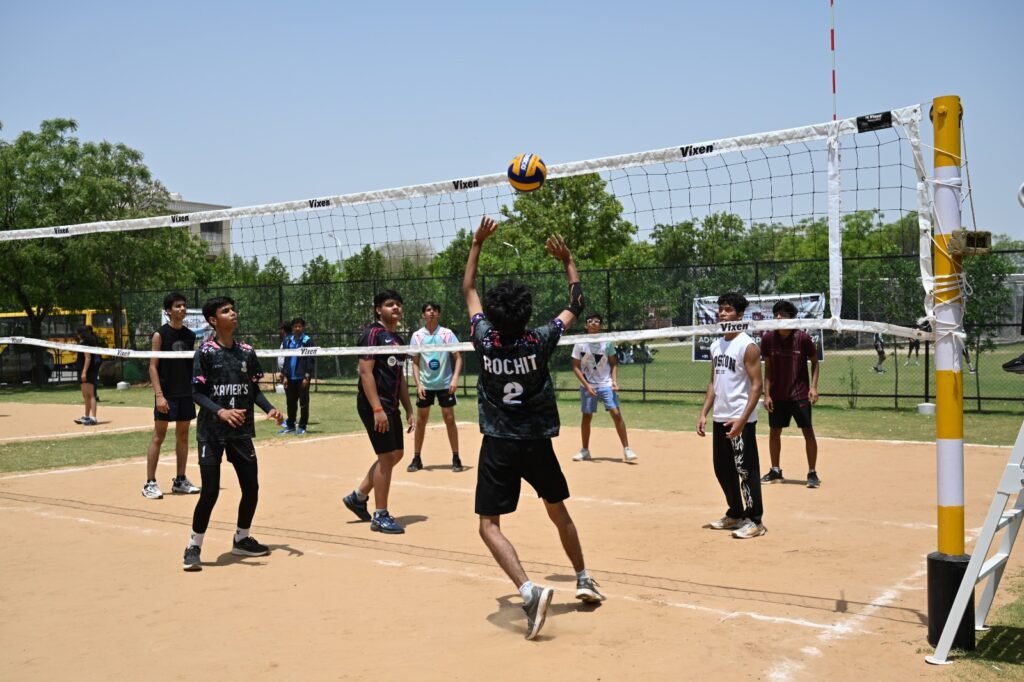
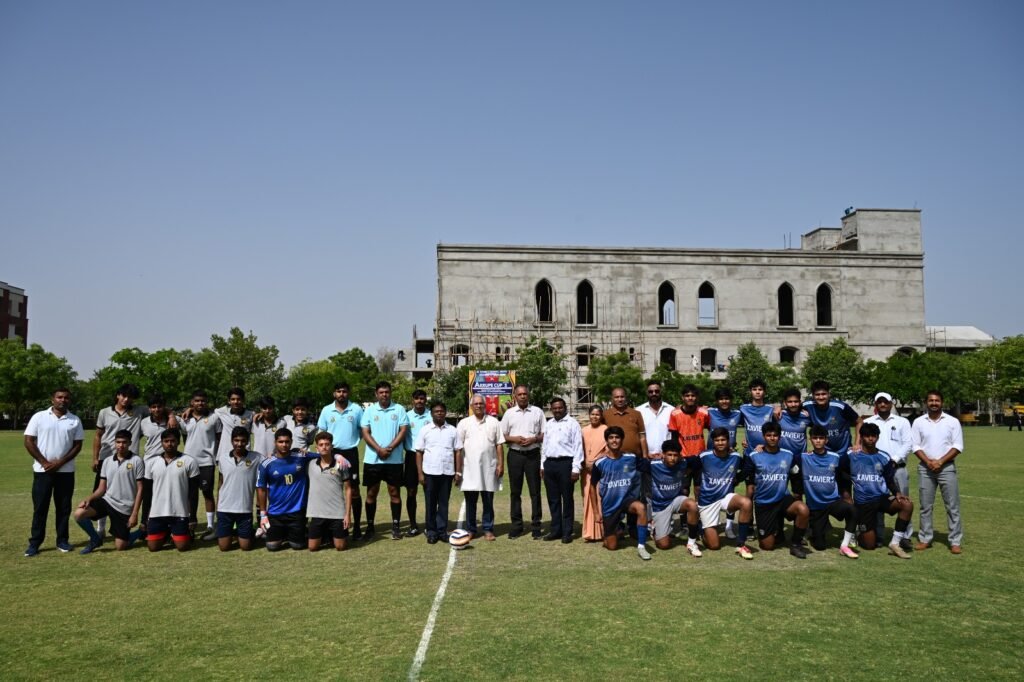
The Arrupe Cup’s structure — multiple sports, boys and girls categories, open to over a hundred schools — embodies this inclusive vision. Every child, regardless of background or ability level, deserves the opportunity to compete, to grow, and to be celebrated.
As the Jesuits’ global organisation notes, Arrupe’s beatification process is underway, recognising his extraordinary contributions to humanity. The school tournament bearing his name honours that legacy by ensuring his ideals live on in the lives of thousands of young students in Jaipur.
Looking Ahead: What’s Next for Jaipur’s Inter-School Sports?
The extraordinary success of the 5th Arrupe Cup Jaipur 2025 raises the exciting prospect of an even larger 6th edition in 2026. Several questions will shape the future of this tournament:
Will more schools join? With 109+ schools already participating, can the Arrupe Cup grow toward 150 or even 200 school teams in coming editions?
Will new sports be added? Future editions might consider expanding into athletics, badminton, or table tennis, bringing even more students into the fold.
Could the Arrupe Cup attract state-level attention? Jaipur’s inter-school sports scene is growing rapidly. Major school sports platforms already offer exposure to dozens of sports at world-class venues in Jaipur, empowering athletes, coaches, parents, and schools with match assessments and data, and the Arrupe Cup’s success positions it well within this thriving ecosystem.
Meanwhile, the winners of the 5th Arrupe Cup carry their titles forward not just as trophies on a shelf, but as proof of their potential. The Football Girls champions of St. Xavier’s, Newta; the Football Boys champions of Neerja Modi School; the double-gold achievers MGPS School; Vidyasthali’s basketball boys; and Tagore International’s volleyball team — all will be ones to watch in the future.
The 5th Arrupe Cup Jaipur 2025 has once again affirmed that St. Xavier’s School, Newta, is not just an academic institution — it is a beacon of holistic education and sporting excellence in Rajasthan. By hosting a tournament that welcomed over 109 schools, celebrated six categories of champions, and brought together retired administrators, Jesuit priests, and thousands of young athletes, the school demonstrated precisely what Father Pedro Arrupe stood for: education that transforms lives, communities, and futures.
As the trophies were handed out and the cheers faded into the warm Jaipur evening on May 2, what lingered was something more lasting than any scoreline — the memory, for each participating student, of standing on a competitive stage, giving their best, and being part of something remarkable.
The 5th Arrupe Cup Jaipur 2025 was not just a sports tournament. It was a celebration of what young India is capable of.
Quick Reference: 5th Arrupe Cup 2025 — Complete Winners List
| Sport | Category | Champion School |
|---|---|---|
| Football | Girls | St. Xavier’s School, Newta |
| Football | Boys | Neerja Modi School |
| Basketball | Girls | MGPS School |
| Basketball | Boys | Vidyasthali School |
| Volleyball | Girls | MGPS School |
| Volleyball | Boys | Tagore International School |
Education
“Maha Parinda Abhiyan” Launched by Deputy CM Dr. Prem Chand Bairwa Under the Leadership of Dr. Bankolia
7 Inspiring Reasons Why the Maha Parinda Abhiyan Is Brilliantly Saving Birds Across Rajasthan
Maha Parinda Abhiyan — a massive, heartfelt campaign to place water and food feeders for birds across India — has taken on a vibrant new momentum in Rajasthan, with a grand state-level launch in Jaipur led by the Universal Human Rights Council (UHRC) and graced by Rajasthan’s Deputy Chief Minister, Dr. Prem Chand Bairwa. In a time when rising temperatures are devastating bird populations and urban development is erasing the natural havens that birds once called home, this campaign arrives as a remarkable act of collective compassion.
With hundreds of parindas (bird water feeders) installed at multiple locations across Jaipur, this initiative is not just about placing clay pots of water — it is about restoring a relationship between human beings and the birds that share our cities, streets, and rooftops.
Table of Contents
- What Is the Maha Parinda Abhiyan?
- A Grand Launch: Deputy CM Dr. Bairwa Inaugurates the Drive
- The Alarming Crisis Facing Birds in Indian Summers
- Sparrows, Mynas, and the Silent Disappearance
- Why the Maha Parinda Abhiyan Matters More Than Ever
- How You Can Join the Maha Parinda Abhiyan
- UHRC’s Nationwide Vision: All States, One Mission
- Simple Actions That Can Save a Life This Summer
What Is the Maha Parinda Abhiyan?
The Maha Parinda Abhiyan is a nationwide bird welfare campaign organised by the Universal Human Rights Council (UHRC), a human rights and social welfare organisation operating across India. The word Parinda is a Hindi and Urdu term for “bird,” and the campaign takes its name from the age-old Indian tradition of placing clay water pots and feeders for birds during the scorching summer months.
At its heart, the campaign mobilises ordinary citizens, schools, social organisations, and government officials to install water and food feeders — known as parindas — at homes, offices, temples, parks, and public spaces. These small but powerful acts help birds survive the deadly combination of extreme heat, water scarcity, and habitat loss that makes Indian summers increasingly dangerous for wildlife.
The Maha Parinda Abhiyan is a call to action that requires no special skills, no large donations, and no official affiliation — just a willing heart and a vessel of clean water.
A Grand Launch: Deputy CM Dr. Bairwa Inaugurates the Drive
The Jaipur chapter of the Maha Parinda Abhiyan was inaugurated in a ceremony that brought together government dignitaries, civil society leaders, and dedicated grassroots volunteers.
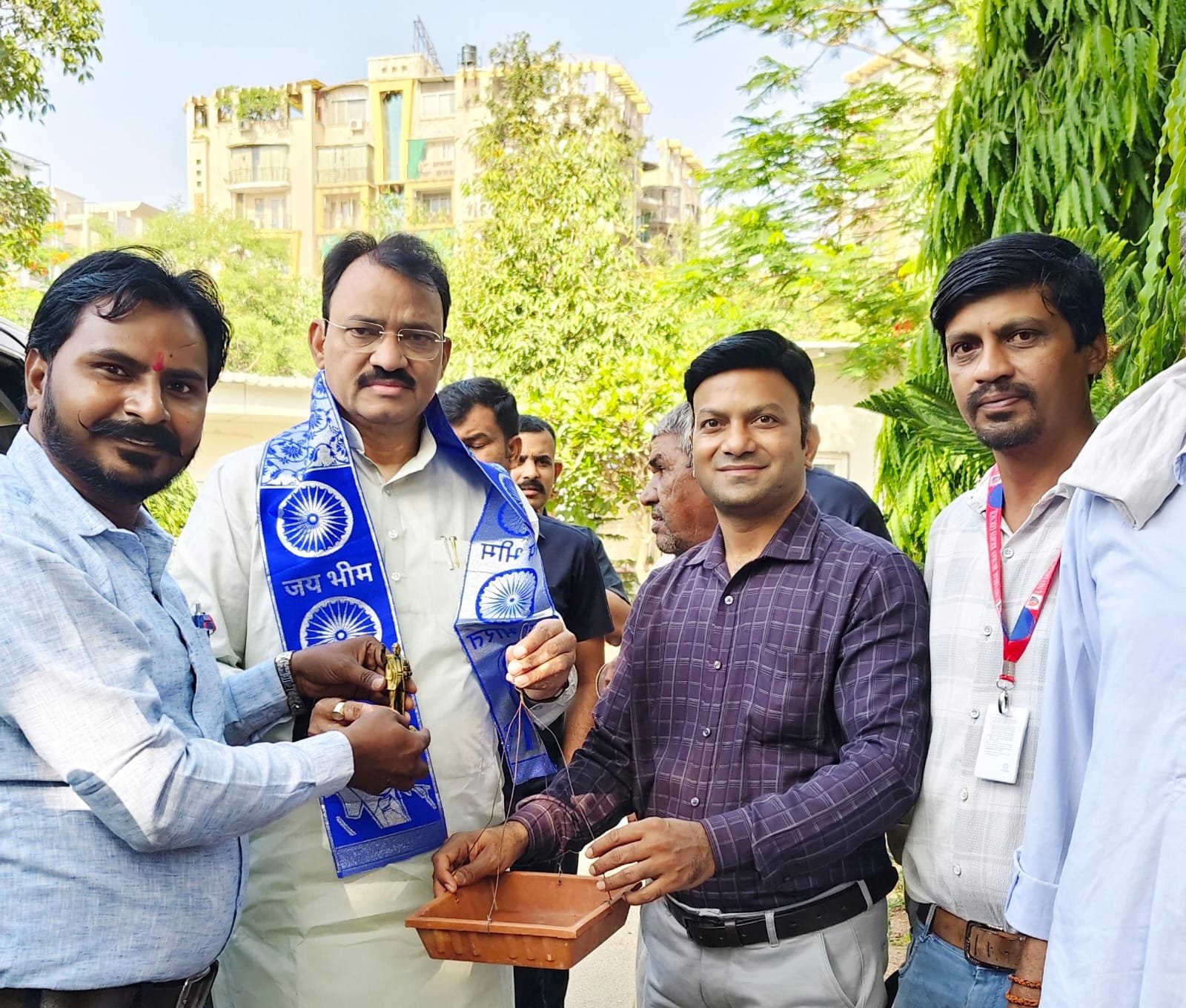
Deputy Chief Minister of Rajasthan, Dr. Prem Chand Bairwa, served as the Chief Guest and officially launched the Maha Parinda Abhiyan campaign. He was accorded a warm welcome by the UHRC team, who presented him with a copy of the Preamble to the Constitution of India, a dupatta, and a special memento bearing the image of Dr. B.R. Ambedkar — symbols of constitutional values, dignity, and social justice that underpin everything UHRC stands for.
The programme was chaired and inaugurated by Dr. Tarun Bankolia, National President of UHRC, who opened the event with an impassioned address connecting the chirping of sparrows and mynas near our homes with our collective responsibility to protect them.
Indra Raj Meena, State President of UHRC, served as the Distinguished Guest, while Ravi Shankar Sharma, District President, also participated in the ceremony. A strong contingent of office-bearers lent their presence to the event, including National Advisor Sandeep Sharma, State Vice President Devnarayan Kholiya, General Secretary Surajbhan Bunkar, Organisation Secretary Ramlal Dabkiya, State Secretary Sunil Kumar Verma, Women’s President Smt. Santosh Sharma, District Vice President Mukesh Sharma, General Secretary Shyam Mohan Vyas, Treasurer Sushil Kumar Sharma, and Executive Member Smt. Anita Sharma, among many others.
Educationist Rakshita Negi, Women’s President, was also present, reflecting the campaign’s strong emphasis on women’s participation in conservation efforts.
The Alarming Crisis Facing Birds in Indian Summers
To understand why the Maha Parinda Abhiyan is so urgently needed, one must look at the dire situation facing India’s birds during the summer months.
India experienced one of its hottest summers in recent years, with temperatures reaching as high as 50°C in some parts of the country. Birds, bats, and reptiles — particularly those inhabiting urban spaces — faced severe dehydration and heat-associated illness, while the plight of non-human lives remained low on the priority list.
Small, territorial birds such as sparrows, parakeets, crows, and finches get dehydrated often, and experts suggest that citizens can implement easy, cost-effective measures like setting up food and water bowls in gardens to help urban birds cope with the heat.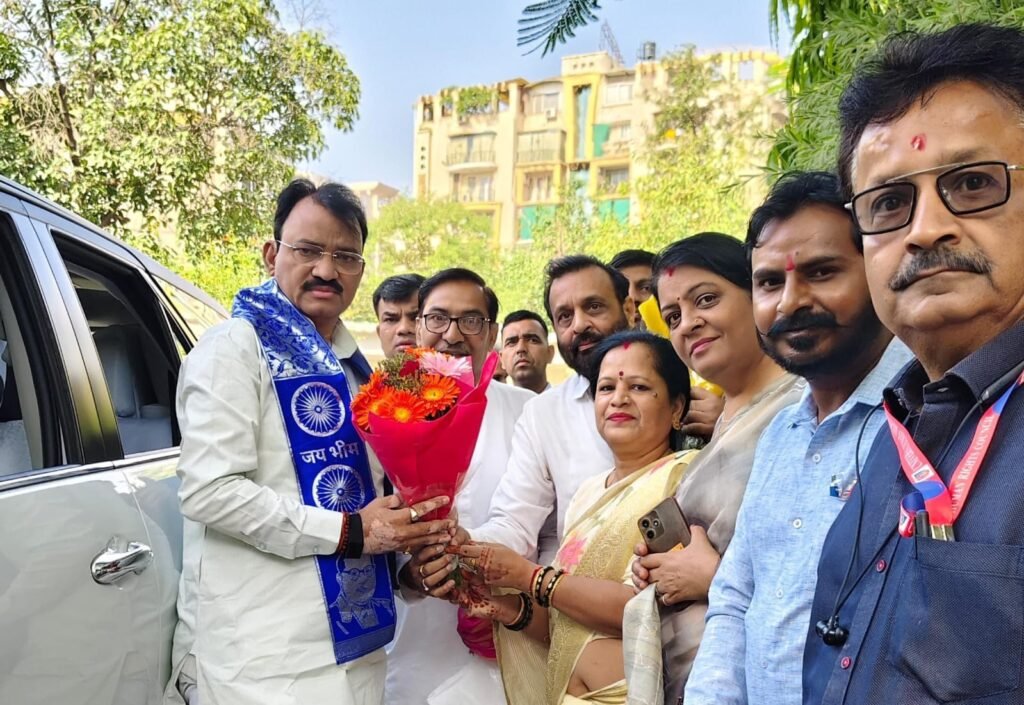
The situation is compounded by rapid urbanisation. Glass-fronted buildings, concrete jungles, and the disappearance of traditional earthen homes with nooks and crevices have eliminated the natural nesting sites that birds like sparrows depended on for generations. Add to this the proliferation of mobile towers, chemical pesticides, and noise pollution, and you have a perfect storm driving bird populations toward steep decline.
This is the crisis the Maha Parinda Abhiyan is determined to address — one water feeder at a time.
Sparrows, Mynas, and the Silent Disappearance
Dr. Tarun Bankolia, opening the Jaipur ceremony, spoke movingly about the joy that birds bring to our mornings — the chirping of sparrows, the melodious call of mynas, the energetic hopping of small birds near doorsteps that delights children and adults alike.
That morning music, however, is growing increasingly rare.
According to a study by the Indian Council of Agricultural Research (ICAR), the house sparrow population in Andhra Pradesh had reduced by up to 88%, while in states like Gujarat, Kerala, and Rajasthan, the count had dropped by 20%.
The common House Sparrow that once lived in the cavities of houses and nibbled off leftover food now sits on the red list of endangered species of the International Union for Conservation of Nature (IUCN).
Why Are Sparrows Disappearing from Rajasthan?
Urbanisation and unplanned development are among the most important causes of the decline in sparrow populations. Modern architecture has replaced older buildings that had nooks and cavities essential for nesting. Additionally, the widespread use of insecticides in modern agriculture has reduced the insect populations that form a critical part of young sparrows’ diets.
Rajasthan’s desert climate makes the situation even more acute. Unlike other states with natural water bodies and dense green cover, Rajasthan’s birds must depend almost entirely on human goodwill during the summer season to find drinking water.
In the summer of 2020, Rajasthan saw temperatures soar beyond 50°C, with even groundwater receding and birds and animals having no respite.
The Maha Parinda Abhiyan directly addresses this lethal gap.
Why the Maha Parinda Abhiyan Matters More Than Ever
State President Indra Raj Meena articulated the central human truth of this campaign with simple but powerful words: many birds and animals die in summer due to a lack of water. A small effort by people — placing water feeders near homes — can quench the thirst of birds and literally save their lives.
This is not hyperbole. It is biology.
Installing proper bowls for bird feed and water, especially during summers, ensures that birds are safeguarded from heat exhaustion and dehydration.
Beyond individual birds, the ecological stakes are enormous. Sparrows and mynas play vital roles in pest control and seed dispersal. Sparrows act as pest control and are extremely important in helping spread green cover as they disperse seeds over vast tracts of land.
When we lose birds, we lose a silent army of ecosystem engineers. When we save them, we invest in the health of our own environment, our agriculture, and our urban green spaces.
The Maha Parinda Abhiyan, by bringing together government, civil society, and ordinary citizens in a single shared act of care, has the potential to create a ripple effect that goes far beyond Jaipur.
How You Can Join the Maha Parinda Abhiyan
Dr. Bankolia made a heartfelt public appeal during the Jaipur launch: that people not only love birds but also take special care of them during summer — and contribute to this noble cause by placing as many parindas as possible near their homes.
Joining the Maha Parinda Abhiyan is beautifully simple. Here is how:
Step 1 — Set Up a Water Feeder: Place a clay pot, earthen bowl, or any shallow container filled with clean, fresh water in a visible spot near your window, terrace, balcony, or garden. Change the water every day to prevent mosquito breeding and keep it clean for the birds.
Step 2 — Add a Food Source: Place a small tray of rice grains, millet seeds, or small bird-friendly grains near the water feeder. Black oil sunflower seeds are among the highest quality options for sparrows, while platform feeders suit natural foods like mealworms.
Step 3 — Position It Thoughtfully: Place the feeder in a shaded spot to keep the water cool, away from direct afternoon sunlight. Keep it out of reach of cats and other predators.
Step 4 — Spread the Word: Encourage your neighbours, society, school, or office to do the same. The Maha Parinda Abhiyan thrives on community participation.
Step 5 — Connect With UHRC: Reach out to the Universal Human Rights Council to participate in organised drives, seminars, and collective feeder installation events in your city.
UHRC’s Nationwide Vision: All States, One Mission
What makes the Maha Parinda Abhiyan particularly remarkable is its scale and ambition. The campaign is not confined to Rajasthan alone.
Dr. Bankolia announced that the Parinda Maha Abhiyan has been organised by UHRC across all states of India, making it one of the country’s most geographically extensive bird welfare drives. Each chapter of UHRC coordinates local activities — installation drives, awareness seminars, and school outreach — tailored to the specific ecological conditions of their region.
In Rajasthan, the extreme summer heat makes the campaign especially critical. In coastal states, the challenge may be different — but the principle remains universal: birds need water, food, and safe nesting spaces, and humans are uniquely placed to provide them.
A simple idea — placing water for birds — proved capable of creating massive national impact, as seen when a community in Barmer used recycled tin cans as birdbaths, inspiring a movement that spread from Raipur to Pune and from Gujarat to Bikaner.
The Maha Parinda Abhiyan builds on this tradition of grassroots compassion, giving it an organised, sustained, and inclusive structure.
8. Simple Actions That Can Save a Life This Summer
Here is a quick-reference guide to making your home bird-friendly this summer:Action Benefit Effort Required Place a clay water bowl Prevents dehydration and death Very Low Add grain or seeds nearby Provides essential nutrition Very Low Install a birdhouse Provides nesting space Low–Medium Plant native trees or shrubs Creates natural habitat Medium Avoid pesticides in garden Protects insect-based food chain Low Share the campaign online Multiplies community participation Very Low
Maintenance of natural habitats like water puddles, gardens, and lakes provides birds a place to inhabit, and every individual should be responsible and contribute.
Every Drop Counts, Every Feeder Matters
The Maha Parinda Abhiyan is more than an environmental drive. It is a statement of values — that human progress need not come at the cost of the natural world we share with millions of creatures. It is a reminder that the sparrow chirping outside your window in the morning is not just background noise; it is a sign of a living, breathing ecosystem that depends on our choices.
Deputy CM Dr. Prem Chand Bairwa‘s presence at the campaign’s launch signals something important: that protecting birds is not just the work of NGOs and environmentalists, but a shared civic and governmental responsibility. When the state and civil society come together around a simple clay pot of water, it sends a message that resonates far beyond any single event.
As temperatures across Rajasthan climb toward their summer peak, the hundreds of parindas installed across Jaipur through the Maha Parinda Abhiyan will stand as small, quiet miracles — offering water, safety, and life to the birds who ask nothing of us except a chance to survive.
Art
Yuvaam 2026: A Grand Celebration of Excellence, Culture, and Inspiration in Jaipur
Yuvaam 2026 at St. Xavier’s School Jaipur showcased excellence, culture, and inspiration with awards, performances, and dignitaries. Explore full highlights, achievements, and key moments.
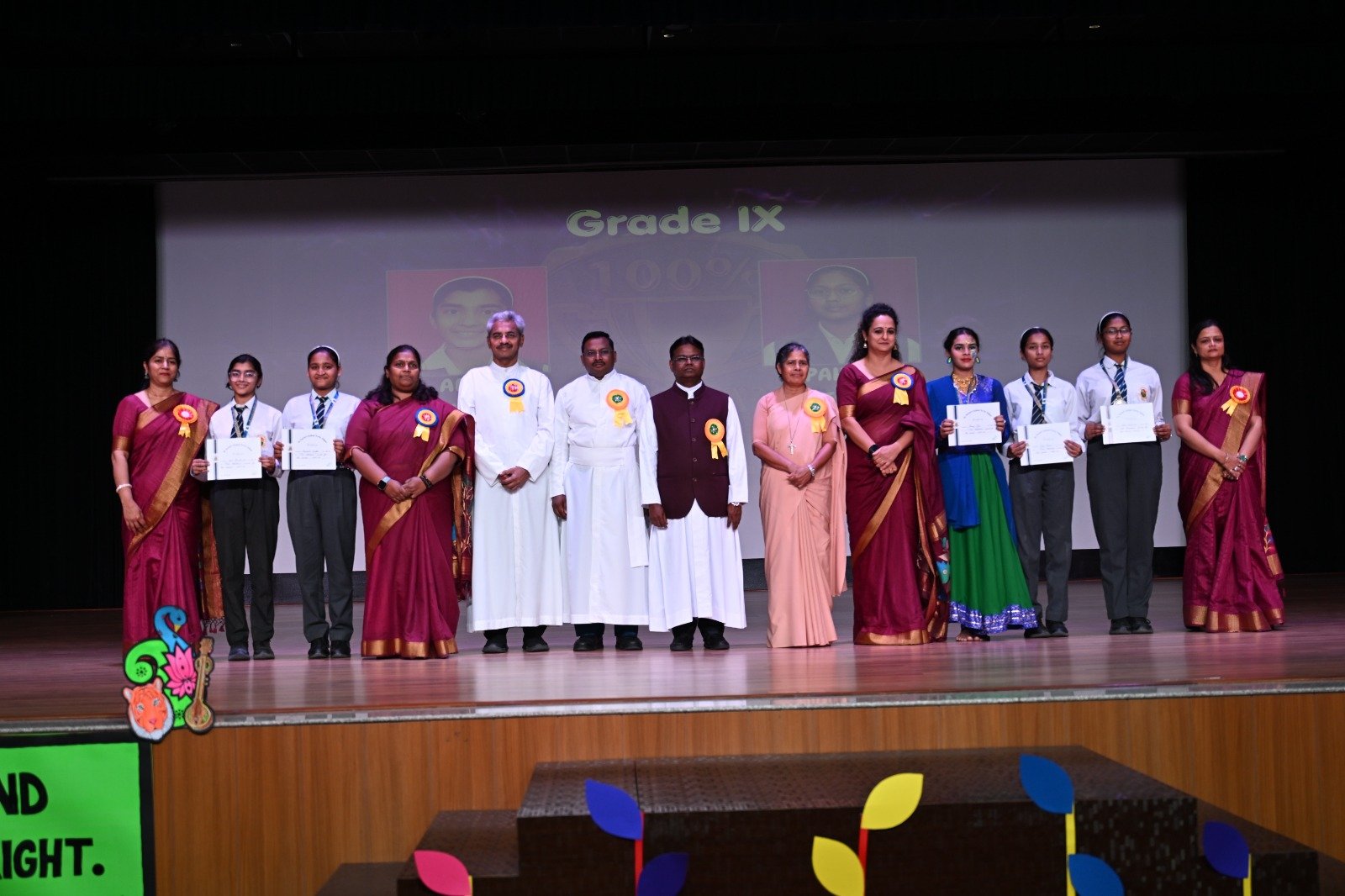
March 30, Jaipur. Yuvaam 2026 emerged as one of the most inspiring and prestigious school events in Jaipur, held with remarkable grandeur at St. Xavier’s School, Nevta, on March 30, 2026. The 8th Annual Prize Distribution Ceremony was not just a celebration of academic excellence but also a powerful showcase of talent, discipline, and values.
In today’s fast-paced educational environment, events like Yuvaam 2026 play a crucial role in recognizing student achievements while fostering motivation, confidence, and holistic development.
Grand Welcome and Dignitaries at Yuvaam 2026
The ceremony of Yuvaam 2026 began with a spectacular welcome for the Chief Guest, Most Rev. Bishop Joseph Kallarackal, along with the Guests of Honour, Ms. Maya David and Mr. Ajay Kochar.
A beautifully coordinated band procession escorted the dignitaries to Arrupe Hall, setting a majestic tone for the entire event. The presence of esteemed figures including Rev. Fr. Dr. Arokya Swami SJ, Rev. Fr. Sangeeth Raj SJ, Rev. Fr. Joseph Kumar Kurapati SJ, Sr. Leeda D’Souza SCCG, and Br. Ajay Matthews added grace and significance to Yuvaam 2026.
Ceremonial Beginning and Spiritual Essence of Yuvaam 2026
The formal proceedings of Yuvaam 2026 began with the traditional lighting of the ceremonial lamp, symbolizing knowledge and enlightenment.
This was followed by a soulful prayer song and an orchestral presentation titled “Soul of Symphony,” which captivated the audience and created a serene atmosphere.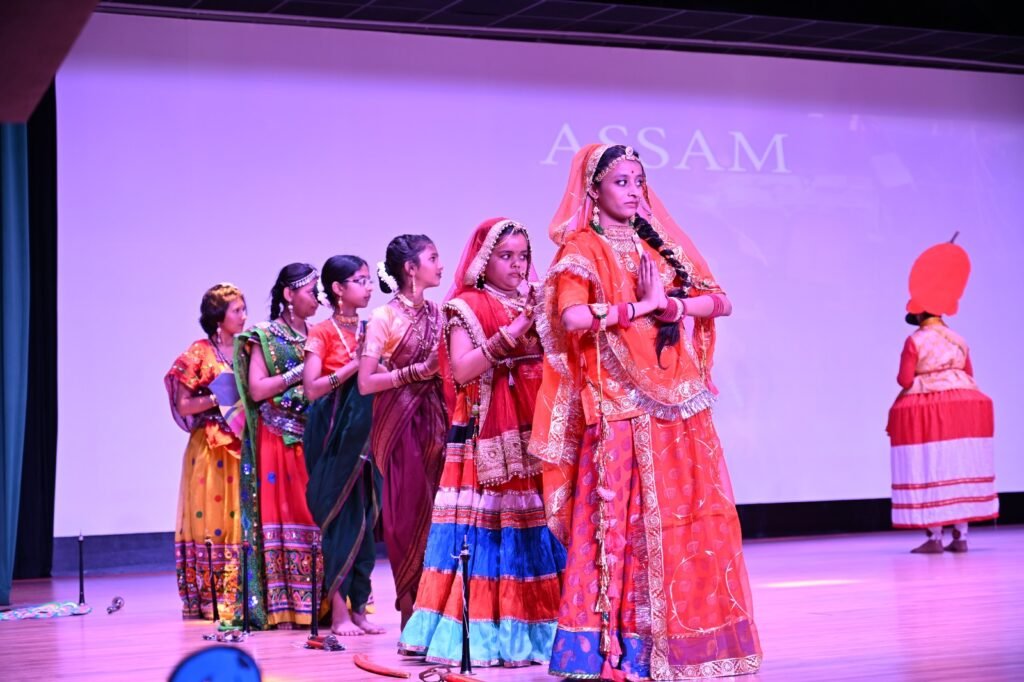
Saplings were presented to the dignitaries, reflecting a meaningful gesture towards environmental awareness and respect—values that Yuvaam 2026 strongly emphasized.
Yuvaam 2026 Academic Excellence Awards
A key highlight of Yuvaam 2026 was the recognition of academic brilliance. Students who secured 90% and above marks were honored with Academic Excellence Awards.
Additionally, students with 100% attendance were also felicitated, reinforcing the importance of consistency and discipline in achieving success.
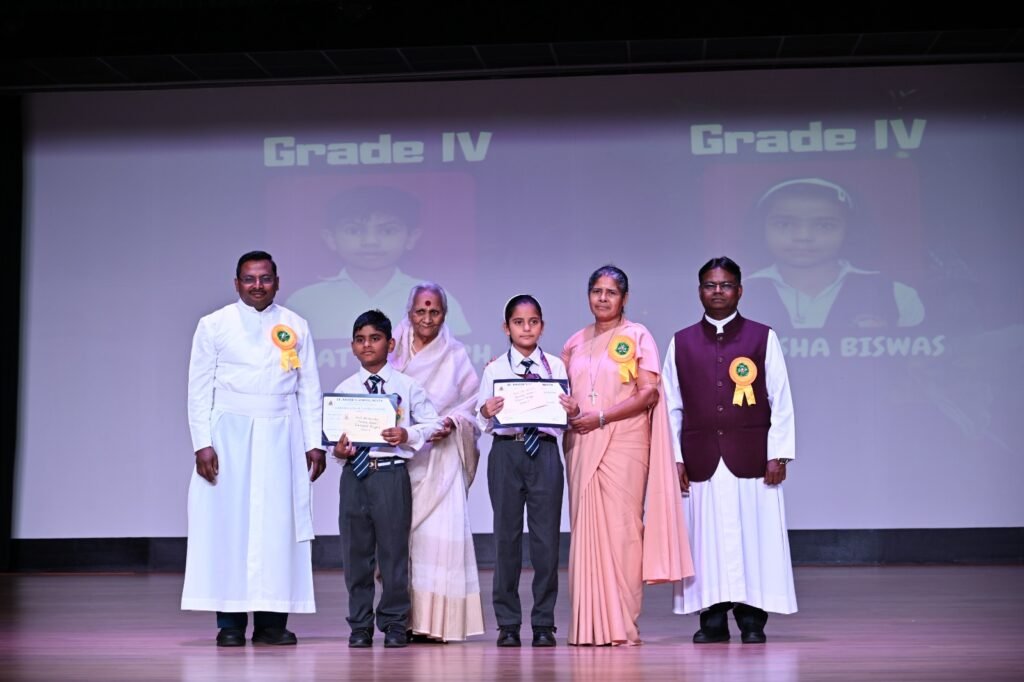
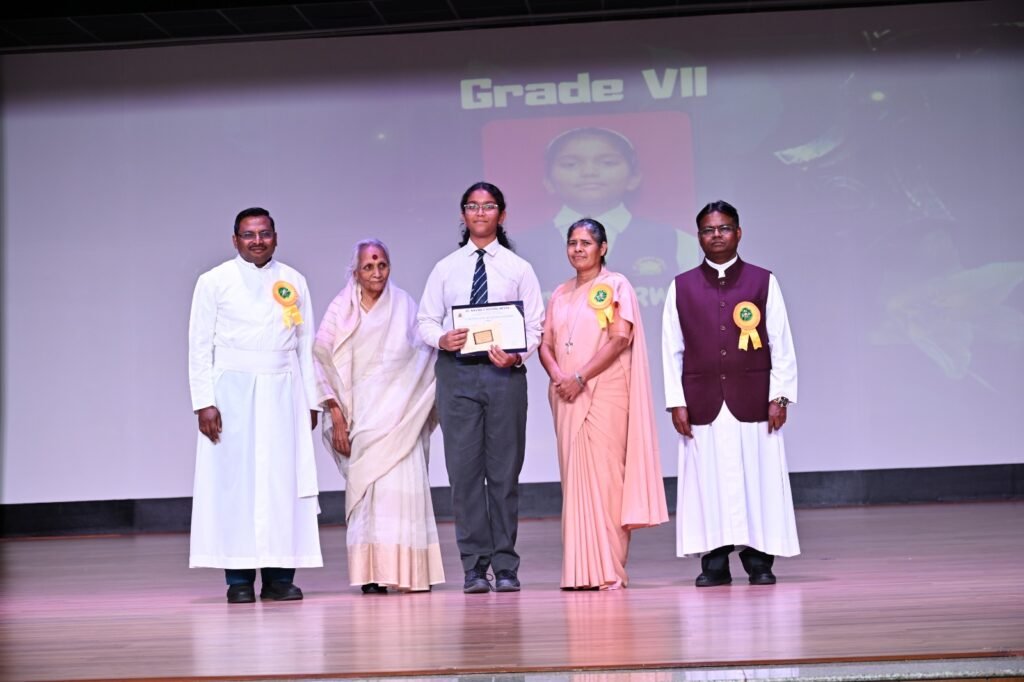
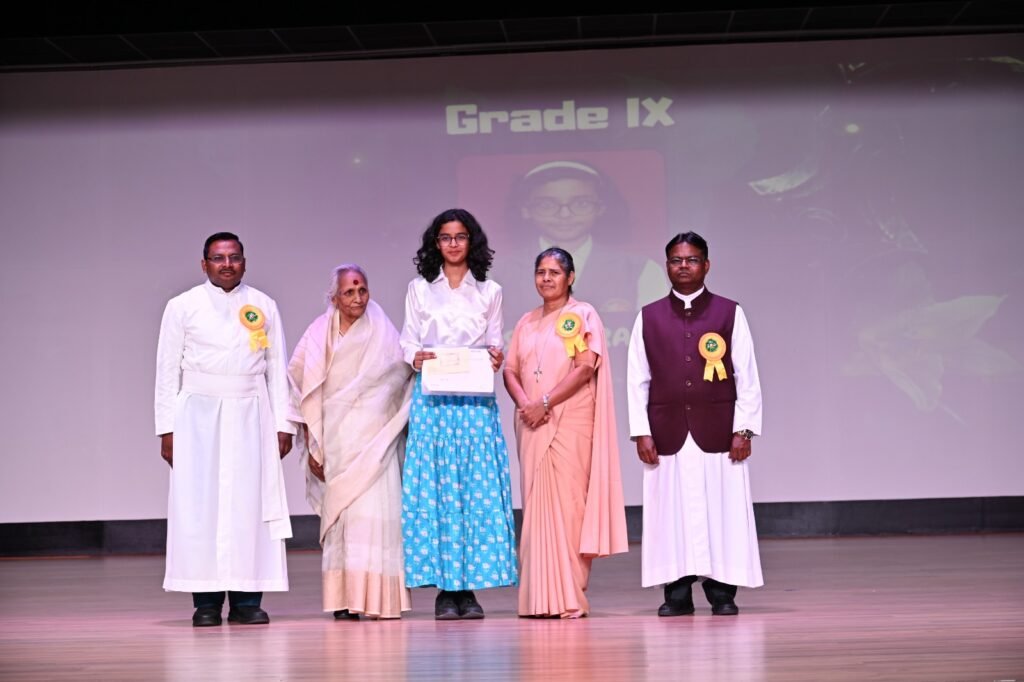
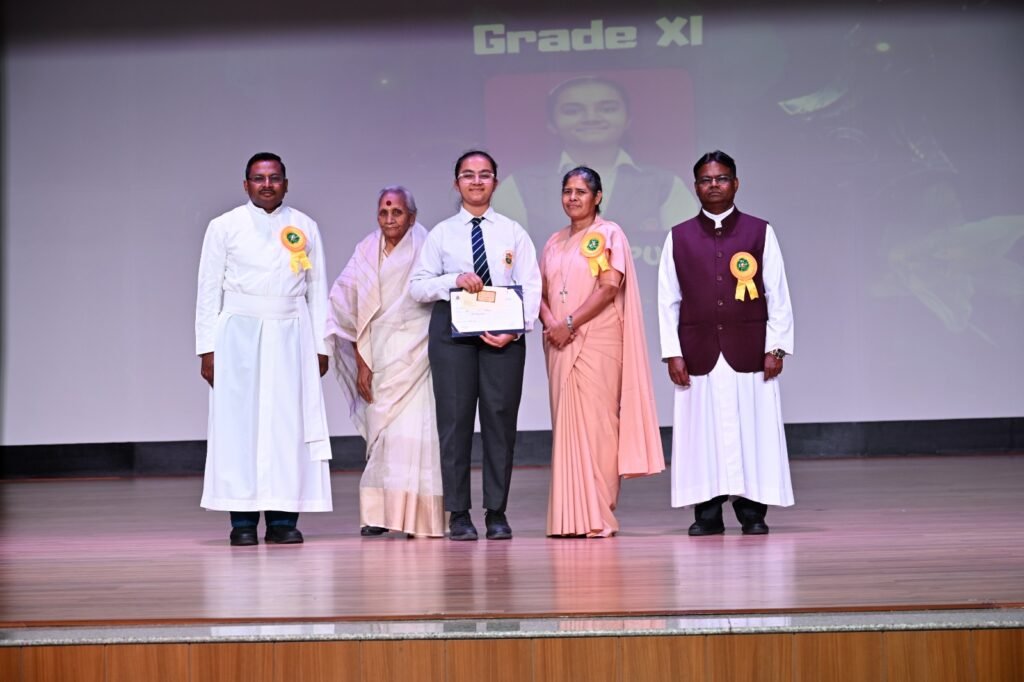
The Principal, in the welcome address, highlighted that success is never an individual effort but a result of collaboration between students, teachers, and parents—an idea deeply embedded in the philosophy of Yuvaam 2026.
Special Felicitations and Achievements at Yuvaam 2026
Yuvaam 2026 also celebrated exceptional achievements beyond academics.
- Ms. Veera Kalyann, recognized as Ms. Elite Rajasthan, was specially felicitated.
- Masters Aaron and Aarav Rathesh were honored for their remarkable achievements in skating.
Such recognitions showcased the institution’s commitment to encouraging diverse talents, making Yuvaam 2026 a holistic celebration of excellence.
Cultural Performances and Highlights of Yuvaam 2026
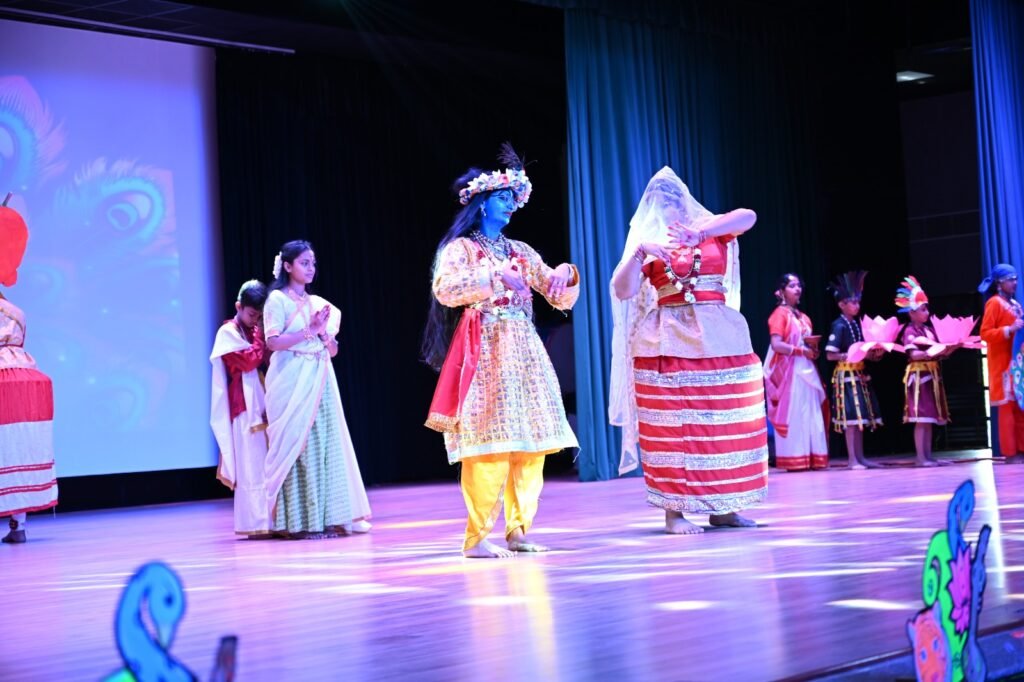
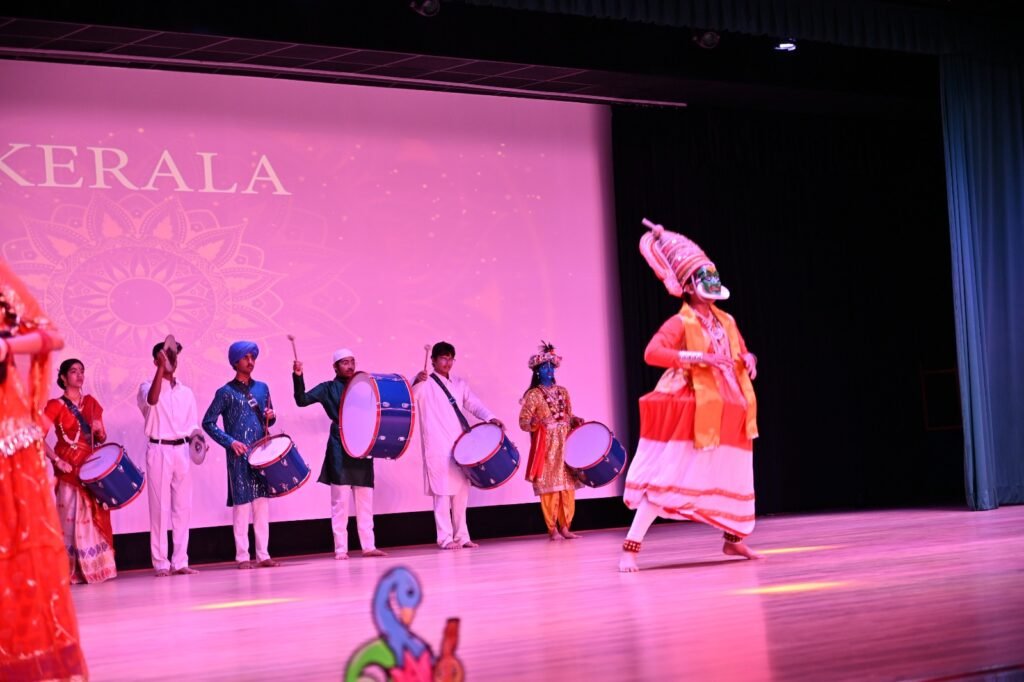
The cultural segment of Yuvaam 2026 added vibrant energy to the event. Students delivered mesmerizing performances that reflected creativity, discipline, and teamwork.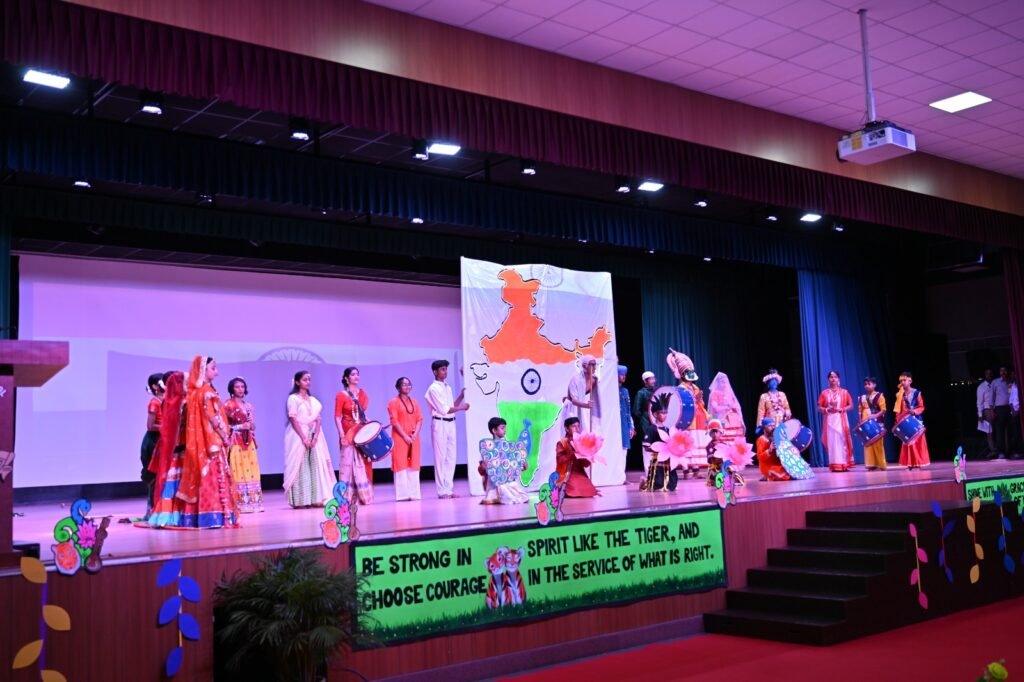
A special band presentation symbolized unity and harmony, leaving a lasting impression on the audience. These performances demonstrated that Yuvaam 2026 was not just about awards but also about celebrating artistic expression and cultural richness.
Launch of School Magazine “Excelsior” at Yuvaam 2026
One of the most anticipated moments of Yuvaam 2026 was the release of the school magazine, “Excelsior.”
The magazine showcased the achievements, creativity, and intellectual contributions of students and staff. Alongside this, the Annual Report was presented, highlighting the institution’s milestones and progress over the year.
For more on school publications and their importance, you can refer to UNESCO resources on educational development.
Inspiring Speeches from Guests at Yuvaam 2026
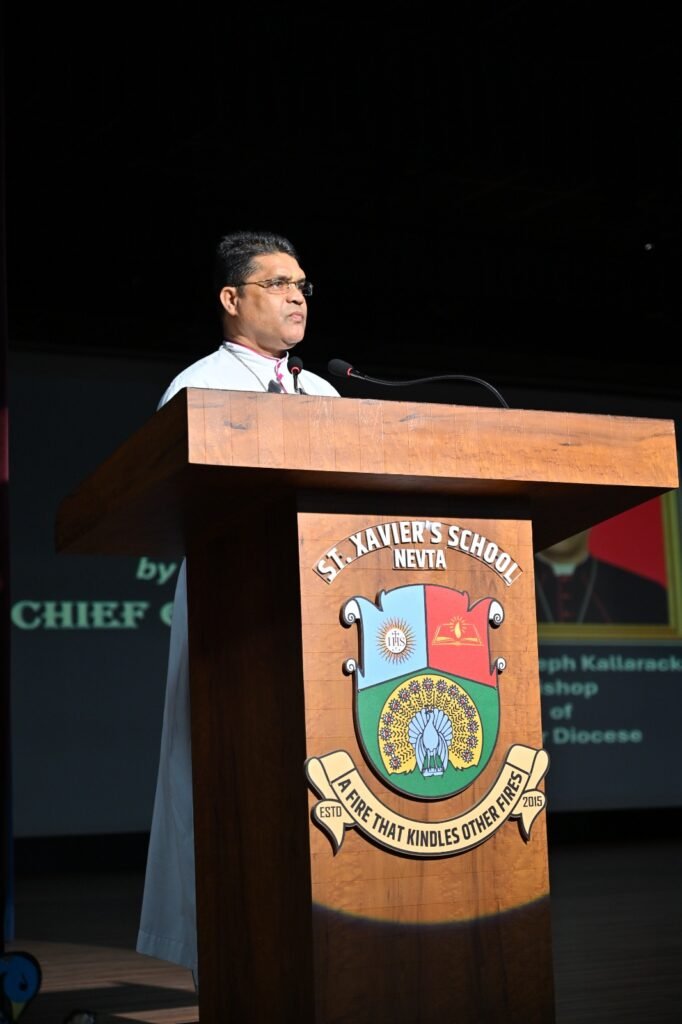
The Guests of Honour at Yuvaam 2026 delivered powerful and inspiring messages:
- Mr. Ajay Kochar encouraged students to stay optimistic and resilient in the face of challenges.
- Ms. Maya David emphasized the importance of positive thinking and empowering girl children.
The Chief Guest, Most Rev. Bishop Joseph Kallarackal, congratulated the students and urged them to uphold strong moral values in their lives.
These speeches added depth and purpose to Yuvaam 2026, transforming it into a platform for learning beyond academics.
Prestigious Awards and Recognitions at Yuvaam 2026
Among the most prestigious recognitions at Yuvaam 2026 were the sponsored awards, including the renowned Ignatian Awards.
The title of Xavierite of the Year was conferred upon:
- Vihan Bajaj (Head Boy)
- Aadya Thakkar (Head Girl)
These awards symbolized leadership, dedication, and all-round excellence—core values celebrated at Yuvaam 2026.
The grand event Yuvaam 2026 concluded with a heartfelt Vote of Thanks delivered by Ms. Neeru Gaur, followed by the National Anthem.
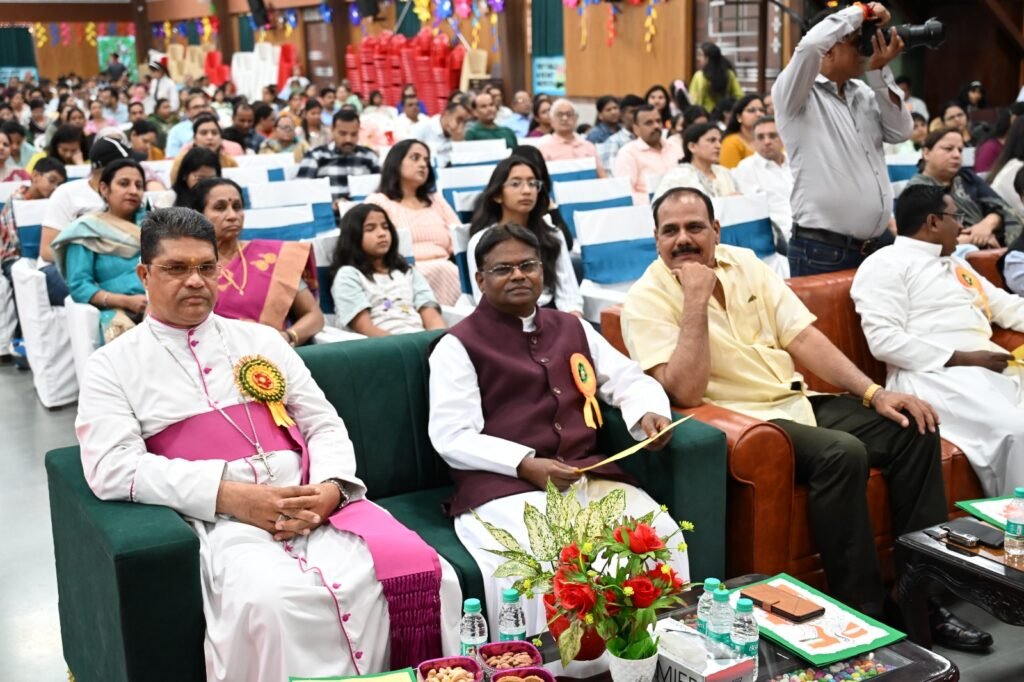
The ceremony left behind a powerful message—success is not just about achievements but about values, perseverance, and collective effort.
In essence, Yuvaam 2026 was more than an annual function; it was a celebration of dreams, discipline, and determination. It highlighted how educational institutions can shape not just successful students but responsible and value-driven individuals.

Subodh Public School Rambagh Honours Sanitation Staff for Dedicated Service

Trump-Linked Powerus Plans Drone Production Partnership With Pakistan Army

October 2026 Rules: LPG Subsidy, SBI ATM and UPI Changes Explained

Yemen conflict escalation: हिंसा बढ़ने से हैजा-खसरे के फैलाव का खतरा

DRC Ebola outbreak: WHO says early care and oxygen can improve survival

8.3 Million Refugees Risk Losing Vital Assistance Amid Funding Cuts

Priyansh Arya: The Six-Hitting Sensation of IPL 2025

Top 10 Most Searched Topics on YouTube: What’s Trending Now?

Preity Zinta Spotted with New Punjab Kings Hero Priyansh Arya in Viral Clip

Nag Panchami 2025: 7 Key Rituals and Puja Time to Eliminate Kaal Sarpa Dosha

Radhika Merchant: A New Chapter as Radhika Ambani

Balen Shah, Kathmandu’s independent mayor, from rapper to political leader. Explore his rise amidst Nepal’s youth-led revolution-

best career opportunities | Jaipur Career Fair | Credent TV | Dainik Navjyoti D2S03

what is reiki healing | Mental Health | Shiksha Sarokar, शिक्षा सरोकार, Sunil Narnaulia

DAV Centenary Public School, Vaishali Nagar, Jaipur hosts Successful ‘Mind Wars Quiz: A Battle of Wits and Knowledge’

 Election3 weeks ago
Rajasthan Municipal Election Results 2026 Live Updates
- Breaking News1 month ago
Vaibhav Sooryavanshi’s Two-Wicket Duleep Trophy Spell Powers East Zone into Semi-finals
- Education2 weeks ago
OPT Fee Proposal Clears White House Review; $100,000 Figure Remains Unconfirmed
- Breaking News4 weeks ago
Savitribai Phule Award 2026 Honours 54 Women in Jaipur
- Breaking News1 month ago
Reports Claim Pakistan Deployed Bayraktar TB2 Drones Near LoC
- Breaking News1 month ago
SRN Ad-to-Pitch Challenge Tests Young Entrepreneurs in Jaipur
- Festival3 weeks ago
India Retail Inflation August 2026 Rises to 4.82% as Food Prices Climb
- International2 weeks ago
Houthi Drone Near Mecca: Saudi Arabia Intercepts UAV After Emergency Alert