Connect with us

Breaking News

CBI Raid Assets investigation reveals an astonishing 8-fold rise in wealth of a Rajasthan CGST official—

Published

on

CBI Raid Assets exposes a striking

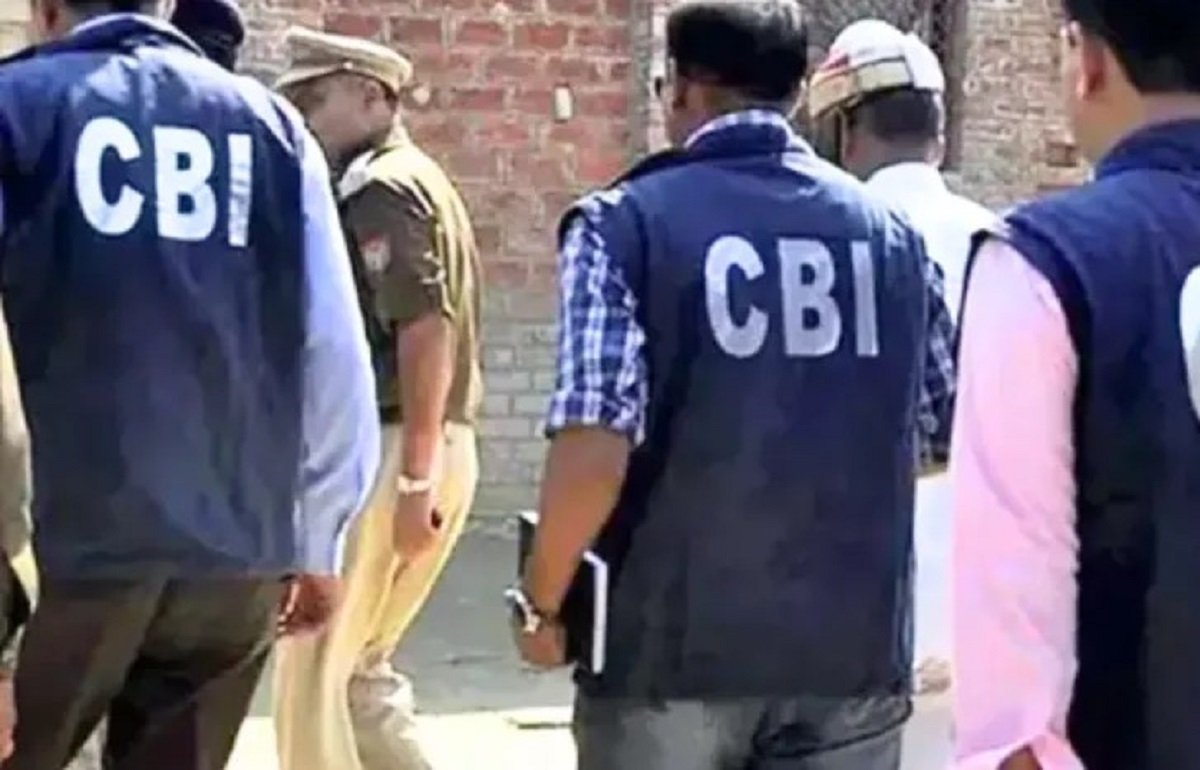
Jaipur, Nov.01,2025:CBI Raid Assets exposes a striking example of unchecked accumulation of wealth by a senior tax‐official in Rajasthan. According to recent filings by the Central Bureau of Investigation (CBI), an assistant commissioner of the Central Goods and Services Tax (CGST) Department in Jaipur is facing a case for amassing assets disproportionate to his known income. The case reveals how over a seven-year span his declared assets rose nearly eight-fold, raising serious concerns about corruption, bureaucratic oversight and the integrity of the tax administration-

In what follows, we examine the facts of the CBI Raid Assets case, explore its significance, the systemic issues it highlights, and what lies ahead.

Advertisement

 What the CBI Raid Assets case is about

 Officer and Timeline

The case centres on Rati Ram Meena, who served as Assistant Commissioner in the CGST Department, primarily in the Jaipur and later Ahmedabad offices, during the period August 2018 to August 2025.

According to the CBI, as of August‐2018 he had declared assets of around ₹51.73 lakhs. By August‐2025, his declared assets had increased to over ₹4.08 crore, implying an almost eight‐fold increase in seven years.

Advertisement

 Wealth Accumulation and Scope

During investigations, the CBI found that Meena and his family had amassed assets amounting to approximately ₹2.54 crore from sources that were not justified by his known official income — effectively about 100 % more than his legitimate sources.

The irregularities include-

Advertisement
  • Numerous immovable properties across Rajasthan (and other places) held in the names of Meena or his relatives.
  • High‐value vehicles listed in media reports: for example a Porsche and a Jeep Compass among assets linked to him and his family.
  • Family‐owned shell companies, Limited Liability Partnerships (LLPs) and firms controlled by wife and son of the officer, allegedly used to route illicit funds.

Shell Companies and Family Firms

One of the core components of the CBI Raid Assets case is the creation of multiple companies and LLPs in the names of the officer’s immediate family — his wife and son. These firms allegedly acted as conduits to channel questionable funds, convert them into assets and obscure their origin. The use of such family‐friendly corporate vehicles raises questions about audit trails, disclosure oversight and regulatory blind-spots.

 Raids, Recoveries and Evidence

In pursuit of the investigation, the CBI executed search operations at numerous locations: Jaipur (Rajasthan), Ankleshwar (Gujarat) and Ahmedabad (Gujarat). These raids uncovered:

  • Gold and silver jewellery estimated at around ₹35 lakh.
  • Documents of plots, commercial and residential properties, bank locker-entries in family member names.
  • Corporate records of firms and LLPs linked to family members, vehicles registration documents, bank accounts etc.
    Following these searches, a formal case has been registered under the provisions of the Prevention of Corruption Act, 1988 for possession of disproportionate assets by a public servant and criminal misconduct.

Why the CBI Raid Assets case matters

 Governance, Corruption & Public Trust

The scale of alleged wealth accumulation in the CBI Raid Assets case undermines public confidence in tax administrators — officials tasked with integrity and enforcement accumulating huge unexplained assets raises the spectre of impunity and systemic corruption. The public needs to see that the guardians of rule-of-law are themselves held to account.

Advertisement

Bureaucratic Accountability and the Tax Regime

Tax officials wield significant power: assessment, investigation, compliance enforcement. If such power is misused, it not only affects revenue collection but also compromises fairness, creates leverage for corrupt practices and distorts business/regulatory feedback. The CBI Raid Assets episode prompts urgent introspection of how oversight of officials is maintained, how assets are monitored, and how conflicts of interest are managed.

 Systemic Risk and Institutional Integrity

While this is one case, the pattern is worrying: rapid buildup of personal wealth, use of family companies, cross‐state property holdings, luxury vehicles. If left unchecked, such cases represent systemic risk — the normalisation of “association of office with rapid accumulation.” The CBI Raid Assets case thus becomes emblematic of a deeper institutional vulnerability.

Advertisement

Challenges and Questions Raised by the CBI Raid Assets case

 Proving Disproportionate Assets & Legal Hurdles

While the CBI has alleged ₹2.54 crore unexplained wealth, prosecution will need to establish a clear link between official duty and personal gain, identify all income sources and show that alternative explanations are implausible. High proof standards, potential legal delays and appeals are part of the challenge.

 Shell Firms, Money-Trail and Investigation Complexity

Advertisement

The use of family‐run companies and LLPs as alleged conduits complicates tracing. Investigators must untangle corporate layering, evaluate related-party transactions, identify kick-backs or indirect benefits, and trace transfer of funds across states, bank jurisdictions and property registers. The CBI Raid Assets case’s strength will hinge on how well these layers are unwound.

Broader Patterns and Implications for Public Service

A significant question is: is this case anomalous or indicative of a broader phenomenon? If other officials similarly build unexplained wealth, the CBI Raid Assets case could be a tip of the iceberg. This raises policy questions about asset-disclosure norms, real‐time monitoring of officials’ property/financial changes and proactive audits.

Advertisement

After the CBI Raid Assets Blow-Up

 Investigation, Possible Prosecution & Asset Recovery

  • The CBI will deepen the investigation: forensic accounting, examination of family firms, detailed property valuation, verifying bank locker contents and possibly freezing/disclosing assets.
  • If charges are framed, the officer may face prosecution under the Prevention of Corruption Act, which includes punishment for public servants who acquire disproportionate assets.
  • There may be an asset-recovery process—properties, vehicles, company shares may be attached once the prima facie case is established.

 Institutional Reforms and Preventive Measures

  • The tax department and government may review mechanisms for monitoring sudden wealth accumulation among officials — perhaps mandatory e-filing of property/asset changes, third-party verification of family‐company linkages.
  • Reforms might include stricter regulation of post‐retirement employment of senior tax officers, to reduce possible rent-seeking networks.
  • Strengthening inter‐departmental coordination: CGST records, state land registries, company registries and enforcement agencies will likely tighten data-sharing to prevent future CBI Raid Assets-type accumulations.

For the Public

Follow up on the case progress: will arrests occur? Will charges be filed? Will assets be attached-

  • Monitor transparency: will the tax department publish audits or internal reviews triggered by the case?
  • Public interest: ensure that such cases aren’t buried quietly, that media scrutiny continues and civil society holds officials to account.

The CBI Raid Assets case brings into sharp relief the challenge of corruption within the higher echelons of the tax administration. The alleged eight-fold wealth surge by a senior CGST official in just seven years is deeply unsettling and invites urgent introspection. Beyond the individual, this case challenges the integrity of governance frameworks, the robustness of oversight, and the faith citizens place in public institutions.

Ultimately, whether this case becomes a turning point depends on follow-through: transparent investigation, timely prosecution, asset recovery and institutional reforms. If handled well, the CBI Raid Assets case may act as a signal: no public servant, however senior, is above scrutiny. If mishandled, it risks reinforcing cynicism and eroding trust.

Advertisement

Credent TV is a dynamic and trusted media platform dedicated to delivering accurate, timely, and engaging news. With a focus on insightful journalism, Credent TV covers a wide range of topics, including current affairs, education, culture, and social issues, aiming to keep audiences informed and inspired. Led by a team of experienced professionals, Credent TV is committed to journalistic integrity, providing in-depth analysis and unbiased reporting that resonates with viewers across India. Its mission is to foster awareness, promote knowledge, and serve as a reliable source for news that matters.

Continue Reading
Advertisement
Click to comment

Leave a Reply

Your email address will not be published. Required fields are marked *

Breaking News

Nandan Nilekani Task Force Seeks Public Input on Exam Reforms by September

Published

on

Nandan Nilekani Task Force Seeks Public Input on Exam Reforms by September


New Delhi | 28 Aug 2026

The Nandan Nilekani-led High-Powered Task Force on examination reforms has invited students, parents, teachers, institutions, examination bodies, experts and other stakeholders to submit suggestions by 13 September 2026 on making India’s public examinations more secure, transparent, equitable and accountable. The exercise covers examinations conducted by the National Testing Agency (NTA) and comes amid heightened scrutiny of examination security and malpractice. :contentReference[oaicite:0]{index=0}

Nandan Nilekani task force opens nationwide consultation

The Union Ministry of Personnel, Public Grievances and Pensions said the task force is examining comprehensive reforms relating to the conduct, security, design and governance of public examinations. Its mandate also includes strengthening institutional systems, improving examination infrastructure, deploying appropriate technology and protecting student well-being. :contentReference[oaicite:1]{index=1}

Advertisement


The consultation is open to students and candidates, parents, teachers and academic institutions, examination-conducting bodies, subject experts, technology professionals, industry organisations, civil society groups and other interested stakeholders. Submissions can be made in English, Hindi and regional languages. :contentReference[oaicite:2]{index=2}

Exam security, technology and accountability among key focus areas

The task force has identified 10 broad areas for public feedback. These include examination security, assessment methodology, governance and accountability, prevention and detection of malpractices, grievance redressal and the use of technology, including secure computer-based testing. :contentReference[oaicite:3]{index=3}

It is also seeking proposals for expanding examination infrastructure and improving access for candidates across different social, economic, regional and linguistic groups. Transparency between examination authorities and candidates, effective communication and measures to reduce stress during the examination process are also part of the review. :contentReference[oaicite:4]{index=4}

Advertisement


Paper leak concerns intensify focus on examination reform

The consultation comes against the backdrop of student protests and concerns over alleged paper leaks and other irregularities in competitive examinations. The government announced the creation of the high-powered task force under Nilekani’s leadership on 26 July 2026, saying it would focus on examination reforms. :contentReference[oaicite:5]{index=5}

Reports on the panel’s work indicate that it is also examining measures that could affect the 2027 examination cycle, including greater use of computer-based testing and stronger government-backed testing infrastructure. Such proposals remain under consideration and would require government acceptance before implementation. :contentReference[oaicite:6]{index=6}

How to submit suggestions on public examination reforms

Stakeholders can submit their recommendations through the official examination reforms portal at examreforms-taskforce.dopt.gov.in. The government has also provided the toll-free number 1800-180-4747, WhatsApp number +91 78270 42830 by sending “hptf”, and the email address Ex******************@******ov.in. :contentReference[oaicite:7]{index=7}

Advertisement


The deadline is 13 September 2026. The government said feedback received through the consultation will be used by the task force while preparing its recommendations on the future structure, security and governance of India’s public examination system. :contentReference[oaicite:8]{index=8}

Nandan Nilekani task force, exam reforms India 2026, NTA examination reforms, paper leak prevention India, public examination security, computer based testing reforms, exam reform suggestions September 13, NTA exam security

#NandanNilekani #ExamReforms #NTA #PublicExaminations #EducationNews

Advertisement


Continue Reading

Breaking News

Mamata Banerjee Slams Kolkata Police at Raksha Bandhan Rally After 13 Arrests

Published

on

Mamata Banerjee Slams Kolkata Police at Raksha Bandhan Rally After 13 Arrests


Kolkata | 28 Aug 2026

Trinamool Congress chief and former West Bengal Chief Minister Mamata Banerjee sharply criticised Kolkata Police on Friday during the Trinamool Chhatra Parishad foundation day programme in Kolkata, held on Raksha Bandhan, a day after a confrontation at Abhishek Banerjee’s Camac Street office led to three FIRs and the arrest of 13 people.

Mamata Banerjee targets Kolkata Police over TMC office action

Addressing supporters at Cathedral Road, Banerjee accused the police of acting unfairly against her party and questioned the police action at Abhishek Banerjee’s office on Thursday. She alleged that officers had entered the premises forcibly and that TMC workers were subsequently arrested.

Advertisement


Banerjee contrasted the present police administration with the force she had worked with during her 15 years as chief minister, alleging that its conduct had changed after the change of government. Her remarks were political allegations against the present administration and police; Kolkata Police has separately defended its action through the cases registered over Thursday’s confrontation.

Banerjee also announced that she would begin touring districts to stand with party workers and people she described as deprived. She said that even if police permission was not granted for her political programmes, she would continue her outreach, including travelling on foot where necessary.

Three FIRs filed, 13 arrested after Abhishek Banerjee office clash

Kolkata Police said three cases were registered following Thursday’s confrontation involving police personnel, Kolkata Municipal Corporation officials and TMC members at Abhishek Banerjee’s office on Camac Street. Thirteen people were arrested.

Advertisement


TMC national general secretary Abhishek Banerjee, Rajya Sabha MP Derek O’Brien and other party figures were named in cases arising from allegations that officials were obstructed while attempting to enter a common area of the building and remove an allegedly unauthorised billboard.

According to the authorities, the Kolkata Municipal Corporation had received a complaint concerning the billboard and its officials went to the site accompanied by police. The police alleged that party supporters and private security personnel obstructed officials and that a confrontation followed.

The TMC has disputed that account. Abhishek Banerjee alleged that civic and police personnel entered the office without proper authority and pushed or heckled party leaders and workers. His faction has indicated that it will pursue legal remedies over the action.

Advertisement


TMCP foundation day coincides with Raksha Bandhan

The confrontation with police became a major theme at Friday’s TMCP foundation day gathering, which coincided with Raksha Bandhan. Banerjee had earlier called for the occasion to carry a message of harmony because the student organisation’s annual foundation day fell on the festival this year.

The gathering itself was held under restrictions imposed by the Calcutta High Court after rival TMC factions sought permission to organise separate TMCP programmes at the traditional Mayo Road venue.

The court did not allow either faction to use Mayo Road. Mamata Banerjee’s faction was permitted to hold its programme on Cathedral Road, while the rival group led by Ritabrata Banerjee was allotted Rani Rashmoni Road.

Advertisement


High Court capped attendance and ordered traffic lane to remain open

The Calcutta High Court fixed the timing of both programmes between noon and 3 pm and imposed an attendance ceiling of 1,500 people for each gathering. Each faction was also directed to provide Kolkata Police with the contact details of 15 volunteers to help coordinate security arrangements.

The court further ordered that the programmes be restricted to one lane at their respective venues while the other lane remained available for traffic.

There was significant crowding around the Cathedral Road event after Banerjee arrived. Local reports said several vehicles became caught near the gathering and an ambulance was also temporarily affected. Banerjee was seen directing party workers to allow vehicles to pass and asking supporters to cooperate with police before the political speeches continued.

Advertisement


At the programme, Banerjee also renewed her challenge to the BJP-led West Bengal government over the 2026 Assembly election. She alleged that the BJP had secured its victory through unfair means and said her party would continue its legal fight. The allegation has not been established as fact and remains part of the political dispute between the two sides.

The BJP came to power in West Bengal in the May 2026 Assembly election, ending 15 years of Mamata Banerjee-led government. Since that defeat, the TMC has also been hit by an internal split, with competing factions claiming organisational legitimacy.

Friday’s simultaneous student-wing programmes, the dispute with Kolkata Police and the Camac Street cases have therefore added another layer to an already intensifying political and legal confrontation in West Bengal.

Advertisement


Continue Reading

Bollywood

Disha Patani’s Journey: ₹500 in Mumbai to Awarapan 2 Release

Published

on

Disha Patani’s Journey: ₹500 in Mumbai to Awarapan 2 Release


Mumbai | 28 Aug 2026

Disha Patani, now appearing opposite Emraan Hashmi in the recently released Awarapan 2, built her film career after leaving engineering studies, moving to Mumbai with limited savings and facing repeated auditions and early rejection. Her breakthrough in Hindi cinema came with M.S. Dhoni: The Untold Story in 2016, a decade before she joined the cast of the Awarapan sequel.

Disha Patani moved to Mumbai with ₹500

Patani has spoken publicly about the financial uncertainty of her early career. In a 2018 interview with Hindustan Times, she said she had left her studies and moved to Mumbai, where she lived independently and tried to support herself through modelling, commercials and auditions.

Advertisement


“I came to Mumbai with ₹500 and after a point, I didn’t have any money.”— Disha Patani, actor

She said she regularly auditioned for television commercials and faced the practical pressure of securing enough work to pay her rent. Her account also makes clear that her entry into the film industry was not backed by an established film family.

Before moving fully into entertainment, Patani was studying engineering. She later said modelling assignments increasingly clashed with the attendance requirements of her college, eventually forcing her to choose between continuing her studies and pursuing modelling.

Disha Patani auditioned for Heropanti but did not get the role

One of Patani’s early auditions was for Heropanti, the 2014 Hindi debut of Tiger Shroff. The female lead eventually went to Kriti Sanon.

Advertisement


Patani later recalled during an interview with Bollywood Hungama that she was still studying at the time and had travelled for the audition without having established herself as an actor.

“I was horrible in the audition.”— Disha Patani, actor

The available interview establishes that she auditioned for the film and did not secure the part. It does not support portraying the episode as her being removed from Heropanti after being formally cast.

A separate launch film also fell through

Patani has, however, confirmed that another project intended to launch her did not go ahead with her in the role. In her 2018 interview, she said she had been replaced by another actor before that film started.

Advertisement


She described rejection as an experience that pushed her to work harder rather than abandon acting. The title of that abandoned launch project was not identified in the interview, so linking it definitively to Heropanti would be inaccurate.

M.S. Dhoni film brought wider Hindi-cinema recognition

Patani made her acting debut in Telugu cinema with director Puri Jagannadh’s Loafer in 2015, opposite Varun Tej. Her first Hindi film release came the following year with Neeraj Pandey’s M.S. Dhoni: The Untold Story.

In the biographical sports drama, starring Sushant Singh Rajput as former India captain Mahendra Singh Dhoni, Patani played Priyanka Jha. The film was released on 30 September 2016 and became the project that brought her substantially wider recognition among Hindi-film audiences.

Advertisement


Her subsequent credits included Kung Fu Yoga with Jackie Chan, Baaghi 2, Bharat, Malang, Ek Villain Returns, Yodha, Kalki 2898 AD and Kanguva.

Disha Patani stars as Zara in Awarapan 2

Patani’s latest theatrical appearance is Awarapan 2, released on 14 August 2026. Central Board of Film Certification records identify Emraan Hashmi and Disha Patani as the film’s main actors and list Nitin Kakkar as director, with Mukesh Bhatt and Vishesh Bhatt as producers.

The CBFC certified the Hindi film UA 16+ on 5 August with a running time of about 140 minutes. Patani plays Zara, while Hashmi reprises Shivam Pandit, the character he played in the 2007 film Awarapan.

Advertisement


The sequel follows Shivam years after the events of the original film as he is drawn back into a dangerous criminal world. Shabana Azmi and Shriya Saran are among the other credited cast members.

From modelling auditions to mainstream films

Patani has previously said acting was not originally her childhood career plan and that she had once wanted to become an Air Force pilot. Modelling opportunities during college gradually altered that path.

Her career therefore developed through a sequence of modelling assignments, commercial auditions, unsuccessful film opportunities and regional cinema before her Hindi-film breakthrough. The record also shows why two frequently repeated parts of her story require distinction: she did audition unsuccessfully for Heropanti, while the film in which she says she was formally replaced was a separate, unidentified launch project.

Advertisement


Continue Reading

Breaking News

Nepal Floods: 84 Indians Rescued, About 290 Uncontactable as Toll Reaches 469

Published

on

Nepal Floods: 84 Indians Rescued, About 290 Uncontactable as Toll Reaches 469


Kathmandu | 28 Aug 2026

At least 84 Indian nationals have been rescued after catastrophic Nepal floods devastated the Bhote Koshi–Trishuli river basin, while about 290 Indians remained uncontactable in the latest Indian government updates. Nepal Police said on Friday that the death toll had risen to 469 as search teams continued operations across flood-hit districts and authorities monitored the risk of further flooding from the Tibet side.

84 Indians rescued as authorities trace stranded pilgrims and workers

India’s Ministry of External Affairs said 63 Indian nationals working at the Trishuli-I hydropower project had been rescued. They joined 21 people from Tamil Nadu, who were travelling for the Kailash Mansarovar Yatra and were rescued earlier, taking the confirmed number of rescued Indians to 84.

Advertisement


The number of Indians still out of contact has been changing as communications are restored and rescue teams verify the whereabouts of different groups. The MEA initially put the figure at 288 on Thursday and subsequent updates and reports citing the ministry placed it at about 290.

Officials have stressed that “uncontactable” does not necessarily mean confirmed missing or dead. Communications and road links were severely disrupted across the disaster zone, complicating efforts to establish the location of travellers and workers.

Around 200 other Indian nationals on the Tibet side, many associated with the Kailash Mansarovar pilgrimage, have also sought assistance for evacuation. Indian authorities are coordinating with officials in Nepal and China.

Advertisement


Nepal flood death toll rises to 469

Nepal Police said on Friday that 469 bodies had been recovered following the devastating flash flood. It also reported that 1,545 people had been rescued from affected areas.

Nepal’s National Disaster Risk Reduction and Management Authority had listed 977 people as missing or out of contact in its latest status report available from Thursday. The figures remain subject to revision as bodies are identified, survivors are located and information arrives from areas where communication systems were damaged.

Thousands of security personnel have been deployed in search-and-rescue operations, while helicopters, drones and ground teams are being used to reach isolated settlements and search riverbanks and debris fields.

Advertisement


Flood surged into Nepal from Tibet after Himalayan collapse

The disaster struck on 26 August when a massive surge entered Nepal from the Tibet side and moved through the Bhote Koshi river system into the Trishuli, devastating areas including Timure, Syaphrubesi and Rasuwagadhi before causing destruction farther downstream.

Preliminary assessments by Nepali authorities and geological analysis indicate that an ice-and-rock or glacial collapse generated a major debris flow and flood. Early reports had raised the possibility of an earthquake, but subsequent analysis indicated that the seismic signal was associated with the collapse rather than being the primary cause of the disaster.

The flood destroyed critical infrastructure. Nepal’s Department of Roads said the 42-kilometre road between Betrawati and the Rasuwagadhi border was damaged at multiple locations, with several bridges also swept away.

Advertisement


New barrier lake keeps downstream areas on alert

Authorities have also warned of a continuing risk from a barrier lake formed upstream on the Tibetan side. Nepal’s hydrological authorities said they had received information from China about the development and advised people along the Bhote Koshi and Trishuli river corridors to remain away from riverbanks and follow official warnings.

The possibility of another sudden release of water has added urgency to rescue work in areas already cut off by collapsed roads, destroyed bridges and heavy deposits of mud and debris.

India sends 47.5 tonnes of emergency assistance to Nepal

India has sent 47.5 tonnes of humanitarian and disaster-relief supplies to Nepal aboard two military transport aircraft. The assistance includes temporary shelters, tents, blankets, hygiene kits, solar lamps, dewatering pumps, generators, medicines and food supplies.

Advertisement


The MEA has also said India is mobilising Bailey bridges to support relief and connectivity requirements if requested by Nepal. Indian and Nepali authorities remain in contact over rescue operations and assistance for affected nationals.

Indian Embassy issues emergency helplines

The Embassy of India in Kathmandu has asked Indian nationals affected by the flash floods or their families seeking information to contact its emergency numbers: +977 985 131 6807, +977 970 910 7500 and +977 981 032 6117. The embassy says the numbers can also be contacted through WhatsApp.

Search, rescue and identification operations remain under way, and casualty and missing-person figures are expected to change as authorities receive verified information from the affected region.

Advertisement


Continue Reading

Breaking News

Raksha Bandhan 28 Aug. 2026, Today: Rakhi Muhurat Ends at 9:48 AM on Shravan Purnima

Published

on

Raksha Bandhan 28 Aug. 2026, Today: Rakhi Muhurat Ends at 9:48 AM on Shravan Purnima


India | 28 Aug 2026

Raksha Bandhan 2026 is being celebrated across India on Friday, 28 August, with Shravan Purnima continuing until about 9:48 am. Panchang calculations place the principal Rakhi-tying window after sunrise and before the Purnima Tithi ends, while the exact starting time varies slightly by location.

Raksha Bandhan 2026 Shubh Muhurat and Purnima timings

According to Drik Panchang, the Purnima Tithi began at 9:08 am on 27 August and ends at 9:48 am on 28 August. It lists Raksha Bandhan on 28 August and says the Bhadra period had ended before sunrise.

Advertisement


Because sunrise differs from city to city, the morning Rakhi window is not identical across India. For Jaipur, Rajasthan, Drik Panchang gives the Raksha Bandhan thread ceremony time as approximately 6:04 am to 9:48 am, a duration of about three hours and 43 minutes.

People following a traditional Panchang should therefore check timings for their own city rather than applying one nationwide sunrise-based time. The end of Purnima, however, is listed at about 9:48 am in the referenced calculations.

Why Raksha Bandhan is celebrated on Shravan Purnima

Raksha Bandhan, also known as Rakhi or Rakhi Purnima, is traditionally observed on the full-moon day of the Hindu month of Shravan. The ceremony is centred on a sacred thread tied as a symbol of affection, protection, trust and responsibility.

Advertisement


In its most familiar form, a sister applies tilak and ties a Rakhi on her brother’s wrist while praying for his well-being. The occasion is also widely understood today as a broader celebration of mutual care and responsibility among siblings and families.

The Ministry of Tourism’s Incredible India platform links the festival with several traditions and mythological narratives, including stories associated with Goddess Lakshmi and King Bali. Other widely told traditions connect the idea of a protective thread with figures such as Krishna and Draupadi. These accounts belong to religious and cultural tradition rather than a single independently established historical origin for the modern festival.

President Murmu highlights trust and mutual responsibility

President Droupadi Murmu, in an official message issued by the President’s Secretariat on 27 August, described Raksha Bandhan as an integral part of India’s culture and tradition and said its meaning now extends beyond the ritual itself to warmth, respect and mutual responsibility.

Advertisement


“This festival reminds us that every relationship rests on the pillars of trust, sensitivity and mutual cooperation.”— Droupadi Murmu, President of India

Lok Sabha Speaker Om Birla also greeted people on the eve of the festival, describing Raksha Bandhan as a celebration of love, affection, trust, respect and the commitment to stand by one another.

Partial lunar eclipse falls on Raksha Bandhan, but not visible from India

A deep partial lunar eclipse also occurs on 28 August 2026. NASA’s lunar-eclipse catalogue lists the partial phase as lasting about three hours and 18 minutes, with visibility across the eastern Pacific, the Americas, Europe and Africa.

India is not included in NASA’s listed visibility region for the eclipse. This is significant because several reports have generated confusion over whether the eclipse can be seen from India. Astronomically, the eclipse does not provide a visible lunar-eclipse event for observers in India during the listed circumstances.

Advertisement


Religious rules concerning eclipse-related observances or Sutak vary by tradition and should be distinguished from the astronomical question of visibility. The confirmed astronomical position is that the 28 August partial lunar eclipse is not listed by NASA as visible from India.

Rakhi ritual reflects a wider message of family bonds

Customs differ among families and regions, but the common Raksha Bandhan ritual typically includes a prayer or puja, tilak, tying of the Rakhi and exchange of sweets or gifts. The central theme remains affection, protection and mutual responsibility rather than the material value of the thread or gift.

Government and cultural institutions have increasingly described the festival in broader social terms, emphasising harmony, dignity, family bonds and responsibility. That wider interpretation has helped Raksha Bandhan retain its cultural prominence while practices continue to vary across communities.

Advertisement


Continue Reading

Breaking News

NLSIU Cancels 2026 Convocation Amid Opposition to CJI Surya Kant, BCI Chief

Published

on

NLSIU Cancels 2026 Convocation Amid Opposition to CJI Surya Kant, BCI Chief


Bengaluru | 27 Aug 2026

National Law School of India University (NLSIU), Bengaluru, has cancelled its 34th Annual Convocation for the graduating Class of 2026, which had been proposed for 12 September. The university cited “unavoidable circumstances” and said students would instead receive their degrees in absentia. The decision comes after hundreds of students and alumni opposed the proposed participation of Chief Justice of India Surya Kant and Bar Council of India Chairman Manan Kumar Mishra.

NLSIU Says Degrees Will Be Conferred in Absentia

NLSIU informed graduating students on 27 August that the physical convocation would not be held. The university’s Academic Administration team had earlier told students on 3 August that the annual ceremony was proposed for 12 September.

Advertisement


“Despite our collective best efforts, due to unavoidable circumstances, we are unable to hold the 34th Annual Convocation.”— National Law School of India University notice

The university said degrees would be conferred in absentia after the required approvals from its governing bodies. Graduates will be given the option of receiving their certificates by courier or collecting them from the NLSIU campus.

NLSIU has not publicly stated that the student protests or objections to the proposed guests caused the cancellation. Its official communication attributed the decision only to “unavoidable circumstances”.

Students Opposed CJI Surya Kant and BCI Chairman’s Proposed Participation

The cancellation follows an open letter signed by 165 students from NLSIU’s graduating Class of 2026, 409 current students and 128 alumni. The signatories opposed the proposed presence of CJI Surya Kant and BCI Chairman Manan Kumar Mishra at the convocation.

Advertisement


The statement was issued amid a wider dispute involving NALSAR University of Law in Hyderabad and the Bar Council of India.

“Offensive, humiliating, and a mockery of students and their struggles.”— NLSIU students and alumni, in their joint statement

The NLSIU signatories also expressed solidarity with NALSAR students and faculty and sought an unconditional apology from the BCI over its action against NALSAR’s 2026 graduating batch.

NALSAR Dispute Triggered Wider Law-School Protests

The controversy intensified after a section of NALSAR students opposed the proposed participation of CJI Surya Kant at their convocation. On 13 August, the Bar Council of India initially directed state bar councils not to enrol graduates from NALSAR’s 2026 batch while seeking information about those involved in the campaign.

Advertisement


The BCI withdrew the enrolment restriction within hours following criticism. Later that night, Chairman Manan Kumar Mishra said proceedings against the graduating batch had been closed and no further action against the students was required.

The reversal did not end the controversy. NLSIU students and alumni subsequently questioned the proposed participation of both Mishra and the Chief Justice of India at their own convocation.

What Happens Next for NLSIU’s 2026 Graduates

Although the ceremonial event has been called off, graduating students will still receive their degrees after approval by the university’s governing bodies. NLSIU is expected to communicate the procedure for choosing between campus collection and courier delivery of degree certificates.

Advertisement


As of 27 August, the university has not announced a replacement date for the 34th Annual Convocation or indicated that the ceremony will be rescheduled.

Advertisement


Continue Reading

Breaking News

PM Modi Khelo India Dialogue: Playgrounds Matter More Than PlayStations

Published

on

PM Modi Khelo India Dialogue: Playgrounds Matter More Than PlayStations


New Delhi | 27 Aug 2026

Prime Minister Narendra Modi urged schools and families to prioritise physical activity over screen time during the Khelo India Dialogue on Thursday, while outlining a wider strategy to identify young talent and prepare India for the 2036 Olympics.

PM Modi urges schools to build a sporting culture

Addressing young people nationwide through video conferencing, Modi said physical education should become an essential part of school life rather than remain a co-curricular activity. Stronger participation at the grassroots, he argued, would expand India’s talent pool and encourage families to support aspiring athletes.

Advertisement


“Sports centres are more important than screens. Playgrounds are more important than PlayStations.”— Narendra Modi, Prime Minister of India

Modi also presented sport as a way to improve health, resilience and discipline. He said participation teaches people how to compete, recover from setbacks and perform under pressure, while helping young people stay away from substance abuse.

India’s 2036 Olympics strategy targets more disciplines

The Prime Minister said India must expand its participation across Olympic disciplines to improve its medal prospects. Referring to the 2012 Olympics, he noted that India competed in only 13 sports and said the country had historically remained absent from a substantial number of medal events.

He identified surfing, sport climbing and winter sports among the areas where India could make better use of its coastline, mountains and regional strengths. Each district, he said, should assess its potential and develop athletes for sports suited to local conditions.

Advertisement


Modi called for the immediate identification and long-term preparation of athletes capable of qualifying for the 2036 Olympics. He referred to a nationwide talent hunt for children aged five to 15, with selection based on their interests and physical suitability for particular disciplines.

He said the government would support athletes from the talent-identification stage through advanced training and international competition. Specialised sports universities, modern training centres and cooperation in sports science and coaching would form part of this ecosystem, according to the Prime Minister.

Khelo India Dialogue invites ideas from young people

Modi described the Khelo India Dialogue as a policy-shaping platform rather than a ceremonial discussion. He encouraged participants to submit ideas on talent development, sports governance and emerging career opportunities.

Advertisement


The programme, organised by Mera Yuva Bharat as part of the National Sports Day 2026 celebrations, brought together young participants at two colleges in every district across states and Union Territories. Local interactions were scheduled with athletes, medal winners, public representatives and MY Bharat volunteers.

The dialogue focused on five themes: sport, Olympic aspirations, youth leadership, Viksit Bharat and Nasha Mukt Yuva. Modi said the initiative was intended to connect India’s sporting ambitions with youth-led nation-building.

Sports careers and para-athletes highlighted

The Prime Minister highlighted growing career opportunities beyond competitive sport, including sports technology, equipment design, medicine, nutrition, psychology and data analytics.

Advertisement


He also praised Indian para-athletes, including Sheetal Devi, Avani Lekhara, Sumit Antil and Nitesh Kumar, saying their achievements had transformed public attitudes towards disability and inspired families across the country.

Modi offered advance greetings for National Sports Day on 29 August and paid tribute to hockey legend Major Dhyan Chand. He said Khelo India had developed into a major platform for nurturing talent and helping young athletes pursue their sporting ambitions.

Advertisement


Continue Reading

Breaking News

HAF Issues Security Alert After Mamdani Opposes Mohan Bhagwat’s New York Event

Published

on

HAF Issues Security Alert After Mamdani Opposes Mohan Bhagwat’s New York Event


New York | 27 Aug 2026

The Hindu American Foundation has issued a security advisory ahead of RSS chief Mohan Bhagwat’s 29 August appearance in New York, urging attendees to remain vigilant and calling on Mayor Zohran Mamdani to protect their safety and civil rights after he publicly opposed the event.

HAF Security Alert Urges Vigilance and Restraint

The Hindu American Foundation said it issued the community advisory before the Universal Oneness Celebration at the Infosys Theater at Madison Square Garden. Bhagwat is scheduled to address the gathering on Saturday.

“Stay vigilant, remain situationally aware, and keep interactions civil.”— Hindu American Foundation

HAF advised attendees to respect the rights of others to assemble, protest and express their views. It asked people to report suspicious activity to security personnel or law enforcement, leave the area if they felt threatened and avoid confrontations with anyone making provocative or threatening statements.

Advertisement


The organisation alleged that activists targeting Hindu Americans had attempted to disrupt or cancel the celebration. Its public advisory did not identify a specific imminent threat.

HAF also urged Mamdani to uphold his responsibility to protect all New Yorkers, including those attending the programme, and guarantee their safety and civil rights.

Mamdani Opposes Mohan Bhagwat’s New York Event

Mamdani said he did not support the gathering but acknowledged that New York City might not have the authority to prevent a private event from proceeding.

Advertisement


“I don’t support the rally, but I don’t know if the city has any jurisdiction on cancelling a private event.”— Zohran Mamdani, Mayor of New York City

The mayor said his understanding of India was rooted in a pluralistic and secular republic where every person belonged. He expressed concern about what he described as the rise of an exclusionary political vision.

No cancellation of the event had been announced as of 27 August, and the programme remained scheduled for 29 August.

Protests Planned Outside Madison Square Garden

Hindus for Human Rights and other organisations opposing Bhagwat’s participation have announced demonstrations outside Madison Square Garden on the day of the event. The Indian American Muslim Council and the Interfaith Center of New York are among the groups that have criticised the planned appearance.

Advertisement


American Hindus for Engagement and Dialogue, the event’s organiser, describes the Universal Oneness Celebration as a gathering promoting shared heritage, interfaith engagement and unity among Hindu Americans and other communities.

The RSS has said the programme will involve a diverse, multicultural and multi-faith audience. The organisation rejects allegations that it promotes intolerance and describes itself as a Hindu-centred cultural and civilisational movement.

US Panel Adds Pressure During Bhagwat’s Visit

The controversy has intensified during Bhagwat’s US visit after the US Commission on International Religious Freedom recommended targeted sanctions against RSS members and Indian officials it accused of involvement in religious-freedom violations. The commission also called for Bhagwat’s US visa to be revoked.

Advertisement


USCIRF is a bipartisan government body, but its policy recommendations are not binding. The United States government had not announced sanctions in response to the latest recommendation.

India’s Ministry of External Affairs has rejected USCIRF’s assertions, describing the commission as biased and lacking credibility. The Indian government denies discriminating against religious minorities and maintains that its welfare policies benefit citizens across communities.

Advertisement


Continue Reading

Breaking News

Reports Claim Pakistan Deployed Bayraktar TB2 Drones Near LoC

Published

on

Reports Claim Pakistan Deployed Bayraktar TB2 Drones Near LoC

India-Pakistan Line of Control | 26 Aug 2026

Indian media reports citing unnamed security sources claim Pakistan has deployed Turkish-made Bayraktar TB2 armed drones near the Line of Control for surveillance of Indian military positions. However, the reported deployment has not been publicly confirmed by India’s Ministry of Defence, the Indian Army, Pakistan’s military or drone manufacturer Baykar.

Reports allege Bayraktar TB2 activity near LoC

The reports claim Indian security agencies detected Bayraktar TB2 drones operating close to the Line of Control and assessed that the aircraft could be collecting information about terrain, troop movements and surveillance arrangements.

They also cite unnamed sources as saying ground-control infrastructure and mobile operating units may be positioned near Muzaffarabad and Kotli in Pakistan-administered Kashmir, which India calls Pakistan-occupied Jammu and Kashmir.

No publicly available photographs, satellite images, radar records, serial numbers or official statements establishing the location and timing of the reported TB2 flights accompanied the claim. Credent TV could not independently verify that the drones had been moved to forward areas or flown near the LoC.

Pakistan’s possession of TB2 drones is established

Pakistan’s possession of the Bayraktar TB2 is better documented than the latest deployment claim. Pakistan Air Force imagery from an operational air-defence exercise in September 2022 showed at least two TB2 aircraft, according to defence intelligence publication Janes.

Earlier satellite imagery had also shown a TB2 and associated ground-control equipment at Pakistan Air Force Base Murid in Chakwal district. The facility is named Murid, not Muridke, which is a separate city in Punjab province.

The total number of TB2 drones currently operated by Pakistan has not been officially disclosed. There is also no public confirmation that any flight reported near the LoC originated from PAF Base Murid or another identified facility.

What the Bayraktar TB2 can do

Baykar describes the TB2 as a medium-altitude, long-endurance unmanned combat aircraft designed for intelligence, surveillance, reconnaissance and precision-strike missions.

The manufacturer lists a 12-metre wingspan, a maximum take-off weight of 700 kilograms, a 150-kilogram payload capacity, an operational altitude of 16,000 feet and endurance exceeding 18 hours. The aircraft can carry electro-optical and infrared sensors, laser-designation equipment, surveillance radar and guided munitions.

Its endurance and real-time imagery capability could support sustained monitoring of military activity. Its ability to carry weapons means an armed configuration can conduct strikes, but the sighting of a TB2 would not by itself establish that the aircraft was carrying munitions.

The expression “Russia killer”, used in some coverage, is not an official military or manufacturer designation for the TB2.

India has previously raised cross-border drone concerns

During an official briefing on May 9, 2025, Colonel Sofiya Qureshi said Pakistan had attempted drone incursions at 36 locations between Leh and Sir Creek using approximately 300 to 400 aircraft. She said the possible objectives included testing Indian air-defence systems and gathering intelligence.

Initial examination of debris from that episode indicated the use of Turkish-made Asisguard Songar drones, according to the briefing. The Songar and Bayraktar TB2 are different aircraft, so that official finding does not confirm the latest TB2 deployment claim.

Separate suspected Pakistan-origin drone sightings have continued along the LoC and International Border. Security forces have responded with counter-drone measures and searches to determine whether weapons or narcotics were dropped.

Verification remains critical

If independently confirmed, forward deployment of long-endurance armed drones would expand Pakistan’s ability to monitor activity near sensitive LoC sectors and reduce the time required to conduct surveillance missions.

However, definitive conclusions require official confirmation or verifiable evidence identifying the aircraft, flight path and operating location. Claims about the drones carrying weapons, conducting hostile surveillance or preparing for attacks should not be presented as established facts without such evidence.

Indian authorities had not publicly announced any new military response specifically linked to the reported TB2 deployment as of August 26.

Continue Reading

Breaking News

Zohran Mamdani Opposes Mohan Bhagwat’s New York Event, Sparking Political Row

Published

on

Zohran Mamdani Opposes Mohan Bhagwat’s New York Event, Sparking Political Row


New York | 26 Aug 2026

New York City Mayor Zohran Mamdani has opposed an August 29 event featuring Rashtriya Swayamsevak Sangh chief Mohan Bhagwat at Madison Square Garden, triggering divided reactions from Indian political leaders and civil rights organisations.

Mamdani opposes Mohan Bhagwat’s New York event

Mamdani said he did not support the private gathering but acknowledged that the New York City administration might not have the authority to prevent it from taking place.

“I don’t support the rally, but I don’t know if the city has any jurisdiction on cancelling a private event.”— Zohran Mamdani, Mayor of New York City

Mamdani, New York City’s first Muslim and Indian-American mayor, said his family had taught him to view India as a pluralistic and secular republic in which every citizen belonged equally. He described movements based on what he called an exclusionary vision as troubling and said they conflicted with New York’s commitment to diversity.

Advertisement


His comments did not amount to an order cancelling the programme, and no cancellation had been announced as of August 26.

Universal Oneness Celebration scheduled for August 29

Bhagwat is scheduled to deliver the keynote address at the Universal Oneness Celebration on August 29. The programme is being organised by the AHEAD Forum, formally known as American Hindus for Engagement and Dialogue.

Organisers describe the gathering as an initiative promoting shared heritage, interfaith harmony and the principle of Vasudhaiva Kutumbakam, meaning “the world is one family”. The AHEAD Forum said more than 200 Hindu American organisations were supporting the programme.

Advertisement


The event coincides with Raksha Bandhan and is part of the RSS’s centenary-year international outreach. Bhagwat’s overseas itinerary also includes visits to Canada and the United Kingdom.

Indian political leaders divided over Mamdani’s position

Mamdani’s opposition prompted contrasting responses from Indian political parties. BJP leaders Syed Zafar Islam and Bhola Singh criticised his position and defended the RSS as an organisation involved in social service and nation-building.

Shiv Sena spokesperson Shaina NC accused Mamdani of appeasement politics and questioned what she described as double standards towards the RSS and organisations associated with its community work.

Advertisement


Shiv Sena (UBT) leader Anand Dubey also called the opposition unwarranted. Although acknowledging his party’s political differences with the RSS, Dubey argued that those disagreements should not result in opposition to an Indian leader visiting another country.

Congress MP Imran Masood questioned the purpose of the programme and the message its organisers intended to convey internationally. Trinamool Congress MP Saugata Roy, meanwhile, said opposition to the event was understandable in a religiously diverse city such as New York.

Interfaith and civil rights groups seek cancellation

Several interfaith, civil rights and community organisations have urged Madison Square Garden to cancel Bhagwat’s appearance. Groups involved in the opposition include Hindus for Human Rights, the Indian American Muslim Council and the Interfaith Center of New York.

Advertisement


The organisations have raised objections to the RSS’s ideology and record. The RSS rejects allegations of intolerance and describes itself as a Hindu-centred cultural and civilisational movement focused on social organisation and national development.

The AHEAD Forum has maintained that the programme is intended to promote mutual respect, unity and dialogue across communities. With Mamdani questioning the city’s jurisdiction over a privately organised indoor event, any decision affecting the booking would rest with the venue or organisers unless a valid legal or public-safety ground emerged.

Advertisement


Continue Reading

Trending Post