
Viral News
The Concerns of Donald Trump’s ‘Maximum Pressure’ Tactic Against Iran: Implications for India


Contents
Introduction to Trump’s Maximum Pressure Strategy
Donald Trump‘s ‘maximum pressure’ strategy against Iran represents a significant shift in U.S. foreign policy, particularly characterized by its aggressive stance toward Tehran. This approach emerged following the United States’ withdrawal from the Joint Comprehensive Plan of Action (JCPOA) in May 2018. The decision to exit the agreement was rooted in a broader criticism of the deal, which Trump argued was insufficiently stringent in curtailing Iran’s nuclear development and did not adequately address its regional activities.
The main goal of the maximum pressure tactic is to constrain Iran’s nuclear ambitions and to reduce its influence across the Middle East by imposing severe economic sanctions. These sanctions target key sectors of the Iranian economy, including oil, a primary revenue source for the nation. By employing this strategy, the Trump administration aimed to compel Tehran to engage in negotiations over its nuclear program and to curb its support for militant groups in the region, such as Hezbollah in Lebanon and various factions in Iraq and Syria.
Contextually, the maximum pressure strategy was implemented amidst rising tensions in the Gulf region and concerns over Iran’s expanding nuclear capabilities. This tactic, however, extended beyond the immediate concerns of U.S.-Iran relations. The broader implications of this approach have raised significant concerns among U.S. allies, particularly India, which maintains complex ties with Tehran due to geopolitical and energy considerations.
As the U.S. sought to isolate Iran economically and diplomatically, it inadvertently complicated relationships with countries like India that have historically fostered strong connections with Iran. Therefore, understanding the intricacies of Trump’s maximum pressure strategy provides crucial insights into the unfolding dynamics in international relations and its impact on countries that find themselves caught in the crossfire.
Understanding India’s Position in the Middle East
India’s historical and strategic interests in the Middle East are shaped by a multitude of factors, reflecting the region’s significance in various aspects of India’s foreign policy. First and foremost, economic ties between India and Middle Eastern countries have deep roots, underpinning a vibrant exchange that encompasses trade, investment, and labor migration. India imports a substantial portion of its crude oil from the Gulf states, making energy security a vital component of its engagement with this region. In fact, nearly 85% of India’s crude oil imports come from the Middle East, a dependency that underscores the necessity for stable relations with both Iranian and Gulf state actors.
Moreover, India’s diaspora in the Middle East plays a pivotal role in economic relations. With millions of Indians residing in countries like the United Arab Emirates, Saudi Arabia, and Qatar, remittances from these expatriates significantly contribute to India’s economy. This demographic factor is crucial as it creates a social and economic bridge between India and the Gulf nations, fostering goodwill and cooperation.
Diplomatic relationships further highlight India’s delicate balancing act in the region. India has maintained a historically cordial relationship with Iran, recognizing its strategic significance, particularly in terms of regional stability and countering extremist ideologies. Simultaneously, India’s relations with Gulf states have been nurtured through extensive political dialogue and cooperation in defense, trade, and counter-terrorism initiatives. This multifaceted approach allows India to project its influence and maintain access to essential resources while upholding its commitment to non-alignment and mutual respect.
Thus, India’s position in the Middle East reflects a carefully crafted strategy that seeks to secure its economic, energy, and diplomatic interests while navigating the complexities of regional geopolitics. Balancing relations with both Iran and the Gulf states will remain crucial as global dynamics continue to evolve.
Impact of Sanctions on Iran’s Economy and Stability
The implementation of Donald Trump’s ‘Maximum Pressure’ strategy against Iran has resulted in significant economic ramifications for the nation. A focal point of these sanctions has been the targeting of Iran’s primary economic sectors, including oil exports, which are crucial for generating revenue. The steep decline in oil sales has led to a considerable contraction of the Iranian economy, contributing to a crisis marked by soaring inflation and escalating unemployment rates. According to reports, inflation rates have surged past 40%, severely impacting the purchasing power of Iranian citizens. This economic turmoil has increasingly fostered discontent among the populace, igniting waves of protests against the government.
As the economy falters, social unrest becomes a persistent danger, further destabilizing the region. The international sanctions have not only deprived the Iranian government of essential resources but have also crippled its ability to provide basic services and support social programs. This deterioration in public welfare can result in increased crime rates and challenges to governance, presenting a volatile situation that could lead to internal conflict.
A destabilized Iran poses significant threats not only to its own sovereignty but also to broader regional stability in the Middle East. The interconnectedness of various political, economic, and security dimensions means that disturbances within Iran can ripple outward, affecting neighboring nations and their security environments. For India, which has strategic interests in maintaining a stable region, the ramifications are profound. India’s economic partnerships, especially in energy cooperation and security, may be jeopardized as instability may lead to unpredictable shifts in regional alliances and tensions. Therefore, understanding the consequences of these sanctions is crucial for assessing future geopolitical dynamics, including India’s protective strategies in the region.
The Regional Geopolitical Landscape Post-Sanctions
The implementation of Donald Trump’s ‘Maximum Pressure’ tactic against Iran has significantly altered the geopolitical dynamics in the Middle East. This approach has not only aimed at crippling Iran’s economy through stringent sanctions but has also exacerbated existing tensions within the region, particularly between Sunni and Shia factions. With Iran’s regional influence challenged, rival Sunni powers, most notably Saudi Arabia and the UAE, are likely to feel emboldened in their regional ambitions. This shift could lead to an escalation in sectarian tensions and hostilities across various fronts, impacting the stability of the entire region.
The power dynamics in the Middle East are becoming increasingly multifaceted. As Sunni states seek to counterbalance Iran’s influence, there is a rising potential for new coalitions based on shared interests against a common adversary. This evolving situation could manifest in proxy conflicts and military escalation, particularly in areas like Syria, Iraq, and Yemen, where Iranian-supported groups operate. The resultant instability may further complicate diplomatic efforts and affect regional security arrangements, prompting responses from both the United States and its allies.
For India, the shifting political landscape poses significant strategic implications. Traditionally, India has maintained a balanced relationship with both Iran and the Gulf states. However, as Sunni-Shia tensions mount, New Delhi may find itself navigating complex diplomatic waters to secure its energy needs and regional partnerships. Moreover, India’s significant economic ties with the Gulf nations could be jeopardized if these countries increasingly align against Iran in the wake of heightened hostilities.
As the geopolitical landscape continues to adapt, it is essential for India to reassess its foreign policy strategies, ensuring that its national interests remain safeguarded amidst the widespread ramifications of the ‘Maximum Pressure’ campaign. The interplay of regional powers and their responses to ongoing tensions will ultimately dictate the future of India’s strategic engagements in this volatile environment.
Security Concerns for India Emerging from Iranian Instability
The instability resulting from Donald Trump’s “Maximum Pressure” tactic against Iran introduces a set of security challenges for India. A destabilized Iran could lead to increased terrorism and radicalization, with potential spillover effects that threaten India’s national security. The primary concern arises from the possibility that extremist groups could find a foothold in a weakened Iranian state, creating a fertile ground for increased recruitment and radicalization efforts. This scenario is particularly alarming given the historical context of sectarianism in the region, which may exacerbate existing tensions.
Moreover, India, with its lengthy borders and diverse populations, must contend with the risk of cross-border terrorism. The likelihood of proxy conflicts in the region could increase as various actors leverage Iranian instability for their strategic gains. For example, groups like Hezbollah or the Houthis could gain momentum and engage in activities that target Indian interests, both in the region and beyond. Such developments pose a direct threat to India’s security apparatus and its ability to maintain national integrity.
The challenge is compounded by the geopolitical dynamics in South Asia, where India’s relations with its neighbors, particularly Pakistan and Afghanistan, may stress under the weight of an unstable Iran. A rise in Iranian-backed militancy could prompt neighboring adversaries to exploit this situation, potentially leading to escalatory countermeasures from India. This scenario is particularly worrisome as the nexus between Iran, Pakistan, and non-state actors may materialize more prominently, endangering India’s borders further.
Furthermore, the economic ramifications of a destabilized Iran can indirectly impact India’s security. Disruptions in oil supply chains or fluctuations in energy prices may lead to economic destabilization, which can limit India’s capacity to allocate resources toward national defense. Thus, the implications of Iranian instability extend beyond mere regional geopolitics; they pose a comprehensive challenge to India’s security paradigm, warranting a strategic reevaluation of its defense posture and foreign policy engagements in the region.
Economic Ramifications for India due to Sanctions
The implementation of U.S. sanctions against Iran under Donald Trump’s “maximum pressure” tactic has generated significant concerns for India’s economy, particularly in the energy sector. Being one of the largest consumers of oil globally, India relies heavily on imports to fulfill its energy needs. Iran has historically been an essential supplier for India, contributing a substantial portion of its crude oil imports. However, stringent U.S. sanctions have transformed the dynamics of this import relationship, compelling India to reassess its energy security strategy.
The sanctions have not only led to a spike in oil prices but have also forced India to seek alternative sources of crude oil, often resulting in higher costs. With Iran’s oil exports severely restricted, other oil-producing nations may capitalize on this situation, leading to increased competition and higher procurement prices for Indian refiners. Consequently, the cost burden could ultimately be passed on to consumers, contributing to inflation in essential goods and services across the country.
Moreover, the impact of these sanctions extends beyond just energy imports. The disruption of trade routes due to heightened regional tensions can adversely affect Indian investments in various sectors, including infrastructure, pharmaceuticals, and technology. Indian companies that have established a foothold in the Iranian market face uncertainties, as geopolitical dynamics shift. Trade with Iran contributes to India’s broader strategy of diversifying its trade partnerships and enhancing its influence in West Asia. This evolving situation may hinder India’s goal of fostering stronger economic ties in the region.
In essence, the economic ramifications arising from U.S. sanctions on Iran present a multifaceted challenge for India. The interplay between energy security, oil prices, and regional stability will continue to shape India’s economic landscape and influence its foreign policy approach towards Iran and neighboring states.
India’s Diplomatic Response to ‘Maximum Pressure’
The ‘maximum pressure’ strategy implemented by the United States towards Iran has stirred significant reactions on the global stage, prompting various nations, including India, to reevaluate their diplomatic approaches. India has maintained a longstanding relationship with Iran, primarily focused on economic cooperation, energy security, and regional stability. In response to the ‘maximum pressure’ campaign, India has navigated carefully to uphold its interests while being responsive to the U.S. expectations.
India’s strategy has revolved around advocating for dialogue and diplomatic engagement as a means to de-escalate tensions in the region. Officials from the Indian government have repeatedly emphasized the need for a peaceful resolution to the issues surrounding Iran’s nuclear program and have called upon international stakeholders to support negotiations. This diplomatic stance is underpinned by India’s interests in continuing its energy imports from Iran, as well as its broader geopolitical considerations within the South Asian context.
Also read : Putin Proposes Temporary Administration for Ukraine: A Path to Peace?
Moreover, India has sought to balance its relationship with both Tehran and Washington D.C. This balancing act is evident in India’s participation in forums that focus on regional security while ensuring that any development does not preclude its economic ties with Iran. Given that Iran is a significant supplier of crude oil to India, the latter’s energy security remains a crucial factor in its diplomatic engagements. Despite the constraints imposed by U.S. sanctions, India has made efforts to find alternative payment mechanisms, such as the barter system, to continue its oil imports.
India’s approach also reflects a broader commitment to multi-alignment, ensuring that its relations with one country do not jeopardize its ties with another. As such, the implications of the ‘maximum pressure’ tactic necessitate a nuanced Indian diplomatic response that prioritizes national interests while encouraging constructive dialogue in the interest of long-term stability.
The Role of Global Powers in the Iran-India Nexus
The Iran-India relationship is being significantly shaped by the actions of global powers, particularly China and Russia. These nations have strategic interests in the region, which invariably influence India’s diplomatic approach towards Iran amidst the backdrop of U.S. policies. China, as a key ally of Iran, has been actively engaging in economic and military partnerships with Tehran. The China-Iran comprehensive cooperation agreement, signed in 2021, is a testament to this growing partnership, offering Iran substantial investment in infrastructure and energy sectors. This arrangement not only provides Iran with much-needed economic support but also strengthens China’s foothold in the region.
Russia similarly maintains a robust relationship with Iran, characterized by numerous agreements aligned on several geopolitical fronts, particularly in areas like Syria. This collaboration allows both countries to exercise influence and counterbalance U.S. involvement in the Middle East. Furthermore, Russia’s role in the Iranian nuclear discussions adds a layer of complexity to the dynamics at play, making it essential for India to navigate these waters carefully. Given their historical ties, India recognizes the necessity of balancing its strategic interests between the U.S. and these two significant powers.
In light of these global dynamics, India is likely to explore various strategies to enhance its partnership with Iran. This could include deepening bilateral cooperation across fields like energy, counter-terrorism, and trade. Additionally, India might pursue collaborations with other nations, including European countries that may wish to support Iran against U.S. sanctions. Recognizing the intricate relationships between these global powers is crucial for India as it seeks to maintain a stable and mutually beneficial nexus with Iran while trying to mitigate the pressures that arise from U.S. sanctions and policies.
Summary: The Way Forward for India
The ‘maximum pressure’ tactic employed by the United States against Iran presents a complex set of challenges and opportunities for India in the realm of foreign policy. Throughout this blog post, we have examined the implications of this approach, particularly its potential to influence regional stability and India’s geopolitical interests in the Middle East. The escalation of tensions in Iran and the wider region impacts not only India’s energy security but also its strategic partnerships.
As India navigates the choppy waters created by the ‘maximum pressure’ strategy, it is essential to adopt a nuanced and informed diplomatic stance. Firstly, India must engage in robust dialogue with both the United States and Iran. This communication will enable India to articulate its stance clearly, advocating for a balanced approach to regional security that does not compromise its long-standing relationships.
Moreover, diversification of energy sources should remain a key priority for India. With Iranian oil imports likely restricted under the U.S. sanctions, India should explore alternative markets and enhance its investments in renewable energy. This shift can mitigate vulnerabilities associated with dependency on any single country’s energy exports and ensure energy security in the long term.
In addition, India should strengthen its strategic partnerships in the region by fostering robust ties with Gulf countries and maintaining collaborative relationships with global powers. Supporting multilateral dialogues focused on de-escalation and conflict resolution in the region may help India position itself as a stabilizing force while protecting its national interests.
Lastly, proactive measures, including increased engagement in regional forums and enhancing diplomatic ties, will not only safeguard Indian interests but also contribute positively to the collective security framework in the Middle East. Through measured responses and strategic foresight, India can effectively navigate the complexities of the ‘maximum pressure’ policy and its implications for the future.




Breaking News
International Women’s Day 2026: 7 Powerful Highlights from the Inspiring Jaipur Celebration by Dr. Ambedkar Memorial Welfare Society
International Women’s Day 2026 Jaipur Celebration at Dr. Ambedkar Memorial Welfare Society brought together leading social activists, educators and women leaders to promote education, equality and women empowerment through speeches, awareness campaigns and sports activities.


Contents
8 March, Jaipur | International Women’s Day 2026 Jaipur Celebration became a remarkable moment of inspiration and social awareness when the Dr. Ambedkar Memorial Welfare Society, Jhalana Doongri, Jaipur, organized a vibrant event on 8 March 2026. The program brought together social leaders, activists, educators, and community members to celebrate women’s achievements and promote awareness about education, equality, and rights.
The celebration reflected the broader spirit of International Women’s Day, which is observed globally on March 8 every year to honour the social, economic, cultural, and political contributions of women. According to the United Nations, the theme for International Women’s Day 2026 emphasizes “Rights, Justice and Action for All Women and Girls,” calling for stronger efforts toward equality and empowerment.
The Jaipur event stood out as a community-driven initiative highlighting the importance of women’s education, leadership, and social participation.
Global Significance of International Women’s Day 2026
International Women’s Day 2026 Jaipur Celebration aligns with global efforts to promote gender equality and women empowerment. Across the world, organizations and institutions organize conferences, rallies, workshops, and cultural programs to recognize women’s achievements and discuss challenges faced by women in society.
International Women’s Day has its roots in early 20th-century labour movements advocating women’s rights, and it gained official recognition by the United Nations in 1975.
Even today, gender inequality remains a major global challenge. Reports indicate that women worldwide possess only about 64% of the legal rights available to men, highlighting the need for sustained action.
The International Women’s Day 2026 Jaipur Celebration echoed these global concerns while emphasizing education and awareness as key solutions.
Grand Celebration at Dr. Ambedkar Memorial Welfare Society Jaipur
The International Women’s Day 2026 Jaipur Celebration was organized by Dr. Ambedkar Memorial Welfare Society at Jhalana Doongri, Jaipur. The event was conducted in a ceremonial and festive atmosphere, attracting hundreds of participants from various parts of the city.

The program aimed to:
- Promote women empowerment
- Raise awareness about women’s rights
- Encourage girls’ education
- Inspire women to participate in leadership and social activities
The gathering demonstrated how community organizations can play a vital role in strengthening social equality and gender justice.
Key Guests and Social Leaders Who Attended the Event
The International Women’s Day 2026 Jaipur Celebration was attended by several prominent guests and social workers who actively work for social justice and empowerment.
The chief guest of the program was Mrs. Kanta Singh, who addressed the gathering and highlighted the importance of women’s education and awareness about constitutional rights.
Other distinguished participants included:
- Lalita Valmiki, Vice President
- Manasi Narnauliya, Chairperson of Manasvita Group
- Pooja Verma, Vice President and former President of Rajasthan University
- Kashmira Singh, Organization Secretary
- Preeti Maurya, Social Worker
Along with them, several community leaders and social activists also attended the program, including:
- Ajay Dagar – Organization Secretary
- Ramniwas Dahiya – Joint Secretary
- Dr. Tarun Bakolia – Advocate
- Mahesh Kumar Verma
- Radhey Shyam Bairwa (Jagatpura)
- Ramniwas Raghav (AJAK)
- Gajendra Kharia (Jagatpura)
- Naresh Berwa – Advocate
- Advocate Omprakash Chokdayat

Many women leaders were also present, such as:
- Sangita Rathi – AICC Human Rights
- Rekha Verma (Sodala)
- Sharmila Dahiya (Jagatpura)
- Ranjana Chauradia (Mansarovar)
- Ayodhya Devi (Civil Lines)
- Rachna Kalosia (Malviya Nagar)
Their presence strengthened the message that social transformation requires collective participation.
Powerful Speeches on Women’s Rights and Education
A major highlight of the International Women’s Day 2026 Jaipur Celebration was the inspiring speeches delivered by various speakers.
Chief guest Mrs. Kanta Singh emphasized that women must remain aware of their constitutional rights and actively work toward their personal and social development. She stressed that education is the strongest foundation for empowerment.
According to her,
“Education is the fundamental key to progress. When women become educated, families, communities, and entire societies move forward.”
She also urged women to follow the ideals of Dr. B. R. Ambedkar, who strongly advocated equality, education, and social justice.
Voices Against Women Oppression and Social Awareness
During the International Women’s Day 2026 Jaipur Celebration, Kashmira Singh, Organization Secretary, raised a strong voice against women oppression and discrimination.
She encouraged women and young girls to become aware of their rights and actively participate in all sectors of society, including education, administration, politics, and entrepreneurship.
Her speech focused on three key messages:
- Awareness about women’s legal rights
- Encouraging girls to pursue education
- Building self-confidence among women
Former IG Jai Narayan Sher also addressed the gathering and emphasized that education plays a crucial role in enabling women to claim their rights and achieve independence.
Sports Activities and Cultural Participation
Apart from speeches and discussions, the International Women’s Day 2026 Jaipur Celebration also included sports competitions and recreational activities for women.
These activities were organized to promote:
- physical fitness
- teamwork
- confidence among women participants
The sports events were coordinated by Suman Mehra, PET Jaipur, who played a key role in managing the competitions.
Winners of the sports activities were honoured with:
- mementos
- appreciation certificates
Such activities created a vibrant and engaging environment, encouraging women to actively participate in community programs.
Community Participation and Social Impact
One of the most encouraging aspects of the International Women’s Day 2026 Jaipur Celebration was the strong participation of the local community.
Hundreds of women and men attended the event, reflecting growing awareness about gender equality and social justice.
Community events like this help to:
- build awareness about women’s rights
- encourage social dialogue
- inspire young girls
- strengthen community networks
Globally, similar events are being organized to celebrate women’s achievements and address social issues affecting women.
Dr. B. R. Ambedkar’s Vision for Women Empowerment
The International Women’s Day 2026 Jaipur Celebration strongly reflected the ideology of Dr. B. R. Ambedkar, who believed that the progress of a society depends on the progress of its women.
Dr. Ambedkar played a crucial role in advocating women’s rights through constitutional provisions and social reforms.
His vision included:
- equal legal rights for women
- access to education
- economic independence
- social dignity and equality
His famous principle, “Educate, Organize, Agitate,” continues to inspire social movements across India.
Why Local Events Like This Matter for Gender Equality
While global movements play an important role, community-level initiatives like the International Women’s Day 2026 Jaipur Celebration are equally significant.
They create direct impact by:
- encouraging grassroots awareness
- empowering local women leaders
- building support networks
- promoting social change from the community level
Such initiatives also help bridge the gap between policy and practice by bringing awareness directly to the people.
A Step Towards Empowered Women in India

The International Women’s Day 2026 Jaipur Celebration organized by Dr. Ambedkar Memorial Welfare Society was more than just a ceremonial event. It was a powerful reminder that awareness, education, and collective action are essential for achieving gender equality.
Through inspiring speeches, community participation, and engaging activities, the program successfully highlighted the importance of women’s rights and empowerment.
As India continues to move toward inclusive development, initiatives like this serve as a strong foundation for building a society where women have equal opportunities, dignity, and leadership roles.
The message of the event was clear:
Educated and empowered women are the driving force behind a progressive society.
Breaking News
UGC Act 2026: 5 Powerful Demands Raised in Rajasthan to End Campus Discrimination
UGC Act 2026 demand grows stronger as social justice groups in Rajasthan submit a memorandum to the President seeking strict laws to stop caste discrimination in universities and ensure equal educational rights.
Contents
6 March, Chirawa | UGC Act 2026 has emerged as a powerful demand among social justice organizations and student rights groups across India. The proposed legislation is being seen as a crucial step toward addressing discrimination in higher education institutions and ensuring equal access to opportunities for historically marginalized communities.
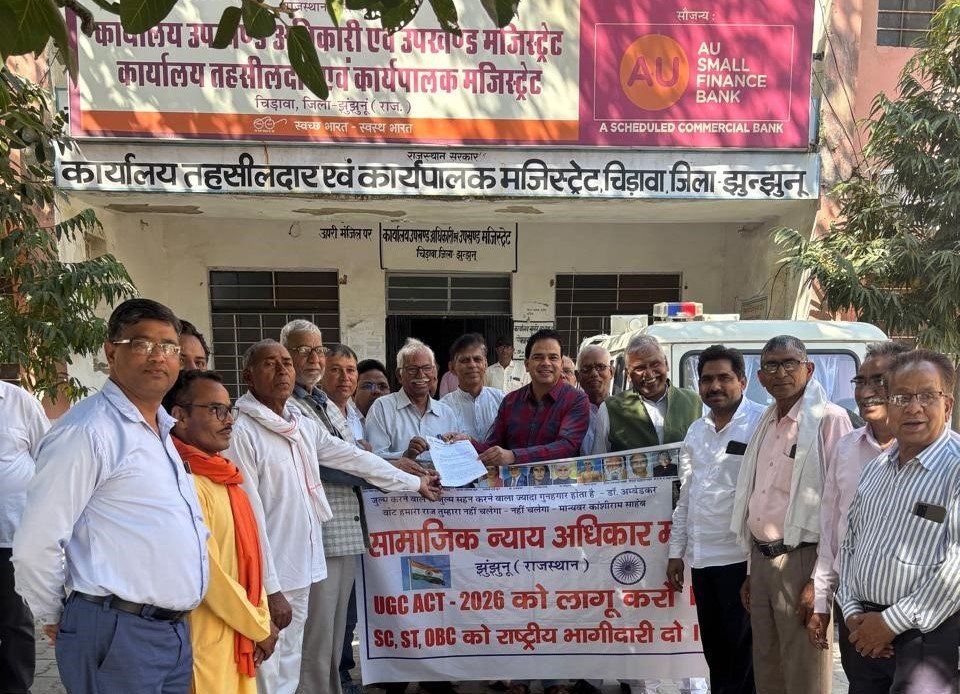
In a significant development, members of the Dr. Ambedkar Anusuchit Jati Adhikari Karmachari Association (AJAK) & Samajik Nyay Adhikar Manch along with representatives of several social organizations in Chirawa subdivision of Jhunjhunu district, Rajasthan, submitted a memorandum addressed to the President of India through the Sub-Divisional Magistrate (SDM).
The delegation included Balveer Singh Kala, Advocate Vijay Gurava, President of the Bar Association, Advocate Suresh Dandia, Advocate Arvind Bhagat, Advocate Vedprakash, Babulal Councilor, Rohitash Mehrania, Anil Mehrania, Mahesh Mehrania, Jai Mal Siroha, Budhram Mehrania, Sitaram Panwar, Satyanarayan Dholpuria, Raghuveer Singh, Hanuman Singh Danodia, Sant Kumar, Hariram Maharia, Sajjan Maharia, Shiv Prasad Maharia, Vinod Mehrania, Anil Narnolia, Prahalad Singh and representatives of various social organizations.
The memorandum calls for the immediate enactment of the UGC Equity Regulations for 2026 and strict implementation of new University Grants Commission regulations to promote equality in higher education.
The demand reflects a growing national conversation about discrimination in educational institutions and the need for systemic reforms to protect the constitutional rights of students belonging to Scheduled Castes (SC), Scheduled Tribes (ST), and Other Backward Classes (OBC).
The demand for the Rohith Vemula Act 2026 stems from long-standing concerns regarding discrimination in universities and higher education institutions across India.
Many social justice organizations argue that despite constitutional guarantees of equality, students from historically marginalized communities continue to face barriers such as:
- Social exclusion
- Institutional discrimination
- Lack of grievance redressal mechanisms
- Underrepresentation in faculty positions
According to activists, a strong legal framework is necessary to ensure that educational institutions remain inclusive and equitable for all students.
Memorandum Submitted in Chirawa, Jhunjhunu
In Rajasthan’s Jhunjhunu district, the Dr. Ambedkar Anusuchit Jati Adhikari Karmachari Association (AJAK) & Samajik Nyay Adhikar Manch along with various community organizations submitted a memorandum urging the central government to enact the Rohith Vemula Act 2026 (UGC Equity Regulations for 2026).
The memorandum was submitted to the Sub-Divisional Magistrate (SDM) of Chirawa, who will forward it to the President of India.
Representatives of several social organizations were present in the delegation, including community leaders, lawyers, and public representatives.
The delegation emphasized that historically marginalized communities have remained socially and educationally backward for centuries, and therefore require strong institutional protection to ensure equal participation in education.
Constitutional Provisions Supporting Educational Equality
The memorandum strongly referred to several provisions of the Constitution of India that guarantee equality and social justice.
Article 14 – Right to Equality
Article 14 ensures equality before the law and equal protection of laws to all citizens.
More details about constitutional equality provisions can be accessed through the official portal of the Government of India:
https://www.india.gov.in
Article 15 – Prohibition of Discrimination
Article 15 prohibits discrimination on the basis of religion, race, caste, sex, or place of birth.
It also allows the state to make special provisions for socially and educationally backward classes.
Article 16 – Reservation in Public Employment
Article 16(4) provides reservation in government jobs for SC, ST, and OBC communities to ensure fair representation.
Article 17 – Abolition of Untouchability
Article 17 declares untouchability as a punishable offense, reinforcing the principle of social equality.
Article 335 – Claims of SC/ST in Services
Article 335 mandates that the claims of SC/ST communities must be considered in public employment while maintaining administrative efficiency.
These constitutional provisions form the legal foundation behind the demand for the Rohith Vemula Act 2026.
Rohith Vemula Case and the National Debate on Campus Discrimination
The demand for the Rohith Vemula Act 2026 is closely linked to the death of Rohith Vemula, a PhD scholar at the University of Hyderabad whose suicide in January 2016 sparked nationwide protests and debates on caste discrimination in higher education.
His death triggered a broader discussion about institutional bias and the treatment of marginalized students within universities.
Civil society groups, student unions, and political leaders have repeatedly demanded stronger laws to prevent such incidents and ensure accountability within academic institutions.
Advocates for the legislation argue that such a law could act as a deterrent against discrimination and harassment.
Some political leaders and activists have also called for legal reforms to address cases similar to those of Rohith Vemula, Payal Tadvi, and other students who allegedly faced discrimination in educational institutions.
Key Demands Raised in the Memorandum
The memorandum submitted in Chirawa highlights several major demands related to the Rohith Vemula Act 2026 and educational reforms.
1. Enactment of Rohith Vemula Act 2026
The organizations demanded the enactment of a comprehensive law to prevent discrimination against SC, ST, and OBC students in universities.
2. Strict Implementation of UGC Regulations
The University Grants Commission should implement the Promotion of Equity in Higher Education Institutions Regulations 2026 strictly.
3. Equal Opportunity Helplines
Every higher education institution should establish a 24-hour equality helpline to address cases of discrimination.
4. National Monitoring Committee
The memorandum calls for a national monitoring committee to track discrimination complaints and ensure accountability.
5. Transparent Recruitment Processes
Universities should ensure that reserved positions are filled fairly and without prejudice.
UGC Equity Regulations 2026 and Institutional Responsibility
The University Grants Commission has introduced regulations aimed at preventing discrimination and promoting equity in higher education institutions.
These regulations were developed after directions from the Supreme Court and concerns raised in public interest litigations regarding caste discrimination in universities.
The regulations emphasize:
- Institutional grievance redressal systems
- Equal opportunity cells
- Monitoring mechanisms
- Protection of marginalized students
However, activists argue that stronger enforcement mechanisms are still required.
Vacant Reserved Posts in Universities: A Growing Concern
One of the major issues raised in the memorandum is the large number of vacant reserved posts in universities.
According to the representatives, many faculty positions reserved for SC, ST, and OBC candidates remain vacant due to various administrative practices.
These include:
- Selection boards declaring candidates “Not Found Suitable (NFS)”
- Low interview scores despite eligibility
- Delays in recruitment processes
Activists claim that such practices undermine the goal of fair representation in higher education institutions.
They have demanded that the government launch a special recruitment drive to fill reserved posts in universities across India.
National Protests and Student Movements
The debate around the Rohith Vemula Act 2026 has also led to protests and demonstrations in several universities.
Student groups and civil society organizations argue that discrimination in educational institutions can have severe psychological and social consequences for students from marginalized backgrounds.
Protests and discussions across campuses have highlighted the importance of building inclusive and safe academic environments.
Many activists believe that stronger legal safeguards are necessary to prevent discrimination and ensure equal opportunities for all students.
Why the Rohith Vemula Act 2026 Is Seen as a Landmark Reform
Supporters of the proposed Rohith Vemula Act 2026 believe that it could become a transformative step in India’s higher education system.
The law is expected to:
- Strengthen anti-discrimination mechanisms
- Protect the rights of marginalized students
- Improve representation in academic institutions
- Promote inclusive campus environments
Experts argue that the legislation could help create a more equitable education system that reflects the constitutional values of justice and equality.
The Road Ahead for Inclusive Higher Education in India
The demand raised in Chirawa reflects a broader national movement seeking structural reforms in higher education.
As discussions around the Rohith Vemula Act 2026 continue, policymakers, educational institutions, and civil society groups will need to work together to ensure that universities remain spaces of learning, equality, and dignity.
The debate also highlights a fundamental question for India’s education system:
How can universities ensure that every student — regardless of caste, background, or social status — has an equal opportunity to succeed?
The answer may lie in stronger laws, transparent institutional policies, and a renewed commitment to the constitutional ideals of equality and social justice.

Contents
US, Jan.05,2026:Donald Trump Praises Modi during an interaction with journalists aboard Air Force One, describing the Indian Prime Minister as “a very good person” who understands how to keep diplomatic relations smooth. Trump stated that Modi “wanted to make me happy” and acknowledged that the Indian leader was aware of Washington’s displeasure over Russia-related energy purchases.
However, Trump quickly followed his praise with a blunt warning. He said that if India does not fully cooperate with the US position on Russia’s oil exports, America could increase tariffs on Indian goods beyond the already steep 50 percent.
This mixture of admiration and pressure has once again placed India in a delicate position.
Why Trump’s Praise Still Worries India
Although Donald Trump Praises Modi, Indian policymakers are far more focused on the economic consequences of his statements. Praise from Trump has historically been unpredictable and often followed by aggressive trade actions.
India already faces high tariffs on several export categories, including steel, aluminium, and select manufactured goods. Trump’s renewed warning signals that economic pressure could intensify, potentially impacting billions of dollars in bilateral trade.
The Russia Oil Factor Behind US Anger
At the heart of the issue is India’s continued purchase of discounted Russian crude oil.
After Western sanctions targeted Moscow, India increased its Russian oil imports to stabilize domestic fuel prices and control inflation. Trump acknowledged that India has reduced some purchases but insisted that this was “not enough.”
According to international energy data reported by outlets such as Reuters and Bloomberg, India remains one of Russia’s top oil buyers despite sanctions.
Trump’s Tariff Threat
Donald Trump Praises Modi, yet his tariff threats are anything but symbolic. During his previous term, Trump used tariffs aggressively as a negotiation weapon.
He has already imposed up to 50% tariffs on select Indian goods. Now, he has hinted that these could rise further if India does not align more closely with US sanctions on Russia.
Trade analysts warn that such a move could
- Hurt Indian exporters
- Raise costs for American consumers
- Strain diplomatic ties
India’s Energy Compulsion Explained
India has repeatedly clarified that Russian oil imports are driven by national interest, not political alignment.
With a population exceeding 1.4 billion, India’s energy demand is massive. Cheaper Russian oil has helped the country:
- Control fuel inflation
- Reduce fiscal pressure
- Maintain economic growth
Indian officials have emphasized that energy security is non-negotiable.
Where They Stand
Trade negotiations between India and the US began earlier this year with hopes of resolving long-standing disputes.
However, talks stalled after the US imposed heavy tariffs. When Trump and Modi spoke on a phone call weeks ago, both leaders expressed optimism about strengthening trade relations despite disagreements.
Now, Trump’s renewed warning threatens to derail progress once again.
Venezuela Oil Angle and Trump’s Bigger Strategy
Trump’s statement also comes in the context of renewed US focus on Venezuela’s massive oil reserves.
Venezuela holds approximately 303 billion barrels of oil, the largest reserves globally. After recent US military actions and diplomatic shifts, Trump wants to revive Venezuelan oil production to reduce global dependence on Russian crude.
This strategy directly conflicts with India’s current sourcing model.
Global Reactions to Donald Trump Praises Modi Statement
International observers see Trump’s remarks as part of a broader pressure campaign.
European allies remain divided on how strictly to enforce energy sanctions, while Asian economies like India prioritize stability. Analysts believe Trump is using India as a high-profile example to deter others from engaging with Russia.
What This Means for India’s Economy
If Trump follows through on his threats, India could face
- Export slowdowns
- Currency pressure
- Higher manufacturing costs
- Investor uncertainty
Sectors such as textiles, engineering goods, and pharmaceuticals could be particularly affected.
Strategic Implications for India-US Relations
Donald Trump Praises Modi, but strategic trust depends on consistency, not compliments.
India values its partnership with the US in defense, technology, and geopolitics, especially in the Indo-Pacific region. However, repeated economic pressure risks pushing India toward strategic autonomy rather than alignment.
Expert Opinions on Trump’s Warning
Foreign policy experts argue that Trump’s approach is transactional.
According to analysts quoted in The New York Times, Trump often mixes praise with pressure to gain leverage. India, however, has shown resilience and flexibility without compromising its core interests.
What Lies Ahead for India
India now faces difficult choices
- Continue Russian oil imports and risk tariffs
- Reduce imports and face higher energy costs
- Diversify suppliers while negotiating exemptions
Diplomatic engagement with Washington will intensify in the coming weeks.
Donald Trump Praises Modi, but behind the compliments lies a hard geopolitical and economic reality. Trump’s warning has heightened India’s tension at a time when global energy markets are fragile and trade alliances are under stress.
For India, the challenge is to balance strategic autonomy with economic pragmatism—without allowing praise or pressure to dictate national interest.
Contents
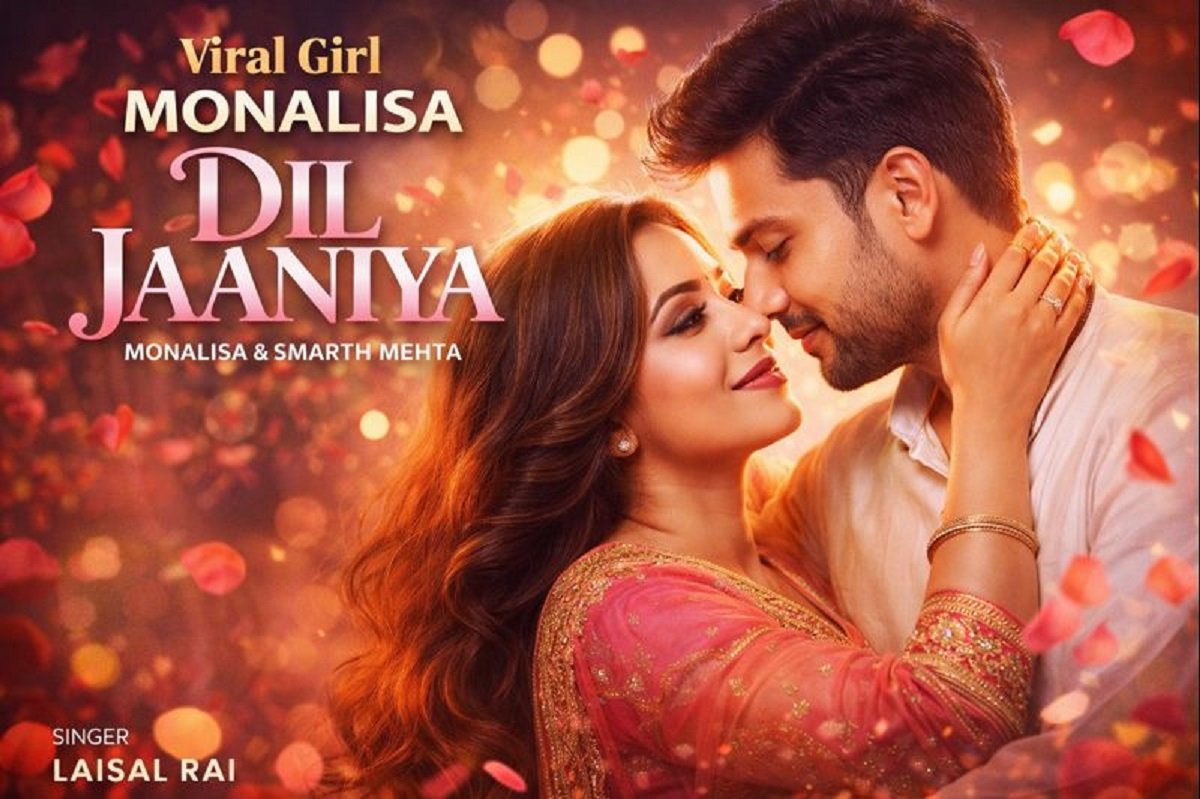
Mumbai, Jan.05,2026:Viral Girl Monalisa Song Dil Jaaniya marks a fresh chapter in the journey of a young woman whose life changed unexpectedly at the Mahakumbh 2025. From being admired for her innocent smile to now leading a romantic music video, Monalisa’s transformation reflects the power of social media in shaping modern stardom.
The teaser of Dil Jaaniya doesn’t just introduce a song—it presents a narrative filled with love, emotions, and simplicity, which resonates deeply with audiences across age groups.
Who Is Viral Girl Monalisa
Before Viral Girl Monalisa Song Dil Jaaniya, Monalisa was known nationwide as the “Mahakumbh Viral Girl.” Her expressive brown eyes, natural beauty, and calm demeanor made her stand out in a sea of viral faces.
Unlike many overnight sensations, Monalisa managed to sustain public interest by staying grounded, selective, and authentic—qualities that now reflect in her artistic choices.
How Mahakumbh 2025 Changed Monalisa’s Life
Mahakumbh 2025 proved to be a turning point. A few candid clips and photographs spread rapidly online, transforming Monalisa into a viral icon overnight.
Major media houses and entertainment portals began covering her journey, similar to how viral personalities are often spotlighted on platforms like:
This exposure laid the foundation for Viral Girl Monalisa Song Dil Jaaniya and her entry into professional entertainment.
Song Dil Jaaniya Teaser Goes Viral
The teaser of Viral Girl Monalisa Song Dil Jaaniya created instant excitement. Released across social media platforms, it quickly amassed thousands of views, shares, and comments.
What stands out is the emotional depth conveyed in just a few seconds—soft visuals, romantic undertones, and Monalisa’s expressive performance leave a lasting impression.
On-Screen Chemistry with Smarth Mehta
One of the biggest highlights of Viral Girl Monalisa Song Dil Jaaniya is her pairing with Smarth Mehta. Their chemistry feels effortless and natural, drawing viewers into the story.
Fans have praised how their interactions don’t feel forced, a quality often missing in debut performances. Smarth Mehta’s charm complements Monalisa’s innocence beautifully.
Emotional Storytelling in Song Dil Jaaniya
Viral Girl Monalisa Song Dil Jaaniya focuses heavily on emotions—love, longing, innocence, and connection. The teaser hints at a tender love story that unfolds gradually, making viewers eager for the full release.
The storytelling approach aligns with modern romantic music trends while maintaining a classic emotional core.
Fan Reactions Flood Social Media
Soon after the teaser launch, social media platforms were flooded with reactions. Fans repeatedly watched the teaser, commenting on Monalisa’s expressions and the song’s soothing vibe.
Hashtags related to Viral Girl Monalisa Song Dil Jaaniya began trending, proving her sustained popularity beyond a one-time viral moment.
Singer Laisal Rai’s Soulful Contribution
The song features vocals by singer Laisal Rai, whose soulful voice adds emotional depth to Viral Girl Monalisa Song Dil Jaaniya.
His singing blends seamlessly with the visuals, enhancing the romantic mood and making the teaser memorable. Music critics believe his voice could be a major reason behind the song’s emotional appeal.
Visual Aesthetics and Music Composition
From soft lighting to romantic frames, the visuals of Viral Girl Monalisa Song Dil Jaaniya are carefully crafted. The background score, melody, and cinematography together create a visually pleasing and emotionally engaging experience.
Such attention to detail reflects a growing professionalism in Monalisa’s projects.
Why Dil Jaaniya Feels Different
Unlike many debut songs, Viral Girl Monalisa Song Dil Jaaniya doesn’t rely solely on glamour. Instead, it highlights simplicity, raw emotions, and relatable storytelling—qualities that originally made Monalisa famous.
This consistency strengthens her personal brand.
Monalisa’s Journey into the Music Industry
Before Viral Girl Monalisa Song Dil Jaaniya, Monalisa had already appeared in another music video. Each project shows visible growth in her confidence and screen presence.
Industry insiders believe she is being groomed carefully rather than rushed into multiple projects.
Upcoming Film with Sanoj Mishra
Adding to the excitement, Monalisa is also set to appear in an upcoming film by director Sanoj Mishra. This move signals her transition from music videos to mainstream cinema.
If successful, Viral Girl Monalisa Song Dil Jaaniya could serve as a strong bridge between her viral fame and a stable acting career.
Can Dil Jaaniya Be a Career Milestone
Many fans and critics believe Viral Girl Monalisa Song Dil Jaaniya could become a milestone in her career. It showcases her ability to carry emotions, maintain screen presence, and connect with audiences.
If the full song matches the teaser’s promise, it may establish Monalisa as a serious contender in the entertainment industry.
Viral Girl Monalisa Song Dil Jaaniya proves that Monalisa is more than just a fleeting internet sensation. With the right balance of innocence, emotion, and performance, she continues to win hearts.
Contents
Jaipur, Jan.05,2026:Lemon Tree Plantation Guide is emerging as one of the most searched home-gardening topics across India as urban households increasingly turn toward terrace gardening and organic fruit production. Lemon, known for its year-round utility, medicinal value, and high vitamin-C content, is among the easiest fruit trees to grow at home.
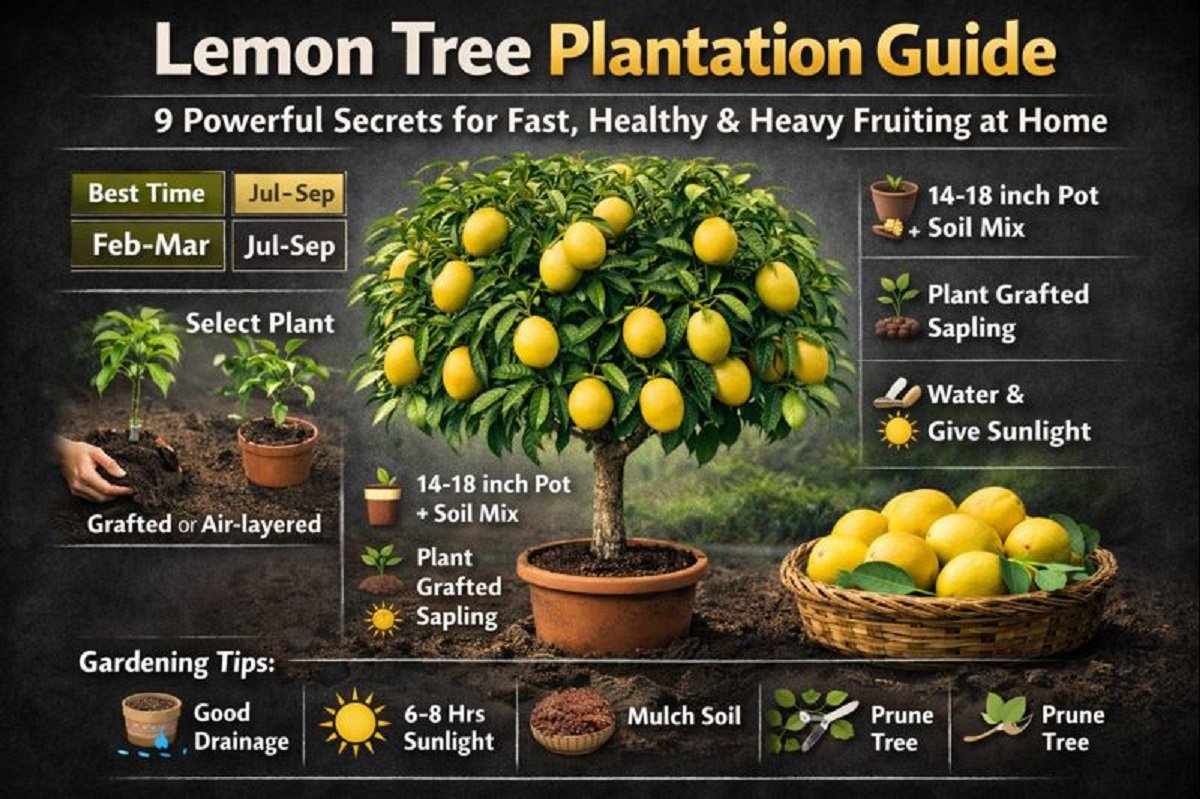
This Lemon Tree Plantation Guide explains when, where, and how to plant a lemon tree in pots or soil using scientifically proven methods followed by horticulture experts.
Why Lemon Tree Plantation Is Trending in 2026
According to gardening experts and agricultural advisories, lemon trees are
- Fast-growing
- Suitable for pots
- Productive within 12–18 months
- Ideal for Indian climate
With rising food adulteration concerns, the Lemon Tree Plantation Guide has become a must-read for health-conscious families.
Best Time to Plant
Choosing the correct planting season is critical.
Best Months
- February–March
- July–September
These periods provide optimal temperature and humidity, ensuring faster root establishment and healthy growth.
Ideal Soil & Pot Selection
Soil Requirements
- Well-drained sandy loam soil
- Rich in organic matter
- Slightly acidic to neutral pH
Soil Mix
- 40% cow dung manure or vermicompost
- 10% river sand
- 50% garden soil
Good drainage is a non-negotiable rule in every professional Lemon Tree Plantation Guide.
Choosing the Right Plant
Always buy
- Grafted (कलम किया हुआ) or
- Air-layered lemon plant
Why
- Faster fruiting
- Strong disease resistance
- Uniform fruit quality
Experts from horticulture departments recommend grafted citrus plants for home gardens.
Step-by-Step Plantation Method
Step 1: Pot Preparation
- Use a 14–18 inch pot or grow bag
- Ensure multiple drainage holes
Step 2: Planting the Lemon Tree
- Remove plant gently from nursery bag
- Plant at the same depth as earlier
- Keep the grafting joint above soil level
- Press soil lightly around the roots
Step 3: Initial Watering
- Water immediately after planting
- Keep soil moist, not waterlogged
This phase is crucial in the Lemon Tree Plantation Guide.
Watering Schedule
- Summer: Every 2–3 days
- Winter: Once a week
- Rainy season: Only if soil is dry
Excess water can cause root rot — the most common lemon plant killer.
Sunlight Requirement
Lemon trees need
- 6–8 hours of direct sunlight daily
Balcony, terrace, or open garden locations work best.
Fertilizer & Nutrition Management
Apply organic fertilizers every 1–2 months
- Vermicompost
- Mustard cake solution
- Banana peel compost
- Neem cake
Healthy nutrition ensures continuous flowering and fruiting as explained in this Lemon Tree Plantation Guide.
Pruning & Growth Control Techniques
- Remove dead or diseased branches
- Light pruning promotes new shoots
- Best time: After harvesting
Pruning keeps the lemon tree compact and productive.
Common Problems and Their Solutions
Flower Drop
Causes
- Lack of moisture
- Nutrient deficiency
Solution
- Maintain soil moisture
- Apply organic fertilizer
Yellow Leaves
Cause
- Overwatering or poor drainage
Solution
- Improve soil aeration
Benefits of Growing Lemon Tree at Home
- Fresh chemical-free lemons
- Saves money
- Improves air quality
- Enhances home aesthetics
- Year-round harvesting
Expert Tips for Faster Fruiting
- Mulch soil to retain moisture
- Use Epsom salt occasionally
- Avoid chemical fertilizers
- Rotate pot for uniform sunlight
This Lemon Tree Plantation Guide proves that growing lemons at home is not complicated if the right techniques are followed. With proper timing, soil preparation, sunlight, and organic care, your lemon plant can produce healthy fruits for years.
Contents
Jaipur,Jan.05,2026:Mango Plant Plantation Guide is becoming one of the most searched gardening topics in India as more people turn towards home gardening, organic fruits, and sustainable living. Mango, known as the King of Fruits, holds deep cultural, nutritional, and economic value.
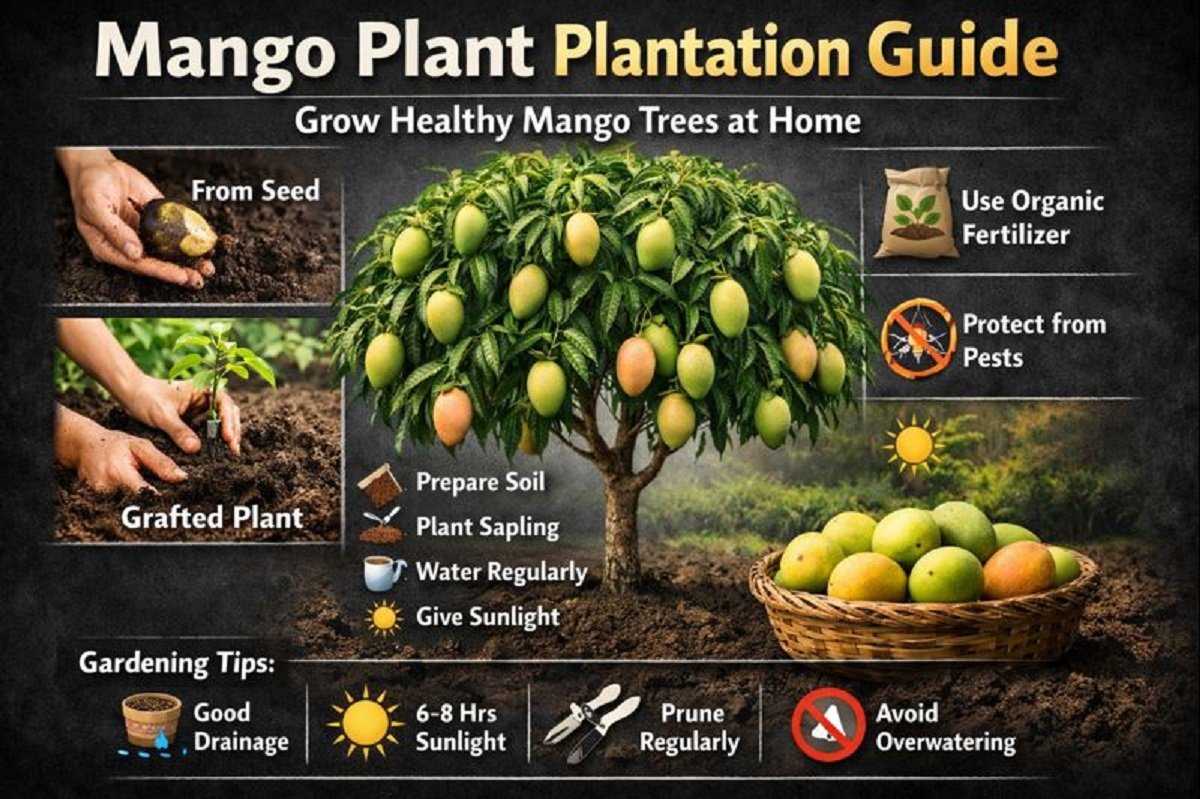
Whether you live in a house with a backyard or an apartment with a terrace, this Mango Plant Plantation Guide will help you grow a healthy mango tree using either a seed (गुठली) or a nursery-grown grafted plant.
Why Mango Plantation Is Gaining Popularity
The rising demand for chemical-free fruits and the joy of growing food at home have made mango plantation a trending topic. According to horticulture experts and agricultural advisories, mango trees are hardy, long-living, and highly rewarding when planted correctly.
This Mango Plant Plantation Guide explains simple yet powerful methods that even beginners can follow.
Best Climate & Soil
- Climate: Tropical to subtropical
- Temperature: 24°C – 35°C
- Soil Type: Well-drained loamy or sandy loam
- Soil pH: 5.5 – 7.5
Good drainage is critical. Waterlogged soil can damage mango roots permanently.
Mango Plant Plantation Guide Using Seed (गुठली से पौधा लगाना)
Growing mango from seed is economical and educational, though it takes more time to bear fruit.
Step 1: Seed Preparation
- Wash the mango stone thoroughly
- Dry it for 1–2 days
- Carefully break the outer shell
- Extract the inner seed
- Wrap it in a moist cloth for germination
This step is crucial in the Mango Plant Plantation Guide.
Step 2: Pot & Soil Preparation
- Use a 12–18 inch pot with drainage holes
- Mix:
- Garden soil
- Compost
- Well-decomposed cow dung manure
Healthy soil is the foundation of successful mango growth.
Step 3: Planting the Seed
- Plant the germinated seed 2 inches deep
- Cover lightly with soil
- Water gently
Step 4: Early Care
- Keep the pot in partial shade
- Maintain moisture, not excess water
- Once the plant grows stronger, shift it to a 45 cm deep pot or garden soil
This stage defines success in the Mango Plant Plantation Guide.
Mango Plant Plantation Guide Using Nursery (Grafted) Plant
For faster fruiting, experts recommend grafted plants.
Step 1: Selecting the Right Plant
- Choose a healthy, disease-free grafted mango plant
- Preferred varieties: Alphonso, Dasheri, Langra, Kesar
Step 2: Pit Preparation
- Dig a pit of 1x1x1 feet
- Best done during summer
- Mix excavated soil with:
- Compost
- Cow dung manure
- Trichoderma (bio-fungicide)
Step 3: Plantation
- Place plant gently without damaging roots
- Fill pit with prepared soil
- Press soil lightly around base
Step 4: Watering & Shade
- Water immediately
- Provide shade for initial days
- Gradually expose to sunlight
This method is widely recommended in professional Mango Plant Plantation Guide manuals.
Watering Schedule
- Initial stage: Water every 2–3 days
- Established plants: Once a week
- Avoid waterlogging
Overwatering is one of the biggest mistakes in mango cultivation.
Sunlight & Location
- Young plants need protection from harsh sunlight
- Mature mango trees need 6–8 hours of direct sunlight daily
Sun exposure directly affects flowering and fruit quality.
Fertilizer & Nutrition Management
Apply organic manure during
- July–August
- September
Recommended nutrients:
- Compost
- Vermicompost
- Neem cake
Balanced nutrition is a core principle of any Mango Plant Plantation Guide.
Protection From Pests & Animals
- Use fencing or bamboo support
- Protect young plants from goats and cattle
- Apply neem oil spray for pest control
Common Mistakes to Avoid
- Excess watering
- Poor drainage
- Ignoring sunlight needs
- Planting in very small containers
Avoiding these mistakes ensures success with this Mango Plant Plantation Guide.
Benefits of Growing Mango at Home
- Chemical-free fruits
- Long-term investment
- Environmental benefits
- Shade and greenery
- Emotional satisfaction
Expert Gardening Tips
- Mulch soil to retain moisture
- Prune lightly after 2–3 years
- Use organic pesticides only
This Mango Plant Plantation Guide is designed to help beginners and gardening enthusiasts grow mango trees successfully at home. With patience, proper care, and organic practices, your mango tree will thrive for decades and reward you with delicious fruits.
Breaking News
Treasure in Tonk creates massive excitement after a mysterious deg is found during excavation in Deoli village-
Contents
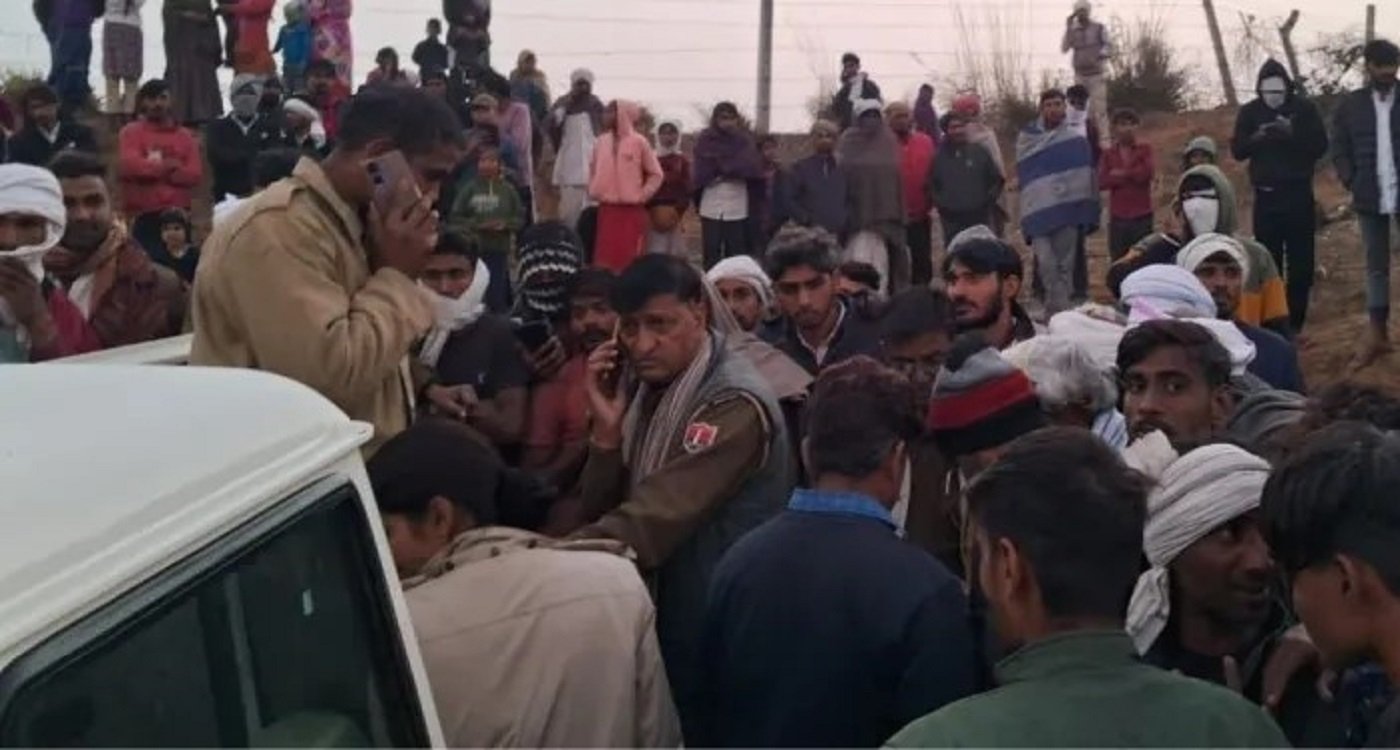
Tonk, Jan.05,2026:The story of Treasure in Tonk began on Saturday evening in Deoli village, located in the Siandara gram panchayat of Niwai, Tonk district. Around 4 PM, villagers noticed something highly unusual near a grazing land close to agricultural fields.
Fresh rose petals scattered on the ground, incense sticks, and a pair of slippers instantly raised suspicion. Such symbolic items are often associated with rituals, leading locals to fear something ominous — possibly a buried body.
Treasure in Tonk

As word spread, villagers gathered in large numbers. Sarpanch Ramsahay Meena was informed immediately. Understanding the seriousness of the situation, he contacted the Niwai police and administrative officials without delay.
Treasure in Tonk Takes Shape
Authorities decided to dig the spot using a JCB machine under supervision. Instead of a body, the excavation revealed a large metallic deg (cauldron) buried underground.
The moment the deg surfaced, Treasure in Tonk rumors exploded.
Within minutes, hundreds of people gathered at the site, convinced that the deg could contain gold, silver, coins, or ancient valuables.
Police and Administration Step In
To prevent chaos, heavy police deployment was arranged. Station House Officer Ghasiram, Tehsildar Naresh Gurjar, land records officials, and a full police force arrived on site.
The deg was seized immediately and transported safely to the Niwai police station before being moved under tight security.
Treasure in Tonk Was Moved to the District Treasury
Tehsildar Naresh Gurjar confirmed that the Additional District Collector ordered the deg to be stored inside the district treasury. Two armed guards were posted outside to ensure no tampering or unauthorized access.
Such steps align with standard government procedures, as outlined by
- Archaeological Survey of India (ASI)
- Rajasthan Revenue Department
Archaeological Department on Alert
The deg will not be opened until a certified team from the Archaeological Department arrives. ASI experts will
- Determine the age of the deg
- Identify its material composition
- Examine historical relevance
- Decide ownership under the Ancient Monuments and Archaeological Sites and Remains Act, 1958
This legal framework ensures protection of heritage objects across India.
What Could the Treasure in Tonk Actually Be
Experts believe the deg could be
- A ritual vessel from medieval times
- A storage container used during princely rule
- A religious artifact buried intentionally
- Or simply a large cooking vessel with no treasure
However, Rajasthan’s long history of wars and royal wealth makes Treasure in Tonk a plausible possibility.
Hidden Treasure in Rajasthan
Rajasthan has witnessed numerous similar discoveries in districts like Jaipur, Jodhpur, and Bikaner. Many rulers buried valuables during invasions to protect wealth.
Public Reaction to Treasure in Tonk
Local residents expressed mixed emotions
- Excitement about possible wealth
- Fear of legal restrictions
- Hope for historical recognition
Social media platforms quickly picked up the story, making Treasure in Tonk trend across regional news portals.
Legal Process After Treasure in Tonk Discovery
If valuables are found
- Ownership will be decided by the government
- The site may be declared protected
- Villagers may receive recognition but not ownership
This follows national heritage laws strictly enforced by ASI.
What Happens Next in Treasure in Tonk Case
ASI team arrival
Scientific examination
Official documentation
Public disclosure of findings
Treasure in Tonk is more than a viral headline—it’s a reminder of Rajasthan’s rich and mysterious past. Whether the deg contains gold or just history, its discovery has already added a new chapter to Tonk’s legacy.
Breaking News
Gold Silver Rate Today 5 January 2026 shows a sharp fall in gold and silver prices across major Indian cities-
Contents
New Delhi, Jan.05,2026:The Gold Silver Rate Today 5 January 2026 reflects a temporary pullback after one of the strongest bull runs in decades. Throughout 2025, gold prices soared by nearly 76% domestically, while international gold prices surged almost 70%, marking their strongest annual performance since 1979.
Silver outperformed even gold, registering an astonishing 140% rise in both domestic and global markets last year.
However, early 2026 has started with price consolidation, giving consumers a breather.
Gold Prices Fall After 2025’s Record Surge
The fall in gold prices today does not indicate weakness but rather profit booking and market stabilization.
Bullion traders say that investors who accumulated gold during 2025’s rally are now locking in gains, resulting in short-term price softness.
Despite today’s dip, gold continues to trade at historically elevated levels.
Silver Rate Today 5 January 2026
The Silver Rate Today 5 January 2026 mirrors gold’s decline. Silver is trading at ₹2,40,900 per kilogram across major Indian cities.
Silver prices often experience sharper swings due to
- Industrial demand fluctuations
- Investor speculation
- Lower liquidity compared to gold
Experts note that silver’s earlier explosive growth made a correction inevitable.
Gold Price Today 24, 22 & 18 Carat Rates
As per the Gold Silver Rate Today 5 January 2026, here are the latest national benchmark prices:Gold / Silver Price (₹) 24 Carat Gold ₹1,35,960 22 Carat Gold ₹1,24,640 18 Carat Gold ₹1,02,010 Silver ₹2,40,900
Prices may vary slightly due to local taxes and jeweller margins.
City-Wise Gold Rates Across India
24 Carat Gold Rate Today (Per 10 Grams)
| City | 24 Carat (₹) | 22 Carat (₹) | 18 Carat (₹) |
| Lucknow | 1,35,960 | 1,24,640 | 1,02,010 |
| Jaipur | 1,35,960 | 1,24,640 | 1,02,010 |
| Delhi | 1,35,960 | 1,24,640 | 1,02,010 |
| Patna | 1,35,860 | 1,24,540 | 1,01,910 |
| Mumbai | 1,35,810 | 1,24,490 | 1,01,860 |
| Ahmedabad | 1,35,860 | 1,24,540 | 1,01,910 |
| Pune | 1,35,810 | 1,24,490 | 1,01,860 |
| Kolkata | 1,35,810 | 1,24,490 | 1,01,860 |
| Meerut | 1,35,960 | 1,24,640 | 1,02,010 |
| Ludhiana | 1,35,960 | 1,24,640 | 1,02,010 |
City-Wise Silver Rate Today
Silver Rate Today 5 January 2026 (Per Kg)City Silver Rate (₹) Lucknow 2,40,900 Jaipur 2,40,900 Delhi 2,40,900 Patna 2,40,900 Mumbai 2,40,900 Ahmedabad 2,40,900 Pune 2,40,900 Kolkata 2,40,900 Meerut 2,40,900 Ludhiana 2,40,900
Why Gold Silver Rate Today 5 January 2026 Declined
Several global and domestic factors influenced the dip in the Gold Silver Rate Today 5 January 2026
- Profit booking after massive 2025 gains
- Short-term strengthening of the US dollar
- Reduced safe-haven buying
- Cooling geopolitical tensions
However, the long-term outlook remains positive.
Central Banks and Global Demand Impact
One of the strongest drivers behind last year’s rally was aggressive gold buying by central banks, especially in emerging markets.
Even with today’s dip, central banks continue to accumulate gold as a hedge against currency volatility.
US Federal Reserve Rate Cut Expectations
Expectations of interest rate cuts by the US Federal Reserve had fueled gold prices throughout 2025.
As markets reassess the timing and scale of future rate cuts, gold prices have temporarily softened.
Lower interest rates generally support gold, as the metal yields no interest.
Geopolitical Factors Affecting Gold and Silver
Gold and silver thrive during uncertainty.
- Global trade tariffs
- Middle East tensions
- Currency instability
had boosted prices earlier. Reduced immediate risk perception has eased prices marginally today.
ETF Investments and Market Volatility
Strong inflows into Gold and Silver ETFs pushed prices higher last year. Any slowdown in ETF buying tends to cause short-term corrections like the one seen in the Gold Silver Rate Today 5 January 2026.
Domestic vs International Gold Price Trends
- Domestic gold prices rose nearly 76% in 2025
- International gold prices surged around 70%
- Silver prices jumped approximately 140%
Today’s decline is minor compared to the magnitude of last year’s rally.
Is This the Right Time to Buy Gold
Experts believe the dip in the Gold Silver Rate Today 5 January 2026 offers a strategic buying opportunity, especially for
- Wedding purchases
- Long-term investors
- Portfolio diversification
Staggered buying is advised to manage volatility.
Expert Outlook for 2026
Market analysts forecast
- Continued volatility
- Strong long-term fundamentals
- Possible new highs if global uncertainty resurfaces
Gold is expected to remain a preferred asset for wealth preservation.
What Buyers and Investors Should Know
The Gold Silver Rate Today 5 January 2026 signals a healthy correction, not a collapse. After an extraordinary year, prices are stabilizing—creating opportunities rather than risks.
For investors, discipline and patience remain key. For buyers, today’s softer rates may be the chance they were waiting for.

Contents
China, Jan.03,2026:BYD Overtakes Tesla — a headline that would have seemed unthinkable just a few years ago — is now a defining moment for the global electric vehicle (EV) industry.
For the first time in history, China’s BYD has surpassed Elon Musk’s Tesla in annual global electric car sales, marking a dramatic power shift in one of the world’s most competitive industries.
The numbers tell a compelling story. Tesla confirmed that its 2025 vehicle deliveries fell by nearly 9%, dropping to 1.64 million vehicles worldwide. Meanwhile, BYD reported that its battery-powered EV sales surged nearly 28%, crossing 2.25 million units.
This milestone has sent shockwaves across Wall Street, Silicon Valley, and global auto markets.
How BYD Overtakes Tesla in Global Sales for the First Time
The fact that BYD Overtakes Tesla is not just symbolic — it is statistical, strategic, and structural.
BYD’s success stems from a powerful mix of
- Aggressive pricing
- Vertical integration in battery manufacturing
- Rapid product launches
- Government-supported EV infrastructure in China
Tesla, once the undisputed EV leader, now faces slowing demand, subsidy losses, and intensifying competition from Chinese manufacturers that have mastered cost efficiency.
According to data cited by multiple global outlets including Reuters and Bloomberg, BYD’s EV momentum has been building steadily for years.
Tesla’s Alarming Sales Decline in 2025
Tesla’s 2025 performance was troubling by almost every metric.
Key setbacks included
- Second consecutive year of falling deliveries
- 16% sales drop in Q4 2025 alone
- Loss of key government EV subsidies worth up to $7,500 per vehicle in some markets
These challenges made Tesla increasingly vulnerable just as competitors like BYD accelerated.
Wall Street analysts have already cut Tesla’s 2026 delivery forecasts, reflecting growing skepticism about near-term recovery.
BYD’s Explosive Growth Strategy Explained
BYD’s rise did not happen overnight.
Founded in Shenzhen, BYD built its empire by controlling its entire supply chain, especially batteries — the most expensive EV component.
This allowed BYD to
- Offer EVs at significantly lower prices
- Maintain margins despite price wars
- Scale faster than Western competitors
Even as its growth rate slowed slightly in 2025 due to fierce domestic competition, BYD still outperformed every global rival.
This is a key reason BYD Overtakes Tesla became inevitable rather than accidental.
Why Chinese EV Makers Are Winning on Price
Chinese automakers like BYD, Geely, and MG are reshaping global EV economics.
They consistently undercut Western brands while offering
- Competitive driving range
- Advanced infotainment
- Plug-in hybrid options
Tesla responded by launching cheaper versions of its best-selling models in the US in October, but analysts say this move came too late and squeezed margins further.
Elon Musk’s Political Distractions and Investor Anxiety
Another factor behind Tesla’s struggles is leadership focus.
In early 2025, Elon Musk took on a role heading the US government’s Department of Government Efficiency under President Donald Trump.
This sparked concerns among investors that Musk’s attention was divided across
- Tesla
- SpaceX
- X (formerly Twitter)
- The Boring Company
Eventually, Musk stepped back from government involvement, but the damage to investor confidence had already begun.
Robotaxis, Robots, and Tesla’s High-Risk Future Bets
To justify a controversial record-breaking compensation package — potentially worth up to $1 trillion — Musk must deliver extraordinary growth.
His roadmap includes
- Selling 1 million humanoid robots (Optimus)
- Rolling out fully autonomous robotaxis
- Dominating self-driving technology
Tesla has invested heavily in AI and autonomy, betting its future on innovation rather than traditional car sales.
Some analysts believe these bets could save Tesla. Others see them as dangerously speculative.
Tesla’s Last Remaining Advantage
Despite losing the sales crown, Tesla remains more profitable than BYD in recent quarters.
Higher margins, premium branding, and software revenue still give Tesla an edge.
However, analysts warn that profitability alone may not be sustainable if volume continues to shrink while rivals scale rapidly.
BYD’s Rapid Global Expansion Outside China
While Tesla struggles in mature markets, BYD Overtakes Tesla largely due to its aggressive international push.
BYD has expanded rapidly across:
- Latin America
- Southeast Asia
- Europe
This expansion continues even as Western governments impose higher tariffs on Chinese EVs.
Europe, UK, and Emerging Markets Fuel BYD Growth
In October, BYD revealed that the United Kingdom became its largest overseas market.
Sales in the UK surged by an astonishing 880% year-on-year, driven mainly by demand for the Seal U plug-in hybrid SUV.
This success demonstrates BYD’s ability to adapt products to local preferences — something Tesla has been slower to do.
Can Tesla Recover in 2026? Analyst Views
Opinions remain divided.
- Dan Ives (Wedbush Securities) believes Tesla could control 70% of the autonomous driving market over the next decade.
- Others warn that regulatory hurdles, safety concerns, and competition could derail those ambitions.
Tesla’s 2026 performance will depend heavily on whether robotaxis and self-driving features materialize at scale.
What BYD Overtakes Tesla Really Means for the EV Industry
The moment BYD Overtakes Tesla is more than a corporate milestone.
It signals
- China’s dominance in EV manufacturing
- A shift away from Silicon Valley-centric innovation
- A future where affordability beats brand hype
The global EV race has entered a new phase — one driven by scale, speed, and strategic execution.
A Historic Shift in Global Electric Mobility
The fact that BYD Overtakes Tesla marks one of the most significant turning points in automotive history.
Tesla remains a technological powerhouse, but BYD has proven that volume, pricing, and global reach now matter more than vision alone.

Contents
New Delhi,The confirmation of Rehan Vadra Engagement is more than a celebrity relationship update. It is a moment that blends public curiosity, political legacy, and personal happiness. As the son of a senior Congress leader and a member of India’s most influential political family, Rehan Vadra has largely stayed away from active politics, choosing instead a private and creative life.
His engagement symbolizes a generational shift—where personal choices are shared openly, yet thoughtfully, in the digital age.
Rehan Vadra Engagement Announcement on Social Media
The Rehan Vadra Engagement was officially announced through Instagram, where Rehan and Aviva shared warm, understated photographs confirming their commitment.
The caption mentioned that the engagement took place on December 29, 2025, instantly making the post viral. Within hours, the images were shared across social platforms, news portals, and television debates.
Unlike grand political announcements, the tone was personal, minimal, and sincere.
Robert Vadra’s Emotional Message for His Son
Businessman Robert Vadra also shared the engagement photos, adding an emotional message that resonated widely.
“My son has grown up and found his life partner. May happiness always stay in Rehan’s life.”
The message reflected a father’s pride rather than a public figure’s statement, reinforcing the personal nature of the Rehan Vadra Engagement.
A Brief Profile
Rehan Vadra is the younger child of Priyanka Gandhi Vadra and Robert Vadra. Unlike many members of political dynasties, Rehan has consciously remained away from electoral politics.
Known for his creative interests, Rehan has often been spotted at cultural events, exhibitions, and family gatherings rather than political rallies. The Rehan Vadra Engagement brings him briefly into the spotlight, though his life largely remains private.
Career, Creativity, and Vision
Aviva Beg, now Rehan Vadra’s fiancée, is a well-known creative professional with a strong background in media, communication, and photography.
She has worked across multiple platforms and is respected for her artistic vision. Her professional identity stands independently, adding depth to the Rehan Vadra Engagement narrative.
A 7-Year Love Story
The couple has been in a relationship for seven years, a fact confirmed by family sources and close friends.
Their long journey together, rooted in shared interests—especially photography and art—adds authenticity to the Rehan Vadra Engagement. Friends describe them as creative partners who value privacy and mutual respect.
Engagement Date, Ceremony, and Privacy
The engagement ceremony on December 29, 2025, was reportedly a private affair, attended only by close family members.
Despite belonging to a high-profile family, the couple chose intimacy over extravagance, keeping the Rehan Vadra Engagement away from media glare until they were ready to share it themselves.
Media Reports and PTI Confirmation
On December 30, news agency PTI cited sources confirming the engagement. This report quickly circulated, prompting speculation before the official Instagram announcement.
Once the post went live, it validated the PTI report, lending credibility and ending rumors surrounding the Rehan Vadra Engagement.
Ranthambore Trip After Engagement
Following their engagement, Rehan and Aviva travelled with the Gandhi-Vadra family to Ranthambore, Rajasthan.
The family spent four days at the wildlife destination, where the couple enjoyed a tiger safari. Photographs showed Rehan and Aviva wearing caps, blending into the serene surroundings—symbolic of their grounded lifestyle even after the Rehan Vadra Engagement.
Aviva Beg’s Professional Journey in Media & Art
Aviva Beg has built an impressive résumé
- Junior Project Manager at PROPAGANDA, a content platform
- Marketing Intern at Art Chain India
- Editor-in-Chief of The Journal, published by I-Parliament
- Internships with Verve Magazine India and Creative IMAGE Magazine
Her professional independence adds credibility and substance to the Rehan Vadra Engagement story.
Aviva Beg’s Family Background and Social Links
Aviva comes from a respected business family in Delhi.
- Father: Imran Beg, businessman
- Mother: Nandita Beg, renowned interior designer
Nandita Beg notably designed the interiors of Indira Bhawan, the Congress headquarters—an interesting connection often highlighted after the Rehan Vadra Engagement.
Longstanding Bond Between the Gandhi and Beg Families
Media reports suggest that Priyanka Gandhi Vadra and Nandita Beg have been long-time friends.
This personal bond between families lends warmth and familiarity to the Rehan Vadra Engagement, making it less of a political alliance and more of a natural personal union.
Public Reaction to Rehan Vadra Engagement
The announcement triggered a wave of reactions across social media.
Supporters praised the couple’s simplicity, while political observers noted how the Gandhi-Vadra family continues to balance public life with personal privacy. The Rehan Vadra Engagement trended across news platforms within hours.
Political Families and Personal Milestones
In India, personal milestones of political families often attract intense scrutiny. However, the Rehan Vadra Engagement stands out for its restraint and dignity.
There were no grand press conferences or political messaging—only a simple announcement reflecting modern values.
Why This Engagement Reflects a Changing India
The Rehan Vadra Engagement reflects a broader societal shift
- Emphasis on long-term companionship
- Respect for professional independence
- Balanced public and private life
It resonates with India’s younger generation, who see relationships as partnerships rather than public spectacles.
A Personal Moment Beyond Politics
The Rehan Vadra Engagement is ultimately a story of commitment, maturity, and quiet celebration. Beyond political lineage and public attention, it marks a deeply personal moment for two individuals choosing to move forward together.
In an era of instant visibility, Rehan and Aviva’s announcement stands out for its simplicity—proving that even under the brightest spotlight, personal happiness can remain grounded and authentic.

International Women’s Day 2026: 7 Powerful Highlights from the Inspiring Jaipur Celebration by Dr. Ambedkar Memorial Welfare Society

UGC Act 2026: 5 Powerful Demands Raised in Rajasthan to End Campus Discrimination

UKG Graduation Ceremony at St. Xavier’s School Nevta: 7 Heartwarming & Inspiring Moments from a Grand Spiritual Celebration

Indian Art History Congress 2026: 5 Powerful Insights from Dr. Renu Shahi’s Groundbreaking Satire Art Research in Bengaluru

ICU Patient Attack Case exposes disturbing police retaliation as the High Court cancels an FIR against a critically injured victim-

Indian Woman Murder in Maryland exposes a chilling cross-border crime as a 27-year-old Indian woman is found dead-

Priyansh Arya: The Six-Hitting Sensation of IPL 2025

Preity Zinta Spotted with New Punjab Kings Hero Priyansh Arya in Viral Clip

Nag Panchami 2025: 7 Key Rituals and Puja Time to Eliminate Kaal Sarpa Dosha

Radhika Merchant: A New Chapter as Radhika Ambani

Balen Shah, Kathmandu’s independent mayor, from rapper to political leader. Explore his rise amidst Nepal’s youth-led revolution-

Kanya Pujan 2025 Step-by-Step Rituals, Timings, and Powerful Benefits Explained-

best career opportunities | Jaipur Career Fair | Credent TV | Dainik Navjyoti D2S03

what is reiki healing | Mental Health | Shiksha Sarokar, शिक्षा सरोकार, Sunil Narnaulia

DAV Centenary Public School, Vaishali Nagar, Jaipur hosts Successful ‘Mind Wars Quiz: A Battle of Wits and Knowledge’

 Breaking News2 weeks ago
UGC Act 2026: 5 Powerful Demands Raised in Rajasthan to End Campus Discrimination
- Credent TV4 weeks ago
UKG Graduation Ceremony at St. Xavier’s School Nevta: 7 Heartwarming & Inspiring Moments from a Grand Spiritual Celebration
- Breaking News2 weeks ago
International Women’s Day 2026: 7 Powerful Highlights from the Inspiring Jaipur Celebration by Dr. Ambedkar Memorial Welfare Society
- Art4 weeks ago
Indian Art History Congress 2026: 5 Powerful Insights from Dr. Renu Shahi’s Groundbreaking Satire Art Research in Bengaluru


