Entertainment
Internet Slams Kim Soo Hyun for ‘Crocodile Tears’ and ‘Oscar-Worthy Act’ During Press Meet about Kim Sae Ron
Published
1 year agoon

Contents
Introduction
Recently, the South Korean entertainment industry has been stirred by the controversy involving actor Kim Soo Hyun. A press meeting held to address issues surrounding fellow actor Kim Sae Ron has drawn significant public attention, and not all of it has been positive. During this event, Kim Soo Hyun exhibited an emotional reaction that many onlookers have described as ‘crocodile tears’ or a calculated performance akin to an ‘Oscar-worthy act’. This characterization has generated a considerable backlash from fans and critics alike, raising questions about the authenticity of his sentiments and intentions.
The situation escalated after Kim Sae Ron was ensnared in legal troubles, which not only involved the actor’s alleged involvement in a DUI incident but also prompted discussions about accountability and public behavior within the entertainment community. Kim Soo Hyun’s response, which was meant to show solidarity with his colleague, took on a different tone as netizens began to dissect and debate the authenticity behind his display of emotions. This has turned the press meet into a focal point of scrutiny, wherein some perceive his actions as insincere theatrics rather than a genuine show of concern and empathy.
As various social media platforms became inundated with opinions, the phrase ‘crocodile tears’ emerged as a popular metaphor to describe Kim Soo Hyun’s display. Critics argue that his reaction was more aligned with seeking public approval than a heartfelt endorsement of Kim Sae Ron’s plight. Thus, the incident reflects a broader societal tension between celebrities and their public personas, illustrating how easily perceptions can shift based on emotional expressions. The harsh criticism directed at Kim Soo Hyun raises intriguing points regarding the expectations of public figures and the authenticity of their emotional displays in times of controversy.
What Happened at the Press Meet
During a recent press meeting, actor Kim Soo Hyun was at the center of considerable attention, primarily due to his reactions concerning fellow actor Kim Sae Ron. As reporters gathered to discuss various topics, the atmosphere was charged with anticipation. Kim Soo Hyun, known for his compelling performances, addressed the issues surrounding Kim Sae Ron, who has been facing scrutiny following various incidents related to her conduct.
As the conversation progressed, Kim Soo Hyun displayed a range of emotions, which can be perceived as heartfelt. He expressed deep concern for Kim Sae Ron, which some observers interpreted as genuine empathy. However, many attendees and online commenters noted that his emotional display resembled what they termed “crocodile tears.” This term suggests that his apparent sorrow was insincere, intended more for public consumption than genuine feeling. The mixed reactions from the audience highlighted the complexity of celebrity interactions in high-pressure situations.
Through his statements, Kim Soo Hyun sought to explain the tumultuous circumstances surrounding Kim Sae Ron, emphasizing the importance of compassion in times of distress. Nonetheless, as he spoke, his choice of words and facial expressions were scrutinized. Some deemed his performance “Oscar-worthy,” critiquing the authenticity of his sentiment. The juxtaposition of his emotional appeal against the backdrop of public opinion regarding Kim Sae Ron raised questions about the nature of celebrity accountability and support. The mood within the room fluctuated, filled with a blend of empathy from some and skepticism from others, creating a tense yet fascinating discourse.
The press meeting ultimately showcased not only Kim Soo Hyun’s attempt to support a fellow actor but also illustrated the volatile nature of public perception in the celebrity realm. As discussions transitioned to social media platforms, reactions varied widely, setting the stage for a broader evaluation of fame, empathy, and authenticity in today’s entertainment industry.
Public Reaction and Backlash
Following Kim Soo Hyun’s emotional display during the press meet regarding Kim Sae Ron, the public reaction was swift and multifaceted. Across various social media platforms, netizens passionately expressed their opinions, leading to a polarized discourse surrounding the actor’s performance of emotions. Some users hailed his display as a commendable show of support for his fellow actor, while others criticized it as insincere, dubbing it ‘crocodile tears’ and an ‘Oscar-worthy act’ aimed at garnering public sympathy.
In a notable post on Twitter, a user remarked, “While it’s admirable to support friends in tough times, Kim Soo Hyun’s tears seemed rehearsed. It felt scripted rather than heartfelt.” This sentiment resonated with a segment of the audience who perceived the display as overly dramatic. Conversely, other netizens defended him, stating that “Emotions are complex; let’s not undermine his sincerity just because it doesn’t fit our narrative.” This comment showcases the divide among the online community regarding his emotional authenticity.
On platforms like Instagram, memes quickly emerged, juxtaposing Kim Soo Hyun’s teary visage with exaggerated narratives, further amplifying the mockery associated with the situation. One meme caption read, “When you realize the Oscars are just around the corner,” illustrating the skepticism of those who believed his emotional display was strategically timed. Such posts amassed thousands of likes and shares, indicating widespread engagement with the topic.
The discourse surrounding Kim Soo Hyun highlights the complexities of public emoting in the entertainment industry. While some fans commend transparency and vulnerability, others remain wary of potential ulterior motives behind such displays of emotion. As the situation continues to evolve, it remains uncertain how this backlash will influence both Kim Soo Hyun’s career and his public perception moving forward.
Understanding ‘Crocodile Tears’
The term “crocodile tears” refers to an expression of insincerity, often associated with false displays of emotion. This phrase derives from an ancient belief that crocodiles weep while consuming their prey, symbolizing a facade of sorrow or compassion that is, in fact, deceptive. In the realm of public perception, the notion of crocodile tears is frequently applied to individuals, particularly public figures, who are perceived as feigning feelings of distress, guilt, or sympathy to garner public sympathy or distract from accountability.
Recent events surrounding Kim Soo Hyun during a press meet regarding Kim Sae Ron have reignited discussions on the authenticity of emotions expressed in the public eye. Some audiences have accused Kim Soo Hyun of shedding “crocodile tears,” suggesting that his emotional display was more performative than genuine. This skepticism arises not just from his recent behavior, but also from a historical context where various celebrities have been scrutinized for similar acts of apparent emotional manipulation. For instance, well-known public figures, including actors and politicians, have faced backlash for displaying tears at pivotal moments, which critics labeled as insincere attempts to win over the audience or deflect scrutiny.
It is crucial to understand that the accusations of “crocodile tears” often stem from a broader concern about the authenticity of emotions portrayed by those who occupy influential roles. The public holds these figures to high standards of honesty and emotional integrity, leading to a heightened sensitivity regarding their expressions. When an emotional display is viewed through a lens of skepticism, it not only affects the individual’s reputation but also the perception of similar instances across society, making it a pertinent topic for both media and audience discourse.
Oscar-Worthy Act: Exploring the Accusation
In recent discussions surrounding the emotional performance of Kim Soo Hyun during a press meet related to fellow actor Kim Sae Ron, the term “Oscar-worthy” has emerged frequently. This label, however, raises important questions about the actual criteria that qualify a performance to be considered of such high caliber. The Academy Awards, prestigious as they are, often judge performances based on a combination of emotional range, character depth, and the actor’s ability to resonate with the audience. When we analyze Kim Soo Hyun’s display, it becomes imperative to assess whether these crucial elements are present in his portrayal during the press event.
Emotional authenticity significantly contributes to a performance’s overall impact. Critics argue that genuine emotional expressions lead to a deeper connection with the audience. In this context, while Kim Soo Hyun’s tears and passionate words could be viewed as signs of sincerity, they also faced scrutiny regarding their authenticity. The critics dubbed his display “crocodile tears,” suggesting that the emotions expressed might not have been as genuine as they appeared. This has led to a polarized view; supporters argue that any emotional expression, in light of recent controversies affecting Kim Sae Ron, deserves recognition. Others firmly believe that such emotional displays should meet a higher standard to be worthy of serous accolades.
Moreover, when placing Kim Soo Hyun’s performance alongside other renowned actors recognized by the Academy, one must consider the nuances that differentiate a memorable, award-winning performance from mere theatrics. In comparing his actions to those of previous Oscar winners, one might question whether his approach truly aligns with the established benchmarks. Ultimately, the conversation surrounding whether his performance was “Oscar-worthy” reflects the broader discourse on emotional authenticity, audience perception, and the expectations tied to notable accolades in the acting industry.
The Role of Media Coverage
Media coverage plays a pivotal role in shaping public perception, especially in high-profile events such as the press conference involving Kim Soo Hyun. Following his emotional display regarding Kim Sae Ron, various media outlets quickly adopted specific narratives that significantly influenced audience interpretations. Headlines often framed Kim’s actions as ‘crocodile tears’ or suggested an ‘Oscar-worthy act,’ which may not only diminish the sincerity of his emotions but also create a polarized view among the public. This selective framing can manipulate how individuals perceive the motivations behind a public figure’s display of emotion.
Numerous articles analyzed Kim Soo Hyun’s conduct during the press event, with some focusing on the theatricality of his demeanor while others grounded their analysis in the context of ongoing issues related to Kim Sae Ron. This variance in coverage fed into a broader narrative questioning the authenticity of his emotional response and labeled it as self-serving theatrics. Social media platforms amplified these sentiments, with various commentators echoing or challenging the narrative put forth by traditional media outlets, creating a feedback loop that intensified the public’s reaction.
The implications of media influence extend beyond immediate audience reactions; they serve to construct narratives that may linger long after the event. Audiences are often swayed by visual and textual cues provided by journalists, making it crucial for media outlets to approach such topics with responsible reporting. The perceptions of vulnerability and sincerity become tangled in sensationalist headlines that can distract from the original context of an emotional display. As viewers consumed these representations, a consensus appeared to form around the idea of insincerity, showcasing how pivotal media discourse is in the realm of public opinion.
Kim Sae Ron’s Situation: A Brief Overview
Kim Sae Ron, a prominent South Korean actress, has recently found herself at the center of a public controversy following a series of incidents that have raised significant discussion in the media. Known for her work in various films and television dramas, Kim garnered popularity for her talent and youthful charm. However, her recent behavior has overshadowed her professional achievements and sparked a wider debate regarding responsibility and accountability among public figures.
In recent months, Kim Sae Ron faced legal challenges due to her involvement in a drink-driving incident that led to a significant public outcry. This incident not only drew attention due to its serious nature but also highlighted the broader issue of celebrity misconduct in South Korea. The backlash from the public was swift and unforgiving, as many fans and observers questioned the impact of such actions on society, especially when public figures are often seen as role models.
In light of the ongoing discussions surrounding Kim Sae Ron, her situation has been further complicated by the responses of other celebrities in the industry. During a recent press meeting, fellow actor Kim Soo Hyun revealed an emotional response that many interpreted as an expression of support for Kim Sae Ron. However, this reaction has been met with mixed feelings from the public, as some have accused Kim Soo Hyun of showing ‘crocodile tears’ or giving an ‘Oscar-worthy act,’ suggesting that his display of concern might not align with the gravity of the situation at hand.
The juxtaposition of support and criticism within the conversation has highlighted the complexities surrounding Kim Sae Ron’s plight and the reactions from peers in the entertainment industry, making her case a focal point in discussions about celebrity culture and accountability.
The Impact of Celebrity Culture on Public Perception
In recent years, celebrity culture has cultivated a complex relationship with the audience, especially concerning emotional authenticity. Public figures often find themselves in a vulnerable position where their emotions are subject to intense scrutiny. This phenomenon creates an environment where authentic emotional expression can sometimes take a backseat to public expectations. Celebrities, such as Kim Soo Hyun, encounter pressure to behave in ways that align with societal expectations during high-stakes events, such as press conferences or public appearances.
The intense spotlight cast on celebrities often distorts public perception, making it difficult for audiences to discern genuine feelings from what may appear to be staged or exaggerated displays of emotion. As a result, phrases like “crocodile tears” emerge in public discourse, suggesting that an individual’s display of grief or sorrow is insincere. This perception is not only damaging to the individual involved but also reflects a broader societal trend where celebrity emotional expression is met with skepticism. The public’s ability to empathize becomes interspersed with doubt, creating a narrative that undermines the authenticity of these experiences.
Furthermore, the relentless magnification of their personal lives leads celebrities to engage in a constant performance of emotional regulation. They might feel compelled to exhibit contrived emotional responses during significant events, preserving their public image while facing challenges in their private lives. This ongoing dynamic contributes to a culture where emotional authenticity seems increasingly rare, and the audience is left uncertainty about the veracity of their emotions.
Ultimately, the pressure to conform to the expectations of celebrity culture exemplifies how public perception can be shaped by the desire for authenticity, while simultaneously fostering skepticism. The consequences of this duality not only affect public figures like Kim Soo Hyun but also reflect larger issues surrounding empathy, credibility, and acceptance in contemporary society.
Summary: Reflection on Authenticity in Public Emotion
The recent backlash against Kim Soo Hyun for his emotional display during a press meet concerning Kim Sae Ron serves as a crucial reminder of the complexities surrounding public emotional expressions in the celebrity domain. As social media continues to evolve as a platform for public discourse, the scrutiny of public figures has intensified, leading to heightened expectations that often demand authenticity in their emotional responses. The reaction to Kim’s display, characterized by accusations of “crocodile tears” and an “Oscar-worthy act,” reflects a societal inclination to dissect the genuineness of emotions portrayed by celebrities.
Also read : Janhvi Kapoor Stuns at Lakme Fashion Week in a Dazzling Rahul Mishra Gown
This situation is particularly telling, as it raises questions about the balance between public expectation and personal authenticity. In an era where vulnerability is often praised, celebrities find themselves walking a tightrope between being relatable and maintaining a carefully curated persona. The implications of these dynamics can be profound, as they may lead to significant emotional distress for public figures caught in the crossfire of public judgment. Kim Soo Hyun’s experience demonstrates how quickly perceptions can shift, transforming expressions intended to convey empathy into fodder for criticism.
Moreover, this scrutiny can lead to a chilling effect, where public figures become hesitant to show genuine emotions for fear of backlash or misinterpretation. Such a climate not only impacts the individuals in question but also shapes societal norms concerning emotional expression. It calls for a reflective consideration of the judgments we pass on others’ feelings and the underlying motives that inform these evaluations. Therefore, as we engage with celebrity culture, a nuanced understanding of the authenticity of public emotions remains essential, as does a recognition of the human experience behind the public facade.
Geetika Sherstha is a passionate media enthusiast with a degree in Media Communication from Banasthali Vidyapith, Jaipur. She loves exploring the world of digital marketing, PR, and content creation, having gained hands-on experience at local startups like Vibrant Buzz and City Connect PR. Through her blog, Geetika shares insights on social media trends, media strategies, and creative storytelling, making complex topics simple and accessible for all. When she's not blogging, you’ll find her brainstorming new ideas or capturing everyday moments with her camera.

You may like
Bollywood
Ranveer Singh’s Pralay Set Video Reveals Long-Haired Survival Look in Mumbai
Published
3 days agoon
September 7, 2026
Mumbai | 7 Sep 2026
Unofficial photographs and videos from the Mumbai set of Ranveer Singh’s forthcoming film Pralay have revealed the actor in a rugged, long-haired look while filming alongside Kalyani Priyadarshan. The footage circulated widely on social media on Monday, weeks after the production formally began.
Ranveer Singh’s Pralay look surfaces online
The behind-the-scenes visuals show Singh with long hair, a light beard and weathered clothing on a dusty outdoor set featuring old vehicles and muddy roads. The production design appears to depict a city devastated by a large-scale disaster.
In one sequence, Singh is seen carrying a child on his back while walking with a group of people. Another clip reportedly shows the child stepping down after the shot was completed, indicating that the moment formed part of a filmed scene.
Priyadarshan is also visible in the circulating footage. Neither Singh nor the producers had released the material as an official first look at the time of publication, and the context of the scenes has not been disclosed.
Fans compare new appearance with Jaskirat Singh Rangi
Some social-media users compared Singh’s appearance in Pralay with Jaskirat Singh Rangi, his character from the Dhurandhar films. The resemblance prompted comments suggesting that “Jaskirat is back”, although the two productions are unrelated and Singh’s character name in Pralay has not been officially announced.
Other users described him as a possible “zombie hunter”, reflecting reports that the film includes a zombie threat. The production’s official description, however, identifies Pralay more broadly as an apocalyptic survival story combining large-scale spectacle with an emotional narrative.
Pralay marks Ranveer Singh’s production debut
Filming began in Mumbai in August. Pralay marks Singh’s debut as a film producer, alongside his lead acting role.
The project is directed by Jai Mehta, who previously helmed the streaming series Lootere and co-directed Scam 1992: The Harshad Mehta Story. Singh is producing the film with Ananya Birla’s Birla Studios, True Story Films and Maa Kasam Films.
The producers have described the film as an original story rooted in Mumbai’s landscape. Its central narrative will examine survival, courage and the instinct to protect what matters when the familiar world begins to collapse.
Kalyani Priyadarshan joins the Hindi-language project
Priyadarshan, known primarily for her work in Malayalam, Tamil and Telugu cinema, plays a leading role opposite Singh. Pralay is being positioned as her major Hindi-language film debut.
The makers have not yet confirmed Singh’s character name, the complete cast or a theatrical release date. Further production schedules and an official first-look campaign are also awaited.
Bollywood
National Film Awards Move to Gujarat for First Time, Ceremony Set for 22 September
Published
3 days agoon
September 7, 2026
The 72nd National Film Awards ceremony will be held at Ekta Nagar in Gujarat on 22 September, taking the presentation outside Delhi for the first time in the awards’ 72-year history. President Droupadi Murmu will present the honours, officials said on Monday.
National Film Awards ceremony shifts to Ekta Nagar
Ekta Nagar | 7 Sep 2026 The 72nd National Film Awards ceremony will be held in Gujarat’s Ekta Nagar on 22 September, taking the presentation outside New Delhi for the first time in the awards’ 72-year history. President Droupadi Murmu will confer the honours, officials said on Monday.
National Film Awards ceremony moves to Ekta Nagar
Ekta Nagar, formerly known as Kevadia, is located in Gujarat’s Narmada district and is home to the Statue of Unity dedicated to Sardar Vallabhbhai Patel.
The decision marks a significant departure from the awards’ long-established association with New Delhi. The inaugural National Film Awards ceremony was held at Vigyan Bhawan in 1954, and the venue has hosted most subsequent editions.
President Murmu is expected to present the awards during her scheduled visit to Gujarat. She is also due to attend the convocation of Maharaja Sayajirao University of Baroda and a Brahma Kumaris programme in Padra on 23 September.
Article 370 leads 72nd National Film Awards winners
The Ministry of Information and Broadcasting announced the winners of the 72nd National Film Awards on 18 July. The awards recognise Indian films certified during 2024 across feature films, non-feature productions and writing on cinema.
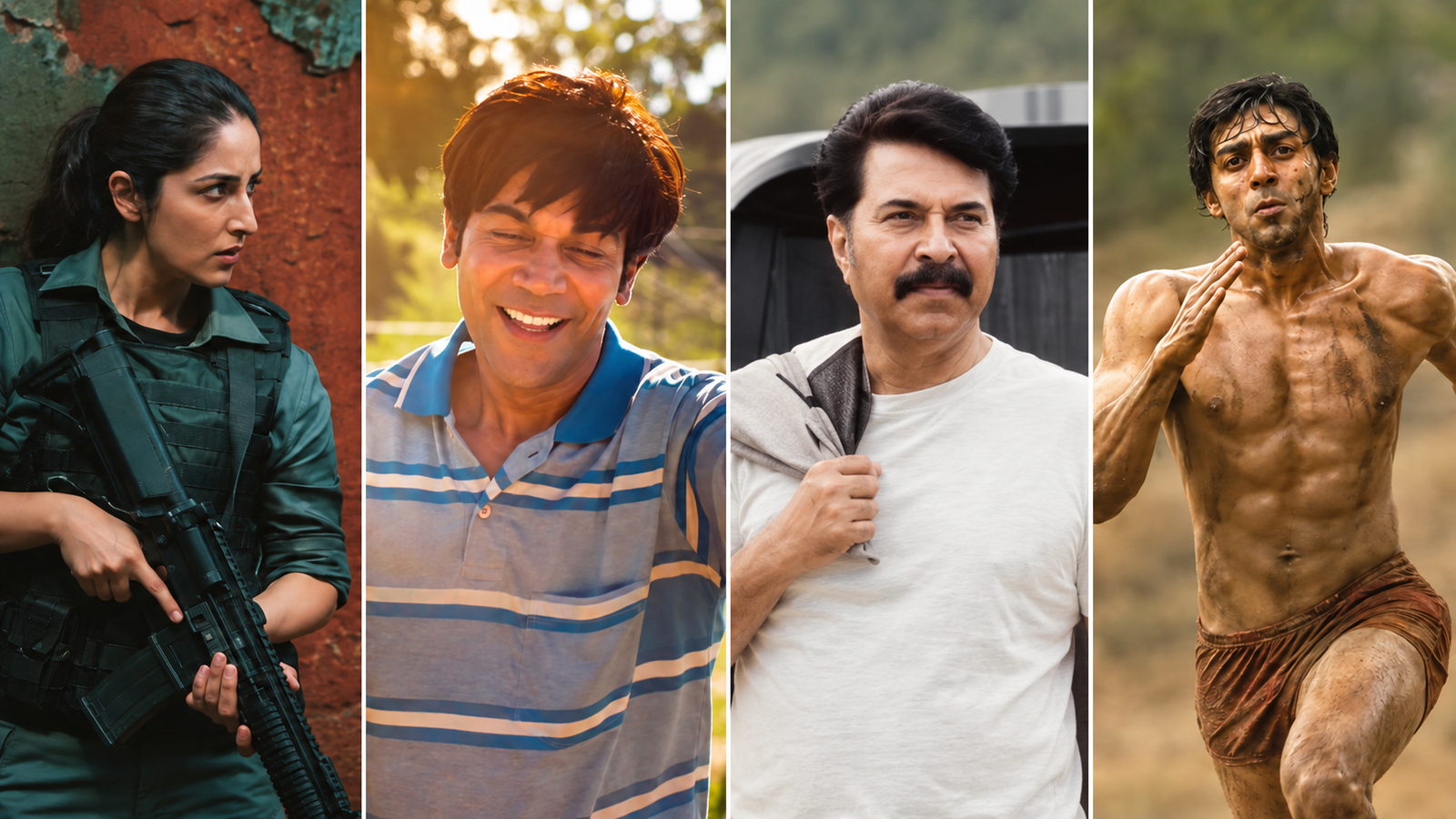
Article 370, produced by Jio Studios and B62 Studios and directed by Aditya Suhas Jambhale, won Best Feature Film. Its lead actor Yami Gautam received the Best Actress in a Leading Role award.
Mammootty and Kartik Aaryan were jointly named Best Actor in a Leading Role. Mammootty was recognised for his performance in the Malayalam film Bramayugam, while Aaryan won for portraying Indian Paralympic gold medallist Murlikant Petkar in Chandu Champion.
Randeep Hooda received the Best Debut Director award for Swatantrya Veer Savarkar. The biographical drama also featured Hooda in the title role.
Kalki 2898 AD, Bhangaar and Ram-Nami among major winners
Kalki 2898 AD was selected as the Best Popular Film Providing Wholesome Entertainment. Other prominent films receiving honours included Pushpa: The Rule Part-02, Amaran, Stree 2 and Bhool Bhulaiyaa 3.
Bhangaar won Best Non-Feature Film, while Ram-Nami received the Best Documentary award. Filmmaker Aanand L Rai won Best Direction in the non-feature category for Statue of Unity: Ekta Ka Prateek, creating a direct thematic connection with the ceremony’s new location.
The presentation ceremony will formally confer the medals, certificates and cash awards on the winners announced in July. Detailed arrangements and the final programme are expected to be released closer to the event.
Breaking News
Veena Modani Leads Janmashtami Bhajan Evening at Jaipur’s Birla Mandir
Published
4 days agoon
September 7, 2026
Jaipur | 7 Sep 2026
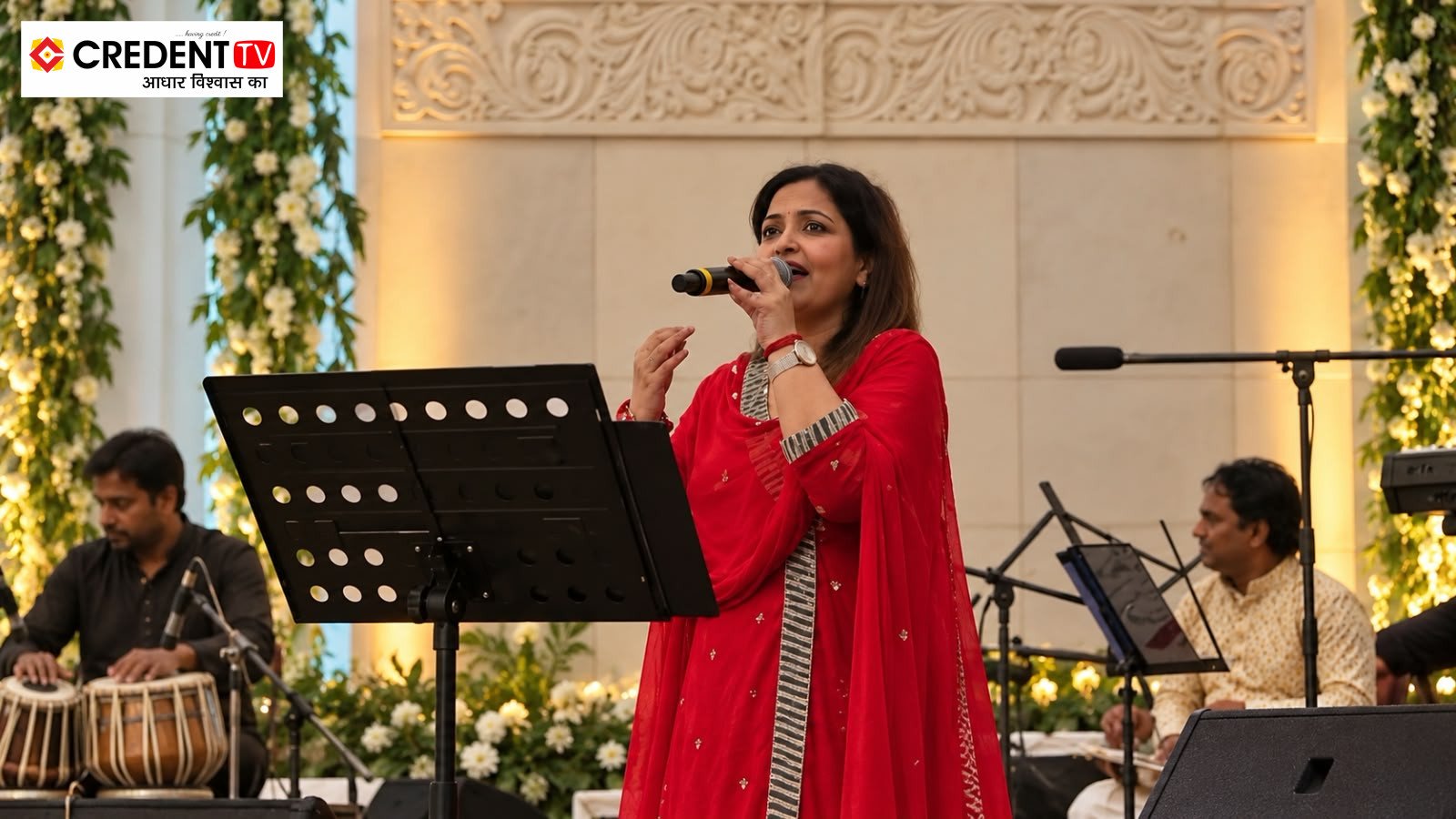
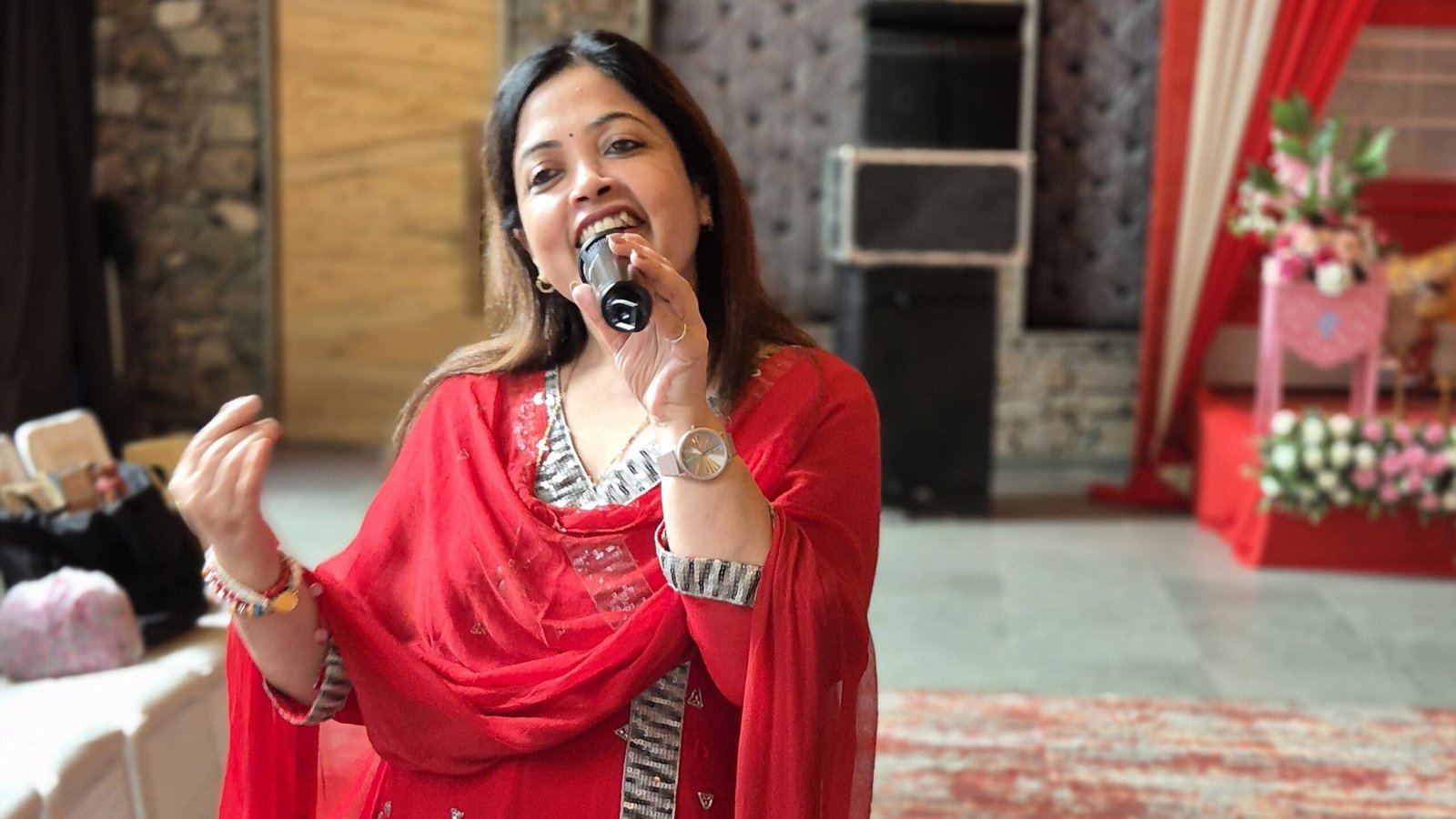
Jaipur’s Birla Mandir came alive with devotional music during Krishna Janmashtami celebrations on Friday, as singer Veena Modani performed a series of bhajans dedicated to Lord Krishna before a gathering of devotees and visitors at the Lakshmi Narayan Temple near Moti Dungri.
Veena Modani’s bhajans mark Birla Mandir Janmashtami celebrations
Modani’s devotional performances formed a prominent part of the evening celebrations, with worshippers joining in as Krishna-themed bhajans echoed through the temple complex.
The Jaipur-based singer, known for her stage performances and devotional music, presented the bhajans as devotees gathered for Janmashtami prayers and awaited the traditional celebration marking the birth of Lord Krishna.
The temple had been decorated for the festival, while a traditional tableau of Lord Lakshmi Narayan became one of the main attractions for visitors. The combination of devotional music, decorations and religious rituals created a festive atmosphere across the complex.
Nirmala Birla attends celebrations at Jaipur temple
Nirmala Birla, who is associated with several charitable and cultural institutions of the Birla family, was also present during the Janmashtami programme. She offered prayers at the temple and attended the devotional celebrations.
Devotees had begun arriving at the temple from the morning, with attendance increasing towards the evening as the principal Janmashtami observances approached. Several other guests from Jaipur were also present during the programme.
Foreign tourists experience Krishna Janmashtami in Jaipur
The celebrations also drew foreign tourists visiting Jaipur, many of whom watched the traditional tableau, temple decorations and musical performances during the festival.
Visitors were seen recording parts of the celebrations on their cameras as they experienced the religious and cultural traditions associated with Krishna Janmashtami.
Birla Mandir, also known as the Lakshmi Narayan Temple, is one of Jaipur’s prominent religious landmarks. The white-marble temple near Moti Dungri is dedicated to Lord Vishnu, or Narayan, and Goddess Lakshmi, and Janmashtami is among the major festivals observed there.
Biography
Veena Modani: Rajasthan’s New Cultural Ambassador Inspiring a New Generation
Veena Modani, Rajasthan’s celebrated artist and choreographer, has transformed Indian dance and music through her academy, Jaipur Rhythm Fest, and award-winning cultural contributions spanning over 25 years.
Published
4 months agoon
May 25, 2026
25 May, Credent TV | Veena Modani has emerged as one of Rajasthan’s most respected cultural personalities, blending art, education, choreography, and leadership into an inspiring journey that continues to influence India’s artistic landscape. For more than 25 years, she has dedicated her life to preserving Indian culture while simultaneously giving modern platforms to emerging talent.
Known for her graceful stage presence, soulful musical expression, and visionary event management, Veena Modani today represents the artistic spirit of Rajasthan on national and international platforms. From nurturing young performers through her academy to organizing large-scale cultural festivals, her contribution to Indian performing arts remains both impactful and enduring.
Introduction to Veena Modani
In Rajasthan’s colorful artistic ecosystem, Veena Modani has established herself as a symbol of dedication, discipline, and creativity. Her work spans multiple domains including choreography, music, cultural event management, mentoring, and social empowerment.
As the founder and director of the Veena Modani Academy of Dance and Music, she has trained hundreds of aspiring artists while creating opportunities for performers to showcase their abilities on bigger stages.
Her journey reflects not only artistic excellence but also a mission to keep India’s cultural traditions alive in an era increasingly influenced by digital entertainment and changing audience preferences.
Early Life and Artistic Passion
The story of Veena Modani began with a deep emotional connection to Indian music and classical dance traditions. From a young age, she displayed a natural inclination toward rhythm, expression, and performance.
Her early exposure to classical raagas and traditional dance forms shaped her artistic sensibilities. What started as childhood fascination eventually became a disciplined pursuit of excellence.
Years of rigorous training helped her master both the technical and emotional dimensions of performance art. Audiences soon began recognizing her ability to combine graceful choreography with emotionally resonant storytelling.
Her performances are often praised for their elegance, authenticity, and cultural richness. Many admirers describe her stage presence as deeply immersive, capable of emotionally connecting with viewers across generations.
Veena Modani Academy: Building Future Artists
One of the most significant achievements of Veena Modani has been the establishment of the Veena Modani Academy of Dance and Music.
The academy has evolved into one of Rajasthan’s respected institutions for training in dance and music. It offers students exposure to both traditional Indian art forms and contemporary creative expression.
Key Contributions of the Academy
- Training aspiring dancers and musicians
- Promoting Indian classical traditions
- Organizing workshops and stage performances
- Encouraging confidence and discipline among students
- Providing professional exposure to emerging talent
Under her mentorship, many students have successfully pursued careers in performing arts and cultural entertainment.
Her teaching philosophy emphasizes artistic integrity, emotional expression, and cultural awareness rather than merely technical perfection.
Jaipur Rhythm Fest: A Landmark Cultural Initiative
Among the major milestones in the journey of Veena Modani is the creation of the Jaipur Rhythm Fest, a cultural event that celebrates the diversity of Indian performing arts.
The festival has become an important platform for artists, musicians, dancers, and performers from different parts of India. It promotes collaboration between established professionals and emerging talent.
Why Jaipur Rhythm Fest Matters
The event stands out because it combines:
- Classical dance
- Contemporary choreography
- Folk performances
- Music collaborations
- Youth participation
- Cultural innovation
Through this initiative, Veena Modani has strengthened Rajasthan’s image as a thriving center of artistic excellence.
Veena Modani’s Contribution to Indian Dance and Music
Veena Modani is widely admired for balancing traditional Indian values with modern artistic presentation.
Her performances often reflect themes of:
- Indian heritage
- Emotional storytelling
- Feminine strength
- Spiritual depth
- Social awareness
She has consistently worked to ensure that younger generations remain connected to Indian cultural roots while adapting performances for contemporary audiences.
Artistic Style
Her choreography is known for:
- Strong emotional expression
- Fluid movement
- Cultural symbolism
- Musical precision
- Visual storytelling
This unique artistic identity has helped her stand apart in Rajasthan’s competitive cultural environment.
Awards and Recognition Earned by Veena Modani
Over the years, Veena Modani has received several prestigious honors recognizing her artistic and social contributions.
Major Awards and Honors
Women Empowerment Award (2016)
Presented by former Rajasthan Chief Minister Vasundhara Raje, this award recognized her contribution toward empowering women through art and education.
Rajasthan Gaurav Award (2017)
This honor acknowledged her immense contribution to Rajasthan’s cultural landscape.
Women Achiever Award (2017 & 2019)
Recognized her excellence in music, dance, mentorship, and leadership.
Brijmohan Gupta Art Award (2018)
Awarded for her creativity and contribution to artistic direction.
Pandit Manmohan Bhatt Memorial Award (2019)
Honored her dedication to classical music traditions and artistic excellence.
Guru Vashistha Award (2019)
Celebrated her role as a mentor and cultural educator.
Voice of Rajasthan Award (2020)
Presented during the Jaipur International Film Festival by veteran Bollywood actor Prem Chopra.
Rajasthan Icon Award (2023)
Recognized her long-term influence on Rajasthan’s artistic identity.
AMG Award and Shakti Award (2024)
Acknowledged her leadership, creativity, and influence as a woman artist.
Samaj Gaurav Award (2026)
Presented during the Maheshwari Global Convention for her remarkable cultural contribution.
Women Empowerment Through Art
One of the defining aspects of Veena Modani’s journey is her consistent focus on women empowerment.
Through dance and music education, she has inspired countless women to pursue careers in performing arts confidently and independently.
Her workshops and mentorship initiatives encourage young women to:
- Express themselves creatively
- Build self-confidence
- Develop leadership skills
- Preserve cultural heritage
- Achieve financial independence through art
This commitment has transformed her from merely an artist into a social inspiration for aspiring female performers.
Why Veena Modani Is Called the “Voice of Rajasthan”
The title “Voice of Rajasthan” is not merely ceremonial—it reflects the emotional connection audiences feel with Veena Modani and her work.
Her performances embody Rajasthan’s traditions, emotions, music, and storytelling heritage.
Reasons Behind the Title
- Cultural authenticity
- Emotional musical expression
- Dedication to Rajasthani heritage
- Long-standing contribution to performing arts
- Ability to connect with audiences across generations
Her artistic identity has become synonymous with Rajasthan’s evolving cultural narrative.
Impact on Rajasthan’s Cultural Identity
In recent years, Rajasthan has increasingly become a destination for cultural tourism, music festivals, and artistic collaborations.
Artists like Veena Modani have played a major role in shaping this transformation.
Her Broader Cultural Impact
- Promoting Rajasthan globally
- Supporting regional artists
- Preserving classical traditions
- Encouraging youth participation
- Strengthening cultural infrastructure
Her work demonstrates how performing arts can contribute not only to entertainment but also to cultural preservation and social development.
The Leadership Behind Veena Modani Events
Apart from performance and teaching, Veena Modani has earned recognition for her event management expertise through Veena Modani Events.
Her events are known for:
- Professional production quality
- Artist-focused execution
- Innovative choreography
- Cultural authenticity
- Large audience engagement
These events often become platforms where established and emerging performers share the same stage.
This collaborative ecosystem has significantly contributed to Rajasthan’s artistic growth.
The Future Vision of Veena Modani
Even after decades of achievements, Veena Modani continues to expand her artistic mission.
Her future goals reportedly focus on:
- Expanding cultural education programs
- Promoting Indian art internationally
- Supporting young performers digitally
- Organizing larger cultural festivals
- Creating global collaborations in performing arts
Her journey proves that cultural leadership requires constant innovation while staying deeply connected to tradition.
Frequently Asked Questions
Who is Veena Modani?
Veena Modani is a renowned artist, choreographer, mentor, and cultural icon from Rajasthan known for her contribution to Indian dance, music, and cultural events.
What is Veena Modani Academy?
The academy is a performing arts institution founded by Veena Modani that trains students in dance and music while promoting Indian cultural traditions.
What is Jaipur Rhythm Fest?
Jaipur Rhythm Fest is a cultural festival initiated by Veena Modani that brings together dancers, musicians, and performers from across India.
Which awards has Veena Modani received?
She has received numerous honors including the Rajasthan Gaurav Award, Women Empowerment Award, Rajasthan Icon Award, and Voice of Rajasthan Award.
Why is Veena Modani important to Rajasthan’s culture?
She has significantly contributed to preserving and promoting Rajasthan’s artistic identity through education, performances, mentorship, and cultural events.
Veena Modani represents the perfect blend of artistic brilliance, cultural leadership, and social inspiration. Her journey from a passionate young performer to one of Rajasthan’s most respected cultural ambassadors reflects years of dedication, discipline, and vision.
Whether through her academy, performances, mentorship, or landmark initiatives like Jaipur Rhythm Fest, she has continuously worked to preserve India’s rich artistic traditions while empowering future generations.
In an era where cultural authenticity often competes with commercial entertainment, Veena Modani continues to stand as a powerful reminder that art rooted in tradition can still inspire, evolve, and unite people across boundaries.
Credent TV
Ekatva Annual Function 2025: A Grand Celebration of Talent, Unity & Learning at Maheshwari Public School, Kalwar Road
Ekatva Annual Function 2025 at Maheshwari Public School, Kalwar Road, showcased powerful performances, women empowerment themes, NEP-inspired skits, and student achievements during a grand celebration.
Published
10 months agoon
November 29, 2025
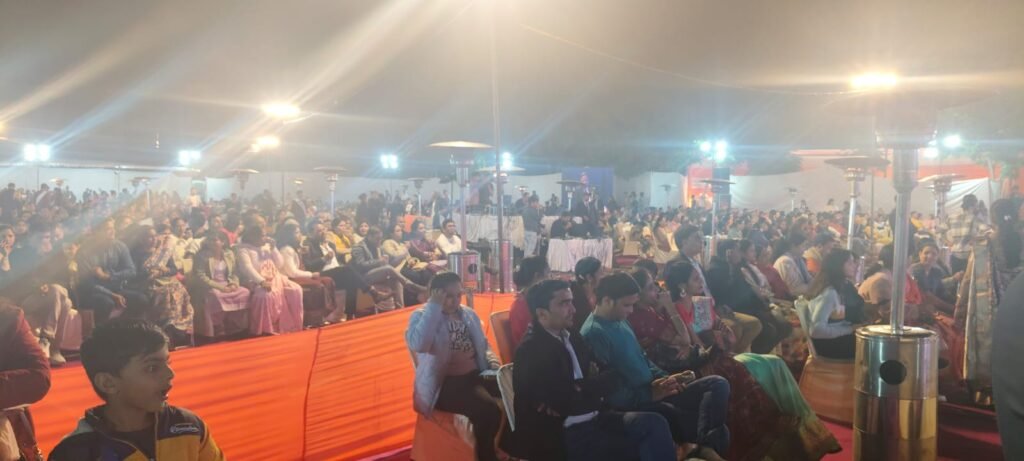
Jaipur, 28 Nov. | Maheshwari Public School, Kalwar Road, hosted the Ekatva Annual Function 2025 with remarkable grandeur on November 28, 2025. The theme “EKATVA – Learning Together, Growing Together” set the perfect tone for a day dedicated to unity, collective progress, and holistic development. This year’s annual celebration emerged not only as an academic and cultural milestone but also as a testament to the school’s commitment to national values, women empowerment, and progressive education.
Ekatva Annual Function 2025: A Celebration of Collective Growth
The Ekatva Annual Function 2025 marked a vibrant display of Maheshwari Public School’s vision of education rooted in collaboration, inclusivity, and continuous growth. The theme emphasized that true learning happens when students, teachers, parents, and the community evolve together—an idea deeply aligned with modern educational philosophies and the core principles of NEP 2020.
From cultural presentations to thought-provoking performances, the function encapsulated the school’s dedication to nurturing responsible, confident, and value-driven individuals.
Grand Inauguration with Traditional Rituals
The ceremony began with the auspicious lighting of the ceremonial lamp, accompanied by Vedic mantras, invoking divine blessings for knowledge, wisdom, and prosperity. The solemnity of the ritual established a spiritual foundation for the day’s events, reminding everyone that tradition and modernity can harmoniously coexist.
The school orchestra followed, delivering a mesmerizing performance that captivated the audience. Their symphony of classical and contemporary melodies added an energetic pulse to the event, setting a lively and celebratory atmosphere.
Student Performances That Brought the Theme to Life
The heart of the Ekatva Annual Function 2025 lay in the stunning performances by the students. Each performance was carefully conceptualized to reflect unity, shared learning, and social harmony.
Key Highlights:
- Vibrant group dances symbolizing togetherness
- Thematic skits showcasing community values
- Folk and contemporary fusion performances
- Inspirational narrations by young learners
The students’ confidence, discipline, and creativity stood out. Parents and guests applauded every act, especially the ones portraying teamwork and emotional connection.
Ekatva Annual Function 2025 Highlights NEP 2020 & Women Empowerment
One of the most powerful segments of the evening was the students’ presentation on the National Education Policy (NEP) 2020. Through engaging skits, dramatic sequences, and choreographed movements, the students depicted key elements of NEP such as:
- holistic development
- experiential learning
- flexibility in subject selection
- vocational exposure
- integration of art and sports
Another compelling act showcased women empowerment—a theme that resonated deeply with the audience. Students celebrated the strength, determination, and resilience of women through expressive dance sequences, poetry recitations, and visual storytelling.
The audience praised the school for encouraging its students to address socially relevant themes through education and art.
Recognizing Excellence: Prize Distribution Ceremony
The Prize Distribution Ceremony honored students who exhibited outstanding performance across academics, sports, and co-curricular activities. Awards were presented to:
- Academic toppers
- Sports achievers
- Art & cultural performers
- Students demonstrating leadership & discipline
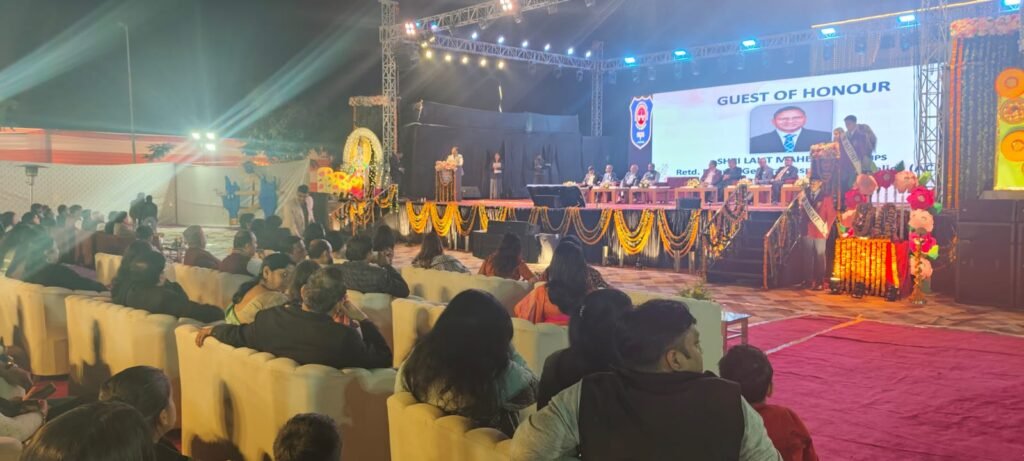
The school emphasized that each award represented not just personal success but the spirit of Ekatva, where teachers, parents, and peers play a collective role in shaping student achievements.
Distinguished Guests Who Graced the Occasion
The presence of esteemed dignitaries elevated the prestige of the event.
Chief Guest
- Hon’ble Deputy Chief Minister of Rajasthan, Ms. Diya Kumari
Guest of Honour
- Retd. Deputy Inspector General of Police (ACB), Shri Lalit Maheshwari
Special Guests
- Shri Bajrang Jakhotiya, Former President, ECMS Jaipur
- Shri Ashok Baheti, Renowned Businessman & Social Worker
Other Key Attendees
- Chairman: Shri Umesh Soni
- Vice Chairman: Shri Nirmal Dargar
- General Secretary (Education): Shri Kamal Somani
- Treasurer: Shri Arun Kumar Maloo
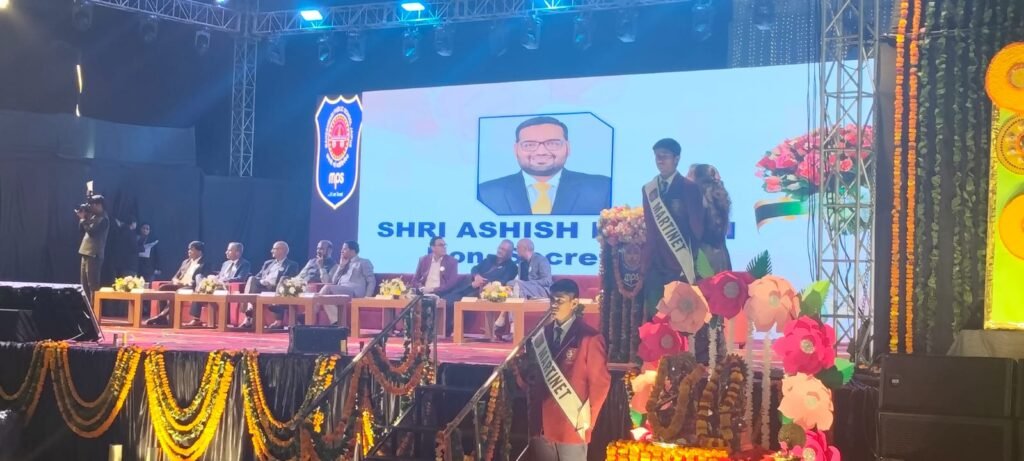
- Honorary Secretary: Shri Ashish Mantri
- Building Secretary: Shri Ravi Periwal
The dignitaries praised the students for their talent and applauded the school for its progressive and value-based educational approach.
Inspiring Messages by School Leadership
Message from Honorary Secretary Shri Ashish Mantri
He encouraged the students to focus not only on their academics but also on co-curricular activities, emphasizing that holistic development includes:
- mental and physical growth
- character building
- teamwork and discipline
Vote of Thanks by Building Secretary Shri Ravi Periwal
He expressed gratitude to the guests, faculty, parents, and students for making the event a grand success.
Annual Report Presented by Principal Dr. Sunita Vashishtha
The Principal highlighted:
- the school’s year-long achievements
- academic excellence
- sports accomplishments
- new initiatives towards skill development and holistic learning
Her speech reflected the institution’s dedication to shaping future-ready learners.
Why Ekatva Annual Function 2025 Stands Out
The Ekatva Annual Function 2025 was more than just a cultural event—it was a reflection of the school’s educational philosophy. Several elements made the day special:
Integration of cultural and educational values
Themes like NEP 2020 and women empowerment gave depth and relevance to the performances.
Strong community participation
Teachers, parents, committee members, and students worked together, embodying the spirit of Ekatva.
Focus on holistic development
From music to theatre, from sports awards to academic excellence—every aspect of student growth was recognized.
Presence of renowned dignitaries
Their motivational words encouraged students to dream big and work harder.
Professional-level stage performances
The choreography, scripting, and stage design were executed with finesse, offering an entertainment experience of high quality.
The Ekatva Annual Function 2025 at Maheshwari Public School, Kalwar Road, was a resounding success—an event that beautifully blended tradition, education, culture, and social awareness. With inspiring performances, meaningful themes, and appreciation of talent, the event truly embodied the idea of “Learning Together, Growing Together.”
As the school continues to invest in the holistic development of its students, programs like this reinforce its vision of shaping confident, responsible, and compassionate future citizens.
Credent TV
Never Give Up Annual Festival- Opening the Gates of Hope: 7 Inspiring Moments That Electrified SV Public School
Published
12 months agoon
September 30, 2025
Jaipur | Never Give Up Annual Festival echoed through the corridors and hearts of SV Public School, Jaipur, as the institution celebrated its much-anticipated annual function and award ceremony on 28 September 2025 at Birla Auditorium. Under the stirring theme “Never Give Up,” the event shone as a tribute to perseverance, talent, and collective spirit.
Dignitaries, students, teachers, and parents gathered to witness the fusion of culture and recognition, all within an atmosphere of pride and positivity.
Dignitaries & Grand Inauguration
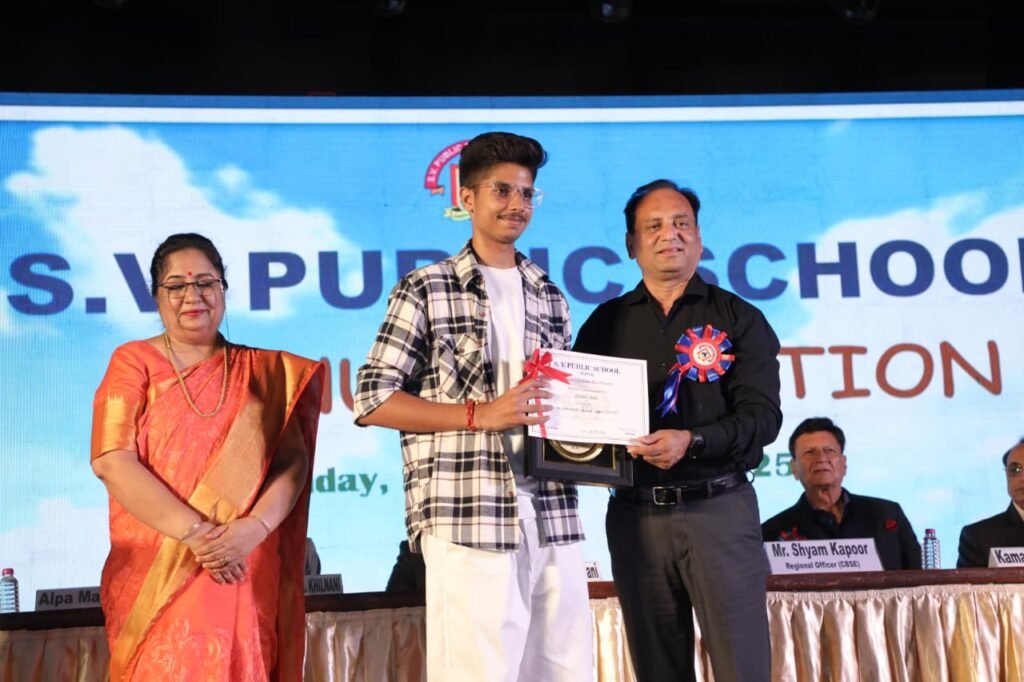
The ceremony began with grandeur. CBSE Regional Officer Mr. Shyam Kapoor served as the chief guest. The event was inaugurated through a lamp lighting ritual performed by a distinguished panel:
- Mr. Shyam Kumar (CBSE Regional Officer)
- Mr. Kamal Vaswani, President, St. Mira Brotherhood Society
- Mr. Vasudev Thawani, Secretary, St. Mira Brotherhood Society
- Dr. Kamlesh Kumar Khilnani, Secretary, Sadhu Vaswani Public School
- Mr. Ramesh Gursahani, Finance Secretary, St. Mira Brotherhood Society
- Mr. Ashok Devani, Joint Secretary, St. Mira Brotherhood Society
- Mrs. Alpa Malviya, Principal, SV Public School
They were honored with traditional tokens: shalo (shawls), mementos, “Green Gold” awards, and floral tributes.
Next came the welcome address by Dr. Kamlesh Kumar Khilnani, in which he addressed the relevance of the Never Give Up theme. He asserted that refusing to accept defeat is what lifts one’s personality to new heights. He emphasized the school’s role in imparting knowledge and values, stating that the annual festival is a mirror to students’ learning and character.
Speeches That Stirred Hearts
The principal, Mrs. Alpa Malviya, delivered the annual report, tracing the school’s journey of growth, achievements, and holistic development. She invoked the Never Give Up spirit as central to every student’s relentless pursuit of excellence.
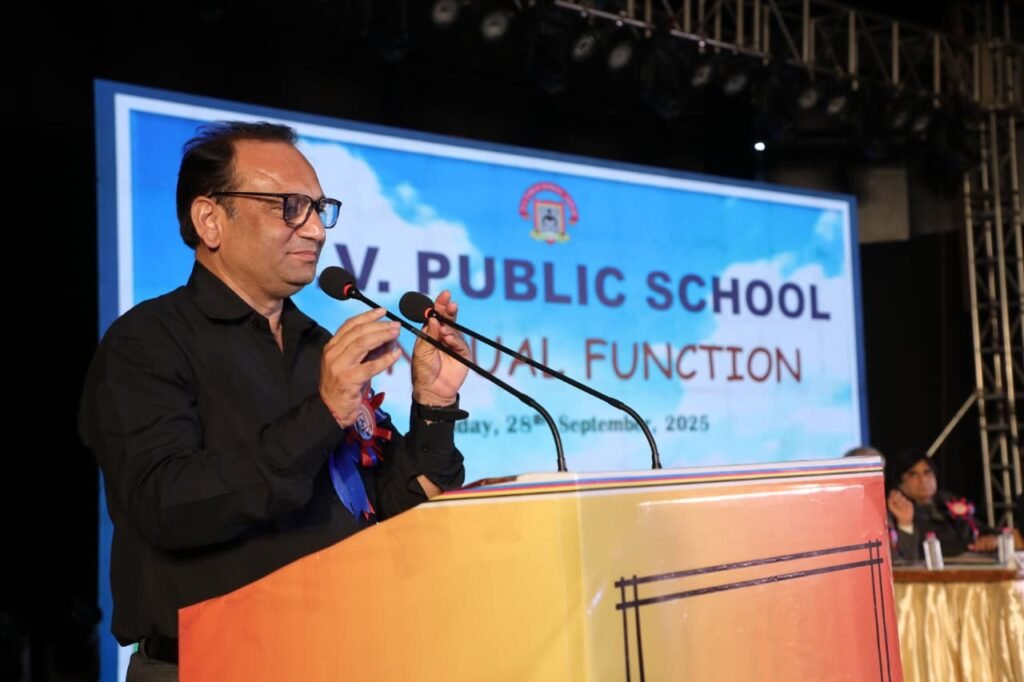
Chief guest Mr. Shyam Kumar took the stage with a motivational message. He said the annual day is not just a celebration, but a recognition of collective achievement — of students, teachers, and the school community. He reinforced that education shapes character and gives strength to move forward. The festival, he said, stands as a platform where students can express talent and confidence.
Mr. Kamal Vaswani, president of the hosting society, gave blessings and lauded students and teachers alike. He encouraged them to keep pushing boundaries and becoming sources of inspiration in society.
Unveiling the ‘Milestone 25’ Magazine & Awards
A major moment in the program was the release of the school’s annual magazine ‘Milestone 25’, showcasing student articles, poetry, achievements, and memories of the academic year.
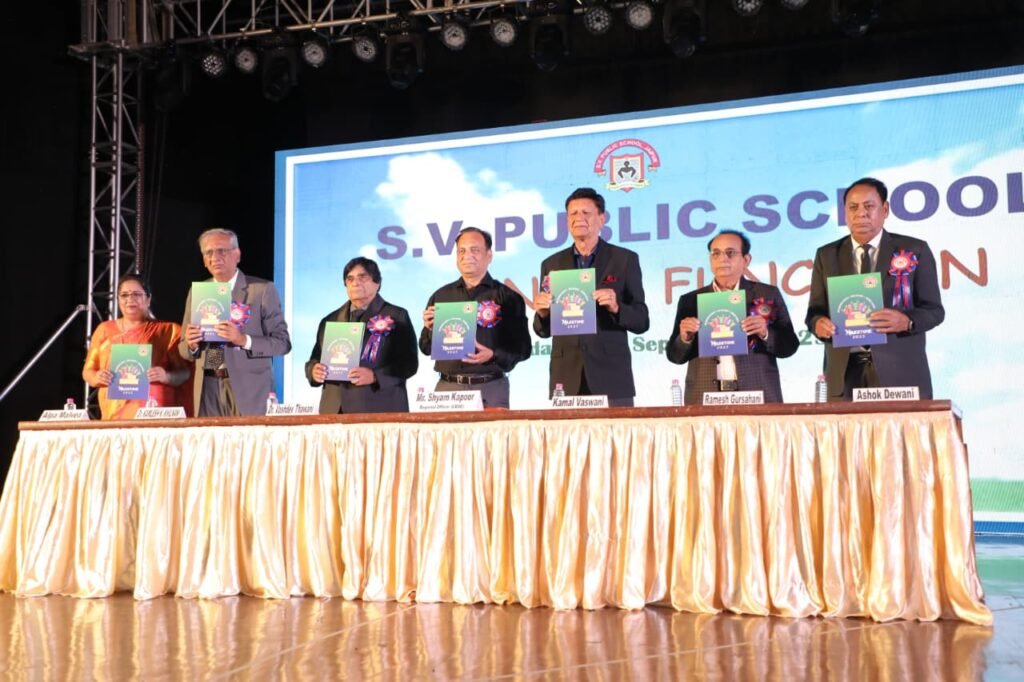
The award ceremony followed. Students who performed exceptionally over the last year were honored with certificates, medals, and trophies. Each recognition echoed the effort, resilience, and talent that align with the Never Give Up Annual Festival spirit.
Cultural Extravaganza: Performances That Roared
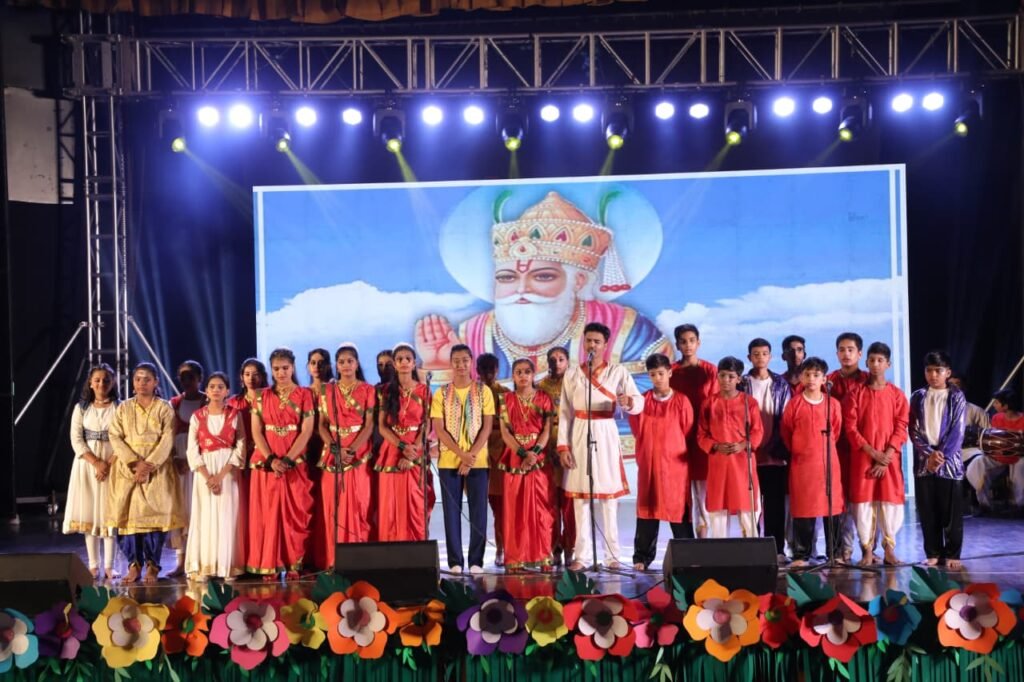
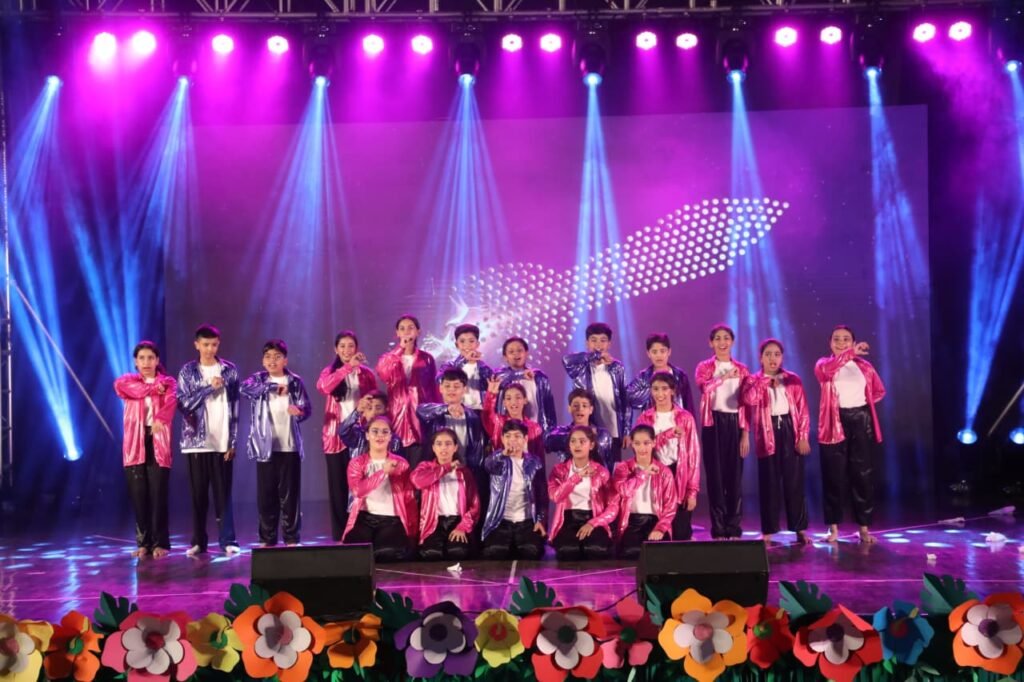
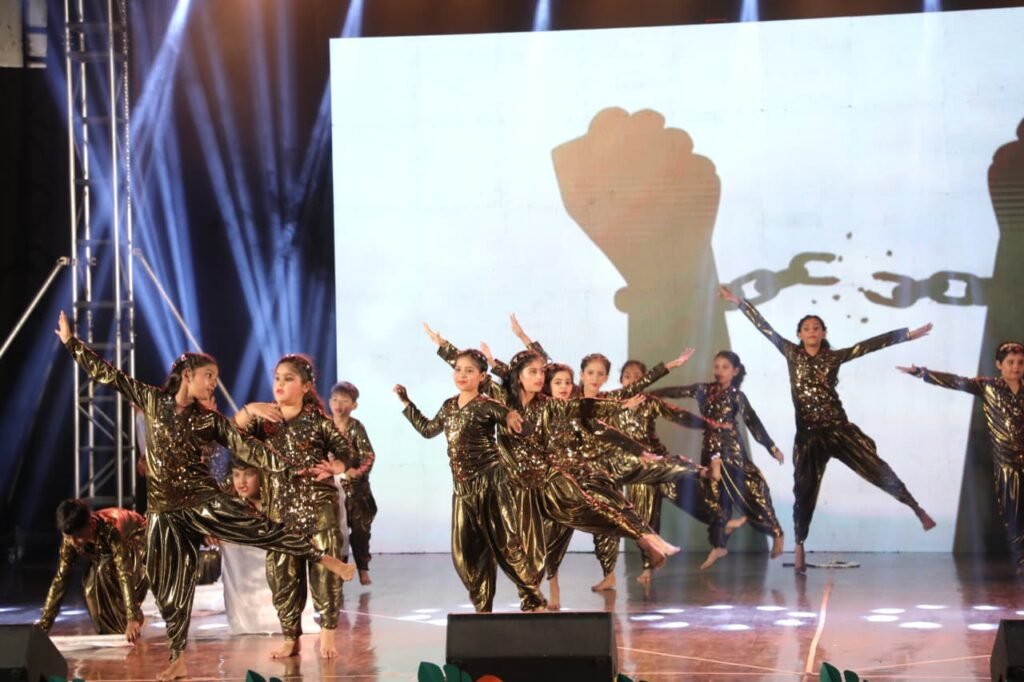
The cultural program transported the audience through history, emotion, and energy — all under the Never Give Up banner.
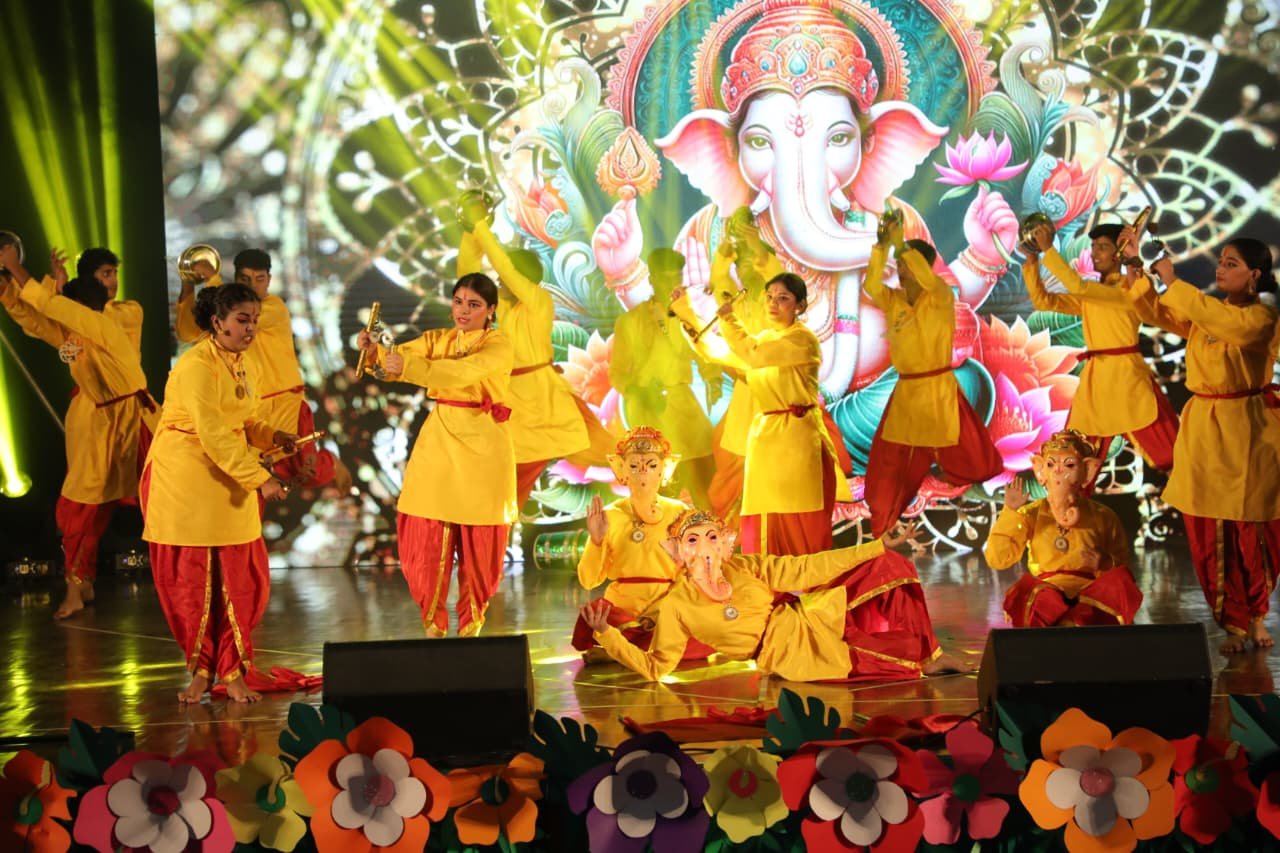
- The event opened with Ganesh Vandana invoking divine blessings.
- A spirited performance of “Dama Dam Mast Kalandar” raised the tempo and charged the atmosphere.
- Students presented dramatic enactments from the lives of Shivaji, Maharana Pratap, Sindhutai, Kalibai, and Milkha Singh, visually narrating struggles, perseverance, and triumph.
- A moving piece on women’s empowerment, titled “Kabhi Shakti Hai, Kabhi Bhakti Hai”, brought tears and applause with its message: never bow, never stop.
- The Sindhi dance “Pallo Te Aao Munjo Lal” added vibrant cultural colors and joy.
- A classical dance to “Raghuwar Teri Raah Nihare” mesmerized the audience with elegance and emotive storytelling.
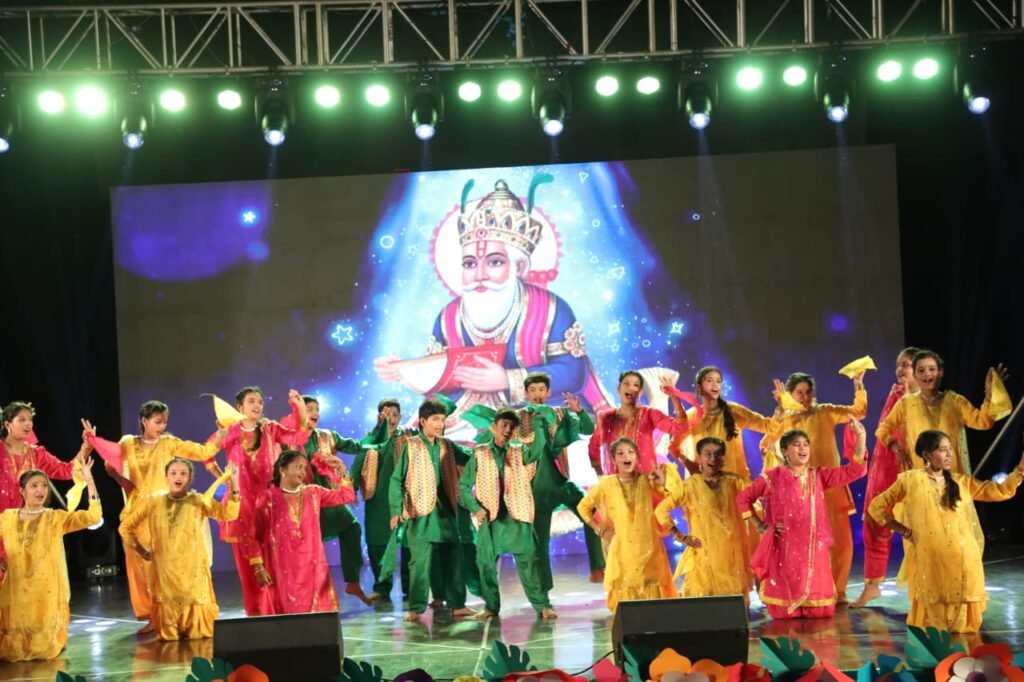
All performances reflected the Never Give Up Annual Festival ethos — that persistence, pride, and identity are born from courage.
Grand Finale & Heartfelt Thanks
The event concluded with a grand finale, combining song, dance, and unified energy.
Vice Principal Mrs. Meetu Tikku offered a heartfelt vote of thanks, expressing gratitude to guests, teachers, staff, and students for making this festival uplifting and unforgettable.
Why This Festival Resonated Deeply
1. Theme of Resilience
Never Give Up Annual Festival carried more than a motto — it became an experience, urging students to dream, persist, and overcome.
2. Balanced Recognition
Academic, cultural, and social achievements were all celebrated, reinforcing holistic education.
3. Cultural Roots & Contemporary Expression
By dramatizing historical icons and blending folk, classical, and empowerment themes, the festival bridged heritage and modern values.
4. Emotional & Intellectual Engagement
Speeches, performances, and symbolism worked together to touch hearts and minds.
5. Community & Identity
The presence of so many dignitaries and the merging of school, society, and students highlighted the communal pride in shared vision.
External Context & References
- The use of themes like Never Give Up aligns well with positive psychology in educational settings — as explored in studies on resilience in school culture.
- SV Public School’s own event gallery shows its past milestones and helps contextualize the scale of this year’s festival. (Visit SVPS Events Gallery) svpsjpr.com
- The school had earlier posted about Annual Function 2025 on its Facebook page, revealing glimpses of the event and confirming its theme and chief guest. Facebook
The Never Give Up Annual Festival at SV Public School was not just a celebration of present achievements — it was a powerful declaration of future possibility. Through inspiring words, creative expression, and recognition, the school renewed the spirit of perseverance among its students.
Breaking News
Vedanta PG Girls College Fresher Party and Dandiya: 7 Exciting Highlights That Empower New Students
Vedanta PG Girls College Welcome Program celebrated new entrants with inspiring speeches, cultural flair, and powerful messages of growth — read the full energetic coverage.
Published
12 months agoon
September 30, 2025
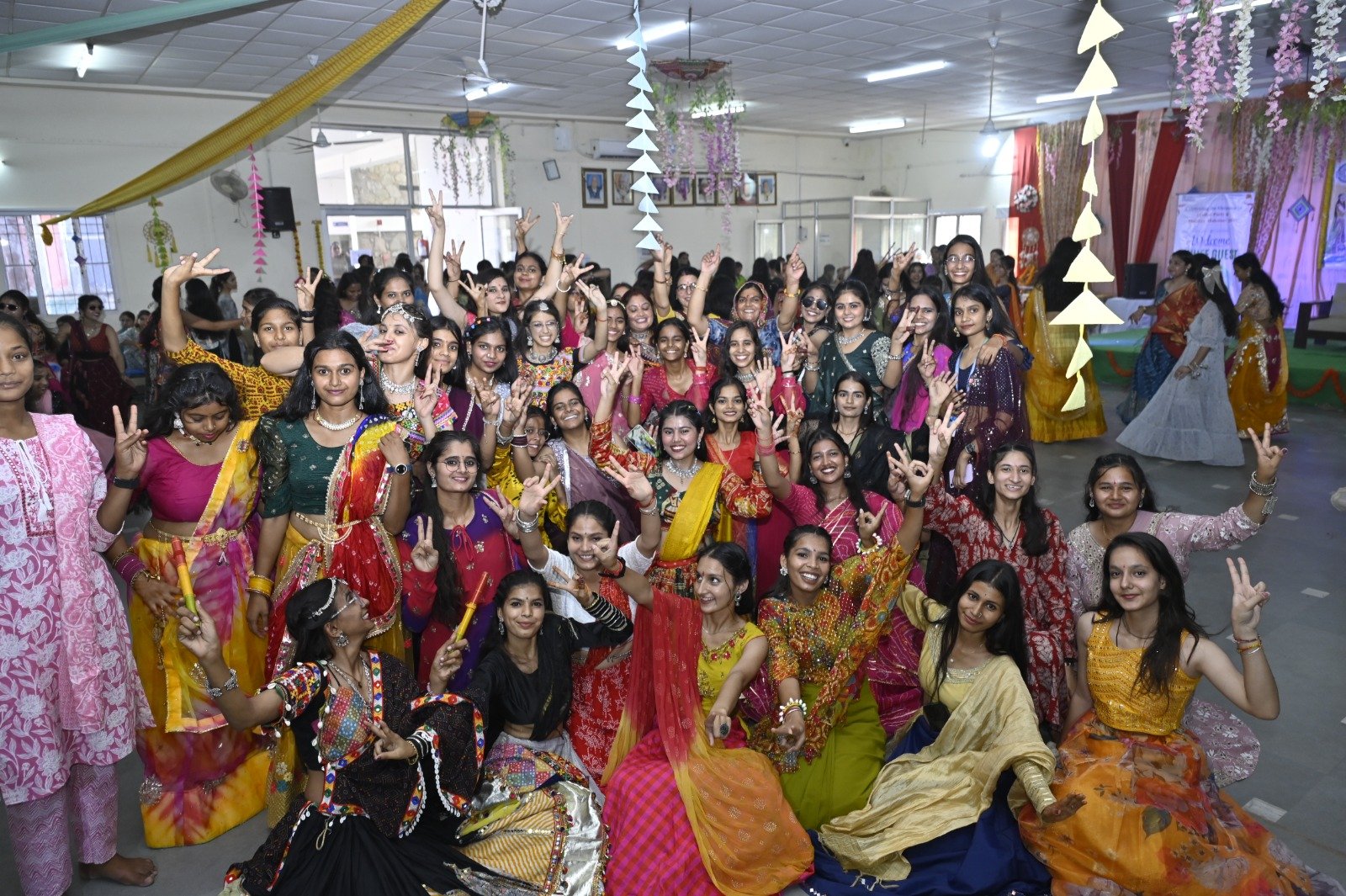
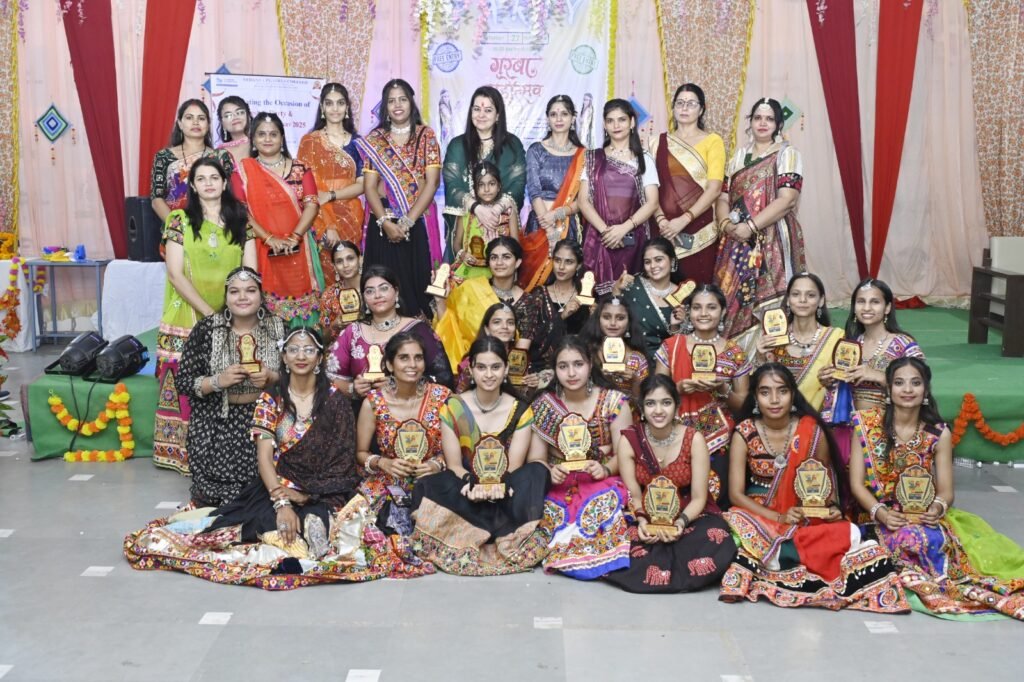
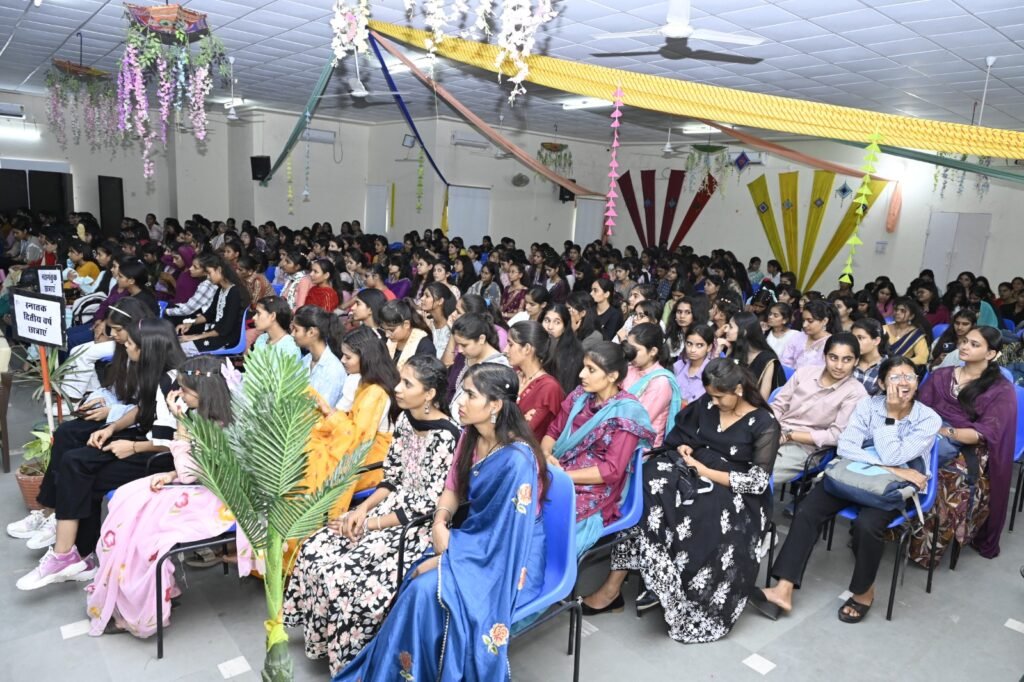
Rengus | Vedanta PG Girls College Fresher Party and Dandiya kicked off with boundless energy and heartfelt emotions, as Ringus campus echoed with cheers, culture, and inspiration. From the moment new students entered the auditorium to when they danced the night away in the dandiya celebration, the event left an electric, lasting impression.
Vedanta PG Girls College Fresher Party and Dandiya — Setting the Stage
From early morning, the campus at Vedanta PG Girls College in Reengus radiated warmth and anticipation. The grand welcome ceremony, organized exclusively for the newly admitted students, promised both traditional solemnity and exuberant celebration.
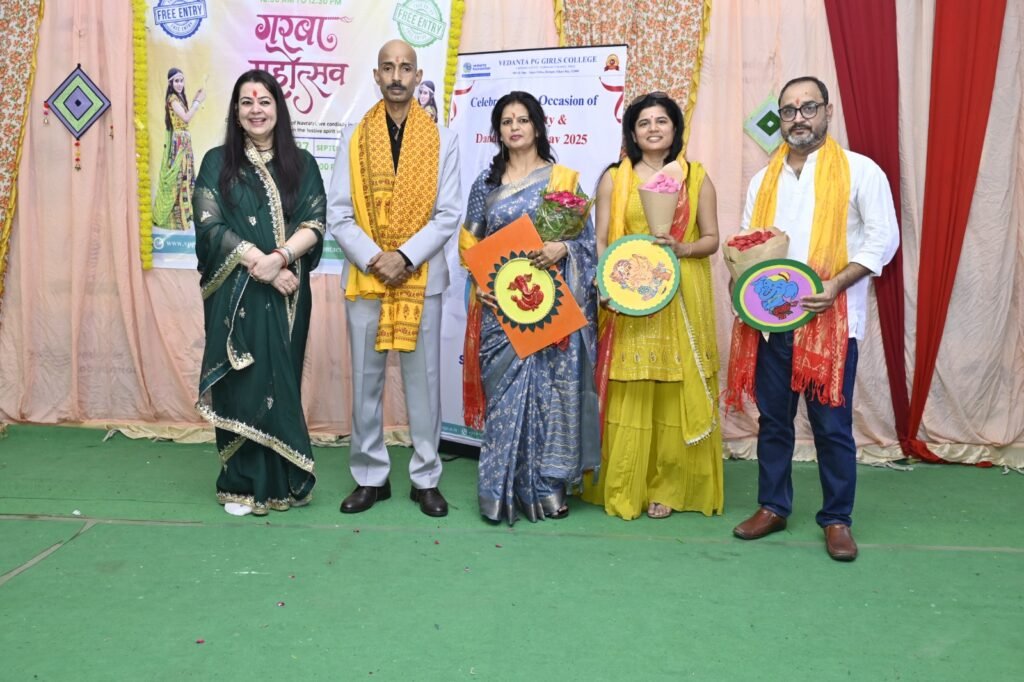
The program was graced by prominent figures:
- Sunil Narnauliya, Chief Editor, Credent TV, as the chief guest
- Prof. Dr. Shubha Sharma, Principal of the college
- Suman Tobadiya, Principal, Senior Secondary School, Jajod
- Sandeep Kumar, Co-founder of Taal Zone,
- Prapti, Program Head at Credent TV
- Kuber Bhati, Anchor, Credent TV
The event began with the venerable tilak ceremony, where each new student was honored with a mark of welcome, followed by worship of Goddess Bhagwati to invoke blessings for a prosperous journey ahead.
Inspiring Speeches and Purposeful Messages
The heart of the Fresher Party and Dandiya lay in the motivational addresses delivered by the dignitaries.
Principal’s Vision: Building Foundations
In her speech, Prof. Dr. Shubha Sharma highlighted how a college life is a golden phase — the time when students lay the foundation of their future. She urged every new student to not only excel academically but also engage actively in extracurriculars, thereby sharpening confidence and skills. She also lauded the Vedanta Foundation, emphasizing its commitment to realizing the dreams of young women, especially those from rural backgrounds.
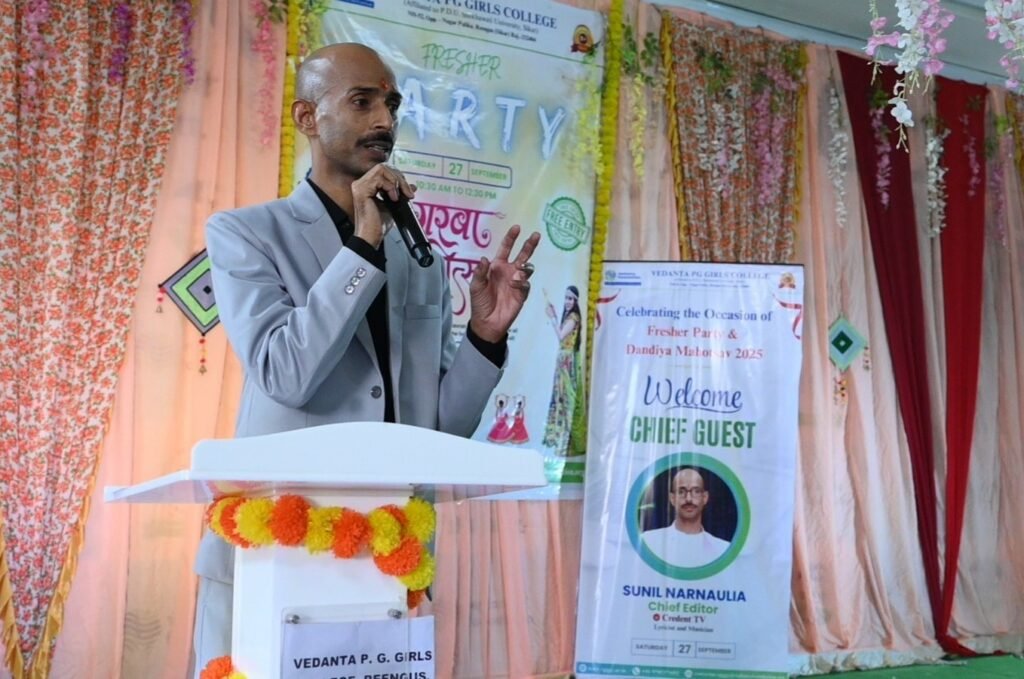
Chief Guest Spark: Defining the Why
Stepping behind the mic, Sunil Narnauliya addressed the gathering with contagious energy. He urged students to first crystallize why they are here — once the purpose is clear, the how and the what naturally follow. He said:
“When we know why we’re doing something, the universe begins to conspire for us.”
He praised the college’s decades-long contributions to education and empowerment. He reiterated that the guiding team at Vedanta, with deep dedication, has been enabling its students to shine — not just within Rajasthan, but across the country.
Cultural Vibes & Festive Dandiya Celebration
With the formalities complete, the stage was handed over to the students — and they delivered in full vigor:
- Senior students took on the role of emcees, guiding the program flow with warmth and flair.
- In a glittering moment, Ayushi Lawango, a student from the Arts faculty, was crowned Miss Fresher — a recognition of her poise, confidence, and spirit.
- The program then turned into a cultural extravaganza: dance performances, skits, and music filled the air with excitement.
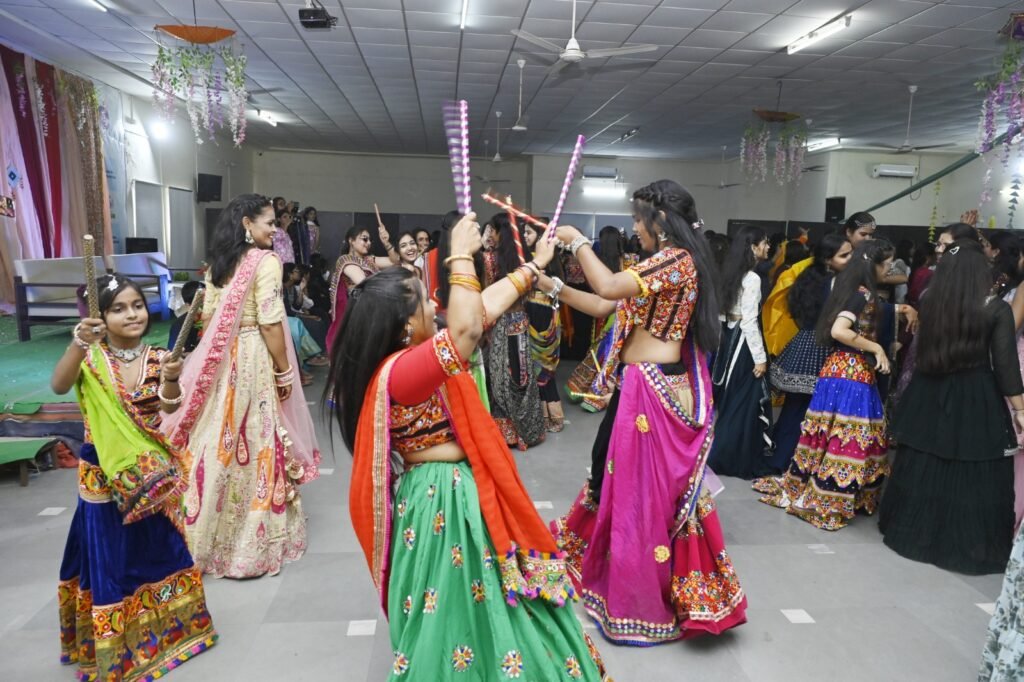
- Finally, the campus came alive with Dandiya, as girls swirled in colorful attire, sticks clicking to the beat, laughter echoing across the college grounds.
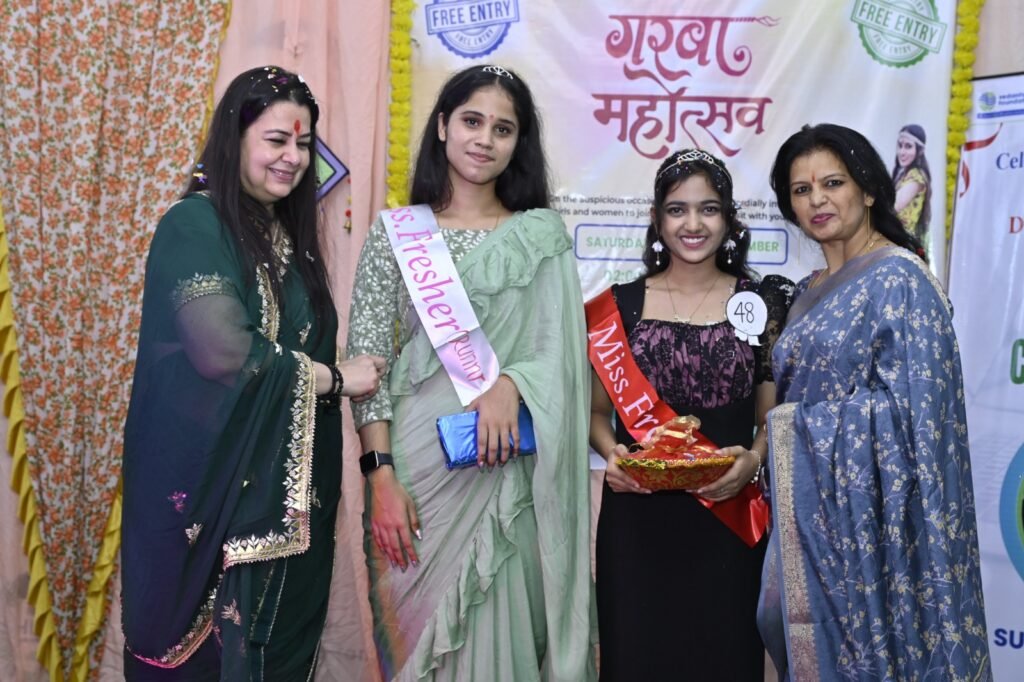
Through each segment, the Vedanta PG Girls College Fresher Party and Dandiya brought students together, fostering friendship, bonding, and a shared identity as Vedanta women.
Key Takeaways from the Fresher Party and Dandiya
Here are seven exciting highlights from the Vedanta PG Girls College Fresher Party and Dandiya that made it a resounding success:
- Warm Rituals: The tilak ceremony and Bhagwati puja set a tone of respect and spiritual grounding.
- Inspirational Leadership: Speeches by Sunil Narnauliya and Prof. Dr. Shubha Sharma planted seeds of ambition, clarity, and purpose.
- Recognition of Fresh Faces: Selecting Miss Fresher encouraged new students to embrace visibility and confidence.
- Student-Led Execution: Letting senior students host boosted peer bonding and leadership.
- Vibrant Cultural Display: Performances showed the creative and expressive spirit of the student body.
- Inclusive Dancing & Joy: The dandiya party broke formal barriers and built new friendships.
- Empowerment Message: Throughout, the emphasis remained on self-belief, community upliftment, and future readiness.
Why This Welcome Matters — Long After the Day Ends
The Fresher Party and Dandiya is more than a festive gathering — it’s symbolic. Here’s why the Vedanta PG Girls College Fresher Party and Dandiya has deeper significance:
- Fosters belonging: For fresh students entering a new social and academic ecosystem, a warm reception builds immediate sense of belonging.
- Sparks confidence: Being welcomed publicly encourages students to believe in their worth.
- Connects tradition & modernity: Rituals like tilak and puja blend seamlessly with modern cultural performances.
- Strengthens community identity: The shared experience knits together new and senior students as one Vedanta family.
- Sets the tone: The speeches establish the college’s vision: academic excellence, holistic growth, and women’s empowerment.
Voices from the Ground — Reactions That Resonated
- A first-year student described how the tilak ritual made her feel instantly “part of a larger family.”
- Others said Sunil Narnauliya’s message made them pause and reconsider their goals.
- Many students told that they felt proud, excited, and determined to make their own mark in the college.
Looking Forward — What’s Next at Vedanta?
The energy from the welcome won’t fade — it’s a springboard. Here’s what lies ahead at Vedanta PG Girls College:
- Academic initiatives: The college is expected to roll out fresh mentoring and workshop programs to support these new students.
- Cultural and sports events: Regular cultural fests, competitions, and tournaments will offer more platforms to shine.
- Community outreach: Given the college’s inclusive ethos, new students may contribute in outreach programs focused on rural upliftment.
- Career support: The foundation’s backing and media ties (like Credent TV) may open exposure to internships, seminars, and media engagements.
Notably, Vedanta had earlier hosted a Yuva Rojgar Mela, offering youth in Rajasthan golden career opportunities via job fairs and employment connects. This sort of event speaks to the institution’s broader commitment to not just educate but empower.
External Resources & Context
- For more about Vedanta PG Girls College, its programs, and campus insights, visit their official site. vpggc.ac.in
- For context on rural women’s education initiatives in Rajasthan, the government’s Women’s Empowerment schemes can be referred to.
- On youth employment drives like Yuva Rojgar Melas, the state government’s announcements provide further reading. utkarshnews.com
Vedanta PG Girls College Fresher Party and Dandiya delivered more than sunshine smiles and dance steps — it sent a strong message: that this institution cherishes its students and believes deeply in their potential. Through ceremonies, cultural vibrancy, motivational addresses, and communal joy, the event sculpted a spirited beginning for those stepping into college life.
Bollywood
Disha Patani Biography – from her early life in Bareilly to becoming Bollywood’s fitness and fashion icon-

Published
12 months agoon
September 15, 2025
Mumbai, Sep.15,2025:Disha Patani Biography is one of the most inspiring journeys in modern Bollywood. From a small-town girl in Bareilly, Uttar Pradesh, to a global style and fitness icon, her story resonates with millions. Known for her beauty, discipline, and magnetic screen presence, Disha has carved her niche as one of the most bankable stars of her generation-
Her rise wasn’t instant but a product of determination, resilience, and hard work. Today, she enjoys a fan following of millions worldwide and has become a trendsetter in fashion, films, and fitness.
Early Life and Family Background
Born on 13 June 1992, in Bareilly, Uttar Pradesh, Disha Patani grew up in a middle-class family with a disciplined upbringing.
- Father: Jagadish Singh Patani, a police officer
- Mother: Worked as a health inspector
- Siblings: Elder sister Khushboo Patani (an army officer) and younger brother Suryansh Patani
Despite belonging to a non-film background, Disha always carried a spark for glamour and performance. Her family supported her ambitions while ensuring she completed her education.
Education and Career Beginnings
Disha pursued Computer Science and Engineering at Amity University, Lucknow. While studying, she discovered her inclination towards modelling.
Her first major recognition came in 2013 when she participated in the Pond’s Femina Miss India Indore contest. She emerged as the first runner-up, gaining visibility among talent scouts and filmmakers.
This early exposure became the foundation of her acting career.
Modelling Journey
Before entering films, Disha Patani worked in several TV commercials and fashion shoots. Her charming personality and striking looks made her a popular choice for brands.
Some notable highlights:
- Featured in television ads for Cadbury and Garnier.
- Gained fame as the fresh face of modelling campaigns in India.
- Became a social media sensation with her glamorous shoots.
Her modelling assignments prepared her for the camera and polished her confidence.
Disha Patani Bollywood Debut
Disha Patani made her acting debut in 2015 with the Telugu film “Loafer”, directed by Puri Jagannadh. Although the film wasn’t a commercial hit, her performance caught the attention of Bollywood.
Her breakthrough came in 2016 with “M.S. Dhoni: The Untold Story”, opposite Sushant Singh Rajput. Playing Priyanka Jha, Dhoni’s first love, she left an emotional impact on the audience. The film was a blockbuster, and Disha became an overnight star.
Filmography Highlights
Kung Fu Yoga (2017)
A unique Indo-Chinese action-comedy film where Disha starred alongside international legend Jackie Chan. The movie gave her global recognition.
Baaghi 2 (2018)
Co-starring Tiger Shroff, this action-packed film turned into a box office hit. Their sizzling chemistry was the talk of the town.
Bharat (2019)
In this Salman Khan starrer, Disha featured in the song “Slow Motion”, which became a nationwide sensation.
Malang (2020)
Opposite Aditya Roy Kapur, she showcased her bold, edgy side in this romantic thriller.
Ek Villain Returns (2022)
The film presented her in a glamorous yet mysterious role, adding variety to her acting profile.
Disha Patani as a Fashion and Fitness Icon
Disha Patani Biography cannot be complete without highlighting her role as a fitness and fashion icon.
- She is a trained gymnast and dancer, often sharing her workout videos on Instagram.
- Her diet and fitness regime inspire millions of youth to adopt a healthier lifestyle.
- With over 60 million Instagram followers, she rules the digital space.
From red carpet appearances to casual street style, Disha is consistently praised for her effortless fashion sense.
For more on Bollywood fashion icons, check out Vogue India.
Personal Life and Public Image
Disha Patani is known to be private about her personal life. While she has been linked with co-stars like Tiger Shroff, she rarely addresses speculations publicly.
Her humble and shy personality contrasts with her glamorous on-screen presence. Despite constant media attention, she maintains a low-key lifestyle.
Disha Patani’s Impact and Influence
The impact of Disha Patani Biography extends beyond films:
- Youth Inspiration: Her journey from Bareilly to Bollywood motivates countless young dreamers.
- Fitness Ambassador: Her workout routines encourage India’s youth to prioritize fitness.
- Global Recognition: From Bollywood to international projects like Kung Fu Yoga, she has represented Indian talent globally.
According to Times of India, Disha Patani continues to rank among the most followed and influential Bollywood celebrities.
The Legacy of Disha Patani Biography
Disha Patani Biography is not just about glamour—it is about courage, determination, and the will to succeed. From a small-town girl with big dreams to one of Bollywood’s most admired stars, her journey stands as a powerful reminder that persistence pays off.
Her story proves that with talent, hard work, and self-belief, anyone can rise above their circumstances. Disha Patani is more than just a star—she is a symbol of ambition and modern Indian youth.
Bollywood
Mithun Chakraborty Biography – Explore the life, career, movies, political journey, and untold facts-
Published
12 months agoon
September 13, 2025
Mumbai, Sep.13,2025: Mithun Chakraborty Biography is one of the most fascinating tales in Indian cinema. Born as Gouranga Chakraborty on 16 June 1950, Mithun Da (as fans lovingly call him) rose from humble beginnings to become a National Award-winning actor, Bollywood’s ultimate dancing sensation, and a respected political figure. Known worldwide for his film Disco Dancer (1982), he became a cultural icon not just in India but also in countries like Russia and China-
Today, Mithun Chakraborty is remembered not only as a versatile actor but also as a philanthropist, entrepreneur, and politician who left a lasting mark on millions of fans.
Early Life of Mithun Chakraborty
Mithun Chakraborty was born in Kolkata, West Bengal, into a middle-class Bengali family. His childhood name was Gouranga Chakraborty. He completed his education at the Scottish Church College, Kolkata, and later joined the Film and Television Institute of India (FTII), Pune, where he trained in acting.
Interestingly, before entering films, Mithun was deeply involved in social causes and had even associated himself with student movements during his youth.
Struggles Before Stardom
Like many Bollywood legends, Mithun’s journey to fame was not easy. He faced financial struggles and went through a long phase of rejection before making a mark in films. In his early days, he worked odd jobs to sustain himself in Mumbai while auditioning for roles.
Despite hardships, his determination and talent eventually paved the way for a historic debut.
First Breakthrough in Mrigaya (1976)
Mithun made his Bollywood debut in 1976 with Mrinal Sen’s critically acclaimed film Mrigaya. His performance was so powerful that he bagged the National Film Award for Best Actor for his very first film – a rare achievement in Indian cinema.
This was just the beginning of a remarkable career spanning more than four decades.
Rise as the “Disco Dancer” Star
The turning point in Mithun Chakraborty Biography came in 1982 with the release of Disco Dancer, directed by Babbar Subhash. The film’s music and Mithun’s electrifying dance moves made him an overnight sensation.
- Disco Dancer became a blockbuster in India, the Soviet Union, and other parts of the world.
- Songs like “I Am a Disco Dancer” became iconic, cementing Mithun’s place as Bollywood’s ultimate dancing star.
Even today, he is fondly remembered as the man who brought disco culture into Indian cinema.
Notable Movies and Film Career
Mithun Chakraborty has acted in over 350 films in multiple languages including Hindi, Bengali, Oriya, Bhojpuri, Telugu, and Kannada. Some of his most celebrated films include:
- Disco Dancer (1982)
- Kasam Paida Karne Wale Ki (1984)
- Dance Dance (1987)
- Agneepath (1990) – won Filmfare Award for Best Supporting Actor
- Pyar Jhukta Nahin (1985)
- Guru (2007)
- Chandni Chowk to China (2009)
His versatility allowed him to effortlessly shift between commercial masala films and critically acclaimed performances.
Personal Life and Relationships
Mithun’s personal life has always been under the spotlight.
- He first married model Helena Luke in 1979, but the marriage ended within months.
- Later in 1979, he married Bollywood actress Yogita Bali, and the couple has four children, including actor Mahaakshay Chakraborty.
He was also linked with actress Sridevi, but the relationship never culminated in marriage.
Political Journey of Mithun Chakraborty
Mithun Chakraborty extended his influence beyond films into Indian politics:
- In 2014, he was nominated as a Rajya Sabha Member from the Trinamool Congress (TMC).
- He resigned from his post in 2016 citing health issues.
- On 7 March 2021, just before the West Bengal Assembly elections, he joined the Bharatiya Janata Party (BJP).
His entry into politics added another layer to his multi-dimensional career.
Awards and Achievements
Mithun Chakraborty has received numerous awards in his illustrious career:
- 3 National Film Awards for Best Actor (Mrigaya, Tahader Katha, Swami Vivekananda)
- Filmfare Award for Best Supporting Actor (Agneepath)
- Lifetime Achievement Awards from various organizations
His contribution to Indian cinema remains unparalleled.
Philanthropy and Social Work
Beyond films, Mithun is known for his humanitarian efforts. He runs the Monarch Group of Hotels and supports several charitable causes related to children’s health, education, and disaster relief. His down-to-earth nature and constant involvement in social work make him one of the most loved personalities in India.
Legacy of Mithun Chakraborty in Indian Cinema
Mithun Chakraborty is more than just a Bollywood actor – he is an institution. He inspired a whole generation of actors and dancers with his unique style. Even today, his dance moves are copied by young performers across India.
Internationally, his Disco Dancer image continues to attract cult status, especially in Russia where he remains a household name.
Lesser-Known Facts About Mithun Chakraborty
- Before becoming an actor, Mithun trained in martial arts.
- He owns a film studio in Ooty.
- He has been a judge on popular reality shows like Dance India Dance.
- Mithun is fondly known as Mithun Da in Bollywood.
- Despite superstardom, he remains connected to his Bengali roots.
The story of Mithun Chakraborty Biography is a perfect example of perseverance, talent, and versatility. From winning a National Award in his first film to becoming the Disco Dancer of millions, and from politics to philanthropy, Mithun Da continues to inspire generations.
Bollywood
Kishore Kumar’s legendary life journey – from his childhood to Bollywood’s golden-
Published
12 months agoon
September 12, 2025
Mumbai, Sep.12,2025:Kishore Kumar, born Abhas Kumar Ganguly on August 4, 1929, in Khandwa, Madhya Pradesh, belonged to a family where art and intellect thrived. His father, Kunjalal Ganguly, was a lawyer, and his mother, Gouri Devi, a homemaker.
He was the youngest among four siblings Ashok Kumar (the great Hindi film actor), Anoop Kumar, and sister Sati Devi. From childhood, Kishore admired K.L. Sahgal, often imitating his singing style. This passion eventually transformed into a destiny that would change Indian music forever.
The Beginning of a Career in Films (1948–1954)
While Kishore dreamed of becoming a singer, destiny first pushed him into acting. His elder brother Ashok Kumar, already a superstar, opened doors for him in films. In 1948, Kishore Kumar lent his voice as a playback singer for the film Ziddi.
Though music was his true calling, he stepped into acting with supporting roles in films during the early 1950s. His comic timing, unconventional style, and natural charm began to draw attention, setting him apart from his contemporaries.
Rise as an Actor and Singer (1954–1965)
The turning point came with Naukri (1954), where he was recognized as a serious actor. Soon, films like New Delhi (1956), Musafir (1957), and Chalti Ka Naam Gaadi (1958) established him as a beloved comedian-actor.
In 1961, Kishore Kumar created history by producing, directing, acting, composing, and singing for Jhumroo. His 1964 film Door Gagan Ki Chhaon Mein showcased his sensitive side as a filmmaker.
By the mid-1960s, his dual identity as a singer-actor flourished. He was no longer just Ashok Kumar’s younger brother—he had become Kishore Kumar, the legendary singer in his own right.
The Golden Era of Kishore Kumar’s Music (1965–1980)
The golden phase of Kishore Kumar’s career began with the 1969 film Aradhana. The film’s music, composed by S.D. Burman, featured Kishore’s unforgettable tracks like Roop Tera Mastana and Mere Sapno Ki Rani.
His association with superstar Rajesh Khanna became iconic—Kishore lent his voice to 91 films for him, creating an immortal duo. Songs such as Pal Pal Dil Ke Paas, Chingari Koi Bhadke, and Pyaar Deewana Hota Hai remain evergreen classics.
During the 1970s, Kishore was the voice of Bollywood’s leading men, from Rajesh Khanna to Amitabh Bachchan. His duets with Lata Mangeshkar and Asha Bhosle added sparkle to Hindi cinema’s golden era.
Direction and Creative Experiments (1970–1985)
Not satisfied with being just a singer or actor, Kishore Kumar also experimented with filmmaking. His films like Door Ka Rahi (1971) and Badhti Ka Naam Daadi (1974) reflected his quirky creativity.
He was also among the first Indian singers to embrace electronic instruments, giving Bollywood a fresh sound palette. His innovation bridged the gap between traditional melodies and modern music styles.
Personal Life and Relationships
Kishore Kumar’s personal life was as colorful as his career. He married four times:
- Ruma Guha Thakurta (1950–1958) – mother of his son Amit Kumar.
- Madhubala (1960–1969) – the most talked-about chapter of his life; Madhubala’s illness and tragic death deeply affected him.
- Yogita Bali (1976–1978).
- Leena Chandavarkar (1980–1987) – mother of his younger son Sumit Kumar, with whom he spent his final years.
Despite professional highs, Kishore often faced loneliness and heartbreak in his personal life.
The Final Years and Sudden Demise (1986–1987)
Even in the 1980s, Kishore Kumar remained Bollywood’s top singer. His hits like Humein Tumse Pyaar Kitna (Kudrat) and Pag Ghungroo Bandh (Namak Halaal) showcased his unmatched versatility.
Tragically, on October 13, 1987, Kishore suffered a fatal heart attack. He was planning to retire and return to his hometown Khandwa, but fate had other plans. His death left the nation in shock, marking the end of an era.
Everlasting Legacy of a Legendary Singer
Kishore Kumar’s influence transcends generations. He wasn’t just a singer—he was a complete entertainer: actor, composer, director, producer, and even lyricist.
Even today, his songs dominate playlists, reality shows, and Bollywood retrospectives. His name is synonymous with playback singing excellence in India.
Kishore Kumar’s Iconic Films and Songs by Decade
1950s – Acting and Early Singing
- Naukri (1954), New Delhi (1956), Musafir (1957), Chalti Ka Naam Gaadi (1958)
- Songs: Ek Ladki Bheegi Bhaagi Si, Haal-e-Dil Hamara Samajhiye
1960s – Comedy and Experiments
- Jhumroo (1961), Half Ticket (1962), Manmauji (1962), Padosan (1968)
- Songs: Mere Samne Wali Khidki Mein, Ek Chatur Naar
1970s – Golden Voice Era
- Door Ka Rahi (1971), Aavishkar (1974)
- Songs: Zindagi Ek Safar Hai Suhana, Pal Pal Dil Ke Paas, Chingari Koi Bhadke
1980s – Continued Popularity
- Songs: Humein Tumse Pyaar Kitna, Pag Ghungroo Bandh, Sagar Kinare Dil Ye Pukare
Records, Contributions, and Famous Dialogues
- Sang in 91 films for Rajesh Khanna – a record in itself.
- Recorded 327 duets with Lata Mangeshkar.
- Favorite of composers like R.D. Burman, Gulzar, and Laxmikant-Pyarelal.
- Introduced innovative use of electronic instruments in Bollywood music.
Memorable Dialogues
- Chalti Ka Naam Gaadi (1958): “This car isn’t ordinary; it’s my life!”
- Padosan (1968): “Bholaram vs Ramesh Babu, the law will decide!”
- Half Ticket (1962): “I’m a child—you can’t catch me!”
Kishore Kumar’s life was a mixture of laughter, music, pain, and glory. A legendary singer who defined Bollywood’s golden era, he continues to inspire artists and music lovers alike. His voice lives on, making him an immortal figure in the world of Indian cinema.

Apple Launches iPhone Duo and iPhone 18 Pro, Foldable Starts at ₹299,900

Drishyam: The Conclusion Trailer Released, Ajay Devgn Returns on 2 October

Apple Event 2026: Foldable iPhone and iPhone 18 Pro Expected Tonight

US-Iran Conflict Pushes Oil Above $100, Raises India Fuel-Cost Risks

Supreme Court Questions ₹5 Lakh Bond Notice to Noida Student

Nagoya Floods Force 400 Evacuations, Asian Games Remain on Schedule

Priyansh Arya: The Six-Hitting Sensation of IPL 2025

Top 10 Most Searched Topics on YouTube: What’s Trending Now?

Preity Zinta Spotted with New Punjab Kings Hero Priyansh Arya in Viral Clip

Nag Panchami 2025: 7 Key Rituals and Puja Time to Eliminate Kaal Sarpa Dosha

Radhika Merchant: A New Chapter as Radhika Ambani

Balen Shah, Kathmandu’s independent mayor, from rapper to political leader. Explore his rise amidst Nepal’s youth-led revolution-

best career opportunities | Jaipur Career Fair | Credent TV | Dainik Navjyoti D2S03

what is reiki healing | Mental Health | Shiksha Sarokar, शिक्षा सरोकार, Sunil Narnaulia

DAV Centenary Public School, Vaishali Nagar, Jaipur hosts Successful ‘Mind Wars Quiz: A Battle of Wits and Knowledge’
Trending Post
Credent TV2 months agoPanja Dangal Season 1: Lakshya Narwani Wins Jaipur Arm-Wrestling Championship
Breaking News2 weeks agoVaibhav Sooryavanshi’s Two-Wicket Duleep Trophy Spell Powers East Zone into Semi-finals
Breaking News2 weeks agoSRN Ad-to-Pitch Challenge Tests Young Entrepreneurs in Jaipur
Breaking News2 weeks agoKharge and Rahul Gandhi Urge Modi to Scrap Caste Census Questionnaire
Breaking News2 weeks agoNitin Gadkari Clarifies Younger Generation Remark Was About Trust, Not Politics
Bihar2 weeks agoPatna BPSC Protest: Water Cannons Deployed, Aspirants Detained
Breaking News2 weeks agoReports Claim Pakistan Deployed Bayraktar TB2 Drones Near LoC
Breaking News2 weeks agoUS Air Force C-17 Lands in Moscow; Flight’s Purpose Remains Unclear