Connect with us

Breaking News

Gold prices in India have surpassed ₹1.3 lakh per 10 grams- Explore the factors driving this surge-


Published

on

Gold prices in India have recently surpassed ₹1.3 lakh per 10 grams

New Delhi,Oct.14,2025:Gold prices in India have recently surpassed ₹1.3 lakh per 10 grams, marking a significant milestone in the precious metals market. This surge has left investors and consumers alike pondering the reasons behind this unprecedented rise and whether the upward trend will continue-

Understanding Gold ETFs

Gold Exchange-Traded Funds (ETFs) are investment instruments that track the price of gold. Each unit of a gold ETF represents a specific quantity of gold, typically one gram. They offer investors a way to invest in gold without the need to physically own it. Gold ETFs are traded on stock exchanges, providing liquidity and ease of access.

Advertisement

Record Inflows into Gold ETFs

In September 2025, gold ETFs witnessed record inflows globally, with a total of $26 billion invested during the quarter. North American investors led the charge, contributing $16.1 billion, while European funds added $8.2 billion. In India, gold ETFs saw inflows of approximately ₹8,363 crore during the same period, a significant increase from previous months.

Central Banks’ Gold Buying Spree

Central banks worldwide have been increasing their gold reserves, contributing to the upward pressure on gold prices. In August 2025, central banks collectively purchased 15 tonnes of gold, with countries like Kazakhstan, Bulgaria, and El Salvador leading the pack. India, China, and Qatar have also been active in expanding their gold reserves.

Factors Influencing Gold Prices

Several factors have contributed to the recent surge in gold prices-

Advertisement
  • Geopolitical Tensions: Ongoing conflicts and trade tensions, particularly between the U.S. and China, have driven investors towards safe-haven assets like gold.
  • U.S. Federal Reserve Policies: Expectations of interest rate cuts by the U.S. Federal Reserve have weakened the U.S. dollar, making gold more attractive to investors.
  • Economic Uncertainty: Global economic uncertainties, including concerns over inflation and recession, have led investors to seek stability in gold investments.

Gold Price Forecasts for 2026

Analysts are bullish on gold’s future prospects. Bank of America has raised its gold price forecast to $5,000 per ounce by 2026, citing strong investment demand and economic uncertainties. Similarly, Goldman Sachs has increased its December 2026 gold price forecast to $4,900 per ounce.

Investment Strategies in Gold

For investors looking to capitalize on the rising gold prices, several options are available-

  • Gold ETFs: As discussed, gold ETFs offer a convenient way to invest in gold without the need for physical storage.
  • Sovereign Gold Bonds: Issued by the government, these bonds offer a fixed interest rate along with capital appreciation linked to gold prices.
  • Gold Mutual Funds: These funds invest in gold mining companies and gold-related assets, providing exposure to the gold sector.

Is Gold Still a Safe Bet

While gold has shown impressive gains, potential investors should consider the associated risks, including market volatility and geopolitical factors. Diversifying one’s investment portfolio and consulting with financial advisors can help mitigate these risks. Given the current economic climate and expert forecasts, gold remains a viable option for those seeking to hedge against uncertainties.


Advertisement

Credent TV is a dynamic and trusted media platform dedicated to delivering accurate, timely, and engaging news. With a focus on insightful journalism, Credent TV covers a wide range of topics, including current affairs, education, culture, and social issues, aiming to keep audiences informed and inspired. Led by a team of experienced professionals, Credent TV is committed to journalistic integrity, providing in-depth analysis and unbiased reporting that resonates with viewers across India. Its mission is to foster awareness, promote knowledge, and serve as a reliable source for news that matters.

Continue Reading
Advertisement
Click to comment

Leave a Reply

Your email address will not be published. Required fields are marked *

Breaking News

Anil Chauhan Says Politics and War Are Inseparable in Operation Sindoor Address

Published

on

Anil Chauhan Says Politics and War Are Inseparable in Operation Sindoor Address


New Delhi | 25 Aug 2026

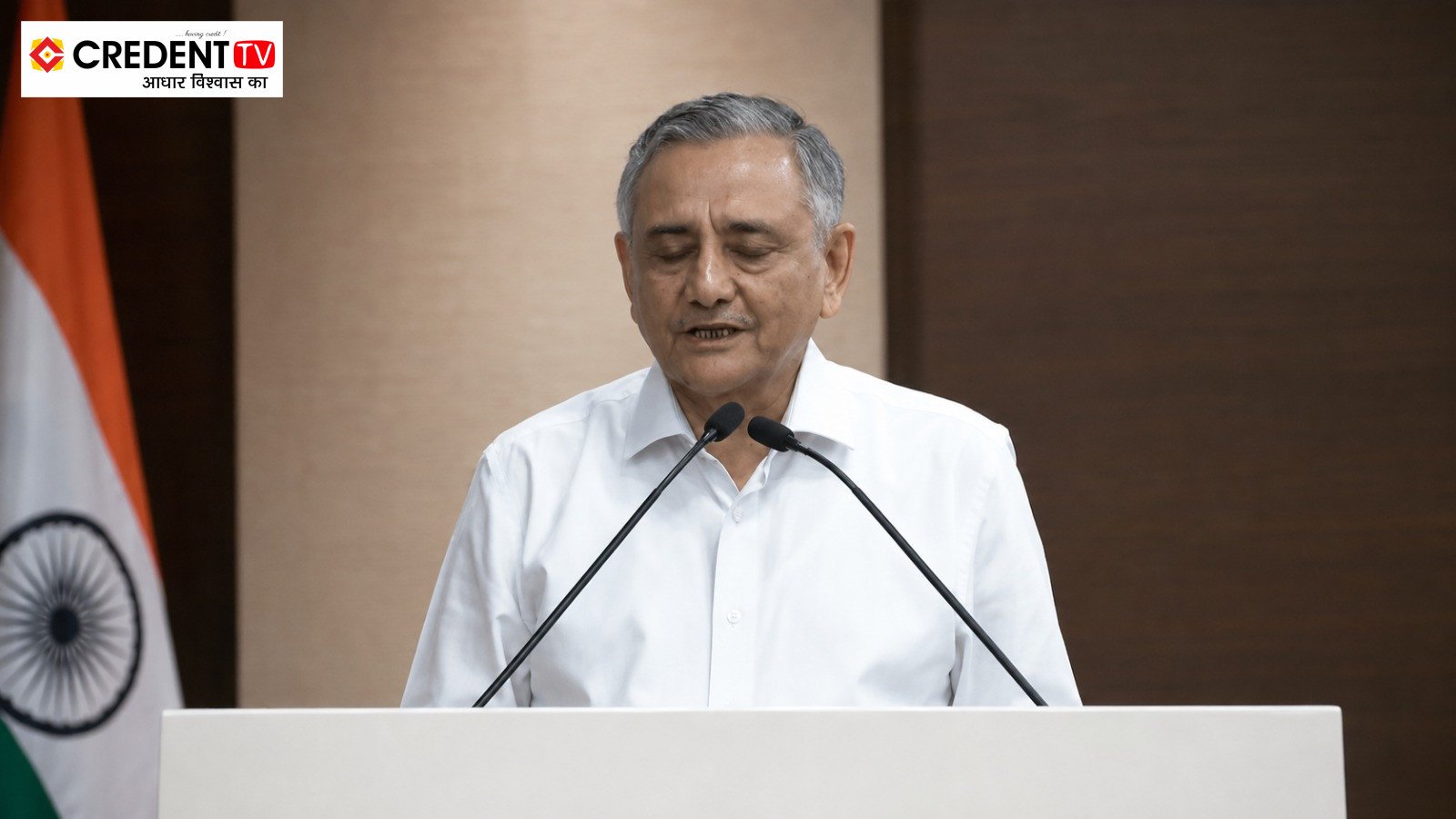
Former Chief of Defence Staff General Anil Chauhan said politics and warfare were inseparable, arguing that military force must serve clearly defined political objectives. He made the remarks during a discussion on Operation Sindoor and its aftermath at the Vivekananda International Foundation in New Delhi on Tuesday.

  • Political objectives shape military options
  • Defence preparedness determines available choices
  • Operation Sindoor remains strategically relevant
  • Chauhan calls for changing military strategies

Political objectives shape military options

Invoking Prussian military theorist Carl von Clausewitz, Chauhan said a country’s political interests remained paramount and the armed forces were one of several instruments available to protect them.

“Politics and war are inseparable. Clausewitz said that war is a continuation of politics by other means.”— General Anil Chauhan, former Chief of Defence Staff

Chauhan said that when a democratic government decided to use force, the military had two principal responsibilities: offering options capable of meeting the government’s objectives and giving the political leadership confidence that those options could be executed successfully.

Advertisement


He stressed that each military choice involved a different level of operational risk and had to be evaluated against the political purpose it was intended to achieve.

“Each option has a certain kind of risk involved in it. So, it’s an interplay between risk and attainment of political objectives.”— General Anil Chauhan, former Chief of Defence Staff

Defence preparedness determines available choices

According to Chauhan, the number and quality of options available during a crisis depend on investments made during peacetime. Defence capabilities, military training, war games and contingency planning must be developed well before the government considers deploying force, he said.

Military leadership also influences the choices available to the government through the quality of training and operational scenarios it prepares. No armed force could remain completely prepared for every contingency at all times, he added, making continuous assessment and adaptation essential.

Advertisement


Operation Sindoor remains strategically relevant

Discussing the Operation Sindoor aftermath, Chauhan said the main phase of active operations had concluded but the campaign remained relevant to strategic communities in India and abroad.

“In some ways, it is ongoing. The major part of active operations has concluded, but this remains a subject of interest for the strategic community.”— General Anil Chauhan, former Chief of Defence Staff

He said the operation should be assessed alongside the deficiencies identified during it, measures taken to address those gaps, the changing character of warfare and wider global uncertainty.

India launched Operation Sindoor on 7 May 2025 following the 22 April terrorist attack in Pahalgam, which killed 25 Indian citizens and one Nepali national. The Indian government said its forces targeted nine terrorist facilities in Pakistan and Pakistan-occupied Jammu and Kashmir.

Advertisement


India and Pakistan subsequently exchanged military strikes before agreeing on 10 May 2025 to stop firing and military action on land, in the air and at sea.

Chauhan calls for changing military strategies

Chauhan said military planners could not repeatedly rely on the same response because predictability reduced the prospects of success. He cited India’s different approaches following the Uri, Pulwama and Pahalgam attacks.

The response after Uri involved land-based surgical strikes, while the Balakot operation following the Pulwama attack used air power. Operation Sindoor employed another approach, including the use of lower airspace, which Chauhan said was intended to preserve surprise and control the threshold of conflict.

Advertisement


Chauhan served as India’s second Chief of Defence Staff until 30 May 2026. General NS Raja Subramani assumed charge as the country’s third CDS on 31 May 2026.

Advertisement


Continue Reading

Breaking News

Trump Considers Renaming Lake Ontario ‘Lake America’ as Canada Trade Dispute Escalates

Published

on

Trump Considers Renaming Lake Ontario ‘Lake America’ as Canada Trade Dispute Escalates


Washington | 25 Aug 2026

US President Donald Trump said on Tuesday that his administration was considering renaming Lake Ontario “Lake America”, linking the proposal to the escalating trade dispute between the United States and Canada. No formal name-change measure was announced.

Table of Contents

Advertisement


  • Trump’s Lake Ontario Proposal Remains Informal
  • Canada Declines to Engage With Renaming Remark
  • Tariffs Deepen US-Canada Trade Dispute
  • Lake Ontario Is a Shared Boundary Water

Trump’s Lake Ontario Proposal Remains Informal

Trump raised the possible change in a post on Truth Social, saying the United States expected to conduct substantially less business with Ontario. He later shared an altered map showing the existing name crossed out and “Lake America” displayed in its place.

“The United States is giving serious consideration to changing the name of Lake Ontario to Lake America.”— Donald Trump, President of the United States

The post did not specify whether the administration would issue an executive order or pursue another formal process. Trump previously directed US federal agencies to use “Gulf of America” for the Gulf of Mexico through an executive order signed in January 2025.

Canada Declines to Engage With Renaming Remark

Dominic LeBlanc, Canada’s minister responsible for US trade, said the federal government would not respond to daily social-media statements from Trump or members of his administration.

The Canadian government did not indicate that it would recognise any alternative name for the lake. Trump’s proposal would not by itself determine how Canadian authorities, international organisations or institutions outside the United States identify the waterway.

Advertisement


Tariffs Deepen US-Canada Trade Dispute

The remarks came after bilateral trade negotiations broke down and Washington imposed tariffs of 50 per cent on Canadian goods valued at C$27.6 billion, effective from 22 August.

Canada subsequently announced matching counter-tariffs on C$27.6 billion of US products from 8 September. The measures cover sectors including steel and aluminium, dairy products, appliances, agricultural equipment, pulp and paper, plastics and electronics. Existing Canadian counter-tariffs on US vehicles will remain in force.

Trump has also threatened tariffs of 50 per cent on Canadian vehicles, automotive components and steel. Canadian Prime Minister Mark Carney has accused Washington of seeking concessions that would damage Canada’s automotive, steel and aluminium industries.

Advertisement


Lake Ontario Is a Shared Boundary Water

Lake Ontario is one of North America’s five Great Lakes. It lies between the Canadian province of Ontario and the US state of New York and forms part of the international boundary between the two countries.

Canada and the United States cooperate on shared waters through arrangements including the 1909 Boundary Waters Treaty and the International Joint Commission. Trump’s post did not explain how the proposed name would apply to the lake’s binational status or existing cross-border institutions.

Trump Lake Ontario name change, Lake America proposal, US Canada trade dispute, Trump Canada tariffs, Canada retaliatory tariffs, Lake Ontario latest news, US Canada relations, Donald Trump Canada policy

Advertisement


#DonaldTrump #LakeOntario #LakeAmerica #CanadaUSTrade #WorldNews

Advertisement


Continue Reading

Breaking News

Northern Cyprus Seeks IVF Patients After Donor Concerns Affect 30 Children

Published

on

Northern Cyprus Seeks IVF Patients After Donor Concerns Affect 30 Children

Northern Cyprus | 22 Aug 2026

Turkish Cypriot health authorities have asked fertility patients with donor-related concerns to come forward after an investigation raised fears that at least 30 children, most of them British, may have been conceived using sperm or eggs from donors other than those selected by their parents.

The appeal marks the latest development in the Northern Cyprus IVF donor investigation, which began after families reported discrepancies between donor profiles provided by clinics and genetic ancestry indicated by commercial DNA tests.

Northern Cyprus IVF Donor Investigation Widens

The investigation initially covered seven children but expanded after more families reported similar experiences. Fifteen of the 30 cases have been linked to treatment at the now-closed Dogus IVF Centre.

Parents said they selected anonymous donors using information about medical history, appearance, education, personality and interests. They now question whether the requested genetic material was used during treatment.

Commercial DNA tests have been conducted involving 11 of the children. The reported results indicated ancestry connected to Turkey or neighbouring regions in cases where parents said they had selected Western European donors, strengthening concerns about possible donor substitutions.

Laura Bridgens, founder of Donor Conceived UK, said the allegations raised serious questions about children’s access to accurate information about their biological and medical backgrounds.

“These reports are deeply concerning. It is a fundamental human right of a person conceived by a donor to know the truth about their origins.”

— Laura Bridgens, founder of Donor Conceived UK

Danish Donor Case Raises Traceability Questions

One mother, identified as Rachel, underwent treatment at Dogus in 2012 after selecting an anonymous Danish sperm donor listed by Cryos International under the pseudonym “Ditto”.

Rachel said the treatment package cost approximately €4,000 and that clinic coordinators told her sperm from the selected donor would be ordered. She later became concerned after failing to receive documentation confirming its use.

DNA testing conducted years later indicated that Rachel was the biological mother of her 13-year-old son, Jonah, but that the selected Danish donor was not his biological father. The results instead indicated Turkish and southern European ancestry.

Cryos International subsequently told investigators that it had no record of supplying sperm to Dogus. The company said it had blacklisted the clinic in 2016 following an earlier case involving a suspected failure to order sperm selected by a patient.

Clinic Rejects Allegations and Disputes Timeline

Dr Firdevs Uğuz Tip, who treated several patients at Dogus and later became the responsible physician at Miracle IVF Centre, has denied misleading patients or committing wrongdoing.

Miracle IVF described the reporting concerning the centre and Dr Tip as “incomplete, one-sided and misleading”. It said no patient-specific records or authorised documentation had been presented to establish personal or institutional responsibility.

The centre also stressed that Dogus and Miracle IVF are separate legal entities. It said Dr Tip worked at Dogus as an obstetrician and gynaecologist between 2009 and 2015, while Miracle IVF was licensed and began operating on 18 April 2019.

Miracle IVF said an inspection of the patient files examined by Turkish Cypriot health authorities found no deficiency or breach of legislation. It added that no final official decision had established wrongdoing by the centre or Dr Tip in relation to activities conducted after Miracle opened.

Dr Sevket Alpturk, identified as Dogus’s owner and responsible director, and former patient coordinator Julie Hodson did not respond to questions reported by the BBC. No competent authority has issued a final finding assigning responsibility for the alleged donor discrepancies.

Health Authorities Invite Families to Submit Evidence

Turkish Cypriot health authorities said their investigation remained under way and invited local and international patients to contact them if they suspected that their chosen donor was not used or if DNA results conflicted with information supplied by a clinic.

Officials said submissions would be handled under confidentiality and personal-data rules. The investigation is expected to examine donor traceability, patient consent, medical records and whether other families may have been affected.

The UK Foreign, Commonwealth and Development Office updated its Cyprus travel advice on 14 August 2026, warning that fertility treatment in the north carries risks because clinics are not regulated in the same way as those in Britain.

Northern Cyprus is recognised as an independent state only by Turkey, and European Union law does not apply there. The UK’s Human Fertilisation and Embryology Authority has no powers over overseas clinics and advises patients to examine local regulation, donor screening, record-keeping and legal remedies before travelling for treatment.

Continue Reading

Bollywood

Kriti Sanon Defends Raksha Bandhan Ad, Rejects Clothing Criticism

Published

on

Kriti Sanon Defends Raksha Bandhan Ad, Rejects Clothing Criticism

India | 25 Aug 2026

Actor Kriti Sanon has defended her Raksha Bandhan advertisement following criticism of her attire and the campaign’s inclusion of a pet dog, arguing that a woman’s respect for culture should not be judged by her clothes.

Advertisement


The Bollywood actor addressed the controversy through an Instagram Story on Tuesday after the jewellery campaign generated divided reactions online and drew criticism from actor and BJP MP Kangana Ranaut.

Kriti Sanon Responds to Raksha Bandhan Ad Criticism

Sanon said the meaning of a festival comes from the emotions and significance attached to its traditions, rather than the clothes worn during the celebration.

Advertisement


She explained that she and her sister, Nupur Sanon, tie rakhis to each other because they believe they can protect one another as much as a brother could. She added that their prayers for health, happiness and longevity also extend to their dogs, whom they consider family.

Sanon also questioned why women continued to be told what they should wear and said ethnic fashion had evolved over time.

“Culture & Traditions are in her heart, not in her neckline!”

Advertisement


— Kriti Sanon, actor

Although her statement came after Ranaut’s remarks, Sanon did not name the actor-politician directly.

Why the GIVA Campaign Sparked Debate

Advertisement


The Raksha Bandhan advertisement for jewellery brand GIVA features Sanon in an off-white bralette-style blouse, cape and draped skirt. It also includes a sequence in which she ties a rakhi to a dog.

Some social media users objected to the outfit and questioned the absence of familiar ceremonial elements such as a puja thali and tilak. Others defended the campaign and said the criticism amounted to policing a woman’s clothing.

Ranaut joined the debate through an Instagram Story on Monday. She questioned the choice of an outfit she compared with a bikini or undergarments and described the advertisement as appearing “intentionally creepy”.

Advertisement


Nupur Sanon Backs Her Sister

Nupur Sanon subsequently reposted her sister’s statement and criticised those objecting to the actor’s clothing.

“Imagine being this bothered by what another woman chooses to wear. Respectfully, EVOLVE!”

Advertisement


— Nupur Sanon, actor and singer

Nupur said she was the sister to whom Kriti tied the rakhi and questioned why others should object when she herself had no problem with it.

The dispute has developed into a wider social-media debate over women’s clothing, contemporary advertising and the representation of traditional festivals.

Advertisement


Continue Reading

Breaking News

US Air Force C-17 Lands in Moscow; Flight’s Purpose Remains Unclear

Published

on

US Air Force C-17 Lands in Moscow; Flight’s Purpose Remains Unclear

Moscow | 25 Aug 2026

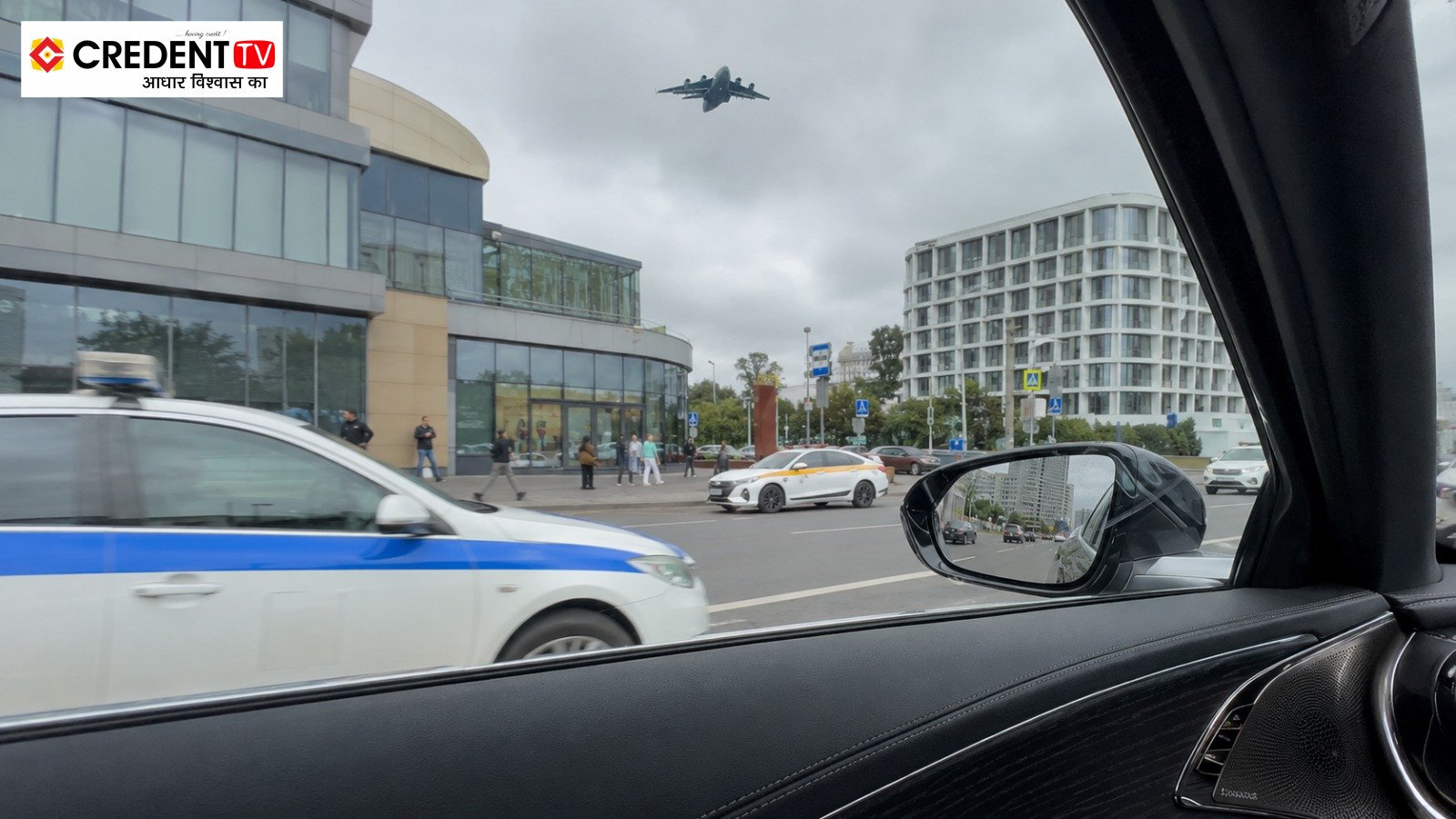
A US Air Force C-17 Globemaster III landed at Moscow’s Vnukovo Airport on Tuesday after flying from Riga, but neither its mission nor details of any passengers or cargo had been publicly confirmed.

  • C-17’s route from Riga to Moscow
  • Kremlin says it has no information
  • Purpose of rare flight remains unconfirmed

US Air Force C-17’s Route from Riga to Moscow

Flight-tracking service Flightradar24 identified the aircraft as a Boeing C-17A Globemaster III with serial number 07-7181 and the call sign RCH4555.

Tracking data showed the aircraft leaving Riga at approximately 8.50 am Moscow time and reaching Vnukovo shortly after 10 am. It had arrived in the Latvian capital on 23 August after departing from the Camp Springs area in Maryland, where Joint Base Andrews is located.

Joint Base Andrews supports US government and senior-official air transport. However, the aircraft’s earlier presence there does not establish that a senior official travelled aboard the Moscow-bound flight.

Kremlin Says It Has No Information About the Aircraft

Kremlin spokesman Dmitry Peskov told reporters that he had no information about the US military transport aircraft’s arrival, according to Interfax.

“No, I do not have such information.”

— Dmitry Peskov, Kremlin spokesman

Peskov also said that no meeting with representatives of the US administration was scheduled at the Kremlin during the week beginning 24 August.

No public explanation from US authorities about the flight’s purpose, occupants or cargo was available at the time of publication. Reuters said it could not independently establish whether the aircraft was carrying passengers or freight.

Purpose of Rare US Military Flight Remains Unconfirmed

The C-17 is a strategic transport aircraft designed to move troops, equipment and cargo over long distances. It can also support tactical airlift, medical evacuation and humanitarian missions, according to the US Air Force.

The aircraft’s capabilities alone do not indicate the nature of Tuesday’s mission. Claims circulating online about diplomatic talks or the presence of senior US officials had not been supported by official evidence.

Direct US military flights to Russia have been uncommon amid strained relations between Washington and Moscow. Reuters reported that the previous direct flight by a US-registered aircraft from Europe to Russia took place in January, when US envoys Steven Witkoff and Jared Kushner travelled to Moscow for talks with Russian President Vladimir Putin concerning the war in Ukraine.

Until either government releases further information, the reason for the C-17’s arrival at Vnukovo remains undisclosed.

Continue Reading

Breaking News

Nitin Gadkari Clarifies Younger Generation Remark Was About Trust, Not Politics

Published

on

Nitin Gadkari Clarifies Younger Generation Remark Was About Trust, Not Politics

Nagpur | 25 Aug 2026

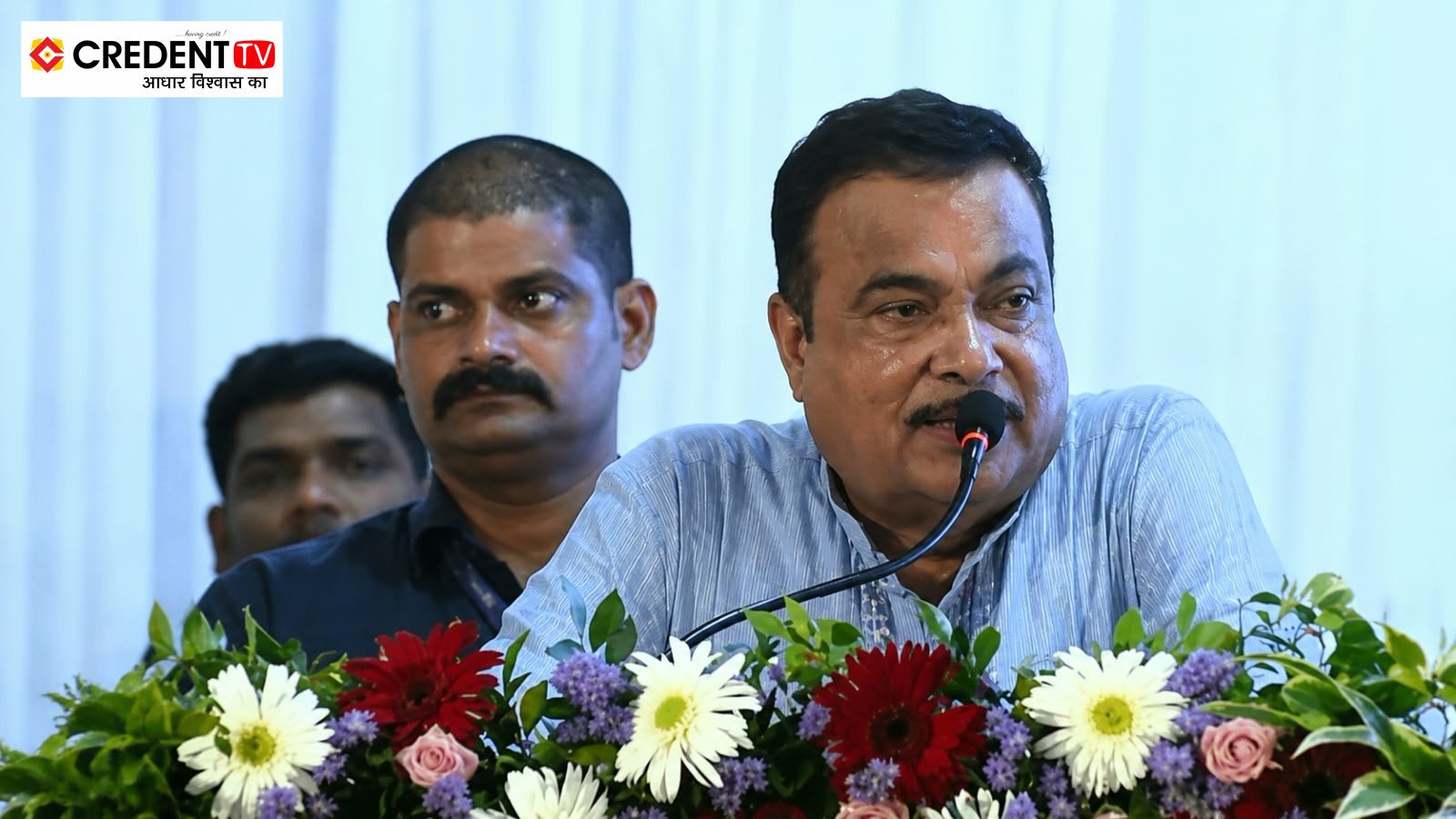
Union Road Transport and Highways Minister Nitin Gadkari’s younger generation remark was related to the future leadership of a social organisation and had no political context, his office clarified on Tuesday after the comments triggered speculation about his political future. 

Advertisement

Gadkari had spoken about reducing his involvement and giving younger people greater responsibility while discussing the work of the Laxmanrao Mankar Trust, which runs Ekal Vidyalayas in tribal areas. His office said reports interpreting the remarks as a signal about retirement from politics had taken them out of context. 

Official Clarification

Gadkari’s office said the Union minister was speaking specifically about the Laxmanrao Mankar Trust and its future leadership when he referred to doing less work and creating opportunities for younger people.

Office Response

Gadkari’s Office Rejects Political Interpretation

Advertisement

“His remarks were clearly related to the functioning and future leadership of the Trust.”

— Office of Union Minister Nitin Gadkari

The clarification said some television channels had presented the statement as a political remark despite the context being the functioning of the trust. 

Nitin Gadkari Younger Generation Remark

Gadkari made the comments while addressing a gathering connected with the Eklavya Ekal Vidyalaya programme at Katol in Nagpur district. He reflected on the trust’s work in tribal areas and argued that younger members should progressively assume greater responsibility.

Advertisement

He said his own participation in the organisation’s work had reduced and that senior members could guide the new generation as it carried the initiatives forward.

Gadkari on Younger Leadership

Minister Calls for Generational Transition

“I have told everyone that now the work should be put into the hands of the new generation.”

— Nitin Gadkari, Union Minister for Road Transport and Highways

Advertisement

Gadkari also said senior members were guiding newer participants and expressed the hope that the trust’s activities would expand further across tribal areas of Maharashtra. 

Laxmanrao Mankar Trust and Its Work

The Laxmanrao Mankar Trust was established by Gadkari and is involved in running Ekal Vidyalayas in tribal areas. The minister’s remarks were made while discussing the organisation’s social initiatives rather than a transition in his government or political responsibilities, according to his office.

During his address, Gadkari encouraged those associated with the programme to develop their abilities and devote time to society and disadvantaged communities. He described the expansion of such social work as a responsibility that should continue through the next generation. 

Advertisement

What Happens Next

There has been no announcement from Gadkari that he intends to retire from politics or leave his ministerial responsibilities. The latest confirmed position from his office is that the remarks concerned the trust and should not be interpreted as a statement about his political future. 

The clarification therefore places the focus on a generational transition within the Laxmanrao Mankar Trust’s social initiatives, rather than any confirmed change in Gadkari’s role in the Union government or active politics.

Advertisement

Continue Reading

Breaking News

Kharge and Rahul Gandhi Urge Modi to Scrap Caste Census Questionnaire

Published

on

Kharge and Rahul Gandhi Urge Modi to Scrap Caste Census Questionnaire

Kharge and Rahul Gandhi Urge Modi to Scrap Caste Census Questionnaire

New Delhi | 25 Aug 2026

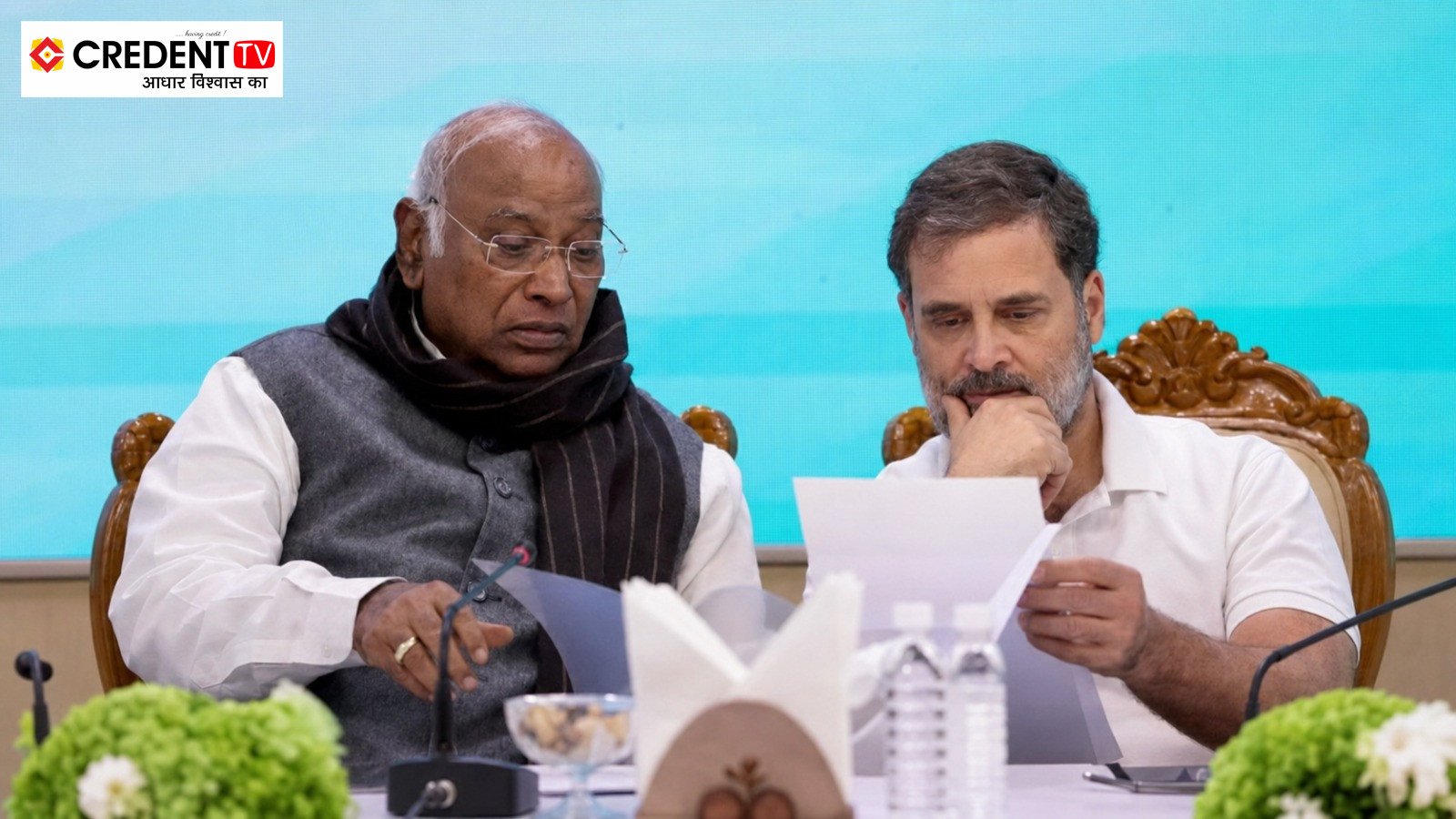
Congress president Mallikarjun Kharge and Lok Sabha Opposition leader Rahul Gandhi have urged Prime Minister Narendra Modi to withdraw the existing caste census questionnaire, warning that its proposed format could produce fragmented and inaccurate data.

In a joint letter dated 20 August and made public on Tuesday, the leaders called for a revised questionnaire based on a standardised caste list prepared after consultations with political parties, experts and the public.

Why Congress Opposes the Caste Census Questionnaire

Kharge and Gandhi said the government had chosen an open-ended format under which the caste name provided by each respondent would be recorded. They argued that this method could classify members of the same community under multiple names, sub-castes, spellings and linguistic variations.

Data Quality Concerns

Kharge and Gandhi’s Objection

“Your government has opted for an open-ended question format to record caste details in the census, which is misleading.”

— Mallikarjun Kharge and Rahul Gandhi, in their joint letter to the prime minister

The Congress leaders said variations in caste names could divide one community across thousands of entries, preventing an accurate assessment of its population and socio-economic position.

They maintained that unreliable data could affect decisions concerning education, employment, welfare programmes and social justice policies. They also argued that the absence of the term “Backward Class” from the notified questions could prevent the exercise from establishing the total Other Backward Classes population.

Leaders Propose a Standardised Caste List

Kharge and Gandhi proposed using a standardised drop-down list of castes instead of allowing unrestricted entries. They said a comparable system was already used to enumerate Scheduled Castes and Scheduled Tribes.

Proposal Based on Government Lists

The leaders said the proposed list could be compiled from existing official records, including government lists of Socially and Educationally Backward Classes and information maintained by the Anthropological Survey of India.

They cited the caste surveys conducted in Telangana and Bihar as practical examples. Copies of the caste lists used for the Telangana Caste Survey 2024 and Bihar Caste Survey 2022 were enclosed with their letter.

The letter asked the government to consult political parties, specialists and members of the public before finalising a replacement questionnaire intended to produce comparable data across states and regions.

Census 2027 Questionnaire and Timeline

The Registrar General of India notified 40 questions for the Population Enumeration phase of Census 2027 on 14 August. The schedule includes separate entries concerning Scheduled Caste or Scheduled Tribe status and caste identity, alongside questions on demographic, educational, economic, migration and disability-related information.

The Union government decided on 30 April 2025 to include comprehensive caste enumeration in Census 2027. The exercise will be India’s first national census since Independence to enumerate castes beyond the continuing collection of Scheduled Caste and Scheduled Tribe data.

Population enumeration in Ladakh and designated snow-bound areas of Jammu and Kashmir, Himachal Pradesh and Uttarakhand is scheduled from 1 to 30 September 2026, with 1 October 2026 as the reference date. The reference date for the rest of India is 1 March 2027.

Government Response Awaited

Congress Position

Jairam Ramesh

Congress general secretary Jairam Ramesh said: The communication was the third letter sent by the Congress leadership to the prime minister on caste enumeration. He said earlier letters sent in 2023 and on 5 May 2025 had not received replies.

No response from the Union government to the latest letter had been announced at the time of publication. The notified questionnaire therefore remains in place ahead of the Population Enumeration exercise in the designated snow-bound regions.

caste census questionnaire, Rahul Gandhi Kharge letter to Modi, Census 2027 caste enumeration, OBC caste census data, India caste census questions, open-ended caste question, Telangana caste survey model, Bihar caste survey model

#CasteCensus #Census2027 #RahulGandhi #MallikarjunKharge #NarendraModi

Continue Reading

Breaking News

Vaibhav Sooryavanshi’s Two-Wicket Duleep Trophy Spell Powers East Zone into Semi-finals
Published

on

Vaibhav Sooryavanshi’s Two-Wicket Duleep Trophy Spell Powers East Zone into Semi-finals

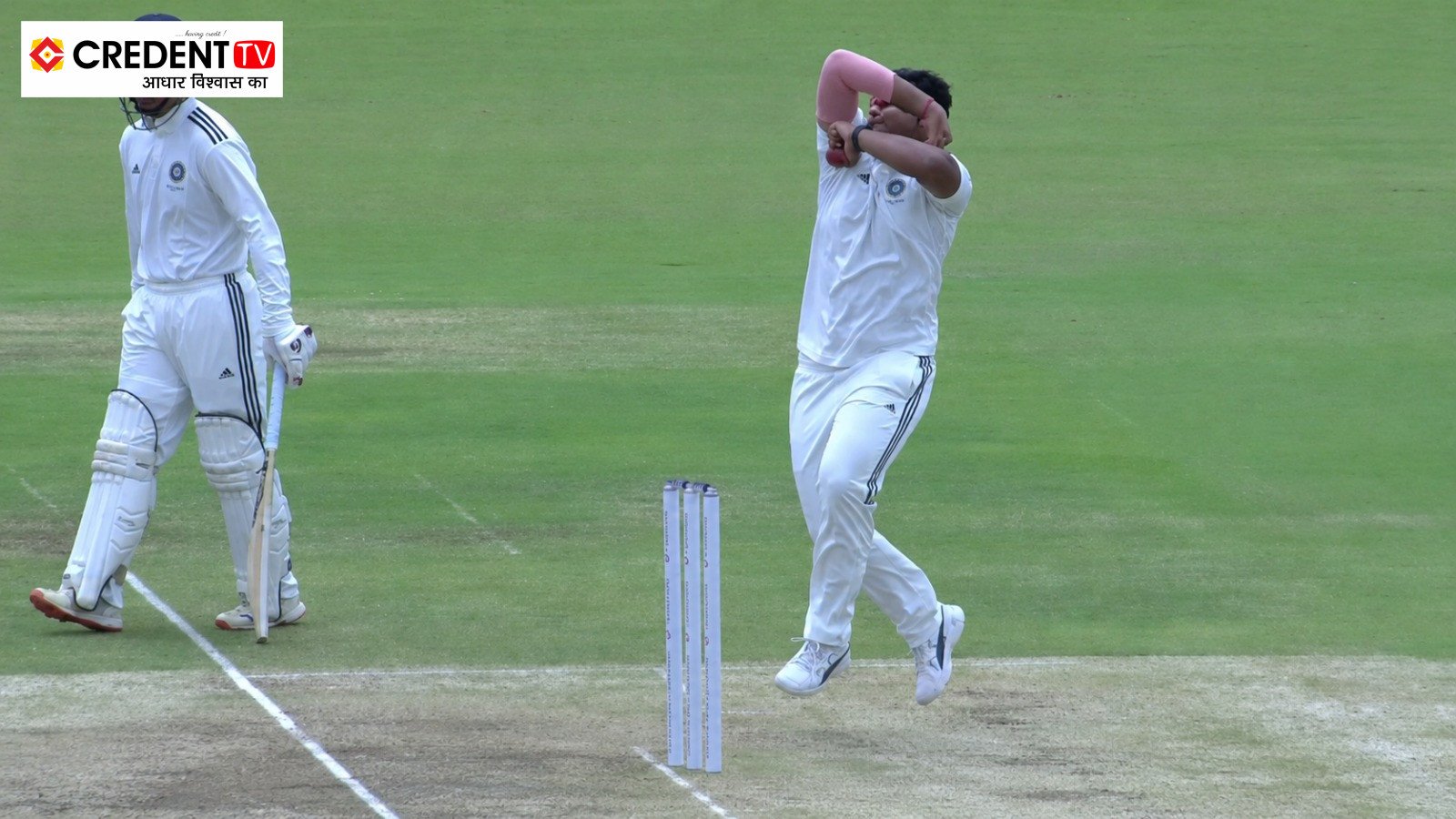
Vaibhav Sooryavanshi’s two-wicket Duleep Trophy spell contributed to East Zone’s innings-and-210-run victory over North East Zone in their quarter-final at the BCCI Centre of Excellence Ground 2 in Bengaluru.

The 15-year-old East Zone vice-captain returned figures of 2 for 11 from three overs on 25 August 2026. East Zone dismissed North East Zone for 111 and 146 after scoring 467, completing the match inside three days and securing a place in the semi-finals. The completed scorecard confirmed the result.

Sooryavanshi, bowling slow left-arm orthodox, removed Kishan Lyngdoh and Imliwati Lemtur within four deliveries during North East Zone’s second innings.

Lyngdoh attempted to attack a flighted delivery but miscued his shot towards point. Sooryavanshi then delivered a quicker ball to Lemtur, who edged it to wicketkeeper and East Zone captain Ishan Kishan.

The two wickets reduced North East Zone to 79 for seven after they had been asked to follow on. The BCCI published footage of Sooryavanshi’s two-wicket over.

Brief Innings with the Bat

Sooryavanshi had earlier opened East Zone’s innings and scored eight runs from six balls. He struck two successive fours before Bishworjit Singh Konthoujam dismissed him.

The BCCI’s official squad announcement listed Sooryavanshi as vice-captain under Ishan Kishan for the 2026–27 tournament.

East Zone Build a Match-Winning Total

East Zone recovered from 138 for five to compile 467 in 112.5 overs, largely through centuries from Sudip Kumar Gharami and Shahbaz Ahmed.

Gharami scored 146 from 185 balls, hitting 25 fours and one six. He shared a 150-run sixth-wicket partnership with Shahbaz, who went on to make a career-best 167 from 244 deliveries, including 17 fours and four sixes. Kumar Kushagra contributed 55.

North East Zone Collapse in First Innings

North East Zone reached 72 for two before losing their final eight wickets for 39 runs and being dismissed for 111.

Abhijit Sarkar led East Zone’s attack with 5 for 20 from 9.5 overs, while Shahbaz took 3 for 20. The 356-run deficit prompted East Zone to enforce the follow-on.

Anukul Roy Completes the Innings Victory

North East Zone offered limited resistance in their second innings before being dismissed for 146 in 50 overs.

Pheiroijam Jotin made 39, Akash Kumar Choudhary scored 27 and Lyngdoh contributed 25. Anukul Roy claimed 5 for 37 from 15 overs, while Sooryavanshi’s 2 for 11 accelerated the collapse.

Shahbaz added one second-innings wicket to his first-innings haul and was named Player of the Match for his 167 and four wickets. East Zone’s innings-and-210-run victory secured their semi-final qualification.

“Vaibhav Sooryavanshi provides Double Delight. Picks up 2 wickets in the over.”

— BCCI Domestic, official domestic cricket account

East Zone Face Central Zone in Semi-final

East Zone will face defending champions Central Zone in the first semi-final at the BCCI Centre of Excellence Ground 1 in Bengaluru from 30 August to 2 September 2026.

The tournament final will be played at Chennai’s M. A. Chidambaram Stadium from 6 to 10 September. The BCCI shifted the final to Chennai to allow spectators to attend the match.

Continue Reading

Bihar

Patna BPSC Protest: Water Cannons Deployed, Aspirants Detained

Published

on

Patna BPSC Protest: Water Cannons Deployed, Aspirants Detained

PATNA — Police used water cannons and detained several job aspirants in central Patna on Tuesday, August 25, after protesters broke through barricades during a march over Bihar’s recruitment examinations.

The pre-announced procession began at Gandhi Maidan, with demonstrators seeking to reach the high-security administrative zone and gherao the Bihar Chief Minister’s residence. The confrontation intensified at Dak Bungalow Crossing as protesters pushed past barricades and police attempted to stop their advance.

Several demonstrators were subsequently taken into custody. No official figure for the number of detainees or any confirmed injuries was immediately released. PTI reported that additional security personnel, including Central Reserve Police Force and Rapid Action Force units, had been deployed at major intersections.

March Stopped at Dak Bungalow Crossing

Aspirants associated with the Bihar Public Service Commission’s Teacher Recruitment Examination, or TRE-4, joined students raising broader concerns about recruitment tests conducted across the state.

Police had erected barricades at major junctions after student organisations announced plans to march from Gandhi Maidan. The procession reached Dak Bungalow Crossing, where protesters jostled with security personnel before breaching the barricades.

Water cannons were deployed as police tried to disperse the crowd and prevent it from entering restricted areas. Visuals from the protest showed demonstrators continuing to raise slogans after the police action.

The march disrupted movement through parts of central Patna, where security had been tightened in anticipation of the demonstration.

TRE-4 Format Remains a Central Dispute

The protesters’ principal demands include conducting TRE-4 through a single-stage examination and removing negative marking from the proposed selection process.

Aspirants have argued that the proposed format could place candidates at a disadvantage and have sought greater transparency in teacher recruitment. Students have also raised concerns about examinations conducted by the Bihar Staff Selection Commission and demanded fair opportunities for Hindi-medium candidates.

Another group participating in the march demanded the cancellation of the 70th BPSC examination, citing alleged irregularities and paper leaks. These allegations remain contested and have not resulted in the examination being cancelled.

The demonstration brought several recruitment-related grievances under a single campaign, extending beyond TRE-4 to concerns over the transparency, structure and administration of competitive examinations in Bihar.

Talks Fail to Resolve Key Demands

Student groups had been demonstrating at Patna’s Gardanibagh protest site before Tuesday’s march. Meetings between their representatives and government officials reportedly produced agreement on some issues, but failed to resolve the central demands concerning a single-stage TRE-4 examination and negative marking.

The groups proceeded with the march after those discussions ended without a settlement on the disputed examination format. UNI reported that protesters were also seeking a “One Candidate, One Result” policy and stronger safeguards against alleged irregularities in recruitment examinations.

Bihar Education Minister Mithilesh Tiwari said the government had addressed most of the students’ concerns and remained open to further dialogue. He urged representatives of the protesting groups to continue discussions with the administration.

The government had not announced any change to the TRE-4 examination structure by the time of publication. The protest groups, meanwhile, continued to demand a formal decision on their principal concerns rather than verbal assurances.

The confrontation has intensified pressure on the state administration to resolve the dispute before the next stage of the recruitment process. It has also renewed scrutiny of how Bihar’s major competitive examinations are designed, conducted and monitored.

Continue Reading

Breaking News

SRN Ad-to-Pitch Challenge Tests Young Entrepreneurs in Jaipur

Published

on

SRN Ad-to-Pitch Challenge Tests Young Entrepreneurs in Jaipur

JAIPUR — The SRN Ad-to-Pitch Challenge brought students from Grades VI to XII into a simulated marketplace where they had to do more than present an idea: they first built an advertising concept and then defended a business model before a live jury. According to event information provided by SRN International School, the programme was designed to combine creative communication, market understanding, financial thinking and public speaking in one competitive format.

The event moved in two stages. Participants began with “Ad Mad” campaigns focused on branding and audience engagement, before progressing to business pitches in which they explained their proposed product or service, value proposition, market logic and financial feasibility. The jury questioned participants during the live presentations, requiring students to respond in real time rather than rely only on rehearsed speeches.

Advertisement

That structure placed the SRN Ad-to-Pitch Challenge closer to an applied business exercise than a conventional school presentation. Students were expected to think about how an idea would be communicated, whom it would serve, why a customer might choose it and whether the underlying business proposition could make practical sense.

SRN Ad-to-Pitch Challenge Moves from Advertising to Business Pitch

The first phase of the SRN Ad-to-Pitch Challenge focused on advertising. Students developed creative campaigns intended to communicate their ideas quickly and persuasively. The exercise required them to think about brand identity, messaging and the expectations of a target audience — basic questions that sit at the centre of real marketing decisions.

The transition from advertisement to pitch was significant. A strong campaign can attract attention, but a business pitch must explain what is being offered, who needs it, how it differs from alternatives and how the idea could operate sustainably. By combining the two, the competition asked students to connect creativity with commercial reasoning.

Advertisement

Participants then presented their complete business models to an expert panel, according to the school’s event account. Their presentations were assessed not simply as performances but as demonstrations of strategic thinking, value creation and financial feasibility. Live jury questions added an element of unpredictability, testing whether participants understood their own proposals deeply enough to explain or defend them under pressure.

The SRN Ad-to-Pitch Challenge therefore required students to move repeatedly between two modes of thinking: imaginative communication and analytical decision-making. That combination is particularly relevant to entrepreneurship, where an appealing idea is only one part of the challenge and execution, pricing, customer understanding and resource choices can determine whether the concept works.

What Students Were Tested On

The competition tested a broad set of skills. Market analysis was one of the most important because students had to identify the audience for their ideas and consider how a product or service would fit a real or assumed need. Even at school level, that pushes participants beyond the question, “What do I want to create?” towards the more demanding question, “Why would someone want this?”

Advertisement

Public speaking formed another major component. Business pitching requires clarity, structure and brevity. Students had to explain an idea to people who had not developed it themselves, which meant making assumptions visible and communicating the core proposition in accessible language.

The live questioning component raised the difficulty further. A prepared presentation can be memorised; a jury question cannot. Students had to listen, process the question, decide what information mattered and formulate an answer within seconds. That makes the SRN Ad-to-Pitch Challenge an exercise in decision-making as well as presentation.

Financial feasibility was also part of the pitching process, according to the event information. For young participants, the value of this requirement lies less in producing sophisticated financial forecasts and more in recognising that business ideas have costs, prices, resources and trade-offs. A proposal that sounds attractive must still confront practical questions about how it would be delivered and sustained.

Advertisement

SRN Ad-to-Pitch Challenge Tests More Than Presentation Skills

The strongest feature of the format is that the different tasks are interconnected. Branding without customer understanding is weak. A confident pitch without a workable proposition can fail under questioning. A financially sensible idea can struggle if the presenter cannot communicate its value. By putting these elements into the same competition, the school created a setting in which students had to see entrepreneurship as a system rather than a single skill.

That approach also gives younger students exposure to vocabulary and decision frameworks they may encounter later in commerce, economics, management, design, technology or start-up environments. It does not assume that every participant will become an entrepreneur. Instead, it treats entrepreneurial thinking as a practical way to develop initiative, problem-solving and communication.

Awards Recognise Innovation and Communication

Exceptional performances were recognised in multiple categories. The school said the honours included the Best Innovator Award, the Best Business Pitch Award and the Best AdMad Presentation.

Advertisement

The categories reflected the different dimensions of the competition. The Best Innovator Award placed attention on originality and the strength of the underlying idea. The Best Business Pitch Award recognised the ability to turn a concept into a coherent and persuasive business case. The Best AdMad Presentation highlighted the communication and branding side of the challenge.

Individual winners’ names were not included in the material available for publication, and Credent TV is therefore not naming recipients without confirmation. The distinction is important because competition coverage should separate verified award categories from unverified claims about individual results.

Taken together, the award structure reinforced the central design of the SRN Ad-to-Pitch Challenge: creativity, strategy and presentation were treated as related but distinct abilities. That is closer to real business evaluation, where a compelling idea may still require stronger execution, and an effective presentation cannot substitute for a weak commercial proposition.

Advertisement

Background and Context

SRN International School is located at Ramnagariya in Jaipur’s Jagatpura area. Its [official website](https://www.srninternational.org/) describes it as a co-educational day-cum-residential institution affiliated with CBSE and offering a Cambridge pathway. The school’s 2026–27 documents list CBSE affiliation number 1730251, while its academic information shows Entrepreneurship among the subjects offered at the senior-secondary level.

The SRN Ad-to-Pitch Challenge is also consistent with a broader pattern of entrepreneurship-oriented activity at the campus. Earlier in 2026, Yi Jaipur said its Kidpreneur programme at SRN International School concluded with a Mini Marketplace on April 20. According to Yi Jaipur, more than 220 students were engaged across programme sessions, 160-plus young entrepreneurs participated through more than 50 stalls, and students worked on branding, pricing, sales, customer engagement, digital payments and revenue tracking.

That earlier programme and the SRN Ad-to-Pitch Challenge are separate activities, but both use participation and decision-making rather than lecture-only instruction. The recurring emphasis shows students being given opportunities to test business concepts through practical tasks, public interaction and competitive evaluation.

Advertisement

The SRN Ad-to-Pitch Challenge should not be described as a substitute for formal entrepreneurship education, but its design overlaps with several of those learning goals. Students had to consider markets, communicate value, address feasibility and respond to questions — activities that translate abstract business concepts into decisions and explanations.

Why It Matters

School entrepreneurship events are most useful when they move beyond slogans about innovation and give students a structured problem to solve. The SRN Ad-to-Pitch Challenge did that by requiring participants to develop both an outward-facing advertisement and an inward-facing business rationale.

For students in Grades VI to XII, the age range also creates an important progression. Younger participants can begin with creative communication and basic customer thinking, while older students can engage more deeply with market positioning, feasibility and business logic. The same format can therefore test different levels of complexity without losing its core purpose.

Advertisement

The public-speaking component has relevance beyond commerce. Students who can explain an idea clearly, answer difficult questions and adjust their reasoning in response to scrutiny are developing skills useful in academic presentations, interviews, leadership roles and collaborative work.

The financial element matters for another reason. Young people are frequently encouraged to innovate, but innovation without attention to cost, resources or implementation can remain abstract. Asking students to consider feasibility introduces discipline into creativity. It teaches that ideas must operate within constraints and that choices have consequences.

The advertising phase also introduces a form of media literacy. To build a campaign, students have to think about audience, message, attention and persuasion. Those are marketing skills, but they can also help students understand how commercial communication works around them. When taught responsibly, creating advertising can make learners more analytical consumers of advertising as well.

Advertisement

Most importantly, the live jury format creates accountability. Participants cannot control every question, and that uncertainty forces them to understand their proposals rather than simply perform them. The SRN Ad-to-Pitch Challenge therefore gives students a low-risk environment in which to experience a core feature of professional life: decisions and claims are often tested by other people.

The format also changes the role of failure. In a conventional test, a wrong answer may simply cost marks. In a business-pitch simulation, a weak assumption or difficult jury question can become immediate feedback. Students can see where an idea lacks clarity, where a cost has been overlooked or where an audience has not been adequately defined.

That feedback loop is central to entrepreneurial thinking. Ideas are rarely complete at the first attempt. They are tested, challenged and revised. By allowing students to encounter that process before entering university or the workplace, schools can make concepts such as market research, value proposition and financial planning more concrete.

Advertisement

What Happens Next

The school has described the competition as a successful experiential-learning initiative and has recognised outstanding participants across the announced award categories. No further round, external final, commercial incubation programme or follow-up funding process was confirmed in the information available for publication.

Any subsequent mentoring, inter-school expansion or continuation of the SRN Ad-to-Pitch Challenge would therefore require a separate announcement from the school. Until then, the confirmed outcome is the completion of the school-level competition and recognition of student performance in innovation, business pitching and advertising presentation.

For SRN International School, the event adds another practical entrepreneurship activity to a campus that has already hosted market-based learning programmes in 2026. For the students, its value lies in the sequence they experienced: create an idea, communicate it, justify it and answer for it.

Advertisement

That sequence is simple, but it mirrors the pressure points of real enterprise. The SRN Ad-to-Pitch Challenge turned those pressure points into a school competition, giving students an opportunity to practise not only how to make a pitch, but also how to think before making one.

SRN Ad-to-Pitch Challeng, SRN International School Jaipur, young entrepreneurs Jaipur, student entrepreneurship, business pitch competition, Ad Mad competition, entrepreneurship education, student business ideas, experiential learning, school marketing challenge, young innovators, business skills for students, Jaipur school news,
SRN International School, Jaipur, Entrepreneurship, Student Innovation, Business Pitch, Ad Mad, Young Entrepreneurs, Experiential Learning, School Education, Marketing Skills, Business Education, Rajasthan Education

#SRNAdToPitch #YoungEntrepreneurs #StudentInnovation #JaipurEducation #CredentTV

Advertisement

Continue Reading

Trending Post