
Politics
NewsClick FIR Details: “Foreign Funds Infused Illegally, Intent To Disturb”



Kharge and Rahul Gandhi Urge Modi to Scrap Caste Census Questionnaire
New Delhi | 25 Aug 2026
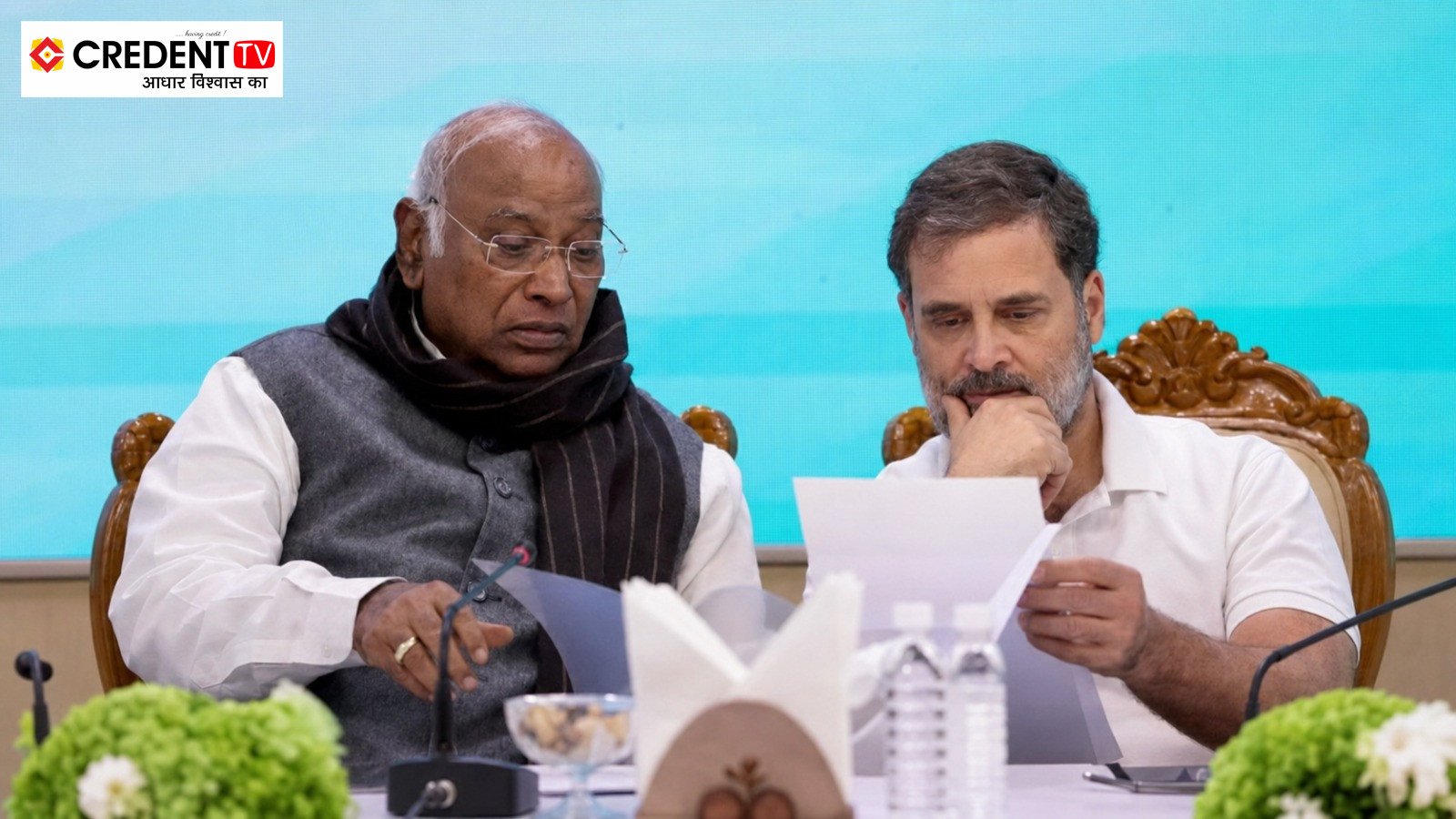
Congress president Mallikarjun Kharge and Lok Sabha Opposition leader Rahul Gandhi have urged Prime Minister Narendra Modi to withdraw the existing caste census questionnaire, warning that its proposed format could produce fragmented and inaccurate data.
In a joint letter dated 20 August and made public on Tuesday, the leaders called for a revised questionnaire based on a standardised caste list prepared after consultations with political parties, experts and the public.
Why Congress Opposes the Caste Census Questionnaire
Kharge and Gandhi said the government had chosen an open-ended format under which the caste name provided by each respondent would be recorded. They argued that this method could classify members of the same community under multiple names, sub-castes, spellings and linguistic variations.
Data Quality Concerns
Kharge and Gandhi’s Objection
“Your government has opted for an open-ended question format to record caste details in the census, which is misleading.”
— Mallikarjun Kharge and Rahul Gandhi, in their joint letter to the prime minister
The Congress leaders said variations in caste names could divide one community across thousands of entries, preventing an accurate assessment of its population and socio-economic position.
They maintained that unreliable data could affect decisions concerning education, employment, welfare programmes and social justice policies. They also argued that the absence of the term “Backward Class” from the notified questions could prevent the exercise from establishing the total Other Backward Classes population.
Leaders Propose a Standardised Caste List
Kharge and Gandhi proposed using a standardised drop-down list of castes instead of allowing unrestricted entries. They said a comparable system was already used to enumerate Scheduled Castes and Scheduled Tribes.
Proposal Based on Government Lists
The leaders said the proposed list could be compiled from existing official records, including government lists of Socially and Educationally Backward Classes and information maintained by the Anthropological Survey of India.
They cited the caste surveys conducted in Telangana and Bihar as practical examples. Copies of the caste lists used for the Telangana Caste Survey 2024 and Bihar Caste Survey 2022 were enclosed with their letter.
The letter asked the government to consult political parties, specialists and members of the public before finalising a replacement questionnaire intended to produce comparable data across states and regions.
Census 2027 Questionnaire and Timeline
The Registrar General of India notified 40 questions for the Population Enumeration phase of Census 2027 on 14 August. The schedule includes separate entries concerning Scheduled Caste or Scheduled Tribe status and caste identity, alongside questions on demographic, educational, economic, migration and disability-related information.
The Union government decided on 30 April 2025 to include comprehensive caste enumeration in Census 2027. The exercise will be India’s first national census since Independence to enumerate castes beyond the continuing collection of Scheduled Caste and Scheduled Tribe data.
Population enumeration in Ladakh and designated snow-bound areas of Jammu and Kashmir, Himachal Pradesh and Uttarakhand is scheduled from 1 to 30 September 2026, with 1 October 2026 as the reference date. The reference date for the rest of India is 1 March 2027.
Government Response Awaited
Congress Position
Jairam Ramesh
Congress general secretary Jairam Ramesh said: The communication was the third letter sent by the Congress leadership to the prime minister on caste enumeration. He said earlier letters sent in 2023 and on 5 May 2025 had not received replies.
No response from the Union government to the latest letter had been announced at the time of publication. The notified questionnaire therefore remains in place ahead of the Population Enumeration exercise in the designated snow-bound regions.
caste census questionnaire, Rahul Gandhi Kharge letter to Modi, Census 2027 caste enumeration, OBC caste census data, India caste census questions, open-ended caste question, Telangana caste survey model, Bihar caste survey model
#CasteCensus #Census2027 #RahulGandhi #MallikarjunKharge #NarendraModi


Breaking News
India-US Trade Deal: Trump Says India Benefited for Decades, Yet a Historic Modi Agreement Could Be Near
India-US Trade Deal remains in focus after Donald Trump said India benefited from high tariffs for decades while expressing confidence in a major agreement with Prime Minister Narendra Modi. Explore tariffs, trade disputes, agriculture concerns, and what the deal could mean for both economies.
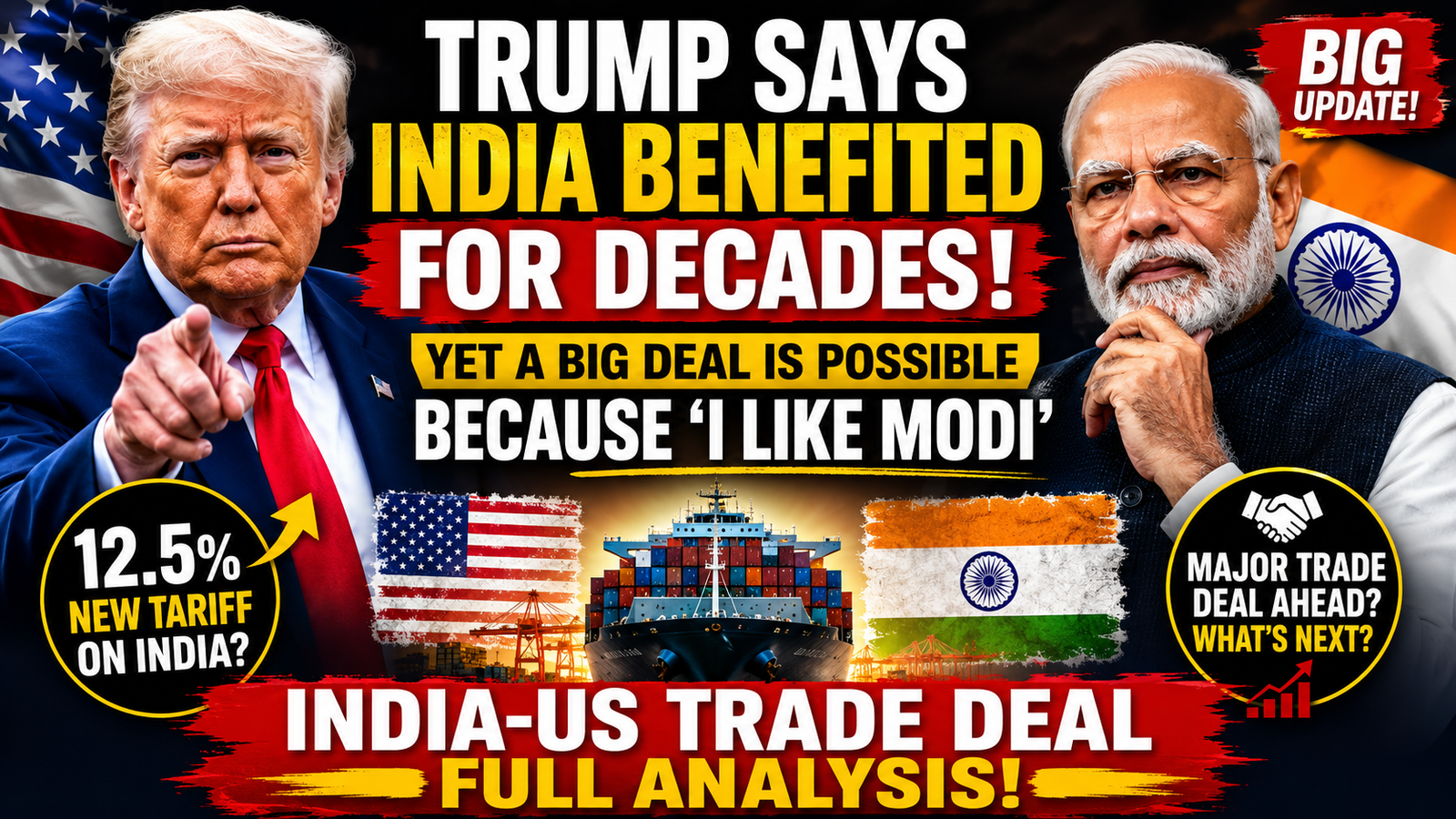
5 June, Credent TV | The India-US Trade Deal has once again become one of the most closely watched developments in global commerce after US President Donald Trump made a series of remarks about trade relations between Washington and New Delhi.
Speaking about bilateral trade, Trump claimed that India had imposed high tariffs on American goods for decades and had benefited significantly from those trade policies. At the same time, he emphasized that the United States is now earning substantial revenue through tariffs and expressed optimism about reaching a major agreement with India in the near future. Trump also highlighted his personal rapport with Prime Minister Narendra Modi, describing him as a good friend and suggesting that strong leadership-level relations could help move negotiations forward.
His comments come at a critical time when officials from both nations are engaged in intensive discussions aimed at advancing the India-US Trade Deal and resolving long-standing trade disputes.
Trump’s Latest Remarks on India-US Trade
The latest debate surrounding the India-US Trade Deal was triggered by Trump’s assertion that India had “taken advantage” of the United States through its tariff policies over many years.
According to Trump, American exporters often faced higher duties while attempting to access the Indian market. He argued that the situation has changed significantly and claimed that the United States is now generating substantial revenue from tariff measures imposed on imports. Despite these criticisms, Trump maintained a positive tone regarding bilateral relations and suggested that a significant trade agreement remains within reach.
His statement reflects a broader strategy that has characterized his trade policy: using tariffs as leverage while simultaneously pursuing negotiations aimed at securing improved market access for American businesses.
Why Trump Says India Benefited from High Tariffs
For years, tariff structures have been one of the most contentious issues between the two countries.
The United States has repeatedly argued that India’s tariff regime has made it difficult for American companies to compete effectively in sectors such as agriculture, medical devices, dairy products, and alcoholic beverages.
India, however, has defended its tariff policies by pointing to the need to protect domestic industries, farmers, and small businesses from overwhelming foreign competition.
Trump’s latest comments are consistent with long-standing American concerns that India’s import duties have historically been higher than those imposed by many developed economies. While trade experts may debate the extent of the advantage, the issue has remained central to every major discussion surrounding the India-US Trade Deal.
India-US Trade Deal Negotiations Gain Momentum
Despite recurring disputes, both governments appear committed to advancing the India-US Trade Deal.
Recent rounds of negotiations in New Delhi have reportedly been constructive, with officials discussing tariff reductions, customs procedures, market access, digital trade, and regulatory cooperation. India’s Commerce Ministry has indicated that discussions have been positive and that both sides are working toward an arrangement that benefits businesses and consumers in both countries.
Commerce Minister Piyush Goyal has also expressed optimism, suggesting that the first phase of the trade agreement could be finalized in the coming weeks if negotiations continue smoothly.
This momentum has raised hopes among exporters, investors, and multinational corporations that the India-US Trade Deal could become a landmark economic partnership.
Proposed 12.5% US Tariff Creates Fresh Challenges
Even as negotiations continue, a significant obstacle has emerged.
The Office of the United States Trade Representative (USTR) has proposed an additional tariff of up to 12.5% on imports from India and several other economies. The proposal stems from a Section 301 investigation related to the enforcement of restrictions on goods allegedly linked to forced labor practices.
If implemented, the proposed tariff could increase costs for Indian exporters and reduce the competitiveness of Indian goods in the American market.
The proposal has not yet become law. The USTR is currently seeking public comments before making a final determination. Hearings are expected before any final decision is announced.
For businesses closely monitoring the India-US Trade Deal, this proposed tariff represents a new layer of uncertainty.
Why the Trade Agreement Has Not Been Finalized Yet
Although both sides have made progress, several developments have complicated efforts to conclude the India-US Trade Deal.
Earlier, an interim trade framework had been discussed as a stepping stone toward a broader agreement. However, legal challenges involving certain Trump-era tariff measures created uncertainty about the future structure of American trade policy. These developments slowed the pace of negotiations and raised questions about how future tariffs would be incorporated into any final agreement.
Trade experts note that while political leaders may support an agreement, technical negotiations involving thousands of products, regulations, and compliance standards often require extensive discussion.
Key Disputes in the India-US Trade Deal
Several important issues continue to divide negotiators.
1. Market Access
The United States wants greater access to the Indian market for:
- Agricultural products
- Dairy products
- Medical devices
- Alcoholic beverages
- Digital services
India, meanwhile, seeks better access for:
- Textiles
- Gems and jewelry
- Pharmaceuticals
- Engineering goods
- Agricultural exports
These competing priorities have made the India-US Trade Deal negotiations particularly complex.
2. Tariff Reductions
India wants the United States to reduce tariffs on several export-oriented sectors.
The United States wants India to lower import barriers that American businesses consider restrictive.
Balancing these demands remains one of the biggest challenges facing negotiators.
Agriculture and Dairy: The Biggest Sticking Points
Agriculture remains perhaps the most sensitive issue in the entire India-US Trade Deal discussion.
Washington has long sought greater access for products such as:
- Corn
- Soybeans
- Apples
- Almonds
- Other agricultural commodities
American exporters argue that India’s large consumer market offers enormous opportunities.
India, however, remains cautious.
Policymakers worry that increased imports could adversely affect millions of Indian farmers who already operate on narrow profit margins. Any sudden increase in foreign competition could have significant economic and political consequences.
The dairy sector presents another challenge.
The United States has pushed for broader access to India’s dairy market. However, differences related to production practices, certification standards, and consumer preferences have prevented meaningful breakthroughs so far.
Because agriculture directly affects livelihoods across rural India, negotiators must proceed carefully to ensure that any India-US Trade Deal does not create unintended economic disruptions.
Economic Impact on India and the United States
A successful India-US Trade Deal could generate substantial benefits for both countries.
Benefits for India
- Increased export opportunities
- Better access to American consumers
- Stronger foreign investment flows
- Enhanced manufacturing competitiveness
- Growth in pharmaceuticals and engineering exports
Benefits for the United States
- Greater access to India’s expanding middle class
- Increased agricultural exports
- Expanded opportunities for medical device manufacturers
- Improved access for technology and digital companies
- Stronger strategic economic ties in the Indo-Pacific region
Economists generally agree that deeper trade integration could support growth, job creation, and innovation in both economies.
However, the exact impact would depend on the final terms of the agreement.
What Happens Next?
The coming weeks may prove crucial for the future of the India-US Trade Deal.
Negotiators are expected to continue discussions on tariff reductions, market access commitments, and regulatory cooperation. Meanwhile, the proposed 12.5% tariff remains under review, with public consultations and hearings scheduled before any final decision is made.
Political observers believe that both governments have strong incentives to reach an agreement. The United States views India as an increasingly important strategic and economic partner, while India seeks stronger trade ties with one of its largest export markets.
The India-US Trade Deal stands at a critical crossroads. Donald Trump’s recent remarks have once again highlighted the long-standing disagreements over tariffs and market access, while also underscoring the possibility of a major breakthrough.
Although challenges remain—including the proposed 12.5% tariff, agricultural disputes, dairy market access, and regulatory differences—both countries continue to engage in active negotiations. Trump’s positive comments about Prime Minister Narendra Modi suggest that political goodwill still exists at the highest levels of government.
If negotiators can bridge the remaining gaps, the India-US Trade Deal could become one of the most important bilateral economic agreements of the decade, strengthening trade, investment, and strategic cooperation between two of the world’s largest democracies.
Breaking News
Why Rajasthan’s Panchayat Elections Delay Is a Dangerous Threat to Democracy; 5 Powerful Reasons
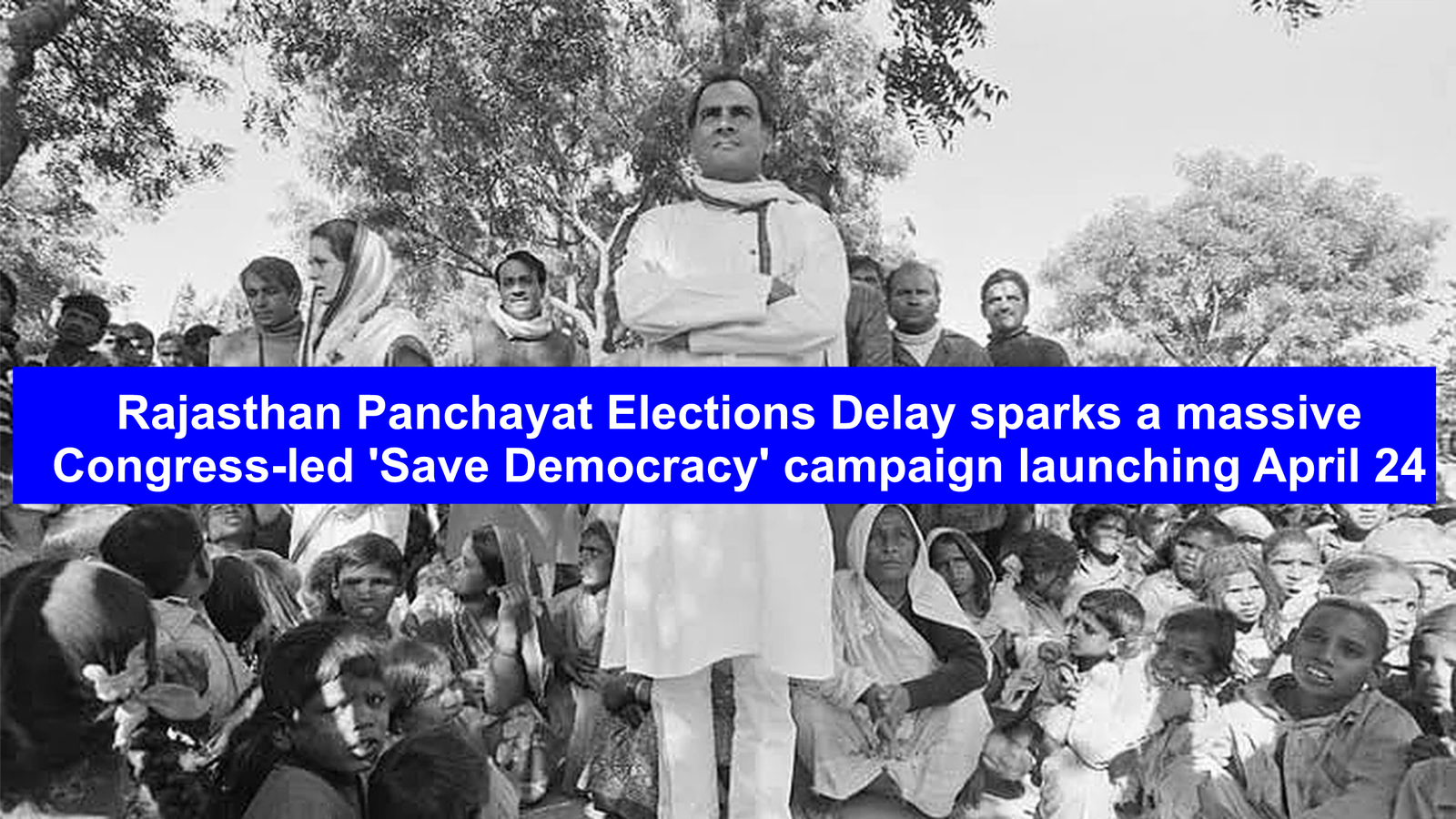
Jaipur, 24 April | Rajasthan’s panchayat elections delay has ignited a fierce political and legal storm across the state, pushing grassroots democracy to a critical crossroads. As courts issue contempt notices and thousands of villages run without elected representatives, the Indian National Congress’s Rajiv Gandhi Panchayati Raj Sangathan (RGPRS) is sounding the bugle — launching a sweeping statewide mass campaign on April 24, 2026, Panchayati Raj Foundation Day, demanding immediate elections and an end to what they call a deliberate “assault on democracy.”
What Is the ‘Chunav Karao – Loktantra Bachao’ Campaign?
The Rajiv Gandhi Panchayati Raj Sangathan (RGPRS), Rajasthan — a dedicated wing of the Indian National Congress — officially launches its state-wide mass movement on April 24, 2026, a date that carries deep symbolic weight as India’s Panchayati Raj Foundation Day.
The campaign, titled “Chunav Karao – Loktantra Bachao” (Conduct Elections – Save Democracy), is not just a political protest. It is a structured, grassroots public movement aimed at pressing the Rajasthan government, the State Election Commission (SEC), and the judiciary into immediate action on long-overdue local body elections.
Dr. C.B. Yadav, State President of RGPRS, described the movement in clear terms: “This is not merely an organisational programme. It is a broad people’s struggle to defend democracy and constitutional values — one that will grow from the village chaupal to social media.”
Key Campaign Activities Planned:
- District-level demonstrations and seminars on April 24 across all districts simultaneously
- Signature drives targeting 20,000 signatures per district, with a statewide goal of 10 lakh (1 million) signatures in three months
- 100 village-level seminars per district
- Door-to-door outreach, padyatras (foot marches), and public choupals
- A major gathering at the Rajasthan Congress Committee office in Jaipur, where senior party leaders and departmental officials will participate

State Coordinator Priti Mourya confirmed that the Jaipur launch event will see senior Congress organisational leaders and departmental heads attend, boosting workers’ morale and formally inaugurating the campaign.
The Scale of the Rajasthan Panchayat Elections Delay
The Rajasthan panchayat elections delay is not a minor administrative hiccup — it is a constitutional crisis of enormous scale.
The case involves elections to 14,403 panchayats, 457 panchayat samitis, 41 zila parishads, 10 municipal corporations, 45 municipal councils, and 254 municipalities across the state.
In a historic first in six decades, the Rajasthan government postponed elections due in January 2025 for 6,759 panchayats, appointing the sitting sarpanchs as panchayat administrators — another unprecedented move.
The tenure of 49 municipal bodies ended in November 2024, and that of 11,310 Gram Panchayats has already expired, with administrators appointed across all these bodies.
Under Articles 243E and 243U of the Indian Constitution, elections to panchayats and urban local bodies must be held mandatorily every five years. Dr. Yadav argues that any delay beyond this is not just a bureaucratic failure — it is a direct violation of constitutional provisions that form the backbone of Indian democracy.
Courts Step In: High Court Issues Contempt Notices
The judiciary’s patience with the Rajasthan panchayat elections delay appears to be running thin.
On November 14, 2025, the Rajasthan High Court, while deciding a batch of 439 petitions, directed the state government to conduct panchayat and local body elections by April 15, 2026, and mandated completion of the delimitation process by December 31, 2025.
The Supreme Court subsequently upheld the timeline and cleared the way for conducting the polls.
Despite these clear judicial mandates, the SEC failed to comply. The Rajasthan High Court then issued contempt notices to the State Election Commission and State Election Commissioner Rajeshwar Singh, questioning how the SEC had issued a schedule for voter list revision that extended beyond the court-mandated deadline.
Counsel for petitioner Puneet Singhvi argued that the SEC’s revised timeline — pushing the publication of final electoral rolls to April 22 — ruled out any possibility of completing elections by the court-mandated deadline.
The SEC, in its defence, maintained that the Panchayati Raj department had failed to finalise reservation lists for seats earmarked for women, OBCs, Scheduled Castes and Scheduled Tribes, making it impossible to proceed.
The RGPRS campaign demands that this judicial pressure be backed by mass public pressure — making the people’s voice impossible to ignore alongside the court’s orders.
₹1,900 Crore Frozen: The Hidden Cost of the Delay
One of the most alarming consequences of the Rajasthan panchayat elections delay is the financial paralysis it has caused at the grassroots level.
Dr. Yadav stated that approximately ₹1,900 crore in Central Finance Commission funds remain blocked and unspent because, without elected panchayat bodies, the disbursement mechanisms are effectively stalled. These funds are critical for rural infrastructure, drinking water, roads, sanitation, and livelihood programmes.
Without elected sarpanchs and panchayat members to authorise and oversee development works, villages across Rajasthan have been stuck in a limbo — projects cannot be sanctioned, tenders cannot proceed, and welfare schemes cannot be implemented on the ground.
As someone from a village, development work suffers visibly when Gram Panchayats have no elected representatives. This sentiment echoes across rural Rajasthan, where the absence of legitimate governance has created a leadership vacuum at the most fundamental administrative unit of Indian democracy.
BJP’s ‘One State, One Election’ Argument Under Fire
The BJP-led Bhajan Lal Sharma government has consistently justified the Rajasthan panchayat elections delay by invoking its ambition for a ‘One State, One Election’ policy.
In its 2024 budget, the Rajasthan government announced plans to implement a ‘One State, One Election’ policy to reduce election-related costs, with a plan to conduct all civic body polls in mid-2025 spanning 45 days in three or four phases.
The OBC Political Representation Commission, constituted to determine reservation quotas — a mandatory step following a 2022 Supreme Court ruling — has not submitted its findings, and the state government extended the commission’s tenure to September 30, citing incomplete data.
However, Congress has called this a manufactured excuse. Congress State Chief Govind Singh Dotasra alleged that the government is using the ‘One State, One Election’ slogan as a cover to deliberately stall the democratic process, predicting that no election process could start before February 2026 since voter lists would remain frozen.
Former Chief Minister Ashok Gehlot described the delay as indicative of a “constitutional breakdown.”
Congress Strategy: From Villages to Social Media
What makes the RGPRS campaign particularly notable is its multi-layered, ground-up strategy designed to build sustained pressure rather than deliver a single-day protest.
The three-month roadmap is ambitious:Phase Activity Target Month 1 District demonstrations + seminars All 33 districts Month 1-2 Signature drives 20,000 per district Month 1-3 Village-level choupals 100 per district Month 3 Statewide total 10 lakh signatures
Dr. Yadav envisions the movement transcending party boundaries: “This will be developed as a jan lahar (people’s wave) from social media to the village chaupal.” The campaign is designed so that the pressure builds progressively — starting with awareness, escalating to organised demonstrations, and culminating in a mass petition that cannot be dismissed.
The strategy draws a direct line from local grievances — blocked funds, stalled roads, absent welfare schemes — to the larger constitutional argument about democratic rights.
Why This Matters for Every Rajasthan Citizen
The Rajasthan panchayat elections delay is not merely a political tussle between the BJP and the Congress. Its consequences touch every citizen who relies on their Gram Panchayat for services, development, and representation.
Here is why every voter should care:
Democratic Representation: Without elected panchayats, millions of citizens have no legitimate local representative. Administrators — however competent — are not accountable to voters.
Development Paralysis: Projects funded by the Central Finance Commission, state schemes, and MGNREGA all require functional elected panchayat structures to operate efficiently.
Constitutional Rights: Articles 243E and 243U are not optional guidelines. They are constitutional mandates. Delay violates the fundamental right of citizens to participate in self-governance.
Judicial Accountability: The fact that the High Court had to issue contempt notices — even after the Supreme Court upheld election timelines — reveals a troubling pattern of institutional defiance.
OBC and Marginalised Representation: The delay in finalising OBC reservations has directly impacted thousands of candidates from backward communities who are waiting to contest and represent their communities in local bodies.
What Happens Next?
The launch of the Chunav Karao – Loktantra Bachao campaign on April 24 is just the beginning. RGPRS has made it clear that the movement will escalate if elections are not announced promptly. The three-month signature drive, culminating in a 10-lakh-signature petition, is intended as a powerful democratic tool — a people’s referendum of sorts, demanding their constitutional right to vote.
The Rajasthan High Court’s contempt proceedings remain ongoing, with the SEC expected to respond within four weeks. Legal observers note that the court’s continued scrutiny could force the government’s hand, regardless of political calculations.
For those wishing to understand the constitutional framework of Panchayati Raj institutions in India, the Ministry of Panchayati Raj’s official portal provides comprehensive resources on the structure, powers, and electoral obligations of local bodies across all states.
Additionally, the Rajasthan State Election Commission is the official body responsible for scheduling and conducting these elections, and its notifications are closely watched by political parties, candidates, and the courts alike.
The Rajasthan panchayat elections delay has become one of the most significant democratic flashpoints in the state’s recent history. With courts issuing contempt notices, nearly ₹1,900 crore in development funds frozen, over 11,000 gram panchayats running without elected leaders, and now a Congress-led mass movement launching statewide, the pressure on the Bhajan Lal Sharma government is reaching a boiling point.
The RGPRS’s campaign, beginning on the symbolically charged date of Panchayati Raj Foundation Day, April 24, is a calculated attempt to shift the conversation from courtrooms to the streets — where democracy is ultimately decided.
Whether it succeeds in forcing immediate elections or not, the campaign shines a necessary and urgent spotlight on a constitutional obligation that, according to both courts and citizens, can no longer be ignored.
Breaking News
UGC Act 2026: 5 Powerful Demands Raised in Rajasthan to End Campus Discrimination
UGC Act 2026 demand grows stronger as social justice groups in Rajasthan submit a memorandum to the President seeking strict laws to stop caste discrimination in universities and ensure equal educational rights.
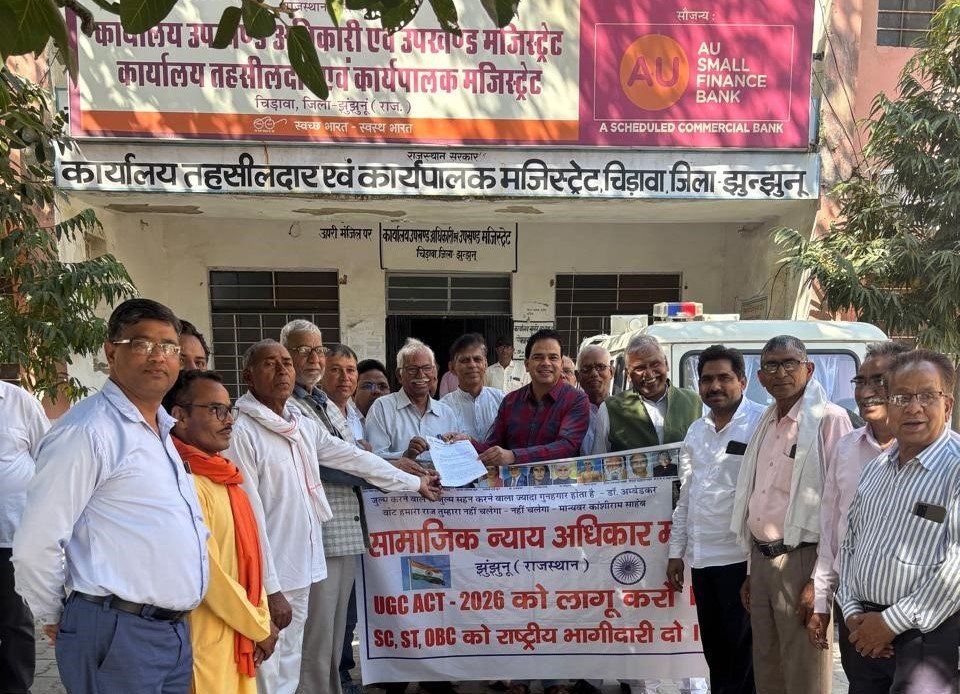
6 March, Chirawa | UGC Act 2026 has emerged as a powerful demand among social justice organizations and student rights groups across India. The proposed legislation is being seen as a crucial step toward addressing discrimination in higher education institutions and ensuring equal access to opportunities for historically marginalized communities.
In a significant development, members of the Dr. Ambedkar Anusuchit Jati Adhikari Karmachari Association (AJAK) & Samajik Nyay Adhikar Manch along with representatives of several social organizations in Chirawa subdivision of Jhunjhunu district, Rajasthan, submitted a memorandum addressed to the President of India through the Sub-Divisional Magistrate (SDM).
The delegation included Balveer Singh Kala, Advocate Vijay Gurava, President of the Bar Association, Advocate Suresh Dandia, Advocate Arvind Bhagat, Advocate Vedprakash, Babulal Councilor, Rohitash Mehrania, Anil Mehrania, Mahesh Mehrania, Jai Mal Siroha, Budhram Mehrania, Sitaram Panwar, Satyanarayan Dholpuria, Raghuveer Singh, Hanuman Singh Danodia, Sant Kumar, Hariram Maharia, Sajjan Maharia, Shiv Prasad Maharia, Vinod Mehrania, Anil Narnolia, Prahalad Singh and representatives of various social organizations.
The memorandum calls for the immediate enactment of the UGC Equity Regulations for 2026 and strict implementation of new University Grants Commission regulations to promote equality in higher education.
The demand reflects a growing national conversation about discrimination in educational institutions and the need for systemic reforms to protect the constitutional rights of students belonging to Scheduled Castes (SC), Scheduled Tribes (ST), and Other Backward Classes (OBC).
The demand for the Rohith Vemula Act 2026 stems from long-standing concerns regarding discrimination in universities and higher education institutions across India.
Many social justice organizations argue that despite constitutional guarantees of equality, students from historically marginalized communities continue to face barriers such as:
- Social exclusion
- Institutional discrimination
- Lack of grievance redressal mechanisms
- Underrepresentation in faculty positions
According to activists, a strong legal framework is necessary to ensure that educational institutions remain inclusive and equitable for all students.
Memorandum Submitted in Chirawa, Jhunjhunu
In Rajasthan’s Jhunjhunu district, the Dr. Ambedkar Anusuchit Jati Adhikari Karmachari Association (AJAK) & Samajik Nyay Adhikar Manch along with various community organizations submitted a memorandum urging the central government to enact the Rohith Vemula Act 2026 (UGC Equity Regulations for 2026).
The memorandum was submitted to the Sub-Divisional Magistrate (SDM) of Chirawa, who will forward it to the President of India.
Representatives of several social organizations were present in the delegation, including community leaders, lawyers, and public representatives.
The delegation emphasized that historically marginalized communities have remained socially and educationally backward for centuries, and therefore require strong institutional protection to ensure equal participation in education.
Constitutional Provisions Supporting Educational Equality
The memorandum strongly referred to several provisions of the Constitution of India that guarantee equality and social justice.
Article 14 – Right to Equality
Article 14 ensures equality before the law and equal protection of laws to all citizens.
More details about constitutional equality provisions can be accessed through the official portal of the Government of India:
https://www.india.gov.in
Article 15 – Prohibition of Discrimination
Article 15 prohibits discrimination on the basis of religion, race, caste, sex, or place of birth.
It also allows the state to make special provisions for socially and educationally backward classes.
Article 16 – Reservation in Public Employment
Article 16(4) provides reservation in government jobs for SC, ST, and OBC communities to ensure fair representation.
Article 17 – Abolition of Untouchability
Article 17 declares untouchability as a punishable offense, reinforcing the principle of social equality.
Article 335 – Claims of SC/ST in Services
Article 335 mandates that the claims of SC/ST communities must be considered in public employment while maintaining administrative efficiency.
These constitutional provisions form the legal foundation behind the demand for the Rohith Vemula Act 2026.
Rohith Vemula Case and the National Debate on Campus Discrimination
The demand for the Rohith Vemula Act 2026 is closely linked to the death of Rohith Vemula, a PhD scholar at the University of Hyderabad whose suicide in January 2016 sparked nationwide protests and debates on caste discrimination in higher education.
His death triggered a broader discussion about institutional bias and the treatment of marginalized students within universities.
Civil society groups, student unions, and political leaders have repeatedly demanded stronger laws to prevent such incidents and ensure accountability within academic institutions.
Advocates for the legislation argue that such a law could act as a deterrent against discrimination and harassment.
Some political leaders and activists have also called for legal reforms to address cases similar to those of Rohith Vemula, Payal Tadvi, and other students who allegedly faced discrimination in educational institutions.
Key Demands Raised in the Memorandum
The memorandum submitted in Chirawa highlights several major demands related to the Rohith Vemula Act 2026 and educational reforms.
1. Enactment of Rohith Vemula Act 2026
The organizations demanded the enactment of a comprehensive law to prevent discrimination against SC, ST, and OBC students in universities.
2. Strict Implementation of UGC Regulations
The University Grants Commission should implement the Promotion of Equity in Higher Education Institutions Regulations 2026 strictly.
3. Equal Opportunity Helplines
Every higher education institution should establish a 24-hour equality helpline to address cases of discrimination.
4. National Monitoring Committee
The memorandum calls for a national monitoring committee to track discrimination complaints and ensure accountability.
5. Transparent Recruitment Processes
Universities should ensure that reserved positions are filled fairly and without prejudice.
UGC Equity Regulations 2026 and Institutional Responsibility
The University Grants Commission has introduced regulations aimed at preventing discrimination and promoting equity in higher education institutions.
These regulations were developed after directions from the Supreme Court and concerns raised in public interest litigations regarding caste discrimination in universities.
The regulations emphasize:
- Institutional grievance redressal systems
- Equal opportunity cells
- Monitoring mechanisms
- Protection of marginalized students
However, activists argue that stronger enforcement mechanisms are still required.
Vacant Reserved Posts in Universities: A Growing Concern
One of the major issues raised in the memorandum is the large number of vacant reserved posts in universities.
According to the representatives, many faculty positions reserved for SC, ST, and OBC candidates remain vacant due to various administrative practices.
These include:
- Selection boards declaring candidates “Not Found Suitable (NFS)”
- Low interview scores despite eligibility
- Delays in recruitment processes
Activists claim that such practices undermine the goal of fair representation in higher education institutions.
They have demanded that the government launch a special recruitment drive to fill reserved posts in universities across India.
National Protests and Student Movements
The debate around the Rohith Vemula Act 2026 has also led to protests and demonstrations in several universities.
Student groups and civil society organizations argue that discrimination in educational institutions can have severe psychological and social consequences for students from marginalized backgrounds.
Protests and discussions across campuses have highlighted the importance of building inclusive and safe academic environments.
Many activists believe that stronger legal safeguards are necessary to prevent discrimination and ensure equal opportunities for all students.
Why the Rohith Vemula Act 2026 Is Seen as a Landmark Reform
Supporters of the proposed Rohith Vemula Act 2026 believe that it could become a transformative step in India’s higher education system.
The law is expected to:
- Strengthen anti-discrimination mechanisms
- Protect the rights of marginalized students
- Improve representation in academic institutions
- Promote inclusive campus environments
Experts argue that the legislation could help create a more equitable education system that reflects the constitutional values of justice and equality.
The Road Ahead for Inclusive Higher Education in India
The demand raised in Chirawa reflects a broader national movement seeking structural reforms in higher education.
As discussions around the Rohith Vemula Act 2026 continue, policymakers, educational institutions, and civil society groups will need to work together to ensure that universities remain spaces of learning, equality, and dignity.
The debate also highlights a fundamental question for India’s education system:
How can universities ensure that every student — regardless of caste, background, or social status — has an equal opportunity to succeed?
The answer may lie in stronger laws, transparent institutional policies, and a renewed commitment to the constitutional ideals of equality and social justice.

Breaking News
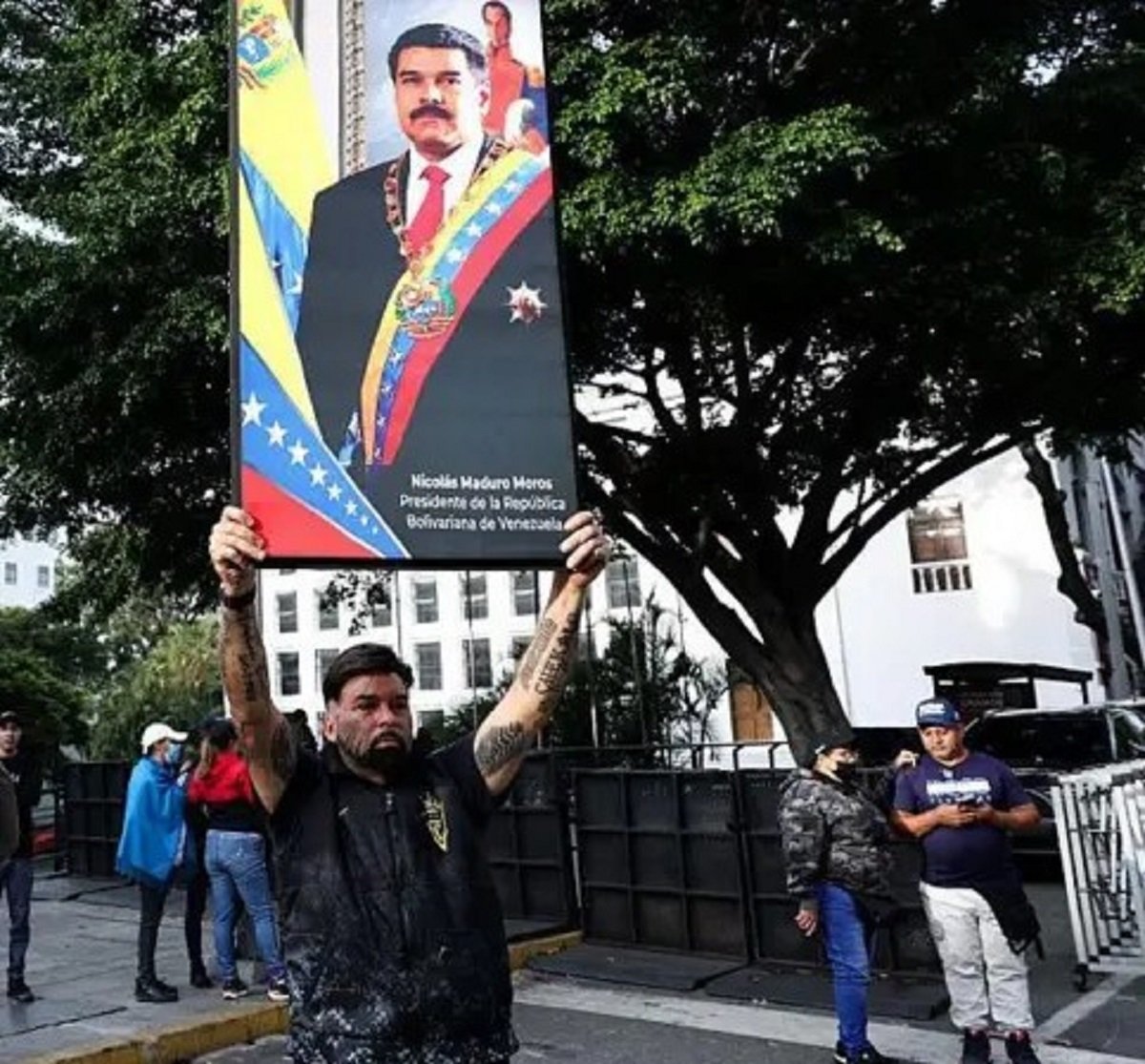
The US Venezuela Airstrike Crisis sparks global outrage as India, Iran, Qatar, Malaysia and others-
Breaking News
Saudi Arabia UAE Tensions 2026- Alarming Power Shifts That Could Deepen Pakistan’s Crisis-

Breaking News
China mediation claim India Pakistan ceasefire triggers sharp backlash as AIMIM chief Asaduddin Owaisi calls it an insult to India-

Savitribai Phule Award 2026 Honours 54 Women in Jaipur

Pentagon Polygraphs About 50 Officials in Weapons-Stockpile Leak Investigation

CBI Books Subhash Chandra in ₹1,322 Crore LIC Housing Finance Fraud Case

Delhi Police Detain Swatantra Bhardwaj; SC/ST Act Added in Assault Case

Swatantra Bhardwaj Detained After CJP March to Parliament Street Police Station

Krishna Janmashtami 2026: Mathura-Vrindavan Packed, Jaipur Celebrates as Mumbai Readies Dahi Handi

Priyansh Arya: The Six-Hitting Sensation of IPL 2025

Top 10 Most Searched Topics on YouTube: What’s Trending Now?

Preity Zinta Spotted with New Punjab Kings Hero Priyansh Arya in Viral Clip

Nag Panchami 2025: 7 Key Rituals and Puja Time to Eliminate Kaal Sarpa Dosha

Radhika Merchant: A New Chapter as Radhika Ambani

Balen Shah, Kathmandu’s independent mayor, from rapper to political leader. Explore his rise amidst Nepal’s youth-led revolution-

best career opportunities | Jaipur Career Fair | Credent TV | Dainik Navjyoti D2S03

what is reiki healing | Mental Health | Shiksha Sarokar, शिक्षा सरोकार, Sunil Narnaulia

DAV Centenary Public School, Vaishali Nagar, Jaipur hosts Successful ‘Mind Wars Quiz: A Battle of Wits and Knowledge’

 Credent TV1 month ago
Panja Dangal Season 1: Lakshya Narwani Wins Jaipur Arm-Wrestling Championship
- Breaking News2 weeks ago
Vaibhav Sooryavanshi’s Two-Wicket Duleep Trophy Spell Powers East Zone into Semi-finals
- Breaking News2 weeks ago
SRN Ad-to-Pitch Challenge Tests Young Entrepreneurs in Jaipur
- Bihar2 weeks ago
Patna BPSC Protest: Water Cannons Deployed, Aspirants Detained
- Breaking News2 weeks ago
Reports Claim Pakistan Deployed Bayraktar TB2 Drones Near LoC
- Breaking News2 weeks ago
US Air Force C-17 Lands in Moscow; Flight’s Purpose Remains Unclear
- Breaking News2 weeks ago
Kharge and Rahul Gandhi Urge Modi to Scrap Caste Census Questionnaire
- Breaking News2 weeks ago
Nitin Gadkari Clarifies Younger Generation Remark Was About Trust, Not Politics


