Breaking News
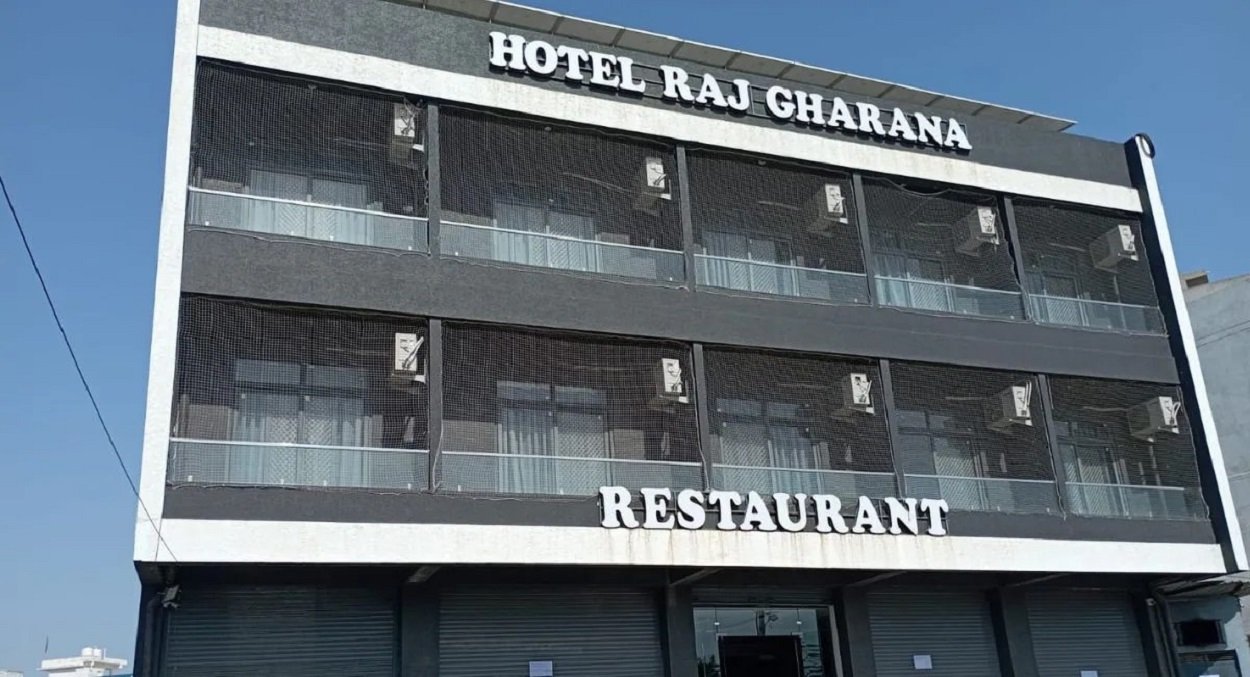
Rajgharana Hotel Udaipur has been sealed amid illegal construction claims-
Published
11 months agoon

- The day before this action, 35 shops constructed on agricultural land were sealed for lacking approvals.
- UDA has acted against unauthorized construction at Sajjangarh Resort & Spa, issuing notices and stopping work where no approvals existed.
- Other buildings in Udaipur’s city zones — like in Haridas Ji Ki Magri — have faced sealing by municipal authorities over unapproved construction
- Local media reported that UDA has been actively halting illegal construction and enforcing sealing actions.
- Compliance & Regularization
Operators may remove illegal additions, submit retroactive change-of-use applications, and align with building norms. - Legal Challenge
They could approach High Court or tribunals, obtaining stay orders to forestall demolition or further penalties. - Partial Settlement / Negotiation
Authorities and owners may negotiate partial permissions, fines, or modifications to permissible structure. - Bulldozer Action
If no correction, UDA may demolish noncompliant parts—fully or partially—as warned. This is the most drastic outcome. - Long-Term Litigation
Even post-demolition, court cases might continue over compensation, land rights, or procedural fairness. - Court Intervention: The hotel may seek judicial relief, leading to stays or partial modification of orders.
- Public Interest Litigation (PIL): Civic groups may challenge not just this case, but broader patterns of illegal construction.
- Scaling Enforcement: UDA may seal or demolish unauthorized parts in other hotels or resorts as well.
- Policy Adjustment: Authorities might tighten processes, demand stricter checks before approvals, ramp up monitoring.
- Negotiated Settlement: In some cases, retroactive approval under penalty may be granted if compliance is partial.
- Demolition Execution: If no remedy, bulldozers may start work — which can provoke legal, political, social backlash.

Swatantra Bhardwaj Detained After CJP March to Parliament Street Police Station

Krishna Janmashtami 2026: Mathura-Vrindavan Packed, Jaipur Celebrates as Mumbai Readies Dahi Handi

Nitin Gadkari Clarifies Younger Generation Remark Was About Trust, Not Politics

India-US Trade Deal: Trump Says India Benefited for Decades, Yet a Historic Modi Agreement Could Be Near

Social Media Dialogue or Controversy? The Growing Crisis of Communication in the Digital Age

AI and Original Writing Crisis: 10 Powerful Reasons Why Artificial Intelligence Can Never Replace Human Creativity
Contents
Udaipur,Oct.11,2025:The Udaipur Development Authority (UDA) recently conducted decisive action by sealing Rajgharana Hotel Udaipur, located in Manvakhēda, on grounds of unauthorized construction and land-use violations. A notice was issued earlier, but the hotel operator apparently did not comply by removing the illegal structures. As a result, the building has been locked down. If remedial measures aren’t taken within six months, the authority warns it will deploy bulldozers to demolish noncompliant elements-
UDA Commissioner Rahul Jain confirmed that the hotel was constructed without requisite permissions and without proper land-use conversion. The move is part of a larger push by UDA during the peak festive season, when another 35 unauthorized shops on agricultural land were sealed just a day earlier.
At the sealed premises, enforcement teams from UDA, assisted by police, carried out the action to ensure no business operations continue under alleged illegality.
Legal Grounds & Authority Powers
Unauthorized Construction & Land Use
The core allegation is that the Rajgharana Hotel Udaipur was built without permission and without undergoing land-use conversion. In urban planning regimes, especially under development authorities, any shift from, say, agricultural or residential zoning to commercial use mandates formal permission. Failing that, constructions are deemed illegal and liable to sanction.
Sealing & Demolition Rights
Typically, municipal and development authorities have the power to seal buildings under infringing construction norms. If violations persist, they may initiate demolition or “bulldozer action” after due notice, under relevant municipal or development statutes and building codes.
In many Indian states, authorities provide a grace period—commonly six months—as a window for the owner to regularize, remove noncompliant structures, or obtain retrospective permission. If not corrected, coercive action is taken.
Legal Recourse & Appeals
Often, hotel operators or property owners approach courts — high courts or tribunals — challenging sealing orders or seeking stay on demolition. Such litigation can prolong outcomes, but courts often demand adherence to master plans, zoning rules, and environmental norms over ad hoc permissions.
Similar Crackdowns Across Udaipur
The sealing of the Rajgharana Hotel Udaipur is not an isolated event. UDA and related agencies have recently intensified their enforcement:
These actions indicate a strategy shift: tighter scrutiny, less tolerance for deviation, and more assertive use of statutory powers.
Stakeholder Reactions & Conflicts
Hotel Owner / Operator
The hotel’s management is likely to contest the order, arguing perhaps procedural lapses, ambiguity in notices, or seeking retroactive approvals. They may claim investments, expected returns, and public inconvenience.
UDA & Government
UDA frames its actions as enforcement of law, protecting master plans, upholding rule of law, and discouraging impunity. By intervening during peak season, the authority signals that even high-profile or well-funded projects are not immune.
Citizens & Local Communities
Local residents may have mixed responses: some might support the crackdown to prevent unplanned growth, strain on infrastructure, or loss of green or open zones. Others may worry about job loss, tourism impact, and legal fairness.
Legal / Urban Planning Experts
Experts may debate whether due process was followed: Was the hotel given fair hearing? Were notices properly served? Were building norms clear? Is the demolition threat proportionate? Courts might be petitioned to examine conformity with master plan, environmental safeguards, and the larger urban vision.
Six Months Deadline
The six-month period given to the hotel operators is a pivotal window. Possible courses:
The threat of bulldozer action is powerful—demolition is visually dramatic and carries reputational and financial risks for all sides.
Urban Planning, Heritage & Zoning Challenges
The Rajgharana Hotel case highlights deeper urban challenges in Udaipur:
Heritage / Tourism vs Regulation
Udaipur is a heritage and tourism city. Hotels and resorts are essential to economy, but haphazard growth burdens infrastructure, water, waste, traffic. Balancing hospitality ambitions with controlled development is critical.
Zoning & Land Use Integrity
Unchecked conversions of agricultural or non-commercial land into high-intensity uses can erode planned growth boundaries. Keeping Master Plan integrity is essential for sustainable growth.
Precedent & Incentives
If high-profile properties flout rules without consequence, others may follow suit. Enforcing the Rajgharana Hotel order sends a deterrent signal.
Environmental and Infrastructure Stress
New or expanded construction places stress on water supply, sewage, electricity, roads, and environment — especially when approvals are bypassed.
Potential Scenarios
Here are probable future developments-
The sealing of Rajgharana Hotel Udaipur is not just a punitive act—it’s a declaration: regulations will be enforced, even in the tourism sector. For Udaipur, a city of lakes, palaces, heritage, and commerce, unchecked construction is a constant threat to planning integrity and public trust.
This case is a turning point: one property’s crisis may ripple into broader reform in how Udaipur manages growth, heritage, zoning, environment, and accountability.
Credent TV is a dynamic and trusted media platform dedicated to delivering accurate, timely, and engaging news. With a focus on insightful journalism, Credent TV covers a wide range of topics, including current affairs, education, culture, and social issues, aiming to keep audiences informed and inspired. Led by a team of experienced professionals, Credent TV is committed to journalistic integrity, providing in-depth analysis and unbiased reporting that resonates with viewers across India. Its mission is to foster awareness, promote knowledge, and serve as a reliable source for news that matters.

You may like
Breaking News
Pentagon Polygraphs About 50 Officials in Weapons-Stockpile Leak Investigation
Published
8 hours agoon
September 5, 2026
Washington | 5 Sep 2026
The Pentagon subjected about 50 senior military and civilian officials to polygraph examinations during an investigation into suspected leaks of classified information about United States weapons stockpiles, according to multiple US media reports citing officials familiar with the inquiry.
The unusually broad investigation followed reports about the rapid use of advanced American munitions during the conflict with Iran, including long-range missiles and Patriot air-defence interceptors. The Pentagon has not publicly confirmed the identities of those examined or disclosed whether investigators have identified a suspected source.
Pentagon leak investigation reaches senior military officials
The examinations reportedly involved members of the Joint Staff, officials associated with US Central Command and personnel from other combatant commands. The tests focused on whether any of them had provided sensitive national-security information to journalists.
Officials familiar with the investigation said no participant failed the questions specifically intended to identify the source of the media disclosures.
General Dan Caine, chairman of the Joint Chiefs of Staff, was not among those subjected to a polygraph, according to a senior Pentagon official cited in US reports.
Polygraph examinations are used periodically for some military and civilian personnel with access to top-secret material or special-access programmes. Officials described the number of people examined in this inquiry as highly unusual and indicative of a targeted counter-intelligence investigation.
Leaks reportedly concerned US weapons stockpiles
The inquiry followed reports that ongoing military operations had placed pressure on supplies of certain sophisticated weapons. The reported disclosures included classified assessments concerning long-range missiles, air-defence systems and other precision-guided munitions available to US forces.
The specific size and condition of American weapons inventories remain classified. Public reports describing shortages therefore cannot be independently verified, and US officials have maintained that the military retains sufficient weapons to meet operational requirements.
President Donald Trump rejected reports portraying the United States as facing a broad ammunition shortage. He said the country possessed large quantities of munitions and that defence manufacturers were expanding production.
Trump also called the disclosures “treasonous” and demanded severe punishment for whoever released the classified information. No individual has been publicly charged in connection with the reported weapons-stockpile leaks.
Pentagon says classified leaks threaten national security
Chief Pentagon spokesperson Sean Parnell declined to discuss internal personnel or investigative matters but confirmed the department’s position on unauthorised disclosures.
“The Department does not comment on internal personnel or investigative matters but takes all leaks of classified national security information extremely seriously and investigates accordingly.”— Sean Parnell, Pentagon spokesperson
“Securing classified information is critical to ensuring the security of the United States and of our troops deployed around the world.”— Sean Parnell, Pentagon spokesperson
Officials said access to the leaked stockpile information was restricted to a relatively small group. One source cited in US reporting said investigators had considered whether a person with access to the material could be acting on behalf of a foreign intelligence service. No evidence supporting that possibility has been publicly released.
Hegseth formed task force with Justice Department
US Defence Secretary Pete Hegseth announced in July that the Pentagon and Department of Justice had established a joint task force to identify and prosecute people suspected of leaking sensitive government information.
The initiative gave the Pentagon’s Office of General Counsel broad authority to seek information, records and assistance for leak investigations. Department personnel were directed to prioritise those requests and respond within two days.
“Leaked information risks lives.”— Pete Hegseth, US Defence Secretary
The Federal Bureau of Investigation did not administer the latest polygraph examinations, according to officials familiar with the process. The US military operates its own investigative and counter-intelligence bodies.
Federal safeguards govern military polygraph use
US law permits a defence secretary to authorise counter-intelligence investigations that include polygraph examinations. Their use is nevertheless governed by legal restrictions and Pentagon procedures intended to protect the rights of personnel undergoing questioning.
Examinations may be used to address serious information discovered during a security investigation or to allow an individual to respond to allegations. Consent and other procedural safeguards are required in applicable circumstances.
A polygraph result alone is not proof that a person disclosed classified information. Investigators would require corroborating evidence before recommending criminal or administrative action against any official.
No suspected leaker publicly identified
The Pentagon has not announced any arrests, dismissals or formal disciplinary proceedings arising directly from the weapons-stockpile investigation. It has also not disclosed when the inquiry will conclude.
Investigators are expected to continue reviewing access records, communications and other evidence connected to the classified material. Any potential criminal prosecution would require coordination with the Justice Department and evidence establishing an unauthorised disclosure by an identifiable individual.
Breaking News
CBI Books Subhash Chandra in ₹1,322 Crore LIC Housing Finance Fraud Case
Published
10 hours agoon
September 5, 2026
New Delhi | 5 Sep 2026
The Central Bureau of Investigation has registered an FIR against Essel Group chairman Subhash Chandra, three company executives and several Essel-linked entities over an alleged ₹1,322 crore fraud involving two loan facilities granted by LIC Housing Finance Limited.
The case concerns loans totalling ₹980 crore sanctioned in 2018, allegedly on the basis of disputed net-worth certificates and continuing personal guarantees executed by Chandra. Both loan accounts subsequently defaulted, according to the lender’s complaint.
The allegations remain under investigation. Registration of an FIR does not establish guilt, and no court has adjudicated the claims against Chandra or the other accused.
CBI FIR names Subhash Chandra and Essel-linked entities
The CBI registered the FIR on 31 August following a complaint from LIC Housing Finance. Chandra has reportedly been listed as the first accused.
Other individuals named in the case include Pankaj Suroliya, Amish Pandya and Rajeev Dholakia. The FIR also names Vasant Sagar Properties Private Limited, Pan India Infraprojects Private Limited, Digital Subscriber Management and Consultancy Services Private Limited, and Spirit Infrapower and Multiventures Private Limited, along with unidentified persons.
The case invokes Section 120B of the Indian Penal Code, relating to criminal conspiracy, read with Sections 409 and 420, covering criminal breach of trust and cheating. Provisions of the Prevention of Corruption Act have also reportedly been applied.
Two LIC Housing Finance loans totalled ₹980 crore
The first facility involved a ₹500 crore loan sanctioned to Vasant Sagar Properties, with Pan India Infraprojects as co-borrower. It was described as a home-entity loan for takeover, top-up and business expansion.
Chandra executed a continuing personal guarantee for this facility on 28 March 2018.
The second facility was a ₹480 crore loan to Digital Subscriber Management and Consultancy Services, with Spirit Infrapower and Multiventures as co-borrower. It was sanctioned under a rental-discounting arrangement and backed by a continuing guarantee executed by Chandra on 10 August 2018.
LIC Housing Finance alleged that the accused acted in concert to induce the lender to approve and disburse the facilities. The complaint further alleged that loan funds were misappropriated and assets were dealt with in a manner that obstructed recovery.
Net-worth certificates under investigation
A central element of the complaint is the difference between financial figures submitted when the loans were sanctioned and statements recorded during Chandra’s subsequent personal insolvency proceedings.
According to the FIR, a certificate issued by DIM & Co on 28 March 2018 valued Chandra’s net worth at approximately ₹59,113.21 crore as of 31 March 2017. LIC Housing Finance alleged that this certificate was among the considerations used to approve the Vasant Sagar facility.
A second certificate, issued by chartered accountants MPJ & Co on 6 July 2018, placed Chandra’s net worth at ₹40,562 crore. The lender said this document was considered while sanctioning the Digital loan facility.
During personal insolvency proceedings in 2024, Chandra reportedly declared his net worth as ₹31.79 crore and disputed having the net worth stated in the earlier certificates. He also maintained that his net worth during 2017–18 had not exceeded ₹40,000 crore.
LIC Housing Finance alleged that the earlier certificates contained inflated figures and were used to secure approval and disbursal of the loans. The CBI will now examine the documents, financial transactions, use of funds and the respective roles of the named individuals and companies.
No immediate response to fresh CBI case
There was no immediate public response from Chandra or the other accused specifically addressing the newly registered FIR.
In earlier statements concerning his personal insolvency proceedings, Chandra maintained that he had not personally borrowed ₹22,000 crore. His office said the amount reported in those proceedings largely represented guarantees provided for loans raised by corporate entities.
Chandra’s office previously placed the personal-guarantee claims raised by creditors opposing his repayment plan at approximately ₹3,992 crore. That position concerned the insolvency proceedings and was not a response to the criminal allegations now being investigated by the CBI.
NCLT stays ₹6.25 crore repayment plan
The CBI case emerged days after a five-member special bench of the National Company Law Tribunal stayed an earlier order approving Chandra’s personal insolvency repayment plan.
The plan proposed distributing ₹6.25 crore from Chandra’s personal estate among creditors whose admitted claims totalled approximately ₹22,006.57 crore. Another ₹25 lakh was earmarked for insolvency-process costs.
LIC Housing Finance had an admitted claim of approximately ₹1,322.39 crore in the personal insolvency proceedings. Under the proposed plan, it was allocated about ₹38.09 lakh.
On 1 September, the special NCLT bench stayed the approval after finding that no clear majority had emerged from the earlier judicial opinions. It also restrained Chandra from directly or indirectly selling or transferring his assets while the matter is reconsidered.
LIC Housing Finance retains recovery rights
LIC Housing Finance has clarified that Chandra’s personal insolvency proceedings do not discharge or reduce the liabilities of the principal corporate borrowers.
The lender said it continues to hold security interests over the assets mortgaged for the two facilities and retains its enforcement and recovery rights under applicable law.
The criminal investigation and the personal insolvency proceedings are separate legal processes. The CBI will investigate whether criminal offences occurred, while the insolvency forum will determine the treatment of creditors’ claims and Chandra’s liability as a personal guarantor.
Breaking News
Delhi Police Detain Swatantra Bhardwaj; SC/ST Act Added in Assault Case
Published
14 hours agoon
September 5, 2026
New Delhi | 5 Sep 2026
Delhi Police detained social media influencer Swatantra Bhardwaj in Uttar Pradesh’s Bulandshahr on 4 September over the alleged assault of a teenage protester’s father during a Cockroach Janta Party demonstration at Delhi’s Jantar Mantar.
The action came hours after CJP members and political leaders protested outside Parliament Street police station, demanding Bhardwaj’s arrest and the addition of stronger legal provisions to the case. Police subsequently invoked relevant sections of the Scheduled Castes and Scheduled Tribes (Prevention of Atrocities) Act in the existing FIR.
Swatantra Bhardwaj detained in Bulandshahr
Police officers said Bhardwaj was located in Bulandshahr and taken into custody before being brought to Delhi for further proceedings. Reports describing the action as a formal arrest had not been officially confirmed by the time of publication.
The case relates to an altercation during a CJP protest at Jantar Mantar on 23 June 2026. According to Delhi Police, the 38-year-old complainant, a resident of Ghaziabad, suffered a head injury during a scuffle.
An FIR was registered at Parliament Street police station under Sections 115(2), 126(2) and 3(5) of the Bharatiya Nyaya Sanhita. Swatantra Bhardwaj and Suraj Kumar were named during the investigation, questioned and served notices under the applicable legal procedure.
Viral podcast remarks trigger fresh controversy
The case returned to public attention after a podcast clip circulated online in which Bhardwaj purportedly claimed that he had severely injured the protester’s father and avoided jail because of political connections.
Bhardwaj later disputed the interpretation of the clip and maintained that he had acted in self-defence after allegedly being surrounded by several people.
“If I had not acted in self-defence, I could have been lynched by the mob or killed.”— Swatantra Bhardwaj, social media influencer
He also claimed that references to political connections had been made sarcastically. The allegations concerning political intervention have not been independently established.
Delhi Police rejected claims that Bhardwaj had been protected by political figures and said the investigation had been conducted in accordance with the law.
“Any allegation of undue influence or interference in the matter is factually incorrect and baseless.”— Sachin Sharma, Deputy Commissioner of Police, New Delhi
Police dispute skull-fracture claim
Police said the complainant was examined at Ram Manohar Lohia Hospital and that doctors classified his injuries as simple. They also rejected claims that his skull had been fractured.
“The misinformation regarding a crack in the skull is not supported by facts or the MLC and is completely baseless.”— Sachin Sharma, Deputy Commissioner of Police, New Delhi
Investigators said the head injury was caused by a metal bracelet worn by one of the alleged participants in the scuffle and not by a separate weapon. CJP representatives, however, have demanded that investigators examine whether the evidence supports adding an attempt-to-murder provision.
CJP protest leads to additional legal action
CJP spokesperson Saurav Das and co-convenor Ashutosh Ranka led the protest outside Parliament Street police station. Nagina MP Chandrashekhar Azad, Purnia MP Rajesh Ranjan, popularly known as Pappu Yadav, and Delhi Youth Congress president Akshay Lakra also joined the demonstration.
After several hours of discussions, police added provisions of the SC/ST Act to the assault FIR. Officers said they would examine the medical evidence and other material before deciding whether any further charges were warranted.
A separate FIR was also registered under provisions of the Protection of Children from Sexual Offences Act and for criminal intimidation following a complaint by the teenage protester about alleged online rape threats and harassment. Police said the identities of those responsible for the threats would be investigated.
The minor’s identity has been withheld in accordance with legal protections governing cases registered under the POCSO Act.
Investigation and next steps
Investigators are expected to question Bhardwaj further, examine digital evidence connected to the viral recordings and determine the legal status of his detention. Police have also said that a chargesheet in the original assault case will be submitted before the competent court.
No court has ruled on the allegations, and the accused is entitled to the presumption of innocence unless convicted through due legal process.
Breaking News
Swatantra Bhardwaj Detained After CJP March to Parliament Street Police Station
Published
1 day agoon
September 4, 2026
New Delhi | 04 Sep 2026
Delhi Police detained Swatantra Bhardwaj in Uttar Pradesh’s Bulandshahar on Friday, hours after CJP leaders and supporters marched to Parliament Street Police Station demanding action over the alleged assault on activist Nishu Azad’s father, Sanjay Kumar. Bhardwaj is an accused in the 23 June incident at a CJP protest at Jantar Mantar and has denied deliberately attacking Kumar, saying he acted in self-defense.
CJP leaders march to Parliament Street Police Station
CJP leaders Saurav Das and Ashutosh Ranka reached Parliament Street Police Station on Friday morning with supporters seeking what they described as stronger police action in the case. The demonstration followed renewed attention to the June incident after a video clip from a podcast featuring Bhardwaj circulated widely on social media.
ANI shared visuals of Das and Ranka arriving at the police station as the protest began.
Das questioned why the accused had remained free and called on Delhi Police to explain the action taken in the case.
Before the march, Das had announced on X that CJP members would gather at Parliament Street Police Station at 10 am to demand justice for Sanjay Kumar and his daughter.
Chandrashekhar Azad joins delegation
Azad Samaj Party MP Chandrashekhar Azad also reached Parliament Street Police Station and joined those supporting Nishu and her father. The delegation sought tougher legal provisions in the case and action against Bhardwaj.
CJP’s official X account also posted an update from the police station during the demonstration.
Nishu Azad appeals for action over father’s assault
The dispute stems from a confrontation during a CJP protest at Jantar Mantar on 23 June. According to Delhi Police, Sanjay Kumar, 38, suffered head injuries during a scuffle. Police said Suraj Kumar and Swatantra Bhardwaj were detained at the site, served notices and questioned during the investigation.
Nishu Azad later posted a video on X appealing for justice and said she hoped Leader of Opposition Rahul Gandhi would support her fight.
Rahul Gandhi backs Nishu Azad and questions police action
Rahul Gandhi responded publicly to Nishu on X, saying he stood with her and that the campaign for justice would continue. He also accused Union Home Minister Amit Shah and Delhi Police of protecting the accused. Those allegations were subsequently rejected by Delhi Police, which said the investigation had been conducted in accordance with law.
Delhi Police rejects claims of political interference
In an official statement, the Deputy Commissioner of Police, New Delhi, said Sanjay Kumar sustained a head injury from a kada worn by one of the alleged assailants during the scuffle. Police said doctors at Ram Manohar Lohia Hospital classified the injuries as simple and rejected social-media claims that Kumar had suffered a skull crack.
Police also said a case had been registered under relevant provisions of the Bharatiya Nyaya Sanhita and maintained that allegations of political influence or interference were unfounded. The force said legal action had been taken and a chargesheet would be filed before the competent court.
Following Friday’s meeting with the CJP delegation, reports said relevant provisions of the Scheduled Castes and Scheduled Tribes (Prevention of Atrocities) Act were invoked, while a demand for an attempt-to-murder charge was to be assessed on the basis of expert medical opinion.
Bhardwaj says June incident was self-defence
Bhardwaj has disputed allegations that he deliberately assaulted Sanjay Kumar. Speaking to ANI before his detention, he said he had acted in self-defence after being surrounded during the confrontation and claimed there had been no intention to attack anyone. He also disputed the interpretation of remarks from the podcast clip that triggered renewed criticism.
Swatantra Bhardwaj detained in Bulandshahr
The case took a significant turn later on Friday when Delhi Police detained Bhardwaj near Dhamra Nara village in Bulandshahr, Uttar Pradesh. The development came hours after the Parliament Street demonstration and amid mounting demands for police action.
His detention does not amount to a finding of guilt. The allegations against him remain subject to investigation and any subsequent judicial proceedings.
Breaking News
Krishna Janmashtami 2026: Mathura-Vrindavan Packed, Jaipur Celebrates as Mumbai Readies Dahi Handi
Published
1 day agoon
September 4, 2026
Mathura | 04 Sep 2026
Krishna Janmashtami 2026 is being celebrated across India on Friday, 4 September, with major temples in Mathura, Vrindavan and Jaipur drawing large numbers of devotees for special prayers, aartis and midnight rituals. In Maharashtra, preparations are also under way for Dahi Handi celebrations scheduled for Saturday, 5 September.
Krishna Janmashtami 2026 draws devotees to Mathura and Vrindavan
Mathura, regarded by Hindus as the birthplace of Lord Krishna, remained at the centre of the celebrations. Devotees began arriving at Shri Krishna Janmabhoomi from early morning as the temple complex held Mangala Aarti and special prayers.
The celebrations are scheduled to culminate around midnight with rituals marking Krishna’s birth. Extensive crowd-management and security arrangements have been put in place around the temple complex and other major religious sites in the Braj region.
Mangala Aarti at Shri Krishna Janmabhoomi
Press Trust of India shared footage from Mathura showing the Janmashtami celebrations beginning with Mangala Aarti at the Krishna Janmabhoomi Bhagwat Bhawan.
Yogi Adityanath offers prayers at Krishna Janmabhoomi
Uttar Pradesh Chief Minister Yogi Adityanath visited Shri Krishna Janmabhoomi in Mathura and offered prayers during the Janmashtami celebrations. His visit came as thousands of devotees gathered across Mathura and neighbouring Vrindavan.
Another ANI video showed the Chief Minister offering prayers at the temple during the festival.
Devotees gather at Vrindavan ISKCON Temple
Vrindavan also witnessed a steady flow of devotees. The ISKCON temple was among the major centres of celebration, with worshippers arriving for darshan and devotional programmes.
Festive atmosphere intensifies at Krishna Janmabhoomi
By evening, the number of visitors at Shri Krishna Janmabhoomi had increased further as devotees gathered ahead of the principal night-time ceremonies. ANI shared visuals showing the crowd at the temple on Janmashtami.
Jaipur’s Govind Dev Ji Temple holds special Janmashtami darshan
In Jaipur, the historic Shri Govind Dev Ji Temple emerged as the focal point of Janmashtami celebrations. According to the temple’s official programme, special darshan began with the Mangala Jhanki from 4 am on 4 September, followed by a series of jhankis and religious ceremonies through the day.
The temple scheduled special night-time rituals around the birth celebration, while Nandotsav and a Shobha Yatra are listed for 5 September. Authorities introduced special entry, exit, traffic and crowd-management arrangements around the City Palace and Jaleb Chowk area because of the expected influx of devotees.
Mumbai prepares for Dahi Handi on 5 September
While temples across Mumbai are observing Janmashtami on Friday, the city’s high-profile Dahi Handi celebrations will take place on Saturday, 5 September. Govinda pathaks are expected to form human pyramids at events across Mumbai, its suburbs and neighbouring Thane.
Mumbai Traffic Police have announced temporary restrictions around some major Dahi Handi venues. Traffic curbs are scheduled in parts of Bandra, while a section of the Andheri-Ghatkopar Link Road will also remain closed for specified periods on 5 September because of large public gatherings.
PM Modi extends Janmashtami greetings
Prime Minister Narendra Modi extended Janmashtami greetings through his official X account, referring to Lord Krishna’s message of selfless action and expressing hope that the festival would bring positive energy and strength to people’s lives.
In a separate post, the Prime Minister shared the Sanskrit verse beginning “Vasudevasutam Devam”, paying homage to Lord Krishna.
Celebrations continue through the night
Janmashtami observances are continuing at temples across the country with bhajans, kirtans, special decorations and midnight worship. The principal celebrations on 4 September will be followed by Nandotsav in several temples and Dahi Handi events in Maharashtra on 5 September.
Breaking News
Supreme Court Quashes NEET Protest FIRs; Allows Fresh Case Against 2,873 With Criminal Antecedents
Published
4 days agoon
September 1, 2026
New Delhi | 01 Sep 2026
The Supreme Court on Tuesday quashed criminal cases linked to the July NEET paper leak protests in Delhi and several states, while allowing Delhi Police to register a fresh FIR against 2,873 people identified as having serious criminal antecedents, subject to strict limits on the allegations that may be investigated.
Supreme Court quashes NEET protest FIRs under Article 142
A three-judge Bench comprising Chief Justice of India Surya Kant, Justice Joymalya Bagchi and Justice V. Mohana invoked the Supreme Court’s extraordinary powers under Article 142 of the Constitution to bring the protest-related cases to an end.
The proceedings arose in the case of Shailendra Mani Tripathi v Union of India and related matters concerning protests over examination issues, including the NEET paper leak controversy.
The Centre had sought the quashing of 13 FIRs registered by Delhi Police in connection with protests between July 20 and July 25, 2026. Bihar, Assam, Maharashtra and West Bengal also approached the court seeking similar relief for cases registered in their jurisdictions.
The court further directed that comparable FIRs in other states and Union Territories concerning the same protest events should not be pursued or investigated.
“We deem it appropriate to invoke our powers under Article 142 of the Constitution.”— Supreme Court Bench led by Chief Justice Surya Kant
The court clarified that its use of Article 142 was based on the particular circumstances of the case and should not be treated as a binding precedent for other matters.
Delhi Police allowed fresh FIR against 2,873 people
The relief does not extend unconditionally to every person who was present during the demonstrations. The Centre informed the court that 2,873 individuals with serious criminal antecedents, according to the National Crime Records Bureau database, were prima facie present at the protest site.
The Supreme Court granted Delhi Police liberty to register a single fresh FIR concerning those individuals. However, the investigation must be strictly confined to allegations involving bodily harm or destruction of property and cannot be based merely on their participation in the protest.
Those affected by any such fresh FIR will retain the right to challenge police action and pursue remedies available under law.
The distinction is significant because the court’s order closes the protest-related prosecutions against students and other participants while preserving the authorities’ ability to investigate separately identifiable allegations of violence or property damage involving people with serious criminal histories.
No new FIRs over July 20-25 protest events
Solicitor General Tushar Mehta told the court that the government remained committed to assurances given after discussions with representatives of the Cockroach Janta Party, including that the existing protest-related cases would not be pursued and that no fresh FIRs would be registered over the July 20-25 protest events.
The Supreme Court incorporated those assurances into its directions, effectively preventing further criminal cases based on the same protest incidents, apart from the narrowly permitted fresh case concerning the 2,873 individuals and specified allegations.
CJP withdraws September 5 Delhi protest march
Following the Supreme Court proceedings, the Cockroach Janta Party withdrew its proposed protest march in Delhi scheduled for September 5.
CJP co-convener Saurav Das informed the court that the organisation had decided to call off the march in view of the government’s assurances and the directions issued by the Supreme Court.
The proposed demonstration had been announced amid allegations from the organisation that commitments made after the July protests, particularly concerning withdrawal of criminal cases, had not been implemented.
Centre told to frame nationwide compensation policy within three months
The court also addressed another assurance concerning compensation for families of students who died by suicide in connection with NEET 2026.
It directed the Government of India to formulate a nationwide compensation policy in consultation with state governments within three months. The mechanism is intended to provide a uniform framework for compensation, after which eligible affected families are to receive payments in accordance with the policy.
The Supreme Court is separately dealing with allegations of excessive police force during the protests. A high-powered enquiry committee headed by former Supreme Court judge Justice R. Subhash Reddy has been constituted to examine issues arising from the agitation, including allegations concerning police action.
Breaking News
Modi-Putin Meeting Focuses on Ukraine Peace and BRICS Summit Invitation
Published
5 days agoon
August 31, 2026
Bishkek, Kyrgyzstan | 31 Aug 2026
Prime Minister Narendra Modi called for an end to prolonged conflicts during talks with Russian President Vladimir Putin in Bishkek on Monday, reaffirming India’s support for a peaceful resolution of the Russia-Ukraine war and inviting Putin to the BRICS Summit in New Delhi.
Modi-Putin meeting focuses on ending Russia-Ukraine war
Modi and Putin held bilateral talks on the sidelines of the 26th Shanghai Cooperation Organisation Summit after exchanging a warm greeting. During their publicly televised remarks, Modi said every day of war pushed humanity backwards and that the international community must move from managing prolonged wars towards ending them.
The prime minister reiterated that India supported efforts to resolve disputes through peaceful means. The remarks were consistent with New Delhi’s stated position that dialogue and diplomacy should be used to secure a lasting settlement of the Russia-Ukraine war.
Putin said India-Russia relations continued to strengthen under their Special and Privileged Strategic Partnership. No new bilateral agreement was immediately announced following the meeting.
The talks followed the 23rd India-Russia Annual Summit held during Putin’s state visit to New Delhi in December 2025. India and Russia maintain extensive cooperation in energy, defence, trade, fertilisers, education and multilateral forums, including the SCO, BRICS and the G20.
Putin invited to September BRICS Summit in New Delhi
Modi invited Putin and the Russian delegation to attend the BRICS Summit scheduled to be held in New Delhi on 12 and 13 September 2026. The two leaders are expected to continue discussions on bilateral and international issues during the gathering.
The Kremlin had confirmed before the Bishkek meeting that the leaders would review the broader India-Russia relationship. Modi’s invitation came as India holds the BRICS presidency for 2026.
Modi holds talks with leaders of Iran, Kyrgyzstan and Armenia
Modi also met Iranian President Masoud Pezeshkian on the sidelines of the SCO Summit. According to the Indian Prime Minister’s Office, they reviewed bilateral ties and discussed the conflict in West Asia.
Modi expressed concern over regional tensions and reiterated India’s position that disputes should be settled through dialogue and diplomacy. He also called for protecting freedom of navigation and commerce and said civilians, commercial vessels, seafarers and civilian infrastructure must not be harmed.
During separate talks with Kyrgyz President Sadyr Zhaparov, the two leaders reviewed their countries’ strategic partnership and agreed to strengthen economic, commercial and people-to-people cooperation, including student exchanges and cultural collaboration.
Modi also met Armenian Prime Minister Nikol Pashinyan. Their discussions covered defence, pharmaceuticals, mining, education, culture and economic cooperation. Pashinyan briefed Modi on the implementation of the Armenia-Azerbaijan peace agreement, according to the PMO.
Modi pays tribute at Mahatma Gandhi Memorial in Bishkek
Before his diplomatic meetings, Modi laid a floral tribute at the Mahatma Gandhi Memorial in Bishkek and interacted with members of the Indian community. The ANI video of the visit can be viewed below.
<a href="https://
“>View ANI’s video from the Mahatma Gandhi Memorial in Bishkek
SCO Summit brings leaders of 10 member countries together
The Bishkek summit marks the 25th anniversary of the Shanghai Cooperation Organisation. The group comprises India, China, Russia, Pakistan, Iran, Belarus, Kazakhstan, Kyrgyzstan, Tajikistan and Uzbekistan.
Founded in 2001 as a regional security forum, the SCO has expanded its agenda to include counterterrorism, economic cooperation, connectivity, energy and cultural engagement. India became a full member in 2017.
Modi is expected to present India’s priorities of security, connectivity and opportunity during the summit. He is also scheduled to attend the opening ceremony of the sixth World Nomad Games in Kyrgyzstan.

Breaking News
Nepal Flood Death Toll Tops 800 as Mass Burials Begin, China Data Questions Emerge
Published
6 days agoon
August 31, 2026
Chitwan | 30 Aug 2026
The Nepal flood disaster has killed more than 800 people across Nepal and Tibet, while more than 3,000 remain missing as authorities begin temporary mass burials of unidentified victims. The catastrophe has also renewed scrutiny of cross-border early-warning systems after Nepali officials said they had sought broader glacier and river data from China months before the August 26 disaster, while Beijing maintains that it shared available warnings in a timely manner.
Nepal Flood Mass Burials Begin After Morgues Are Overwhelmed
Authorities have dug hundreds of graves in the Devghat forest in Chitwan district, nearly 200 kilometres downstream from the worst-hit valleys of Rasuwa, after floodwaters carried bodies far from the original disaster zone.
Officials began temporarily burying unidentified victims after taking DNA samples, photographs and other forensic records that could allow bodies to be identified and exhumed later if relatives establish a match.
Ninety-six unidentified bodies were buried on Saturday, with authorities preparing to bury more than 100 additional victims as recovery teams continued finding bodies in rivers and debris.
Many remains are severely decomposed after spending several days in floodwaters. Bharatpur Hospital and temporary facilities in Chitwan have struggled with numbers far beyond their normal mortuary capacity.
Nepal Police records also show numerous unidentified bodies recovered in connection with the Rasuwa disaster being held in facilities around Bharatpur for identification.
More Than 800 Dead Across Nepal and Tibet
The disaster struck on August 26 after a massive collapse of ice and rock near the Nepal-Tibet border sent a torrent of water, mud, boulders and debris through Himalayan valleys and downstream river systems.
By late Sunday, Nepal Police had reported close to 800 bodies recovered on the Nepalese side alone, while Chinese authorities reported 16 deaths in Tibet. Taken together, the confirmed toll had risen above 800 and remained subject to further revision as recovery operations continued.
Nepal’s National Disaster Risk Reduction and Management Authority said about 2,500 people remained missing in Nepal. Chinese authorities separately reported more than 500 people missing in Tibet, taking the number unaccounted for across the affected border region above 3,000.
Hundreds of foreign nationals are among those still missing. Rescue teams from Nepal have been joined by specialists from India, China and other countries as authorities search devastated settlements and hydropower facilities.
Hundreds of Hydropower Workers Still Unaccounted For
Hydropower projects along the flood corridor remain a major focus of rescue operations. Nepalese authorities have reported hundreds of project workers missing, with rescuers attempting to reach people feared trapped inside tunnels blocked by mud and debris.
Heavy equipment, cameras, oxygen supplies and specialist tunnel-rescue personnel have been deployed. Poor weather, unstable slopes, debris and renewed flood risks have repeatedly complicated operations.
Nepal Had Sought More Glacier and River Data From China
The disaster has brought new attention to an earlier Nepal-China meeting on disaster monitoring. Officials and experts from both countries met in Kathmandu on May 27, about three months before the catastrophe, to discuss floods, weather hazards, glaciers and cross-border disaster preparedness.
According to Nepali officials involved in the discussions, Nepal sought more detailed and frequent information about glacier movements, river levels, avalanches and other hazards originating in Tibet. They said the information-sharing arrangements that followed did not provide all the data Nepal wanted.
Chinese representatives at the May meeting did not have authority to sign the proposed formal arrangement and indicated that further discussions would be required.
However, there is no verified evidence that inadequate Chinese data-sharing caused the August 26 disaster, and experts have cautioned against drawing that conclusion. Preliminary assessments indicate that the catastrophe was triggered by a large ice-and-rock collapse in an extremely difficult-to-monitor Himalayan area.
China Says Warnings and Information Were Shared
China has rejected suggestions that it failed to provide warnings. The Chinese Embassy in Nepal said the two countries had remained in close contact and made substantial progress on cross-border disaster information sharing.
Chinese authorities had also warned Nepal about a period of enhanced rainfall before the catastrophe. An email sent to Nepali officials about 12 days before the disaster warned that heavy rainfall could produce secondary hazards including landslides and flash floods.
Nepali hydrologists have said China was already sharing heavy-rain forecasts, but Nepal wanted more detailed information on water levels, avalanches, landslides and glacier movement.
Nepal Seeks Faster Cross-Border Early-Warning System
Nepal now plans to pursue a more formal data-sharing arrangement with China that could provide much more frequent information on precipitation and river conditions.
Officials have indicated that Nepal wants data at intervals as short as 10 minutes, similar to mechanisms used in other cross-border river-monitoring arrangements, to increase the time available to warn downstream communities.
The need for faster alerts was underlined by the speed of the August 26 disaster. Nepalese officials said monitoring stations were damaged or stopped transmitting as the flood moved downstream, limiting the flow of real-time information during the emergency.
The torrent destroyed bridges, roads, homes and hydropower infrastructure, while fresh rainfall and newly formed lakes and landslide dams have continued to pose additional risks.
Fresh Flood Threat Keeps Rescue Teams on Alert
Nepal’s disaster authorities warned again on Sunday after water levels rose in the Bhotekoshi River. Residents and rescue personnel in vulnerable areas were advised to remain cautious.
China has also provided Nepal with hydrological and meteorological information following the disaster, including information about newly formed water bodies and conditions upstream. Beijing has supplied emergency financial assistance and deployed specialist rescue support.
Nepal’s government says locating missing people and rescuing those who may still be trapped remain its immediate priorities. Casualty and missing-person figures are expected to continue changing as teams reach previously inaccessible locations and forensic identification progresses.
Breaking News
CJI Surya Kant Says Judiciary Acting on Digital Arrest Scams Without Waiting for Parliament
Published
7 days agoon
August 30, 2026
London | 29 Aug 2026
Chief Justice of India Surya Kant has said the Indian judiciary is responding proactively to emerging frauds such as digital arrest scams rather than waiting for Parliament to legislate. Speaking in London, he said the Supreme Court had taken suo motu cognisance of the threat and sought a coordinated response from the Union and state governments.
CJI Surya Kant Highlights Supreme Court Action on Digital Arrest Scams
Delivering the closing address at the 43rd International Symposium on Economic Crime on Saturday, CJI Surya Kant referred to digital arrest fraud as an example of how courts are confronting new forms of economic and cyber-enabled crime.
Digital arrest scams typically involve fraudsters impersonating police officers, judges, investigating agencies or other government authorities through phone or video calls. Victims are falsely told that they face criminal proceedings and are pressured into transferring money.
The Chief Justice said the Supreme Court had directed the Union and states to assess the scale of the problem and had called for digital arrest fraud to be addressed as a distinct offence with punishment proportionate to the harm caused.
“This exemplifies a broader pattern: an Indian judiciary that proactively responds to emerging fraudulent schemes, rather than waiting for Parliament to address them.”— Justice Surya Kant, Chief Justice of India
Supreme Court Continues Monitoring Cyber Fraud Response
The Supreme Court has been examining digital arrest scams through suo motu proceedings and has repeatedly sought coordinated action from the Centre, states, banks, telecom companies, investigating agencies and online intermediaries.
A status report submitted by the Indian Cyber Crime Coordination Centre under the Union Home Ministry showed a decline in complaints recorded on the National Cybercrime Reporting Portal. The figures placed before the court showed 123,672 digital arrest-related complaints in 2024, 58,239 in 2025 and 16,377 up to June 30, 2026.
While describing the fall as encouraging, the Supreme Court said continued monitoring remained necessary.
In its August 4 proceedings, a three-judge bench headed by CJI Surya Kant issued further interim directions aimed at preventing fraud, strengthening investigations and improving the recovery of victims’ money.
Court Focuses on Mule Accounts and SIM Card Misuse
The court has sought stronger mechanisms to identify and freeze suspected mule bank accounts used to move fraud proceeds. It has also examined proposals for quicker intervention when victims report fraudulent transfers.
The Department of Telecommunications was asked to report on action against telecom service providers and point-of-sale agents allegedly associated with SIM-related misuse. Authorities have also considered a unified system to detect duplicate SIM cards, improper KYC practices and suspicious issuance of additional connections.
The proceedings have also examined technological measures that could interrupt suspected fraudulent calls or transactions before victims lose their money. The matter is scheduled for further consideration by the Supreme Court on September 16, 2026.
CJI Calls India’s Economic Crime System a ‘Layered Architecture’
Justice Kant said India’s response to economic crime should not be seen through any single statute. He described it as a “layered architecture” developed over decades through legislation, institutions and judicial principles.
He cited laws including the Prevention of Money Laundering Act, 2002, and the Fugitive Economic Offenders Act, 2018, while also acknowledging concerns raised over the operation of anti-money-laundering mechanisms.
The CJI said individuals had alleged misuse of the PMLA process, including arrests without adequately communicated grounds and prolonged custody that appeared disproportionate to the available material. He said courts had intervened where legal safeguards were violated.
Justice Kant also referred to Supreme Court jurisprudence requiring the grounds of arrest to be supplied to an accused in writing rather than merely communicated orally.
Due Process Must Remain Central, CJI Says
Referring to the Supreme Court’s decision in the Arvind Kejriwal versus Central Bureau of Investigation case, Justice Kant said the court had upheld the legality of the arrest but granted bail on the principle that extended pre-trial detention should not effectively become punishment.
He stressed that technological advances and tougher financial-crime enforcement could not displace fundamental principles including due process, proportionality and the presumption of innocence.
The CJI also called for stronger international cooperation against economic crime, noting that illicit money frequently moves across borders. He highlighted Mutual Legal Assistance Treaties as an important mechanism for tracing and recovering assets held overseas.
His remarks place digital arrest fraud within the wider challenge of modern transnational economic crime, as Indian authorities continue efforts to block fraudulent communications, identify financial networks and improve the recovery of money lost by victims.
Breaking News
Sunil Gavaskar Calls for No-Ball Fines After Jadeja’s Repeated Test Errors
Published
7 days agoon
August 30, 2026
Mumbai | 30 Aug 2026
Former India captain Sunil Gavaskar has proposed financial penalties for bowlers who repeatedly overstep in Test cricket, with fines increasing for each subsequent no-ball. His suggestion follows India’s persistent no-ball problem during their 1-0 Test series victory in Sri Lanka, in which Ravindra Jadeja was among the principal offenders.
Sunil Gavaskar Proposes Escalating No-Ball Fines
Writing in his Mid-Day column published on August 30, Gavaskar argued that front-foot no-balls were largely within a bowler’s control and should therefore carry consequences when repeated.
“There should be no excuses for overstepping the bowling crease.”— Sunil Gavaskar, former India captain
Gavaskar suggested an internal fine for the first offence, with the amount doubling for every subsequent transgression. He also proposed that the bowling coach should be fined an amount equivalent to half the player’s penalty.
He suggested that money collected through such fines could be used for the team’s final dinner on an overseas tour, turning the disciplinary measure into a team activity rather than an official cricketing sanction.
Ravindra Jadeja’s No-Balls Put Issue Under Spotlight
The debate intensified during India’s two-Test tour of Sri Lanka. Jadeja bowled eight no-balls in the series, while debutant off-spinner Saransh Jain delivered six and Manav Suthar one, taking the Indian spin attack’s series total to 15.
India conceded 20 no-balls across the two Tests. In the second Test in Colombo alone, Indian bowlers delivered 13 no-balls, including 12 from the spinners.
Jadeja’s overstepping had already proved costly in the opening Test at Galle. A delivery that induced an edge from Dhananjaya de Silva was ruled a no-ball, cancelling what would otherwise have been a wicket.
The experienced left-arm spinner’s front-foot discipline has become a recurring issue. Cricket statistics cited during the Sri Lanka series showed that Jadeja has bowled substantially more no-balls since television umpires began routinely monitoring the front foot in Tests.
Gavaskar Rejects Free-Hit Proposal for Test Cricket
India spin bowling coach Sairaj Bahutule had earlier floated the idea of introducing a free hit after a no-ball in Test cricket while discussing the team’s overstepping problem. He acknowledged that India were working to correct the errors and said the repeated no-balls were a concern.
Gavaskar opposed introducing the white-ball free-hit rule into Tests, arguing that the longest format should not make run-scoring easier for batters. Instead, he favoured financial accountability within the team.
“How about a fine which gets doubled for every further transgression?”— Sunil Gavaskar, former India captain
His proposal is not an announced International Cricket Council or Board of Control for Cricket in India rule change. It is Gavaskar’s suggested team-level mechanism for improving bowling discipline.
India Win Series but Colombo Draw Hurts WTC Push
India won the two-match Test series against Sri Lanka 1-0 after taking the opening Test in Galle by 165 runs. Sri Lanka then produced a determined resistance in Colombo to draw the second Test.
Sonal Dinusha played the decisive role in denying India a clean sweep, scoring an unbeaten 133 in Sri Lanka’s second innings as the hosts finished on 429 for nine after being asked to follow on.
The draw prevented India from securing the additional World Test Championship points available for a victory and left them facing a demanding route towards the WTC final. India’s remaining Tests in the cycle include an away series in New Zealand and a five-match home series against Australia.

Pentagon Polygraphs About 50 Officials in Weapons-Stockpile Leak Investigation

CBI Books Subhash Chandra in ₹1,322 Crore LIC Housing Finance Fraud Case

Delhi Police Detain Swatantra Bhardwaj; SC/ST Act Added in Assault Case

Swatantra Bhardwaj Detained After CJP March to Parliament Street Police Station

Krishna Janmashtami 2026: Mathura-Vrindavan Packed, Jaipur Celebrates as Mumbai Readies Dahi Handi

Supreme Court Quashes NEET Protest FIRs; Allows Fresh Case Against 2,873 With Criminal Antecedents

Priyansh Arya: The Six-Hitting Sensation of IPL 2025

Top 10 Most Searched Topics on YouTube: What’s Trending Now?

Preity Zinta Spotted with New Punjab Kings Hero Priyansh Arya in Viral Clip

Nag Panchami 2025: 7 Key Rituals and Puja Time to Eliminate Kaal Sarpa Dosha

Radhika Merchant: A New Chapter as Radhika Ambani

Balen Shah, Kathmandu’s independent mayor, from rapper to political leader. Explore his rise amidst Nepal’s youth-led revolution-

best career opportunities | Jaipur Career Fair | Credent TV | Dainik Navjyoti D2S03

what is reiki healing | Mental Health | Shiksha Sarokar, शिक्षा सरोकार, Sunil Narnaulia

DAV Centenary Public School, Vaishali Nagar, Jaipur hosts Successful ‘Mind Wars Quiz: A Battle of Wits and Knowledge’
Trending Post
Credent TV1 month agoPanja Dangal Season 1: Lakshya Narwani Wins Jaipur Arm-Wrestling Championship
Breaking News2 weeks agoVaibhav Sooryavanshi’s Two-Wicket Duleep Trophy Spell Powers East Zone into Semi-finals
Breaking News2 weeks agoSRN Ad-to-Pitch Challenge Tests Young Entrepreneurs in Jaipur
Bihar2 weeks agoPatna BPSC Protest: Water Cannons Deployed, Aspirants Detained
Breaking News1 week agoReports Claim Pakistan Deployed Bayraktar TB2 Drones Near LoC
Breaking News2 weeks agoUS Air Force C-17 Lands in Moscow; Flight’s Purpose Remains Unclear
Breaking News2 weeks agoKharge and Rahul Gandhi Urge Modi to Scrap Caste Census Questionnaire
Breaking News2 weeks agoNitin Gadkari Clarifies Younger Generation Remark Was About Trust, Not Politics