Entertainment
Sonakshi Sinha Claps Back at Mukesh Khanna: A Call for Respect and Understanding

Contents
Introduction to the Controversy
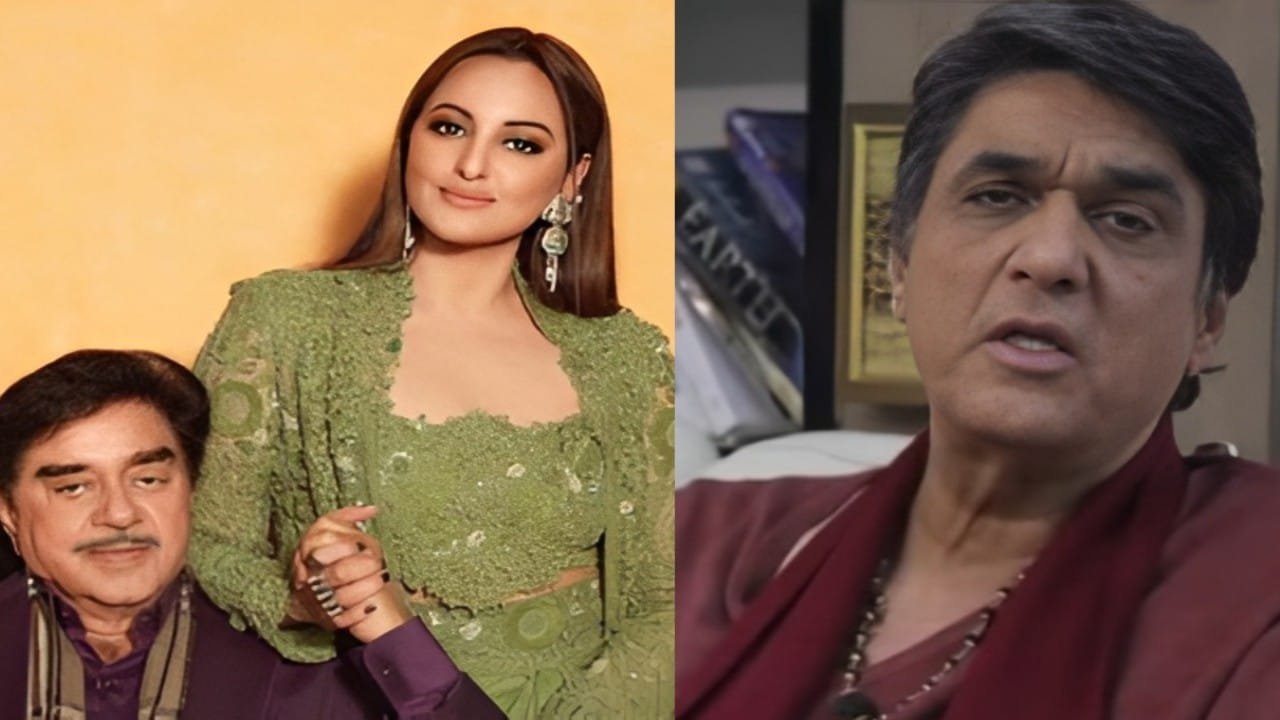
The recent altercation between Bollywood actress Sonakshi Sinha and veteran actor Mukesh Khanna has drawn significant media attention, igniting discussions about respect and professionalism within the Indian entertainment industry. This controversy began when Khanna made disparaging remarks regarding Sonakshi Sinha’s upbringing and her father’s influence on her career. He questioned the merit of her success, insinuating that it was primarily the result of her familial connections rather than her talent or hard work. This line of criticism is especially pertinent given the ongoing discourse about nepotism in the film fraternity, making it a subject of concern among fans and commentators alike.
Sonakshi Sinha, who is the daughter of the famed actor Shatrughan Sinha, felt compelled to address these comments publicly. In her response, she emphasized the importance of individual talent and dedication in achieving success, regardless of one’s background. Sonakshi sinha highlighted that remarks undermining her hard work were not only disrespectful to her but also to others who strive to make their mark in a competitive industry. Sinha’s response was not just a defense of her own accomplishments but also a call for a broader understanding of the challenges faced by aspiring actors, particularly those who may not have the privileges of established connections.
The exchange between the two actors has served as a reminder of the ongoing conversations about respect and acknowledgment within the film community. With Sinha’s rebuttal, Sonakshi Sinha demonstrated the need for constructive dialogue rather than derogatory remarks. As discussions evolve around this incident, it is imperative to consider the roles that both respect and understanding play in professional relationships within the realm of entertainment.
Who is Mukesh Khanna?
Mukesh Khanna is a well-known figure in the Indian film and television industry, gaining widespread acclaim for his versatile acting skills and memorable roles. Born on June 19, 1958, in Mumbai, he carved a niche for himself through his performances in both film and television. He first captured the audience’s attention in the late 1980s and 1990s, notably through his iconic portrayal of Bhishma Pitamah in the epic television series “Mahabharat,” which became a cultural phenomenon in India. His commanding presence and ability to embody complex characters contributed to the show’s success, establishing him as a respected actor in the industry.
In addition to his work on “Mahabharat,” Khanna has appeared in various films and television shows, showcasing his range as an artist. Some of his notable film credits include “Bahaar Aane Tak,” “Kshatriya,” and “Shikari,” where he demonstrated his talent across different genres. Throughout his career, Khanna has not only entertained audiences but also engaged in social issues, often using his platform to address pressing concerns affecting society. His participation in public discourse has made him a prominent voice, particularly on matters related to culture and ethics in the Indian entertainment industry.
Mukesh Khanna’s impact extends beyond his acting career. He has attempted to inspire younger generations by sharing insights into the responsibilities that come with fame and the importance of maintaining one’s integrity. Despite the criticism and controversies he has faced, Khanna continues to advocate for respectful dialogue and understanding within public discussions. His contributions illustrate the complexities of celebrity in today’s world, reinforcing the notion that actors not only entertain but also play a vital role in shaping societal values and conversations.
The Legacy of Shatrughan Sinha
Shatrughan Sinha, a prominent figure in Indian cinema and politics, has left an indelible mark on both industries. Born on July 9, 1945, in Bhagalpur, Bihar, he initially aspired to be a doctor but found his calling in acting. His journey began with his role in “Kadam Kadam Badaye Ja,” but it was his performance in “Raja Jani” alongside Dharmendra that catapulted him to stardom. Over the years, Shatrughan Sinha became renowned for his unique dialogue delivery and larger-than-life persona, establishing himself as a trailblazer in Bollywood during the 1970s and 1980s. His memorable portrayals in films such as “Kalicharan,” “Shakti,” and “Kabhi Khushi Kabhie Gham” resonate with audiences even today.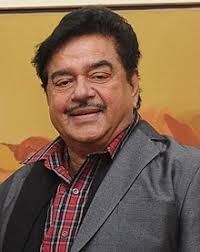
Beyond his film career, Shatrughan Sinha ventured into politics, serving as a member of the Bharatiya Janata Party (BJP). His tenure in the Indian Parliament allowed him to become a voice for the people, advocating for issues that mattered to his constituents. This dual career not only broadened his influence but also paved the way for future generations, including his daughter, Sonakshi Sinha. Her entry into Bollywood followed in the footsteps of her father’s illustrious legacy, linking her career to his iconic status.
Sonakshi Sinha’s journey is inevitably intertwined with that of her father, affecting audience perceptions and expectations. While she has forged her unique identity in the film industry, Shatrughan Sinha’s legacy sometimes overshadows her achievements. The public’s reverence for him can present both an advantage and a challenge for Sonakshi as she navigates her path in an industry where legacy holds significant weight. As she continues to establish her brand, the influence and respect garnered by Shatrughan Sinha remain an integral part of her story, shaping how audiences view her contributions. The dynamics of her familial legacy play a crucial role in her career and public image, highlighting the importance of respect and understanding in her journey within the limelight.
Sonakshi Sinha’s Career Journey
Sonakshi Sinha, the daughter of veteran actor Shatrughan Sinha, has notably carved a niche for herself in the Indian film industry, despite the challenges associated with being in the shadow of her prominent father. Making her acting debut in the 2010 blockbuster “Dabangg,” Sinha soared to fame for her captivating performance as Rajjo. This film marked a significant turning point in her career, earning her a Filmfare Award for Best Female Debut. Since then, Sinha has consistently showcased her versatility through a variety of roles across different genres, further solidifying her position in Bollywood.

Over the years, she has starred in an array of successful films such as “Rowdy Rathore,” “Holiday,” and “Lootera.” Each of these titles contributed to her growing acclaim and popularity, proving her ability to tackle diverse characters. In addition to commercial successes, Sonakshi has received critical recognition for her performances in films like “Akira” and “Mission Mangal,” illustrating her commitment to choosing substantial roles that highlight her range as an actress.
Despite her initial success, Sinha faced several challenges along her journey. The pressure to uphold her family’s legacy often weighed heavily on her, as she strived to create her identity in a competitive industry. She navigated the slippery slope of public scrutiny and managed to carve a space for herself by focusing on her talent rather than her lineage. Sinha’s contributions to the industry extend beyond acting; she is also known for her advocacy in various social causes and her efforts toward promoting body positivity. Overall, her career journey serves as a testament to resilience and determination, showcasing how she transformed from a star kid to an acclaimed actress in her own right.
The Importance of Public Figures and Accountability
Public figures, including celebrities and influencers, play a significant role in shaping societal norms and public discourse. With their elevated status comes a set of responsibilities that should not be overlooked. It is crucial for these individuals to recognize that their words and actions carry weight and can influence the opinions and behaviors of their followers. Among their many responsibilities, the need for accountability stands paramount, particularly when addressing sensitive issues related to personal matters, family dynamics, or upbringing.
When public figures choose to speak out, especially on sensitive topics, they should be cognizant of the potential impact. For instance, discussing someone’s family background or upbringing can unintentionally perpetuate stereotypes or fuel negative narratives. Such comments may not only affect the individuals being discussed but can also reflect poorly on the speaker—potentially damaging their reputation and credibility. Hence, it is essential for celebrities to approach discussions about other people’s lives with care and empathy.
This call for discretion is underscored by the growing expectation from the public for transparency and respect in the discourse surrounding personal matters. As influencers, they are in a unique position to promote values such as understanding and respect. By holding themselves accountable for their remarks, public figures can foster a culture of compassion, setting a positive example for their audience. The recent exchange between Sonakshi Sinha and Mukesh Khanna serves as a reminder of this imperative, illustrating that while freedom of speech is crucial, it must be balanced with a sense of responsibility and consideration for others.
Ultimately, accountability plays a pivotal role in maintaining the integrity of public figures. Recognizing the influence they wield and the responsibilities that accompany it is essential for a respectful and supportive dialogue in society.
Sonakshi’s Response: A Call for Respect
In the wake of Mukesh Khanna’s comments regarding her upbringing, Sonakshi Sinha has taken a proactive stance, using her platform to advocate for respect and understanding. Her response is marked by a firm but composed tone, emphasizing that integrity stems from personal character rather than familial background. She asserted, “It is disheartening to see that public judgments often overshadow personal achievements. My journey is my own, and it’s shaped by my actions and values, not solely by my parents.” This sentiment captures the essence of her argument that respect should not be contingent on one’s lineage.
Sinha further elaborated on the significance of respecting individuals for their professional contributions instead of scrutinizing their family ties. She stated, “In an industry as diverse as Bollywood, we must encourage each other instead of pulling one another down. It is crucial to create an environment where artists are celebrated for their talents, rather than their upbringing.” Her remarks highlight the need for mutual respect in the entertainment industry, where artists often find themselves judged unfairly.
This call for respect and understanding also reflects a broader societal issue, where people’s worth is sometimes assessed through the lens of their family background. In a candid statement, Sonakshi expressed her disappointment in the tendency to make sweeping generalizations about individuals based on their family history, asserting that each person should be evaluated based on their own merits. “We need to foster a community that uplifts rather than belittles. Everyone deserves a fair chance,” she concluded.
Through her response, Sonakshi Sinha champions the ideals of respect and personal integrity, urging both the industry and its audience to adopt a more inclusive perspective that honors the hard work and talent of individuals, regardless of their parentage.
Public Reaction and Social Media Buzz
The recent exchange between Sonakshi Sinha and Mukesh Khanna has sparked a significant wave of public reaction across various social media platforms. Social media users have taken to Twitter, Instagram, and Facebook to express their opinions, share memes, and engage in discussions surrounding the controversy. Hashtags related to the incident have quickly trended, signifying a broader public interest in the dynamics of the feud and the implications it carries for celebrity culture.
Polling conducted on Twitter indicates that a notable portion of the audience supports Sonakshi Sinha’s stance, advocating for respect and understanding when it comes to differing viewpoints. Many users highlight the importance of healthy communication, particularly in the context of public figures who wield considerable influence over their followers. The negative responses directed towards Mukesh Khanna’s remarks reflect a shift in societal attitudes, where audiences are increasingly intolerant of disrespectful comments aimed at women, particularly in the entertainment industry.
Moreover, several celebrities have weighed in on the matter, further amplifying discussions surrounding the incident. Prominent figures have expressed solidarity with Sinha, emphasizing the need for mutual respect among individuals, regardless of their professional backgrounds. This collective reaction from both the public and other celebrities exemplifies a growing desire for accountability and sensitivity in public discourse.
Media outlets have also taken note of the unfolding situation, offering insights and opinions on the broader implications of such feuds. Commentators discuss how this incident may indicate changing expectations among fans regarding civility and respect in the public sphere. The online discourse not only showcases individual sentiments but also serves as a mirror reflecting societal values, ultimately underlining the necessity for understanding in interactions among public figures.
Also read : Diljit Dosanjh’s Stand on Indian Concert Infrastructure: A Change in Strategy
Trends in Celebrity Culture: The Impact of Parenting Comments
The intersection of celebrity culture and parenting has become a notable trend in recent times, characterized by public figures scrutinizing one another’s approaches to raising children. This phenomenon has far-reaching implications for both the individuals involved and the broader culture of the entertainment industry. There has been a significant rise in instances where celebrities publicly criticize or comment on their peers’ parenting choices. Such remarks can lead to a cascade of responses, often escalating tensions between the involved parties.
These comments not only shape public perception but also raise questions about accountability and respect within the celebrity community. In an era where social media amplifies voices, the repercussions of these statements can be substantial. Celebrities find themselves under relentless scrutiny; their comments on parenting can lead to public debates that highlight societal expectations and norms surrounding child-rearing. This scrutiny often opens the door to deeper discussions about the responsibilities of public figures, especially concerning the impact of their words on their audience.
Moreover, accountability has become a core element of celebrity culture. As more public figures weigh in on issues related to parenting, there is a growing expectation for them to exhibit sensitivity and awareness of their influence. This expectation creates a complex dynamic where the act of commenting on parenting practices invites not only praise but also backlash, prompting a reevaluation of what it means to engage in constructive dialogue. The trend reflects a broader cultural shift towards holding public figures accountable for their comments and actions, urging them to consider the consequences that their words may carry.
As we reflect on trends in celebrity culture, it is evident that discussions surrounding parenting will likely continue to shape interactions within the entertainment industry. Navigating these conversations with respect and understanding is essential for maintaining a healthy dialogue and fostering mutual support among public figures.
Summary :Lessons Learned from the Feud
The recent exchange between Sonakshi Sinha and Mukesh Khanna serves as a poignant reminder of the complexities inherent in celebrity interactions and public discourse. The incident highlights the necessity of respect and understanding when discussing differing perspectives, particularly in the realm of social media where opinions can quickly escalate into heated confrontations. One of the principal lessons gleaned from this feud is the importance of maintaining civility, even when personal beliefs clash. Both parties have their own viewpoints, shaped by unique experiences, and navigating these discussions requires an open-minded approach.
Another critical takeaway is the role of public figures in shaping societal conversations. Celebrities wield significant influence over their followers and audiences, often serving as role models for behavior and discourse. Therefore, it is incumbent upon them to engage responsibly and thoughtfully, setting a precedent for respectful dialogue. The mutual respect that should characterize interactions can lead to constructive conversations rather than divisive exchanges, fostering a culture of understanding rather than hostility.
Furthermore, this incident underscores the potential impact of social media on public sentiment. In an age where opinions can virulently spread across platforms, celebrities must be more mindful of their words and the ramifications they carry. Each statement made can evoke strong reactions, whether supportive or critical, thus amplifying the need for measured discourse. By acknowledging the significance of their platforms, public figures can contribute positively to discussions, paving the way for a more considerate conversation culture.
In conclusion, the feud between Sonakshi Sinha and Mukesh Khanna brings forth valuable insights into the dynamics of celebrity culture and public discourse. Emphasizing the importance of respect, empathy, and understanding, it serves as a call to all, reminding us that civility is imperative in today’s contentious social climate.


Entertainment
Eurovision Asia 2026: बैंकॉक में पहला संस्करण, यूरोप में विवाद जारी
यूरोविजन 14 नवंबर 2026 को बैंकॉक में अपना पहला एशियाई संस्करण शुरू करेगा। विस्तार के बीच इजरायल की भागीदारी को लेकर यूरोपीय प्रतियोगिता में विवाद और बहिष्कार जारी हैं।




Biography
Veena Modani: Rajasthan’s New Cultural Ambassador Inspiring a New Generation
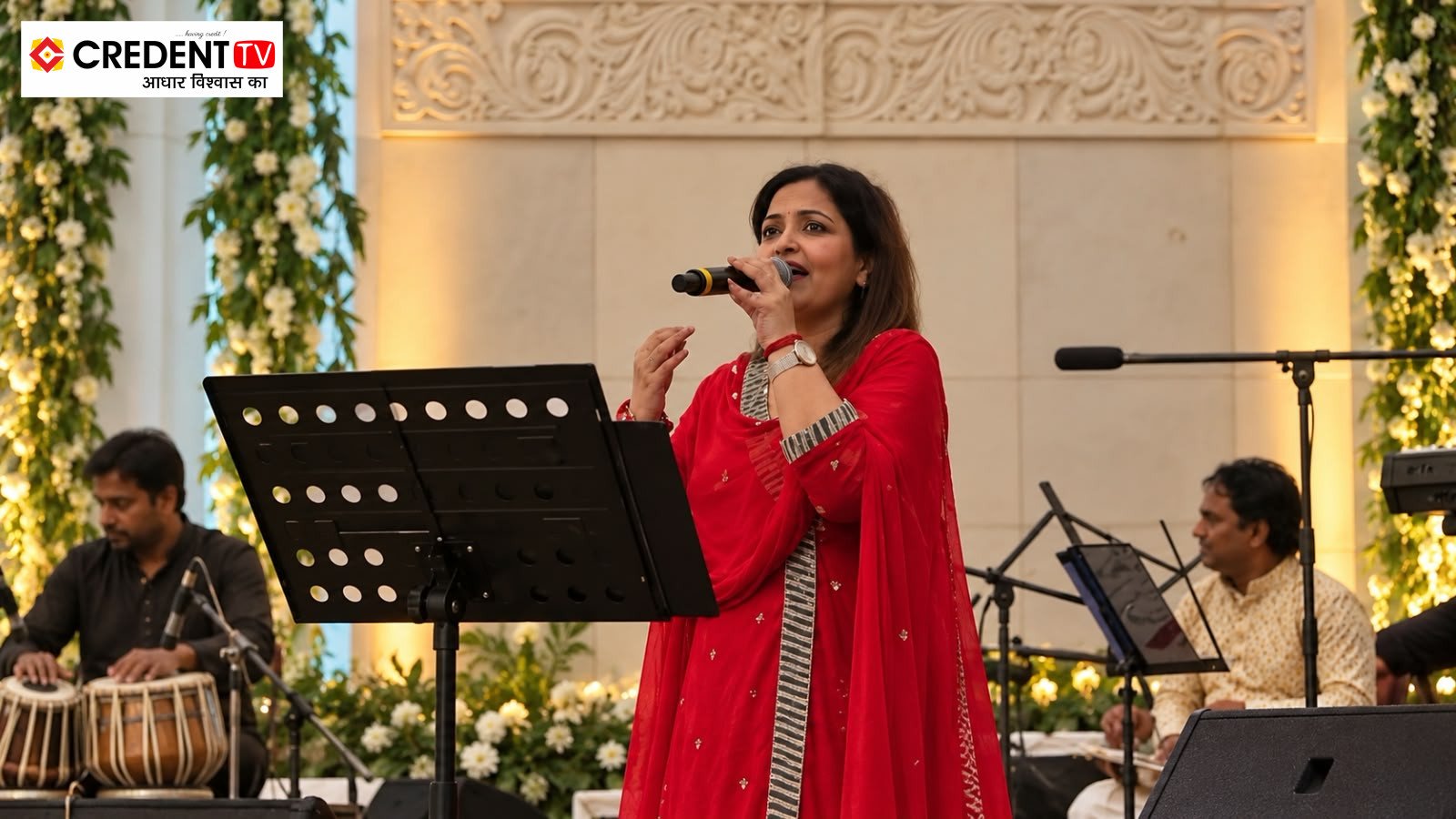
Veena Modani, Rajasthan’s celebrated artist and choreographer, has transformed Indian dance and music through her academy, Jaipur Rhythm Fest, and award-winning cultural contributions spanning over 25 years.

Credent TV
Ekatva Annual Function 2025: A Grand Celebration of Talent, Unity & Learning at Maheshwari Public School, Kalwar Road
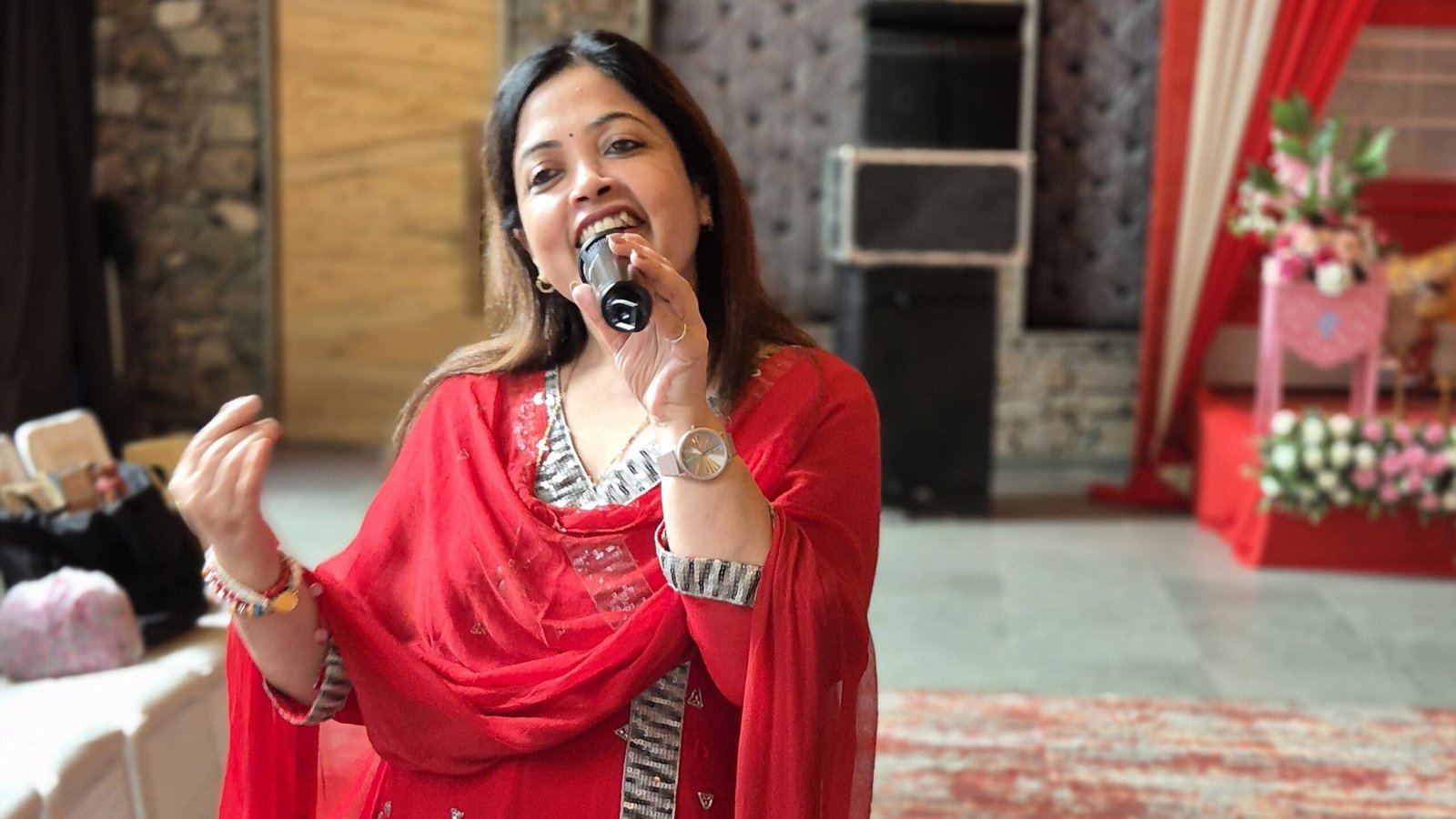
Ekatva Annual Function 2025 at Maheshwari Public School, Kalwar Road, showcased powerful performances, women empowerment themes, NEP-inspired skits, and student achievements during a grand celebration.

Jaipur, 28 Nov. | Maheshwari Public School, Kalwar Road, hosted the Ekatva Annual Function 2025 with remarkable grandeur on November 28, 2025. The theme “EKATVA – Learning Together, Growing Together” set the perfect tone for a day dedicated to unity, collective progress, and holistic development. This year’s annual celebration emerged not only as an academic and cultural milestone but also as a testament to the school’s commitment to national values, women empowerment, and progressive education.
Ekatva Annual Function 2025: A Celebration of Collective Growth
The Ekatva Annual Function 2025 marked a vibrant display of Maheshwari Public School’s vision of education rooted in collaboration, inclusivity, and continuous growth. The theme emphasized that true learning happens when students, teachers, parents, and the community evolve together—an idea deeply aligned with modern educational philosophies and the core principles of NEP 2020.
From cultural presentations to thought-provoking performances, the function encapsulated the school’s dedication to nurturing responsible, confident, and value-driven individuals.
Grand Inauguration with Traditional Rituals
The ceremony began with the auspicious lighting of the ceremonial lamp, accompanied by Vedic mantras, invoking divine blessings for knowledge, wisdom, and prosperity. The solemnity of the ritual established a spiritual foundation for the day’s events, reminding everyone that tradition and modernity can harmoniously coexist.
The school orchestra followed, delivering a mesmerizing performance that captivated the audience. Their symphony of classical and contemporary melodies added an energetic pulse to the event, setting a lively and celebratory atmosphere.
Student Performances That Brought the Theme to Life
The heart of the Ekatva Annual Function 2025 lay in the stunning performances by the students. Each performance was carefully conceptualized to reflect unity, shared learning, and social harmony.
Key Highlights:
- Vibrant group dances symbolizing togetherness
- Thematic skits showcasing community values
- Folk and contemporary fusion performances
- Inspirational narrations by young learners
The students’ confidence, discipline, and creativity stood out. Parents and guests applauded every act, especially the ones portraying teamwork and emotional connection.
Ekatva Annual Function 2025 Highlights NEP 2020 & Women Empowerment
One of the most powerful segments of the evening was the students’ presentation on the National Education Policy (NEP) 2020. Through engaging skits, dramatic sequences, and choreographed movements, the students depicted key elements of NEP such as:
- holistic development
- experiential learning
- flexibility in subject selection
- vocational exposure
- integration of art and sports
Another compelling act showcased women empowerment—a theme that resonated deeply with the audience. Students celebrated the strength, determination, and resilience of women through expressive dance sequences, poetry recitations, and visual storytelling.
The audience praised the school for encouraging its students to address socially relevant themes through education and art.
Recognizing Excellence: Prize Distribution Ceremony
The Prize Distribution Ceremony honored students who exhibited outstanding performance across academics, sports, and co-curricular activities. Awards were presented to:
- Academic toppers
- Sports achievers
- Art & cultural performers
- Students demonstrating leadership & discipline
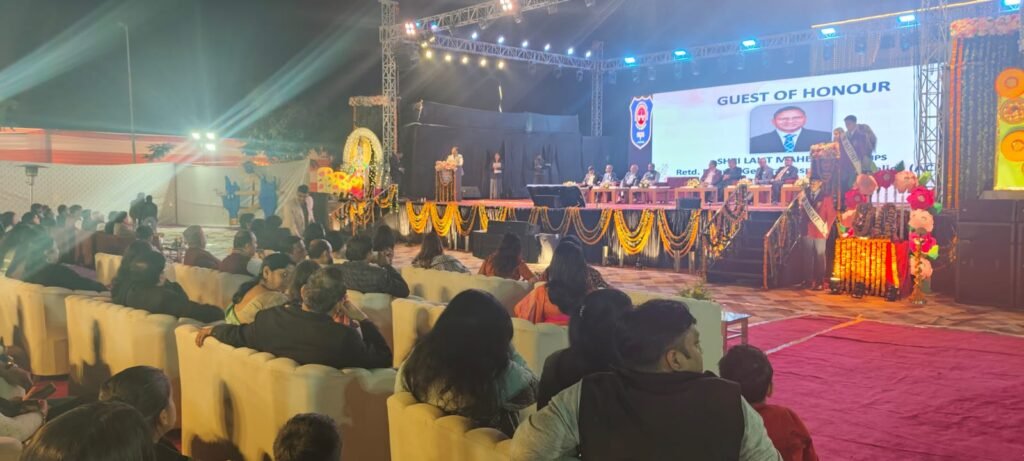
The school emphasized that each award represented not just personal success but the spirit of Ekatva, where teachers, parents, and peers play a collective role in shaping student achievements.
Distinguished Guests Who Graced the Occasion
The presence of esteemed dignitaries elevated the prestige of the event.
Chief Guest
- Hon’ble Deputy Chief Minister of Rajasthan, Ms. Diya Kumari
Guest of Honour
- Retd. Deputy Inspector General of Police (ACB), Shri Lalit Maheshwari
Special Guests
- Shri Bajrang Jakhotiya, Former President, ECMS Jaipur
- Shri Ashok Baheti, Renowned Businessman & Social Worker
Other Key Attendees
- Chairman: Shri Umesh Soni
- Vice Chairman: Shri Nirmal Dargar
- General Secretary (Education): Shri Kamal Somani
- Treasurer: Shri Arun Kumar Maloo
- Honorary Secretary: Shri Ashish Mantri
- Building Secretary: Shri Ravi Periwal
The dignitaries praised the students for their talent and applauded the school for its progressive and value-based educational approach.
Inspiring Messages by School Leadership
Message from Honorary Secretary Shri Ashish Mantri
He encouraged the students to focus not only on their academics but also on co-curricular activities, emphasizing that holistic development includes:
- mental and physical growth
- character building
- teamwork and discipline
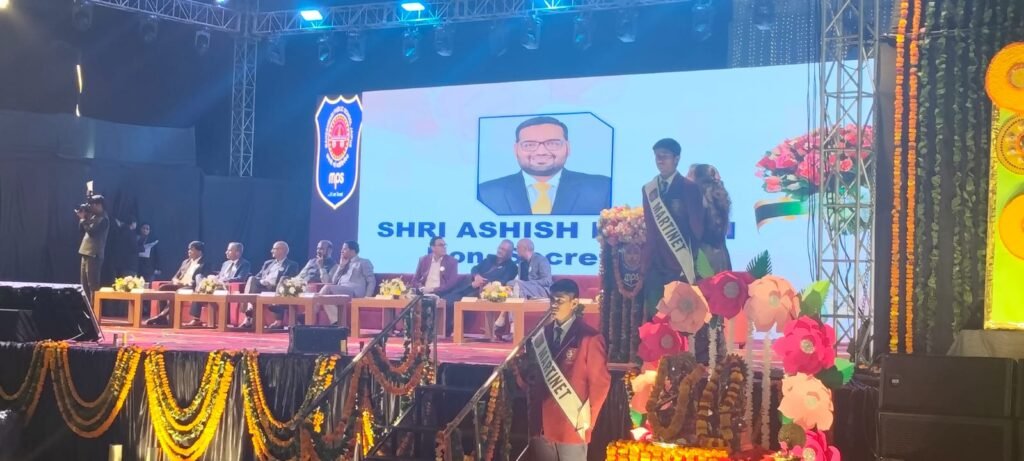
Vote of Thanks by Building Secretary Shri Ravi Periwal
He expressed gratitude to the guests, faculty, parents, and students for making the event a grand success.
Annual Report Presented by Principal Dr. Sunita Vashishtha
The Principal highlighted:
- the school’s year-long achievements
- academic excellence
- sports accomplishments
- new initiatives towards skill development and holistic learning
Her speech reflected the institution’s dedication to shaping future-ready learners.
Why Ekatva Annual Function 2025 Stands Out
The Ekatva Annual Function 2025 was more than just a cultural event—it was a reflection of the school’s educational philosophy. Several elements made the day special:
Integration of cultural and educational values
Themes like NEP 2020 and women empowerment gave depth and relevance to the performances.
Strong community participation
Teachers, parents, committee members, and students worked together, embodying the spirit of Ekatva.
Focus on holistic development
From music to theatre, from sports awards to academic excellence—every aspect of student growth was recognized.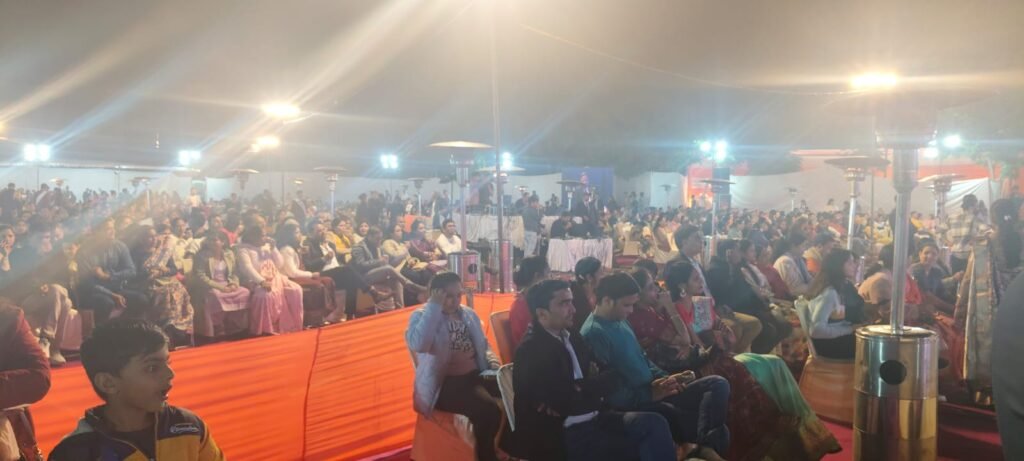
Presence of renowned dignitaries
Their motivational words encouraged students to dream big and work harder.
Professional-level stage performances
The choreography, scripting, and stage design were executed with finesse, offering an entertainment experience of high quality.
The Ekatva Annual Function 2025 at Maheshwari Public School, Kalwar Road, was a resounding success—an event that beautifully blended tradition, education, culture, and social awareness. With inspiring performances, meaningful themes, and appreciation of talent, the event truly embodied the idea of “Learning Together, Growing Together.”
As the school continues to invest in the holistic development of its students, programs like this reinforce its vision of shaping confident, responsible, and compassionate future citizens.
Credent TV
Never Give Up Annual Festival- Opening the Gates of Hope: 7 Inspiring Moments That Electrified SV Public School
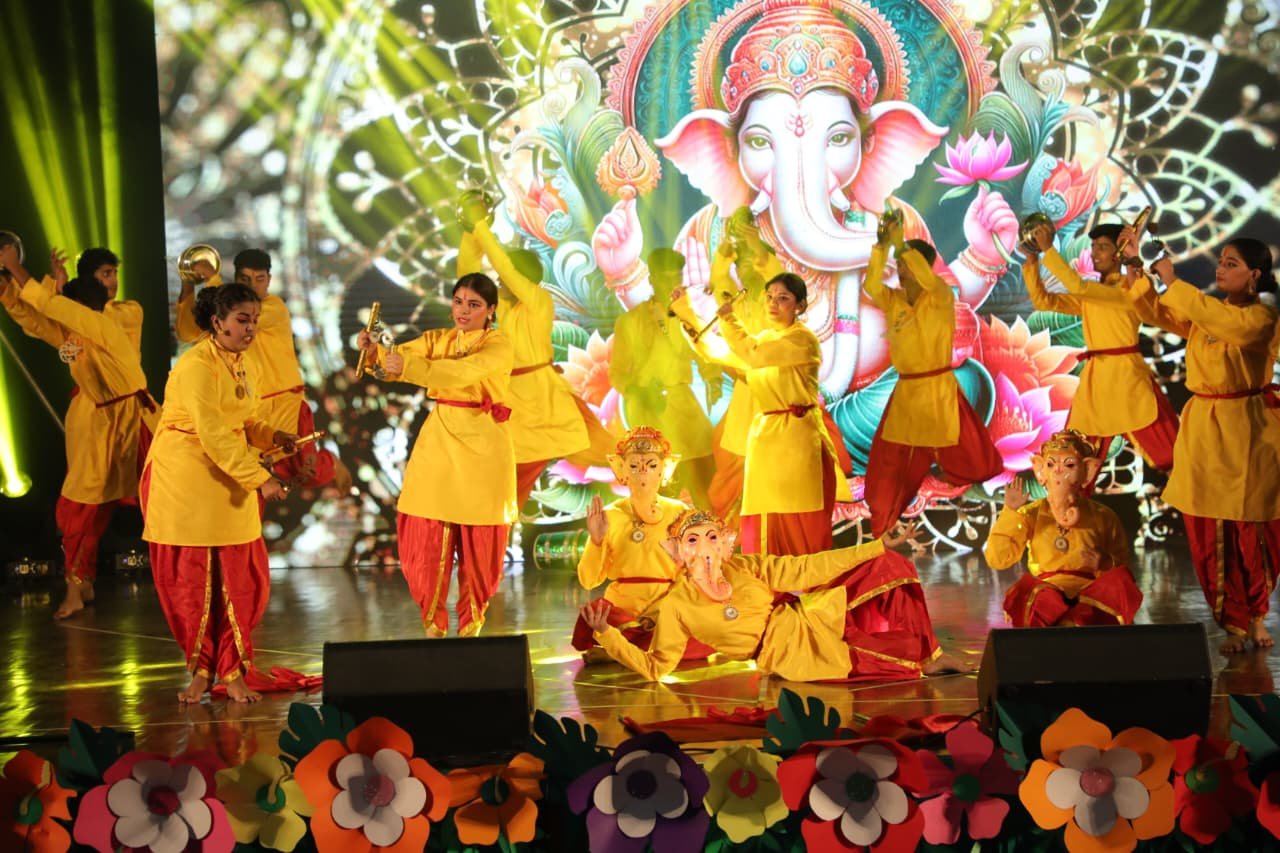
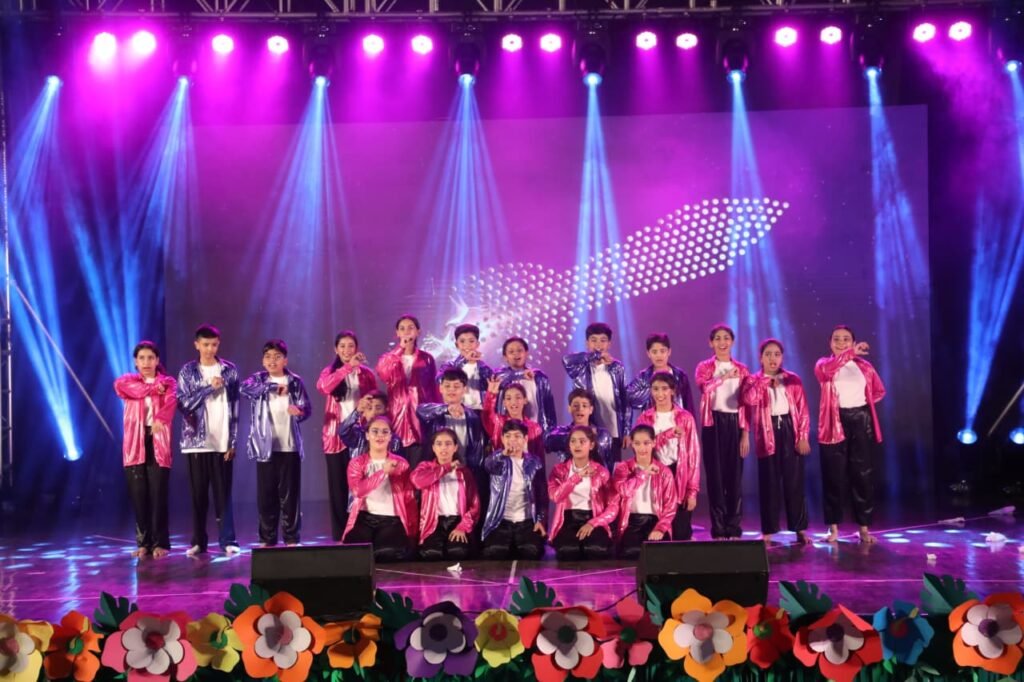
Jaipur | Never Give Up Annual Festival echoed through the corridors and hearts of SV Public School, Jaipur, as the institution celebrated its much-anticipated annual function and award ceremony on 28 September 2025 at Birla Auditorium. Under the stirring theme “Never Give Up,” the event shone as a tribute to perseverance, talent, and collective spirit.
Dignitaries, students, teachers, and parents gathered to witness the fusion of culture and recognition, all within an atmosphere of pride and positivity.
Dignitaries & Grand Inauguration
The ceremony began with grandeur. CBSE Regional Officer Mr. Shyam Kapoor served as the chief guest. The event was inaugurated through a lamp lighting ritual performed by a distinguished panel:
- Mr. Shyam Kumar (CBSE Regional Officer)
- Mr. Kamal Vaswani, President, St. Mira Brotherhood Society
- Mr. Vasudev Thawani, Secretary, St. Mira Brotherhood Society
- Dr. Kamlesh Kumar Khilnani, Secretary, Sadhu Vaswani Public School
- Mr. Ramesh Gursahani, Finance Secretary, St. Mira Brotherhood Society
- Mr. Ashok Devani, Joint Secretary, St. Mira Brotherhood Society
- Mrs. Alpa Malviya, Principal, SV Public School
They were honored with traditional tokens: shalo (shawls), mementos, “Green Gold” awards, and floral tributes.
Next came the welcome address by Dr. Kamlesh Kumar Khilnani, in which he addressed the relevance of the Never Give Up theme. He asserted that refusing to accept defeat is what lifts one’s personality to new heights. He emphasized the school’s role in imparting knowledge and values, stating that the annual festival is a mirror to students’ learning and character.
Speeches That Stirred Hearts
The principal, Mrs. Alpa Malviya, delivered the annual report, tracing the school’s journey of growth, achievements, and holistic development. She invoked the Never Give Up spirit as central to every student’s relentless pursuit of excellence.
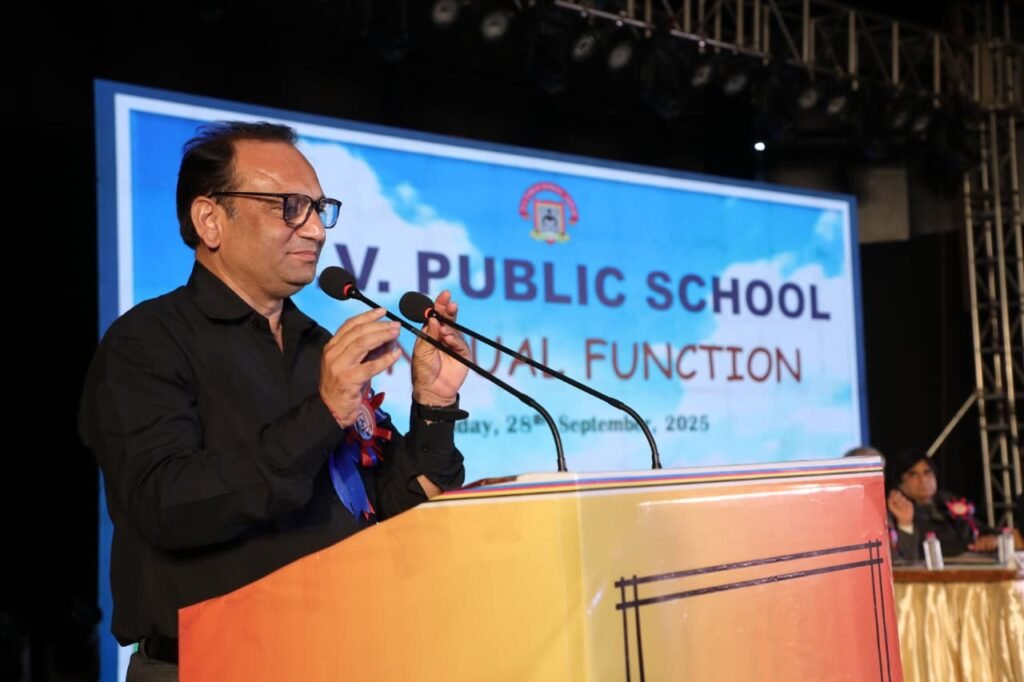
Chief guest Mr. Shyam Kumar took the stage with a motivational message. He said the annual day is not just a celebration, but a recognition of collective achievement — of students, teachers, and the school community. He reinforced that education shapes character and gives strength to move forward. The festival, he said, stands as a platform where students can express talent and confidence.
Mr. Kamal Vaswani, president of the hosting society, gave blessings and lauded students and teachers alike. He encouraged them to keep pushing boundaries and becoming sources of inspiration in society.
Unveiling the ‘Milestone 25’ Magazine & Awards
A major moment in the program was the release of the school’s annual magazine ‘Milestone 25’, showcasing student articles, poetry, achievements, and memories of the academic year.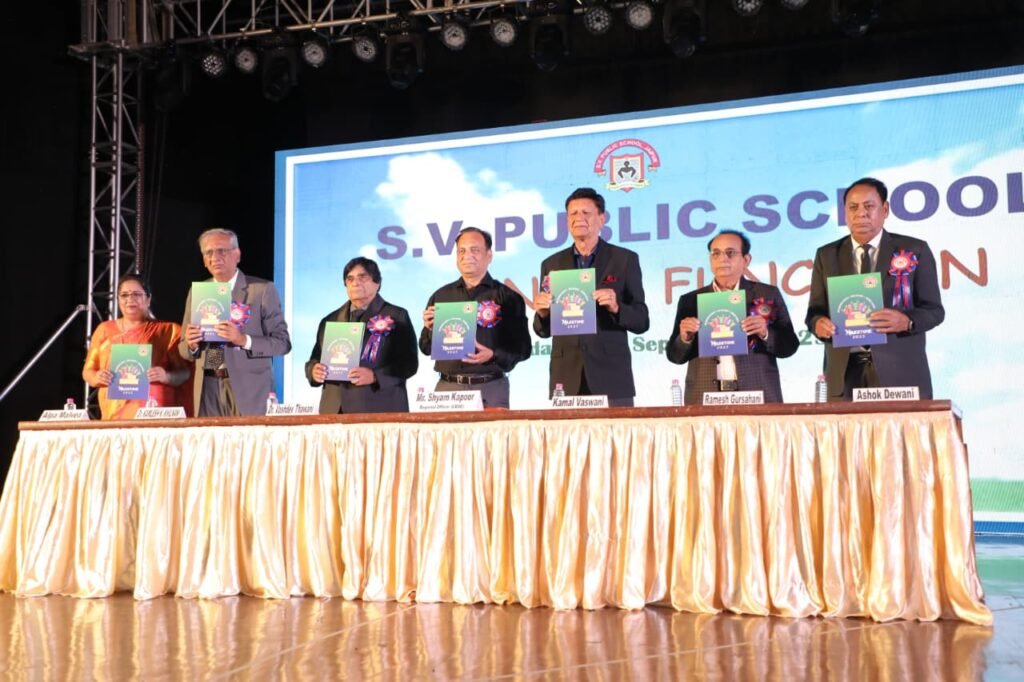
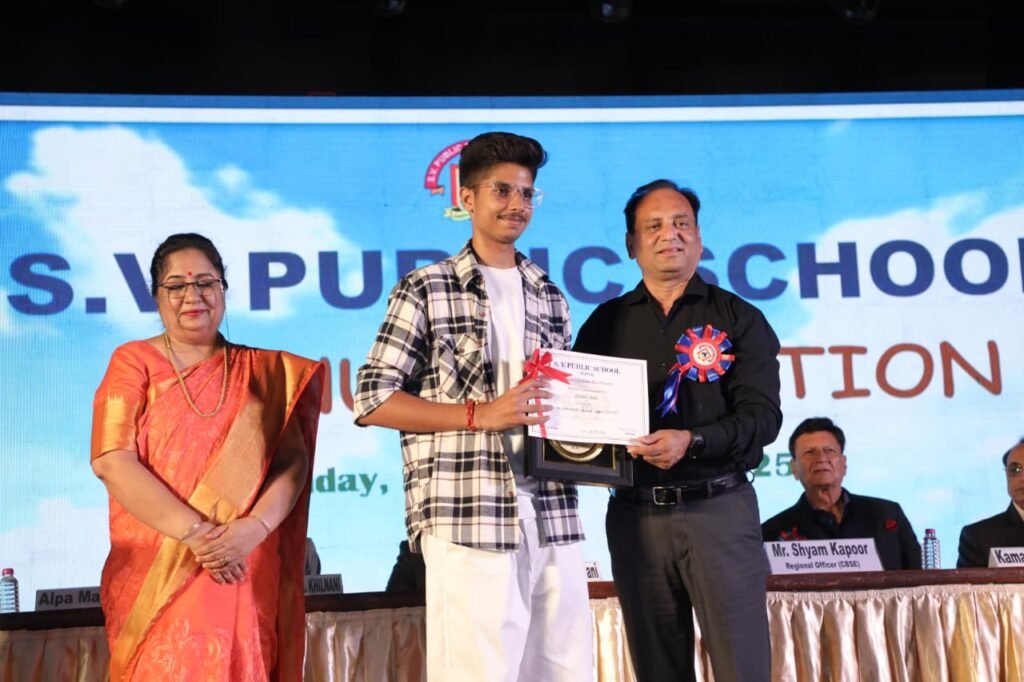
The award ceremony followed. Students who performed exceptionally over the last year were honored with certificates, medals, and trophies. Each recognition echoed the effort, resilience, and talent that align with the Never Give Up Annual Festival spirit.
Cultural Extravaganza: Performances That Roared
The cultural program transported the audience through history, emotion, and energy — all under the Never Give Up banner.
- The event opened with Ganesh Vandana invoking divine blessings.
- A spirited performance of “Dama Dam Mast Kalandar” raised the tempo and charged the atmosphere.
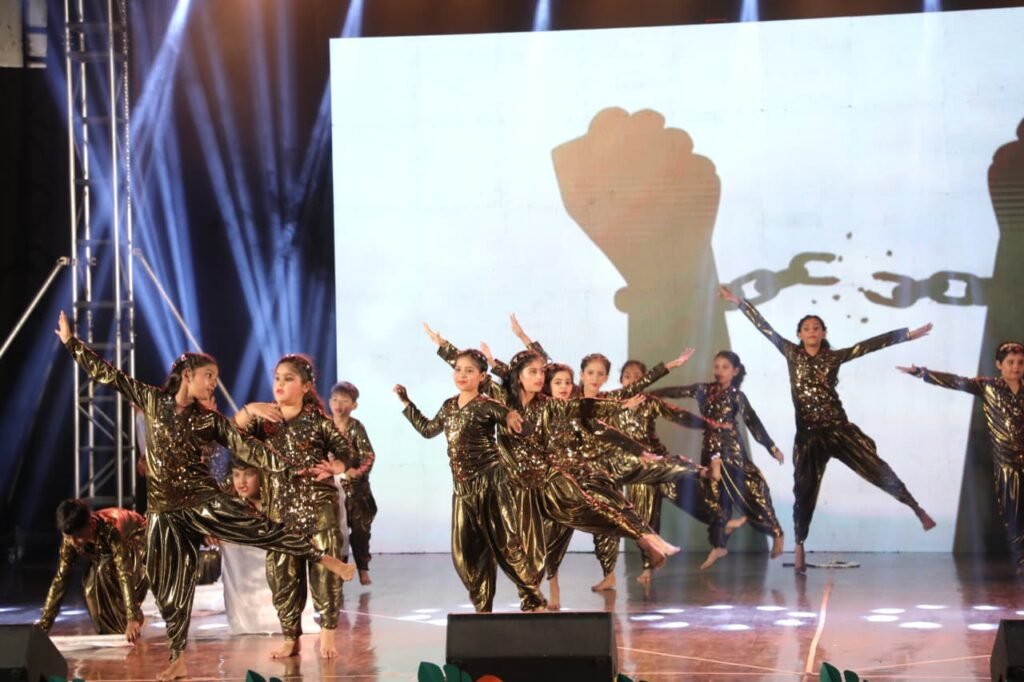
- Students presented dramatic enactments from the lives of Shivaji, Maharana Pratap, Sindhutai, Kalibai, and Milkha Singh, visually narrating struggles, perseverance, and triumph.
- A moving piece on women’s empowerment, titled “Kabhi Shakti Hai, Kabhi Bhakti Hai”, brought tears and applause with its message: never bow, never stop.
- The Sindhi dance “Pallo Te Aao Munjo Lal” added vibrant cultural colors and joy.
- A classical dance to “Raghuwar Teri Raah Nihare” mesmerized the audience with elegance and emotive storytelling.
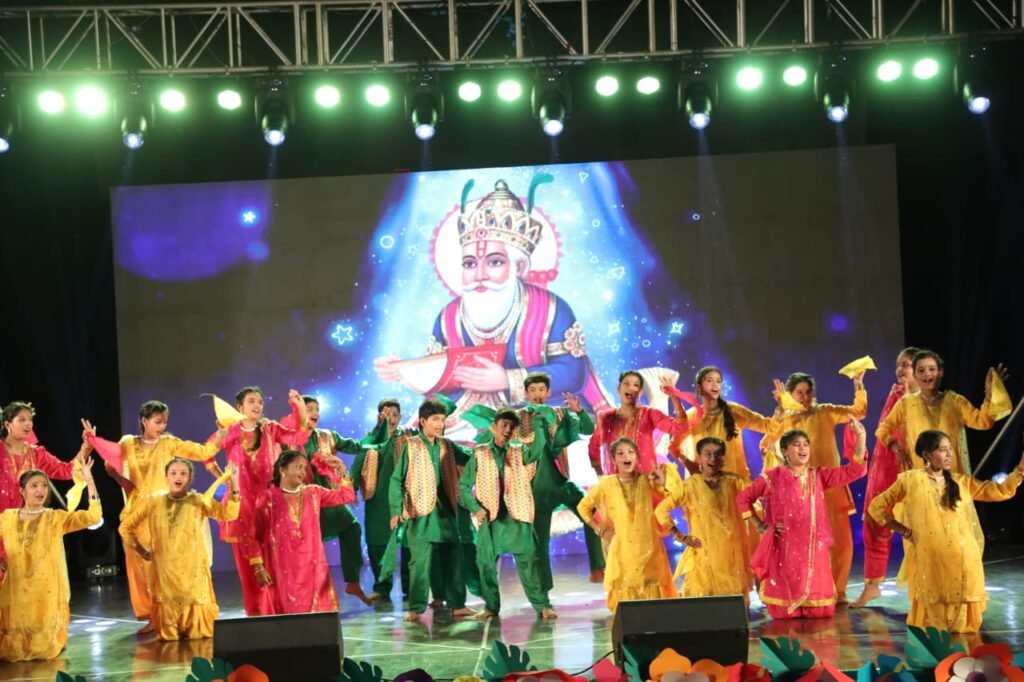
All performances reflected the Never Give Up Annual Festival ethos — that persistence, pride, and identity are born from courage.
Grand Finale & Heartfelt Thanks
The event concluded with a grand finale, combining song, dance, and unified energy.
Vice Principal Mrs. Meetu Tikku offered a heartfelt vote of thanks, expressing gratitude to guests, teachers, staff, and students for making this festival uplifting and unforgettable.
Why This Festival Resonated Deeply
1. Theme of Resilience
Never Give Up Annual Festival carried more than a motto — it became an experience, urging students to dream, persist, and overcome.
2. Balanced Recognition
Academic, cultural, and social achievements were all celebrated, reinforcing holistic education.
3. Cultural Roots & Contemporary Expression
By dramatizing historical icons and blending folk, classical, and empowerment themes, the festival bridged heritage and modern values.
4. Emotional & Intellectual Engagement
Speeches, performances, and symbolism worked together to touch hearts and minds.
5. Community & Identity
The presence of so many dignitaries and the merging of school, society, and students highlighted the communal pride in shared vision.
External Context & References
- The use of themes like Never Give Up aligns well with positive psychology in educational settings — as explored in studies on resilience in school culture.
- SV Public School’s own event gallery shows its past milestones and helps contextualize the scale of this year’s festival. (Visit SVPS Events Gallery) svpsjpr.com
- The school had earlier posted about Annual Function 2025 on its Facebook page, revealing glimpses of the event and confirming its theme and chief guest. Facebook
The Never Give Up Annual Festival at SV Public School was not just a celebration of present achievements — it was a powerful declaration of future possibility. Through inspiring words, creative expression, and recognition, the school renewed the spirit of perseverance among its students.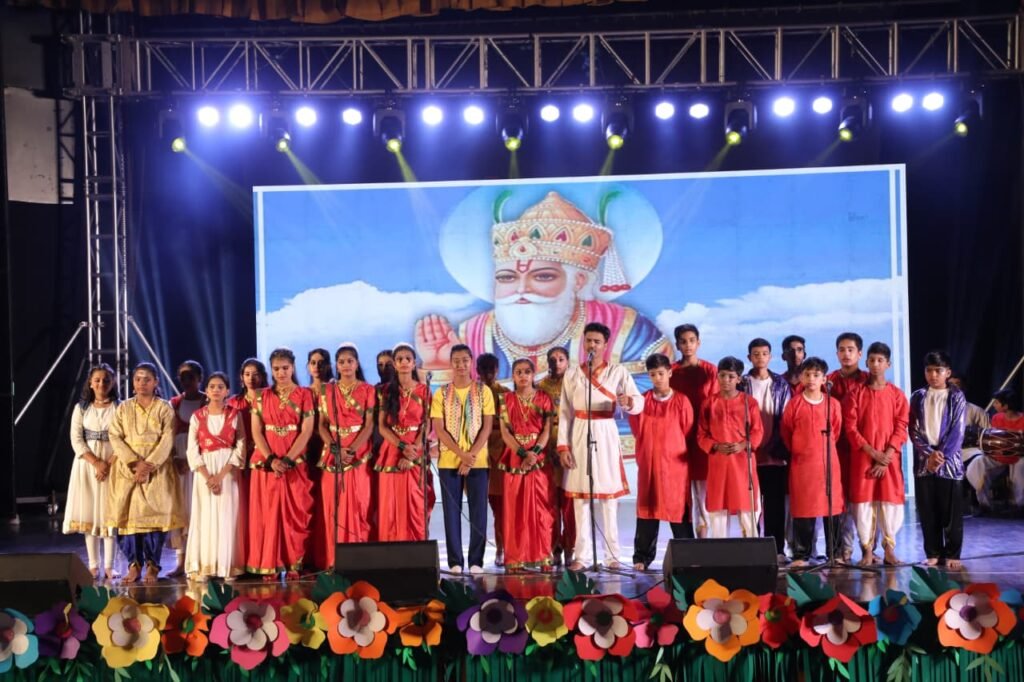
Breaking News
Vedanta PG Girls College Fresher Party and Dandiya: 7 Exciting Highlights That Empower New Students
Vedanta PG Girls College Welcome Program celebrated new entrants with inspiring speeches, cultural flair, and powerful messages of growth — read the full energetic coverage.
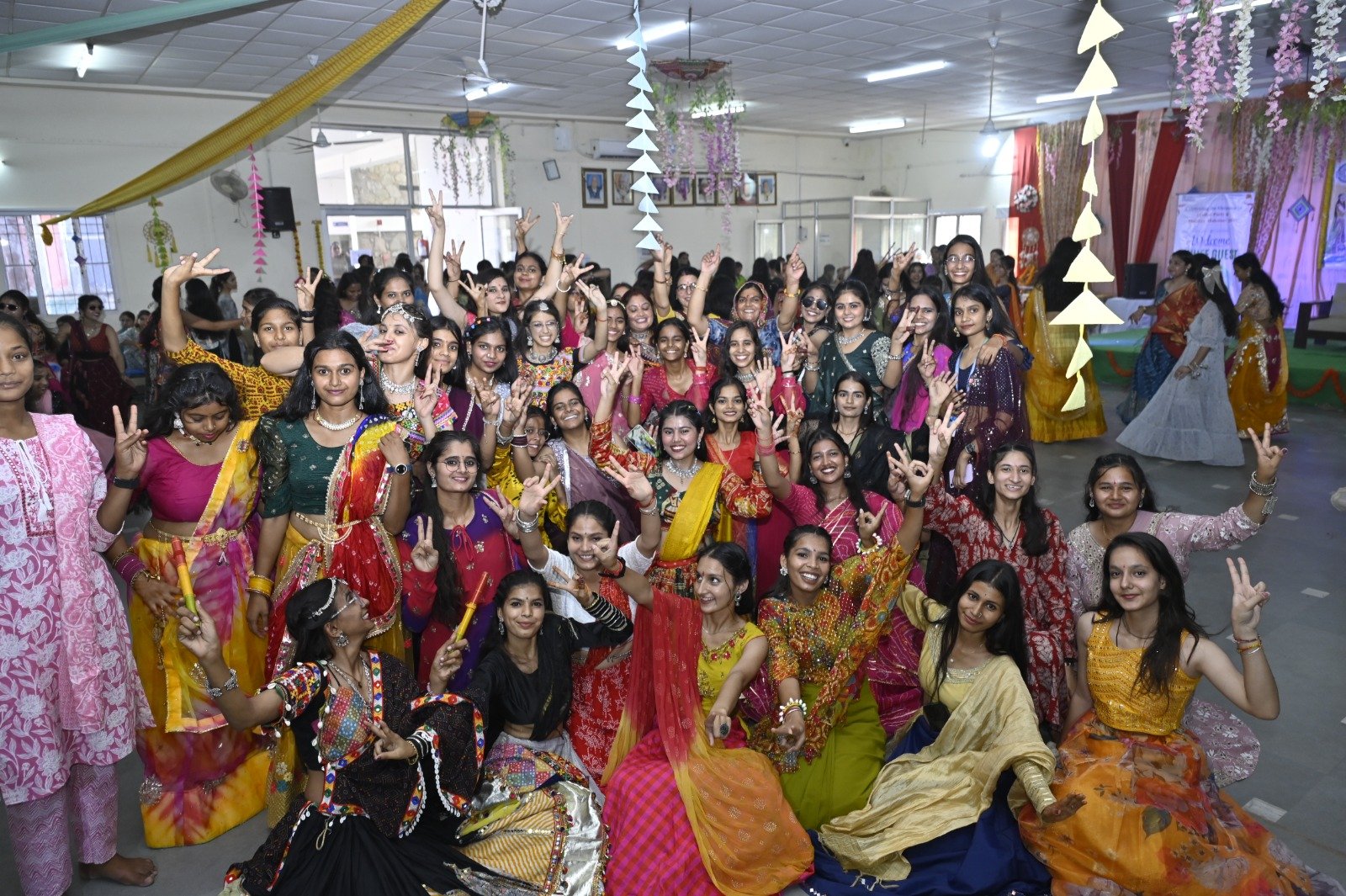
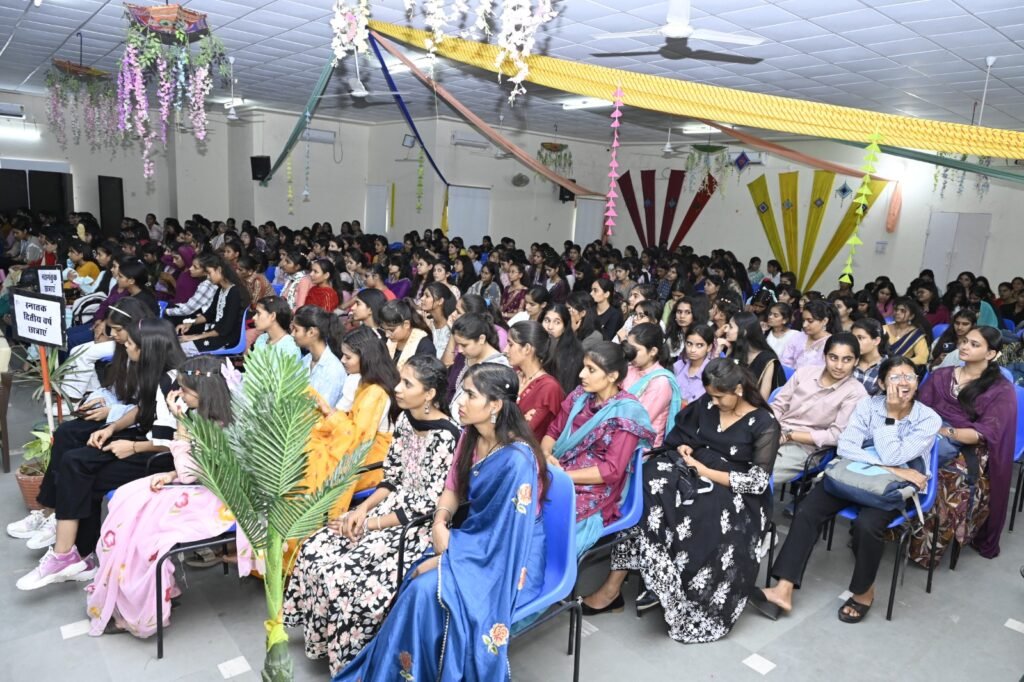
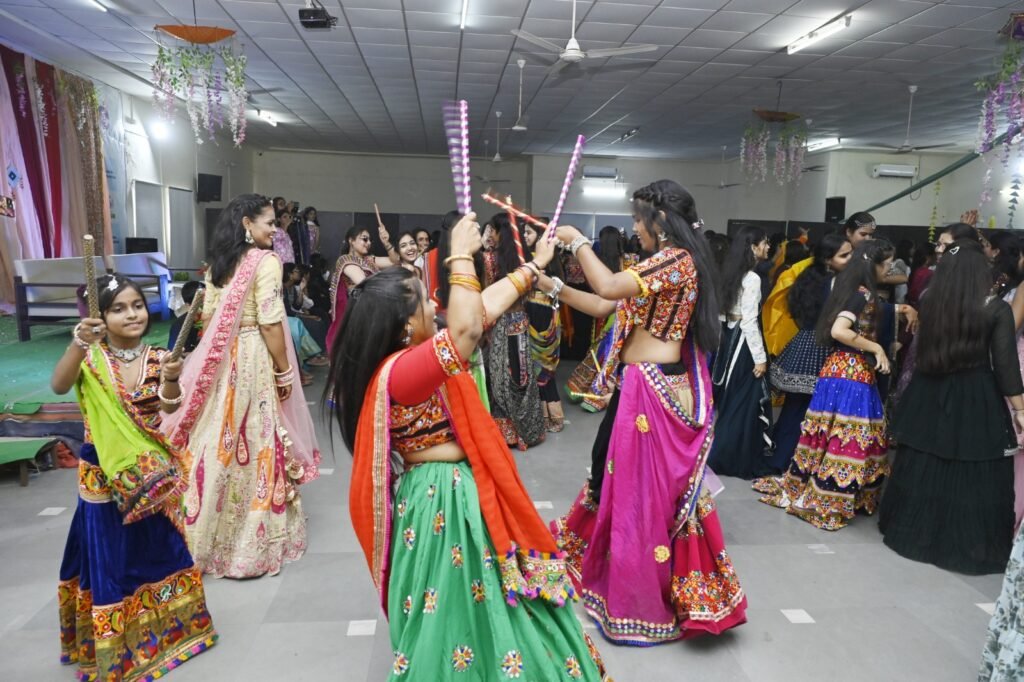
Rengus | Vedanta PG Girls College Fresher Party and Dandiya kicked off with boundless energy and heartfelt emotions, as Ringus campus echoed with cheers, culture, and inspiration. From the moment new students entered the auditorium to when they danced the night away in the dandiya celebration, the event left an electric, lasting impression.
Vedanta PG Girls College Fresher Party and Dandiya — Setting the Stage
From early morning, the campus at Vedanta PG Girls College in Reengus radiated warmth and anticipation. The grand welcome ceremony, organized exclusively for the newly admitted students, promised both traditional solemnity and exuberant celebration.
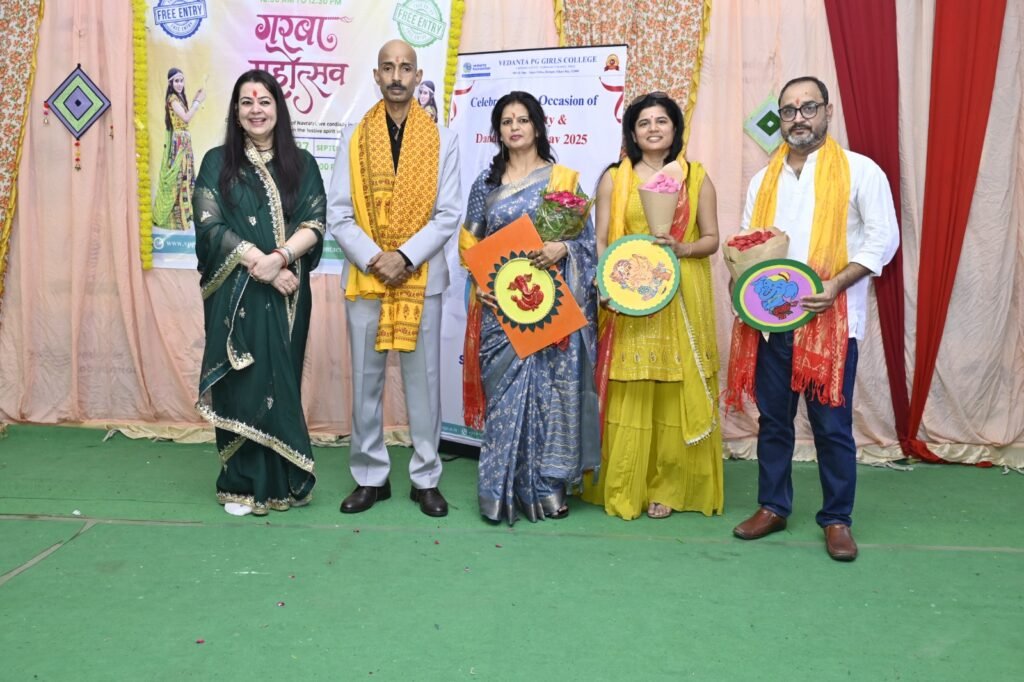
The program was graced by prominent figures:
- Sunil Narnauliya, Chief Editor, Credent TV, as the chief guest
- Prof. Dr. Shubha Sharma, Principal of the college
- Suman Tobadiya, Principal, Senior Secondary School, Jajod
- Sandeep Kumar, Co-founder of Taal Zone,
- Prapti, Program Head at Credent TV
- Kuber Bhati, Anchor, Credent TV
The event began with the venerable tilak ceremony, where each new student was honored with a mark of welcome, followed by worship of Goddess Bhagwati to invoke blessings for a prosperous journey ahead.
Inspiring Speeches and Purposeful Messages
The heart of the Fresher Party and Dandiya lay in the motivational addresses delivered by the dignitaries.
Principal’s Vision: Building Foundations
In her speech, Prof. Dr. Shubha Sharma highlighted how a college life is a golden phase — the time when students lay the foundation of their future. She urged every new student to not only excel academically but also engage actively in extracurriculars, thereby sharpening confidence and skills. She also lauded the Vedanta Foundation, emphasizing its commitment to realizing the dreams of young women, especially those from rural backgrounds.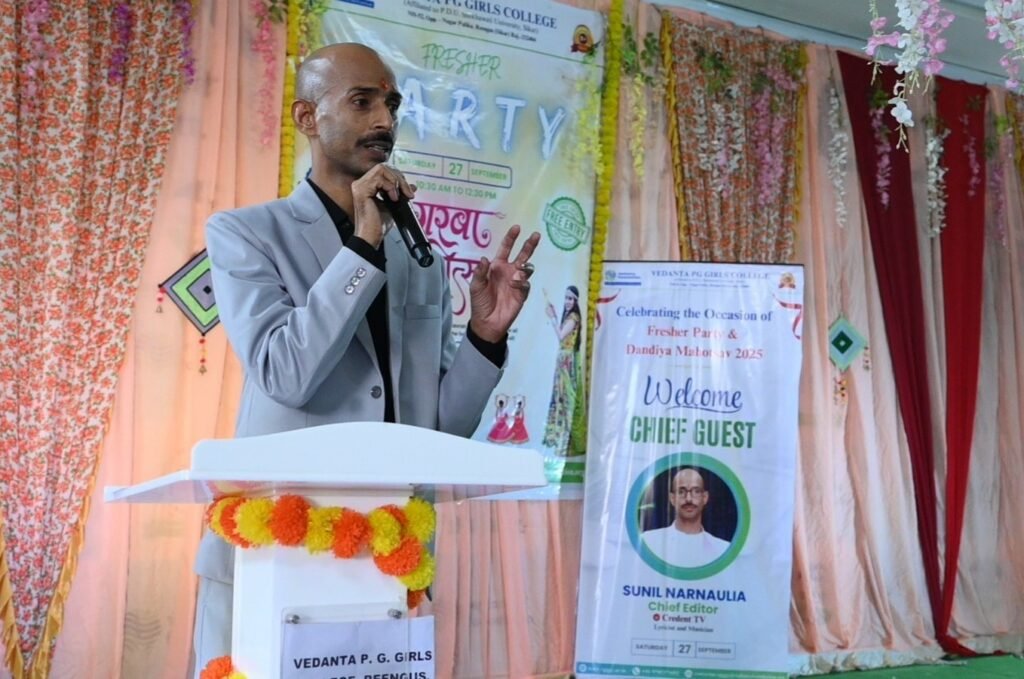
Chief Guest Spark: Defining the Why
Stepping behind the mic, Sunil Narnauliya addressed the gathering with contagious energy. He urged students to first crystallize why they are here — once the purpose is clear, the how and the what naturally follow. He said:
“When we know why we’re doing something, the universe begins to conspire for us.”
He praised the college’s decades-long contributions to education and empowerment. He reiterated that the guiding team at Vedanta, with deep dedication, has been enabling its students to shine — not just within Rajasthan, but across the country.
Cultural Vibes & Festive Dandiya Celebration
With the formalities complete, the stage was handed over to the students — and they delivered in full vigor:
- Senior students took on the role of emcees, guiding the program flow with warmth and flair.
- In a glittering moment, Ayushi Lawango, a student from the Arts faculty, was crowned Miss Fresher — a recognition of her poise, confidence, and spirit.
- The program then turned into a cultural extravaganza: dance performances, skits, and music filled the air with excitement.
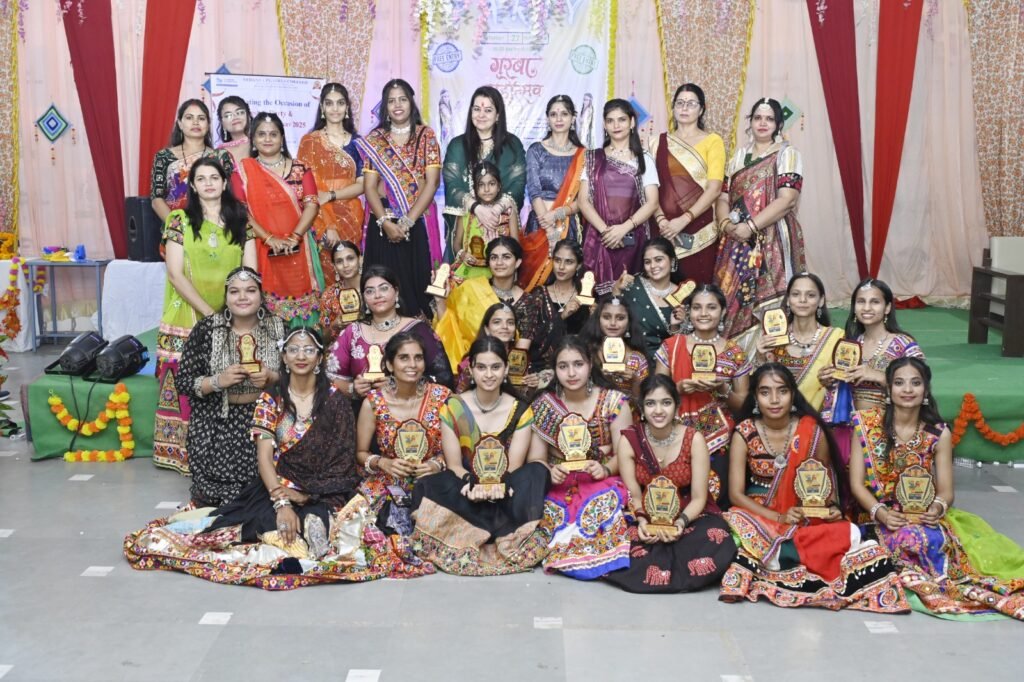
- Finally, the campus came alive with Dandiya, as girls swirled in colorful attire, sticks clicking to the beat, laughter echoing across the college grounds.
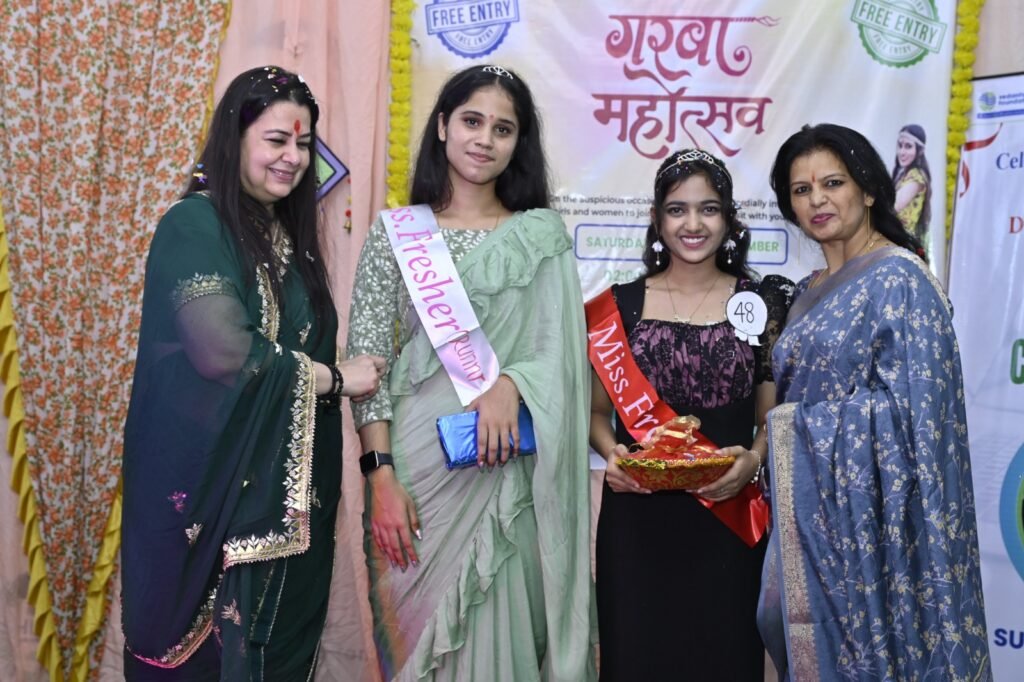
Through each segment, the Vedanta PG Girls College Fresher Party and Dandiya brought students together, fostering friendship, bonding, and a shared identity as Vedanta women.
Key Takeaways from the Fresher Party and Dandiya
Here are seven exciting highlights from the Vedanta PG Girls College Fresher Party and Dandiya that made it a resounding success:
- Warm Rituals: The tilak ceremony and Bhagwati puja set a tone of respect and spiritual grounding.
- Inspirational Leadership: Speeches by Sunil Narnauliya and Prof. Dr. Shubha Sharma planted seeds of ambition, clarity, and purpose.
- Recognition of Fresh Faces: Selecting Miss Fresher encouraged new students to embrace visibility and confidence.
- Student-Led Execution: Letting senior students host boosted peer bonding and leadership.
- Vibrant Cultural Display: Performances showed the creative and expressive spirit of the student body.
- Inclusive Dancing & Joy: The dandiya party broke formal barriers and built new friendships.
- Empowerment Message: Throughout, the emphasis remained on self-belief, community upliftment, and future readiness.
Why This Welcome Matters — Long After the Day Ends
The Fresher Party and Dandiya is more than a festive gathering — it’s symbolic. Here’s why the Vedanta PG Girls College Fresher Party and Dandiya has deeper significance:
- Fosters belonging: For fresh students entering a new social and academic ecosystem, a warm reception builds immediate sense of belonging.
- Sparks confidence: Being welcomed publicly encourages students to believe in their worth.
- Connects tradition & modernity: Rituals like tilak and puja blend seamlessly with modern cultural performances.
- Strengthens community identity: The shared experience knits together new and senior students as one Vedanta family.
- Sets the tone: The speeches establish the college’s vision: academic excellence, holistic growth, and women’s empowerment.
Voices from the Ground — Reactions That Resonated
- A first-year student described how the tilak ritual made her feel instantly “part of a larger family.”
- Others said Sunil Narnauliya’s message made them pause and reconsider their goals.
- Many students told that they felt proud, excited, and determined to make their own mark in the college.
Looking Forward — What’s Next at Vedanta?
The energy from the welcome won’t fade — it’s a springboard. Here’s what lies ahead at Vedanta PG Girls College:
- Academic initiatives: The college is expected to roll out fresh mentoring and workshop programs to support these new students.
- Cultural and sports events: Regular cultural fests, competitions, and tournaments will offer more platforms to shine.
- Community outreach: Given the college’s inclusive ethos, new students may contribute in outreach programs focused on rural upliftment.
- Career support: The foundation’s backing and media ties (like Credent TV) may open exposure to internships, seminars, and media engagements.
Notably, Vedanta had earlier hosted a Yuva Rojgar Mela, offering youth in Rajasthan golden career opportunities via job fairs and employment connects. This sort of event speaks to the institution’s broader commitment to not just educate but empower.
External Resources & Context
- For more about Vedanta PG Girls College, its programs, and campus insights, visit their official site. vpggc.ac.in
- For context on rural women’s education initiatives in Rajasthan, the government’s Women’s Empowerment schemes can be referred to.
- On youth employment drives like Yuva Rojgar Melas, the state government’s announcements provide further reading. utkarshnews.com
Vedanta PG Girls College Fresher Party and Dandiya delivered more than sunshine smiles and dance steps — it sent a strong message: that this institution cherishes its students and believes deeply in their potential. Through ceremonies, cultural vibrancy, motivational addresses, and communal joy, the event sculpted a spirited beginning for those stepping into college life.
Bollywood
Disha Patani Biography – from her early life in Bareilly to becoming Bollywood’s fitness and fashion icon-

Bollywood
Mithun Chakraborty Biography – Explore the life, career, movies, political journey, and untold facts-


Subodh Public School Rambagh Holds Financial Literacy Session for Jaipur Teachers

SRN International School Maths Café, SRN International School Jagatpura

Dr Ambedkar Memorial Welfare Society Rajasthan Forms Permanent Council

Subodh Public School Rambagh Honours Sanitation Staff for Dedicated Service

Trump-Linked Powerus Plans Drone Production Partnership With Pakistan Army

October 2026 Rules: LPG Subsidy, SBI ATM and UPI Changes Explained

Priyansh Arya: The Six-Hitting Sensation of IPL 2025

Top 10 Most Searched Topics on YouTube: What’s Trending Now?

Preity Zinta Spotted with New Punjab Kings Hero Priyansh Arya in Viral Clip

Nag Panchami 2025: 7 Key Rituals and Puja Time to Eliminate Kaal Sarpa Dosha

Balen Shah, Kathmandu’s independent mayor, from rapper to political leader. Explore his rise amidst Nepal’s youth-led revolution-

Radhika Merchant: A New Chapter as Radhika Ambani

best career opportunities | Jaipur Career Fair | Credent TV | Dainik Navjyoti D2S03

what is reiki healing | Mental Health | Shiksha Sarokar, शिक्षा सरोकार, Sunil Narnaulia

DAV Centenary Public School, Vaishali Nagar, Jaipur hosts Successful ‘Mind Wars Quiz: A Battle of Wits and Knowledge’

 Election1 month ago
Rajasthan Municipal Election Results 2026 Live Updates
- Education1 month ago
OPT Fee Proposal Clears White House Review; $100,000 Figure Remains Unconfirmed
- Breaking News2 months ago
Savitribai Phule Award 2026 Honours 54 Women in Jaipur
- Breaking News1 month ago
India Bank Strike Today Over Five-Day Week, Branch Services Face Three-Day Disruption
- Accident1 month ago
Delhi High Court Orders MCD PG Audit After Satya Niketan Collapse
- Festival1 month ago
India Retail Inflation August 2026 Rises to 4.82% as Food Prices Climb
- International1 month ago
Houthi Drone Near Mecca: Saudi Arabia Intercepts UAV After Emergency Alert
- Breaking News1 month ago
Saudi Arabia Shuts East-West Oil Pipeline After Drone Attacks From Iraq