Viral News
Greenland Condemns Planned Visits by Usha Vance and Trump Adviser




Breaking News
Krishna Janmashtami 2026: Mathura-Vrindavan Packed, Jaipur Celebrates as Mumbai Readies Dahi Handi


Breaking News
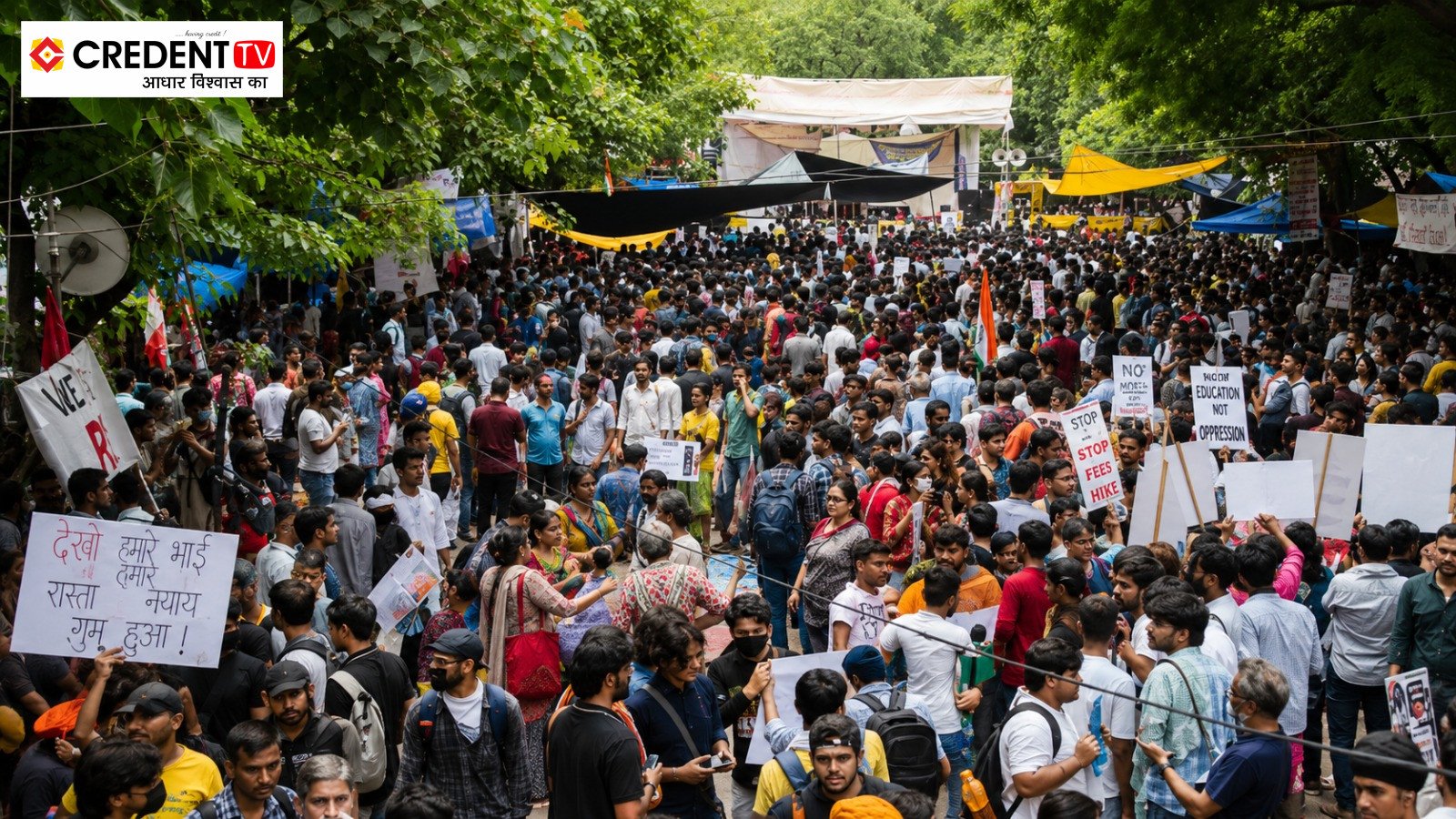
Supreme Court Quashes NEET Protest FIRs; Allows Fresh Case Against 2,873 With Criminal Antecedents
Breaking News
India-US Trade Deal: Trump Says India Benefited for Decades, Yet a Historic Modi Agreement Could Be Near
India-US Trade Deal remains in focus after Donald Trump said India benefited from high tariffs for decades while expressing confidence in a major agreement with Prime Minister Narendra Modi. Explore tariffs, trade disputes, agriculture concerns, and what the deal could mean for both economies.
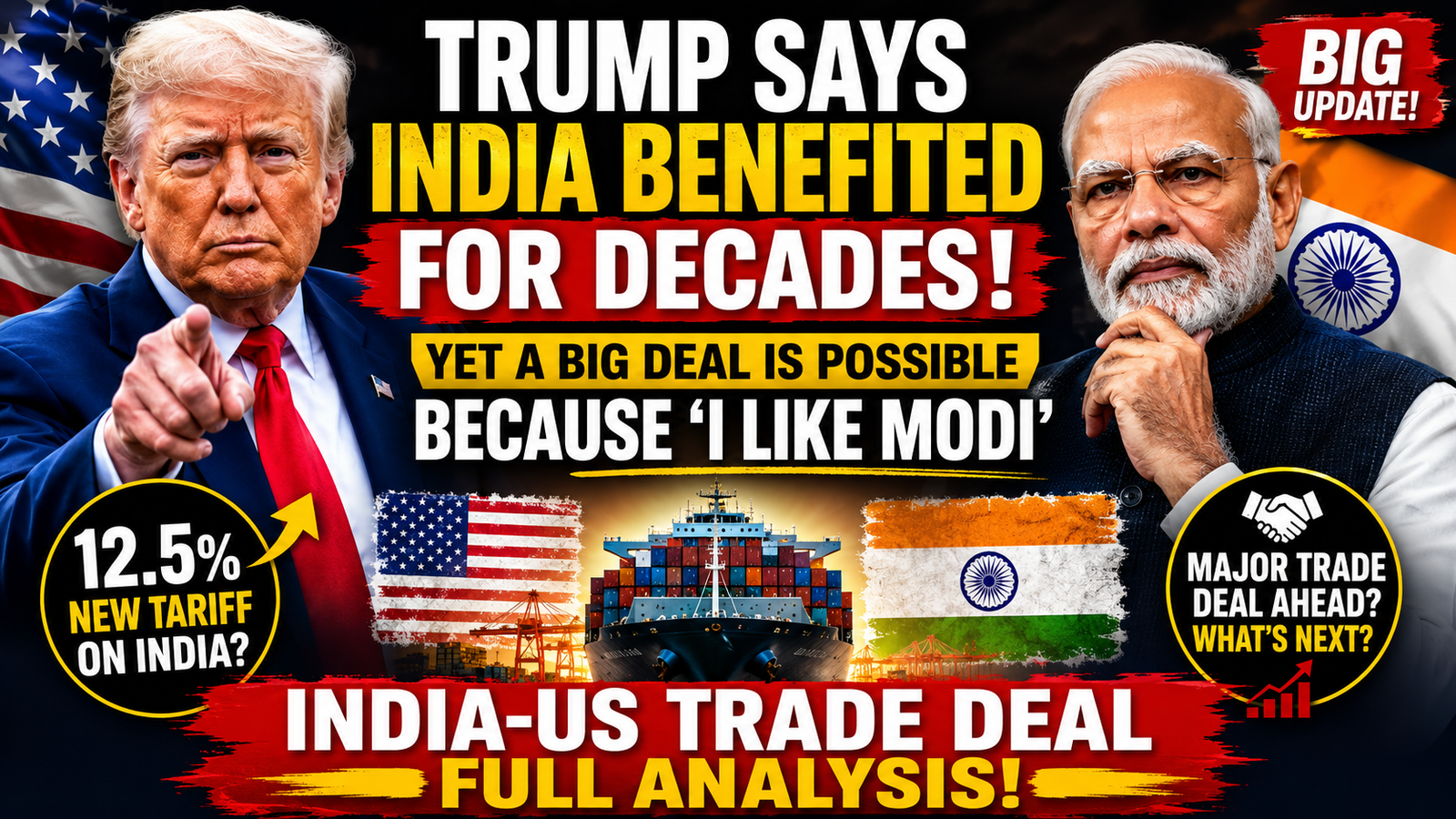
5 June, Credent TV | The India-US Trade Deal has once again become one of the most closely watched developments in global commerce after US President Donald Trump made a series of remarks about trade relations between Washington and New Delhi.
Speaking about bilateral trade, Trump claimed that India had imposed high tariffs on American goods for decades and had benefited significantly from those trade policies. At the same time, he emphasized that the United States is now earning substantial revenue through tariffs and expressed optimism about reaching a major agreement with India in the near future. Trump also highlighted his personal rapport with Prime Minister Narendra Modi, describing him as a good friend and suggesting that strong leadership-level relations could help move negotiations forward.
His comments come at a critical time when officials from both nations are engaged in intensive discussions aimed at advancing the India-US Trade Deal and resolving long-standing trade disputes.
Trump’s Latest Remarks on India-US Trade
The latest debate surrounding the India-US Trade Deal was triggered by Trump’s assertion that India had “taken advantage” of the United States through its tariff policies over many years.
According to Trump, American exporters often faced higher duties while attempting to access the Indian market. He argued that the situation has changed significantly and claimed that the United States is now generating substantial revenue from tariff measures imposed on imports. Despite these criticisms, Trump maintained a positive tone regarding bilateral relations and suggested that a significant trade agreement remains within reach.
His statement reflects a broader strategy that has characterized his trade policy: using tariffs as leverage while simultaneously pursuing negotiations aimed at securing improved market access for American businesses.
Why Trump Says India Benefited from High Tariffs
For years, tariff structures have been one of the most contentious issues between the two countries.
The United States has repeatedly argued that India’s tariff regime has made it difficult for American companies to compete effectively in sectors such as agriculture, medical devices, dairy products, and alcoholic beverages.
India, however, has defended its tariff policies by pointing to the need to protect domestic industries, farmers, and small businesses from overwhelming foreign competition.
Trump’s latest comments are consistent with long-standing American concerns that India’s import duties have historically been higher than those imposed by many developed economies. While trade experts may debate the extent of the advantage, the issue has remained central to every major discussion surrounding the India-US Trade Deal.
India-US Trade Deal Negotiations Gain Momentum
Despite recurring disputes, both governments appear committed to advancing the India-US Trade Deal.
Recent rounds of negotiations in New Delhi have reportedly been constructive, with officials discussing tariff reductions, customs procedures, market access, digital trade, and regulatory cooperation. India’s Commerce Ministry has indicated that discussions have been positive and that both sides are working toward an arrangement that benefits businesses and consumers in both countries.
Commerce Minister Piyush Goyal has also expressed optimism, suggesting that the first phase of the trade agreement could be finalized in the coming weeks if negotiations continue smoothly.
This momentum has raised hopes among exporters, investors, and multinational corporations that the India-US Trade Deal could become a landmark economic partnership.
Proposed 12.5% US Tariff Creates Fresh Challenges
Even as negotiations continue, a significant obstacle has emerged.
The Office of the United States Trade Representative (USTR) has proposed an additional tariff of up to 12.5% on imports from India and several other economies. The proposal stems from a Section 301 investigation related to the enforcement of restrictions on goods allegedly linked to forced labor practices.
If implemented, the proposed tariff could increase costs for Indian exporters and reduce the competitiveness of Indian goods in the American market.
The proposal has not yet become law. The USTR is currently seeking public comments before making a final determination. Hearings are expected before any final decision is announced.
For businesses closely monitoring the India-US Trade Deal, this proposed tariff represents a new layer of uncertainty.
Why the Trade Agreement Has Not Been Finalized Yet
Although both sides have made progress, several developments have complicated efforts to conclude the India-US Trade Deal.
Earlier, an interim trade framework had been discussed as a stepping stone toward a broader agreement. However, legal challenges involving certain Trump-era tariff measures created uncertainty about the future structure of American trade policy. These developments slowed the pace of negotiations and raised questions about how future tariffs would be incorporated into any final agreement.
Trade experts note that while political leaders may support an agreement, technical negotiations involving thousands of products, regulations, and compliance standards often require extensive discussion.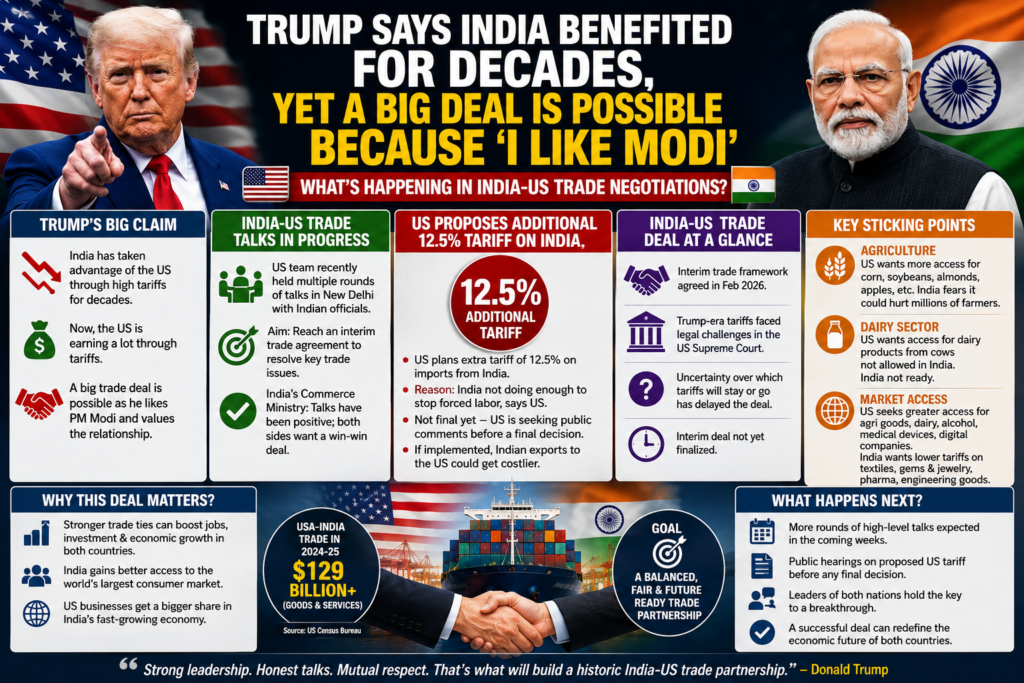
Key Disputes in the India-US Trade Deal
Several important issues continue to divide negotiators.
1. Market Access
The United States wants greater access to the Indian market for:
- Agricultural products
- Dairy products
- Medical devices
- Alcoholic beverages
- Digital services
India, meanwhile, seeks better access for:
- Textiles
- Gems and jewelry
- Pharmaceuticals
- Engineering goods
- Agricultural exports
These competing priorities have made the India-US Trade Deal negotiations particularly complex.
2. Tariff Reductions
India wants the United States to reduce tariffs on several export-oriented sectors.
The United States wants India to lower import barriers that American businesses consider restrictive.
Balancing these demands remains one of the biggest challenges facing negotiators.
Agriculture and Dairy: The Biggest Sticking Points
Agriculture remains perhaps the most sensitive issue in the entire India-US Trade Deal discussion.
Washington has long sought greater access for products such as:
- Corn
- Soybeans
- Apples
- Almonds
- Other agricultural commodities
American exporters argue that India’s large consumer market offers enormous opportunities.
India, however, remains cautious.
Policymakers worry that increased imports could adversely affect millions of Indian farmers who already operate on narrow profit margins. Any sudden increase in foreign competition could have significant economic and political consequences.
The dairy sector presents another challenge.
The United States has pushed for broader access to India’s dairy market. However, differences related to production practices, certification standards, and consumer preferences have prevented meaningful breakthroughs so far.
Because agriculture directly affects livelihoods across rural India, negotiators must proceed carefully to ensure that any India-US Trade Deal does not create unintended economic disruptions.
Economic Impact on India and the United States
A successful India-US Trade Deal could generate substantial benefits for both countries.
Benefits for India
- Increased export opportunities
- Better access to American consumers
- Stronger foreign investment flows
- Enhanced manufacturing competitiveness
- Growth in pharmaceuticals and engineering exports
Benefits for the United States
- Greater access to India’s expanding middle class
- Increased agricultural exports
- Expanded opportunities for medical device manufacturers
- Improved access for technology and digital companies
- Stronger strategic economic ties in the Indo-Pacific region
Economists generally agree that deeper trade integration could support growth, job creation, and innovation in both economies.
However, the exact impact would depend on the final terms of the agreement.
What Happens Next?
The coming weeks may prove crucial for the future of the India-US Trade Deal.
Negotiators are expected to continue discussions on tariff reductions, market access commitments, and regulatory cooperation. Meanwhile, the proposed 12.5% tariff remains under review, with public consultations and hearings scheduled before any final decision is made.
Political observers believe that both governments have strong incentives to reach an agreement. The United States views India as an increasingly important strategic and economic partner, while India seeks stronger trade ties with one of its largest export markets.
The India-US Trade Deal stands at a critical crossroads. Donald Trump’s recent remarks have once again highlighted the long-standing disagreements over tariffs and market access, while also underscoring the possibility of a major breakthrough.
Although challenges remain—including the proposed 12.5% tariff, agricultural disputes, dairy market access, and regulatory differences—both countries continue to engage in active negotiations. Trump’s positive comments about Prime Minister Narendra Modi suggest that political goodwill still exists at the highest levels of government.
If negotiators can bridge the remaining gaps, the India-US Trade Deal could become one of the most important bilateral economic agreements of the decade, strengthening trade, investment, and strategic cooperation between two of the world’s largest democracies.
Art
Social Media Dialogue or Controversy? The Growing Crisis of Communication in the Digital Age
Social Media Dialogue or Controversy is becoming one of the most debated issues of the digital age. Explore how social media is transforming communication, fueling outrage, weakening meaningful conversations, and reshaping public discourse.
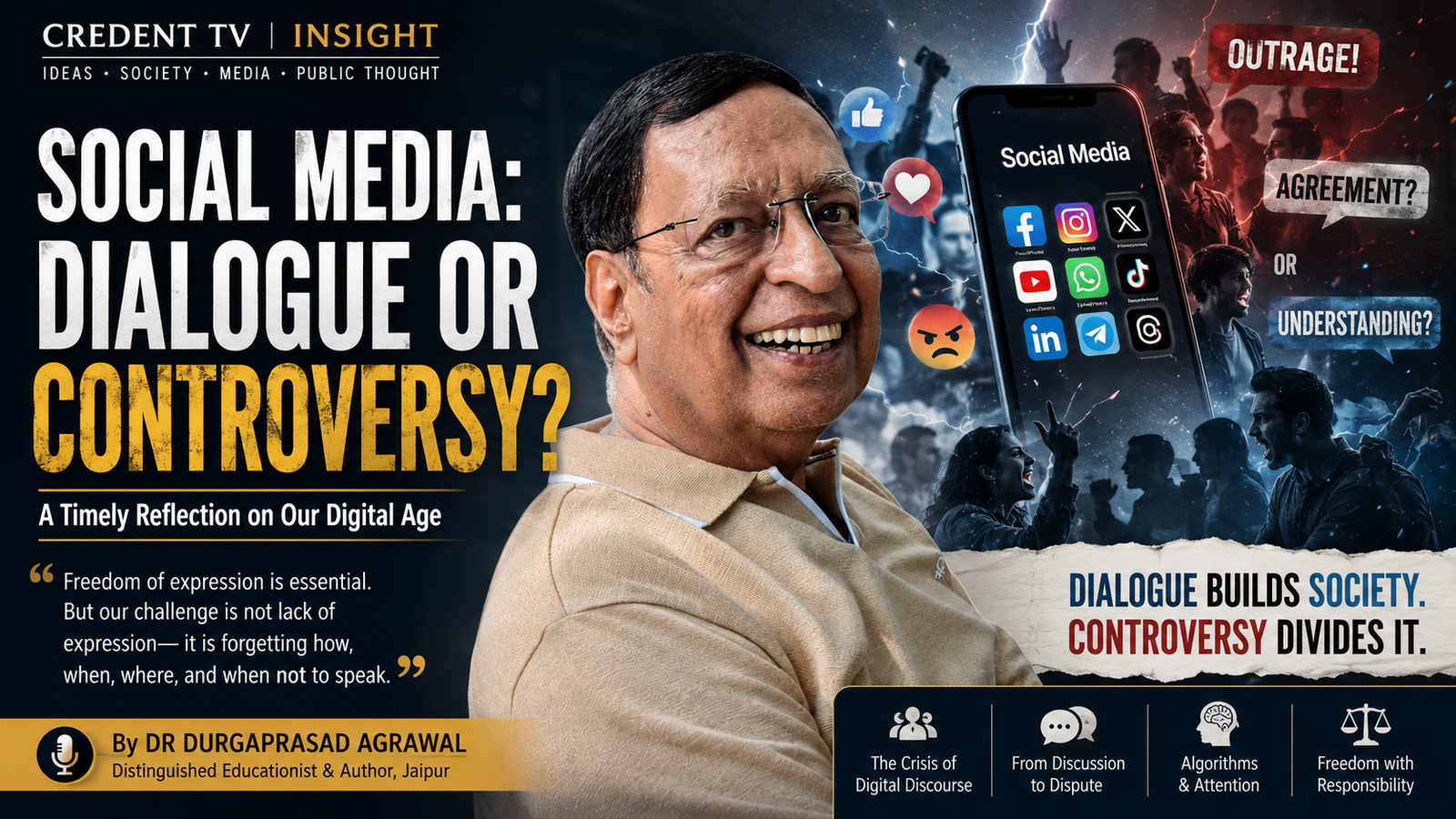
4 June, Credent TV | Social Media Dialogue or Controversy has emerged as one of the defining questions of the digital era. What was once celebrated as a revolutionary platform for free expression and democratic participation is increasingly being criticized for fostering conflict, outrage, polarization, and endless digital battles.
Human civilization has always evolved through communication. From spoken words around ancient fires to printed newspapers and television broadcasts, every technological advancement promised to bring people closer together. Social media appeared to be the ultimate realization of that dream. It placed a publishing platform in every pocket and transformed ordinary citizens into content creators, commentators, and influencers.
Yet, while communication has become easier than ever, meaningful dialogue appears to be disappearing.
Today, millions of people begin their day not by asking what happened in the world, but by checking how the world reacted to what they posted. Likes, shares, reposts, comments, and reach have become new forms of social validation. In many ways, digital engagement has become as important to some people as traditional measures of success.
This raises an important question: Has social media strengthened dialogue, or has it simply amplified controversy?
Social Media: The Promise of Digital Democracy
When social media platforms first gained popularity, they were often described as tools of digital democracy. Anyone with internet access could express opinions, share experiences, challenge institutions, and participate in public discussions.
Platforms such as Facebook, X (formerly Twitter), Instagram, LinkedIn, and YouTube gave voice to individuals who previously lacked access to traditional media channels.
According to research published by the Pew Research Center and other digital communication studies, social media has expanded public participation in political discussions, social movements, and civic engagement.
Social Media Dialogue or Controversy – How Conversations Changed
The central concern behind Social Media Dialogue or Controversy lies in the transformation of public discussions.
Modern social platforms contain more words than ever before. Millions of posts are created every minute. Yet despite this abundance of communication, genuine dialogue often feels absent.
Many users no longer enter online discussions to learn or understand. Instead, they arrive prepared to defend positions, attack opposing views, or demonstrate loyalty to ideological groups.
A photograph of a cup of tea can trigger political arguments. A book recommendation can become an ideological battle. A poem can provoke accusations and outrage. In many cases, reactions depend less on what is being said and more on who is saying it. The speaker often matters more than the message.
The Rise of the Permanently Offended Citizen
One of the most fascinating developments of modern digital culture is the emergence of what sociologists increasingly describe as a culture of perpetual offense. A growing number of online users seem permanently prepared to be offended.
They may find reasons for outrage in advertisements, jokes, language choices, historical discussions, entertainment content, or even punctuation marks. This phenomenon creates an environment where emotional reaction frequently replaces thoughtful engagement.
Indian author and public intellectual Purushottam Agrawal explored similar themes in his thought-provoking novel Nakohus, which satirically examines the politics of hurt sentiments and public outrage.
The culture of constant offense has become a major contributor to the Social Media Dialogue or Controversy debate because it shifts focus away from understanding and toward emotional confrontation.
Why Social Media Rewards Conflict
To understand the current environment, one must examine the role of platform algorithms. Most social media companies depend on user engagement. Engagement means attention. Attention generates advertising revenue. Unfortunately, outrage often generates more attention than calm discussion.
Research from institutions including MIT and Oxford Internet Institute has shown that emotionally charged content tends to spread faster than balanced information. As a result:
- Anger travels quickly.
- Nuance travels slowly.
- Conflict attracts clicks.
- Moderation receives less visibility.
This creates an incentive structure where users are unconsciously rewarded for producing stronger reactions. The digital marketplace often values excitement over accuracy and confrontation over reflection.
The Economics of Outrage
The business model of attention-driven platforms contributes significantly to controversy. Posts that provoke strong emotions frequently receive:
- More comments
- More shares
- More visibility
- Greater reach
This creates a cycle where increasingly provocative content dominates public attention. In such an environment, thoughtful dialogue struggles to compete.
The Decline of Listening in the Digital Age
A healthy conversation requires two essential components:
- Speaking
- Listening
Modern digital culture has dramatically expanded opportunities for speaking. Listening, however, has become increasingly rare. Many users read content only long enough to formulate a response. Instead of engaging with ideas, they search for evidence that confirms existing beliefs.
This trend weakens the foundations of democratic discourse. Throughout history, intellectual traditions across cultures emphasized debate, reflection, and respectful disagreement.
Ancient philosophical schools, scholarly traditions, and public forums encouraged participants to challenge ideas while maintaining mutual respect. Today, online discussions often prioritize winning rather than understanding.
Social Media Dialogue or Controversy and Public Discourse
The impact extends beyond individual interactions. When public discourse becomes dominated by conflict, entire societies can suffer. Misinformation spreads more easily. Polarization intensifies. Trust declines. Communities become fragmented. Citizens begin viewing opponents not as people with different perspectives but as enemies.
This is where the question of Social Media Dialogue or Controversy becomes particularly important. The issue is no longer limited to online behavior. It affects democratic institutions, journalism, education, and social cohesion.
Freedom of Expression vs. Responsible Expression
Freedom of expression remains one of the most valuable achievements of modern society. People should have the right to express opinions, criticize authority, and participate in public debate. However, freedom and responsibility must coexist. The challenge facing contemporary society is not a lack of expression. The challenge is learning:
- How to speak.
- When to speak.
- Where to speak.
- And sometimes when not to speak.
Civilization depends not only on speech but also on restraint. Responsible communication strengthens public trust. Reckless communication weakens it.
Digital Etiquette Matters
Many critics dismiss digital etiquette as old-fashioned. Yet etiquette serves an important purpose. It creates conditions for peaceful coexistence. Online etiquette includes:
- Respectful disagreement
- Fact verification
- Avoiding personal attacks
- Listening before responding
- Distinguishing criticism from hostility
Without these principles, freedom can easily devolve into chaos.
What Algorithms Teach Society
Technology does not merely reflect human behavior. It also shapes it. When users repeatedly encounter content rewarded for outrage, they gradually adapt to those incentives. The result is a culture where:
- Patience seems weak.
- Nuance appears boring.
- Anger appears powerful.
- Reflection appears unnecessary.
This transformation may be one of the most significant social consequences of the digital age. Social media has accelerated communication. It has not necessarily improved understanding.
Can Meaningful Dialogue Return?
Despite growing concerns, there are reasons for optimism. Many educators, journalists, researchers, and civic organizations are actively promoting healthier digital habits. Media literacy programs are helping people evaluate information critically. Educational institutions increasingly emphasize critical thinking and responsible communication. Public awareness regarding misinformation is also improving. Meaningful dialogue can return if users consciously choose engagement over confrontation.
Simple practices can make a difference:
- Read before reacting.
- Verify before sharing.
- Understand before criticizing.
- Listen before responding.
The Way Forward
The future of social media depends largely on collective choices. Technology itself is not inherently harmful. The challenge lies in how it is used. Platforms can encourage healthier interactions. Governments can support digital literacy. Schools can teach critical thinking. Media organizations can prioritize accuracy over sensationalism. Most importantly, individuals can practice restraint and respect. The solution to digital conflict is not silence. The solution is better conversation.
Social Media Dialogue or Controversy represents one of the defining debates of our time. Social media has democratized communication and provided unprecedented opportunities for participation, creativity, and expression. Yet it has also amplified outrage, rewarded impulsive reactions, and weakened the art of listening.
The challenge facing society is not technological advancement itself but the cultivation of wisdom alongside innovation.
As communication technologies continue to evolve, the future of public discourse will depend on whether people choose noise or understanding, reaction or reflection, controversy or dialogue.
History may ultimately judge our era not by the sophistication of the machines we built, but by whether those machines helped us communicate more meaningfully with one another.
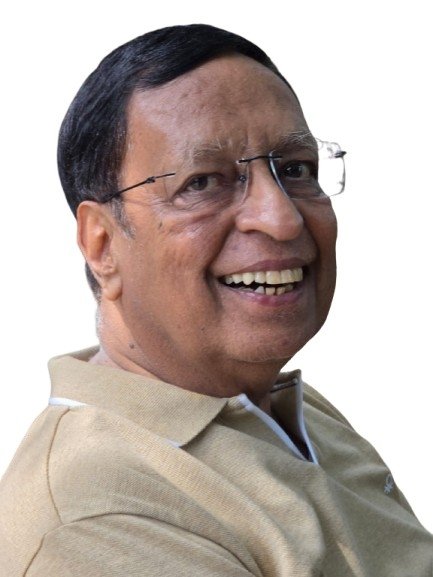
By DR DURGAPRASAD AGRAWAL
Distinguished Educationist & Author,
Jaipur, Rajasthan
Breaking News
AI and Original Writing Crisis: 10 Powerful Reasons Why Artificial Intelligence Can Never Replace Human Creativity
AI and Original Writing remain at the center of a global debate as technology transforms content creation. Discover why artificial intelligence can assist writers but can never replace human creativity, emotions, independent thinking, and authentic storytelling.
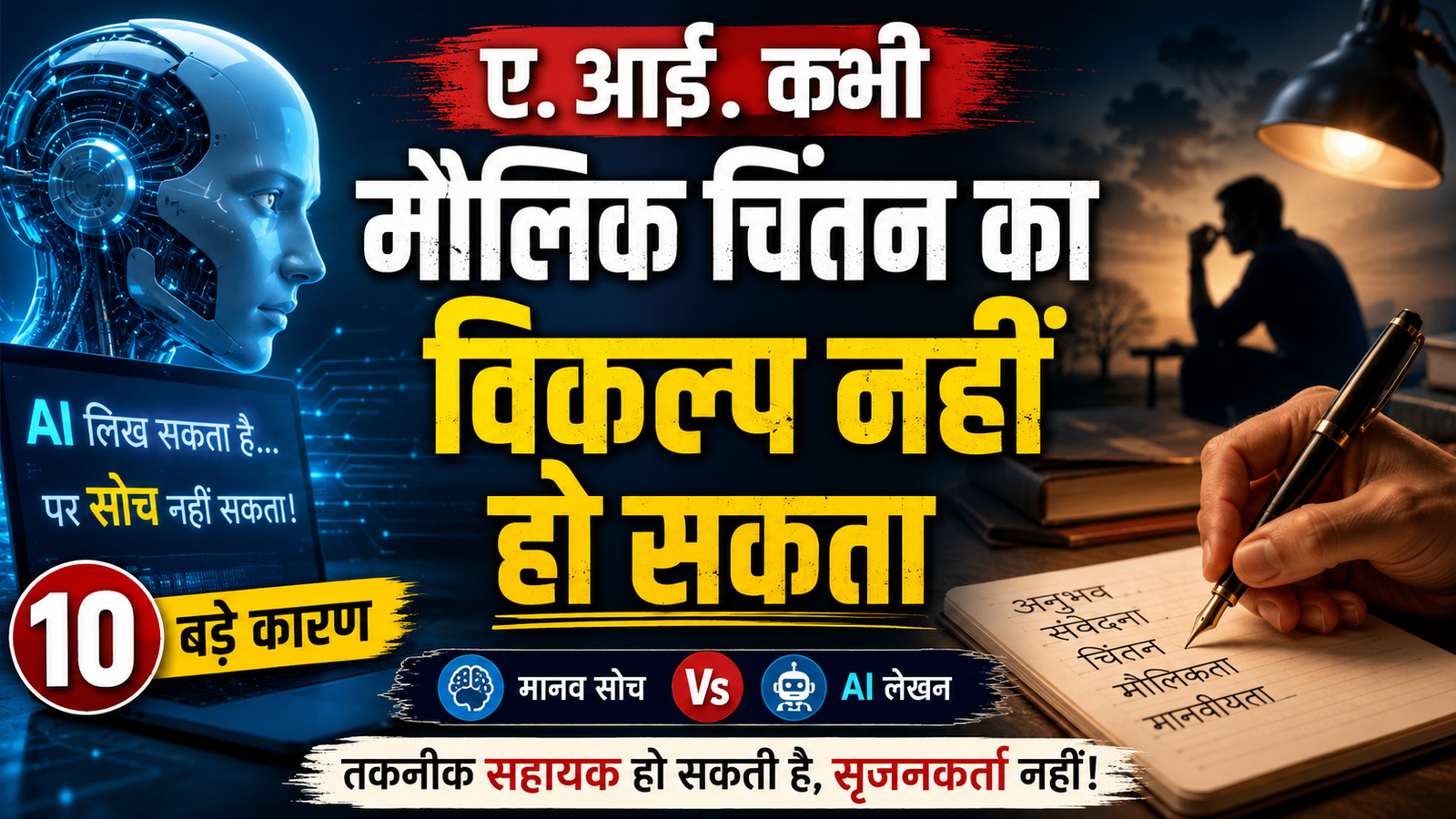
3 June, Credent TV | In an era dominated by digital innovation, AI and Original Writing have become two of the most discussed topics in journalism, education, publishing, and creative industries. Artificial intelligence is now capable of generating articles, poems, speeches, marketing campaigns, and even fictional stories within seconds. While these technological advancements have undoubtedly transformed the writing landscape, a crucial question remains unanswered: Can AI truly replace original human thinking and creativity?
Veteran independent journalist Nafees Afridi believes the answer is clear. According to him, artificial intelligence may become a valuable writing assistant, but it can never become a substitute for authentic human thought, emotional depth, and lived experience.
As the world races toward an AI-driven future, the debate surrounding originality, creativity, and intellectual integrity has become more relevant than ever.
The Digital Revolution and the Rise of AI Writing
The digital age has democratized communication in unprecedented ways. Today, a smartphone and internet connection are often enough to reach millions of readers worldwide.
Blogs, websites, social media platforms, podcasts, and digital publications have eliminated many of the barriers that once restricted publishing opportunities. Every individual now has the potential to become a creator.
At the same time, artificial intelligence has entered the writing process. Advanced AI tools can summarize information, generate headlines, produce essays, draft speeches, and create social media content almost instantly.
Major technology companies continue investing billions in AI development, reflecting the growing significance of machine-generated content. According to reports from the official websites of organizations such as OpenAI and UNESCO, the integration of AI into education, communication, and content creation is expected to expand significantly in the coming years.
Yet this transformation has sparked concerns about the future of authentic expression.
Understanding AI and Original Writing
AI and Original Writing represent two fundamentally different approaches to content creation.
Artificial intelligence operates by analyzing vast amounts of existing data, identifying patterns, and predicting the most likely sequence of words. Its strength lies in processing information quickly and efficiently.
Original writing, however, emerges from a person’s experiences, emotions, memories, observations, struggles, and imagination.
A machine can imitate style.
A human creates meaning.
A machine can organize information.
A human interprets life.
This distinction forms the heart of the debate.
Why Original Writing Matters
Original writing is much more than arranging words on a page.
It reflects:
- Personal experiences
- Emotional intelligence
- Independent thinking
- Cultural understanding
- Ethical judgment
- Creative imagination
Great literature, impactful journalism, and transformative speeches have historically emerged from individuals who challenged conventional thinking.
The works of George Orwell, Rabindranath Tagore, and Premchand continue to resonate because they were born from lived realities rather than algorithmic prediction. Authentic writing has the power to inspire change because it originates from genuine human experience.
AI and Original Writing in the Age of Social Media
Social media has dramatically altered how content is consumed and evaluated. Today, many creators measure success through:
- Likes
- Shares
- Comments
- Followers
- Viral reach
As a result, attention-grabbing content often receives greater visibility than thoughtful analysis. The pressure to remain relevant in fast-moving digital environments has encouraged shorter, faster, and more reactive forms of communication.
Many writers find themselves optimizing for algorithms rather than audiences. This shift creates a significant challenge for AI and Original Writing because originality often requires patience, reflection, research, and intellectual discipline. Viral content may capture attention for a moment. Meaningful content influences society for years.
Can AI Truly Be Creative?
One of the most fascinating questions surrounding AI and Original Writing is whether machines can genuinely be creative. AI systems can produce impressive outputs because they learn patterns from enormous datasets. However, creativity involves more than generating combinations of words. Human creativity includes:
- Emotional experiences
- Personal memories
- Moral conflicts
- Cultural identity
- Intuition
- Imagination
A novelist writing about grief often draws from personal loss. A poet describing love may be expressing lived emotions. A journalist investigating injustice frequently relies on empathy and ethical commitment. Artificial intelligence does not experience any of these realities. It can simulate language about emotions, but it does not feel them. This distinction explains why human-created stories continue to carry emotional resonance that machines struggle to replicate authentically.
Information Overload and the Decline of Deep Thinking
Modern society is surrounded by an endless stream of information. Every minute brings:
- Breaking news alerts
- Social media updates
- Short-form videos
- Online debates
- Viral trends
While access to information has expanded dramatically, the ability to process it thoughtfully has not necessarily kept pace. Many people now react to headlines without reading full articles. Opinions are often formed before facts are fully understood. This environment can weaken the foundation required for original thinking. Independent thought requires:
- Reading deeply
- Reflecting carefully
- Questioning assumptions
- Evaluating evidence
Without these habits, originality becomes increasingly difficult to sustain.
AI and Original Writing Versus Plagiarism
Another major challenge facing the digital world is plagiarism. The internet contains an enormous volume of accessible content. As a result, copying and repackaging existing ideas has become easier than ever. Many creators intentionally or unintentionally reproduce material without proper attribution.
This practice undermines:
- Intellectual honesty
- Creative effort
- Academic integrity
- Professional credibility
When originality loses value, society risks rewarding shortcuts instead of genuine contribution. For journalism, education, and literature, this trend poses a serious concern. The long-term health of knowledge creation depends on recognizing and protecting original work.
Language Quality in the Digital Era
Language itself is undergoing transformation. Digital communication often favors speed over precision. Abbreviations, emojis, and shortened expressions have become common forms of interaction. While these tools improve convenience, they can also reduce linguistic richness. Strong writing depends on:
- Vocabulary
- Grammar
- Structure
- Style
- Nuance
When language becomes increasingly simplified, opportunities for sophisticated expression may decline. Original writing requires not only original ideas but also the ability to communicate those ideas effectively. Language remains one of humanity’s most powerful creative tools.
The Social Impact of Declining Originality
The consequences of weakened originality extend far beyond literature. Independent thinking plays a vital role in healthy democracies and informed societies. Original writers challenge dominant narratives, expose misinformation, and encourage critical discussion. Without original voices, public discourse can become vulnerable to:
- Propaganda
- Misinformation
- Echo chambers
- Manipulation
- Groupthink
History demonstrates that societies progress when individuals question assumptions and present fresh perspectives. The protection of original writing is therefore not merely a literary issue—it is a civic necessity.
Opportunities Created by Technology
Despite these concerns, technology should not be viewed solely as a threat. Digital platforms have created extraordinary opportunities for emerging writers. Talented individuals from small towns and rural communities can now reach global audiences without relying exclusively on traditional publishing systems. Many successful creators have built careers through:
- Independent blogs
- Digital magazines
- Online newsletters
- Social media platforms
- Self-publishing services
Technology can amplify creativity when used responsibly. The problem lies not in technological advancement itself but in how it is utilized. When AI supports research, organization, editing, and productivity, it can strengthen human creativity rather than replace it.
Protecting AI and Original Writing in the Future
To preserve originality in the digital age, several actions are necessary.
Encourage Independent Thinking
Educational institutions should prioritize:
- Critical thinking
- Debate
- Creativity
- Research skills
- Problem-solving
Students must be encouraged to ask questions rather than memorize answers.
Promote Ethical Content Creation
Writers and creators should:
- Verify information
- Credit sources
- Avoid plagiarism
- Conduct original research
Ethical standards remain essential regardless of technological advancement.
Use AI as a Tool, Not a Replacement
Artificial intelligence can assist with:
- Drafting
- Editing
- Fact organization
- Language refinement
However, human judgment should remain central to the creative process.
Reward Quality Over Virality
Readers, publishers, and media organizations should prioritize:
- Accuracy
- Depth
- Insight
- Originality
When audiences support meaningful work, creators are more likely to invest in quality content.
The Future of AI and Original Writing
The future will likely involve collaboration rather than competition. Artificial intelligence will continue becoming more sophisticated. Writers will increasingly integrate AI tools into their workflows. However, the defining characteristics of human creativity—emotion, empathy, intuition, and lived experience—will remain uniquely human. Technology may accelerate production. It cannot replicate consciousness. Technology may generate text. It cannot experience life. This distinction will continue to shape the relationship between AI and Original Writing for decades to come. AI and Original Writing represent one of the defining conversations of the modern digital era.
Artificial intelligence has revolutionized content creation, offering unprecedented speed, efficiency, and accessibility. Yet originality remains rooted in qualities that technology cannot genuinely reproduce: human emotion, personal experience, moral reflection, imagination, and independent thought.
As independent journalist Nafees Afridi argues, AI may assist writers, but it cannot replace authentic human creativity. The challenge facing society is not whether technology should exist, but how it should be used.
The future of writing depends on maintaining a balance between digital innovation and human originality. If writers continue to engage deeply with life, think independently, and express genuine experiences, original writing will remain alive and influential.
In a world overflowing with information, the greatest challenge is not producing more words—it is preserving the human voice behind them.

Author: Nafees Afridi
Independent Journalist
B-70, Raj Villa, Pragati Path, Bajaj Nagar, Jaipur – 302015, Rajasthan, India.
Contact: +91 93515 97376
Biography
Veena Modani: Rajasthan’s New Cultural Ambassador Inspiring a New Generation
Veena Modani, Rajasthan’s celebrated artist and choreographer, has transformed Indian dance and music through her academy, Jaipur Rhythm Fest, and award-winning cultural contributions spanning over 25 years.

Breaking News
Government School Closures in India: 1 Lakh Schools Shut, A Deepening Crisis for the Nation’s Future
Government School Closures in India have raised serious concerns over rising dropout rates, shrinking access to education, and the future of poor children. Discover why nearly 1 lakh government schools closed in the last decade and what it means for India.
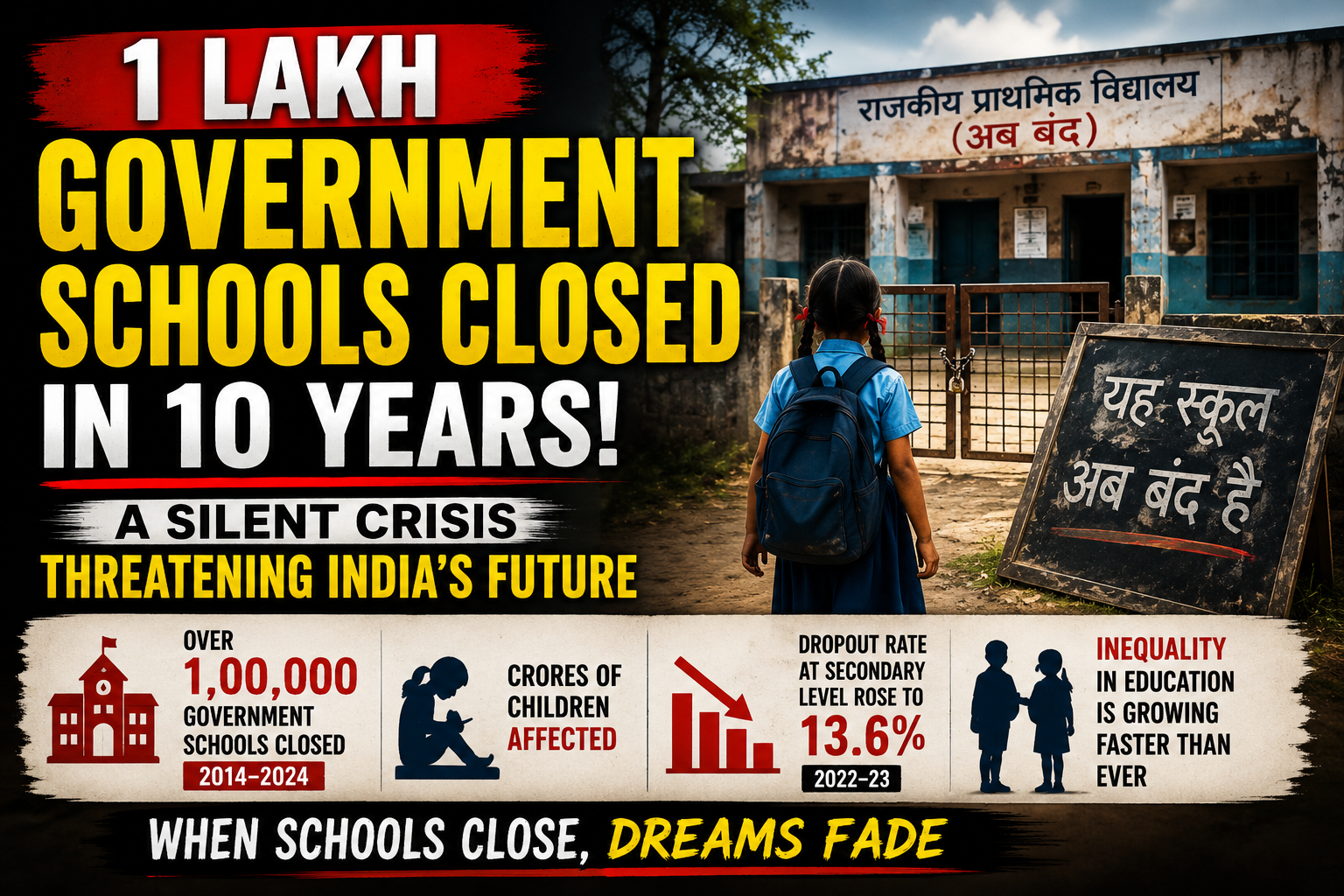
20 May | Credent TV, When schools shut down, only buildings do not disappear. A society’s future also begins to shrink.
The debate around Government School Closures in India is no longer just about administrative reforms or education budgets. It has now become a national conversation about equality, opportunity, democracy, and the future of millions of children.
Over the last decade, India has witnessed the closure and merger of nearly one lakh government schools. Official data from various education reports, including policy discussions linked to the National Institution for Transforming India (NITI Aayog), indicate a significant decline in enrollment in government schools between 2014 and 2024. At the same time, private schools have rapidly expanded across both urban and rural India.
At first glance, policymakers describe this transformation as “school consolidation,” a strategy aimed at improving efficiency, infrastructure, and resource utilization. However, beyond official terminology lies a deeply human story — a story of children walking farther to school, girls dropping out because of safety concerns, and poor families slowly losing access to affordable education.
The issue of Government School Closures in India is therefore not just about numbers. It is about what happens to the children left behind.
Understanding Government School Closures in India
Government School Closures in India have become one of the most debated education issues in recent years.
According to multiple education surveys and policy analyses, thousands of government schools across states have either been shut down, merged with nearby schools, or converted into larger institutional clusters.
States often justify these closures by pointing to low student enrollment, teacher shortages, and infrastructure duplication.
The argument presented by policymakers is simple:
- Small schools are difficult to maintain.
- Combining schools can improve teaching quality.
- Bigger schools can offer better facilities.
- Administrative costs can be reduced.
On paper, these points appear logical. But education is not merely about infrastructure management. It is about accessibility, trust, social inclusion, and continuity. That is where the real crisis begins.
Why Are Government Schools Being Closed?
The primary reasons behind Government School Closures in India include declining enrollment and the migration of students toward private institutions. Several reports suggest that many parents increasingly prefer private schools because of perceptions surrounding English-medium education, discipline, and better academic outcomes. At the same time, urbanization and migration patterns have altered rural demographics. As populations shift, smaller village schools often end up with very few students. Governments then introduce school consolidation policies. Under these policies:
- Two or more schools are merged.
- Students are shifted to larger campuses.
- Teaching resources are centralized.
- Infrastructure spending is concentrated.
However, while consolidation may improve facilities in certain regions, it also creates serious logistical and social challenges. For many rural children, the nearest school suddenly becomes several kilometers away. This distance becomes a barrier — especially for girls, disabled students, and economically weaker families.
The Rural Reality Behind the Numbers
The biggest impact of Government School Closures in India is visible in rural and semi-rural communities. In many villages, the government school is not just a place of learning. It is a social institution. It is where:
- children from poor families study,
- first-generation learners gain confidence,
- girls receive their first exposure to independence,
- and marginalized communities participate in mainstream society.
When a local primary school closes, the consequences are immediate. Children who once walked five minutes to school may now need to travel several kilometers. For middle-class families, this may seem manageable. For daily wage laborers, agricultural workers, and economically vulnerable households, it can become impossible. Many parents cannot afford transportation. Some cannot accompany younger children. Others fear for the safety of adolescent girls. As a result, attendance drops. Eventually, many children quietly disappear from the education system. This silent educational exclusion rarely makes headlines. Yet it is one of the most serious consequences of Government School Closures in India.
Impact on Girls and Marginalized Communities
One of the most concerning aspects of Government School Closures in India is their disproportionate impact on girls. In rural India, distance remains one of the biggest barriers to female education. When schools move farther away:
- parents become hesitant,
- dropout risks increase,
- early marriage rates may rise,
- and educational continuity suffers.
For Dalit, tribal, and economically weaker communities, government schools have historically served as gateways to upward mobility. These schools represented equality. Inside a classroom, children from different castes and economic backgrounds shared the same space. That democratic spirit is difficult to quantify in policy reports. But it remains one of the most powerful foundations of Indian society. When Government School Closures in India reduce educational accessibility for marginalized communities, social inequality deepens. This is not just an education issue. It is a social justice issue.
Rising Dropout Rates in Secondary Education
Another alarming trend linked to Government School Closures in India is the increase in dropout rates at the secondary level. Experts argue that while enrollment at primary levels may remain relatively stable in some states, retention becomes a major challenge after Class 8. The transition to secondary education often involves:
- longer travel distances,
- higher educational expenses,
- social pressures,
- and lack of infrastructure.
When students leave school during Classes 9 and 10, the consequences are long-term. These years are critical. Dropping out at this stage often leads to:
- child labor,
- informal employment,
- early marriage,
- reduced earning potential,
- and generational poverty.
Government School Closures in India therefore cannot be viewed in isolation. They are interconnected with employment, gender equality, health, and social development.
Growth of Private Schools and Educational Inequality
As government schools decline, private schools continue expanding rapidly. This shift reveals a deeper transformation in Indian society. Families with financial resources increasingly purchase education through private institutions. Meanwhile, economically weaker communities remain dependent on public education. This creates a dangerous divide. On one side:
- students access English-medium education,
- digital classrooms,
- advanced infrastructure,
- and private coaching ecosystems.
On the other side:
- rural children struggle with basic accessibility,
- government infrastructure shortages,
- teacher vacancies,
- and shrinking institutional support.
Government School Closures in India risk turning education from a constitutional right into a market-driven privilege. This possibility worries educators, activists, and policy experts alike.
Is School Consolidation Really Working?
Supporters of school consolidation argue that larger schools can provide:
- better laboratories,
- trained teachers,
- stronger management,
- improved student performance,
- and better infrastructure.
In some urban or semi-urban areas, this model has shown positive results. However, critics argue that India’s vast social and geographical diversity makes a one-size-fits-all approach risky. A consolidation policy that works in one district may fail completely in remote rural regions. Education researchers stress that accessibility matters as much as quality. A world-class school located too far away may still remain inaccessible to poor families. This is the central contradiction in Government School Closures in India. Efficiency may improve on paper. But educational participation may decline in reality.
Expert Concerns Over India’s Education Future
Education experts warn that reducing the number of public schools could weaken India’s social foundation over time. Public education has historically played a major role in:
- nation-building,
- literacy expansion,
- women empowerment,
- caste mobility,
- and democratic participation.
If public education weakens significantly, the consequences may extend far beyond classrooms.
Experts fear:
- widening inequality,
- shrinking social mobility,
- deeper rural-urban divides,
- and increasing educational commercialization.
The debate surrounding Government School Closures in India therefore reflects a larger philosophical question:
Should education remain a universal public right, or gradually become a service shaped by market economics?
This question will define India’s future.
What Education Activists and Researchers Say
Several education activists believe that closures are often implemented without fully understanding local realities. They argue that instead of shutting schools, governments should focus on:
- improving teacher recruitment,
- strengthening infrastructure,
- modernizing curriculum,
- increasing digital access,
- and building community participation.
Researchers also point out that many parents leave government schools not because public education is inherently weak, but because systemic neglect reduces confidence over time. When buildings deteriorate, teacher vacancies remain unfilled, and classrooms lack resources, parents naturally seek alternatives. Therefore, critics say Government School Closures in India may sometimes address symptoms rather than causes.
Possible Solutions to the Crisis
The crisis surrounding Government School Closures in India is complex. But experts suggest several possible solutions:
1. Strengthen Rural School Infrastructure
Instead of closures, governments can modernize existing schools.
2. Improve Teacher Availability
Teacher shortages remain a major issue in rural education.
3. Expand Digital Learning Access
Technology can help bridge educational gaps if implemented fairly.
4. Focus on Girls’ Safety
Transportation and safety support are essential for female students.
5. Community Participation
Local communities should be involved in education planning.
6. Better Public Investment
Public education requires sustained financial commitment.
Why Public Education Still Matters
Government School Closures in India force the country to confront a fundamental truth. A nation’s future is shaped more in classrooms than in political speeches. Government schools have historically given millions of Indians their first opportunity to dream beyond poverty. For countless families:
- the government school teacher was the first mentor,
- the classroom was the first equal space,
- and education was the first ladder toward dignity.
Public education is not simply a welfare program. It is the backbone of democracy. If access to quality education becomes dependent only on purchasing power, social inequality will deepen further. That is why the conversation around Government School Closures in India matters so deeply.
The closure of nearly one lakh government schools over the past decade is not merely an administrative development. It is a warning sign. It reflects changing priorities, growing inequality, and a widening gap between policy design and ground realities. Government School Closures in India are not just about disappearing buildings. They are about disappearing opportunities. Every school that shuts down may represent:
- a child’s unfinished dream,
- a family’s fading hope,
- and a society moving further away from equality.
India’s future cannot be built only through economic growth statistics. It must also be built through classrooms that remain open, accessible, inclusive, and alive with possibility. Because when schools disappear, nations lose more than institutions.They risk losing generations.

Written By
Vinod Verma Ralawata
Lecturer, English Literature
Biography
Dr. Preetha Katyal – A Transformational Force in Holistic Healing, Spiritual Empowerment & Human Consciousness

14 May, Credent TV | In a world increasingly overwhelmed by stress, emotional imbalance, uncertainty, and materialistic distractions, there are a few rare souls who dedicate their lives to healing humanity from within. One such inspiring name is Dr. Preetha Katyal – a renowned holistic healer, spiritual mentor, numerologist, tarot expert, Reiki Grandmaster, motivational speaker, and life management therapist whose work has touched countless lives across India.
Guided by the belief that “You get what you choose, so choose what you deserve,” Dr. Preetha Katyal’s journey is not just a professional success story — it is a deeply spiritual mission devoted to awakening inner strength, self-realization, and emotional healing in people from all walks of life.
A Spiritual Journey Rooted in Faith & Higher Consciousness
From a very young age, Dr. Preetha Katyal was deeply influenced by spirituality and the power of faith. Inspired greatly by her father, Mr. G. Chandra Shekhar Marar, she learned the importance of patience, positivity, and unwavering belief even during life’s most difficult phases.
Her spiritual awakening strengthened further after witnessing miraculous moments in her childhood that transformed her understanding of life, healing, and divine energy. While others lost hope during difficult circumstances, her family’s faith in the supreme power remained unshaken — a value that later became the foundation of her own healing philosophy.
Today, Dr. Preetha Katyal believes that every soul carries a divine purpose and that true transformation begins when individuals connect with their higher self.
Founder of “Divine Manifestations”
Driven by her vision to heal people emotionally, mentally, spiritually, and physically, Dr. Preetha Katyal founded Divine Manifestations, an Astro Research Centre dedicated to holistic sciences, meditation, tarot guidance, Reiki healing, spiritual counseling, manifestation techniques, and emotional wellness.
The center has become a guiding light for individuals seeking peace, clarity, healing, and personal transformation. Through her work, Dr. Katyal has helped people overcome emotional trauma, stress, karmic baggage, confusion, anxiety, and spiritual blockages.

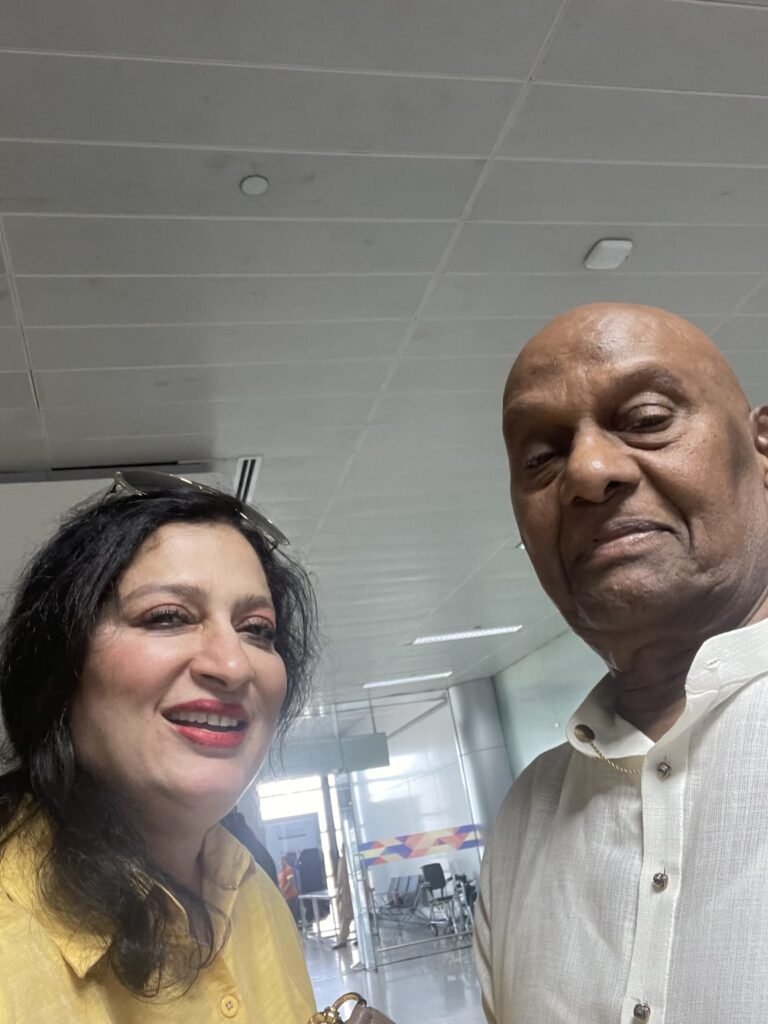
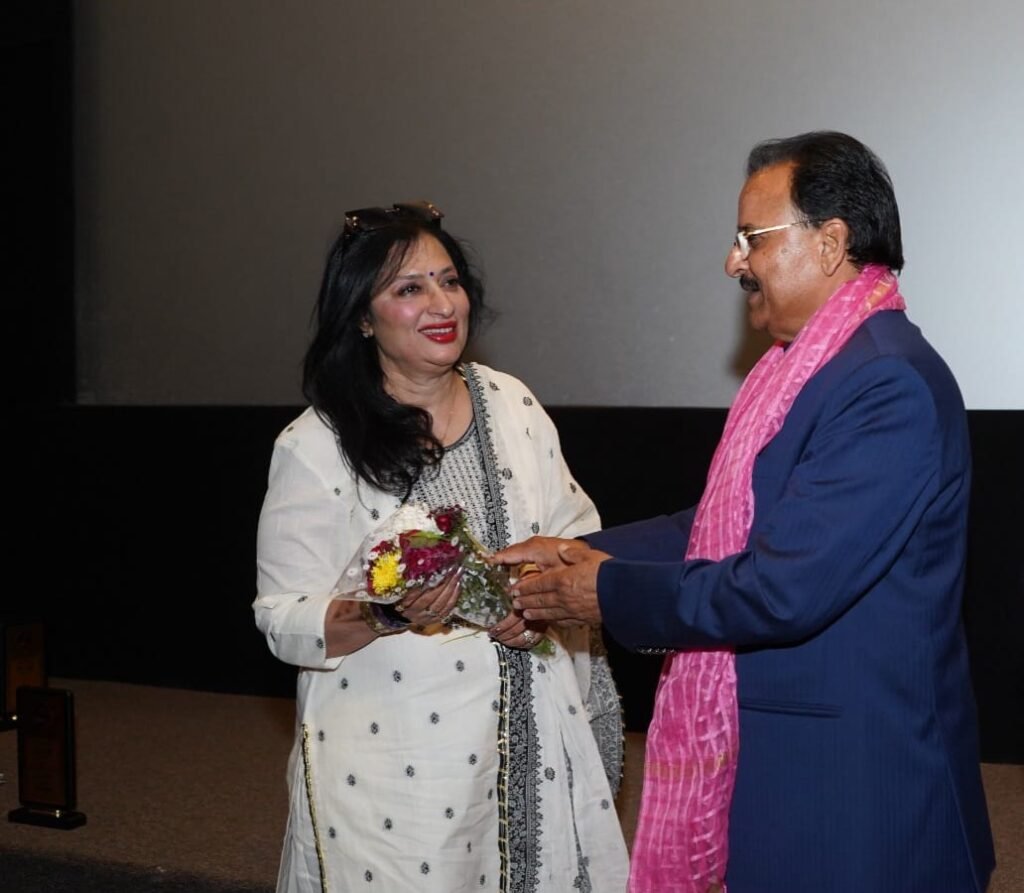

Expertise in Holistic Sciences & Healing Modalities
Dr. Preetha Katyal’s vast expertise spans multiple spiritual and healing disciplines, including:
- Numerology
- Tarot Reading & Tarot Teaching
- Reiki Healing & Reiki Grandmaster Practices
- Past Life Regression
- Transcendental Healing Practices
- Life Management Therapy
- Emotional & Mental Wellness Counseling
- Meditation & Mindfulness Guidance
- Vaastu Consultation
- Motivational Speaking & Spiritual Coaching
Known for her intuitive abilities and compassionate guidance, she has helped many individuals rediscover emotional balance, confidence, positivity, and inner peace.
Author of “Meditation – The Path to Self-Realization”
Adding another remarkable achievement to her journey, Dr. Preetha Katyal authored the book “Meditation – The Path to Self-Realization.”
The book shares more than 100 ways to meditate and is designed to help readers transform their lives through mindfulness, spiritual awareness, and emotional healing. Written in a simple and accessible style, the book has inspired many readers to reconnect with themselves and adopt a more peaceful, balanced lifestyle.
Empowering Society Through Voice & Wisdom
Apart from healing sessions and counseling, Dr. Preetha Katyal is also widely appreciated as a motivational speaker whose powerful voice inspires people to unlock their inner strength and spiritual potential.
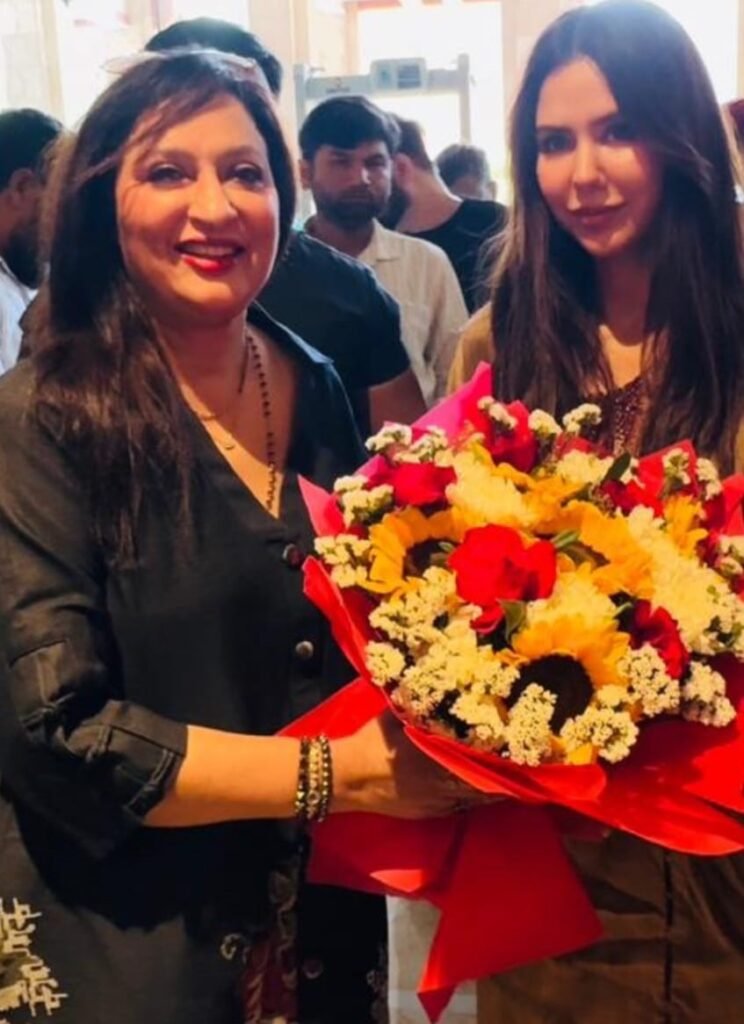
She frequently speaks on:
- Personality Development
- Self-Growth
- Emotional Healing
- Spiritual Awareness
- Positive Thinking
- Manifestation & Conscious Living
Her talks encourage individuals to rise above fear, negativity, and limitations while embracing self-belief and purpose-driven living.
Recognition, Awards & Achievements
Dr. Preetha Katyal’s dedication toward holistic sciences and human healing has earned her immense recognition and appreciation.
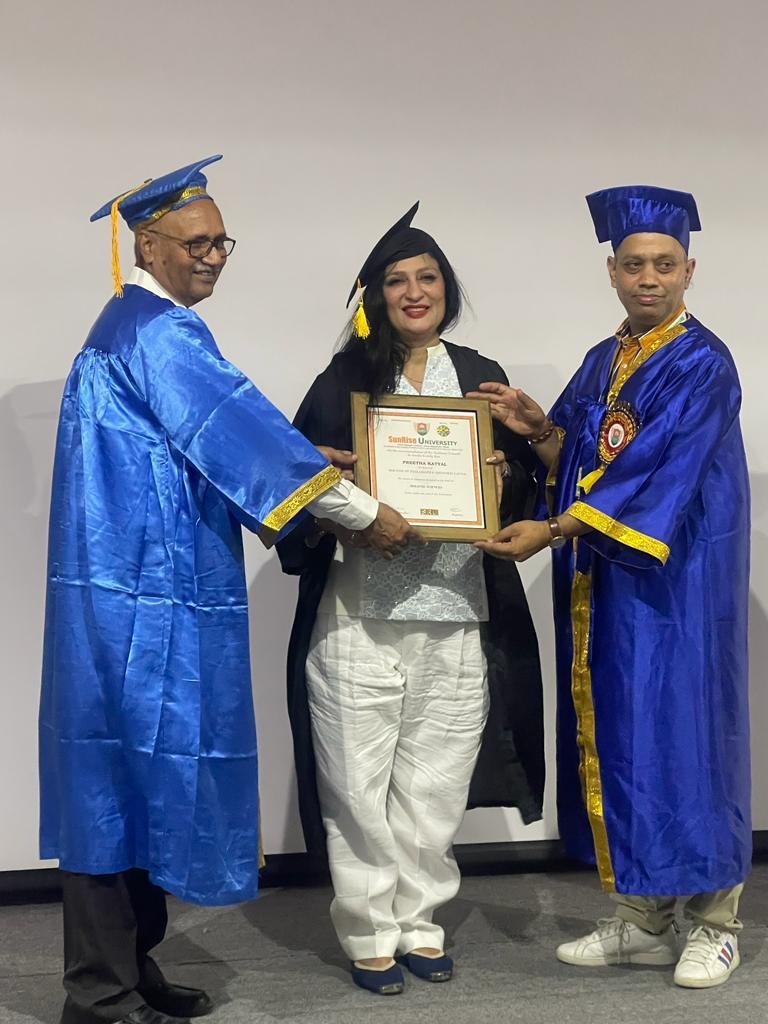
Some of her notable achievements include:
- Honoured by Radio City Sheroes for her brilliance in Holistic Sciences (2022–2023)
- Presented a Certificate of Merit by the Ministry of Education
- Invited as “Guest of Honour” by Shri Ram College of Commerce for a conference on Self-Development and Growth
- Successfully completed an Honorary Doctorate in Holistic Sciences from Sunrise University, Alwar, Rajasthan
- Earned recognition as a Reiki Grandmaster
- Extensive educational background in communication, media utilization, arts, radio, television, and research studies
Digital Spiritual Empowerment
Understanding the growing influence of digital platforms, Dr. Preetha Katyal has also stepped into the digital space to spread spiritual awareness and positivity among the younger generation.
Through her online content, she regularly shares:
- Manifestation Techniques
- Healing Guidance
- Spiritual Wisdom
- Ways to Attract Abundance & Positivity
- Meditation Practices
- Emotional Wellness Tips
Her mission is to make holistic sciences more accessible and meaningful for modern society.
A Beacon of Hope for Humanity
Those who have interacted with Dr. Preetha Katyal often describe her as a compassionate guide, healer, and light worker who brings positivity wherever she goes. Her life’s mission continues to revolve around helping people discover hope during darkness, strength during emotional struggles, and peace amidst chaos.
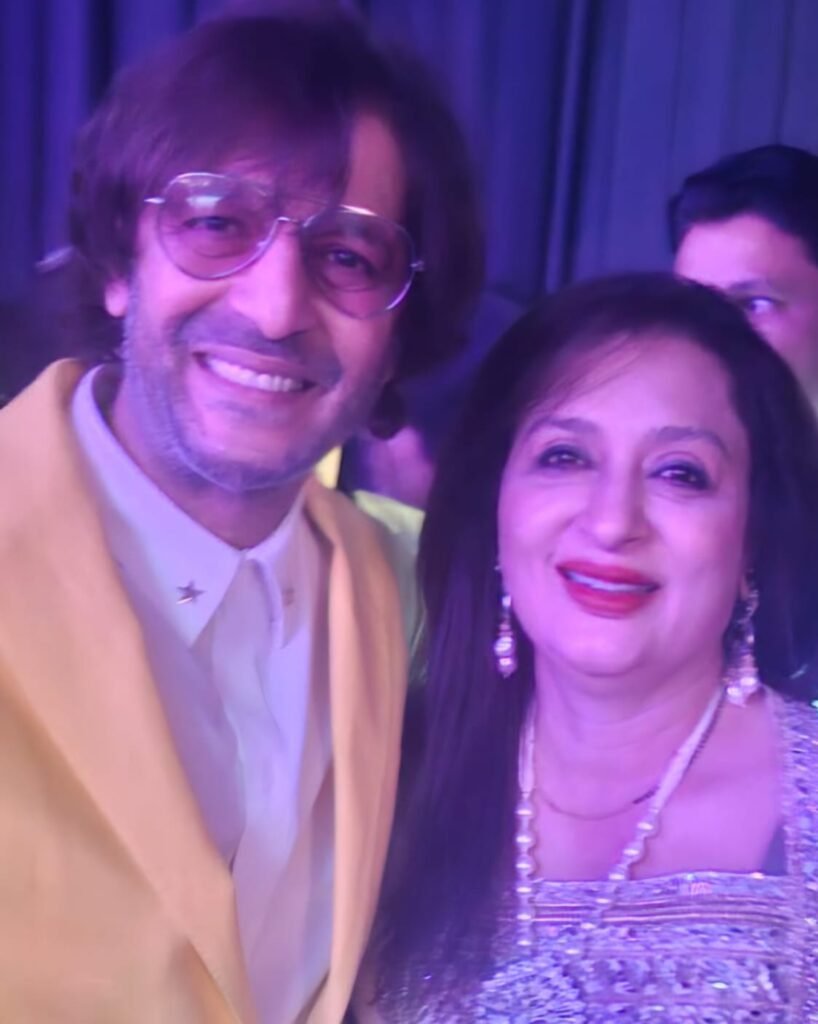
At a time when the world needs emotional healing and spiritual awareness more than ever before, personalities like Dr. Preetha Katyal stand as a reminder that faith, healing, self-awareness, and compassion still have the power to transform lives.
As she beautifully says:
“Have faith in God and God has faith in you.”

Subodh Public School Rambagh Holds Financial Literacy Session for Jaipur Teachers

SRN International School Maths Café, SRN International School Jagatpura

Dr Ambedkar Memorial Welfare Society Rajasthan Forms Permanent Council

Subodh Public School Rambagh Honours Sanitation Staff for Dedicated Service

Trump-Linked Powerus Plans Drone Production Partnership With Pakistan Army

October 2026 Rules: LPG Subsidy, SBI ATM and UPI Changes Explained

Priyansh Arya: The Six-Hitting Sensation of IPL 2025

Top 10 Most Searched Topics on YouTube: What’s Trending Now?

Preity Zinta Spotted with New Punjab Kings Hero Priyansh Arya in Viral Clip

Nag Panchami 2025: 7 Key Rituals and Puja Time to Eliminate Kaal Sarpa Dosha

Balen Shah, Kathmandu’s independent mayor, from rapper to political leader. Explore his rise amidst Nepal’s youth-led revolution-

Radhika Merchant: A New Chapter as Radhika Ambani

best career opportunities | Jaipur Career Fair | Credent TV | Dainik Navjyoti D2S03

what is reiki healing | Mental Health | Shiksha Sarokar, शिक्षा सरोकार, Sunil Narnaulia

DAV Centenary Public School, Vaishali Nagar, Jaipur hosts Successful ‘Mind Wars Quiz: A Battle of Wits and Knowledge’

 Election1 month ago
Rajasthan Municipal Election Results 2026 Live Updates
- Education1 month ago
OPT Fee Proposal Clears White House Review; $100,000 Figure Remains Unconfirmed
- Breaking News2 months ago
Savitribai Phule Award 2026 Honours 54 Women in Jaipur
- Breaking News1 month ago
India Bank Strike Today Over Five-Day Week, Branch Services Face Three-Day Disruption
- Accident1 month ago
Delhi High Court Orders MCD PG Audit After Satya Niketan Collapse
- Festival1 month ago
India Retail Inflation August 2026 Rises to 4.82% as Food Prices Climb
- International1 month ago
Houthi Drone Near Mecca: Saudi Arabia Intercepts UAV After Emergency Alert
- Breaking News1 month ago
Saudi Arabia Shuts East-West Oil Pipeline After Drone Attacks From Iraq