
India
PM Modi Explores Gir on World Wildlife Day: Celebrating Asiatic Lion Conservation


Contents
Introduction to World Wildlife Day
Gir National Park, located in the western Indian state of Gujarat, serves as a crucial sanctuary for the Asiatic lion, Panthera leo persica. World Wildlife Day is a global event celebrated on March 3rd each year, established to raise awareness about the importance of conserving wildlife and its habitat. This day serves as a reminder of the multitude of species that are threatened by extinction due to habitat loss, poaching, and climate change. Recognizing the intrinsic value of wildlife and the necessity of preserving biodiversity is crucial for maintaining ecosystem balance and promoting sustainable development.
The significance of World Wildlife Day lies in its ability to unite communities around the world in their efforts to protect endangered species. It provides an opportunity for governmental and non-governmental organizations, communities, and individuals to engage in various conservation activities, educational programs, and advocacy campaigns. Many countries take this day to organize events such as wildlife seminars, nature walks, and social media campaigns, all aimed at fostering a deeper understanding of wildlife conservation.
The theme of World Wildlife Day varies each year, focusing on different aspects of wildlife conservation. These themes highlight specific species or conservation challenges, encouraging nations to collaborate and strategize effective measures for safeguarding their natural heritage. Educational institutions often incorporate World Wildlife Day into their curricula, fostering awareness and appreciation for wildlife among the younger generation.
Through these global celebrations, World Wildlife Day acts as a catalyst for action, promoting efforts to protect endangered species and their habitats. It encourages individuals to reflect on their relationship with nature, advocating for responsible behavior towards the environment. As countries worldwide acknowledge this day, it emphasizes the need for sustained wildlife conservation efforts, making it pertinent to address these challenges on a global scale.
Overview of Gir National Park
Gir National Park, located in the western Indian state of Gujarat, serves as a crucial sanctuary for the Asiatic lion, Panthera leo persica. Covering an area of approximately 1,412 square kilometers, the park is characterized by a diverse landscape that includes dry deciduous forests, scrubland, and grasslands. The geographical features of Gir contribute to its unique ecosystem, which accommodates a variety of flora and fauna, making it one of India’s most significant wildlife reserves.

Established as a protected area in 1965, Gir has since become the last bastion of the Asiatic lion, whose population was once on the brink of extinction. The park boasts a small yet vital population of these majestic felines, with numbers gradually increasing due to dedicated conservation efforts. Beyond the lions, Gir is home to around 300 species of birds, 38 species of mammals, and a rich diversity of reptiles. This biodiversity highlights the ecological importance of Gir, attracting wildlife enthusiasts and researchers alike.
The climate in Gir is predominantly dry, with a distinct monsoon season from June to September. This seasonal variation affects the vegetation, supporting species such as teak, banyan, and various grasses. The park’s habitat not only sustains the Asiatic lion but also encompasses other critical species, including leopards, chital, sambar, and nilgai, which contribute to its ecological balance. Gir’s unique environment serves as a testament to the importance of wildlife conservation, emphasizing the need for ongoing protection efforts to ensure the survival of the Asiatic lion and the myriad species that inhabit this exceptional national park. Through prudent management and community involvement, Gir National Park continues to thrive as an essential sanctuary for wildlife preservation.
Asiatic Lions: A Brief History
The Asiatic lion (Panthera leo persica) once roamed vast areas across the Middle East and into India, but today, their population is largely confined to the Gir Forest National Park in Gujarat, India. Historically, the range of these magnificent creatures extended from the Indian subcontinent to regions including Turkey and Iran. However, by the early 20th century, hunting and habitat loss had contributed to a significant decline in their numbers. The Asiatic lion population dwindled to about 20 individuals by the end of the 1800s, primarily due to excessive hunting by British colonial officers and local rulers, along with human expansion into their natural habitats.
Conservation efforts for the Asiatic lion gained momentum during the early 20th century when the Nawab of Junagadh declared the Gir Forest a protected area. This was a crucial turning point, initiating a series of conservation strategies aimed at protecting the remaining population. In the subsequent decades, various organizations and wildlife agencies focused on habitat preservation and implementing protection laws to mitigate human-wildlife conflicts. These concerted efforts have led to a remarkable recovery, with the population of Asiatic lions increasing to over 600 individuals as of recent estimates. This recovery highlights the importance of targeted conservation measures and community involvement in wildlife preservation.
In addition to their ecological significance, Asiatic lions hold cultural importance in Indian heritage. They are emblematic of strength and courage, featured in ancient folklore and Indian mythology, and are often associated with various dynasties throughout history. Today, Asiatic lions symbolize a successful conservation story and continue to garner public interest and support, particularly through initiatives like World Wildlife Day. This day emphasizes the critical importance of protecting endangered species and their habitats, showcasing the interconnectedness of wildlife and human cultures.
PM Modi’s Visit to Gir
On World Wildlife Day, Prime Minister Narendra Modi undertook a significant visit to Gir National Park, primarily recognized for its crucial role in the conservation of the Asiatic lion. This visit aimed to highlight India’s commitment to wildlife conservation and to draw global attention towards the preservation of endangered species. With the Asiatic lion population witnessing a remarkable recovery, Modi’s engagement sought to promote further efforts in wildlife protection and habitat preservation.
During his time at Gir, Prime Minister Modi participated in various activities showcasing the rich biodiversity of the region. He engaged with local conservationists, authorities, and community members to understand the challenges and successes experienced in the conservation of the Asiatic lion. His presence served as a powerful reminder of the importance of collaborative efforts between governmental bodies, local communities, and wildlife organizations in achieving conservation goals. By acknowledging the successful breeding programs and habitat restoration initiatives at Gir, the Prime Minister emphasized the need for sustained efforts and funding to maintain the momentum of lion conservation.
Moreover, Modi delivered compelling messages on the value of wildlife to not only ecological balance but also to cultural heritage. He urged citizens to foster a deep respect for nature, advocating for community involvement in conservation efforts. Such high-profile visits from leaders like PM Modi significantly amplify the message of wildlife conservation, inspiring individuals and organizations to contribute to similar initiatives. The international spotlight shone on Gir during this visit not only raised awareness about the Asiatic lion but also underscored the importance of preserving biodiversity as a whole. The visit marks a vital step in reinforcing India’s leadership in wildlife conservation efforts globally.
Conservation Efforts in Lion Protection
The conservation of Asiatic lions has become a pivotal focal point in India, facilitating a remarkable recovery of this majestic species primarily confined to the Gir Forest National Park in Gujarat. Various initiatives have been undertaken to safeguard their population, emphasizing the importance of habitat preservation and community involvement. The strategies employed include habitat management, anti-poaching measures, and the establishment of a cohesive framework integrating local communities with conservation efforts.
Habitat management plays a crucial role in ensuring that the Gir ecosystem remains conducive for the Asiatic lions. This involves the restoration and protection of forest areas and water sources, while also mitigating human-wildlife conflict through the establishment of buffer zones. These zones act as a protective barrier, decreasing adverse interactions between lions and local farmers. Furthermore, the government has implemented habitat connectivity projects to facilitate the movement of lions between fragmented habitats, essential for genetic diversity and population stability.
Anti-poaching vigilance has been significantly enhanced, with dedicated forest rangers and surveillance technology deployed across key areas of the park. Frequent patrols not only deter illegal activities but also monitor the lion population, enabling timely interventions when needed. Local government agencies and wildlife organizations work collaboratively, providing resources and training to ensure that the protection measures are effective and sustainable.
Community involvement is another cornerstone of lion conservation. Educational programs and awareness campaigns have been introduced, highlighting the value of Asiatic lions to the ecosystem and local culture. By fostering a sense of ownership and responsibility among local residents, these initiatives aim to cultivate favorable attitudes towards wildlife conservation. The empowerment of local communities through a sharing of benefits derived from eco-tourism further strengthens their engagement, promoting a harmonious coexistence with the Asiatic lions.
Challenges Faced in Asiatic Lion Conservation
The conservation of Asiatic lions, primarily found in the Gir Forest National Park, is fraught with challenges that jeopardize their survival and the health of the ecosystems they inhabit. One of the foremost issues is habitat loss, driven by rapid urbanization and agricultural expansion. As human populations move closer to their natural habitat, lions are increasingly losing their territory, which not only reduces their available living space but also fragments populations, making it difficult for them to breed and thrive.
In addition to habitat loss, human-wildlife conflict poses a significant threat to Asiatic lions. As these majestic creatures venture into agricultural lands in search of prey, they often come into conflict with local farmers. This can lead to retaliatory killings, where farmers may hunt lions to protect their livelihoods. Effective management strategies are essential to mitigate these conflicts and foster coexistence between the local communities and the lion population.
Poaching remains another critical threat in the conservation of Asiatic lions. Even though legal protections exist, illegal hunting continues to pose risks, with poachers targeting not only lions but also their primary prey species. This depletion of prey affects the lions’ natural hunting patterns and can lead to starvation and declining health within the population.
Climate change further complicates the scenario by altering habitats and influencing the availability of water and food sources. Increased temperatures and changing rainfall patterns can lead to droughts, diminishing resources that are vital for both lions and their prey. These challenges collectively threaten not only the population of Asiatic lions but also the ecological balance of their habitat.
Success Stories in Lion Conservation
The conservation efforts in Gir National Park have led to significant success stories, particularly regarding the survival and growth of the Asiatic lion population. Since the establishment of conservation initiatives, the lion population has witnessed a remarkable increase. In 1975, there were only about 12 lions recorded in the park, but recent estimates suggest that the number has surged to over 600. This growth can be attributed to various measures implemented by the forest department and other conservation organizations aimed at protecting the lions’ natural habitat and ensuring their safety from poaching.
Community engagement has played a pivotal role in these success stories. Local communities around Gir have become increasingly involved in conservation efforts, understanding the value of protecting these majestic creatures. Programs have been initiated to educate residents about the ecological significance of Asiatic lions and the benefits of biodiversity. As a result, many villagers have adopted practices that promote coexistence, such as livestock management techniques that minimize conflict between lions and farmers. Local stakeholders have also benefited from eco-tourism, which has emerged as a sustainable income source, further incentivizing the protection of wildlife.
Furthermore, traditional practices in the region have evolved to support lion conservation as communities recognize the importance of preserving their natural heritage. By shifting towards more sustainable agricultural practices and participating in wildlife protection initiatives, local residents contribute to the long-term survival of both the lions and their livelihoods. This cooperative approach has not only enhanced lion populations but also fostered a deeper connection between the local people and their environment. The Gir ecosystem’s vitality relies on this partnership, demonstrating that effective conservation is possible through the unification of ecological and community interests.
Global Recognition of Conservation Efforts
Prime Minister Narendra Modi’s visit to Gir National Park on World Wildlife Day represents a significant acknowledgment of the conservation initiatives undertaken for the Asiatic lion, a species that has seen a remarkable revival in recent years. The dedicated efforts in Gir, which is often regarded as the last refuge of the Asiatic lion, have not only garnered national attention but have also received global recognition. This recognition underscores the importance of international collaboration in wildlife conservation and the need for concerted efforts to protect endangered species.
Also read : The Transformation of Prayagraj Mela Grounds Post-Maha Kumbh 2025
The achievements of Gir’s conservation efforts have been highlighted in various international forums, drawing attention to India’s commitment to biodiversity preservation. The successful increase in the lion population from just a few dozen to over 600 individuals is a noteworthy milestone that resonates with conservationists worldwide. Such accomplishments illustrate the effectiveness of well-structured wildlife management policies and community involvement in conservation projects. Global recognition not only bolsters the moral imperative to protect biodiversity but also encourages funding and research opportunities from international organizations and governments.
The implications of this international support for wildlife conservation are far-reaching. Engaging with a global audience can aid in uniting diverse conservation strategies and inspire countries facing similar challenges. Additionally, it attracts tourists and eco-enthusiasts, which can serve as a financial boon for local economies while promoting awareness about the importance of preserving wildlife. The increased attention on Gir, thanks to PM Modi’s visit, can catalyze further efforts to protect the Asiatic lion and its habitat, showcasing a successful model of conservation that other regions may adopt. As the global community recognizes the significance of these initiatives, it sets a precedent for future conservation endeavors, fostering an environment where wildlife thrives alongside human development.
Summary and Future Directions
PM Modi’s visit to Gir National Park on World Wildlife Day serves as a crucial reminder of the importance of wildlife conservation, particularly the preservation of the Asiatic lion, an emblematic species of India. His presence emphasizes the government’s commitment to safeguarding the natural heritage and habitats that these majestic creatures rely on for survival. The ongoing conservation efforts in Gir have seen a resurgence in the Asiatic lion population, a remarkable success that highlights the effectiveness of dedicated initiatives aimed at protecting biodiversity.
The significance of PM Modi’s visit extends beyond mere symbolism; it underscores a unified approach towards conservation that combines government action, scientific research, and community involvement. The efforts witnessed in Gir are not just isolated success stories but are part of a larger framework aimed at addressing ecological challenges across the nation. Habitat restoration, anti-poaching measures, and community education programs are integral components of this multifaceted conservation strategy.
Looking towards the future, the challenge remains to create sustainable corridors that facilitate the safe movement of lion populations and ensure genetic diversity. Additionally, harnessing the support of local communities is essential to foster a sense of ownership over these conservation efforts. By promoting eco-tourism and sustainable livelihood opportunities, communities can become active participants in safeguarding wildlife while benefiting economically. Continuous research, adaptive management practices, and cooperation between stakeholders, including local populations, wildlife NGOs, and government entities, will be pivotal in shaping a future where Asiatic lions and their habitats thrive.
As we celebrate the strides made in Asiatic lion conservation at Gir, there remains much work to be done. The concerted efforts of individuals and communities are vital in driving forward the mission to protect this iconic species and ensuring that future generations can experience the splendor of the Asiatic lion in its natural habitat.


Art
Social Media Dialogue or Controversy? The Growing Crisis of Communication in the Digital Age
Social Media Dialogue or Controversy is becoming one of the most debated issues of the digital age. Explore how social media is transforming communication, fueling outrage, weakening meaningful conversations, and reshaping public discourse.


Contents
4 June, Credent TV | Social Media Dialogue or Controversy has emerged as one of the defining questions of the digital era. What was once celebrated as a revolutionary platform for free expression and democratic participation is increasingly being criticized for fostering conflict, outrage, polarization, and endless digital battles.
Human civilization has always evolved through communication. From spoken words around ancient fires to printed newspapers and television broadcasts, every technological advancement promised to bring people closer together. Social media appeared to be the ultimate realization of that dream. It placed a publishing platform in every pocket and transformed ordinary citizens into content creators, commentators, and influencers.
Yet, while communication has become easier than ever, meaningful dialogue appears to be disappearing.
Today, millions of people begin their day not by asking what happened in the world, but by checking how the world reacted to what they posted. Likes, shares, reposts, comments, and reach have become new forms of social validation. In many ways, digital engagement has become as important to some people as traditional measures of success.
This raises an important question: Has social media strengthened dialogue, or has it simply amplified controversy?
Social Media: The Promise of Digital Democracy
When social media platforms first gained popularity, they were often described as tools of digital democracy. Anyone with internet access could express opinions, share experiences, challenge institutions, and participate in public discussions.
Platforms such as Facebook, X (formerly Twitter), Instagram, LinkedIn, and YouTube gave voice to individuals who previously lacked access to traditional media channels.
According to research published by the Pew Research Center and other digital communication studies, social media has expanded public participation in political discussions, social movements, and civic engagement.
Social Media Dialogue or Controversy – How Conversations Changed
The central concern behind Social Media Dialogue or Controversy lies in the transformation of public discussions.
Modern social platforms contain more words than ever before. Millions of posts are created every minute. Yet despite this abundance of communication, genuine dialogue often feels absent.
Many users no longer enter online discussions to learn or understand. Instead, they arrive prepared to defend positions, attack opposing views, or demonstrate loyalty to ideological groups.
A photograph of a cup of tea can trigger political arguments. A book recommendation can become an ideological battle. A poem can provoke accusations and outrage. In many cases, reactions depend less on what is being said and more on who is saying it. The speaker often matters more than the message.
The Rise of the Permanently Offended Citizen
One of the most fascinating developments of modern digital culture is the emergence of what sociologists increasingly describe as a culture of perpetual offense. A growing number of online users seem permanently prepared to be offended.
They may find reasons for outrage in advertisements, jokes, language choices, historical discussions, entertainment content, or even punctuation marks. This phenomenon creates an environment where emotional reaction frequently replaces thoughtful engagement.
Indian author and public intellectual Purushottam Agrawal explored similar themes in his thought-provoking novel Nakohus, which satirically examines the politics of hurt sentiments and public outrage.
The culture of constant offense has become a major contributor to the Social Media Dialogue or Controversy debate because it shifts focus away from understanding and toward emotional confrontation.
Why Social Media Rewards Conflict
To understand the current environment, one must examine the role of platform algorithms. Most social media companies depend on user engagement. Engagement means attention. Attention generates advertising revenue. Unfortunately, outrage often generates more attention than calm discussion.
Research from institutions including MIT and Oxford Internet Institute has shown that emotionally charged content tends to spread faster than balanced information. As a result:
- Anger travels quickly.
- Nuance travels slowly.
- Conflict attracts clicks.
- Moderation receives less visibility.
This creates an incentive structure where users are unconsciously rewarded for producing stronger reactions. The digital marketplace often values excitement over accuracy and confrontation over reflection.
The Economics of Outrage
The business model of attention-driven platforms contributes significantly to controversy. Posts that provoke strong emotions frequently receive:
- More comments
- More shares
- More visibility
- Greater reach
This creates a cycle where increasingly provocative content dominates public attention. In such an environment, thoughtful dialogue struggles to compete.
The Decline of Listening in the Digital Age
A healthy conversation requires two essential components:
- Speaking
- Listening
Modern digital culture has dramatically expanded opportunities for speaking. Listening, however, has become increasingly rare. Many users read content only long enough to formulate a response. Instead of engaging with ideas, they search for evidence that confirms existing beliefs.
This trend weakens the foundations of democratic discourse. Throughout history, intellectual traditions across cultures emphasized debate, reflection, and respectful disagreement.
Ancient philosophical schools, scholarly traditions, and public forums encouraged participants to challenge ideas while maintaining mutual respect. Today, online discussions often prioritize winning rather than understanding.
Social Media Dialogue or Controversy and Public Discourse
The impact extends beyond individual interactions. When public discourse becomes dominated by conflict, entire societies can suffer. Misinformation spreads more easily. Polarization intensifies. Trust declines. Communities become fragmented. Citizens begin viewing opponents not as people with different perspectives but as enemies.
This is where the question of Social Media Dialogue or Controversy becomes particularly important. The issue is no longer limited to online behavior. It affects democratic institutions, journalism, education, and social cohesion.
Freedom of Expression vs. Responsible Expression
Freedom of expression remains one of the most valuable achievements of modern society. People should have the right to express opinions, criticize authority, and participate in public debate. However, freedom and responsibility must coexist. The challenge facing contemporary society is not a lack of expression. The challenge is learning:
- How to speak.
- When to speak.
- Where to speak.
- And sometimes when not to speak.
Civilization depends not only on speech but also on restraint. Responsible communication strengthens public trust. Reckless communication weakens it.
Digital Etiquette Matters
Many critics dismiss digital etiquette as old-fashioned. Yet etiquette serves an important purpose. It creates conditions for peaceful coexistence. Online etiquette includes:
- Respectful disagreement
- Fact verification
- Avoiding personal attacks
- Listening before responding
- Distinguishing criticism from hostility
Without these principles, freedom can easily devolve into chaos.
What Algorithms Teach Society
Technology does not merely reflect human behavior. It also shapes it. When users repeatedly encounter content rewarded for outrage, they gradually adapt to those incentives. The result is a culture where:
- Patience seems weak.
- Nuance appears boring.
- Anger appears powerful.
- Reflection appears unnecessary.
This transformation may be one of the most significant social consequences of the digital age. Social media has accelerated communication. It has not necessarily improved understanding.
Can Meaningful Dialogue Return?
Despite growing concerns, there are reasons for optimism. Many educators, journalists, researchers, and civic organizations are actively promoting healthier digital habits. Media literacy programs are helping people evaluate information critically. Educational institutions increasingly emphasize critical thinking and responsible communication. Public awareness regarding misinformation is also improving. Meaningful dialogue can return if users consciously choose engagement over confrontation.
Simple practices can make a difference:
- Read before reacting.
- Verify before sharing.
- Understand before criticizing.
- Listen before responding.
The Way Forward
The future of social media depends largely on collective choices. Technology itself is not inherently harmful. The challenge lies in how it is used. Platforms can encourage healthier interactions. Governments can support digital literacy. Schools can teach critical thinking. Media organizations can prioritize accuracy over sensationalism. Most importantly, individuals can practice restraint and respect. The solution to digital conflict is not silence. The solution is better conversation.
Social Media Dialogue or Controversy represents one of the defining debates of our time. Social media has democratized communication and provided unprecedented opportunities for participation, creativity, and expression. Yet it has also amplified outrage, rewarded impulsive reactions, and weakened the art of listening.
The challenge facing society is not technological advancement itself but the cultivation of wisdom alongside innovation.
As communication technologies continue to evolve, the future of public discourse will depend on whether people choose noise or understanding, reaction or reflection, controversy or dialogue.
History may ultimately judge our era not by the sophistication of the machines we built, but by whether those machines helped us communicate more meaningfully with one another.

By DR DURGAPRASAD AGRAWAL
Distinguished Educationist & Author,
Jaipur, Rajasthan
Breaking News
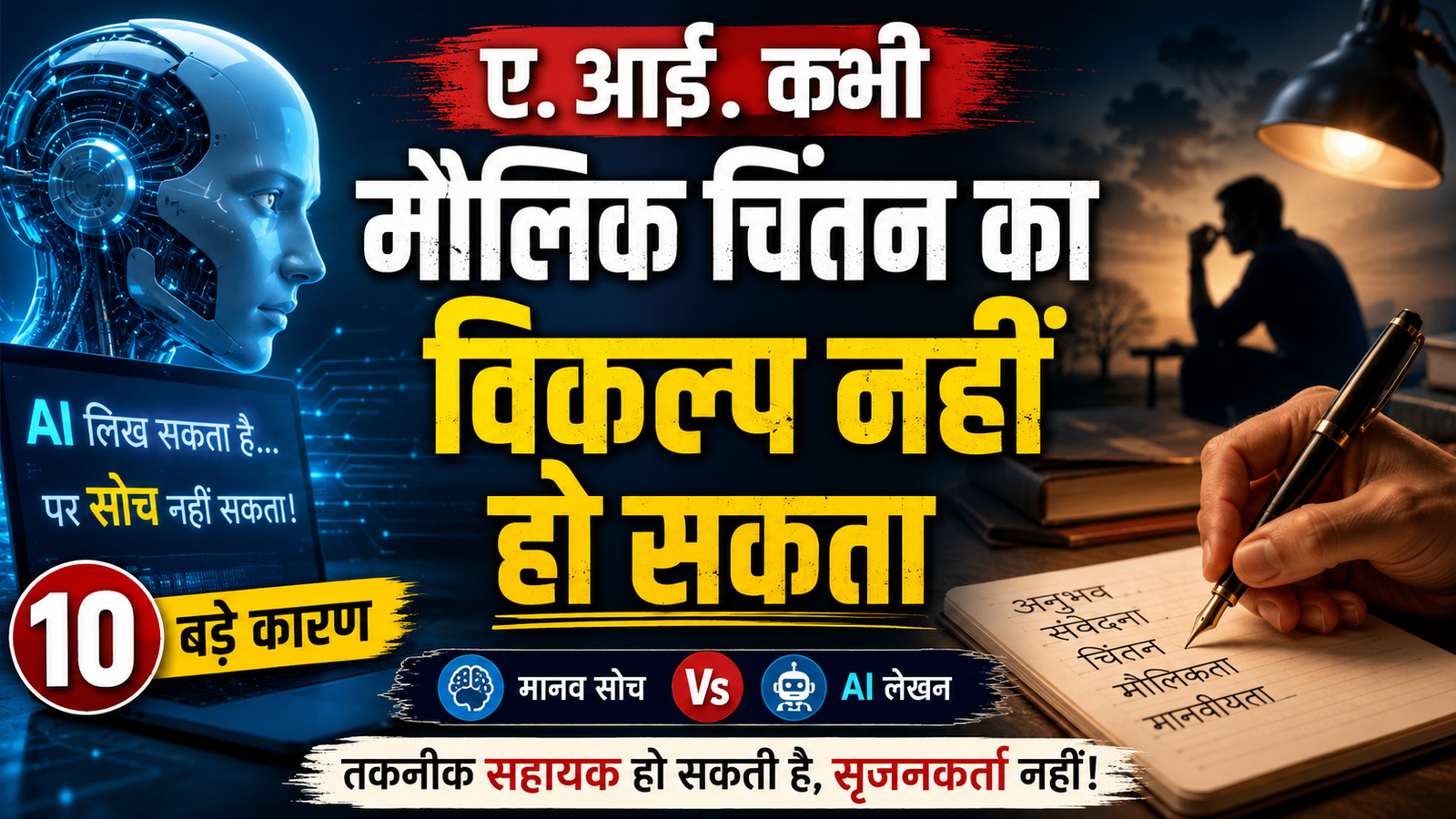
AI and Original Writing Crisis: 10 Powerful Reasons Why Artificial Intelligence Can Never Replace Human Creativity
AI and Original Writing remain at the center of a global debate as technology transforms content creation. Discover why artificial intelligence can assist writers but can never replace human creativity, emotions, independent thinking, and authentic storytelling.
Contents
3 June, Credent TV | In an era dominated by digital innovation, AI and Original Writing have become two of the most discussed topics in journalism, education, publishing, and creative industries. Artificial intelligence is now capable of generating articles, poems, speeches, marketing campaigns, and even fictional stories within seconds. While these technological advancements have undoubtedly transformed the writing landscape, a crucial question remains unanswered: Can AI truly replace original human thinking and creativity?
Veteran independent journalist Nafees Afridi believes the answer is clear. According to him, artificial intelligence may become a valuable writing assistant, but it can never become a substitute for authentic human thought, emotional depth, and lived experience.
As the world races toward an AI-driven future, the debate surrounding originality, creativity, and intellectual integrity has become more relevant than ever.
The Digital Revolution and the Rise of AI Writing
The digital age has democratized communication in unprecedented ways. Today, a smartphone and internet connection are often enough to reach millions of readers worldwide.
Blogs, websites, social media platforms, podcasts, and digital publications have eliminated many of the barriers that once restricted publishing opportunities. Every individual now has the potential to become a creator.
At the same time, artificial intelligence has entered the writing process. Advanced AI tools can summarize information, generate headlines, produce essays, draft speeches, and create social media content almost instantly.
Major technology companies continue investing billions in AI development, reflecting the growing significance of machine-generated content. According to reports from the official websites of organizations such as OpenAI and UNESCO, the integration of AI into education, communication, and content creation is expected to expand significantly in the coming years.
Yet this transformation has sparked concerns about the future of authentic expression.
Understanding AI and Original Writing
AI and Original Writing represent two fundamentally different approaches to content creation.
Artificial intelligence operates by analyzing vast amounts of existing data, identifying patterns, and predicting the most likely sequence of words. Its strength lies in processing information quickly and efficiently.
Original writing, however, emerges from a person’s experiences, emotions, memories, observations, struggles, and imagination.
A machine can imitate style.
A human creates meaning.
A machine can organize information.
A human interprets life.
This distinction forms the heart of the debate.
Why Original Writing Matters
Original writing is much more than arranging words on a page.
It reflects:
- Personal experiences
- Emotional intelligence
- Independent thinking
- Cultural understanding
- Ethical judgment
- Creative imagination
Great literature, impactful journalism, and transformative speeches have historically emerged from individuals who challenged conventional thinking.
The works of George Orwell, Rabindranath Tagore, and Premchand continue to resonate because they were born from lived realities rather than algorithmic prediction. Authentic writing has the power to inspire change because it originates from genuine human experience.
AI and Original Writing in the Age of Social Media
Social media has dramatically altered how content is consumed and evaluated. Today, many creators measure success through:
- Likes
- Shares
- Comments
- Followers
- Viral reach
As a result, attention-grabbing content often receives greater visibility than thoughtful analysis. The pressure to remain relevant in fast-moving digital environments has encouraged shorter, faster, and more reactive forms of communication.
Many writers find themselves optimizing for algorithms rather than audiences. This shift creates a significant challenge for AI and Original Writing because originality often requires patience, reflection, research, and intellectual discipline. Viral content may capture attention for a moment. Meaningful content influences society for years.
Can AI Truly Be Creative?
One of the most fascinating questions surrounding AI and Original Writing is whether machines can genuinely be creative. AI systems can produce impressive outputs because they learn patterns from enormous datasets. However, creativity involves more than generating combinations of words. Human creativity includes:
- Emotional experiences
- Personal memories
- Moral conflicts
- Cultural identity
- Intuition
- Imagination
A novelist writing about grief often draws from personal loss. A poet describing love may be expressing lived emotions. A journalist investigating injustice frequently relies on empathy and ethical commitment. Artificial intelligence does not experience any of these realities. It can simulate language about emotions, but it does not feel them. This distinction explains why human-created stories continue to carry emotional resonance that machines struggle to replicate authentically.
Information Overload and the Decline of Deep Thinking
Modern society is surrounded by an endless stream of information. Every minute brings:
- Breaking news alerts
- Social media updates
- Short-form videos
- Online debates
- Viral trends
While access to information has expanded dramatically, the ability to process it thoughtfully has not necessarily kept pace. Many people now react to headlines without reading full articles. Opinions are often formed before facts are fully understood. This environment can weaken the foundation required for original thinking. Independent thought requires:
- Reading deeply
- Reflecting carefully
- Questioning assumptions
- Evaluating evidence
Without these habits, originality becomes increasingly difficult to sustain.
AI and Original Writing Versus Plagiarism
Another major challenge facing the digital world is plagiarism. The internet contains an enormous volume of accessible content. As a result, copying and repackaging existing ideas has become easier than ever. Many creators intentionally or unintentionally reproduce material without proper attribution.
This practice undermines:
- Intellectual honesty
- Creative effort
- Academic integrity
- Professional credibility
When originality loses value, society risks rewarding shortcuts instead of genuine contribution. For journalism, education, and literature, this trend poses a serious concern. The long-term health of knowledge creation depends on recognizing and protecting original work.
Language Quality in the Digital Era
Language itself is undergoing transformation. Digital communication often favors speed over precision. Abbreviations, emojis, and shortened expressions have become common forms of interaction. While these tools improve convenience, they can also reduce linguistic richness. Strong writing depends on:
- Vocabulary
- Grammar
- Structure
- Style
- Nuance
When language becomes increasingly simplified, opportunities for sophisticated expression may decline. Original writing requires not only original ideas but also the ability to communicate those ideas effectively. Language remains one of humanity’s most powerful creative tools.
The Social Impact of Declining Originality
The consequences of weakened originality extend far beyond literature. Independent thinking plays a vital role in healthy democracies and informed societies. Original writers challenge dominant narratives, expose misinformation, and encourage critical discussion. Without original voices, public discourse can become vulnerable to:
- Propaganda
- Misinformation
- Echo chambers
- Manipulation
- Groupthink
History demonstrates that societies progress when individuals question assumptions and present fresh perspectives. The protection of original writing is therefore not merely a literary issue—it is a civic necessity.
Opportunities Created by Technology
Despite these concerns, technology should not be viewed solely as a threat. Digital platforms have created extraordinary opportunities for emerging writers. Talented individuals from small towns and rural communities can now reach global audiences without relying exclusively on traditional publishing systems. Many successful creators have built careers through:
- Independent blogs
- Digital magazines
- Online newsletters
- Social media platforms
- Self-publishing services
Technology can amplify creativity when used responsibly. The problem lies not in technological advancement itself but in how it is utilized. When AI supports research, organization, editing, and productivity, it can strengthen human creativity rather than replace it.
Protecting AI and Original Writing in the Future
To preserve originality in the digital age, several actions are necessary.
Encourage Independent Thinking
Educational institutions should prioritize:
- Critical thinking
- Debate
- Creativity
- Research skills
- Problem-solving
Students must be encouraged to ask questions rather than memorize answers.
Promote Ethical Content Creation
Writers and creators should:
- Verify information
- Credit sources
- Avoid plagiarism
- Conduct original research
Ethical standards remain essential regardless of technological advancement.
Use AI as a Tool, Not a Replacement
Artificial intelligence can assist with:
- Drafting
- Editing
- Fact organization
- Language refinement
However, human judgment should remain central to the creative process.
Reward Quality Over Virality
Readers, publishers, and media organizations should prioritize:
- Accuracy
- Depth
- Insight
- Originality
When audiences support meaningful work, creators are more likely to invest in quality content.
The Future of AI and Original Writing
The future will likely involve collaboration rather than competition. Artificial intelligence will continue becoming more sophisticated. Writers will increasingly integrate AI tools into their workflows. However, the defining characteristics of human creativity—emotion, empathy, intuition, and lived experience—will remain uniquely human. Technology may accelerate production. It cannot replicate consciousness. Technology may generate text. It cannot experience life. This distinction will continue to shape the relationship between AI and Original Writing for decades to come. AI and Original Writing represent one of the defining conversations of the modern digital era.
Artificial intelligence has revolutionized content creation, offering unprecedented speed, efficiency, and accessibility. Yet originality remains rooted in qualities that technology cannot genuinely reproduce: human emotion, personal experience, moral reflection, imagination, and independent thought.
As independent journalist Nafees Afridi argues, AI may assist writers, but it cannot replace authentic human creativity. The challenge facing society is not whether technology should exist, but how it should be used.
The future of writing depends on maintaining a balance between digital innovation and human originality. If writers continue to engage deeply with life, think independently, and express genuine experiences, original writing will remain alive and influential.
In a world overflowing with information, the greatest challenge is not producing more words—it is preserving the human voice behind them.

Author: Nafees Afridi
Independent Journalist
B-70, Raj Villa, Pragati Path, Bajaj Nagar, Jaipur – 302015, Rajasthan, India.
Contact: +91 93515 97376
Art
Tilak Gitai: 7 Extraordinary Achievements That Made the Padma Shri Maestro a Global Icon of Indian Miniature Painting
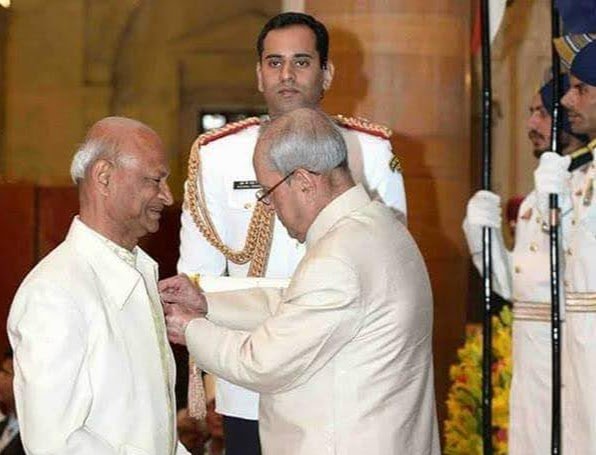
Tilak Gitai, Padma Shri awardee and master miniature painter from Bikaner, continues to preserve India’s artistic heritage through Ragamala paintings, traditional craftsmanship, global exhibitions, and prestigious awards including the Naagridas Samman 2025.
Contents
2 June, Credent TV | India has produced many extraordinary artists who have dedicated their lives to preserving the country’s cultural and artistic traditions. Among them, Tilak Gitai stands out as one of the most respected and celebrated masters of Indian miniature painting. From receiving the prestigious Padma Shri to earning international recognition for his remarkable work on Ragamala paintings, Tilak Gitai has spent decades safeguarding a priceless artistic legacy.
His journey is not merely the story of an accomplished painter but also of a cultural ambassador who has carried India’s artistic traditions to audiences across Europe, Asia, the Middle East, and South America.
Who is Tilak Gitai?

Tilak Gitai is an internationally acclaimed Indian miniature painter, master craftsman, and cultural conservationist. Born in 1949, he belongs to the second generation of royal court painters patronized by the rulers of Bikaner, Rajasthan.
After completing his Bachelor of Fine Arts (B.F.A.) from the University of Delhi, Gitai devoted himself to mastering traditional Indian painting styles, including:
- Mughal Miniature Painting
- Rajasthani Miniature Painting
- Phadi Painting
- Traditional Heritage Art Restoration
Over the decades, he emerged as one of India’s foremost custodians of miniature art.
Early Life and Artistic Roots
Growing up in a family deeply connected with royal court painting traditions gave Tilak Gitai a strong artistic foundation. The heritage of Bikaner has long been associated with intricate miniature paintings that flourished under royal patronage.
Unlike many contemporary artists who moved toward modern styles, Gitai chose the challenging path of preserving ancient artistic techniques.
His formal education in fine arts strengthened his technical skills while allowing him to innovate within traditional frameworks.
This combination of tradition and scholarship became the hallmark of his career.
Tilak Gitai and the Mastery of Indian Miniature Painting

What separates Tilak Gitai from many other artists is his commitment to authenticity. He creates paintings using traditional methods that were practiced centuries ago. His work involves:
- Handmade paper preparation
- Natural pigments
- Precious and semi-precious stones
- Mineral-based colors
- Herbal pigments
- Gold leaf application
- Silver leaf application
- Handmade brushes
These traditional methods ensure that each artwork reflects the spirit and craftsmanship of classical Indian miniature painting. Gitai also specializes in restoring damaged miniature paintings, helping preserve invaluable cultural artifacts for future generations.
Tilak Gitai’s Revolutionary Work on Ragamala Paintings

Perhaps the most remarkable chapter in the career of Tilak Gitai is his extensive research on ancient Ragamala paintings. Ragamala paintings visually interpret Indian classical musical ragas through imagery and symbolism. Over many years of study, Gitai discovered missing narrative and visual links within several traditional Ragamala series. Using historical research, artistic interpretation, and deep understanding of classical traditions, he recreated the missing components that had been lost over time. His project became widely known as:
“Ragamala – The Missing Link”
Art historians and collectors praised the work for restoring completeness to an important artistic tradition. This groundbreaking contribution significantly enhanced his reputation in the global art community.
International Acclaim for Ragamala – The Missing Link
The acclaimed exhibition was showcased internationally at:
Manoir de la Ville de Martigny, Switzerland (1997)
The exhibition attracted art enthusiasts interested in Indian cultural traditions and heritage preservation.
Musée d’Ethnographie de Genève, Switzerland (1998)
The Geneva exhibition further established Gitai’s reputation among European scholars and museum professionals.
Nehru Centre, London (2009)
The exhibition was accompanied by the launch of his book, Ragamala – The Missing Link.
Tagore Centre, Indian Embassy, Berlin (2009)
The Berlin exhibition introduced European audiences to the historical significance of Ragamala paintings.
Tilak Gitai’s Global Artistic Journey
The artistic reach of Tilak Gitai extends far beyond India. His paintings have been demonstrated and exhibited at prestigious international cultural events.
Major International Appearances
Festival of India, Augsburg, Germany (1985)
One of the earliest international platforms where Gitai showcased Indian miniature art.
Geneva, Zurich and Basel, Switzerland (1987)
These exhibitions introduced European audiences to traditional Indian painting techniques.
Earls Court, London (2001)
Gitai represented India’s artistic heritage before an international audience.
Seoul, South Korea (2004)
His work attracted significant appreciation from East Asian art lovers.
Muscat Festival, Oman (2007)
The exhibition highlighted the enduring appeal of Indian craftsmanship.
Sao Paulo, Brazil (2012)
His participation helped strengthen cultural exchange between India and South America.
Museums Preserving the Work of Tilak Gitai
A true measure of an artist’s significance is the inclusion of their work in prestigious museum collections. The paintings of Tilak Gitai are housed in renowned institutions worldwide.
Musée d’Ethnographie, Geneva
A complete Ragamala painting collection on ivory is displayed here.
Victoria and Albert Museum, London
One of the world’s most respected museums for decorative arts and design.
National Museum of Ethnology, Osaka, Japan
His work contributes to the global understanding of Indian artistic traditions.
National Crafts Museum, New Delhi
This institution preserves and showcases India’s finest craft traditions.
Recognition from World Leaders
The artistic brilliance of Tilak Gitai has received appreciation from distinguished personalities. A memorable moment occurred during the visit of former U.S. President Bill Clinton and his daughter Chelsea Clinton to Jaipur in March 2000. They reportedly appreciated Gitai’s work on Ragamala paintings, highlighting the international appeal of his artistry.
Prestigious Awards and Honors Earned by Tilak Gitai
The long list of awards received by Tilak Gitai reflects his immense contribution to Indian art and culture.
National Award (1982)
Presented by the President of India.
Rajasthan Shiromani Award (1991)
Recognizing excellence in artistic achievement.
Kalamani Award, Surajkund (1991)
Honoring traditional craftsmanship.
Maharana Sajjan Singh Award (1993)
Awarded by Mewar Foundation, Udaipur.
India’s Independence Golden Jubilee Award (1997)
Celebrating contribution to national heritage.
Shilp Guru Award (2007)
Presented by the President of India.
Federation of Rajasthan Handicrafts Exporters Award (2007)
Recognizing outstanding contribution to handicrafts.
Indira Gandhi Priyadarshini Award (2008)
For excellence and service.
Rajasthan Gaurav Award (2009)
Honoring pride of Rajasthan.
Maharaja Sawai Jagat Singh Award (2013)
Presented by City Palace Jaipur.
Padma Shri (2017)
One of India’s highest civilian honors awarded by the President of India.
International Crafts Award (2019)
Recognizing global contributions to traditional art.
Rajasthan Hastshilp Ratan Award (2018)
Awarded by the Government of Rajasthan.
Naagridas Samman (2025)
Conferred by Naagridas Kalal Sansthan, Kishangarh.
Naagridas Samman 2025 Celebrates a Lifetime of Excellence
The latest recognition in the distinguished journey of Tilak Gitai came with the Naagridas Samman 2025. Presented by Naagridas Kalal Sansthan, Kishangarh, the honor acknowledges his unparalleled dedication to preserving and promoting Indian miniature painting traditions.The award further strengthens his position among India’s most respected cultural icons.
How Tilak Gitai Preserves Ancient Techniques
In an era dominated by digital art and modern production methods, Tilak Gitai continues to uphold centuries-old artistic practices.

His process includes:
- Hand-ground mineral pigments
- Natural stone colors
- Herbal dye preparation
- Gold and silver leaf detailing
- Handmade painting tools
- Traditional restoration methods
He also trains students from India and abroad, ensuring these rare skills are passed to future generations.
The Enduring Legacy of Tilak Gitai
The contribution of Tilak Gitai extends beyond painting. He has become:
- A researcher
- A preservationist
- A teacher
- A cultural ambassador
- A master craftsman
His work demonstrates how traditional Indian art can remain relevant in the modern world while maintaining its authenticity. For young artists, his career serves as a powerful reminder that preserving heritage can be as meaningful as creating something new.
Tilak Gitai represents the finest traditions of Indian artistic excellence. From royal court heritage in Bikaner to international museums and global exhibitions, his journey reflects dedication, innovation, and cultural stewardship. His pioneering work on Ragamala paintings, commitment to traditional techniques, and decades of mentorship have made him one of India’s most influential cultural figures. With honors ranging from the National Award and Shilp Guru Award to the Padma Shri and Naagridas Samman 2025, Tilak Gitai continues to inspire artists and art lovers worldwide while ensuring that India’s miniature painting heritage remains vibrant for generations to come.
Frequently Asked Questions
Who is Tilak Gitai?
Tilak Gitai is a Padma Shri award-winning Indian miniature painter and master craftsman from Bikaner, Rajasthan.
Why is Tilak Gitai famous?
He is renowned for his expertise in miniature painting and his research project “Ragamala – The Missing Link.”
Which major award did Tilak Gitai receive?
He received the Padma Shri in 2017 and the Shilp Guru Award in 2007.
Where are Tilak Gitai’s paintings displayed?
His works are housed in museums in Geneva, London, Osaka, and New Delhi.
What is the Naagridas Samman 2025?
It is a prestigious recognition awarded by Naagridas Kalal Sansthan, Kishangarh, honoring his contribution to Indian art.
Bollywood
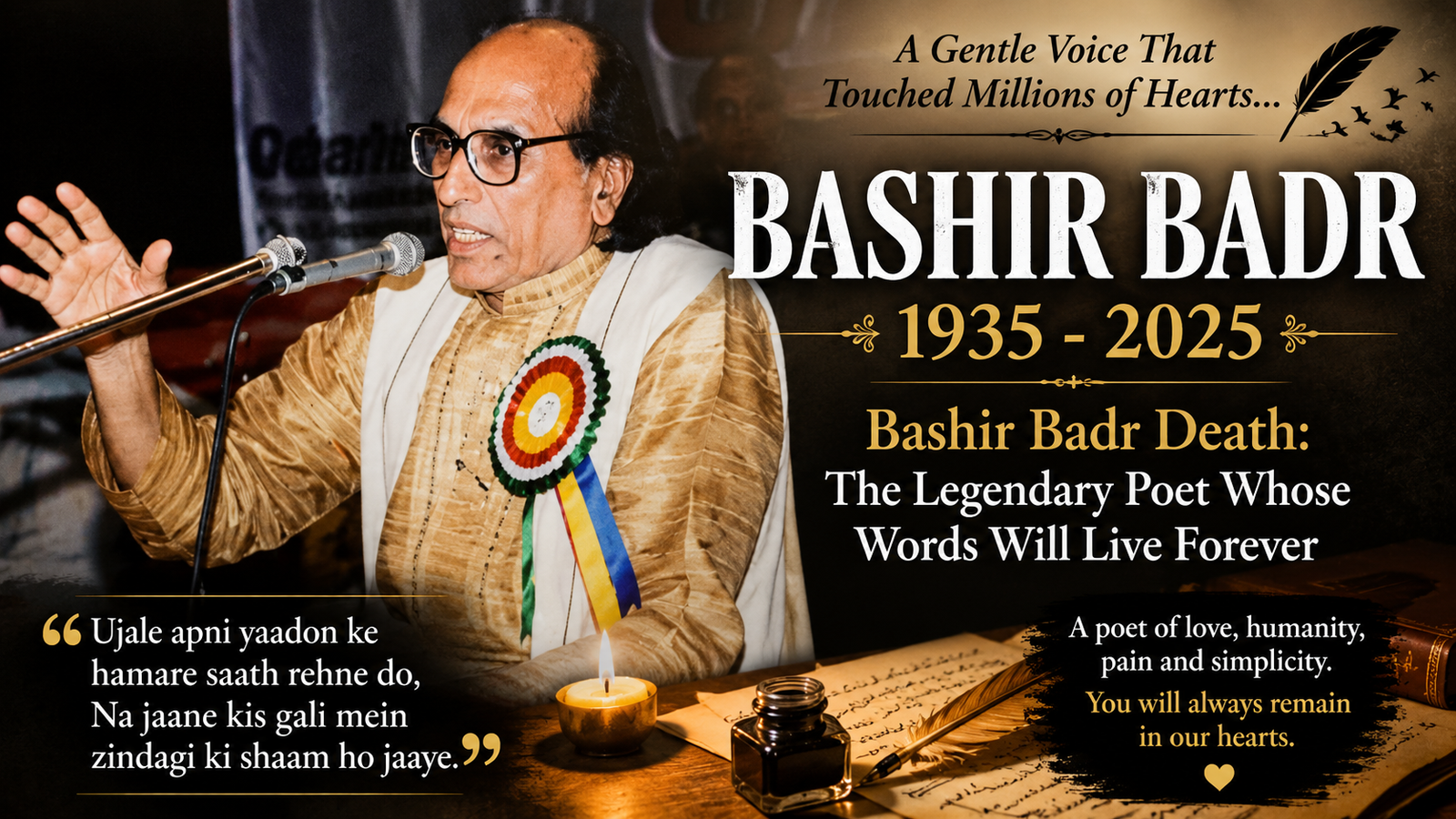
Bashir Badr Death at 91: The Poet Who Taught India How to Feel Love and Loss
Bashir Badr Death has left the world of Urdu poetry in deep mourning. Read this emotional tribute on the legendary poet’s life, timeless shayari, struggles, literary legacy and unforgettable contribution to Urdu literature.
Contents
Bashir Badr Death Leaves the World of Urdu Poetry Heartbroken
The news of Bashir Badr Death has created a deep sense of grief across India and among lovers of Urdu poetry worldwide. One of the softest, most humane and emotionally resonant voices of modern Urdu literature has fallen silent. With his passing, the literary world has not merely lost a poet; it has lost an entire era of sensitivity, romance, pain and humanity.
For decades, Bashir Badr’s poetry gave words to love, loneliness, heartbreak, separation and the quiet pain hidden inside ordinary human relationships. His couplets were not confined to books or literary gatherings. They lived in love letters, lonely nights, tea-house conversations, college notebooks and broken hearts.
The emotional impact of Bashir Badr Death is especially profound because his poetry never felt distant or intellectual. It felt personal. It felt lived.
Who Was Bashir Badr?
Born on February 15, 1935, near Ayodhya in Uttar Pradesh, Bashir Badr became one of the most celebrated voices of modern Urdu poetry. He studied at Aligarh Muslim University and later taught Urdu literature as an academic and scholar.
However, his real identity emerged through his ghazals.
Unlike many classical Urdu poets whose work remained inaccessible to common readers, Bashir Badr brought Urdu poetry closer to ordinary people. He used simple words but carried immense emotional depth. That simplicity became his greatest strength.
His poetry was modern yet timeless.
Bashir Badr Death Shocks Literary World
According to family sources, Bashir Badr passed away in Bhopal at the age of 91 after a prolonged illness. Reports suggest he had also been suffering from dementia in recent years.
The moment news of Bashir Badr Death surfaced, tributes began pouring in from writers, poets, journalists, politicians and readers across generations.
Many literary experts described his death as “the end of a golden chapter of Urdu ghazal.”
Social media platforms were flooded with his iconic couplets, proving once again that great poets never truly disappear.
The Simplicity That Made Him Legendary
The greatest quality of Bashir Badr’s poetry was emotional simplicity.
He could express life’s deepest truths in just two lines.
One of his most famous couplets remains:
“Ujale apni yaadon ke hamare saath rehne do,
Na jaane kis gali mein zindagi ki shaam ho jaaye.”
After the news of Bashir Badr Death, these lines suddenly feel even more haunting and emotional.
It almost feels as if the poet had written his own farewell decades ago.
7 Timeless Shayari by Bashir Badr
1. On Love and Separation
“कुछ तो मजबूरियाँ रही होंगी
यूँ कोई बेवफ़ा नहीं होता”
2. On Humanity
“दुश्मनी जम कर करो लेकिन ये गुंजाइश रहे
जब कभी हम दोस्त हो जाएँ तो शर्मिंदा न हों”
3. On Life’s Uncertainty
“उजाले अपनी यादों के हमारे साथ रहने दो
न जाने किस गली में ज़िंदगी की शाम हो जाए”
4. On Changing Society
“कोई हाथ भी न मिलाएगा जो गले मिलोगे तपाक से
ये नए मिज़ाज का शहर है ज़रा फ़ासले से मिला करो”
5. On Pain
“लोग टूट जाते हैं एक घर बनाने में
तुम तरस नहीं खाते बस्तियाँ जलाने में”
6. On Loneliness
“मोहब्बतों में दिखावे की दोस्ती न मिला
अगर गले नहीं मिलता तो हाथ भी न मिला”
7. On Emotional Truth
“मुसाफ़िर हैं हम भी मुसाफ़िर हो तुम भी
किसी मोड़ पर फिर मुलाक़ात होगी”
These lines ensured that even after Bashir Badr Death, his poetry would continue living inside millions of hearts.
His Struggles Beyond Poetry
Bashir Badr’s life was not untouched by suffering.
During the communal riots in Meerut, his home and many of his unpublished manuscripts were destroyed in fire.
For a poet, losing manuscripts is like losing memories, emotions and pieces of the soul itself.
Yet despite such tragedy, Bashir Badr never allowed hatred to dominate his writing.
He continued writing about love, compassion and coexistence.
That emotional resilience made him not only a great poet but also a remarkable human being.
Bashir Badr and the Human Side of Urdu Literature
The reason Bashir Badr became universally loved was simple:
he understood human emotions deeply.
His poetry did not belong only to literary elites.
It belonged to:
- lovers,
- lonely people,
- students,
- old friends,
- broken hearts,
- and ordinary human beings trying to survive emotionally difficult lives.
That rare emotional accessibility is what separated him from many other poets.
Why Bashir Badr Will Never Truly Die
The tragedy of Bashir Badr Death is real. But poets like Bashir Badr do not disappear. Every time someone remembers love on a lonely night…
Every time someone quotes his shayari in silence…
Every time a broken heart searches for words…
Bashir Badr will return. His poetry has already crossed generations and borders. That is immortality.
Article by: Vinod Verma ” Ralawata”
Biography
Veena Modani: Rajasthan’s New Cultural Ambassador Inspiring a New Generation
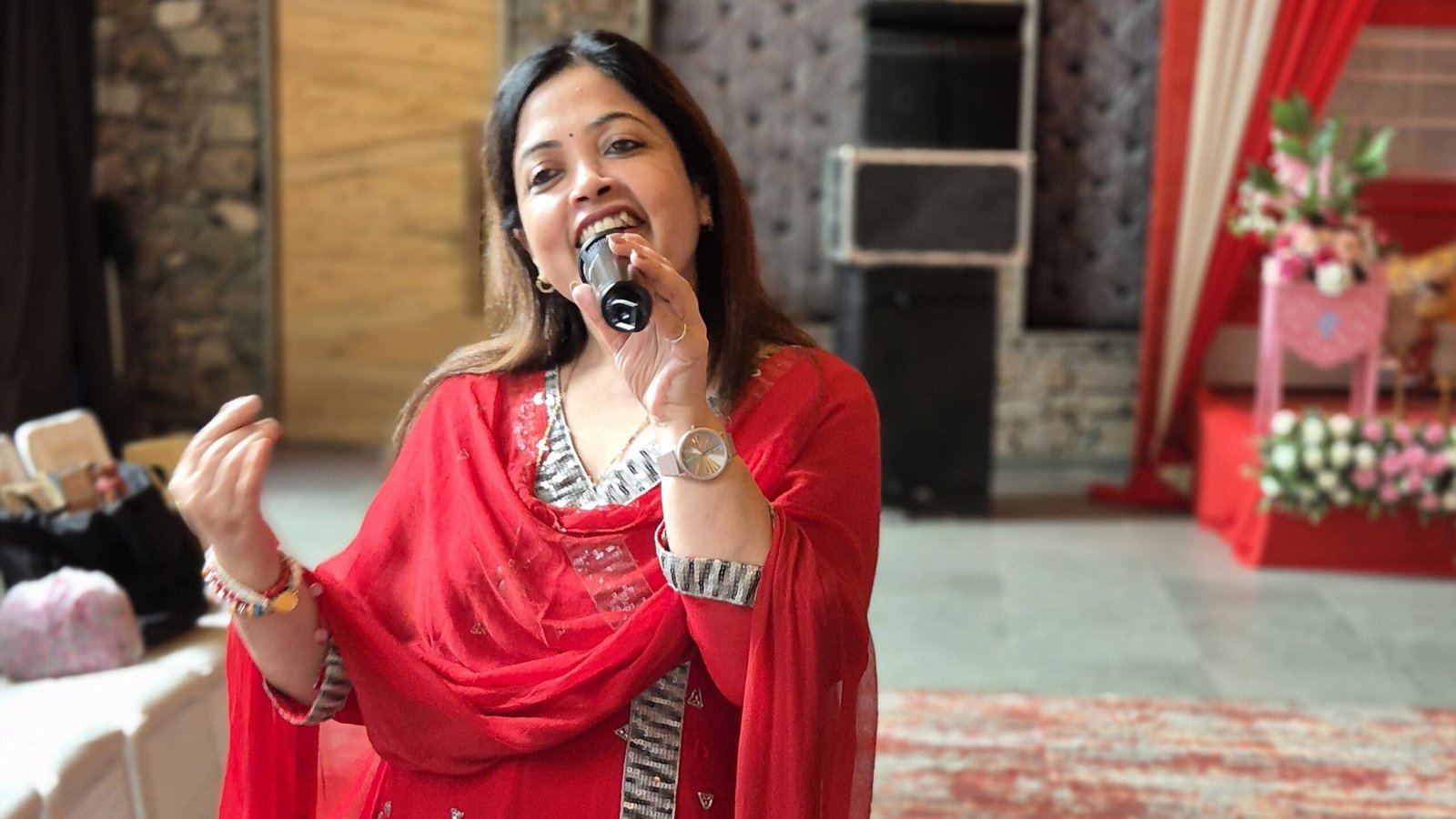
Veena Modani, Rajasthan’s celebrated artist and choreographer, has transformed Indian dance and music through her academy, Jaipur Rhythm Fest, and award-winning cultural contributions spanning over 25 years.
Contents
25 May, Credent TV | Veena Modani has emerged as one of Rajasthan’s most respected cultural personalities, blending art, education, choreography, and leadership into an inspiring journey that continues to influence India’s artistic landscape. For more than 25 years, she has dedicated her life to preserving Indian culture while simultaneously giving modern platforms to emerging talent.
Known for her graceful stage presence, soulful musical expression, and visionary event management, Veena Modani today represents the artistic spirit of Rajasthan on national and international platforms. From nurturing young performers through her academy to organizing large-scale cultural festivals, her contribution to Indian performing arts remains both impactful and enduring.
Introduction to Veena Modani
In Rajasthan’s colorful artistic ecosystem, Veena Modani has established herself as a symbol of dedication, discipline, and creativity. Her work spans multiple domains including choreography, music, cultural event management, mentoring, and social empowerment.
As the founder and director of the Veena Modani Academy of Dance and Music, she has trained hundreds of aspiring artists while creating opportunities for performers to showcase their abilities on bigger stages.
Her journey reflects not only artistic excellence but also a mission to keep India’s cultural traditions alive in an era increasingly influenced by digital entertainment and changing audience preferences.
Early Life and Artistic Passion
The story of Veena Modani began with a deep emotional connection to Indian music and classical dance traditions. From a young age, she displayed a natural inclination toward rhythm, expression, and performance.
Her early exposure to classical raagas and traditional dance forms shaped her artistic sensibilities. What started as childhood fascination eventually became a disciplined pursuit of excellence.
Years of rigorous training helped her master both the technical and emotional dimensions of performance art. Audiences soon began recognizing her ability to combine graceful choreography with emotionally resonant storytelling.
Her performances are often praised for their elegance, authenticity, and cultural richness. Many admirers describe her stage presence as deeply immersive, capable of emotionally connecting with viewers across generations.
Veena Modani Academy: Building Future Artists
One of the most significant achievements of Veena Modani has been the establishment of the Veena Modani Academy of Dance and Music.
The academy has evolved into one of Rajasthan’s respected institutions for training in dance and music. It offers students exposure to both traditional Indian art forms and contemporary creative expression.
Key Contributions of the Academy
- Training aspiring dancers and musicians
- Promoting Indian classical traditions
- Organizing workshops and stage performances
- Encouraging confidence and discipline among students
- Providing professional exposure to emerging talent
Under her mentorship, many students have successfully pursued careers in performing arts and cultural entertainment.
Her teaching philosophy emphasizes artistic integrity, emotional expression, and cultural awareness rather than merely technical perfection.
Jaipur Rhythm Fest: A Landmark Cultural Initiative
Among the major milestones in the journey of Veena Modani is the creation of the Jaipur Rhythm Fest, a cultural event that celebrates the diversity of Indian performing arts.
The festival has become an important platform for artists, musicians, dancers, and performers from different parts of India. It promotes collaboration between established professionals and emerging talent.
Why Jaipur Rhythm Fest Matters
The event stands out because it combines:
- Classical dance
- Contemporary choreography
- Folk performances
- Music collaborations
- Youth participation
- Cultural innovation
Through this initiative, Veena Modani has strengthened Rajasthan’s image as a thriving center of artistic excellence.
Veena Modani’s Contribution to Indian Dance and Music
Veena Modani is widely admired for balancing traditional Indian values with modern artistic presentation.
Her performances often reflect themes of:
- Indian heritage
- Emotional storytelling
- Feminine strength
- Spiritual depth
- Social awareness
She has consistently worked to ensure that younger generations remain connected to Indian cultural roots while adapting performances for contemporary audiences.
Artistic Style
Her choreography is known for:
- Strong emotional expression
- Fluid movement
- Cultural symbolism
- Musical precision
- Visual storytelling
This unique artistic identity has helped her stand apart in Rajasthan’s competitive cultural environment.
Awards and Recognition Earned by Veena Modani
Over the years, Veena Modani has received several prestigious honors recognizing her artistic and social contributions.
Major Awards and Honors
Women Empowerment Award (2016)
Presented by former Rajasthan Chief Minister Vasundhara Raje, this award recognized her contribution toward empowering women through art and education.
Rajasthan Gaurav Award (2017)
This honor acknowledged her immense contribution to Rajasthan’s cultural landscape.
Women Achiever Award (2017 & 2019)
Recognized her excellence in music, dance, mentorship, and leadership.
Brijmohan Gupta Art Award (2018)
Awarded for her creativity and contribution to artistic direction.
Pandit Manmohan Bhatt Memorial Award (2019)
Honored her dedication to classical music traditions and artistic excellence.
Guru Vashistha Award (2019)
Celebrated her role as a mentor and cultural educator.
Voice of Rajasthan Award (2020)
Presented during the Jaipur International Film Festival by veteran Bollywood actor Prem Chopra.
Rajasthan Icon Award (2023)
Recognized her long-term influence on Rajasthan’s artistic identity.
AMG Award and Shakti Award (2024)
Acknowledged her leadership, creativity, and influence as a woman artist.
Samaj Gaurav Award (2026)
Presented during the Maheshwari Global Convention for her remarkable cultural contribution.
Women Empowerment Through Art
One of the defining aspects of Veena Modani’s journey is her consistent focus on women empowerment.
Through dance and music education, she has inspired countless women to pursue careers in performing arts confidently and independently.
Her workshops and mentorship initiatives encourage young women to:
- Express themselves creatively
- Build self-confidence
- Develop leadership skills
- Preserve cultural heritage
- Achieve financial independence through art
This commitment has transformed her from merely an artist into a social inspiration for aspiring female performers.
Why Veena Modani Is Called the “Voice of Rajasthan”
The title “Voice of Rajasthan” is not merely ceremonial—it reflects the emotional connection audiences feel with Veena Modani and her work.
Her performances embody Rajasthan’s traditions, emotions, music, and storytelling heritage.
Reasons Behind the Title
- Cultural authenticity
- Emotional musical expression
- Dedication to Rajasthani heritage
- Long-standing contribution to performing arts
- Ability to connect with audiences across generations
Her artistic identity has become synonymous with Rajasthan’s evolving cultural narrative.
Impact on Rajasthan’s Cultural Identity
In recent years, Rajasthan has increasingly become a destination for cultural tourism, music festivals, and artistic collaborations.
Artists like Veena Modani have played a major role in shaping this transformation.
Her Broader Cultural Impact
- Promoting Rajasthan globally
- Supporting regional artists
- Preserving classical traditions
- Encouraging youth participation
- Strengthening cultural infrastructure
Her work demonstrates how performing arts can contribute not only to entertainment but also to cultural preservation and social development.
The Leadership Behind Veena Modani Events
Apart from performance and teaching, Veena Modani has earned recognition for her event management expertise through Veena Modani Events.
Her events are known for:
- Professional production quality
- Artist-focused execution
- Innovative choreography
- Cultural authenticity
- Large audience engagement
These events often become platforms where established and emerging performers share the same stage.
This collaborative ecosystem has significantly contributed to Rajasthan’s artistic growth.
The Future Vision of Veena Modani
Even after decades of achievements, Veena Modani continues to expand her artistic mission.
Her future goals reportedly focus on:
- Expanding cultural education programs
- Promoting Indian art internationally
- Supporting young performers digitally
- Organizing larger cultural festivals
- Creating global collaborations in performing arts
Her journey proves that cultural leadership requires constant innovation while staying deeply connected to tradition.
Frequently Asked Questions
Who is Veena Modani?
Veena Modani is a renowned artist, choreographer, mentor, and cultural icon from Rajasthan known for her contribution to Indian dance, music, and cultural events.
What is Veena Modani Academy?
The academy is a performing arts institution founded by Veena Modani that trains students in dance and music while promoting Indian cultural traditions.
What is Jaipur Rhythm Fest?
Jaipur Rhythm Fest is a cultural festival initiated by Veena Modani that brings together dancers, musicians, and performers from across India.
Which awards has Veena Modani received?
She has received numerous honors including the Rajasthan Gaurav Award, Women Empowerment Award, Rajasthan Icon Award, and Voice of Rajasthan Award.
Why is Veena Modani important to Rajasthan’s culture?
She has significantly contributed to preserving and promoting Rajasthan’s artistic identity through education, performances, mentorship, and cultural events.
Veena Modani represents the perfect blend of artistic brilliance, cultural leadership, and social inspiration. Her journey from a passionate young performer to one of Rajasthan’s most respected cultural ambassadors reflects years of dedication, discipline, and vision.
Whether through her academy, performances, mentorship, or landmark initiatives like Jaipur Rhythm Fest, she has continuously worked to preserve India’s rich artistic traditions while empowering future generations.
In an era where cultural authenticity often competes with commercial entertainment, Veena Modani continues to stand as a powerful reminder that art rooted in tradition can still inspire, evolve, and unite people across boundaries.
Breaking News
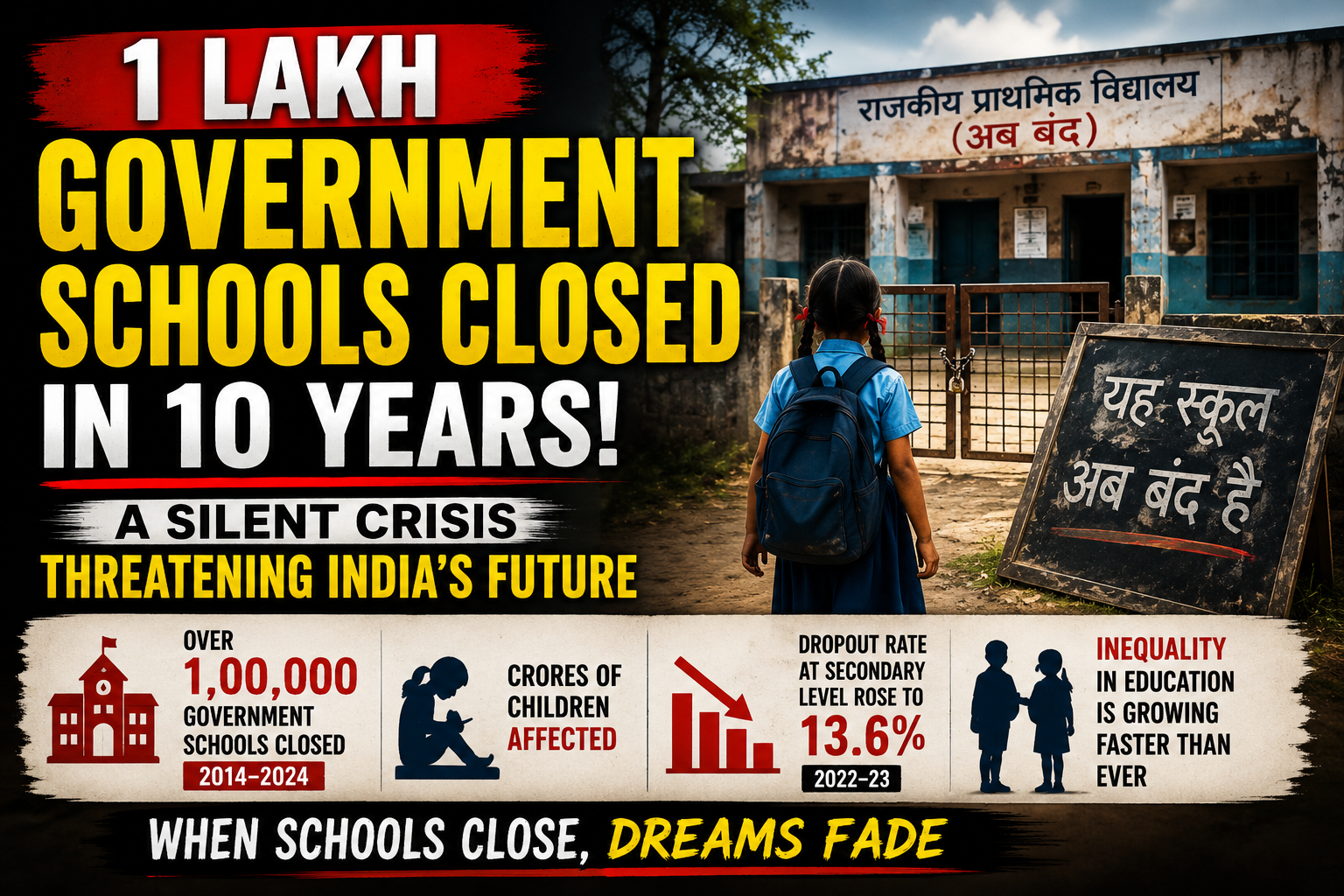
Government School Closures in India: 1 Lakh Schools Shut, A Deepening Crisis for the Nation’s Future
Government School Closures in India have raised serious concerns over rising dropout rates, shrinking access to education, and the future of poor children. Discover why nearly 1 lakh government schools closed in the last decade and what it means for India.
Contents
20 May | Credent TV, When schools shut down, only buildings do not disappear. A society’s future also begins to shrink.
The debate around Government School Closures in India is no longer just about administrative reforms or education budgets. It has now become a national conversation about equality, opportunity, democracy, and the future of millions of children.
Over the last decade, India has witnessed the closure and merger of nearly one lakh government schools. Official data from various education reports, including policy discussions linked to the National Institution for Transforming India (NITI Aayog), indicate a significant decline in enrollment in government schools between 2014 and 2024. At the same time, private schools have rapidly expanded across both urban and rural India.
At first glance, policymakers describe this transformation as “school consolidation,” a strategy aimed at improving efficiency, infrastructure, and resource utilization. However, beyond official terminology lies a deeply human story — a story of children walking farther to school, girls dropping out because of safety concerns, and poor families slowly losing access to affordable education.
The issue of Government School Closures in India is therefore not just about numbers. It is about what happens to the children left behind.
Understanding Government School Closures in India
Government School Closures in India have become one of the most debated education issues in recent years.
According to multiple education surveys and policy analyses, thousands of government schools across states have either been shut down, merged with nearby schools, or converted into larger institutional clusters.
States often justify these closures by pointing to low student enrollment, teacher shortages, and infrastructure duplication.
The argument presented by policymakers is simple:
- Small schools are difficult to maintain.
- Combining schools can improve teaching quality.
- Bigger schools can offer better facilities.
- Administrative costs can be reduced.
On paper, these points appear logical. But education is not merely about infrastructure management. It is about accessibility, trust, social inclusion, and continuity. That is where the real crisis begins.
Why Are Government Schools Being Closed?
The primary reasons behind Government School Closures in India include declining enrollment and the migration of students toward private institutions. Several reports suggest that many parents increasingly prefer private schools because of perceptions surrounding English-medium education, discipline, and better academic outcomes. At the same time, urbanization and migration patterns have altered rural demographics. As populations shift, smaller village schools often end up with very few students. Governments then introduce school consolidation policies. Under these policies:
- Two or more schools are merged.
- Students are shifted to larger campuses.
- Teaching resources are centralized.
- Infrastructure spending is concentrated.
However, while consolidation may improve facilities in certain regions, it also creates serious logistical and social challenges. For many rural children, the nearest school suddenly becomes several kilometers away. This distance becomes a barrier — especially for girls, disabled students, and economically weaker families.
The Rural Reality Behind the Numbers
The biggest impact of Government School Closures in India is visible in rural and semi-rural communities. In many villages, the government school is not just a place of learning. It is a social institution. It is where:
- children from poor families study,
- first-generation learners gain confidence,
- girls receive their first exposure to independence,
- and marginalized communities participate in mainstream society.
When a local primary school closes, the consequences are immediate. Children who once walked five minutes to school may now need to travel several kilometers. For middle-class families, this may seem manageable. For daily wage laborers, agricultural workers, and economically vulnerable households, it can become impossible. Many parents cannot afford transportation. Some cannot accompany younger children. Others fear for the safety of adolescent girls. As a result, attendance drops. Eventually, many children quietly disappear from the education system. This silent educational exclusion rarely makes headlines. Yet it is one of the most serious consequences of Government School Closures in India.
Impact on Girls and Marginalized Communities
One of the most concerning aspects of Government School Closures in India is their disproportionate impact on girls. In rural India, distance remains one of the biggest barriers to female education. When schools move farther away:
- parents become hesitant,
- dropout risks increase,
- early marriage rates may rise,
- and educational continuity suffers.
For Dalit, tribal, and economically weaker communities, government schools have historically served as gateways to upward mobility. These schools represented equality. Inside a classroom, children from different castes and economic backgrounds shared the same space. That democratic spirit is difficult to quantify in policy reports. But it remains one of the most powerful foundations of Indian society. When Government School Closures in India reduce educational accessibility for marginalized communities, social inequality deepens. This is not just an education issue. It is a social justice issue.
Rising Dropout Rates in Secondary Education
Another alarming trend linked to Government School Closures in India is the increase in dropout rates at the secondary level. Experts argue that while enrollment at primary levels may remain relatively stable in some states, retention becomes a major challenge after Class 8. The transition to secondary education often involves:
- longer travel distances,
- higher educational expenses,
- social pressures,
- and lack of infrastructure.
When students leave school during Classes 9 and 10, the consequences are long-term. These years are critical. Dropping out at this stage often leads to:
- child labor,
- informal employment,
- early marriage,
- reduced earning potential,
- and generational poverty.
Government School Closures in India therefore cannot be viewed in isolation. They are interconnected with employment, gender equality, health, and social development.
Growth of Private Schools and Educational Inequality
As government schools decline, private schools continue expanding rapidly. This shift reveals a deeper transformation in Indian society. Families with financial resources increasingly purchase education through private institutions. Meanwhile, economically weaker communities remain dependent on public education. This creates a dangerous divide. On one side:
- students access English-medium education,
- digital classrooms,
- advanced infrastructure,
- and private coaching ecosystems.
On the other side:
- rural children struggle with basic accessibility,
- government infrastructure shortages,
- teacher vacancies,
- and shrinking institutional support.
Government School Closures in India risk turning education from a constitutional right into a market-driven privilege. This possibility worries educators, activists, and policy experts alike.
Is School Consolidation Really Working?
Supporters of school consolidation argue that larger schools can provide:
- better laboratories,
- trained teachers,
- stronger management,
- improved student performance,
- and better infrastructure.
In some urban or semi-urban areas, this model has shown positive results. However, critics argue that India’s vast social and geographical diversity makes a one-size-fits-all approach risky. A consolidation policy that works in one district may fail completely in remote rural regions. Education researchers stress that accessibility matters as much as quality. A world-class school located too far away may still remain inaccessible to poor families. This is the central contradiction in Government School Closures in India. Efficiency may improve on paper. But educational participation may decline in reality.
Expert Concerns Over India’s Education Future
Education experts warn that reducing the number of public schools could weaken India’s social foundation over time. Public education has historically played a major role in:
- nation-building,
- literacy expansion,
- women empowerment,
- caste mobility,
- and democratic participation.
If public education weakens significantly, the consequences may extend far beyond classrooms.
Experts fear:
- widening inequality,
- shrinking social mobility,
- deeper rural-urban divides,
- and increasing educational commercialization.
The debate surrounding Government School Closures in India therefore reflects a larger philosophical question:
Should education remain a universal public right, or gradually become a service shaped by market economics?
This question will define India’s future.
What Education Activists and Researchers Say
Several education activists believe that closures are often implemented without fully understanding local realities. They argue that instead of shutting schools, governments should focus on:
- improving teacher recruitment,
- strengthening infrastructure,
- modernizing curriculum,
- increasing digital access,
- and building community participation.
Researchers also point out that many parents leave government schools not because public education is inherently weak, but because systemic neglect reduces confidence over time. When buildings deteriorate, teacher vacancies remain unfilled, and classrooms lack resources, parents naturally seek alternatives. Therefore, critics say Government School Closures in India may sometimes address symptoms rather than causes.
Possible Solutions to the Crisis
The crisis surrounding Government School Closures in India is complex. But experts suggest several possible solutions:
1. Strengthen Rural School Infrastructure
Instead of closures, governments can modernize existing schools.
2. Improve Teacher Availability
Teacher shortages remain a major issue in rural education.
3. Expand Digital Learning Access
Technology can help bridge educational gaps if implemented fairly.
4. Focus on Girls’ Safety
Transportation and safety support are essential for female students.
5. Community Participation
Local communities should be involved in education planning.
6. Better Public Investment
Public education requires sustained financial commitment.
Why Public Education Still Matters
Government School Closures in India force the country to confront a fundamental truth. A nation’s future is shaped more in classrooms than in political speeches. Government schools have historically given millions of Indians their first opportunity to dream beyond poverty. For countless families:
- the government school teacher was the first mentor,
- the classroom was the first equal space,
- and education was the first ladder toward dignity.
Public education is not simply a welfare program. It is the backbone of democracy. If access to quality education becomes dependent only on purchasing power, social inequality will deepen further. That is why the conversation around Government School Closures in India matters so deeply.
The closure of nearly one lakh government schools over the past decade is not merely an administrative development. It is a warning sign. It reflects changing priorities, growing inequality, and a widening gap between policy design and ground realities. Government School Closures in India are not just about disappearing buildings. They are about disappearing opportunities. Every school that shuts down may represent:
- a child’s unfinished dream,
- a family’s fading hope,
- and a society moving further away from equality.
India’s future cannot be built only through economic growth statistics. It must also be built through classrooms that remain open, accessible, inclusive, and alive with possibility. Because when schools disappear, nations lose more than institutions.They risk losing generations.
Written By
Vinod Verma Ralawata
Lecturer, English Literature
Biography
Dr. Preetha Katyal – A Transformational Force in Holistic Healing, Spiritual Empowerment & Human Consciousness
Contents
14 May, Credent TV | In a world increasingly overwhelmed by stress, emotional imbalance, uncertainty, and materialistic distractions, there are a few rare souls who dedicate their lives to healing humanity from within. One such inspiring name is Dr. Preetha Katyal – a renowned holistic healer, spiritual mentor, numerologist, tarot expert, Reiki Grandmaster, motivational speaker, and life management therapist whose work has touched countless lives across India.
Guided by the belief that “You get what you choose, so choose what you deserve,” Dr. Preetha Katyal’s journey is not just a professional success story — it is a deeply spiritual mission devoted to awakening inner strength, self-realization, and emotional healing in people from all walks of life.
A Spiritual Journey Rooted in Faith & Higher Consciousness
From a very young age, Dr. Preetha Katyal was deeply influenced by spirituality and the power of faith. Inspired greatly by her father, Mr. G. Chandra Shekhar Marar, she learned the importance of patience, positivity, and unwavering belief even during life’s most difficult phases.
Her spiritual awakening strengthened further after witnessing miraculous moments in her childhood that transformed her understanding of life, healing, and divine energy. While others lost hope during difficult circumstances, her family’s faith in the supreme power remained unshaken — a value that later became the foundation of her own healing philosophy.
Today, Dr. Preetha Katyal believes that every soul carries a divine purpose and that true transformation begins when individuals connect with their higher self.
Founder of “Divine Manifestations”
Driven by her vision to heal people emotionally, mentally, spiritually, and physically, Dr. Preetha Katyal founded Divine Manifestations, an Astro Research Centre dedicated to holistic sciences, meditation, tarot guidance, Reiki healing, spiritual counseling, manifestation techniques, and emotional wellness.
The center has become a guiding light for individuals seeking peace, clarity, healing, and personal transformation. Through her work, Dr. Katyal has helped people overcome emotional trauma, stress, karmic baggage, confusion, anxiety, and spiritual blockages.


Expertise in Holistic Sciences & Healing Modalities
Dr. Preetha Katyal’s vast expertise spans multiple spiritual and healing disciplines, including:
- Numerology
- Tarot Reading & Tarot Teaching
- Reiki Healing & Reiki Grandmaster Practices
- Past Life Regression
- Transcendental Healing Practices
- Life Management Therapy
- Emotional & Mental Wellness Counseling
- Meditation & Mindfulness Guidance
- Vaastu Consultation
- Motivational Speaking & Spiritual Coaching
Known for her intuitive abilities and compassionate guidance, she has helped many individuals rediscover emotional balance, confidence, positivity, and inner peace.
Author of “Meditation – The Path to Self-Realization”
Adding another remarkable achievement to her journey, Dr. Preetha Katyal authored the book “Meditation – The Path to Self-Realization.”
The book shares more than 100 ways to meditate and is designed to help readers transform their lives through mindfulness, spiritual awareness, and emotional healing. Written in a simple and accessible style, the book has inspired many readers to reconnect with themselves and adopt a more peaceful, balanced lifestyle.
Empowering Society Through Voice & Wisdom
Apart from healing sessions and counseling, Dr. Preetha Katyal is also widely appreciated as a motivational speaker whose powerful voice inspires people to unlock their inner strength and spiritual potential.

She frequently speaks on:
- Personality Development
- Self-Growth
- Emotional Healing
- Spiritual Awareness
- Positive Thinking
- Manifestation & Conscious Living
Her talks encourage individuals to rise above fear, negativity, and limitations while embracing self-belief and purpose-driven living.
Recognition, Awards & Achievements
Dr. Preetha Katyal’s dedication toward holistic sciences and human healing has earned her immense recognition and appreciation.

Some of her notable achievements include:
- Honoured by Radio City Sheroes for her brilliance in Holistic Sciences (2022–2023)
- Presented a Certificate of Merit by the Ministry of Education
- Invited as “Guest of Honour” by Shri Ram College of Commerce for a conference on Self-Development and Growth
- Successfully completed an Honorary Doctorate in Holistic Sciences from Sunrise University, Alwar, Rajasthan
- Earned recognition as a Reiki Grandmaster
- Extensive educational background in communication, media utilization, arts, radio, television, and research studies
Digital Spiritual Empowerment
Understanding the growing influence of digital platforms, Dr. Preetha Katyal has also stepped into the digital space to spread spiritual awareness and positivity among the younger generation.
Through her online content, she regularly shares:
- Manifestation Techniques
- Healing Guidance
- Spiritual Wisdom
- Ways to Attract Abundance & Positivity
- Meditation Practices
- Emotional Wellness Tips
Her mission is to make holistic sciences more accessible and meaningful for modern society.
A Beacon of Hope for Humanity
Those who have interacted with Dr. Preetha Katyal often describe her as a compassionate guide, healer, and light worker who brings positivity wherever she goes. Her life’s mission continues to revolve around helping people discover hope during darkness, strength during emotional struggles, and peace amidst chaos.

At a time when the world needs emotional healing and spiritual awareness more than ever before, personalities like Dr. Preetha Katyal stand as a reminder that faith, healing, self-awareness, and compassion still have the power to transform lives.
As she beautifully says:
“Have faith in God and God has faith in you.”
Breaking News
Buddha Purnima Celebration in Jaipur: 7 Powerful Messages of Peace, Equality and Humanity
Buddha Purnima Celebration in Jaipur was observed with great devotion at Ramabai Hall, where leaders from multiple religions shared powerful messages on peace, compassion, equality, and humanity inspired by Lord Buddha and Dr. B.R. Ambedkar.
Contents
Jaipur | Buddha Purnima Celebration in Jaipur turned into a remarkable gathering of spiritual harmony, social awareness, and human values as people from different religions came together under one roof to honor the teachings of Lord Buddha. The event was organized at Ramabai Hall, located at Dr. Ambedkar Memorial Welfare Society Rajasthan in Jhalana Doongri, Jaipur, under the joint aegis of Pragya Kalyan Charitable Trust and Dr. Ambedkar Memorial Welfare Society Rajasthan.
The grand celebration was conducted under the leadership of Dr. Prakash Jain and witnessed the dignified presence of representatives from the Sarv Dharma Maitri Sangh, social thinkers, Buddhist scholars, and respected guests from different religious communities.
The event reflected a strong and timely message — humanity can only progress when compassion, equality, brotherhood, and peace become part of everyday life.
Grand Buddha Purnima Celebration at Ramabai Hall
The atmosphere at Ramabai Hall was filled with devotion and positivity as guests gathered to celebrate the sacred occasion of Buddha Purnima. Representatives from multiple faiths offered floral tributes before the statue of Lord Buddha and jointly lit ceremonial lamps, symbolizing unity and enlightenment.
The ceremony began with the chanting of Trisharan and Panchsheel by Upasika Savitri Bauddh and Trishna Bauddh. Their recitation created a deeply spiritual environment that resonated with the audience.
Guests and religious representatives were welcomed with traditional shawls and khatas, reflecting the spirit of respect and cultural harmony.
According to organizers, the objective of the event was not only to celebrate Buddha Purnima but also to spread Lord Buddha’s timeless teachings of non-violence, compassion, and equality in modern society.
For more on Buddha Purnima and Buddhist traditions, readers can visit the official website of the Government of India’s Ministry of Culture:
Multi-Faith Leaders Unite for Harmony
One of the most inspiring aspects of the Buddha Purnima Celebration in Jaipur was the active participation of leaders from Hinduism, Islam, Christianity, Sikhism, and Buddhism.
Message from Hindu Religious Leader
Mahant Guru Raghavendra of Galta Peeth emphasized that Lord Buddha’s teachings can transform human life if practiced sincerely. He highlighted that conflicts among people at the grassroots level weaken society and stressed the importance of mutual respect among all communities.
He noted that real social transformation is possible only when people rise above divisions and embrace humanity first.
Islamic Perspective on Buddha’s Teachings
Representing the Islamic community, Syed Anbar Shah spoke about the relevance of Buddha’s Middle Path and Eightfold Path in achieving a balanced and peaceful life.
He stated that Buddha’s principles encourage moderation, wisdom, and compassion, values that are universally respected across religions.
Christian Community’s Message of Love
George Britty, representing the Christian community, shared that the teachings of love, compassion, and kindness promoted by Lord Buddha align closely with universal spiritual values.
He emphasized that spreading messages of harmony and goodwill should become a collective responsibility for society.
Sikh Community Calls for Brotherhood
Sardar Jaswinder Singh read out a message sent by former Rajasthan Minority Commission Chairman Jasveer Singh. The message encouraged people to promote compassion, friendship, and unity in society.
The Sikh representative stated that humanity grows stronger when people work together beyond religious identities.
Historic Interfaith Presence Praised by Ambedkar Welfare Society
During the Buddha Purnima Celebration in Jaipur, Dr. Ambedkar Memorial Welfare Society Rajasthan President Satyaveer Singh warmly welcomed all guests and described the dignified presence of representatives from the Sarv Dharma Maitri Sangh as a historic and inspiring moment for the organization.

He stated that such a grand interfaith gathering on the sacred occasion of Buddha Purnima was unprecedented in the institution’s history and should serve as a model for future social and spiritual events. He emphasized that programs promoting unity, brotherhood, and mutual respect among religions are the need of the hour and should continue in the future to strengthen harmony in society.
Why Buddha’s Teachings Matter More Than Ever
In today’s world marked by stress, conflict, inequality, and social polarization, many speakers highlighted that Lord Buddha’s philosophy remains highly relevant.
The teachings of Buddha focus on:
- Non-violence
- Compassion
- Equality
- Self-awareness
- Emotional balance
- Peaceful coexistence
These values are increasingly being seen as solutions to rising global tensions and mental unrest.
According to UNESCO, Buddha’s teachings continue to influence millions globally through their focus on peace and ethical living.
Key Messages Shared During the Event
“Today We Need Buddha, Not War”
One of the strongest statements came from retired IAS officer B.L. Naval, who said that the world today urgently needs Buddha’s wisdom rather than war and conflict.
He explained that global tensions, violence, and social unrest can only be resolved through compassion, understanding, and human dignity.
His statement received strong appreciation from attendees.
Small Actions Can Bring Big Change
Dr. Pravesh Jain, President of Sarv Dharma Maitri Sangh, highlighted that even small efforts inspired by Buddha’s teachings can create meaningful change in society.
He encouraged people to practice kindness, empathy, and mutual respect in daily life rather than limiting spiritual values to speeches or ceremonies.
Role of Dr. B.R. Ambedkar in Spreading Buddhist Values
The Buddha Purnima Celebration in Jaipur also paid tribute to Bharat Ratna Dr. B.R. Ambedkar and his role in promoting equality and social justice through Buddhist philosophy.
Former judge and Trust President Tek Chand Rahul spoke about how Dr. Ambedkar embraced Buddhist principles to establish a more equal and democratic society.

He stated that constitutional values such as:
- Equality
- Liberty
- Fraternity
- Justice
are deeply connected with Buddha’s vision for humanity.
Speakers emphasized that there is still a strong need to work toward social equality and human dignity in contemporary India.
Buddha Purnima Celebration in Jaipur Promotes Social Equality
Another major theme of the event was social inequality and discrimination.
Social thinker Dr. Mahendra Anand raised concerns regarding continuing social disparities and urged society to reflect seriously on these issues.

He stated that festivals like Buddha Purnima should not remain symbolic but should inspire practical social reform.
The gathering repeatedly emphasized that true tribute to Lord Buddha lies in adopting his teachings in real life.
Voices from Other Speakers
Several dignitaries and social workers also shared their thoughts during the program.
Among them were:
- Madan Lal Dudwal, President of Nalanda Foundation Marudhara Jaipur
- Roshan Lal Mundotiya
- Ramdev Bauddh
- Sachin Sanwariya
- Ramcharan Mahawar
All speakers highlighted the need for social unity, moral responsibility, and peaceful coexistence.
The program concluded with a formal vote of thanks by lifetime member Ghanshyam Gautam, followed by blessings for universal well-being.
The Growing Importance of Interfaith Dialogue in India
The Buddha Purnima Celebration in Jaipur demonstrated how interfaith gatherings can strengthen social harmony in India.
At a time when divisions often dominate headlines, events like these create spaces for constructive dialogue and mutual understanding.
Experts believe that interfaith collaborations help reduce prejudice and encourage communities to work together for collective progress.
The event stood as a strong example of how spiritual and social organizations can unite people through shared human values.
Buddha’s Philosophy and Modern Mental Wellness
Many attendees also connected Buddha’s teachings with mental peace and emotional well-being.
Modern lifestyles have increased stress, anxiety, and emotional exhaustion. In this context, Buddha’s teachings on mindfulness, balance, and self-awareness are gaining renewed significance worldwide.
Practices inspired by Buddhist philosophy, such as meditation and mindfulness, are now widely recognized for improving mental health and emotional stability.
According to the World Health Organization, mental well-being is becoming a critical global priority. Buddha’s teachings continue to inspire wellness approaches across the world.
The Buddha Purnima Celebration in Jaipur was far more than a religious event. It became a powerful platform for promoting peace, compassion, equality, and unity among communities.
The gathering sent a clear message that humanity can move forward only when people adopt the teachings of Lord Buddha in their personal and social lives.
From spiritual leaders to social thinkers, every speaker echoed the same belief — the world today needs more compassion, more understanding, and more humanity.
As tensions and divisions continue to rise globally, the timeless wisdom of Lord Buddha remains a guiding light for building a peaceful and just society.
The celebration at Jaipur’s Ramabai Hall proved that when people from different religions and backgrounds come together with mutual respect, true social harmony becomes possible.
Breaking News
5th Arrupe Cup 2025: Jaipur’s Most Exciting Inter-School Sports Tournament Unites 109+ Schools in Thrilling Multi-Sport Showdown
The 5th Arrupe Cup Jaipur 2025 concluded on May 2 with breathtaking results across Football, Basketball & Volleyball. Over 109 schools competed at St. Xavier’s School, Newta. Discover all winners, highlights & key moments.
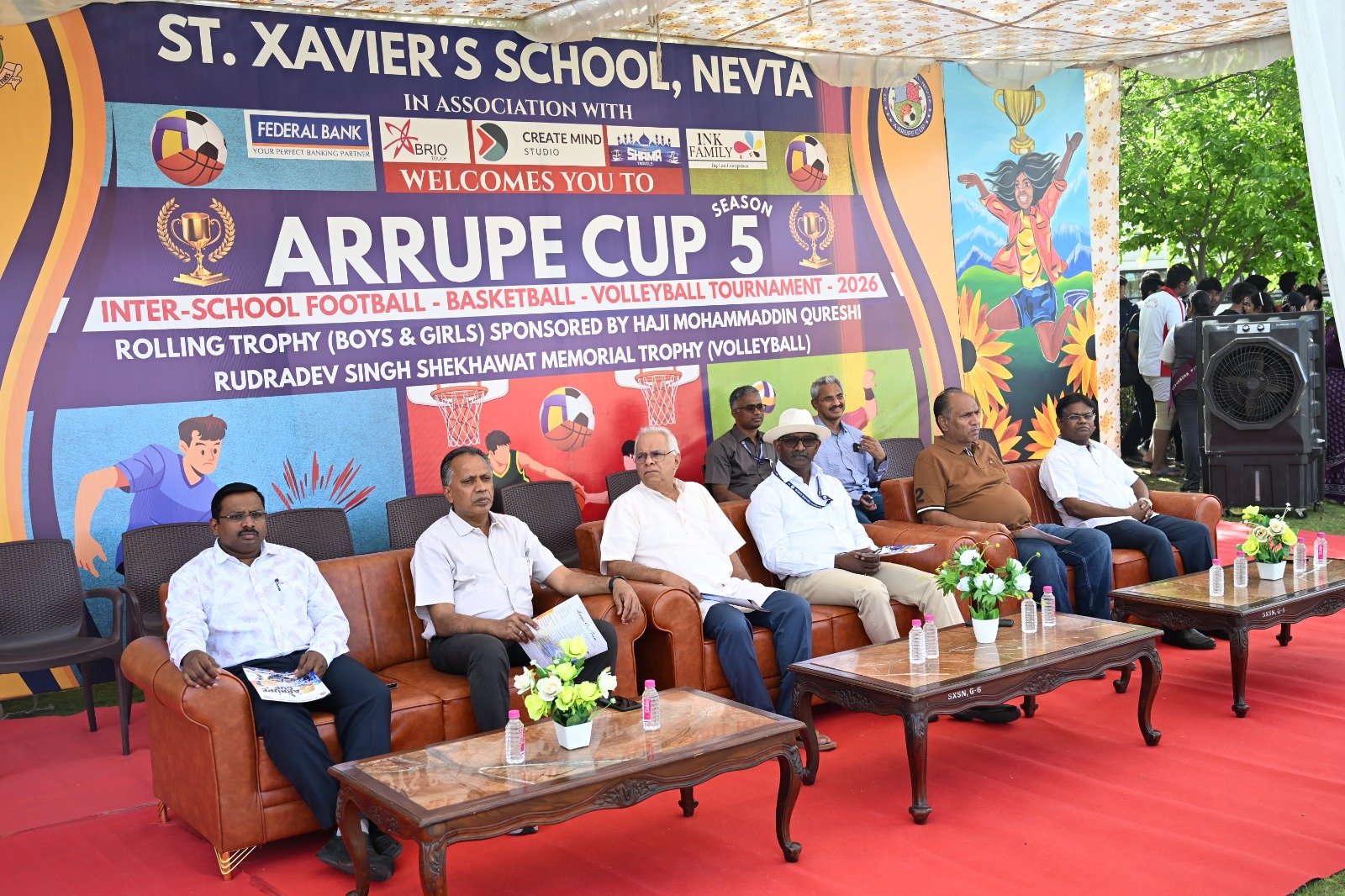
Contents
Jaipur | The 5th Arrupe Cup Jaipur 2025 has proven, once again, that sport is one of the most powerful forces for unity, discipline, and celebration among young minds. Organised by St. Xavier’s School, Newta, Jaipur, this prestigious inter-school multi-sport tournament concluded on May 2, 2025, drawing to a close what can only be described as three extraordinary days of sporting brilliance.
Running from April 30 to May 2, 2025, the 5th Arrupe Cup Jaipur 2025 brought together teams in Football, Basketball, and Volleyball — both boys and girls categories — making it one of the most comprehensive school-level sports events held in Rajasthan in recent years. More than 109 school teams from across Jaipur city participated, making this edition the grandest in the tournament’s short but celebrated history.

With intense matches, emotional victories, and an atmosphere charged with competitive spirit and camaraderie, the 5th Arrupe Cup set a new benchmark for how schools in Jaipur come together through the language of sport.
What Is the Arrupe Cup? The Legacy Behind the Name
The Arrupe Cup draws its name and inspiration from Father Pedro Arrupe, S.J. (1907–1991), one of the most celebrated figures in the history of the Society of Jesus (Jesuits). Born in Bilbao, Spain, on 14 November 1907, Pedro Arrupe became the 28th Superior General of the Society of Jesus and one of the most notable Jesuits of the 20th century.
Father Arrupe’s legacy is deeply tied to education, service, and the development of the whole person — mind, body, and spirit. In the tradition that Arrupe championed, athletic departments at Jesuit institutions strive to complement the mission by fostering athletic, intellectual, and personal growth through sports.
Naming an inter-school tournament after Father Arrupe is, therefore, both deliberate and deeply meaningful. The tournament is not merely about winning trophies — it is about building character, fostering team spirit, and nurturing leadership qualities in young students, values that lie at the very heart of Jesuit education.
St. Xavier’s School, Newta, Jaipur — managed by the Jesuits — carries this legacy forward by organising the Arrupe Cup as an annual celebration of holistic student development through competitive sport.
Tournament Overview: Scale, Dates & Format
Key Details at a Glance
| Detail | Information |
|---|---|
| Tournament Name | 5th Arrupe Cup |
| Organiser | St. Xavier’s School, Newta, Jaipur |
| Dates | April 30 – May 2, 2025 |
| Sports | Football, Basketball, Volleyball |
| Categories | Boys & Girls (separate) |
| Participating Schools | 109+ schools from Jaipur |
| Chief Guest (Closing) | Retd. DGP Shri Manoj Bhatt |
Three Sports, Six Titles
The 5th Arrupe Cup Jaipur 2025 was exceptional in its scope. Rather than focusing on a single sport, the tournament was structured across three major team sports — Football, Basketball, and Volleyball — each held in separate boys and girls categories. This meant six championship titles were at stake, attracting a diverse range of school teams and athletes across Jaipur.
The decision to host a multi-sport tournament under a single roof speaks volumes about St. Xavier’s School, Newta’s commitment to inclusivity and athletic excellence. Whether a student excelled on the football pitch, the basketball court, or the volleyball arena, the 5th Arrupe Cup provided the platform to shine.
Closing Ceremony: A Grand Celebration of Sport
The closing ceremony of the 5th Arrupe Cup Jaipur 2025 on May 2 was a fitting tribute to the athletes, coaches, and institutions who had invested so much energy and passion over three days.
The chief guest of the closing ceremony was Retired DGP Shri Manoj Bhatt, a distinguished figure whose career in law enforcement gave weight to his words about discipline, leadership, and the importance of sport in shaping character.
Addressing the assembled students, coaches, and school representatives, Shri Bhatt emphasised that sport is far more than physical competition. He underscored how participation in team sports builds three essential life skills: discipline, team spirit, and leadership capacity — qualities that prepare young individuals not just for athletic competition, but for the challenges of life itself.
The ceremony saw an energetic and enthusiastic atmosphere as winning and runner-up teams were called forward to receive their trophies and awards. The pride on the faces of young athletes — many participating in a competitive inter-school tournament for the first time — was unmistakable.
Final Results: All Category Winners Announced
The 5th Arrupe Cup Jaipur 2025 produced six deserving champions across its categories. Here is the complete list of winners:
Football
| Category | Winner |
|---|---|
| Football – Girls | St. Xavier’s School, Nevta (Host School) |
| Football – Boys | Neerja Modi School |
The Girls’ Football title was a moment of particular pride for the host institution, St. Xavier’s School, Newta, whose home team claimed the championship in front of their own supporters — a memorable achievement that will long be remembered.
Neerja Modi School’s boys team, meanwhile, demonstrated superior skill and tactical maturity to claim the Boys’ Football crown, outcompeting strong opposition from across the city.
Basketball
| Category | Winner |
|---|---|
| Basketball – Girls | MGPS School |
| Basketball – Boys | Vidyasthali School |
MGPS School emerged as a dominant force on the basketball court, with their girls’ team claiming the championship with impressive performances throughout the tournament. Vidyasthali School’s boys’ team equally impressed, combining athleticism with sharp court sense to take the Boys’ Basketball title.
Volleyball
| Category | Winner |
|---|---|
| Volleyball – Girls | MGPS School |
| Volleyball – Boys | Tagore International School |
A remarkable achievement for MGPS School — their girls’ teams claimed titles in both Basketball and Volleyball, making them arguably the standout institution of the 5th Arrupe Cup Jaipur 2025. Tagore International School rounded off the championship results by clinching the Boys’ Volleyball title.
Words from the Leaders: Inspiration at the Podium
Father Sangith Raj S.J. — Principal, St. Xavier’s School, Nevta
Father Sangith Raj S.J., the school’s Principal, shared his immense pride in the scale and success of the tournament. He noted that over 109 school teams from Jaipur city had participated to make this edition of the Arrupe Cup an outstanding success. The principal’s acknowledgement of every participating school — not just the winners — reflects the broader Jesuit spirit of recognising effort, participation, and the journey, not merely the destination.
Father John Ravi — School Manager
Father John Ravi, the School Manager, delivered an inspiring address that resonated deeply with the young athletes in attendance. He encouraged the current generation of student-athletes to draw inspiration from some of India’s brightest sporting lights, specifically mentioning:
- Vaibhav Suryavanshi — the teenage cricket prodigy who has taken Indian cricket by storm
- Sanju Samson — the Kerala wicketkeeper-batsman known for his elegant yet explosive batting style
- Jemimah Rodrigues — the Mumbai-born Women’s cricket star and one of India’s most consistent performers in international cricket
By invoking these names, Father John Ravi connected the students’ own sporting ambitions to the real-world successes of young Indian athletes who dared to dream big. He also extended warm congratulations to the school’s sports department for the outstanding organisation of the event.
Retired DGP Shri Manoj Bhatt — Chief Guest
The chief guest’s address was both motivational and grounding. Shri Bhatt’s message was clear: the habits built on a football field or basketball court — showing up, working as a unit, bouncing back from defeat, leading under pressure — are habits that will define a student’s professional and personal future.
Why the 5th Arrupe Cup Matters for Jaipur’s Youth
The 5th Arrupe Cup Jaipur 2025 is significant not just as a sporting event, but as a civic institution for Jaipur’s student community.
Unmatched Reach
With more than 109 schools participating, the tournament reaches a staggering cross-section of Jaipur’s student population. Students from different socioeconomic backgrounds, school philosophies, and neighbourhoods come together on a level playing field — the sports court.
Three Critical Developmental Pillars
Sports science and educational research consistently affirm that team sports build three key attributes in young people:
Discipline — Training schedules, match-day preparation, and tournament rules teach students the value of structure and commitment. Studies by organisations like UNESCO’s Education Sector have long recognised sport as a vehicle for values education.
Teamwork — No football goal, basketball play, or volleyball spike happens alone. The collaborative experience of inter-school sports teaches students how to communicate, delegate, and trust their peers — skills directly transferable to the classroom and career.
Leadership — Tournaments create captains, motivators, and decision-makers. The pressure of competitive sport identifies and nurtures natural leaders in ways few classroom exercises can replicate.
A Platform for Emerging Talent
Events like the 5th Arrupe Cup serve as a crucial first step for many talented young athletes. Scouts, coaches, and sports academies often identify exceptional players at district and city-level tournaments. For many students, the Arrupe Cup stage may well be the beginning of a journey toward state-level, national-level, or even professional sport.
The Arrupe Philosophy: Sports as a Path to Character
The Jesuit educational tradition has always maintained that excellence is not limited to academics. As Father Arrupe once addressed an assembly of Jesuit school administrators, the “new humanism” should place emphasis on social virtues: sensitivity to human need, concern for others not merely as objects of charity but as equals, and helping people take their rightful share in human development.
This philosophy translates perfectly to the world of sport. When a football team from a smaller school competes against a well-resourced institution on the Arrupe Cup ground, they are participants in something far larger than a match — they are experiencing equity, resilience, and the dignity of fair competition.


The Arrupe Cup’s structure — multiple sports, boys and girls categories, open to over a hundred schools — embodies this inclusive vision. Every child, regardless of background or ability level, deserves the opportunity to compete, to grow, and to be celebrated.
As the Jesuits’ global organisation notes, Arrupe’s beatification process is underway, recognising his extraordinary contributions to humanity. The school tournament bearing his name honours that legacy by ensuring his ideals live on in the lives of thousands of young students in Jaipur.
Looking Ahead: What’s Next for Jaipur’s Inter-School Sports?
The extraordinary success of the 5th Arrupe Cup Jaipur 2025 raises the exciting prospect of an even larger 6th edition in 2026. Several questions will shape the future of this tournament:
Will more schools join? With 109+ schools already participating, can the Arrupe Cup grow toward 150 or even 200 school teams in coming editions?
Will new sports be added? Future editions might consider expanding into athletics, badminton, or table tennis, bringing even more students into the fold.
Could the Arrupe Cup attract state-level attention? Jaipur’s inter-school sports scene is growing rapidly. Major school sports platforms already offer exposure to dozens of sports at world-class venues in Jaipur, empowering athletes, coaches, parents, and schools with match assessments and data, and the Arrupe Cup’s success positions it well within this thriving ecosystem.
Meanwhile, the winners of the 5th Arrupe Cup carry their titles forward not just as trophies on a shelf, but as proof of their potential. The Football Girls champions of St. Xavier’s, Newta; the Football Boys champions of Neerja Modi School; the double-gold achievers MGPS School; Vidyasthali’s basketball boys; and Tagore International’s volleyball team — all will be ones to watch in the future.
The 5th Arrupe Cup Jaipur 2025 has once again affirmed that St. Xavier’s School, Newta, is not just an academic institution — it is a beacon of holistic education and sporting excellence in Rajasthan. By hosting a tournament that welcomed over 109 schools, celebrated six categories of champions, and brought together retired administrators, Jesuit priests, and thousands of young athletes, the school demonstrated precisely what Father Pedro Arrupe stood for: education that transforms lives, communities, and futures.
As the trophies were handed out and the cheers faded into the warm Jaipur evening on May 2, what lingered was something more lasting than any scoreline — the memory, for each participating student, of standing on a competitive stage, giving their best, and being part of something remarkable.
The 5th Arrupe Cup Jaipur 2025 was not just a sports tournament. It was a celebration of what young India is capable of.
Quick Reference: 5th Arrupe Cup 2025 — Complete Winners List
| Sport | Category | Champion School |
|---|---|---|
| Football | Girls | St. Xavier’s School, Newta |
| Football | Boys | Neerja Modi School |
| Basketball | Girls | MGPS School |
| Basketball | Boys | Vidyasthali School |
| Volleyball | Girls | MGPS School |
| Volleyball | Boys | Tagore International School |
Breaking News
Powerful Milestone: Dr Ambedkar Memorial Welfare Society Launches 100-Room Girls Hostel in Jaipur
Contents
A Historic Foundation Is Laid in Jaipur
26 April 2026, Jaipur | The Dr Ambedkar Memorial Welfare Society Girls Hostel in Jaipur has taken a giant and inspiring step forward. On a landmark Sunday at Jhalana Doongri, the renowned Dr. Ambedkar Memorial Welfare Society Rajasthan formally laid the foundation stone for the Mata Ramabai Ambedkar Balika Chhatrawas — a transformative residential facility that promises to reshape the destiny of thousands of young women from marginalised communities across Rajasthan.
The occasion was celebrated with a traditional bhumi pujan and the ceremonial unveiling of the foundation plaque, attended by dignitaries, legislators, social leaders, and thousands of community members who came together to witness what many are already calling a defining moment for girls’ education and social empowerment in the region.

“The progress of any society is rooted in the education of its daughters. This hostel will not merely offer shelter — it will become a launchpad for thousands of dreams.”
— Rtd. IPS Satyaveer Singh, President, Dr. Ambedkar Memorial Welfare Society Rajasthan
Key Facts at a Glance
- 100 Total Rooms to be Built
- 4 Storeys / Floors
- 75+ Community Donors (Bhamashahs)
- Rs. 10 L MLA Fund Pledged by Kalicharan Sarraf
About the 100-Room Dr Ambedkar Memorial Girls Hostel Project
The proposed Mata Ramabai Ambedkar Balika Chhatrawas will be a four-storey structure housing 100 individual rooms. Named after Mata Ramabai Ambedkar — the devoted wife of Dr. B.R. Ambedkar, who is venerated as a pillar of sacrifice and strength — the hostel carries deep symbolic significance.

It is being constructed within the existing campus of the Dr. Ambedkar Memorial Welfare Society at Jhalana Doongri, Jaipur. The society is located at Jhalana Institutional Area, Jhalana Doongri, Jaipur, Rajasthan 302004. This location places the hostel at the heart of one of Jaipur’s key institutional zones, offering excellent access to colleges, universities, and employment opportunities.
The hostel is envisioned as a completely self-contained, safe, and modern residential complex that will serve female students, particularly those from Scheduled Caste communities and economically weaker sections, who travel from smaller towns and villages across Rajasthan to pursue higher education in the state capital.
Why 100 Rooms?
With Jaipur growing as a major educational hub and the demand for affordable, safe, and quality student housing far outpacing supply, a 100-room facility is a bold but necessary ambition. Each room will accommodate students with all essential amenities, enabling them to focus entirely on their studies without worrying about substandard housing conditions that often derail promising academic careers.
World-Class Facilities Planned for Dr Ambedkar Girls Hostel Students
Organisers have confirmed that the Dr Ambedkar Memorial Welfare Society Girls Hostel will be far more than just a place to sleep. It will be a high-tech, secure, and nurturing residential environment equipped with:
| Facility | Details |
|---|---|
| Furnished Rooms | 100 individual rooms with essential furniture |
| Dining Hall | Large dining area for community meals |
| Kitchen | Fully equipped kitchen for hygienic meal preparation |
| Waiting / Common Areas | Comfortable spaces for relaxation and social interaction |
| Security | Round-the-clock security arrangements |
| Modern Amenities | RO water, power backup and other high-tech essentials |
| Study Spaces | Dedicated areas for focused academic work |
The hostel model followed by the society provides students with essential furniture including beds, tables, chairs, and cupboards, along with mess facilities for breakfast, lunch, and dinner — with regular quality and hygiene inspections carried out by a dedicated mess committee. The new 100-room hostel will expand and upgrade this proven model significantly.
Foundation Ceremony: Leaders, Legislators & Community at Jhalana Doongri
Distinguished Guests Who Graced the Event
The foundation-laying ceremony was attended by an impressive cross-section of Rajasthan's social and political leadership. Retired IAS officer Hanuman Prasad served as chief guest, lending institutional gravitas to the occasion. Legislators Kalicharan Sarraf and Ram Chordia were also present to extend their support.

MLA Kalicharan Sarraf Pledge
MLA Kalicharan Sarraf made a significant announcement during the event, pledging Rs. 10 lakh from his MLA Local Area Development Fund towards the construction of the hostel. In his address, he noted that today’s young women are leading in every field and that society bears the responsibility of creating better opportunities for them.
A New Website for the Society
In a sign of the times, the event also featured the launch of the Dr. Ambedkar Memorial Welfare Society’s brand-new official website — a digital step forward that will help the organisation communicate its mission, projects, and scholarship opportunities to a wider audience across Rajasthan and beyond.
Senior leaders present at the ceremony included PC Hadia, Senior Vice President Rameshwar Prasad Bairwa, General Secretary Dr. Chetram Raipuriya, Treasurer Dayanand Sakkarwal, and Construction Committee Chairman Surendra Kumar Beri, Credent TV Chief Editor Sunil Narnauliya, among many others. The programme was conducted by AJAK State Spokesperson Vinod Verma Ralawata, and saw enthusiastic participation from youth leaders including Ravi Meghwal, Pooja Verma, and Ajay Dagar.
70 Generous Donors: The Community Behind the Dr Ambedkar Girls Hostel Dream
Perhaps the most heartening aspect of this entire project is that it is being built not by government funds alone, but through the collective generosity of the community. Over 70 Bhamashahs (community philanthropists) have come forward to donate towards the construction of the Mata Ramabai Ambedkar Balika Chhatrawas.
Each donor was honoured on stage during the ceremony, a gesture that underscored the community’s shared ownership of this dream. This model of community-driven construction has powerful precedents in India’s social reform movements — echoing the legacy of Dr. B.R. Ambedkar himself, who always believed in collective upliftment.
“This project is becoming a reality through the collective cooperation of society. It is a testament to what a united community can achieve.”
— Satyaveer Singh, President, DAMWS Rajasthan
Dr Ambedkar Memorial Welfare Society Rajasthan: A Legacy of Change
The driving force behind this initiative, the Dr. Ambedkar Memorial Welfare Society Rajasthan was established on 9 September 1980 as a registered non-governmental organisation in Rajasthan. For over four decades, it has been the apex body of the Scheduled Caste community in the state.
The society was formed to perpetuate the memories of Bharat Ratna Baba Sahib Dr. Bhim Rao Ambedkar, who gifted the Indian Constitution to this nation, keeping in mind the miserable condition of the down-trodden society and women in the country.
Over the decades, the organisation has been at the forefront of providing education, hostel facilities, legal aid, and social advocacy for Scheduled Caste communities across all 33 districts of Rajasthan. The new girls’ hostel represents their most ambitious infrastructure project to date.
Connect With the Society
Readers who wish to support, donate, or seek admission can contact the Dr. Ambedkar Memorial Welfare Society directly at their campus in Jhalana Institutional Area, Jaipur — or visit their official website at https://www.damws.org/.
Girls’ Education in Rajasthan: Why the Dr Ambedkar Memorial Girls Hostel Matters More Than Ever
The Bigger Picture
Rajasthan has made significant strides in improving girls’ education outcomes over the past decade, yet persistent challenges remain — particularly for students from marginalised communities who lack access to affordable, safe accommodation in urban areas. A shortage of quality hostels often forces talented girls to abandon their higher education ambitions and return home.
The Rajasthan government has been running several schemes to support this cause. The Government of Rajasthan launched the Economic Help to Tribal Girls for Higher Education scheme to encourage girls to pursue college education and promote female empowerment through financial support, offering ₹5,000 per annum disbursed over 10 months directly to student bank accounts.
Similarly, at the national level, the Beti Bachao Beti Padhao initiative continues to serve as a rallying cry for communities, governments, and civil society alike.
The Role of Civil Society
Collaborative initiatives like Project Pragati aim to provide opportunities for women’s participation and progress, with programmes implemented across districts of Rajasthan to empower out-of-school adolescent girls and young women. The Dr. Ambedkar Memorial Welfare Society’s new hostel perfectly complements such initiatives by addressing the crucial issue of safe, affordable accommodation — the often-overlooked barrier that prevents girls from completing their education.
Why Safe Hostels = Better Educational Outcomes
Research consistently shows that when girls from rural or semi-urban backgrounds have access to safe residential facilities in cities, their retention rates in higher education improve dramatically. A secure living environment removes parental anxieties, reduces commute burdens, and allows students to participate in evening classes, library sessions, and extracurricular activities that enrich their overall development.
Expected Impact & Future Vision of the Girls Hostel
Projected Beneficiaries
With 100 rooms and double-occupancy potential, the hostel could accommodate up to 200 girl students per academic year, meaning that within the first decade of operation alone, it could directly benefit over 2,000 young women.
Social Empowerment Beyond Education
The hostel’s impact is expected to extend well beyond providing a roof over students’ heads. By creating a safe, supportive community of young women from similar backgrounds, it will foster peer learning, mentorship, and mutual support networks that last long after graduation.
Students living here will be better positioned to pursue competitive examinations, professional degrees, internships, and career opportunities — breaking cycles of poverty and marginalisation that have limited the potential of Scheduled Caste communities for generations.
A Model Worth Replicating
The Dr. Ambedkar Memorial Welfare Society’s community-funded approach — where 70 donors collectively make a large infrastructure project possible — is a model that deserves replication across Rajasthan and India. It demonstrates that when communities take ownership of their own empowerment, extraordinary things become possible without waiting for government intervention alone.
A Milestone Worth Celebrating
The foundation-laying of the Mata Ramabai Ambedkar Balika Chhatrawas by the Dr Ambedkar Memorial Welfare Society Rajasthan is not merely the beginning of a construction project. It is the crystallisation of decades of advocacy, social work, and community solidarity into a tangible structure that will stand as a beacon of hope for thousands of young women.
In a state where girls’ educational attainment remains a work in progress, this 100-room, four-storey hostel — born from the generosity of 70 donors and inspired by the legacy of Dr. B.R. Ambedkar — is proof that meaningful change is possible when vision meets collective will.
The Dr Ambedkar Memorial Welfare Society Girls Hostel in Jaipur will, without doubt, go on to become a milestone in the story of girls’ education and social empowerment in Rajasthan — and a worthy tribute to the Constitution’s promise of equality, dignity, and opportunity for all.
Named after Dr. B.R. Ambedkar, who enshrined equality into India’s Constitution, this hostel lives up to that very promise — one room, one dream, one girl at a time.

Panja Dangal Season 1: Lakshya Narwani Wins Jaipur Arm-Wrestling Championship

India-US Trade Deal: Trump Says India Benefited for Decades, Yet a Historic Modi Agreement Could Be Near

Social Media Dialogue or Controversy? The Growing Crisis of Communication in the Digital Age

AI and Original Writing Crisis: 10 Powerful Reasons Why Artificial Intelligence Can Never Replace Human Creativity

Tilak Gitai: 7 Extraordinary Achievements That Made the Padma Shri Maestro a Global Icon of Indian Miniature Painting

Bashir Badr Death at 91: The Poet Who Taught India How to Feel Love and Loss

Priyansh Arya: The Six-Hitting Sensation of IPL 2025

Top 10 Most Searched Topics on YouTube: What’s Trending Now?

Preity Zinta Spotted with New Punjab Kings Hero Priyansh Arya in Viral Clip

Nag Panchami 2025: 7 Key Rituals and Puja Time to Eliminate Kaal Sarpa Dosha

Radhika Merchant: A New Chapter as Radhika Ambani

Balen Shah, Kathmandu’s independent mayor, from rapper to political leader. Explore his rise amidst Nepal’s youth-led revolution-

best career opportunities | Jaipur Career Fair | Credent TV | Dainik Navjyoti D2S03

what is reiki healing | Mental Health | Shiksha Sarokar, शिक्षा सरोकार, Sunil Narnaulia

